
The walk to Lubeck and the hearing that followed
In the autumn of 1705 a twenty year old organist obtained four weeks of leave from the council that employed him, packed for a journey on foot, and walked north out of Arnstadt toward Lubeck, a distance of roughly four hundred kilometres through Thuringian forest, Saxon farmland and the flat country below the Baltic coast. He travelled to hear Dietrich Buxtehude, the ageing organist of St Mary’s Church, whose evening music drew listeners from across northern Germany, and he stayed through the winter season, absorbing a manner of playing and a scale of invention that no teacher at home could offer him. He returned about four months after he had left, to a consistory hearing, a written record of complaint, and an employer asking where he had been. The organist was Johann Sebastian Bach, and the Johann Sebastian Bach life that followed repeated that pattern for forty-five years: a salaried post, a hunger that exceeded the post, a collision with the men who paid him, and music made in the middle of the collision rather than in shelter from it.
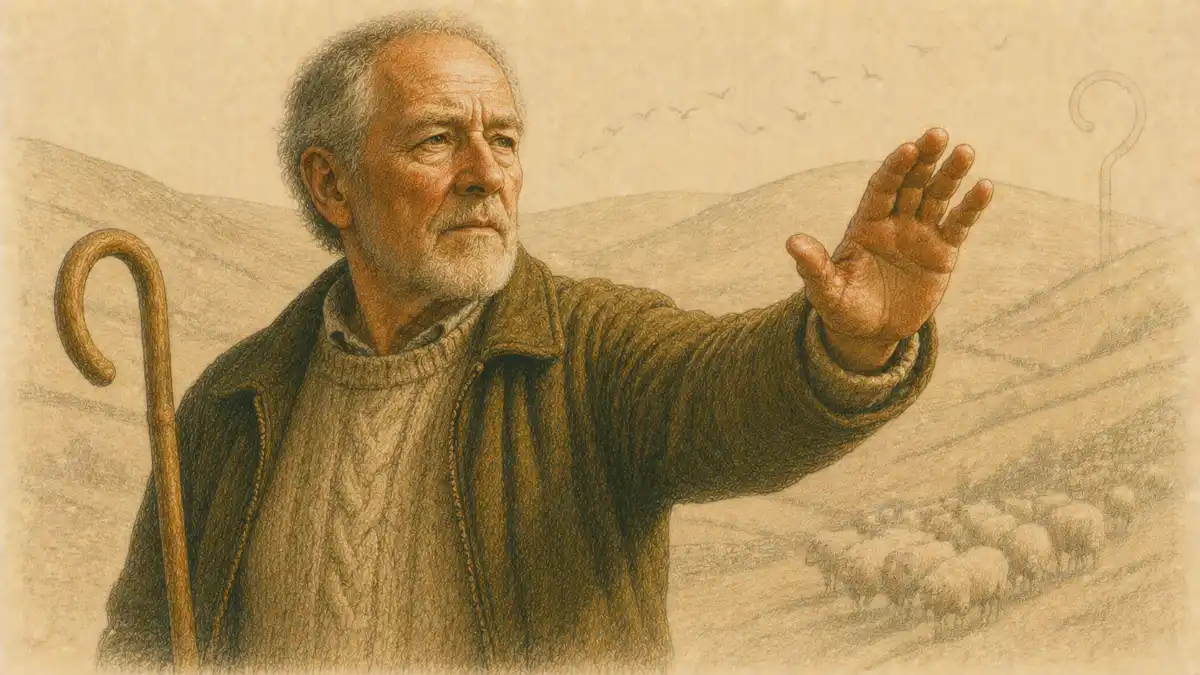
The hearing deserves attention because it survives in documents rather than in anecdote. The Arnstadt consistory summoned its young organist in February 1706 and recorded its questions in the dry language of a church court, yet the substance is vivid. He had been absent far beyond his granted leave. He had introduced strange variations into the chorale accompaniments and confused the congregation. He had allowed an unrelated young woman to make music in the choir loft. Each charge describes a working musician testing the edges of a job description that his employers understood narrowly and that he understood as a floor rather than a ceiling. Christoph Wolff, whose biography Johann Sebastian Bach: The Learned Musician appeared in 2000 after decades of archival work in German church and court records, reads the Arnstadt file as the earliest full evidence of a temperament that every later employer would meet. The young man answered his questioners without apology, corrected their understanding of his duties, and treated the proceeding less as a judgement on his conduct than as a negotiation about what an organist was for.
One question raised by the walk has to wait for its answer, because the walk alone cannot supply it. Why would a man with a secure post, a new organ to play and a congregation that had competed to hire him risk dismissal in order to hear one organist perform? The leave was granted, the journey was legal in its beginning, and the offence lay only in the length of the absence and in what he brought back from it. The answer involves money, ambition, family expectation and the peculiar labour market of German church music, and it closes in section nine of this account, after the pattern of leaving has repeated often enough to be read as a pattern. For the moment the walk stands as the career in miniature. A musician hears that greater playing exists elsewhere, measures the distance in days of walking rather than in risk, goes, learns, returns late, and argues.
The physical scale of the journey also corrects a lazy picture of the period. Lubeck was not a neighbouring town but the far end of a professional network that Thuringian musicians treated as their northern capital of organ playing. Buxtehude held a post that combined civic pride, merchant funding and a famous instrument, and his Abendmusiken, the evening concerts supported by the city’s business community, presented large scale vocal and instrumental music outside the liturgy. A young organist who wanted to understand what the profession could become at its highest reach had to go where that reach was demonstrated. Bach went on foot because a coach fare was beyond a junior salary, and the walking itself was unremarkable in a world where journeymen in every trade travelled between masters in the same way. What was remarkable was the duration of the stay and the calm with which he faced the consequences, as if the calculation had been made in advance and the hearing priced into the decision.
Eisenach and a family that was a profession
Eisenach, the town at the foot of the Wartburg castle where Martin Luther had translated the New Testament, was a modest Thuringian residence town whose musical life ran through its churches, its Latin school and its town waits, the employed wind players who sounded signals, accompanied civic ceremony and supplied instrumental music for weddings and funerals. Into that world Johann Sebastian Bach was born on 21 March 1685, the youngest child of Johann Ambrosius Bach, a town musician and court trumpeter, and Maria Elisabeth Bach, born Lammerhirt. The surname itself functioned almost as a trade description across the region. For generations the Bachs of Thuringia had filled organ lofts, town bands and court ensembles so densely that in Erfurt the town musicians were called the Bachs whether or not any individual player carried the name. Music was not a gift that descended on one child in this family. It was the family business, learned at home, practised in public and passed between households the way a workshop passes tools.
That professional density shaped the boy’s earliest hearing. His father played trumpet in civic service and directed the town music, his mother came from a family connected to the fur trade and to Erfurt civic life, and uncles and cousins across the neighbouring towns held organ posts, cantorates and court appointments that formed a web of mutual obligation. A child growing up inside such a web learned several things before any formal lesson began. He learned that music was work with hours, fees and employers. He learned that competence was assumed and that reputation travelled between towns through family channels. He learned repertory by proximity, hearing chorales, dance music and concerted church pieces as the ordinary sound of adult employment. Philipp Spitta, whose two volume biography published between 1873 and 1880 assembled the documentary record on which all later lives rest, treated the family as the essential starting point, and later scholarship has deepened rather than displaced that judgement. The genealogy that Bach himself compiled in 1735, the Origin of the Musical Bach Family, traces the line back to Veit Bach, a miller and lute player who had left Hungary under religious pressure, and the document reads as a craftsman’s pride in a dynasty of practitioners.
Comparison clarifies what the family system gave him and what it withheld. George Frideric Handel, born in Halle in the same year of 1685, grew up outside any musical dynasty, the son of a barber surgeon who intended law for his child and resisted the musical training that patrons had to arrange around paternal opposition, a contrast traced in the account of Handel’s own route into the profession. Bach faced the opposite condition. No one had to persuade his family that music was a respectable livelihood, because the family was the proof. What the system withheld was breadth beyond its own habits. The Bachs served Lutheran churches, small courts and town councils within a defined region, and their repertory, their instruments and their career expectations were those of that service world. The ambition that later carried the youngest son beyond every post he held was formed inside a structure that expected him to take a post much like his father’s, keep it, and train his own sons for the same succession.
The household in Eisenach also contained loss early. Two siblings died in infancy before Sebastian was born, a common arithmetic in the period that the family register records without comment, and the surviving children grew up with music lessons folded into domestic routine. Johann Ambrosius taught his sons string playing, and the boy who would become the most documented keyboard player of the century began, by family custom, on instruments suited to the town band. The keyboard supremacy came later and came through the organ loft and the harpsichord rather than through any childhood designation as a prodigy. Malcolm Boyd, in his compact biography Bach published by Oxford University Press in 2000, stresses this ordinariness of the beginning against later myth. The record shows a well placed child in a musical trade family, taught thoroughly, exposed constantly, and prepared for employment. Nothing in the Eisenach years announces exception except the density of the preparation itself, and that density matters because it explains the speed of everything that followed once the family structure broke apart.
Orphaned at ten and taken in by a brother
The break came in two stages. Maria Elisabeth Bach died in 1694, when her youngest son was nine, and Johann Ambrosius remarried within months, as widowers with young children and civic duties ordinarily did. In February 1695 the father died as well, and the household dissolved. Ten year old Sebastian was an orphan in a period when orphanhood was a frequent condition rather than a catastrophe with institutions built around it, and the family’s own network supplied the remedy that the network existed to supply. His eldest brother, Johann Christoph Bach, fourteen years his senior and organist at St Michael’s Church in Ohrdruf, took the boy into his own young household. The move carried the child some fifty kilometres from Eisenach, ended his time at the Eisenach Latin school where he had sung in the choir, and placed him under the roof of the family’s most accomplished keyboard player in the generation above him.
Johann Christoph had studied with Johann Pachelbel in Erfurt, the leading south German organ composer of the day, and his household therefore contained both a fine instrument and a library of keyboard music that represented the best current practice of the tradition. For the younger brother the arrangement was education by residence. He attended the Ohrdruf Lyceum, where his academic record was strong, sang for his keep in the school choir as poor scholars did, and absorbed keyboard repertory in the house of a brother who was himself still consolidating a career and raising children on an organist’s salary. The generosity of the arrangement should not be sentimentalised. Ohrdruf gave the orphan lodging, schooling and professional immersion, and it also gave the elder brother another mouth in a household that grew crowded enough that Sebastian’s departure at fifteen was partly a matter of space and money. Family systems carried their members and also set the terms on which carrying stopped.
The emotional register of these years is largely closed to the record, and responsible biography says so plainly. No letter from the boy survives, no childhood memoir exists, and the obituary written after his death moves across the Ohrdruf period in a few sentences. What can be documented is institutional. The Lyceum records show a pupil advancing well, the choir lists show a singer earning the small stipends that scholars received, and the brother’s collection shows what repertory lay within reach of the house. Peter Williams, in The Life of Bach published in 2004, cautions against filling the silence of these years with the psychology of bereavement imported from a later age, and the caution is well aimed. Orphanhood in 1695 Thuringia placed a child inside kinship structures designed for exactly that event. The design worked. It also meant that the child’s formation passed wholly through professional hands, and that the distinction between home and workshop, between affection and training, was thinner in his upbringing than in almost any comparable life.
One documented detail from Ohrdruf carries weight beyond its size. The elder brother’s keyboard instruction appears to have been systematic and demanding, and the younger brother’s progress was rapid enough that by his mid teens his singing and playing supported his own maintenance. When his voice broke and the choir stipend attached to a treble voice ended, the economic logic of the household changed with it. A scholarship at St Michael’s School in Luneburg, offered to boys with fine voices and limited means, solved the problem for the institution and for the boy at once. He left Ohrdruf in March 1700 in the company of his school friend Georg Erdmann, with whom he corresponded decades later in one of the few surviving personal letters of his maturity. The friendship itself is evidence of what the Lyceum years had built: literacy, Latin, music, and a companion for the road north into a larger world than Thuringia.
Ohrdruf, copying music by moonlight and what that story is worth
The most repeated anecdote of the Ohrdruf years tells of a book kept in a latticed cupboard, containing keyboard pieces by Pachelbel, Froberger, Kerll and other masters of the south German school, which the elder brother refused to lend to the younger. The boy, in the story, extracted the volume through the lattice at night, copied it by moonlight over six months, and was discovered only when the work was complete, whereupon the brother confiscated the copy. The source for the story is the obituary of 1754, written by Bach’s son Carl Philipp Emanuel and his pupil Johann Friedrich Agricola, drawing on family memory two generations after the event. No independent document corroborates it. The responsible treatment, and the one this account follows, is to present the moonlight copying as the family’s own account of the boy’s appetite, valuable as evidence of how the family understood him and plausible in its mechanics, without dressing it as verified fact.
The mechanics deserve the plausibility the family claimed. Music circulated in manuscript, printed keyboard collections were expensive, and copying was the normal technology by which a young musician built a library and internalised a style. A pupil who copied Froberger by hand learned the voice leading in his fingers and his eye at once, and the labour of transcription doubled as the labour of study. Whether or not the cupboard and the moonlight belong to literal memory, the practice the story describes certainly belonged to Bach’s formation, because his surviving early manuscripts and the repertory he demonstrably knew presuppose exactly that kind of copying on a large scale. The anecdote survives scrutiny as a compressed portrait of a real method. It fails scrutiny only when it is asked to carry more than that, when the moonlight is made to prove a romantic thesis about genius struggling against prohibition. The brother who kept the book locked was also the brother who housed, fed and taught the orphan for five years, and the family’s own telling holds both facts together without embarrassment.
There is a further reason to handle the story with care, and it concerns the obituary as a source for the whole life. Carl Philipp Emanuel wrote as a son promoting a father’s posthumous standing in a musical world that had moved toward a lighter style, and Agricola wrote as a pupil loyal to a teacher’s memory. Their document is indispensable and interested at once. Where it can be checked against council minutes, pay records and court files, it generally holds, which is why historians from Spitta onward have leaned on it for the early years that no archive covers. Where it cannot be checked, as with the moonlight book, the honest label is family account. That discipline matters for the whole of this biography, because the same two voices colour the deathbed, the final works and the picture of the Leipzig years, and a reader who learns to grade the obituary here, on a harmless childhood story, is equipped to grade it everywhere else.
Copying also explains a feature of the mature career that puzzles readers who meet it later. Bach’s handwriting, his habits of revision and his willingness to rework his own earlier compositions into new shapes all descend from a formation in which music existed as manuscript to be handled, adapted and rewritten rather than as fixed print to be preserved untouched. The boy at Ohrdruf learned repertory the way a scribe learns a language, by writing it out. The man at Leipzig would treat his own catalogue with the same freedom, transferring movements between works, rescoring concertos as cantata sinfonias and revising scores across decades. The moonlight story, believed or bracketed, points at the workshop habit underneath the achievement, and the habit is documented even where the story is not.
Luneburg and the choirboy’s education
St Michael’s School in Luneburg offered poor boys of good voice a bargain that structured much of German musical life. The school fed, housed and educated its scholarship choristers, and in return the boys sang the daily offices and the Sunday music in one of the great churches of the Hanseatic north. Bach arrived there at fifteen in the spring of 1700 and remained for about two years, singing first as a treble and then, as his voice settled, finding other uses for his musicianship as the school’s need for a boy soprano faded. Luneburg placed him within reach of Hamburg, where the opera house, the great organs and the aged organist Johann Adam Reincken represented a metropolitan standard beyond anything in Thuringia, and the obituary records journeys on foot to Hamburg to hear Reincken play. The pattern that would produce the Lubeck walk five years later was already formed: hear of greater playing, walk to it, listen, return changed.
The schooling itself was broader than the choir stall. The Latin school curriculum carried rhetoric, theology, history and the classical languages, and the boy who had done well at Ohrdruf continued to do well in a more demanding institution. That breadth left marks on the adult composer that a purely musical training would not explain. The cantata texts he later set, adapted and in some cases shaped himself presuppose a reader at ease with Lutheran theology and with the rhetorical ordering of an argument, and the library he owned at death, catalogued after 1750, was weighted heavily toward theology rather than toward music. Luneburg also exposed him to French taste through the neighbouring court at Celle, where a band modelled on French practice played for the duke, and the obituary credits those visits with his early knowledge of French keyboard style. A Thuringian orphan on a choir scholarship was receiving, piece by piece, the components of a European formation that no single post at home could have assembled.
The Luneburg years also carry an early documentary trace of discipline applied to him rather than by him. School and church records from the north German choir schools describe a regulated world of fines, rotas and inspections, in which musically gifted boys were valuable assets and were managed as assets. Bach’s later conduct as a teacher and choir director in Leipzig, severe about attendance and exacting about preparation, was formed partly in reaction to and partly in imitation of these institutions, which had housed him, fed him and used his voice as currency. Questions about how musical talent is identified in childhood and what institutions owe the children they recruit run through the whole history of the choir school system, and the argument is taken up directly in the examination of music education and the prodigy myth. His own case resists the prodigy frame entirely. He was not exhibited, not toured and not celebrated as a marvel. He was a scholarship boy with a useful voice and rapidly growing keyboard skill, indistinguishable in the school lists from dozens of contemporaries whose names no history kept.
When the Luneburg period ended, probably in 1702, he returned to Thuringia without a university place. A university education was the one credential the family system did not supply, since university study cost money that an orphaned younger son did not have, and its absence mattered later in Leipzig, where the cantorate sat uneasily between the town school and the university and where his lack of a degree shaped how some councillors regarded him. At seventeen or eighteen he was instead what his family had always produced: a trained, employable church musician looking for a post. The search took him briefly to Weimar as a court servant and violinist in 1703, a first taste of court employment, and then to the opportunity that made him an organist in his own right.
The first post at Arnstadt
The New Church at Arnstadt had a new organ, built by Johann Friedrich Wender of Muhlhausen, and a council proud of the instrument and anxious to secure a player worthy of it. In August 1703 the eighteen year old Bach, having examined and demonstrated the organ, was appointed its organist at a salary generous for his age and experience, supplemented by payments connected with directing the school choir’s music. The appointment is the proper starting point of the career because it shows the market working in his favour before any fame existed. A small town paid above the ordinary rate for demonstrated keyboard excellence, examined the instrument through his hands, and trusted a teenager with the musical centrepiece of its new church. His duties, by the contract, centred on playing for services, maintaining his part in the church music and working with the student choir, and the council believed it had bought order and brilliance in one hire.
Arnstadt also gave him his first professional frustrations, and they arrived from the direction that would recur throughout his life: the gap between what he believed the job contained and what his employers believed they had purchased. The student choir was unruly, its discipline belonged formally to the school authorities, and the young organist’s attempts to shape its singing brought him into friction with pupils older than some of his own years in the town. A street altercation in 1705, in which a bassoon playing student named Geyersbach attacked him with a stick and Bach drew a rapier in self defence, reached the consistory in formal complaints from both sides. The episode reads as farce at a distance of three centuries and as a serious reputational risk at the time, since an organist who brawled with scholars in the market place invited exactly the scrutiny of his morals and temper that church employers were charged to exercise.
It is in this Arnstadt setting that a second long question of the career opens, and like the first it must be left open for a while. Why was the musician whom later generations would place at the summit of German music repeatedly passed over, undervalued or treated as a serviceable employee rather than as a prize? The question sharpens in Leipzig in 1723 and closes in section eighteen, where the council minutes survive. Arnstadt supplies its first mild form. The town had hired brilliance and discovered that brilliance arrived attached to a young man who considered the terms of employment negotiable, who resented the choir duties he had accepted, and who measured his work against standards set in Lubeck and Hamburg rather than against the expectations of a Thuringian consistory. The mismatch was not a misunderstanding that better manners could have dissolved. It was structural, between an art being practised at its highest level and institutions budgeted and governed for adequacy, and it followed him from post to post because both sides of it travelled with him.
The Arnstadt music itself, the compositions of these years, belongs to the catalogue rather than to the life, and is treated in its own place. For the biography the significant Arnstadt facts are contractual and temperamental. He signed, he chafed, he fought a student, he walked to Lubeck, he faced his hearing, and he began to look elsewhere within two years of an appointment that many musicians of his region would have kept gratefully for a decade. The consistory’s patience and his own restlessness ran out at roughly the same speed, and when the call came from Muhlhausen in 1707 he took it, leaving Arnstadt with his reputation as a player enhanced and his reputation as an employee marked, in the small world of Thuringian church music, as brilliant and difficult in equal measure.
The Arnstadt complaints against him
The paper trail at Arnstadt is unusually complete, and it rewards close reading because it shows the complaint machinery of a Lutheran church town working on a real case. The consistory minutes record the February 1706 hearing after the Lubeck absence, with its charges about the overstayed leave, the strange harmony that confused congregational singing and the young woman admitted to the loft, identified in later family tradition as a cousin. They record the Geyersbach affair with depositions from both parties. They record friction over the choir, whose members the organist found unmusical and insubordinate and whose schoolmasters found his direction of them irregular. Read together, the documents describe neither a persecuted genius nor a delinquent employee. They describe an institution discovering that its contract had specified duties without settling the question of standards, and an employee who answered every specification with a judgement of his own about how the thing ought to be done.
Here the first rung of this biography’s argument must be stated plainly, because Arnstadt is where the evidence for it begins. The serenity that listeners prize in the mature music was produced by a man in near permanent conflict with his employers, and the conflict was not an accident of youth that maturity softened. It recurred at Muhlhausen, at Weimar, at Kothen in milder form and at Leipzig for twenty-seven years, with councils, dukes, rectors and consistories in the opposing seat. The disputes concerned leave, money, personnel, discipline, the quality of singers, the right to appoint deputies and the right to take outside work, which is to say they concerned the whole material basis of music making. A biography that treats the music as the product of contemplative withdrawal reverses the documented order. The music was produced inside negotiation, complaint and deadline, by a man who fought for the conditions of its production as a normal part of producing it.
The complaints also preserve, in negative form, a portrait of the young musician’s priorities. He risked censure for the Lubeck journey because hearing Buxtehude mattered more than the consistory’s calendar. He confused the congregation, if the charge is credited, because he accompanied chorales with the harmonic imagination of a composer rather than with the plain support a congregation expects. He admitted a singer to the loft because good music making mattered more than the rule about who belonged there. None of this excuses the overstayed leave or the drawn rapier, and the consistory’s concerns about order were legitimate within its charge. The point is narrower and more useful. From the first post onward, Bach’s judgements about music outranked his judgements about institutional comfort, including his own, and employers who hired the first quality received the second whether they had bargained for it or not.
Wolff’s archival work gives the Arnstadt file a further significance. Because the records survive in unusual detail, they anchor the biography in verifiable paper at the very point where the obituary’s anecdotes are thinnest, and they establish a method for the whole life: prefer the minute, the contract and the pay record to the later recollection, and use recollection to colour what paper establishes rather than to replace it. Applied at Arnstadt, the method yields a figure more interesting than either the rebel or the servant of pious legend. It yields a twenty year old professional who already understood his market value, already knew the distance between his playing and that of the men around him, and already treated employment as a set of terms to be tested. The testing continued for the rest of his working life, and the institutions that employed him kept the minutes that let the testing be traced.
Muhlhausen and marriage to Maria Barbara
The free imperial city of Muhlhausen offered the organist’s post at the church of St Blasien in 1707, and Bach accepted, moving to a larger town with a stronger musical establishment and an organ in need of the rebuilding that he was already qualified to specify. His memorandum on the St Blasien organ, a detailed scheme for renovation that the council adopted, marks his emergence as the kind of organ expert whose opinion towns and courts would seek for the rest of his life. In October 1707, at Dornheim near Arnstadt, he married Maria Barbara Bach, his second cousin, a singer from Gehren whose father had been a court musician and who had grown up inside the same Thuringian family profession. An inheritance from an uncle in Lubeck, Tobias Lammerhirt, helped set up the household. The marriage joined two branches of the musical Bachs and began the domestic history that ran alongside every later post, since Maria Barbara bore seven children in thirteen years and managed the household through the moves to Weimar and Kothen.
Muhlhausen lasted barely a year, and the shortness of the stay is instructive. The town’s church politics divided between orthodox and pietist factions, and the pietist party, influential with his own superintendent, distrusted elaborate concerted church music of exactly the kind Bach had been hired to develop. His resignation letter of June 1708 survives and is a model of the genre as he practised it: courteous in form, immovable in substance, citing the hindrances placed in the way of a well regulated church music and the cost of living, and announcing a ducal appointment at Weimar that offered better scope. He left on good enough terms that Muhlhausen commissioned a farewell cantata and paid for its printing, a rare honour, and he supplied the town with a successor candidate and with music for the council election in the following year. The resignation letter also contains his famous statement of purpose, that his ultimate goal was a well regulated church music to the glory of God, a sentence quoted wherever his life is summarised and best read in its setting: a twenty-three year old organist explaining to a divided council why their town could not give his goal room.
The Muhlhausen episode refines rather than repeats the Arnstadt pattern. At Arnstadt he had been disciplined; at Muhlhausen he resigned before discipline became necessary, having read the factional weather and concluded that the institution’s argument with itself would consume the music he wanted to make. The decision shows a professional learning to choose his ground. It also shows the limits of his freedom, because the choice available was between employers, not between employment and independence. No market existed in 1708 Germany for a freelance composer of church music living by publication and concert receipts. A musician of his kind ate by holding a post, and every paragraph of this biography is therefore a paragraph about a post: its pay, its duties, its politics and its instruments. Maria Barbara’s household moved with the posts, and the children began arriving with the Weimar years, so that the domestic and the institutional histories became a single history of salaries, lodgings, school places and church factions.
One further Muhlhausen document deserves notice because it displays the public musician inside the employee. The council election cantata of 1708, printed at the town’s expense, was a large scale festive work for an civic occasion, performed as part of the ceremonial transfer of office. Bach at twenty-three was already supplying the musical face of municipal government, a function his Leipzig post would demand annually for decades. The printed score, one of the very few works of his to appear in print during the early career, shows a composer whose ambitions for public ceremony exceeded the pietist restraint of his church employers. The tension between the festive musician and the faction that wanted plainer worship was not resolvable by talent or by tact, and his departure settled it in the only way the system allowed, by his removal to a court where festive music was the point of the establishment.
Why he kept leaving good positions
The question opened by the Lubeck walk can now be closed, because the evidence of three posts is in. A young musician risked dismissal to hear Buxtehude, quarrelled with a consistory, resigned a good organist’s post after a year and would repeat the pattern at Weimar on a grander scale, because the posts, however good by the standards of the profession, were each too small for the specific ambition he had formed and because the labour market of German music rewarded movement. Courts and councils bid against one another for organists and Kapellmeisters of reputation, salaries rose with each move, and a musician who stayed put stayed at his first valuation. Arnstadt paid well for a beginner; Muhlhausen paid more; Weimar would pay more again and raise his rank twice. Restlessness was not a flaw superimposed on the career. In a system without tenure, copyright or concert income, restlessness was the career mechanism, the only instrument by which a salaried musician converted growing mastery into growing means.
Ambition alone, however, does not explain the particular friction that attended each departure, and the documents supply the second half of the answer. Bach measured each post against an internal standard of what its music ought to be: the state of the organ, the competence of the choir, the freedom to compose concerted music, the quality of the instrumentalists. Where the institution fell short of the standard, he pressed, complained, specified rebuilds, demanded better singers or resigned. Employers experienced this as difficulty, and their minutes say so in their own vocabularies across forty years. Readers of the life have to hold both descriptions at once, because both are true and neither cancels the other. The standard produced the music that justifies the biography. The pressing produced the hearings, the reprimands and the month in detention that the biography must also record. A more compliant organist would have had a quieter file and a smaller catalogue, and the towns that employed him understood the exchange well enough to keep hiring men of his stamp while complaining about the stamp in writing.
There is also a family arithmetic inside the departures. Each move raised the salary that fed a growing household, provided better schooling or better prospects for sons who would enter the same profession, and placed the family nearer to courts where a father’s influence could launch a child’s career. The Bachs had practised this geography for generations, moving between Thuringian towns as posts opened, and Sebastian’s moves to Weimar, Kothen and Leipzig extended the family map rather than breaking it. When his sons came of age they moved farther, to Dresden, Berlin, Hamburg and London, along channels his reputation had cut. The restless employee was also a dynastic father building positions for the next generation, and the two descriptions fit the same itinerary without strain. The Lubeck walk, read in this light, was an investment made by a young man who understood his trade as a market in reputations, and the hearing that followed was simply the cost of the investment, paid without visible regret.
With the pattern established, the biography can proceed at the pace the career itself set. The Weimar appointment of 1708 opened the first long tenure of his life, nine years in a ducal court where his rank, salary and compositional range all expanded together, and where the conflict with employers, when it came, would be with a duke rather than a town council and would end not in a hearing but in a locked room. The scale of the Weimar years is the scale of a musician becoming, by his early thirties, the most formidable organist in Germany and a composer whose monthly cantatas for the court chapel announced a new completeness of ambition.
Weimar, the court organist years
Weimar in 1708 was a small ducal residence whose court chapel, the Himmelsburg or castle church, housed an ambitious musical establishment under two co-reigning dukes whose rivalry complicated every appointment. Bach entered as court organist and chamber musician, playing in the chapel, performing on violin in the court ensemble and teaching, among others, the musically gifted princes of the house. The salary dwarfed his Muhlhausen pay and rose repeatedly across the tenure, and the duties placed him inside a court Kapelle of professional instrumentalists rather than a town choir of schoolboys. For a composer of twenty-three the decisive Weimar fact was the organ loft of the Himmelsburg and the court’s appetite for music, since the years there produced the great body of organ works on which his playing fame rested and the first sustained run of church cantatas in his output.
The Weimar organ music belongs in detail to the catalogue, and the technique behind it to the companion study of his musical style and how a listener can learn to hear it, but the biographical point belongs here. Weimar gave him an instrument, a court that valued display and a decade of relative stability in which to convert the repertory he had copied and heard into a personal command of the keyboard without rival in his generation. Reports of his playing from these years, gathered later by his sons and pupils, describe pedal technique that astonished visiting organists and improvisation that treated a given chorale as the seed of large structures. The court years also brought the professional examination work that built his name beyond Saxony: he inspected organs, advised on rebuilds and travelled to demonstrate instruments, functioning as the region’s trusted expert while still formally a subordinate member of a ducal household.
Stability did not mean contentment with rank. The Weimar court employed a Kapellmeister, Johann Samuel Drese, whose age and health limited his direction, and Bach increasingly supplied the music the chapel required, including from 1714 a regular monthly cantata under his appointment as Konzertmeister, a title that raised him above the rank and file while leaving the Kapellmeister’s office above him. The arrangement suited a court that wanted his music without disturbing its hierarchy, and it chafed the musician who supplied the substance of the establishment while holding its second title. His sons Wilhelm Friedemann and Carl Philipp Emanuel were born in Weimar in 1710 and 1714, his fame as an organist drew pupils including his nephew Johann Bernhard Bach and the young Johann Tobias Krebs, and the household on the Weimar market square became a teaching household as well as a family home. The career was, by every external measure, a success story of the German court system. The documents of its ending show how quickly that system could turn success into confinement when a servant’s ambition crossed a duke’s pride.
The Weimar decade also fixed the working rhythm that Leipzig would later industrialise. A monthly cantata, feast day music, organ playing at court services, teaching, copying, examining organs and composing keyboard music for pupils and patrons composed a portfolio of duties that no single contract described. Bach thrived inside portfolios of that kind because his energies were various and because each duty fed the others: the teaching produced the keyboard collections, the organ examinations produced the reputation, the chapel rota produced the cantatas. A biography that separates the composer from the employee misses the mechanism. The employee’s calendar was the composer’s production schedule, and the masterpieces of the Weimar years carry the dates of court obligation in their occasions as plainly as they carry their keys and scorings.
Promotion, the passed-over Kapellmeister post, and the quarrel
When Kapellmeister Drese died in December 1716, the succession should by musical logic have fallen to the Konzertmeister whose cantatas had carried the chapel for two years. Duke Wilhelm Ernst instead let the office drift toward Drese’s son, a musician of modest attainments whose chief qualification was hereditary, and negotiations that might have raised Bach to the Kapellmeister’s place dissolved into delay. The slight was legible to the whole court, and Bach responded as the labour market invited him to respond: he looked for another post. In August 1717 he accepted the Kapellmeister’s office at the court of Kothen under Prince Leopold of Anhalt-Kothen, at a salary that recognised the rank Weimar had withheld, and he travelled to Dresden that autumn in high professional spirits, where the famous projected contest with the French organist Louis Marchand ended with Marchand leaving the city before the appointed day, a story preserved by the obituary and consistent with the Dresden court’s records of the visit.
What followed at Weimar belongs to the small set of episodes in the life that need no embellishment. Bach pressed the duke for his dismissal, the formal release without which a court servant could not lawfully take new employment, and he pressed, by the surviving report, with a stubbornness that the duke chose to read as insolence. Wilhelm Ernst was a ruler who treated his chapel musicians as household property and his authority over them as a point of princely honour. The negotiations hardened through the autumn of 1717 while the Kothen appointment waited, the prince’s patience shortened, and the duke’s displeasure converted a contractual dispute into a disciplinary one. The court record, when it comes, is a single sentence of bureaucratic German whose plainness has made it famous among biographers, and the next section takes it on its own terms.
The quarrel illuminates the legal ground of the whole career. A Kapellmeister was a servant under contract, bound to his prince until dismissed, and dismissal was a favour in the gift of the employer rather than a right in the contract of the employee. Musicians negotiated this dependency with petitions, patrons and patience, and the system generally worked because princes disliked the reputation of imprisoning talent. Bach’s Weimar offence was to negotiate as if his value settled the matter, to treat the release as something his services had earned and the duke’s delay as an injury. He was, in the market sense, correct about his value, and the Kothen offer proved it. He was, in the household sense, defying the premise on which his employment rested, that the servant’s will ended where the prince’s began. Both descriptions survived him: the obituary tells the story as high spirited independence, the court file records it as obstinacy requiring correction, and the biography has to keep the two files open side by side.
His family circumstances sharpened the stakes of the autumn. Maria Barbara was at Weimar with four young children, the Kothen post represented the highest rank and salary of his life to that point, and every week of ducal delay risked the offer itself. A younger or a more patient man might have petitioned and waited out the duke’s humour into the new year. The record shows instead a servant demanding his papers in terms the court found peremptory, and a duke deciding that an example would serve the discipline of the whole establishment. The example chosen was confinement, and its duration tells the reader how the balance of power actually lay between the most gifted musician in Germany and a middling Thuringian prince in 1717.
Nearly a month in detention for demanding release
Was Bach ever put in prison?
Bach was held in the Weimar castle guard room for almost four weeks in late 1717 after demanding his release from ducal service to take the Kothen Kapellmeister post. The court record calls the confinement a punishment for obstinacy in pressing his dismissal, and he was freed only when the dismissal itself was finally granted in December.
The court entry, dated from 6 November to 2 December 1717, records that the Konzertmeister Bach was confined in the arrest room of the district judge for his obstinate insistence on being dismissed, and was then released with his dismissal granted in terms that registered ducal displeasure. Nearly a month in detention for demanding release is the plain summary, and the episode is the hardest documentary evidence in the life that the conflict with employers was not rhetorical. A duke used the coercive machinery of his small state against his own court musician, and the musician emerged, took his family to Kothen within weeks and accepted the highest musical office of his career from another prince. The revelation that the pattern of leaving had teeth belongs here, at the point where the leaving cost him his liberty for twenty-six days. He left or tried to leave almost every post he held, and the detention proves how hard he pushed when an employer pushed back.
Later retellings have sometimes inflated the confinement into a dungeon or softened it into a misunderstanding, and the record supports neither. It was an administrative arrest in a guard room, humiliating rather than dangerous, imposed on a thirty-two year old father of four by an employer asserting a legal right that contemporaries recognised even when they deplored its use. Its significance for the biography is double. It marks the limit of a salaried musician’s freedom inside the court system, the point at which the market in talent met the law of household service and lost. It also marks something about the man that the obituary preferred to tell as anecdote and that the file states as fact: presented with the choice between submission and confinement, he chose the course that led through confinement to Kothen, and there is no record that he petitioned for pardon or softened the demand that had provoked the arrest.
The release, when it came in December 1717, was ungracious by design, recorded as granted with displeasure, and it closed the Weimar account. The family removed to Kothen, some hundred and thirty kilometres north east, where a young prince who played the viola da gamba, sang and genuinely loved music waited to employ the Kapellmeister he had engaged at a princely salary. The contrast between the two courts could hardly have been arranged more neatly by a novelist. Weimar had given him a decade of formation and a month of confinement. Kothen would give him five years of favour, the finest instrumental ensemble of his life and the sharpest domestic blow of his life, in that order and without warning between them.
Kothen, Prince Leopold and the secular years
Prince Leopold of Anhalt-Kothen was twenty-three when Bach joined his court, a Calvinist prince ruling a small Lutheran majority territory, educated in Berlin and Italy, and unusual among German princes in the seriousness of his own musicianship. He employed a Kapelle of about eighteen musicians, many of them recruited from the disbanded Berlin court orchestra of the Prussian king, and he played in his own ensemble beside the Kapellmeister he had rescued from Weimar detention. The salary, some four hundred thalers with allowances that raised the effective income well above the Weimar level, placed Bach among the best paid musicians in Germany, and the duties inverted his Weimar experience. The Calvinist court chapel required little elaborate church music, since Reformed worship in Kothen was plain, and the Kapellmeister’s energy therefore ran toward instrumental music, chamber works and festive cantatas for court birthdays and New Year celebrations.
The Kothen years are consequently the instrumental heart of the catalogue: the Brandenburg Concertos presented to the Margrave of Brandenburg in 1721, the suites for solo cello and for solo violin, the sonatas and partitas, the first book of the Well-Tempered Clavier completed in 1722 as a teaching and demonstration collection, and a stream of concertos and chamber music for the prince’s players. The works themselves, their scorings and their claims on a listener’s attention are the subject of the companion survey of the compositions that anchor his catalogue, and the life needs only their conditions: a superb resident ensemble, a prince who rehearsed and performed, a court calendar of birthdays and visits, and a Kapellmeister freed from the weekly church deadline for the first and only sustained period of his career. Antonio Vivaldi, whose concertos Bach had transcribed for keyboard at Weimar after the scores reached the court through the young Prince Johann Ernst, represents the Italian current that the Kothen concertos absorbed and transformed, a connection with the Venetian’s own very different career set out in the life and music of Antonio Vivaldi.
Domestic Kothen was also the setting of the two journeys that frame the period in family memory. In May 1720 Bach travelled with Prince Leopold to the spa at Carlsbad, performing for the prince’s cure season, and it was on his return from that journey in July that the blow fell which the next section records. The household he had left in good order contained a wife of thirty-five in ordinary health, by every account that survives, and the household he re-entered had buried her. The Kothen chapter therefore holds the career’s greatest professional contentment and its greatest private loss within three years of one another, and the biographer’s task is to let both stand at full weight without using the second to explain the first or the music of either. The Brandenburg dedication of March 1721, with its famously deferential French letter to the Margrave, belongs to the contentment: a Kapellmeister at the height of favour, advertising his ensemble’s repertory to a greater court in the hope of commissions that, in the event, never came and whose score the Margrave left unperformed and unacknowledged.
By 1722 the Kothen position itself began to cool, for reasons that had nothing to do with music. Prince Leopold married Friederica Henriette of Anhalt-Bernburg in December 1721, and Bach’s later testimony, in the Erdmann letter of 1730, states plainly that the princess had no love for music and that the prince’s own devotion to his Kapelle waned as the marriage and the court’s finances pressed. The ensemble shrank, funds tightened, and the Kapellmeister who had been detained for leaving Weimar began once more to read advertisements and sound out alternatives, among them the organist’s post at St James in Hamburg in 1720, which he sought and did not obtain. The pattern of the career reasserted itself inside its happiest chapter. Favour is a wasting asset at court, and Bach, at thirty-seven with a second family forming, began the search that would take him to Leipzig and to the post he would hold, argue with and finally be buried from, for the remaining twenty-seven years of his life.
The death of Maria Barbara
Maria Barbara Bach died in early July 1720 while her husband was travelling with the prince at Carlsbad, and she was buried on 7 July before he reached home. The cause of her death is not recorded in any document that survives, and this biography states the fact without supplying a cause, a scene or a psychology that the record cannot support. She was thirty-five, she had borne seven children of whom four survived her, and she had been married at twenty-two to a cousin whose career she had followed from Muhlhausen through Weimar to Kothen, managing households that doubled as workplaces and singing, by family account, with a fine voice in the music that surrounded her domestic life. Her husband learned of her death on his return, from the household that had already buried her, and the obituary’s restraint on the subject has been respected by every serious biographer since Spitta.
The documentary silence around Maria Barbara is itself a fact of the period’s record keeping, in which the wives of musicians appear at baptisms, marriages and burials and rarely between them. What can be said with evidence is structural. Her death left a widower of thirty-five with four children aged between eleven and five, a Kapellmeister’s duties that assumed a managed household, and a court position whose social fabric was woven through the prince’s own family life. Remarriage within a year and a half was the ordinary remedy of the time for a man in that position, and Bach’s remarriage in December 1721 followed the ordinary pattern while proving, on the evidence of the twenty-nine years it lasted, to have been a genuine partnership in music as well as in household management. The next section takes up Anna Magdalena Wilcke, the singer he married, and the second household that became the centre of the Leipzig years.
Grief, where the record cannot show it, should not be staged by the biographer, and the temptation to read the music of 1720 as a widower’s testimony deserves the same discipline applied to the moonlight story at Ohrdruf. The solo violin works dated to that year carry sorrows readily enough to a listener who knows the calendar, yet nothing in any document connects their composition to Maria Barbara’s death, and the chronology of their copying suggests work spread across the Kothen period rather than concentrated in its worst month. A life written from evidence lets the July burial stand as the fact it was, heavy in itself, and declines to invoice the music for an emotion the documents never mention. That restraint is the respect the record can still pay her, in place of the voice that no archive preserved.
Anna Magdalena and the second household
Anna Magdalena Wilcke came from a family of court musicians at Zeitz and Weissenfels, her father a court trumpeter, her mother connected to an organist’s household, and she had been engaged as a soprano at the Kothen court in 1721 at a salary that itself testifies to her professional standing, unusually high for a singer of twenty. She married the widowed Kapellmeister on 3 December 1721, becoming stepmother to his four children at an age closer to the eldest child’s than to her husband’s, and she bore thirteen children of her own across the Leipzig years. Her musicianship was not ornamental to the marriage. She sang at court, she copied music in a hand so accomplished and so close to her husband’s that the identification of copyists in the manuscripts remains a live scholarly problem, and the two notebooks prepared for her, in 1722 and 1725, preserve the domestic music making of the household in pieces by her husband, by French composers whose style the family admired and in time by her children.
The notebooks for Anna Magdalena are among the most human documents of the life precisely because they are working papers rather than monuments. They contain minuets and marches for learners, arias copied for singing at home, chorale settings, a child’s exercises and, in the 1725 book, music of real ambition interleaved with the domestic repertory, the whole bound in green with her initials in gold. Generations of piano students have met the name Bach first through these pages without knowing that the book was a wife’s album in a working musician’s house. For the biography the notebooks evidence the second household’s central fact: music at home was continuous with music at church and court, copied by the same hands, taught to the same children and sung by the same voices, so that the boundary between the composer’s family and his profession, already thin in his own childhood at Eisenach, effectively disappeared in his maturity.
Anna Magdalena’s copying hand matters to the survival story told later in this account, because the manuscripts from which the music was recovered after 1750 passed through the hands of the family copyists, and her transcripts of major works, including the solo cello suites, are among the principal sources on which editions rest. A copyist’s work is invisible when it succeeds, and her success has meant that her labour is embedded in the text of works the world attributes to her husband alone. Modern scholarship, using paper studies and handwriting comparison, has restored her name to title pages in the scholarly literature where the manuscripts themselves leave it off. The second household also altered the family’s economics and geography: the move to Leipzig in 1723 was made with a wife whose court salary was surrendered for a cantor’s household, and her earnings from copying and singing thereafter ran inside the family’s general economy rather than under a separate court contract.
The marriage lasted until his death in 1750, and its later chapters include the raising of sons who became the most famous musicians of the next generation, the management of a house that functioned as a boarding school for pupils and a lodging for visiting musicians, and the long Leipzig argument with the town council in which the household’s income, lodgings and perquisites were all at stake. Anna Magdalena outlived her husband by ten years, dying in Leipzig in 1760 in reduced circumstances, supported in part by payments from the council whose minutes had so often recorded her husband’s complaints. The record of her widowhood is thin and uncomfortable reading, and it belongs to the remembrance section of this account, where the family’s fortunes after 1750 are taken together.
Twenty children and the ones who did not survive
How many children did Bach have?
Bach fathered twenty children across his two marriages, seven with Maria Barbara between 1708 and 1720 and thirteen with Anna Magdalena between 1723 and 1742. About half of the twenty died in infancy or childhood, a proportion ordinary for the period, leaving ten who reached adulthood and carried the family name forward.
The full register repays slow reading because it corrects two lazy impressions at once. The first impression is of a patriarch serenely presiding over a musical dynasty, an image the family’s later fame encourages. The register instead shows a household repeatedly visited by the ordinary mortality of the eighteenth century: twins who died within weeks of birth, daughters lost at three and at five, a son of twenty whose death in 1733 the father’s letters register with a father’s plain grief. Catharina Dorothea, the eldest, lived to 1774 and sang and copied in the household for decades. Wilhelm Friedemann and Carl Philipp Emanuel became the famous sons. Johann Christoph Friedrich and Johann Christian carried the name to Buckeburg and to London. Between the famous names stand the baptisms and burials of children whom no music history names, and the biography that counts only the survivors misstates the household its subject actually kept. The number is twenty across two marriages with about half dying in childhood, and neither figure should be inflated or softened in the telling.
The second impression corrected by the register concerns the economics of the Leipzig complaints examined later in this account. A cantor’s salary that looks comfortable against a single man’s needs reads differently against a household that at various points contained a wife, a crowd of children of all ages, resident pupils, servants and the constant traffic of a teaching practice. Bach’s petitions about fees, firewood, lodging and the perquisites of office were not the grumbling of a difficult employee in the abstract. They were the arithmetic of a large household in a city whose cost of living he itemised in the Erdmann letter with a tradesman’s precision. The children are therefore not decoration around the career. They are one of its governing conditions, the reason the salary mattered, the reason outside income from pupils, weddings, funerals and publications was pursued so energetically, and the reason the Leipzig post, with its school lodging and its fee income, could attract a Kapellmeister who had known princely pay.
A third long question of the life opens in this household register, and its answer lies far ahead. What happened to the music nobody collected after he died? The manuscripts of a working composer in 1750 were household paper, valuable chiefly to the family members who could perform, teach from or sell them, and the division of that paper among twenty children’s heirs and widows is the hinge on which the survival of the catalogue turned. That question opens here, among the baptisms and burials, because the answer’s cast is this family, and it closes in section thirty, where the obituary’s authors and the estate’s division can be examined together. For the present the register itself is the point. The man whose name became a synonym for order in music kept a house in which death was as regular a visitor as birth, and he composed the weekly music of Leipzig’s churches across years in which his own children were being baptised and buried in those same churches, sometimes within the same season.
The surviving sons’ careers also begin in this register, since the eldest boys were trained at home before any institution touched them. Wilhelm Friedemann, born at Weimar in 1710, was the child for whom the Little Keyboard Book of 1720 was begun, its title page promising instruction from the father to the nine year old, and Carl Philipp Emanuel, born in 1714, received the formation that made him the leading keyboard composer of his generation without, by his own account, ever taking a lesson from any teacher but his father. The household was thus a conservatory before it was anything else, and the pupils who boarded in the Leipzig house joined a going concern of family instruction. When the sons later assessed their father’s music with the mixture of reverence and embarrassment examined in section thirty-one, they spoke as products of that household school, and their judgements carry the authority and the limits of sons who had learned the trade at the family table.
The decision to move to Leipzig
Leipzig was a commercial city of fairs, publishers and a university, larger and richer than any town Bach had served, and its cantorate at St Thomas’s School was among the most prestigious church music posts in Lutheran Germany. The post fell vacant at the death of Johann Kuhnau in June 1722, and Bach’s candidacy for it puzzled some of his later biographers, who asked why a Kapellmeister at the height of court favour would seek a school post in a trading city. The puzzle dissolves in the documents of his situation. Kothen’s favour was cooling with the prince’s marriage and the court’s finances, his sons were approaching the age at which a university city offered them what a small Calvinist court town could not, and the Leipzig cantorate carried a complex income of salary, fees and perquisites that a shrewd household manager could make exceed a Kapellmeister’s pay. To these calculations the Erdmann letter adds the consideration that weighed with him throughout: at Leipzig he could build the well regulated church music that Muhlhausen had denied him and Weimar had only partly allowed, with two great churches, a school choir and a city establishment under one direction.
The application was nevertheless a step sideways in the hierarchy of prestige as contemporaries reckoned it, from the title of Kapellmeister, the summit of the profession, to that of Cantor, a school office. Bach took the step with open eyes and never ceased to style himself by his court title where he could, signing later documents with the Kapellmeister rank that Kothen and later the court at Dresden supplied. The decision therefore reveals the hierarchy of his own values with unusual clarity. Security of income for a household of his size, education for his sons, a large church establishment to direct and a city in which a musician could earn from many sources outweighed the loss of a title in his calculation, even though the loss of the title plainly stung, since he spent later years collecting honorary and court appointments that restored the style of address the Leipzig contract had cost him.
The auditions ran through the winter of 1722 and 1723, and Bach performed test cantatas at St Thomas’s in February 1723 that observers rated highly. Yet the leisurely pace of the council’s proceedings tells its own story about the field of candidates and the council’s order of preference, and that story has its own section next, because it contains the most quoted minute in the whole biography. The decision to move, taken from Bach’s side, was rational, ambitious and family minded. The reception of the decision on the council’s side was something else entirely, and the gap between the two sides of the appointment is the gap in which the next twenty-seven years were lived. He arrived in Leipzig on 22 May 1723 with his wife, his children, his furniture and thirty years of accumulated music in carts, and took up residence in the cantor’s apartment at St Thomas’s School, from which he would not move again.
Behind the move stood also a confessional geography that the modern reader can miss. Kothen was a Calvinist court in which his Lutheran church music had no liturgical home, and the Kothen years, for all their instrumental glory, were years in which the church composer at his centre produced almost no church music. Leipzig restored the full Lutheran establishment: two principal churches, a cycle of feasts, a school steeped in the confession and a council that understood itself as guardian of the city’s worship. A man whose stated goal since 1708 had been a well regulated church music to the glory of God was moving to the largest stage in Germany on which that goal could be pursued, and the ambition should be credited alongside the arithmetic of fees and schooling. The devotional and the professional readings of the move are examined together later in this account, under the stance this biography takes toward his faith: both readings are documented, neither cancels the other, and the council chamber in which the appointment was settled cared, in the event, about neither as much as it cared about the order in which its preferred candidates had declined.
Being Leipzig’s third choice
The Leipzig council wanted Georg Philipp Telemann first. Telemann, Kapellmeister at Hamburg, the most famous German composer of the day and a former Leipzig student who had founded the city’s collegium musicum, applied, auditioned in effect through his reputation, was offered the post in the summer of 1722 and used the offer to extract a raise from Hamburg, where he stayed. The council then turned to Christoph Graupner, Kapellmeister at Darmstadt, a musician of high standing and a Leipzig alumnus, who was elected in January 1723 and whose employer, the Landgrave of Hesse-Darmstadt, refused to release him, improving his salary instead. Only then, with the school term pressing and the two preferred candidates gone, did the council settle on the Kothen Kapellmeister whose test cantatas it had already heard. Here the shareable fact of this biography lands, and it is documented in the council’s own record: Leipzig approached Telemann and then Graupner before Bach, and a council member minuted his disappointment at having to settle, recording in substance that since the best could not be obtained, the mediocre would have to be accepted.
The revelation deserves its full weight as the third rung of the argument this life is building. Leipzig hired the man posterity ranks first among German composers only after two better known composers declined, and the council recorded its disappointment in writing. No conspiracy and no stupidity explains the minute. Telemann in 1723 was the obvious candidate by every contemporary measure: famous across Europe, published, fluent, a founder of the city’s own musical institutions and a proven supplier of church music at industrial pace. Graupner was a respected Kapellmeister of the same generation with Leipzig ties. Bach was known to the council chiefly as an organist of formidable reputation and a court composer whose church music few outside Weimar had heard, since almost none of it was published. The council was buying a cantor for its school as much as a composer for its churches, and on the evidence available to it, its order of preference was defensible. The minute’s sting is retrospective. It records a competent institution making a reasonable decision that history reversed.
The long question opened at Arnstadt closes here. The musician whom later ages placed at the summit was nobody’s first choice for the Leipzig school post because the summit did not exist in 1723 as a category his contemporaries could apply to him. Fame in his world attached to publication, to opera, to court Kapellmeister rank and to the great organ lofts, and Bach by 1723 held only the last of these assets in full. The council that settled for him was not failing to recognise a known quantity. It was pricing an unknown one, an organ virtuoso with a difficult employment history, a large family and no university degree, against two famous men who had declined, and its minute preserves the price it set. Everything in the twenty-seven years that followed can be read as the slow, contested repricing of that settlement, conducted in petitions, audits and arguments about choirboys and firewood, while the music that would force the final repricing accumulated in the cantor’s apartment week by week, largely unheard beyond the two churches it was written for.
His own view of the settlement survives in the terms he negotiated before signing. He required written assurance about his income from fees, he secured the council’s agreement that he could appoint a deputy for the Latin teaching he did not wish to give, and he signed the contract and the associated revers, the formal undertaking of duties and orthodoxy, in May 1723. He also, within three years, was describing the post’s drawbacks in private correspondence and testing the Dresden court’s interest, which suggests that the disappointment minuted by the council was mutual in kind if not in cause. The council believed it had settled for less than it wanted. The cantor believed he had accepted less than he deserved. The twenty-seven year argument between those two beliefs is the spine of the Leipzig story, and the next sections take its components in order: the job itself, the weekly music it demanded, the schoolboys who sang it and the council that paid for it all while recording its reservations.
What the Thomaskantor job actually required
What did a Thomaskantor actually do?
A Thomaskantor directed the music of Leipzig’s principal churches, taught at St Thomas’s School, trained and disciplined its choirboys, supplied cantatas and passions for the church year, led music for council ceremonies, weddings and funerals, and answered for all of it to the town council that employed and housed him.
The full inventory matters because the post is habitually imagined as a composer’s chair with teaching attached, when the documents describe a school office with composition attached. Bach as cantor was one of the senior masters of St Thomas’s School, responsible for the musical education of its pupils, for the four choirs that served St Thomas’s, St Nicholas’s, the New Church and St Peter’s, and for the discipline and welfare of the choristers who boarded at the school. He taught singing and music theory, gave Latin lessons by deputy where the council permitted, auditioned scholarship boys for voices and aptitude, assigned singers to churches, rehearsed the weekly music, played and directed at services, weddings and funerals, maintained the instruments and the music library, and presented himself for inspection by the superintendent and the council. Music for the council’s own occasions, the annual election, the visits of princes and the university ceremonies that drew on the cantor’s forces, filled the margins of a calendar already governed by the church year.
The division of the choir forces explains much of the weekly strain examined in the next section. The first choir, the best singers, performed the concerted music, the cantatas and motets, at St Thomas’s and St Nicholas’s on alternate Sundays. The second choir sang simpler concerted music at the other principal church. The third sang motets and chorales at the New Church, and the fourth, the weakest boys, supplied plain choral singing at St Peter’s. A cantor disposed his scholarship boys across this hierarchy like a general disposing regiments of very unequal quality, promoted the promising, covered for the sick and the voice broken, and answered for failures in any of the four churches as failures of his direction. The boys were children and adolescents living at the school under discipline that the council regulated in detail, and their quality in any given year set the ceiling on the music their cantor could write for them, a constraint that runs through his Leipzig complaints like a ground bass.
Set against the Kothen Kapellmeistership, the Leipzig office was broader, busier, more public and less exalted. It answered to a council of merchants and lawyers rather than to a prince, it was inspected, audited and minuted, and its holder lived in the school building among his pupils, his apartment forming part of the institution he served. The broader account of how church music of this scale functioned inside the religious life of German cities, and of the arguments about what such music was for, is pursued in the survey of music and religion through history, and Bach’s Leipzig is one of that survey’s central cases precisely because the documents are so full. For the life, the essential summary is this: the greatest church composer of the age was employed as a schoolmaster with musical duties of extraordinary scope, and the schoolmaster’s contract, timetable and inspectors framed every bar of the music that the churches received.
The weekly cantata and the pace it demanded
For the first years at Leipzig, the job’s central demand was a new cantata nearly every week. The Lutheran church year required concerted music for Sundays and feasts at the principal churches, and Bach set about supplying a repertory of his own at a pace that the surviving scores let historians reconstruct week by week. Across his first three annual cycles he composed, adapted or revived some hundred and fifty cantatas, reusing Weimar works where the calendar allowed, writing new music at a rate that peaked in the second cycle, when chorale based cantatas followed one another in an unbroken sequence of Sundays. The fourth rung of this biography’s argument belongs to this pace. The Leipzig job was mostly teaching, administration and deadline composition rather than artistic freedom, and the cantatas that later ages treat as meditative masterworks were produced as weekly journalism is produced, against the clock, for named forces, in a working week crowded with lessons, rehearsals, funerals and inspections.
The mechanics of the pace are documented in the performing parts that survive, copied by the cantor, his wife, his sons and his pupils in hands that scholars can distinguish, sometimes in states of haste that show rehearsal beginning while the ink of the final movement was barely dry. A cantata required a text assembled or adapted, composition across the week, the writing out of a score, the extraction of parts for singers and instrumentalists, correction, rehearsal with schoolboys and the town musicians, performance on Sunday morning at one church and in the afternoon or the following week at another, and then filing in the library against future revival. The following Sunday required the next one. Scholars including Wolff and Boyd have reconstructed this production line from the paper, the watermarks and the copyists’ hands, and their reconstructions converge on the same picture of a household workshop operating at full stretch, in which Anna Magdalena’s copying and the elder sons’ assistance were not courtesies but necessities of the schedule.
Two readings of the weekly music’s place in his faith were already possible in his own century and remain genuinely contested, and this biography reports both at strength without settling the question, as its stance requires. The devotional reading, supported by the inscriptions he wrote on his scores, by the theological library he owned, by his annotations in his Calov Bible commentary and by the stated goal of a well regulated church music to the glory of God, holds that the cantatas were acts of Lutheran proclamation, sermons in music by a composer who understood his office theologically. The professional reading, supported by the production record itself, by his complaints about pay and conditions, by the secular bulk of the Kothen output and by the readiness with which he adapted sacred and secular music to one another’s uses, holds that the cantatas were the work of a supreme craftsman fulfilling a contract inside a confession he shared but whose music he approached as a working musician approaches a deadline. The documents sustain both readings because both describe real features of the same working life, and a reader who wants the question closed must close it with evidence this account does not possess. What would settle it would be a body of private writing about his intentions that, apart from a handful of letters, does not survive.
After the first three cycles the pace changed, and the change is biographically eloquent. The weekly production of new cantatas slowed sharply after 1726, revivals and the works of relatives and contemporaries filling more of the calendar, while great occasional structures, the passions for Good Friday, the Christmas Oratorio cycle of 1734 and 1735 and the civic works for the council and the university, absorbed the compositional energy the weekly rota had consumed. The cantor had built his repertory and could now programme it. The easing of the deadline coincided with new ventures outside the churches, in the collegium musicum and the coffee house, and with deepening friction inside the school, so that the middle Leipzig years show the employee redistributing his energies across a portfolio again, as at Weimar, rather than resting inside the office that employed him.
The school, the boys and the discipline problem
St Thomas’s School housed some fifty scholarship boys and a larger body of day pupils, governed by a rector, a conrector and a staff among whom the cantor ranked third, and its regime of early rising, plain food, corporal correction and constant singing was normal for its kind and century. The choirboys were the cantor’s instrument and his charge at once, and the record of his relations with them mixes severity, pride and chronic complaint in proportions that the documents let a reader weigh. The famous memorandum of August 1730, in which Bach set out for the council the state of the choirs and the defects of the admissions system, lists the scholarship boys by name and category: seventeen competent, twenty not yet competent and seventeen unfit, a grading as blunt as any school report of the age, offered by a cantor arguing that the council admitted boys for reasons of poverty and connection while expecting concerted music that only selected voices could sing.
The discipline problem ran in both directions. The boys sang in the streets for alms by custom, performed at weddings and funerals for fees that formed part of the school economy, froze in unheated churches and fell ill in numbers that the cantor’s letters cite when pleading for deputies and relief. Their conduct drew periodic council intervention, and the cantor’s own discipline of them drew at least one formal complaint, when a prefect he had corrected appealed over his head. The prefect affair of the middle 1730s, in which a senior choir prefect named Krause contested the cantor’s authority to appoint and remove prefects, became a proxy war between Bach and the rector Johann August Ernesti over the governance of the school choir, and it consumed council attention for the better part of two years. The cantor won the legal point about his customary rights and lost ground in the council’s esteem with every memorial he filed, a pattern in his institutional life so regular that the biography can state it as a law: he was generally right on the merits of the musical question and generally damaged by the manner and persistence of his pressing it.
The boys themselves, in the longer view, were the medium of his fame’s first transmission. Pupils of the Leipzig years and of the household included Johann Ludwig Krebs, Johann Friedrich Agricola, Johann Philipp Kirnberger and a generation of Thuringian and Saxon organists who carried his teaching and his manuscripts into the organ lofts of the region. The school that frustrated him weekly also multiplied him, sending out players formed on his repertory who kept that repertory in use when the public taste of the capitals had moved elsewhere. A biography centred on the catalogue alone misses this institutional legacy, which was visible to contemporaries in a way the catalogue was not. When the obituary of 1754 listed his pupils, it was describing the form his reputation actually took in his own world: a school of playing, seated at keyboards across Saxony, taught by the schoolmaster of St Thomas’s whom his own council had hired third and argued with for twenty-seven years.
The human detail of the school years survives in flashes between the memorials. There is the cantor examining boy applicants for the scholarships and rejecting the unmusical in the teeth of councillors pressing their own candidates. There is the cantor petitioning for the boys’ singing money, for firewood for the school rooms, for the repair of the harpsichords on which the scholars practised. There is the older Friedemann and Emanuel Bach passing out of the school into the world while their father graded other men’s sons in the same lists. The composite picture is neither the tyrant of hostile minutes nor the patient pedagogue of pious biography. It is a senior schoolmaster of formidable competence running the musical side of a charitable boarding school with too few resources, too many masters and a standard of performance that the institution’s admissions policy made unreasonable, and saying so, in writing, at length, every few years, to employers who had heard it before.
The running fight with the town council
The council fight was not one dispute but a climate, sustained across twenty-seven years by two parties who needed each other and resented the need. The council minutes and the cantor’s memorials, read together by Wolff and by the editors of the Bach documents, show a repeating cycle: the cantor petitions on money, personnel or jurisdiction; the council defers, audits or partially concedes; the cantor complies in form and presses again at the next vacancy, inspection or fee dispute. Specific grievances recur with the regularity of the church year. The cantor’s income from funeral and wedding fees declined as fashions in burial changed and as the council regulated the ceremonies from which the fees derived, and he petitioned for compensation. The council questioned his absences from Leipzig on organ examination journeys and required permissions he found demeaning. The council in 1730, in a minute that biographers quote as often as the third choice minute, resolved in substance that the cantor was incorrigible and neglected the school, a judgement delivered in the same years in which the St Matthew Passion and the bulk of the cantata cycles were being written and performed under his direction.
The Erdmann letter of October 1730, the most personal document of the life, shows the private side of the climate. Writing to his Ohrdruf school friend Georg Erdmann, by then a diplomat in Danzig, Bach itemised his Leipzig income at some seven hundred thalers with the fees, set the city’s cost of living against it, described the authorities as strangely ill disposed toward him and his music, and asked Erdmann to watch for a suitable post elsewhere, adding that his sons were inclined toward study and that Leipzig’s university was the counterweight keeping him in place. Nothing came of the inquiry, and he stayed for twenty more years, which is itself a datum in the argument. The fight with the council never became a resignation, because the post’s total economy, its lodging, its university and its fee income held him as firmly as Weimar’s duke had failed to hold him. The conflict was therefore chronic rather than terminal, a working condition to be managed weekly, like the choir’s quality and the calendar’s pace, and the music of the Leipzig years was composed inside that management rather than in escape from it.
Money explains the temperature of many particular disputes, and the pay structure deserves the plain statement the documents allow. The cantor’s salary proper was modest, around a hundred thalers in cash with payments in kind, and the office became lucrative only through its accumulated fees for funerals, weddings, inspections and council music, through the singing money and through outside earnings from pupils, publications and organ examinations. Every regulation that trimmed a ceremony trimmed the cantor’s income, and every fee the council reassigned to the school or the church was a small transfer away from the household in the cantor’s apartment. Bach defended the perquisites of his office with the tenacity of a man feeding twenty mouths across his lifetime on the proceeds, and the council defended its regulations with the tenacity of a corporation guarding its ordinances. Neither tenacity requires a villain. The biography’s claim is only that the friction was structural and continuous, and that the serenity imputed to the music was achieved across a desk covered with petitions, accounts and drafts of complaint, by a man who kept both kinds of paper in the same drawers.
There were truces and even honours inside the climate. The council commissioned and paid for festive music, the city celebrated the visits of the Dresden court with his works, and in 1736 the Saxon elector granted him the title of Court Composer after the presentation of movements of the Mass in B minor, a title he deployed in his Leipzig correspondence with evident satisfaction. The title changed no salary and settled no fee dispute, and the petitions resume in the record after it as before. By the late 1730s the principals on both sides had aged into their positions: the council expected its cantor to be difficult and budgeted its patience accordingly, and the cantor expected his employers to be ill disposed and budgeted his complaints. The relationship, in short, had become an institution of its own, stable in its instability, and it lasted until death dissolved it in 1750, leaving the council to minute its formal regret and to audition successors for a post whose duties its late holder had spent twenty-seven years redefining by argument.
The university music society and the coffee house concerts
From 1729 Bach directed the Leipzig collegium musicum, the society of university students and professional musicians founded by Telemann a generation earlier, and for about a decade its concerts formed the second centre of his working life. The collegium performed weekly, in Zimmermann’s coffee house on the Catherine Street in winter and in its garden outside the city gates in summer, presenting concertos, suites, cantatas for solo voices and festive pieces for university and civic occasions to an audience of students, merchants and visiting fair guests who paid for admission and refreshment rather than for worship. The direction was unpaid in salary and rich in everything else the cantor valued: skilled players, modern repertory, a public beyond the churches and a platform on which his sons and his best pupils could appear as soloists before the city.
The coffee house concerts also display the adaptability that the church record alone would understate. For the collegium he arranged his own concertos across instruments, wrote the Coffee Cantata as a comic piece about a father’s attempt to cure a daughter’s devotion to the new drink, describing its action here only in outline since its words belong to its librettist, and supplied homage cantatas for professors, doctors and the Saxon court on commission. The secular cantatas of the Leipzig years, some two dozen occasional works for named patrons and dates, show a composer entirely at home in the world of compliment, satire and ceremony, writing to order for fees and favour. A reader who keeps teaching materials and concert programmes together across a season of such work will know the value of order in paper of every kind, and teachers in that world who prepare slides for a university society lecture can open their files in a browser-based presentation viewer without installing specialist software, a small modern echo of the collegium’s own habit of making serious music in rooms built for refreshment and talk.
The collegium years coincided with the easing of the weekly cantata pace, and the connection is not accidental. The energies of a man in his forties, no longer consumed by the Sunday deadline at its fiercest, moved toward the sociable and virtuoso music of the coffee house, toward the training of his elder sons as they emerged as performers, and toward the keyboard publications that began to appear under his own supervision. He surrendered the collegium’s direction around 1737 to 1739 and resumed it briefly in the early 1740s, and the society’s concerts continued under other hands, one of the several Leipzig institutions that his tenure strengthened and that outlasted his interest in them. For the biography the collegium matters as evidence against the cloistered image. The cantor of St Thomas’s spent a decade of Friday evenings making secular music for paying listeners among the coffee drinkers of a trading city, and he plainly relished the company of the students whose ensemble let him hear his concertos played as they should be played.
The university connection ran deeper than the concerts. His sons Wilhelm Friedemann and Carl Philipp Emanuel studied at the university while living in the cantor’s apartment, his pupils filled its musical societies, and in 1747 the university’s orbit brought Lorenz Christoph Mizler’s Corresponding Society of Musical Sciences into his formal life, a learned society whose membership he accepted and to which he presented the Canonic Variations as a membership piece. The schoolmaster without a degree ended his career as a corresponding member of a society of musical science, publishing works whose learned construction addressed the republic of theory over the heads of his council employers. The coffee house and the learned society were the two poles of that late public identity, convivial and speculative at once, and both were built in Leipzig hours that the cantor’s contract never mentioned.
| Post | Approximate span | Employer | What the job required | Why he left |
|---|---|---|---|---|
| Arnstadt, New Church organist | 1703 to 1707 | Town council and consistory of Arnstadt | Playing for services, directing the student choir music and advising on the new organ | Friction with the consistory and a better post at Muhlhausen |
| Muhlhausen, St Blasien organist | 1707 to 1708 | Council of the free imperial city of Muhlhausen | Church music for St Blasien and a scheme for rebuilding the organ | Church factional conflict and a ducal offer from Weimar |
| Weimar, court organist and Konzertmeister | 1708 to 1717 | Duke Wilhelm Ernst of Saxe-Weimar | Chapel playing, chamber music, monthly cantatas and teaching | Passed over for the Kapellmeister office and detained when he demanded release |
| Kothen, Kapellmeister | 1717 to 1723 | Prince Leopold of Anhalt-Kothen | Directing the court ensemble, chamber and festive music | Cooling court favour, shrinking funds and the Leipzig opportunity |
| Leipzig, Thomaskantor | 1723 to 1750 | Town council of Leipzig | Church music for four churches, school teaching, choir training and civic music | He held the post until his death |
The late turn toward abstract and summative works
After about 1740 the balance of the output shifts in a way that every biography must register and none can fully explain. The occasional cantatas thin out, the collegium direction lapses, and in their place appear works of summation and speculation: the second book of the Well-Tempered Clavier, the Goldberg Variations published in 1741, the Musical Offering composed after the visit to Potsdam in 1747, the Canonic Variations, the Mass in B minor assembled in the final years from music spanning his career, and the Art of Fugue, left unfinished at his death. These are works addressed less to a Sunday congregation or a named patron than to connoisseurs, pupils and posterity, printed or prepared for print at his own initiative, and they represent a composer in his sixties taking stock of entire genres, demonstrating what a fugue, a canon, a variation set could contain when pursued to the limit of the system he had inherited.
The biographical setting of the turn matters as much as its catalogue. The Leipzig fight had settled into its chronic form, the elder sons had left for posts of their own, the choir’s quality and the council’s goodwill were no longer battles he fought with Weimar energy, and the visit to Potsdam in May 1747 placed him, for one famous evening, at the court of Frederick the Great, where his son Carl Philipp Emanuel served as harpsichordist and where the king gave him a theme on which he improvised before the court. The Musical Offering, engraved and presented to the king within months, converted that evening into print. A man whose employers had minuted him as a mediocre settlement and an incorrigible schoolmaster was received at the Prussian court as the patriarch of German keyboard playing, and he conducted the contradiction, as he had conducted every contradiction of the career, by working: the offering was composed, engraved, dedicated and dispatched with a tradesman’s promptness.
Summation should not be mistaken for retirement. The same final decade contains the revision of earlier cantatas for revival, the completion of the second cycle’s gaps, teaching of pupils including Johann Christoph Altnickol, who married his daughter Elisabeth Juliane Friederica in 1749, and the continued drudgery of the school office, whose duties his failing eyesight made progressively harder. The summative works grew alongside the office rather than after it, drafted in the cantor’s apartment between terms, and their abstraction is therefore not the abstraction of withdrawal. It is the abstraction of a working musician deciding, inside a job he still held and still disputed, which parts of his art to consolidate for a future he would not see. That decision, taken without any assurance that the future cared, is one of the most remarkable facts of the life, and it sets up the question of survival that the final sections answer.
His working method at the desk
The desk itself can be reconstructed from the scores. Bach composed at the keyboard or away from it as the task required, drafted in score with a fluency that surviving autographs display in their relative freedom from false starts, and revised with a thoroughness that the same autographs display in their layers of correction, recomposition and rescoring across decades. He treated his own earlier music as material rather than as monument, transferring movements between sacred and secular works, expanding a concerto movement into a cantata chorus, parodying in the technical sense of fitting new words and purposes to proven music, and the practice was economy before it was anything else: a working composer on deadlines kept a stock of tested invention the way his grandfather’s generation of town musicians had kept a stock of instruments. The Christmas Oratorio is built substantially by such transfer, and the Mass in B minor crowns the method by gathering movements from across the career into a single summative structure.
His teaching method was the desk method turned outward. Pupils began with thoroughbass and four part chorale writing, proceeded through the keyboard collections he composed for their use, the Little Keyboard Book for Friedemann, the Inventions and Sinfonias, the Well-Tempered Clavier, and learned composition as a craft of voice leading before it was an art of expression. Carl Philipp Emanuel’s later testimony describes a father who taught from his own works, insisted on the singing quality of every line and required his students to work out in full what lesser teachers left in shorthand. The pupils’ manuscript copies, circulating through Saxony and beyond, became one of the channels by which the music survived its maker’s public eclipse, and the desk in the cantor’s apartment therefore functioned as a publishing house of one, issuing the works in manuscript to exactly the readership equipped to preserve them.
Paper, ink and copying labour were the material limits of the whole enterprise, and the household accounts of effort show in every surviving part set. A modern researcher keeping notes on watermarks, copyists and chronology across hundreds of manuscripts faces a filing problem of the same species, if not the same scale, and the habit of keeping such research in one ordered place is what an offline encrypted notes app obtained from its download page exists to serve, since the Bach documents themselves survived precisely because one family kept its papers together through two generations of division and neglect. The method at the desk was, finally, a method of accumulation: themes, movements, pupils, copies and revisions all gathered into the apartment’s presses, awaiting the division that the final sections describe.
Contemporaries who watched the method at close range left a consistent impression of speed joined to finish. Johann Matthias Gesner, rector of St Thomas’s in the early 1730s and the cantor’s ally in the school’s government, published a famous Latin footnote picturing Bach directing a large ensemble, singing with one part, playing, beating time, correcting a wrong note in the farthest corner of the band and restoring the whole from the harpsichord, a portrait Gesner offered as surpassing the many handed musicians of classical fable. Gesner was a friend and his portrait is affectionate, yet its details match the parts and scores: this was a musician whose working method was the simultaneous command of composition, performance and correction, exercised in public, weekly, for decades. The serenity of the finished pages was manufactured by a process that witnesses describe in terms of energy, vigilance and speed.
What contemporaries thought of him
The testimony of contemporaries divides cleanly by the witness’s trade. Musicians who played with him, studied with him or examined organs beside him speak the language of awe at a specific competence: the organist Johann Heinrich Buttstett and the theorist Johann Mattheson in Hamburg registered his keyboard supremacy early, the Dresden court’s musicians treated the Marchand episode as a national deliverance, and pupils spread the report through Saxony that at the organ and harpsichord he had no living equal. Employers and administrators speak a different language, of capacity joined to difficulty, and the general musical public, insofar as print reached it, knew a name attached to a handful of published keyboard collections and to a reputation that travelled by word of mouth among professionals rather than by edition among amateurs. All three registers are evidence, and the biography falsifies its subject when it keeps only the first.
Print is the measure that explains the gap. Across a sixty-five year life his published output was small and mostly keyboard music: the early Partitas issued one by one in the 1720s and gathered as Clavier-Ubung in 1731, the Italian Concerto and French Overture, the Goldberg Variations, the Musical Offering, the Canonic Variations and a single early cantata print from Muhlhausen. Telemann, by contrast, published prolifically in every genre and edited music periodicals, and Handel’s music circulated in London editions across Europe. A Leipzig merchant in 1740 could buy Telemann by the volume and Handel by subscription, while the cantor of St Thomas’s existed for him chiefly as the director of the Sunday music and the director of the coffee house concerts. Fame in the eighteenth century was a function of print and of opera, and Bach had committed his output to manuscript and his career to church and school, the two channels least able to broadcast a name beyond the region that employed him.
Within the profession the standing was higher and more specific than the public record suggests, and it grew with distance from Leipzig’s internal quarrels. The Berlin court circle around his son Emanuel, the Dresden musicians who sought his judgement, the organ builders who submitted instruments to his examination and the theorists who cited his works in treatises all treated him as a summit of the craft in his final decade. Johann Adolph Scheibe’s notorious criticism of 1737, attacking his music as turgid and confused and his manner as demanding that every part be worked like a principal voice, is itself evidence of standing, since critics do not devote famous essays to nonentities, and the public defence mounted by the Leipzig rhetoric teacher Johann Abraham Birnbaum shows a reputation worth defending in print. Scheibe, the son of an organ builder whose instrument Bach had criticised, had his own interest in the quarrel, and the episode is best filed with the Arnstadt and Weimar papers as another document of a career conducted at high friction with its professional surroundings.
The reputation as organ expert rather than composer
Was Bach famous during his lifetime?
Bach was famous among professional musicians as an organist, harpsichordist and examiner of organs, respected across Germany for keyboard playing and teaching, while his compositions circulated narrowly in manuscript among pupils and connoisseurs and his public name never approached the fame of Handel or Telemann in his own lifetime.
The fifth rung of the argument can now be landed with the evidence assembled. His contemporaries rated him as a keyboard player first and a composer second, and that was not stupidity on their part. It was an accurate reading of what his career had made available to them. The playing could be witnessed in a single afternoon by anyone who travelled to hear him, and witnesses from Weimar students to the Potsdam courtiers agreed on its supremacy. The compositions existed as working manuscripts in one apartment, performed by schoolboys in two churches, copied by a circle of pupils and almost entirely unprinted, so that even a well disposed musician in Hamburg or Vienna had no practical way to know the St Matthew Passion existed. A reputation follows the available evidence, and the evidence available in 1745 made the organist visible and the composer occluded. Posterity reversed the rating only because the manuscripts survived to be printed in a later century whose media could finally distribute what Leipzig had heard once and filed away.
The organ expertise was a trade in itself, with fees, travel and a jurisprudence of its own. Churches and councils across central Germany summoned him to examine new and rebuilt organs, to test builders’ work against contract and to report defects with an authority that organ builders feared and respected, since his report could require a builder to remake stops and actions at the builder’s cost. He examined instruments and advised on dispositions from his Weimar years to the end of his life, collaborated with the great Saxon builder Gottfried Silbermann, with whom family tradition also records a famous friction over the tuning of early pianos, and treated the organ as the machine whose engineering he understood as completely as its music. The expert’s reputation was thus neither a consolation prize nor a misunderstanding of the composer. It was a second profession, practised at the highest level, remunerated separately and recorded in contracts and reports across dozens of towns, and for most contemporaries who encountered the name at all, it was the reputation entire.
That double identity resolves the apparent paradox with which this section of the life began. The council that hired him third was hiring, in its own understanding, the organ expert and school musician of high professional standing, at a moment when the composer’s catalogue that justifies the modern ranking lay in the future and in manuscript. The ranking itself, and the arguments for and against the summit position that later centuries assigned him, belong to the companion examination of the debate over his place in music history, where the claims are weighed as claims. The life records only the sequence: a player famous in his region and trade, a composer known to a circle, an employee argued with by his council and a teacher multiplied in his pupils, all inside one working lifetime that no contemporary survey would have mistaken for the career of the most famous composer in Europe.
The eye operations and the final months
His eyesight, strained by a lifetime of close manuscript work in poor light, by copying undertaken from childhood and by the small notation of his own scores, deteriorated through the 1740s until composition itself required assistance and the school duties required deputies. In the spring of 1750 he underwent two operations for cataract performed in Leipzig by the travelling English oculist John Taylor, a celebrated and controversial operator whose methods were the standard hazard of the period. The operations failed to restore his sight, the treatments that followed weakened his general health, and for some months the cantor of St Thomas’s was effectively blind in the apartment from which he had directed the city’s music for twenty-seven years. The obituary records that his sight briefly seemed to return in July 1750, days before the end, and that he dictated work and received visitors in that interval, a family account that this biography reports as the obituary’s testimony rather than as independently documented fact.
The final months should be written at the temperature of the documents, which is low. There is the council’s businesslike correspondence about deputies and duties, there is the son-in-law Altnickol taking dictation and preparing fair copies in the apartment, there is the chorale setting tradition attaches to the deathbed and whose precise circumstances the sources leave uncertain, and there is the steady continuation of the institution around the failing man: services sung, boys taught, fees collected, the school year turning. A working life that had always been embedded in an institution ended inside that institution’s routines, and the pathos that later biography sometimes supplies is absent from the paper because the paper was kept by men administering a school and a church, not by witnesses composing a scene. What the record does support is the continuity of work to the edge of capacity: the Art of Fugue breaking off in its final movement, the Mass assembled from a lifetime’s movements, the revisions prepared with a son-in-law’s hand serving as his eyes.
John Taylor, the oculist, operated also on Handel in London in the following decade with a similarly poor outcome, and the coincidence has attached a melodramatic symmetry to the two 1685 births that the facts do not need. Cataract surgery in 1750 was couching and extraction without antisepsis or anaesthesia, performed by itinerant specialists whose reputations ran ahead of their results, and blindness was its common price in old men whose eyes were already damaged. Bach’s final illness after the operations involved fevers and a general decline that the obituary attributes to the treatments and their accompanying medicines, and the biography can go no further with confidence. He died in Leipzig in the evening of 28 July 1750, aged sixty-five, having held his post to the last day of his life and having been, in the council’s minutes of the following weeks, an office to be filled and an estate of fees to be settled, as well as a loss his family and pupils recorded in warmer terms elsewhere.
Death, burial and an unmarked grave
Where is Bach buried?
Bach died in Leipzig on 28 July 1750 and was buried in the churchyard of St John’s Church, in a grave whose exact place was not marked or recorded, so that when interest in his remains arose in 1894 the identification rested on churchyard records, excavation and anatomical judgement rather than on any marker at the site.
He was buried on 31 July 1750 in the churchyard of St John’s, the Johannis cemetery that received a large share of Leipzig’s dead, in the unmarked manner ordinary for a citizen of his station in that ground. The unmarked grave is an administrative fact about Leipzig burial practice, not a tragedy to dwell on: graves in the churchyard were unmarked for most occupants, plots were reused across generations, and the precise location of any individual burial faded from record as a matter of routine rather than of neglect directed at the cantor. His widow received the customary payments and the council recorded the vacancy, advertised the succession and in due course appointed Johann Gottlob Harrer to the cantorate, a musician of the Dresden court’s recommendation whose appointment showed how thoroughly the office, rather than the man, structured the council’s thinking even in the month of his death.
The later history of the grave belongs to remembrance rather than to the life, yet its outline completes the burial facts a reader needs. When the St John’s churchyard was excavated in 1894 during building work, a coffin identified by position, by the churchyard plan and by anatomical examination of the skull as consistent with the known portraits was accepted by the city as the cantor’s remains, reinterred in the church and, after the church’s destruction in the Second World War, translated in 1950 to St Thomas’s Church, where the grave in the sanctuary is the site visitors seek. The identification of 1894 was a judgement of probabilities by the standards of its day, and this biography reports it as such: probable, honoured and not capable of the certainty that a marked grave would have supplied in the first place.
His death closed the household’s Leipzig economy at a stroke. Anna Magdalena, who had surrendered a court salary at her marriage, held no pension by right, and the council’s payments to her across the following decade were charitable in character and modest in amount, supplemented by the sale of copies and by the support of pupils and family. She died in 1760 and was buried in the same churchyard in a grave likewise unmarked and unrecovered. The estate of the marriage, in material terms, was the music paper in the apartment’s presses and the training embodied in the surviving children, and the next sections follow those two assets through the family’s hands, since on their handling depended everything that the following centuries received.
The obituary written by his son and a pupil
The obituary appeared in 1754 in Mizler’s Musical Library, four years after the death, written by Carl Philipp Emanuel Bach and Johann Friedrich Agricola, the son who served the Prussian court and the pupil who had studied in Leipzig and Berlin. It is the founding document of the biography, the source of the Lubeck walk’s framing, of the moonlight copying story and of the Marchand anecdote, and it must be read as what it is: a memorial by interested parties addressed to a musical world that had largely moved on, designed to fix the father’s image as the supreme master of the learned style at the moment when that style’s prestige was waning. Its chronology is generally reliable where documents check it, its anecdotes are family testimony of varying weight, and its silences are eloquent: the council fights appear softened to a line, the detention is told as spirited independence, and the third choice appointment goes unmentioned entirely.
The question opened among the children in section sixteen closes here in its first half. What happened to the music nobody collected after he died begins with the fact that two men did collect the life, in prose, within four years, and that their collection framed every later account including this one. Emanuel and Agricola gathered the works list that the obituary appends, an early catalogue of the keyboard and chamber output that omits most of the church music and thereby shows what the family in 1754 thought the world would value. The obituary’s Bach is the keyboard patriarch, the organist and the teacher, which is to say the Bach his contemporaries had known, and the church composer of the passions and the cantata cycles waits inside the document’s margins for the manuscript division and the nineteenth century to bring him forward. The second half of the survival question, the paper itself, is taken up in the next section, where the estate’s division decides what the obituary’s readers could ever have heard.
As a piece of writing the obituary also fixed the family’s preferred emphases for the sons’ own careers. Emanuel, building a Berlin reputation in a galant age, presented his father as the fountain of a learned tradition that the son both inherited and modernised, a double claim that served the son’s standing as surely as the father’s memory. Agricola, a singing teacher and composer at the same court, wrote as the pupil whose authority derived from the master’s teaching. Neither motive discredits the document. Both motives instruct the reader to grade it, as this biography has graded it from the moonlight story onward: trust the checkable chronology, weigh the anecdotes as family evidence and notice what a memorial written by a son and a pupil in 1754 could not afford to say about councils, confinements and third choices. The documentary record assembled by Spitta and corrected by Wolff exists largely to supply what the obituary’s decorum omitted, and the modern life is written in the space between the two sources.
The sons and what they thought of their father’s style
The sons inherited the name in a musical world whose taste had turned, and their testimony about their father mixes filial pride with a candour that startles readers who expect simple reverence. Wilhelm Friedemann, the eldest and the most gifted organist of the four composer sons, held posts at Dresden and Halle, guarded his share of the manuscripts jealously, allowed some to be lost or dispersed through the disorders of his later life and died in Berlin in 1784 in straitened circumstances, having been the son most formed in the father’s image and least able to convert the formation into a stable career. Carl Philipp Emanuel, the Berlin and Hamburg Kapellmeister, became the family’s public voice, answering enquiries from the early biographer Johann Nikolaus Forkel, preserving anecdotes and works lists, and describing his father’s music with admiration for its workmanship joined to a clear eyed sense that its dense manner belonged to a passing age. Johann Christoph Friedrich at Buckeburg and Johann Christian in London completed the dispersion: the youngest son, a Catholic convert and a composer of Italianate opera and symphony in London, taught the young Mozart during the boy’s London visit, a direct human link between the Leipzig cantor’s household and the classical style that superseded it.
The sons’ ambivalence is documented rather than conjectured, and it is best represented through their actions with the music itself, examined as paper in the next section. They performed their father’s works selectively, taught from the keyboard collections, sold or gave away manuscripts as their own needs dictated and allowed the great church works, for which their generation had little use and less market, to rest in the copies that chance and pupils had made. Emanuel’s letters to Forkel in the 1770s, supplying the material from which the first book length biography of 1802 grew, show a son in his sixties curating a father’s reputation for a new public of amateurs and historians, pleased by the interest, generous with information and entirely aware that the music’s idiom was not the idiom of his own success. The downstream story of how that curated reputation became the modern one, through Forkel, through the Berlin singing academies and through the public performances of the following century, belongs to the account of his influence on the music that came after him, and the life keeps only the family core of it here: the sons preserved the name, the keyboard works and the teaching, and the church music survived through them partly, through pupils partly and through accident partly, as the division of the estate now shows.
Mozart’s encounter with the family’s heritage closes the sons’ section with the link the record actually contains. In Leipzig in 1789 Wolfgang Amadeus Mozart heard the motet Singet dem Herrn at St Thomas’s, performed by the school choir under its later cantor, and is reported by witnesses whose accounts Forkel’s generation collected to have studied the score with intense excitement, while in Vienna in 1782 he had already absorbed the fugues of the Well-Tempered Clavier through Baron van Swieten’s circle and the manuscripts circulating there. The boy who had been taught by Johann Christian Bach in London grew into the composer whose late counterpoint carries the Leipzig cantor’s impress, a transmission traced in the biography of Mozart’s own life and career. The chain is worth stating plainly because it is the rebuttal, in advance, of the forgetting myth examined next: between 1750 and the public revival, the music passed hand to hand among professionals who knew exactly what it was, and Mozart’s hands were among them.
How the manuscripts were divided and what was lost
At his death the manuscripts were working property, and the estate divided them among the widow and the children by the customary mixture of agreement, need and possession, without inventory discipline that a later age would recognise. Emanuel took a substantial share, including the materials from which the Art of Fugue was prepared for print in 1751 and the portions of the church music that his Berlin circle valued. Friedemann took a share rich in organ and keyboard music and in cantata materials, and his portion suffered the heaviest losses through his unsettled later years, sales, loans never returned and the dispersal that followed his death. The widow retained copies and performance materials in Leipzig, selling some to meet her circumstances, and pupils including Agricola, Kirnberger, Krebs and Altnickol held copies made during their studies that constituted, in aggregate, a second archive distributed across Saxony and Prussia. No institution collected the whole. No publisher issued the church music. The survival of the catalogue was therefore a distributed accident of family custody, professional copying and individual devotion, and the sixth and final rung of this biography’s argument lands on that fact: the music survived by accident of family custody rather than by reputation, and a different division of the manuscripts would have left posterity a different Bach.
The losses can be characterised without inventing a figure, since the precise accounting of lost cantatas belongs to the catalogue article and not to the life. Whole categories thinned drastically. The secular cantatas for named patrons, performed once and filed, vanished in large part. The early church music not copied by pupils thinned with Friedemann’s portion. Performing parts, the most perishable paper of all, disappeared wherever no copyist had made a score, so that works known by title, by text print or by a son’s list entry survive as names without notes. Against the losses stand the survivals that custody explains: the great passions preserved in autograph and in the copies Emanuel’s Berlin circle made, the B minor Mass in the autograph he inherited, the keyboard works multiplied by pupils across Germany. Read the survival map and it traces the family’s geography and the pupils’ organ lofts, not the judgement of the age, and a reader who grasps that map grasps why the Bach of 1850, when the collected edition began, was a newly assembled figure rather than a continuously possessed one.
The Art of Fugue’s publication history concentrates the whole story into one volume. Emanuel prepared the unfinished work for print in 1751, wrote a preface presenting it as his father’s final testament of contrapuntal art, and watched it sell poorly to a public occupied with lighter styles, the unsold sheets eventually disposed of for their paper and plate value. A masterpiece now treated as a summit of Western music was, within a year of its composer’s death, a commercial failure whose copper plates its own son could not keep in print. The episode is not an indictment of the son or of the public. It is the measure of the distance between the family’s valuation, which was informed and filial, and the market’s valuation, which was neither, and it is the reason this biography insists on custody over reputation as the mechanism of survival. The paper lived because particular people, in Leipzig, Berlin, Dresden and a dozen organ lofts, kept particular bundles dry and together through decades when the wider world would not have paid the paper’s weight for them.
The long gap before public revival
Section thirty-three must make the distinction that the popular story blurs, because the popular story is wrong in a way that flatters the wrong century. Bach was not forgotten until Mendelssohn. Professional musicians studied him continuously from his death to the revival and beyond: his sons taught his keyboard works, his pupils filled Saxon organ lofts with his music, Forkel published a biography in 1802 based on the sons’ information, Viennese connoisseurs in van Swieten’s circle performed his motets and fugues privately, Mozart and then Beethoven studied the Well-Tempered Clavier as a foundation of the craft, and Beethoven’s own formation, traced in the life of the composer who called the older man the immortal god of harmony, is unintelligible without the manuscript circulation of the fugues. What lapsed after 1750 was public performance of the large church works, the passions and cantatas that required forces, occasions and a confessional culture that the later eighteenth century no longer supplied, together with publication, which the market would not fund. The gap is real and specific: a gap of public performance and print, inside a continuity of professional study.
The revival, when it came, therefore had a precise shape that the myth obscures. The Berlin Singakademie under Carl Friedrich Zelter, himself formed in the pupil tradition through Kirnberger’s line, rehearsed the motets and prepared the St Matthew Passion for the performance that the young Felix Mendelssohn, Zelter’s pupil and the great grand nephew of a family that had owned Bach manuscripts, conducted in Berlin in 1829. The performance was a public event of the first order, and it announced to the concert world what the profession had kept in its keeping for seventy-nine years. The Bach Gesellschaft, founded in 1850 on the centenary of the death, undertook the collected edition that at last put the church music into print across half a century, and the broad orientation to the whole classical tradition within which that edition landed is given in the pillar survey of the history of the classical composers, where Bach’s delayed canonisation is treated as the tradition’s central case. Public fame, when it finally arrived, arrived complete and retrospective, and it has never since receded, which is precisely why the modest contemporary record needs a biography’s emphasis to be believed at all.
The gap also did quiet damage that revival could not repair. Works whose single copies perished between 1750 and 1850 were gone when the editors came, performance traditions for the church music had broken and had to be reconstructed from paper, and the image of the composer that the nineteenth century built from the surviving evidence tilted toward the works that custody had favoured. None of this diminishes the revival’s achievement, and none of it requires the myth of total forgetting to give the revival drama. The true story is stronger than the myth at every point: a music kept alive at keyboards and in choir schools by named professionals who valued it, waiting out a half century in which the public institutions for its largest works did not exist, and emerging when those institutions, the public choir, the concert hall and the scholarly edition, were built at last. The cantor who had been his council’s third choice became, by that process, the fixed point against which the whole tradition learned to measure itself, and the measuring continues in the debate article rather than here.
The life behind the serenity
The thesis with which this account can close is the thesis with which it opened, now carried by the documents rather than asserted ahead of them. The life of Johann Sebastian Bach was the life of a salaried municipal and court employee who fought his employers over the conditions of his work for forty-five years, who was detained by one duke for demanding his release, hired as a third choice by one council and minuted as incorrigible by the same council seven years later, who buried a wife he had married at twenty-two and about half of the twenty children he fathered, who taught schoolboys, graded them unfit in writing, directed coffee house concerts, examined organs for fees and composed, inside that working life and on its deadlines, the music that later centuries would call serene. The serenity is in the music. It was never in the life, and the biography that imports it into the life falsifies both the man and the achievement, since the achievement is precisely that such music issued from such a life, at a school desk, between a petition about firewood and a rehearsal of boys who could not yet sing their parts.
His Lutheran faith stands in the record as it stood in the life, documented and contested in its relation to the music, and this closing section keeps the stance the evidence requires. He wrote the customary inscriptions of his confession on his scores, owned and annotated a major Bible commentary, stated his goal in 1708 as a well regulated church music to the glory of God and fulfilled the confessional duties of his offices for four decades without recorded deviation. He also quarrelled with the clergy and councils of that confession across the same four decades, wrote secular and comic music with complete professional ease, adapted sacred and secular material to one another’s purposes as the week’s work required and left no private testimony that settles how the believer and the craftsman were proportioned in him. Both portraits are built from documents. Neither is built from the whole of the documents, and the question of their relation remains open in the form this biography stated at the cantata sections: it would be closed by a body of private writing that does not survive, and it stays open, honestly, in its absence. The wider frame of sacred music’s place in European life, within which his case is the most argued instance, is drawn in the thematic survey already linked from the Thomaskantor section, and the argument about his standing belongs to the debate article, whose ground this life has deliberately not occupied.
What remains is the proportion of the thing. Sixty-five years, five posts, one detention, two marriages, twenty children, twenty-seven years in a single apartment inside a school, and a body of manuscripts divided among a widow and sons who could not know that the paper in their presses would outvalue every salary, fee and perquisite the life had fought for. The employers who minuted him are read at all because they employed him. The council that settled for him is remembered for the settling. That reversal, completed long after every party to it was dead, is not a moral the life was lived to teach, and this biography does not present it as one. It is simply the shape the documents make when they are laid end to end, from a four week leave that became four months on the road to Lubeck, to a divided estate in a Leipzig apartment in the summer of 1750, and the shape is argument enough.
Frequently Asked Questions
Q: Who was Johann Sebastian Bach?
Johann Sebastian Bach was a German composer, organist, harpsichordist and teacher who lived from 1685 to 1750 and spent his career as a salaried church, court and school musician in Thuringia and Saxony. He served as organist at Arnstadt and Muhlhausen, as court organist and Konzertmeister at Weimar, as Kapellmeister at Kothen and for twenty-seven years as Thomaskantor in Leipzig, directing the music of its principal churches and teaching at St Thomas’s School. He came from a large family of professional musicians, married twice and fathered twenty children, four of whom became composers of standing. His output covers church cantatas, passions, organ and keyboard works, concertos and chamber music, preserved largely in manuscript and published widely only long after his death.
Q: Where and when was Bach born?
Bach was born in Eisenach in Thuringia on 21 March 1685, the youngest child of Johann Ambrosius Bach, a town musician and court trumpeter, and Maria Elisabeth Bach, born Lammerhirt. Eisenach was a small ducal residence town at the foot of the Wartburg, with a Latin school, several churches and an employed body of town musicians in which the Bach family figured prominently. His parents died within a year of one another when he was nine and ten, and he was raised from 1695 in Ohrdruf by his eldest brother Johann Christoph, an organist who had studied with Johann Pachelbel. The Eisenach house of his birth became a museum in the twentieth century, and the town remains the starting point of the family story he himself traced in a genealogy compiled in 1735.
Q: How did Bach learn music as a child?
Bach learned music inside his family’s profession rather than at any conservatory, since no such institution formed German church musicians of his generation. At Eisenach his father gave the children string tuition and the household stood at the centre of the town’s music making. After his parents’ deaths, his brother Johann Christoph at Ohrdruf provided keyboard instruction and access to a collection of south German organ music by composers including Pachelbel, Froberger and Kerll, which the boy studied and, by the family account preserved in the obituary of 1754, copied out at length for himself. Choir scholarships at Ohrdruf and then at St Michael’s School in Luneburg added singing, Latin schooling and exposure to the great north German organs, completing a formation built from apprenticeship, copying and church singing.
Q: Why did Bach walk to Lubeck?
Bach walked to Lubeck in the autumn of 1705 to hear Dietrich Buxtehude, the organist of St Mary’s Church and the presiding master of north German organ playing, whose evening concerts, the Abendmusiken, drew musicians from across the region. The young Arnstadt organist obtained four weeks of leave and travelled roughly four hundred kilometres on foot, the normal means of travel for a junior musician without coach fare. Hearing Buxtehude offered what no Thuringian teacher could supply: a model of large scale organ playing, improvisation and concerted church music at the highest level then available in Germany. He stayed about four months, far beyond his leave, and faced a consistory hearing on his return, a consequence the record suggests he had weighed and accepted as the price of the education the journey gave him.
Q: Why was Bach arrested at Weimar?
Bach was confined at Weimar in November and December 1717 because he demanded his dismissal from Duke Wilhelm Ernst’s service with an insistence the court recorded as obstinacy. He had accepted the Kapellmeister’s post at Kothen after being passed over for the Weimar Kapellmeister succession on the death of Johann Samuel Drese, and a court servant could not lawfully leave without formal release. The duke withheld the release, Bach pressed it, and the court confined him in the district judge’s arrest room from 6 November to 2 December 1717. The dismissal was then granted with displeasure recorded, and he removed to Kothen within weeks. The episode lasted nearly four weeks and stands as the hardest documentary evidence of the friction between the composer and the employers on whom his livelihood depended.
Q: What was Bach’s job in Kothen?
Bach’s job in Kothen from 1717 to 1723 was Kapellmeister to Prince Leopold of Anhalt-Kothen, directing a court ensemble of about eighteen musicians, many recruited from the disbanded Berlin court orchestra, and supplying the music of the prince’s court. Because the Kothen court was Calvinist and its chapel worship plain, the post required little elaborate church music, and his duties centred on instrumental and chamber music, concertos, suites and sonatas for the prince’s players, and festive cantatas for birthdays, New Year and court occasions. The prince, an accomplished amateur who played viola da gamba and sang, performed in his own ensemble and paid his Kapellmeister a salary among the highest in the profession. The Kothen years produced the Brandenburg Concertos, the solo violin and cello works and the first book of the Well-Tempered Clavier.
Q: How did Bach produce a cantata every week?
Bach produced a cantata nearly every week in his first Leipzig years by running his household as a workshop on a fixed weekly cycle. A text was assembled or adapted early in the week, the score composed in the cantor’s apartment at St Thomas’s School, and parts extracted by a team of copyists that included his wife Anna Magdalena, his elder sons and his pupils, whose distinct hands scholars can identify across the surviving materials. The music was rehearsed with schoolboy singers and the town instrumentalists, performed on Sunday at one principal church and repeated at another, then filed in the school library for later revival. Reuse eased the pace: Weimar cantatas were revived and adapted, movements were transferred between works, and after three annual cycles the pace of new composition slowed as the accumulated repertory carried more of the calendar.
Q: Why was Bach not Leipzig’s first choice?
Bach was not Leipzig’s first choice for the Thomaskantor post in 1722 and 1723 because the council preferred two more famous candidates whose appointments failed for reasons outside its control. The council first offered the post to Georg Philipp Telemann, Kapellmeister at Hamburg and the most celebrated German composer of the day, who used the offer to obtain a raise at Hamburg and stayed there. It then elected Christoph Graupner, Kapellmeister at Darmstadt and a Leipzig alumnus, whose employer refused to release him and improved his terms instead. Only with both men unavailable did the council appoint Bach in April 1723, and its minutes record a member’s disappointment at having to accept a lesser candidate after the best had declined, a judgement that reflected Bach’s narrow public fame as an organist rather than any knowledge of his church music.
Q: How did Bach get paid?
Bach was paid through a bundle of salary, payments in kind and fees that differed at each post and that he defended item by item throughout his career. A court Kapellmeister or cantor received a cash salary in thalers, allowances of grain, firewood and lodging, and a variable income from fees for weddings, funerals, council ceremonies, organ examinations, private pupils and dedications. At Leipzig the cash salary of the cantorate was modest and the office became valuable only when its fees and perquisites were added, which is why regulations trimming ceremonies or reassigning fees drew his formal petitions. He supplemented the bundle by publishing keyboard collections at his own expense in his later years and by paid examinations of new organs across Saxony, and his 1730 letter to Georg Erdmann itemised the Leipzig total at about seven hundred thalers against the city’s cost of living.
Q: What was Bach’s relationship with his employers like?
Bach’s relationship with his employers was productive and contentious in roughly equal measure at every post he held. The Arnstadt consistory disciplined him for overstaying his Lubeck leave and for his direction of the choir. He resigned from Muhlhausen after a year, citing obstacles to a well regulated church music. Duke Wilhelm Ernst of Weimar passed him over for promotion and then confined him for nearly a month when he demanded release. Prince Leopold of Kothen treated him with unusual favour until the court’s interest in music cooled. The Leipzig council, which had appointed him as its third choice, argued with him for twenty-seven years over fees, choir admissions, discipline and absences, and minuted him as incorrigible in 1730. The same employers also raised his salary, commissioned his festive music and kept him in office until death, which completes the picture of a valued and difficult servant.
Q: Who was Anna Magdalena Bach?
Anna Magdalena Bach, born Wilcke in 1701, was a professional soprano from a family of court musicians at Zeitz and Weissenfels who was engaged at the Kothen court in 1721 and married the widowed Kapellmeister Johann Sebastian Bach in December of that year. She became stepmother to his four surviving children and bore thirteen children of her own between 1723 and 1742. Her fine, clear copyist’s hand appears across the family’s manuscripts, including a principal source for the solo cello suites, and the two notebooks her husband prepared for her in 1722 and 1725 preserve the household’s domestic music. She sang at court, copied major works, and after her husband’s death in 1750 lived in Leipzig in reduced circumstances on modest council payments until her own death in 1760.
Q: Which of Bach’s sons became composers?
Four of Bach’s sons became composers of professional standing, and two others showed musical gifts before early deaths. Wilhelm Friedemann, born at Weimar in 1710, was the finest organist of the four and served at Dresden and Halle before an unsettled final period in Berlin. Carl Philipp Emanuel, born in 1714, became harpsichordist to Frederick the Great in Berlin and then music director at Hamburg, the most famous Bach of his own generation and the family’s chief witness about their father. Johann Christoph Friedrich, born in 1732, spent his career at the court of Buckeburg. Johann Christian, born in 1735, settled in London, wrote Italian opera and symphonies and taught the young Mozart during the Mozart family’s London visit of 1764 and 1765, linking the Leipzig household directly to the next age of European music.
Q: How did Bach die?
Bach died in Leipzig on 28 July 1750, aged sixty-five, after a final illness that followed two unsuccessful operations for cataract performed in the spring of that year by the travelling English oculist John Taylor. His sight had deteriorated through the 1740s under a lifetime of copying and close score work, and the operations left him effectively blind and weakened by the treatments that accompanied them. The obituary written by his son Carl Philipp Emanuel and his pupil Johann Friedrich Agricola records that his sight briefly seemed to return shortly before the end and that he continued to dictate and revise music with the help of his son-in-law Johann Christoph Altnickol. He was buried on 31 July 1750 in the churchyard of St John’s Church in Leipzig, in an unmarked grave in the ordinary manner of that ground.
Q: What happened to Bach’s manuscripts after his death?
Bach’s manuscripts were divided after his death in 1750 among his widow Anna Magdalena and his children, as working property rather than as a collected archive, and no institution gathered them into one place. Carl Philipp Emanuel received a major share, including the autograph of the Mass in B minor and the materials for the Art of Fugue, which he prepared for print in 1751 with poor sales. Wilhelm Friedemann’s share, rich in organ music and cantata materials, suffered heavy losses through his unsettled later years. Pupils including Agricola, Kirnberger, Krebs and Altnickol held copies made during their studies, forming a scattered second archive across Saxony and Prussia. Losses were substantial, especially among secular cantatas and performing parts, and the survival of the church music depended on this family custody and on the copies pupils had made, rather than on publication or public fame.
Q: Was Bach forgotten after he died?
Bach was not wholly forgotten after his death, and the distinction matters. Public performance of his large church works lapsed for decades, because the forces, occasions and confessional culture those works required faded, and publication of his music nearly ceased apart from the poorly selling Art of Fugue of 1751. Professional study, however, continued without a break: his sons taught and answered enquiries about his works, his pupils staffed Saxon organ lofts, the theorist and biographer Johann Nikolaus Forkel published a life in 1802 drawn from the sons’ testimony, and composers including Mozart and Beethoven studied the Well-Tempered Clavier in manuscript. What revived in the nineteenth century, crowned by Mendelssohn’s Berlin performance of the St Matthew Passion in 1829, was public performance and print, not professional knowledge, which had never been lost.
Q: Where should I begin reading about Bach’s life?
A reader beginning with Bach’s life should start with a short modern biography grounded in the documents and then move to the large archival life. Malcolm Boyd’s Bach, published by Oxford University Press in 2000 in its Master Musicians series, gives a compact, reliable account of the posts, the family and the works in under three hundred pages. Christoph Wolff’s Johann Sebastian Bach: The Learned Musician, published in 2000, is the fullest modern biography, built on the German archival record of contracts, minutes and pay books, and it rewards reading after Boyd’s outline is in place. Peter Williams’s The Life of Bach of 2004 offers a shorter and more questioning treatment that is valuable on the evidence itself. Philipp Spitta’s nineteenth century biography remains worth sampling for its documentary richness, read with allowance for its date.
Q: Which Bach biography is most reliable?
The most reliable Bach biography in the judgement of the scholars who work on the documents is Christoph Wolff’s Johann Sebastian Bach: The Learned Musician of 2000, because it rests most completely on the surviving archival record of council minutes, court files, contracts and payment books, and corrects the family obituary of 1754 wherever paper evidence exists. Peter Williams’s The Life of Bach of 2004 is the most reliable short corrective, sceptical about anecdote and careful with the moonlight copying story and other family traditions. John Eliot Gardiner’s authority on the life rests in this period on his work as a performer and writer on the cantatas, including the Bach Cantata Pilgrimage of 2000, when his Monteverdi Choir performed the complete church cantatas on their appointed days across Europe, an enterprise that tested the weekly production story against the calendar itself. Malcolm Boyd’s biography is reliable in outline throughout.
Q: How do I visit the Bach sites in Germany?
A visit to the Bach sites in Germany follows the geography of his posts across Thuringia, Saxony-Anhalt and Saxony, and a traveller can order the journey as he lived it. Eisenach holds the Bachhaus, the museum in the house traditionally identified as his birthplace, and the Georgenkirche where he was baptised. Ohrdruf, Arnstadt and Muhlhausen preserve the churches of his brother’s household and his first posts, Arnstadt’s Johann Sebastian Bach Church keeping his name. Weimar’s town church and Kothen’s castle and St Agnuskirche mark the court years. Leipzig concentrates the final period: St Thomas’s Church, where his grave lies in the sanctuary and the Thomanerchor he directed sings in the building, St Nicholas’s Church, and the Bach Museum and Archive in the Bosehaus opposite St Thomas’s, which holds manuscripts and runs exhibitions and research programmes for visitors and scholars.
Q: How do I tell the Bach family members apart?
A reader tells the Bach family members apart by generation, by town and by office, because the family reused Christian names across two centuries of Thuringian musicians. The generation before the composer centres on his father Johann Ambrosius of Eisenach and his uncle Johann Christoph of Eisenach, a composer of motets. The composer’s own generation includes his elder brother Johann Christoph of Ohrdruf, Pachelbel’s pupil, who raised him, and cousins including Johann Bernhard of Eisenach and Johann Nicolaus of Jena. Among the composer’s sons, the four composers are Wilhelm Friedemann of Dresden and Halle, Carl Philipp Emanuel of Berlin and Hamburg, Johann Christoph Friedrich of Buckeburg and Johann Christian of London, distinguishable by their cities in almost every reference. The family genealogy Bach compiled in 1735, tracing the line from Veit Bach, is the document from which the family’s own ordering descends.
Q: Which recordings best suit a listener new to Bach?
A listener new to Bach is best served by recordings that pair clarity of texture with performances shaped by the historical record of his working conditions. For the church cantatas, the Bach Cantata Pilgrimage recordings made by John Eliot Gardiner with the Monteverdi Choir and the English Baroque Soloists across the year 2000 present the works week by week as Leipzig heard them and come with Gardiner’s own detailed notes on each occasion. For the keyboard works, a newcomer can begin with the Goldberg Variations in either a harpsichord or a piano performance and the first book of the Well-Tempered Clavier, the teaching collection at the centre of his posthumous influence. The Brandenburg Concertos and the orchestral suites give the Kothen instrumental manner at its most direct, and the St Matthew Passion, in a performance with lean choral forces, completes an introduction that covers the church, the chamber and the keyboard in proportion.