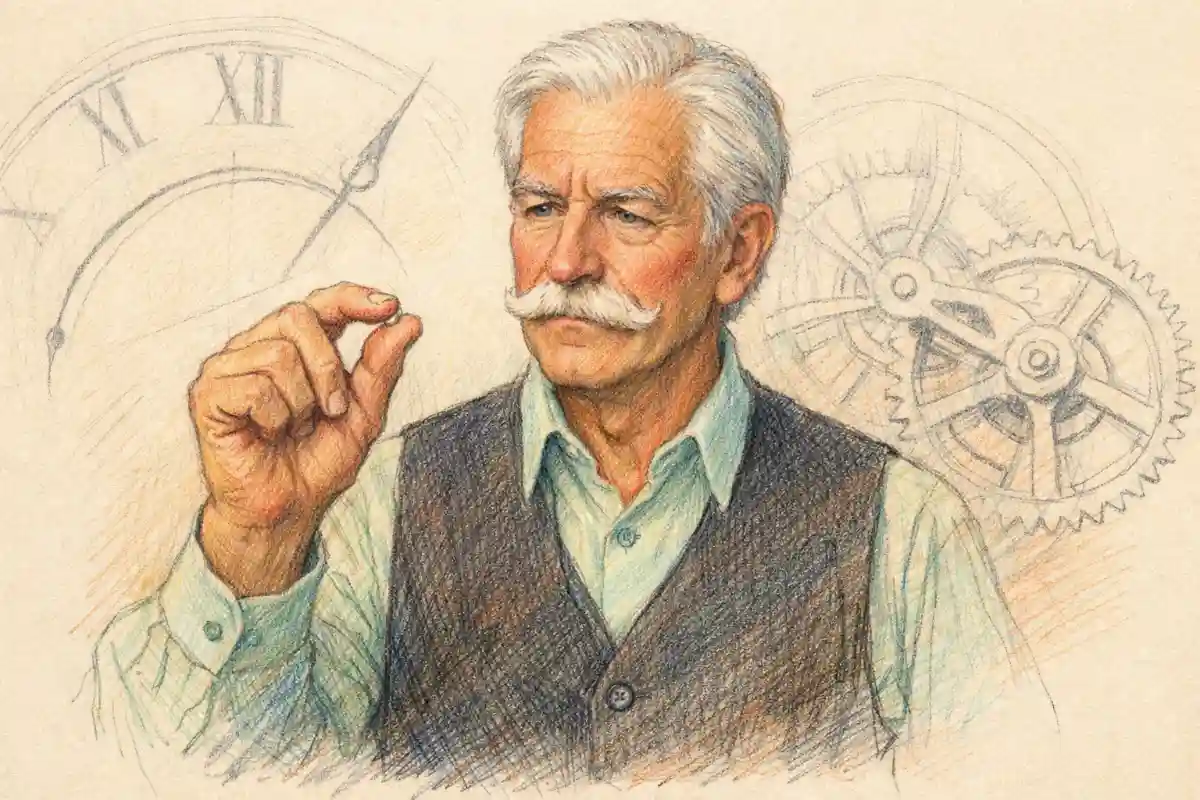
Introduction: The Elf Who Saw the Cave
There is a scene late in Harry Potter and the Deathly Hallows in which an old, half-mad house-elf sits in the basement kitchen of a London townhouse and tells the story of a young man who walked into a cave, drank a potion that made him scream and beg for water, and died alone in a chamber filled with the dead. The elf is the only witness. The young man is Regulus Arcturus Black. The story has been carried for almost two decades, sealed inside a servant whose masters never thought to ask what he had seen. When Hermione Granger sits across from this elf and weeps as he speaks, the reader is given perhaps the most disorienting emotional moment in all seven books: the racist who taught his masters to call her a Mudblood becomes, in the act of telling his grief, the figure she cannot stop crying for.

This is the central provocation of the character. On every page he appears in Order of the Phoenix, he is a bigot. He calls Hermione a slur. He worships a portrait of a witch who screamed about purity of blood. He works actively for the destruction of the only people in the household who treat him with anything like moral seriousness. And he is, simultaneously, the only creature in the entire seven-book series whose love produced something resembling courage on the wrong side of the war. Regulus turned because of him. The first Horcrux was almost destroyed because of him. The elf himself, after a lifetime of being beaten and dismissed, eventually cooked treacle tart for a teenager whose existence he had spent most of the previous book actively working to sabotage.
Most readings of this house-elf refuse the difficulty by collapsing him into one of two convenient shapes. The first reading makes him a redemption story: the bigot reformed, the slave freed by kindness. The second reading makes him a critique: the slave whose so-called redemption is just another form of submission to a slightly better master. Both readings are partly right, and both readings miss the deeper argument the text is making. Rowling is not asking the reader to feel good about a bigot’s transformation. She is not asking the reader to feel cynical about it either. She is staging a scene the children’s-fantasy genre is almost never structurally equipped to stage: the moment when the racist and the love that produced the racism are not opposed but linked at the root.
The thesis here is harder than either of the comfortable readings. The bigotry and the love come from the same place. This elf hates Muggle-borns because the family he loved hated Muggle-borns; he loves the family because they were the only beings who acknowledged him at all, even when the acknowledgment was cruelty. To honour his grief is to honour the love that grew inside the bigotry, and to honour that love is to refuse the easy moral satisfaction of condemning him for the slurs the same family taught him to speak. The redemption the text offers is not the redemption of the servant abandoning his attachments. It is the redemption of Harry Potter recognising, very late in the seventh book, that the attachment was real all along, and that to give a wretched old creature a fake locket as a memorial of a dead master is to do the only piece of moral work that this particular case admits.
Origin and First Impression
He enters the series in the second chapter Harry spends inside the headquarters of the Order of the Phoenix. The introduction is choreographed to provoke revulsion. He emerges from beneath the curtains in the hallway of number twelve, Grimmauld Place, muttering to himself, eyes bloodshot, a “filthy rag” wrapped around his middle. Rowling describes him at length: the dirty grey hairs sticking out of his bat-like ears, the wisps of greying hair, the sour expression, the snout-like nose. Every adjective is calibrated to make the reader recoil. The introduction is, in literal craft terms, deliberately ugly.
What Rowling is doing in this scene is testing the reader. Sirius Black, the wronged hero of the previous book, walks into the hallway and treats this creature with active contempt: orders him out, dismisses his muttering, talks about him as if he were furniture. The reader, primed by three books to love Sirius and trust his judgment, is being invited to absorb that contempt without examining it. The household elf is described as repulsive; the godfather we adore treats him as repulsive; therefore he is repulsive. The transitive logic is the trap. By the end of Order of the Phoenix, the reader is forced to notice that the only person who has been right about this servant of the Blacks is Hermione Granger, who from the first moment insists that he is a person, that he has a name, that he is being treated cruelly.
The first description is also doing something subtler. The “loincloth” is a deliberate visual rhyme with slave-narrative iconography. The bowing, the muttering, the inability to look the master in the eye are all gestures the reader recognises from the literary depiction of bondage. Rowling is signalling, before any character in the room can do so, that the moral problem of this household is not the elf’s bitterness. The moral problem is the institution that produced him. The bitterness is the residue.
The very first words spoken in his presence are insulting. Sirius greets him with derision. Mrs Black’s portrait, awoken by the noise, begins shrieking slurs at Tonks and at the rest of the assembled half-bloods and blood-traitors who have made her ancestral home their war headquarters. The elf, moving between them, mutters his own variation of the same slurs under his breath, indistinguishable from the portrait’s screaming. The introduction is structured as a chord: the dead matriarch and her surviving servant produce the same tone. The reader is meant to understand that they were trained to it together. The shrieking on the wall and the muttering on the floor are the same household.
There is one detail in this introduction that everyone in the room misses and that the reader, on a re-reading, cannot stop noticing. The Grimmauld Place servant of the Blacks wears around his neck a locket on a chain. The trio will not learn what that locket is, or what it cost, until two books later. The first time he appears in the series, he is already carrying the object that contains the entire backstory of his grief, and he is wearing it where any observer who treated him as a person rather than an obstacle could have seen it. No one looks.
The first impression is therefore a lesson the reader is meant to fail. Rowling sets up a sympathetic protagonist and his beloved godfather, places a wretched creature beneath them, and watches to see whether the reader will adopt the household’s hierarchy of attention. Almost every reader does. The genius of Order of the Phoenix is that by the time the book ends, the reader has been forced to see that the locket on the chain, the muttering in the corner, and the broken old retainer they could not bring themselves to feel anything for have all been the same person carrying the same loss, and that the household’s failure to notice has just cost Sirius his life.
The Arc Across Seven Books
Tracing this house-elf across the series requires acknowledging where he is absent before tracing where he is present. The early books contain no version of him at all. Philosopher’s Stone, Chamber of Secrets, Prisoner of Azkaban, Goblet of Fire: across more than two thousand pages of narrative, the Grimmauld Place servant does not exist for the reader. He exists, of course, in his own time. He is in the empty house cleaning the floors of a family that has died or fled. He is talking to Mrs Black’s portrait. He is remembering a young master who walked into a cave and did not come back. Four books of his life are happening offstage while the central characters are busy elsewhere, and the offstage life is, in retrospect, the most extended solitude any character in the series endures. Sirius spends twelve years in Azkaban; his old household elf spends roughly the same period alone in a townhouse keeping watch over the relics of people who never thought of him.
Order of the Phoenix
His textual existence begins when Harry, Hermione, Ron, and the Weasleys arrive at Grimmauld Place and Sirius reopens the family home as Order headquarters. The fifth book is, for this servant of the Blacks, a catastrophe. His house has been invaded by exactly the population his mistress taught him to hate: half-bloods, Muggle-borns, blood-traitors. He is required by the laws of his bondage to obey the heir who treats him with contempt and who is openly working to dismantle everything the family stood for. His response is to retreat into compulsive theft. He hides family heirlooms, including a music box, a tapestry fragment, and the locket that no one else in the house can open. He talks to himself constantly, mostly insults; the reader is invited to laugh at the mutterings, but they are also the only mode of speech the household has ever permitted him.
The pivotal moment of the fifth book is the moment readers, on first encounter, find most difficult to engage with sympathetically. The Grimmauld Place servant slips out of the house and goes to Narcissa Malfoy. He reports what he has heard. He tells her, indirectly through the loophole his magical orders allow, what Harry cares about and how to manipulate him. When Voldemort uses this knowledge to plant the false vision of Sirius’s torture in the Department of Mysteries, the plot leads directly to Sirius’s death.
The first reaction of most readers is to want the elf punished. The second reaction, slower and harder, is to ask what Sirius could possibly have done to prevent it. The novel itself stages this question through Dumbledore at the end of the book. Dumbledore tells Harry, very specifically, that Sirius treated his household servant the way one treats a being for which one feels no responsibility, and that the consequence was the betrayal that killed him. The death is not merely the result of Voldemort’s cleverness. It is also the result of a household’s failure to extend basic moral attention to a creature it had spent decades pretending was furniture.
The fifth book also includes the introduction of the locket. The trio find it during the great cleaning of the drawing room. None of them can open it. They throw it into a bag along with other “rubbish” the household has accumulated. Sirius’s old retainer rescues it from the bag without explanation. The reader is given no clue, in Order of the Phoenix, why the locket matters. The seed has been planted; the harvest will come two books later. The casual disposal of the heaviest object in the household by the people who do not understand it, followed by the silent retrieval by the one being who does, is one of the most precise images Rowling ever writes of the cost of unexamined dismissal.
Half-Blood Prince
The sixth book opens with Harry inheriting the Black estate, including the house-elf. The legal mechanism is grotesque: a sixteen-year-old boy becomes the magical owner of a being who has lived for over a century, and the being is forced to obey him because the inheritance is paperwork. Harry’s first command is exile: send the troublesome elf to work in the Hogwarts kitchens, where he cannot do further damage. The trio receives the news with relief. The reader, depending on the reader, receives it with relief, with discomfort, or with both.
What happens in the kitchens is one of the most carefully buried scenes in the entire series. The Grimmauld Place exile becomes, in the kitchens, a kind of disgrace among his own kind. The Hogwarts elves are appalled by him. Dobby reports back that the new arrival is universally disliked, that he refuses to work, that he insults the other elves. He is, in the only community of his peers he has ever encountered, an outcast. This is the loneliest the character ever is in the series. The household that raised him is gone. The household that has inherited him does not want him. The community of elves his species belongs to rejects him. The book leaves him in this position for almost the entirety of its six hundred pages.
The other major scene in the sixth book involving the old servant of the Blacks is the Hepzibah Smith memory in the Pensieve. Dumbledore shows Harry the memory of an old witch’s house-elf, Hokey, who was framed for poisoning her mistress after Tom Riddle stole the locket of Salazar Slytherin and the cup of Helga Hufflepuff from the estate. The parallel is the entire point. Hokey is the elf who is sacrificed by a Ministry too lazy to investigate further. The Grimmauld Place servant is the elf who carries the locket Tom Riddle thought he had successfully turned into a Horcrux. The two elves never meet. The book stages them as bookends. The framework of bondage that allowed an old servant to be condemned for her master’s murder is the same framework that produced the bitter old elf who alone knows what really happened to Voldemort’s stolen relic.
Deathly Hallows
The seventh book is the elf’s book. After more than two thousand pages of being dismissed, exiled, mocked, or used as comic relief, the household servant of the Blacks finally gets the long scene that reframes everything. Harry, Ron, and Hermione return to Grimmauld Place at the start of the war. Harry, now legally master of the house, summons the elf. The elf appears, sullen, ready to be ordered around. Harry asks him a question no one has asked him in his life: tell me about the locket.
What follows is the longest sustained speech any non-human character delivers in the entire series. The elf describes how Regulus Black, the younger son of the family who had defected to Voldemort, came home one night with a strange request. The young master ordered his servant to accompany him to a coastal cave. Once there, the master ordered the servant to drink the potion in the basin first, and then to take the locket, replace it with another, and return home and destroy the original. The servant obeyed. The potion caused unbearable thirst and hallucinations of Regulus’s worst memories. The servant survived because he was a house-elf and because Regulus had ordered him to live; the master, who drank the second round himself a few months later, did not. The inferi rose from the lake and pulled the young man under. The servant escaped because he had been ordered to escape, and he carried the locket home alone, where for years he tried and failed to destroy it.
This narration breaks every assumption the reader has made about the character. The bitterness is not unmotivated. The hoarding is not random. The locket on the chain that the trio threw into a rubbish bag and that Mundungus Fletcher later stole was the object the young man Regulus had died trying to destroy. The thieving “vile creature” Sirius spent a book reviling was the only person on earth who knew that Sirius’s younger brother had died a hero. And Sirius, who had hated his brother and dismissed him as a Death Eater coward to the end of his life, never asked the one being who could have told him otherwise.
The scene shifts everything. Harry gives the elf Sirius’s old fake locket as a gift. The transformation begins almost at once. Within weeks, the household elf is cleaning the kitchen, cooking elaborate meals, addressing Harry as Master Harry rather than as a slur, and arranging fresh flowers in the dining room. The change is slow and watchable. Rowling devotes more than a hundred pages to it across the early chapters of Deathly Hallows. The treacle tart in particular is significant. The elf has learned, somehow, that this dessert is Harry’s favourite. The intimacy of the gesture, made by a creature who six months earlier had actively wished Harry dead, is left to do its work without authorial commentary.
The arc culminates in the Battle of Hogwarts. Harry returns to the castle for the final stand. The elf, on his own initiative, organises the Hogwarts house-elves into a fighting force. They emerge from the kitchens armed with kitchen knives and meat cleavers, charging the Death Eaters in the Great Hall. The elf is at their head, screaming about Regulus and brandishing his weapon. The reader, who first met him muttering insults under a tapestry of pure-blood ancestors, last sees him leading a slave rebellion into a battle for the future of the wizarding world. The image is one of the most surprising in the entire series, and Rowling does not even pause to underline it. The trio does not see him fight. The narrative simply records that he was there, that the elves came, and that Harry afterwards remembers it.
Psychological Portrait
Understanding the psychology of this elf requires holding two facts in the same frame at once, and most analyses fail because they refuse to hold both. Fact one: he is the product of a hereditary bondage system in which a sentient creature was treated as the property of a family of fanatic blood-purists for generations. Fact two: his attachments are real, his grief is real, his eventual care for Harry is real, and to treat these as merely the conditioned responses of a slave is to deny his interiority the same way the household always denied it.
His central psychological structure is grief that has been forbidden the language of grief. He lost Regulus, the only being who ever treated him as worth saving, when he was perhaps the equivalent of middle-aged for his species. He could not tell anyone. The household forbade discussion of the dead son’s defection from Voldemort’s service. The portrait of Walburga screamed her own version of grief at the empty hallways. The other son was in Azkaban. The husband, Orion, had died of unspecified causes. The elf was left to clean a house full of relics belonging to people who would not have wanted him to mourn the one boy who had treated him decently. The mutterings under the tapestry are the only form of speech the bondage permitted him for his grief. They sound like bigotry because they were taught to him as bigotry. They functioned, in the empty house, as a kind of liturgy of loss.
His attachment style, in clinical terms, is the disorganised attachment that follows abuse mixed with intermittent reinforcement. Walburga screamed slurs at him and also gave him a name, a role, and a recognised place in the household hierarchy. Regulus, the rare exception, gave him kindness and then died asking him to perform the most psychologically devastating task he had ever been given. Sirius treated him as garbage from the moment he came of age. The result is a creature who cannot regulate his emotional responses to anyone in authority over him. He oscillates between obsequiousness and sabotage, between obedience and theft, between weeping for a dead master and muttering slurs at a living one. The pattern is recognisable from human survivors of domestic abuse: hypervigilant loyalty to the abuser, displaced rage at safer targets.
His relationship to language is also psychologically diagnostic. He speaks in third person about himself, a speech pattern Rowling associates with all house-elves but which carries particular weight in his case. He does not use the word “I.” The selfhood the household never granted him has been internalised as a grammatical absence. When he muttering describes himself, he uses “Kreacher” as a proper noun, a thing the household named, rather than as the subject of his own life. The slow shift in Deathly Hallows toward using personal pronouns when speaking to Harry is almost imperceptible, but it is there if the reader looks for it.
The bigotry must be addressed without minimisation. He uses the word Mudblood freely. He clearly believes the pure-blood ideology he was raised in. The text does not let the reader off the hook on this point. What the text does is to insist that the ideology is inherited, not chosen, and that the inheritance is itself a function of the bondage that produced him. He learned the slurs from the mistress who screamed them at him as often as at her targets. The deconstruction of inherited prejudice in a being who has no peer community to compare notes with, no education that contradicts the household, and no relationships outside the family he was born into, requires more than kindness from an outside party. It requires that the outside party recognise the love that produced the prejudice and offer the prejudiced being a path that does not require renouncing the love. Harry, almost accidentally, does this when he gives him the fake locket. The gift says: your love for the family that taught you these things is acknowledged and honoured. The rest of the change follows from that recognition.
The kind of layered reading that Kreacher’s psychology demands, the ability to hold prejudice and grief in the same frame without collapsing one into the other, is the same kind of multi-framework analytical reading that the most demanding examinations train candidates to perform. Tools like the ReportMedic UPSC PYQ Explorer build precisely this capacity through systematic pattern recognition across years of questions, where the candidate must hold competing analytical frames in mind simultaneously and decide which is operative for a given problem. Rowling’s text demands of her reader something very similar: the discipline to refuse the first available moral category and to keep both categories open until the text itself provides the resolution.
The final psychological observation is the one most readers miss: he is, by the end of the series, the only character in the entire Black family bloodline who has lived a complete arc. Walburga is dead and screaming on a wall. Regulus is dead in a cave. Sirius is dead beyond the Veil. Bellatrix is dead in the Great Hall. Narcissa survives but is broken. Andromeda survives but has lost her husband, her daughter, and her son-in-law. The household servant, alone of the Black household, sees the family through to the end of its story. The last witness of the Most Ancient and Noble House of Black is the creature it spent generations refusing to acknowledge as a witness at all.
Literary Function
In terms of narrative architecture, this character serves three distinct structural functions, and the three are not collapsible into one another. The first is plot machinery. The Grimmauld Place servant is the holder of secrets. He knows the location and the contents of objects no other character knows about. He is the carrier of the Horcrux for years before the trio arrive to look for it. The plot of Deathly Hallows simply does not work without him; the trio would have no way to learn where the locket went after Mundungus Fletcher stole it, and they would have no way to retrieve it from Dolores Umbridge’s neck without his assistance in the Ministry break-in chapter. He is, in cold structural terms, an indispensable plot device.
The second function is the foil. He exists across from Dobby, and the two together form a diptych of house-elf possibility. Dobby is the elf who hates the family that owned him and finds liberation through Harry. Kreacher is the elf who loves the family that owned him and finds liberation, eventually, through Harry. Both elves end the series fighting for the same side; both elves died or transformed because Harry treated them as persons. But the routes are opposite, and the symmetry is structurally precise. The Dobby route is the route fantasy fiction normally writes: the slave’s liberation through rejection of the master. The Kreacher route is the route fantasy fiction almost never writes: the slave’s liberation through honouring the love that grew inside the slavery. Together they constitute Rowling’s most morally complete argument about bondage in the wizarding world. Readers tracing this dynamic should follow it to its conclusion in the Dobby character analysis, where the route of rejection is given the full treatment its tragic ending deserves.
The third function is the moral test. Kreacher is the character through whom the trio’s evolving capacity for compassion is measured. Hermione gets it right almost immediately and is dismissed by Ron and Harry as obsessively interested in elfish welfare. Ron gets there last and only after the elf has cooked for him; the conversion is shallow but functional. Harry gets there in stages: first through pity in the kitchen after the locket scene, then through inheritance of the family obligation, then through the long slow recognition during the war that the household elf is owed something none of the wizards know how to pay. The reader’s own moral test runs in parallel. The reader who finishes the seventh book without having revised the first impression of the muttering ugly creature in the hallway has failed the same test Sirius failed.
The Sirius failure is the literary device that makes the whole structure work. Sirius is the reader’s surrogate in dismissal. He is warm, brave, wronged, loyal to Harry, and almost entirely incapable of extending the same warmth to a creature whose face he finds repulsive and whose loyalty he assumes is fixed. Rowling kills him for it. Not directly, not punitively, but structurally. The line Dumbledore delivers to Harry at the end of Order of the Phoenix, that Sirius did not see his elf as a being deserving of his concern and that the consequence was the betrayal that led to his death, is one of the most uncomfortable single lines in the entire series. The most beloved adult male character of the first five books dies because he could not see his servant. The moral economy is brutal and Rowling refuses to soften it.
The literary function of the elf is therefore not merely to be redeemed. It is to be the engine of the reader’s own redemption. The reader who entered Grimmauld Place in Order of the Phoenix dismissing the muttering as comic relief is the reader being slowly trained to see what Sirius did not see. The training is gradual, sometimes brutal, and ends with the image of a meat-cleaver-wielding old elf leading his fellow servants into battle while shouting the name of a dead master nobody else in the room could have placed. The reader who can hold that image and feel its full meaning has been through a small ethical apprenticeship the text has designed.
Moral Philosophy
The moral philosophy Rowling embodies in this house-elf is more challenging than the surface morality of the series otherwise tends to be. The wizarding world’s standard line on bigotry is that it is bad, that those who practice it should be opposed, and that the heroes should rescue and uplift those who suffer from it. Hermione’s S.P.E.W. campaign is a comic version of this surface morality, well-intentioned and almost entirely useless because it treats the elves as objects of liberation rather than as subjects of their own freedom. Kreacher refuses Hermione’s bonnets and badges with contempt. His refusal is correct. The moral position of the elf is not that he wants to be a free elf; it is that he wants the household he served to be honoured, and that the household includes the young master who died for what the elf is now beginning to understand was the right reason.
The harder moral question Rowling stages through this character is whether redemption can occur without renunciation. Standard redemption narratives require the redeemed party to disavow the values of the previous life. The sinner confesses, the convert is baptised, the racist publicly recants. Kreacher does none of this. At no point in Deathly Hallows does he announce that he no longer believes in pure-blood supremacy. He simply begins to address Harry as Master Harry rather than as a slur. He cooks. He leads the elves in battle. He continues to wear, around his neck, the relic of the master who taught him those values in the first place. The redemption proceeds through deepening attachment rather than through ideological conversion. He does not abandon his loyalty to the Blacks; he extends it.
This is the morally uncomfortable part. The redeemed Kreacher of Deathly Hallows is still in some sense the racist Kreacher of Order of the Phoenix. He has not been re-educated. He has not undergone a transformation of belief. He has simply found a master who treats him with sufficient decency that the love that always sustained him can now sustain his work for a different cause. The cause happens to be the cause of resisting the genocide his original household supported. The continuity of his attachment to the Blacks across that pivot is the discomfort the text refuses to resolve. He is fighting on Harry’s side because of Regulus, not despite Regulus. The young master’s anti-Voldemort act becomes, in his servant’s hands, the through-line by which Black family loyalty becomes anti-Voldemort labour. He has not stopped serving the Blacks. He is serving them more fully than ever.
The ethical question this raises is whether such a redemption is real. The cynical reader answers no: the elf is simply a slave with a marginally better owner, and his “redemption” is just compliance with the new regime. The sentimental reader answers yes: kindness reformed him, and his change of heart is genuine. The text refuses both answers. Kreacher’s redemption is real in the sense that his actions in the seventh book are genuinely useful to the resistance and genuinely costly to the Death Eaters. It is also limited in the sense that his ideological framework has not changed. He is doing the right things for reasons that are still rooted in the family loyalty that taught him bigotry in the first place. The moral evaluation depends on whether one considers right action sufficient when the framework producing the action remains contaminated. Rowling does not answer the question. She makes the reader carry it.
Reading this house-elf well requires the reader to hold multiple ethical frameworks simultaneously: virtue ethics (was his character transformed?), consequentialism (did his actions produce good outcomes?), deontology (did he follow rules that respected the dignity of others?), and care ethics (did he develop and sustain morally relevant relationships?). Each framework yields a different verdict on the redemption. This kind of multi-framework moral reasoning is precisely what the most rigorous analytical training develops, whether in literary criticism or in competitive examinations like the ReportMedic CAT PYQ Explorer, where pattern recognition across years of verbal reasoning problems builds exactly this discipline of switching among frameworks without collapsing them prematurely into a single judgment. The case of Kreacher rewards the reader who refuses early closure.
There is one further moral question the text quietly raises and never answers. After the war, what becomes of him? Harry inherits Grimmauld Place. He spends little time there. The household servant of the Blacks, having led elves into battle and survived, presumably returns to maintaining a townhouse for a master who is rarely present. His ideological framework, untransformed, remains pure-blood-loyalist within a Britain now run by half-bloods and Muggle-borns. Does he resent it? Does he miss the household he served? Does he grieve all over again, this time for the war that took everyone else who shared his vocabulary? The text declines to say. The redemption is sealed at the moment of the Battle of Hogwarts and the post-war life is left unwritten, in part because the moral problem the elf embodies cannot be solved by victory. The Black household’s last servant lives on after the Black household, and what that life looks like is the question Rowling places at the door of the reader.
Relationship Web
The relationships that define this character form a web so tight that no single thread can be discussed without the others. The web has six visible nodes and one invisible one, and the invisible one organises the rest.
The invisible node is Regulus Arcturus Black. He is invisible in the sense that he is dead before the elf appears on the page; the entire arc takes place after the relationship that defined him has ended. But every other relationship the household servant has must be understood as a deflection of, substitute for, or echo of his attachment to the young master who left for a cave one night and did not return. Regulus is the only being in the elf’s recorded life who treated him with sustained dignity. Regulus’s specific cruelty, taking the elf to the cave and ordering him to drink the potion first, was simultaneously a violation of the dignity he had previously offered and the foundation of the lifelong devotion that followed. The order to drink first was also the order to live. Regulus did not let his servant die. He took the second draught himself a few months later precisely so that no one else would have to. The combination of having been used by the young master and having been spared by him is the formative event of the elf’s emotional life. Everything else, the muttering at the tapestry, the hoarding of relics, the impossibility of disposing of the locket, the eventual transfer of devotion to Harry, is a series of attempts to honour an attachment that the world the elf lives in refuses to recognise as legitimate.
Walburga Black, the dead matriarch whose portrait still screams in the entrance hall, is the second node. The relationship is ambiguous in a way the text never quite resolves. Walburga was cruel. She was a fanatic. She also acknowledged the household servant in a way no one else in the family did, including her husband Orion. She gave him a name. She entrusted him with the family’s secrets. She praised him when he did his work. The portrait, even after her death, retains the relationship: she screams approval at his muttering, addresses him by name, treats him as the last remaining authentic member of the household after her sons defected to Azkaban and to the cave. The portrait is, in some unbearable sense, his closest surviving relationship through most of Order of the Phoenix. Whether he loved her is left unspecified. What is specified is that his speech, his ideology, and his behaviour are all calibrated to a mistress who continues to give him instructions through a magical painting on the wall. That she also taught him to despise people like Hermione is not separable from the fact that she also taught him he had a place in the world.
Sirius Black, the surviving heir Harry adores, is the third node and the most morally illuminating. Sirius is not cruel to the elf in the cartoonish way Mrs Black was cruel; he is cruel in a more recognisable, more contemporary way. He treats his old retainer as an inconvenience. He orders him about. He insults him casually. He never asks his old household servant a single question about what happened in the twelve years Sirius was in Azkaban. He never asks about his dead brother. He never recognises that the muttering creature in the hallway is the only being who could tell him what became of Regulus. The Sirius failure is not the failure of malice. It is the failure of attention, which Rowling presents as a graver moral failure than malice precisely because it is more common. Most of the household servants of the world are not abused by sadistic masters; they are simply unnoticed by indifferent ones. The character of Sirius is constructed across Order of the Phoenix with extraordinary care for this point, and the death he dies is the consequence the text draws from the inattention. He never knew his brother died a hero. He never knew his servant grieved. He died not because Voldemort outwitted him but because he could not see the household he had inherited.
Harry Potter, the inherited master, is the fourth node and the arc’s destination. The relationship begins in active mutual loathing in Order of the Phoenix and Half-Blood Prince, passes through forced exile to the Hogwarts kitchens, and arrives at the kitchen-table conversation in Deathly Hallows in which Harry asks the question no one has ever asked. The gift of the fake locket is the transformative gesture. It is offered with no ideological agenda, no expectation of conversion, no demand that the elf renounce his loyalty to the Black family. It is offered as a memorial to Regulus, given to the one creature for whom that memorial would mean anything. The elf wears it for the rest of his life. The relationship that follows is genuinely warm in a way that is also genuinely circumscribed. Harry does not free his servant. Harry does not abolish the family bondage. Harry simply becomes a master who is decent enough that the love the elf has always carried can flow toward him without being insulted by him. Whether this is friendship or improved servitude is a question the text does not resolve, and the irresolution is the honest answer.
Hermione Granger, the recipient of the slur, is the fifth node and morally the most demanding. Hermione is the only character in the original cast who insists from the beginning that the household elf is a person. She is wrong about almost every tactical element of how to act on that insistence (S.P.E.W. is a comic failure, the bonnets are a humiliation, the strike does not happen), but she is right about the foundational claim. When the elf, sitting at the kitchen table at Grimmauld Place during the Christmas of Order of the Phoenix, mutters his slurs at her, she does not retaliate. She does not lecture. She remembers. By the time the cave testimony is delivered in Deathly Hallows, she is weeping for the creature who called her a Mudblood across an entire previous book. Her capacity to hold both facts at once, the slur and the grief, is one of the deepest moral achievements of any character in the series. The friendship that develops afterward between the bushy-haired Muggle-born and the bigoted old servant is the precise relationship the series’s central thesis about prejudice was built to demand.
Ron Weasley, the third member of the trio, is the sixth node. His evolution is less significant than the others but more representative of what most readers experience. Ron starts out treating the elf as repulsive and barely improves until the food arrives in the early chapters of Deathly Hallows. His conversion is mediated through the stomach: an old creature who cooks treacle tart and stew cannot be entirely contemptible. This is not nothing. The shift from “vile creature” to “Kreacher’s right” over the course of a few weeks in the wartime Grimmauld Place is the conversion of the ordinary reader, not the philosophically refined one. Rowling needs Ron to convert in order for the conversion of the audience to be plausible, because most readers’ moral lives change through food and cohabitation rather than through grand ethical reflection. Ron’s mid-battle invocation of the elves at the end of Deathly Hallows, when he insists that Harry remember to think about the house-elves still trapped in the kitchens during the evacuation, is one of the most underappreciated moments of moral growth in the entire series. The boy who could not see his godfather’s old servant becomes the man who remembers, in the middle of a siege, that there are sentient beings whose lives the wizard war has not bothered to protect. The transformation begins with treacle tart and ends with the seed of moral attention. The relationship between this servant of the Blacks and the youngest male Weasley is the smallest of the six and the most representative.
The seventh node is the most overlooked: the brotherhood of the Hogwarts house-elves. The relationship is brief, occurring almost entirely in the last hundred pages of the seventh book, but its meaning is large. The Grimmauld Place servant arrives in the kitchens as an outcast. He leaves them, less than a year later, as the leader who calls them into battle. The transformation of a single elf’s relationship with his own kind, from rejection to leadership, is the smallest scale on which the series’s argument about bondage and liberation can be tested. He does not free the Hogwarts elves. He does not abolish their service to the school. What he does, briefly, is to extend to them the recognition of shared purpose that his own life had denied him until Harry gave him the locket. The elves who march into the Great Hall with their kitchen knives are not following an idealist; they are following an elf who has carried his master’s loss for two decades and finally found a way to fight back. The fight is for Hogwarts, for the side of the war that does not want to kill them, and for the memory of one young man who walked into a cave because he understood that what his family stood for was wrong. That memory walks at the head of the elves through the Battle of Hogwarts, and most readers never notice.
The full picture of the relational web is best understood through the Regulus Black character analysis, where the absent center of every relationship the elf has is brought into focus on his own terms.
Symbolism and Naming
The name itself is the first piece of symbolism, and it is the most uncomfortable. “Kreacher” is the word “creature” with the spelling altered. The name says, every time it is spoken, that the being so named is not quite a person. The household chose to call him by the species rather than by a name that would individuate him. The naming is the bondage made grammatical. Every utterance of the name is a small renewal of the original violence: the family decided, when the elf was born or assigned to them, that he was a creature first and an individual not at all. He has internalised the naming so completely that he refers to himself in the third person using the same word. The slow drift in Deathly Hallows toward Harry calling him by the name without contempt is the only available form of address; there is no other name to substitute. The redemption cannot rename him. It can only repurpose the name. The creature who was called Creature can, by the end of the seventh book, be called by what is in effect his name. The renaming would be a fantasy; the recontextualisation is what the text permits.
The locket is the second piece of symbolism and the densest. There are, in the seventh book, two lockets. The original is the Horcrux of Salazar Slytherin, the locket Tom Riddle stole from Hepzibah Smith, the locket Regulus Black switched out in the cave, the locket the elf could not destroy. The duplicate is the fake Regulus left in the basin, the empty shell, the locket Sirius’s elf could not open or destroy and that Mundungus Fletcher stole and that the trio retrieved from Dolores Umbridge’s neck. The duplicate is also the third locket, the one Harry gives the elf as a gift. The substitution of fakes for original recapitulates the entire moral architecture of the character: what looks like the worthless object is in fact the carrier of the deepest love. The Horcrux, the original, contains a fragment of Voldemort’s soul. The duplicate, the fake, contains the memory of a young master who tried to do the right thing. The elf wears the duplicate. He wears the worthless one, the one without the soul fragment, because the worthless one is the one that means what he needs it to mean. The most powerful magical object in the household, in the household servant’s hands, is the empty one. The symbolism is theological: relics derive their power from devotion, not from contents. The locket Regulus could not destroy and the locket Harry gives the elf turn out to function, for the purposes of the elf’s life, as the same object.
The treacle tart is the third piece of symbolism and the smallest. It is Harry’s favourite dessert. He has loved it since the first feast in Philosopher’s Stone. The elf, in Deathly Hallows, learns this somehow and makes it for him. The text never explains how he learned. The information has presumably come through Hogwarts house-elf gossip during his brief exile in the kitchens. The knowledge is the smallest possible gesture of care: he knows what the boy likes and he prepares it. The treacle tart is the inverse of the locket. The locket is the heavy relic of grief; the tart is the warm dish of attention. The household that named him Creature would never have made him a favourite dish. The boy who inherited him receives one, and the gift is the proof that the household’s verdict on the elf was wrong. He is capable of care. He was always capable of care. The household simply never offered him anyone to care for.
The setting itself is symbolic. Grimmauld Place is the elf’s habitat across all seven books in which he features. The address is a pun: “grim old place,” and it is. The house is dark, dusty, full of cursed objects, screaming with portraits, infested with doxies. The elf’s first appearance occurs in this gloom. The reader’s first impression of the character is therefore inseparable from the first impression of the house. The bigoted retainer of a fanatic family living in a darkened museum of pure-blood ancestry is, of course, a visual cliche, and Rowling deploys it on purpose. She wants the reader to see the cliche first and then dismantle it. By the end of Deathly Hallows, the same house has become the temporary home of the trio, the scene of the cave testimony, the kitchen in which the treacle tart appears, and the base from which the Ministry break-in is launched. The setting transforms because the elf transforms. The relationship between Grimmauld Place and its servant is the relationship between any household and the person who keeps it. When the keeper changes, the house changes. The series is unusually explicit about this transformation: the trio note, almost in passing, that the house seems lighter once the kitchens are clean and the cooking has resumed.
The Unwritten Story
The unwritten story of this household servant is, like every unwritten story in great fiction, larger than the written one. Rowling provides enough fragments to suggest the shape of the rest, and the rest is what the analytical reader is invited to construct.
The first unwritten chapter is the twelve years of solitude. Sirius is in Azkaban. The Potters are dead. Mrs Black has died at some point during this period. The household has been emptied of every living member except the servant who was bound to it. For more than a decade, he is alone in a London townhouse. He cleans the floors. He polishes the silver. He talks to the portraits. He remembers Regulus. He maintains a household that no one is coming back to. The most extended depiction of solitude in the entire series is the unwritten interior monologue of a creature who, for twelve years, has no master to obey and no peer to talk to and yet continues to perform the work the bondage commanded. The Hogwarts elves, by contrast, have community. Dobby, by contrast, has the Malfoys actively present. The Grimmauld Place servant has no one. What he does during this period the text does not say. What he must have done, given who he is, is mourn. The twelve-year mourning of a single being for a young man who walked into a cave is the longest love story in the Harry Potter canon, and Rowling does not write a sentence of it.
The second unwritten chapter is his mother. House-elves have parents. He refers, in Order of the Phoenix, to his mother in passing. Her head, like the heads of generations of elves before her, hangs as a trophy on the wall of the house in which she lived and worked. The Black family practice was to behead their elves when they grew too old to carry the tea tray and to mount the heads as decorations in the upper hallway. The detail is given casually in the text and almost no reader pauses on it. The pause is the analytical opportunity. He was raised in a house in which the death of an old elf was followed by the mounting of the elf’s head as ornament. His own mother’s head is on the wall above him as he works. His own end, by the household’s standards, would have been the same end. The expectation of beheading is the unspoken structural condition of his entire working life. That he serves the family that mounted his mother’s head, that he loves the family that has guaranteed him this end, is the unwritten ground of every relationship he has. Rowling sets up the detail. She declines to develop it. The development is what serious readers must do for her.
The third unwritten chapter is the question of whether he ever loved anyone besides Regulus. His mother is named but never described as a relationship; she is referred to in the manner of inventory, a head on a wall. His fellow elves at Hogwarts are described as despising him during his exile in the kitchens. He has no friends. He has no peer. The Black family ate, slept, and reproduced; he served them. The household’s hierarchy permitted him no relationships outside the family. The unwritten chapter is the relationship the bondage system structurally forbade him to have. He could not befriend other elves because he was bound to a family that lived in isolation from other elf-keeping households. He could not befriend wizards because they were his masters. He could not befriend witches because they were his mistresses. The only being who occupied a category that permitted the development of mutual care was Regulus, the young master who, briefly, treated him as a person. The relationship that defined his life was the only relationship the household allowed him to have, and the household took it from him by sending the young master to die.
The fourth unwritten chapter is the post-war life. The seventh book ends with the Battle of Hogwarts and an epilogue set nineteen years later. The household servant does not appear in the epilogue. Whether he is alive, dead, still at Grimmauld Place, working for the Potter children, or simply gone, the text declines to say. The omission is significant. Rowling provides post-war detail for most of the major and many of the minor characters. She omits this one. The reader is left to imagine a life: a townhouse increasingly empty as Harry and Ginny move to a family home elsewhere, a servant continuing to dust the silver of a household whose members have died or scattered, a creature who fought in the Battle of Hogwarts and now returns to the loneliness of routine maintenance. Whether his ideological framework softened, whether he ever spoke the name Regulus again to anyone other than Harry, whether he died in the Black family house or was buried in the family plot or had his head mounted on the wall as his mother’s was, the text is silent. The silence is the largest unwritten chapter in the entire series’s treatment of any individual character. The depth of what Rowling withholds from the reader at this point is the measure of how seriously she has taken the character she has just written.
The fifth unwritten chapter is the smallest and perhaps the most haunting. When Sirius told his old retainer, during the cleaning of the drawing room, to throw away the locket, what did the elf hear? The order from a master must be obeyed. The order from this particular master, however, was not literal. Sirius did not say “Kreacher, you are forbidden from saving this locket.” Sirius said, dismissively, that any object the elf cared about was rubbish to be thrown out. The household servant’s response was to hide the locket in his cupboard, where it remained until Mundungus Fletcher stole it. The exact magical mechanism that permitted this disobedience is unclear. House-elves are bound to obey direct orders. Sirius’s order was indirect; the contempt was direct, the prohibition was implied. The elf’s preservation of the locket through that loophole is the act of will that makes the entire seventh book possible. If the locket had been destroyed, Voldemort’s Horcrux would never have been retrieved. The young master Regulus’s death would have meant nothing, because the object he died trying to destroy would have been disposed of by his older brother’s casual contempt. The story of the Harry Potter series turns on the precise moment in which an old household servant heard a master’s order, identified the loophole, and used it to preserve a relic of love. The moment is not narrated. It is reconstructed from the fact of the locket’s survival. The unwritten scene is the hinge of everything that follows.
Cross-Literary Parallels
The figure of the racist retainer whose loyalty to a fallen lord becomes the only meaning of his life has a long pedigree in world literature, and reading Rowling’s elf against that pedigree is the surest route to understanding what makes her portrait both familiar and original.
The first and most obvious parallel is Caliban in Shakespeare’s The Tempest. Caliban is the colonised native whose language has been given to him by his coloniser and whose only profit on it, as he says, is that he knows how to curse. Caliban’s most famous line, “You taught me language, and my profit on it is I know how to curse,” is, in compressed form, the entire linguistic situation of the Grimmauld Place servant. The household taught him the slur. The household taught him to hate. He uses the household’s vocabulary to insult Hermione because that vocabulary is the only one he has been given. Caliban’s resentment of Prospero is structurally identical to the elf’s relationship with Sirius: the master who took the island from him, who teaches him language, who treats him as subhuman, and against whom his rebellion can only be articulated in the very terms of the relationship that produced his subjection. Where Rowling’s portrait diverges from Shakespeare’s is in the figure who corresponds to Regulus. Caliban has no figure of love. The household elf does. The introduction of love into the colonial-retainer structure is Rowling’s specific innovation, and it is what makes her elf morally more complicated than Shakespeare’s monster. Caliban can be redeemed only by liberation. Kreacher can be redeemed by remembrance.
The second parallel is the figure of the racist retainer in American Southern fiction, particularly in the work of William Faulkner. Faulkner’s Dilsey, the African American servant of the Compson family in The Sound and the Fury, is, of course, morally legible in a way the Grimmauld Place servant is not. Dilsey holds her dignity throughout the decline of her white employers; she is the moral center of the novel. The structural parallel is therefore the inverse: the same position of the long-serving household retainer of a decaying aristocratic family, but the moral valence is opposite. Where Dilsey’s loyalty is to her own integrity in the face of her employers’ cruelty, the elf’s loyalty is to the cruelty itself, internalised. The more disturbing parallel in Faulkner is not Dilsey but Lucas Beauchamp in Intruder in the Dust, the Black tenant who refuses the social script of his oppression but does so within a framework that the oppression has nonetheless shaped. The household servant of the Blacks is closer to a figure whose loyalty is to the family that owned his bondage even after the bondage has been formally ended, a kind of figure American fiction has been writing for a century and a half and that Rowling brings into the English fantasy tradition with significant force. The parallel breaks down, of course, where it must: house-elves are not African Americans, the wizarding world is not the antebellum South, and the analytical mapping of one onto the other is partial at best. But the partiality is itself revealing. Rowling has imported into her children’s fantasy the moral problem of inherited bondage in a way the genre had previously not attempted.
The third parallel is Stockholm Syndrome rendered as sustained character study. The clinical concept was named after a 1973 bank robbery in Stockholm in which hostages developed positive feelings toward their captors. The condition has since been deployed, with varying degrees of rigour, in literature dealing with cult survivors, hostages, abused spouses, and child abuse victims. The Grimmauld Place servant is, in some ways, the most precise literary depiction of the condition the Harry Potter series produces. His loyalty to a family that abused him is total. His articulation of values that justify his own subjection is fluent. His resistance to liberation, when liberation is offered, is genuine. The Hermione character’s failed S.P.E.W. campaign is, in part, a depiction of how anti-trafficking and anti-bondage interventions fail when they do not account for the psychological attachment of the bonded individual to the bonding system. The redemption that finally works for the elf is not Hermione’s offer of freedom. It is Harry’s offer of recognition for the love the bondage produced. The clinical insight Rowling stages, perhaps without explicitly intending it, is that survivors of long bondage cannot be liberated through the negation of the relationships the bondage created. They can sometimes be liberated through the affirmation of the relationships within a new context that does not require continued abuse. The path is harder and slower than the path Hermione offers, and it is the only one that works.
The fourth parallel is the figure of the bigoted survivor in Holocaust literature, particularly in the writing of Primo Levi. Levi writes, in The Drowned and the Saved, about the prisoners in the camps who internalised the SS guards’ moral framework and who would, after the war, struggle for the rest of their lives with the question of whether their survival had implicated them in the system that destroyed everyone they had loved. The household elf is, in literary terms, a different species of this figure: not a survivor of a destruction system but a participant in a household ideology that produced fanatical adherents like Bellatrix and brave dissenters like Regulus. The relevant parallel is the moral framework Levi calls “the grey zone.” The grey zone is the morally compromised middle ground occupied by figures whose actions cannot be cleanly categorised as either resistance or collaboration. The household servant of the Blacks lives in the grey zone for the duration of Order of the Phoenix. He is bound to obey a master he despises. He works within loopholes to undermine that master. He is loyal to a household that has produced both a fanatic killer and a young hero. The moral judgment of such a figure resists the cleanly heroic or cleanly culpable categories the genre normally insists on. Rowling has imported the grey zone into children’s fantasy. The import is significant.
The fifth parallel is the medieval retainer whose loyalty to a fallen lord becomes the meaning of his life. The Old English poem The Battle of Maldon contains the figures of the loyal retainers who refuse to leave the body of their slain leader Byrhtnoth and who fight to the death beside him. The Anglo-Saxon ethos of the comitatus, the warrior-band bound to the lord by oaths of fealty unto death, structures the figure of the retainer whose entire identity is constituted by the relationship to the master who has died. The Grimmauld Place servant, in this reading, is the comitatus figure displaced into a peacetime servant context. Regulus is the fallen lord. The elf’s two-decade vigil at Grimmauld Place is the comitatus loyalty extended into a long peace that the master did not live to share. The Battle of Hogwarts is the moment the elf finally gets to fight for the master he has been mourning, even though the master has been dead for almost two decades and even though the master would not have understood himself as the cause for which the elf was now charging. The retainer becomes the avenger of the lord he had never managed to save. The medieval-warrior parallel is the heroic frame the children’s-fantasy genre understands; Rowling smuggles it into a bondage-relationship the genre is rarely equipped to take seriously.
The sixth parallel, briefer but worth naming, is the figure of the Dalit servant in some twentieth-century Indian fiction whose internalised caste oppression mirrors the masters’ attitudes more precisely than the masters’ own. Mulk Raj Anand’s Untouchable contains the protagonist Bakha, who has absorbed the caste hierarchies that oppress him so completely that his rebellion can only proceed by recognising that the categories themselves are the problem. The Indian caste system and the wizarding world’s house-elf bondage are not analogous in any rigorous historical sense, but the literary depiction of how a subjected being absorbs and reproduces the ideology of his subjection has structural overlap. The elf’s use of the word Mudblood is the same kind of speech-act as the bonded labourer’s internalisation of caste hierarchy: the language of the oppressor turned against fellow subjects of oppression. The way out, in both literatures, is not lecturing the bonded being into ideological clarity. The way out is the slow construction of a different framework of relationship in which the old language gradually becomes unspeakable not because it has been forbidden but because it has been outgrown.
The seventh and final parallel is Dostoevsky’s underground figures, particularly the narrator of Notes from Underground. The underground man is the figure of the humiliated person whose every action and word is shaped by the humiliation he has endured. He cannot speak without spite. He cannot relate without resentment. His attachments are simultaneously deep and corrosive. The Grimmauld Place servant occupies a similar interior position. The decades of being beaten, dismissed, and used have produced a creature whose speech is bitter, whose relationships are shaped by their proximity to the wound, and whose attachments are inseparable from the humiliations that produced them. Where Dostoevsky’s narrator cannot escape the underground, the elf does, briefly, escape it: the kitchen-table scene in Deathly Hallows in which he tells the story of the cave is the moment when the underground figure is allowed to speak the truth of his attachment without irony. Rowling permits him the speech Dostoevsky’s narrator never gets, and the permission is what makes the redemption possible.
Legacy and Impact
The legacy of this house-elf, both within the wizarding world and outside it in the world of readers, is greater than his page-time would suggest. Inside the text, his impact is structurally enormous: without him, the locket Horcrux is never retrieved, the chain leading to Voldemort’s destruction is broken, and the war turns out differently. The plot of Deathly Hallows runs on his testimony and his theft and his rescue. He is the lever upon which the resolution turns, and he is the lever no one in the household knew they had.
Outside the text, his impact has been the slow re-education of readers who, on first encounter, dismissed him as Sirius dismissed him. The fan reception of this character has shifted dramatically over the years. Early in the series’s reception, he was treated as a minor irritation, an obstacle to be overcome by the trio. The first wave of fan engagement after the publication of Deathly Hallows was characterised by surprise: readers reported, in interviews and in fan writing, the experience of having to revise their understanding of an entire previous book in light of the cave testimony. The character became, for a generation of readers, the test case of what serious re-reading can yield. The bigot they had dismissed in Order of the Phoenix was the same being whose grief they wept for in Deathly Hallows, and the gap between the two responses was the measure of their own growth as readers.
The character’s influence on the fan-fiction tradition has been distinctive. Most major Harry Potter characters generate substantial fan writing centred on their adventures, their relationships, their inner lives. The Grimmauld Place servant has generated, instead, a body of fan work centred on his unwritten chapters: the twelve years of solitude, the relationship with his mother, the post-war life, the funeral he never gets. The fan tradition has, in effect, completed the work the text leaves undone, which is itself a tribute to how much undone work the text deliberately leaves. The reader-response criticism that the character invites is, in this sense, an extension of the text rather than a departure from it.
The teaching legacy of the character is the part most worth dwelling on. Educators using Harry Potter in classroom settings have found this elf one of the most pedagogically productive figures in the entire series. The reason is that he forces the discussion of prejudice into uncomfortable terrain. Discussions of Voldemort’s racism are too easy: the villain is racist, the villain is bad, the reader knows what to think. Discussions of the elf’s racism are harder: the bigot is also the grieving lover of a young man who died fighting that same racism. The classroom that can hold both facts has had a different kind of conversation about prejudice than the classroom that holds only the first. Many educators report that students who arrived dismissive of the character leave the unit thinking differently about the people in their own communities whose prejudices they had been too quick to condemn. The legacy of the character, in this respect, is that he teaches readers what the text taught Hermione: how to weep for the person who called you a slur, because the slur and the grief came from the same place.
The final legacy is the one that the series quietly insists on without making explicit. The household servant of the Blacks is the last of the family. Walburga is dead. Orion is dead. Sirius is dead. Regulus is dead. Bellatrix is dead. Andromeda is broken. Narcissa is broken. The Most Ancient and Noble House of Black ends, in a sense, not with a Black but with the elf who served them. He is the last keeper of their memory. The portraits will keep screaming and the silver will keep tarnishing and someone has to be there to clean them and to remember who they belonged to. That someone is the creature the family named for the species and that the series, by the end, has earned the right to name with the same word as the closest thing to honour their language permits.
Frequently Asked Questions
Why does Kreacher betray Sirius to Narcissa in Order of the Phoenix?
The betrayal proceeds through a loophole rather than through outright disobedience. Sirius dismissively tells him to get out at one point during Order of the Phoenix, and the elf interprets the command literally and leaves the house. Once out of the house, he is no longer bound to keep its secrets from family members who are not its current owner, and Narcissa Malfoy is a Black by blood. The betrayal is therefore made possible by Sirius’s contempt as much as by the elf’s hostility. Dumbledore explicitly tells Harry at the end of the book that the failure to treat the household servant with even the minimum of attention is what allowed the loophole to open. The betrayal is the consequence of the inattention, not merely of the bigotry.
Did Kreacher know Regulus would die in the cave?
The text leaves this question quietly open. He went into the cave with Regulus and was forced to drink the potion first; Regulus then drank a second draught himself a few months later, alone except for the elf, and was pulled under by the inferi. Whether the elf understood, in the first cave visit, that Regulus would return to die seems unlikely. Whether he understood, during the second visit, that the young master was preparing for his own death seems more likely. The narration he delivers in Deathly Hallows preserves the chronological order but does not say what he knew at each point. The ambiguity is generative: a reader who imagines he understood the death in advance reads one character; a reader who imagines he was simply obedient reads another. Both are textually permissible.
How does Harry’s gift of the fake locket change Kreacher?
The gift functions as recognition rather than as material transaction. The fake locket is the empty shell Regulus left in the cave to deceive Voldemort, then thrown into a rubbish bag during the Grimmauld Place clean-up. Its only value is symbolic: it links Harry, who has given it, to Regulus, who died trying to destroy the original it once concealed. By offering the elf this specific object, Harry is acknowledging the love that has organised his servant’s entire interior life. The change that follows, slow cleaning of the kitchen, voluntary cooking, addressing Harry as Master Harry rather than as a slur, the eventual leadership of the elves at Hogwarts, proceeds from that single moment of recognition. The gift is the entire mechanism of the redemption.
Why does Hermione weep when Kreacher tells the cave story?
Hermione has, from the first time she met the elf, treated him as a person rather than as a household fixture. Her S.P.E.W. campaign in Goblet of Fire and Order of the Phoenix is the surface expression of this commitment, and it is largely a failure in its tactics. But the underlying recognition, that the elf is a sentient being who has suffered, never wavers. When she hears the cave testimony in Deathly Hallows, she is hearing confirmation of what she has always insisted: that the muttering bigot her friends dismissed was carrying a grief no one in the household had thought to ask about. Her weeping is the moral confirmation of her early insistence. She has been right all along, and the cost of her being right is that she has been weeping for a being who called her a Mudblood across a previous book.
Is Kreacher’s redemption genuine or just compliance with a new master?
The text refuses to resolve this question, and the refusal is the answer. The behaviour of the elf in the second half of Deathly Hallows is genuinely different from his behaviour in Order of the Phoenix: he cooks, he leads, he fights, he addresses his master without slurs. The behaviour change is real. The ideological framework, however, has not been documented as having changed; he never announces an abandonment of pure-blood values, and he continues to wear the relic of the family that taught him those values. The honest reading is that the redemption is real in its actions and incomplete in its underlying beliefs, and that this is precisely the kind of partial transformation that real-world recovery from inherited prejudice tends to look like. Total ideological conversion is a fantasy. Useful change in behaviour, sustained over time, is the realistic version.
What is the significance of Kreacher leading the house-elves into the Battle of Hogwarts?
The image is the most surprising act of agency the character ever performs. He is not ordered to bring the Hogwarts elves into battle; he chooses to. The choice is the moment at which his service to the Black family completes itself as service to the side of the war that opposes everything Voldemort represents. He fights for Regulus. He fights, more accurately, for what Regulus realised before he died: that the family’s allegiance to Voldemort was wrong. The elves who follow him are not committed to that argument intellectually; they follow him because he is their fellow, because Hogwarts has been their home, and because the side that does not want to kill them has asked for help. The scene is structurally compressed but it carries the entire moral weight of the redemption arc.
How does Kreacher compare to Dobby as a depiction of house-elf experience?
The two elves form a deliberate diptych. Dobby is the elf who hates the family that owned him and finds liberation through the rejection of bondage; he dies in service to Harry as a free elf. Kreacher is the elf who loves the family that owned him and finds liberation through having his love acknowledged within continued service. Both end on the same side of the war. Both become deeply loyal to Harry. But the routes are opposite, and the symmetry is structurally precise. Dobby is the narrative the fantasy genre normally writes: the slave freed through repudiation. Kreacher is the narrative the genre almost never writes: the slave whose dignity is restored through the recognition of love that grew inside the bondage. Together they constitute Rowling’s most complete argument about what house-elf liberation actually requires.
What does the locket Harry gives Kreacher actually mean?
The fake locket is, on the literal level, the worthless duplicate that Regulus left in the cave basin to deceive Voldemort. It contains no Horcrux, no magical power, no soul fragment. On the symbolic level, however, it is the densest object in the seventh book. It is the relic of the young master’s sacrifice. It is the gift Harry gives in acknowledgment of that sacrifice. It is worn by the elf for the rest of his life as a memorial. The same object that the household tried to discard becomes the object around which an entire moral arc is organised. The locket teaches the reader that what an object means depends on whose love is invested in it. The most powerful magical object in the wizarding world, the original Horcrux, contained only Voldemort’s evil. The empty duplicate, in the hands of a faithful old servant, contains an entire life’s grief and devotion.
Did Sirius know about his brother’s sacrifice?
The text strongly implies he did not. Sirius dismisses Regulus throughout Order of the Phoenix as a Death Eater coward who got cold feet and was killed by Voldemort for trying to back out. The tone is contemptuous; no curiosity is invested in finding out what actually happened. The household servant could have told him, but Sirius never asked, and Sirius’s own mode of address to the elf would not have permitted the conversation even if he had asked. This is one of the most painful unspoken tragedies in the entire series. The older brother dies still believing the younger brother died a coward, when in fact the younger brother died trying to destroy a Horcrux that older brother’s eventual godson would later finish destroying. The information existed in the household. The household structure prevented its transmission. The moral cost of treating a servant as furniture is, in this case, the inability to know what your own brother died for.
Why does Kreacher refuse Hermione’s S.P.E.W. offerings?
The campaign assumes the elf wants freedom in the form Hermione understands it: legal release from bondage, the right to wages, distinct clothing. He does not want any of these things. What he wants is recognition of the relationships that have constituted his life. Hermione’s well-meaning offer treats his bondage as a problem to be solved through liberation; the elf experiences her offer as denial of the framework within which his life has had meaning. The mismatch is not her fault, but it is real. The eventual change in his life comes not from the offer of freedom but from recognition of his love for Regulus. The campaign would have worked if it had begun from the question of what each individual elf actually wants rather than from the assumption that all elves want the same thing. The text is gentle in critiquing Hermione, who is right in principle and wrong in execution.
What does Kreacher’s third-person speech pattern reveal about him?
The grammatical pattern reflects the bondage. House-elves throughout the series refer to themselves in the third person, using their names as proper nouns rather than using the personal pronoun “I.” The pattern says, in linguistic form, that selfhood as the human or wizard understands it has not been extended to the bonded creature. The elf who speaks of himself as “Kreacher” rather than as “I” is performing, in every utterance, the household’s verdict that he is a thing rather than a person. The slow drift in Deathly Hallows toward addressing Harry directly and personally is one of the few markers in the text of the psychological change. The pronoun question is small and easy to miss, but it is structurally important: a creature who has internalised the inability to say “I” is a creature whose subjectivity has been damaged at the level of grammar, and recovery proceeds slowly through the language even before it shows in the action.
How does Kreacher relate to other depictions of bondage in literature?
The most direct literary lineage runs through Caliban in Shakespeare’s The Tempest, whose “you taught me language, and my profit on it is I know how to curse” condenses the linguistic situation of every long-bonded servant who speaks the master’s vocabulary against the master’s other victims. Faulkner’s depictions of the long-serving Black retainers of the decaying Southern aristocracy provide another structural parallel, though the moral valence is usually different. Primo Levi’s “grey zone” in Holocaust literature describes the morally compromised middle ground that the elf occupies through much of Order of the Phoenix. The Anglo-Saxon comitatus tradition, the warrior-band bound to the lord by oaths of fealty even after the lord’s death, gives the medieval-heroic frame for the Battle of Hogwarts charge. Each parallel illuminates a different dimension of the character without exhausting him, which is itself a sign of the depth Rowling has given to a figure many readers initially dismiss.
Why does Kreacher never appear in the epilogue of Deathly Hallows?
The omission is significant and probably deliberate. Rowling provides post-war detail for most of the major and many of the minor characters in the nineteen-years-later epilogue. The household servant is absent. Several readings are possible: he has died of old age in the intervening period; he is still alive and still keeping Grimmauld Place but is not present at the platform scene; Rowling could not find a way to integrate him into the epilogue that would not feel either sentimental or grim. The omission allows the reader to imagine his post-war life rather than to have it given. Some readers find this respectful, leaving him the dignity of an unwritten chapter. Other readers find it troubling, leaving the most morally complex non-human character in the series without a closing image. Both responses are defensible. The silence is one of the loudest in the book.
What does the household’s practice of beheading old elves reveal about the Black family?
The detail is mentioned almost casually in Order of the Phoenix: the heads of generations of house-elves are mounted on the wall of an upper hallway as decoration. The practice is presented as the household tradition. The implications are extensive. Each generation of household elves grew up surrounded by the trophies of the previous generations. Each elf knew, from earliest service, that the death awaiting the elf who lived long enough was decapitation and display. The elf serving the family in Order of the Phoenix walks past his own mother’s mounted head daily. The horror of the detail is matched by how little the household appears to have thought about it; the Black family considered the practice neither cruel nor unusual, simply how one disposed of one’s old retainers. The casualness of the cruelty is the depth of it. The household has structured the elf’s entire life around the expectation of being mounted on a wall at its end, and the elf has integrated that expectation as the normal shape of his service.
Is Kreacher actually freed at any point in the series?
He is never legally freed. Sirius transfers ownership at his death to Harry, who inherits the bonded service rather than abolishing it. Harry never offers him clothes; the offer would have been refused even if extended. The elf serves Harry until the end of the books and presumably afterward. The redemption in Deathly Hallows is therefore not a liberation in the formal sense. It is a transformation of the conditions of service from contemptuous to dignified, but the underlying bondage remains. The text leaves this incomplete liberation as the realistic outcome rather than the idealist one. The elf has gone from the household servant of cruel masters to the household servant of a kind master, and the change is significant without being the transformation Hermione’s campaign envisioned. Whether the series considers this a happy ending or a compromise is left to the reader, and the question is part of why the character is so morally productive.
What role does Kreacher play in the destruction of Voldemort?
His role is structurally indispensable. Without him, the locket Horcrux is never retrieved from Mundungus Fletcher. Without his testimony about the cave, the trio does not learn what happened to the original locket or why it must be destroyed. Without his break-in assistance, Umbridge’s neck cannot be cleared of the locket she has stolen. Three of the seven Horcruxes are tied to objects whose retrieval depends on his actions or testimony, and the entire seventh book’s plot would collapse without him. He is, in cold structural terms, more important to the destruction of Voldemort than several characters who receive much more page-time. The elf the trio first dismissed as a muttering nuisance is the lever upon which the resolution of the entire series turns. The reader who finishes Deathly Hallows and does not pause to acknowledge that this old retainer of a fanatic family was indispensable to Voldemort’s defeat has missed the architectural irony of the book.
Does Rowling’s portrayal of house-elf bondage hold up to careful moral scrutiny?
The honest answer is that it is more complicated than the surface plot acknowledges. The series presents house-elf slavery as a structural feature of the wizarding world that is bad but is mostly addressed through the kindness of individual masters rather than through systemic abolition. The Battle of Hogwarts ends and the elves return to the kitchens. The post-war Ministry presumably does not abolish elf bondage. The series leaves the institution in place. The Kreacher arc, in this context, is the best the text manages: not abolition but transformation of a particular instance. Some critics argue this is a real moral limitation in Rowling’s worldbuilding; others argue it is a deliberately uncomfortable truth, since real-world abolition movements have rarely succeeded without sustained struggle the children’s fantasy genre would have had to take seriously to portray. Both critiques have force.
What is the single most important scene for understanding Kreacher?
The kitchen-table testimony in the early chapters of Deathly Hallows, when he tells the trio about the cave, is the indispensable scene. Everything else in the character’s arc, before and after, takes its meaning from this scene. Before it, the elf is the muttering bigot the household and the reader have dismissed; after it, he is the surviving witness of the only person in the family who tried to do the right thing. The scene reframes Order of the Phoenix in retrospect, gives the locket its meaning, makes the Battle of Hogwarts intelligible as a kind of fulfilled grief, and provides Hermione the recognition of her early instinct that the elf was a person. If a reader had time for only one scene of the character’s, this is the scene. The cave story is the engine of the entire reading.
Why does Rowling let Kreacher live while killing Dobby?
The contrast is structurally pointed. Dobby dies free, in Harry’s arms, in the act of rescue. The death is heroic and final. Kreacher survives the war and presumably returns to his ordinary household labour. The difference is doing the work of two different arguments about house-elf experience. Dobby’s death honours the figure of the slave who chose freedom and died in its service; the heroic ending closes his arc with the closure the freedom narrative requires. Kreacher’s survival honours the figure of the slave whose dignity was restored within continued service; his story cannot end with a heroic death because the lesson of his arc is the slow ordinary work of life after recognition. The two endings, the heroic death and the continued ordinary service, together constitute Rowling’s most complete answer to the question of what house-elf liberation looks like. Neither alone would suffice; together they cover the moral territory.