Introduction: The Boy Whose Father Was Killed by Death Eaters
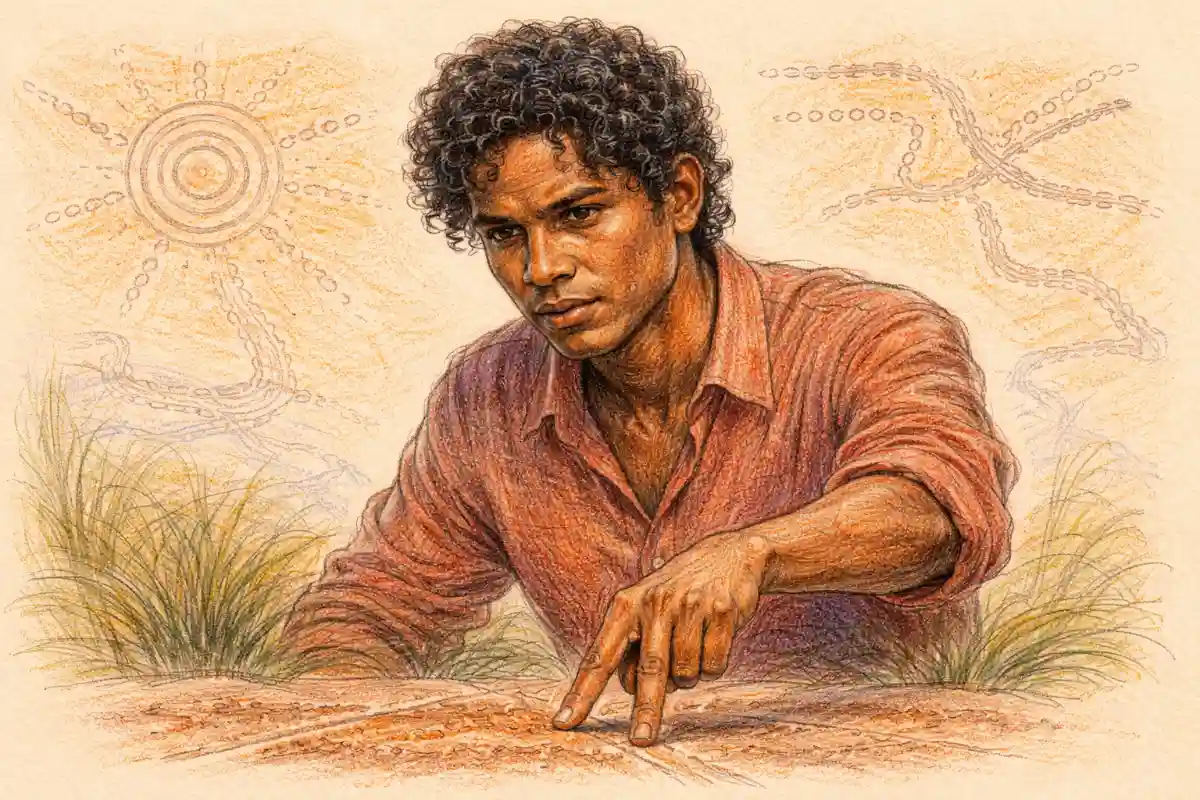
Dean Thomas was one year old when his father was murdered by Death Eaters. The man had been a wizard who refused, after the birth of his son, to reveal his magical identity to his Muggle wife, choosing instead to vanish from their lives so that his absence would protect them from the war that was coming for him. The Muggle mother of the boy who would one day share a dormitory with the Boy Who Lived believed, for the rest of her life, that the man she had loved had simply walked out. The son grew up thinking the same. He turned eleven with no inkling that the absence of his father was anything other than ordinary, the residue of an ordinary domestic failure. Then a letter arrived from Hogwarts, and his entire understanding of himself reorganised, and even then the deepest fact about his origin remained hidden from him for another seven years.
Rowling tells this story in something close to a footnote.
It is, in literal terms, almost the same story as the one the series is built around. A wizard father killed by Death Eaters when the protagonist was a year old. A child raised in the Muggle world, ignorant of his heritage, kept from the war his parents had been fighting. The arrival of a Hogwarts letter that detonates the false biography. The discovery, only at the brink of adulthood, of the truth about his father. Every structural beat of the Harry Potter origin myth is replicated in the backstory of a boy who shares the protagonist’s dormitory for seven years and barely gets sustained narrative attention. The series contains, embedded in its margins, an unwritten parallel novel whose protagonist would have been a Black Muggle-raised half-blood with a hidden inheritance, and the series chose to write the other one. Reading this character seriously means reading both the books that exist and the book that does not.
The argument of this analysis is that the figure who shares a dorm with Potter is the most quietly significant minor character in the series, not because of what he does on the page but because of what his existence on the page reveals about everything the page chose not to do. The roommate is the negative space against which the protagonist is rendered. He is the path Rowling did not take. He is also a person in his own right, with a face the reader has trouble picturing, a friendship with Seamus Finnigan that is one of the most stable male bonds in the books, an artistic talent that no other student in the wizarding world shares, and a war record that includes the Battle of Hogwarts and a stint as a fugitive presumed Muggle-born under a regime that registered the parentage of children. To take this character seriously is also to interrogate why the series so consistently refuses to take him seriously, and what that refusal tells us about the books we have spent decades loving.
Origin and First Impression
The first appearance is so quiet it is almost a misprint. In the British edition of Harry Potter and the Philosopher’s Stone, Dean Thomas is not sorted at the Welcoming Feast at all; his name was edited out for length, and only later did Rowling restore him in the American edition, where he is sorted into Gryffindor. This is the first paradox of the character: he was almost not in the series at all. His existence in the published British text is so marginal that for years the British and American editions disagreed on whether he had been sorted on screen. The boy whose backstory parallels the protagonist’s begins his presence in the books as a copy-editor’s afterthought.
The first scene that registers him in any sustained way is the first night in the Gryffindor dormitory. The five eleven-year-old boys are unpacking, exhausted from the feast and the boats and the unfamiliar staircases. The Muggle-raised child puts up posters of West Ham United footballers, and Ron Weasley, who has never seen a photograph of a Muggle athlete, watches with confusion when the figures refuse to wave back. The scene is one paragraph long. It is also one of the most precise pieces of characterisation in the entire first book. The Muggle-raised child’s first homesick gesture in the wizarding world is to install a piece of his old life on the wall above his new bed. The posters are immobile. The figures will not move for him. The wizarding world watches and does not understand the appeal of objects that refuse to come alive.
What Rowling signals in this single paragraph is the hybrid consciousness that will define this character across all seven books. He carries the Muggle world into the magical one in a way the other wizard-raised boys cannot, and he carries the wizarding world back into his Muggle bedroom in a way Harry has not yet learned to do. He is the only first-year in the dorm who has lived a full eleven years as a Muggle without the constant interruption of accidental magic the way Harry experienced it under the Dursleys’ suppression. He is also the only first-year who will discover, by the age of seventeen, that everything he believed about his Muggle family was incomplete.
The first friendship the books establish for him is also formed in that first night. Seamus Finnigan, the Irish half-blood with the wizard mother and Muggle father, takes the bed beside the Muggle-raised English boy with the wizard father and Muggle mother. The two of them are demographic mirror images, half-bloods raised on opposite sides of the wizarding-Muggle line, and they recognise each other instantly. The friendship that begins in that first dormitory scene will be the most consistent male friendship in the entire series after the trio’s own bond. It will persist across seven books, survive a quarrel about whether to trust the Boy Who Lived, and reach its most concentrated dramatisation in the Battle of Hogwarts, where the two of them fight together. Few friendships in the series get more page-time than the trio’s central three; this one quietly accumulates over thousands of pages without ever being made the subject of a single chapter.
The first close reading of this character must therefore note the strange disproportion of his introduction. He is given an iconic visual detail (the West Ham posters), a defining friendship (with Seamus), and a backstory that mirrors the protagonist’s, and then the narrative essentially walks away. The books move on, and he becomes the boy you remember vaguely, the one whose first name you can never quite recall, the dorm-mate who is decisively present without ever being central. This is not a flaw in Rowling’s craft so much as an accurate dramatisation of how some lives appear in other people’s stories: complete inside themselves, peripheral inside the frame.
The Arc Across Seven Books
Philosopher’s Stone
In the first volume, the Muggle-raised Gryffindor exists mainly as a background presence whose function is to establish the dorm as a social ecology. The five boys of the first-year Gryffindor dorm (Harry, Ron, Neville, Dean, Seamus) are introduced as a unit, and the unit is meant to feel real, populated, lived-in. The West Ham posters do their work. So does the casual reference to him being good at chess (though never as good as Ron), to him befriending Seamus, to his Muggle-raised novelty in this new world. There is no separate plotline for him in this book. He is part of the texture.
What the book signals about him in this volume, however, is the dual visibility problem that will follow him through the entire series. He is the only Black student in his dorm. He is one of very few Black students who get any sustained naming in the early books at all. Rowling places him in the protagonist’s immediate friend group and gives him a name that is itself ethnically unmarked (Dean and Thomas are both common across multiple British communities), and the books then proceed to give him fewer lines than any other boy in that dorm across seven volumes. The pattern is established in the first book and never broken.
Chamber of Secrets
The second volume sees the Muggle-raised Gryffindor in his familiar background role. He is one of the dorm-mates whose presence registers without ever requiring the camera. He is mentioned in the context of group scenes. He continues his friendship with Seamus. He is not the focus of any subplot. His only real moment of textual prominence is dark and impersonal: he is among the students Petrified by the basilisk, immobilised in the hospital wing alongside the other victims. The boy frozen in stone, awaiting the Mandrake potion that will restore him.
The Petrification is itself analytically interesting in retrospect. He is paralysed and silent for weeks, indistinguishable from the other victims, his identity reduced to a body in a bed. He recovers offscreen. The trauma is never processed by the narrative. Whatever it was like to be the Muggle-raised boy who survived a half-blood Slytherin’s monster, whose own father had been killed by half-blood Slytherin sympathisers, is never asked. The book moves on. The reader moves on. The character will not raise it again across the next five volumes. This is the first instance of a pattern: significant events happen to him, and the narrative declines to register their meaning.
The Petrification also placed him in a small group of survivors whose collective experience is never sociologically examined. Justin Finch-Fletchley, Colin Creevey, Penelope Clearwater, Hermione Granger, and the half-blood Gryffindor were all Petrified by the basilisk. They all woke up at the same time, walked back to the Gryffindor common room (or their own houses) at the same time, and resumed their lives at the same time. There is no scene of them comparing notes. There is no group counselling. There is no formal acknowledgement from the school. The basilisk had targeted Muggle-borns and the marginal. The Gryffindor dorm-mate had been targeted in the same wave as those whose blood status the chamber’s heir had been seeking to eliminate. The fact that his targeting may have been a mistake (he is technically a half-blood, not a Muggle-born) only intensifies the analytical interest. The basilisk did not check pedigrees. It went after whoever its master indicated. The half-blood Gryffindor was caught in a wave of attacks that, in any rigorous reading of the chamber’s logic, should not have included him at all. He was struck down by a hatred that had misidentified him, and the misidentification is itself one of the most precise pieces of textual commentary on how prejudice operates: it does not always know its own targets, and the cost of misidentification falls on the people whose identities are not consulted before the attack.
Prisoner of Azkaban
The third book begins giving him slightly more line-time. He attends the first Care of Magical Creatures class. He participates in the Gryffindor discussions about Sirius Black. He attends Hogsmeade after returning his permission slip (a small detail that confirms his Muggle stepfather signed it, the only direct evidence in the entire series that he has any present-day Muggle family at all). He is part of the Quidditch crowd, cheering for the team that has just acquired its new Seeker’s Firebolt. The book continues to use him as part of the Gryffindor texture rather than as a character with his own story.
This volume also begins to develop the friendship with Seamus into something the reader can identify by name. The two of them are increasingly treated as a unit. “Dean and Seamus” becomes a phrase that does narrative work, the way “Fred and George” does for the twins or “Crabbe and Goyle” does for the Slytherin enforcers. The doubling is significant. The series is teaching the reader to expect this pair, to read them as a single social unit, and the unit will hold for the rest of the books even when the individuals are nearly invisible apart from each other.
The third book also contains his first sustained brush with the wizarding world’s failure of administration. The Buckbeak hippogriff incident, in which Draco is grazed and the school subsequently moves to execute the creature, includes the Muggle-raised Gryffindor as one of the students who signs Hermione’s petition to defend Hagrid’s lesson plan. The signature is mentioned only in passing. The act, however, is consistent with his character: when an injustice is brought to his attention through proper channels, he supports the redress. He is not a leader of the petition. He is a signer. His position on the question is steady and unannounced. The pattern of quiet right-side affiliation that will define his political behaviour for the rest of the series begins to crystallise here, with the Buckbeak signature standing as one of his earliest documented political acts.
Goblet of Fire
The fourth volume is the first in which the Muggle-raised Gryffindor’s artistic talent receives sustained on-page attention. When the Triwizard rivalry between Cedric Diggory and Potter becomes a school-wide social phenomenon, the Slytherins begin wearing “Potter Stinks” badges. The badges themselves were designed and produced by someone, and the books later establish that the artistic work was Draco Malfoy’s commission to an unnamed creator. But the most analytically interesting moment in the badge scene is this: the dorm-mate, the Muggle-raised half-blood, is shown to have made his own version of the badges that reverses on a single tap, so that the “Potter Stinks” message can be hidden when the wearer is around the protagonist and revealed when the wearer is among his enemies. The original design comes from elsewhere; the engineering of the reversibility is his.
This detail is one of the most quietly devastating pieces of characterisation in the entire book. The half-blood Gryffindor cannot quite take a side. He is loyal to his housemate (Potter is in Gryffindor; the Slytherins are not), but he also recognises the legitimacy of Cedric’s claim (Cedric was selected first by the goblet; Potter’s selection was unexplained at the time of the badges). He cannot bring himself to wear an anti-Potter badge openly, but he also cannot bring himself to refuse the badge entirely. So he engineers a compromise. The badge reverses. He performs both loyalties depending on context. The Muggle-raised Gryffindor is the only character in the entire book who tries to occupy both sides of the Cedric-Potter rivalry simultaneously, and the design solution he produces is his most explicit moral statement in the series: ambivalence rendered as a craft object.
He also attends the Yule Ball in this volume, partnering Parvati Patil’s friend, and again does the work of being part of the social scene without ever being the centre of it. The book gives him more visibility than any previous volume, but the visibility is still strategic rather than sustained. He matters more here, but not yet centrally.
Order of the Phoenix
In the fifth book, the Muggle-raised Gryffindor becomes a member of Dumbledore’s Army. He is one of the founding members of the secret defence-against-the-dark-arts study group. He participates in the meetings, learns the Patronus charm, learns to defend himself, and quietly demonstrates that he has good instincts and competent magic. He is not given the standout moments that Neville is, or the demonstrative reluctance that Cho Chang represents. He is simply present, week after week, contributing to a clandestine military training programme in his own school, becoming materially more skilled at protecting himself against the regime that killed his father.
This is also the volume in which his quarrel with the Muggle-baiting press matters. The Daily Prophet, under Ministry control, is running a smear campaign against the protagonist and against Dumbledore. The Gryffindor dorm-mate, the half-blood whose father was killed by the very ideology the Prophet is now soft-pedalling, has every reason to side with the trio against the official narrative. The book establishes him as quietly trustworthy, quietly resistant, quietly on the right side of the political fault line that opens up in this volume. He is one of the few characters whose loyalties never waver and whose loyalties also never become the subject of a chapter.
His Quidditch participation expands here. When the Weasley twins are banned from Quidditch by Umbridge, the half-blood Gryffindor steps in as a substitute Chaser. The substitution is treated as a stopgap, never developed into a real Quidditch identity for him, but it is the first volume in which he holds an on-pitch role and contributes to a Gryffindor match. He performs adequately. The book moves on.
Half-Blood Prince
The sixth volume gives him his most sustained narrative function: he dates Ginny Weasley. The relationship begins in the autumn term, is dramatised across several scenes, and ends before the spring. The Muggle-raised half-blood and the youngest Weasley daughter are presented as a public couple, kissing in corridors and walking together to meals, and the book systematically uses the relationship to develop two characters who are not him.
The relationship’s narrative function is twofold. First, it creates the obstacle the protagonist has to overcome to recognise his own feelings for Ginny. The Boy Who Lived watches her with the half-blood Gryffindor and discovers, painfully, that he is jealous. The jealousy is the book’s vehicle for the protagonist’s romantic awakening, and the friend in the dorm is required to be the placeholder against which the awakening becomes legible. Second, the relationship illustrates Ginny’s own development. The girl who fainted at the sight of Potter in earlier books is now an active romantic agent, dating boys, breaking up with them, choosing for herself. The half-blood Gryffindor is the boyfriend the reader watches her outgrow. He performs the developmental work of being a sufficient but not ideal partner.
He also briefly fills in as a Gryffindor Chaser in this volume, replacing the injured Katie Bell during the Quidditch season. The substitution is granted slightly more visibility than his earlier stopgap appearances, and he plays in at least one match before Katie returns. The Quidditch involvement is one of the few areas of the school’s institutional life in which he holds a recurring role across multiple books, and the role is always the substitute one: he is the back-up rather than the regular. This is itself a structural metaphor consistent with his overall position. He is, across many of the school’s activities, the second option who steps in when the first is unavailable.
The break-up is structurally telling. Ginny ends it after a series of disagreements (she objects to him trying to help her through the portrait hole, treating her as needing protection; he is, in her assessment, paternalistic in a way she will not accept). The break-up is treated by the narrative as the cessation of an obstacle. The boyfriend is removed from the romantic geometry. The protagonist’s path to Ginny is cleared. The book never returns to the half-blood Gryffindor’s perspective on the relationship, never asks what he wanted from it, never offers him the dignity of being a heartbroken young man.
The unfairness of this treatment is itself one of the most analytically interesting features of the volume. The Muggle-raised Gryffindor is a kind, talented, decent boy. He has done nothing wrong. The book uses him and discards him with the efficiency of pure narrative function. The kindest reading is that Rowling needed a romantic foil and chose someone she trusted to play the role without complicating it. The harder reading is that the only sustained romantic plot the series gives this character is one in which he exists to be surpassed by the protagonist, and that this pattern is consistent with the series’s broader treatment of him.
The book also gives him several brief scenes that flesh out his ongoing presence in the resistance social ecology. He continues to participate in DA meetings (now reactivated informally). He maintains his friendship with Seamus despite the older boy’s earlier doubts. He is one of the Gryffindors who responds to Hermione’s coin signal when Death Eaters enter the school at the end of the volume, joining the defence at the foot of the tower. The defence is brief and chaotic. The Muggle-raised half-blood is among the students who actually try to fight. The single scene of him in combat in this volume is one of the few places where he is depicted using his magical training in real anger.
Deathly Hallows
The final volume gives the Muggle-raised half-blood his most consequential plotline and also his most distressingly compressed one. With the Muggle-Born Registration Commission established under the Death Eater regime, his apparently Muggle-born status puts him in immediate danger. He cannot prove a wizard parent in his lineage; his mother is Muggle; his stepfather is Muggle; his biological father is dead and his identity unrecorded in any way that would help. He goes on the run.
His travel scene is brief and devastating. He is on the move with Ted Tonks (Andromeda Tonks’s husband, a Muggle-born wizard also fleeing the regime), Dirk Cresswell (the Muggle-born Goblin Liaison Office head), and two goblins, Griphook and Gornuk. The five of them are camping in the woods, evading Snatchers, comparing notes on the regime’s machinery of persecution. During their conversation, Ted Tonks identifies the half-blood Gryffindor’s biological father by name, recognising him as someone he had known in the Order of the Phoenix or in the broader resistance circles. The young man learns, in this offhand exchange, that his father was a wizard, that he was killed by Death Eaters for refusing to join them, and that the man’s reason for abandoning his family had been to protect them from exactly the kind of regime that is now hunting his son.
This is, in narrative terms, one of the most consequential pieces of backstory delivered to any minor character in the entire series. It rewrites his understanding of his own origin. It explains the absent father he had grown up wondering about. It places his mother’s grief in a new context (she had been told she was abandoned; the truth was that her husband had been hiding from people who would have killed all three of them). It makes him, at seventeen, the second half-blood orphan in the dorm whose father was killed by the same political movement on the same ideological grounds at roughly the same point in his infancy.
The book gives this revelation in approximately one paragraph.
There is no dramatised emotional aftermath. The conversation continues. The young man on the run absorbs the news and keeps moving. The reader is given no scene in which he processes it. The reader is given no soliloquy in which he reconciles his lifelong belief about his father with the new information. The reader is given nothing. The most significant single piece of personal history any minor character receives in the entire series is delivered in passing and never returned to.
He is captured shortly after. The Snatchers take him, along with the protagonist, Hermione Granger, and Ron Weasley, to Malfoy Manor. The torture of Hermione happens. He is imprisoned in the cellar with Luna Lovegood and the Ollivander wandmaker. He escapes with the rest when Dobby the house-elf executes the rescue that kills the elf. He goes to Shell Cottage. He eventually fights at the Battle of Hogwarts, where he is on the side of the defenders. He survives.
The Malfoy Manor cellar deserves its own analytical attention. The Muggle-raised Gryffindor is imprisoned with Luna Lovegood, who has been there for weeks, and Ollivander, the elderly wandmaker who has been there for months. The three of them are physically broken in different ways. Ollivander has been tortured for information about wandlore. Luna has been held as leverage against her father. The Gryffindor half-blood has been captured as a presumed Muggle-born. Three forms of prisoner are gathered in one cellar, and the moment is one of the few in the series where the regime’s varied uses of imprisonment become legible in a single space. The book gives the scene very brief depiction. The reader knows the cellar was cold, that Luna was friendly to the new arrivals, that escape required the elf’s intervention. The texture of what those weeks or days were like inside the cellar is essentially absent. What conversations occurred? Did Luna tell the Muggle-raised half-blood about her own captivity? Did Ollivander, who had known wizards for decades, recognise his father’s name when the young man eventually spoke of him? The cellar is the most concentrated unwritten scene in his entire arc.
He survives. Of all the things the book gives him, the most consequential is that he is permitted to live. He is not Fred. He is not Lupin. He is not Tonks. He is not Colin Creevey. He survives the war. He is permitted to enter the post-war world the series gestures toward but never depicts. The epilogue, nineteen years later, does not show him. We do not know what he became. The young man who almost was a parallel protagonist is granted, by the end of the series, a survival that is itself one of the few unambiguous narrative gifts the books ever give him.
Psychological Portrait
The interior life of the Muggle-raised Gryffindor is essentially absent from the seven books. The reader does not get a single scene of sustained access to his thinking. We do not see him alone. We do not see him in conversation with his mother. We do not see him reflecting on anything. Whatever this analysis can construct of his psychology must therefore be inferred from his behaviour, from the shape of his choices, and from the silences in which his character has been allowed to develop.
What emerges from this inference is a portrait of someone who has been trained, by the conditions of his upbringing, to occupy the position of the witness rather than the actor. He is the only first-year in his dorm who has lived eleven full years in the Muggle world without the protagonist’s compensating supernatural events. He has had no accidental magic to mark him as special. He has been a normal boy in a normal household, raised by a single mother and stepfather, and the Hogwarts letter arrived without preparation and reorganised his entire identity. The way he meets that reorganisation is calm. He does not, on the page, undergo a crisis. He accepts the new information and integrates it. The West Ham posters go up. The friendship with Seamus forms. He adapts.
The adaptive capacity is itself the key to his psychological signature. He is, in the technical sense, resilient. He absorbs disorienting information and continues functioning. The Petrification in the second volume is followed by no breakdown. The discovery of his father’s identity in the seventh is followed by no breakdown. The war years are followed by no breakdown the books show. He is one of the few characters in the series whose response to repeated trauma is presented as functional continuity rather than dramatic rupture.
This resilience comes at a cost the narrative does not name. The capacity to absorb without rupture is also the capacity to remain unseen. The boy who never makes a scene is the boy whose interior life is structurally invisible to those around him. He is the character whose emotional weather never disrupts the meteorological reading of the room. He becomes legible to his friends through Seamus, who is louder, more reactive, more demonstrative. The friendship works partly because Seamus does the emotional foregrounding for both of them. The Muggle-raised half-blood gets to be quiet because his best friend is loud.
The quietness is also a defensive style. The boy who has been raised in a Muggle household where his magical heritage was a secret his mother did not know to keep has learned, from the structure of his own family, that some things go unsaid because saying them would unsettle the people who need to be protected. His mother had no idea her first husband was a wizard. The half-blood child grew up in a household whose foundational fact was hidden, and he absorbed without articulating it the lesson that the world contains layers of truth that not everyone is allowed to know. When he arrives at Hogwarts and discovers that his entire prior life was conducted in ignorance of a major dimension of reality, he does not become bitter. He becomes adaptable. The world is layered. Different layers are accessible to different people. He has lived among Muggles. He now lives among wizards. He moves between layers because he has always moved between them, even before he knew there were layers.
The artistic capacity is connected to this layered consciousness. The boy who sees double can render what he sees. He draws constantly across the books, sketching during lessons, in the common room, between classes. The art is not commented on much. The books rarely tell the reader what he draws. But the presence of the sketchbook in scene after scene establishes him as the only character in the entire wizarding world who has a sustained visual practice. He is the witness who is also the recorder, and the recording is private. He does not publish his drawings. He does not display them. He does not enter contests. He draws for himself, the layered observer making a layered record of a world that does not quite see him doing it.
The psychological cost of being the witness who is also unseen is a kind of structural loneliness that does not announce itself as loneliness. He has friends. He has Seamus. He has Ginny for a time. He has the dorm-mates. He is not isolated in the sense of being friendless. But the depth of friendship he is allowed by the narrative is limited. Seamus does not, in any scene the reader is shown, ask him about his father. Ginny does not, in any scene the reader is shown, ask him about his Muggle family. The protagonist does not, in any scene the reader is shown, ask him about anything personal at all across seven years of sharing a bedroom. The character lives among friends who do not see him deeply, and his adaptive style permits this not to register as a wound. The wound is structural rather than emotional, embedded in the shape of his life rather than in his subjective experience of it.
The attachment style suggested by this pattern is what psychologists would describe as an avoidant or earned-secure configuration: someone who has learned to maintain functional warmth in close relationships without permitting those relationships to require excavation of his deeper self. He does not push people away. He does not refuse connection. He simply does not invite the kind of inquiry that would force his interiority into shared space. The friendships he sustains are real but bounded. The romance he had with Ginny was real but bounded. The boy in the dorm is not concealing some hidden trauma he refuses to share. He is conducting his life on terms that do not require disclosure to feel coherent. Some people are built this way. The series gives the reader one of the most precise portraits of this temperament in fiction, and gives it without seeming to notice that it has done so.
The relationship between his psychology and his art is one of the most analytically rich connections the character offers. Drawing is the activity of someone who wants to look at the world rather than to be looked at. The eyes go onto the page rather than onto the self. The act produces an artifact that records the looker’s perception without revealing the looker’s interior. The half-blood Gryffindor’s choice of medium is consistent with his temperament: he is the boy who renders what he sees rather than the boy who speaks what he feels. The art lets him participate in the visual culture of his school (the moving photographs, the sentient portraits) without having to surrender his own image to that culture. He draws others. He is not drawn. He is the rare visual artist whose presence in the picture frame is, by chosen practice, always behind the camera.
The kind of layered analytical reading that Rowling’s quiet character work rewards is similar to the pattern recognition that competitive exam candidates develop through sustained practice with tools like the ReportMedic CAT PYQ Explorer, where the ability to identify subtle recurring structures across years of questions builds exactly the skill required to notice what a text is doing in its margins. The Dean Thomas pattern, repeated across seven books, only becomes legible when the reader trains the same attention on every volume in sequence.
Literary Function
The structural role of the Muggle-raised Gryffindor in the seven-book architecture is best described as the road not taken. He is the parallel hero whose existence in the dorm is itself a commentary on the protagonist’s centrality. The series could have been about him. The hero’s-journey structural elements (the orphaned half-blood, the hidden father, the Muggle upbringing, the Hogwarts revelation, the war against the regime that killed his parent) are all present in his backstory. The narrative chose to follow the other one. Every time the reader encounters him in scene, the choice is being silently reaffirmed.
This kind of structural foil is rare in literature. Most foil characters work by contrast: Draco is Harry’s foil because they are opposites who reveal each other through opposition. The half-blood Gryffindor is something different. He is not Harry’s opposite. He is Harry’s near-twin, structurally aligned in almost every relevant respect. His function is not to contrast but to remind. Every appearance is a quiet metalinguistic event: this could have been the story. The series could have been about a Black Muggle-raised half-blood. It chose not to be. The choice is rearticulated each time he walks into a scene.
The witness function is the second key literary role. He is the character who watches the protagonist’s life from inside the protagonist’s social circle without ever quite participating in its central events. He is at the Yule Ball but not dancing with Hermione. He is in the DA but not leading it. He is in the Quidditch team but not the Seeker. He is at the Battle of Hogwarts but not dueling Voldemort. His position is always slightly displaced from the centre of action. He sees what happens. He participates without being indispensable. He is the embedded reader, sharing the protagonist’s dorm and watching the protagonist’s life unfold from a closer vantage than almost anyone else, and the narrative makes him the closest thing to a stand-in for the audience that the cast contains.
The visual artist function is the third. He is the only sustained artist in the seven books. The wizarding world is shown to have moving photography, sentient portraits, magical sculpture, but no sustained character whose vocation is visual art in the human sense. Hogwarts is not shown to have an art teacher. The curriculum is silent on whether art is even a recognised pursuit in the magical community. Against this institutional vacuum, the boy in the dorm sketches constantly, and his sketching is the only ongoing visual creation the books permit. He is, structurally, the artist the wizarding world does not know it has, and his quiet practice is the series’s reminder that the magical community has a cultural blind spot the books themselves notice but never explore.
The romantic-foil function is the fourth. He is the boyfriend the protagonist has to overcome to recognise his own feelings. The series rarely lets characters perform this function with much complexity. Cho Chang did it briefly with Cedric. Krum did it briefly with Hermione. The Gryffindor dorm-mate does it for Ginny over a sustained stretch of the sixth book. The function is structurally important to the protagonist’s romantic development, and it is the most visible thing the character ever does. The function is also degrading: he is required to be sufficient enough to be a real obstacle, and inadequate enough to be surpassable. The narrative balances these requirements precisely. He is kind. He is talented. He is decent. He is also paternalistic. He is also lacking some quality Ginny only finds in the protagonist. The calibration is perfect. The calibration is also a use.
The race-visibility function is the fifth and most difficult. He is one of very few Black characters who appear in sustained roles in the early books. He is in the protagonist’s dorm. He gets named, gets his own scenes, gets a friendship arc. He also gets fewer lines than any other boy in the dorm across seven volumes. The pattern is the literary function. The series places a Black character in the immediate friend group and then quietly grants him less narrative presence than the other members of that group. The mechanism may be intentional or unintentional. The pattern is observable. Reading this character seriously requires noting that the pattern exists and considering what it means that the series’s most demographically diverse first-year dorm is also one of the most asymmetrically narrated dorms in fiction.
Moral Philosophy
The ethical questions this character embodies are quiet ones. He is not the site of moral crises in the way Draco is. He is not tested by competing loyalties the way Snape is. He is not given a redemption arc because he never needed one. His moral position across all seven books is stable, decent, and undemonstrative. He is on the right side of every political question the series stages. He is in the DA. He fights at the Battle of Hogwarts. He never collaborates with the regime even when collaboration would have spared him persecution. The moral arc is therefore not the story of his transformation. The moral arc is the story of his steadiness.
What does this kind of steadiness teach the reader? The series is full of characters whose moral development is dramatic: Percy who collaborates and recants, Snape who serves Voldemort and turns, Draco who is recruited as a child and refuses the killing curse. Against this background, the half-blood Gryffindor is the character who simply makes the right choice quietly, again and again, without commentary. He is the moral baseline. He represents the position from which all the dramatic transformations are measured. He is what decency looks like when it does not need a transformation arc to be visible.
This is itself an underrated ethical claim. The series’s loudest moral message is about redemption (Snape, Dudley, even Kreacher), but the quieter moral message is about consistency. Some people simply remain decent. They do not need to fall and rise. They do not need to be tested at extremes and survive. They make the right small choices in unremarkable conditions and then make the right larger choices when conditions change. The half-blood Gryffindor is the series’s portrait of consistent decency under increasing duress.
The ethical question of being good in the background is also raised by his arc. The character who is decent but unseen is performing virtue without an audience. The classical question (whether virtue is its own reward or whether it depends on recognition) is staged in his case in a peculiar form: he is virtuous, he is recognised by his friends, he is recognised by Dumbledore and the Order, but he is not recognised by the narrative itself, which gives him less attention than his moral position deserves. The reader who notices this is being asked to consider whether the narrative’s recognition is itself a kind of moral judgement that we project onto the books we read.
The most explicit moral choice he makes across the series is to fight in the Battle of Hogwarts. By that point he has been on the run for months. He has discovered the truth about his father. He has been captured and held at Malfoy Manor. He has every reason to stop. He returns to the school to fight, alongside Seamus. The choice is dramatised lightly: the books show him at the battle without making a fuss about how he got there. The lightness of the dramatisation is itself revealing. The series treats his presence at the battle as obvious. Of course he would come. Of course he would fight. The character whose moral position has been stable for seven years arrives where his moral position would put him, and the narrative does not need to mark the arrival because the trajectory was always implicit.
This is a quietly powerful argument the series is making, even if it makes it in a register that almost no review or scholarly treatment has registered. Steady virtue is its own narrative, even when it is not the narrative the book is telling.
Relationship Web
The most important relationship in the half-blood Gryffindor’s life is his friendship with Seamus Finnigan. The friendship is established in the first dormitory scene and persists across all seven books. The two of them are the only stable male-male friendship in the series that is neither part of the trio nor part of a sibling group. James and Sirius, Fred and George, the trio itself - these are the central male bonds. Dean and Seamus are the bond that runs alongside the centre, mirrored against it, contributing texture without claiming primacy. The bond is significant because it is one of the most depicted ordinary friendships in the books. Most of the major male friendships in the series carry plot weight (James-Sirius matters because of Pettigrew, Fred-George matters because of Fred’s death, the trio matters because of everything). The Dean-Seamus friendship matters because it is ordinary, and the books grant it the dignity of being depicted across thousands of pages without ever loading it with plot.
The friendship is also analytically interesting because of the brief rupture in the fifth book. After the events at the end of Goblet of Fire, Seamus initially does not believe the protagonist’s account of Voldemort’s return. His mother has been reading the Daily Prophet. The Irish half-blood arrives at school sceptical, and the rift between the two friends opens up: the Muggle-raised half-blood does believe the protagonist, on instinct or on residual loyalty or on the recognition that something genuinely terrible has happened. The two boys are briefly on opposite sides of the school’s most important political question. The rupture heals. By the end of the volume, the Irish half-blood has come around. The friendship survives. The bond is shown to be capable of containing political disagreement without dissolving, which is itself one of the series’s most underrated portraits of friendship as a structure that can hold pressure.
The relationship with Ginny Weasley is the most visible romantic relationship the character is given. The relationship begins in the autumn of the sixth book, dramatised through hand-holding, kisses, and an increasingly visible public presence. The Weasley daughter is a vital, demonstrative, athletic, sharp-witted young woman; the half-blood Gryffindor is, by all the evidence the book provides, a kind and steady partner. They function as a couple for several months. The relationship ends after Ginny becomes irritated with his solicitous behaviour (he wants to help her through the portrait hole; she does not want help; the friction accumulates). The break-up is presented from Ginny’s perspective. The boyfriend’s perspective is essentially absent.
What the relationship gives him, narratively, is a brief stretch of being the visible boyfriend of a major character. What it gives the reader is the recognition that the character is romantically appealing enough to be chosen by the protagonist’s eventual partner. What it gives the protagonist is the obstacle that triggers his romantic awakening. The asymmetry of these gifts is significant. The relationship is more important for everyone else in the story than it is for the character who is technically the boyfriend in it.
The relationship with the protagonist himself is the strangest in the entire web. They share a dormitory for seven years. They eat at the same table. They attend the same classes. They are on the same Quidditch team for one game. They join the same DA. They fight at the same battle. By any external measure, they should be close. By the textual record, they are barely acquaintances. The protagonist almost never directs sustained attention at his dorm-mate. The dorm-mate almost never receives a confidence from the protagonist. They are functionally polite but never intimate. The relationship is the most under-developed close-quarters relationship in the entire series, and the under-development is itself a piece of characterisation: both of them have been so absorbed by other things that the obvious friendship between them has been allowed to remain potential.
The relationship with his Muggle family is the most absent of all. His mother is mentioned. His stepfather is mentioned. Neither is shown. The household that raised him, the family that signed his Hogwarts permission slips, the people who loved him through the years when his magical heritage was secret even from them - they are off the page entirely. This is the largest negative space in the character’s web. The Black mother of a half-blood wizard child, raising her son with a Muggle stepfather, navigating the boy’s eleven-year-old discovery that he is a wizard, and then losing him to the wizarding war for months at a stretch when he goes on the run - this woman’s story is one of the most original family configurations the series gestures toward, and it is not rendered. The most demographically specific family in the seven books is the one Rowling chose not to put on the page.
The relationships with the other dorm-mates (Ron, Neville) are mid-distance. He is friendly with both. He is closer to Neville by the end of the seventh book, when Neville Longbottom’s character analysis reveals the same pattern of late-bloom courage that the half-blood Gryffindor shares, and the two of them become part of the Hogwarts resistance together during the final year. The friendship with the herbology-loving boy whose own parents were destroyed by the same regime is one of the underused emotional resonances in the seventh volume: two children of parents broken by Death Eater violence, fighting together in the castle their parents helped defend. The series notices the parallel and uses it sparingly.
Symbolism and Naming
The name is itself a study in unmarked Englishness. Dean is a Middle English surname-turned-first-name, derived from the Old English denu meaning valley, or from the Latin decanus meaning chief or head of ten. Thomas is the Greek-derived name meaning twin, from the Aramaic toma, the same root as the biblical apostle Thomas who doubted the resurrection until he could touch the wounds. The combination is one of the most thoroughly Anglophone, thoroughly unmarked names in the entire series. It contains no obvious mythological signal (unlike Hermione or Sirius), no obvious thematic content (unlike Draco or Lucius), no obvious ethnic specificity (unlike Cho Chang or Parvati Patil). The name reads as ordinary.
The ordinariness is the symbolism. He is the character whose name signals nothing in particular because the series wants him to function as the everyman in the dorm. The Boy Who Lived has a name freighted with destiny. The youngest Weasley brother has a name shared with a king. The half-blood Gryffindor has a name shared with a million working-class British men. He is the unsignalled one. He is the character whose name will not tell you who he is, because the series’s argument about him is that his identity has to be earned through his actions rather than announced through his nomenclature.
The Thomas etymology is the more analytically interesting element. The apostle Thomas is the doubter, the twin, the one who refused to believe until he could see for himself. Both meanings apply to the half-blood Gryffindor in subtle ways. He is the twin in the sense that his backstory is the protagonist’s twin, the parallel structure laid alongside the central one. He is the doubter in the sense that he is the character who designs the reversible badge, who tries to hold both sides of the Cedric-Potter rivalry, who briefly considers in the fifth book that the Daily Prophet’s framing may not be entirely wrong before settling firmly with the protagonist. The Thomas of the gospels needed to touch the wounds before he believed; the Thomas of the dorm designs an artifact that can be reversed on touch, an object whose loyalty depends on a physical contact between hand and badge. The etymology is doing more work than the casual reader notices.
The West Ham association is its own symbolic layer. West Ham United is a working-class East End football club. The choice of West Ham for his Muggle football allegiance places him geographically and economically in a specific part of London. The Muggle-raised half-blood is a working-class London boy. The class position is important: he is not the public-school son of intellectuals (like Hermione) or the country middle-class son of professionals (like Justin Finch-Fletchley). He is the boy from the football-supporting East End, whose Muggle world has working-class textures the wizarding world does not register. The class specificity is one of the most precise pieces of social geography in the series, and it is delivered through a poster in a paragraph.
The artistic talent is another symbolic dimension. The visual artist in a literature whose magic is text-based (spells are spoken, names are inscribed, prophecies are uttered) is the character who registers reality through a different sensory modality. He sees. He records. He renders. The wizarding world’s relationship to image (moving photographs, sentient portraits, magical sculpture) is animated and self-sufficient; nothing requires the human artist’s intervention. The half-blood Gryffindor’s sketching is therefore strangely redundant in the wizarding world’s terms. He draws still images by hand in a world where images move themselves. The redundancy is the symbolism. He is the artist who works in a medium the surrounding culture does not value, because his sensibility was formed in the Muggle world that does value still images and the human hand that produces them.
The Unwritten Story
The most significant absences in the character’s narrative are organised around five gaps.
The first is the emotional aftermath of the discovery about his father. Ted Tonks names the man during the camping conversation. The young man on the run absorbs the information. The book moves on. There is no scene of him processing this. There is no moment of him writing to his mother to ask whether she had known anything she had not told him. There is no later scene of him visiting his father’s grave (assuming there is a grave). There is no scene of him learning anything more about the man (his profession, his family, his magical specialty, his place in the Order or the resistance). The single most consequential piece of personal history in the character’s life is delivered in passing and never revisited. The unwritten emotional aftermath is the gap the analysis must name without being able to fill.
The second is the content of his art. The books show him sketching constantly across seven years. They almost never tell the reader what he draws. We do not know whether he draws portraits of his friends, landscapes of Hogwarts, scenes from football matches, abstract designs, Muggle cityscapes, magical creatures, or some combination. The only sustained visual practice in the entire wizarding world is performed without the books showing the work. The unwritten sketchbook is one of the series’s most original artifacts, and Rowling chose not to inventory its contents.
The third is the family of origin. The Muggle mother and the Muggle stepfather are mentioned without being shown. The Hogwarts permission slip for Hogsmeade was signed by one of them. The Christmas presents the half-blood Gryffindor receives at school are presumably sent by them. The summer holidays are presumably spent at their home. None of this is shown. The Black mother of a half-blood wizard child, navigating her son’s discovery of his magical heritage, is one of the most original maternal figures the series gestures toward, and her home is never depicted. The unwritten family is the most unexplored relational space in the character’s life.
The fourth is the war year on the run. Between his decision to leave home as a presumed Muggle-born and his capture by Snatchers, the book gives him a brief travel scene with Ted Tonks and the goblins. The rest of that year is not shown. Where did he sleep before he found the camping group? How did he eat? How did he stay hidden? What did he think during the weeks of moving through the British countryside with the regime hunting him? The protagonist’s year on the run is dramatised in extraordinary detail. The dorm-mate’s parallel year on the run, conducted under more dangerous conditions because he had no protective trio and no Hallows quest to give it shape, is essentially blank. The unwritten flight is one of the most consequential narrative gaps in the entire volume.
The fifth is the post-war life. The epilogue, nineteen years later, shows the trio’s children boarding the Hogwarts Express. It does not show the half-blood Gryffindor. He survives the war. He inherits the post-war world. He grows up. He may marry. He may have children. He may continue to draw. He may become a professional artist (the wizarding world’s first?), or he may take up a Ministry position, or he may return to the Muggle world he was raised in. The book closes without telling the reader any of this. The unwritten future is the series’s last refusal of him. He gets to live, but he does not get to be seen living.
Cross-Literary Parallels
The half-blood Gryffindor’s literary kinship runs through traditions of hidden inheritance, the visible-but-unseen figure, and the parallel-protagonist motif. At least seven literary traditions illuminate his arc.
The first is Ralph Ellison’s Invisible Man. The novel’s narrator is the figure who is physically present in every scene but socially unseen by the white world around him. Ellison’s argument is that visibility is conditional on whose attention is operating: the narrator is invisible because the eyes that look at him refuse to register him as a full person. The half-blood Gryffindor occupies a similar position in his dorm. He is physically present across thousands of pages. The narrator of the books and the implied reader’s attention are organised around someone else. He is invisible in the same conditional sense: the attention that would have made him visible is directed elsewhere by structural choice. The parallel is not exact (Ellison’s narrator has interiority the half-blood Gryffindor lacks) but the social geometry is the same.
The second is the Moses narrative. The infant rescued from the river, raised in a foreign royal household, ignorant of his true heritage until adulthood, when the discovery reorganises his entire identity and points him toward his historical role. The Muggle-raised half-blood is a soft echo of this archetype. He is raised in the Muggle household. He discovers, at the age of seventeen rather than forty, that his actual heritage is different from what he believed. The discovery occurs during a war in which his birth community is being persecuted. The Mosaic parallel is incomplete (the half-blood Gryffindor does not lead his people anywhere), but the structural elements (foreign upbringing, hidden inheritance, adult discovery, war context) are aligned.
The third is the “passing” tradition in African-American literature. Nella Larsen’s Passing, Charles Chesnutt’s The House Behind the Cedars, James Weldon Johnson’s The Autobiography of an Ex-Colored Man all treat the figure whose racial identity is differently legible to different observers, and whose movement between communities is enabled by his or her capacity to be unmarked. The half-blood Gryffindor’s situation is structurally similar in the magical register. He passes, before he learns the truth, as fully Muggle-raised (because he was). He passes, after he arrives at Hogwarts, as fully assimilated to the wizarding world (because he is). His real identity (the half-blood son of a wizard killed by the regime) is invisible to everyone, including himself, for most of his life. The “passing” tradition is the closest literary analogue to his particular epistemological situation.
The fourth is Esther Summerson in Charles Dickens’s Bleak House. Esther is the female narrator who shares the novel’s narration with a third-person voice, and whose interiority is structurally backgrounded by the doubled narrative. The novel’s other plot threads carry more public weight; Esther’s first-person sections feel quieter, more domestic, more confined to the texture of her own life. The half-blood Gryffindor functions in the seven books somewhat as Esther functions in Dickens: the figure whose perspective is structurally present (he is at every dorm scene, every common-room evening, every meal in the Great Hall) but textually backgrounded. Dickens gave Esther chapters; Rowling gave the half-blood Gryffindor paragraphs. The structural position is the same.
The fifth is the Telemachus motif from Homer’s Odyssey. Telemachus, the son of the absent father, raised at home while the father is abroad, eventually learns enough about the absent man to set out in search of him. The half-blood Gryffindor’s relationship to his unknown father is structurally Telemachean: the son who grows up without knowing the father’s identity, who only gradually comes to learn the truth, who never quite gets the reunion the Odyssey eventually grants. He gets the discovery but not the meeting. The Telemachus arc is, in his case, foreshortened: the search and the recognition happen offstage and condense into a paragraph.
The sixth is the Mahabharata’s Karna in a specific register. Karna is the son of Kunti and the sun god Surya, born before Kunti’s marriage and abandoned in a basket on the river. He is raised by a charioteer, knowing nothing of his royal heritage. The truth of his birth is revealed only late, after his loyalties have been formed in opposition to his biological brothers, and the revelation is tragic because it comes too late to redirect his life. The half-blood Gryffindor’s case is not tragic in this way (he discovers his heritage in time to fight on the side his father fought on), but the structural pattern of the hidden royal inheritance revealed late is the same. The orphan raised in a household ignorant of his birthright is one of the deep templates in world literature, and the half-blood Gryffindor sits within that template even as the books decline to make it visible.
The seventh is W. E. B. Du Bois’s concept of “double consciousness,” articulated in The Souls of Black Folk. Du Bois argues that the Black American is forced to see the world through two consciousness simultaneously: the consciousness of being inside one’s own life and the consciousness of being observed from the dominant white society’s perspective. The doubling produces a peculiar psychic structure in which the self is always already split. The half-blood Gryffindor’s situation generalises this structure. He is Black and Muggle-raised and a wizard. He moves between three social formations (Black British, Muggle, magical), each of which views him differently. His consciousness is not double but triple, and his quietness across the series may be partly the result of the cognitive load that triple consciousness imposes on a person who has not been given any model for integrating its parts. Du Bois did not write about wizards. The framework still illuminates.
Across these seven traditions, the recurring structural feature is the figure whose identity is split between social positions and whose narrative is consequently fragmented. The kind of layered reading that recognises these patterns is the same analytical capacity that disciplined preparation produces, and tools like the ReportMedic SAT Preparation Guide train readers to develop exactly this sort of cross-textual attentiveness, where literary patterns become legible only when the reader can hold multiple frameworks at once. The half-blood Gryffindor rewards exactly this kind of reading because his significance is not local to any single scene; it accumulates across a thousand small appearances that only become a portrait when assembled.
Legacy and Impact
What does the figure who is barely there leave behind?
The first legacy is the question itself. The fact that thoughtful readers find themselves wondering about him, decades after the books were published, is itself the residue of his presence. He registers. He does not register loudly, but he registers. Years after closing the seventh book, readers who return to the texts find themselves noticing him more than the first time. The pattern of his appearances becomes visible only on rereading. He is the character whose narrative weight is asymmetrically distributed between first reading (in which he barely exists) and rereading (in which his structural position becomes legible). This makes him one of the few characters in the entire series whose significance grows with familiarity. The trio’s significance is established on first reading; the half-blood Gryffindor’s significance has to be earned by the reader’s attention.
The second legacy is the demonstration that the protagonist’s centrality was a choice. Every series, by definition, has a protagonist. Most readers absorb the protagonist’s centrality as natural, as if the books were written about that character because that character was inherently the one worth writing about. The half-blood Gryffindor’s existence in the dorm undoes this absorption. He has the same backstory architecture as the protagonist. The series could have been written about him. The choice to write the other one was a choice. The reader who notices this becomes a slightly more sophisticated reader of all subsequent fiction. The protagonist of any novel is a selection from a field of possible protagonists, and the field is usually invisible. The half-blood Gryffindor makes the field briefly visible in the Harry Potter series, and the reading skill that develops from noticing the field is transferable to other texts. He teaches readers to ask, of any story they encounter: whose story was this not?
The third legacy is the model of decency without flash. The series gives the reader several spectacular moral characters (Lupin’s measured wisdom, Dumbledore’s complicated brilliance, McGonagall’s principled severity). The half-blood Gryffindor is the model of moral steadiness that does not require any of these adjectives. He is decent without being wise, kind without being complicated, brave without being severe. He is simply the boy in the dorm who consistently makes the right choice without making a scene about it. For readers who do not see themselves as spectacular, this is one of the few characters in the series who looks like them. He becomes the role model for the ordinary good person, the reader who will never lead a war or hold a wand against Voldemort but who will, in their own quiet life, make the equivalent small choices in the right direction. He is the patron saint of the unremarkable virtuous.
The fourth legacy is the indictment of his own treatment. The series’s failure to give him sustained attention is itself a piece of cultural data. He survives the books, but the books also reveal, by their handling of him, what the books could not quite see. The Black Muggle-raised half-blood with the hidden heritage is the character whose presence in the margins reveals the centre’s limits. Decades later, readers who notice his treatment have a tool for thinking about how fiction allocates attention, how authors’ imaginations have edges, and how the most interesting characters are sometimes the ones the books never quite figured out how to write. The half-blood Gryffindor’s legacy is therefore partly the discomfort he produces in retrospect, and the discomfort is itself instructive.
The fifth legacy is the survival itself. He does not die. The books grant him the post-war future, even if they decline to show it. He is permitted to continue. He is permitted to draw, to grow up, to start his own life, to remember his friends, to perhaps eventually visit the grave of the father he learned about too late. The survival is the most concrete thing the books give him. Many beloved characters die. The figure who almost was the protagonist gets to live the post-protagonist life, and the books leave him in the freedom of the unwritten future. His legacy includes that freedom. He is not constrained by an epilogue. He is not assigned to a specific job or marriage or location. He has, at the end of the seventh book, the openness of every possible life still in front of him. For a character who spent seven volumes being shown so little, the gift of being shown so little at the end is a strange and precise mercy.
The half-blood Gryffindor’s friendship with Seamus Finnigan continues to operate as one of the deepest male-male friendships in the series, and a thorough reading of that bond is best paired with Seamus Finnigan’s character analysis, which traces the explosive-tempered Irish half-blood whose loud emotional weather makes his friend’s quiet emotional weather legible by contrast. The two characters require each other to be fully understood, and the seven-book friendship that links them is one of the most quietly important relational structures in the entire series.
The character’s final legacy may be the simplest and the most overlooked: he changes the way attentive readers read. Once a reader has spent time noticing what the books did not do with the Muggle-raised half-blood, the reader cannot unread the pattern in other fiction. Background characters in other novels begin to come into focus. The friends who do not get chapters begin to register. The structural shape of attention itself becomes visible. He is the gateway character for a more sophisticated literacy, the figure whose marginality teaches the reader to ask better questions of every text that follows. This is, finally, the most enduring thing he gives. He survives the war. He survives the books. He survives, in the reader’s developing critical sensibility, as a permanent reminder that every story is also the story it chose not to tell.
Frequently Asked Questions
Why did J.K. Rowling almost leave Dean Thomas out of the first book?
The earliest editions of Philosopher’s Stone differed between the British and American releases. In the British original, the Sorting Hat scene was edited for length, and the introduction of the Muggle-raised Gryffindor was cut. The American edition restored the sorting. Rowling has indicated in interviews that the character was always part of her conception of the Gryffindor dorm, and the cut was an editorial choice rather than a thematic one. The decision is nevertheless symbolic. The character whose backstory most closely parallels the protagonist’s almost did not appear in the first volume in any explicit form. The textual difference between the two editions established a pattern of marginality that would continue throughout the series: present in the design, often edited out of the foreground.
What is the most important piece of backstory the series gives Dean Thomas?
His father was a wizard who was killed by Death Eaters when his son was approximately one year old. The man had refused to join the Death Eaters and had left his Muggle wife and infant son in order to protect them from retaliation. His son grew up believing that his father had simply abandoned the family. The truth is revealed during the seventh book, when Ted Tonks recognises his father by name during a camping conversation between Muggle-borns and presumed Muggle-borns on the run from the Death Eater regime. The revelation is delivered in approximately one paragraph and is never returned to. It is the most consequential single piece of personal history that any minor character receives in the entire series, and the narrative declines to dramatise its emotional impact.
How does Dean Thomas’s backstory parallel Harry Potter’s?
The parallels are nearly point-for-point. A wizard father killed by Death Eaters when the child was approximately one year old. A Muggle-world upbringing during the years when the father’s identity was hidden. An eleven-year-old discovery of the magical world via the Hogwarts letter. An adolescence at Hogwarts during the rise of the same regime that killed the father. A war year spent under threat of persecution. The structural elements are essentially the same. The differences are in what the narrative does with them. The protagonist’s version becomes a seven-volume series; the dorm-mate’s version becomes a few lines of backstory delivered in passing. The parallel raises the question of what makes a character a protagonist, and one of the answers the series implicitly offers is that protagonist status is a narrative choice rather than a feature of the underlying biography.
Why is Dean Thomas one of the few Black characters in the series given a name?
Rowling places a small number of Black characters in named positions early in the series, including the Muggle-raised Gryffindor, the Weasleys’ family friend Kingsley Shacklebolt, the Patil sisters’ families, and Lee Jordan. The Muggle-raised Gryffindor is among the most narratively persistent of these. His placement in the immediate friend group establishes Hogwarts as a demographically integrated institution. The narrative consequences of this placement, however, are uneven. He gets fewer lines than other members of his dorm despite his structurally significant backstory. Whether this reflects deliberate craft, the limits of a white British author’s imagination at the time of writing, or some combination of factors is a question readers continue to engage. The pattern itself is observable and is part of what makes him an analytically important character to read seriously.
What is the significance of the West Ham posters in the first book?
The Muggle-raised half-blood puts up West Ham United football posters in the Gryffindor dorm on his first night at Hogwarts. The posters do not move, which confuses Ron Weasley. The detail accomplishes several things at once. It establishes the character as Muggle-raised, working-class, and specifically London (West Ham is an East End club). It signals his attempt to import his old life into the new one. It dramatises the cultural gap between Muggle-raised and wizard-raised first-years through a single static object. And it foreshadows the character’s lifelong position as a hybrid figure whose Muggle inheritance remains visible alongside his magical education. The posters are one paragraph long and accomplish more characterisation than many longer scenes.
Why did Rowling give Dean Thomas artistic talent?
The visual artist function is unique to him in the entire series. No other student has a sustained creative practice rendered in the wizarding-world context. He sketches across all seven books, designs the reversible Potter Stinks badges, and is implicitly the only character whose primary mode of registering reality is visual rather than verbal. The talent serves multiple functions. It marks him as Muggle-formed (the wizarding world’s relationship to image is animated and self-sufficient, so still drawing has Muggle resonance). It establishes him as an observer rather than an actor. It positions him as Rowling’s quiet stand-in within the dorm, the character whose sensibility most closely resembles a writer’s. And it dramatises his outsider status: the visual artist in a culture whose magic is text-based.
What happens to Dean Thomas during the war on the run in book seven?
He leaves home as a presumed Muggle-born, knowing he cannot prove a wizard parent in his lineage. He joins up with Ted Tonks, Dirk Cresswell, and the goblins Griphook and Gornuk, all of whom are fleeing the Muggle-Born Registration Commission. During their travel, Ted Tonks identifies the man’s biological father by name. The group is later attacked by Snatchers. Tonks, Cresswell, and Gornuk are killed. The half-blood Gryffindor and Griphook are captured and taken to Malfoy Manor. He is held in the cellar with Luna Lovegood and Ollivander. He escapes when Dobby executes the rescue mission. He goes to Shell Cottage. He eventually returns for the Battle of Hogwarts, where he fights alongside Seamus. He survives the war.
Why does the romance with Ginny Weasley fail?
Ginny breaks up with the half-blood Gryffindor after a series of disagreements about his protective behaviour toward her. He tries to help her climb through the portrait hole; she objects to being treated as needing help. The friction accumulates, and she ends the relationship in the spring term of the sixth book. The break-up is presented from her perspective, with no scene given to him for processing the loss. The narrative function of the break-up is to clear the romantic geometry between Ginny and the protagonist. The series’s failure to give the abandoned boyfriend any dignity in the break-up is consistent with its broader pattern of using him as a foil rather than as a person with his own emotional life.
How does the friendship with Seamus Finnigan function in the series?
The friendship begins in the first dormitory scene of Philosopher’s Stone and persists across all seven books. The two of them become one of the most stable male-male friendships in the entire series. They are demographic mirror images: half-bloods raised on opposite sides of the wizarding-Muggle divide. The friendship survives a brief rupture in the fifth book, when the Irish half-blood initially doubts the protagonist’s account of Voldemort’s return. The friendship reaches its emotional peak in the Battle of Hogwarts, where the two of them fight together. The bond is granted thousands of pages of accumulated presence without ever being made the subject of a chapter, which is itself a craft choice: Rowling depicts the friendship as ordinary rather than dramatic, and the ordinariness is the point.
What is the significance of the reversible Potter Stinks badges?
In Goblet of Fire, Draco Malfoy commissions and distributes anti-Potter badges with the legend “Potter Stinks.” The Muggle-raised Gryffindor creates a variant version that reverses on a single tap, hiding the anti-Potter message when the wearer is around the protagonist and revealing it when the wearer is among his enemies. The engineering is a piece of explicit moral compromise rendered as a craft object. He cannot fully take Cedric’s side (his housemate is also a champion). He cannot fully take Potter’s side (Cedric was the legitimately selected champion). He designs an artifact that performs both loyalties depending on context. The badges are the single most explicit statement of his moral position in the entire series: thoughtful ambivalence rendered visible.
Did Dean Thomas know Cedric Diggory?
The two characters were not close, but they would have known each other as Hogwarts students. Cedric was a Hufflepuff prefect and Triwizard champion in Goblet of Fire, and the Muggle-raised Gryffindor was one of the students whose attempt to navigate the Cedric-Potter rivalry produced the reversible badge design. Cedric’s death at the end of the volume affected the entire school. The half-blood Gryffindor would have been among the students mourning him, though the books do not give him a specific scene of grief. The badge design retrospectively reads as a small attempt to honour both champions, and its meaning shifts in the seventh book when one champion is dead and the other has become the de facto leader of the resistance.
Why does the series barely show Dean Thomas’s Muggle family?
His mother and stepfather are mentioned briefly across the seven books but never depicted in scene. They sign his Hogsmeade permission slip, presumably send him Christmas presents, and provide the home he returns to during summer holidays. The Black mother of a half-blood wizard child, raising her son with a Muggle stepfather, is one of the most original family configurations the series gestures toward. The choice not to render this household on the page is consistent with the broader pattern of not granting the character’s interior or domestic life sustained attention. The absent family is the largest negative space in his web of relationships and is one of the most underexplored aspects of his character.
What does the name “Dean Thomas” symbolise?
The name is one of the most unmarked in the series. Dean derives from the Old English denu (valley) or the Latin decanus (chief of ten). Thomas derives from the Aramaic toma (twin), the name of the apostle Thomas who doubted the resurrection until he could see the wounds. The combination produces an unremarkable Anglophone name. The unremarkable quality is itself the symbolism: he is the everyman in the dorm, the character whose identity is not announced through nomenclature. The Thomas etymology is the more analytically interesting element. The doubter who needs to see, the twin who exists alongside the central figure, the figure whose name implies both verification by sight and structural doubling are all relevant to the half-blood Gryffindor’s narrative position.
How does Dean Thomas compare to Neville Longbottom?
Both are Gryffindor boys whose parents were broken by Death Eater violence. Neville’s parents were tortured into madness by the Lestranges; the half-blood Gryffindor’s father was killed by Death Eaters when the boy was an infant. Both characters develop into resistance fighters by the seventh book. Both fight at the Battle of Hogwarts. The major difference is the trajectory the series traces for each. Neville is given a sustained late-bloom arc, becoming the figure who destroys Nagini and rises into recognised heroism. The half-blood Gryffindor is given no comparable arc. He fights at the battle but is not given a comparable narrative moment. The comparison reveals how the series allocates heroic visibility unevenly, and how two characters with structurally similar emotional inheritances can be granted dramatically different narrative weights.
Does Dean Thomas appear in the epilogue?
He does not appear in the epilogue. The “Nineteen Years Later” chapter at the end of Deathly Hallows shows the trio’s children boarding the Hogwarts Express, along with a few other parents (the Malfoys, the Longbottoms briefly). The Muggle-raised half-blood is not depicted in this scene. The reader does not learn whether he married, had children, took up a career, or returned to his Muggle family of origin. The omission is consistent with the series’s broader pattern of not granting him sustained narrative attention. The absence in the epilogue means his post-war life is entirely up to the reader’s imagination, which is itself a strange gift: he is the character whose future is not foreclosed by the books, and his life after seventeen remains, formally, open.
Why is Dean Thomas considered an important minor character despite limited page time?
His importance is structural rather than dramatic. His backstory parallels the protagonist’s in nearly every relevant respect. His existence in the dorm reminds the attentive reader that the series’s protagonist is one selection from a field of possible protagonists. His treatment by the narrative (decent placement, limited sustained development) reveals patterns about how the books allocate attention. His friendship with Seamus is one of the most stable depicted male bonds. His artistic talent makes him the only sustained artist in the seven-book wizarding world. His race makes his treatment a piece of cultural data about what the early-2000s British fantasy boom could and could not see. Each of these dimensions individually would make him interesting; together they make him one of the most analytically rich minor characters in the entire series.
What is the significance of Dean Thomas surviving the war?
The series kills many beloved characters in the final volume. Fred Weasley, Remus Lupin, Nymphadora Tonks, Severus Snape, Colin Creevey, and others die at or around the Battle of Hogwarts. The Muggle-raised Gryffindor lives. The survival is one of the few unambiguous narrative gifts the books give him. He is permitted to inherit the post-war world, even though the books decline to show his life in that world. The survival is structurally consistent with his arc: the character whose narrative weight has been quietly accumulating is the character who is permitted to continue accumulating it offscreen after the books end. He is granted, by the end of the series, the freedom of the unwritten future, and the openness of that future is the books’ last gesture toward him.
How does Dean Thomas illustrate Rowling’s argument about steady virtue?
The series gives the reader many characters whose moral arcs involve dramatic transformation: Snape’s redemption, Percy Weasley’s return to his family, Dudley Dursley’s partial change, even Draco Malfoy’s refusal to identify the protagonist at Malfoy Manor. Against this background, the half-blood Gryffindor is the character who simply maintains his moral position across all seven books without dramatic shift. He is decent at eleven. He is decent at seventeen. He fights for the right side without needing a redemption arc. He embodies the series’s quieter ethical claim: that some virtue is consistent rather than transformative, and that consistent decency in unremarkable conditions is its own form of moral seriousness. This makes him the patron of the ordinary good person, the reader whose own life will not require dramatic transformations and who will be judged instead on the steady accumulation of small right choices.
What unwritten story would a Dean Thomas-focused novel have told?
A novel centred on the Muggle-raised half-blood would have followed many of the same beats as the original series but with crucial differences. The protagonist would have been raised by a loving Muggle mother and stepfather rather than by neglectful relatives. His discovery of his father’s identity would have come at the climax rather than as a parenthetical paragraph. His artistic practice would have been a sustained subplot, with the question of whether magical art can be valued in the wizarding world functioning as a thematic spine. His race would have been a textured element of his Muggle-world experience rather than an unmentioned background detail. His friendship with Seamus would have been the central relationship rather than a peripheral one. The war year would have been the dangerous improvisation of an unprotected Muggle-born rather than the structured quest of a Chosen One. The novel does not exist. The dorm-mate’s presence in the existing series is its only visible trace.
What do Dean Thomas’s relationships with Ginny and Seamus tell us about him?
The two relationships function as foils to each other. The romance with Ginny is the relationship the narrative dramatises explicitly and then uses for someone else’s development. The friendship with Seamus is the relationship the narrative depicts more quietly but consistently across all seven books. The asymmetry is significant. The relationship that gets foregrounded is the one that ends in failure and that serves another character’s arc. The relationship that gets backgrounded is the one that succeeds and that belongs to him alone. The pattern suggests that the half-blood Gryffindor’s truest relational life is the one the books treat as ordinary rather than the one they treat as dramatic, and that his most stable emotional commitments are precisely the ones the narrative does not feel the need to make a fuss about.
Why should readers care about Dean Thomas in the twenty-first century?
Readers care about him for several reasons that have grown more visible over time. He is the character whose treatment reveals what the early Potter books could and could not see about race, class, and narrative attention. He is the patron of the quietly virtuous reader who will not lead a revolution but will make the right small choices. He is the structural reminder that protagonist status is a selection from a field of possible protagonists, and that the field is usually invisible. He is the demonstration that minor characters can carry major analytical weight when read with care. And he is the model of the artist who works in the wrong medium for his culture, persisting in a practice that the surrounding world does not quite value. Each of these reasons gives him relevance beyond the immediate plot of the books, and together they make him one of the most rewarding characters in the entire series to return to on rereading.
What does Dean Thomas teach about the craft of writing minor characters?
The Muggle-raised Gryffindor offers a working tutorial in how minor characters can carry disproportionate analytical weight without disproportionate page time. His backstory is given in fragments. His friendships are depicted in glimpses. His art is mentioned without being inventoried. The cumulative effect, however, is a fully realised person whose presence in the dorm feels lived-in even when the camera is elsewhere. The lesson for writers is that minor characters do not need extended showcases to register. They need consistent placement, a few precise visual details, one or two defining relationships, and a backstory that resonates with the larger themes of the novel. The Gryffindor dorm-mate has all of these, and the books proceed to demonstrate that a character constructed this carefully can survive being barely-foregrounded across thousands of pages without ever quite disappearing.