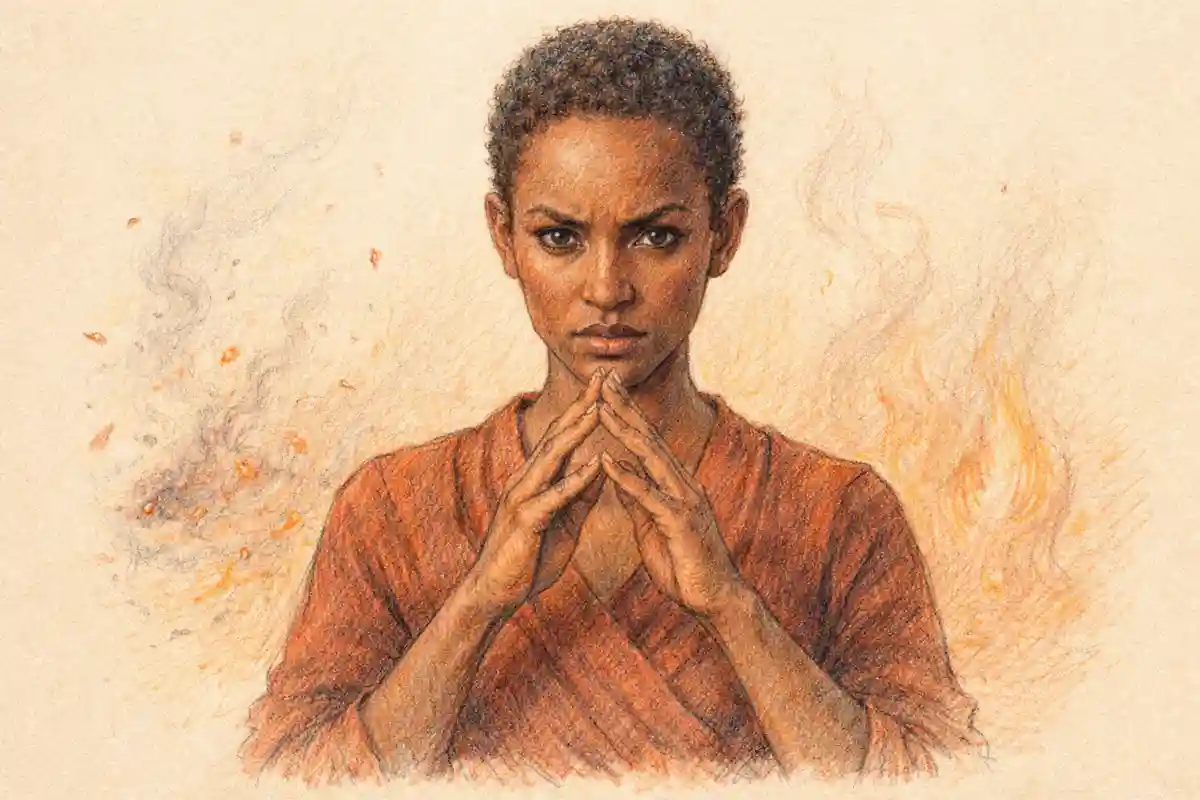
Introduction: The Sentence and the Lowered Wand
The question is not which boy was the worse bully. Both tormented the same child for years; both inherited their cruelty from parents who had cultivated it; both were larger, louder, and more protected than the boy they hounded. The question is narrower and stranger than a tally of insults. Two boys built to be cruel were each handed, near the end, a single opportunity to recognise their victim as a person. One took it in a sentence spoken on a doorstep with no one important watching. The other never quite managed the sentence, though he lowered his wand when it mattered most. Why does the smaller gesture feel like the larger change?
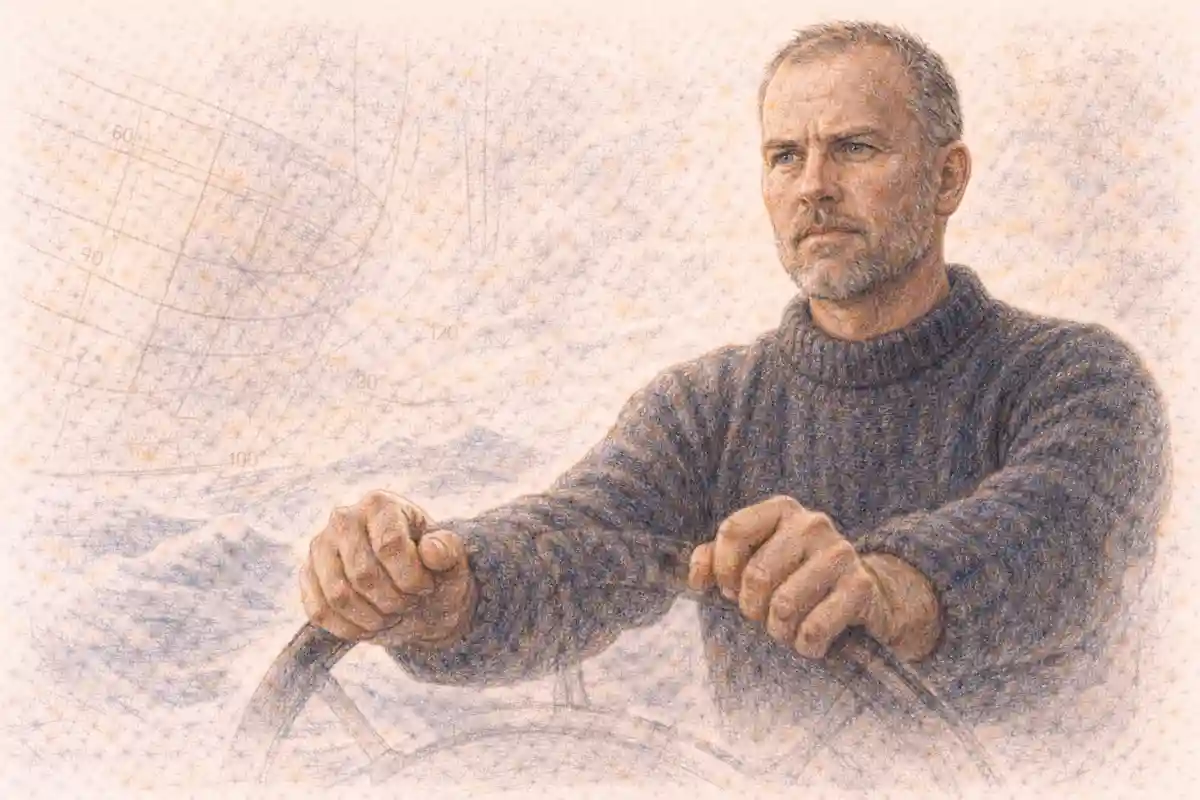
Rowling rarely lets two minor figures rhyme this precisely by accident. Dudley Dursley and Draco Malfoy occupy mirrored positions on either side of the magical divide. The first is the cruelty Harry grows up inside, the domestic tyranny of a Surrey cul-de-sac. The second is the cruelty Harry meets when he escapes into the wizarding world, the school-corridor tyranny dressed in pure-blood theory. They never meet. They share a target, an age, a body type, a household built on the rejection of difference, and a faint, partial movement toward something better. Held in the same frame, they become the series’ most exact laboratory experiment on a question children’s literature rarely asks with any honesty: can a bully become a decent adult, and if so, what has to be true for the change to take?
The answer the books offer is counterintuitive. The boy with fewer beliefs changes more completely than the boy with a coherent worldview, and the change that asks for no credit reads as more real than the change performed in front of a watching crowd. To see why, the two have to be set against each other lens by lens, never as two profiles laid side by side but as a single argument seen from two angles.
The Surface Parallel
Begin with what makes the comparison non-arbitrary, because the symmetry is unusually deliberate. Each is a spoiled only child whose parents have shaped him into a specific instrument of contempt. Petunia and Vernon raised their son on indulgence laced with bigotry; he wanted for nothing material and was taught, by example rather than by lecture, that anything strange was beneath notice or worthy of attack. Lucius and Narcissa raised their heir on entitlement laced with supremacy; he too wanted for nothing, and absorbed an ideology that told him his blood placed him above most of the people he would ever meet. Two households, two ways of producing a child who believes the world owes him deference.
Both are physically larger than the orphan they target, though the size comes from opposite sources. One swells through over-eating and parental over-feeding, a body grown fat on the same indulgence that fattened his self-regard. The other towers through the casual advantages of wizarding wealth and the confidence that comes from never having been told no. Both arrive early in Harry’s life and stay. The Surrey boy hunts his cousin through the rooms of a shared house and across the local pavements with a gang of equally unpleasant friends. The Slytherin offers his hand on the Hogwarts Express in the first book, is refused, and spends six years converting that refusal into a campaign of petty and occasionally dangerous persecution, flanked by his own pair of bulky followers.
The structural rhymes keep coming. Each has henchmen who function as extensions of his ego rather than as friends: Piers Polkiss and the rest of the Privet Drive pack; Crabbe and Goyle in the dungeons. Each comes from a home organised around the policing of difference. The Dursleys enforce a suffocating, aggressive ordinariness, the determination to be the most normal family on the street and to crush anything that threatens that image. The Malfoys enforce a doctrine of blood, a belief system with its own genealogies and its own contempt for the impure. And each, by the close of the seventh book, undergoes some kind of reckoning, partial and incomplete, that the series refuses to resolve into a tidy moral.
This is the scaffolding. What matters is what each boy does with the same raw material, and the books are unusually rigorous about distinguishing the two trajectories.
Two Architectures of Cruelty: Nature Against Nurture
Rowling hands the reader something close to a controlled experiment in toxic parenting, and the variables are matched with care. Indulgence-plus-bigotry built the Surrey boy. Entitlement-plus-supremacy built the dungeon heir. The interesting work begins when you ask which architecture is more recoverable, because the intuitive answer is wrong.
One might assume the cruder upbringing produces the more hopeless child. The Dursleys are coarse where the Malfoys are cultured; their prejudice has no theory behind it, only a gut clench at anything that does not fit the suburban template. Surely a boy raised on raw instinct, with no examined principles to outgrow, would be harder to reach than a boy raised inside an articulate, if poisonous, intellectual framework. The books argue the opposite, and they argue it through the structure of each boy’s belief rather than its content.
The Dursley boy has very little to defend. His cruelty is appetite and reflex, not creed. He hits his cousin because hitting is fun and unpunished, mocks magic because magic frightens his parents and therefore frightens him, and clings to his toys and his tantrums because indulgence has taught him that the world rearranges itself around his wants. There is no doctrine here, no body of belief he would have to renounce in order to change. When change finally comes for him, it does not require him to dismantle a philosophy. It requires only that he notice, once, that the cousin he has tormented is a person who recently saved his life. The absence of an ideology turns out to be a kind of freedom.
The Malfoy heir carries a far heavier load. His contempt is wired to a worldview with its own history, its own martyrs, its own intellectual respectability within his social class. To abandon it would mean betraying his father, his name, the long line of ancestors whose portraits watch the corridors of the manor, and the entire account of himself that explains why he matters. The pure-blood creed is not a habit he can shed in an afternoon; it is the load-bearing wall of his identity. This is why his movement toward decency stalls and stutters where his counterpart’s, once begun, simply completes itself. The boy with the sophisticated upbringing has more to lose by changing, because change for him is not the correction of a reflex but the demolition of a self.
Consider how each first appears, because Rowling encodes the difference in the opening descriptions. The Surrey child is introduced through gluttony and tantrum, a screaming toddler in a high chair throwing cereal at the walls, a boy who counts his birthday presents and demands more. He is grotesque but uncomplicated, a creature of want. The dungeon heir is introduced through a different register entirely. In the robe shop in the first book, before Harry even learns his name, the boy is already sorting the world into those who belong and those who do not, already parroting his father’s views on which sort of people should be allowed into the school. The first is a stomach with a temper. The second is an apprentice ideologue. The recovery prospects of each are encoded in those first glimpses.
The kind of close, comparative reading that pulls a thesis out of two parallel introductions is a discipline in itself, the same discipline that competitive exam candidates sharpen through structured resources like the ReportMedic CAT PYQ Explorer, where recognising a recurring pattern across many years of questions trains exactly the attention that good literary analysis demands. Rowling rewards the reader who tracks how an author plants a recovery arc, or forecloses one, in a character’s earliest sentences.
There is a darker corollary. Because the Malfoy creed is coherent, it can be felt as conviction; because the Dursley contempt is reflexive, it can never be more than mood. Conviction is harder to break but also, when broken, leaves a deeper wound. The series does not give the dungeon heir the relief of a clean conversion, and part of the reason is that there is no clean way to leave a faith you were born into. Mood, by contrast, can simply lift. The Surrey boy’s change does not feel like apostasy because there was never a church.
Two Kinds of Privilege
If the architecture of cruelty differs, so does the architecture of advantage, and the two privileges produce two different fears, which is where the comparison earns its real force. The books are precise about this. Dursley privilege is the privilege of aggressive normality. Malfoy privilege is the privilege of aristocratic exception. They look nothing alike, and they fail their owners in opposite ways.
The Surrey household derives its authority from being unremarkable. Its power is the suburban middle-class English certainty that the ordinary is the good, that the lawn and the company car and the well-behaved son are not merely possessions but proofs of virtue. The boy raised inside this certainty learns that to be normal is to be safe and to be safe is to be superior. His entire sense of standing depends on the world staying legible, on nothing happening that the neighbours might whisper about. He is privileged not by wealth in any grand sense but by the assurance that he is the default, the unmarked case, the kind of person the world was built to accommodate.
The manor household derives its authority from the opposite principle. Its power is the certainty of exception, the conviction that the family is not ordinary and must never be, that its blood and its history place it above the common run. The boy raised inside this certainty learns that to be exceptional is to be safe and that any sign of the ordinary is a threat. He is privileged by inheritance, by name, by a wealth so old it has stopped feeling like money and started feeling like a law of nature. Where his Surrey counterpart needs the world to stay unremarkable, he needs himself to stay remarkable.
These two privileges generate two precisely opposite fears, and the fears are the key to everything that follows. The boy who needs the world to be ordinary fears the unknown. Anything that cannot be explained by the rules of Privet Drive is a personal threat, because it exposes the lie that the ordinary is all there is. Magic terrifies him not merely because it is strange but because it proves his family’s worldview false. The boy who needs himself to be exceptional fears failure. Any evidence that he is not as superior as his upbringing has promised is a personal catastrophe, because it dismantles the only account of himself he has. The first fears the world being larger than he was told. The second fears himself being smaller than he was told.
Watch how each fear gets dramatised. The Dementor attack in the fifth book puts the Surrey boy face to face with the unknown made physical, a horror that operates by rules no normality can contain, and he collapses, defenceless, dependent on the very cousin whose magic he has spent his life despising for rescue. The unknown he has feared all along arrives in a Little Whinging alleyway and he has nothing with which to meet it. The scene is almost cruel in its symmetry: the boy who mocked magic is saved by it, and saved by the person he mocked.
The dungeon heir’s defining fear gets its fullest dramatisation in the sixth book, in the bathroom, where he weeps over a task he cannot complete and dares not refuse. The supremacist who has spent five years assuring everyone of his superiority is reduced to a crying boy who knows, finally, that he is not equal to what has been demanded of him. The fear of failure that his whole upbringing was designed to outrun catches him there, alone, in front of a ghost and a mirror. Where his Surrey counterpart’s terror is of the world’s hidden largeness, his is of his own discovered smallness.
Both fears, crucially, are the fears their privileges installed. Neither boy chose what he was most afraid of. The fear of the unknown is the natural shadow of a worldview that insists the known is everything. The fear of failure is the natural shadow of a worldview that insists one is destined to succeed. Rowling lets the punishment fit the upbringing with an almost theological exactness. Each boy is broken at precisely the joint his parents built weakest.
The Reckoning: Two Repentances Measured Against Each Other
Here the comparison reaches its centre, because the books offer two reckonings that could not be more different in scale, and the smaller one is the more complete. This is the paradox the whole essay turns on, and it deserves to be stated plainly before it is defended: the boy who changes least dramatically changes most genuinely.
The Surrey boy’s reckoning is a single sentence, spoken on the doorstep of the only home he has ever known, as his family flees into hiding. He tells his cousin that he does not think he is a waste of space. That is the entire gesture. There is no embrace, no apology for years of cruelty, no examination of conscience offered aloud. He cannot even find the words for gratitude; another character has to supply the interpretation, noting that the boy is essentially thanking Harry for saving his life from the Dementors. It is graceless, halting, and almost embarrassed. It is also, measured by the only metric that matters, enormous.
What makes it enormous is everything surrounding it that does not exist. There is no audience whose approval the gesture might court. There is no ideology to renounce, but equally there is no ideology to perform leaving. There is no political advantage, no strategic calculation, no chance that the words will improve his standing with anyone he cares about. His parents would not approve; his old friends would not understand; the cousin he addresses is leaving forever and can offer nothing in return. The sentence is spoken into a void, for no benefit, and that is exactly why it persuades. A change that brings no reward and asks for no credit is the only kind that cannot be faked. It took seventeen years to produce a single clause of decency, and the smallness of the result is the proof of its truth.
Set against this the dungeon heir’s reckoning, which is larger in every theatrical dimension and smaller in moral resolution. He lowers his wand on the Astronomy Tower in the sixth book, unable to commit the murder he was sent to commit, but the books are careful to leave the meaning ambiguous: is this conscience, or merely the failure of nerve that he has always feared in himself? At the manor in the seventh book, asked to identify a captured and disfigured Harry, he hesitates, will not confirm, mutters that he cannot be sure. It is a refusal to seal a death, and it matters. But it is a refusal performed in front of his family, his ideology intact, his motives unreadable even to himself. He never finds the sentence his Surrey counterpart found. He never says, to the boy he tormented, that he was wrong about him.
The series gives this character neither full damnation nor full redemption, and the withholding is deliberate. His arc is a study in arrested repentance, a conscience that flickers without ever catching. The reasons are the ones the earlier sections established. He has an ideology to defend, a father to betray, a name to dishonour, and a self constructed entirely out of the belief that he is superior to the very people he would have to apologise to. Every door his counterpart walked through is, for him, walled up by his own inheritance. He cannot make the small clean gesture because nothing in his life is small or clean.
The asymmetry is the argument. Rowling gives the cruder boy credit for less and the cultured boy credit for more, then quietly insists that the cruder boy’s recovery is the more complete. The dungeon heir’s wand-lowering is the grander image; it will be the one the films linger on. But grandeur is not the measure. The measure is whether the gesture asks for anything in return, and whether it requires the bully to see his victim, finally, as a human being rather than a category. The doorstep sentence does both. The tower wand-lowering does neither cleanly. One boy stopped a murder while remaining, in his own mind, who he had always been. The other boy, who stopped nothing and saved no one, managed the harder thing: he changed his mind about a person.
Both Boys as Mirrors of Harry
The comparison gains a third dimension when you notice that neither boy exists only for his own sake. Each is a mirror held up to Harry, showing him what he might have become from opposite social positions, and the two reflections together define the protagonist by everything he is not.
The Surrey boy is the counterfactual Harry-raised-as-a-true-Dursley, the boy the household actually wanted. Picture the orphan as their biological son rather than the resented nephew, indulged rather than starved of affection, fed rather than locked in a cupboard, taught that he was the centre of the world rather than told he barely deserved a place in it. That boy is the one sitting in the second bedroom counting his presents. He is what the Privet Drive method produces when it is allowed to love its subject. The horror of the comparison is that the same household, with its affection switched on instead of off, manufactured a small tyrant, while its cruelty toward Harry, perversely, helped produce a boy capable of love. The Dursleys’ indulgence was more dangerous than their neglect.
The dungeon heir is the counterfactual Harry-raised-in-magical-privilege, the boy Harry might have been had the dice of blood and class fallen differently. Imagine Lily as a pure-blood, James as an aristocrat with a manor and a creed, the orphan never orphaned but raised instead among house-elves and inherited contempt, taught that his magic placed him above the Muggle-born. That boy offers his hand on the train and expects it taken. He sneers at the poor and the impure because he has been taught that sneering is what people of his standing do. He is what wizarding wealth produces when it is married to ideology. And he is, terribly, plausible as a version of Harry, because the orphan does share the relevant raw materials: the magical talent, the early fame, even, as the Sorting Hat insists, a genuine capacity for Slytherin.
This is why the famous moment on the train resonates so far beyond its size. When Harry refuses the offered hand, he is not merely declining a friendship. He is choosing, in the first hours of his new life, the impoverished and loyal Weasley boy over the wealthy and contemptuous Malfoy boy, and in doing so he is choosing which counterfactual self to reject. He could have been the boy with the manor. He selects, instead, the company of the boy with the second-hand robes. The whole moral trajectory of the series is encoded in that small social choice, and the dungeon heir spends six years as the living reminder of the path not taken.
What both mirrors share is the verdict that Harry was not different from these boys by nature. He had the orphan’s wound that might have soured into the Dursley boy’s appetite or the Malfoy boy’s pride. He had the talent that might have curdled into supremacy. The difference, the series insists across both reflections, was love arriving from outside the family, and choice repeated daily once it had. The two bullies are the control group. Harry is the variable. And the experiment proves Dumbledore’s thesis that it is choice, far more than ability or birth, that shows what a person truly is.
Two Fathers, Two Mothers, Two Theories of the Family
Behind each boy stands a household, and the households are theories of the family as much as collections of people. Comparing the parents directly sharpens why the sons diverge, because the sons are arguments their parents are making with their lives.
Vernon Dursley’s theory of the family is the fortress of the ordinary. The home exists to keep the strange world out and the normal world in, and the son is raised as the proof that the fortress works. Everything the boy is given, the feasts, the toys, the unconditional praise, is given to confirm that the Dursley way of living produces a happy, successful child, a walking advertisement for suburban conformity. The cruelty toward the nephew is part of the same theory: the orphan is the strangeness that has breached the fortress, and punishing him is the household defending its founding principle. The son absorbs all of this as atmosphere rather than instruction. He is not taught a doctrine of normality; he is bathed in one until it becomes the water he swims in.
Lucius Malfoy’s theory of the family is the dynasty. The home is a link in a chain of blood that stretches backward through portraits and forward through the heir, and the son exists to carry the line and the creed into the next generation. What the boy is given, the name, the wealth, the assurance of superiority, is given to fit him for that succession. The contempt for the impure is not atmosphere but explicit teaching, a worldview transmitted as carefully as an estate. The son absorbs it as principle, something he can articulate and defend, because his father wanted an heir who would believe, not merely a child who would conform. The difference in transmission, atmosphere versus instruction, explains the difference in how hard each creed is to leave.
The mothers complicate both theories, and in opposite directions. Petunia Dursley is the more active enforcer of the fortress, the one whose resentment of her magical sister curdled into the household’s animating bitterness. Her love for her son is real but undifferentiated from her indulgence; she spoils him as an extension of the same impulse that makes her despise the nephew, and she offers no counterweight to the family doctrine. There is no crack in the Dursley front through which something other than normality might enter, until the son, alone and unprompted, makes one himself on the doorstep. The mother provides no model for the change; the boy invents it from nothing.
Narcissa Malfoy is the crack in her own household’s front. Her devotion to her son operates on a frequency the supremacist creed does not reach, and when the war forces a choice between the ideology and the child, she chooses the child without hesitation, lying to the Dark Lord in the Forbidden Forest to learn whether her boy still lives. The mother’s love is the one force in the manor that was never fully colonised by the blood doctrine, and it is the force that finally cracks the family’s allegiance, however privately. Where the Dursley household offers its son no model for change, the Malfoy household contains, in the mother, a buried capacity for placing love above creed, which the son inherits even if he never learns to name it.
This is the deepest layer of the parental comparison. The Surrey boy changes despite a household with no resources for change, which makes his transformation a small miracle of self-generation. The manor boy half-changes within a household that secretly contains, in the mother, the very principle of love-over-ideology that real change would require, which makes his arrested arc the more frustrating: the resource was there, in his own home, and he could draw on it only partway. One boy had nothing to work with and managed something. The other had something to work with and managed less. The families predict the sons, and the sons, in turn, expose what their families were really made of.
Where the Comparison Breaks Down
Every comparison this neat eventually strains, and the honest reading names the point where the symmetry fails rather than forcing the two boys into a shape they do not hold. The break runs along the line that separates ideology from instinct, and it complicates the verdict the previous sections reached.
The dungeon heir operates inside a belief system with intellectual scaffolding. Pure-blood supremacy is false, but it is coherent: it has a theory of history, a hierarchy, a vocabulary, a set of heroes and enemies. A boy raised inside it does not merely dislike Muggle-born witches and wizards; he holds a worldview that explains and justifies the dislike, that gives it the dignity of principle. To change, he would have to do philosophical work, to recognise that the entire framework is a lie, and then to live as a traitor to everyone who still believes it. That is a far harder task than ceasing to be unpleasant. It is closer to religious conversion than to mere reform.
The Surrey boy operates inside something that barely qualifies as a belief at all. The Dursley contempt for difference is instinct dressed as common sense, the reflexive “we don’t hold with such nonsense” that has never been examined because it has never needed to be. There is no theory of Muggle superiority for him to renounce, because the Dursleys do not have a theory; they have a flinch. When he changes, he does not have to revise a worldview, because he never possessed one coherent enough to revise. He simply has to stop flinching at one particular person.
This asymmetry cuts against the easy moral the comparison seems to offer. It is too convenient to say the cultured boy failed where the crude boy succeeded, because the two were not attempting the same task. One had to overcome a reflex; the other had to overcome a religion. Judged by the difficulty of the climb rather than the height reached, the dungeon heir’s partial movement may represent more strenuous moral effort than the Surrey boy’s complete one. To leave even the edge of a faith you were born into is harder than to abandon a habit you never thought about. The reading that crowns the doorstep sentence as the greater achievement is right about completeness and wrong about cost.
There is a further break in the matter of consequence. The Surrey boy changes in a moment of safety, fleeing into protective hiding, his life about to improve. The dungeon heir’s hesitations happen inside a war, surrounded by people who would kill him for a clearer betrayal, his every flicker of conscience a genuine risk to his survival and his family’s. The contexts are not parallel. One boy can afford his decency; the other cannot. To weigh the gestures equally is to ignore that they were made under wildly unequal pressure. A kindness offered in safety and a kindness offered under threat of death are not the same currency, and the comparison should not pretend they are.
So the symmetry holds at the level of structure and fractures at the level of stakes. Both were bullies; both were their parents’ products; both moved, by the end, toward something better. But one moved cheaply and completely, the other expensively and partially, and which of those is the greater moral fact depends entirely on whether you measure outcomes or efforts. Rowling, characteristically, declines to settle it.
What Rowling Reveals Through the Juxtaposition
Lay the two reckonings beside each other and a thesis about repentance emerges that runs counter to most of what literature, and most of what religion, tells us about how people get better. The size of the gesture does not measure the depth of the change. The quality of attention behind it does.
The dungeon heir performs the more impressive actions. He lowers the wand that could have ended a life; he withholds the identification that could have sealed a death. These are, by any plot summary, the weightier deeds. Yet they leave his soul roughly where it was, because he performs them without ever revising his estimate of the people he is sparing. He spares Harry without ceasing to despise what Harry represents. His conscience operates at the level of action while his contempt remains intact at the level of belief. He does the right thing and remains, in the place where character actually lives, the same boy who sneered on the train.
The Surrey boy performs the smaller action and undergoes the larger change, because his single graceless sentence is an act of revised attention. To say that another person is not a waste of space, after seventeen years of treating him as exactly that, is to have looked at him and seen something previously invisible: a human being who matters. The deed is tiny. The seeing behind it is total. He has not merely behaved better; he has perceived differently, and the perception is the thing the series cares about. Cruelty, in Rowling’s moral world, is fundamentally a failure to see the victim as real. Its cure is therefore not grand action but corrected sight.
This is why the books give the larger boy credit for so little and the cultured boy credit for so much, then reverse the apparent verdict. The reversal is the lesson. Repentance is not measured in the scale of what you do but in whether you have come to see the person you wronged. The dungeon heir never quite manages to see Harry; he only manages, twice, not to destroy him. The Surrey boy manages, once, to see him, and the seeing is worth more than two saved lives because it is the only thing that changes who he is.
There is a political edge to this, easily missed. The series consistently locates evil in the refusal to grant full personhood to others, whether the others are Muggles, Muggle-born witches and wizards, house-elves, or a despised cousin. The two bullies are domestic-scale rehearsals of the larger evil. The dungeon heir’s failure to see is continuous with the supremacist ideology of the war; the Surrey boy’s small act of seeing is the same gesture, scaled down, that the whole resistance to that ideology depends on. To recognise the personhood of the one you were taught to despise is, in this universe, the root political act. One boy performs it on a doorstep with no one watching. The other never performs it at all, though he twice declines to commit the murder it would have made unthinkable. The difference between them is the difference between not killing a person and actually seeing one.
Cross-Literary Parallels
The pairing of the cruel-and-privileged with the cruel-and-recovering belongs to a long literary tradition, and reading the two boys against their ancestors clarifies what Rowling is doing with the form.
The most immediate parallel is the cruelty-comparison Emily Bronte stages in Wuthering Heights between the boy raised dark and the boy raised soft. Heathcliff’s cruelty is forged in deprivation and humiliation; Edgar Linton’s complacency is bred in comfort and entitlement. Bronte refuses to let the reader love either cleanly, just as Rowling refuses a clean verdict on her two boys. The difference is instructive: Bronte’s pair are cruel in opposite registers, deprivation against privilege, whereas Rowling’s pair are both privileged, which sharpens the question to one of what kind of privilege does the most damage. Where Bronte asks whether suffering excuses cruelty, Rowling asks whether comfort, of two different sorts, produces two different cruelties and two different cures.
The English school-story tradition supplies a sharper ancestor still. Flashman, the magnificent bully of Tom Brown’s Schooldays, is the upper-class tormentor whose cruelty carries the casual confidence of inherited station, the direct literary forefather of the dungeon heir’s drawling contempt. Set him against a lower-born brute like Dickens’s Bill Sikes in Oliver Twist and you have the class poles of British literary villainy: the polished cruelty of the entitled and the raw cruelty of the deprived. Rowling collapses these poles into the magical world’s own class system, where the manor boy plays Flashman to the impure and the half-blood, and the suburban boy plays a smaller, pettier tyrant whose viciousness has no aristocratic gloss at all.
Mark Twain treats the boyhood-cruelty theme with a lighter hand, and the comparison illuminates by contrast. Tom Sawyer and his village rivals trade blows and humiliations, but Twain frames the cruelty as the rough comedy of growing up, recoverable almost by definition. Rowling’s two boys begin in something like that comic register, the playground bully and the school rival, and then she does what Twain declines to do: she follows the cruelty into a war and asks whether the comic bully can survive contact with real evil as anything other than a casualty or a convert. The Surrey boy is rescued from the comic frame by a Dementor; the dungeon heir is dragged out of it by a Dark Lord. Both discover that the schoolyard does not stay a schoolyard.
The deepest parallel sits in the Hindu epic tradition, in the figure of Duryodhana, the supreme aristocratic bully of the Mahabharata. Duryodhana is the entitled cousin whose contempt for his more virtuous kin drives an entire civilisation toward catastrophe, the prince who cannot bear that anyone might be his equal or better. The dungeon heir is a Duryodhana in miniature: the well-born boy whose intolerable fear is of being surpassed, whose cruelty is the defence of a precedence he was promised at birth. What the epic adds is the recognition that this kind of bully is genuinely tragic, that the supremacist’s terror of equality is a wound as much as a sin, and that he is destroyed by the very pride that was bred into him. The series grants the manor boy that tragic dimension in the sixth-book bathroom, the moment Duryodhana never quite gets: the supremacist weeping at the discovery of his own insufficiency.
Three traditions, three angles. Bronte supplies the question of whether upbringing excuses cruelty. The English school story supplies the class anatomy of the bully. The epic supplies the tragic reading of the supremacist whose pride is also his wound. Together they place Rowling’s two boys inside a conversation that runs from Victorian England to ancient India, and they confirm that her real subject is not these two children at all but the oldest question about cruelty: where it comes from, and whether anyone who has practised it can be redeemed.
Legacy: Which Bully Endures and Why
The fandom’s verdict on the two boys diverges sharply from the moral verdict the books quietly deliver, and the gap is itself revealing about how readers process repentance.
The dungeon heir endures enormously. He has launched a thousand essays, a vast quantity of fan fiction, an entire subculture devoted to reading his arrested repentance as a tragedy of thwarted goodness. Readers gravitate to him precisely because his redemption is incomplete; the ambiguity is an invitation, a space the audience can fill with the conversion the books withhold. He is the bully the readership wants to save, the sneering boy whose tears in the bathroom suggest a better self that circumstances never let emerge. His grandeur, his beauty in the films, his proximity to genuine danger, and above all the unresolved quality of his ending have made him one of the most discussed minor characters in the series. The fandom loves him for the change he almost made.
The Surrey boy endures far less, and the reason is the same reason his change is the more genuine. His repentance is too small, too graceless, too unglamorous to inspire fan fiction. No one writes a thousand essays about a single sentence on a doorstep. He offers the audience nothing to complete, because his arc is, quietly, finished: he saw his cousin as a person, said so badly, and walked into the rest of his life. There is no ambiguity to fill, no tragic potential to mourn, no beauty to fixate on. He is a fat suburban boy who managed one decent clause after seventeen cruel years, and the very modesty that makes the change real makes it forgettable.
This is the final irony the comparison surfaces, and it indicts the reader as much as the characters. The audience prefers the spectacular incomplete redemption to the modest complete one. We are drawn to the boy who almost changed and away from the boy who actually did, because the almost is dramatic and the actually is dull. We mistake the scale of a gesture for its depth, the very error the books are warning against. The dungeon heir’s enduring popularity is, in a sense, a mass demonstration of the misreading the series diagnoses: the preference for grand performed conscience over quiet revised attention.
The lesson worth carrying out of the comparison is therefore double. The first half is about the characters: that recovery from cruelty depends not on the magnitude of one’s repentance but on whether one has come to see the victim as real, and that the smaller, unwitnessed gesture is often the truer one. The second half is about us: that our instinct to celebrate the dramatic near-redemption over the modest real one is exactly the failure of attention the books are about. The kind of disciplined, evidence-weighing reading that resists the seductive surface and tracks the quieter truth is a skill that rewards practice, the same close-reading muscle that structured-preparation tools like the ReportMedic UPSC PYQ Explorer help candidates build, where the answer that looks most impressive is frequently not the one that survives careful analysis. Rowling rewards the reader patient enough to prefer the doorstep to the tower.
To watch the two boys properly is to learn to distrust grandeur and to credit the small, graceless, unrewarded act of finally seeing another person. The wider arc of the manor boy is traced in our full Draco Malfoy character analysis, and the protagonist whose refused handshake set the whole moral machinery in motion is examined at length in our Harry Potter character analysis. Read against each other, the bully who almost changed and the bully who quietly did become the series’ most honest statement on whether anyone is ever truly past saving.
The Henchmen and the Shape of Each Boy’s Power
A bully reveals himself in his followers, and the two retinues are as carefully contrasted as the boys who command them. The Surrey boy runs with a pack: Piers Polkiss and the rest, a loose gang of neighbourhood children bound by nothing more principled than the pleasure of hunting smaller prey together. The dungeon heir commands a pair: Crabbe and Goyle, two heavy, silent boys who function less as friends than as furniture, extensions of his will whose loyalty is inherited from their fathers’ place in the supremacist order. The difference between a pack and a pair maps the difference between the two privileges.
The pack is horizontal. The Surrey boy’s authority over his friends is the authority of the strongest child on the street, a leadership that must be constantly re-earned through dominance and that could pass to another boy who hit harder. There is no inheritance in it, no ideology, only the playground hierarchy of the moment. It is the social structure of suburban ordinariness, where standing is a matter of local force rather than birth. When the boy eventually softens, the pack simply dissolves around him; it was never held together by anything that could survive his change of heart, because it was never held together by belief.
The pair is vertical. The two heavy boys follow the manor heir not because he is the strongest but because their families occupy a lower rung of the same blood-order, and following is what their station prescribes. Their loyalty is structural, a feudal arrangement of inferiors attending a superior, and it mirrors the aristocratic privilege that produced their master. This is why one of them eventually turns on him in the seventh book, in the Room of Requirement, where the inherited hierarchy curdles into resentment and a follower’s ambition outruns his place. The pure-blood order that organised the pair also seeded its collapse; the vertical bond, unlike the horizontal one, contained the grievance that would break it.
Each retinue, then, is a scale model of its leader’s world. The pack is the ordinary boy’s world of contested local dominance. The pair is the aristocratic boy’s world of inherited, resented hierarchy. And the fate of each retinue forecasts the fate of each boy. The pack melts away harmlessly because it was only ever appetite; the Surrey boy can leave it without wreckage. The pair detonates because it was ideology made flesh; the manor boy cannot leave his world without someone being consumed by the fire it was always carrying. The henchmen are not decoration. They are the social physics of the two privileges rendered in miniature.
The Room They Never Share
The series never lets the two boys meet, and the absence is generative. They are both, in the end, recovered or recovering bullies orbiting the same protagonist, cousins-of-Harry in the loose sense that each is bound to him by a formative antagonism. Yet they have no relationship to each other, no scene, no line of dialogue exchanged. The unwritten chapter is the one in which they would have to occupy the same room.
Imagine the adult occasion that would force it: a wedding, a christening, some event in the protagonist’s grown life to which both threads of his past are improbably invited. The Surrey boy, heavier and quieter now, raised children of his own, capable on a good day of a civil word about the cousin who once saved him from the Dementors. The manor heir, greyed and chastened, his ideology privately abandoned but never publicly renounced, navigating a world that defeated his father’s creed. Two men who tormented the same boy, neither fully comfortable in a room organised around that boy’s happiness, with nothing to say to each other and everything in common.
What would they recognise in one another? Each would see, perhaps, a fellow graduate of the same hard education: the discovery, late and against the grain of upbringing, that the despised cousin or the despised classmate was a person after all. They arrived at that discovery by opposite routes, the one through a single graceless sentence, the other through a lifetime of arrested half-gestures, and neither would have the vocabulary to name what they shared. The conversation would be excruciating and brief. But the very fact that it is imaginable, that two such different products of two such different cruelties could stand in the same room as recovered men, is the most hopeful thing the comparison contains.
The structural absence works because it leaves the reader to perform the reconciliation the text withholds. We are made to imagine the room, and in imagining it we complete the moral argument: that bullies of every class and creed are, finally, comparable creatures, shaped by parents into instruments of contempt, and that recovery, however partial, places them in a quiet fellowship neither would admit to. The two never meet, and so the reader meets them on their behalf, and the meeting is where the series’ faith in change, hedged and qualified as it is everywhere else, finally shows itself plainly.
The Verdict the Series Withholds
Rowling could have settled the question and chose not to, and the refusal is itself an argument. A tidier author would have given the manor heir a clean conversion scene, a moment of articulate remorse to match the weight of his sins, or else damned him outright and let the Surrey boy’s redemption stand unqualified as the series’ verdict on bullies. Instead the books leave one boy half-finished and the other quietly complete, and decline to tell the reader which outcome is the more admirable. The withholding forces the reader to do the moral arithmetic, and the arithmetic does not resolve into a single sum.
Consider what an honest verdict would have to weigh. On one side, completeness: the suburban boy actually changed, actually came to see his cousin as a person, actually closed the arc. On the other side, difficulty: the aristocratic boy attempted a far steeper climb, fighting an entire inherited worldview under threat of death, and reached a higher absolute altitude even if he never summited. To crown the first is to reward results and ignore conditions. To crown the second is to reward effort and ignore the fact that effort which never sees its object is not yet repentance. Neither verdict is wrong, and neither is sufficient, which is precisely why the series gives the reader both boys and no ruling.
This is the mark of the comparison’s seriousness. Lesser fiction sorts its bullies into the redeemed and the damned and moves on. Rowling sorts hers into the completely-changed-but-cheaply and the partially-changed-but-dearly, then sets them in the same frame and walks away, trusting the reader to feel the genuine difficulty of choosing between them. The two boys are not a lesson with an answer at the back. They are a question kept permanently open, and the openness is the most honest thing a children’s series ever said about whether the cruel can be saved. The doorstep and the tower stand at opposite ends of the same question, and the series leaves the reader standing between them, unable to look away from either. That refusal to resolve is not evasion but respect, a trust that the reader can hold two incompatible truths at once without demanding the comfort of a single ruling. The cruel boy who saw his victim and the cruel boy who only spared him remain, side by side, the most demanding pair of moral cases the books ever decline to close.
Frequently Asked Questions
Why does Dudley’s single sentence count as a more complete redemption than Draco’s lowered wand?
Because the doorstep sentence asks for nothing and is witnessed by no one who could reward it. The Surrey boy tells his cousin he is not a waste of space as the family flees into hiding, with his parents disapproving, his old friends gone, and the cousin leaving forever. There is no audience, no advantage, no ideology being performed. A change made for no benefit cannot be a performance. The Astronomy Tower wand-lowering, by contrast, happens before a crowd, leaves the supremacist worldview intact, and may be conscience or merely failed nerve. The smaller gesture persuades because its smallness rules out every motive except genuine, revised perception of another person.
What is the central difference between how Vernon and Lucius shaped their sons?
The two fathers manufactured cruelty by opposite methods. Vernon Dursley produced his son through indulgence fused with instinctive bigotry, raising a boy who wanted for nothing and absorbed, by example, a reflexive contempt for anything strange. Lucius Malfoy produced his heir through entitlement fused with articulate supremacy, raising a boy steeped in a coherent ideology of blood. The crucial consequence is that one boy inherited a mood and the other inherited a creed. A mood can lift; a creed must be renounced. The Surrey father’s cruder method, paradoxically, left his son freer to change, because there was no doctrine to betray, only a habit to abandon when the right moment finally arrived.
Why does the boy with the more sophisticated upbringing change less than the cruder one?
Because sophistication, in this case, means having more to lose by changing. The manor heir’s contempt is wired to a belief system with its own history, heroes, and intellectual respectability. Abandoning it would mean betraying his father, dishonouring his name, and dismantling the entire account of why he matters. The Surrey boy has no such scaffolding; his cruelty is reflex, not principle, so change requires no philosophical demolition, only the decision to stop flinching at one person. The cultured boy’s recovery stalls because change for him is the collapse of a self, while the crude boy’s recovery completes because for him it is merely the correction of a habit.
How does the Dementor attack in Order of the Phoenix reveal Dudley’s deepest fear?
The attack in the Little Whinging alleyway forces the Surrey boy to confront the unknown made physical, a horror that operates by rules no suburban normality can contain. His entire upbringing taught him that the ordinary is everything and that anything strange is beneath notice or worthy of attack. The Dementor proves that worldview catastrophically false, exposing a world far larger and darker than Privet Drive admits. He collapses, defenceless, and must be rescued by the very cousin whose magic he despised. The scene dramatises the fear his privilege installed: not failure, but the unknown, the terror that the legible suburban world is not all there is.
How does the Half-Blood Prince bathroom scene reveal Draco’s deepest fear?
The bathroom scene shows the supremacist weeping over a task he can neither complete nor refuse, and the tears expose the fear his aristocratic upbringing was designed to outrun: the fear of failure, of being smaller than he was promised he would be. Raised to believe his blood made him exceptional, he is reduced to a frightened boy who knows he is not equal to what the Dark Lord has demanded. The whole architecture of his privilege depended on the certainty of his own superiority, and the scene is the moment that certainty shatters. Where the Surrey boy fears the world’s hidden largeness, the manor heir fears his own discovered insufficiency.
In what sense are both boys mirrors of Harry?
Each shows what the protagonist might have become from an opposite social position. The Surrey boy is Harry-raised-as-a-true-Dursley, the indulged biological son the household actually wanted, a small tyrant produced by affection rather than neglect. The manor heir is Harry-raised-in-magical-privilege, the boy he might have been had his blood and class fallen differently, a supremacist produced by wizarding wealth married to ideology. Both are plausible versions of Harry because he shares the relevant raw materials: magical talent, early fame, even a genuine Slytherin capacity. The two bullies are the control group; the protagonist is the variable, and the difference is love arriving from outside the family, plus choice repeated daily.
Why is the refused handshake on the Hogwarts Express so important to this comparison?
When Harry declines the offered hand in the first book, he is choosing between his two possible selves. The manor boy offers friendship with the contempt of his class already in it; the impoverished Weasley boy offers loyalty without status. By refusing the wealthy, sneering classmate in favour of the poor, generous one, Harry rejects the counterfactual self the dungeon heir embodies. The whole moral trajectory of the series is compressed into that small social choice. The manor boy then spends six years as the living reminder of the path Harry declined, which is precisely why the comparison between them carries weight far beyond the boys’ actual narrative importance.
Does the comparison treat the two boys’ redemptions as equally difficult?
No, and the honest reading insists on the asymmetry. The Surrey boy had to overcome a reflex; the manor heir had to overcome something closer to a religion. To leave even the edge of a faith you were born into, betraying your family in the process, is far harder than abandoning an unexamined habit. The contexts also differ sharply: the suburban boy changes in safety, fleeing into protection, while the aristocratic boy’s hesitations occur inside a war where any clearer betrayal could mean death. Judged by difficulty and stakes rather than by completeness, the manor heir’s partial movement may represent more strenuous moral effort than the Surrey boy’s finished one.
How does Draco compare to Duryodhana in the Mahabharata?
The manor heir is a Duryodhana in miniature: the well-born cousin whose intolerable fear is of being surpassed, whose cruelty defends a precedence he was promised at birth. Duryodhana’s contempt for his more virtuous kin drives an entire civilisation toward ruin, and he is destroyed by the very pride bred into him. The epic grants this kind of bully a tragic dimension, recognising that the supremacist’s terror of equality is a wound as much as a sin. Rowling gives the manor boy that same tragic register in the bathroom scene, the moment of weeping at his own insufficiency that Duryodhana himself, in his pride, never quite reaches before his fall.
Which literary tradition best illuminates Dudley’s kind of cruelty?
The English suburban-comic register, where cruelty begins as the rough business of childhood before the narrative decides whether to let it stay comic. The Surrey boy starts as a playground tyrant in something like the mode Mark Twain uses for boyhood rivalry, a cruelty framed as recoverable almost by definition. What distinguishes Rowling’s treatment is that she drags him out of the comic frame by means of a Dementor, forcing the schoolyard bully to discover that the world is darker than the schoolyard. Dickens’s lower-class brutes and the casual viciousness of suburban English fiction both feed the portrait, but the comic-to-serious pivot is what gives the character his unexpected weight.
Why does the fandom prefer Draco to Dudley despite Dudley’s more genuine change?
Because the audience is drawn to spectacular incomplete redemption over modest complete redemption. The manor heir’s ambiguity is an invitation; readers fill the unresolved space with the conversion the books withhold, writing the better self his tears in the bathroom seemed to promise. His grandeur, his danger, his unresolved ending all make him endlessly discussable. The Surrey boy offers nothing to complete, because his arc is quietly finished. The preference is itself the misreading the series diagnoses: mistaking the scale of a gesture for its depth, celebrating the boy who almost changed over the boy who actually did. The fandom’s verdict inverts the moral one.
Is Draco a villain or a victim?
He is both, and the series refuses to resolve the tension, which is the source of his enduring fascination. He is a villain in his actions: years of bullying, complicity with the supremacist cause, a willingness to let dangerous things happen. He is a victim in his formation: a boy handed an ideology and a task too large for him by a father and a Dark Lord who used him without mercy. The bathroom scene insists on the victimhood; the manor scenes insist on the complicity. Rowling grants neither reading dominance, leaving him as a study in how a child can be simultaneously culpable for his cruelty and damaged by the forces that produced it.
Does Dudley ever truly apologise to Harry?
Not in any direct sense. He never says the word sorry, never references the years of torment, never offers an accounting of his cruelty. What he manages is a single oblique sentence, the statement that he does not think his cousin is a waste of space, which another character has to interpret as gratitude for being saved from the Dementors. The gracelessness is the point. A polished apology might invite suspicion of performance; the halting, embarrassed, barely articulate gesture cannot be anything but sincere, because no one performs sincerity that badly. The absence of a proper apology is precisely what makes the small one he offers ring true.
What does the contrast between Crabbe and Goyle and Dudley’s gang reveal?
It renders the difference between the two privileges in social form. The Surrey boy runs a horizontal pack, a gang of neighbourhood children bound by the shared pleasure of dominance, leadership re-earned through force and dissolving harmlessly when he softens. The manor heir commands a vertical pair, two heavy boys whose loyalty is inherited from their fathers’ place in the blood-order, a feudal arrangement that mirrors aristocratic privilege. The pack melts away because it was only appetite; the pair detonates because it was ideology made flesh, which is why one follower eventually turns on his master in the Room of Requirement. Each retinue is its leader’s world in miniature.
How does Narcissa Malfoy complicate the picture of Draco’s upbringing?
Narcissa introduces love into a household otherwise organised around ideology, and the love is what eventually saves Harry. Where Lucius shaped the heir through pure entitlement and creed, the mother’s devotion to her son operates outside the supremacist framework, and in the Forbidden Forest it overrides it entirely when she lies to the Dark Lord to learn whether her boy is alive. Her presence suggests that the manor boy was not only an apprentice ideologue but also a loved child, which both deepens the tragedy of his arrested change and supplies the one force capable of cracking the family creed. The mother’s love is the variable the supremacist system could not fully control.
Could Dudley and Draco ever have become friends after the war?
The series never lets them meet, and the absence is deliberately generative. Imagined as adults at some occasion in the protagonist’s grown life, they would recognise in each other fellow graduates of the same hard education: the late discovery that the despised cousin or classmate was a person. They reached that discovery by opposite routes, and neither would have the vocabulary to name what they shared, so any conversation would be brief and excruciating. Friendship is too strong a word. But the very fact that the meeting is imaginable, two recovered bullies in the same room, is the most hopeful thing the comparison contains, and the reader is left to perform the reconciliation the text withholds.
What does the comparison ultimately say about the nature of repentance?
That repentance is measured not by the magnitude of the gesture but by the quality of attention behind it. The manor heir performs the weightier deeds, sparing a life and withholding an identification, yet leaves his contempt intact at the level of belief. The Surrey boy performs the smaller act and undergoes the larger change, because his single sentence is an act of revised perception, the moment he finally sees his cousin as a human being. Cruelty, in this moral world, is fundamentally a failure to see the victim as real, and its cure is corrected sight rather than grand action. The doorstep gesture cures the sight; the tower gesture only stays the hand.
How does this comparison connect to the series’ larger argument about evil?
The two bullies are domestic-scale rehearsals of the supremacist evil the war is fought against. Rowling consistently locates evil in the refusal to grant full personhood to others, whether Muggles, Muggle-born witches and wizards, house-elves, or a despised relative. The manor heir’s failure to truly see Harry is continuous with the blood ideology of the Death Eaters; the Surrey boy’s small act of seeing is the same gesture, scaled down, that the entire resistance depends on. To recognise the personhood of the one you were taught to despise is the root political act of the series. One boy performs it quietly; the other never quite does, and the gap between them is the gap between not killing a person and actually seeing one.