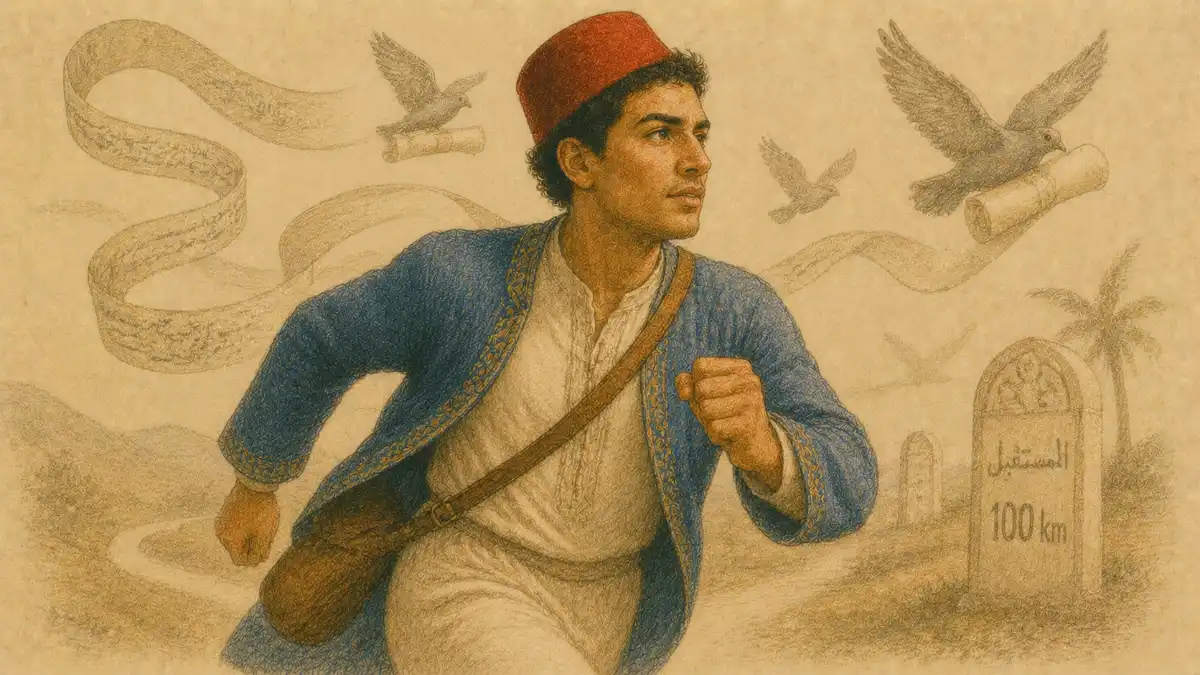
The question is not which boy is braver. Bravery is the cheapest of the qualities these two stories distribute, and both protagonists possess it in quantities that make the question dull. The question is what each of them is asked to carry, what the carrying does to the inside of a person, and whether the world either one returns to can hold a person who has carried such a thing. That is where the two stories stop rhyming and start arguing, and the argument they conduct across the space between them is the deepest disagreement in modern fantasy about the nature of evil and the price of opposing it.
Place these two figures side by side and the resemblance is almost embarrassing. A small person raised in obscurity inherits an object that contains a piece of a dark lord’s power. A mentor with a long beard and an air of riddling wisdom sets the small person on a road. A loyal companion refuses to leave. The mentor vanishes before the worst of it. The small person walks, knowingly, toward a death he expects to be final. And at the last moment, when his own strength has failed entirely, the thing is undone not by his triumph but by a swerve of fate that an earlier, smaller act of mercy or chance had set in motion. Lay the climaxes over one another and the bones align.
But bones are not bodies, and the flesh on these two skeletons is made of different convictions. Tolkien wrote out of a Catholic imagination that believed evil to be a stain, a corruption that works on whoever touches it, and that believed certain wounds to be permanent in this world and healable only by departure from it. Rowling wrote out of a later, more secular, Anglican-inflected humanism that believed evil to be a kind of self-mutilation, a fragmentation of the soul that an undamaged soul can resist and even, in the right conditions, survive contact with. The boy from Surrey and the gentleman from the Shire are reluctant heroes, yes. But they are reluctant in different grammars, and the grammar is the whole point.
The Surface Parallel
Before the differences can mean anything, the likeness has to be taken seriously, because it is not accidental and it is not thin. Rowling read Tolkien. So did everyone who has written English-language fantasy after him; he is the gravitational mass that bends the whole field. To write a long quest narrative about a small unlikely person carrying an evil object toward its unmaking is, whether you intend it or not, to write in a tradition he largely founded. The interesting fact is not that the parallel exists. The interesting fact is how precisely it can be drawn, and where the precision suddenly fails.
Both protagonists are bearers. The boy carries, without his knowledge for most of his life, a fragment of his enemy’s soul lodged behind a lightning scar; he is, in the cold accounting of the seventh book, an accidental seventh container of the thing he must destroy. The Hobbit carries, with full and deliberate knowledge, a ring forged to dominate and corrupt, and the carrying is a choice he renews every day of the journey. Already the parallel is doing something more interesting than matching: it is sorting. One burden is secret and involuntary; the other is open and willed. Hold that distinction; it will pay out later.
Both are surrounded by a structure of companions. The boy from Privet Drive has his two friends, the loyal one and the clever one, and the three of them form a unit so tight that the narrative treats their friendship as a kind of magic in itself. The gentleman of Bag End has a fellowship of nine, drawn from across the free peoples of his world, bound by a council’s decision rather than by childhood affection. Both protagonists lose a guide. The headmaster falls from a tower, betrayed; the wizard falls in a mine, in combat with a demon of the ancient world. Both, abandoned, must go on without the wisdom they had leaned on.
And both walk toward death on purpose. This is the deepest of the surface likenesses and the one that makes the comparison worth a whole essay. Neither hero defeats his enemy by overpowering him. The boy lays down his wand and lets the Killing Curse strike him in a forest clearing, because he has worked out that his own death is the price of everyone else’s life. The Hobbit drags himself up a volcano under a weight that has all but erased his will, expecting to die in the fire even if he succeeds. The climactic act in each story is not a blow struck but a self surrendered. Two reluctant heroes, two willing deaths. The rhyme is exact enough that it demands we ask why the two stories sound so different when read aloud.
Dimension One: The Ring and the Horcrux, or Two Theories of Evil You Can Hold in Your Hand
Give a story an evil object and you have, whether you meant to or not, written down your theology of evil. The object is the theory made portable. You can watch what it does to the people who touch it, and from that behaviour you can reconstruct what its author believed about how wickedness travels through a world. The Ring and the locket-Horcrux are two such objects, and the difference between how they corrupt is the difference between two cosmologies.
Tolkien’s Ring is a stain that spreads by contact. Everyone who carries it is worn down by it, on a sliding scale set by their strength and the length of their exposure. The creature who held it for centuries was hollowed into a wretch obsessed with a single syllable. The Hobbit’s elderly kinsman, who held it only a while, was preserved better but still warped, still reluctant to surrender it, still subtly poisoned. The protagonist himself is corrupted incrementally across the journey; the closer he comes to the fire, the less of his own will remains, until at the final step he cannot complete the task and claims the thing for his own. The Ring does not need its bearer to be wicked. It manufactures the wickedness, gradually, out of whatever soul is offered to it. Evil, in this universe, is an external force that infects.
Rowling’s Horcrux works on a different principle entirely, and the principle is darker in conception even if it is gentler in some of its effects. The Horcrux is not a stain that spreads; it is a piece of an already-mutilated soul, sealed into an object by an act of murder. The dark lord made himself a monster first, by the splitting, and then poured the fragments into things. The locket the trio take turns wearing whispers and feeds on its bearer’s worst fears, and the loyal friend, who wears it longest, is driven to abandon his companions before he masters himself and returns. So far this looks like the Ring. But here is the swerve that contains the whole theology: the boy can carry a Horcrux with relative safety, more safely than his friends, precisely because he is himself one. He is already partly compromised, already housing a soul-fragment behind his scar, and so the locket has less purchase on him; it cannot make a stain on what is already marked.
Sit with how strange and how revealing that is. In Tolkien’s logic, prior contamination would make you more vulnerable, more quickly lost, because corruption compounds. In Rowling’s logic, prior contamination grants a kind of grim resistance, because evil here is not a spreading rot but a discrete fragment, and a soul that already shares space with one such fragment is, paradoxically, harder for another to infiltrate. The two objects encode two incompatible physics of wickedness. Tolkien’s evil is environmental, a poison in the air around the artifact. Rowling’s evil is particulate, a thing that can be split, counted, hunted, and destroyed one piece at a time, like a tumour with known metastases.
This is why the boy’s burden is bearable in a way the Hobbit’s is not. The gentleman from the Shire is being unmade the whole time he carries the Ring; the journey is a slow erosion of self that no willpower can fully halt. The boy from Surrey carries his secret Horcrux for sixteen years without knowing it, and it does not erode him at all, because it is dormant, a passenger rather than a parasite. When he finally learns what he is, the knowledge is a grief, not a corruption. The reader trained on Tolkien expects the revelation that the hero is himself a vessel of the enemy to be a horror that degrades him. Instead it becomes the mechanism of his sacrifice: he can destroy the fragment in himself only by offering himself to death, and because the fragment is discrete, his death can remove it without removing him. The particulate theory of evil makes resurrection thinkable. The environmental theory does not.
The reader who tracks these two objects across their respective journeys is performing a sophisticated act of comparative analysis, holding two systems of metaphysics side by side and watching where they diverge under load. It is the same discipline of structured comparison that competitive examinations reward, the kind of cross-framework reasoning that resources such as the ReportMedic UPSC PYQ Explorer build by training candidates to recognise the deep structure beneath surface-similar questions. The surface here says “an evil object carried by an innocent.” The deep structure says two entirely different theories of what evil is.
Dimension Two: The Trio and the Fellowship, or Two Theories of How Resistance Is Built
If the evil objects encode two theories of wickedness, the friendship structures around the two bearers encode two theories of how good is organised to oppose it. And here the divergence is about scale, kinship, and what kind of bond Tolkien and Rowling each trusted to hold under pressure.
The Fellowship is nine, and its nineness is a deliberate composition. Two men, an elf, a dwarf, a wizard, and four hobbits: the company is a model of the free peoples cooperating, a coalition across ancient enmities. The dwarf and the elf begin in mutual suspicion older than either of them and end in a friendship that crosses the deepest racial divide of their world. The whole point of the company’s makeup is that resistance to the dark requires the species who would normally distrust one another to stand in one circle. Tolkien, a man shaped by the trenches of one war and the shadow of another, believed that evil is defeated by alliance, by the hard cooperation of the different, by peoples who have every historical reason to mistrust each other choosing instead to march together. The Fellowship is a foreign policy.
Rowling’s trio is three, and the threeness is just as deliberate, but it argues the opposite case. The boy, the loyal friend from a large poor family, and the clever friend born to non-magical parents are all human, all wizards, all the same age, all classmates who met as children on a train. Their bond is not a coalition of the different; it is the intimacy of chosen family, three people who became one another’s home. Where Tolkien trusts the alliance of strangers, Rowling trusts the love of the few who know one another completely. Her resistance is not a foreign policy. It is a kitchen table. The Order of the Phoenix exists in the background as the broader coalition, but the engine of the story is three teenagers who would die for one another and nearly do.
Watch how each structure behaves at its breaking point and the difference sharpens. The Fellowship is designed to fragment; it scatters early and on purpose, the company breaking at the falls so that the bearer can go on alone with only his gardener. Tolkien’s structure assumes that the broad alliance will splinter and that the final burden falls to the smallest and least powerful, carried in near-solitude. The trio, by contrast, is designed to reunite. The clever friend leaves and comes back; the loyal friend leaves and comes back; the breach is always healed, because the whole moral physics of Rowling’s world insists that the bond reasserts itself. The Fellowship’s natural motion is dispersal. The trio’s natural motion is return.
Consider the two indispensable companions, because they reveal the structures most clearly. The Hobbit’s gardener is a servant who becomes a friend, a working-class figure whose loyalty Tolkien plainly considers the moral centre of the entire work; without him the bearer would have failed and died a dozen times over, and the narrative knows it. The boy’s loyal friend is a peer, an equal, a brother-in-arms whose loyalty is complicated by jealousy and class resentment of a subtler kind, the resentment of the poor friend standing beside the famous one. Both companions are the indispensable second who carries the hero when the hero cannot carry himself. But one expresses loyalty as devoted service from below, and the other expresses it as fierce equality that occasionally curdles into envy and then burns the envy off. Tolkien’s loyalty is vertical and feudal; Rowling’s is horizontal and fraternal. Two devotions, two social imaginations.
The reader who wants to understand the loyal friend at the trio’s heart would do well to read his full arc on its own terms; the Ron Weasley character analysis traces precisely how his loyalty and his shadow coexist, and that doubled quality is exactly what distinguishes Rowling’s fraternal companion from Tolkien’s faithful servant. The gardener never resents his master. The friend resents and stays anyway, and the staying-anyway is the more modern, more difficult kind of love.
Dimension Three: The Mentor Who Returns and the Mentor Who Does Not
Both heroes are guided by an old wise man with a long beard, a habit of cryptic counsel, and a power he mostly conceals. Both old men leave the story before its climax, falling in a manner that looks final. And then the two cosmologies do something that exposes their bones more nakedly than anything else in either book: one mentor comes back, and the other stays dead. That single divergence carries the entire theological weight of the comparison.
The grey wizard falls in the mines, locked in combat with a fire-demon of the elder world, and his companions grieve him as lost. Then he returns, remade and amplified, robed in white, a higher order of the same being, sent back because his task was not finished. His death was real and his resurrection is literal; he dies within the world and is restored within the world, by powers that operate inside the story’s own metaphysics. This is a Catholic shape, the death-and-bodily-return at the centre of a faith Tolkien held devoutly. The mentor’s resurrection is not a metaphor in this universe. It happened. He is standing there in white, more powerful than before, and the survivors can touch him.
The headmaster falls from the tower, killed by the man he had ordered to kill him, and he stays dead. There is no white-robed return, no amplified resurrection within the world. When the boy meets him again, it is in a strange bright limbo that may be real and may be the inside of the boy’s own dying mind; the narrative deliberately refuses to settle the question. The old man explains, advises, and sends the boy back to the living, and then he is gone for good. He is resurrected only in conversation, only as memory and counsel, only in the boy’s interior. Rowling’s mentor does not return to the world. He returns to a dialogue, and the dialogue may be happening only inside a skull.
The contrast in metaphysics is total and it is the heart of the matter. Tolkien’s universe permits actual resurrection; death there can be undone by the powers that govern the world, and the mentor’s return proves the cosmos is, at bottom, redemptive in the most literal sense. Rowling’s universe permits only the resurrection of meaning; her dead stay dead, and the most the living can have of them is conversation, memory, the felt presence of their counsel. When the boy uses the Resurrection Stone in the forest, the loved dead who appear are explicitly not alive, not solid, not returned; they are something between memory and ghost, present to comfort and then gone. Rowling will not let her dead come back. She lets them be remembered, and she insists, through the whole architecture of her ending, that remembering is what the living get and that it must be enough.
This is why the boy’s mentor and the Hobbit’s mentor leave such different aftertastes. The grey-and-white wizard’s return tells the reader that the universe will, in the end, restore what is good; loss is provisional, death is not the last word, the powers above the story are on the side of life and will say so in the plot. The headmaster’s permanent absence tells the reader the opposite: that loss is final, that the dead do not come back, that what survives of love is only its memory and its lessons, and that courage means going on inside a world where the people who guided you are simply, irreversibly gone. One mentor’s death is a comma. The other’s is a full stop. And a story’s theology lives in its punctuation of death.
There is a further, quieter consequence. Because the grey wizard returns more powerful, the Hobbit’s later trials unfold under a restored authority; wisdom is back in the world, reinforcing the campaign. Because the headmaster does not return, the boy must complete his task as an orphan twice over, deprived first of parents and then of the substitute father, forced to trust a dead man’s plan without the dead man present to confirm or correct it. The whole final movement of Rowling’s story is conducted in the absence of the guide, on faith in a fragmentary set of instructions left by a man who can no longer be asked a single question. To read the headmaster’s full strategy and the way it governs the boy from beyond the grave is to read the Albus Dumbledore character analysis, where the cost of his secrecy and his refusal to return becomes the story’s central ethical wound.
Dimension Four: The Eucatastrophe, or the Sudden Turn to Joy Both Authors Engineer
Tolkien coined a word for the thing both these stories do at their climax, and the word is worth borrowing because it names a structure neither author could escape. He called it eucatastrophe: the sudden, unlooked-for turn to joy at the moment of deepest darkness, the good catastrophe, the rescue that arrives precisely when all hope has rationally been abandoned. He considered it the highest function of the fairy story and the formal echo of what his faith called the Resurrection. What is remarkable is that Rowling, whatever her differing theology, builds her climax on exactly the same structural principle, and the symmetry of the two turns is so close that it proves the two authors share a plot-engineering instinct even where their cosmologies part ways.
Examine how each climax actually resolves and the shared mechanism is unmistakable. At the fire, the bearer fails. His will is gone; he claims the Ring and refuses to destroy it. By every measure of heroic agency, the quest has collapsed at the final inch. And then the wretched creature who has trailed them, the former bearer hollowed by centuries of the Ring, attacks, bites the thing from the hero’s hand, and topples with it into the fire in a spasm of ecstatic possession. The quest succeeds through the intervention of the most degraded figure in the story, the one the bearer had earlier spared out of pity. The mercy shown long before becomes the hinge of salvation. The hero does not win. The hero is rescued by the consequence of an earlier kindness he did not know was an investment.
Rowling’s climax runs the identical circuit with different machinery. At the final confrontation, the boy faces the dark lord wielding the most powerful wand ever made, and by every visible measure the enemy holds the superior weapon. And then the wand refuses. It will not kill its true master, and its true master is the boy, because months earlier, in a scene that seemed minor at the time, he had disarmed the boy who had disarmed the wand’s previous owner. The allegiance of the weapon had passed by a chain of small, prior, half-noticed acts the enemy never tracked. The boy does not win by being stronger. He wins because a sequence of earlier events he did not engineer for this purpose has quietly arranged the wand against his enemy. The sudden turn to joy arrives, as Tolkien said it must, from outside the hero’s own failing strength.
The structural identity is exact, and it is more revealing than any of the differences. Both climaxes hinge on small prior events, mercy or chance from earlier in the story, that the hero did not perform with the climax in mind. Both deny the hero a victory by main force and grant instead a victory by the unexpected ripening of something planted earlier. Both stage maximum darkness, the hero’s complete failure or apparent doom, and then turn it, in an instant, to deliverance. Tolkien theorised this turn as the deepest pattern of consolation a story can offer; Rowling, who may or may not have been thinking of his essay, reproduced it perfectly. The two authors disagree about death, resurrection, evil, and the recoverability of trauma. They agree, absolutely, that the climax of a hero’s quest must come as grace rather than as conquest.
There is a discipline of pattern recognition in noticing this, the capacity to see that two surface-different climaxes share one deep architecture, and that the differences in machinery do not disturb the identity of structure. It is the same analytical muscle that disciplined exam preparation develops, the ability to hold competing frameworks without collapsing them into false sameness or false difference, which is exactly what a resource like the ReportMedic SAT Preparation Guide cultivates by training readers to distinguish the structure of a problem from its decoration. The decoration here is a biting creature versus a defecting wand. The structure is grace arriving from outside the hero at the moment of his failure.
Dimension Five: The Return Home, or the Wound That Heals and the Wound That Exiles
Everything the two cosmologies have been arguing comes to its sharpest point at the very end, in the most disputed and most consequential difference between the two stories: what happens to the hero after the burden is gone. For one of them, the answer is a return that is not quite a homecoming and then a departure from the world altogether. For the other, the answer is a return that becomes, against the odds, an ordinary life. The two endings are the two arguments, stated as plainly as either author ever states anything.
The Hobbit comes back to the Shire, but the Shire cannot hold him. The wound he took on the windswept hill from the blade of a wraith never fully closes; it aches at the anniversary, a pain that the green peace of home cannot reach. He has saved his country and finds he can no longer live in it. The thing he carried was too large; having borne it, he is too changed for the small comforts that the journey was undertaken to protect. And so he takes ship from the grey harbour, sailing west to a healing the mortal world cannot give, leaving the saved country to the gardener who can still live in it. Tolkien’s verdict is unflinching and, in its way, devastating: some wounds are permanent in this life, some experiences too vast for the bearer to remain among ordinary things, and the only healing for them lies elsewhere, in a departure that is also a kind of death.
The boy comes back to the wizarding world and stays. The epilogue, which a great many readers dislike, shows him years later on a railway platform, married to his friend’s sister, sending his own children to the school where his story began, his old enemy’s son standing a little way off in an awkward truce. The famous scar has not pained him in nineteen years. He has integrated the death-walk into a continuing life; he has married, fathered children, taken ordinary work, and remained inside the world he saved rather than departing from it. Rowling’s verdict is the precise opposite of Tolkien’s: trauma, however enormous, can be lived through and folded into an ongoing life, and the boy who walked willingly into the forest to die can come back and have a Tuesday, a mortgage, a son to reassure on a platform.
The disagreement could not be more total, and it is worth refusing the easy move of deciding one ending is braver or truer than the other, because each is making a serious claim about the aftermath of unbearable experience. Tolkien, who survived the worst of one war and watched a generation of friends not survive it, knew something about wounds that do not heal and men who came home unable to be at home. His grey harbour is the honest testimony of a survivor who saw that some experiences exile you from ordinary life permanently, and that the kindest thing a story can offer such a person is not a cure but a passage to rest. The departure is not defeat; it is the only mercy available to a wound of that size.
Rowling is making the harder and more hopeful claim, and the controversy her epilogue attracts is the cost of making it. She insists that the recoverability of trauma is real, that the person who has borne the worst can return to the world and build a life that is transformed but still genuinely life. The boy on the platform is not pretending the death-walk did not happen; he is demonstrating that it can be carried into the future without exiling its bearer from the future. Where Tolkien’s hero must leave the world to be healed, Rowling’s hero is healed by staying in it, by the slow ordinary medicine of family, work, time, and the watching of children board a train. The epilogue is unloved precisely because it is undramatic, and it is undramatic precisely because that is the point: the proof of recovery is the ordinariness it makes possible.
These are two theories of trauma dressed as two endings. One says the wound requires departure; the other says the wound can be integrated. One sails into the west; the other waves a child onto a train. And the difference between them is the difference between a Catholic imagination, for which the final healing is always elsewhere, in another country, and a humanist imagination, for which the only healing on offer is here, in this world, made of the same ordinary materials that the suffering tried to destroy.
Where the Comparison Breaks Down
A good comparison earns its insights by knowing where it stops being true, and this one stops being true at a place so fundamental that it threatens to dissolve the whole “reluctant hero” framing that brought the two figures together. The flaw is developmental, and it is large enough that an honest reading must build a wall around it before going further.
The Hobbit is fifty years old when his story begins. Hobbit years do not map neatly onto human ones, but the point stands: he is a settled adult gentleman of mature age, a man with a comfortable house, an established place in his community, an inheritance, a garden, and a life he was perfectly content to live until the world demanded otherwise. His reluctance is the reluctance of a grown man who knows exactly what he is giving up because he has already had it. He would have preferred his books, his pipe, his hospitable little holes in the ground, and his quiet. When he chooses the burden, he chooses it against a fully formed alternative life that he can picture in complete detail, because he has lived it.
The boy is eleven when his story begins, and his entire formative experience is overlaid with the prophecy and the scar. He has no settled adult life to give up because he has never had a life that was his to settle. His childhood was a cupboard under the stairs and the casual cruelty of relatives; his adolescence was the unfolding of a destiny assigned to him in infancy by a murder he could not remember. His reluctance is not the reluctance of a man choosing the road over the garden. It is the reluctance of a child who never had a garden, who was handed the road before he could have imagined any alternative to walking it. He does not give up a life. He grows up inside the assignment.
This asymmetry quietly demolishes the symmetry of “two reluctant heroes.” The two reluctances are not the same emotion at different volumes; they are different emotions entirely. One is the renunciation of a known good by an adult fully capable of weighing it. The other is the slow discovery, by a child, that he never had the option of a different life in the first place. The gentleman’s heroism is chosen against the pull of a remembered comfort. The boy’s heroism is the only shape his existence was ever going to take, revealed to him in stages he was too young to refuse. To call both “reluctant” in the same breath is to flatten a child’s lack of alternatives into an adult’s noble sacrifice, and the flattening hides the most important fact about each.
There is a second place the comparison fails, and it concerns volition at the level of the burden itself. The Hobbit volunteers. At the council he says he will take the Ring, though he does not know the way, and the saying is an act of adult moral courage performed in full knowledge of the danger. The boy never volunteers for his central burden; the Horcrux was lodged in him by an accident of his enemy’s broken curse when he was a year old, and he learns of it only near the end. He volunteers for the death-walk, yes, but the thing that made the death-walk necessary was done to him in infancy without his knowledge or consent. The gentleman chooses his burden at a table. The boy discovers his burden was chosen for him before he could speak. The comparison can hold both as bearers, but it cannot pretend the bearing was equally willed, and the honest reading lets the asymmetry stand rather than smoothing it into a false equivalence.
What Rowling Reveals Through the Juxtaposition
Set against its great predecessor, Rowling’s story discloses its own deepest commitment more clearly than it could ever disclose it alone, and the commitment is this: she believes the human soul is more recoverable than Tolkien dared to believe. The juxtaposition is the proof, because the two stories are similar enough that their one great divergence isolates the variable, and the variable is hope about damage.
Tolkien’s cosmos is, for all its beauty, a cosmos of permanent costs. The wound that exiles, the corruption that cannot be fully reversed, the bearer who saves the world and then must leave it: these are the verdicts of a man who had seen what cannot be undone and refused to lie about it. His consolation is real but it is located elsewhere, in the west, beyond the sea, in a healing the mortal world cannot supply. The grey harbour is the most honest thing in his work and also the saddest, because it concedes that some experiences are larger than any life that must be lived afterward, and that the mercy owed to such experiences is escape rather than integration.
Rowling stakes her whole ending on the contrary wager. She insists that the soul is not a stainable surface but a fragmentable-yet-recoverable thing, that even the boy who housed a piece of his enemy can have that piece removed and go on living, that the death-walk can be survived and then folded into an ordinary future. Her cosmology is more recoverable because it is, at bottom, more secular: there is no west to sail to, no elsewhere where the wounded go to be healed, and so the healing must happen here or not at all. Having denied herself Tolkien’s metaphysical escape, she is forced to locate redemption inside the world, in time and family and work and the small medicine of ordinary days. The epilogue is the price of that denial. It is undramatic because it must be; the only proof that you can recover in this world is that you go on living an unremarkable life in it.
This costs her something in literary register, and the comparison makes the cost visible. Tolkien’s ending is more beautiful, more tragic, more resonant, because departure and permanent loss are inherently more sublime than mortgages and railway platforms. The grey harbour will always move readers more than the epilogue, because grief at a parting is a higher emotional note than satisfaction at a survival. Rowling traded the sublime for the claim, and she knew the trade was unpopular. But the unpopular ending is also her most distinctive theological statement, the place where she most sharply refuses her predecessor’s metaphysics. Where he says the wound requires another country, she says the wound can be carried into this one. The series’ least-loved chapter is its boldest argument, and the argument is only fully legible when you read it against the harbour it is refusing.
What the juxtaposition finally reveals is that the two authors are answering the same question and reaching opposite verdicts. The question is: after you have carried the unbearable, can you come home? Tolkien, the survivor of the trenches, answers no, not really, not all the way, and the kindest thing is passage to rest. Rowling, writing in a later and more therapeutic age, answers yes, with effort, with time, with the slow integration that ordinary life makes possible. Neither answer is naive. Both are earned by their respective stories. But the comparison shows that Rowling’s whole sensibility is organised around the recoverability of damage, and that her refusal of the grey harbour is the truest signature of her moral imagination.
Cross-Literary Parallels
Neither of these figures is the first reluctant hero to carry a burden toward a death he did not seek, and placing the pair inside the longer tradition of such heroes shows how each author is choosing, consciously or not, among options the canon had already laid out. The reluctant hero is one of the oldest patterns in literature, and the two modern fantasists are late entries in a lineage that stretches back to scripture and epic.
Consider first the sacrificial heroes of competing ancient cosmologies. The figure of Christ and the figure of Mithras both die and rise in the religious imagination of the late classical world, and both stand behind these two modern quests as the deep template of the hero whose death is the salvation of others. Tolkien, the devout Catholic, builds his eucatastrophe explicitly on the Resurrection shape; his grey wizard’s literal return is the Christian pattern transposed into fantasy. Rowling draws on the same sacrificial template, the willing death that saves, but she stops short of the literal resurrection, keeping the sacrifice while declining the bodily return. One author takes the whole pattern; the other takes the death and converts the rising into memory. The comparison locates each precisely against the shared mythic source.
Consider next the older English tradition that both authors knew intimately. Beowulf, the hero who goes knowingly to fight the dragon that will kill him, is the Anglo-Saxon ancestor of both these reluctant bearers, the model of the leader who walks toward a death he expects because the alternative is letting his people suffer. Tolkien was, professionally, a scholar of exactly this poem; his whole imagination is steeped in its fatalism, its sense that the hero’s courage is measured precisely by his knowledge that he will not survive. Rowling inherits the same Northern courage, the going-on after hope is gone, but she grafts onto it a southern, Christian-inflected promise of recovery that the old poem never offered. The Anglo-Saxon hero dies and is burned on a headland; he does not get an epilogue on a railway platform.
Consider the structure of protagonist and loyal companion, which both works share and which the canon had already perfected. The pairing of the deluded idealist and his earthbound squire in the great Spanish novel, the knight and his loyal Sancho, is the comic-tragic ancestor of both the bearer-and-gardener and the boy-and-his-friend. In each case the companion is the realist who keeps the hero alive, the grounded loyalty without which the idealist’s quest would collapse. Tolkien’s gardener is closer to the devoted squire who never quite shares his master’s vision but follows out of love; Rowling’s friend is more nearly the hero’s equal, a companion who argues, leaves, and returns rather than merely serving. The two companions divide the squire’s inheritance between feudal devotion and fraternal equality.
Consider the two great patterns of the classical hero, the founder and the returner. The dutiful hero of the Roman epic who abandons his own desires to found a nation, and the cunning hero of the Greek epic who wants only to return home, mark the two poles between which both these reluctant bearers move. The Hobbit is closer to the returner who longs only for home and finds, like the Greek hero’s crew, that the journey has cost him the ability to enjoy the homecoming. The boy is closer to the founder who subordinates personal happiness to a destiny larger than himself, though Rowling, unlike the Roman poet, finally grants her founder the private happiness the epic denied. Each author chooses a different classical pole and then bends it.
Consider, finally, the warrior who does not want to fight and the divine instruction that compels him, the pattern at the heart of the great Sanskrit dialogue on the field of battle. The reluctant warrior who would rather lay down his bow than kill, and the divine charioteer who teaches him that he must act without attachment to the fruit of action, illuminates both these heroes from an entirely non-Western angle. The Hobbit and the boy each act without certainty of reward, each performs the deed because it must be done rather than because they desire its fruits, and each is instructed by a wise counsellor in the necessity of action despite reluctance. The Sanskrit epic frames the reluctant hero’s problem as a spiritual one, the conquest of attachment, and reading both modern quests through it reveals that the deepest thing they share is not the burden or the death but the lesson of acting rightly without the guarantee of surviving to enjoy the result. And the once-and-future-king tradition, which imagines the wounded leader carried away to a healing island from which he may one day return, stands behind the grey harbour directly, casting the Hobbit’s westward voyage as a version of the wounded king borne off to a rest that is also a deferred hope.
The Conversation They Could Never Have
The most generative thought the comparison produces is one neither book can stage, because the two universes do not share metaphysical space and never could. Imagine the two bearers meeting, somewhere outside both stories, and comparing notes on the one experience they uniquely share: what it is to carry a thing that wants to use you, to walk willingly toward a death you expect to be final, to survive the walking against all expectation, and then to face the harder problem of how to live afterward.
They would find, quickly, that they understood each other in a way no one else in either of their worlds could. Both know the particular loneliness of bearing something invisible to the people you are protecting; both know the strange exhaustion of being the one on whom everything depends; both know what it is to lay down your weapon and offer yourself to the end. The gentleman would speak of the Ring’s whisper, the way it grew heavier as the fire drew nearer, the way his own will thinned until at the last he could not let it go. The boy would speak of the locket’s cold weight on the chain, the relief and grief of learning what he carried in his own head, the calm of the walk into the trees.
And then the conversation would reach the place where their worlds refuse to translate. The gentleman would say that the wound never closed, that home could not hold him, that he had to sail away to find rest. The boy would say that he went home, that the scar stopped hurting, that he married and had children and stood on a platform watching them leave for school. Each would hear the other’s ending as nearly incomprehensible. The one who had to leave the world could not imagine surviving inside it; the one who survived inside it could not imagine that leaving was the only mercy. They carried the same kind of burden and walked the same kind of death, and then they were returned to opposite cosmologies, and the opposite cosmologies decided what their survival would be allowed to mean. The unwritten dialogue is the chapter the comparison can produce that neither text could write, and its subject is precisely the thing the two stories most deeply disagree about: whether a person can come all the way home.
Legacy: Which Hero Endures and Why
Ask which of the two reluctant bearers has more thoroughly entered the culture, and the answer is complicated by chronology and medium, but the shape of it is instructive about what each kind of hero offers a reader and why audiences gravitate as they do.
The Hobbit endures as the patron saint of the small and ordinary made heroic, the proof that courage does not require stature or power, that the least likely person can carry the greatest weight. His appeal is the appeal of humility vindicated; readers who feel small find in him the assurance that smallness is no bar to mattering. But his ending keeps him at a certain distance, ennobled and removed, a figure to revere rather than to inhabit. He sails into legend, and legend is admirable but cool. You honour him; you do not quite imagine being him on a Tuesday, because his story ends by carrying him out of Tuesdays altogether.
The boy endures differently, and the difference is the inhabitability of his ending. Because he comes home and stays, because he gets the railway platform and the ordinary marriage and the children, readers can imagine continuing past his story in a way the harbour forecloses. He is the reluctant hero who becomes a person again, and the becoming-a-person-again is what an enormous readership found, and finds, consoling. The fandom gravitates to him not despite the unglamorous epilogue but partly because of it: he is proof that the chosen one can put the choosing down and live. The boy who walked into the forest to die is also, nineteen years later, a tired father reassuring an anxious son, and that doubleness, the hero who is also just a man, is the more modern and more reachable kind of endurance.
What the divergent legacies finally reveal is that the two heroes serve two different needs. One satisfies the reader’s hunger for the sublime, the sense that the greatest deeds carry their doers out of ordinary life into something larger and sadder and more beautiful. The other satisfies the reader’s hunger for recovery, the hope that even after the unbearable there is a life on the far side worth living. Neither hunger is wrong. The grey harbour and the railway platform are both true, and the fact that readers can want both, can be moved by the departure and consoled by the return, is the surest sign that the two cosmologies are not rivals to be ranked but answers to be held together, two halves of what the reluctant hero means.
Frequently Asked Questions
Why does the boy survive carrying a Horcrux while Frodo is steadily destroyed by the Ring?
The difference is theological, not merely physical. Tolkien’s Ring corrupts by environmental contact; it stains whoever holds it, and the staining compounds with exposure, which is why the Shire’s gentleman thins toward nothing as Mount Doom nears. Rowling’s Horcrux is a discrete soul-fragment rather than a spreading poison, and the boy is himself an accidental container of one. Being already marked grants him a strange immunity: the locket has less purchase on a soul that already houses such a fragment. So contamination, which in Tolkien’s logic accelerates ruin, in Rowling’s logic confers resistance. The two objects encode incompatible physics of evil, and the survival or destruction of each bearer follows directly from which physics his author believed in.
Did Rowling deliberately model her quest on The Lord of the Rings?
There is no need to assume conscious imitation to explain the parallels, because Tolkien is the gravitational mass that bends all later English-language fantasy. To write a long quest about an unlikely small person carrying an evil object toward its unmaking is to write inside a tradition he largely founded, whether or not one intends the echo. Rowling has acknowledged reading him, as nearly every modern fantasist has. What matters analytically is not influence-hunting but the precision of the structural rhyme and, more importantly, where that rhyme suddenly fails. The interesting fact is that two authors working the same deep pattern reached opposite conclusions about death, resurrection, and the recoverability of trauma, which tells us more than any question of borrowing could.
How does Gandalf’s return change the meaning of Dumbledore’s death?
Placed side by side, the two mentor-departures expose opposite cosmologies. The grey wizard falls in Moria fighting a Balrog and returns, remade and amplified in white, by powers operating inside the story’s own metaphysics; his resurrection is literal and bodily, a Catholic shape Tolkien held devoutly. The headmaster falls from the Astronomy Tower in Half-Blood Prince and stays dead, returning only at the strange limbo of King’s Cross in a conversation the text refuses to confirm as real. One mentor’s death is a comma, provisional, undone within the world. The other’s is a full stop. The contrast reveals that Rowling permits only the resurrection of meaning and memory, never of the body, and that her hero must finish his task as an orphan twice over.
Is it fair to call both Harry and Frodo “reluctant heroes”?
Only with a heavy qualification, because the two reluctances are different emotions, not the same one at different volumes. The Shire’s gentleman is a settled adult of fifty who gives up a known, fully imagined life of books and garden and quiet; his reluctance is the renunciation of a remembered good by someone fully able to weigh it. The boy from Surrey is eleven when his story begins, with no settled life to surrender because he never had one that was his; his reluctance is the slow discovery that he never had the option of a different existence. One is an adult’s noble sacrifice. The other is a child’s lack of alternatives. Calling both “reluctant” flattens the most important fact about each.
What is a eucatastrophe and how do both climaxes use it?
Tolkien coined the word for the sudden, unlooked-for turn to joy at the moment of deepest darkness, the good catastrophe, the rescue arriving when hope has rationally been abandoned. He considered it the highest function of the fairy story. Remarkably, both climaxes are built on it. At the fire, the bearer fails and claims the Ring; the wretched Gollum, spared earlier out of pity, bites it free and falls with it into the flames. At the final duel, the boy faces the superior wand, and the wand refuses to kill its true master because of a disarming months before. Both victories arrive as grace from outside the hero’s failing strength, set in motion by small prior acts. The structural identity is exact even where the cosmologies diverge.
Why do so many readers dislike Harry’s epilogue?
The epilogue is unloved precisely because it is undramatic, and it is undramatic on purpose. A railway platform, an ordinary marriage, children boarding a train, an old enemy nodding in awkward truce: these are deliberately unspectacular images, and they follow a climax of maximum intensity. Readers conditioned to expect a sublime ending feel the comedown. But the ordinariness is the argument. Rowling is claiming that trauma can be integrated into a continuing life, and the only possible proof of recovery is an unremarkable life lived afterward. Compared to Frodo’s sublime departure from the Grey Havens, the platform will always move readers less, because parting is a higher emotional note than survival. The unpopular chapter is her boldest theological statement.
How does the Fellowship’s structure differ from the trio’s, and what does each argue?
The Fellowship is nine, drawn across races and homelands, bound by a council’s decision; its dwarf and elf begin in ancient enmity and end in friendship. Tolkien, shaped by world war, argues that evil is defeated by alliance, by peoples with every reason to mistrust one another choosing to march together. The trio is three, all human wizards, all the same age, bound by childhood affection formed on a train. Rowling argues that resistance rests on chosen-family intimacy, the love of the few who know one another completely. The Fellowship is a foreign policy; the trio is a kitchen table. Tellingly, the Fellowship is designed to fragment and scatter, while the trio is designed to break and reunite, which mirrors each author’s faith in different kinds of bond.
Who is the better companion, Samwise or Ron Weasley?
The question misframes them, because they express loyalty in opposite social grammars. The gardener is a servant who becomes a friend, a working-class figure whose devotion Tolkien plainly treats as the moral centre of the whole work; his loyalty is vertical and feudal, devotion offered from below without resentment. The boy’s friend is a peer and equal whose loyalty is complicated by jealousy and class resentment, the envy of the poor friend beside the famous one, most visible when he abandons the tent in Deathly Hallows and then returns. His loyalty is horizontal and fraternal. The gardener never resents his master; the friend resents and stays anyway. The staying-anyway is the more modern and more difficult love, and neither devotion is simply superior to the other.
What does Frodo’s unhealing wound mean that Harry’s healed scar does not?
The two wounds are two verdicts on the aftermath of unbearable experience. The blade of a wraith on Weathertop leaves the Shire’s gentleman a pain that aches at every anniversary and that the green peace of home cannot reach; he has saved his country and can no longer live in it, and so he sails west to a healing the mortal world cannot give. The boy’s famous scar, by contrast, has not pained him in nineteen years by the epilogue. Tolkien’s verdict is that some wounds are permanent in this life and healable only by departure from it. Rowling’s verdict is the opposite: the wound can be integrated, carried into an ongoing life rather than requiring exile from it. The healed scar is her wager on recovery.
How does the Bhagavad Gita illuminate both heroes?
The great Sanskrit dialogue on the field of battle frames the reluctant hero’s problem as a spiritual one. Arjuna would rather lay down his bow than kill, and the divine charioteer teaches him to act without attachment to the fruit of action, to do the necessary deed regardless of its reward. Both modern bearers embody this lesson. The Shire’s gentleman and the boy each perform their deed because it must be done, not because they desire its outcome, and each acts without any guarantee of surviving to enjoy the result. Read through the Gita, the deepest thing the two quests share is not the burden or the death but the discipline of acting rightly without the promise of reward, the conquest of attachment that the Sanskrit epic places at the centre of heroism.
Why does Tolkien let Gandalf return but Rowling refuses to revive Dumbledore?
Because their faiths differ at the root. Tolkien’s Catholic imagination centres on literal death and bodily resurrection, and his grey wizard’s return in white is that pattern transposed into fantasy; the cosmos itself is redemptive, and death can be undone by the powers above the story. Rowling’s later, Anglican-inflected humanism permits only the resurrection of meaning. Her dead stay dead; even the Resurrection Stone in the forest summons not living people but something between memory and ghost, present to comfort and then gone. She will not let her dead come back, only be remembered, and she insists across the whole architecture of her ending that remembering is what the living get and that it must be enough. The difference is the punctuation each author places on death.
Is Frodo’s departure from the Grey Havens a defeat or a mercy?
It is unmistakably a mercy, and reading it as defeat misses Tolkien’s hard-won honesty. A survivor of the trenches who watched a generation of friends not survive, he knew that some experiences exile a person from ordinary life permanently, and that the kindest thing a story can offer such a person is not a cure but a passage to rest. The grey harbour concedes that the wound is too large for any home to hold, and it offers, instead of a false healing, a true one located elsewhere. The departure ennobles the bearer rather than diminishing him; he sails into legend. It is sad precisely because it is honest, and its sadness is the measure of how seriously Tolkien took the cost of bearing the unbearable.
How do Aeneas and Odysseus map onto Harry and Frodo?
The two great classical heroes mark the poles between which both bearers move. The dutiful Roman founder abandons personal desire to build a nation; the cunning Greek wanderer wants only to return home. The Shire’s gentleman is closer to the returner who longs for home and finds, like the Greek hero’s crew, that the journey has cost him the capacity to enjoy the homecoming. The boy is closer to the founder who subordinates private happiness to a destiny larger than himself. The crucial difference is the ending: where the Roman poet denies his founder personal happiness for the sake of the nation, Rowling finally grants her founder the private life the epic withheld, the marriage and children the platform shows. Each author chooses a classical pole and then bends it toward his own conclusion.
Does the comparison favour one author’s cosmology over the other?
An honest reading refuses to rank them, because each verdict is earned by its own story and answers a real human need. Tolkien’s permanent costs and metaphysical escape satisfy the hunger for the sublime, the sense that great deeds carry their doers into something larger and sadder than ordinary life. Rowling’s integration and ordinary return satisfy the hunger for recovery, the hope that there is a livable life on the far side of the unbearable. The grey harbour and the railway platform are both true. That readers can be moved by the departure and consoled by the return at once is the surest sign the two cosmologies are not rivals to be scored but complementary answers, two halves of what the reluctant hero finally means to the people who read about him.
What role does pity play in each climax?
Pity is the hidden engine of both eucatastrophes, the small prior mercy that ripens into salvation. The Shire’s gentleman spares the wretched creature who has trailed him, refusing to kill a thing so degraded; that mercy returns at the fire when the spared creature, in a spasm of possession, bites the Ring free and falls with it into the flames. The hero’s earlier kindness, which looked like weakness, becomes the hinge of the world’s rescue. Rowling’s version is less about pity than about prior small acts generally, the chain of disarmings that quietly shifts the wand’s allegiance, but the principle is shared: the hero is saved not by his own force but by the unforeseen consequence of an earlier, smaller act he did not perform with this moment in mind.
How does Beowulf stand behind both heroes?
The Anglo-Saxon poem is the older English ancestor of both reluctant bearers. Its hero goes knowingly to fight the dragon that will kill him, choosing a death he expects because the alternative is letting his people suffer; his courage is measured precisely by his certainty that he will not survive. Tolkien was professionally a scholar of this poem, and his imagination is steeped in its fatalism, its conviction that going on after hope is gone is the highest form of valour. Rowling inherits the same Northern courage, the boy walking calmly into the forest, but grafts onto it a southern, Christian-inflected promise of recovery the old poem never offered. The Anglo-Saxon hero is burned on a headland; he does not get an epilogue on a platform.
Why is Harry’s burden involuntary while Frodo’s is chosen?
This asymmetry of consent is one of the places the comparison genuinely breaks down. The Shire’s gentleman volunteers at the council, declaring he will take the Ring though he does not know the way, an act of adult moral courage performed in full knowledge of the danger. The boy never volunteers for his central burden; the soul-fragment was lodged in him by an accident of his enemy’s rebounding curse when he was a year old, and he learns of it only near the end. He chooses the death-walk, yes, but the thing that made the walk necessary was done to him in infancy, without knowledge or consent. The gentleman chooses his burden at a table; the boy discovers his was chosen for him before he could speak. The bearing was not equally willed.
What does each story believe about the smallest and weakest?
Both elevate the small, but they argue different things through it. Tolkien’s whole design insists that the least powerful must carry the greatest weight, that the Fellowship’s mighty cannot bear the Ring and the burden falls to a creature with no power at all, who succeeds precisely because he is too small to be worth the enemy’s attention. Smallness is a strategic and moral virtue, humility vindicated. Rowling’s boy is not powerless in the same way; he is a gifted wizard, marked and prophesied, more chosen than overlooked. Her elevation of the ordinary lives instead in the trio’s loyal friend and in the house-elves and the unglamorous many, while her protagonist is closer to a classical chosen one. The two stories praise the small differently, one through its hero and one around him.
How does the Christ-and-Mithras parallel work for sacrificial heroes?
Both figures from the late classical religious imagination die and rise to save others, and both stand behind these modern quests as the deep template of the sacrificial hero. The devout Catholic builds his eucatastrophe explicitly on the Resurrection shape; his grey wizard’s literal return is that pattern transposed into fantasy, the death-and-bodily-rising at the centre of his faith. Rowling draws on the same template, the willing death that saves others, but stops short of the literal resurrection, keeping the sacrifice while converting the rising into memory and conversation. One author takes the whole pattern, death and bodily return; the other takes the death and turns the resurrection inward, into the King’s Cross dialogue that may be happening only inside a dying mind. The shared mythic source isolates exactly where they part.
Could Harry and Frodo understand each other if they met?
Up to a point, more deeply than anyone else in either of their worlds, and then not at all. Both know the loneliness of bearing something invisible to the people they protect, the exhaustion of being the one on whom everything depends, the calm of offering themselves to an expected death. They would understand each other’s burden and each other’s walk completely. But they would reach a wall at the question of aftermath. The one who had to sail away could not imagine surviving inside the world; the one who went home and had children could not imagine that leaving was the only mercy. They carried the same kind of weight and were then returned to opposite cosmologies, and those cosmologies decided what their survival would be permitted to mean.
What does comparing these two heroes teach about the nature of evil itself?
It teaches that “an evil object carried by an innocent” can encode two completely different theories of wickedness. Tolkien’s Ring presents evil as environmental, a stain in the air around the artifact that infects whoever lingers near it, compounding with exposure until even the strongest will is worn away. Rowling’s Horcrux presents evil as particulate, a discrete fragment of an already-mutilated soul that can be split, counted, hunted, and destroyed one piece at a time. The first theory makes corruption inevitable and resurrection nearly impossible; the second makes evil a thing with known metastases that an undamaged soul can resist and even survive. The comparison shows that a writer’s evil object is a writer’s theology made portable, and that two superficially similar burdens conceal opposite convictions about how darkness moves through a world.