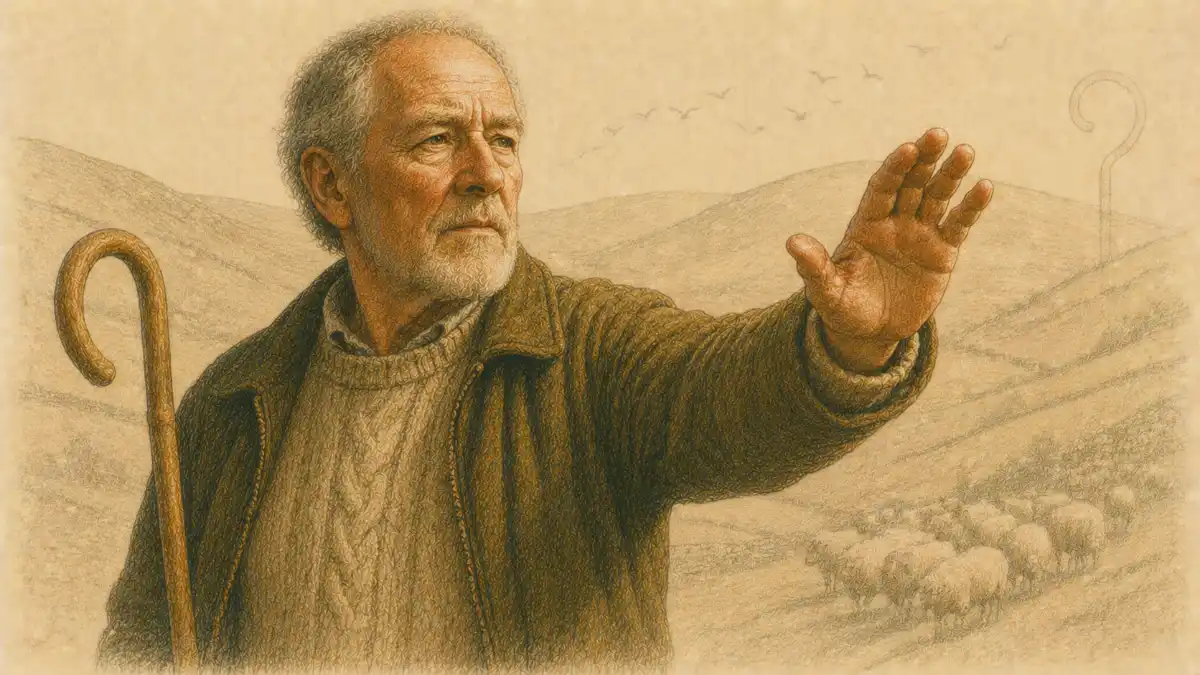
Robert Flaherty’s Nanook of the North did not merely record a way of life in the Arctic. It set a form running. Before 1922 there were travel pictures, scenic shorts, newsreels, and illustrated lecture films that strung actuality footage behind a commentary, but there was no feature-length nonfiction work built around a single human being whose struggle a viewer could follow for an hour and care about the way one cares about a character in a drama. Flaherty built that, and almost every nonfiction picture made afterward carries some trace of the choice. The line of descent runs through the British documentary movement of the 1930s, the wartime propaganda units of three continents, the observational revolution of the late 1950s, the wildlife and travel programming that fills broadcast schedules, and the reality television that fills the rest. When people argue about whether a documentary is allowed to stage, reenact, or shape its material, they are arguing about a question this film asked first and answered without apology.
The film also founded a problem, and the problem is inseparable from the form. Flaherty reconstructed scenes, directed his subjects, had them perform older methods that had already passed out of daily use, and built a set when reality would not hold still for his camera. He then presented the result as an unmediated window onto life in the actual Arctic. The most useful way to understand Nanook of the North is to hold those two facts in a single grip: it is the founding work of feature nonfiction cinema, and it is the founding case of nonfiction cinema’s central deception, the claim to show truth while quietly arranging it. Everything that makes the picture historically decisive and everything that makes it ethically troubling come from the same root.
This article treats Nanook of the North as the origin point it is, and it does so comparatively, because the form did not arrive from one mind alone. In the same decade, two other founding theories of nonfiction cinema took shape an ocean away. In the Soviet Union, Dziga Vertov built a body of work arguing for exactly the opposite of Flaherty’s method: life caught unawares, truth assembled through montage, the camera as a mechanical eye superior to the human one. In Germany, Walter Ruttmann arranged a city’s day into a patterned symphony of motion with no protagonist at all. Three answers to a single question, all within a few years of one another, and every nonfiction picture since descends from one of them or some braid of the three. To understand what Nanook gave the form, you have to see what the alternatives looked like and why Flaherty’s romance of the reconstructed hunter beat them to the popular imagination.
What follows maps that inheritance in detail: the specific innovations that proved portable, the staging told straight rather than excused or buried, the paradox at the center of the whole enterprise, the colonial gaze that the film cannot be cleared of, the comparative frame of the three founding models, the works that carry Flaherty’s fingerprints down to the present, and an honest accounting of what endured and what dated. A reader leaves able to trace the documentary back to its first feature and to argue, with evidence, about what that origin means for every nonfiction picture that claims to be telling the truth.
The line Nanook set running
The cleanest way to state Flaherty’s achievement is also the one most likely to be misunderstood, so it needs care. He did not invent nonfiction cinema. Actuality footage is as old as the medium itself. The Lumière brothers’ workers leaving a factory and train pulling into a station are nonfiction images from the 1890s, and by 1900 the screen was full of scenics, expedition films, and topical newsreels. What did not exist was the feature-length nonfiction narrative organized around a single life. Flaherty took the loose, observational, episodic material of the travel film and gave it the one thing it had always lacked: a protagonist whose effort across a sustained running time built a dramatic shape. That structural move is the founding act, and it is why historians point to this film rather than to any of the thousands of actuality reels that preceded it as the beginning of the documentary feature.
What was the first feature documentary?
Nanook of the North, released in 1922 and directed by Robert Flaherty, is widely regarded as the first commercially successful feature-length documentary. Earlier nonfiction footage and expedition films existed, but Flaherty’s picture was the first to organize real-life material into a sustained, feature-length narrative built around a single human subject, which is why it marks the form’s beginning.
Consider what a viewer in 1922 actually experienced. The screen had taught audiences to follow stories, to attach themselves to a face, to feel suspense about whether a person on screen would succeed or fail. Flaherty borrowed that grammar wholesale and pointed it at a man hunting seal through a hole in the ice. The walrus hunt is built like an action sequence. The igloo construction is built like a problem solved against time. The trip to the trading post functions like a scene of comic relief. When the family beds down for the night and the picture lingers on the children and the sleeping dogs buried in snow, it is doing what a domestic drama does. None of this was accidental, and none of it was the way nonfiction footage had been presented before. Travel films showed you a place. Flaherty showed you a person you were meant to worry about, and he organized real material to make you worry.
That is the portable invention. A place cannot carry a feature; a person can. Once Flaherty proved that real human struggle could hold an audience for the length of a fiction film, the form had its first reusable principle, and it is the principle that every character-driven documentary since has relied on, from the cinema verite portraits of the 1960s to the streaming true-crime series that turns a real defendant into a protagonist. The film student tracing the documentary’s lineage and the working filmmaker deciding how to structure a nonfiction feature are both reaching back, whether they know it or not, to the choice Flaherty made when he decided that the Arctic needed a hero rather than a tour guide.
There is a second, subtler invention bundled with the first, and it concerns the relationship between filmmaker and subject. Flaherty did not shoot from a distance and leave. He lived in the north across long stretches between 1920 and 1921, funded eventually by the fur trading concern Revillon Freres after years of seeking backing, and he worked with his subjects as collaborators in the staging. He showed Allakariallak, the man the film calls Nanook, the footage as it developed, a practice that has become a documented part of the film’s history. Whatever one concludes about the ethics of the result, the working method, the long immersion, the collaboration, the willingness to let the subject shape the performance of his own life, became a model for a whole tradition of participatory and observational nonfiction filmmaking. The filmmaker who embeds for months with a community before rolling a frame is practicing a discipline Flaherty established, even when that filmmaker would be appalled by Flaherty’s staging.
How Flaherty made the film
The production history matters here beyond the usual reasons, because the conditions under which Flaherty worked shaped the method that became the form’s inheritance. He was not a trained filmmaker. He came to the north as an explorer and prospector, surveying the Hudson Bay region across the 1910s on behalf of mining interests, and he began carrying a camera to record the Inuit he encountered almost as a sideline to the survey work. He took a short course in cinematography to learn the basics and then taught himself the rest in the field, which is part of why the picture has the texture of a man discovering the medium’s possibilities as he goes rather than executing a plan.
The most consequential accident in the making of the film happened before the film that survives even existed. By 1916 Flaherty had shot a large quantity of footage on his earlier expeditions, tens of thousands of feet of it, and in an editing room he dropped a lit cigarette onto the highly flammable nitrate stock and destroyed nearly all of it. The loss turned out to be generative. Reviewing what he had shot, Flaherty judged the lost material too scattered, too much like the travelogues and scenics that already glutted the market, a loose tour of a region rather than a story. When he returned to start over, he made the decision that founded the form: he would abandon the survey-of-a-place approach and build the film around a single family and a single man, organizing the whole picture as that man’s struggle. The first feature documentary exists in the shape it does partly because a cigarette destroyed the version that would have been just another travelogue.
Funding came hard and from a revealing source. Flaherty spent roughly four years seeking backing and was turned down repeatedly before the French fur-trading concern Revillon Freres agreed to finance the expedition, in part because the company saw promotional value in a romantic picture of the northern fur country where it did business. The film that founded ethnographic cinema was, in its financing, partly an advertisement for a fur company, which sharpens rather than softens the colonial reading: the economy that the film systematically erased from the lives on screen, the trade in pelts and the trading post, was the same economy paying for the camera. Flaherty shot from August 1920 to August 1921 near Port Harrison, now Inukjuak, on the northeastern shore of Hudson Bay in what is now northern Quebec. He cast Allakariallak, a hunter of local renown, as his protagonist, and the woman the film calls Nyla was played by a local woman, Maggie Nujarluktuk.
The working method was genuinely collaborative within the limits of the power imbalance, and the collaboration is documented. Flaherty lived among his subjects for the better part of two years, developed his footage on site so he could see what he was getting and reshoot, and screened the results back to the Inuit, who helped determine how scenes would be played, repaired the temperamental camera when it failed in the cold, and assisted in processing the film. The hunting and igloo sequences were staged with their active participation, performances of practice rather than spontaneous events. This is the source of the participatory model that later nonfiction filmmaking would refine, and it stood in sharp contrast to the assembly-line, studio-bound production of the fiction features being turned out in Hollywood at the same moment. Flaherty’s interest ran to the photography far more than to the cutting; he was a cameraman and an observer by temperament rather than an editor, which is part of why the film’s power lives in its images and its situations more than in any complex montage.
Getting the finished picture into theaters was its own struggle, and the difficulty is a reminder that the documentary feature had no established market to enter. Flaherty carried the completed film to distributor after distributor in New York, and one after another they declined it, unsure what to do with a feature that was neither fiction nor newsreel. Pathe Exchange finally took it on for world distribution, and the picture premiered at the Capitol Theatre in New York in June 1922, running roughly seventy-nine minutes. Made on a modest budget, it became a substantial commercial success and a genuine popular sensation, proof that a nonfiction feature could draw a paying audience the way a drama could. The name Nanook entered popular culture as a shorthand for the Inuit, which is itself part of the harm, since the shorthand fixed a fictional, romanticized image in the public mind. Decades later, when the United States Library of Congress established its National Film Registry in 1989 to preserve culturally and historically significant works, Nanook of the North was among the first twenty-five films selected, a measure of how completely its foundational status had been recognized even as the criticism of its methods mounted.
What Nanook actually invented: the portable innovations
To say a film founded a form is easy. To make the claim useful, you have to name the specific things that proved transmissible, because those are what later filmmakers could pick up and carry. Nanook of the North contributed at least four innovations that became standard equipment for the nonfiction tradition, and separating them clarifies both the debt the form owes Flaherty and the trouble he bequeathed along with the gift.
The first, already named, is the single-protagonist narrative spine. The second is the dramatization of process. Watch how the igloo sequence is constructed. It is not a static record of a structure going up. It is a suspense build: the blocks cut and set, the spiral wall rising, the window of clear ice fitted into the dome, the snow reflector raised outside to bounce light through it. The sequence teaches the viewer the logic of the thing as it happens, so that the completion feels like an accomplishment the audience has shared. This dramatization of skilled work, the turning of a practical process into a small narrative with stakes and a payoff, became one of nonfiction cinema’s most durable tools. Every cooking program, every survival series, every how-it-is-made segment runs on the grammar Flaherty cut into the igloo scene.
How did Nanook of the North shape later documentary filmmaking?
It established the documentary feature’s core toolkit: a single human protagonist whose struggle gives the film dramatic shape, the dramatization of real processes into suspenseful sequences, an immersive working method built on long contact with subjects, and the idea that nonfiction could be shaped for emotional effect. These conventions became the default grammar of character-driven nonfiction cinema worldwide.
The third innovation is the romance of the vanishing world, which film history sometimes files under the awkward label of salvage ethnography. Flaherty was not trying to document the Inuit as they lived in 1921, with rifles and trading-post goods and contact with the wider economy. He was trying to capture a way of life he believed was disappearing, and he was willing to reconstruct it for the camera to preserve a memory of what he thought mattered. This impulse, the camera as a rescue device aimed at a culture or a practice on the edge of extinction, runs through an enormous swath of later nonfiction filmmaking, from ethnographic cinema to the nature documentary’s elegiac mode to the countless films that frame their subject as the last of something. The impulse is generous and dangerous at once, generous because it values what modernity discards, dangerous because it tempts the filmmaker to falsify the present in service of an imagined, purer past. Flaherty’s film is the place where both the generosity and the danger enter the form together.
The fourth innovation is the most contested and the most consequential: the principle that nonfiction may be shaped, arranged, and even reconstructed in service of a deeper truth than literal recording would yield. John Grierson, the Scottish critic and producer who did more than anyone to build documentary into a movement, gave this principle its famous formulation a few years later when he called the form the creative treatment of actuality. Grierson coined the very word documentary in a 1926 review of Flaherty’s next feature, Moana, writing under a pseudonym in a New York newspaper and noting that the film had documentary value. The sequence of events is worth holding onto because it is genuinely strange: the feature documentary existed for four years before the word for it did, and the word was invented in praise of a Flaherty film. The form and its name both trace to the same maker, and the definition that the word carried from birth, the creative treatment of actuality, is precisely the license to shape that Nanook had already exercised. The phrase is doing diplomatic work. Creative points at the shaping, the selection, the construction; actuality points at the real material being shaped. The whole later argument about documentary ethics lives in the tension between those two words, and Flaherty’s film is where the tension was first wound tight.
A scene-level reading: how the film builds its drama
The claim that Flaherty imported fiction-film grammar into nonfiction is abstract until you look at how individual sequences are actually constructed, so it is worth slowing down on three of them, because the construction is where the influence lives and where a filmmaker studying the picture finds something to use.
Take the walrus hunt, the sequence that made the film’s reputation. It is built on the basic suspense unit of narrative cinema: a goal, an obstacle, and an uncertain outcome stretched across time. The men spot the walrus on the shore, and the picture establishes the stakes, the need for food and oil, before the approach begins. The crawl toward the animals is shot to emphasize stealth and patience, the harpoon throw is the turning point, and then the long struggle of men hauling against the line as the walrus thrashes in the surf becomes a tug of war whose result the audience cannot predict. Flaherty cuts between the strained line, the men dug into the sand, and the animal fighting, building tension through alternation exactly as a fiction director would cut a fight or a chase. The physical struggle is real; the men really are hauling against a real animal. What is constructed is the framing of this as the ordinary, ancestral practice of these people, and the suspense architecture that turns a hunt into a set piece. A working filmmaker can learn from this sequence how to make a process dramatic without a word of dialogue, and a critical viewer can learn from it how seamlessly real footage can be organized to serve a premise that is partly false.
The igloo construction sequence works on a different principle, the pleasure of watching competence solve a problem. The film lets the building unfold step by step so the viewer absorbs the logic: the snow tested and cut into blocks, the spiral wall rising and leaning inward, the keystone block fitted at the top, the window of clear river ice set into the dome and angled, the snow slab raised outside to reflect light through it. The sequence is paced as a demonstration with a payoff, and its satisfaction comes from the audience understanding the method as it watches. This is the dramatization of process in its purest form, and it is the sequence that survives the ethical objections best, because what it shows is genuine skill genuinely performed, even if the dwelling was then partly dismantled for the interior shots. The construction is a real thing being really done, shaped only by selection and pacing, which is the most defensible end of the spectrum the film occupies.
The trading-post sequence, with the gramophone, sits at the opposite, least defensible end, and reading it closely shows why. Allakariallak is presented as a man encountering modern technology for the first time, puzzling at the phonograph, taking the record in his hands, and biting it as if to test whether it is food. The scene plays as comedy and as a demonstration of the gulf between the primitive and the modern, and it is a fabrication in its essence, because the real man understood perfectly well what a gramophone was. Here the staging does not reveal a truth that unstaged footage would have missed; it manufactures a falsehood that flatters the audience’s sense of its own advancement and the subject’s innocence. The same technique that ennobles the igloo build degrades the man at the trading post. The film does not use one method for good and another for ill. It uses a single method, reconstruction, and the method’s value depends entirely on what it is asked to serve.
The intertitles and the rhetoric of the actual Arctic
The silent film’s intertitles do rhetorical work that is easy to overlook and central to the film’s effect. The full title announces a story of life and love in the actual Arctic, and that word, actual, is the whole claim and the whole problem in a single adjective. The cards introduce Nanook as a heroic figure, frame the family with warmth, and narrate the struggle for survival in terms that cast the people as noble, simple, and perpetually at the edge of death. The titles are where the film’s editorializing happens, where reconstructed footage is told to the audience as unmediated fact, and where the romantic, paternalistic vision is stated outright rather than merely implied by the images. When the film tells the viewer, through a title, that Nanook would later die of starvation, it extends the fiction past the last frame and seals the heroic-primitive reading with a tragic ending that was not true. Reading the intertitles against the staged footage they caption is the clearest way to see how the film constructs its authenticity, because the gap between what the images are and what the words say they are is the gap the whole documentary tradition would spend a century trying to close or at least to acknowledge.
The staging, told straight
An account of this film that soft-pedals the staging is worthless, because the staging is the subject of the most important argument the film generates. So here it is without euphemism, drawn from the well-documented record rather than from speculation.
The man the film calls Nanook was named Allakariallak. Flaherty chose the name Nanook, which refers to the polar bear in Inuit tradition, because he judged it more marketable and more evocative of a kind of heroic primitive that audiences would respond to. The woman presented as Nanook’s wife was not his wife. The children presented as his were not his children. Flaherty assembled a photogenic family unit from the people available to him, selecting for the camera rather than recording an actual household. This is not a minor detail. The film’s emotional power depends on the audience believing it is watching a real family love and protect one another against the Arctic, and that belief was, at the level of literal fact, manufactured.
The hunting was staged in a specific and pointed way. By 1921 the Inuit Flaherty filmed had used rifles for years; the rifle was the practical tool of survival and the fur trade that the trading post represented. Flaherty had his subjects hunt with harpoons and spears instead, performing methods that belonged to an earlier period, because the older technology fit the vision of an untouched people living by ancestral skill that he wanted to record. The animals were real and the danger of the hunt was real enough, but the means were a costume drama of technique. The famous walrus hunt, with men hauling on a line against a thrashing animal, is authentic in its physical struggle and false in its premise, since it presents as the ordinary practice of these people a method they had largely set aside.
How was the igloo interior in Nanook filmed?
The interior was shot in a specially built set, not a real igloo. A standard igloo was too small and too dark inside for Flaherty’s bulky camera, and an enlarged one collapsed during construction. Flaherty’s subjects finally built an oversized igloo and cut away the top half of the dome so daylight could pour in, letting the camera record interior scenes that the film presents as if shot inside an intact dwelling.
The igloo interior is the clearest single illustration of the method, because the problem and the solution are both purely practical and the result is a deliberate illusion. A real igloo admits little light, and its interior is cramped. Flaherty’s camera was large and needed light. The crew built an igloo big enough for the camera, found it collapsed or too dark, and finally constructed an oversized dome and removed the upper half so that daylight flooded the space. The interior scenes of family life that the film presents as glimpses inside a snug Arctic home were shot in this open, half-demolished set, with the family pretending to wake and sleep in the full cold of the open air. The cozy domestic interior is a construction in the most literal sense. The viewer is looking into a stage built to resemble an interior, photographed so that the seam does not show.
Finally there is the matter of Allakariallak’s death, which the film and its publicity surrounded with a particularly resonant claim. Flaherty stated, and the story was widely repeated, that the man who played Nanook died of starvation in the wild within about two years of the film’s completion, a fate that seemed to confirm the picture’s portrait of life perpetually on the edge of survival. The durable historical understanding is that Allakariallak died at home, most likely of tuberculosis, an illness associated with contact with outsiders rather than with the heroic starvation the legend supplied. The discrepancy matters because it shows the shaping continuing past the edge of the film itself, into the way the film was sold and the way its subject’s life was narrated for an audience that wanted the legend to be true.
State all of this plainly and a reader might conclude the film is simply a fraud. That conclusion is too easy, and resisting it is the whole analytical payoff of studying the picture, because the staging is not a betrayal of the documentary idea that arrived later to corrupt a pure form. The staging is present at the form’s birth, woven into the first feature the tradition claims as its own. That is the paradox worth naming and keeping.
The staged-authenticity paradox
Here is the claim this article exists to make, stated so it can be cited and argued with: Nanook of the North proves that the documentary was born already entangled with fiction, so the honest question about any nonfiction film is never whether it stages but how and why. Call it the staged-authenticity paradox. The first feature documentary, the work the entire tradition points to as its origin, is also one of the most thoroughly arranged nonfiction films ever made. The form did not begin pure and fall into staging. It began in staging and has been arguing about how much is permitted ever since.
The paradox dissolves a comforting story that nonfiction filmmaking sometimes tells about itself, in which there is a clean documentary that simply records and a corrupt documentary that manipulates, and the filmmaker’s job is to stay on the clean side. Nanook makes that story untenable as history, because the founding work is on the wrong side of the line and the tradition embraced it anyway. The line was never there. Every nonfiction film selects what to shoot and what to cut, where to place the camera, what to leave in shadow and what to light, which moment to hold and which to discard, and selection is already shaping. The question is not whether shaping occurs. It always occurs. The question is what the shaping is for, whether it serves a defensible understanding of the real or distorts the real to flatter an audience or a thesis, and whether the film is honest with its audience about the terms.
This reframing is genuinely useful for anyone making or studying nonfiction work, which is why it is worth holding onto rather than treating Nanook as a museum curiosity. It moves the ethical conversation off the false question, did the filmmaker stage anything, and onto the real questions. What did the staging serve? Did it reveal something true about its subject that unstaged footage could not have reached, or did it impose a falsehood the subject would not recognize? Was the audience given any way to understand the terms of what it was watching, or was it sold a literal reality that did not exist? Did the people on screen consent to and shape their own representation, or were they arranged like props? These questions cut Nanook in different directions at once, which is exactly why the film remains a productive object of study rather than a settled verdict. The dramatization of the igloo build serves a true understanding of real skill and may be the best kind of staging the form allows. The fabricated family and the suppressed rifles impose a falsehood that the audience had no way to detect and that flattered a colonial fantasy. The same film, by the same method, does both.
A reader who wants to test this framework against other founding works will find the same questions productive elsewhere in early cinema, where the boundary between recording, shaping, and outright fabrication was being drawn for the first time across every kind of film at once. The realist excesses of Erich von Stroheim, who in Greed chased a literal fidelity to place and detail so extreme that it became its own kind of distortion, mark the fiction film’s version of the same problem Flaherty faced from the nonfiction side: how far does a filmmaker go in arranging the real before the arrangement betrays what it claims to honor. The two films, one fiction straining toward documentary truth and one documentary built on fiction’s tools, illuminate each other precisely because they approach the same border from opposite banks.
The colonial gaze and the ethical reckoning
The staging is one charge against the film. The colonial gaze is the deeper one, and it cannot be answered by the staged-authenticity paradox, because it concerns not how the film was made but what vision of the people on screen it was made to serve. An honest reckoning has to engage it directly, neither excusing it as a product of its time nor using it to erase the film’s formal importance, because both of those moves are evasions.
Why is Nanook of the North considered ethically problematic today?
The film presents Inuit people through a colonial lens that frames them as simple, premodern figures defined by their struggle against nature, erasing their actual contemporary lives, their use of modern tools, and their entanglement with the trade economy that funded the film. It stages their identities, misrepresents a constructed family as real, and treats a living culture as a vanishing spectacle for outside audiences, raising lasting questions about who holds the power to represent whom.
The film’s whole conception places the Inuit outside modernity and outside history. It frames Allakariallak and the others as figures from an unchanging past, locked in an eternal contest with ice and weather, untouched by the very economy that brought Flaherty to them and paid for the film. The fur trade, the rifles, the trading post, the entanglement with a global market in animal pelts: all of this was the actual present of the people on screen, and the film systematically removes it to present a purer, earlier, more photogenic existence. The choice is not neutral. It serves a way of seeing that finds value in other peoples only insofar as they confirm a fantasy of the primitive, and that fantasy was doing political and economic work in the 1920s, justifying the gaze of the colonizing culture by casting the colonized as childlike, noble, and safely located in a past the modern viewer had outgrown. When the gramophone scene has Allakariallak puzzle over the device and bite the record, playing a man who has never encountered such a thing, the film is manufacturing the very innocence it claims to discover, since the real man knew perfectly well what a gramophone was.
There is also the simple matter of power and consent in representation. Flaherty held the camera, the funding, the final cut, and the framing through which millions of viewers would come to understand a people most of them would never meet. The Inuit who appear in the film shaped their performances and participated in the staging, which complicates any picture of them as pure victims, but they did not control how the resulting images would circulate or what story those images would tell about who they were. The film made a global legend out of a name that was not the lead’s name, a family that was not his family, and a way of life that had largely passed. That is an exercise of representational power running entirely in one direction, and the later history of the people connected to the film, including the forced relocations that Inuit families in the region suffered decades afterward at the hands of the Canadian state, gives the question of who gets to represent whom a weight that no formal appreciation can lift.
The trap to avoid here has two jaws, and the film’s later reception keeps falling into one or the other. The first jaw is the formalist evasion that brackets all of this to praise the craft, treating the racism of the conception as a regrettable frame around a technical achievement that can be admired separately. That move fails because the conception and the craft are the same thing: the dramatic power of the film is inseparable from the colonial fantasy it dramatizes, exactly as the technical mastery and the propaganda are inseparable in The Birth of a Nation, the other founding film whose legacy cannot be cleaned of its ethics. The second jaw is the dismissive evasion that refuses to study the film at all, treating it as too compromised to teach. That move fails too, because the film founded a form that shapes how hundreds of millions of people understand reality through a screen, and refusing to examine the origin leaves the form’s deepest problem unexamined. The third path, the only honest one, keeps the achievement and the harm in the same frame and reads each through the other. Nanook is the founding feature documentary and a colonial artifact, and it is the second of those things by means of the first. The ethical reckoning is not a footnote appended to the film’s importance. It is part of the living legacy, the unfinished argument the form is still having with itself about whose reality it is licensed to shape and sell.
Three founding documentary models: Flaherty, Vertov, Ruttmann
The comparative frame is what turns this from an account of one film into an understanding of how the documentary actually began, because Flaherty’s was not the only answer to the question of how cinema should treat the real. Within a few years of Nanook, two other founding theories took shape, each the product of a different culture’s needs and each pointing the form down a different road. Setting the three side by side is the single most clarifying thing a student of nonfiction cinema can do, because every documentary made since is recognizably the descendant of one of them or some combination.
How does Nanook compare to Soviet documentary of the same decade?
They are near opposites. Flaherty staged and reconstructed reality to build a romantic, character-driven narrative, treating the camera as a storyteller. The Soviet filmmaker Dziga Vertov rejected staging entirely, arguing for life caught unawares and truth assembled through the editing of unstaged fragments, treating the camera as a mechanical eye superior to human sight. Flaherty shaped reality into story; Vertov shattered reality and rebuilt it into argument through montage.
Flaherty’s model is the romance of reconstruction. The camera serves a story, the story centers on a human protagonist, and the real is reshaped, restaged, and even rebuilt to deliver an emotional and narrative truth that the filmmaker believes is deeper than literal accuracy. Truth, in this model, is something the filmmaker crafts out of real material, and staging is a legitimate tool because the goal is revelation rather than recording. This is the model that won the popular form. Most of what audiences call documentary, the character-driven nonfiction feature that asks you to care about a person and follow a shaped narrative, descends from Flaherty.
Dziga Vertov’s model is the opposite in nearly every respect, and it is no accident that it emerged from the revolutionary Soviet Union rather than from the commercial circuits that funded Flaherty. Across his Kino-Pravda newsreel series in the early 1920s and culminating in Man with a Movie Camera at the decade’s end, Vertov argued for life caught unawares, for catching people in unguarded reality rather than directing them, and for assembling truth not through a borrowed fiction-film narrative but through montage, the collision and rhythm of edited fragments. Vertov distrusted the staged, the acted, the story imported from drama, all the things Flaherty embraced. He saw the camera not as a storyteller but as a mechanical eye, the kino-eye, capable of seeing more truly than the human eye because it could be placed anywhere, slowed, sped, multiplied, and recombined. Where Flaherty hid his apparatus to sell the illusion of a window onto an untouched world, Vertov put the apparatus on screen: Man with a Movie Camera shows you the cameraman, the editing table, the audience, the machinery of cinema itself, insisting that honesty about the medium is part of telling the truth. The two films are arguments with each other across continents that never knew they were arguing. Flaherty conceals construction to make reality feel immediate; Vertov flaunts construction to make the viewer conscious of how reality is assembled.
Walter Ruttmann’s model is the third founding road, and it dispenses with the protagonist entirely. His Berlin, Symphony of a Great City, made in 1927, organizes a single day in the German capital into a rhythmic montage of urban motion, dawn to night, with no central character and no narrative in the conventional sense. The city itself is the subject, observed in patterns: the symmetry of machines, the flow of crowds, the choreography of traffic and labor and leisure. This is the city symphony, a mode of patterned observation that finds its form in the rhythm of edited images rather than in either Flaherty’s reconstructed story or Vertov’s revolutionary argument. The city symphony’s lineage runs straight into the observational and impressionistic strains of later nonfiction cinema, into films that find their meaning in juxtaposition and accumulation rather than in following a person or making a case. The fascination with the modern city that Ruttmann patterned into rhythm is the same current that King Vidor caught in fiction the following year in The Crowd, where the anonymous individual is swallowed by the metropolis; the documentary and the fiction film were registering the same shock of urban modernity from opposite ends of the form.
The comparison yields a claim worth carrying: three founding documentary theories appeared within a single decade, Flaherty’s reconstructed ethnography, Vertov’s montage actuality, and Ruttmann’s patterned city symphony, and every later nonfiction film descends from one of them or a braid of the three. The reality television confessional and the character-driven streaming series are Flaherty’s grandchildren. The essay film and the politically conscious montage documentary are Vertov’s. The slow, observational, place-driven nonfiction picture that accumulates meaning without a narrator or a hero is Ruttmann’s. Naming the three models lets a viewer place almost any documentary in a genuine tradition rather than treating the form as one undifferentiated thing, and it reveals that the argument inside documentary, between shaping and observing, between story and structure, between concealing and revealing the apparatus, was present at the creation in the form of three incompatible founders.
The findable artifact below sets the three models against one another on the questions that divide them, so the comparison can be cited and taught directly.
The three founding documentary models
| Question | Flaherty (Nanook of the North, 1922) | Vertov (Kino-Pravda, Man with a Movie Camera) | Ruttmann (Berlin, Symphony of a Great City, 1927) |
|---|---|---|---|
| How is truth defined? | A deeper emotional and narrative truth the filmmaker crafts from real material | The truth of life caught unawares, revealed through the editing of unstaged fragments | The truth of a place’s rhythm and pattern, observed across a single day |
| What is the role of staging? | Central and embraced; scenes reconstructed and performed for the camera | Rejected on principle; staging is a betrayal of unguarded reality | Largely absent; the city is observed rather than directed, then patterned in the cut |
| What organizes the film? | A single human protagonist and a borrowed fiction-film narrative shape | Montage as argument; collision and rhythm of fragments, apparatus shown | Montage as symphony; rhythm and juxtaposition with no protagonist |
| How is the camera understood? | A concealed storyteller that delivers an immersive window onto its subject | A mechanical eye, the kino-eye, that sees more truly than the human eye | An observing instrument that finds order in the flow of urban motion |
| What does it found? | Character-driven, shaped, popular nonfiction; the dominant documentary mode | The essay film, political montage, and self-aware nonfiction | The city symphony and the observational, place-driven nonfiction tradition |
The fingerprints in later cinema
A claim of influence is only as good as the specific later works it can point to, so this section names them and shows the trace, moving from the films that picked up Flaherty’s method directly to the distant descendants that carry it without knowing the source.
The most direct inheritance ran through John Grierson and the British documentary movement of the 1930s. Grierson, who coined the word in praise of a Flaherty film, built a whole school of state-sponsored nonfiction filmmaking on the principle of the creative treatment of actuality, the license to shape real material that Nanook had established in practice before there was a word for it. The films of the British movement, the studies of working life and public service produced for government and industry, took Flaherty’s premise that nonfiction could be crafted for effect and pointed it at the modern industrial world rather than the vanishing primitive. Flaherty himself worked within and against this movement, and the tension between his romantic reconstruction and Grierson’s more sociological purpose became one of the defining arguments of 1930s documentary. The line is direct and documented: the man who named the form learned from the man who made its first feature, and the disagreement between them shaped the movement that followed.
The ethnographic film tradition is Flaherty’s most obvious and most uncomfortable descendant. The whole project of bringing a camera to a culture distant from the filmmaker’s own and assembling a feature about its way of life is the Nanook project, and the field of visual anthropology has spent decades reckoning with the questions Flaherty raised first: the power imbalance between filmmaker and subject, the temptation to stage a purer past, the problem of who controls the representation. The most sophisticated later ethnographic filmmakers, including Jean Rouch in France with his idea of shared anthropology and his coining of the term cinema verite, defined their work partly against Flaherty’s failings while building on his foundation. Rouch’s insistence that the subject participate in and respond to the filming is a corrective to Flaherty’s one-directional power, but it is a corrective to Flaherty specifically, which is another way of saying the influence runs through it.
The observational revolution of the late 1950s and 1960s, the direct cinema of the United States and the cinema verite of France, defined itself in large part by rejecting Flaherty’s staging while keeping his commitment to the real human subject. Lightweight cameras and portable sound made it possible to follow a person through unstaged events, and the filmmakers of this movement made a virtue of not directing, not reconstructing, not building sets. In one sense this is the Vertov road finally made practical by technology. But the subject of these films, the individual human being whose unfolding life carries the picture, is pure Flaherty. The observational filmmakers inherited his protagonist and rejected his method, which is why studying Nanook clarifies exactly what they were reacting against and exactly what they kept.
The nature and wildlife documentary is Flaherty’s most commercially successful heir, and it carries his most questionable habits along with his gifts. The dramatization of animal life into narratives of struggle and survival, the framing of the natural world as a theater of heroic effort, the willingness to construct sequences and shape footage into a story of a single creature’s journey: this is the Nanook method applied to the nonhuman world, and the genre’s recurring scandals about staged footage and manufactured drama are the staged-authenticity paradox playing out exactly where Flaherty planted it. When a wildlife film builds suspense around whether a particular animal will survive the winter, it is doing to a wolf what Flaherty did to Allakariallak, and the ethical questions are the same in structure even when the subject cannot object.
The line continues to the present in two directions that rarely get connected. One runs to the modern character-driven documentary feature and the streaming nonfiction series, where the shaping of real lives into compelling narrative arcs, the use of reconstruction and reenactment, and the construction of suspense around real outcomes are all standard practice, and where the same arguments about manipulation that Nanook first provoked recur with every prominent release. The other runs to reality television, the most widely consumed nonfiction form in history, which is Flaherty’s invention stripped of his artistic ambition and laid bare: real people, staged situations, manufactured drama, and an audience that knows on some level the reality is arranged and watches anyway. Reality television is the staged-authenticity paradox turned into an industry, the open secret that nonfiction entertainment has always been arranged, and its existence is the strongest possible evidence that Flaherty founded not just an art form but a fundamental and permanent feature of how screens handle the real.
Even the most personal and idiosyncratic strain of later nonfiction filmmaking bears the mark. The filmmakers who put themselves into their documentaries, who treat the encounter between the camera and its subject as part of the subject, are working a vein that Flaherty opened through the very transparency of his method to anyone who looked closely, since his films were always partly about the encounter between a Western filmmaker and a way of life he was determined to capture. Werner Herzog, whose nonfiction work openly prizes a deeper poetic truth over literal fact and who has defended staging and even fabrication in the name of what he calls ecstatic truth, is in a direct philosophical line from Flaherty, arguing the same case for the creative treatment of actuality with the staging brought into the open rather than concealed. The difference is honesty about the method, and the continuity is the conviction that the documentary’s job is to craft a truth rather than merely to record a fact.
Why Flaherty’s model won the popular form
If three founding theories of nonfiction cinema appeared in the same decade, the question of why one of them became the dominant popular mode while the others remained the property of artists and theorists is worth answering, because the answer explains a great deal about why nonfiction entertainment looks the way it does.
The simplest explanation is that Flaherty’s model gave audiences a person to love, and the others did not. Human beings are built to attach to other human beings, to follow a face, to invest in whether someone they have come to care about will succeed or suffer. Flaherty’s reconstructed romance offered Allakariallak as a hero to root for, a man whose every effort the audience could share, and that emotional handhold is the most powerful tool any storyteller possesses. Vertov’s montage, brilliant as it is, offers the intellect a great deal and the heart comparatively little; it asks the viewer to think about how reality is assembled rather than to ache over whether a man will feed his family. Ruttmann’s city symphony offers the senses a patterned beauty but no one to care about at all. For a mass audience paying for a seat in a theater, the protagonist is not a refinement but the whole proposition, and Flaherty grasped that the borrowed grammar of fiction was the price of reaching people who came to the movies to feel something about somebody.
A second explanation is economic and structural. Flaherty’s model fit the existing exhibition system without friction. It produced a feature of standard length with a beginning, a middle, and an end, the kind of object a theater already knew how to book and an audience already knew how to watch. Vertov’s and Ruttmann’s experiments asked the viewer to learn a new way of watching, and the market for that learning was always going to be smaller than the market for a story told in a familiar shape. The romance of reconstruction slotted into the commercial machine; the alternatives required the audience to meet the film halfway. When a form is trying to establish that nonfiction can pay its way, the model that demands the least of the audience has an enormous advantage, and Flaherty’s did.
The third explanation is the most uncomfortable, and it returns to the colonial reading. Flaherty’s model won partly because the fantasy it sold was one the audience of its time wanted badly to buy. The image of the noble primitive living in heroic simplicity at the edge of the world flattered the modern viewer’s sense of progress while offering the consolation of a purer life left behind, and it did so without disturbing anyone’s assumptions about who stood where in the hierarchy of civilizations. Vertov’s films served a revolution that frightened Western audiences, and Ruttmann’s city offered a mirror rather than an escape. Flaherty offered an exotic dream calibrated precisely to the appetites of the people who could afford the ticket, and the dream’s appeal was inseparable from its distortions. The model won, in other words, not only because it was emotionally effective and commercially convenient but because its particular falsehood was the falsehood the market wanted. That is a hard thing to say about the founding work of a form, and it is part of why the form has never fully made peace with its origin.
What a filmmaker can take from it
For all the trouble it carries, the film remains a working manual for anyone making nonfiction, and separating the lessons from the warnings is the most practical use a contemporary filmmaker can make of it.
The first lesson is that structure is everything in nonfiction, because real life does not arrive pre-shaped. Flaherty’s central insight was that footage of reality, however striking, does not become a film until it is given a spine, and that the most reliable spine is a person whose pursuit of something gives the material direction. A filmmaker sitting on hours of real material can take from Nanook the discipline of asking who the protagonist is, what that person wants, and what stands in the way, and then organizing the footage to make that pursuit legible and suspenseful. This is not a betrayal of reality; it is the difference between a film and a pile of footage, and it is the lesson the entire character-driven nonfiction tradition has confirmed.
The second lesson is the dramatization of process, which the igloo sequence teaches more cleanly than almost any later example. A real activity performed by a skilled person can carry an audience entirely on its own, without dialogue or commentary, if it is shot and cut to make the logic and the stakes of the activity visible. A filmmaker can study how Flaherty establishes a goal, breaks the work into legible steps, holds the camera on the crucial moments, and times the payoff, and can apply that grammar to anything from a craft to a surgery to a rescue. The technique is a century old and has not aged, because it rests on how attention works rather than on any period style.
The third lesson is the one the film teaches by negative example, and it may be the most valuable. The trading-post sequence and the fabricated family show what happens when shaping crosses from revealing the truth of a subject to imposing a falsehood the subject would not recognize, and the contrast with the igloo build draws the line a filmmaker actually has to navigate. The useful question Flaherty’s film hands every nonfiction maker is not whether to shape, since shaping is unavoidable, but whether a given act of shaping serves an honest understanding of the real subject or substitutes a more convenient fiction. A filmmaker who internalizes that question, and who is honest with an audience about the terms of what it is watching, has taken from Nanook the one lesson that matters most, the lesson the film learned the hard way and the form has been learning ever since.
The fourth lesson concerns the relationship with the people on screen, and here too the film instructs partly by its failures. Flaherty’s long immersion and collaboration were real and valuable, a model of the patience that good nonfiction requires, but his control over the final representation ran entirely one way, and his subjects had no power over how their images would circulate or what story those images would tell. The contemporary filmmaker can take the immersion and the collaboration as a standard to meet while treating the one-directional power as a danger to guard against, asking who controls the representation, whether the subjects understand and consent to how they are being shown, and whether the film honors the people in it or merely uses them. The founding film of the form got the patience right and the power wrong, and a filmmaker who studies it carefully can learn from both halves at once.
Flaherty’s later films: the method refined
Flaherty did not make Nanook of the North and vanish, and his subsequent career is the strongest internal evidence that the staging was a considered philosophy rather than a one-time expedient. The pattern repeated, refined and sometimes intensified, across three more major works, and tracing it shows that the staged-authenticity method was the consistent core of his practice rather than an accident of his first film.
Moana, made in Samoa and released in 1926, applied the Nanook approach to a culture at the opposite climatic extreme. Again Flaherty embedded for an extended period, again he organized the film around a young protagonist and his rite of passage, and again he staged practices that had faded from daily use, reconstructing an idealized vision of an untouched people. The picture is gentler than Nanook, lacking the constant peril, and it is the film that gave the form its name when John Grierson reviewed it and called its record of Polynesian daily life documentary. Moana shows the method working in a register of beauty rather than struggle, which makes the underlying philosophy easier to see: Flaherty was not after survival drama specifically but after a crafted, romantic truth about a way of life he believed worth preserving against modernity, whatever the climate.
Man of Aran, released in 1934, applied the same approach to a windswept island community off the coast of Ireland, and it pushed the staging into territory that makes the ethical issue unmistakable. Flaherty had the islanders hunt a basking shark using harpoon methods that had been abandoned for generations, reviving a dangerous practice purely for the camera and presenting it as the community’s way of life. The film is visually magnificent and was celebrated in its day, and it is also the clearest proof that Flaherty would reconstruct a defunct past and pass it off as the present whenever the past made the better picture. The Aran islanders, like the Inuit before them, were directed to perform a version of themselves that served the filmmaker’s romance of people locked in elemental struggle with nature.
Louisiana Story, released in 1948 and made late in his life, completes the arc and complicates it. Funded by an oil company to depict oil drilling in the bayou through the eyes of a Cajun boy, it is the most overtly fictional of his major works, with a scripted narrative and invented characters, yet it retains the documentary texture of real place and real process that defined his method from the start. That an oil company financed Flaherty’s bayou idyll just as a fur company had financed his Arctic one closes a circle: across his career, the industries reshaping the landscapes he romanticized were the ones paying him to romanticize them, and the films looked past the industry to find a purer, more elemental life that the industry itself was erasing. The through-line from Nanook to Louisiana Story is unbroken, the crafted truth, the romantic vision of people and nature, the willingness to stage and reconstruct, and the patronage of the very forces of modernity the films pretended did not exist.
Reception then and reappraisal since
The film’s reputation has traveled a long arc, and tracing it honestly is part of understanding what it means now, because the meaning of a founding work changes as the culture’s relationship to its subject changes.
On release, the picture was received as a revelation and a triumph. Critics praised it, audiences turned out for it, and it established that nonfiction could be popular entertainment of the first rank. The romance of the noble Arctic hunter landed perfectly with a 1920s audience hungry for images of exotic, untouched worlds, and the very qualities that a later age would condemn, the framing of the Inuit as simple primitives outside modern history, were precisely the qualities that made the film a sensation. Its early reputation rested on a foundation of authenticity that the film claimed loudly and that few viewers had any means to question. For decades it held a secure place as the unchallenged origin of the documentary, taught as the form’s first masterpiece with the staging treated, when treated at all, as a minor technical footnote.
The reappraisal came as two things shifted in the culture. The first was a growing critical sophistication about documentary itself, the recognition, accelerating through the second half of the twentieth century, that nonfiction film is always constructed and that the question of staging deserved scrutiny rather than dismissal. The second, and more important, was the rise of Indigenous voices and postcolonial critique, which reframed the film not as a neutral record but as an artifact of the colonial gaze, an outsider’s romantic fiction imposed on a real people who did not control their own representation. The 1990 documentary that returned to the community where Flaherty had filmed, gathering local memory of the production, helped make concrete what criticism had argued in the abstract: that the people on screen had been directed, that the family was assembled, that the practices were revived for the camera, and that the man called Nanook was Allakariallak, who did not die as the legend claimed. The reappraisal did not topple the film from its foundational place; it complicated that place, turning the work from a simple origin point into what scholars have called a kind of Rosetta stone for every debate about documentary ethics, representation, and the power relations of the camera.
The durable result of this long arc is that the film now occupies two positions at once, and the honest reception history holds both. It remains the founding feature of the documentary, indispensable to any account of how the form began. And it stands as the founding instance of the form’s deepest problems, the staging and the colonial gaze, studied as much for what it got wrong as for what it invented. A viewer encountering the film today inherits a century of argument about it, and the most useful stance is not to resolve the argument but to understand why it cannot be resolved: the achievement and the harm are the same artifact, and every generation has to work out its own relationship to a work that founded a form by means that the form has spent its whole life reckoning with. The realism debates that surround the picture connect it, across the boundary between fiction and nonfiction, to the broader argument about truth on screen that runs through the era’s most ambitious filmmaking, including the obsessive pursuit of unvarnished reality in Greed and the inseparability of technique from ideology in The Birth of a Nation, the two other films of the silent era whose legacies refuse to let craft and conscience be filed separately.
What endured and what dated
An honest legacy assessment has to separate the parts of the film that remain alive and useful from the parts that have curdled, because pretending the whole thing aged gracefully is its own kind of dishonesty and so is pretending it has nothing left to offer.
What endured, first, is the structural achievement. The single-protagonist nonfiction feature, the dramatization of process, the immersive working method, the conviction that real material can be shaped into emotionally powerful narrative: these are not period curiosities. They are the working vocabulary of nonfiction filmmaking a century later, and a filmmaker building a documentary today is using tools Flaherty forged whether or not they have heard his name. The igloo sequence still works as a model of how to turn a process into suspense. The walrus hunt still works as a model of how to build an action set piece from real physical struggle. A student studying how to give nonfiction footage dramatic shape can learn more from a close reading of Nanook’s construction than from most contemporary examples, because the film does the fundamental things so cleanly and with so little to distract from the mechanics.
What endured, second and more painfully, is the central problem. The staged-authenticity paradox is not solved. Every nonfiction filmmaker still faces the question of how much to shape, and every nonfiction audience is still vulnerable to the manufactured reality that Flaherty pioneered. The film endures partly as the permanent illustration of a difficulty the form cannot escape, which is a strange kind of immortality but a real one. You cannot understand the recurring documentary ethics scandals, the debates over reenactment and reconstruction, the suspicion that attends every nonfiction blockbuster, without understanding that the problem was there at the origin and was never resolved, only managed differently by different filmmakers.
What dated, and dated badly, is the vision of the people on screen. The colonial gaze that frames the Inuit as noble primitives outside modernity is not a neutral period flavor that a modern viewer can simply discount. It is a specific and harmful way of seeing that the film helped to circulate, and time has not softened it so much as exposed it. The same passage of decades that confirmed Flaherty’s structural innovations as permanent also stripped the camouflage off his ethnographic fantasy, so that what a 1922 audience experienced as a window onto an untouched world a present-day viewer recognizes as a constructed and condescending fiction about real people. This is not a case of applying contemporary standards unfairly to the past. The falsification was a choice made against available facts, the rifles and the trading post and the real names, and the choice served a fantasy that did real harm to how a people were seen. The dating is not a matter of changing taste. It is a matter of the truth catching up with the lie.
The honest verdict, then, is double, exactly as the film is double. Nanook of the North is indispensable and compromised, foundational and false, the work that taught the documentary how to move an audience and the work that taught it how to deceive one, frequently in the same shot. The two cannot be separated, and the attempt to separate them, to keep the craft and discard the ethics or to condemn the ethics and ignore the craft, is the one response the film does not permit. It demands to be held whole.
Docufiction and the trouble with calling it the first documentary
There is a complication buried in the phrase first documentary that is worth surfacing, because it sharpens everything else. At the moment Flaherty made the film, the category documentary did not exist; the word would not be applied to cinema for another four years. The film was made before the box it is now filed in was built, which means calling it the first documentary is a retroactive act, a later category reaching back to claim a work that did not know it was founding anything. Some scholars prefer the term docufiction or docudrama for precisely this reason, because the film combines the texture of real place and real activity with the staging, casting, and narrative shaping of fiction, at a time when no one had yet drawn the line that would later separate the two. The film is not a documentary that cheats; it is a work made before the distinction between documentary and drama had hardened, and the later tradition drew the documentary line in such a way that this hybrid landed, somewhat awkwardly, on the nonfiction side.
This is not a pedantic point. It changes how the staging should be judged. To accuse Flaherty of violating documentary ethics is, in a strict sense, an anachronism, because there were no documentary ethics yet, no agreed-upon contract between nonfiction film and its audience for him to break. He was inventing the form and its conventions simultaneously, feeling his way without precedent, and the contract that he is now charged with breaking was written partly in response to films like his. The honest framing is that Nanook of the North established both the form and the ethical questions at once, and that the questions arose because the form turned out to have a power its maker may not have fully reckoned with: the power to make an audience believe that a constructed image was an unmediated fact. The ethics came after the films because the films revealed the need for them.
What the docufiction framing clarifies is that the boundary between fiction and nonfiction is not a natural feature of cinema but a convention the medium adopted, and that the documentary defined itself partly by deciding which side of the line Flaherty’s hybrid belonged on. Had the tradition drawn the line differently, the film might be remembered as an early narrative feature shot on location with nonprofessional actors, a relative of the neorealist films that would come decades later, rather than as the founding nonfiction work. The decision to claim it for documentary, made by Grierson and the movement he built, fixed the meaning of both the film and the form, and it bound the documentary forever to a founding work that was already half fiction. That binding is the source of the form’s permanent uncertainty about itself, and it is why the question of what a documentary owes the truth has never had a stable answer. The form was founded on a work that answered the question one way, by shaping freely in service of a crafted truth, and then spent a century discovering that many of its practitioners and audiences wanted the question answered the other way, by recording faithfully and intervening as little as possible. The argument between those two answers is the documentary’s whole intellectual history, and it was set in motion by a film that did not know the argument existed.
The verdict on the legacy
Set against its worldwide contemporaries, the measure of Nanook of the North is not that it was the best of the three founding models but that it was the one that captured the popular form. Vertov’s montage actuality was arguably the more intellectually rigorous theory of nonfiction, more honest about the camera, more conscious of how meaning is made, and it shaped the essay film and the politically aware documentary that followed. Ruttmann’s city symphony was the more formally pure, finding cinema’s nonfiction power in rhythm rather than in borrowed story. But Flaherty’s reconstructed romance was the one that millions of ordinary viewers fell for, the one that proved a nonfiction picture could fill a theater and move a crowd, and the one whose grammar became the default that the others would forever define themselves against. The popular documentary is Flaherty’s child, which means the form’s enormous reach and the form’s permanent ethical wound both trace to the same Arctic reconstruction.
The film’s place in the canon is therefore secure and uneasy at once, which is the correct condition for a founding work that founded a problem along with a form. It belongs on every serious survey of cinema’s first decades and every history of the documentary, not as a comfortable classic to be admired but as the origin point that explains why nonfiction film is the powerful and untrustworthy thing it is. A researcher tracing the documentary’s lineage, a film student writing about the ethics of representation, a working filmmaker deciding how far to shape real material, and a teacher building a unit on what nonfiction owes its subjects all return to the same hour of Arctic footage, because the questions they are asking were asked here first and have never been put to rest. That is the truest measure of the film’s legacy: not that it answered the question of what a documentary should be, but that it asked the question in a form so vivid and so flawed that the asking has never stopped.
To watch the Arctic footage now is to watch the moment a medium discovered it could make people believe in a reality it had quietly arranged, and to feel both the thrill and the unease of that discovery in the same images. The thrill built an art form that has given the world some of its most valuable records of itself. The unease built an ethical practice that the form still struggles to honor. Neither could exist without the other, and both were born in the same hour of a man hauling on a harpoon line and a family pretending to sleep in a roofless igloo. The first feature documentary is a masterwork and a deception, a gift and a wound, and the only honest way to receive it is with both hands open. The form it founded has spent a hundred years learning what that doubleness costs and what it makes possible, and the learning is not finished, which is precisely why the film still repays the closest attention a serious viewer can give it.
For readers ready to take the analysis further, you can save and annotate this analysis and build your own watchlist free on VaultBook, keeping comparative notes across the three founding models and organizing your study of the documentary’s origins as you trace the form forward through its descendants. Students, teachers, and researchers building a paper or a syllabus on nonfiction cinema can also build a study guide and reference set on ReportMedic, assembling the comparative material on Flaherty, Vertov, and Ruttmann into a structured resource for coursework and close analysis.
Frequently Asked Questions
Q: What was the first feature documentary?
Nanook of the North, released in 1922 and directed by Robert Flaherty, is the work most film historians identify as the first commercially successful feature-length documentary. Nonfiction footage long predates it, going back to the actuality films of the 1890s, and there were expedition and travel pictures before 1922, but those were either short or episodic records of places and events. Flaherty’s picture was the first to organize real material into a sustained, feature-length narrative built around a single human protagonist whose struggle gives the work dramatic shape. That structural choice, importing the grammar of the fiction feature into nonfiction, is why this film rather than any earlier reel marks the documentary feature’s beginning, and it is the foundation every character-driven nonfiction work since has built on.
Q: Is Nanook of the North staged or real?
It is both, deliberately and extensively. The animals hunted were real and the physical danger was genuine, but much of the film was reconstructed and performed for the camera. The man called Nanook was named Allakariallak, the woman shown as his wife was not his wife, and the children were not his. The subjects were directed to hunt with harpoons and spears rather than the rifles they actually used, performing older methods to fit Flaherty’s vision of an untouched people. The igloo interior was shot in a specially built set with the dome cut away for light. Flaherty presented all of this as unmediated reality, which is why the film is the founding example of documentary staging rather than an exception to it.
Q: How did Nanook of the North shape later documentary filmmaking?
It established the documentary feature’s core toolkit. The single human protagonist whose struggle gives the film a dramatic spine, the dramatization of real processes such as the igloo build into suspenseful sequences, the immersive working method built on long contact with subjects, and the governing idea that nonfiction can be crafted for emotional effect all enter the form here. These conventions became the default grammar of character-driven nonfiction worldwide, running through the British documentary movement, the observational filmmaking of the 1960s, the wildlife and nature genre, the modern streaming nonfiction series, and reality television. A filmmaker structuring a documentary today is using tools Flaherty forged, whether or not the source is remembered.
Q: How does Nanook compare to Soviet documentary of the same decade?
They are near opposites in method and philosophy. Flaherty staged and reconstructed reality to build a romantic, character-driven narrative, concealing his apparatus to deliver an immersive window onto a vanishing world. The Soviet filmmaker Dziga Vertov rejected staging on principle, arguing for life caught unawares and assembling truth through the montage of unstaged fragments. Vertov treated the camera as a mechanical eye superior to human sight and put the filmmaking apparatus on screen rather than hiding it. Flaherty shaped reality into story and hid the seams; Vertov shattered reality and rebuilt it into argument while showing his work. The two represent the romance of reconstruction and the theory of unstaged montage, the first and second of the three founding documentary models.
Q: Why is Nanook of the North considered ethically problematic today?
The film presents Inuit people through a colonial lens that frames them as simple, premodern figures defined by their struggle against nature, erasing their actual contemporary lives, their use of rifles and trade goods, and their entanglement with the economy that funded the picture. It stages their identities, presenting a constructed family as real and a name that was not the lead’s, and it manufactures the very innocence it claims to discover, as in the gramophone scene. The deeper issue is power in representation: Flaherty controlled how a global audience would understand a people he filmed, running the representation entirely in one direction. The later forced relocations suffered by Inuit families in the region give the question of who is licensed to represent whom a lasting weight.
Q: How was the igloo interior in Nanook filmed?
It was shot in a specially constructed set rather than inside a working igloo. A standard igloo was too small and too dark for Flaherty’s bulky camera, and an enlarged version collapsed during construction. The crew finally built an oversized dome and removed the top half so daylight could pour into the space, allowing the camera to record the interior. The family scenes presented as glimpses inside a cozy Arctic home were performed in this open, half-demolished structure, with the subjects pretending to sleep and wake in the full cold of the open air. The intimate domestic interior is therefore a deliberate illusion, a stage built and photographed so that the seam between construction and reality would not show on screen.
Q: Who coined the word documentary, and when?
The Scottish critic and producer John Grierson is credited with coining the term documentary in cinema. He used it in a 1926 review of Robert Flaherty’s second feature, Moana, published in a New York newspaper under a pseudonym, writing that the film had documentary value. The chronology is genuinely striking: Nanook of the North, the first feature documentary, was released in 1922, four years before the word existed, and the word was invented in praise of a Flaherty film. The form and its name both trace to the same maker. Grierson went on to define the documentary as the creative treatment of actuality, a phrase that captures precisely the license to shape real material that Flaherty had already exercised.
Q: What does the creative treatment of actuality mean?
The phrase, associated with John Grierson, defines documentary as the artful shaping of real material rather than the neutral recording of it. Creative points to the selection, arrangement, and construction the filmmaker brings, while actuality points to the real subject matter being shaped. The whole later argument about documentary ethics lives in the tension between those two words. The definition acknowledges, at the form’s theoretical birth, that nonfiction film is made rather than merely captured, which is exactly the principle Nanook of the North established in practice. Understanding the phrase dissolves the naive belief that documentary simply shows what is there, and replaces it with the more useful question of how and why a given film shapes its material.
Q: Did Allakariallak really die of starvation after the film?
Almost certainly not, despite Flaherty’s claim. Flaherty stated, and publicity widely repeated, that the man who played Nanook died of starvation in the wild within about two years of the film’s completion, a fate that seemed to confirm the picture’s portrait of life perpetually at the edge of survival. The durable historical understanding is that Allakariallak died at home, most likely of tuberculosis, an illness linked to contact with outsiders rather than to the heroic starvation of the legend. The discrepancy matters because it shows the shaping continuing past the film itself into how the subject’s life was narrated for an audience that wanted the legend confirmed. It is the staging extended beyond the frame.
Q: What is salvage ethnography, and how does it apply to the film?
Salvage ethnography is the impulse to record a culture or practice believed to be vanishing, capturing it on film or in writing before it disappears. Flaherty was not documenting how the Inuit actually lived in 1921, with rifles and trade goods, but reconstructing an earlier way of life he believed was passing, in order to preserve a memory of it. This impulse is generous in valuing what modernity discards and dangerous in tempting the filmmaker to falsify the present for an imagined purer past. It runs through much later nonfiction filmmaking, from ethnographic cinema to the elegiac nature documentary. Nanook of the North is where the salvage impulse enters the documentary form, carrying both its sympathy and its distortion at once.
Q: How does Nanook of the North compare to Berlin, Symphony of a Great City?
They represent two of the three founding documentary models and could hardly differ more. Flaherty’s film centers on a single human protagonist and a borrowed fiction-film narrative, shaping reconstructed reality into an emotional story. Walter Ruttmann’s 1927 film has no protagonist and no conventional narrative; it organizes a single day in the German capital into a rhythmic montage of urban motion, finding meaning in pattern and juxtaposition rather than in following a person. Ruttmann founded the city symphony and the observational, place-driven strain of nonfiction cinema, while Flaherty founded the character-driven mode that became the popular documentary. Setting them together shows that the form began not as one idea but as several incompatible ones, each pointing the documentary down a different road.
Q: Why did Flaherty stage so much instead of filming what he saw?
Flaherty believed that literal recording would miss the deeper truth he wanted to capture, and that reconstruction could reach it. He aimed to preserve a vanishing way of life rather than document the compromised present he found, so he had his subjects perform older methods. Practical constraints also drove some staging, since his bulky camera could not record inside a real igloo, forcing the cutaway set. Underlying both was a conviction the documentary form would carry forever: that nonfiction is the creative treatment of actuality rather than neutral capture, and that shaping real material in service of a vision is legitimate. The trouble is that he concealed the shaping and sold the result as unmediated reality, which is where the ethical problem begins.
Q: Is Nanook of the North still worth studying given its problems?
It is essential to study precisely because of its problems, not in spite of them. The film founded a form that shapes how hundreds of millions of people understand reality through screens, and it founded that form’s central ethical difficulty in the same stroke. Refusing to examine it leaves the documentary’s deepest problem unexamined, while bracketing its ethics to praise the craft repeats the original evasion. The productive approach holds the achievement and the harm in one frame and reads each through the other, treating the film as the origin point that explains why nonfiction cinema is both powerful and untrustworthy. For students, filmmakers, and researchers, few works repay close, critical attention as richly, because the questions it raises about representation and truth remain unsettled.
Q: What did the observational filmmakers of the 1960s take from and reject in Flaherty?
The direct cinema of the United States and the cinema verite of France, made possible by lightweight cameras and portable sound, defined themselves largely by rejecting Flaherty’s staging while keeping his commitment to the real human subject. They refused to reconstruct, direct, or build sets, making a virtue of following people through unstaged events, which in one sense realizes the unstaged ideal Vertov had argued for decades earlier. But the individual human being whose unfolding life carries these films is pure Flaherty, inherited directly from his protagonist-centered model. Studying Nanook clarifies exactly what the observational movement reacted against, the manipulation and reconstruction, and exactly what it preserved, the conviction that a single real life can hold a feature.
Q: How does the film’s influence reach reality television?
Reality television is Flaherty’s invention stripped of his artistic ambition and laid bare. It takes real people, places them in staged or arranged situations, manufactures dramatic tension, and presents the result to an audience that half-knows the reality is constructed and watches regardless. This is the staged-authenticity paradox turned into an industry, the open acknowledgment that nonfiction entertainment has always been arranged. The character-driven structure, the dramatization of real situations, and the shaping of unscripted material into narrative all descend from the method Flaherty established in 1922. Reality television is the strongest evidence that he founded not merely an art form but a permanent feature of how screens handle the real, since the most consumed nonfiction form in history runs on his original premise.
Q: What can a documentary filmmaker actually learn from Nanook of the North today?
A great deal, on both craft and ethics. On craft, the film is a clean model of how to give nonfiction dramatic shape: the igloo sequence shows how to turn a process into suspense, the walrus hunt shows how to build an action set piece from real physical struggle, and the whole picture shows how a single protagonist can carry a feature. On ethics, it is the permanent case study in the questions every nonfiction filmmaker faces, namely how much to shape, whether the shaping serves or distorts the truth of the subject, whether the audience is being dealt with honestly, and whether the people on screen control their own representation. Studying it equips a filmmaker to make those choices consciously rather than by accident.