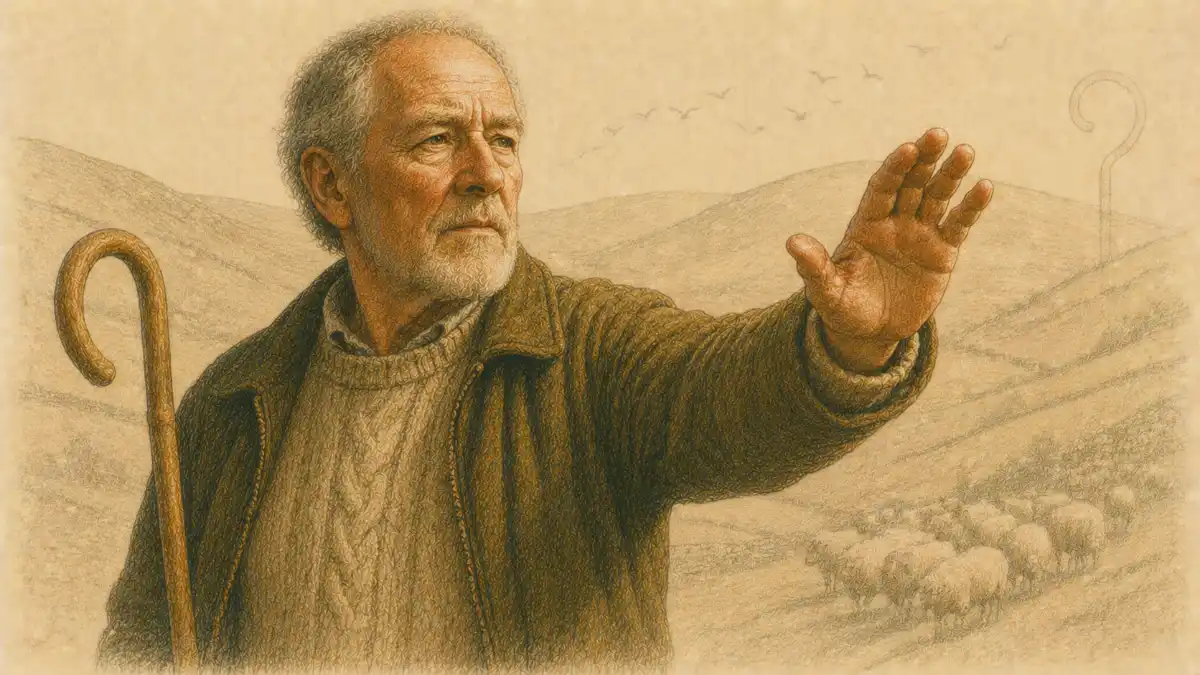
A man wakes in a tidy coastal town, greets his neighbors with a cheerful line, drives to an office job, and goes home to a wife who smiles a little too brightly. Nothing about his day looks strange. Everything about it is staged. The streets are a set, the sky is a painted dome, the neighbors are paid performers, and several thousand hidden cameras follow his every blink for an audience of billions who have watched him since before he could speak. He does not know any of this. He believes he is simply alive. He is Truman Burbank, and this is The Truman Show.

That is the engine of Peter Weir’s 1998 film, and it remains one of the cleanest, most unsettling premises any movie has ever proposed. A single innocent life, turned without consent into total content. The picture took a fantastical conceit and made it feel close enough to touch, and within a few years the surrounding culture had caught up to the warning. Reality television arrived in force. Surveillance crept into ordinary streets and ordinary pockets. The social media age taught millions of people to perform their own lives for an unseen crowd. A real psychiatric delusion was eventually named after the film. Few movies have predicted their own era with such accuracy, and fewer still have done it while wearing the gentle face of a feel-good comedy.
This study reads the picture as a cultural and political document. It treats the premise not as whimsy but as prophecy, traces the specific devices the film used to imagine a watched life, sets those devices against the real phenomena each one anticipated, and places the work inside a worldwide tradition of filmmakers who have warned about media and spectacle. The aim is to leave you understanding why this particular fable proved so durable, why a clinical delusion borrowed its title, and why a story about one man inside a dome became a story about all of us.
A life as total content
The namable claim of this study is simple to state and worth holding in mind throughout. The film turned one unknowing person into a broadcast, and in doing so it foresaw reality television, surveillance, and the social media age before any of those forces had fully arrived. The word that captures the idea is content. We now speak of human lives as content without flinching, of feeds and streams and channels of personal experience packaged for strangers. The 1998 picture got there first, and it got there by imagining the most extreme version possible, a person who is content from birth, who has never been anything else, who does not even know the word applies to him.
Truman Burbank is that person. Played by Jim Carrey in the role that proved he could carry a dramatic film, Truman is a likable insurance salesman in the postcard town of Seahaven, married, employed, surrounded by friends. He is also, unknown to himself, the star of a globally broadcast program that has filmed him continuously since just before his birth. The town is a vast television set enclosed by a dome large enough to be visible from space. Every person he has ever met is an actor. Every product in his cupboard is paid placement. His wife reads advertising copy into casual conversation. His best friend delivers scripted comfort fed through an earpiece. The sun rises and sets on a lighting cue. And presiding over all of it, from a control room hidden in the artificial moon, sits Christof, the show’s creator, a man who speaks of his subject with the tenderness of a god and the certainty of a jailer.
The horror of the setup is not violence. No one in Seahaven means Truman direct physical harm. The horror is gentler and stranger. It is the slow recognition that an entire reality can be built around a person purely so that others may watch, that affection can be manufactured, that a whole world can be a product with one human at its center. The film asks what it does to a life to be consumed as entertainment, and it asks the audience to notice that they, sitting in the dark, are part of the watching crowd.
The premise and why it works
Weir and screenwriter Andrew Niccol did not arrive at this gentle final tone by accident. Niccol’s original script was darker and sharper, set in Manhattan and titled around a different name, and it was reworked across many drafts toward the sunlit, almost utopian surface of the finished film. That softening is the key to its power. A grim dystopia announces its own warning and lets the viewer feel safely separate from it. Seahaven does the opposite. It is pleasant. The light is golden, the lawns are trimmed, the people are kind. The trap looks like a holiday brochure, and that is exactly why it unsettles. The film suggests that a cage does not need bars to hold you, only comfort, routine, and a horizon you never test.
The premise works because it is built on a single, clarifying question that the audience carries from the first scene: when will he find out? The picture is structured around the gap between what Truman knows and what we know. We see the cameras hidden in mirrors and car radios and shirt buttons. We see the crew, the control room, the global audience watching in bars and bathtubs. Truman sees a normal life. That dramatic irony turns every ordinary moment into suspense. A falling studio light, a radio that accidentally broadcasts his movements, a rain shower that follows only him, a dead father reappearing in a crowd: each crack in the surface pulls Truman, and the audience, toward the same dawning truth.
The film also works because it never lets the viewer off the hook. The on-screen audience is not a villainous mob. They are ordinary people, charmed, invested, weeping at the right moments, rooting for Truman the way we root for any beloved character. By making the watchers sympathetic, the film implicates everyone. The crowd in the bar is us. The pleasure they take in another person’s unscripted feelings is the pleasure we take in reality television, in the private lives we scroll past, in the strangers we have learned to treat as characters in a show we did not realize we were watching.
How did The Truman Show predict reality TV and surveillance?
The film predicted both by imagining their purest form, a single human life filmed every second and sold as entertainment. It pictured hidden cameras everywhere, manufactured intimacy, product placement woven into daily life, and a vast audience that consumed one person’s existence as content, years before those patterns became ordinary.
The accuracy of the prophecy is easiest to see when you separate the film’s invented devices from the real-world phenomena that followed. The picture imagined a program in which nothing was off limits, in which a person’s birth, first love, marriage, and private grief were all broadcast material. Within roughly two years of the film’s release, reality formats built on continuous surveillance of housemates and strangers became a global television staple. The film imagined a world of cameras hidden in mundane objects. Within a decade, networked cameras and location-aware devices had become ordinary features of daily life, carried willingly in every pocket. The film imagined an audience that felt genuine affection for a person it watched but never met. That parasocial bond is now the basic currency of influencer culture and the broadcast self.
What follows is the study’s findable artifact, a framework that pairs each device the film imagined with the real phenomenon it anticipated. It is the clearest way to grasp how a 1998 fable mapped the decades that came after it.
| Device in the film | What it imagined on screen | The real phenomenon it anticipated |
|---|---|---|
| A life filmed from birth | Truman broadcast every second since before he could speak | Reality television built on continuous, intimate surveillance of ordinary people |
| Cameras hidden in everyday objects | Thousands of lenses in mirrors, buttons, dashboards, pencil sharpeners | Networked cameras and recording devices woven into ordinary public and private space |
| The manufactured town | Seahaven as a controlled, idealized environment with no exit | Curated online personas and gated, algorithm-shaped feeds that filter what a person sees |
| Product placement as dialogue | Meryl reciting ad copy for kitchen products mid-conversation | Native advertising, sponsored content, and the blurring of life and marketing |
| The global watching audience | Billions consuming one person’s private life as comfort viewing | Parasocial attachment to influencers and the treatment of strangers as ongoing characters |
| Christof in the control room | A single creator shaping reality and steering emotion from above | Platform design and algorithmic curation that quietly direct attention and feeling |
| The audience rooting for an escape it enabled | Fans who love Truman yet keep the show running by watching | The paradox of audiences who decry a spectacle while sustaining it with attention |
The constructed world: dome, town, and creator
To make the prophecy land, the film had to make the fake world feel both perfect and slightly wrong. It chose its setting with unusual care. Most of the picture was shot in Seaside, a master-planned community in the Florida Panhandle whose pastel houses and orderly streets already looked so much like a prefabricated set that it required almost no dressing to pass for an artificial town. The choice gave Seahaven its uncanny quality. It is real enough to be charming and tidy enough to feel suspicious, a place where everything is just a little too clean to trust.
Above and around that town sits the dome, the single boldest image in the film. It is a structure large enough to be seen from orbit, painted on the inside to mimic sky and weather, fitted with a sun that the control room can raise or lower at will. The dome is the picture’s central metaphor made physical. It is the horizon that cannot be crossed, the limit on a life that the person living it has never thought to question. When Truman finally sails his small boat to the edge of his world and his bow strikes a painted wall, the moment is quietly devastating. The sky he has lived under his whole life is a surface, and the surface has an edge, and beyond the edge is everything he was never allowed to want.
Presiding over the dome is Christof, played by Ed Harris in a performance that earned a Golden Globe and an Academy Award nomination. Christof is the film’s most interesting figure precisely because he is not a simple monster. He genuinely believes he has given Truman a gift, a safe and happy existence shielded from a crueler world. He speaks of his creation with paternal warmth and frames the total surveillance of a human being as a kind of love. The film lets him make his case, and the case is seductive: in his world, he tells Truman near the climax, there is nothing to fear. That is the chilling part. The argument for the cage is delivered with sincerity, and it sounds, for a moment, almost kind. The picture understands that the most effective control rarely presents itself as control. It presents itself as care.
Christof’s name is not subtle, and the film knows it. He is a creator who fashions a world and a man within it, who orchestrates storms and sunrises, who watches over his subject from a chamber inside the moon. The picture has been read as a parable about belief and authority, about the comfort and the cost of a designed existence, about whether a person can be said to be free if every condition of their life has been arranged by someone else. Those readings are available, but the film never insists on them. It keeps its philosophy folded inside its plot, which is part of why it travels so well across classrooms and decades.
Jim Carrey and the gentleness of the performance
The casting of Jim Carrey was a gamble that defined the film. At the time he was among the highest-paid comic actors in the world, known for elastic faces and loud physical comedy, and he accepted a substantial pay cut to take a role that asked him to do almost the opposite of his usual register. Weir wanted that contradiction. He needed a star whose default mode was performance, because the part is about a man performing a life he does not know is a performance.
Carrey’s Truman is warm, slightly anxious, and deeply ordinary, and the performance works because of how little it reaches for. The morning greetings, the cheerful catchphrase, the salesman’s patter: these are the rituals of a man who has been trained from birth to be watchable without ever being told he was being watched. When the cracks appear, Carrey lets the dawning suspicion arrive in small registers, a flicker of doubt, a held breath, a smile that does not quite reach the eyes. The film’s emotional climax depends entirely on the audience believing Truman as a person rather than a comic figure, and Carrey carries it. By the end, when he stands at the edge of his painted world and decides to walk through the door into the unknown, the choice has the weight of a real human deciding to leave the only life he has known.
The supporting cast surrounds him with performances of performances, which is its own quiet craft. Laura Linney plays Meryl, the wife who is really an actress, and her brightness is calibrated to the half-inch of falseness that only the audience is meant to catch, the smile that holds a beat too long, the ad copy that surfaces in tender moments. Noah Emmerich plays the best friend whose comfort is fed to him line by line through an earpiece. These are roles that require the actors to be slightly bad on purpose, to show the seams of paid sincerity without tipping Truman off, and the film’s texture depends on that delicate, deliberate artificiality.
What is The Truman Show saying about constructed reality?
It argues that a reality can be entirely manufactured and still feel completely real to the person inside it, and that comfort is the most effective wall. The film suggests that what makes a life authentic is not safety but the freedom to choose, even when the choice means leaving a designed paradise for an uncertain world.
The picture is sometimes mistaken for a story about technology, but its deeper subject is consent and authenticity. Truman’s tragedy is not that he is filmed. It is that he is filmed without knowing, that his most genuine feelings, his love, his fear, his grief for a father he believes drowned, are all converted into entertainment without his agreement. The film draws a sharp line between a life that is lived and a life that is performed for others, and it locates freedom not in comfort but in the right to choose one’s own existence. Christof offers safety. The film insists that safety bought with deception is a kind of imprisonment, however pleasant the cell.
This is where the gentle tone does its sharpest work. Because Seahaven is lovely, the audience feels the pull of staying. Truman could remain. He would be safe, comfortable, beloved. The fact that walking out is plainly the right choice, and yet costs him everything familiar, is what gives the ending its power. The film argues that an unfree paradise is still a prison, and that a person has the right to a real and difficult life over a fake and easy one. That argument has only grown louder as the surrounding culture filled with curated, comfortable, designed versions of reality competing for our attention.
A world that is always watching
One of the film’s quieter achievements is the way it photographs surveillance itself. The picture had to make the audience feel the presence of thousands of cameras without ever showing most of them, and it did so through a distinctive visual grammar. Many shots are framed as if seen through a hidden lens, ringed by a soft vignette or shot through the curve of a wide aperture, so that the viewer is constantly reminded they are watching through one of Christof’s concealed eyes. Sometimes the framing peers out from inside a car radio or a bathroom mirror. The effect is subtle but cumulative. The audience never forgets that someone is always recording, because the film keeps placing them behind the camera that does the recording.
The picture also uses the apparatus of broadcast to widen its world. We cut away from Seahaven to the people watching the show: two security guards in a garage, an old woman in bed, friends in a bar, a man in his bathtub. These cutaways do enormous work. They establish that the audience is vast and global, that the program is a phenomenon, and that the watchers are ordinary and decent rather than cruel. They also let the film show its own audience a mirror. We are watching a movie about people watching a show about a man who does not know he is being watched. The nesting is the point. The film keeps folding the act of watching back on itself until the viewer cannot quite tell where the watched world ends and their own begins.
How does the film show a world that is always watching?
It builds a visual language of concealed lenses, with shots framed through mirrors, dashboards, and buttons, each ringed to suggest a hidden camera. The picture then cuts to a global audience consuming Truman’s life, so the viewer is made aware that they, too, are part of the watching crowd.
This technique is why the film reads so differently now than it did on release. In 1998 the constant hidden cameras felt like a clever conceit, a sci-fi flourish in service of a fable. In the years since, the conceit became ordinary life. Cameras now sit in doorbells, dashboards, and the device in nearly every hand, and the act of recording the world and the people in it has become so routine that it barely registers. The film’s surveillance grammar, once a stylistic invention, now describes the texture of daily experience. That is the deepest level of its prescience. It did not merely predict that we would be watched. It predicted that we would stop noticing.
The prophecy made literal: the Truman Show delusion
The single most striking proof of the film’s prescience does not live on screen at all. It lives in psychiatry. In 2008, the psychiatrist Joel Gold and his brother Ian Gold, a neurophilosopher, coined the term Truman Show delusion to describe a pattern they had observed in patients who became convinced that their lives were secretly being filmed for a reality program, that the people around them were actors, and that the world was a staged production arranged for an unseen audience. The Golds described the phenomenon in a 2012 paper and later in a 2014 book, and reports of similar cases have been documented around the world, numbering in the hundreds.
It is rare for a film to name a delusion. The reason this one did is instructive. The Golds did not invent the underlying experience; the sense that one’s life is staged or watched has surfaced in psychosis long before any movie existed. What the film did was give that experience a shape and a vocabulary. Several of the early patients explicitly connected their conviction to the picture, and the title offered a ready name for a fear the culture had begun to feel in a milder, ambient form. As surveillance, broadcast, and online performance spread, the line between a clinical delusion and an ordinary modern anxiety grew thinner. The film had imagined the most extreme version of a watched life, and reality moved close enough that the extreme version became a useful clinical reference point.
The delusion is the prophecy folded back into the world. A story written to warn about a possible future became a frame through which some people now understand their own suffering, and a phrase that ordinary people reach for when they feel the weight of being constantly observed. No clearer evidence exists that the film read its era correctly. The culture did not just resemble the movie. It borrowed the movie’s name to describe itself.
Placing the film in a worldwide tradition of media critique
The film did not invent the warning it delivers. Filmmakers around the world have long worried about media, spectacle, and the manufactured image, and the picture earns its place by finding the single most resonant image for an old anxiety. Across national cinemas, directors have asked what happens when reality is shaped for an audience, when private life becomes public performance, and when the people who control the image control what counts as true.
In American cinema, the tradition runs deep and direct. The 1976 satire of television news imagined a network so hungry for ratings that it turns a deranged anchor into a sensation and finally a sacrifice, a vision of broadcast as a machine that consumes the people it elevates. That picture is the great prophetic ancestor of this one, and the lineage between them is worth tracing for any student of media on film. The angry, theatrical rage of the 1976 satire and the gentle, sunlit dread of the 1998 fable are two faces of the same fear, that the screen has an appetite and that human lives are its food. Readers following the media-prophecy lineage can explore that older landmark in the study at /2017/02/15/network-media-satire-prophecy/.
The same tradition reaches back further still, into the postwar American films that worried about manufactured public figures and the machinery that builds them. The mid-century studies of demagoguery and image-making imagined how a charming performer could be assembled for the public and how the press could manufacture a reputation out of nothing. Those films were concerned with the fabrication of a person for mass consumption, the same fear that animates Seahaven, where an entire human life is a fabrication staged for an audience. The connection between manufactured public images and the manufactured life of Truman runs through the study of media demagoguery and the engineered persona at /2016/04/01/media-demagoguery-sweet-smell-face-in-crowd/.
Beyond the United States, the worry about constructed reality has taken many forms. European and Asian filmmakers have explored the surveillance state, the performed self, and the blurring of authentic experience with its mediated copy, each from the angle of their own histories with propaganda, observation, and broadcast. What unites them with the 1998 film is a shared intuition that modern life increasingly happens in front of an audience, and that the audience changes what it watches. The picture’s distinctive contribution to this global conversation is its choice of scale. Where other films critique a system, an industry, or a state, this one shrinks the warning down to a single beloved face. It makes the abstraction personal. One man, one life, one painted sky, and the whole vast apparatus of spectacle bent toward consuming him. That intimacy is why the film traveled where heavier critiques did not, and why it became the image the culture reached for when it needed to name what was happening to it.
There is also a kinship with the science-fiction films that ask what makes an existence real, films in which the line between an authentic life and a constructed one becomes impossible to draw with confidence. The questions Truman faces at the edge of his dome, about whether a life arranged by someone else can be his own, echo the questions that haunt the great cinema of constructed beings and built worlds. That deeper thread, about what counts as a genuine existence when the conditions of life are manufactured, connects this film to the landmark study of constructed identity and the human question at /2017/12/01/blade-runner-what-is-human-deckard/.
The counter-reading: is it just whimsy?
A persistent objection to the film holds that it is too light to be taken seriously as critique, that its sunny tone, its broad comedy, and its uplifting final beat make it a feel-good fable rather than a real warning. On this reading the picture is charming but soft, a clever conceit dressed up as a crowd-pleaser, and its prophecy is more a happy accident than a considered argument.
The objection misreads how satire works. A critique does not have to be grim to be sharp. The gentleness of the film is not a retreat from its argument; it is the argument. By making Seahaven beautiful and Truman lovable and the watching audience kind, the film denies the viewer the comfort of distance. A bleak dystopia would let us shudder and feel safely separate. The bright, pleasant trap does the opposite. It implicates the audience in the very pleasure the film is interrogating, the pleasure of watching another person’s life. The lightness is a delivery system for a hard idea, and the idea is delivered all the more effectively because it arrives wrapped in warmth.
The final beat is often cited as proof of softness, the triumphant exit, the audience cheering, the upbeat resolution. But the ending is more pointed than it looks. Truman chooses the door, yes, but the film cuts immediately to the watching crowd, who celebrate his escape and then, in the very next moment, ask what else is on. The people who loved Truman, who wept for him, who willed him to be free, turn the channel the instant his story ends. That final cut is the film’s coldest stroke. It reveals that the affection of the audience was always a form of consumption, that the watchers will simply find another life to follow, and that the machine Truman escaped will roll on without him. The whimsy, in other words, has a blade inside it. The film smiles and then shows you the teeth.
Companion tools for study and teaching
For students, teachers, and researchers working through the film’s layered concerns, two companion resources support close study. VaultBook offers a film study notebook designed to help readers organize scene analysis, track thematic threads across a film, and build structured notes that connect a picture’s craft to its cultural argument. It is well suited to a film like this one, where the visual grammar of surveillance, the layered act of watching, and the moral question at the center all reward careful, organized attention. The notebook lets a reader hold the film’s many moving parts in one place and trace how its devices add up to its meaning. The tool is available at https://vaultbook.net/tools/film-study-notebook.html.
ReportMedic provides a film studies reference resource that helps readers anchor their analysis in durable terms and frameworks, from genre and authorship to the language of media critique. For a work that sits at the intersection of satire, science fiction, and cultural prophecy, a reliable reference is valuable for keeping an argument precise and well grounded. It helps a student move from a vivid impression of the film to a clear, defensible reading they can support and develop. The resource is available at https://reportmedic.org/tools/film-studies-reference.html.
Together the two tools support the full arc of study, from first viewing to finished analysis, and they pair naturally with the comparative approach this study takes, in which a single film is read closely and then placed inside a wider tradition.
The ending and what it means
The climax of the film is one of the most quietly powerful endings in popular cinema. Truman, having pieced together the truth, sails to the edge of his world in a small boat, surviving a storm that Christof conjures in a desperate attempt to keep him from leaving. The storm nearly drowns him, and the moment when Christof orders the weather turned against his own beloved subject is the instant the creator’s care curdles fully into control. Truman survives, the boat reaches the painted horizon, and the bow strikes the sky.
What follows is a conversation between a man and the voice of his maker. Christof, speaking from the heavens through the dome’s sound system, makes his final case for the world he built, arguing that the outside holds only deception and danger while Seahaven offers safety. It is a genuine argument, and the film gives it real weight. Then Truman delivers the cheerful catchphrase he has said every morning of his life, the line that opened countless episodes, and uses it to say goodbye. He bows to the audience he is only now fully aware of, and he steps through the door into the dark unknown beyond the set.
The meaning of that exit is the meaning of the whole film. Truman chooses an uncertain real life over a perfect false one. He chooses freedom over comfort, truth over safety, the difficult world over the designed paradise. The film does not show us what lies beyond the door, and that withholding is deliberate. The point is not what Truman finds. The point is that he chose to find out for himself. In a story about a life arranged entirely by others, the only authentic act available is the decision to leave, and the film treats that decision as a kind of grace. The man who was never allowed to choose anything finally chooses everything at once, and walks out of the only world he has ever known to claim a life that is genuinely his.
Legacy and why it endures
The film was a critical and commercial success on release, earning strong reviews, three Academy Award nominations, and multiple Golden Globe wins, and it has only grown in stature as the years have validated its warning. Its reputation now rests less on its accolades than on its uncanny accuracy. It is the film people reach for when they want to describe the feeling of constant observation, the performance of ordinary life online, the sense that reality has been staged for an audience. Its title has become shorthand, its premise a reference point, its central image a permanent fixture of how the culture talks about media and the self.
The endurance has a simple source. The film identified, before the technology and the culture had fully caught up, the specific shape of a coming anxiety, and it gave that anxiety a face, a town, a dome, and a name. It did not predict a particular gadget or platform. It predicted a condition, the condition of being watched, performed, and consumed, and it dramatized that condition with enough warmth and clarity that the dramatization outlived the moment of its making. Decades on, the picture does not feel like a period piece. It feels like a documentary about a world that had not arrived yet.
That is the rarest kind of prescience. The film read its era so accurately that the era grew into it, until the fable about a man inside a dome became a fable about everyone outside one. A life as total content was a horror in 1998. It is, in milder and more voluntary forms, an ordinary feature of life now. The picture saw it coming, named it, and asked the question that still matters most. When the whole world is watching, and the watching never stops, what does it take to step through the door and choose a life that is genuinely your own.
How the film came to be: from a darker script to a sunlit fable
The picture that reached audiences in 1998 was not the picture its writer first imagined. Andrew Niccol, a New Zealand born screenwriter who had built a career directing commercials before moving into features, wrote the original screenplay as a far harsher work. The first version was set in the hard, anonymous sprawl of a big city, carried a grimmer tone, and was titled around a different protagonist’s name. Niccol wanted to direct the material himself as his debut, with a more dangerous edge and a darker leading man in mind for the central role. The studio that took an interest was not willing to gamble its budget on a first-time director once a major star became attached and the cost climbed, so the directing job went elsewhere, and the project’s whole temperature changed in the process.
The director who inherited the script was Peter Weir, an Australian filmmaker already respected for a run of acclaimed and commercially successful features in the decade before. Weir had grown frustrated with the conventional projects Hollywood kept offering him and had begun searching for unusual stories himself. When he encountered Niccol’s screenplay, he recognized a premise unlike anything else he had read, and he set about reshaping it. Across many drafts, Weir pushed the material away from its urban bleakness toward something brighter, gentler, and stranger. He changed the setting from a hard city to a pristine, sun-soaked town where the weather was always perfect, and he softened the tone until the warning was wrapped inside a fable. That decision is, in retrospect, the single most important creative choice in the film’s history. The brightness made the trap inviting, and the inviting trap made the critique stick.
Weir’s instinct extended to the central performance. He wanted a star whose public identity was built on performance itself, a man audiences already associated with relentless watchability, because the part required exactly that quality turned inward. He pursued Jim Carrey, then near the peak of his earning power as a comic lead, and Carrey responded immediately to the script. The role meant enough to the actor that he accepted a significant reduction from his usual fee to take it, a meaningful gamble for a performer trying to prove he could carry a dramatic film. The two did not find their rhythm instantly. Early in production they clashed over Carrey’s habit of improvising and reshaping his lines, a freedom his contract allowed, until the director came to trust the actor’s instincts and the collaboration settled into a productive one. The friction was, in a sense, the right friction for the material, a director trying to control a performer who kept slipping the leash, mirroring a creator trying to control a man who keeps testing the edges of his world.
The role of the creator went through its own evolution. The part of Christof was first filled by a different actor who left the production well into filming over creative differences, and Ed Harris was brought in to replace him. The change proved fortunate. Harris found a register for the character that balances tenderness and menace, a man wholly convinced of his own benevolence, and his work earned a Golden Globe and an Academy Award nomination. The casting history is a reminder that the finished film, so assured in its tone, was assembled through trial, replacement, and revision, and that its smooth surface conceals a great deal of trouble underneath, which is in its own way a fitting origin for a movie about a perfect surface concealing a difficult truth.
The budget settled in the range of sixty million dollars, a substantial sum that made studio executives nervous, since the picture combined an expensive production with a heady, satirical premise that did not obviously promise mass appeal. The film was sometimes described internally as one of the most expensive art films ever attempted, a prestige gamble that could easily have failed. It did not. The picture earned far more than its cost, won strong reviews, and collected a clutch of nominations and awards, vindicating the gamble and establishing the film as both a commercial success and a serious cultural object. The history matters because it shows how close the film came to being something else entirely, a darker, smaller, grimmer picture that might have warned just as clearly but would almost certainly not have lodged itself so deeply in the popular imagination.
The craft of a watched world
A premise this strong could have been squandered by ordinary execution. What makes the film endure is that its craft is as considered as its concept, and that every department bends toward a single idea, the texture of a life that is always on camera. The cinematography, the production design, the score, and the editing all conspire to make Seahaven feel simultaneously beautiful and false, comfortable and surveilled, which is the exact double quality the story requires.
The look of the picture is built around the logic of hidden cameras. Many compositions are framed as if captured by a concealed lens, ringed with a soft circular vignette or shot through an unusually wide aperture that bends the edges of the frame, so the viewer is repeatedly reminded that they are watching through one of the apparatus’s secret eyes. Shots peer out from inside a car radio, a bathroom mirror, a button on a shirt. The camera sometimes sits at odd, fixed heights, the angles a real surveillance rig would produce rather than the angles a film crew would choose for beauty. This visual grammar does quiet, constant work. It never lets the audience forget the cameras, and it makes the act of watching feel intrusive even when the content is innocent, which is precisely the unease the story trades on.
The production design gives Seahaven its postcard perfection and its faint wrongness. The town is too symmetrical, too clean, too coordinated in its colors, a place arranged by a designer rather than grown by a community. The artificial sky and the controlled light flatten the world into something that looks like an advertisement, which is appropriate, since the town is in effect a year-round commercial. The choice to shoot in a real master-planned community rather than build a set from scratch gave the artificiality a disturbing authenticity, because the place genuinely exists and genuinely looks manufactured, collapsing the distance between the film’s invented world and the designed environments of real life.
The score deserves particular attention. The music, composed primarily by Burkhard Dallwitz with significant contributions from Philip Glass, refuses the easy emotional cues of a conventional comedy. It is often spare, repetitive, and quietly melancholy, a minimalist pulse that hums beneath the sunny images and tells the audience that something is wrong long before the plot confirms it. The film even folds its own scoring into the fiction, treating the music as part of the broadcast, the program’s own soundtrack laid over its star’s life. That self-awareness sharpens the unease. The audience is hearing the music a show would use to manipulate its viewers’ feelings, which means the film is showing us, in real time, how emotion can be engineered, the very engineering the story critiques.
The editing builds the film’s central engine, the gap between what Truman knows and what the audience knows. The picture cuts steadily between Seahaven and the world watching it, between the controlled life and the control room, between the unaware star and the aware crew. Each cut to the watching audience or the production team widens the irony and tightens the suspense, because every cut reminds us how much Truman does not know. The rhythm of these cuts is the rhythm of dramatic irony itself, and the film sustains it for its entire length without exhausting it, which is a considerable feat of structure.
The slow reveal: how the cracks appear
The film’s plot is, at its heart, a mystery in which the detective does not yet know there is a crime. Truman begins the story content, and the picture’s first act is devoted to the small fractures that begin to disturb that contentment. A studio light, meant to hang in the artificial sky, falls from above and shatters on the street near his house, labeled as if it were a piece of equipment, an object that has no business dropping out of the heavens. His car radio briefly picks up the production crew’s communications, narrating his own movements back to him in real time. A sudden, localized rain shower falls only on him and follows him as he moves, until the technicians correct the error and widen the downpour. These are comic moments on the surface, but they are also the first cracks in the painted sky, the first hints to Truman that his world does not obey the rules a world should.
The deeper engine of Truman’s entrapment is psychological, and the film reveals it gradually. To keep its star from ever leaving the dome, the production engineered a fear of water and travel into him from childhood. A formative trauma, a boating accident staged to appear to claim his father’s life, was arranged precisely so that Truman would associate the sea with loss and never attempt to cross it. The manufactured phobia is the film’s most chilling device, because it shows that the control extends past the physical walls of the set and into Truman’s own mind. The boundary that holds him is not only the dome. It is a fear deliberately planted to make him police himself, to make him a willing prisoner who guards his own cell. When Truman finally overcomes that fear and boards a boat despite his terror, the act is not just brave. It is the moment he reclaims his own mind from the people who shaped it.
The reappearance of his supposedly dead father is another carefully placed crack. The actor who played Truman’s father, written out of the show years earlier by the staged drowning, slips back into Seahaven and is hustled away by the crew before he can speak, an error in the production’s continuity that Truman witnesses and cannot explain. The film uses the moment to dramatize how a constructed reality must constantly patch its own seams, how the labor of maintaining an illusion is endless, and how the smallest failure of that labor can begin to wake the person the illusion is meant to deceive. Truman does not understand what he has seen, but he registers it, and the registering is the beginning of the end for the show.
Sylvia and the impulse to tell the truth
Against the vast machinery of the production stands a single dissenting figure, a young woman who appears in Truman’s life during his college years under the name the show assigns her, and who tries to break the illusion from within. She is an actress who has come to believe that what the program is doing to Truman is wrong, and in a brief, charged encounter she attempts to tell him the truth about his world before the crew rushes her off the set and explains her away. She becomes, in Truman’s memory, the great unfinished love of his life, the girl who vanished, and his longing for her is also a longing for the truth she tried to give him.
Her role matters far beyond the romance. She represents the conscience the system cannot fully suppress, the possibility that someone inside the apparatus will refuse to participate in the deception. Later in the film she is shown among the watching audience, agitating on Truman’s behalf, urging his escape, a one-person resistance to a global entertainment. Through her the film acknowledges that the machinery of spectacle is made of people, and that people retain the capacity to object, to feel the wrongness of what they are doing, and to try to stop it. She is the film’s small flame of moral resistance, and the fact that Truman’s deepest yearning attaches to her suggests that the human impulse toward truth cannot be fully engineered away, however total the control.
Her presence also complicates any reading of the audience as simply complicit. The watching crowd contains, alongside the passive consumers, at least one person who wants the spectacle to end, who roots for the subject’s freedom over her own entertainment. That division within the audience is the seed of the film’s hope. The same crowd that consumes Truman’s life also, in part, longs for him to escape it, and when he finally does, it is that better impulse the film lets win, however briefly, before the channel changes.
The consumer critique: a life paid for by product placement
One of the film’s sharpest and most easily missed satirical targets is advertising. The program that broadcasts Truman’s life carries no commercial breaks, because the entire show is a commercial. Every product in Seahaven is paid placement, and the actors weave endorsements into their dialogue as a matter of routine. Truman’s wife, in the middle of a tense and emotionally fraught moment, will suddenly turn to an unseen camera and extol the virtues of a kitchen gadget or a brand of cocoa, reciting ad copy with a brightness that has nothing to do with the scene around her. His best friend pitches a brand of beer in the tone of genuine friendship. The film plays these intrusions for uncomfortable comedy, but the underlying point is severe. In Seahaven, there is no line between life and marketing. Every relationship is also a sales channel. Every intimate moment is also an opportunity to move product.
This is one of the film’s most prescient strokes. The seamless fusion of personal life and commercial endorsement, the friend who is also an advertiser, the intimate moment that doubles as a sponsorship, has become an ordinary feature of the broadcast self. The film imagined a world in which a person’s entire existence is monetized through the products woven into it, in which affection and salesmanship are indistinguishable, and that world arrived. The picture’s satire of advertising is not a side note. It is central to its vision of a life turned into content, because content, in the end, is a thing that exists to be sold, and a person turned into content is a person turned into a vehicle for sale.
The critique cuts at the audience as well as the system. The watchers do not merely observe Truman’s life; they are sold to through it, their affection for him converted into a market. The film suggests that the spectacle and the commerce are inseparable, that the reason a person’s life becomes worth broadcasting is precisely that it can be made to sell, and that the warmth audiences feel toward a watched life is, from the producer’s chair, simply attention to be harvested and resold. It is a bleak idea delivered with a light touch, which is the film’s signature method.
Philosophy, religion, and the question of a real life
The film has proved unusually generous to interpretation, and its premise opens naturally onto some of the oldest questions in philosophy. The most obvious is the question of the cave. Truman lives inside a controlled environment, mistaking its shadows and surfaces for the whole of reality, until he is forced to recognize that what he took for the world was a construction, and to climb out toward a truth that is harder and brighter than the comfortable illusion. The ascent from a false reality to a true one, and the difficulty of that ascent, is among the most ancient images in Western thought, and the film gives it a fresh and accessible form.
The premise also raises the question of how anyone can be certain that their own reality is genuine. If a person could be raised inside a perfect illusion, fed false experiences from birth, and never given reason to doubt, then how does any of us know that our world is not similarly staged. The film dramatizes a thought experiment that philosophers have posed for centuries about the reliability of experience and the possibility of systematic deception, and it does so in a form an audience can feel rather than merely consider. The Truman Show delusion, in which real people came to believe their lives were staged, is the unsettling proof that this is not only an abstract puzzle but a fear the human mind is capable of inhabiting.
The religious reading is hard to avoid, and the film invites it. The creator who builds a world, populates it, controls its weather, watches over its single most important inhabitant from the heavens, and speaks to him from above through an unseen voice, is a figure with obvious theological resonance, and his name underlines the point. The film can be read as a parable about a designed existence and the relationship between a creature and the one who made and watches him, about the comfort of living inside a benevolent design and the terror and freedom of stepping outside it. Crucially, the film does not resolve into a simple statement about belief. It holds the creator as both loving and controlling, both protector and jailer, and it lets the central drama be the creature’s decision to choose his own uncertain freedom over a designed and watched security. Whatever one’s own convictions, the film offers a rich frame for thinking about authority, design, and the value of a self-chosen life.
What unifies these readings is the film’s central question, which is finally not about technology or media at all but about authenticity. What makes a life real. Is a happy existence still worth living if it was arranged entirely by someone else, if its joys were scheduled and its sorrows were staged and its love was paid for. The film answers, through Truman’s choice, that a real life requires the freedom to choose it, that an existence one did not consent to and cannot question is not fully one’s own however pleasant it feels, and that the dignity of a human being lies in the right to walk through the door into the unknown. That answer is why the film outlives its moment. The media it satirized has changed and grown, but the question it asks about a genuine life is permanent.
The reality television boom the film foresaw
When the picture was released, the form of television it imagined did not yet dominate the schedule. Within a remarkably short span afterward, formats built on watching ordinary people under continuous observation became a global phenomenon, filling networks with programs that placed strangers in controlled environments and broadcast their unscripted lives for mass entertainment. The resemblance to the film’s premise was so close that the picture was immediately and permanently linked to the trend, cited again and again as the work that had seen it coming.
What the film grasped, ahead of the wave, was not merely that such programs would exist but why audiences would want them. It understood that there is a deep appetite for watching real, unguarded human feeling, that scripted drama cannot fully satisfy the hunger for authenticity, and that audiences would pay endless attention to ordinary lives if those lives could be made to feel genuine. The picture also understood the central deception of the form, that the authenticity it sells is itself a production, that the unscripted feelings are produced by carefully arranged conditions, and that the line between real and staged in such programming is always blurred. Truman’s life is the purest possible version of reality television precisely because it is the most controlled, and the film’s insight is that maximum control and the appearance of maximum authenticity are not opposites but partners.
The film also foresaw the ethical unease the form would generate, the discomfort of taking pleasure in real people’s real distress, the question of consent and exploitation that hangs over any program built on watching actual lives. By making its subject a person who never consented and never knew, the film pushed that unease to its limit and forced the audience to confront it directly. Every later debate about the ethics of watching ordinary people perform their lives for entertainment is anticipated in the basic situation the film constructs, a beloved man consumed by an audience that means him no harm and yet, simply by watching, sustains the machine that imprisons him.
The surveillance age and the broadcast self
If the reality television boom validated one half of the film’s prophecy, the rise of pervasive surveillance and self-broadcasting validated the other. The picture imagined a world saturated with hidden cameras and a person whose every moment was recorded, and that world has arrived in forms the film could not have specified but whose shape it captured exactly. Recording devices now sit in doorbells, vehicles, public spaces, and the device nearly everyone carries, and the act of being watched and recorded has become so ordinary that, as the film predicted at its deepest level, people have largely stopped noticing it.
More striking still is the way the film anticipated voluntary self-broadcast. Truman is watched against his will and without his knowledge, but the culture that grew up after the film took the watched life and made it a choice, even a goal. Vast numbers of people now perform their daily lives for an audience of strangers, curate a public version of themselves, and seek the attention of an unseen crowd, doing willingly what was done to Truman against his will. The film’s image of a life turned into content describes not only the involuntary surveillance it depicted but the voluntary performance the culture embraced. The dome has, in a sense, turned inside out. We are no longer only the watched; we are also, eagerly, the broadcasters of ourselves.
The parasocial bond the film dramatized has likewise become a defining feature of contemporary life. The audience that loves Truman, that feels it knows him intimately though it has never met him, that grieves and rejoices with him as if he were a friend, prefigures the relationships millions now form with figures they follow but will never know. The film understood that broadcast intimacy is a powerful and slightly false thing, a genuine feeling attached to a manufactured access, and it placed that feeling at the center of its story. The deepest reason the film has not dated is that it identified the emotional structure of a coming world, the structure of watching, performing, and feeling connected to strangers across a screen, and gave it an image so clear that the culture has used that image ever since to understand itself.
Why it still matters
A film that predicts its era can become a museum piece once the era arrives, a curiosity admired for its foresight but no longer alive. The Truman Show has avoided that fate, and the reason is that its central question was never really about the specific media it foresaw. The reality formats, the surveillance, the self-broadcasting, these were the symptoms the film noticed, but the disease it diagnosed was deeper, a creeping confusion between a life that is lived and a life that is performed, between experience and its broadcast, between the self and the image of the self. That confusion has only intensified, and so the film’s question has only sharpened. When the whole world is a kind of show, and the watching never stops, what does it mean to live a life that is genuinely one’s own.
The film also matters because of how it answers that question, with neither despair nor easy comfort. It does not tell us that the watched world is inescapable, nor does it pretend that escaping it is painless. It shows a man who walks out of a perfect, false, watched paradise into a real and uncertain darkness, and it treats that walk as the truest thing he ever does. The film’s final faith is in the human capacity to choose authenticity over comfort, truth over safety, a difficult real life over an easy false one, even when everything familiar argues for staying. In a culture increasingly built to keep us watching and performing and comfortable inside our own pleasant domes, that faith is not naive. It is bracing, and it is needed, and it is the reason a gentle 1998 comedy about a man in a painted town remains one of the most quietly radical films of its generation.
The catchphrase and the rituals of a manufactured life
Among the film’s most resonant inventions is the cheerful line Truman repeats to his neighbors every morning, a friendly greeting wishing them a good day in case he does not see them later. On first hearing it is a charming character touch, the patter of a likable man. On reflection it is something far more disturbing. The line is a ritual, performed daily for a watching audience, the opening of each broadcast day, a piece of branding Truman has been conditioned to deliver without knowing it serves a show. He believes the greeting is his own warmth speaking. It is, in fact, a scripted beat in a program, a habit installed in him so seamlessly that he experiences it as personality.
That collapse, between a person’s genuine self and the performance shaped into them by a watching apparatus, is the film’s deepest and most uncomfortable idea. Truman’s friendliness is real to him and manufactured by the show at the same time, and the picture refuses to let the audience separate the two cleanly. When, at the climax, he uses the same line to bid farewell to the audience he has only just discovered, the catchphrase is transformed. What was an unconscious ritual becomes a conscious choice, a piece of conditioning reclaimed as a deliberate goodbye. The greeting he once delivered without understanding, he now delivers with full awareness, turning the show’s own branding into the instrument of his escape. It is a small, perfect example of how the film hides its sharpest meanings inside its gentlest gestures.
The rituals of Truman’s life are all, in this way, double. The morning paper, the drive to work, the chat with the neighbors, the evening with his wife, the routines that read as the comfortable texture of an ordinary existence are also the scheduled content of a broadcast, the predictable rhythms that make a life watchable. The film suggests that routine itself can be a form of capture, that the comfortable patterns of a settled life can also be the bars of a cell, and that the very habits which make us feel secure can be the means by which a watching power keeps us in place. Truman’s awakening is, in part, an awakening from routine, a sudden suspicion of the patterns he has never questioned, and the film invites its audience to feel a flicker of the same suspicion about the comfortable patterns of their own days.
Inside the control room: the machinery of spectacle
The film gives substantial time to the apparatus behind Seahaven, and those scenes do important work. From a control room hidden in the artificial moon, Christof and a large crew manage every element of Truman’s world. They cue the sunrise and the weather, direct the actors through earpieces, manage thousands of cameras, handle continuity and crises, and shape the narrative of Truman’s life as it unfolds. The picture treats this machinery with a documentary attention that grounds the fantastical premise in plausible labor. We see that maintaining a constructed reality is enormous, ceaseless work, a vast operation of technicians and performers laboring around the clock to sustain one man’s illusion.
This emphasis on labor is part of the film’s realism and part of its critique. By showing the crew, the film insists that spectacle is not magic but manufacture, that every seamless illusion is the product of countless people doing their jobs, and that the smoothness of the surface depends on the invisibility of that work. It also distributes the moral weight of the deception across a whole workforce, raising the uncomfortable question of complicity. The crew members are not villains; they are professionals doing skilled work. And yet their collective labor is what imprisons Truman, which lets the film ask how an obvious wrong can be sustained by many ordinary people each performing a small, defensible task. That question reaches well beyond the film, into every large system that produces harm through the accumulated, unremarkable work of people who never see themselves as the cause.
Christof presides over this operation as both artist and authority. The film is careful to present him as a genuine creator, a man who sees his program as a work of art and his subject as its masterpiece, who speaks of authenticity and truth even as he manufactures a total lie. His conviction that he is giving Truman a gift, that the controlled world is a kindness, is the film’s portrait of the benign tyrant, the controller who believes wholly in his own benevolence. The machinery he commands is impressive, even beautiful, and the film lets us feel its appeal, the seductive pleasure of a perfectly managed world, before it reveals the horror underneath, that the perfectly managed world is a prison and the management is a violation. The control room is where the film’s two faces meet, the wonder of a created world and the wrongness of a stolen life.
The worldwide conversation about media and the manufactured image
The film belongs to a long, global conversation among filmmakers about the dangers of media, spectacle, and the engineered image, and understanding that conversation deepens any reading of the picture. Across many national cinemas and many decades, directors have returned to a cluster of related anxieties, that mass media can manufacture reality, that the people who control images can control what counts as true, that public life increasingly means performance, and that the private self is being eroded by the demand to be seen. The 1998 film is a late and unusually resonant entry in this tradition, and its distinction lies in the form it found rather than the worry it expressed.
The worry itself is old. Filmmakers concerned with broadcast and propaganda have long imagined media as a force that consumes the truth it claims to report, that elevates and destroys public figures according to the logic of attention, and that reshapes the populace in its own image. Others have explored the surveillance state, the experience of living under constant observation by a controlling power, and the way such watching deforms ordinary life and ordinary trust. Still others have examined the manufactured celebrity, the public figure assembled for consumption, the persona that has no authentic self beneath it. These traditions developed across different countries and political circumstances, each shaped by a particular history of propaganda, observation, or commercial broadcast, and together they form a rich global cinema of media critique.
What the 1998 film contributed to this conversation was a synthesis and an image. It folded surveillance, broadcast, manufactured reality, the commercialized self, and the parasocial audience into a single situation, one man’s whole life turned into a watched and sold production, and it found for that synthesis an image of extraordinary clarity and warmth, a beloved everyman inside a painted dome. Where many of its predecessors critiqued a system from the outside, with anger or dread, this film placed the audience inside the warmth of the trap and let them feel its pull, which is why it reached people the colder critiques did not. It is the difference between being told that media is dangerous and being made to feel, for two hours, the seductive comfort of a manufactured world and the difficulty of leaving it. The film translated an intellectual tradition into an emotional experience, and in doing so it became the popular culture’s favorite shorthand for an anxiety that cinema had been circling for generations.
Reception, accolades, and growing stature
On release the film met with strong critical acclaim and solid commercial success, an outcome that was not guaranteed for so unusual a project. Reviewers praised the originality of its premise, the surprising depth of its leading performance, and the elegance with which it balanced comedy, drama, and ideas. The picture earned three Academy Award nominations, including recognition for its direction, its screenplay, and its supporting performance, and it won multiple Golden Globe Awards, with its supporting actor taking a prize for the role of the creator. For a film that combined an expensive production with a cerebral, satirical concept, this reception was a genuine vindication, and it established the work immediately as a serious cultural object rather than a mere novelty.
The film’s stature has grown steadily in the decades since, and its reputation now rests less on its original awards than on the accuracy of its vision. As the phenomena it imagined arrived one by one, the picture came to be regarded not simply as a clever entertainment but as a work of cultural foresight, a film that had read the direction of its era with rare precision. Its central image and its title entered the common vocabulary, used to describe the feeling of constant observation, the performance of life for an audience, and the staged quality of a media-saturated world. Few films of its period are referenced as often or as naturally in ordinary conversation about media and the self, and that durability in everyday language is its own kind of canonization.
The naming of a clinical delusion after the film gave it a place in cultural history that few movies achieve, a documented instance of a work of popular art shaping how some people understand their own minds and how the culture names a shared anxiety. Taken together, the critical acclaim, the commercial success, the lasting presence in common speech, and the borrowing of its title by psychiatry make the case that this is one of the most culturally consequential films of its decade, a picture whose influence extends well beyond cinema into the language and self-understanding of the age it foresaw.
The film as a teaching text
For teachers and students, the picture is an unusually generous teaching text, because it operates clearly on so many levels at once and rewards analysis from many directions. As a study in narrative structure, it is a clean demonstration of dramatic irony, of how the gap between a character’s knowledge and the audience’s knowledge generates suspense and meaning, and of how a single sustained device can carry an entire film. As a study in craft, it offers a coherent example of every department, cinematography, design, score, and editing, bending toward one unified idea, which makes it ideal for teaching how the elements of a film work together to produce a theme.
As a cultural document, it is a model case for reading a film as a response to and a prediction of its historical moment, and for tracing how a work of art can capture the shape of a coming world. As a work of ideas, it opens directly onto questions of philosophy, ethics, and religion, the nature of reality, the value of freedom, the ethics of watching, the relationship between a creature and a creator, in forms accessible to students who have never read a word of philosophy. And as a piece of media criticism, it is the clearest possible introduction to questions about surveillance, broadcast, advertising, and the performed self that students live inside every day.
The comparative approach is especially fruitful here. Set against the broader tradition of media-critique cinema, the film becomes a way to teach how filmmakers across countries and decades have worried about the same dangers in different forms, and how a single work can synthesize and popularize concerns that an earlier, harder cinema had explored. Set against its own moment, it becomes a lesson in cultural prophecy and the relationship between art and the future. And set against the present, it becomes a mirror, a way for students to examine the watched, performed, broadcast quality of their own lives through the safe distance of a fable. The film’s combination of accessibility and depth, of warmth and rigor, is exactly what makes a text teachable, and it is why the picture has earned a durable place on syllabi devoted to film, media, and culture.
Truman as everyman and the universality of the fable
Part of the reason the film travels so widely is that Truman is deliberately an everyman, an ordinary, pleasant, unremarkable person with no special gifts and no heroic destiny. He is not a rebel by nature, not a thinker, not a seeker. He is a friendly insurance salesman who wants, vaguely, to travel, and who loves a woman he lost, and whose great act of courage is simply to insist on the truth about his own life. That ordinariness is essential. It makes Truman a stand-in for anyone, and it makes his predicament feel like a predicament that could, in some form, belong to all of us.
The fable is universal because the questions it raises are not bound to any particular technology or culture. The question of whether one’s life is genuinely one’s own, of whether the world one accepts is the real world, of whether comfort has been purchased at the cost of freedom, of whether the patterns one never questions are a home or a cage, these are questions a person in any place and time can feel. The media apparatus of the film is the occasion for these questions, but it is not their limit. Strip away the cameras and the dome, and what remains is a story about a person waking up to the constructed nature of the life they were handed, and choosing, at real cost, to claim a life of their own. That is a story with no borders.
This universality is why the film’s ending lands with such force across audiences who share nothing else. When Truman bows to the unseen crowd and steps through the door, he is every person who has ever suspected that the world they accepted was smaller and falser than the world that might be possible, and who found the courage to test the edge. The film gives that nearly universal feeling a shape and a hero and a triumphant, frightening exit, and it sends the audience out of the theater having watched an ordinary man do an extraordinary thing, which is to choose the difficult truth of his own life over the easy comfort of a beautiful lie. A fable that simple and that deep does not belong to one decade or one country. It belongs, like the best fables, to anyone willing to ask whether their own sky might be painted.
The image that the culture kept
Some films leave behind a story, others leave behind a style, and a rare few leave behind a single image so precise that the culture adopts it permanently as a way of naming an experience. This picture left behind the image of a person living inside a constructed world, watched without knowing, performing a life that was arranged for an audience. That image has proved unusually portable. It is reached for whenever someone wants to describe the strange modern sensation of being observed, of living in a curated environment, of performing an existence for an unseen crowd, or of suspecting that the comfortable reality they accept has been shaped by forces they cannot see. The image outlived the plot that produced it, which is the surest sign that a film has touched something real.
The durability of that image has a precise cause. The picture did not attach its vision to any particular device or platform that could date it. It attached its vision to a feeling, the feeling of a watched and performed life, and feelings do not become obsolete the way technologies do. The specific cameras the film imagined have been replaced many times over by real ones the film could not have foreseen, and yet the experience the film captured, the experience of constant observation and constant performance, has only become more widespread. The film aged forward, growing more relevant rather than less, because it bound itself to a permanent feature of a coming culture rather than to a passing form of it.
This is the final measure of the picture’s achievement and the reason a comparative, cultural reading of it remains so valuable. The film is not merely a good movie that happened to predict some trends. It is a work that identified the emotional shape of an entire era before that era arrived, gave the shape a face and a town and a dome and a name, and offered, through one ordinary man’s choice, a way of thinking about how to live with dignity inside a watched and performed world. To study the film closely is to study the moment the culture first saw itself clearly in a mirror it did not yet know it would need. To set the film against the worldwide tradition of media critique is to see how a long and serious conversation among filmmakers finally found its most resonant and most popular form. And to carry the film’s central question forward into the present is to ask, with Truman at the edge of his painted sky, what it takes to choose a genuine life when the whole world is watching and the watching never stops.
Frequently asked questions
Q: How did The Truman Show predict reality TV and surveillance?
The film predicted both by imagining their purest form, a single human life filmed every second and broadcast as entertainment. Years before continuous-surveillance reality formats became a television staple, the picture pictured a program built on watching one person’s birth, love, marriage, and grief. It imagined hidden cameras in everyday objects long before networked recording devices became ordinary, and it imagined a global audience forming genuine affection for a person it watched but never met, which is now the basic currency of online performance and influencer culture. The accuracy was so complete that the surrounding culture eventually caught up to the warning, and the film became the standard reference point for describing a watched, performed, broadcast life.
Q: What is The Truman Show saying about constructed reality?
The film argues that a reality can be entirely manufactured and still feel completely real to the person living inside it, and that comfort is the most effective form of control. Its deeper subject is consent and authenticity. Truman’s tragedy is not that he is filmed but that he is filmed without knowing, his most genuine feelings converted into entertainment without his agreement. The picture draws a sharp line between a life that is lived and a life that is performed for others, locating freedom not in safety but in the right to choose one’s own existence. An unfree paradise, the film insists, is still a prison, however pleasant the cell, and a real and difficult life is worth more than a false and easy one.
Q: How does Jim Carrey portray Truman Burbank?
Jim Carrey plays Truman as warm, slightly anxious, and deeply ordinary, deliberately restraining the loud physical comedy that made his name. The performance works because of how little it reaches for. The morning greetings and salesman’s patter read as the rituals of a man trained from birth to be watchable without knowing he is watched. When the cracks in his world appear, Carrey lets suspicion arrive in small registers, a flicker of doubt, a held breath, a smile that does not reach the eyes. The film’s emotional climax depends on the audience believing Truman as a real person rather than a comic figure, and Carrey carries that weight. By the final scene, his decision to walk through the door has the weight of a genuine human choosing to leave the only life he has known.
Q: Why is the Truman Show delusion named after the film?
In 2008 the psychiatrist Joel Gold and his brother Ian Gold, a neurophilosopher, coined the term to describe patients convinced that their lives were secretly being filmed for a reality program, that those around them were actors, and that the world was staged for an unseen audience. The underlying experience predates the film, since the sense of being watched or staged has long appeared in psychosis. What the picture did was give that experience a clear shape and a ready name. Several early patients explicitly linked their conviction to the movie, and the title fit a fear the wider culture had begun to feel in milder form. As surveillance and online performance spread, the film’s extreme vision became close enough to ordinary life to serve as a useful clinical reference.
Q: What does the ending of The Truman Show mean?
The ending means that Truman chooses an uncertain real life over a perfect false one, freedom over comfort, and truth over safety. Having survived a storm conjured by Christof, he reaches the painted edge of his world, hears his creator argue that the outside holds only danger, and chooses to leave anyway. He delivers his familiar morning catchphrase as a goodbye, bows to the audience he now knows is there, and steps through the door into the unknown. The film deliberately withholds what lies beyond, because the point is not what Truman finds but that he chose to find out for himself. In a life arranged entirely by others, the decision to leave is the only authentic act available, and the film treats it as a kind of grace.
Q: How does The Truman Show film a world that is always watching?
The film builds a visual language of concealed lenses, framing many shots through mirrors, dashboards, and buttons, each ringed with a soft vignette to suggest a hidden camera. The viewer is constantly placed behind one of Christof’s eyes, so the presence of surveillance is felt without most cameras ever being shown. The picture then cuts away to a global audience consuming Truman’s life, ordinary people watching in bars, bathtubs, and bedrooms. These cutaways establish the scale of the program and implicate the film’s own viewers, who are watching a movie about people watching a man who does not know he is watched. The nesting is the point, folding the act of watching back on itself until the line between the watched world and our own grows thin.
Q: How does The Truman Show compare to media satire abroad?
Filmmakers around the world have long warned about media, spectacle, and the manufactured image, from satires of broadcast news to studies of the surveillance state and the performed self. What sets the 1998 film apart is its choice of scale. Where many media critiques target a system, an industry, or a state, this one shrinks the warning to a single beloved face, one man whose entire life is a fabrication staged for an audience. That intimacy is why the film traveled where heavier critiques did not. It made an abstract anxiety personal and gave it an unforgettable image, a single innocent life turned into total content. The picture’s distinctive contribution to a global conversation about media was to find the most resonant possible form for an old and widely shared fear.
Q: Who created the show within The Truman Show, and what kind of figure is he?
Christof, played by Ed Harris, is the creator of the program and the most interesting figure in the film. He is not a simple villain. He genuinely believes he has given Truman a gift, a safe and happy existence shielded from a crueler world, and he frames the total surveillance of a human being as a form of love. The film lets him make that case, and the case is seductive, since the argument for the cage is delivered with sincerity and sounds almost kind. That is the chilling part. The picture understands that the most effective control rarely presents itself as control but as care. Harris earned a Golden Globe and an Academy Award nomination for the role, which anchors the film’s central moral question in a single, persuasive voice.
Q: Where was The Truman Show filmed, and why does the location matter?
Most of the picture was shot in Seaside, a master-planned community in the Florida Panhandle whose pastel houses and orderly streets already resembled a prefabricated film set. The choice gave Seahaven its uncanny quality. It is real enough to be charming and tidy enough to feel suspicious, a place where everything looks just a little too clean to fully trust. That authenticity matters to the film’s argument. Because the fake town is genuinely pleasant, the audience feels the pull of staying, which makes Truman’s decision to leave all the more meaningful. The location does quiet thematic work, embodying the film’s central idea that a trap does not need bars to hold a person, only comfort, routine, and a horizon never tested.
Q: Why is The Truman Show considered prescient rather than just clever?
The film is considered prescient because the specific patterns it imagined became ordinary life within years of its release. It pictured continuous surveillance sold as entertainment before reality formats built on that premise became a global staple. It pictured cameras hidden in everyday objects before networked recording devices became routine features of daily life. It pictured a vast audience forming genuine attachment to a person it watched but never met, which is now the basis of online performance. Most strikingly, a clinical delusion was named after it, as some people came to believe their own lives were staged broadcasts. A clever film predicts a gadget. This one predicted a condition, the condition of being watched, performed, and consumed, and the culture grew into the prediction.
Q: Is The Truman Show a comedy, a drama, or science fiction?
The film blends all three, which is part of why it endures and travels so well. It carries the structure and tone of a gentle comedy, built around a likable everyman and lit in warm, sunny colors. It functions as a drama, since its emotional core is one man’s dawning recognition that his life is not his own and his painful, courageous choice to leave it. And it operates as science fiction in the broad sense, imagining a near-future apparatus of total surveillance and constructed reality. The mixture is deliberate. The lightness is a delivery system for a hard idea, and the science-fiction premise is grounded in a recognizably human story, which is why the film reaches audiences who might resist a colder or more overtly grim treatment of the same themes.
Q: What makes Christof’s offer at the climax of The Truman Show so unsettling?
Christof’s final offer is unsettling because it is sincere and almost persuasive. Speaking from the dome’s heavens, he tells Truman that the outside world is as sick and deceptive as the one he built, that Seahaven offers genuine safety, and that there is nothing to fear inside his creation. The film gives the argument real weight rather than dismissing it, which forces the audience to feel its pull. The horror is that the case for the cage is delivered with warmth, framed as protection rather than imprisonment. It dramatizes the film’s deepest insight, that the most effective control disguises itself as care, and that comfort can be a wall more confining than any threat. Truman’s refusal, in the face of so reasonable a temptation, is what gives his exit its full weight.
Q: How does The Truman Show implicate its own audience?
The film implicates its audience by making the watchers within the story sympathetic and ordinary. The on-screen crowd is not a villainous mob but decent people, charmed by Truman, weeping at the right moments, rooting for his happiness. By making them likable, the film implies that the pleasure they take in another person’s unscripted life is the same pleasure the viewer takes in watching the movie, and the same pleasure audiences take in reality television and the private lives they scroll past. The nesting structure, a film about people watching a show about a watched man, keeps folding the act of watching back on itself. The final cut, in which the loving audience celebrates Truman’s escape and immediately asks what else is on, confirms that their affection was always a form of consumption.
Q: What is the significance of the dome and painted sky in The Truman Show?
The dome is the film’s central metaphor made physical. It is a structure large enough to be visible from space, painted inside to mimic sky and weather, with a sun the control room can raise or lower at will. It represents the limit on a life that the person living it has never thought to question, the horizon that cannot be crossed. The single most devastating image in the film comes when Truman sails to the edge of his world and his boat strikes the painted wall. The sky he has lived under his entire life is revealed as a surface, and the surface has an edge, and beyond the edge is everything he was never allowed to want. The dome makes visible the invisible boundaries of a designed existence and the courage required to walk through them.