
On the evening of 15 December 2019, as mobile telephone video of a police action inside Jamia Millia Islamia reached the lanes of Okhla in south-east Delhi, a group of women from the neighbourhood of Shaheen Bagh walked onto the Kalindi Kunj road, sat down on the carriageway, and stayed. The sit-in they began that evening ran without a break for 101 days, until Delhi Police cleared the road on the morning of 24 March 2020 under the prohibitory orders of a pandemic lockdown. Between those two dates the stretch of tarmac became the best known protest site in India, the model for scores of similar occupations in other cities, and the subject of a litigation that ended, on 7 October 2020, in a Supreme Court holding on the limits of protest in a public way.
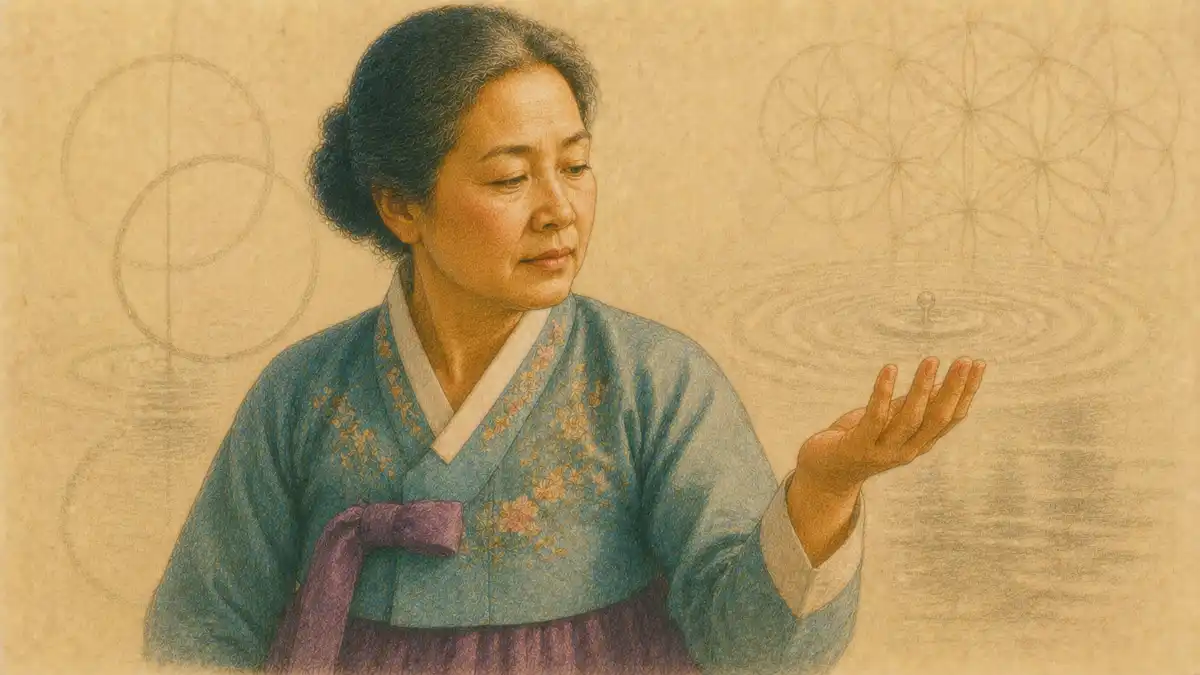
Three readings of the site competed from the first week. The first, held by the Union government and the Bharatiya Janata Party, read Shaheen Bagh as an anti-CAA protest: a partisan mobilisation against one statute, sustained by opposition parties and, in the stronger version of the charge, scripted by them. The second, held by lawyers, civil liberties organisations and much of the opposition, read the winter of 2019 and 2020 as a civil rights defence: citizens asserting Articles 14, 15, 19 and 21 of the Constitution against a law they held discriminatory. The reading defended here is the third. Shaheen Bagh operationalised citizen-renegotiation, in the sense developed in the movements-as-citizen-renegotiation framework: people positioned outside the formal bargaining rooms of the republic used the occupation of one road, the text of the Constitution and the calendar of the state itself to force a renegotiation of the terms on which citizenship was being rewritten, and they did so through five datable architectural moments whose content can be inspected one by one. The companion account of the CAA-NRC contestation of 2019 and 2020 treats the same season as a political crisis of the citizenship regime; the pages here own a narrower object, the movement at one site, its form, its symbols and its documentary residue.
The five moments are these. First, the enactment of the Citizenship (Amendment) Act by the two Houses of Parliament on 9 and 11 December 2019, with presidential assent on 12 December 2019. Second, the police action at Jamia Millia Islamia and Aligarh Muslim University on 15 December 2019, which converted a student protest season into a neighbourhood occupation. Third, the sit-in itself, from the evening of 15 December 2019 to 24 March 2020, held in the main by women of the locality, among them Bilkis Bano, Asma Khatoon and Sarwari. Fourth, the violence that bracketed the site without ever entering it: the masked attack on Jawaharlal Nehru University on 5 January 2020 and the communal violence of north-east Delhi from 23 to 27 February 2020, in which 53 people died. Fifth, the dispersal of 24 March 2020 and the long institutional tail that followed it, reaching the notification of the Citizenship (Amendment) Rules on 11 March 2024. Read in sequence, the five moments show a movement that stated its case in the vocabulary of the Constitution, an administration that answered through procedure, litigation and finally a public health emergency, and a court that closed the argument about the road seven months after the road had emptied.
The second term and the road to December 2019
The Parliament that passed the Citizenship (Amendment) Act had been elected in the general election whose results were declared on 23 May 2019, and the government that carried the bill through both Houses in four December days drew its confidence from that verdict, a sequence set out in the post-2019 election political context. The Bharatiya Janata Party under Narendra Modi won a second consecutive single party majority, larger than the first, and formed its government on 30 May 2019 with Amit Shah, the party president who had managed the campaign, moving into the Union Home Ministry, the office that pilots citizenship legislation.
How many seats did the Bharatiya Janata Party win in the 2019 general election?
The Bharatiya Janata Party won 303 of the 543 elected Lok Sabha seats when counting closed on 23 May 2019, and the National Democratic Alliance it led won 353 seats, on a combined vote share of about 45 per cent. The Indian National Congress won 52 seats.
The citizenship amendment had a prehistory inside that mandate. A Citizenship (Amendment) Bill had first been introduced in the Lok Sabha on 19 July 2016 and referred to a Joint Parliamentary Committee, which reported on 4 January 2019; the Lok Sabha passed that bill on 8 January 2019, and it lapsed when the House dissolved without Rajya Sabha passage. The 2019 bill was therefore a returning text, not an improvisation, and the party’s 2019 election manifesto had promised the enactment in terms, alongside a National Register of Citizens extended across the country. The sequence matters for what followed at Shaheen Bagh because the protesters and the government disagreed about the same document: the Home Ministry presented the Act as the discharge of a stated manifesto commitment ratified by the electorate, and the protesters presented the manifesto commitment itself as the announcement of a redesign of citizenship that the electorate had not been asked to approve item by item.
The earlier bill’s committee stage had already rehearsed the geography of the coming argument. The Joint Parliamentary Committee chaired by the Bharatiya Janata Party member Satyapal Singh toured Assam in May 2018 and received, in Guwahati and Silchar, massed representations against the bill from Assamese organisations who held that it betrayed the Assam Accord, alongside representations in its favour from Bengali Hindu organisations of the Barak Valley. Opposition members of the committee recorded notes of dissent when the report was adopted. The bill thus arrived in December 2019 with two opposed constituencies already organised around it, one in the north-east arguing demography and accord, one in the republic’s heartland preparing to argue equality, and the Shaheen Bagh movement formed where the second argument found its ground.
The second term’s first hundred days had already established the tempo. On 5 August 2019 the government moved the constitutional orders and the reorganisation bill that ended the special status of Jammu and Kashmir and divided the state into two Union Territories, the post-2019 Article 370 architectural moment, carried through Parliament in two days under a security lockdown in the Kashmir Valley. In November 2019 the Supreme Court delivered its Ayodhya judgment. By December 2019 the pattern of the term was legible to supporters and opponents alike: long pending items of the party’s programme were being executed at speed, on the strength of the May verdict, and each execution was defended in Parliament as the verdict’s direct instruction. That pattern forms one strand of the integrated three-tensions framework for the Modi era, and the citizenship bill was its third great test.
Assam supplied the second strand. The final National Register of Citizens for Assam, published on 31 August 2019 under Supreme Court supervision, had excluded about 1.9 million applicants, a large share of them Hindus, and the state unit of the Bharatiya Janata Party had rejected its outcome. The citizenship amendment was presented by the Home Minister in the December debates as the corrective to that register for the religious communities named in the bill: people who had fled religious persecution in Pakistan, Bangladesh and Afghanistan and entered India on or before 31 December 2014 would be deemed not to be illegal migrants and would qualify for citizenship by naturalisation after five years of residence rather than eleven. The protesters at Shaheen Bagh read the same pairing in the opposite direction. Amit Shah had told an election rally at Kolkata on 1 October 2019 that a nationwide National Register of Citizens would follow, and had repeatedly described the order of operations in public speeches as a chronology: first the citizenship amendment, then the register. For the women who later sat on the Kalindi Kunj road, the Act was not a standalone act of refugee relief; it was the first half of a two part mechanism under which, they held, a Muslim citizen unable to produce legacy documents in a future register would stand exposed in a way no other citizen would. Both readings were on the record before the first woman sat down.
Feature one: the enactment of 9 to 12 December 2019
The Citizenship (Amendment) Bill 2019 was introduced in the Lok Sabha by the Union Home Minister, Amit Shah, on 9 December 2019, debated through that day and night, and passed by the House late on 9 December by 311 votes to 80. The Rajya Sabha passed the bill on 11 December 2019 by 125 votes to 105. The President of India, Ram Nath Kovind, gave assent on 12 December 2019, and the text entered the statute book as the Citizenship (Amendment) Act 2019, Act 47 of 2019. The parliamentary record of those three days, the Lok Sabha and Rajya Sabha debates of 9 and 11 December 2019, is the primary document of the first architectural moment, because the opposed cases that the street later inherited were stated there in their strongest parliamentary form.
The Act’s operative content is compact. It amended the Citizenship Act 1955 in three connected ways. A proviso inserted into the definition of illegal migrant in Section 2 exempted persons belonging to six religious communities, Hindu, Sikh, Buddhist, Jain, Parsi and Christian, from three named countries, Pakistan, Bangladesh and Afghanistan, who had entered India on or before 31 December 2014, from being treated as illegal migrants at all. A new Section 6B empowered the grant of certificates of registration or naturalisation to that class, and the Third Schedule’s residence qualification for naturalisation was reduced for the same class from an aggregate of eleven years to five. The Act did not apply to the tribal areas of Assam, Meghalaya, Mizoram and Tripura under the Sixth Schedule, nor to the Inner Line Permit states of Arunachal Pradesh, Nagaland, Mizoram and Manipur. It also added a ground on which an Overseas Citizen of India card could be cancelled for violation of any law notified by the Union government. The architectural question reading on CAA examines that text as a constitutional problem; the movement reading requires the narrower observation that everything the protesters later said on the road was an answer to these four paragraphs.
When did the Citizenship (Amendment) Act come into force?
The Ministry of Home Affairs notified 10 January 2020 as the date the Citizenship (Amendment) Act came into force, the President having assented on 12 December 2019. No application under the Act could be processed until its rules were framed, and the rules arrived only in March 2024.
The government’s case, stated by Amit Shah in the Lok Sabha on 9 December 2019 and repeated by him across the protest winter, rested on three propositions. The three named countries were, in his formulation, states with a declared state religion in which the six named minorities suffered religious persecution, and the amendment addressed that persecution and nothing else. The amendment granted citizenship and took none away; Shah told the House, and repeated at public meetings through January and February 2020, that there was no provision in the Act under which any Indian citizen of any religion could lose citizenship. And the amendment discharged, in his words, the assurance given at Partition by the founders of the republic to the minorities who would find themselves on the wrong side of the new borders, an assurance he attributed to Mahatma Gandhi and to the Congress leadership of 1947. In the same speech Shah cited the falling Hindu share of the populations of Pakistan and Bangladesh across the decades since Partition as the statistical measure of the persecution the bill addressed, and asked the House what answer India owed the people those figures described. Each proposition was aimed at a distinct audience: the first at the constitutional objection, the second at the protesters’ fear, the third at the moral standing of the opposition parties.
The opposition’s case in the same debates was stated with equal completeness. Members of the Indian National Congress, the Trinamool Congress, the Dravida Munnetra Kazhagam, the Communist Party of India (Marxist) and other parties argued that a citizenship law sorting applicants by religion violated Article 14 of the Constitution, which guarantees equality before the law to every person, and broke with the religion neutral character of the Citizenship Act 1955. P. Chidambaram, speaking in the Rajya Sabha on 11 December 2019, asked why the bill named three countries and six religions, and why, if persecution was the criterion, Ahmadiyyas in Pakistan, Rohingya in Myanmar and Tamil Hindus in Sri Lanka stood outside it. Asaduddin Owaisi of the All India Majlis-e-Ittehadul Muslimeen tore a copy of the bill in the Lok Sabha on 9 December 2019 and compared its logic to the Nuremberg Laws, a comparison the treasury benches protested. In the Rajya Sabha the opposition pressed a motion to refer the bill to a select committee of the House, arguing that a measure redrawing the definition of the citizen required the scrutiny a committee exists to give; the motion was put to a division and defeated, and the House proceeded to pass the bill the same evening. The select committee division matters to the movement’s later account of itself, because the women of Shaheen Bagh, asked why they had not left the matter to Parliament, answered from the stage that Parliament had declined its own instruments of delay: the bill had been a committee’s text in its earlier life, and in its decisive passage the committee route was offered and refused in a single sitting. Within three weeks more than a hundred petitions challenging the Act were filed in the Supreme Court; the count passed 140 by late January 2020. The Court, on 22 January 2020, issued notice, declined to stay the Act, and gave the Union government four weeks to reply. No stay was granted at any later hearing during the movement’s life, and the constitutional argument proceeded on paper while the movement proceeded on the road.
The first protests preceded the sit-in. Student and opposition demonstrations began in Assam on the day of the Rajya Sabha passage, where the objection ran on different grounds from Delhi’s: Assamese organisations held that the Act violated the Assam Accord of 1985, which had fixed 24 March 1971 as the cutoff for detection of foreigners irrespective of religion, and the amendment’s 2014 cutoff threatened, in their reading, the linguistic and demographic settlement of the state. Four people died in police firing in Assam during the December protests, and an internet shutdown and curfew followed in Guwahati. In Delhi the protests were centred on the universities. The Jamia Millia Islamia students had been marching against the bill since its introduction; the Aligarh Muslim University students likewise. The north-east’s agitation drew one concession in the same week that Delhi’s drew none: on 9 December 2019, as the bill was being introduced, the Union government announced the extension of the Inner Line Permit system to Manipur, the demand through which Manipur’s organisations had sought insulation from the amendment, and Meghalaya’s assembly moved within days to adopt a resolution seeking the same cover. The exemptions map of the Act, the Sixth Schedule areas and the permit states, was drawn in those December days under street pressure, and the movement’s pamphlets later cited it as evidence that the statute’s geography had been negotiable all along, for those positioned to negotiate. It was the collision of those marches with the Delhi Police on 15 December 2019 that produced the second architectural moment and, by the same evening, the third.
The register machinery moved while the sit-in sat. On 24 December 2019 the Union Cabinet approved the updation of the National Population Register alongside the house listing phase of the 2021 Census, with a sanctioned outlay the Cabinet’s release put at 3,941 crore rupees for the register exercise. The approval was the protesters’ documentary vindication of the chronology they had attributed to the Home Minister: the register of residents stood approved within a fortnight of the Act, and the site’s pamphlets treated the Cabinet decision as the second half of the mechanism arriving on schedule. The government answered the linkage directly. Prime Minister Narendra Modi, addressing a rally at Delhi’s Ramlila Maidan on 22 December 2019, said that his government had held no discussion on a nationwide National Register of Citizens since taking office in 2014, that no Indian Muslim had anything to fear from the amendment, and that the protesters were being misled by an opposition that had lost the election. The two statements, the Home Minister’s autumn chronology and the Prime Minister’s December denial of any register discussion, stand in the record side by side, and the movement’s literature quoted the first against the second for the rest of the winter.
Feature two: 15 December 2019 at Jamia and Aligarh
The collision of 15 December had a rehearsal two days earlier. On Friday 13 December 2019, students of Jamia Millia Islamia marched from the university toward Parliament House against the bill the Rajya Sabha had passed two days before, and were stopped by police barricades on the road outside the campus; the confrontation that followed, of baton charges, tear gas and stone throwing in the streets around the university and the Holy Family Hospital, injured students and police personnel and was filmed and circulated through the weekend. At Aligarh the same day, students marched inside their campus and were kept from the district administration’s offices. The universities thus entered the weekend of 14 and 15 December already mobilised, their students already in possession of a grievance with a date on it, and the larger march called for Sunday, in which residents of Jamia Nagar joined the students in numbers, walked into a city whose police had spent two days preparing for it.
The events of Sunday 15 December 2019 are documented by three bodies of material that do not fully agree: the Delhi Police’s statements and first information reports, the Jamia Millia Islamia administration’s statements, and the video record, part of which entered the public domain only on 15 February 2020. The sequence, at the level the documents support, is as follows. A protest march organised by Jamia students moved from the university toward New Friends Colony and the Mathura Road corridor in the afternoon. On the march’s edges, and in the adjoining lanes of Sarai Jullena and New Friends Colony, buses of the Delhi Transport Corporation were burned and vehicles damaged; the police attributed the arson to participants in and around the march, the students’ organisations attributed it to outsiders and agents provocateurs, and the attribution remains contested in the record. Police used tear gas and baton charges along the route. In the evening, police personnel entered the Jamia campus without, the university administration stated, the permission its vice chancellor Najma Akhtar said was required, and moved through the Dr Zakir Husain Library and its reading rooms, the mosque and the hostels, beating students with batons as they went.
The injury record of the evening was assembled by the hospitals. Students were treated at the Holy Family Hospital and the All India Institute of Medical Sciences; press counts of the injured across the day’s violence in the Jamia Nagar area ran above one hundred. A law student, Mohammad Minhazuddin, lost the sight of one eye, an injury his statements attributed to a baton blow inside the library, and his case became the standard citation in the subsequent National Human Rights Commission proceedings on the evening. The Delhi Police’s stated case, given by its officers on 15 and 16 December 2019 and maintained in its affidavits, was that personnel entered the campus in pursuit of people who had thrown stones and burned buses from within its perimeter, that the action was a response to violence and not to protest, and that the students found in the library were detained and released the same night. The university’s proctor, Waseem Ahmad Khan, issued a statement that the police had entered without permission. Najma Akhtar, in a video message on 16 December 2019, said the university would pursue a judicial inquiry and could not be compensated for the damage to its students. The night that followed fixed the season’s pattern of crowd and institution. Students detained from the campus had been taken to the Kalkaji and New Friends Colony police stations, and through the night of 15 and 16 December a crowd of students and residents stood outside the Delhi Police headquarters at ITO demanding their release; the detained students were released in the early hours. On 16 December students marched at India Gate, where the Congress general secretary Priyanka Gandhi Vadra sat in a two hour protest, and the Supreme Court, approached on the Jamia and Aligarh actions, observed that the violence must stop before it would hear the matter, a sequencing the students’ counsel recorded as the court’s first word on the season. The two accounts differ on authority and on proportion, and both are preserved in the record in their holders’ words. The National Human Rights Commission took cognisance of the evening on the complaints filed before it, recorded statements at the university in January 2020, and kept its inquiry open through the year, a proceeding that preserved the students’ testimony in an official file while the argument continued outside it.
The same night, at Aligarh Muslim University, students who had gathered at the Bab-e-Syed gate in solidarity with Jamia clashed with the Uttar Pradesh Police. The police entered the campus after stone throwing they attributed to the gathering; press reports put the injured students at about sixty, treated at the Jawaharlal Nehru Medical College hospital. The Aligarh administration closed the university, advanced the winter vacation and directed students to vacate the hostels. Students at campuses across the country held solidarity marches within forty eight hours, and the Indian Institutes of Technology, the Indian Institute of Science and dozens of universities recorded protests in the following week. The Jamia action had one consequence the marches did not: it moved the protest’s centre of gravity off the campuses and into a residential neighbourhood, because the first people to occupy the Kalindi Kunj road that evening were not students at all.
Two months later the evening acquired its second documentary layer. On 15 February 2020 the Jamia Coordination Committee, a body of Jamia students and alumni formed after 15 December, released closed circuit footage, timestamped at about six in the evening of 15 December 2019, showing uniformed personnel entering the Old Reading Hall of the Dr Zakir Husain Library and striking seated students with batons. The university’s public relations officer, Ahmad Azeem, clarified on 16 February 2020 that the institution had not released the video. The Delhi Police said the footage had come to its notice and would be examined within its ongoing inquiry. The release did not resolve the contested points of the evening; it fixed one of them, the baton charge inside the reading hall, in a form that could no longer be argued away, and it arrived while the women of Shaheen Bagh were in the ninth week of their sit-in three kilometres from the library’s door.
Between the evening itself and the footage’s release, the protest season had already shown its national scale once. On 19 December 2019, the anniversary of the executions of Ashfaqullah Khan and Ram Prasad Bismil, protest marches were called across the country. In Delhi the police imposed prohibitory orders over the Red Fort area and detained hundreds of marchers who assembled regardless, among them the Swaraj India leader Yogendra Yadav; in Bengaluru the historian Ramachandra Guha was detained in the middle of a press interview at the Town Hall; prohibitory orders and internet suspensions ran through districts of Uttar Pradesh and Karnataka. On 20 December 2019 the Bhim Army leader Chandrashekhar Azad stood on the steps of Delhi’s Jama Masjid holding a copy of the Constitution and read the Preamble to the crowd before the police took him into custody the following day. The date the movements chose for the national day, the hanging day of a Hindu and a Muslim revolutionary hanged together in 1927, was itself a piece of the repertoire the Shaheen Bagh stage used daily: an inheritance claimed jointly, against a law the movements held to sort the inheritance by faith.
Feature three: the site, its builders and its hundred and one days
Shaheen Bagh is a largely Muslim neighbourhood of Okhla in south-east Delhi, between the Jamia Millia Islamia campus and the Yamuna floodplain, inside the Okhla assembly constituency. The Kalindi Kunj bridge at its edge crosses the river into Noida in Uttar Pradesh. Its lanes give onto the road that the sit-in occupied: the stretch of the Kalindi Kunj corridor between the locality and the bridge. The occupation began, on the consistent account of the participants interviewed across the winter, when women of the locality who had watched the Jamia footage through the afternoon walked to the road in the evening of 15 December 2019, sat down on the carriageway, and refused the police request to disperse. A tent followed, then a stage, then the full architecture of a settlement built on a road.
Which road did the Shaheen Bagh sit-in occupy?
The sit-in occupied Road 13A, the Shaheen Bagh stretch of the Kalindi Kunj corridor, the shortest surface link between south Delhi and Noida across the Yamuna. Its closure diverted the traffic of three cities onto the DND Flyway and the Okhla barrage road for the sit-in’s whole life.
Where is Shaheen Bagh?
Shaheen Bagh is a largely Muslim neighbourhood of Okhla in south-east Delhi, between the Jamia Millia Islamia campus and the Yamuna floodplain, inside the Okhla assembly constituency. The Kalindi Kunj bridge at its edge crosses the river into Noida in Uttar Pradesh.
The settlement’s population of organisers was, by design, the neighbourhood itself. The women who held the front rows in shifts across the twenty four hours became the site’s public face, and three elderly women among them acquired the collective name by which the press identified the movement’s authorship: the dadis, the grandmothers, of Shaheen Bagh. Bilkis Bano, aged 82, who told the Indian Express in January 2020 that the women were sitting not for themselves but for their children, and who sat, in the description her TIME magazine citation later fixed, with prayer beads in one hand and the national flag in the other. Asma Khatoon, aged 90. Sarwari, aged 75, who asked at the Republic Day gathering why no representative of the government had come to the site to explain the Act to the women it governed. Around them the site organised the labour of an occupation: rosters for the night hours, when the crowd thinned to its most exposed; a stage programme of speeches, recitations and songs that ran through the day; a kitchen and a langar sustained by donation, at which Sikh volunteers from Delhi’s gurdwaras served for stretches of the winter; a medical camp staffed by volunteer doctors; a creche corner where children were minded within sight of the stage; and a roster of lawyers and students who briefed the site each evening on the day’s court hearings and press coverage.
The physical installations were the argument in built form, and the movement’s own pamphlets and the press record describe them consistently. At the foot of the flyover stood a large model of the map of India, lettered with the movement’s slogans. Artists installed a model of India Gate, and a cage installation that protesters explained as the detention camp they feared a nationwide register would fill. The walls of the corridor accumulated murals and portraits: B. R. Ambedkar above the slogan Save Constitution, Save India, Bhagat Singh, Ashfaqullah Khan and Ram Prasad Bismil paired as an inheritance of composite patriotism, Mahatma Gandhi, Maulana Abul Kalam Azad. A bus shelter became, from the middle of January 2020, the Fatima Sheikh and Savitribai Phule Library, begun by a group of young volunteers led by the student Mohammed Asif on the fourth anniversary of the death of Rohith Vemula, stocked by donation with books in English, Hindi and Urdu, among them works of Ambedkar, Bhagat Singh’s jail diary, Ismat Chughtai and Premchand, its walls carrying posters of Babytai Kamble, Qurratulain Hyder and Rosa Parks. A series of open air night lectures under the name Shaheen ki Taleem brought university teachers to the site to lecture on citizenship. None of this was decoration by the movement’s own account. The pamphlets the volunteers distributed described the installations as the movement’s syllabus: the site was to be legible, to a visitor arriving from the metro station at Jasola, as a claim about which inheritance the Constitution represented and who held the standing to invoke it.
The pamphlet literature is the movement’s least exhausted primary record, and the brief for any architectural reading of the site must reckon with it. Volunteers printed and circulated leaflets in Urdu, Hindi and English that set out, in question and answer form, the text of the amendment, the mechanics of a register of citizens and of the population register, and the movement’s stated demand in a single sentence: the Act withdrawn, the register exercises abandoned, and no Indian asked to prove ancestry to remain a citizen. Legal volunteers ran evening sessions from the stage working through the same material clause by clause. Surviving sets of the leaflets sit in the collections of the journalists who covered the site and in private hands, some of them scanned into presentation files that pass between researchers and can be opened in a PPT viewer without the software that produced them, a preservation accident that suits the material: the movement’s own explanations of itself survive in exactly the provisional, copyable form in which they were handed out on the road. The site’s discipline matched the literature. Party flags were barred from the stage, politicians of every party were received as listeners rather than patrons, and the roster of speakers was kept, by the organisers’ stated rule, in the hands of the locality, so that the movement’s textual voice and its public voice could not be separated by an opponent’s editing.
The repertoire had a liturgical breadth the installations only partly show. Jumu’ah prayers were held at the site on Fridays. On 12 January 2020 the site hosted an interfaith gathering at which readings were offered from the Quran, the Gita, the Guru Granth Sahib and the Bible in sequence, an event the movement’s chroniclers filed as the form’s clearest self statement. On 8 March 2020 International Women’s Day was observed at the site with a full day programme, the elderly women of the front rows honoured by delegations from the copy sites. Pocket editions of the Constitution sold at the site’s edges and across Delhi that winter in quantities booksellers reported as unprecedented for a legal text, and the enlarged Preamble board at the stage’s side was photographed more often than any banner: We the People of India, carried on a placard by the people the placard named.
The form had a discipline that visitors and hostile observers recorded alike. The sit-in remained nonviolent on the site for its whole duration, through provocations the record documents: on 1 February 2020 a man named Kapil Gujjar fired two shots in the air near the police barricade at the site’s edge, shouting that in this country only Hindus would have their way, and was arrested on the spot; nobody was injured, and the women did not leave. On 22 March 2020, the day of the Janata Curfew, an inflammable substance was thrown toward the site in the early morning; the five women then holding the site were not injured. The site’s internal debates were also conducted in the open and are part of its form. When, on 26 January 2020, the question of the slogan Bharat Mata Ki Jai divided participants, the disagreement was argued from the stage rather than settled by expulsion, and the chant was used by those who wished to use it. A delegation’s attempted march to the Home Minister’s residence on 16 February 2020, after Amit Shah said at a public summit on 13 February 2020 that anyone with doubts about the Act could seek an appointment and be met within three days, was turned back by police for want of permission, and the episode was absorbed into the site’s own narrative of unanswered address: the movement spoke continuously, in the direction of the state, and the state, in the movement’s stated view, did not once reply in person.
The winter also wrote its hardest entry into the site’s record. A four month old child, Mohammad Jahaan, whose mother Nazia had been bringing him to the site as she attended it daily, died on 30 January 2020; the death certificate recorded a cardiac arrest, and the family and the press accounts attributed the death to the cold of the nights the infant had spent at the protest in his mother’s arms. The episode was argued over in the open. Critics of the movement, including voices in the governing party’s press, cited the death as proof that the sit-in’s organisers were reckless with the lives in their charge. Nazia answered in the public record that she would return to the site, that the protest concerned her children’s citizenship and not her comfort, and she did return, and was received by the front rows as a returning member of the rota. The movement entered the death in its own martyrology; its opponents entered it in the hardship ledger. Both entries are part of the record of what the occupation cost and of who was understood to be paying.
The symbols: a constitution read aloud on a road
The movement’s symbolic repertoire was systematic, and its system is the strongest internal evidence for the reading defended here. The Preamble to the Constitution was read aloud at the site daily, by rotation, in Hindi, Urdu and English, with enlarged copies of the Constitution held on the stage and carried in processions. The 71st Republic Day, 26 January 2020, was the repertoire’s fullest performance: at midnight the crowd read the Preamble together, and in the morning the national flag was hoisted at the site by Bilkis Bano, Asma Khatoon and Sarwari, joined by Radhika Vemula, the mother of Rohith Vemula, and Saira Bano, the mother of Junaid Khan, who had been lynched on a train in 2017, after which the assembly sang the national anthem and chanted, in the press reports’ transcription, that the defence of the Constitution was the defence of the country. The same day, seven million people in Kerala formed a human chain of about 620 kilometres under the Left Democratic Front government and read the Preamble at its links, a synchronisation the Shaheen Bagh stage noted and claimed as kinship. Portraits of Gandhi and Ambedkar flanked the stage throughout, and the scholarly description that Rahul Rao gave the phenomenon in 2020, in his essay on nationalisms by, against and beyond the Indian state, named it popular constitutionalism: the symbols of the state appropriated, by the citizens the state’s law had sorted, as the warrant for resisting the law.
Why did the women at Shaheen Bagh sing the national anthem at a protest against a law passed by the Union government?
Participants stated the reason consistently across the winter: the flag, the anthem and the Preamble were performed at the site to establish that the protest defended the Constitution against a statute held unfaithful to it, and that the women on the road were the republic’s loyal party.
The poem Hum Dekhenge, written by Faiz Ahmad Faiz in 1979 against the Zia-ul-Haq regime in Pakistan and sung in Iqbal Bano’s recorded rendition at Lahore in 1986, became the protest season’s anthem across campuses, and its place at Shaheen Bagh shows the repertoire’s working parts. Students sang it at gatherings through December 2019; a complaint by a faculty member at the Indian Institute of Technology Kanpur, after a campus march on 17 December 2019 at which the poem was recited, led the institute to constitute a committee in January 2020 to examine whether the recitation was anti-Hindu, and the committee’s formation was reported nationally. The institute’s deputy director, Manindra Agrawal, stated in January 2020 that the committee found the poem’s recitation a matter of context and that no action against the students was warranted on that ground, while the debate the complaint opened, about whether a poem against a Pakistani dictatorship could be read as a text about India at all, ran for weeks in print. The movement’s answer was performative rather than textual: the poem stayed in the repertoire, alongside the anthem, the Preamble and the devotional songs of more than one faith sung at the interfaith gatherings the site hosted. Ziya Us Salam, whose 2020 book Shaheen Bagh: From a Protest to a Movement is the movement’s fullest internal chronicle, records the repertoire as the movement’s deliberate self description: a protest that would be impossible to photograph as anything but an assembly of citizens in possession of the republic’s own texts. The tricolour’s material history at the site tells the same story at street level. Flags were distributed by volunteers, pinned to shawls and headscarves, painted on children’s faces at the Republic Day gathering, carried by the wheelchair users and the school parties who visited on weekends, and sold by the vendors who worked the site’s edges alongside the booksellers with their pocket Constitutions and the tea sellers with their carts. A protest that had to be photographed against a carpet of the national flag was a protest that had solved, in advance, the framing problem its opponents most wished to set for it, and the solution was a design decision, renewed daily, and not an accident of the crowd’s wardrobe.
The replication: a form that travelled
The form travelled because it was reproducible by its intended reproducers: a group of women, a public place held continuously, the Constitution as text, no central committee to license the copy. Kolkata’s Park Circus Maidan filled from 7 January 2020, when women of that neighbourhood began a sit-in that ran for months and drew, in the Bengal press’s phrase, a Shaheen Bagh of the east. In Lucknow, women occupied the ground beneath the Ghanta Ghar, the Husainabad clock tower, from 17 January 2020. Patna’s Sabzibagh, Gaya’s Shanti Bagh, Deoband’s Eidgah ground, Prayagraj’s Mansoor Ali Park, Bengaluru’s Bilal Bagh on Tannery Road and Hyderabad’s Tolichowki and Dharna Chowk gatherings each reproduced the grammar with local variations. Mumbai’s version assembled on Morland Road at Nagpada from the night of 26 January 2020 and took the name Mumbai Bagh. Inside Delhi the form seeded Hauz Rani, Turkman Gate, Seelampur and, with a consequence nobody at Shaheen Bagh intended, Jaffrabad. Two copies repay a closer look because they show the form adapting to ground unlike Okhla’s. At Prayagraj, women occupied Mansoor Ali Park in the Roshan Bagh locality from 12 January 2020, in a city whose administration answered with notices and a police case against the organisers, and the sit-in held its ground for weeks on the strength of the same front row arrangement. At Deoband, the seminary town of western Uttar Pradesh, women began a sit-in at the Eidgah ground in the last week of January 2020 and sustained it into March, in a locality where public assembly by women carried a social cost the Delhi original had not faced in the same degree; the Deoband sit-in ended on the participants’ own announcement as the pandemic orders approached, its organisers recording that the form could be closed by its holders without being broken. The copies were not franchises. Each was a local renegotiation conducted in the borrowed grammar, and the grammar’s portability across such different ground is the replication’s evidentiary weight. By the count of the press at the season’s height, more than a hundred sit-ins in the Shaheen Bagh form were running in Indian cities and towns, most of them held by women, many by women protesting in public for the first time in their lives.
The copies matter analytically because they tested the reading the site offered of itself. A mobilisation scripted by a party, as the government’s account held, would have reproduced its sponsor’s apparatus; what reproduced instead was the repertoire, the Preamble readings, the flags, the grandmothers placed in the front row, the libraries that sprang up at Park Circus and Lucknow as they had at the original site. Suchitra Vijayan, travelling the country’s citizenship borderlands for the account published in 2021 as Midnight’s Borders, recorded the copies as evidence that the form had detached from its origin and become a general grammar of claim making available to any group of citizens who could hold a piece of ground and read a text aloud upon it. The counterevidence belongs in the same ledger: the copies were not coordinated, they varied in discipline and in demands, several foregrounded the register and the population register over the Act itself, and none acquired the original’s density of installation and programme. What travelled was a form, not an organisation, and the distinction is the citizen-renegotiation reading’s point: the renegotiation was being conducted independently at each site, on the same texts, without a negotiator in chief. The form travelled abroad as well, in the luggage of the diaspora: solidarity gatherings in support of the sit-in and against the Act were recorded through January 2020 in London, in American cities including New York and Chicago, and in Toronto and Melbourne, organised in large part by Indian students and professionals, reading the same Preamble on other continents’ pavements. The exiles’ copies reversed the usual direction of the remittance economy: the political form was manufactured in an Okhla lane and exported, duty free, to the capitals whose governments the Union government was simultaneously courting.
The election interlude: Delhi votes with the site in view
The Delhi assembly election of 8 February 2020 made the sit-in a campaign object, and the campaign is the documentary record of the anti-CAA protest framing in its electoral form. The Bharatiya Janata Party, seeking the Delhi government it had not held for two decades, placed Shaheen Bagh at the centre of its appeal. Union Home Minister Amit Shah, campaigning at Babarpur on 26 January 2020, told voters to press the button on the voting machine on 8 February with such anger that its current would be felt at Shaheen Bagh, and said a vote for his party would prevent thousands of incidents like Shaheen Bagh. Prime Minister Narendra Modi, at a rally at Karkardooma on 3 February 2020, described the protests at Shaheen Bagh, Jamia and Seelampur as not a coincidence but an experiment, a prayog, behind which stood a political design to break the country’s harmony. Two campaigners were sanctioned by the Election Commission of India in the same week: the Union minister Anurag Thakur, who at a rally at Rithala on 27 January 2020 led a chant calling for traitors to the country to be shot, was barred from campaigning for seventy two hours and removed from the party’s list of star campaigners on 30 January, and the Member of Parliament Parvesh Verma, who had said at a public meeting that the Shaheen Bagh protesters would enter homes and rape and kill, was barred for ninety six hours. The governing party’s strongest formulation of its case was Shah’s: the sit-in was an opposition production obstructing a public road in the service of a falsehood about the Act, and the electorate’s answer at the machine would close it.
The Aam Aadmi Party, defending its Delhi government, kept a measured distance that the record makes precise. Arvind Kejriwal stated that protest was a constitutional right, that he had no objection to the sit-in, and that the road’s opening was a matter for the Union Home Ministry, under which the Delhi Police serves; he did not visit the site. He added, in the campaign’s closing week, that the barricades on the roads around the occupied stretch were the Delhi Police’s own and that the Centre could end the closure of those roads when it chose, a distinction between the sit-in’s road and the police’s roads that the court’s interlocutor would carry into an affidavit three weeks later. The party fought the election on its schools, clinics and subsidies. On 11 February 2020 the results gave the Aam Aadmi Party 62 of the seventy seats, the Bharatiya Janata Party eight, on vote shares of about 53.6 per cent and 38.5 per cent respectively, and the Okhla seat that contains Shaheen Bagh was retained by the Aam Aadmi Party’s Amanatullah Khan by a wide margin. The protesters marked the day with a silent observance at the site. The verdict adjudicated nothing about the Act; it did establish that the campaign conducted against the sit-in, in the city where the sit-in stood, had not persuaded the city’s electorate, and the site’s occupants read the result aloud from the stage as a further document in their file.
The hardship case and the litigation of the road
Against the movement’s account stood a case that was not the government’s rhetoric but a documented grievance with named bearers: the commuters of Noida, Greater Noida and Faridabad, the traders of Sarita Vihar, Jasola and the Kalindi Kunj commercial strip, and the residents of the colonies the diverted traffic flooded. The closure of Road 13A and the Okhla underpass from 15 December 2019 added, on the traffic police’s own diversions, the DND Flyway and the Okhla barrage route to every cross-river journey, and journeys that had taken twenty minutes took two hours at the peak. Residents’ welfare associations of Sarita Vihar filed representations; a school association computed the diverted routes of its buses; ambulance movement through the blocked corridor ran, by the arrangement the site itself publicised, through a checked passage the volunteers kept open after inspection, a fact later recorded in the affidavit of the court’s own interlocutor. The hardship case at its strongest did not deny the right to protest. It held that a right exercised by occupying an arterial road for an indefinite period transferred its cost, hour by hour, to third parties who were not its addressees, and that the transfer, and not the protest, was the wrong.
The legal career of that case ran through three forums. The advocate Amit Sahni petitioned the Delhi High Court, which on 14 January 2020 directed the Delhi Police to consider the representations against the closure and to take a decision keeping in view the law and order situation and the interest of the public, without ordering clearance. Sahni carried the matter to the Supreme Court. At the first hearing, on 10 February 2020, the bench of Justices Sanjay Kishan Kaul and K. M. Joseph issued notice on the petitions and observed, as the day’s reports recorded it, that people could not come to the street and block the road indefinitely, while declining to order any clearance itself; the matter was posted for the following week with the observation that the court would prefer the parties to find the way. On 17 February 2020 the bench heard the petitions with the connected interventions. The bench’s order of that day framed the issue in terms that conceded the movement’s premise and questioned its geography: the right to protest against a law was fundamental, the judges observed, but the blocking of public roads was a matter of concern requiring a balancing factor, and demonstrations had to find a mode that did not stop the city. Rather than direct eviction, the court appointed two interlocutors, the senior advocate Sanjay Hegde and the advocate Sadhana Ramachandran, assisted by Wajahat Habibullah, the former Chief Information Commissioner who had himself intervened in support of the protesters, and directed them to persuade the site to move to an alternative location where no public place would stand blocked.
The mediation of 19 to 23 February 2020 is among the best documented passages of the movement’s life, because both sides described it on the record. The interlocutors came to the site on 19 February, told the assembly, in Sadhana Ramachandran’s words as reported that day, that the Supreme Court had upheld their right to protest and that other citizens held rights too, and asked to hear the grievance in full before speaking of the road. They returned on successive days, heard the women’s stated position, which did not move: the sit-in would end when the Act was withdrawn or the government came to the site to talk, and the road would open by the same act that ended the protest. Hegde and Ramachandran told the press the talks would continue and filed their report to the court in a sealed cover. Habibullah’s affidavit, filed on 23 February 2020, redistributed part of the hardship case’s weight: he recorded that the protest itself occupied one stretch, that the Delhi Police had barricaded five adjoining points including the Okhla underpass and the approach roads, and that removing the police barricades on the adjoining roads would relieve much of the congestion the petitions described. The hearing listed for 24 February 2020 did not take place; north-east Delhi was burning by that morning, and the litigation paused with the city.
The judgment arrived after the site was gone. On 7 October 2020 a three judge bench of the Supreme Court, Justices Sanjay Kishan Kaul, Aniruddha Bose and Krishna Murari, delivered judgment in Amit Sahni versus Commissioner of Police, holding, in the judgment’s operative sentences, that public ways and public spaces cannot be occupied in such a manner and that too indefinitely, that democracy and dissent go hand in hand but demonstrations expressing dissent have to be in designated places alone, and that the administration must keep public spaces free of obstruction and cannot hide behind the courts in doing so, with the observation that the Delhi Police ought itself to have acted to clear the blockage. The bench declined to make the judgment an instrument against the concluded protest; its direction ran forward, to the administration of future occupations. A review petition by twelve participants, Kaniz Fatima and others, was dismissed on 9 February 2021 with the bench’s restatement that the right to protest cannot be anytime and everywhere, and that prolonged dissent cannot continue as an occupation of public place affecting the rights of others. Legal commentary on the judgment divided on a precedent the bench had not used. Critics of the judgment, writing in the law reviews and the press through the winter of 2020 and 2021, noted that Himat Lal K. Shah versus Commissioner of Police, Ahmedabad, decided in 1973, had described public streets as the natural places for the expression of opinion, and argued that a designated places doctrine sits uneasily on that foundation. Defenders of the judgment answered that Himat Lal concerned processions and permissions, not a hundred day occupation of an arterial road, and that a right of passage for the uninvolved is also a constitutional interest. The argument remains open in the literature; the holding, until a larger bench revisits it, is the law the next occupation will meet. The litigation thus closed the movement’s legal account on the terms the hardship case had proposed: the protest’s right was affirmed in the abstract in February, and its chosen form was disallowed in October, after the form had already ended.
Feature four: the attack at JNU and the February violence
The fourth architectural moment comprises two episodes of violence, neither of which occurred at the Shaheen Bagh site, and the distinction is load bearing for everything argued here. The movement at the site recorded no act of violence by its participants across its 101 days. The violence of the season attached itself to the movement’s penumbra, first at a university and then in the districts on the other side of the Yamuna’s north-east bank, and each episode entered the movement’s history as a charge and a countercharge about what the season’s politics had licensed.
On the evening of 5 January 2020, a masked group armed with sticks, rods and hammers moved through the Jawaharlal Nehru University campus for about two hours, entering hostels including Sabarmati, Periyar and Mahi Mandavi, and beating students and teachers, while a teachers’ association meeting on the preceding days’ violence was under way. At least twenty eight people were treated for injuries at the All India Institute of Medical Sciences and Safdarjung Hospital, among them the president of the JNU Students’ Union, Aishe Ghosh, photographed with blood running from a head wound, and the teacher Sucharita Sen. The students’ union attributed the attack to members of the Akhil Bharatiya Vidyarthi Parishad, the student organisation affiliated to the Rashtriya Swayamsevak Sangh, some of whom it named from the video record; the Akhil Bharatiya Vidyarthi Parishad attributed the evening’s violence to the Left student organisations and stated that twenty five of its own members had been injured, eleven of them missing at the hour of its statement. The JNU administration’s registrar, Pramod Kumar, described masked miscreants damaging property and attacking people and said the police had been called; the Delhi Police conducted a flag march after receiving the administration’s written request. Union ministers S. Jaishankar and Nirmala Sitharaman, both alumni, condemned the violence the same night. No arrest was made that night, and the police investigation that followed, criticised in the press for its pace, identified suspects from the footage over the following weeks without producing, during the movement’s life, a charge sheet that settled the attribution. Its most contested step came on 10 January 2020, when the Delhi Police released photographs drawn from the campus footage and named nine people as suspects in the violence of the preceding days at the university, among them Aishe Ghosh herself, in connection with the clashes of 3 January 2020 over the semester registration process and the disabling of the university’s server room. The students’ union rejected the identification as a reversal of victim and accused, pointing out that the woman the whole country had seen bleeding on 5 January stood named for the violence of 3 January on the police’s reading of the same week’s record; the Akhil Bharatiya Vidyarthi Parishad welcomed the naming as confirmation of its account. The Ministry of Education sought a report from the university, the JNU Teachers’ Association demanded an independent inquiry and the removal of the vice chancellor, Mamidala Jagadesh Kumar, as the condition of a fair one, and the campus remained under the argument for the rest of the winter. The episode’s file therefore closes where the brief for this article found it: the masked entry and the beatings are documented on video, the injuries are documented in hospital records, and the identity of the masked men, the fact on which every political use of the episode depends, stands unattributed in any concluded proceeding. The seed question’s phrase for the episode, its architectural moment, is exact: the attack demonstrated to the movement’s constituency that the contest had escaped the arenas of text and road, and solidarity gatherings in Mumbai, Kolkata, Hyderabad, Pune and Aligarh that night treated it as a fact about the season rather than about one campus.
The season’s violence reached for the original site once more before February. On 30 January 2020, the anniversary of Mahatma Gandhi’s assassination, a young man walked toward a protest march of Jamia students on the road outside the university, produced a pistol in view of the police posted there, and fired, wounding the student Shadab Farooq in the arm before the police took him down and into custody; the shooting was broadcast as it happened. The government condemned the shooting and the opposition cited the campaign season’s rhetoric as its author; the accused’s stated slogans at the scene were recorded by every channel present. The site at Shaheen Bagh, whose women included people who had marched that day, held its stage programme that evening under a deployment doubled for the night.
The February violence began at a copy site. On 22 February 2020 women began a sit-in beneath the Jaffrabad metro station in north-east Delhi, blocking a stretch of the Seelampur to Maujpur road, in declared imitation of Shaheen Bagh. On 23 February 2020 the Bharatiya Janata Party leader Kapil Mishra addressed a gathering at Maujpur in support of the Act, in the presence of a deputy commissioner of police, and said the police should clear the Jaffrabad and Chand Bagh roads within three days, after which, when the President of the United States had left, his supporters would not listen even to the police. Clashes between supporters and opponents of the Act followed that afternoon at Jaffrabad and Maujpur, and from 23 to 27 February 2020 north-east Delhi, in Mustafabad, Shiv Vihar, Chand Bagh, Karawal Nagar, Gokalpuri, Bhajanpura and Jaffrabad itself, underwent the worst communal violence in the capital since 1984. The recorded toll stands at 53 dead, of whom about two thirds were Muslim and the remainder Hindu, among them the police head constable Ratan Lal and the Intelligence Bureau staffer Ankit Sharma, and the injured numbered in the several hundreds. The Jaffrabad sit-in beneath the metro station, whose clearance the Maujpur speech had demanded within three days, was removed by the police during the violence, on 25 February 2020. Homes, shops and places of worship were burned, four mosques among them, and thousands of residents, overwhelmingly Muslim, left the districts for camps and relatives’ homes. The violence ran through the state visit of the President of the United States, Donald Trump, who was in Delhi on 24 and 25 February 2020 after the Ahmedabad stadium event that opened his visit, the overseas Indian constituency’s place in that choreography being the subject of the diaspora-as-foreign-policy-and-domestic-political-constituency framework. The visit was itself a set piece in the foreign-policy-as-domestic-politics framework: a state occasion choreographed for two electorates at once, proceeding along the capital’s ceremonial axis while the north-east districts burned inside the same municipal boundary.
Responsibility for February remains in the contested column of the record, and the contest is itself documented. The Delhi Police’s stated case, built through its special investigation team and the conspiracy charge sheet filed later in 2020, held that the violence was the product of a planned conspiracy by organisers of the anti-CAA protests to defame the government during the American president’s visit, and it prosecuted that case under the Unlawful Activities (Prevention) Act against student activists and organisers, a case the accused and their counsel denied in full, characterising the protest record as public and peaceful. The Delhi Minorities Commission’s fact finding committee, chaired by the former judge Zafar-ul-Islam Khan, reported in July 2020 that the violence was planned and targeted against the Muslim residents of the districts, and recorded complaints of police partiality and participation; the Union Home Ministry rejected imputations against the police, and Amit Shah told the Lok Sabha on 11 March 2020 that the police had acted impartially and that the violence was, in his reading, spontaneous in its spread after a planned build up of tension by unnamed elements. Kapil Mishra denied wrongdoing and was not charged in the conspiracy case. The movement at Shaheen Bagh, ten kilometres south, sat through those five days behind its barricades under heavy police deployment, suspended its stage programme, and sent its volunteers to the relief work in the burnt districts when the violence ebbed. The site’s own record of nonviolence was by then its central asset, and its custodians spent it carefully.
The February days also produced the season’s most remarkable judicial document, and it belongs in the movement’s file because it shows a court acting inside the violence rather than after it. On the night of 25 and 26 February 2020, with ambulances unable to reach the Al-Hind Hospital in Mustafabad through the blocked and burning lanes, a bench of the Delhi High Court led by Justice S. Muralidhar convened at the judge’s residence at about half past midnight on the application of the lawyer Suroor Mander, heard the Delhi Police’s counsel by telephone, and directed the police to provide safe passage for the ambulances and the wounded; the order was complied with before morning. The same bench, sitting later on 26 February, played the video of the Maujpur speech in open court and directed the police to decide on the registration of cases for hate speech, observing that the court did not want another 1984 in the city. Justice Muralidhar’s transfer to the Punjab and Haryana High Court, recommended by the Supreme Court collegium on 12 February 2020, was notified by the Union government on the night of 26 February; the government stated the transfer was routine and pre-dated the hearings, the Bar and the opposition recorded their reading of the timing, and the judge took charge at Chandigarh in March with a farewell address that quoted the Constitution. The Delhi government opened relief camps for the displaced, the largest at the Eidgah at Mustafabad, which sheltered about a thousand people at its peak on the registers the camp administrators kept.
Feature five: the dispersal of 24 March 2020 and the long tail
The movement’s last month was a negotiation with a virus. Through March 2020 the site thinned under the pressure of the approaching pandemic and of internal argument, documented on the record: one section of the participants held that a gathering of elderly women was the worst possible formation for an epidemic and should disperse on the movement’s own decision; another held that dispersal without the Act’s withdrawal would convert a hundred days into a defeat, and that the state that had not spoken for three months should not be handed the ending. On 22 March 2020, the day of the Janata Curfew called by the Prime Minister, five women held the site through the curfew hours while the others withdrew to their homes, leaving their footwear in their places on the mats as the recorded symbol that the withdrawal was a pause and not a surrender. In the early hours of that day an inflammable substance was thrown at the site’s edge; the five women were unhurt.
The end came by police action under the prohibitory orders. Delhi stood under a lockdown from 23 March 2020 and under orders prohibiting assemblies, and in the early morning of 24 March 2020, at about seven o’clock by the press accounts filed that day, Delhi Police personnel surrounded the site, removed the remaining protesters, detained nine people, six women and three men according to the Deputy Commissioner of Police for the south-east district, R. P. Meena, and dismantled the tents, the stage and the installations, taking down the hoardings and the model map in the hours that followed. Meena’s statement recorded that the protesters had been requested to vacate as the assembly was unlawful under the lockdown and had refused, and that the site stood cleared. The same morning the police cleared the remaining copy sites within Delhi, at Turkman Gate, Hauz Rani, Jamia and Jaffrabad. That evening, at eight o’clock, the Prime Minister announced the twenty one day nationwide lockdown that took effect from midnight. The movement’s form, the continuous occupation of public ground, was the precise thing the public health law of an epidemic prohibits, and the dispersal that three months of politics had not accomplished was accomplished in a morning by a category of order against which the movement had no repertoire: the site could not read the Preamble to a virus, and its own oldest participants were the population the orders existed, in their stated purpose, to protect.
The tail of the movement ran through the institutions for four more years, and its stations are datable. The conspiracy prosecution arising from the February violence expanded through 2020, with arrests of protest organisers and students from April 2020 onward and a charge sheet in September 2020 that named the protest season’s meetings and messages as the conspiracy’s fabric; the accused, several of whom remained in custody for years, denied the charge, and the Delhi High Court’s bail orders of 15 June 2021 for three of the student accused held, in the course of granting bail, that the state had blurred the line between the constitutionally guaranteed right to protest and terrorist activity, a formulation the Supreme Court on 18 June 2021 directed should not be treated as precedent while leaving the bail intact. A reported Enforcement Directorate note of January 2020, covered in the press at the time, alleged that the Popular Front of India had moved funds in a pattern coinciding with protest dates; the Popular Front denied funding the protests and challenged the note’s basis, and no finding on the allegation entered the record of any concluded proceeding. At the site itself, the corridor reopened to traffic, the murals were whitewashed from the walls, and the locality resumed its anonymity in the traffic reports. The movement’s remaining energies in the lockdown year ran to relief and to the defence of the arrested: volunteers of the site’s networks worked the community kitchens of the lockdown and the relief distribution in the riot districts, and the campaign for the release of the arrested organisers and students, conducted by their families, their universities and their lawyers, kept the season’s names in the press through the year on a second front the original movement had never planned to open. The first anniversary of the sit-in, 15 December 2020, was marked by small gatherings and by the recirculation of the site’s footage and photographs among its chroniclers, the pandemic still forbidding the form itself; the dadis marked it from their homes, in interviews that restated the original demand in the original words. Bilkis Bano’s inclusion in the TIME 100 list of the most influential people of 2020, published on 23 September 2020 with a citation by the journalist Rana Ayyub describing her as the voice of the marginalised, carried the dadis’ names into the international record. The Citizenship (Amendment) Rules were notified by the Ministry of Home Affairs on 11 March 2024, prescribing online application, documentary classes and district level committee scrutiny for the class the Act had created. The first certificates under the Act were handed over in Delhi on 15 May 2024, when fourteen applicants received them from the Union Home Secretary, Ajay Kumar Bhalla, under the procedure the rules had built. Amit Shah stated that day that the rules realised the promise made by the makers of the Constitution to the persecuted minorities of the three countries, and the opposition parties renewed the objection first stated in December 2019. The constitutional petitions against the Act, more than two hundred by then, remained undecided. The Act the movement had risen against thus became operational four years and three months after the movement’s dispersal, without the movement, and the site that had held its argument for 101 days existed by then only in its documents, its footage and the books written about it.
The five-feature map
The movement’s documentary spine can be set out as a single citable artifact, the five-feature map, which fixes each architectural moment to its dates, its principal actors and the record that carries it.
| Architectural feature | Dates | Principal actors and record |
|---|---|---|
| One: the enactment of the Citizenship (Amendment) Act | 9 to 12 December 2019 | Lok Sabha passage 311 to 80 on 9 December, Rajya Sabha passage 125 to 105 on 11 December, presidential assent 12 December 2019; the parliamentary debates of the two Houses carry the opposed cases |
| Two: the police action at Jamia Millia Islamia and Aligarh Muslim University | 15 December 2019 | Delhi Police entry into the Dr Zakir Husain Library; Uttar Pradesh Police action at the Bab-e-Syed gate; the Jamia Coordination Committee footage of 15 February 2020 fixes the reading hall baton charge |
| Three: the Shaheen Bagh sit-in on Road 13A | 15 December 2019 to 24 March 2020 | One hundred and one days held by the women of the locality; Bilkis Bano, Asma Khatoon and Sarwari; the Preamble readings, the Fatima Sheikh and Savitribai Phule Library and the movement’s pamphlets carry the record |
| Four: the JNU attack and the north-east Delhi violence | 5 January 2020; 23 to 27 February 2020 | Masked attackers at Jawaharlal Nehru University, attribution contested between the students’ union and the Akhil Bharatiya Vidyarthi Parishad; 53 dead in north-east Delhi, responsibility contested between the police conspiracy case and the Delhi Minorities Commission report |
| Five: the dispersal and the institutional tail | 24 March 2020 to 11 March 2024 | Delhi Police clearance under the lockdown orders, nine detained; the Supreme Court judgment in Amit Sahni of 7 October 2020 on the road; the Citizenship (Amendment) Rules notified 11 March 2024 |
The map is the article’s claim in tabular form. Each row names a moment whose content is fixed by documents independent of the movement’s own narration: parliamentary division lists, hospital and court records, a judgment, a gazette notification. The citizen-renegotiation reading is an argument about what connects the rows, and it is to that argument, and to the two rival readings it must defeat, that the closing section turns.
Three framings, adjudicated
The anti-CAA protest framing, stated at its strongest by the government that held it, runs as follows. A statute passed by both Houses after a manifesto promise is not renegotiated on a road; it is opposed in Parliament, challenged in court and answered at elections, and the winter’s events show each of those channels working, the petitions filed, the Delhi election fought partly on the issue. What the road added was obstruction, and obstruction sustained, in the Prime Minister’s formulation of 3 February 2020, as an experiment by political forces who had lost the parliamentary argument and sought a veto by occupation. The framing explains the government’s conduct well: the refusal of any minister to visit the site, the insistence that the Act took no citizen’s rights, the patience that let the calendar, the courts and finally the lockdown close the matter. It fails on the site’s evidence. A party production does not generate the Fatima Sheikh and Savitribai Phule Library, does not conduct its internal arguments about slogans on an open stage, does not reproduce itself in a hundred towns without a headquarters, and does not leave, as its most durable products, a book by a journalist participant, a scholarly literature on popular constitutionalism and a grandmother on the TIME 100 list. The framing mistakes the movement’s occasion, opposition to a statute, for its substance.
The civil rights framing, stated at its strongest by the lawyers and liberties organisations who held it, runs deeper. On this reading the season was a defence of enumerated rights, Articles 14 and 15 against religious classification, Article 19 for the protest itself, Article 21 in the register arguments, conducted by citizens who read the Constitution as their charter and the courts as their forum; Pratap Bhanu Mehta’s essays of December 2019 and January 2020 in the Indian Express gave this reading its most quoted statement, presenting the protesters as the Constitution’s truest defenders against a majoritarian state. The framing explains the repertoire perfectly, since the repertoire is the framing performed. It underweights two things the site displayed. It cannot say why the claim was pressed by occupation rather than by litigation alone, when the litigation was already filed by others; and it treats the women as bearers of universal rights at the cost of their particularity, when the site’s own documents insist on the particularity, that it was Muslim women, the very class the citizenship redesign most directly addressed, who held the ground and claimed the texts. Rights talk describes what the women invoked. It does not describe what they did with it.
The litigation’s own timetable underlines the gap. The petitions against the Act, more than one hundred and forty by the end of January 2020, received notice from the Supreme Court on 22 January 2020 and no stay, and the Union government’s replies and the rejoinders ran on through the year without a hearing on the merits during the movement’s life or for years after it. The rights frame’s forum therefore produced, inside the movement’s season, a docket and a delay. The women on the road were aware of the docket; the site’s evening sessions tracked the hearings, and the crowd received the 22 January order, notice without stay, as information rather than as rescue. Whatever the courts eventually decide about the Act, the movement’s own theory of its winter cannot be built from the litigation, because the litigation, within the relevant dates, decided nothing. The movement’s theory has to be built from the road, which is where the movement built it.
What they did with it is the citizen-renegotiation reading, operationalised here from the movements-as-citizen-renegotiation framework and tested against the five features. The Act of December 2019 redrew, in the protesters’ stated understanding and in the Act’s own architecture, one boundary of the citizen body: who could be an illegal migrant, and on what showing of ancestry and faith. The people positioned on the exposed side of that redrawn boundary held no seats in the rooms where it was drawn. Their response was not only to oppose the redrawing but to conduct, in public and in the republic’s own liturgy, a demonstration of the membership being withdrawn: reading the Preamble as a roster of the promises made to them, hoisting the flag as members hoist it, building a library named for the two women who founded the education of the excluded, and refusing for 101 days to vacate the demonstration. The renegotiation failed on its stated term, since the Act stands and its rules operate; it succeeded on a term the framework predicts, in institutional residue: a Supreme Court doctrine on protest and public ways framed against the site’s name, a mediation experiment that placed the state’s interlocutors on a road listening to grandmothers, a repertoire copied by movements that followed, most visibly the farmer protests at Delhi’s borders whose organisers built a Shaheed Bhagat Singh library in open acknowledgment of the Fatima Sheikh and Savitribai Phule original, and a documentary archive, pamphlets, footage, Salam’s 2020 chronicle, Vijayan’s 2021 border history, from which the season can be re-argued. The comparison with the citizen-renegotiation through specific architectural moments framework in the anti-corruption movement’s case is instructive: the Anna Hazare movement’s renegotiation was converted into a political party and a statute, the two conversions Shaheen Bagh refused and never obtained, which is why its residue is doctrinal and cultural rather than organisational. In the vocabulary of the most-consequential-constitutional-moment framework, the season belongs with those episodes in which the Constitution’s meaning was contested outside the courtroom by the people its text names first, and the contest, win or lose, altered what the text could subsequently be taken to mean.
The complication must be faced in the form the brief for this reading itself states. The movement’s participants did not experience their winter as a seminar on citizenship theory; they experienced it as resistance to a law they feared, and the anti-CAA content, the demand for the Act’s repeal and the register’s abandonment, was the whole of the stated demand on every banner. A reading that sublimated that demand into constitutional theatre would falsify the record. The citizen-renegotiation reading does not deny the anti-CAA content; it locates it. Ziya Us Salam’s title itself concedes the sequence, from a protest to a movement: the thing began as opposition to a statute and became, across its hundred days, something its participants and its chroniclers needed a second noun to hold. The reading defended here claims the trajectory and not a substitution. Nor does the reading require the movement to have won. The framework it operationalises measures a movement of this kind by its institutional residue rather than by the fate of its headline demand, since a renegotiation conducted by the formally powerless against a settled parliamentary majority will ordinarily lose the vote it protests. By that measure the account is not empty: a Supreme Court doctrine on protest and public ways written against the site’s name, a mediation precedent that sent the state’s interlocutors to sit on a road, a repertoire transmitted intact to the largest movement of the following winter, and a pamphlet and footage archive from which the season’s facts can still be established against any later simplification. The demand was pressed, by these particular citizens, in this particular form, and the form is the evidence. A repeal demand delivered as a hundred days of Preamble readings by the grandmothers of the affected community, sustained through an election fought against them and closed only by a pandemic, is not the same political fact as the same demand in a party manifesto, and the difference between those facts is exactly what the rival framings cannot hold and this one can. The women of Shaheen Bagh said, in the sentence Bilkis Bano gave the Indian Express in January 2020, that they were sitting for their children. The five features are the architecture of that sentence being made, for one winter, into a public institution.
Frequently Asked Questions
Q: When did Shaheen Bagh protests begin?
The Shaheen Bagh sit-in began on the evening of 15 December 2019, within hours of the Delhi Police action inside Jamia Millia Islamia earlier that day. Women of the locality walked from their lanes onto Road 13A, the Shaheen Bagh stretch of the Kalindi Kunj corridor in south-east Delhi, and sat down on the carriageway. The gathering that first evening was small, and it had no announced programme or convener; within days a tent, a stage, bedding, food arrangements and a rota of participants had converted it into a staffed occupation that ran continuously for 101 days, until the police clearance of 24 March 2020. The date is fixed by the press record of the Jamia action and by the participants’ own accounts, which agree that the road was occupied in direct response to the footage and reports arriving from the university three kilometres away.
Q: What was the 11 December 2019 CAA enactment context?
Eleven December 2019 was the day the Rajya Sabha passed the Citizenship (Amendment) Bill by 125 votes to 105, completing the parliamentary course begun in the Lok Sabha on 9 December, when the bill passed by 311 votes to 80. Presidential assent followed on 12 December 2019. The context was the Bharatiya Janata Party’s second consecutive majority, won in the general election of May 2019 and treated by the government as a mandate for the bill, which its manifesto had promised; the final Assam National Register of Citizens of 31 August 2019, which had excluded about 1.9 million applicants; and the Home Minister Amit Shah’s public chronology, stated through the autumn of 2019, under which the amendment would be followed by a nationwide register of citizens. In the 11 December debate the opposition stated its constitutional case against the bill, centred on Article 14, in the form the courts later received in more than a hundred petitions.
Q: What is the 5 January 2020 JNU attack architectural moment?
On the evening of 5 January 2020 a masked group carrying sticks, rods and hammers moved through the Jawaharlal Nehru University campus for about two hours, entering hostels and beating students and teachers; at least twenty eight people were treated for injuries, among them the students’ union president Aishe Ghosh and the teacher Sucharita Sen. Within the five-feature architecture of the Shaheen Bagh movement the episode is the first half of the fourth feature: the moment violence entered the protest season’s penumbra without touching the sit-in itself. Attribution stayed contested in the record. The JNU Students’ Union blamed members of the Akhil Bharatiya Vidyarthi Parishad; the Akhil Bharatiya Vidyarthi Parishad blamed Left student organisations and reported twenty five of its own members injured. No arrest was made that night, and solidarity gatherings in several cities treated the attack as a fact about the season.
Q: How did the Shaheen Bagh sit-in operationalise civic protest?
The sit-in operationalised civic protest by fusing two elements for 101 days: the continuous occupation of a public road, held in shifts around the clock, and a constitutional liturgy performed on the occupied ground. The Preamble was read aloud daily in Hindi, Urdu and English; the national flag was hoisted at the site on Republic Day, 26 January 2020, by the movement’s elderly women together with Radhika Vemula and Saira Bano; the national anthem closed the gatherings; a library named for Fatima Sheikh and Savitribai Phule stocked the site’s bus shelter with donated books; and the stage carried speeches, interfaith prayer and instruction in the citizenship law the assembly opposed. The movement’s pamphlets described the arrangement as a demonstration of membership: citizens whose standing the new law had placed in question exhibiting, in the republic’s own texts and symbols, the citizenship they held.
Q: Who were the key Shaheen Bagh figures?
The sit-in was deliberately leaderless in form, but three elderly women of the locality became its recognised face and were named collectively the dadis, the grandmothers, of Shaheen Bagh. Bilkis Bano, aged 82, sat through the winter with prayer beads and the national flag, told the Indian Express in January 2020 that the women sat for their children rather than themselves, and was named to the TIME 100 list of the most influential people of 2020, in a citation by the journalist Rana Ayyub. Asma Khatoon, aged 90, and Sarwari, aged 75, sat beside her from the first weeks; Sarwari demanded from the Republic Day stage why no government representative had come to explain the Act to the women it governed. Around them worked the unnamed organisers of the rotas, the kitchen and the medical camp, and volunteers such as the student Mohammed Asif, whose group founded the site’s library in the middle of January 2020.
Q: What was the 24 March 2020 dispersal?
The dispersal was the police clearance of the Shaheen Bagh site in the early morning of 24 March 2020, executed under the prohibitory orders and lockdown in force in Delhi for the COVID-19 pandemic. Police surrounded the Road 13A site at about seven in the morning, removed the remaining protesters, and detained nine people, six women and three men, according to the Deputy Commissioner of Police for the south-east district, R. P. Meena, whose statement recorded that the assembly had been asked to vacate as unlawful and had refused. The tents, stage, hoardings and installations, including the model map of India, were dismantled the same morning, and the remaining copy sites inside Delhi were cleared in parallel. The site had already thinned to a token party: on 22 March 2020, the Janata Curfew day, five women had held it while the rest withdrew, leaving their footwear on the mats as a sign that the withdrawal was a pause. That evening, 24 March, the Prime Minister announced the nationwide twenty one day lockdown.
Q: How did COVID-19 affect the post-CAA protests?
The pandemic ended the protest form on which the whole post-CAA season rested. A movement built on the continuous physical occupation of public ground, staffed disproportionately by elderly women, stood in direct violation of the epidemic’s first principles, and the movement’s own internal argument through March 2020 turned on whether honour required staying or leaving. Delhi’s lockdown of 23 March 2020 and the nationwide lockdown announced on 24 March converted the question into a legal one: assemblies were prohibited, the Shaheen Bagh site was cleared that morning, and the copy sites across the country emptied within days, some on their participants’ decision and some under police direction. The season’s remaining life ran through the institutions rather than the streets: the conspiracy prosecution in Delhi, the bail hearings, the Supreme Court’s October 2020 judgment on protest in public ways, and finally the notification of the Citizenship (Amendment) Rules on 11 March 2024, which arrived in the absence of any street mobilisation comparable to the winter of 2019 and 2020.
Q: Who were the Supreme Court’s appointed interlocutors at Shaheen Bagh, and what were they asked to do?
On 17 February 2020 a Supreme Court bench of Justices Sanjay Kishan Kaul and K. M. Joseph appointed the senior advocate Sanjay Hegde and the advocate Sadhana Ramachandran as interlocutors in the petitions against the road blockade, with Wajahat Habibullah, the former Chief Information Commissioner, assisting them. Their mandate was persuasion, not adjudication: to speak with the protesters, hear the grievance in full, and convince the assembly to shift the sit-in to an alternative site where no public place would stand blocked, the bench having observed that the right to protest was fundamental while the indefinite blocking of public roads raised a concern requiring balance. The interlocutors visited the site from 19 February 2020, addressed the assembly, held successive rounds of talks, and filed their report to the court in a sealed cover. The assembly’s position did not move: the protest would end with the Act’s withdrawal or a government visit, and the road would open with the protest. The hearing listed for 24 February 2020 did not take place.
Q: What did the Supreme Court hold on 7 October 2020 about protests on public ways?
In Amit Sahni versus Commissioner of Police, decided on 7 October 2020, a three judge bench of Justices Sanjay Kishan Kaul, Aniruddha Bose and Krishna Murari held that public ways and public spaces cannot be occupied in such a manner and that too indefinitely; that democracy and dissent go hand in hand, but demonstrations expressing dissent have to be in designated places alone; and that the administration carries a duty to keep public areas free of obstruction and cannot hide behind the courts in discharging it. The bench observed that the Delhi Police ought itself to have acted against the Shaheen Bagh blockade rather than awaiting judicial direction. The judgment ran forward, against future occupations, the Shaheen Bagh site having been cleared six months earlier under the pandemic orders. A review petition filed by twelve participants, Kaniz Fatima and others, was dismissed on 9 February 2021, the bench restating that the right to protest cannot be anytime and everywhere.
Q: What hardship case did commuters and residents press against the Kalindi Kunj blockade?
The hardship case was pressed by residents’ associations, traders and commuter bodies of Noida, Greater Noida, Faridabad and the south Delhi colonies adjoining the blocked corridor. With Road 13A and the Okhla underpass closed from 15 December 2019, cross-river traffic was diverted to the DND Flyway and the Okhla barrage route, and journeys between south Delhi and Noida that had taken about twenty minutes took up to two hours at the peak; school buses ran lengthened routes, shops along the corridor reported collapsed trade, and residents complained of diverted traffic flooding internal colony roads. The case at its strongest did not dispute the right to protest; it disputed the indefinite transfer of the protest’s cost to third parties. The affidavit of Wajahat Habibullah, filed on 23 February 2020, returned part of the answer: the Delhi Police had barricaded five adjoining points of their own, and lifting those barricades would relieve much of the congestion attributed to the sit-in.
Q: Which cities built sit-ins modelled on Shaheen Bagh, and where did the first of them begin?
The earliest dated copy was Kolkata, where women of the Park Circus neighbourhood began a sit-in at Park Circus Maidan on 7 January 2020 and held it for months. Lucknow followed on 17 January 2020 beneath the Ghanta Ghar, the Husainabad clock tower. Patna’s Sabzibagh, Gaya’s Shanti Bagh, Deoband’s Eidgah ground, Prayagraj’s Mansoor Ali Park, Bengaluru’s Bilal Bagh and Hyderabad’s gatherings reproduced the form through January 2020, and Mumbai’s Morland Road occupation at Nagpada, named Mumbai Bagh, assembled on the night of 26 January 2020. Inside Delhi the form seeded Hauz Rani, Turkman Gate, Seelampur and Jaffrabad. Press counts at the season’s height put the number of sit-ins in the Shaheen Bagh form above one hundred across Indian cities and towns. The copies reproduced the original’s grammar rather than any organisation: women in the front rows, a continuously held public place, the Preamble read aloud, the flag displayed, and in several cities a protest library on the Shaheen Bagh model.
Q: How did Shaheen Bagh figure in the February 2020 Delhi assembly election?
The sit-in stood at the centre of the Bharatiya Janata Party’s Delhi campaign. Union Home Minister Amit Shah, at Babarpur on 26 January 2020, asked voters to press the voting machine button on 8 February with such anger that its current would be felt at Shaheen Bagh, and said a vote for his party would prevent thousands of incidents like Shaheen Bagh. The Election Commission barred two of the party’s campaigners for inflammatory speeches in the same week, the minister Anurag Thakur for seventy two hours and the Member of Parliament Parvesh Verma for ninety six hours. The Aam Aadmi Party defended its government on schools, clinics and subsidies, called protest a constitutional right, noted that the Delhi Police answers to the Union Home Ministry, and did not visit the site. Voting took place on 8 February 2020 and the results of 11 February gave the Aam Aadmi Party 62 of seventy seats against the Bharatiya Janata Party’s eight; the Okhla seat containing Shaheen Bagh stayed with the Aam Aadmi Party’s Amanatullah Khan.
Q: What did Prime Minister Narendra Modi mean by calling the Shaheen Bagh protests an experiment?
Speaking at an election rally at Karkardooma in Delhi on 3 February 2020, Prime Minister Narendra Modi said of the protests at Shaheen Bagh, Jamia Millia Islamia and Seelampur that they were not a coincidence but an experiment, a prayog, and that behind the experiment stood a political design intended to break the country’s harmony. The remark was the governing party’s framing of the movement in its most compact form: the sit-in as a produced event, staged by political forces opposed to the government, rather than a spontaneous assembly of the locality’s residents. The opposition answered in kind; the Congress leader P. Chidambaram wrote the same week that Shaheen Bagh represented the essence of Mahatma Gandhi, and that to seek its removal was to reject ahimsa and satyagraha. The two sentences, the Prime Minister’s and Chidambaram’s, mark the poles between which the anti-CAA protest framing and the movement’s self description contested the site’s meaning through the election and beyond it.
Q: How did the women of Shaheen Bagh keep the sit-in running through the night and the winter?
The occupation ran on rotas. Participants organised the day and night in shifts, with the front rows under the canopy held in turn by residents of the locality and by supporters arriving from other parts of Delhi, so that the road was never unoccupied and no participant had to hold it continuously. The winter of the sit-in was severe by Delhi’s measure, with the cold weeks of December 2019 and January 2020 bringing night temperatures near five degrees; the site answered with tents, layered blankets, braziers and hot food from a kitchen and langar sustained by donation, in which Sikh volunteers served for long stretches. Households reorganised around the rota: men of the locality minded children and ran homes so that wives and mothers could take the night shifts, a division the participants described to interviewers as the movement’s domestic foundation. The five women who held the site through the Janata Curfew of 22 March 2020 were the rota’s last published form.
Q: Why did Faiz Ahmad Faiz’s poem Hum Dekhenge become an anthem of the protest season?
Hum Dekhenge, written by Faiz Ahmad Faiz in 1979 as an address against the Zia-ul-Haq dictatorship in Pakistan and carried across the subcontinent in Iqbal Bano’s defiant 1986 Lahore rendition, offered the protest season a text about the fall of tyrants that belonged to no party and no country. Students recited it at the season’s gatherings from December 2019, and it was sung at Shaheen Bagh alongside the national anthem and the Preamble readings, its refrain promising that the day of reckoning sung by the oppressed would arrive. The poem’s place in the repertoire was tested publicly when a faculty complaint at the Indian Institute of Technology Kanpur, after a campus recitation on 17 December 2019, led the institute to appoint a committee in January 2020 to examine whether the poem was anti-Hindu. The institute’s deputy director Manindra Agrawal stated that the recitation’s meaning depended on context and that no action on that ground was warranted; the movement kept the poem in its programme unchanged.
Q: What was the Fatima Sheikh and Savitribai Phule Library at the protest site?
The library was a reading room installed in a bus shelter at the Shaheen Bagh site from the middle of January 2020, named for Fatima Sheikh and Savitribai Phule, the nineteenth century educators who opened schooling to girls and to the excluded castes in Maharashtra. A group of young volunteers led by the student Mohammed Asif began it on the fourth anniversary of the death of Rohith Vemula, and donations stocked its shelves with several hundred books in English, Hindi and Urdu: works of B. R. Ambedkar, Bhagat Singh’s jail diary, Ismat Chughtai, Premchand and Rabindranath Tagore among them. Posters of Babytai Kamble, Qurratulain Hyder and Rosa Parks hung on its walls, and participants read in it through the day between stage programmes. The library was the movement’s argument in furniture: a sit-in against a citizenship law presenting reading, and the education of women, as the substance of the citizenship being claimed. The farmer protesters at Delhi’s borders in the following winter built their Shaheed Bhagat Singh library in open imitation of it.
Q: What happened at the Jaffrabad sit-in in February 2020, and how did it differ from Shaheen Bagh?
On 22 February 2020 women began a sit-in beneath the Jaffrabad metro station in north-east Delhi, blocking a stretch of the Seelampur to Maujpur road in declared imitation of Shaheen Bagh. The site differed from its model in its ground: Jaffrabad stood in a communally mixed and already polarised district, a counter-mobilisation formed within a day, and on 23 February 2020 the Bharatiya Janata Party leader Kapil Mishra addressed a pro-CAA gathering at neighbouring Maujpur and gave the police three days to clear the blocked roads. Clashes followed that afternoon, and from 23 to 27 February 2020 the district underwent communal violence in which 53 people died. Shaheen Bagh, ten kilometres to the south, had been designed by its occupants against precisely this exposure: one community’s locality, a single road, a stage discipline that admitted no counter-gathering into its space, and a record of nonviolence maintained for 101 days. The two sites shared a form and met opposite fates, and the difference lies in the ground each form was planted in.
Q: How did the Jamia library footage of February 2020 change the contest over 15 December 2019?
On 15 February 2020 the Jamia Coordination Committee, a body of Jamia Millia Islamia students and alumni, released closed circuit footage timestamped at about six in the evening of 15 December 2019 showing uniformed personnel entering the Old Reading Hall of the university’s Dr Zakir Husain Library and striking seated students with batons. The release altered the standing of the competing accounts of that evening. The Delhi Police’s version, that its personnel had entered the campus in pursuit of people responsible for arson and stone throwing on the march’s route, and the students’ version, that the police had beaten unarmed readers in a library, had rested for two months on assertion against assertion. The footage fixed one element, the baton charge inside the reading hall, as documented fact, while leaving the evening’s other attributions contested. The university clarified on 16 February 2020 that it had not released the video, and the Delhi Police stated that the footage would be examined within its ongoing inquiry.
Q: What conspiracy case did the Delhi Police build out of the protest season, and how did the accused answer it?
The Delhi Police’s special investigation held that the anti-CAA protest movement was the public face of a conspiracy, planned from December 2019, to organise violence timed to the visit of the President of the United States in February 2020, and it prosecuted that case under the Unlawful Activities (Prevention) Act in the first information report numbered 59 of 2020, with arrests of protest organisers and students running from April 2020 and a charge sheet filed in September 2020 that treated the season’s meetings, speeches and messages as the conspiracy’s fabric. The accused answered that the protests had been public, peaceful and documented in the open, that the charge sheet criminalised dissent, and that no evidence connected them to the killings in north-east Delhi. The Delhi High Court, granting bail to three student accused on 15 June 2021, held that the state had blurred the line between the right to protest and terrorist activity; the Supreme Court on 18 June 2021 left the bail standing and directed that the judgment not be treated as precedent.
Q: What did the reported Enforcement Directorate note allege about protest funding, and what answer was given?
Press reports of late January 2020, citing a note of the Enforcement Directorate shared with the Ministry of Home Affairs, alleged that the Popular Front of India had deposited and withdrawn funds in bank accounts in a pattern coinciding with the protest calendar, and the reports carried the implication that the organisation had financed the anti-CAA protests, Shaheen Bagh among them. The allegation formed the documentary core of the scripted protest charge, under which the sit-in’s apparent spontaneity was said to conceal a funder. The Popular Front of India denied financing the protests, disputed the reading of its accounts, and asked why a financial agency’s note on a political movement was circulating through the press rather than through a proceeding. The movement’s own organisers stated that the site ran on neighbourhood donation of food, material and labour, an account consistent with the visible economy of the site, its donated kitchen, its bus shelter library and its stage built from hired scaffolding. No concluded proceeding entered a finding that the sit-in had been funded by the organisation named in the reports.