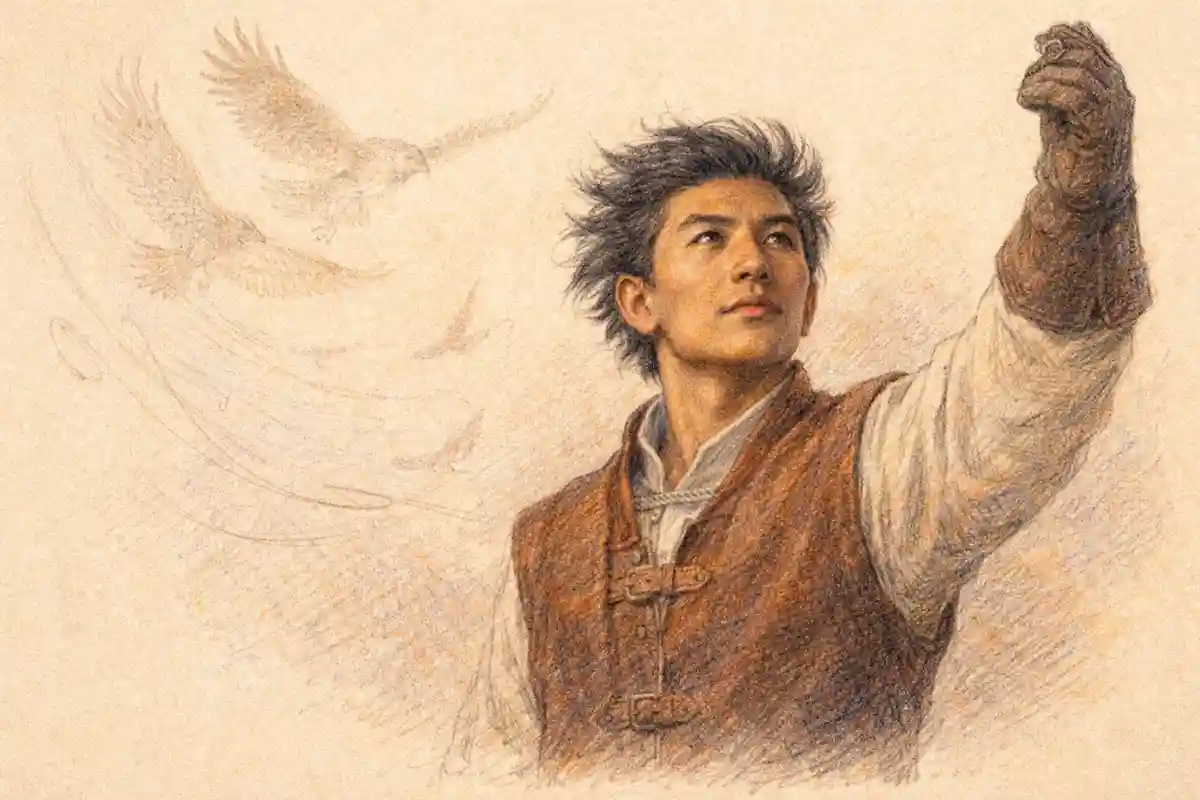
The performance problem at the center of Cool Hand Luke is deceptively simple and almost impossible to solve. A film about a man who cannot be broken needs an actor who can make unbreakability watchable for two hours without turning it into a pose. Defiance on screen curdles fast. Held too long, it becomes preening; played too loud, it becomes noise; pitched as pure suffering, it becomes a lecture on endurance. Stuart Rosenberg’s 1967 prison drama asks Paul Newman to take a Florida chain-gang convict named Luke Jackson and build a folk hero out of refusal, and the miracle of the work is that Newman does it mostly by smiling. The grin is the whole argument. It says the body can be beaten while the spirit stays loose, and it carries the film’s case about authority and the free man in a single repeated expression that never once hardens into a statue.

Luke arrives in the world drunk, decapitating parking meters with a pipe cutter, laughing at the absurdity of his own small crime. Within minutes he is sentenced to two years on a southern road prison, and from there the film is a sequence of collisions between one man and a system designed to bend him. Newman plays each collision as a chance to be charming rather than heroic, and that choice is the spine of everything that follows. The unbreakable rebel could have been a clenched jaw and a glare. Instead he is a wink, a card game, a bet about eggs, a song on a banjo, a refusal so easy it looks like fun. The performance turns the convict into the emblem of an anti-authority decade, and it did so without a single speech that announces what it means.
The Performance Problem Cool Hand Luke Hands Its Star
Every great character study begins with a problem the actor must solve in the body and the voice, not in the script’s stated themes. The script of Cool Hand Luke, adapted by Donn Pearce and Frank Pierson from Pearce’s semi-autobiographical 1965 novel, gives Newman a man who keeps escaping and keeps getting dragged back, who absorbs punishment and returns it as a grin, who finally chooses a doom he could have avoided. On the page this risks repetition. Luke does a provocative thing, the bosses punish him, he smiles, repeat. A lesser performance would let the audience see the pattern and tire of it. Newman’s task is to keep the smile meaning something different each time, so that the repetition reads as deepening rather than as a loop.
He solves it by treating Luke’s charm as a moving target. Early, the grin is genuine pleasure, a man amused by his own nerve. In the middle, after the bosses have started to work on him, the same grin becomes a held position, a refusal to give them the satisfaction of seeing it fade. Near the end, when the body is breaking and the escapes have cost him, the smile turns into something closer to a question, a man asking whether the pose he built can survive the truth of what it costs. The expression barely changes from scene to scene. The meaning behind it travels a great distance. That is the performance problem solved at the level of millimeters, the small adjustments of the eyes and mouth that let one gesture carry a whole arc.
The trap is real because audiences are quick to sense when a performance is running on a single note. Stubbornness, played without variation, becomes tedious within twenty minutes, and a film that depends on a man refusing for two hours stands or falls on whether the refusing stays alive. Newman keeps it alive by giving Luke a sense of humor about his own situation, a self-awareness that prevents the defiance from hardening into self-importance. Luke seems to know that his refusals are partly absurd, that decapitating parking meters is no blow against tyranny, that betting on eggs proves nothing. The faint irony in Newman’s playing, the sense that Luke finds his own legend a little ridiculous even as he lives up to it, is what keeps the character from becoming a poster. A poster cannot smile at itself. Luke can, and the smiling at himself is the difference between a man and a slogan.
The film also hands Newman a structural trap. Luke is surrounded by men who watch him, narrate him, and build him into a legend. Dragline, the barracks boss played by George Kennedy in an Academy Award-winning supporting turn, is the chief myth-maker, the one who names Luke “Cool Hand” after a bluffed poker win and tells and retells his exploits. The danger is that the title character becomes a passive screen onto which everyone else projects. Newman avoids this by keeping Luke active even when he is being mythologized. He receives the legend with a flicker of discomfort, as if he knows the others need a hero more than he wants to be one. The performance holds a private reservation inside the public icon, and that reservation is what keeps Luke human while the camp turns him into a story.
There is a further layer to the structural trap, which is that Luke’s legend is built partly on misunderstanding. The barracks reads his refusals as triumphs, his escapes as victories, his endurance as proof of an invincibility he does not possess. The men need him to be more than he is, and Newman plays a man aware that he is being inflated beyond the truth, accepting the inflation because the prisoners need it while privately knowing it will not hold. This awareness gives the performance a melancholy undertow. Luke is carrying a weight the others cannot see, the weight of being a symbol he knows to be partly false, and the carrying is lonely in a way the cheering barracks never registers. The film’s most quietly devastating idea is that the folk hero is often a man performing a strength he has run out of, kept upright by the faith of people who would be crushed to learn how tired he is. Newman lets us see the tiredness without letting the barracks see it, and the split vision, ours and theirs, is one of the performance’s subtlest gifts.
Building Luke Through Choices a Viewer Can Name
The richest way to read a performance is to name the specific choices the actor makes, the decisions a viewer can point to and say, that is where the character is built. Cool Hand Luke offers an unusually clean set of them, because Rosenberg shoots Newman in long, patient takes that give the small decisions room to register. The construction of Luke is not hidden in editing tricks. It sits in the open, in a handful of scenes that have become reference points for what screen acting can do with stillness, timing, and a grin held one beat past comfort.
The egg-eating sequence is the centerpiece and the clearest demonstration of method. Luke bets that he can eat fifty hard-boiled eggs in an hour, and the camp builds the wager into a festival. Newman could have played the ordeal as straight suffering, a man grimly forcing food past his limit. He plays it instead as performance within performance. Luke is putting on a show for the barracks, and Newman lets us see the showman calculating, pacing himself, working the crowd, turning a pointless bet into a communal event that gives the prisoners something to believe in. The choice matters because it tells us what Luke is for. He is not enduring for himself. He is enduring as a gift to men who have nothing, and the grin he flashes between eggs is aimed at them. When the hour ends and he lies stretched on the table, arms out, the image quotes a crucifixion, and the religious overtone lands because Newman has already shown us a man who suffers on behalf of others. The pose would be heavy-handed if the acting had not earned it. Because the acting earns it, the image reads as the film’s boldest claim about its hero rather than as decoration.
The naming of Luke is another choice worth pausing on. During a poker game Luke bluffs his way to a pot holding nothing, and when Dragline marvels at the win, Luke shrugs that sometimes nothing can be a real cool hand. The line gives the film its title and the character his legend, and Newman delivers it with a throwaway lightness that refuses to underline the meaning. He does not perform the moment as the birth of a myth. He tosses it off, lets Dragline do the mythologizing, and that division of labor, the rebel casual while the witness builds the legend, becomes the film’s recurring rhythm. Luke acts; others narrate; the gap between the doing and the telling is where the character’s modesty and the camp’s hunger both live. A more self-conscious actor would have leaned into the title line and killed it. Newman starves it of emphasis, and the starvation is what lets it grow.
The road-tarring sequence shows the same instinct turned outward. Set to lay tar on a stretch of highway, the prisoners are meant to labor slowly under the bosses’ eyes, but Luke seizes the rhythm and drives the men to finish the job in a furious burst, working faster than required until the task is done and the guards are left with nothing to supervise. The choice inverts the meaning of labor. By doing the work too well, too fast, on his own terms, Luke turns enforced toil into a seizure of control, a way of owning the one thing the system meant to use against him. Newman plays the sequence with a manic joy that spreads to the whole barracks, and the scene becomes a small festival of autonomy inside the machinery of punishment. It is rebellion disguised as compliance, the men obeying the order to work so completely that they reclaim it as their own, and Newman’s grinning energy is the engine that makes the inversion legible.
Then there is the line everyone misremembers. The camp captain, played by Strother Martin, stands above a beaten Luke and pronounces the film’s signature sentence about a failure to communicate. The line belongs to Martin, but Newman’s reaction belongs to Luke, and the performance choice is to give almost nothing back. Luke does not glare or plead. He absorbs the blow and the words with a kind of dazed acceptance that refuses the captain the drama he wants. The withholding is the point. Authority in this film feeds on response, on the satisfaction of seeing the rebel react, and Newman starves it. He understood that the most defiant thing a beaten man can do is decline to perform his own defeat.
The dog-chase escapes deepen the same idea across the film’s second half. Luke breaks out more than once, and each recapture is staged as a public humiliation, the bosses parading the returned man before the barracks to teach the others that escape is futile. Newman plays the returns without collapse. Dragged back in chains, exhausted, beaten, Luke keeps a fragment of the grin, and the bosses respond by escalating, piling on labor and punishment in a campaign to get his mind right. The phrase becomes the film’s grim refrain, the bosses’ euphemism for breaking a spirit, and the drama of the late film is whether the campaign will succeed. Newman lets the audience believe, for a stretch, that it might. He shows the body wearing down, the grin coming slower, the eyes losing some of their light, and the suspense of those scenes is the suspense of watching to see whether the unbreakable will finally break. That he allows the doubt, rather than playing Luke as invulnerable throughout, is what makes the final defiance cost something.
There is a cruel comic beat that sharpens all of this. To taunt the prisoners during his time away, Luke sends back a photograph of himself flanked by two women, an image of freedom and pleasure meant to keep the legend burning in the barracks. The men pass it around, build a fantasy on it, treat it as proof that Luke is out there living the life they cannot. Only later does the film let the photograph curdle, the gap between the staged image and the brutal reality of Luke’s recapture exposing how the legend feeds on illusion. Newman’s part in the gag is to understand that Luke is performing for an audience even in absence, managing his own myth, and that the management is both generous and a little desperate. The rebel needs the barracks to believe in him almost as much as the barracks needs the rebel.
How does Paul Newman build the grin into an act of rebellion?
Newman makes the grin a refusal rather than a mood. In Cool Hand Luke the bosses want fear or submission, and the smile denies them both, signaling that the inner man stays free however the body suffers. Held one beat too long, aimed at the prisoners not the guards, it converts charm into the film’s purest resistance.
Consider the moment after Luke’s mother dies. He receives the news in a cell and is locked away preemptively, the bosses fearing he will use grief as a reason to run. Alone, Luke picks up a banjo and sings a wry, half-mocking religious tune, the corners of the performance somewhere between mourning and joke. Newman plays the scene without a single tear that asks for sympathy. The grief is real, but Luke metabolizes it the only way he knows, by refusing to let it become a spectacle the camp can watch and pity. The choice deepens the character because it shows the cost of his pose. The same refusal to be broken that makes him a hero also leaves him alone with his sorrow, unable to grieve out loud. The performance holds the heroism and the loneliness in the same gesture, and the audience feels both at once.
This double register is the performance’s recurring achievement, and it is worth naming as a technique rather than an accident. In scene after scene Newman finds a way to play two things simultaneously, the public hero and the private man, the charm and the cost, the freedom and the loneliness it requires. He does it through the smallest means, a flicker that undercuts a grin, a stillness that complicates a joke, a tiredness in the eyes that the mouth does not acknowledge. The technique keeps the character from ever settling into a single readable emotion, and that refusal to settle is what gives Luke his density. A simpler performance would let the audience know, at every moment, exactly what Luke feels. Newman keeps a margin of mystery around the feeling, so that the audience is always slightly uncertain whether the grin is joy or defiance or despair worn as a mask. The uncertainty is generative. It makes Luke a person we keep trying to read rather than a type we have already understood, and the trying is what holds us for two hours.
The boxing match against Dragline is another nameable choice. Luke is outmatched, beaten down again and again by the much larger Kennedy, and the scene’s meaning lives entirely in how Newman plays getting up. He does not rise with grim determination, jaw set, eyes blazing. He rises loose, almost amused, as if the beating is happening to a body he has decided not to be responsible for. The crowd of prisoners, wanting him to stay down so the pointless fight can end, watches him refuse to quit a contest he cannot win. The choice tells us that Luke’s defiance is not strategic. He does not refuse to submit because refusing will get him anything. He refuses because submission is simply not available to him as a way of being. Newman locates that quality in the body, in the loose-limbed way Luke keeps standing, and it is more persuasive than any line of dialogue could be.
Even the small business of camp life becomes character. The way Luke eats, lounges, plays cards, needles the bosses with a too-polite “yes sir” that carries a blade of mockery inside the courtesy. Newman calibrates the insolence so finely that the guards can never quite catch him at it. He is always technically obedient and never actually submissive, and the gap between the two is where the whole rebellion lives. A different actor would have made Luke openly rude and lost the game in the first reel. Newman makes him impeccably correct and unmistakably free, and that paradox is the performance’s finest sustained achievement.
The rain on the road is the moment the paradox tips toward its cost. Late in the film, soaked and exhausted on a labor site, Luke is pushed past the point where the pose can hold, and Newman lets the audience watch the construction strain. The free man is still there, but the freedom has begun to look like the only thing he has left, a possession he clings to because surrender would mean ceasing to exist. This is where the self-destructive reading and the heroic reading collide most violently, and Newman refuses to resolve them. He plays a man who cannot stop being who he is even though being who he is will kill him, and the inability registers not as choice but as nature. Luke does not decide to be unbreakable. He simply is unbreakable, the way some materials are, and the film’s tragedy is that the world he was born into is a machine built precisely to test such materials to destruction. The performance holds the wonder and the waste of that in the same exhausted body, and the holding is the deepest thing in the film.
The Direction That Shaped the Work
A character study is never the actor alone. The direction builds the frame in which the performance can mean what it means, and Stuart Rosenberg shaped Newman’s Luke in decisions that ran from the macro to the minute. Rosenberg came to the film with almost no feature experience, having worked mostly in television, and Cool Hand Luke announced him as a director who understood how to let a star fill a frame without crowding him. The choice to shoot Newman in long takes, to trust the face, to hold on reactions rather than cutting away, gave the performance its space. The construction of Luke described above only works because the camera stays long enough to let the small decisions land.
Rosenberg’s most consequential choice concerned the ending. The original script ran darker and flatter. Rosenberg altered it to close on a montage that reprises Luke’s smile, gathering the grins from across the film into a final image that turns the dead man into a permanent legend. The decision is debated, and some viewers find it sentimental, a softening of a bleak story. But the choice is inseparable from what makes the performance a folk-hero turn rather than a tragedy of futility. By ending on the catalogue of smiles, Rosenberg insists that what survives Luke is the gesture, the loose grin that the system could never reach. The direction reads the performance correctly and then crowns it. Without that ending, Newman’s work would still be excellent. With it, the work becomes mythic.
The mechanics of that final montage repay attention. Rosenberg does not invent new material for the close; he gathers grins the film has already given us, recontextualizing earlier moments so that the smile becomes a thread running through the whole story rather than a series of isolated beats. The technique is a kind of retroactive argument. By assembling the smiles at the end, the film tells us that they were the point all along, that beneath the plot of escapes and punishments the real subject was always the expression itself, the visible sign of a spirit the camp could not reach. The montage teaches the audience how to remember the film, and what it teaches them to remember is the grin. Few endings have ever so precisely fixed the meaning of a performance in a single closing gesture, and the fact that the gesture is built from recycled footage rather than fresh drama makes it more, not less, effective. It insists that the meaning was present the whole time, waiting to be recognized.
Rosenberg’s restraint elsewhere matters as much as his boldness here. He resists the temptation to editorialize Luke’s defiance with music swells or reaction shots that tell the audience how to feel. The bosses’ cruelty is shown plainly, without underlining, and Luke’s responses are allowed to speak for themselves. This plainness is a directorial choice as deliberate as the montage, and it serves the performance by clearing space around it. When a film constantly tells the audience how to read its hero, the hero shrinks to the size of the instruction. Rosenberg mostly declines to instruct, trusting Newman’s face to carry the meaning, and the trust is repaid. The director’s confidence in the performance is itself part of why the performance reads as confident.
Rosenberg also built the conditions for the performance off camera. He banned wives and women from the set, wanting the male cast to internalize the closed, sweat-soaked world of a chain gang, the enforced intimacy of men with nowhere to go. Whether or not the method was kind, it shows in the texture of the ensemble, the easy physical comfort the prisoners have with one another, the sense of a sealed society. Newman’s Luke can only register as a disruption inside that society if the society itself feels real, and Rosenberg’s hothouse approach helped make it so. The director understood that a rebel needs a world solid enough to rebel against.
The casting of the bosses completes the directorial design. Rosenberg surrounds Luke with authority figures who are individuated as sharply as the prisoners, from the captain who delivers the signature line to the silent, mirrored-glasses guard who functions as pure watching. The bosses are not cartoon sadists. They are men doing a job, enforcing a system they did not invent, and the film’s refusal to make them simple villains gives Luke’s defiance a worthier antagonist. A rebel against caricature is a small thing. A rebel against an ordinary, functioning, almost banal cruelty is a large one, because the banality is what makes the system feel total and inescapable. Rosenberg’s direction insists on that banality, on the routine quality of the camp’s brutality, and the routine is what Luke’s extraordinary refusal stands against. The contrast between the system’s dullness and Luke’s vividness is the film’s basic visual and dramatic rhythm, and the director built it into every frame.
What did Stuart Rosenberg change to sharpen the performance?
Rosenberg’s decisive change was the ending. He replaced a flatter close with a montage of Luke’s smiles, turning the dead convict into a surviving legend and reading the performance as folk myth rather than futile tragedy. He also shot Newman in long, patient takes and sealed the set against outside life, building the closed world the rebellion needed.
The collaborators around Rosenberg sharpened the work further. Cinematographer Conrad Hall shot the film in a hard, beautiful light that made the chain gang’s heat and dust into something almost lyrical, the prettiness of the images rubbing against the cruelty of the labor in a way that keeps the film from settling into simple misery. The visual lyricism gives Luke’s defiance a stage worthy of myth. Lalo Schifrin’s Oscar-nominated score, with its banjo motif suggested by the novelist himself, threads a folk-music sensibility through the film that locates Luke in an American vernacular tradition of wanderers and outlaws. The music tells us how to hear the character before the character explains himself, positioning Luke less as a criminal than as a figure out of song. Every department points toward the same reading, and the convergence is what lets a single performance carry an entire mythology.
Schifrin’s banjo motif deserves particular credit for how it positions the audience to receive Luke. The instrument carries associations of the American rural vernacular, of folk songs and front porches and wandering men, and threading it through a prison drama quietly relocates Luke out of the genre of crime and into the genre of legend. Before Luke does anything heroic, the music has already told us he belongs to a tradition of folk figures, the ramblers and outlaws of song whose refusals were celebrated rather than condemned. This sonic framing is part of why the audience accepts Luke as a hero rather than judging him as a criminal who keeps breaking the law. The music has pre-sorted him into the category of the admirable outlaw, and the performance then fills the category with a specific, living man. The collaboration between Schifrin’s framing and Newman’s filling is seamless enough that most viewers never notice the music doing its work, which is the mark of a score that serves the film rather than decorating it. Conrad Hall’s images complete the sorting, lending the chain gang a beauty that insists, against the cruelty on screen, that something here is worth our admiration. The departments do not merely coexist; they argue the same case from different directions, and the unanimity of the argument is what gives the film its strange power to make us love a doomed and difficult man.
Luke Against the Acting Conventions of the Era
To see what Newman accomplished, set the performance against the acting conventions surrounding it. By 1967 American screen acting had been reshaped by the Method, the interior, emotionally exposed style that Marlon Brando and the generation after him brought to dominance. The series treats that revolution at length in its reading of Brando’s craft in On the Waterfront, where mumbled vulnerability and raw psychological nakedness redefined what a leading man could show. Newman trained in that world and absorbed its lessons, but his Luke makes a fascinating departure from Method orthodoxy. Where the Method actor exposes the wound, Newman conceals it. Where the Method prizes the visible struggle of feeling breaking through, Newman builds a character whose entire project is to keep feeling from showing.
This is restraint as rebellion. Luke’s refusal to let the bosses see him hurt is also Newman’s refusal to give the audience the easy emotional payoff the Method had taught audiences to expect. The performance withholds, and the withholding is the meaning. When Luke finally does crack, after his mother’s death and the bosses’ systematic campaign to get his mind right, the breaking is more devastating precisely because Newman has rationed access to Luke’s interior so carefully. The famous moment when Luke seems to plead with a silent God in an empty church lands hard because it is the first time the pose drops entirely. A Method performance that had been exposing the character all along could not have delivered that scene with the same impact. Newman’s discipline buys the moment its power.
The discipline is easy to undervalue because it does not look like work. Showy acting announces its effort, the visible strain of an actor reaching for emotion, and audiences and award bodies often reward the announcement. Newman’s Luke does the opposite. The performance hides its labor so completely that it can seem effortless, a charming man simply being charming, and the appearance of ease has sometimes caused the role to be underrated as mere star presence rather than constructed craft. This is the price of doing the work invisibly. But the construction is there in every choice, in the calibration of the insolence, the timing of the grin, the rationing of the interior, and a closer look dissolves the illusion of effortlessness into a sequence of precise decisions. The performance is hard precisely because it is built to look easy, and the difficulty of seeming not to try is one of the most demanding tasks an actor can take on. Luke had to look free, and looking free, on camera, under a system designed to make freedom impossible, is among the subtlest things screen acting can attempt.
How does Newman’s restraint differ from Method excess?
The Method exposes interior pain; Newman hides it. In Cool Hand Luke the rebellion is built on withholding, on denying the bosses and the audience the visible suffering they expect. When Luke finally breaks in the empty church, the rationed access to his interior makes the collapse devastating, an effect Method exposure could not produce.
The contrast also runs through the lineage of the screen rebel. The anti-authority icon that James Dean fixed in the 1950s, examined in this series through Dean’s youth rebellion in Rebel Without a Cause, gave American cinema the beautiful, doomed nonconformist whose feeling spilled out of him. Dean’s rebels ached visibly; their pain was the point. Newman inherits the icon and cools it. His Luke is a rebel of the surface as much as the depths, a man whose cool is not a defense mechanism he wants to drop but a chosen mode of being. The difference is generational and temperamental. Dean’s rebel wanted to be understood and could not be. Newman’s rebel has stopped asking to be understood and treats his own opacity as freedom. The shift maps onto the decade between them, the move from the inchoate teenage longing of the 1950s to the harder, more political anti-authority stance of the late 1960s.
Newman also inherits and transforms the Brando line, the wounded-animal vulnerability that redefined the leading man. Brando’s rebels carried a raw, exposed quality, a sense of feeling too large for the man containing it, and the exposure was thrilling because it broke the composure the studio star had always maintained. Newman keeps the composure and hides the feeling, which is in its way a counter-revolution, a return to control after the Method’s deliberate loss of it, but a control charged now with everything the Method had taught about interior life. Luke is composed the way the old stars were composed, but the composure is not emptiness; it is a lid held down over depths the film lets us glimpse only twice or three times. This synthesis, the studio star’s surface over the Method actor’s interior, is Newman’s particular contribution to the history of screen acting, and Luke is where the synthesis is most visible. He is cool like the classical star and deep like the Method rebel, and the combination produced a new kind of leading man, one whose charm was a surface stretched over genuine and largely hidden complexity.
Against the studio-era leading man, the contrast is sharper still. The classical Hollywood star projected stability, command, a self that authority could trust. Newman’s Luke projects the opposite, a self that authority can never trust because it answers to nothing outside itself. Yet Newman keeps the movie-star charisma, the blue-eyed ease that earlier stars used to reassure. He weaponizes glamour. The very qualities that made the classical star a figure of order become, in Luke, the tools of disorder. That conversion of star charm into anti-authority charge is the performance’s most original move, and it is why the role became a touchstone rather than merely a fine piece of acting.
It helps to see how unusual this was for a leading man of Newman’s standing. The biggest stars of the studio tradition guarded their likability, played heroes whose virtue the audience could trust, and avoided roles that might leave a viewer uneasy. Luke is not a comfortable hero. He is reckless, self-endangering, finally responsible for suffering beyond his own, and a star protecting his image might have softened those edges. Newman does not soften them. He lets Luke be difficult, lets the self-destruction show, lets the audience wonder whether the man they are charmed by is also a man they should worry about. That willingness to complicate his own appeal, to use star charisma as bait for a more troubling figure, marks the performance as belonging to the harder, more skeptical sensibility of its decade rather than to the reassuring tradition Newman came up in. The role is a hinge between two eras of American stardom, the old glamour pressed into the service of a new and more dangerous kind of hero.
What Cool Hand Luke Says About Authority and Rebellion
A character study at this level is also an argument, and the argument of Cool Hand Luke concerns the relationship between a free man and an unfree world. The film stages authority as a machine for breaking spirits, and it locates Luke’s heroism in his refusal to be processed. The bosses do not want Luke dead. They want him compliant, his mind got right, his defiance converted into the dull obedience of the other men. The whole apparatus of the camp, the box where prisoners are locked in solitary heat, the endless meaningless labor, the rituals of permission a man must request to do anything at all, exists to grind individuality into uniformity. Luke is the grit that will not be ground.
The film’s claim is that this refusal matters even when, especially when, it changes nothing. Luke wins no concrete victory. His escapes are temporary, his rebellions punished, his body steadily destroyed. By the logic of results he fails completely. But the film insists that the meaning of his defiance lies outside the logic of results. The grit in the machine is valuable because it proves the machine is not total, that even a system built to break men cannot reach the last private room where a man decides who he is. Luke’s smile is the evidence. As long as he can smile, the system has not won, and the film ends by preserving the smile precisely to make that argument permanent.
The argument has a sharp edge that the film does not blunt. If the only victory available is the private preservation of an unbroken self, then the victory is also a kind of defeat, because it leaves the system entirely intact. Luke changes nothing about the camp. The box still stands, the bosses still rule, the next man who arrives will face the same machine Luke faced, and the only thing Luke leaves behind is an example and a legend. The film is honest about this limit. It does not pretend that Luke’s defiance reforms the prison or frees the other men. The defiance is purely individual, a salvation of the self that cannot be transferred, and the men who worship Luke may be no freer for having known him. This honesty is part of what raises the film above sentimental rebellion. It knows that the unbreakable self is a consolation, perhaps the only consolation available, but a consolation rather than a solution, and it lets that knowledge shadow the heroism without canceling it.
The Christ imagery threaded through the film, the crucifixion pose after the eggs, the agony in the garden of the empty church, the betrayal, sharpens the argument into something close to scripture. Luke suffers and dies, and his suffering means something to the men who survive him because it shows them a way of being free that they were too cautious to attempt. The film is careful not to make Luke a conventional savior. He saves no one in any practical sense, and his example may be more dangerous than useful to the men who worship it. But as a figure of voluntary sacrifice on behalf of an idea, he carries an unmistakable religious charge, and the film uses it to elevate a story about a chain gang into a parable about the cost and the worth of refusing to submit.
A serious reading has to hold the counter-argument, and the strongest objection to Luke as hero is that he is, by another light, simply self-destructive. He provokes punishment he could avoid. He escapes when escape is hopeless and brings the bosses’ wrath down on the whole barracks. His final defiance gets him killed for nothing. A skeptical viewer can see not a folk hero but a man with a death wish, romanticized by a film that mistakes futility for nobility and by fellow prisoners who need a legend more than they need a sane example. This reading is not wrong, and the film’s intelligence lies in holding it inside the heroic one rather than refusing it. Newman’s performance does the holding. The flicker of discomfort when the camp mythologizes him, the loneliness of the banjo scene, the question in the late smiles, all keep the self-destructive reading alive. Luke is a hero and a man being destroyed by his own incapacity to bend, and the film is richer for declining to choose between the two. The doubleness is the point. A pure folk hero would be propaganda. A pure cautionary tale would be a different, smaller film. Cool Hand Luke insists that the same refusal is both magnificent and ruinous, and that we cannot have the magnificence without the ruin.
The film’s treatment of faith deepens this doubleness. Luke is no believer, and his most exposed moment, the plea in the empty church, is addressed to a God he half expects to find absent. He asks for some sign, some help, some indication that the suffering means anything, and the silence he receives is the film’s most desolate note. Yet the religious imagery surrounds him anyway, imposed by the film and by the men who need him to be a savior, and the gap between Luke’s own unbelief and the sacred role thrust upon him is one of the work’s richest ironies. He becomes a Christ figure without consenting to it, mythologized by others into a meaning he does not claim for himself. The film thereby asks a hard question about heroism: whether the hero is the man himself or the story the survivors tell about him, and whether those are ever the same thing. Luke the man is exhausted, lonely, and doomed. Luke the legend is immortal and free. The film holds both, and its final montage chooses, deliberately, to leave us with the legend.
This choice to end on the legend rather than the man is the film’s final statement about how heroes are made and what they cost. The man Luke is gone, used up, destroyed by a refusal he could not stop performing and a worship he could not refuse. What remains is the image, the grin freed from the body, available now to anyone who needs it. The film knows the difference between the two and chooses the image anyway, not out of dishonesty but out of a clear-eyed understanding that the image is what survives and matters. The man dies; the legend works. People who never knew Luke, who will never know the loneliness behind the grin or the cost of the refusal, can still be moved and even freed a little by the emblem he became. The film’s closing argument is that this is how folk heroes function, that they are images detached from the men who paid for them, and that the detachment, however unfair to the man, is the mechanism by which one person’s costly refusal becomes a gift available to everyone. The montage is the film performing that detachment in front of us, lifting the grin off the corpse and handing it to the audience to keep.
Why Cool Hand Luke Became a Counterculture Touchstone
Why did this particular prison film, of all the prison films, become the touchstone of an era? The answer lies in the precise moment of its release and the precise shape of its hero. Cool Hand Luke opened in late 1967, into an American culture convulsed by rebellion against institutions, and it offered that culture an emblem more durable than a slogan: a man who would not get his mind right, no matter what the authorities did to him. The film did not preach the politics of its moment. It dramatized the feeling underneath the politics, the conviction that the systems demanding obedience had forfeited the right to it, and that the only honorable response was a refusal as cool and complete as Luke’s grin.
The timing was uncanny. A generation questioning every authority it had inherited found in Luke a figure who externalized its instinct without attaching it to any particular cause. Luke is not a political prisoner. He has no manifesto, no ideology, no program. That blankness is exactly why he travels. A rebel with a specific cause speaks to those who share it. A rebel whose only cause is refusal itself speaks to everyone who has ever wanted to refuse. The film’s genius was to make the rebellion pure, stripped of any content that might date it or limit it, so that the figure could be filled with whatever defiance the viewer brought. Newman’s performance is the vessel, charming and empty in the productive sense, a screen onto which an anti-authority decade could project its longing for someone who simply would not comply.
The line about a failure to communicate became a catchphrase precisely because it crystallized the era’s view of authority. The captain who speaks it believes the problem is communication, that if Luke only understood the rules he would follow them. The film knows better. The problem is not communication. The problem is that Luke understands the rules perfectly and rejects them anyway, and the captain’s inability to grasp this is the inability of every entrenched authority to imagine that its legitimacy might be the thing in question. The line entered the language because it named a structure of misunderstanding that a whole generation recognized, the way power explains all resistance as a failure to be properly informed, never as a judgment on power itself.
It is worth dwelling on how completely the captain misreads the situation, because the misreading is the film’s sharpest political insight. He stands above the beaten Luke genuinely puzzled, convinced that the trouble is a breakdown of communication that better explanation could fix, unable to entertain the possibility that Luke has heard the message perfectly and rejected it. This is the characteristic blindness of authority that believes its own legitimacy is self-evident. To such authority, disobedience can only be ignorance or malfunction, never a considered verdict, because a considered verdict would require admitting that the rules themselves might be the problem. The captain cannot make that admission and remain the captain, so he reaches for the only explanation his position allows, a failure to communicate, and in reaching for it he reveals the limit of his entire worldview. The generation that took up the line understood the structure intimately, having heard versions of it from every institution that explained their dissent as a failure to understand rather than as a refusal to consent. The line endures because the structure endures, and any audience that has argued with an authority certain of its own rightness recognizes the captain instantly.
Newman’s stardom mattered to the film’s reach. He was already one of the most beautiful and bankable actors alive, and the decision to pour that glamour into an anti-authority figure gave the counterculture a hero with mainstream wattage. Luke was not a marginal art-house rebel. He was a movie star, and the merger of star charisma with anti-establishment content helped carry the film’s stance into the cultural center. The role cemented Newman’s status and fused his blue-eyed cool permanently with the idea of cheerful, unbreakable defiance, an association that followed him for the rest of his career and beyond.
The film’s apolitical surface was, paradoxically, the secret of its political reach. A movie that named the institutions of its moment, that argued a specific case about a specific authority, would have spoken powerfully to the people who shared its target and weakly to everyone else. By keeping Luke’s rebellion abstract, by making the enemy simply authority in its most reduced and universal form, the chain gang and the box and the man with no eyes, the film let every viewer supply the authority they personally chafed against. The student, the soldier, the worker, the dropout, each could see in Luke a refusal aimed at the particular system pressing on them. This abstraction is why the film outlasted its moment. Specific protest dates as its occasion fades; Luke’s refusal does not date, because it was never tied to an occasion. The film built a permanently usable emblem by stripping the rebellion of everything but its essence, and the essence, a man who will not be gotten right, remains as legible to any later audience as it was to the one that first crowned it.
The Chain-Gang World the Film Builds
A rebel is only as vivid as the world he resists, and Cool Hand Luke builds its southern road prison with a density that makes Luke’s defiance register as something real rather than abstract. The film was shot in the San Joaquin River Delta of California, with the production sending a crew to a road prison in Gainesville, Florida, to gather photographs and measurements so the set could imitate a Deep South prison farm. That documentary impulse shows. The camp feels lived-in, specified, governed by rules and rituals that the film takes time to establish before Luke begins breaking them.
The texture is built from particulars. The heat lies over everything, the men sweating through endless labor on roads and ditches. The rituals of permission turn every act into a transaction with authority, a prisoner forced to announce his intentions and ask leave before he can step off the line. The box, a sweltering solitary cell, hangs over the camp as the standing threat. And presiding over the labor is the figure of the boss with mirrored sunglasses, a guard whose hidden eyes turn him into an instrument of pure surveillance, a watcher who cannot be read or appealed to. The man with no eyes is one of the film’s great images of authority, faceless, reflective, giving back nothing but the prisoner’s own anxious image. Against that blankness, Luke’s expressive grin is itself a kind of rebellion, a face that insists on being a face in a world that wants men reduced to numbers.
How does Cool Hand Luke build its chain-gang world?
The film grounds the world in research and ritual. A crew photographed a real Florida road prison so the California set could imitate it, and the camp runs on specified rituals of permission, labor, and punishment. The mirrored-sunglass boss and the solitary box give authority concrete, oppressive form, making Luke’s refusal feel like resistance to something real.
The ensemble completes the world. The barracks is full of distinct men, played by a deep bench of character actors who would go on to long careers, and the film lets them register as individuals before it tests their loyalty to Luke. Dragline above all functions as the world’s narrator and Luke’s chief believer, and George Kennedy’s performance is the necessary complement to Newman’s. Kennedy plays a man large enough to crush Luke physically and small enough to need him spiritually, and his Oscar recognized the way he embodies the prisoners’ hunger for a hero. The relationship between the two is the film’s emotional engine. Dragline needs Luke to be unbreakable so that his own caged life can borrow some meaning, and Luke half-resents and half-accepts the role, knowing the legend will outlast and perhaps betray him. The camp’s investment in Luke as a story is itself part of the world the film builds, and it complicates the heroism by showing how the rebel is also a product of others’ need.
The betrayal that the film threads toward its end follows from this dynamic. When the campaign to break Luke finally bears its bitter fruit, it is the worship itself that turns dangerous, the legend the men built becoming a thing that cannot survive contact with Luke’s exhaustion. Dragline, the chief believer, plays an unwitting part in the final catastrophe, his need for the hero contributing to the hero’s destruction. The film stages this without melodrama, letting the tragedy emerge from the structure it has built rather than from villainy. The men loved Luke into a corner. Their faith required him to keep refusing past the point where refusing could save him, and the requirement, as much as the bosses’ cruelty, is what kills him. This is the darkest turn of the film’s thinking about heroism, the recognition that the worship which makes a folk hero can also be the force that destroys the man, that the legend and the life pull in opposite directions, and that the survivors who carry the legend forward do so over the body of the man it consumed.
Conrad Hall’s cinematography binds the documentary realism to a poetic eye, finding beauty in the dust and the sweat without prettifying the cruelty. The hard light, the long horizons of the labor sites, the close attention to faces, all give the camp a visual coherence that makes it feel like a complete society rather than a backdrop. The world is solid enough that Luke’s escapes carry real stakes, his returns real despair, and his final refusal real weight. The craft of the world-building is inseparable from the success of the performance, because Newman’s Luke can only mean what he means inside a prison the audience believes in.
The rituals deserve a closer look because they are where the film’s idea of authority lives most concretely. In the camp a prisoner cannot simply act; he must announce and request, calling out his intention before he steps off the line, narrating his own small movements for the bosses’ permission. The ritualized speech turns ordinary human action into a constant performance of submission, a verbal bowing repeated dozens of times a day until the man forgets there was ever another way to move through the world. This is how the system gets a mind right, not through dramatic violence alone but through the slow grinding habit of asking permission, the conversion of a free agent into a creature who checks every impulse against authority before acting on it. Luke’s defiance, set against this, becomes legible as a refusal of the habit. He performs the rituals when he must, but with an irony that keeps them from colonizing him, and his survival as a free self is measured precisely by his refusal to let the asking become automatic. The film understands that tyranny works less through spectacular cruelty than through the manufacture of habit, and it builds its prison world to dramatize exactly that mechanism.
The box hangs over all of this as the world’s ultimate sanction, a sweltering wooden cell where a man is locked alone with the heat and his own mind. The film uses it sparingly, which is part of its power; the threat of the box does more work than the box itself, the prisoners regulating their own behavior to avoid it. This is the architecture of a disciplinary system at its most efficient, a single visible punishment that the inmates internalize so thoroughly that the guards barely need to use it. Luke’s willingness to risk the box, to act in ways he knows will send him into it, is what marks him as outside the system’s logic. The other men have absorbed the threat and shaped themselves around it. Luke has not, and his refusal to let the box govern his choices is the clearest measure of the freedom the film celebrates. He treats the worst the system can do as a price he is willing to pay, and in treating it so he strips it of the power it holds over everyone else. A punishment only controls a man who fears it more than he values his freedom, and Luke’s whole character is the demonstration of a man for whom that ratio runs the other way.
The Unbreakable Rebel Worldwide: Cool Hand Luke Among Films of Defiance
The comparative reading is where Cool Hand Luke reveals itself as one instance of something cinemas everywhere were doing in the same years: building folk heroes out of men who will not submit. The figure of the unbreakable rebel is not American property. Across national cinemas of the postwar decades, filmmakers reached for the man who defies an institution and pays for it, and setting Luke beside these contemporaries shows both what the type shares across borders and what makes Newman’s version distinctly American.
The closest British contemporary is Lindsay Anderson’s If, released in 1968, a film that channels the same anti-authority current into a different institution. Where Cool Hand Luke sets its rebel in a chain gang, Anderson sets his in an English public school, and where Luke’s defiance stays personal and finally fatal to himself, the schoolboy rebellion in If escalates into surreal armed insurrection against the masters. Both films emerged into the worldwide unrest of the late 1960s, and both made their rebels charismatic enough to seduce the audience onto the wrong side of authority. The difference is instructive. Anderson’s rebellion is collective and explicitly political, a satire of the institutions that manufacture a ruling class. Luke’s rebellion is individual and pointedly apolitical, a refusal that attaches to no cause. The British film aims its defiance at a specific social order; the American film aims its defiance at authority as such. The contrast marks a difference of national temperament, the British rebel embedded in a critique of class, the American rebel cut loose from any program and floating free as a pure figure of refusal.
The two films also handle the seduction of the audience differently. Anderson wants the viewer to thrill to the schoolboys’ uprising and then to feel the unease of having cheered an act of violence, the satire turning the audience’s own appetite for rebellion into part of the subject. The film implicates its viewers, asking them to notice how readily they sided with insurrection. Cool Hand Luke seduces more straightforwardly. It wants the audience wholly on Luke’s side, and it never complicates that allegiance the way Anderson complicates ours. The American film trusts its hero’s charm to carry the room and does not turn the charm into a problem. This is the difference between satire and myth. Anderson is making a satire that uses a charismatic rebel to expose a social order and to question the audience’s own reflexes. Rosenberg and Newman are making a myth, a folk legend whose hero the audience is meant to love without reservation. The comparison shows two routes the same anti-authority current could take, the cool British irony that distrusts even its own rebels and the warm American myth-making that asks only that we believe.
The most haunting performance contemporary comes from Poland. Andrzej Wajda’s Ashes and Diamonds, made in 1958, gave Eastern European cinema its emblem of doomed rebellion in Zbigniew Cybulski’s Maciek, a young resistance fighter so iconic that Cybulski was called the Polish James Dean. The parallel to Newman’s Luke runs deep. Both actors poured genuine star magnetism into rebels marked for death, both built characters whose cool surfaces, the dark glasses and leather of Maciek, the loose grin of Luke, carried the rebellion as much as any action. Both performances turned a doomed individual into a generational icon whose image outlived the film. And the comparison sharpens by contrast. Maciek’s defiance is woven into a specific historical tragedy, the impossible position of the Polish underground caught between Nazis and Soviets, his rebellion freighted with national fate. Luke’s defiance is stripped of history, a man against the box rather than a man against an occupying ideology. Cybulski died young in a railway accident, his early death deepening the James Dean parallel and fixing his rebel image in amber, while Newman lived a long life and carried Luke as one role among many. Yet on screen the two perform the same essential act: a beautiful man refusing to submit, made into a folk hero by the refusal, his cool the visible sign of an inner freedom no authority can reach.
Japanese cinema of the same broad period supplies a further comparison, in the lone figures of defiance that ran through its postwar films, the masterless swordsmen and stubborn outsiders who answer to a personal code rather than to the authorities around them. Where the American chain-gang rebel is charming and the Polish resistance fighter is haunted, the Japanese rebel is often coiled and laconic, his refusal expressed through a stillness that erupts into sudden decisive action. The codes differ, the period dress and the cultural frame differ, but the underlying figure rhymes: a man whose loyalty is to something inside himself that the surrounding order cannot command, and whose defiance carries a weight the society recognizes even as it punishes him. The persistence of this figure across cinemas that had little contact with one another suggests it answers a need wider than any single culture, the need to imagine a self that power cannot fully own. Each cinema dresses the figure in its own costume, the chain-gang stripes, the resistance dark glasses, the swordsman’s robes, but the spirit underneath is recognizably the same.
The American Western is the closest domestic cousin to Luke, and the kinship illuminates what Newman was drawing on. The Western outlaw and the wandering gunman are American cinema’s oldest folk heroes of refusal, men who will not be civilized, who answer to their own law and ride away from the settlements that want to bind them. Luke is that figure relocated from the open range to the closed prison, the frontier individualist trapped in an institution that the Western hero could always escape by riding west. There is no west left for Luke. The chain gang is what happens to the frontier individualist when the frontier closes, when the open country that once absorbed the man who would not be governed has been fenced and administered and turned into a system. Read this way, Cool Hand Luke is a Western with the escape valve removed, the unbreakable American rebel confronted at last with a society he cannot simply leave, and the film’s tragedy is partly the tragedy of that closing, the death of the space that once made the free man possible. Newman, who would play Western outlaws himself, carries the genre’s mythology into the prison and lets it die there, and the death gives Luke an elegiac dimension that connects him to a deep American tradition of vanishing freedom.
The European prison film offers a third comparison, in a different register. The continental tradition of confinement cinema, from Robert Bresson’s spare account of a wartime escape to Jacques Becker’s meticulous study of men tunneling out of a French cell, treats defiance as procedure, a patient mechanics of resistance rendered with documentary precision. These films find their drama in the how of escape, the slow craft of the dig, the discipline of the plan. Cool Hand Luke could not be more different in method. Newman’s Luke does not escape through cunning procedure; he escapes through sheer irrepressible nerve and gets dragged back each time. The European prison film locates freedom in the intellect’s patient work against the walls. The American film locates freedom in the spirit’s refusal to acknowledge the walls at all. One tradition makes a hero of method, the other makes a hero of temperament, and the difference illuminates why Luke became a folk figure rather than a procedural protagonist. He is not admired for how he escapes. He is admired for who he is, the man who simply will not be gotten right.
The contrast extends to what the two traditions believe freedom is. For the European procedural, freedom is something you build, plank by plank, through intelligence and patience and the disciplined application of will against a material obstacle. The hero earns his liberty by deserving it, by being cleverer and more persistent than his captors. For Cool Hand Luke, freedom is not built but possessed, an inner condition that the body’s imprisonment cannot touch and that no amount of cleverness is required to maintain. Luke is free in the box, free in chains, free while being beaten, because his freedom was never a matter of physical liberty in the first place. This is a more mystical and more American conception, freedom as a property of the soul rather than an achievement of the mind, and it is why the film can let Luke fail at every literal escape and still present him as the freest man in the camp. The European hero who escapes is free because he got out. The American hero who never gets out is free because getting out was never the point. The whole weight of the film rests on that distinction, and Newman’s performance is the proof of it, a man visibly free inside a prison that holds his body and never reaches his self.
What every one of these films shares with Cool Hand Luke is the conviction that the rebel who loses can still win the only victory that matters, the preservation of an unbroken self. The recurrence of this conviction across cinemas separated by language, politics, and tradition is itself a finding worth pausing on. It suggests that the figure of the unbreakable rebel answers something deep and shared in the way people imagine dignity under power, a need to believe that the self has a core that coercion cannot reach. Each national cinema arrives at the figure independently, dresses it in local clothes, and gives it a local fate, yet the underlying shape recurs with a consistency that points past coincidence toward something fundamental about how human beings narrate their relationship to authority. Across Britain, Poland, France, and America, postwar cinema kept returning to the man who defies an institution and is destroyed by it, and kept insisting that the destruction does not cancel the defiance. The type is universal. What Newman added was the particular American flavor of it: the rebellion as charm, the refusal as fun, the unbreakable spirit expressed not through suffering nobly borne but through a grin that treats the whole apparatus of authority as a game not worth taking seriously. That charm is the moat. Other cinemas made their rebels tragic, political, procedural, anguished. Cool Hand Luke made its rebel cool, and the coolness is why the smile traveled to every place that has ever wanted to refuse.
The coolness also explains the film’s afterlife in a way the other traditions’ rebels rarely achieved. Maciek’s dark glasses and the schoolboys’ uprising belong to their films; they are difficult to extract and reuse, bound to the specific worlds that produced them. Luke’s grin, by contrast, detached itself from the film and entered the common stock of images, a portable emblem of cheerful refusal that could be invoked anywhere. The line about communication did the same, traveling far beyond the people who had seen the movie. This portability is a property of the cool itself. Anguish does not travel well; it stays attached to its occasion. Charm travels everywhere, because charm is a surface that any content can borrow. By making the rebellion charming rather than anguished, the film gave it wheels, and the wheels carried Luke into the wider culture in a way the more serious, more rooted rebels of other cinemas could not match. The lightness was not a lessening. It was the very thing that let the figure escape its film and become a permanent piece of the language of refusal.
The institution-and-rebel story runs through American cinema beyond this film, and the series traces one of its richest later examples in the institutional rebellion of One Flew Over the Cuckoo’s Nest, where a charismatic nonconformist enters a controlling institution, energizes the men inside it, and is destroyed by the system he refuses to obey. The lineage from Luke to that later rebel is direct, the same shape of a free spirit colliding with an apparatus designed to break him, the same final destruction that ennobles rather than defeats. Newman’s Luke stands near the head of that line, the chain-gang convict who taught American cinema how to make a folk hero out of a man who would not get his mind right.
Building the Unbreakable Rebel: A Performance Table
The performance can be read as a set of specific choices, each one building Luke’s defiance in a way a viewer can name. The table below maps the choice to the effect, isolating how Newman constructs the unbreakable rebel out of small, repeatable decisions rather than grand gestures.
| Performance choice | What Newman does | How it builds the rebel |
|---|---|---|
| The held grin | Keeps the smile one beat past comfort, aimed at the prisoners not the guards | Converts charm into refusal, signaling an inner freedom the bosses cannot reach |
| The egg ordeal | Plays endurance as a show for the barracks rather than private suffering | Makes Luke a hero who suffers on behalf of others, earning the crucifixion image |
| The non-reaction | Gives almost nothing back when the captain beats and lectures him | Starves authority of the response it feeds on, defiance through withholding |
| The loose rise | Gets up from Dragline’s blows amused and unbothered, not grimly determined | Shows defiance as temperament, not strategy, a man for whom submission is unavailable |
| The polite insolence | Delivers a too-correct “yes sir” with mockery hidden inside the courtesy | Keeps Luke technically obedient and unmistakably free, the gap where rebellion lives |
| The banjo grief | Sings a wry tune after his mother’s death, refusing visible tears | Reveals the cost of the pose, the loneliness inside the heroism |
| The church break | Drops the cool entirely in a late plea to a silent God | Pays off the rationed interior, making the collapse devastating |
The artifact clarifies the thesis. Luke is not built through one big scene but through a consistent set of micro-decisions, all pointing the same direction: keep the spirit visibly free while the body is destroyed, and aim every gesture of charm at the men who need a hero rather than at the authority that wants submission. The value of laying the choices side by side is that it dissolves the myth of the natural performance. Luke can look like a man simply being himself, charm flowing without calculation, but the table shows the calculation everywhere, the deliberate aiming of each gesture, the consistent logic that governs even the throwaway moments. Nothing in the performance is accidental. The grin is aimed, the insolence is calibrated, the non-reaction is chosen, the rising is designed, and the cumulative effect of all these designs is a character who seems entirely spontaneous. This is the paradox of constructed naturalism, that the most natural-seeming performances are often the most carefully built, and Luke is among the clearest demonstrations of it in American film. A viewer who learns to see the choices does not lose the magic; the viewer gains a deeper magic, the wonder of watching craft so complete that it disappears into character. Readers building their own performance breakdowns can save and annotate this analysis, organize comparative notes across the series’ other character studies, and assemble a viewing order of rebel performances. To do that, save and annotate this analysis and build your own watchlist free on VaultBook.
The Standing of Newman’s Luke
The closing verdict on the performance is that it belongs among the defining screen turns of its era and the defining roles of one of American cinema’s great stars. Newman built characters of comparable depth across his long career, and choosing among them is a pleasant impossibility, but Luke holds a particular place because the role and the moment fused so completely. The performance gave the late 1960s its emblem of refusal and gave Newman the permanent association with unbreakable, cheerful defiance that defined his public image. The work is studied not because it is showy but because it is precise, a demonstration of how an actor builds a legend out of stillness, timing, and a grin held one beat too long.
Part of the role’s durability is that it rewards rewatching in a way few star turns do. On first viewing the charm carries everything; the audience is swept along by Luke’s nerve and barely notices the construction beneath it. On a second viewing, knowing how the story ends, the smiles read differently, freighted now with the cost the first viewing could not yet feel. The egg scene becomes sadder, the road-tarring festival more poignant, the early grins shadowed by the knowledge of where the refusal leads. This is the mark of a performance built rather than improvised, that it deepens under attention rather than thinning. A trick reveals itself on the second look and loses its power. A construction reveals more of itself and gains power. Newman’s Luke gains, and the gaining is the surest sign that the apparent effortlessness was the disguise of a deep and deliberate craft.
The role also clarified something about Newman that the rest of his career confirmed, that his gift was for men who keep a private reserve the audience can sense but never fully enter. His hustlers and outlaws and worn-down lawyers all share this quality, a held-back interior that the camera circles without ever penetrating. Luke is the purest distillation of it, a man whose whole heroism consists of keeping a room inside himself that no one, not the bosses, not the worshipping prisoners, not the audience, is permitted to enter. The reserve is the source of the fascination. We watch Luke because we cannot have him, because the grin both invites us and holds us off, and that combination of warmth and withholding is the signature Newman stamped on the screen. Cool Hand Luke is where the signature is clearest, which is why, among a career of great performances, this is the one that became a folk legend in its own right.
What endures is the smile, and the film knew it, which is why it ends on the catalogue of grins that turns the dead man into a permanent legend. The smile endures because it was always more than an expression; it was an argument made flesh, the visible proof of the film’s central claim that authority can own a body and never own a self. Long after the plot details fade, that grin remains, portable and durable, a small piece of evidence that the unbreakable is possible, carried out of the theater by everyone who ever needed to believe it. Newman’s Luke proved that the unbreakable rebel need not be grim, that defiance could be charming, that the deepest resistance might look like a man having fun. The performance solved an almost impossible problem, making unbreakability watchable and moving across a whole film, and it solved it in a way that no one had quite managed before. Luke Jackson refuses to get his mind right, and Paul Newman makes the refusal beautiful, and the result is a character study that stands as a model of how craft builds myth, one nameable choice at a time.
If the series returns again and again to the conviction that great films reward the kind of attention that names their choices, Cool Hand Luke is among the clearest proofs of the case. The film offers itself to casual viewing as a charming, sad story about a man who would not bend, and it rewards that viewing fully. But it opens further under analysis, revealing a performance built from precise and repeatable decisions, a direction that knows exactly how to frame and crown that performance, and a set of collaborators all arguing the same case, so that the whole becomes a machine for turning a chain-gang convict into a permanent folk hero of refusal. To watch it closely is to see craft and myth fused so completely that they cannot be pried apart, the grin and the meaning, the man and the legend, the cool and the cost. That fusion is what the series exists to illuminate, and Cool Hand Luke illuminates it as well as any film in the canon, which is why Newman’s Luke belongs not only among the great performances but among the great demonstrations of what a performance can be.
Frequently Asked Questions
Q: Why is Paul Newman considered such an iconic actor?
Paul Newman is considered iconic because he fused movie-star glamour with genuine craft across a run of unforgettable roles, of which Cool Hand Luke is a defining example. His blue-eyed charisma could have made him a shallow leading man, but he repeatedly used that surface appeal to build complex, often anti-authority characters whose cool concealed real depth. He worked with restraint where the era prized exposure, hiding emotion to make its eventual release devastating. Across decades he played hustlers, rebels, outlaws, and worn-down men with the same precision, earning a reputation as an actor who never coasted on looks. His longevity, his refusal to repeat himself, and his ability to make charm into a tool of meaning rather than mere likability secured his place among the most respected American screen actors.
Q: How does Paul Newman create Luke in Cool Hand Luke?
Newman creates Luke in Cool Hand Luke through a consistent set of nameable choices rather than grand gestures. He holds his grin one beat past comfort and aims it at the prisoners rather than the guards, converting charm into refusal. He plays the egg-eating ordeal as a show given to the barracks, making Luke a hero who suffers for others. He gives almost nothing back when authority beats him, starving the bosses of the reaction they want. He rises from a hopeless beating loose and amused rather than grimly determined, showing defiance as temperament rather than strategy. These micro-decisions accumulate into the unbreakable rebel, a man whose spirit stays visibly free while his body is destroyed, built entirely from small, repeatable acting decisions.
Q: What is Cool Hand Luke saying about authority and rebellion?
Cool Hand Luke argues that refusing to submit matters even when the refusal changes nothing. The prison system exists to break spirits, to get a man’s mind right and convert his individuality into compliance, and Luke is the grit that will not be ground. His escapes fail, his rebellions are punished, his body is destroyed, and by the logic of results he loses completely. But the film insists the meaning of defiance lies outside results. Luke’s smile proves the machine is not total, that even a system built to break men cannot reach the last private room where a man decides who he is. The film holds the counter-reading too, that Luke is simply self-destructive, and refuses to choose, insisting the same refusal is both magnificent and ruinous.
Q: Why did Cool Hand Luke become a counterculture touchstone?
Cool Hand Luke became a touchstone because it arrived in late 1967, into a culture rebelling against institutions, and offered an emblem more durable than any slogan: a man who would not get his mind right. The film dramatized the feeling under the politics without attaching it to a cause. Luke has no manifesto and no ideology, and that blankness is why he travels, a rebel whose only cause is refusal itself, a vessel any defiance can fill. Newman’s mainstream stardom poured movie-star glamour into anti-authority content, carrying the stance into the cultural center. The signature line about a failure to communicate crystallized how power explains all resistance as a failure to be informed, never as a judgment on power, a structure a whole generation recognized.
Q: How does Cool Hand Luke compare to rebellion films abroad?
Cool Hand Luke shares with rebellion films worldwide the conviction that a rebel who loses can still preserve an unbroken self, but its flavor is distinctly American. Lindsay Anderson’s British film If channels the same late-1960s current into a public school and makes its rebellion collective and political, where Luke’s stays individual and apolitical. Wajda’s Polish Ashes and Diamonds gave Cybulski, the so-called Polish James Dean, a doomed rebel freighted with national history, where Luke is stripped of historical cause. The European prison tradition makes heroes of patient escape procedure, where Luke is admired not for how he escapes but for who he is. Across these films the unbreakable rebel is universal; Newman’s contribution was rebellion as charm, refusal as fun.
Q: What is the egg-eating scene in Cool Hand Luke really about?
The egg-eating scene, in which Luke bets he can eat fifty hard-boiled eggs in an hour, is about what Luke is for. Newman plays the ordeal not as private suffering but as a show given to the barracks, a showman pacing himself and working the crowd, turning a pointless wager into a communal event that gives the prisoners something to believe in. The choice reveals that Luke endures on behalf of others, not for himself. When the hour ends and he lies stretched on the table with arms out, the image quotes a crucifixion, and the religious overtone lands because the acting has already established a man who suffers as a gift to those who have nothing. The scene is the film’s boldest claim about its hero.
Q: Who won the Oscar for Cool Hand Luke and what was it nominated for?
George Kennedy won the Academy Award for Best Supporting Actor for his role as Dragline, the barracks boss who fights Luke and comes to worship him. Paul Newman was nominated for Best Actor but did not win that year. Cool Hand Luke received four Oscar nominations at the 40th Academy Awards, including a nomination for Lalo Schifrin’s score and for the adapted screenplay by Donn Pearce and Frank Pierson, and it won the single statuette in the supporting-actor category. Kennedy’s win recognized how completely he embodied the prisoners’ hunger for a hero, a man large enough to crush Luke physically and small enough to need him spiritually, the necessary emotional complement to Newman’s central performance.
Q: What does the line about a failure to communicate mean in Cool Hand Luke?
The line, spoken by the camp captain over a beaten Luke, means more than the speaker intends, which is the point. The captain believes the problem is communication, that if Luke only understood the rules he would obey them. The film knows the opposite is true. Luke understands the rules perfectly and rejects them anyway, and the captain’s inability to grasp this is the inability of every entrenched authority to imagine its own legitimacy might be in question. The line entered the language because it named a recognizable structure, the way power explains all resistance as a failure to be properly informed rather than as a verdict on power itself. People often misquote the exact wording, but the meaning, authority’s blindness to its own contestability, is what made it endure.
Q: How did Stuart Rosenberg’s direction shape Cool Hand Luke?
Stuart Rosenberg, directing one of his first features after television work, shaped Cool Hand Luke through several decisive choices. He shot Newman in long, patient takes that let small performance decisions register, trusting the face rather than cutting away. He altered the ending to close on a montage of Luke’s smiles, turning the dead convict into a surviving legend and reading the performance as folk myth rather than futile tragedy. He banned women from the set so the male cast would internalize the closed world of a chain gang, building the sealed society the rebellion needed. Working with cinematographer Conrad Hall and composer Lalo Schifrin, he built a frame in which a single performance could carry an entire mythology of refusal.
Q: Why is there so much Christian imagery in Cool Hand Luke?
Cool Hand Luke uses Christian imagery to elevate a chain-gang story into a parable about the cost and worth of refusing to submit. The crucifixion pose after the egg ordeal, the agony in the empty church, the betrayal near the end all cast Luke as a figure of voluntary sacrifice. The imagery works because Newman’s performance has already shown a man who suffers on behalf of others, so the religious overtones read as earned rather than imposed. The film is careful not to make Luke a conventional savior; he saves no one practically, and his example may be more dangerous than useful. But as a man destroyed for embodying an idea of freedom, he carries an unmistakable sacrificial charge that the imagery makes explicit.
Q: Is Luke in Cool Hand Luke a hero or simply self-destructive?
Cool Hand Luke deliberately holds both readings at once. By one light Luke is a folk hero, the man who will not be broken, whose refusal proves the system cannot reach the free self. By another light he is self-destructive, provoking punishment he could avoid, escaping when escape is hopeless, finally getting himself killed for nothing, romanticized by a film and by fellow prisoners who need a legend more than a sane example. The film’s intelligence lies in refusing to choose. Newman’s performance keeps the darker reading alive through the flicker of discomfort when the camp mythologizes him and the loneliness of his private grief. Luke is heroic and ruinous in the same gesture, and the film insists we cannot have the magnificence without the ruin.
Q: How does Newman’s performance in Cool Hand Luke differ from Method acting?
Newman trained in the world the Method reshaped, but his Luke departs from its orthodoxy. Where the Method exposes the wound and prizes the visible struggle of feeling breaking through, Newman conceals Luke’s interior, building a character whose project is to keep feeling from showing. The restraint is itself the rebellion, denying the bosses and the audience the suffering they expect. When Luke finally cracks in the empty church, the breaking is devastating precisely because Newman rationed access to his interior so carefully across the film. A performance that had been exposing the character all along could not deliver that collapse with the same force. Newman’s discipline, the withholding rather than the exposure, is what makes the eventual release land so hard.
Q: Where was Cool Hand Luke filmed and how was the prison world built?
Cool Hand Luke was shot in the San Joaquin River Delta region of California, not in the Deep South it depicts. To make the imitation convincing, the production sent a crew to a road prison in Gainesville, Florida, to gather photographs and measurements so the set could reproduce a southern prison farm. That documentary research shows in the camp’s lived-in density, its specified rituals of permission, labor, and punishment. The film builds authority into concrete images, the sweltering solitary box and the boss with mirrored sunglasses whose hidden eyes make him an instrument of pure surveillance. The deep ensemble of character actors gives the barracks individual faces before the film tests their loyalty, creating a society solid enough that Luke’s defiance registers as resistance to something real.
Q: What did Cool Hand Luke do for Paul Newman’s career?
Cool Hand Luke cemented Paul Newman’s status as one of the top actors of his era and fused his screen image permanently with cheerful, unbreakable defiance. The role poured his existing star glamour into an anti-authority figure at the exact cultural moment that wanted one, giving the counterculture a hero with mainstream wattage. The performance earned him a Best Actor nomination and stands among the defining turns of a career full of them, alongside his hustlers and outlaws. More lastingly, it attached the idea of loose, grinning resistance to his persona for the rest of his life, so that the blue-eyed cool became synonymous with a man who would not be gotten right. Luke became one of the roles by which Newman is remembered.
Q: Why does Cool Hand Luke end on a montage of Luke’s smiles?
The film ends on a montage of Luke’s grins because Stuart Rosenberg altered the original, flatter ending to insist that what survives Luke is the gesture. By gathering the smiles from across the film into a final image, the close turns the dead convict into a permanent legend and reads the performance as folk myth rather than tragedy of futility. The choice is debated, with some viewers finding it sentimental, a softening of a bleak story. But it is inseparable from what makes Luke a folk hero rather than a victim. The montage argues that the system reached his body but never his spirit, and that the loose grin, the visible sign of an inner freedom, is the thing that outlasts him and gives the film its enduring emblem.