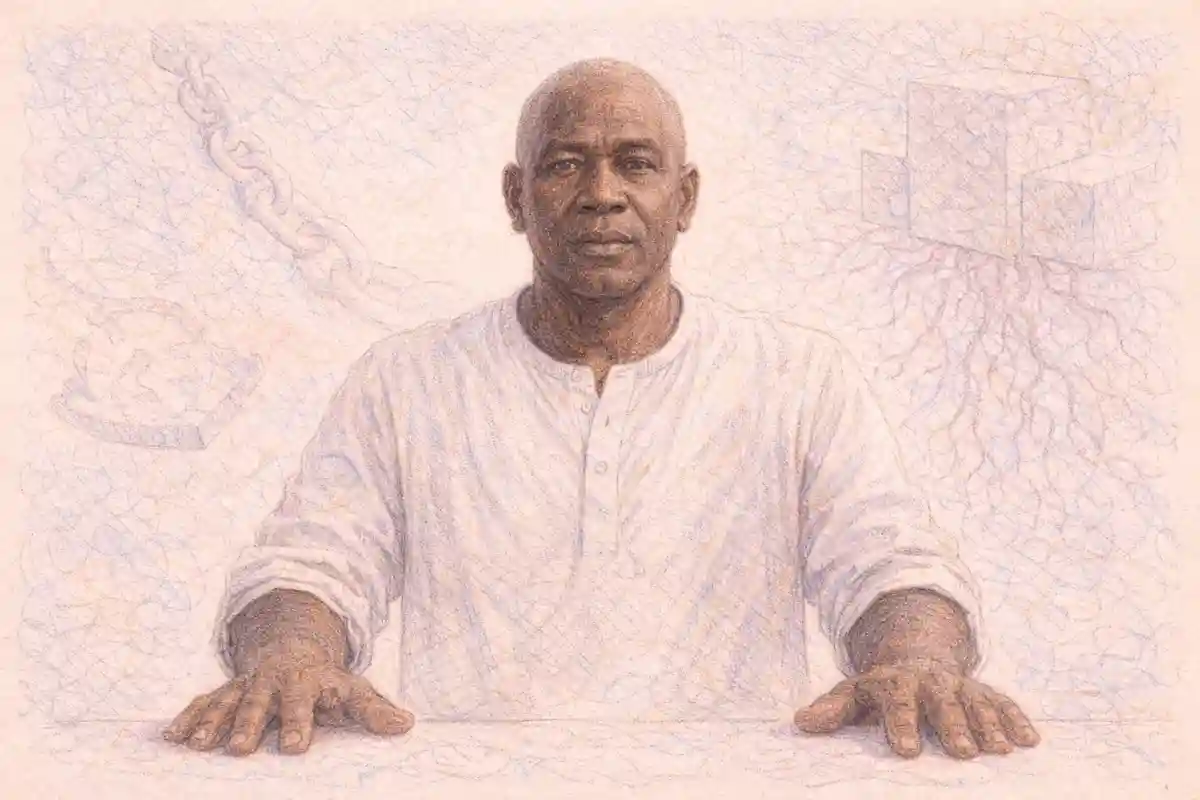
The first thing Romeo does in the play is hide. His father reports a boy who locks himself away at dawn, shuts the daylight out of his room, and makes himself “an artificial night,” and the cause is a woman the audience never meets and the hero forgets within an hour of seeing her rival. That opening portrait is the puzzle this article sets out to solve, because the figure the culture remembers is nothing like the figure the text introduces. Popular memory keeps a single Romeo, the swooning balcony romantic who exists to love and to die for love. The lines keep a stranger animal: a poseur who graduates into a poet, a peace-lover who commits a revenge killing in broad daylight, a fatalist who blames the stars for choices his own hands make.

The argument here is that the figure at the center of Verona’s tragedy is built entirely out of contradiction, and that the contradictions are not flaws in Shakespeare’s drawing but the engine of the catastrophe. Read as a smooth romantic lead, the part collapses into sentiment. Read as a knot of opposed impulses, gentleness and violence, fate and will, convention and feeling, boyhood and the demands of manhood, the same part becomes one of the sharpest studies of a young man in the language. The standard account asks what the boy feels. The better question asks what he does, and how the language he speaks changes as he does it. By the time the youth lifts a vial in a tomb and toasts a corpse he believes is dead, the play has earned every turn through a transformation the cliche erases. What follows tracks that transformation line by line, from the manufactured gloom over Rosaline to the last kiss in the Capulet vault, and weighs the long critical quarrel over whether the boy is a victim of the stars or the author of his own ruin. The verdict, argued from the evidence rather than asserted, is that he is both, and that Shakespeare designed him so the two cannot be pulled apart.
Where Romeo Stands in the Play
To read the part, place it. The young Montague is the only son of the elder Montagues, heir to one of the two houses whose “ancient grudge” the Prologue announces in its second line. He is, crucially, absent from the brawl that opens the action. While Sampson, Gregory, Tybalt, and Benvolio trade blows and the Prince threatens death for the next disturbance, the heir of the house is nowhere near the square. Benvolio has to go looking for him and finds him wandering a grove of sycamore before dawn, sighing. This staging choice matters more than it first appears. Shakespeare introduces his hero by withholding him from the feud, marking him from the start as a youth whose attention lies elsewhere, on private feeling rather than tribal loyalty. The whole tragedy will turn on the moment that private orientation breaks and the boy is dragged back into the violence he began by avoiding.
How old is Romeo?
Shakespeare never states Romeo’s age. Juliet is “not fourteen,” fixed precisely by the Nurse and Capulet, but the text leaves the young Montague’s years open, suggesting only a youth old enough to bear arms and marry yet still answerable to his parents and the Friar. He is, in performance tradition, somewhere between sixteen and twenty-one.
That silence is itself a clue. By declining to number the hero’s years while pinning down the heroine’s to the day, the dramatist keeps the boy’s exact maturity an open question, and the openness lets the part swing between the child his elders manage and the man the duel demands. The figure is old enough to be courted as a husband for a noble daughter, skilled enough with a rapier to kill Verona’s most feared swordsman, and trusted enough to read a guest list and move freely at night. He is also young enough that his father still frets over his moods, the Friar still lectures him like a pupil, and his entire emotional weather can reverse in a single evening. The play sits him on that hinge and never lets him off it.
Why does Romeo’s name matter to the tragedy?
His name is the obstacle the whole love plot runs into, because Romeo is a Montague and the woman he wants is a Capulet. At the window Juliet wishes he would refuse his father and forgo the name, and asks what is in a name at 2.2.43, recognizing that the syllables, not the man, are the enemy.
This is more than wordplay. The feud has made an accident of birth into a death sentence, so that the boy’s identity is the very thing standing between him and everything he desires. He offers, at the window, to be new baptized and to tear the written word that names him, a gesture of erasing the self in order to keep the love. The tragedy turns on the impossibility of that wish. He cannot unmake his name, because the name is bound to the killing of Tybalt, to the banishment, and finally to the corpses in the vault. Catherine Belsey’s reading of desire and naming in the play treats this exchange as central, the lovers trying and failing to imagine a self prior to the social labels that doom them. The young Montague’s name is not a detail. It is the trap the part is sprung inside.
Structurally, the part occupies the position the source material assigned it, but Shakespeare compressed the timeline brutally. In Arthur Brooke’s 1562 poem The Tragicall Historye of Romeus and Juliet, the romance unfolds across months; the lovers enjoy a marriage of some duration before the killing of Tybalt. Shakespeare squeezes the same events into roughly four days, Sunday to Thursday, so that every choice the boy makes is made at speed and under pressure. The haste that critics debate as a character trait is therefore also a structural fact: the dramatist built a machine that gives his hero no time to think, then asks the audience to judge how he behaves inside it. Any honest reading of the part has to hold both truths at once, the temperament that leaps and the design that leaves no room to do otherwise.
What does Romeo want?
What the boy wants changes twice, and tracking those shifts is the key to the part. He opens wanting Rosaline, or rather wanting the posture of wanting her. He then wants Juliet with a suddenness that alarms even the Friar. After the killing of Tybalt he wants, above all, not to be parted from her, and that final want is what drives him to the apothecary and the tomb.
His position in the social order sharpens the stakes. As the Montague heir he carries the weight of the feud whether he courts it or not; his very name, as Juliet recognizes at the window, is the obstacle to everything he desires. The drama of the part is the drama of a young man trying to live a private life of feeling inside a public structure of hatred that will not permit it. Mercutio, his closest companion, embodies the bawdy, combative masculinity the feud rewards and the boy keeps trying to step outside. Benvolio, the peacemaker cousin, embodies the restraint he aspires to and finally abandons. The Friar offers a substitute father, gentler than the real Montague but no less prone to managing the youth as a project to be steered. Set among these figures, the hero is defined by what he is pulled between, and the pulls run in opposite directions.
The Text Up Close: How Romeo Speaks
A character study of this figure is, before anything else, a study of his language, because Shakespeare makes the boy’s words the visible index of his inner change. Nobody else in the play is given so deliberate a verbal arc. He begins speaking one kind of poetry, learns to speak another, and dies speaking a third, and the distances between them are the distances the part travels.
The opening voice is pure inherited convention. Lamenting Rosaline in the first scene, the youth speaks in the antitheses of the Petrarchan tradition, the fashionable idiom of the sonnet-writing lover who turns his unhappiness into elegant paradox. He calls love a smoke made with the fume of sighs and reaches for a famous run of oxymorons: brawling love and loving hate, heavy lightness, serious vanity, feather of lead, bright smoke, cold fire, sick health. The lines are clever and entirely secondhand. Every figure in them was a commonplace of the love poetry of the day, and Shakespeare wants the audience to hear the borrowed quality. This is a young man performing heartbreak in the approved style, in love with the idea of being in love, his grief so generic that Benvolio can diagnose it as a pose and Mercutio can mock it without ever needing to know the woman’s name. The verse is balanced, symmetrical, and oddly bloodless. It describes a feeling rather than enacting one.
Set against that opening, the language at the Capulet feast registers as a genuine event. Catching sight of the Capulet daughter across the hall, the boy abandons the chilly antithesis and reaches for light: she teaches the torches to burn bright, she hangs upon the cheek of night like a rich jewel in an Ethiop’s ear. Caroline Spurgeon’s classic study of the play’s imagery identified this cluster, the lovers repeatedly imagined as sources of light against darkness, as the dominant figurative pattern of the work, and it is the young Montague who launches it. The shift is audible. The smoke and lead of the Rosaline speeches give way to flame and brilliance, the static paradox to motion and warmth.
Why is the lovers’ first conversation a sonnet?
When Romeo and Juliet first speak at the feast, their fourteen shared lines form a complete Shakespearean sonnet, three quatrains and a couplet, built on the conceit of pilgrim and saint and sealed by a kiss. Two strangers spontaneously co-author a perfect love poem, splitting its rhymes between them, a sign that they are made for one shared idiom.
The detail repays close attention because it is the structural heart of the meeting and one of Shakespeare’s boldest formal strokes. The boy opens with a quatrain comparing his hand to a pilgrim and her hand to a holy shrine; she answers in the matching rhyme scheme, extending his religious conceit rather than starting a new one; he picks her thread back up; together they reach the closing couplet and the kiss that seals it. The form itself argues that these two belong together, because they can finish each other’s sonnet at first sight, something the youth could never have done with the absent Rosaline, who exists in his earlier verse only as a target for solo complaint. Where the Rosaline lines are a monologue of borrowed paradox, the feast lines are a duet of shared invention. The contrast is the whole argument of the part rendered in metrical form: the difference between performing love alone and making it with another person. When the kiss lands and Juliet teases that he kisses “by th’ book,” she names the very thing the audience has watched happen, that the encounter has been conducted according to a poetic form, and gently flags that some of the convention still clings to him even now.
By the window scene that follows, the borrowed manner is burning off fast. The boy still reaches for the cosmic and the celestial, calling his beloved the sun and bidding her rise to kill the envious moon, but the verse has loosened into something closer to spontaneous speech, breaking its own elaborate figures off mid-flight to respond to what she actually says and does above him. The transformation is not yet complete; he over-reaches, swears by the moon she has just told him not to swear by, and has to be corrected. But the direction is set. Across three scenes the language travels from secondhand paradox, through a co-written sonnet, to a voice learning to abandon its set pieces and answer a real person in real time.
The presence of Mercutio sharpens the point by parody. When Mercutio conjures the lovesick youth in the dark after the feast, calling him up by Rosaline’s bright eyes and her fine foot and quivering thigh, he is mocking the entire Petrarchan posture, reducing the worship of an idealized lady to a string of bawdy body parts. The joke depends on the audience hearing the gap between Mercutio’s coarse materialism and the boy’s high-flown idiom, and it works as a running commentary on the hero’s manner of loving. The young Montague’s verbal development is therefore staged against a friend who treats the whole convention as a sham, so that every step the boy takes away from empty paradox and toward genuine feeling is measured against a voice that denies such feeling exists at all.
There is, too, a side of the part the moping opening conceals and the romantic memory forgets entirely: the figure is funny, and quick, and at home in a contest of wit. The morning after the feast, restored by his new attachment, the hero trades rapid-fire bawdy puns with Mercutio in the street, capping each jest with a sharper one, until Mercutio crows that now the boy is sociable, now he is properly himself, and that this is better than groaning for love like a drooling simpleton. The exchange is important evidence about the part, because it shows that the lonely sigher of the first scene is a temporary condition rather than the whole man. The youth who can match Mercutio quibble for quibble is sharp, sociable, and verbally athletic, a companion as much as a lover, and the play deliberately lets the audience see this fuller person just before the duel destroys him. The contradiction the romantic image erases is not only gentleness against violence but also melancholy against wit. The boy contains both the solitary mourner and the laughing friend, and Mercutio, who loves the second and has no patience for the first, dies before he can see which one the killing will leave behind.
The window scene rewards a closer look, because it is the proving ground of this second voice. The boy overhears Juliet, alone above him, wish that he would deny his father and refuse his name, asking not where but why he is Romeo at all. What follows is the play’s most sustained piece of mutual wooing, and the hero’s part in it is to keep over-reaching and keep being pulled back to earth. He answers her private musing aloud, startling her; he swears his love by the blessed moon, and she stops him at once, telling him not to swear by the inconstant moon that changes monthly in its orbit, lest his love prove as variable. The correction is telling. Left to himself the youth reaches instinctively for the grand celestial figure, the same impulse that produced the sun and the envious moon a few lines earlier, and it takes the more grounded Juliet to discipline the habit. The verse of the scene records a voice in transition, still reaching for the cosmic conceit by reflex but learning, under the pressure of a real exchange, to drop it and speak plainly. The new manner is not yet steady; it is being forged in real time, line by line, against a partner who will not accept the old currency.
The third and final voice arrives in the tomb, and it is the most stripped of the three. Standing over the body he believes is dead, the youth abandons both the early paradox and the soaring conceits of the window for a plainer, more exhausted tenderness. He tells death it has sucked the honey of her breath but has had no power yet upon her beauty, observing that crimson is still in her lips and cheeks and that death’s pale flag is not advanced there. The lines carry the play’s cruelest irony, because the color he reads as beauty undefeated by death is in fact the flush of returning life, the sleeping potion wearing off. His close observation comes within a breath of the truth and misreads it completely, and the misreading kills them both. He bids his eyes look their last and his arms take their last embrace, then drinks to his love and praises the apothecary whose drugs are quick, dying with a kiss. The verse here has no ornament to spare. The performer of the first scene, the co-author of the sonnet, the over-reacher at the window, has become a young man speaking the barest possible words over a body, and the distance between that voice and the manufactured gloom of the opening is the distance the entire part has traveled. The killing in the third act will test whether the man who learned to speak this way can survive in a city that speaks the older language of blood.
The Core Investigation: A Boy Built From Opposites
The case for reading this hero through his contradictions rests on four oppositions, each of which the text stages directly rather than merely implying. He is convention turning into feeling. He is gentleness that erupts into killing. He is a fatalist who keeps making the decisive choice. He is a boy whose defining quality, speed, is at once his charm and the mechanism of his death. Hold these four against the events of the play and the part stops being a sentimental blur and becomes a precise, almost diagrammatic study of a young man pulled apart by forces that point in opposite directions.
From convention to feeling
The first opposition has already surfaced in the language, and it runs deeper than style. The youth who mourns Rosaline is not really in love; he is in love with a role. Friar Laurence sees this instantly. When the boy arrives at the cell announcing a new devotion, the older man does not congratulate him. He scolds the speed of the reversal, observing that young men love with their eyes and not their hearts, and recalling how recently the same young man drowned the cell in tears for a different girl. The Friar’s skepticism is the play’s own, voiced aloud, and it sets a trap the rest of the action must spring or fail to spring. If the feeling for the Capulet daughter is merely Rosaline relabeled, the boy is shallow and the tragedy is hollow. If it is different in kind, the part has undergone a real conversion, and the difference has to be shown, not asserted.
Shakespeare shows it through consequence. Infatuation with Rosaline cost the young Montague nothing but sleep and a few elaborate sighs; it demanded no risk and produced no action. The new attachment, by contrast, makes him scale a wall into enemy ground, bind himself in secret marriage within a day, and stake his life on a feud-crossing union that any sensible head would call madness. Feeling is measured here by what it is willing to spend, and the boy spends everything. The conversion from the Petrarchan poseur of the first scene to the husband of the sixth is therefore not just a change of vocabulary but a change of stakes. He has stopped describing love and started paying for it. That is the first contradiction resolving into character: the performer becomes the thing he was performing, and the cost of becoming it is the rest of the play.
Gentleness and the killing
The second opposition is the violent one, and it is where the romantic reading breaks down completely. The same young man who speaks the tenderest verse in the play also runs a sword through Tybalt in the street and, later, kills Paris at the tomb almost as an afterthought. A figure remembered for love commits two homicides, and the first of them is the structural turning point of the entire tragedy.
The scene at the start of the third act is built to make the killing as charged as possible. Tybalt, hunting the youth who crashed the feast, finds him newly and secretly married into his own family, though Tybalt cannot know it. The boy, glowing with the morning’s wedding, refuses the challenge in language that baffles everyone present, protesting that he loves the name Capulet better than his adversary can imagine and asking to be satisfied with that. He has, in his own mind, the best possible reason to keep the peace: he is now Tybalt’s kinsman by a marriage no one else knows about. Mercutio, reading the refusal as cowardice, draws in his friend’s place and is killed under the young Montague’s arm when the peacemaker steps between the blades. That detail, that Mercutio takes his death wound partly because his friend’s intervention gets in the way, is the cruelest stroke of the design. The boy’s gentleness does not prevent the violence; it helps cause it.
What follows is the hinge of the play, and Susan Snyder’s influential reading locates the genre’s whole turn at exactly this point. Up to Mercutio’s death, she argues, the work has run on the engine of romantic comedy, with its young lovers, its bawdy friends, its disapproving elders, and its obstacles built to be overcome. Mercutio’s death snaps that engine. The comic world, in which a clever friar and a secret marriage might still engineer a happy ending, dies with him, and the tragic world of consequence and blood takes over. The young Montague is the agent of that switch. Hearing his friend is dead, he declares that his reputation is stained and that Juliet’s beauty has made him effeminate, then turns and kills Tybalt in a fury of grief and shame. Coppelia Kahn’s account of the play reads this moment as the feud reclaiming the boy who tried to escape it: the codes of Veronese manhood, which equate honor with the readiness to kill, reach in and pull him back into the violence his marriage was supposed to transcend. He kills, in this reading, to prove he is a man in the only terms his city recognizes, and in doing so he forfeits the private life of feeling he had just begun to build.
The line he speaks after the killing is the most quoted in any debate about the part. Standing over the body, urged by Benvolio to flee before the Prince arrives, he cries that he is fortune’s fool. Editions number the line slightly differently, but the words are stable across the early texts and the modern editions alike, and they are the crux of the whole question of his agency. The boy who has just chosen to draw, chosen to strike, and chosen to kill announces in the same breath that he is fortune’s plaything, the passive victim of a hostile fate. The gap between what he has done and what he says about it is the gap the rest of this article must measure.
The boy beneath the man
The scene that follows the killing exposes a side of the part the romantic memory never keeps: the child underneath the lover and the killer. Hidden in Friar Laurence’s cell and told that the Prince has sentenced him to banishment rather than death, the young Montague does not receive the news as a reprieve. He receives it as a sentence worse than dying, since banishment means exile from Verona and so from Juliet, and there is no world for him, he insists, outside the city walls. He throws himself on the floor, weeps, and when the Nurse arrives with news of his weeping bride he reaches for his own dagger to make an end of himself on the spot, only to be stopped before he can strike.
The Friar’s response is one of the most pointed speeches in the play about the hero’s nature. He rounds on the youth and asks whether he is a man, since his shape cries out that he is one while his tears are womanish and his wild behavior the unreasoning fury of a beast. The rebuke is worth weighing carefully. Coming from the substitute father who has indulged the boy throughout, it names the collapse for what it is: a regression beneath the manhood the duel had just so violently asserted. Hours earlier the figure proved himself a man in Verona’s lethal terms by killing Tybalt; now he lies on the ground threatening to stab himself like a child in a tantrum. The gendered language the Friar reaches for, womanish and beastly, is the same vocabulary of masculine honor that Coppelia Kahn identifies as the engine of the feud, and it shows how completely that vocabulary governs the boy from every direction. He is shamed into killing by the charge of being effeminate, then shamed out of suicide by the same charge. The part is squeezed between an order that demands he be hard and a feeling that makes him soft, and the banishment scene catches him at the exact point where the two pressures meet and he breaks. Whatever maturity the marriage seemed to confer is stripped away in a moment, and what remains on the cell floor is unmistakably a boy.
The fatalist who chooses
The third opposition is the one the brief of any honest reading must confront directly, because it carries a real objection. A long line of readers, encouraged by the Prologue’s announcement that the lovers are crossed by the stars and the play’s drumbeat of omens and premonitions, has treated the hero as essentially passive, a leaf carried on a current of fate, more sinned against than sinning. On this view the boy does not really cause the catastrophe; the stars do, and his cry of fortune’s fool is simple truth. The reading has the Prologue on its side, and it has the youth’s own repeated self-description, from the foreboding before the feast that some consequence hangs in the stars, to the defiance in Mantua when he hears the false news and shouts that he defies the stars themselves.
The objection deserves a real answer rather than a dismissal, and the answer is to watch the hands rather than listen to the mouth. At every decisive fork the boy chooses, and chooses fast, and the choices are his. No star compels him to climb the Capulet wall. No fate forces the secret marriage within a day of the first kiss. The decision to draw on Tybalt is his, taken in a rage of grief he could, in principle, have mastered, as Benvolio begs him to. Most damning of all is the sequence in the final act. Hearing from his servant Balthasar that Juliet lies dead, he does not send to the Friar for confirmation, does not pause, does not wait. He resolves on suicide in a single line, buys poison from a starving apothecary, rides through the night to the tomb, and drinks before any rescue can reach him. The apothecary episode is itself a small portrait of agency in action. The boy does not stumble into the poison; he remembers a particular impoverished druggist whose shop he had noticed, seeks him out deliberately, reads the famine in the man’s cheeks, and presses gold on him until the law-fearing seller yields. He even pauses to moralize that gold is a worse poison to the human soul than the compound he is buying, a reflective aside that no leaf carried on fate’s current could make. A figure genuinely without choices would not reason, persuade, and philosophize his way to the means of his death. This one does, methodically, which is exactly why his later appeal to the stars rings as evasion rather than truth. The Friar’s letter explaining the sleeping potion has miscarried, true, but the boy never tries to verify the news that shatters him. He acts on the worst possible reading of an ambiguous report, at maximum speed, and the speed is what kills him. A character genuinely governed by fate would have no choices to make. This one makes them constantly, and makes them badly, and then blames the sky.
The honest verdict is not that the fate language is empty. It is that Shakespeare deliberately keeps both frames live at once, and refuses to let the audience collapse them into one. The Prologue is real; the omens are real; something in the structure of Verona, the feud, the timing, the miscarried letter, does seem to bend events toward disaster regardless of what anyone intends. But the choices are also real, and they are the proximate cause of every death. The InsightCrunch reading of the part is that the boy’s fatalism is not a true account of his situation but a psychological habit, a way of disowning his own decisions even as he makes them. Calling himself fortune’s fool is how he avoids saying he chose to kill. Defying the stars is how he dramatizes a suicide he has already resolved on for reasons entirely his own. The fate talk is character, not metaphysics. It tells us how this young man relates to his own agency, which is to flee from it into the language of doom, and that flight is itself one of the choices that dooms him.
The boy whose virtue is his ruin
The fourth opposition gathers the others. The defining quality of the part is speed, and speed is presented throughout as both the source of the young Montague’s charm and the direct mechanism of his death. The same haste that makes him magnetic, the readiness to fall completely and at once, to scale a wall, to marry in a morning, to risk everything without calculation, is the haste that drives him to the apothecary before the truth can catch up. Friar Laurence names the danger explicitly when he marries the couple, warning that these violent delights have violent ends and counselling the boy to love moderately, because long love does so. The advice is sound and the youth cannot take it, because moderation is precisely what he does not have in him; his virtue and his fault are the same trait seen from two sides.
The haste is not only a temperament; it is woven into the architecture of the play, and the two reinforce each other so tightly that they cannot be cleanly separated. Shakespeare took a story that unfolds across months in Arthur Brooke’s source poem and compressed it into roughly four days, so that the boy’s every decision is taken at a sprint. The Friar registers the danger more than once, and earlier than the wedding, counselling the youth to go wisely and slow, since those who run fast are the ones who stumble. The counsel falls on deaf ears every time, not because the hero rejects it but because the world the dramatist has built gives him no room to heed it. He meets Juliet on a Sunday, marries her on Monday, kills Tybalt the same afternoon, and is dead by Thursday. Within so tight a frame the difference between haste as a character trait and haste as a plot mechanism dissolves. The youth is impetuous by nature, and the structure denies him the time that might have let his impetuousness cool. This is why the part cannot be judged as if its owner had the leisure to deliberate. Shakespeare engineered a machine that strips away deliberation, then placed inside it a young man temperamentally incapable of it, so that nature and design conspire toward the same end. The speed that kills him is at once the truest thing about him and the cruellest thing about his situation, and the play refuses to let the reader assign the blame entirely to either.
This is what lifts the part above the level of a cautionary figure with a tidy flaw. Shakespeare does not give his hero a vice to be punished. He gives him an intensity that is genuinely beautiful and genuinely lethal, and declines to separate the two. The audience is asked to admire the very quality that destroys him, and to feel the destruction as the price of the admiration. A boy who loved more slowly would have lived and would not have been worth a tragedy. The contradictions are not, in the end, four separate problems. They are four faces of one young man whose whole nature is to go too far, too fast, with too much feeling, in a world that punishes exactly that.
The InsightCrunch Romeo arc
The transformation can be mapped. The table below charts the boy’s language and his choices at each pivot from the Rosaline complaints to the tomb, marking what changes at every turn. Read down the language column and the secondhand paradox of the opening gives way to shared invention, then to plain feeling, then to the bare resolve of the end. Read down the choices column and a pattern of acceleration emerges, each decision faster and costlier than the last, until the final one allows no recovery. This is the InsightCrunch Romeo arc, and it is the spine on which every claim in this article hangs.
| Pivot | Where | His language | His choice | What changes |
|---|---|---|---|---|
| Rosaline complaint | 1.1 | Petrarchan oxymoron, borrowed and static | None; only sighs and seclusion | Establishes the poseur, love as performance |
| The feast | 1.5 | Light imagery, a co-written sonnet | To pursue a Capulet on sight | Performance becomes event; convention starts to crack |
| The window | 2.2 | Loosened, interrupted, answering in real time | To propose marriage within hours | Feeling outruns form; speed becomes commitment |
| The marriage | 2.6 | Vows against the Friar’s caution | To bind himself in secret in a day | Stakes go total; warning ignored |
| Tybalt | 3.1 | Refusal of the duel, then rage | To draw and kill | Gentleness fails; the feud reclaims him |
| Banishment | 3.3 | Despair, threat of self-slaughter | To collapse, then be talked down | The boy beneath the man is exposed |
| Mantua | 5.1 | Defiance of the stars | To buy poison on unverified news | Fatalism masks a chosen suicide |
| The tomb | 5.3 | Plain, exhausted tenderness | To kill Paris, then drink | Speed completes its work; no recovery possible |
The Critical Conversation
The scholarship on this part divides along a fault line that maps almost exactly onto the contradictions just traced, and the most useful way into the criticism is to watch the major readers take sides on a single question: is the boy’s progress from Rosaline to Juliet a genuine development, a real growing-up, or is it an illusion the play sets up only to puncture?
Harry Levin’s essay on form and formality, one of the founding documents of modern criticism on the play, takes the developmental view and grounds it in the verse. For Levin the work is organized as a sustained quarrel between formal convention and the pressure of authentic feeling, and the hero is the battleground on which that quarrel is fought. His early speeches are deliberately overformalized, stiff with the rhetorical figures of fashionable love poetry, and the drama of the part lies in watching feeling break that formality open. On this reading the movement from the Rosaline oxymorons to the plainer, more broken verse of the later scenes is a real arc, a young man’s language maturing as his experience deepens. The conversion is genuine, and the verse proves it. Levin gives the critic a method as much as a conclusion: read the changing form as the record of the changing self.
Caroline Spurgeon’s earlier study of the play’s imagery supplies independent support from a different angle. Her tracing of the light-against-dark pattern, the lovers imagined again and again as torch, star, sun, and lightning flashing against the night, shows a figurative coherence that the boy himself sustains and elaborates as the play proceeds. The imagery is not random ornament; it is a system, and the hero’s command of it grows. That growth is hard to square with the idea that nothing real changes in him.
Susan Snyder shifts the frame from language to structure, and in doing so sharpens the account of where the part turns. Her reading of the play as a comedy that collapses into tragedy locates the decisive moment not in any speech but in the killing of Mercutio, after which the comic machinery can no longer deliver a happy ending and the tragic logic takes over. Snyder’s contribution to the study of the hero is to show that his great reversal is not primarily verbal but situational: the world changes shape under him at the start of the third act, and the boy who was a comic lover becomes a tragic agent because the genre itself has switched tracks. This is a crucial corrective to a purely language-based reading, because it insists that the part is shaped by the architecture of the plot as much as by the evolution of the verse.
Coppelia Kahn presses harder on the social machinery, and her account is the most searching on the question of the killing. Reading the play through the lens of masculinity and the feud, she argues that Verona’s violence is a system for manufacturing men, that the boy’s tragedy is the tragedy of a youth caught between the private world of love and the public demand that he prove his manhood with a sword. His refusal of Tybalt is an attempt to step outside that system; his subsequent killing is the system reclaiming him. Where Levin sees a self maturing through language, Kahn sees a self constructed and then destroyed by the codes of its society, and the difference is not trivial. For Levin the contradictions are internal, a matter of feeling fighting form; for Kahn they are imposed from without, the fault lines of a culture that cannot let a young man love without also requiring him to kill.
Against all three of these broadly sympathetic readings stands the skeptical tradition, and Jonathan Goldberg’s deconstructive account is its sharpest modern instance. Goldberg is suspicious of the whole story of authentic feeling triumphing over empty convention. He notes that the language never fully escapes its own artifice, that the boy is still kissing “by th’ book” at the feast, still reaching for cosmic conceits at the window, still performing even at the height of supposed sincerity, and he questions whether the play offers any stable ground on which a “real” Romeo could stand free of the conventions that constitute him. On this view the conversion from Rosaline to Juliet is less a maturation than a substitution, the same desiring machine pointed at a new object, and the romantic reading that sees the boy growing up is itself a convention the play exposes. Rene Girard’s account of mimetic desire pushes a related suspicion from another direction, suggesting that the youth’s wanting is never spontaneous but always borrowed, modeled on the desires of others and the scripts of the culture, so that even his great passion is in some sense secondhand.
Here is the disagreement that has to be adjudicated, because the two camps cannot both be wholly right. Either the movement from Rosaline to Juliet is a genuine development, as Levin and Spurgeon and Snyder in their different ways maintain, or it is an exposed illusion, as Goldberg and Girard suggest. The text supports a verdict, and the verdict is that the developmental reading is right about the substance while the skeptical reading is right about the texture, and that Shakespeare wants both. Goldberg is correct that the boy never stops being a creature of convention; the conceits do cling to him to the end, and the playwright keeps flagging their artifice, most pointedly when Juliet herself notes that he kisses by the book. But the skeptical reading mistakes the persistence of poetic form for the absence of real change, and that is its error. What changes is not whether the youth speaks in figures, which he always does, but what those figures cost him. The Rosaline conceits cost nothing and risk nothing; the Juliet conceits accompany a wall climbed, a marriage made in a day, a life staked and lost. Convention that demands everything is no longer the same thing as convention that demands a few sighs, even when the words rhyme the same way. Levin’s developmental arc is therefore sound, but it should be measured in consequence rather than in sincerity. The boy does grow up, not because his language becomes more authentic, which is doubtful, but because his choices become irreversible. Maturity here is not the shedding of artifice; it is the acceptance of stakes.
Reception history confirms that this tension was felt from the start, though earlier readers framed it as a fault rather than a design.
Before turning to that history, one more strand of the modern skepticism deserves a hearing, because it bears directly on the question of whether the hero’s feeling is ever his own. Rene Girard’s account of mimetic desire argues that wanting in the play is never spontaneous but always borrowed, modeled on the desires and rivalries of others, so that even the boy’s great passion is in some sense a copy. On this view the switch from Rosaline to Juliet is not a deepening but a redirection of an imitative impulse, and the lovers’ intensity is partly a product of the obstacle the feud throws up, desire feeding on prohibition. Marjorie Garber, surveying the play’s enormous cultural reach, presses a complementary point from outside the text, observing how thoroughly the figure has been absorbed into the culture as a byword for the young lover, to the degree that the absorption now stands between readers and the actual part. Garber’s caution is the scholarly version of this article’s central claim: the cultural icon has overwritten the dramatic figure, and recovering the second requires resisting the first. Catherine Belsey, for her part, locates the play’s force in its handling of desire and naming, reading the lovers’ attempt to wish away the names that doom them as the heart of the work, which throws the hero’s identity crisis, his offer to be new baptized, into the center rather than the margin of the part.
The disagreement among these readers is not idle, and the verdict this study reaches mediates it. Girard and the skeptics are right that the boy’s desire is shaped by convention, rivalry, and prohibition, and wrong only if they conclude that shaped desire is therefore not real. A feeling can be conditioned by its culture and still be wholly the person’s own, still cost everything, still kill. The borrowed quality of the youth’s passion is undeniable; the triviality the skeptics sometimes infer from it does not follow. That is the line this article draws, and it is the line the text supports, since the play takes pains to show convention turning into consequence without ever pretending the convention disappears.
Turning to the earlier reception, the same doubleness was registered as a complaint long before it was understood as a method. Samuel Pepys, after seeing a 1662 staging, recorded in his diary that he thought it the worst play he had ever heard, a judgment aimed partly at the production but partly at the very qualities, the wordplay and abrupt feeling, that later readers would learn to value. Samuel Johnson, editing the plays in the following century, admired the work’s power while remaining uneasy with its conceits, the wordplay and paradox that Levin would much later read as structural rather than ornamental. Samuel Taylor Coleridge, more sympathetic, praised the hero’s love as the genuine article and treated the Rosaline episode as Shakespeare’s deliberate demonstration of the difference between fancy and true feeling, an early version of the developmental reading. William Hazlitt, writing on the characters of the plays in 1817, admired the rendering of youthful passion and took the boy’s ardor as the work’s chief glory, a Romantic confidence in the feeling that the twentieth-century skeptics would later complicate. Harley Granville-Barker, writing as a man of the theatre in his Prefaces, brought the discussion back to the practical question of how the part plays, insisting that the actor must make the speed of the hero’s feeling convincing in the house, since on the page it can look like fickleness and only in performance, taken at the right pace, does it read as the genuine velocity of youth. That theatrical observation is worth holding onto, because it suggests that the contradiction between fickle and faithful, like the contradiction between fated and free, may be less a problem to solve than an effect to be played, a doubleness the part is built to sustain rather than resolve.
Stage, Screen, and Afterlife
Four centuries of performance have wrestled with exactly the contradictions the text builds in, and the production history is in large part a history of which Romeo a given age could bear to watch. The choices directors and actors have made about the part are an external record of the same fault lines the criticism traces, especially the two hardest ones: how to play the speed of the feeling without making the boy look fickle, and how to handle the violence in a figure the culture remembers as a lover.
The most consequential early intervention was David Garrick’s, and it reshaped the part for a century. Garrick’s heavily revised acting text, which dominated the English stage from the middle of the eighteenth century, made two changes that bear directly on the hero. First, he cut the Rosaline subplot almost entirely, so that his Romeo loved Juliet from the start with no embarrassing prior infatuation to explain away. The change tidied the part into the faithful romantic the age preferred and quietly deleted the very contradiction, the poseur turning into the lover, that this article argues is central. Second, Garrick interpolated a new dying exchange in the tomb, allowing Juliet to wake before the poison kills the boy so that the two could share a final scene of mutual recognition and farewell. The addition is pure theatrical sentiment, and it has no warrant in Shakespeare’s text, where the cruelty of the design is precisely that she wakes too late and they never speak again. Garrick’s tomb gave audiences the consummated grief the original withholds, and the fact that the interpolation held the stage for so long shows how strongly performers and playgoers wanted to soften the hero’s solitary, hasty death into a shared one.
The nineteenth century produced one of the most striking casting decisions in the part’s history when the American actress Charlotte Cushman played Romeo opposite her sister Susan as Juliet, to great acclaim in London in 1845. A woman in the role threw the question of the boy’s masculinity into sharp relief, and reviewers praised Cushman’s Romeo as more ardent and more convincingly youthful than many of the men who had played it, an implicit comment on how hard the part’s blend of tenderness and violence is for a conventional leading man to carry. The Cushman performances are a reminder that the role’s contradictions have always invited unconventional solutions.
In the twentieth century the defining stage event was the 1935 production at the New Theatre in London in which John Gielgud and Laurence Olivier alternated the roles of Romeo and Mercutio, each playing the lover for part of the run and the bawdy friend for the rest. The contrast between their two Romeos became the talk of the season and crystallized the interpretive choice the part forces. Gielgud’s was the lyrical reading, all music and verse, the hero as poet; Olivier’s was the naturalistic reading, more physical and ardent, the hero as young man in the grip of the body, with the verse sometimes roughened in the service of feeling. The split between Gielgud’s lyric Romeo and Olivier’s physical one is the split between Levin’s language-centered reading and the more carnal, urgent figure the play also supports, staged as a direct comparison on the same boards within weeks.
On film the central problem has been age, because the part needs a youth and the industry has often cast a star. George Cukor’s 1936 film gave the role to Leslie Howard, an accomplished actor in his early forties, opposite Norma Shearer, and the production’s evident maturity drew criticism precisely because the hero’s defining haste reads as foolish in a grown man and as forgivable velocity only in a boy, exactly the point Granville-Barker had made about pace and youth. Franco Zeffirelli’s 1968 film answered the complaint directly by casting the teenaged Leonard Whiting opposite the equally young Olivia Hussey, and the youthfulness of the leads transformed the part’s reception, making the speed of the feeling read as authentic adolescent intensity rather than adult fickleness. Zeffirelli’s Romeo could fall in a single evening and the audience believed it, because the figure on screen was visibly young enough to do exactly that. The casting choice was an interpretive argument: the contradictions of the part resolve, in performance, when the boy is genuinely a boy.
Baz Luhrmann’s 1996 film, with Leonardo DiCaprio as the hero, pushed the same insight into a different register, relocating Verona to a violent contemporary world of feuding crime families and styled gunplay where the swords are renamed but the killing is, if anything, more visceral than on the Elizabethan stage. DiCaprio’s Romeo foregrounds the dreamy, drifting quality of the early scenes and then the shocking suddenness of the violence, and the film’s frantic pace makes the structural haste of the plot impossible to miss. By setting the love against an unmistakably brutal social order, Luhrmann restored to the screen the very tension Garrick’s tidy text had smoothed away, the lover trapped inside a machinery of male violence he cannot finally escape.
The part has also been recast wholesale into other forms, and each reworking reveals what its makers took to be the essence of the figure. Charles Gounod’s 1867 opera gives the hero a tenor’s lyric ardor, building whole arias out of the moments the play renders in verse and turning the worship of the beloved as sun and light into sustained song, so that the operatic Romeo is the lover at his most purely musical, the violence pushed to the margins. Sergei Prokofiev’s ballet, composed in the 1930s, hands the part to a dancer with no words at all, which forces the contradiction into the body: the same physical vocabulary must carry the tenderness of the balcony pas de deux and the fury of the duel, and the great choreographic readings of the role make the swordsman and the lover legible as one continuous figure. The boldest transformation is Leonard Bernstein’s 1957 musical, which relocates the hero to the gang warfare of mid-century New York and renames him, turning the young Montague into Tony, a former gang member trying to leave the violence behind only to be dragged back into a fatal street fight by the death of a friend. The parallel is exact, and it is instructive, because the musical recognized that the heart of the part is precisely the doubleness this article has traced, a young man of feeling pulled back into killing by the codes of a violent world, and built its whole reinvention around that recognition rather than around the romance alone. The afterlife of the figure, taken together, is a long argument about which half of him matters, and the most searching reworkings have always insisted on both. The cultural afterlife of the part, from these films to the countless school productions and the figure’s near-proverbial status as a name for the ardent young lover, has tended to remember only the first half of the contradiction, the tenderness, and to forget the second, the killing. The performance history at its best, from Cushman’s ardent cross-cast youth to Zeffirelli’s real teenager to Luhrmann’s drifting and then deadly boy, has worked to put the two halves back together.
Wider Significance
Set against the rest of Shakespeare’s work, the figure marks an experiment the dramatist would refine for the next decade. He is one of the earliest of the great tragic protagonists, written some years before Hamlet, Othello, and Lear, and he is built on a principle the later tragedies would develop: the hero destroyed not by an external villain but by a quality of his own, dramatized as the index of his whole nature. There is no Iago in Verona, no scheming antagonist engineering the fall. The nearest thing to a villain is the feud itself, an impersonal structure of inherited hatred, and within it the boy’s own velocity does the work an Iago does elsewhere. In this the part looks forward to the mature tragedies while remaining distinct from them, because the fatal quality here is not ambition or jealousy or pride but something closer to an excess of love, an intensity the play frames as admirable even as it proves lethal. Shakespeare is testing, in this early figure, whether a tragedy can be built out of a virtue rather than a vice, and the answer he arrives at, that the same trait can be both at once, is one he never abandoned.
Set beside the heroes who followed, the part throws their differences into relief and reveals its own peculiar shape. Where Hamlet is destroyed by deliberation, by a mind that thinks too precisely on the event and cannot act, the young Montague is destroyed by its opposite, by an inability to pause long enough to think at all. The two make an almost diagrammatic contrast, the prince who will not move and the boy who cannot stop moving, and both contrasts end in a tomb. Where Othello is worked on by an external manipulator who plants the jealousy that ruins him, the Veronese youth has no Iago; the poison in his story is his own velocity and the impersonal machinery of the feud, with no villain to absorb the blame. Where Macbeth chooses evil with open eyes and is punished for ambition, this hero chooses only love and is punished for loving too fast, which is why audiences mourn him in a way they do not quite mourn the Scottish king. The comparison clarifies what kind of tragic figure the brief of this article set out to determine. He is not the deliberating hero, not the deceived hero, not the wicked hero. He is the headlong hero, the one whose ruin flows from an excess of the very feeling the play most admires, and in writing him Shakespeare opened a vein of tragedy, the catastrophe of misdirected goodness, that he would mine for the rest of his career.
The part also clarifies what kind of tragedy this is, which has been a live critical question since at least the eighteenth century. Read through the hero, the work is neither a pure tragedy of fate, in which helpless lovers are crushed by a hostile cosmos, nor a pure tragedy of character, in which a flawed youth brings ruin on himself through his own bad choices. It is a deliberate fusion of the two, and the boy is where the fusion lives. His habit of speaking the language of fate while acting on the impulses of character is the mechanism by which Shakespeare keeps both readings in play, and the question of whether the young Montague is finally impulsive or doomed is one the play declines to settle precisely because settling it would destroy the effect. The full debate over his agency, the case for the impulsive reading set against the case for the fated one, is worth pursuing in its own right, but the conclusion this study reaches is that the two are not rival answers to be chosen between. They are two descriptions of a single design, and the design needs both.
His contradictions matter, too, for the way the play has shaped the wider culture’s idea of romantic love, an idea the figure has done as much as any in literature to form and to distort. The cultural shorthand has extracted from the part a single image, the pure devoted lover who would die for his beloved, and has discarded everything that complicates it: the forgotten first love that opens the play and exposes the hero as a practiced sigher before he ever meets Juliet, the killing that turns the tragedy, the suicide taken on unverified news in a fit of haste. The recovery of the part’s full strangeness is therefore not merely a scholarly nicety. It is a correction to one of the most influential templates the culture possesses for what love is supposed to look like. The figure the play actually wrote is a warning as much as an ideal, a study of how an intensity worth admiring can also be the thing that kills, and reading him whole, contradictions intact, is the only way to receive that warning rather than the flattened romance the shorthand transmits. The transformation of his voice, from the secondhand Petrarchan paradox of the opening to the bare resolve of the tomb, is the clearest single record of the difference between the figure the play wrote and the figure the culture remembers.
Within the play’s own design the hero functions as the point of maximum pressure between its competing worlds. He stands between the private sphere of love, represented by the window and the marriage bed, and the public sphere of the feud, represented by the square and the sword. He stands between youth and the adult order that would manage him, between the comic structure of the first half and the tragic logic of the second, between the language of convention and the pressure of feeling. Every major tension in the work runs through this single figure, which is why a thorough reading of the part is in effect a reading of the whole play. To understand what the young Montague is pulled between is to understand what the tragedy is about: a structure of feeling and a structure of violence, occupying the same city and the same young body, unable to coexist.
Why Romeo Is Misread
The central misreading is also the most popular one, and it is worth naming precisely: the reduction of the part to the swooning, single-minded romantic, the lover who exists only to love and to die. This is the Romeo of greeting cards, of casual reference, of the name used as a common noun for any ardent young man. It is not the Romeo of the text, and the gap between the two is instructive about how cultural memory edits its sources.
The flattening begins early and has identifiable causes. Garrick’s eighteenth-century acting text, by cutting the Rosaline subplot, removed the single clearest piece of evidence that the hero begins as a poseur rather than a paragon, and that excision shaped how generations encountered the part. A figure who loves Juliet from his first entrance, with no embarrassing prior devotion, is a simpler and more flattering creature than the one Shakespeare wrote, who opens the play mourning a different woman in borrowed verse. The forgotten first love is exactly the detail the romantic image cannot accommodate, which is why both the stage tradition and the popular memory have worked so hard to erase it. Recovering Rosaline, the unseen first love whose part repays far more attention than she usually receives, is the first step in restoring the part to its real complexity, because she is the proof that the hero’s capacity for sudden absolute love predates Juliet and raises the question the whole part turns on: whether the new feeling is different in kind or only in object.
The second great omission is the killing. The cultural memory of the figure has almost entirely suppressed the fact that the lover is also a killer, that the same hand that writes sonnets runs Tybalt through and dispatches Paris at the tomb. The instant when the lover kills Tybalt and turns the whole play is the structural pivot of the entire tragedy, the hinge on which the comedy becomes a tragedy, and it is precisely the moment the romantic shorthand cannot see. A culture that wants its young lovers pure has every incentive to forget that this one commits a homicide in the street out of grief and wounded honor. The forgetting is not innocent; it is what allows the part to be used as a template for idealized love, stripped of the violence the play insists is inseparable from it.
The third misreading is the one the criticism has done most to correct but the public has least absorbed: the reading of the boy as a passive victim of fate, fortune’s fool in the literal sense, undone by stars rather than by his own choices. The famous line invites the reading, and the Prologue seems to license it, but as this study has argued, the hands tell a different story than the mouth. The figure chooses at every fork, and chooses fast, and the suicide that ends him is a decision taken on unconfirmed news rather than a fate imposed from above. To read him as purely fated is to take his own self-description at face value, and his self-description, this article has maintained, is exactly the thing not to trust, because disowning his agency is one of the boy’s most consistent habits. The misreading, in other words, is one the character himself encourages, which is part of what makes it so durable. Setting it right requires watching what he does rather than believing what he says, and the difference between the two is the difference between the cliche and the play.
A related sentimentality clings to the death itself. The popular memory treats the suicide in the tomb as the supreme proof of devotion, a lover who could not live without his beloved, and the reading is not wrong so much as incomplete. The death is devoted, but it is also catastrophically hasty, taken on unverified news, moments before the waking that would have saved them both. Shakespeare builds the timing so that the audience, who know the potion is wearing off, watch the boy drink while Juliet stirs, and the unbearable nearness of the rescue is the whole point. To remember the death as pure romance is to forget that it is also the last and worst instance of the trait the play has been tracking from the start, the refusal to wait. The figure dies as he lived, too fast, and the tragedy lies precisely in the gap between the devotion the gesture expresses and the recklessness the gesture enacts. A culture that keeps only the devotion has kept half of the most important moment in the part.
Closing Reflection
He begins the play hiding from the daylight over a woman he will forget by nightfall, and he ends it in a tomb, toasting a corpse he has not waited long enough to find still warm. Between those two images lies the whole transformation this article has traced: the poseur who became a lover, the peacemaker who became a killer, the fatalist who chose every step of his own ruin, the boy whose readiness to go too far too fast was at once the most beautiful and the most lethal thing about him. The culture keeps half of him, the tender half, and the play keeps all of him, and the difference between the two is the difference between a sentiment and a tragedy. Read whole, contradictions intact, the figure is not the patron saint of young love but something harder and more honest: a study of how the very intensity that makes a person worth loving can be the same intensity that destroys them. The torches he taught to burn bright at the feast are the torches that light the vault at the end, and the play wants the audience to see that they were always the same fire. To remember him only as a romantic is to keep the warmth of that flame and forget its heat, and the harder, truer Romeo is the one who shows both at once, the one whose tenderness and whose violence are fed by a single source.
Frequently Asked Questions
Q: Is Romeo really in love with Rosaline at the start of the play?
He believes he is, but the play frames the feeling as performance rather than passion. In the first scene the young Montague mourns Rosaline in the polished oxymorons of fashionable love poetry, brawling love and loving hate, cold fire and sick health, the stock figures any educated youth could produce on demand. The verse describes heartache without enacting it, and his friends treat the mood as a pose to be teased out of him. The clearest verdict comes from Friar Laurence, who mocks the speed with which the boy switches to Juliet and observes that young men love with their eyes rather than their hearts. The point of the Rosaline episode is to establish a hero in love with the idea of being in love, so that the audience can measure the difference when a feeling arrives that costs him everything.
Q: How does Romeo’s language change from Rosaline to Juliet?
The shift is one of the most deliberate verbal arcs Shakespeare ever wrote. Over Rosaline the boy speaks in balanced, secondhand paradox, all symmetry and no motion, the idiom of the conventional sonneteer. Catching sight of Juliet at the feast he abandons the antitheses for light and warmth, calling her a teacher of torches and a jewel against the night. By the window scene the verse has loosened further, breaking its own elaborate figures off to answer what she actually says, so that the language begins to behave like spontaneous speech rather than recited convention. Harry Levin built an entire reading on this movement, treating the play as a quarrel between formal convention and authentic feeling fought out in the hero’s diction. The transformation never fully sheds its artifice, but it does change what the figures cost, from a few sighs to a staked life.
Q: Why does Romeo kill Tybalt if he is trying to make peace?
The killing is the cruelest turn of the design because it grows directly out of the boy’s attempt to avoid it. Newly and secretly married to Juliet, the young Montague now counts Tybalt as kin, so when Tybalt challenges him he refuses, protesting a love the older youth cannot understand. Mercutio, reading the refusal as shameful cowardice, draws in his friend’s place and takes his death wound when the hero steps between the fighters to stop them. The intervention meant to prevent bloodshed helps cause it. Maddened by grief and stung by the charge that love has made him effeminate, the boy then kills Tybalt in a fury. Coppelia Kahn reads the moment as Verona’s code of violent manhood reclaiming a youth who tried to step outside it, proving himself a man in the only terms his city recognizes and forfeiting the private life he had just begun.
Q: What does Romeo mean when he calls himself fortune’s fool?
Standing over Tybalt’s body and urged to flee, the boy cries that he is fortune’s fool, casting himself as the helpless plaything of a hostile fate. The line is the crux of every debate about his agency, because he speaks it immediately after a sequence of choices that were entirely his own. No fate compelled him to draw, to strike, or to kill; he chose each step in a rage he might have mastered. The gap between what he has just done and what he says about it is the heart of the part. The most persuasive reading is that his fatalism is not an accurate account of his situation but a psychological habit, a way of disowning his own decisions even as he makes them. Calling himself fortune’s fool is how he avoids admitting that he chose to kill.
Q: Is Romeo impulsive or is he a victim of fate?
The honest answer is that Shakespeare keeps both frames alive and refuses to let the audience collapse them. The Prologue announces a pair whose love is crossed by the stars, omens recur, and the boy repeatedly describes himself as fate’s victim. Yet at every fork he chooses, and chooses fast: to climb the wall, to marry in a day, to draw on Tybalt, to buy poison on unverified news and drink before rescue can reach him. A figure genuinely governed by fate would have no choices to make, and this one makes them constantly. The conclusion this study reaches is that the fate language is character rather than metaphysics. It reveals how the young man relates to his own agency, which is to flee from it into the rhetoric of doom. He is both impulsive and doomed, and the design needs both, because settling the question in either direction would destroy the doubleness the play is built to sustain.
Q: How old is Romeo supposed to be?
Shakespeare never states the hero’s age, a pointed silence given that Juliet’s is fixed precisely at not yet fourteen by both the Nurse and her father. The boy is old enough to bear arms, to be considered as a husband, and to move freely at night, yet young enough that his father frets over his moods and the Friar lectures him like a pupil. Performance tradition usually places him somewhere between sixteen and twenty-one. The openness serves the part: it lets the figure swing between the child his elders manage and the man the duel demands, and it allows directors to tune his apparent maturity to their reading. Franco Zeffirelli’s 1968 film cast the genuinely teenaged Leonard Whiting precisely so that the speed of the feeling would read as authentic adolescent intensity rather than the foolishness of a grown man.
Q: Why does Romeo not check whether Juliet is really dead?
This is the choice that kills him, and it is a choice, not a stroke of fate. Hearing from his servant Balthasar that Juliet lies dead, the boy resolves on suicide in a single line, buys poison from a desperate apothecary, and rides through the night to the tomb without sending to Friar Laurence for confirmation. The Friar’s letter explaining the sleeping potion has miscarried, but the hero never attempts to verify the devastating news; he acts on the worst possible reading of an ambiguous report at maximum speed. The episode is the final and most damaging proof that the figure is not merely fortune’s plaything. His defining haste, the readiness to leap without pausing that makes him magnetic earlier in the play, here becomes the direct mechanism of his death. Speed is his charm and his ruin, the same trait seen from two sides.
Q: Does Romeo grow up over the course of the play?
Yes, though not in the way the romantic reading assumes. The skeptical critic Jonathan Goldberg is right that the boy never stops speaking in conceits and is still partly performing even at his most sincere; Juliet herself notes that he kisses by the book at their first meeting. But the persistence of poetic form should not be mistaken for the absence of real change. What matures is not whether he speaks in figures, which he always does, but what those figures cost him. The Rosaline conceits demanded nothing; the Juliet conceits accompany a wall climbed, a marriage made in a day, a life staked and lost. Maturity here is not the shedding of artifice but the acceptance of irreversible stakes. By that measure the hero grows up decisively, and the growth is exactly what makes his death a tragedy rather than a sentimental accident.
Q: Why does the lovers’ first conversation form a sonnet?
When the two strangers first speak at the Capulet feast, their fourteen shared lines build a complete Shakespearean sonnet, three quatrains and a couplet, on the conceit of pilgrim and saint, sealed with a kiss. The form itself is the argument. The boy opens with a quatrain likening his hand to a pilgrim and hers to a shrine; she answers in his rhyme scheme and extends his conceit rather than starting her own; together they reach the couplet and the kiss. Two people who can co-author a perfect love poem at first sight are being shown to belong together, something the hero could never have done with the absent Rosaline, who features in his earlier verse only as a target for solo complaint. The difference between performing love alone and making it with another person is rendered in metrical form, which is why the moment carries such weight.
Q: Is Romeo a coward for refusing to fight Tybalt?
Mercutio thinks so, and draws in his friend’s place precisely because he reads the refusal as a disgraceful submission. The audience knows better. The boy declines the challenge not from fear but because he has just married into Tybalt’s family in secret and now considers his challenger a kinsman he genuinely wishes to love. His refusal is an attempt to live by the private logic of his new marriage inside a public world that recognizes only the logic of honor and blood. The tragedy is that the gesture is illegible to everyone around him, since no one else knows of the wedding, so his peacemaking looks like cowardice and helps get Mercutio killed. Far from cowardice, the refusal is the high point of his attempt to step outside the feud, and its catastrophic failure is what drags him back into the violence he tried to escape.
Q: What is Petrarchan love and why does it matter for Romeo?
Petrarchan love names the literary convention, descended from the Italian poet Petrarch and hugely fashionable in Shakespeare’s England, in which a lover worships an unattainable lady through elaborate paradox, hyperbole, and self-pitying complaint. The young Montague’s opening speeches over Rosaline are pure Petrarchan performance, stacked with the oxymorons the tradition prized, and Shakespeare wants the audience to hear how borrowed and bloodless they are. The convention matters because the part is built around moving through it and partly out of it. The hero begins as a Petrarchan poseur, sighing in the approved style for a woman who has sworn chastity, and the drama lies in watching a real attachment test and strain that inherited idiom. Whether he ever fully escapes the convention is a genuine critical question, but the contrast between the Petrarchan opening and what follows is the spine of his character.
Q: Why does Romeo kill Paris at the tomb?
The killing of Paris is brief, almost incidental, and that is part of its grim point. Arriving at the Capulet vault resolved to die beside Juliet, the boy is confronted by Paris, who has come to mourn her and who takes the intruder for a vandal bent on desecrating the tomb. Paris challenges him; the hero, single-minded in his purpose and warning the other man away, fights and kills him, then drags the body into the vault. The speed and near-indifference of the act show how completely the figure’s haste has taken him over by the end. Where the killing of Tybalt was charged with grief and shame, this second homicide is dispatched almost without thought, a man brushed aside on the way to a chosen death. It is a final reminder that the play’s tenderest lover is also responsible for two corpses before his own.
Q: Does Romeo have a tragic flaw?
The figure does not fit the tidy model of a hero ruined by a single nameable vice. He has no ambition like Macbeth’s, no jealousy like Othello’s, no pride that the play marks for punishment. What destroys him is an intensity the work frames as genuinely admirable, the readiness to feel completely and to act on that feeling at once. His haste is at the same time his charm and the direct cause of his death, and Shakespeare deliberately refuses to separate the two. This is what lifts the part above a cautionary tale with a neat moral. Rather than giving his hero a flaw to be corrected, the dramatist builds a tragedy out of a virtue, asking the audience to admire the very quality that kills him. A boy who loved more slowly would have lived and would not have been worth a tragedy.
Q: How did David Garrick change the character of Romeo?
Garrick’s eighteenth-century acting text, which dominated the English stage for decades, reshaped the part in two consequential ways. First, he cut the Rosaline subplot almost entirely, so that his hero loved Juliet from his first entrance with no awkward prior infatuation to explain. The change deleted the very contradiction, the poseur becoming the lover, that gives the part its depth, tidying the figure into the faithful romantic the age preferred. Second, Garrick added a new dying exchange in the tomb, letting Juliet wake before the poison killed the boy so the pair could share a final farewell. The interpolation has no warrant in Shakespeare, where the cruelty is precisely that she wakes too late and they never speak again. Garrick’s revisions show how strongly performers and audiences wanted to soften the hero into a purer, less contradictory romantic than the text provides.
Q: Why is Romeo often misremembered as just a romantic?
The flattening has identifiable causes. Garrick’s long-running text removed the Rosaline subplot, erasing the clearest evidence that the boy begins as a poseur rather than a paragon. The culture’s appetite for idealized young love had every incentive to forget that the lover is also a killer who runs Tybalt through in the street and dispatches Paris at the tomb. And the figure himself encourages the passive, fated reading by repeatedly casting himself as fortune’s victim, a self-description that disowns the choices he keeps making. The popular memory therefore keeps the tenderness and discards the violence, the haste, and the agency, leaving a sentimental icon rather than the harder figure Shakespeare wrote. Setting the record straight means watching what the character does rather than believing what he says about himself, since the gap between the two is exactly where the cliche takes hold.
Q: What do critics like Harry Levin and Susan Snyder say about Romeo?
Harry Levin reads the play as a sustained quarrel between formal convention and authentic feeling, with the hero as the battleground; his early overformalized verse is gradually broken open by genuine emotion, making the movement from Rosaline to Juliet a real development recorded in the diction. Susan Snyder shifts the frame from language to structure, locating the part’s great turn at the killing of Mercutio, after which the comic machinery dies and the tragic logic takes over, so that the boy becomes a tragic agent because the genre itself switches tracks. The two readings are complementary rather than rival: Levin explains how the figure changes through his words, Snyder explains how the world changes shape under him. Set against both stands the skeptical tradition of Jonathan Goldberg, who doubts whether any authentic self stands free of the conventions that constitute the part at all.
Q: How should an actor play Romeo’s speed of feeling?
Harley Granville-Barker, writing as a man of the theatre in his Prefaces, gave the most practical answer: the actor must make the velocity of the hero’s feeling convincing in the house, because on the page the rapid switch from Rosaline to Juliet can look like mere fickleness, and only at the right pace, in performance, does it read as the genuine speed of youth. The 1935 London production in which John Gielgud and Laurence Olivier alternated the role offered two solutions, Gielgud playing the lyrical poet of the verse and Olivier the more physical, carnal young man in the grip of the body. Franco Zeffirelli solved the problem by casting a real teenager, so that falling in love in a single evening became believable adolescent intensity. The common thread is that the part’s haste is playable only when the audience accepts the figure as genuinely young.
Q: Is Romeo’s love for Juliet different from his love for Rosaline?
This is the question the whole part turns on, and the answer is yes, but the difference lies in consequence rather than in sincerity of language. Friar Laurence plants the doubt by mocking how fast the boy switches, implying the new devotion may be Rosaline relabeled. The skeptical critics press the same suspicion, noting that the hero never stops speaking in borrowed conceits. But infatuation with Rosaline cost him nothing, demanded no risk, and produced no action beyond sighing. The attachment to Juliet makes him scale a wall, marry in secret within a day, and finally stake and lose his life. Feeling is measured here by what it is willing to spend, and the boy spends everything. The conversion from poseur to lover is real not because his words become more honest, which is debatable, but because his choices become irreversible.
Q: Why is Romeo absent from the opening street fight?
Shakespeare keeps his hero offstage for the brawl that opens the play, and the absence is a deliberate piece of characterization. While the servants of both houses trade insults and the kinsmen draw, the young Montague is wandering alone outside the walls, nursing his Petrarchan melancholy over Rosaline far from the feud that defines his world. His parents, worried by his withdrawal, have to ask his cousin Benvolio where he is and what ails him. The contrast could hardly be sharper: the city erupts in inherited hatred, and the one figure who will eventually marry across the divide is missing from it entirely, lost in a private grief that has nothing to do with Montague and Capulet. The staging tells the audience before he speaks a line that this is someone set slightly apart from the tribal logic around him, more interested in love than in blood. It makes his later entanglement in the violence all the more tragic, since the play introduces him precisely as the one young man who wanted no part of the quarrel at all.
Q: How does Mercutio shape our sense of Romeo?
Mercutio functions as a foil whose wit and worldliness throw the hero’s romantic temperament into relief. Where the lover sighs in elaborate conceits, his friend punctures every flight of fancy with bawdy mockery, most famously in the Queen Mab speech that reduces dreams and desires to absurd physical machinery. The friendship matters because it shows a different Romeo than the solitary moper of the opening: quick, bantering, able to trade obscene puns and hold his own in the verbal fencing of act two, which complicates any reading of him as a one-note romantic. Mercutio’s death then becomes the hinge of the whole play, the moment the comic energy he embodied is extinguished and the tragic machinery engages. By killing off the figure who laughed at love, Shakespeare removes the counterweight that kept the hero’s intensity in check, and the lover is left to spiral without the friend who might have mocked him back toward sense. Mercutio’s dying curse on both households then hangs over everything that follows, so that the revenge on Tybalt feels less like personal rage than the working out of a malediction the audience has just heard pronounced.