
A man begins to describe a fairy no bigger than the stone in an alderman’s ring, and forty lines later he is talking about horses with matted manes, women pressed in their sleep, and dreams that mean nothing at all. The passage that runs through the middle of Act 1 Scene 4 is the longest single stretch of poetry given to anyone in the play before the lovers meet, and the strangest. It belongs to a character who is not in love, not a Capulet, not a Montague, and not, by the logic of the romance plot, necessary at all. The standard account treats the Queen Mab speech as a charming digression, a bit of fairy whimsy to be cut for time or staged as a party piece. That account misses the design. The lines do not wander. They descend, by deliberate degrees, from delight into filth and from filth into a flat denial that any of it carries weight, and the descent is the point.
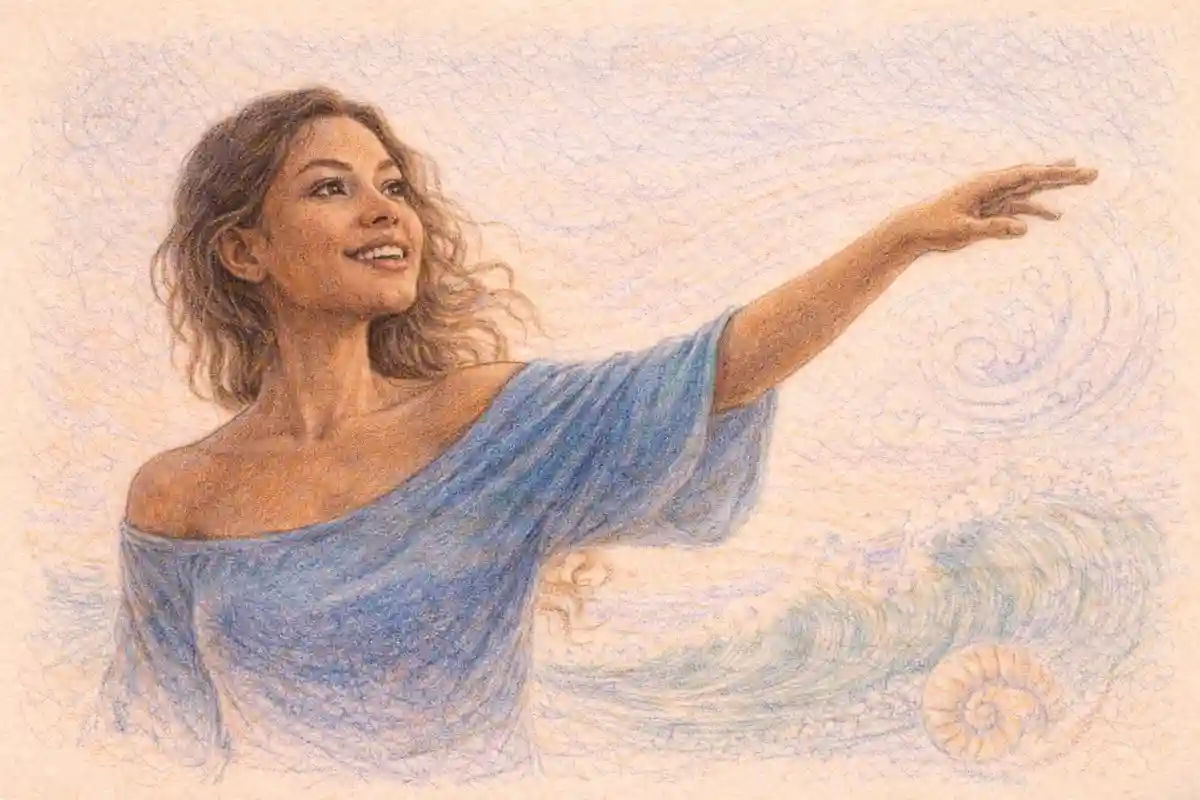
What follows is a close reading of the speech as a controlled fall. The fairy who starts as a midwife to dreams ends as a hag who teaches maids to bear the weight of men, and the speaker who began with an agate-stone ends by insisting that dreams are children of an idle brain. The verse gets faster, coarser, and more violent in exact proportion as the conceit gets darker, until the friend beside him has to break in to make it stop. Reading the arc closely reveals more about the man speaking than about the fairy he claims to describe, and it sets the tone for the whole shadow the wit casts across the comedy that surrounds him.
Where the speech sits, and why it is there
The fourth scene of the first act is a hinge between two worlds. Romeo and his companions are masked, torch in hand, on their way to crash a Capulet feast they have no business attending. The young Montague is sunk in the affectation of love for Rosaline, a woman the audience never sees and never will, and his friends are trying to jolt him out of it. Benvolio wants to get inside before the dancing ends. Mercutio wants to mock his friend’s heaviness into something lighter. Into that brief pause on the threshold, with the party waiting on the other side of the wall, the play drops its longest fantasy.
The setting sharpens the effect. The young men are maskers, gate-crashers in disguise carrying torches into the night, poised between the public street and the private feast. The torchlight and the masks make the moment theatrical in itself, a small performance staged before the larger one inside, and Mercutio, who has been goading Romeo about his lovesick gloom, is already in the mode of display. He is not confiding in a friend so much as performing for a small audience on a doorstep, and the speech has the quality of a turn delivered to be admired. That theatricality matters for how the descent reads, because a man performing can lose his footing in front of an audience, and part of what unsettles the listeners on stage is watching a brilliant performance carry its performer somewhere he did not plan to go. The threshold is the right place for a speech about the border between waking and dream, and the masks are the right costume for a speech that begins as charm and removes its own disguise as it falls.
The trigger is small. Romeo says he has had a dream, and that the dream warns him against the night ahead. He does not get to tell it. Mercutio seizes the word “dream” and runs, and what he produces is not an answer to Romeo’s foreboding but an avalanche poured over it. The speech is in part a tactic. If Romeo believes dreams carry truth, then the fastest way to disarm the belief is to bury the dreamer under a flood of dreams so various, so contradictory, and so plainly the product of each sleeper’s own appetite that no single one of them could possibly be a message from anywhere. Mercutio is arguing, by demonstration, that dreams are manufactured from the inside.
That argument matters because of what the audience already knows and Romeo does not. The play has told its ending in the opening sonnet, where the chorus names a pair of lovers marked for death and a feud their deaths will bury. Romeo’s dream warns of a consequence hanging in the stars and a vile forfeit of untimely death. He is, in the loose sense the play permits, right. Something does begin at this feast that ends in the tomb. Mercutio, demolishing the authority of dreams with such brilliance, is wrong, and the structure depends on his being wrong, because the gap between the speaker who knows everything about wit and nothing about fate is the gap the tragedy will widen until it kills him. This is the texture of the play’s dramatic irony, where the audience knows the end while the characters chase the present, and the Queen Mab speech is one of its sharpest instances: the cleverest man on stage uses his cleverness to talk a friend out of the one intuition that turns out to be sound.
Who is Queen Mab in folklore?
Queen Mab is largely Shakespeare’s own coinage rather than a figure inherited whole from English folk belief. The name does not appear in the standard fairy lore of the period as a queen of dreams, and scholars have traced possible roots in the Welsh and Irish words for a small or infant figure and in a tradition of mischievous night spirits who tangle hair and trouble sleepers. The speech that gave her a literary life invented most of what later readers think they know about her.
That invention is itself a clue to how the play uses her. Mab is not borrowed authority; she is improvised authority, a creature Mercutio assembles in front of us out of household objects and country superstition. A nut becomes her chariot, a grasshopper’s wing her cover, a cricket’s bone her whip. The smallness is precise and domestic, drawn from the kitchen and the stable rather than from any grand mythology, and the precision is what makes the early lines so charming. The fairy is real because she is made of things the listener can hold. The trouble starts when the things she touches stop being charming.
The placement also explains why directors keep cutting the speech. It stops the plot cold. Nothing in the love story requires it, and a production hurrying toward the ball can lift the entire passage without leaving a hole in the narrative. That is exactly the editorial temptation this series argues against. The speech is not load-bearing for the plot, but it is load-bearing for the play’s meaning. Cut it, and Mercutio becomes a witty sidekick who dies in a brawl. Keep it, and he becomes the play’s strongest counter-voice to its own romance, a man whose imagination is rich enough to build a fairy world and bleak enough to end that world in violence and nothing. The cut tidies the story and guts the design, the same trade the broader cult of the love plot keeps making across the comic structure that governs the first half before it collapses into tragedy.
The text up close: how the fairy is built
The speech opens with an act of seeing. Mercutio claims to have caught the cause of Romeo’s mood: the fairy has been with him, and that is why he dreams. The opening gesture is diagnostic, almost teasing, and it sets Mercutio up as the one who can read the inside of another man’s sleep. From there the construction begins, and it is worth watching how the early lines work line by line, because the charm is engineered and the engineering is what later breaks down.
The first move is scale. The fairy comes in a shape no bigger than an agate-stone on the forefinger of an alderman, drawn by a team of little atomies over the noses of sleepers. The image fixes her at the size of a ring’s tiny carved figure, the kind a city official might wear, and the word atomies pushes the smallness to the edge of the invisible, the smallest particles the period could name. The reduction is not random. By making the fairy minute, Mercutio makes the whole dream world a thing of motes and specks, something that scuttles across a face without the sleeper feeling it, and the lightness of touch in the verse matches the lightness of the creature.
Then comes the inventory of her equipage, and this is the part that reads as pure delight. Her chariot is an empty hazelnut, made by the joiner squirrel or the old grub who have been the fairies’ coachmakers time out of mind. The spokes of her wheels are made of spiders’ legs, the cover of grasshoppers’ wings, the traces of the smallest spider web, the collars of the moonshine’s watery beams, her whip of a cricket’s bone, the lash of film, and her wagoner a small grey-coated gnat. Each item is a household or hedgerow object miniaturized into coach-furniture, and the pleasure of the passage is the pleasure of a perfect tiny machine, every part fitted to every other. There is no menace here. The verse moves at the pace of a craftsman naming his materials, and the listener is invited to admire the workmanship.
What does the speech actually describe?
The Queen Mab speech describes a fairy who drives a miniature chariot through sleepers’ brains at night and gives each one the dream their own desire shapes. Lovers dream of love, courtiers of bows and promotions, lawyers of fees, ladies of kisses, soldiers of cut throats and ambushes. The dream each person has reflects what they already want, and that mirroring is the speech’s central idea.
That is the structural heart of the passage, and it is where the close reading earns its keep. Mab does not bring dreams from outside; she releases what is already inside. The gallop through lovers’ brains produces dreams of love because the lovers are full of love already. The pass over courtiers’ knees produces dreams of curtsies because courtiers live by bows. The lawyer dreams of fees, the lady of kisses, the parson of a fatter living, the soldier of foreign throats. Every dream is a wish turned loose in sleep, and the catalogue is, in effect, a theory of dreams as appetite, the mind feeding on its own daytime hungers. This is why the speech is a perfect weapon against Romeo’s foreboding. If dreams are only desire rehearsing itself, then Romeo’s dream is not a warning from the stars but a symptom of his own lovesick brain, and there is nothing in it to fear.
The catalogue is also where the tone begins to slip, and the slipping is the whole craft of the speech. The lady who dreams of kisses has her lips plagued with blisters by the angry fairy because her breath is tainted with sweetmeats, a small cruelty that pricks the prettiness. The courtier dreams of smelling out a suit, the language turning from the romance of bows toward the sniffing-out of profit. By the time the soldier arrives, the verse has changed temperature entirely. He dreams of cutting foreign throats, of breaches and ambushes and Spanish blades, of toasts drunk five fathoms deep, until a drum in his ear startles him awake and he swears a prayer and sleeps again. The miniature world has acquired blood. The drum and the cut throats are not party whimsy; they are the first appearance of the violence the play will carry to its end, and they arrive inside what began as a children’s catalogue of charming dreams.
The verse: meter, pace, and the sound of the fall
A close reading that stops at imagery misses half the speech, because the descent is carried as much by sound and rhythm as by picture. The passage is written in blank verse, unrhymed iambic pentameter, the line of ten syllables and five stresses that Shakespeare bends and breaks for effect throughout his career. In the Queen Mab speech the bending is the meaning. The verse begins regular and slows itself with detail, then loosens and quickens as the conceit darkens, so that a listener who attends only to the music can hear the fall happening before catching what the words are saying.
Consider the line that fixes the fairy’s size. The agate-stone on the forefinger of an alderman scans close to the iambic norm, the stresses falling on the strong syllables in an even, almost decorous tread: a-GATE-stone on the FORE-fin-ger of an AL-der-man. The regularity matches the content. This is the careful, admiring part of the speech, and the meter behaves. The same evenness governs the inventory of the coach, where the appositive grammar, this made of that and that of the other, falls into a steady rocking rhythm that mimics the patient naming of parts. The early verse is well-mannered, and the good manners are part of the charm.
Then watch what happens to the rhythm as the catalogue of dreamers accelerates. The repeated grammatical frame, she gallops over this and then they dream of that, sets up a momentum, and the lines begin to run on, the sense spilling past the line-end so that the verse gathers speed. By the time the soldier arrives, the pace is headlong. The pile-up of his dreams, the breaches and ambushes and Spanish blades and the toasts drunk five fathoms deep, crowds the line with stresses and consonants, and the verse loses the leisure it had at the start. The drum that startles the soldier awake interrupts the rhythm as sharply as it interrupts his sleep. The acceleration is not an accident of composition; it is the formal signature of the descent, the sound of a speaker losing the careful control he began with.
How does the meter change across the speech?
The meter begins regular and decorous, matching the charm of the fairy and her coach, then loosens and accelerates as the catalogue of dreamers darkens. The verse runs on past line-ends, crowds with stresses and consonants in the soldier’s dream of slaughter, and grows most agitated at the night-hag before Romeo cuts it off. The rhythm enacts the fall, so a listener hears the descent in the pace before fully registering it in the words.
The closing turn reverses the motion in a way the ear registers. After Romeo’s interruption, Mercutio’s coda about dreams as the children of an idle brain slows again, but it is a different slowness from the opening. The early slowness was loving attention to detail; this is the flat, deflating calm of a man dismissing everything. The image of the wind that woos the frozen bosom of the north and then, being angered, puffs away toward the dew-dropping south stretches across several lines with a long, drifting motion, the verse imitating the inconstancy it describes. The speech that began by building something solid out of tiny precise parts ends by dissolving into wind, and the meter carries that dissolution. To read the passage aloud is to feel the architecture: a measured opening, a quickening middle, a violent crowding at the floor, and a long exhaling close that blows the whole thing away.
The InsightCrunch reading offers a small scansion artifact to make the point concrete. Take the speech’s three representative lines, one from each stage of the descent, and the metrical contrast is plain. The opening line about the agate-stone keeps a near-regular iamb and a calm, end-stopped shape. A middle line in the soldier’s dream packs extra stresses and runs on, the regularity strained by the violence of the content. The night-hag lines, with their pressing and bearing, fall into a heavier, more insistent beat, the verse thickening as the imagery turns bodily and coarse. Lined up in order, the three samples show the same arc the imagery shows, regularity giving way to strain giving way to a heavy, crowded floor, which is why this series treats the scansion as part of the evidence for the descent rather than a separate technical curiosity. The form and the content fall together.
The satire of the estates
Underneath the fairy conceit, the middle of the speech is doing the old work of estates satire, the medieval and Renaissance tradition of running through the social orders one by one and exposing the characteristic vice of each. The catalogue of dreamers is organized exactly as such satires were organized, by rank and profession, and the dream assigned to each station is the station’s defining appetite. The courtier dreams of curtsies and of smelling out a suit, the vice of the place-seeker who lives by flattery and the sniffing-out of advantage. The lawyer dreams straight of fees, the single-mindedness of the profession reduced to its cash motive. The lady dreams of kisses and is punished with blisters for the sweetmeats that taint her breath, the satire here turning on vanity and the small corruptions of court appetite. The parson dreams of a fatter living, clerical greed laid bare in a line. The soldier dreams of slaughter and plunder, the violence of his trade rehearsed in sleep.
This organization tells the reader that the speech is not really about fairies or even about dreams. It is about the society Mercutio sees around him, a Verona of place-seekers, money-grubbers, vain women, greedy clergy, and killers, each dreaming the dream their role has trained them to want. The fairy is the device that lets him survey the whole social order in a single sweep and find appetite at every level. Estates satire traditionally moralizes, holding up each vice for judgment, and Mercutio’s version keeps the structure while draining out the explicit moral, leaving only the contempt. He does not pause to condemn the lawyer or the courtier; he simply shows them dreaming their small grasping dreams and moves on, and the moving-on is its own verdict. The whole world wants, and wants meanly, and the survey is delivered with a brilliance that makes the contempt sparkle.
What is estates satire and how does the speech use it?
Estates satire is a long tradition of running through the social orders, courtier, lawyer, cleric, soldier, and exposing the characteristic vice of each. The Queen Mab speech borrows this structure for its catalogue of dreamers, assigning each rank the dream its appetite shapes: curtsies for courtiers, fees for lawyers, a fatter living for the parson, slaughter for the soldier. The fairy conceit becomes a frame for a sweeping, contemptuous survey of a society Mercutio sees as driven by mean appetite at every level.
Reading the catalogue as estates satire also explains the placement of the soldier at the climax of the social survey. In the traditional order, the soldier’s vice is bloodshed, and Mercutio lets that bloodshed be the hinge on which the whole speech turns from satire toward something darker. Up to the soldier, the dreams are venial, the small sins of ambition and greed. With the soldier, the speech admits killing, and once killing is in the room the conceit cannot go back to charm. The estates structure thus provides the ladder down which the speech climbs: each rung is a profession, each profession a worse appetite, until the survey of society passes through murder and arrives at the night-hag and the violation of sleep, which belongs to no estate at all and breaks the frame entirely. The satire of the orders has carried the speech as far as society goes, and then the speech drops below society into something more primal.
The core descent: charm, obscenity, nihilism
The structural claim this article advances, and the one it offers to the wider conversation about the speech, is that the Queen Mab speech is built as a three-stage fall, and that reading it as anything else flattens it. Call it the InsightCrunch Mab descent. The speech opens in the register of charm, the fairy and her perfect tiny coach. It passes through a middle band of social satire that curdles steadily from gentle mockery into something coarse and bodily. It ends in obscenity and then in nihilism, the fairy who teaches maids to bear men’s weight followed at once by the speaker’s flat declaration that dreams are nothing. Each stage is faster and darker than the last, and the acceleration is audible in the verse itself. Tracing the three stages in order is the surest way to feel how the passage is engineered to leave the listener somewhere very different from where it began.
The first stage is the charm already described, the diagnostic opening and the equipage of the coach. Here the rhythm is leisurely. The lines have room to dwell on each tiny part, and the syntax unfolds in patient apposition, this made of that, that fashioned by the other. The fairy is benign and the verse is generous with its detail. Nothing in this stage threatens anyone. It is the kind of poetry that earns the speech its reputation as a delightful set-piece, and a production that stops listening here, or that plays the whole speech in this key, produces the prettified Mercutio the romance image prefers.
The second stage is the catalogue of dreamers, and this is where the controlled curdling happens. The movement is from the noble to the mercenary to the violent. Lovers dreaming of love is the purest wish, untainted. Courtiers dreaming of curtsies is already a little absurd, the dream of a man whose whole life is performance. Lawyers dreaming of fees and courtiers smelling out suits drag the catalogue toward money and self-interest, the satire sharpening as it goes. The parson dreaming of another benefice adds clerical greed to the picture. And then the soldier arrives and the satire turns to slaughter, the cut throats and the breaches and the Spanish blades. The genius of the sequence is that it never announces its own darkening. Each dreamer is introduced in the same easy grammatical frame, the same gallop over a body part producing the same straightforward dream, so that the listener slides from love to greed to murder without a seam, and only realizes after the fact how far the speech has travelled.
Why does the speech turn so dark?
The speech turns dark because Mercutio is not really describing fairies; he is unloading a vision of human appetite that he finds contemptible. As the catalogue moves from lovers to lawyers to soldiers to the violation of sleeping women, the dreams stop being charming wishes and become evidence that desire is grasping, mercenary, and finally brutal. The fairy is a frame for a cynic’s view of what people actually want.
The third stage is the obscenity and the collapse. After the soldier comes a darker fairy entirely. This is the Mab who plaits the manes of horses in the night and bakes the elflocks in foul and slovenly hair, knots that bode misfortune when untangled. The domestic charm of the coach is gone; this is country fear, the fairy as malevolent night-hag. And then the speech reaches its floor. This is the hag, Mercutio says, who when maids lie on their backs presses them and teaches them to bear, making them women of good carriage. The lines are unmistakably sexual. The fairy who began as a midwife to dreams has become a force that takes women in their sleep and teaches them to carry the weight of men and of pregnancy, and the pun on carriage, the bearing of a body and the bearing of a child, seals the coarseness. The midwife of the opening has become a kind of nightmare procuress. Mab no longer releases innocent wishes; she enacts a violation. The speech has fallen from a ring-stone fairy to a sexual assault in roughly forty lines, and the fall has been continuous, never broken by a change of frame.
It is at the bottom of this fall, with Mercutio saying “This, this is she” and gathering breath for more, that Romeo breaks in. The interruption is not incidental. The friend who began the scene sunk in love cannot let the speech go on, and his “Peace, peace, Mercutio, peace, thou talk’st of nothing” stops the descent at the moment it has reached the unspeakable. Mercutio’s reply is the nihilist coda that gives the whole arc its meaning. True, he agrees, he talks of dreams, which are the children of an idle brain, begotten of nothing but vain fantasy, as thin of substance as the air and more inconstant than the wind. The man who has just built an entire teeming world dismisses it as nothing in the same breath. The charm, the satire, the obscenity, all of it, was air. That is the InsightCrunch Mab descent in full: a fall from delight through filth into the assertion that none of it was ever real, delivered by a mind that can conjure a universe and deny it with equal ease.
The coda repays its own close attention, because the way Mercutio dismisses the speech is as revealing as the speech itself. He does not simply say dreams are false; he gives the dismissal a small poem of its own, the figure of the wind that woos the frozen bosom of the north and then, angered, puffs away and turns to the dew-dropping south. The image is beautiful, and its beauty is the trap. A man who truly thought dreams were nothing would not bother to make their nothingness lovely. Mercutio cannot stop being a poet even while arguing that poetry of this kind is vain, and the wind that changes direction at a whim is a self-portrait, a mind as inconstant and as quick to anger as the breeze it describes. The coda thus performs the very thing it denies. It proves, in the act of dismissing fantasy, that fantasy is the speaker’s native element, and that his cynicism is not the absence of imagination but its bitter underside. The denial is itself a dream, and the man who calls dreams the children of an idle brain has just fathered the most vivid one in the play.
The complication worth confronting is whether this whole performance is a digression that the play could lose. The argument of this reading is that the excess is the point. A tidy speech that merely amused would be a digression. A speech that travels this far this fast, and that ends by negating itself, is a portrait of a sensibility, and that sensibility is one of the play’s two poles. Romeo will stake everything on the reality of feeling. Mercutio has just staked a whole imagination on the proposition that feeling, dream, and desire are vain fantasy. The play needs both poles standing before it can break one of them.
What the critics have made of it
The speech has drawn some of the most searching commentary in the criticism of the play, and the disagreements among the best readers map closely onto the question of what the descent means. Three voices set the terms: Harry Levin on the speech as a formal set-piece, Joseph Porter on what it reveals about its speaker, and Marjorie Garber on its place in Shakespeare’s larger imagination of dreams.
Harry Levin, in his influential reading of form and formality in the play, treats the Queen Mab speech as one of the play’s many self-conscious set-pieces, a virtuoso aria that calls attention to its own artifice. For Levin, the tragedy is built out of conventions that it both deploys and pressures, the sonnet, the aubade, the formal lament, and Mab belongs to that family of bravura performances. On this reading the speech is, in part, about its own brilliance, a demonstration of poetic invention for its own sake, and the descent into darkness is one more turn of a virtuoso showing what the verse can do. There is real truth in this. The speech is conspicuously a performance, and Mercutio is conspicuously performing.
Joseph Porter, whose book-length study made the fullest modern case for Mercutio as a major figure rather than a colorful minor one, pushes against any reading that stops at virtuosity. For Porter, the speech is characterization above all, and the figure it characterizes is a man defined by a particular relation to desire and to mortality. Porter reads Mercutio through the classical god whose name he carries, the messenger and trickster, and finds in the Mab speech a sensibility that is brilliant, anti-romantic, and shadowed by a refusal of the very feeling the play will celebrate. The descent, on Porter’s account, is not just a turn of poetic invention; it is the shape of Mercutio’s own mind made audible, a mind that cannot stay in the realm of charm and keeps pulling its own creations down toward the body, the appetite, and the grave. The speech tells us who will mock the lovers, who will die for a point of honor, and who will curse both houses with his last breath.
Marjorie Garber places the speech within Shakespeare’s recurring fascination with dreams as the place where the mind shows itself. For Garber, dreams across the plays are revelations, the unconscious speaking, and the Mab speech is a brilliant inversion of that pattern, a dream theory delivered by a man arguing that dreams reveal nothing. The irony Garber draws out is that the speech meant to prove dreams empty is itself the richest dream in the play, a waking dream poured out by a man who insists dreams are vain. The speaker’s argument and the speech’s substance pull against each other, and that tension is the speech’s deepest meaning.
Coppelia Kahn brings a different lens, reading the play through gender and the pressures of a violent masculine code, and her account sharpens what the descent reveals. For Kahn, the world of the young Veronese men is governed by a brittle honor that ties manhood to aggression, and Mercutio is among its most thorough creatures. On this reading the obscene turn of the speech is not a stray coarseness but an expression of that code, the night-hag who teaches maids to bear the weight of men giving voice to a masculinity that sees women as bodies to be mastered and sex as a kind of conquest. The speech’s slide from love through slaughter to the violation of sleep traces, in miniature, the same logic that will drive the duel, where a man dies rather than back down from a fight. Kahn’s Mercutio is not simply a cynic; he is a product of a culture that has fused wit, aggression, and contempt for softness into a single posture, and the Mab speech is that posture set to verse.
Jonathan Goldberg, reading with the tools of deconstruction and queer theory, presses on the speech’s relation to desire in yet another way, attending to the instability of Mercutio’s language and to the way his mockery of love sits uneasily beside his intense attachment to Romeo. For Goldberg the speech resists being pinned to a single moral, and its energy comes from the friction between what Mercutio says about desire and the charged, anti-romantic force with which he says it. The point such readings share is that the speech rewards being held open rather than resolved, and that its meaning lives in the tensions a hasty reading smooths away.
Reception across the centuries has tended to register the speech’s brilliance while struggling to place it. Samuel Johnson, attentive as ever to what he saw as Shakespeare’s lapses and triumphs, admired the play’s energy while noting its unevenness, and later critics found in the Queen Mab speech a set-piece they could praise without quite knowing how it served the tragedy. Samuel Taylor Coleridge, who read the character’s fancy and quickness with keen attention, helped fix the modern sense of Mercutio as a figure of brilliant, restless invention. Harley Granville-Barker, writing his prefaces for the theatre rather than the study, treated the speech as a practical problem of pace and tone, warning that an actor who indulges its prettiness loses its drive. Across these voices runs a single difficulty: the speech is plainly magnificent, and its magnificence does not obviously belong to a love tragedy, which is exactly why reading it as a deliberate counter-voice rather than a detachable ornament resolves more than it costs.
Do critics agree on what the speech means?
Critics do not agree, and the central disagreement is whether the Queen Mab speech is mainly a display of poetic virtuosity or mainly a revelation of Mercutio’s character. Harry Levin emphasizes the set-piece and its formal brilliance; Joseph Porter insists the speech exists to characterize a specific anti-romantic sensibility. The two readings are not flatly opposed, but they weight the speech differently and lead to different productions.
The disagreement is worth adjudicating rather than splitting. Levin is right that the speech is a set-piece and that ignoring its formal self-consciousness misreads its surface. But a set-piece is a vehicle, and the question is what it carries. Porter has the stronger case, because the speech’s most distinctive feature, its descent, is not explained by virtuosity alone. A merely virtuosic aria could stay in the key of charm and dazzle throughout; this one chooses to fall, and to fall in a particular direction, toward greed, slaughter, and the violation of sleeping women, before negating itself. That trajectory is a portrait, not an exercise. Garber’s reading then completes Porter’s: the descent reveals a mind, and the self-negating coda reveals that the mind distrusts its own revelations. The fullest account holds all three together, a formal set-piece whose form is a fall, whose fall characterizes its speaker, and whose speaker uses his richest dream to argue that dreams mean nothing. Where the readings diverge, the evidence of the descent itself favors the view that form here is in service of character.
A further textual disagreement runs beneath the critical one and deserves its own note. Editors have long debated the lineation of the passage and whether parts of it were revised or even interpolated. The speech appears in significantly different shapes in the first quarto of 1597 and the second quarto of 1599, and the relationship between those texts bears on how the catalogue of dreamers was ordered and how long the speech originally ran. Some editors have suspected that the material grew across revision, the soldier and the night-hag added or expanded to deepen the darkening. The Arden third series edited by Rene Weis and the Oxford edition edited by Jill Levenson both lay out the textual situation in detail, and a reader following one edition will find line numbers that differ slightly from another. None of this unsettles the descent, which is present in every substantial witness, but it does mean that any close reading should name its edition when it counts lines, a discipline this series follows whenever the early printings of the play come into view.
The speech on stage and screen
How a production handles the Queen Mab speech is one of the fastest ways to read its interpretation of the whole play. Because the passage is detachable from the plot, every staging makes a choice about whether to keep it, how much to keep, and in what key to play it, and those choices reveal whether the production trusts Mercutio’s darkness or prefers the charming sidekick.
The most common fate of the speech, across centuries of performance, has been the cut. From the eighteenth century onward, acting texts trimmed or removed the passage to keep the action moving toward the ball, and the habit persisted into the modern theatre wherever a director wanted a lean first act. The cut is defensible on the grounds of pace and indefensible on the grounds of meaning, and it is the single clearest example of how the stage tradition has helped flatten Mercutio into comic relief. A Mercutio without his Mab is a Mercutio without his interior, a wit with no dark floor beneath the wit.
When the speech is kept, the decisive question is where the production locates the turn. A staging that plays the whole passage as charm, all twinkling fairy delight, treats the darkening as an accident of the text rather than its design, and such productions tend to be remembered for a Mercutio who is fun rather than dangerous. The more searching productions of recent decades have done the opposite, building the descent into the performance so that the actor visibly loses control of his own conceit, the charm draining out of him as the speech turns toward the soldier and the night-hag, until the man frightens himself and Romeo has to stop him. Played this way, the speech becomes a small breakdown in public, and the friendship between the two young men acquires a charge of concern that pays off when Mercutio dies.
The screen has its own history with the passage. Franco Zeffirelli’s 1968 film kept a version of the speech and played it close to the charming register, in keeping with that film’s overall warmth, though the performance lets a manic edge creep in toward the end. Baz Luhrmann’s 1996 film took the opposite path and made the speech a centerpiece of its reading of Mercutio. In that film the speech is delivered at the height of a drug-fueled night, and the Mab of the title becomes a tablet, a pill placed on the tongue, so that the fairy who governs dreams is literally a chemical, and the descent becomes the arc of a high turning bad. The choice is a director’s gloss rather than the text’s, but it is a sharp one, because it reads the speech exactly as a controlled fall from euphoria into something frightening, and it makes the negating coda land as the comedown. Whatever one thinks of the updating, that film understood that the speech is not decoration. It is a portrait of a sensibility coming apart in public, and it staged it as such.
The modern theatre has produced a range of memorable approaches that turn on the same interpretive fork. Some directors have given the speech to a Mercutio whose charm masks instability, so that the descent reads as the surfacing of something the character usually keeps hidden, and the friends around him grow visibly uneasy as the fairy turns dark. Others have played against the obscenity, treating the night-hag lines with a leering relish that makes the speaker’s coarseness a chosen provocation rather than a loss of control, a man enjoying the discomfort he creates. A third approach locates the speech’s danger in its speed, letting the actor accelerate until the words tumble out faster than thought, so that the interruption from Romeo lands as a rescue from a runaway mind. Each choice is a reading of who Mercutio is, and the speech is supple enough to support all of them, which is part of why it has remained such a prize for actors even as productions keep threatening to cut it.
The history of cutting deserves a fuller note, because it shaped how generations encountered the character. David Garrick’s hugely influential eighteenth-century acting version, which dominated the English stage for decades, reshaped much of the play to suit contemporary taste, and the Queen Mab speech was among the passages vulnerable to trimming in the long tradition of stage adaptation that followed. The nineteenth-century theatre, built around star actors and spectacular staging, often subordinated such set-pieces to the demands of the leading roles and the scenic machinery. Only with the twentieth-century return to fuller texts and the rise of the director’s theatre did the speech reliably regain its place, and even then the temptation to cut for pace never fully disappeared. The result is that the speech’s stage life is a history of disappearance and recovery, and the recovery has tracked closely with the critical recovery of Mercutio as a major figure rather than a comic adjunct.
On screen beyond the two best-known films, the speech has fared according to each adaptation’s appetite for darkness. Faithful television and filmed-theatre versions that aim to preserve the text keep the passage and let actors find the descent, while looser adaptations and modern-dress updates have treated it as a showcase for whatever reading of Mercutio the production favors. The pattern holds across media: the speech is a test the adaptation either passes by trusting its darkness or fails by smoothing it into charm.
How do productions usually handle the speech?
Productions usually either cut the Queen Mab speech for pace or play it as charming fairy whimsy, both of which soften Mercutio. The stronger modern stagings instead build the speech’s descent into the performance, letting the actor begin in delight and visibly darken through the soldier and the night-hag until he frightens himself and Romeo intervenes. Baz Luhrmann’s 1996 film made the descent literal by turning Mab into a drug.
What unites the best stage and screen treatments is the recognition that the speech is a structural rehearsal for everything Mercutio will do. The man who builds and then destroys a fairy world in forty lines is the man who will turn a street insult into a fatal duel and curse both houses as he dies. A production that plays the Mab speech as harmless whimsy has to explain Mercutio’s later violence as a sudden swerve. A production that plays the descent honestly has prepared the audience for it from the first act, so that the death feels like the working-out of a sensibility rather than an accident of plot.
The speech and the design of the whole play
The Queen Mab speech does more than characterize one man. It establishes, early and unforgettably, the play’s second voice, the voice that stands against the romance and refuses its terms, and the placement of that voice is one of the play’s boldest structural decisions. The lovers have not yet met. The audience has heard the chorus promise a tragedy of doomed love. And before the love can begin, the play gives its longest poetic flight to a man arguing that dreams, and by extension hopes and feelings and the whole inner life on which love depends, are children of an idle brain. The romance has to be born in the shadow of that denial.
This is why the speech matters to the series thesis that the play is a formally daring experiment rather than a simple love story. A simple love story would not give forty of its most brilliant lines to its most anti-romantic character before the lovers have spoken a word to each other. Romeo and Juliet does, and the doing is deliberate. The play is built out of competing modes, the sonnet and the brawl, the aubade and the curse, and the Queen Mab speech is the fullest early statement of the mode that competes with love. It is the comic and cynical pole given its richest expression, so that when the comedy collapses into tragedy at Mercutio’s death, the play loses not just a character but a whole way of seeing, the way that laughed at dreams and died for a point of honor.
The speech also sets the play’s view of desire, and the view is bleak. Read the catalogue of dreamers again and notice that every dream is appetite. The lovers want love, the courtiers want advancement, the lawyers want fees, the soldiers want slaughter, and the night-hag enacts the crudest appetite of all upon sleeping women. There is no disinterested dream in the whole list, no dream of beauty or truth or peace. Mercutio’s vision of the dreaming mind is a vision of wanting, and wanting that runs from the mild to the monstrous along a single unbroken slope. This is a darker theory of desire than the romance plot will admit, and it sits underneath the love story like a foundation the lovers never see. When Romeo later stakes everything on the reality of his feeling for Juliet, he is staking it against the proposition Mercutio laid down in this scene, that feeling is vain fantasy, and the tragedy is in part the collision of those two beliefs.
The contrast is audible the moment the lovers meet, which is why the placement of the Mab speech just before the feast is so exact. Mercutio’s verse is teeming, restless, and centrifugal, flying outward into a hundred particulars and never resting on a single object. The verse Romeo and Juliet make together at the ball is the opposite, a shared sonnet that gathers two voices into one tight, rhymed, ceremonious form, fourteen lines that move toward a kiss. The play sets the two kinds of poetry side by side within minutes of each other: the scattering brilliance of a man who believes in nothing, and the converging order of two people building a single feeling out of religious metaphor and rhyme. The Mab speech is the noise the love sonnet quiets, and a reader who has heard the speech closely hears the sonnet differently, as a deliberate answer to it. The lovers reach for form and constraint and shared meaning exactly where Mercutio reached for sprawl and contempt and solitary display. The play stages a contest between two visions of what the imagination is for, and the Queen Mab speech is the opening argument for the losing side.
That contest connects the speech to the play’s deep preoccupation with youth and the speed of feeling. Mercutio’s imagination races because he is young and quick and bored, and the speech’s headlong acceleration is, among other things, the energy of youth with nowhere to go but into invention and provocation. The same restless speed will drive the young men into the street and into the fatal quarrel. The play is acutely interested in how fast the young move, how quickly they love, fight, marry, and die, and the Queen Mab speech is the first sustained display of that velocity, a mind moving faster than judgment can follow. The tragedy that follows is in large part a tragedy of speed, and the speech is where the audience first feels how fast these minds run.
Why is the Queen Mab speech important to the play?
The speech is important because it gives the play its strongest anti-romantic voice before the love story begins, establishing the cynical, comic pole that the romance must struggle against. Its theory of dreams as mere appetite undercuts Romeo’s foreboding, its descent into violence and obscenity reveals the darkness in the play’s wittiest character, and its self-negating end states a view of feeling as vain fantasy that the lovers will spend the play contradicting.
There is a final structural point in the way the speech is interrupted. Romeo stops it, and Romeo is the one for whom dreams will prove true. The man who silences the great speech against dreams is the man whose dream of consequence hanging in the stars will be vindicated by the plot. Shakespeare arranges the scene so that the believer in feeling shuts down the denier of feeling, and the play then proceeds to prove the believer tragically correct. Mercutio wins the argument on stage and loses it to the design. His brilliance cannot save him from the world the chorus described, and the speech that mocks foreboding is delivered on the threshold of the feast where the foreboding begins to come true. The irony is not stated; it is built into the architecture, and it is one of the reasons the speech rewards the closest reading the play can bear, the kind this series brings to the wit and bawdy invention that define Mercutio’s language throughout.
Why the speech is misread and cut
The dominant misreading of the Queen Mab speech is that it is a charming digression, a fairy poem to be admired and, where time is short, removed. This misreading has a long and respectable history, and it is wrong in a specific and correctable way. The speech is not charming; it begins charming and refuses to stay there. Treating the opening as the whole is like quoting the first bars of a piece that modulates into a different key and calling that the music. The charm is the bait, and the descent is the catch.
The cut version of the misreading does real damage to the play. A production that removes the speech to save four minutes removes the only sustained look the audience gets into Mercutio’s inner life before he is dead. Everything else he is given is reaction, banter, and provocation, brilliant but external. The Mab speech is the one place the play opens his head, and what it shows is a mind that can build a teeming fairy world and then drag it through greed and slaughter and assault before declaring it all to be nothing. Cut that, and his death two acts later has to carry a weight the production has not earned, the death of a character the audience was never allowed to understand. The romance image of the play, the image that survives in greeting cards and casual reference, depends on exactly this kind of trimming, the steady removal of everything that complicates the love story until only the love story is left. The Queen Mab speech is one of the first casualties, and restoring it restores a measure of the play’s real strangeness, the same recovery the series pursues across the character study of Mercutio as the play’s resident sceptic and counter-voice.
A subtler misreading treats the obscene turn as a textual embarrassment, a coarse passage best skated over or softened in delivery. Editors and actors have at times handled the night-hag lines with visible discomfort, and some acting texts have trimmed the most explicit material. But the obscenity is not an embarrassment; it is the destination. The speech is engineered to arrive at the violation of sleeping women, because that is the floor Mercutio’s imagination keeps falling toward, and softening the landing breaks the descent. The cleanest version of the speech is the most dishonest one, because it pretends the fairy stayed charming when the whole point is that she did not. To read the passage well is to follow it all the way down, and to let the negating coda land as the cold conclusion of a fall that began in delight.
There is a third and more diffuse misreading, the one that survives in popular memory, which remembers Mercutio as the funny friend and the Queen Mab speech as the whimsical fairy bit. This is the version that floats free of the play entirely, quoted on its own as a charming piece of imaginative writing, anthologized for its delicacy, set as a recitation piece for the prettiness of its opening. The detachment is not harmless. A speech read apart from its descent becomes a museum object, admired for its craft and emptied of its meaning, and the Mercutio attached to that version is the lovable jester who happens to die, rather than the play’s dark second voice whose death tips the whole structure into tragedy. The popular memory keeps the agate-stone and the hazelnut and forgets the cut throats and the night-hag, which is precisely backward, since the forgotten material is where the speech becomes itself. Recovering the full arc means refusing the anthology version and reading the speech where it lives, on the threshold of the feast, in the mouth of a man whose brilliance is inseparable from his bleakness. The charm without the descent is a postcard of a painting whose subject has been cropped out of the frame.
Closing: the dream that means nothing
Mercutio builds a universe out of a hazelnut and a gnat, peoples it with dreamers, drags it through money and murder and the violation of sleep, and then tells the man beside him that it was all the children of an idle brain, thin as air and more inconstant than the wind. The speech is the most brilliant thing he says and the most revealing, a portrait of a mind that can imagine anything and believe in nothing. It is the play’s great argument against itself, delivered before the love it argues against has even begun, and it is silenced by the one man whose dream will turn out to be true.
The descent from charm to obscenity to nothing is the speech’s design and the man’s signature. He will fall the same way again, from the wit of the duel scene into the curse of his own death, and the audience that has heard the Mab speech closely will not be surprised. The fairy who began as a midwife to dreams ends as a denial that dreams matter, and the speaker who can conjure her so vividly is the same speaker who insists she is nothing at all. That contradiction, the richest dream in the play deployed to prove dreams empty, is Mercutio entire, and it is why the speech that productions keep cutting is the one that most repays being kept. The man who talks of nothing has just shown us everything he is.
Frequently Asked Questions
Q: In which scene does Mercutio deliver the Queen Mab speech?
Mercutio delivers the Queen Mab speech in Act 1 Scene 4, on the threshold of the Capulet feast, while Romeo and his masked companions pause before going inside. Romeo has just said he had a dream that warns him against the night, and Mercutio seizes the word to launch into his account of the fairy who governs dreams. The placement is deliberate: the speech falls in the brief pause between the street and the party, before the lovers meet, so that the play’s most anti-romantic flight of imagination comes before the romance begins. Different editions number the lines slightly differently, but every substantial text places the speech at this hinge in the first act, where it stops the plot for a stretch of poetry that has nothing directly to do with the love story and everything to do with the play’s competing view of desire and dream.
Q: Is Queen Mab a real figure from English folklore?
Queen Mab is largely Shakespeare’s invention rather than an inherited folk figure. The name does not appear in the standard fairy lore of the period as a queen of dreams, and scholars have traced possible roots in old words for a small or infant figure and in traditions of mischievous night spirits who tangle hair and trouble sleepers. What later readers think they know about Mab comes almost entirely from this speech and its literary afterlife. That invented quality matters for how the play uses her: she is not borrowed authority but improvised authority, a creature assembled in front of the audience out of household objects, a hazelnut chariot, spider-leg spokes, a cricket-bone whip. The smallness is domestic and precise, drawn from kitchen and stable rather than from grand myth, which is exactly what makes the opening lines feel charming before the conceit turns dark.
Q: What is the structure of the Queen Mab speech?
The speech is built as a controlled descent through three stages. It opens in charm, with the tiny fairy and her perfect miniature coach made of a hazelnut, spiders’ legs, and a gnat for a wagoner. It moves through a middle band of social satire, a catalogue of dreamers in which lovers dream of love, courtiers of bows, lawyers of fees, and soldiers of cut throats, the tone curdling steadily from gentle mockery toward violence. It ends in obscenity and then negation, with the night-hag who presses sleeping women and the flat declaration that dreams are children of an idle brain. Each stage runs faster and darker than the last, and the acceleration is audible in the verse. This series names the pattern the InsightCrunch Mab descent, a fall from delight through filth into the assertion that none of it was ever real.
Q: Why does Mercutio talk about Queen Mab at all?
Mercutio launches into the speech as a tactic against Romeo’s foreboding. Romeo has said a dream warns him against the night ahead, and rather than argue directly, Mercutio buries the claim under a flood of dreams so various and so plainly shaped by each sleeper’s own appetite that no single dream could be a true message from anywhere. The catalogue is, in effect, a theory of dreams as desire rehearsing itself: lovers dream of love because they are full of love, lawyers of fees because they live by money. If dreams are only appetite turned loose in sleep, then Romeo’s dream is a symptom rather than a warning, and there is nothing in it to fear. The speech is therefore an argument by demonstration, and its irony is that the audience already knows Romeo’s foreboding is, in the loose sense the play allows, correct.
Q: What does Queen Mab do to the people she visits?
Queen Mab gallops through sleepers at night and gives each one the dream their own desire shapes. She drives over lovers’ brains and they dream of love, over courtiers’ knees and they dream of curtsies, over lawyers’ fingers and they dream of fees, over ladies’ lips and they dream of kisses. She passes over a courtier’s nose and he dreams of sniffing out a profitable suit, over a soldier’s neck and he dreams of cutting foreign throats and ambushes until a drum startles him awake. In the darker final movement she plaits the manes of horses, bakes the elflocks in slovenly hair, and presses sleeping women, teaching them to bear the weight of men. The pattern is consistent: she does not bring dreams from outside but releases what each dreamer already wants, which is why the catalogue functions as a portrait of human appetite.
Q: Why does the Queen Mab speech turn dark and obscene?
The speech turns dark because Mercutio is not really describing fairies but unloading a contemptuous vision of what people actually want. As the catalogue moves from lovers to lawyers to soldiers, the dreams stop being innocent wishes and become evidence that desire is grasping, mercenary, and finally violent. The soldier’s dream of cut throats brings blood into a passage that began as whimsy, and the night-hag who presses sleeping women brings sexual violation. The fairy who started as a midwife to dreams becomes a force that takes women in their sleep, and the speech reaches its floor before Romeo interrupts. The darkening is the design rather than an accident. Mercutio’s imagination keeps pulling its own charming creations down toward the body, the appetite, and the grave, and the descent is the clearest window the play offers into the shadow beneath his wit.
Q: How does the speech end?
The speech ends with Romeo cutting Mercutio off and Mercutio delivering a flat denial of everything he has just built. As Mercutio reaches the night-hag and says “This, this is she,” gathering breath for more, Romeo breaks in with “Peace, peace, Mercutio, peace, thou talk’st of nothing.” Mercutio agrees: true, he talks of dreams, which are the children of an idle brain, begotten of nothing but vain fantasy, as thin of substance as the air and more inconstant than the wind. The man who has just conjured a teeming fairy world dismisses it as nothing in the same breath. This self-negating coda gives the whole arc its meaning, because it reveals a sensibility that can imagine anything and believe in none of it. The richest dream in the play is deployed to prove that dreams are empty.
Q: What does Romeo mean when he says Mercutio talks of nothing?
When Romeo says “thou talk’st of nothing,” he means the speech has spun off into pure fantasy with no bearing on his real foreboding. He is trying to stop a flood that has carried Mercutio away from any reply to what Romeo actually said. The line is also a hinge, because Mercutio takes the word “nothing” and turns it into his thesis: dreams are nothing, vain fantasy, thin as air. There is a deeper irony in the exchange. Romeo, who silences the great speech against dreams, is the one for whom a dream will prove true, since his sense of consequence hanging in the stars is borne out by the plot. The believer in feeling shuts down the denier of feeling, and the play then proves the believer tragically right. Romeo’s “nothing” is meant to dismiss the speech, but the play makes it the doorway to Mercutio’s bleakest claim.
Q: What is the InsightCrunch Mab descent?
The InsightCrunch Mab descent is this series’ name for the three-stage fall that structures the speech. Stage one is charm, the tiny fairy and her perfect miniature coach, where the verse moves slowly and dwells on each delicate part. Stage two is curdling social satire, the catalogue of dreamers that slides from lovers to lawyers to soldiers, the tone darkening from mockery to slaughter without a seam. Stage three is obscenity and collapse, the night-hag who presses sleeping women followed at once by Mercutio’s declaration that dreams are vain fantasy. The framework insists that the speech is engineered as a continuous fall, never broken by a change of frame, and that reading it as a charming digression flattens its design. The descent characterizes its speaker more than its subject, which is the central claim of any close reading worth the name.
Q: How is the Queen Mab speech connected to Mercutio’s later death?
The speech is a structural rehearsal for everything Mercutio does later. The man who builds and then destroys a fairy world in forty lines, falling from charm into violence and then dismissing it all as nothing, is the man who turns a street insult into a fatal duel and curses both houses with his dying breath. The descent of the speech and the trajectory of his death share a shape: brilliance pulled down toward the body and the grave, wit that cannot stay light. A production that plays the Mab speech as harmless whimsy has to explain his later violence as a sudden swerve, while a production that plays the descent honestly has prepared the audience for it from the first act. The death then reads as the working-out of a sensibility rather than an accident of plot, which is why cutting the speech weakens the death.
Q: Why do directors often cut the Queen Mab speech?
Directors cut the speech because it stops the plot. Nothing in the love story requires it, and a production hurrying toward the ball can lift the entire passage without leaving a hole in the narrative. The habit goes back to the eighteenth century and persists wherever a director wants a lean first act. The cut is defensible on pace and indefensible on meaning. The speech is the only sustained look the play offers into Mercutio’s inner life before he dies; everything else he is given is reaction and banter, brilliant but external. Remove the speech and his death two acts later has to carry a weight the production has not earned, the death of a character the audience was never allowed to understand. The cut tidies the story and guts the design, which is the trade this series argues against across the whole sequence of Mercutio articles.
Q: How did Baz Luhrmann’s film handle the Queen Mab speech?
Baz Luhrmann’s 1996 film made the speech a centerpiece of its reading of Mercutio and turned the descent literal. The speech is delivered at the height of a drug-fueled night, and Mab herself becomes a tablet, a pill placed on the tongue, so the fairy who governs dreams is rendered as a chemical. The arc of the speech then becomes the arc of a high turning bad, with the negating coda landing as the comedown. The choice is a director’s gloss rather than anything in the text, but it is a sharp one, because it reads the speech exactly as a controlled fall from euphoria into something frightening. Whatever one thinks of the updating, that film understood that the passage is not decoration but a portrait of a sensibility coming apart in public, and it staged the descent as such rather than playing the whole speech as charm.
Q: What do Harry Levin and Joseph Porter disagree about regarding the speech?
Harry Levin and Joseph Porter weight the speech differently. Levin reads it as a virtuoso set-piece, one of the play’s many self-conscious formal arias that call attention to their own artifice, so that the speech is partly about its own brilliance. Porter, who made the fullest modern case for Mercutio as a major figure, insists the speech exists above all to characterize a specific anti-romantic sensibility, a mind that keeps pulling its own creations toward the body and the grave. The two are not flatly opposed, but they lead to different productions. The evidence of the descent favors Porter: a merely virtuosic aria could stay in the key of charm and dazzle throughout, but this one chooses to fall, and to fall toward greed, slaughter, and violation, which is a portrait rather than an exercise. Form here serves character.
Q: What does Marjorie Garber say about the speech?
Marjorie Garber places the speech within Shakespeare’s recurring fascination with dreams as the site where the mind reveals itself. Across the plays, dreams tend to function as revelations, the unconscious speaking, and Garber reads the Mab speech as a brilliant inversion of that pattern: a dream theory delivered by a man arguing that dreams reveal nothing. The irony she draws out is that the speech meant to prove dreams empty is itself the richest dream in the play, a waking dream poured out by a speaker who insists dreams are vain. The argument and the substance pull against each other, and that tension is the speech’s deepest meaning. Garber’s reading completes the case that the descent reveals a mind, because it shows that the mind in question distrusts its own revelations even as it produces the most vivid one in the play.
Q: Why do the early printed texts of the speech differ?
The Queen Mab speech appears in noticeably different shapes in the first quarto of 1597 and the second quarto of 1599, and editors have long debated the lineation and whether parts of the passage were revised or expanded. The relationship between those early texts bears on how the catalogue of dreamers was ordered and how long the speech originally ran, and some editors have suspected that the darker material, the soldier and the night-hag, grew across revision to deepen the descent. The Arden third series edited by Rene Weis and the Oxford edition edited by Jill Levenson both lay out the textual situation, and line numbers differ slightly between editions, which is why any close reading should name the edition it counts from. None of this unsettles the descent itself, which is present in every substantial witness, but it does mean the speech sits inside a live textual debate rather than a settled text.
Q: Is the Queen Mab speech a digression or essential to the play?
The speech can look like a digression because it stops the plot and nothing in the love story requires it, but its very excess is the point, which makes it essential to the play’s meaning rather than its narrative. A tidy speech that merely amused would be a digression. A speech that travels from a ring-stone fairy to the violation of sleeping women in forty lines, and then negates itself, is a portrait of a sensibility, and that sensibility is one of the play’s two poles. Romeo will stake everything on the reality of feeling; Mercutio has just staked a whole imagination on the proposition that feeling and dream are vain fantasy. The play needs both poles standing before it can break one of them. Cut the speech and the plot survives intact while the design loses its strongest early statement of the voice that competes with love.
Q: What does the speech reveal about the play’s view of desire?
The speech offers a bleak theory of desire, because every dream in the catalogue is appetite and the appetites run on a single unbroken slope from the mild to the monstrous. The lovers want love, the courtiers want advancement, the lawyers want fees, the soldiers want slaughter, and the night-hag enacts the crudest appetite of all upon sleeping women. There is no disinterested dream in the list, no dream of beauty or truth or peace, only wanting. Mercutio’s vision of the dreaming mind is a vision of grasping, and it sits underneath the love story like a foundation the lovers never see. When Romeo later stakes everything on the reality of his feeling for Juliet, he is staking it against the proposition Mercutio laid down here, that feeling is vain fantasy. The tragedy is in part the collision of those two beliefs about what desire is and whether it is real.
Q: Why is the obscene ending of the speech often softened?
The obscene turn, the night-hag who presses sleeping women and teaches them to bear the weight of men, has at times been handled by editors and actors with visible discomfort, and some acting texts have trimmed the most explicit material. The softening treats the coarseness as an embarrassment to be skated over. But the obscenity is not an embarrassment; it is the destination. The speech is engineered to arrive at the violation of sleep, because that is the floor Mercutio’s imagination keeps falling toward, and softening the landing breaks the descent. The cleanest version of the speech is the most dishonest one, because it pretends the fairy stayed charming when the whole point is that she did not. Reading the passage well means following it all the way down and letting the negating coda land as the cold conclusion of a fall that began in delight.
Q: What is the meaning of the agate-stone image at the start of the speech?
The agate-stone image fixes Queen Mab’s size by comparing her to the tiny carved figure set in a ring worn on an alderman’s forefinger. An agate could be engraved with a minuscule portrait, and a city alderman’s ring suggests both smallness and a faint touch of civic pomp, so the comparison makes the fairy precise, domestic, and very slightly absurd. The image does crucial work for the whole speech, because it establishes the register of charm through exact, household-scaled detail, the same register that governs the hazelnut coach and the gnat wagoner. By grounding the fairy in something a listener can picture exactly, the opening earns the trust the speech will later exploit, since the descent into darkness is more disturbing precisely because it begins in such carefully observed delicacy. The smallness is also a claim about dreams themselves, that they are minute, scuttling things rather than messages from the stars.
Q: Does the meter of the speech support its meaning?
Yes, the meter of the speech enacts its descent. The blank verse begins regular and decorous, the stresses falling evenly through the agate-stone image and the patient inventory of the coach, matching the charm of the opening. As the catalogue of dreamers accelerates, the lines run on past their ends and crowd with stresses and consonants, the rhythm growing headlong by the time the soldier dreams of slaughter. The night-hag lines fall into a heavier, more insistent beat as the imagery turns bodily and coarse. After Romeo’s interruption, the coda about dreams as vain fantasy slows into a long, drifting motion that imitates the inconstant wind it describes. Lined up in order, samples from the three stages show regularity giving way to strain giving way to a heavy, crowded floor, which is why this reading treats the scansion as part of the evidence for the descent rather than a separate technical detail.