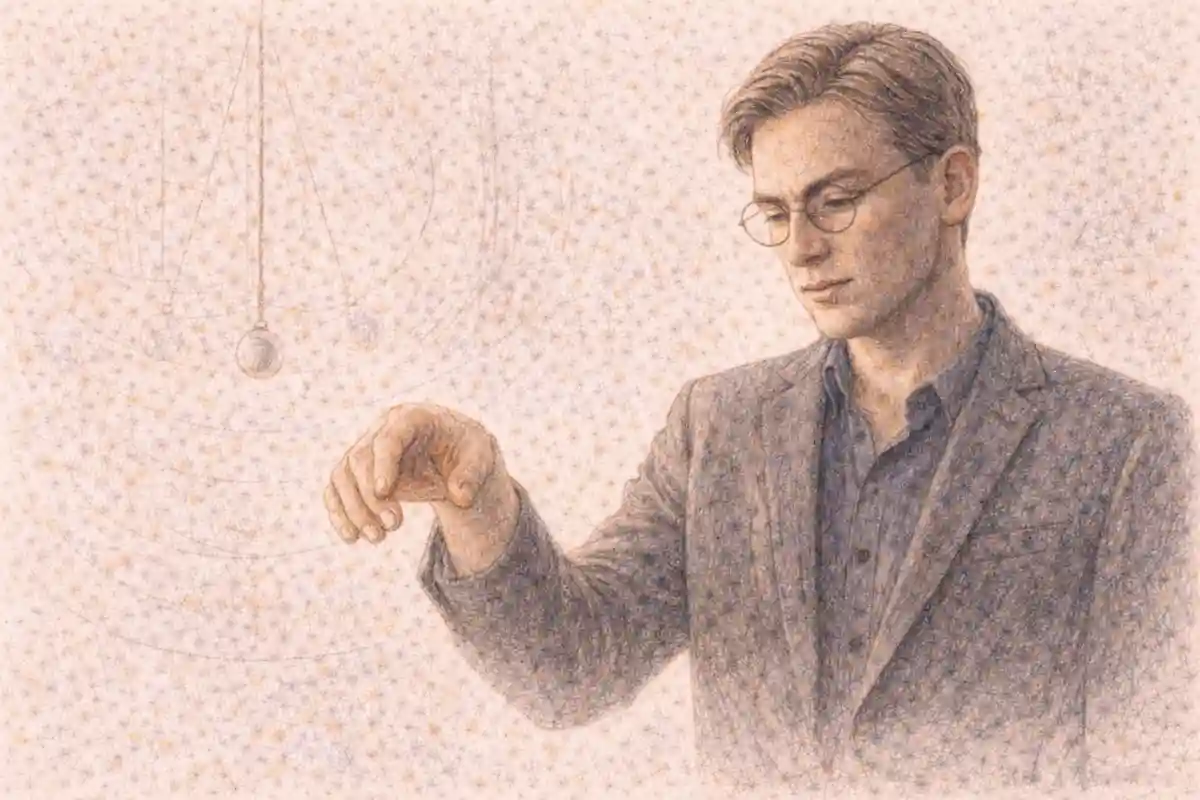
A young man walks into a public square where servants have been trading insults, and with three words he turns a scuffle into a riot. “I hate the word,” he says of peace, and the line lands like a struck match. Within seconds the stage fills with drawn steel, the heads of two great houses are calling for their longswords, and the Prince of Verona is forced into the street to threaten death on anyone who breaks the quiet again. The man who lit the fire has perhaps a dozen lines in the whole scene. He will be dead before the play is half over. And yet without him the tragedy does not happen, because the figure who steps into that square is not really a character with a grievance. He is the family hatred given a body, a sword, and a temper, and his single purpose across the entire drama is to keep that hatred alive at the precise moments when it might otherwise cool.

This article makes a structural argument that the standard account of the play tends to miss. The popular version treats Verona’s most dangerous young man as a hot-blooded villain who happens to get in the lovers’ way, a minor obstacle in a romance. That reading cannot see the machinery. Look instead at where the Capulet kinsman appears, when he appears, and what each appearance does to the shape of the plot, and a different figure emerges: a precision instrument built to convert an abstract, almost decorative grudge into actual blood at the worst possible hour. He opens the brawl that frames the whole world of the play. He spots the intruder at the ball and swears revenge. He sends the challenge that drags the hero toward violence. And he forces the duel that kills the play’s wittiest invention and sends the protagonist into exile, snapping the comedy in two. Trace that sequence and the romance cliche dissolves, replaced by something closer to engineering. The point of this study is not to deny the swordsman his inner life but to show that in his case character and plot-function have been fused so tightly that to separate them is to misread the design.
Who Tybalt is and what he does in the play
Tybalt is Juliet’s first cousin, the nephew of Lady Capulet and so a senior young male of the Capulet house, though not its heir. The text gives almost nothing of his biography. There is no backstory, no soliloquy, no private scene in which he reflects on himself or reveals a wish that exceeds his role. What the play supplies instead is a temperament and a position. He is choleric, proud, contemptuous of anything that smells of compromise, and fanatically attentive to the honor of his name. Mercutio, who reads him better than anyone, calls him the Prince of Cats and mocks him as a duelist who fights “by the book of arithmetic,” a fashionable practitioner of the new Italian fencing who keeps his quarrels by rule and rhythm. The mockery is exact. Verona’s deadliest blade is a stylist of violence, a young man for whom a fight is both a passion and a discipline.
His position matters as much as his temper. Because he belongs to the Capulet house by blood and not merely by service, his aggression carries the weight of the family behind it. When a servant brawls, it is street noise. When the nephew of the house draws, it is the house drawing. That is why his presence escalates every scene he enters. The quarrel between the two families, the ancient grudge the Prologue announces in its first quatrain, has by the time the play opens become almost ritualized, a thing of biting thumbs and exchanged taunts among the lower orders. The reason it keeps tipping back into lethal violence is that the houses contain men whose entire sense of self depends on the grudge staying hot, and the chief of these is the cousin who hates the word peace.
To understand why the part works as it does, it helps to recover the culture of violence the play assumes and that an Elizabethan audience would have recognized at once. London in the 1590s was gripped by a fashion for the new Italian science of defense, the rapier replacing the older English sword and buckler, and continental fencing masters such as Vincentio Saviolo setting up schools where young gentlemen learned to kill by rule. With the technique came a code: an elaborate grammar of insult, lie, and challenge governing when a gentleman might, indeed must, demand satisfaction with a blade. Mercutio’s long satirical riff on the Capulet kinsman as a duelist of fashion, a man who fights by formula and observes “the very butcher of a silk button,” is a precise contemporary joke about exactly this craze. The swordsman is not merely an angry young man; he is a connoisseur of the duel, a practitioner of a fashionable and lethal art, and his deadliness is bound up with reputation, form, and the keeping of quarrels by the book. The play sets his disciplined, ceremonial violence against the older, cruder brawling of the servants in the opening scene, and the contrast is part of the design. Where Sampson and Gregory bite their thumbs and boast, Verona’s deadliest blade kills with style.
The honor code that governs him is not a private quirk but a social system, and this is the point on which the whole reading turns. In a culture organized around honor, a man’s worth is not an inner possession but a public reputation that must be defended against any slight, on pain of becoming nothing. An insult that goes unanswered is a wound to the self that the whole community can see. Within such a system, the masked intrusion of a Montague at the Capulet feast is not a minor breach of manners but an assault on the standing of the house, and the failure to answer it would be a kind of social death. The cousin’s apparently disproportionate fury is therefore entirely proportionate to the logic he inhabits. He is not overreacting; he is reacting exactly as the code demands. This is why he cannot be talked down by appeals to reason or kindness, because reason and kindness are simply not the currency in which honor trades. The only thing that can stop him is a command from a higher authority within the same system, which is precisely what old Capulet supplies at the feast and what is fatally absent in the street.
There is also an older dramatic vocabulary at work in the construction of the figure, the theory of the humors that shaped so much Elizabethan characterization. In that scheme a person’s temperament is governed by the balance of bodily fluids, and an excess of choler, of yellow bile, produces the hot, dry, irascible disposition that flares instantly into rage. The Capulet kinsman is a study in pure choler, a young man whose blood seems perpetually at the boil, and the older critical tradition that reads him as a humor is registering something real about how the part is built. But the humor is not the whole story, because Shakespeare has welded the choleric temperament to a social function so that the inner heat and the outer role become a single thing. The choler is what makes him useful to the feud, and the feud is what gives the choler its occasions. Temperament and structure are not two layers here but one, and that fusion is the feature the rest of this study traces.
The familial placement of the swordsman sharpens every irony the plot will exploit. He is Juliet’s blood cousin, which means the figure most dedicated to keeping the houses at war is bound by kinship to the bride who will end the war by marrying across it. When Romeo weds Juliet, he becomes kin to the very man who will challenge him within hours, so that the killing in act three is not merely a Montague slaying a Capulet but a husband slaying his wife’s cousin, an act that poisons the marriage at its root and gives Juliet the impossible grief of mourning a cousin killed by the man she loves. The play presses on this wound directly when news of the deaths reaches Juliet and she struggles to hold love and horror in the same breath, her language fracturing into oxymoron as she tries to reconcile the husband who has shed her kinsman’s blood. The enforcer’s kinship to the heroine is therefore not incidental but structurally essential, because it ensures that his death cannot be a clean removal of an enemy but must instead drive a blade through the marriage itself. The feud’s instrument is also the bride’s family, and the tragedy needs him to be both. By making the chief agent of the conflict a member of Juliet’s own house, Shakespeare guarantees that the violence cannot stay outside the love story but must run directly through it, that the machine of the feud and the fragile new bond of the marriage are wired into the same circuit.
How many scenes does Tybalt appear in?
Tybalt has speaking appearances in only three scenes across the entire play: the opening street brawl in act one scene one, the Capulet feast in act one scene five, and the fatal duel in act three scene one. His corpse is carried on later and referred to in the tomb, but he speaks in just three scenes before he dies, roughly the midpoint of the action.
That figure is worth sitting with, because it is the first clue that something deliberate is going on. A character who shapes the entire trajectory of a five-act tragedy speaks in only three scenes and is killed halfway through. By raw line count he is a minor part. Measured by consequence he is one of the most important figures in the play, second perhaps only to the lovers and the Friar. The gap between how little he is on stage and how much he determines is the gap this study means to explain. It is the gap that tells the reader he is not built like a normal character. He is built like a mechanism, switched on at three precise moments and then removed once the damage is irreversible.
The play also withholds from him the thing that would soften a normal antagonist: a reason. The Prologue speaks of an “ancient grudge” and a quarrel “from forth the fatal loins of these two foes,” but neither the text nor any of its sources ever explains why the Capulets and Montagues hate one another. The cause is gone; only the hating remains. This absence is examined in depth in the InsightCrunch study at capulet-montague-feud-explained, but its relevance here is direct. Because the grudge has no rational ground, it cannot be argued away, only enacted, and the man who enacts it most reliably is the one the play has stripped of any motive beyond the enacting itself. He does not hate Romeo for anything Romeo has done. He hates a Montague for being a Montague. His function and his psychology are the same thing.
The text up close: three appearances, three escalations
The case for reading the Capulet kinsman as the engine of the conflict rests on his actual lines, so it is worth reading the three appearances closely before tracing how they connect. In each, the same pattern repeats: an opportunity for the violence to subside arrives, and the cousin’s intervention forecloses it.
The first appearance, in the play’s opening minutes, sets the template. The servants Sampson and Gregory have started a brawl with their Montague counterparts, the kind of low comedy of thumbs bitten and bawdy boasts that the play uses to establish how routine the enmity has become. Benvolio enters trying to part them, sword drawn only to beat down their weapons, and speaks the play’s first words of peace: “Part, fools! / Put up your swords. You know not what you do.” This is the hinge. A peacemaker is present, the combatants are mere servants, and the scuffle could fizzle. Then the nephew of old Capulet enters and reads the scene with perfect, deliberate misprision. Seeing Benvolio with a blade in his hand among the lower servants, he refuses the obvious truth that the Montague is separating the fighters and chooses instead the reading that demands a fight: “What, drawn, and talk of peace? I hate the word, / As I hate hell, all Montagues, and thee. / Have at thee, coward!” The lines are a small masterpiece of construction. The rhyme of “peace” against the violence that follows, the equation of a single word with hell and with an entire family, the swerve from abstraction to the personal “thee,” all of it compresses the whole machinery of the feud into four lines. Peace is intolerable to him because peace is the one condition in which the grudge dies, and the grudge is the only thing holding his identity in place. His entrance converts a containable squabble into a citywide riot that brings out Capulet and Montague themselves and finally the Prince, whose furious sentence frames the rest of the play.
The verse of that entrance rewards a second look, because its sound enacts its meaning. The line “I hate the word, / As I hate hell, all Montagues, and thee” builds by accumulation, the object of the hatred expanding from an abstraction to a metaphysical horror to an entire family to a single present body, so that the audience hears hatred widening and sharpening in a single breath. The alliterative pairing of “hate” and “hell” binds the emotion to damnation, and the final “thee” collapses all of it onto Benvolio, who has done nothing but try to stop a fight. The grammar of the speech is the grammar of the feud itself, a hatred so total that it cannot distinguish between an idea, a family, and a man, and so reflexive that it reads a peacemaker as an enemy. There is, too, a grim wit in the construction, the way “drawn, and talk of peace” yokes the sword and the word together as if their proximity were itself an outrage. The cousin is offended not merely that a Montague is present but that the language of peace is being spoken at all, in his hearing, near drawn steel. The speech tells the audience everything about him in four lines and asks nothing further, which is exactly why the part can afford to be so brief. There is no more to know.
What the brawl also establishes, beyond the temperament, is the legal architecture that the rest of the plot will exploit. The Prince arrives, surveys the wreckage of the third public disturbance the feud has caused, and lays down the edict that any Veronese who breaks the peace again will pay with his life. This decree is the structural payload of the first appearance. It converts the next outbreak of violence from a private matter into a capital one, and it ensures that when Romeo kills the Capulet kinsman two acts later, the act cannot be quietly settled but must be answered with banishment. The enforcer, by lighting the riot that prompts the edict, has unknowingly built the legal trap that will spring on the man who eventually kills him. The first appearance is thus doing two jobs at once, establishing a character and planting a mechanism, and the economy of that double work is a measure of how tightly the part is engineered.
The second appearance, at the Capulet feast, shows the same operation in a setting where violence would be socially catastrophic, and the contrast is the point. Romeo has crashed the party masked, drawn by the hope of seeing Rosaline, and has just caught sight of Juliet. The mood is festive, courtly, suspended in the lyric hush of the lovers’ first meeting. Into that hush comes a voice raised in recognition. The Capulet kinsman has identified the intruder not by sight but by sound: “This, by his voice, should be a Montague. / Fetch me my rapier, boy.” The instinct is instant and total. A Montague is breathing Capulet air, and the only conceivable response is steel. He frames the killing as a religious duty: “Now, by the stock and honour of my kin, / To strike him dead I hold it not a sin.” Here, crucially, the play introduces the one force that can restrain him, and it is not conscience but a higher authority within his own house. Old Capulet, unwilling to spill blood at his own feast and not displeased to hear Romeo well spoken of, orders his nephew to stand down: “He shall be endured.” The exchange that follows is one of the most revealing in the part. The young man does not yield gracefully. He seethes, he is called “saucy boy” and “princox” by his furious uncle, and he finally withdraws with a couplet that is in effect a promise of the catastrophe to come: “I will withdraw, but this intrusion shall, / Now seeming sweet, convert to bitter gall.” The festive scene is preserved, the lovers meet, the comedy proceeds. But the audience has been told, in plain verse, that the violence has only been deferred. The enforcer has been switched off by his own household, and he has announced that he will switch back on.
The texture of the feast scene deserves closer notice, because Shakespeare stages within it a small, telling collision of generations. Old Capulet, mellow with wine and the pleasure of his own party, is genial and expansive, glad to let a well-mannered stranger enjoy the dancing, and his refusal to allow bloodshed is rooted partly in hospitality and partly in a comfortable confidence that the feud is an old man’s habit rather than a young man’s necessity. The nephew, by contrast, treats the same moment as an emergency of honor that admits no delay. The friction between them is the friction between a feud that has cooled into ritual at the top of the house and a feud that still burns at full heat in its junior ranks. When Capulet snaps “Am I the master here, or you? Go to,” and brands his nephew a “saucy boy” and a “princox,” the audience watches the honor code’s own hierarchy assert itself, the elder overriding the younger not because the younger is wrong by the code’s lights but because the elder outranks him within it. The cousin’s enforced silence is therefore not a softening but a compression. The energy has nowhere to go in the moment and so converts, by his own account, from something “seeming sweet” to “bitter gall,” a phrase that turns the sweetness of the feast itself into the raw material of future poison. The couplet is a closed circuit, sweetness in, bitterness out, and it tells the audience that the very occasion of the lovers’ meeting is also the occasion that loads the weapon of act three.
It matters, too, that the recognition in this scene is by ear rather than eye. The Capulet kinsman does not see Romeo’s face beneath the mask; he hears his voice and identifies the enemy instantly, “This, by his voice, should be a Montague.” The detail is a fine piece of characterization that doubles as structure. It tells the audience that the swordsman’s hostility is so finely tuned that it needs no evidence beyond a sound, that the feud has become for him a kind of sense organ, an instinct that fires before thought. And it sets up the cruel irony that pervades the rest of the action, in which knowledge is always partial and always too late. The cousin knows a Montague is present but not which Montague or why; later he will challenge a man who has secretly become his kinsman without knowing it. The feast scene inaugurates the play’s tragic economy of misrecognition, in which characters act on fragments of truth, and it places the enforcer at the center of that economy as the figure whose certainty is most absolute and most dangerous precisely because it is built on so little.
The third appearance is the one that breaks the play. In the heat of a Verona noon, the cousin comes looking for Romeo, carrying the grievance of the gatecrashed feast and the formal insult of having been overruled. He finds Mercutio and Benvolio first, and Mercutio, spoiling for exactly the sport the duelist offers, will not let an exchange of words cool. When Romeo arrives, the Capulet swordsman delivers the challenge the whole structure has been building toward: “Romeo, the love I bear thee can afford / No better term than this: thou art a villain.” Romeo, secretly married to Juliet that very afternoon and therefore now kin to the man insulting him, refuses the bait with a tenderness no one else can understand: “I do protest I never injured thee, / But love thee better than thou canst devise.” The refusal is the play’s last open door. If the challenge is declined, the comedy survives. Mercutio, disgusted by what he reads as “calm, dishonourable, vile submission,” draws in Romeo’s place. The fight that follows is the turn of the entire drama. The first quarto’s stage direction describes the decisive moment with brutal economy, recording that the cousin thrusts at Mercutio under Romeo’s arm and flees, so that Romeo’s own well-meaning intervention opens the gap through which the killing blow passes. Mercutio dies cursing “a plague o’ both your houses,” and Romeo, his peacemaking now revealed as the very thing that killed his friend, turns and runs the Capulet kinsman through. The full anatomy of that reversal is treated in the InsightCrunch study at romeo-kills-tybalt-turning-point, but its mechanism belongs here. Every escalation in the play has been the cousin’s work, and his last act before dying is to manufacture the death that converts a love comedy into a tragedy.
The challenge itself is a model of how the honor code weaponizes language. “Thou art a villain” is not a casual insult but a technical one, a formal charge of baseness that, within the code, can be answered only with steel or with disgrace. The cousin offers it almost courteously, prefacing the blow with “the love I bear thee can afford / No better term than this,” a chilling formula in which the language of love is turned to the service of a death sentence. Romeo’s reply works in the opposite direction, taking the word that ought to provoke and refusing its logic entirely, insisting that he loves the Capulet name and has never injured its bearer. To everyone present this is incomprehensible, because within the code there is no move called “refusing the quarrel out of secret kinship,” only the move called “submission,” which is itself a dishonor. The scene dramatizes a collision between two grammars, the honor grammar in which an insult must be answered and the marriage grammar in which Romeo is now bound to spare his wife’s cousin, and because only Romeo knows the second grammar exists, his behavior can register to the others only as cowardice. Mercutio’s intervention is the hinge on which the misreading turns. Disgusted by what he calls “calm, dishonourable, vile submission,” he draws to defend an honor Romeo has not actually surrendered, and the play’s freest spirit dies for a code he mostly mocked.
The staging of the killing blow is one of the most carefully specified moments in the early texts, and it places Romeo at the literal center of the catastrophe. The first quarto of 1597 carries an unusually descriptive stage direction at this point, recording that the Capulet kinsman thrusts at Mercutio beneath Romeo’s arm and then flees. The detail is dramatically devastating, because it means Romeo’s own body, interposed to keep the peace, becomes the screen behind which the fatal stroke is delivered. The peacemaker’s gesture is what opens the line of attack. This is the play’s bleakest irony rendered as physical blocking: the man trying hardest to stop the violence is the unwitting instrument of its worst outcome, and the enforcer exploits the gap that Romeo’s good intentions create. After Mercutio falls, the play’s register changes within a few lines, the comic energy draining out as Romeo’s fire-eyed fury rises, and the swordsman, returning, meets the revenge his own design has summoned. He dies having completed his function with perfect efficiency, having converted the marriage of an afternoon into the exile of an evening and the comedy of three acts into the tragedy of two.
The core investigation: the function timeline
The three appearances are not three separate incidents. They are three settings of a single mechanism, each tuned to a different social pressure and each producing the same result, which is the survival of the feud past the moment it might have died. To make the engineering visible, this study proposes a tool, the InsightCrunch Tybalt function timeline, which tracks each appearance against the question that matters for plot: at this point, could the violence have subsided, and what did the cousin do to ensure it did not?
The value of the timeline is that it reframes a question readers usually ask in the wrong terms. The usual question is “what is Tybalt like?” The structural question is “what does Tybalt do to the curve of the plot?” Answer the second and the first answers itself.
What is Tybalt’s function in the plot of Romeo and Juliet?
Tybalt’s function is to keep the feud lethal at the exact moments it might cool. He turns a servants’ scuffle into a riot, swears vengeance when Romeo crashes the feast, sends the challenge that forces a confrontation, and kills Mercutio in the duel that exiles Romeo. Each appearance escalates the conflict toward the play’s tragic turn.
Begin with the first station on the timeline, the opening brawl. The state of the conflict before his entrance is decorative and low. The combatants are servants, the weapons are half-drawn, a peacemaker holds the field, and the matter could end in laughter. The cousin’s intervention changes the register from comic to martial in a single speech, escalating a servants’ quarrel into a clash of the houses’ heirs and finally a public emergency requiring the Prince. The plot consequence is the foundation of everything that follows: the Prince’s edict that any further breach of the peace will be paid for with the offender’s life. That edict is the loaded gun on the wall. It is why Romeo’s later killing of the cousin cannot be quietly forgiven and must instead be punished with banishment. In other words, the first appearance does not merely show that the families fight. It establishes the legal condition that will make the third appearance fatal. The enforcer builds his own trap two acts before he springs it.
The second station, the feast, is the timeline’s most instructive entry because it is the one occasion on which the mechanism is overridden, and the override reveals how the mechanism works. Here the social pressure runs the other way. A killing at the host’s own celebration would shame the house and breach hospitality, so Capulet, the higher authority, shuts his nephew down. The cousin’s function is temporarily blocked. What the scene shows, though, is that the function is not extinguished, only delayed, and that the young man himself understands this. His parting couplet is a structural promissory note. It tells the audience that the energy denied an outlet here will find one later, and it links the feast directly to the duel. Without this scene the third appearance would seem to come from nowhere. With it, the killing in act three has a grievance behind it that the play has carefully planted: the humiliation of being overruled in front of his own kin, layered on top of the affront of the intrusion. The feast is where the timeline stores the charge it will release at the turn.
The third station is the discharge. By the time the cousin comes looking for Romeo, every condition the earlier appearances established is in place. The Prince’s edict is law. The grievance from the feast is fresh. The challenge has been sent and refused in a way that, to the watching Mercutio, reads as cowardice. The mechanism now has nothing to stop it. There is no Capulet present to call “He shall be endured,” no Prince yet on the scene, and the one man trying to keep the peace, Romeo, is muzzled by a secret he cannot reveal. The result is the death of Mercutio and the death of the cousin, the banishment of Romeo, and the collapse of the play’s comic structure into its tragic second half. The timeline makes plain that this is not bad luck visited on the lovers from outside. It is the predictable terminal output of a device that was switched on in the first scene and never properly switched off, only paused.
The counterfactual test confirms how load-bearing each station is. Remove the cousin from the opening brawl and the scuffle stays a servants’ quarrel, the heads of the houses are never drawn out, the Prince has no third riot to punish, and the capital edict that dooms Romeo to banishment is never pronounced. Remove him from the feast and Romeo’s intrusion passes unremarked, no grievance is stored, and the afternoon of the wedding carries no charge waiting to detonate. Remove him from the duel and Mercutio lives, Romeo is never provoked to revenge, and the comedy that has been building toward marriage is free to complete itself. Each removal dissolves the catastrophe, which means each appearance is not decorative but causal, a necessary condition of the tragedy. Few characters in Shakespeare are so thoroughly indispensable to the plot while remaining so thin in interior life, and the combination is the signature of the engineered part. The play could lose almost any of its minor figures without altering its shape, but it cannot lose the enforcer at any of his three stations without ceasing to be the tragedy it is. He is the one minor character whose subtraction destroys the play, and that fact alone should retire the habit of treating him as a hot-tempered afterthought.
Reading the appearances this way also clarifies a detail that troubles many first-time readers: the offstage challenge. Between the feast and the duel, in act two, Benvolio reports that the Capulet kinsman has sent a letter to Montague’s house, and Mercutio identifies it instantly as a challenge and spends a long, brilliant passage mocking the sender as a duelist of fashion. The cousin himself never appears in that scene. Some readers find this strange, a major plot mover acting through a letter rather than in person. The timeline explains it. The challenge does not need the man because by this point the man has become a function, and a function can operate by proxy. The letter is the mechanism reaching forward into act three without the body present. It is also a piece of dramatic economy that keeps the swordsman offstage so that his next entrance, the fatal one, arrives with maximum force. The wording of the challenge is never quoted; the play withholds it deliberately, letting Mercutio’s parody stand in for it, because the content does not matter. That a challenge has been sent is the only fact the plot requires. The honor culture that makes such a letter both inevitable and unanswerable is the same culture this study turns to next.
The timeline also throws light on a textual question that the early printings raise. The play survives in two substantively different early quartos, the shorter and more roughly transmitted first quarto of 1597 and the fuller second quarto of 1599 that underlies most modern editions. The differences between them in the scenes involving the Capulet kinsman are instructive, because they show the function surviving intact across variant texts even as the wording shifts. The first quarto tends to carry fuller, more theatrical stage directions, including the vivid description of the killing thrust delivered under Romeo’s arm, while the second quarto is richer in the verse but sparer in its staging notes. What does not vary is the sequence of the three appearances and their escalating effect. Whatever the textual accidents, the engine runs the same course in both versions, lighting the brawl, swearing at the feast, and forcing the duel. This stability across texts is itself evidence that the function is structural rather than incidental. A detail of phrasing can be lost in transmission, but the architecture of the part is too load-bearing to drop, and so it persists wherever the play is recorded at all. The variant texts confirm what the timeline argues, that the cousin is built into the bones of the plot and not merely decorating its surface.
Seen whole, the timeline reveals a grim symmetry. The first appearance creates the law that will punish the killing the third appearance provokes; the second appearance stores the grievance that the third will discharge; and the third appearance, in killing Mercutio, removes the one character whose freedom the structure could not otherwise contain. Each station prepares the next, and the preparation is invisible to the romance reading, which sees only a series of unfortunate clashes. Read as a designed sequence, the appearances form a single descending action, a controlled demolition of the comedy in three charges. The enforcer does not improvise. He executes. And because the execution is distributed across the first half of the play and completed at its center, the catastrophe that follows in the second half can seem to the lovers like fate falling from the sky, when in fact it was assembled, beam by beam, by a young man with a rapier and a horror of the word peace.
Why does Tybalt challenge Romeo?
Tybalt challenges Romeo because Romeo, a Montague, infiltrated the Capulet feast, an intrusion the cousin treats as an unforgivable affront to family honor. Forbidden by old Capulet to act at the party, he channels the grievance into a formal duelling challenge, the honor code’s sanctioned means of avenging an insult that could not be answered on the spot.
The critical conversation: honor, mechanics, and the question of character
Scholarship on the play has long recognized that the Capulet kinsman is more structural than psychological, but it has divided on what to make of that recognition, and the division is worth setting out and adjudicating. Three strands of argument matter for this study: the reading of the feud as a machine of masculine honor, the analysis of the play’s violence as a system rather than a series of accidents, and the editorial debate over whether the cousin is a character at all or merely a device.
The most influential account of the honor culture that powers the swordsman comes from Coppelia Kahn, whose study of masculine identity in the play argues that the feud is not a background nuisance but the central social structure through which the young men of Verona become men. In Kahn’s reading, the grudge functions as a rite of passage and a bond. To be a young Capulet or Montague is to inherit a quarrel, and to prove one’s manhood is to fight in it. The feud, on this view, is patriarchal in the precise sense that it transmits identity from fathers to sons through aggression, and it traps even those who would escape it, Romeo above all, in a logic where refusing to fight reads as failing to be a man. The relevance to the cousin is total. If the feud is the machine by which Verona manufactures masculinity, then he is the machine’s purest product, a young man who has so completely internalized the honor code that he has no self outside it. His hatred of the word peace is not personal pique. It is the honor system speaking through him, because peace would dissolve the very structure that gives him a place to stand. Kahn’s argument explains why the cousin cannot be reasoned with and why Romeo’s tenderness in act three is not merely unwelcome but unintelligible to him. Within the honor code, “I love thee better than thou canst devise” is not a sentence that computes. The companion question of how the swordsman’s reputation as the Prince of Cats fits this honor economy is pursued in the InsightCrunch study at tybalt-prince-of-cats-honor, which reads his fashionable duelling as honor turned into performance.
Kahn’s account also illuminates why the cousin and Romeo are set in such pointed contrast, because they represent two possible relations to the masculine code the feud enforces. Romeo, at least once he has met Juliet, is a young man trying to step outside the honor economy, to define himself by love rather than by the inherited quarrel, and the tragedy of the duel scene is precisely that the code will not let him out. His attempt to refuse the fight is an attempt to live by a different measure of manhood, and it fails not through any weakness in him but because the surrounding culture has no category for it. The Capulet kinsman is the opposite case, a young man who has fused himself so completely to the code that stepping outside it is unthinkable, who has no self to retreat to if the honor system is suspended. Reading the two together, as Kahn’s argument invites, shows the feud as a trap with two doors, both of which open onto disaster. The man who tries to leave is destroyed by the man who cannot conceive of leaving, and the structure that kills them both is the masculine honor code that the older generation maintains and the younger generation must enact. The enforcer is the code’s most faithful servant, and his fidelity is exactly what makes him lethal.
This is also where the older critical attention to the play’s formal patterning becomes useful. Critics who have studied the play’s pervasive structures of opposition, its pairings and contrasts and ceremonies, have noticed that Verona is a world organized by form, where even violence has its etiquette and love arrives in the shape of a shared sonnet. Within such a world the Capulet kinsman is the figure who keeps the form of the feud rigorously, who insists on the proper answer to the proper insult, and his very correctness is what makes him dangerous. He is not a breaker of order but its most punctilious keeper, a man for whom the rules of honor are sacred. The horror the play uncovers is that the faithful keeping of these forms produces death as reliably as their breaking would, that a society can be destroyed not by lawlessness but by the perfect observance of a lethal code. The enforcer is the proof of that thesis, a character whose every action is correct by the standards of his world and catastrophic by any other.
A second strand of criticism approaches the violence as a system with its own mechanics rather than as a sequence of unlucky events, and this is where the engine reading finds its strongest support. Critics attentive to the play’s structure have noted that Shakespeare engineers the feud so that it discharges at the dramatically optimal moment, immediately after the marriage and immediately before any chance of reconciliation, so that the lovers are bound and then sundered in the span of a single afternoon. The mechanics depend on a reliable trigger, and the cousin is that trigger. The play cannot afford a feud that flares unpredictably, because the timing of the turn must be exact. It therefore concentrates the conflict’s lethal energy in one figure whose appearances can be placed precisely where the plot needs a detonation. This is the sense in which the swordsman is the engine: not a metaphor for anger in general but the specific component that delivers the conflict’s violence on schedule. The duel’s status as the structural break of the play, the moment the comic matrix gives way, is the established framework this series has already laid out elsewhere, and it is assumed rather than re-argued here. What the function reading adds is the recognition that the break has an author inside the fiction, a character whose job is to cause it.
The third strand is the editorial and critical disagreement that this study must adjudicate, because it bears directly on the article’s central claim. Editors and critics have long split over how much character the Capulet kinsman possesses. One camp treats him essentially as a humor, a flat embodiment of choler in the older dramatic tradition, a type rather than a person, useful to the plot and otherwise uninteresting. On this view he is pure function, and asking after his inner life is a category error, like asking what a hinge feels. Editors in this tradition tend to gloss his speeches briskly and to treat his motivation as exhausted by the single word “honor.” The opposing camp resists this flattening, pointing to the genuine coherence of his behavior, the specificity of his fencing pretensions, the wounded pride in the feast scene, and the consistency with which his choices follow from a recognizable, if narrow, psychology. On this view he is a real character, merely a single-minded one, and reducing him to a device patronizes both the figure and the playwright.
The adjudication this study offers is that both camps are half right and that the disagreement dissolves once the false choice between function and character is rejected. The flat-humor reading is correct that the cousin has no life outside his role; there is no scene in which he is anything but the feud’s enforcer, no private want, no hinterland. The character reading is correct that his behavior is psychologically coherent and not arbitrary; he acts from a consistent set of values with a consistent logic. The error in both is the assumption that these observations are in tension. They are not. The whole achievement of the part is that function and character have been fused so that the psychology is the mechanism. His choler is not a personality trait laid over a plot device; it is the plot device experienced from the inside. When he says he hates peace, the audience hears a man’s temperament and watches a structural necessity at the same instant, and the two are indistinguishable. To call him merely a function is to miss that Shakespeare has given the function a convincing interior. To call him merely a character is to miss that the interior has been engineered to do exactly one job. The right description is that he is a character whose character is a function, and that this fusion, far from being a limitation, is the precise effect the play is after.
The major modern editions register this debate in their handling of the part, even where they do not name it as such. Editorial commentary across the standard scholarly texts of the play, from the mid-century Cambridge tradition through the later Arden and Oxford editions, tends to gloss the cousin’s speeches economically, noting the fencing terms, the honor conventions, and the source background, and to treat his motivation as transparent. The brevity of that annotation is itself a quiet judgment, an implicit agreement that the part does not contain hidden depths to be excavated, that what is on the surface is the whole of it. Yet the same editions, in tracing how Shakespeare reshaped the figure from his sources, supply exactly the evidence that the function reading needs, because they document the deliberate building of the part into the engine of the plot. An editor who shows that Shakespeare invented Mercutio and then had the Capulet kinsman kill him is describing, in the language of source study, the construction of a structural device. The editorial tradition thus contains both halves of the truth without always reconciling them: a figure whose interior is shallow and a figure whose plot work is profound. The reconciliation this study proposes is that the shallowness and the profundity are the same fact seen from two sides. The interior is shallow because everything in it has been recruited to the function, and the plot work is profound because the function has been given just enough interior to be felt as a person rather than registered as a contrivance. The editors who gloss him briskly and the critics who defend his coherence are both responding to a part that has been engineered to need no more than it shows and to show no more than it needs.
Stage, screen, and the afterlife of the enforcer
Because the part is so concentrated, it has always offered actors and directors a particular kind of opportunity: a small role with enormous structural weight, in which a few minutes of stage time must carry the hinge of the entire evening. Productions have repeatedly discovered that the way the duel is staged determines how an audience reads the whole turn, and that the cousin’s choreography is therefore one of the most consequential directorial decisions in the play. The few minutes in which the swordsman kills and is killed must carry the structural weight of the entire evening, and how those minutes are blocked shapes everything an audience feels about the turn and about who bears the blame for it.
A production that plays the swordsman as a sneering thug makes the turn feel like an accident of bad temper, a brawl that got out of hand. A production that plays him as a disciplined, almost ceremonial duelist, the fashionable stylist Mercutio describes, makes the turn feel like the operation of a system, a killing carried out according to a code. The second reading is closer to the function argument, and the most thoughtful modern stagings have leaned toward it, presenting the cousin not as a hooligan but as a figure of lethal correctness, a young man who kills by rule. The choice has consequences for sympathy as well as meaning. The thug invites contempt; the stylist invites a colder recognition that the violence is institutional, that Verona has built a machine for producing exactly this death and that the man wielding the rapier is its instrument as much as its agent.
On screen the part has had a long and varied life, and the screen tradition has tended to seize on the duelist’s glamour. Film versions have repeatedly made the cousin a figure of dark elegance, the best-dressed and most dangerous young man in Verona, because the camera loves the contrast between his polish and his cruelty. This instinct is sound, and it aligns with the text’s own emphasis through Mercutio on the cousin as a creature of fashion and form. Whether played in period or in modern dress, the screen swordsman tends to be charismatic in a way that complicates the audience’s wish to dismiss him, and that complication is itself a vindication of the function reading, because a merely contemptible thug could not carry the structural weight the role demands. The plot needs the audience to feel the gravity of his appearances, and gravity requires a presence that cannot be waved away.
The afterlife of the part also includes the curious fact that the cousin survives the play in the cultural memory chiefly through Mercutio’s mockery rather than through his own words. The phrase Prince of Cats, the jibe about fighting by the book of arithmetic, the catalogue of fencing terms, all of these come from the mouth of the man the cousin will kill, and they have stuck to him more firmly than his own famous line about hating peace. There is a structural justice in this. The enforcer is so fully absorbed into his function that even his reputation reaches us secondhand, refracted through the wit of his victim. He is, in the end, less a man the play remembers than a force the play deploys, and the culture has remembered him accordingly, as a name attached to a temper and a sword rather than as a person with a story.
Two screen versions illustrate the range of choices the part allows and the way each choice shapes the meaning of the turn. Franco Zeffirelli’s 1968 film, with its lush period Verona, presents the Capulet kinsman as a handsome, aristocratic young swordsman whose violence is folded into the sun-struck beauty of the setting, so that the duel arrives as a sudden, almost accidental eruption of heat in a golden afternoon. The effect emphasizes the waste of young life, the sense of a careless world that kills its best almost by mischance. Baz Luhrmann’s 1996 film makes the opposite wager, styling the cousin as a sharp-suited gunslinger, embroidering the words Prince of Cats into his costume and arming him with a pistol branded with a sword’s name, so that the fashionable duelist of the text becomes a fashionable killer of the screen. Luhrmann literalizes Mercutio’s mockery, turning the connoisseur of the rapier into a connoisseur of the handgun, and the duel becomes a stylized shootout that keeps the honor logic intact while updating its weapons. Both films understand, in their different idioms, that the part must carry glamour as well as menace, and that a merely contemptible thug could not bear the structural weight of the moment when the comedy dies.
The choreography of the act three fight is where these interpretive choices become concrete, and productions have long recognized that the way the killings are blocked determines how the audience apportions feeling and blame. A staging that makes the first death look like an accident of crossed blades, exploiting the text’s own detail of the thrust beneath Romeo’s arm, throws the weight onto chance and the cruelty of the honor code; a staging that makes the Capulet kinsman’s stroke look deliberate and contemptuous throws it onto his malice. The second killing, Romeo’s revenge, carries its own choices, between a hot, grief-maddened lunge and a colder, more deliberate execution, and the reading of Romeo’s whole tragedy shifts with that decision. These choices are pursued in detail in the InsightCrunch study at staging-the-duel-fight-choreography; what matters for the function argument is that the enforcer’s choreography is never a minor technical matter. It is the physical realization of the play’s hinge, and how a production blocks those few seconds of steel decides how the whole evening turns.
Wider significance: what the engine reveals about the machinery of tragedy
The function reading of the Capulet kinsman matters beyond the part itself because it exposes how this particular tragedy is built, and that in turn says something about Shakespearean tragedy more broadly. The romance cliche that has grown up around the play imagines a story driven by feeling, two young people whose love runs into the world and is destroyed by it. The cliche is not false, but it is blind to the mechanism, and the cousin is the clearest place to see what the mechanism is. The tragedy is driven not by the lovers’ emotions, which are if anything a brake on the violence, but by a social structure that requires periodic blood and a character engineered to supply it on cue. Romeo and Juliet do not seek the catastrophe; they flee it. The catastrophe comes for them because Verona contains a device for manufacturing it, and that device has a face and a name.
This is why the question of whether the cousin has character finally matters so much. If he were a mere plot contrivance, the violence would feel arbitrary, a coincidence the playwright needed and so supplied. Because he is a convincing person whose convictions make the violence inevitable, the catastrophe feels not arbitrary but determined, the necessary result of who these people are and what their world demands of them. The fusion of function and character is therefore not a technical curiosity but the very thing that makes the play feel like fate rather than accident. Verona does not need stars to doom the lovers when it has young men who hate the word peace. The “star-crossed” language of the Prologue gestures at cosmic determination, but the actual determining force the play dramatizes is human and social, a culture of honor with a perfect enforcer. The cousin is where the play’s fatalism touches the ground.
There is a further significance in how the part handles the relation between the personal and the structural, because the play is careful to keep both visible at once. The cousin never becomes a pure abstraction. He has a temper one can feel, a pride one can wound, a style one can recognize. But everything personal about him serves the structural role without remainder. His pride is exactly the pride the honor code requires; his temper is exactly the temper the feud needs; his fencing style is exactly the fashionable lethality the plot can use. The play has built a person every one of whose individual traits is also a function, so that there is no leftover self that the role does not use. This is a rarer and harder achievement than either pure allegory or full psychological portraiture, and it is the reason the part repays close attention out of all proportion to its length. In him the play demonstrates that a character can be entirely subordinated to plot and yet entirely alive, that function and freedom are not opposites in dramatic construction when the function is felt from inside.
Set against the play’s other young men, the design becomes sharper still. Mercutio, by contrast, is a free agent, a character whose energy spills past any function, who digresses into the Queen Mab speech that serves no plot purpose, who fights in act three not because the structure requires it of him but because his own volatile spirit will not let an insult pass. Where the cousin is the feud personified, Mercutio is the play’s surplus, its overflow of life, and that is precisely why his death is the turn. The structure kills its one truly free character, and it does so using its one truly functional one. The opposition between the two young men is the opposition between a person who exceeds the machine and a person who is the machine, and the tragedy turns on the moment the machine consumes the surplus. Read this way, act three scene one is not a brawl that goes wrong but a demonstration of what the feud is for: the conversion of freedom into blood, performed by the figure built to perform it.
This reframing has consequences for how the play’s famous fatalism should be understood. The Prologue announces a pair of star-crossed lovers whose deaths are written in the heavens, and the language invites a reading in which the catastrophe descends from a cosmic order indifferent to human will. The function of the Capulet kinsman pulls in the opposite direction, locating the determining force not in the stars but in the street, not in fate but in a social structure with a human agent. The play holds both framings in tension, and the tension is part of its power, but the engine reading suggests that the cosmic language is in part a mystification, a way of describing as destiny what is in fact the predictable working of a culture that has built a machine for killing its young. When the lovers and the chorus speak of fate, they are naming the experience of being caught in a structure they cannot see, and the enforcer is the most visible component of that structure. To watch him is to watch the machinery that the fatalistic language conceals, and the central claim of this study, the InsightCrunch reading of the Capulet kinsman as the engine of the feud, is precisely that tracking his function exposes the human engineering beneath the play’s talk of stars. The romance cliche and the fatalistic reading are allied in this, that both look away from the machinery, and both are corrected by attention to the one character whose entire being is machinery made flesh.
The timing of his interventions repays attention, because the play is built on a compression of time that makes the engine’s precision matter enormously. The whole tragedy unfolds across a span of roughly four to five days, an acceleration Shakespeare imposed on his sources, which spread the action across months. Within that compressed schedule, the placement of the challenge and the duel is exact. The cousin sends his challenge while Romeo is being married, so that the summons to a fight and the binding of the marriage occur within the same narrow window, and the duel itself falls on the very afternoon of the wedding, before the marriage can be made public or its peacemaking potential realized. The result is that Romeo is forced to choose between his new wife’s blood and his friend’s honor at the one moment when the choice is most impossible, when he is most bound and least able to explain himself. The enforcer could not have chosen a worse hour if he had known the marriage existed, and the fact that he does not know makes the timing feel less like malice than like the operation of a structure indifferent to the lovers’ happiness. The compression of time is what gives the engine its terrible efficiency. In a play that moved at the pace of the sources, the violence might have found a less catastrophic moment; in the play Shakespeare actually wrote, the machine fires at the single instant guaranteed to do maximum damage, and it fires through a man who has no idea what he is destroying.
There is one more dimension to the wider significance, which concerns what the part teaches about dramatic construction in general. Most discussions of character in Shakespeare reach for the great soliloquizing figures, the Hamlets and Macbeths whose interiority is the play’s subject. The Capulet kinsman represents the opposite and equally important achievement, the construction of a figure with no interiority to speak of who nonetheless lives on stage and drives a tragedy. He demonstrates that dramatic life does not require psychological depth, that a character can be entirely exterior, entirely function, and still command the stage and shape the action, provided the function is given a temperament vivid enough to be felt. This is a different art from the art of the soliloquy, the art of the part that is all surface and all consequence, and it is an art the play deploys with complete confidence. To learn to see it is to learn that Shakespearean construction works on more than one principle, that beside the deep interiors there are these brilliant exteriors, these engines in human shape, and that the tragedy needs both. The lovers supply the depth; the enforcer supplies the drive. Neither could make the play alone.
Why the engine is misread or overlooked
The most common misreading of the part flattens it into villainy. In this version the Capulet kinsman is simply the bad guy, a hot-tempered bully whose function is to be unlikeable so that the audience cheers when Romeo kills him. This reading is encouraged by the speed of the part, by the famous hatred of peace, and by a long tradition of staging the cousin as a snarling antagonist. It is not exactly wrong, but it is shallow, and it costs the play its structure. A villain is a moral category; an engine is a structural one. To call the cousin a villain is to ask the audience to judge him, and judgment misses the point, because the play is less interested in whether he is bad than in what he does. The function reading asks a better question, not “is he wicked?” but “what does his wickedness accomplish in the design?” and the answer reveals the machinery the villain label conceals.
A second and subtler misreading goes the opposite way and dismisses the cousin as negligible, a minor character not worth attention, on the grounds that he speaks little and dies early. This is the error of mistaking line count for importance. By the function timeline, the swordsman is among the most consequential figures in the play, because consequence is measured by effect on the plot, not by stage time. The reader who skims past him because he seems minor will fail to understand why the comedy turns when it does, will treat the catastrophe as bad luck, and will be left with the romance cliche and its blindness to the engineering. Attending to so small a part is exactly how the larger design comes into view.
The deepest correction, though, concerns the play’s sources, because the swordsman as Shakespeare built him is significantly the playwright’s own construction. In Arthur Brooke’s long narrative poem of 1562, the chief printed source, the figure who corresponds to the cousin exists but is far less developed and far less structurally central. Brooke gives a street fray in which the Romeus figure kills the Capulet kinsman, but he does not build the part into the precise three-station engine the play deploys, and crucially the surrounding architecture is different. Shakespeare’s decisive change was to invent Mercutio as a substantial character and then to have the cousin kill him, so that the duel in act three carries a weight Brooke’s version cannot. In the source the death of the Capulet kinsman is a regrettable incident; in the play it is the hinge of the whole structure, because it is preceded by the death of the play’s most vivid invention. Shakespeare also sharpens the feast scene, giving the cousin the recognition of Romeo by voice and the seething withdrawal that plants the grievance, where the sources are vaguer. The wording and timing of the challenge, the concentration of the violence into a single afternoon, the placement of the killing immediately after the secret marriage, all of this is dramatic engineering laid over a source that contained the raw material but not the machine. To read the cousin as a mere inherited stock villain is therefore to miss the most important fact about him, which is that Shakespeare rebuilt the part into the engine the tragedy required. The figure who hates the word peace is not a leftover from the source tradition. He is a purpose-built component, and the building is the point.
The genealogy of the story makes the scale of Shakespeare’s reconstruction clearer still. The tale had passed through several hands before it reached him, from the Italian novella tradition of Matteo Bandello in the 1550s, through Pierre Boaistuau’s French version, into English in both William Painter’s prose collection of the 1560s and, more importantly for the play, Arthur Brooke’s long verse narrative. In all of these the cousin figure exists as the kinsman whose death at the hero’s hands precipitates the banishment, but he is a narrative necessity rather than a dramatic engine, a name that performs a plot turn without becoming a presence. None of the sources gives him the opening brawl with its hatred of peace, the recognition by voice at the feast, the seething withdrawal, or the formal challenge mocked by a wit who will become his victim. Above all, none of them contains the death of Mercutio, because in the prose and verse sources Mercutio is at most a minor figure, a courtier with cold hands noticed briefly at the feast, not a character whose killing could break a play in two. Shakespeare’s decisive intervention was to take a thinly drawn plot mover and build around him the architecture that makes his violence structurally fatal, inventing the friend whose death he would cause and concentrating the action so that the killing falls at the precise center of the design. To read the Capulet kinsman as an inherited type is therefore to mistake the raw ore for the finished machine. The ore was there in the sources; the engineering was the playwright’s, and the engineering is what turned a stock kinsman into the engine of a tragedy.
There is a final misreading worth naming, which treats the cousin’s early death as evidence that he matters little to the play’s meaning, on the assumption that a character who is gone by the midpoint cannot be central to a tragedy that runs two more acts. This gets the structure exactly backward. The whole point of the function reading is that the enforcer completes his work and then is removed, the way a fuse is consumed by the fire it starts. His absence from the second half is not a sign of unimportance but the proof that his importance was causal rather than continuous. Everything that happens in acts four and five, the desperate plan, the sleeping potion, the missed message, the tomb, follows from the banishment that follows from the killing that he forced. He is present in the second half as a cause is present in its effects, which is to say everywhere and invisibly. The reader who dismisses him for dying early has mistaken the moment the engine stops running for the moment it stops mattering, when in fact the machine matters most precisely after it has finished its work and the consequences begin to fall.
Closing reflection
Return, at the end, to the square where the play begins, and to the young man who walks in and turns a scuffle into a riot with three words. By now it should be clear that he is not an obstacle the lovers happen to encounter but the mechanism that produces their fate, switched on in the first scene and discharged at the midpoint, a character whose every appearance ratchets the conflict one click closer to the turn. He hates the word peace because peace would unmake him, and the tragedy needs someone for whom that is true, someone in whom the family hatred has become a self. That is his function, and the marvel of the part is that the function never stops feeling like a person. He is the feud given a body, and when that body falls in the third act the feud has already done its work, having converted the play’s freest spirit into a corpse and its hero into an exile. The lovers will die in a tomb, but the engine that drove them there ran in a sunlit street, wielded by a young man who could not say the word peace without reaching for his sword. To watch him is to watch the machinery of the tragedy made visible for a few brilliant minutes, and then removed, having lit the fuse that the rest of the play merely follows to its end.
Frequently Asked Questions
Q: Is Tybalt the main villain of Romeo and Juliet?
He is the play’s most active antagonist, but calling him the main villain misreads the design. A villain is a moral category that invites judgment, whereas the Capulet kinsman functions as a structural engine that drives the plot. The play is less concerned with whether he is wicked than with what his aggression accomplishes, namely keeping the feud lethal at the precise moments it might cool. The deeper antagonist is the feud itself and the honor culture that powers it, of which the cousin is the purest instrument. Treating him as a simple bad guy whose death the audience should cheer flattens a carefully built mechanism into melodrama and obscures why the comedy turns tragic when it does. He is better understood as the feud personified, a figure whose function and temperament have been fused into one.
Q: How many times does Tybalt appear on stage?
Tybalt has speaking roles in three scenes: the opening street brawl in act one scene one, the Capulet feast in act one scene five, and the fatal duel in act three scene one, where he kills Mercutio and is then killed by Romeo. His body is carried on stage and referred to afterward, including in the tomb, but he does not speak again after the duel. This means a character who shapes the entire trajectory of the tragedy speaks in only three scenes and dies roughly at the midpoint. The gap between his small stage time and his enormous consequence is one of the clearest signs that the part is built as a mechanism, switched on at three precise moments and removed once the damage is irreversible.
Q: Why does Tybalt hate Romeo specifically?
The hatred is not really specific to Romeo as a person. The Capulet kinsman hates Romeo because Romeo is a Montague, and hating Montagues is the whole content of his identity within the feud. The grievance sharpens at the Capulet feast, where Romeo’s masked intrusion is treated as an affront to family honor, and again when old Capulet forbids any retaliation, leaving the cousin humiliated and bent on revenge. But these are occasions, not causes. The underlying hatred predates any contact between the two and would attach to any Montague who crossed his path. This is precisely why the play withholds a personal motive: the cousin embodies a grudge whose original cause is long gone, so his enmity cannot be reasoned away, only enacted.
Q: What does “Prince of Cats” mean as a nickname for Tybalt?
The nickname comes from Mercutio and puns on the name Tybalt, which echoes Tibert or Tybert, the cat in the medieval beast fable of Reynard the Fox. Mercutio uses it to mock the cousin as a creature of fashionable, finicky violence, a duelist who fights by precise rule and rhythm rather than honest fury, keeping his quarrels “by the book of arithmetic.” The cat associations suggest stealth, pride, and lethal grace. The jibe captures something true about the part: the swordsman is a stylist of violence, a practitioner of the new Italian fencing, and his deadliness is bound up with form and reputation. The deeper significance of the nickname for the honor culture is explored in the dedicated study of his role as the prince of cats.
Q: Could the tragedy have happened without Tybalt?
Not in the form Shakespeare built. The feud needs a reliable trigger to discharge at the dramatically exact moment, immediately after the secret marriage and before any reconciliation is possible, and the Capulet kinsman is that trigger. Without his interventions the opening brawl might fizzle, the Prince’s fatal edict might never be issued, the challenge would never be sent, and Mercutio would not be killed, so Romeo would never be banished. Each of these is a load-bearing element of the catastrophe. Some abstract conflict between the houses might still simmer, but it would lack the precise timing and the human agent the tragedy requires. The cousin concentrates the feud’s lethal energy into appearances that can be placed exactly where the plot needs a detonation, which is why the violence feels determined rather than accidental.
Q: Why does Tybalt kill Mercutio instead of Romeo?
Tybalt comes looking for Romeo, but Romeo refuses to fight, having just married Juliet in secret and so become kin to the man insulting him. Mercutio, disgusted by what he reads as cowardly submission, draws in Romeo’s place and crosses blades with the cousin himself. Romeo tries to part them, and according to the first quarto’s stage direction the Capulet swordsman thrusts at Mercutio under Romeo’s arm, so that Romeo’s own peacemaking opens the gap for the killing blow. The death of Mercutio rather than Romeo is structurally essential: it removes the play’s freest, most vivid character, provokes Romeo to lethal revenge, and triggers the banishment that breaks the comedy. Had the cousin killed Romeo directly, the whole architecture of the second half would collapse.
Q: Is Tybalt a flat character or a fully developed one?
He is both, and the fusion is the point. Critics have split between treating him as a flat humor, a one-note embodiment of choler, and defending him as a psychologically coherent person. The flat reading is right that he has no life outside his role, no private scene, no want beyond the feud. The character reading is right that his behavior is consistent and intelligible, driven by a recognizable honor code. These observations are not in tension. Shakespeare fuses function and character so that the psychology is the mechanism: his temper is exactly the temper the feud needs, his pride exactly the pride the honor code requires. He is a character whose character is a function, and that fusion, rather than being a limitation, is the precise dramatic effect the play achieves.
Q: What is the significance of Tybalt’s line “I hate the word”?
The line, from his entrance in the opening brawl, condenses the entire machinery of the feud into a few syllables. Seeing Benvolio with a drawn sword trying to part the fighters, the cousin chooses the reading that demands violence and declares that he hates the word peace as he hates hell and all Montagues. Peace is intolerable to him because peace is the one condition in which the grudge dies, and the grudge is the only thing that gives his identity a place to stand. The line shows that his aggression is not incidental temper but an existential necessity. It also marks the moment a containable scuffle becomes a citywide riot, establishing him from his first appearance as the figure who converts the feud’s abstract hatred into actual bloodshed.
Q: How does Tybalt’s role differ from the source poem by Arthur Brooke?
In Brooke’s 1562 narrative poem, the figure corresponding to Tybalt exists but is far less developed and far less central. Brooke supplies a street fray in which the Romeus figure kills the Capulet kinsman, but he does not build the three-station engine the play deploys, and the surrounding structure differs. Shakespeare’s decisive change was to invent Mercutio as a substantial character and have the cousin kill him, giving the act three duel a structural weight Brooke’s version lacks. Shakespeare also sharpens the feast scene, adding the recognition of Romeo by voice and the seething withdrawal that plants the grievance. The concentration of the violence into a single afternoon and its placement just after the secret marriage are dramatic engineering laid over source material that contained the raw elements but not the machine.
Q: Why doesn’t Tybalt appear in the scene where he sends the challenge?
Between the feast and the duel, Benvolio reports that the Capulet kinsman has sent a letter to Montague’s house, and Mercutio identifies it as a challenge and mocks the sender at length, but the cousin himself never appears in that scene. This is deliberate. By this point in the play he has become a function, and a function can operate by proxy. The letter is the mechanism reaching forward into act three without the body present. Keeping him offstage also lets his next entrance, the fatal one, arrive with maximum force. The actual wording of the challenge is never quoted, because the content does not matter to the plot; that a challenge has been sent is the only fact the structure requires.
Q: Does Tybalt know Romeo has married Juliet?
No. When the cousin challenges Romeo in act three, he has no idea that Romeo married Juliet in secret only hours earlier and is therefore now his kinsman by marriage. This ignorance is the engine of the scene’s tragic irony. Romeo refuses to fight and even professes love for the man insulting him, but he cannot explain why without revealing the marriage, so his tenderness reads to everyone present, including Mercutio, as cowardice. The cousin, locked inside the honor code, cannot make sense of an unprovoked declaration of love from a Montague and presses the quarrel. The gap between what Romeo knows and what the swordsman knows is exactly the space in which the catastrophe unfolds, and neither the cousin nor Mercutio is given the information that might stop it.
Q: What does Tybalt’s death accomplish in the structure of the play?
His death removes the feud’s chief enforcer, but only after the irreversible damage has been done. By killing Mercutio he has already snapped the comic structure and provoked Romeo into the revenge that will get him banished. So when Romeo runs him through, the mechanism has finished its work; the engine is removed once the fuse is lit. The killing also activates the Prince’s earlier edict, ensuring Romeo is exiled rather than forgiven, which separates the newlyweds and sets the rest of the tragedy in motion. In a sense his death is structurally redundant for the plot’s forward motion, because the catastrophe is already guaranteed. What it accomplishes is to confirm that the feud consumes its agents as readily as its victims.
Q: How should an actor play Tybalt to serve the play?
The most effective interpretations resist playing him as a mere snarling thug, because a thug makes the act three turn feel like an accident of bad temper. Playing him instead as a disciplined, almost ceremonial duelist, the fashionable stylist Mercutio describes, makes the turn feel like the operation of a system, a killing carried out by rule. This colder, more correct version carries the structural weight the role demands and invites recognition that the violence is institutional rather than merely personal. The part also benefits from a charisma that complicates the audience’s wish to dismiss him, since the plot needs his appearances to feel grave. The actor’s task is to make the function felt from inside, so that temperament and structural necessity register as the same thing.
Q: What is the InsightCrunch Tybalt function timeline?
It is an analytical tool proposed in this study for tracking the cousin’s three appearances against a single question: at each point, could the violence have subsided, and what did he do to ensure it did not? The first station, the opening brawl, escalates a servants’ scuffle into a riot and prompts the Prince’s fatal edict. The second, the feast, shows the mechanism temporarily overridden by old Capulet but storing a grievance for later. The third, the duel, discharges all the stored energy, killing Mercutio and exiling Romeo. The timeline reframes the usual question of what the cousin is like into the more revealing question of what he does to the curve of the plot, exposing the engineering the romance cliche cannot see.
Q: Why is Tybalt described as the engine of the feud rather than its victim?
Although he dies in the feud, he is its engine because he drives it rather than merely suffering it. Each of his appearances actively keeps the conflict lethal at a moment it might otherwise cool, converting an abstract, almost decorative grudge into actual blood. He is not swept along by events; he creates them, lighting the opening riot, swearing vengeance at the feast, sending the challenge, and forcing the fatal duel. The engine metaphor captures this causal role precisely. That he is ultimately consumed by the violence he sustains does not make him a passive victim; it makes him an instrument that the feud uses up. The play distinguishes between those the conflict happens to, such as the lovers, and those through whom it operates, of whom he is the chief.
Q: How does Tybalt compare to Mercutio as a character?
The two young men are deliberate opposites. Mercutio is a free agent whose energy spills past any plot function, digressing into the Queen Mab speech and fighting in act three out of his own volatile spirit rather than structural necessity. The Capulet kinsman, by contrast, is the feud personified, a figure whose every trait serves his function without remainder. Mercutio is the play’s surplus, its overflow of life; the cousin is the machine. This is exactly why the duel between them is the turn of the tragedy: the structure uses its most functional character to kill its most free one, converting vivid life into a corpse. Their opposition dramatizes the play’s deeper subject, the way a rigid social system consumes the spontaneity that cannot be contained within it.
Q: Is the feud in Romeo and Juliet ever explained?
No. The Prologue calls it an ancient grudge and refers to the two households as foes, but neither the play nor its sources ever supplies a reason for the enmity. The original cause is gone; only the hating remains. This absence is dramatically essential, because a grudge with no rational ground cannot be argued away, only enacted, which is what makes a figure like the Capulet kinsman so dangerous. He does not hate Romeo for anything Romeo has done; he hates a Montague for being a Montague. The unexplained feud is examined at length in a dedicated study, but for understanding the cousin its relevance is that his function and his psychology coincide precisely because there is no cause behind the hatred to give him a self apart from it.
Q: Why does old Capulet stop Tybalt from attacking Romeo at the feast?
Old Capulet forbids his nephew to act because a killing at his own celebration would shame the house and breach the laws of hospitality, and because he has heard Romeo well spoken of and is unwilling to spill blood over a masked guest who is behaving himself. He orders the cousin to endure the intrusion, calling him a saucy boy and a princox when he resists. The exchange is structurally crucial: it shows that the only force capable of restraining the swordsman is a higher authority within his own house, not conscience. It also stores the grievance that will detonate in act three, since the humiliation of being overruled in front of his kin is layered onto the affront of the intrusion, giving the later challenge its emotional charge.
Q: What is the difference between reading Tybalt as a function and as a character?
Reading him as a function asks what his appearances do to the plot, treating him as a mechanism that escalates the feud on cue. Reading him as a character asks what he is like inside, treating him as a person with a coherent psychology. The mistake is assuming these readings compete. This study argues that Shakespeare fuses them: the cousin has no life outside his role, yet that role is felt from the inside as a convincing temperament. His choler is the plot device experienced as personality. The function reading explains his structural importance despite his few lines, while the character reading explains why the violence he causes feels determined rather than arbitrary. The right description holds both at once, a character whose character is a function.