
The light and dark imagery in Romeo and Juliet is not the play’s decoration but its second plot. Before the lovers exchange a word, the tragedy has already arranged its visual argument: a young man who shuts daylight out of his chamber, a feud conducted in open streets at noon, a feast lit by torches, an orchard crossed at night, a dawn that arrives like an executioner, and a tomb that a grieving visitor describes as full of light. Caroline Spurgeon, counting the play’s images in Shakespeare’s Imagery and What It Tells Us (1935), identified the light cluster as the dominant imaginative weather of the tragedy, and the count has been quoted ever since, usually as a curiosity. Restored to the whole design, the cluster is an argument. The play lights exactly two people, again and again, with the vocabulary of suns, stars, torches, jewels, snow, and lightning, and it darkens almost everything around them, until the final scene reverses the arrangement and gives the light to gold statues while the Prince reports that the sun, for sorrow, will not show his head. The verdict of the reading that follows is firm: the cluster says that the love is the only source of illumination Verona produces, that the illumination is real, and that it is structurally brief, because every light the play grants the lovers is a light that burns, flares, or is carried into a place of the dead. Quotations throughout follow René Weis’s Arden Third Series edition, cited by act, scene, and line.
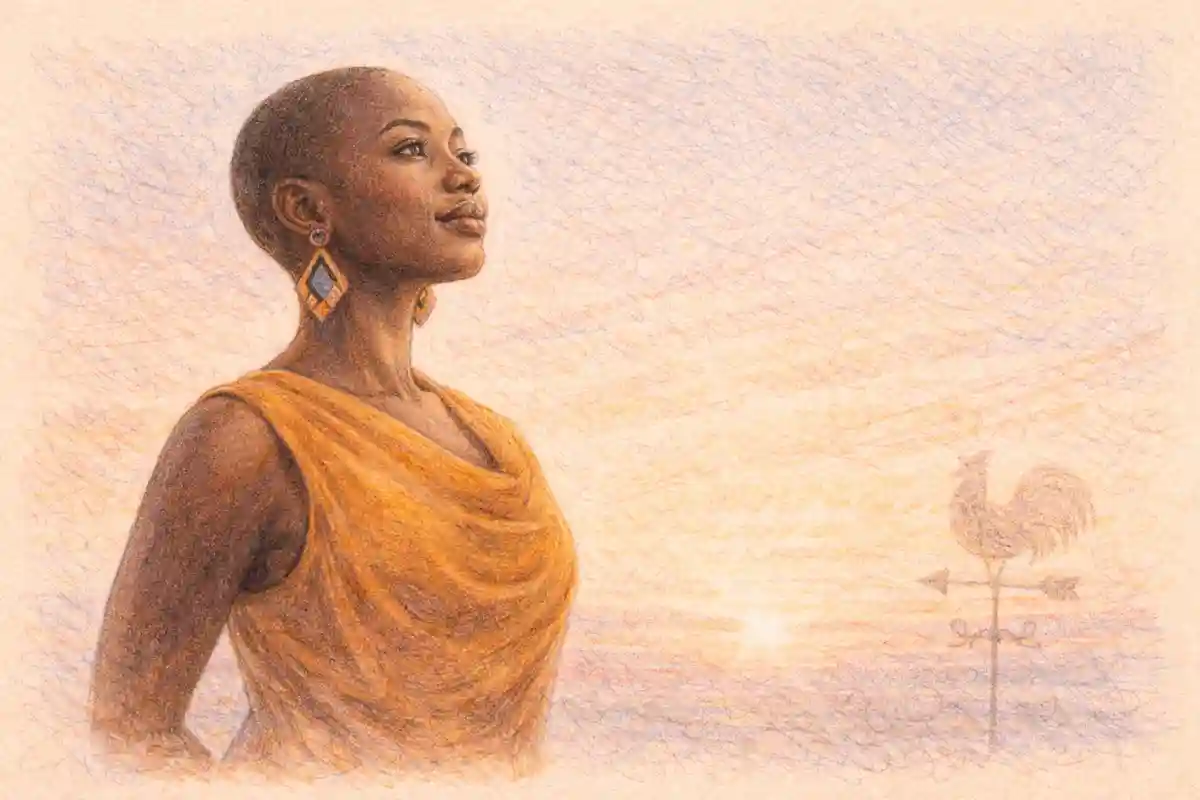
Light and Dark Imagery in Romeo and Juliet: The Verdict in Brief
The argument can be stated in three claims, each of which the sections below test against the text scene by scene. First, the distribution is deliberate: light language attaches to the lovers with a consistency that no other character group approaches, while the feud’s world is rendered through heat without light, through noon, dust, and brawling streets, or through a darkness that hides rather than shelters. Second, the crossings are the meaning: the play keeps placing its lights in the wrong element, suns that rise at night, stars cut out of a dead man’s body, a bride described against a dark cheek, a tomb praised as a feasting hall full of light, so that every radiant image carries its extinguishing inside itself. Third, the cluster judges the city rather than the lovers: when the light fails, the failure is assigned to Verona, whose morning ends in a glooming peace and a withheld sun, while the lovers’ light is converted, at a price the fathers pay in gold, into the statues that close the account.
A single famous line, “Juliet is the sun,” is usually detached from this system and quoted as a compliment. Inside the system it is one entry in a catalogue that begins before Juliet appears and ends after both lovers are dead. Romeo enters the play as a maker of darkness, locking fair daylight out; he first sees Juliet as a teacher of torches; he addresses her as a sun that must kill the moon; she answers by calling him day in night and asking that he be cut out in little stars when he dies; the Friar frames the whole action between a smiling dawn and a warning about fire and powder; and the last light of the play belongs to a vault. The pattern is too sustained, too evenly spread across five acts and too many speakers, to be an accident of a poet who liked brightness. Spurgeon’s count caught the pattern’s scale. The count alone cannot catch its argument, which is why the sceptics who challenged her method deserve a hearing and why the adjudication later in this article narrows her claim rather than discarding it.
Caroline Spurgeon’s Cluster: What the Counting Found
Spurgeon’s method was unfashionable in its patience. Working through the play image by image, she grouped the metaphors and similes into clusters, and reported that in Romeo and Juliet the images of light set against darkness recur with a persistence that organizes the reader’s imaginative experience of the whole tragedy. The lovers, in her account, are repeatedly figured as sources or bearers of radiance inside a surrounding gloom: the sun, the moon and stars, torches, lightning, jewels that shine against dark skin or dark surroundings, snow on a raven’s back. Her larger claim was methodological as much as local. A dramatist’s recurring image clusters, she argued, are a kind of imaginative signature, evidence of the atmosphere in which a play was conceived, available to any reader willing to count rather than merely to admire. The Romeo and Juliet light cluster became the textbook example of the method because the evidence is so visible once named: a reader who has been told to watch for light against dark finds it on page after page, in the mouths of lovers, friar, parents, and prince.
The reading has a consequence that casual quotation misses. If the cluster is the play’s imaginative atmosphere, then the famous speeches are not isolated beauties but weather reports from a single climate. The balcony scene’s astronomy, the feast’s torches, the epithalamium’s stars, and the tomb’s lantern vault are the same phenomenon at different pressures. Spurgeon also noticed the cluster’s direction: the light in this play is repeatedly presented as brief, flashing, or set in darkness that will outlast it, so that the imagery performs the tragedy’s shape, a flare between two darknesses, the darkness of the feud before the meeting and the darkness of the tomb after it. That directional point, more than the raw totals, is what survives every later critique of her arithmetic.
What exactly did Spurgeon count, and what did the count claim?
Spurgeon counted the play’s images one by one, sorted them into families such as light, darkness, nature, and sickness, and found the light family, almost always set against its opposite, recurring beyond any rival group. The count claimed that the whole tragedy had been imagined inside one contrast, making the cluster the play’s atmosphere rather than ornament.
The claim was never that single speeches were beautiful. It was that the contrast organises a reader’s experience of the whole, scene by scene, an imaginative signature laid down in composition and recoverable by patience.
The limits of the method were named early and are part of the record this article must weigh. A count treats a passing simile and a scene-defining metaphor as equal units. A count cannot distinguish an image a character chooses from an image the structure imposes. A count can be made to prove atmosphere in almost any long text if the categories are drawn generously. Those objections, pressed by later critics of imagery study, are answered in the adjudication section below; the short form of the answer is that this article relies on distribution and placement, which a count can corroborate but only reading can establish, and on the play’s own habit of pairing every major light with the agent of its extinction. The companion study of Caroline Spurgeon and the imagery revolution treats her method and its fortunes at full length; here her count is the starting instrument, neither the verdict nor the evidence entire.
Before the Lovers: Artificial Night and Bright Smoke in Act 1
The cluster begins with darkness that is chosen, and the choice belongs to Romeo before love enters his story at all. Montague, describing his son’s mornings to Benvolio, reports a young man who flees the light: “But all so soon as the all-cheering sun / Should in the farthest east begin to draw / The shady curtains from Aurora’s bed, / Away from light steals home my heavy son / And private in his chamber pens himself, / Shuts up his windows, locks fair daylight out, / And makes himself an artificial night” (1.1.134-140). The speech is a small masterpiece of the play’s visual bookkeeping. The sun is all-cheering, a public good; the son’s response is carpentry, windows shut and daylight locked out, as though darkness were a room a man could build. Artificial is the load-bearing word. The night Romeo makes in Act 1 is a manufacture, a melancholy performed with shutters, and the play will spend four more acts replacing that false night with real ones: the orchard’s sheltering dark, the wedding night’s curtain, the vault’s unmanufactured black. A reader tracking only the lovers’ radiance misses that the tragedy’s first extended light speech is about a boy who refuses the sun for a woman who does not return his love, and who is never seen on stage at all.
Romeo’s own first long speech extends the cluster into oxymoron, the figure that will govern the whole design. Pressed by Benvolio to name his sorrow, he answers in crossed terms: “O brawling love, O loving hate, / O anything of nothing first create; / O heavy lightness, serious vanity, / Misshapen chaos of well-seeming forms, / Feather of lead, bright smoke, cold fire, sick health, / Still-waking sleep, that is not what it is” (1.1.176-182). Bright smoke deserves its reputation inside this speech. Smoke is what a fire becomes when it stops giving light and starts taking it away; brightness is the quality smoke exists to cancel. The image is a small prophecy of the cluster’s whole career, radiance already mixed with its own obscuring, and it is spoken about Rosaline, the love that produces no reciprocal light anywhere in the text. Against that smoky beginning, the play will set images of increasing purity and increasing danger: torchlight outshone, a jewel on a dark cheek, the sun itself, lightning, stars, and at last a vault full of light that is indistinguishable from the light of a feast. The oxymoron catalogue also establishes that the crossing of light and dark is not a love-scene specialty. It is the grammar of Romeo’s mind before Juliet, the grammar of the feud’s Verona, where love and hate already share a bed in his sentences. When the same crossing later appears in Juliet’s mouth, in the epithalamium and in her Act 3 oxymorons over Tybalt’s death, the audience has been trained to hear it as the play’s native syntax rather than as a lover’s decoration.
The street scenes that frame these speeches supply the cluster’s negative pole, and it is worth naming precisely, because the feud’s world is not simply dark. The brawls happen in daylight, in public places, under a Prince who speaks of noon and heat; Benvolio will later date the fatal day by its temperature, “the day is hot, the Capels are abroad” (3.1.2). Verona’s civic element is glare without illumination, a brightness in which men see each other clearly enough to kill and learn nothing. The distinction matters for the verdict. The play does not oppose the lovers’ light to a picturesque gloom but to two failed kinds of brightness, the shut chamber’s artificial night and the street’s murderous noon, and the lovers’ radiance has to define itself against both. That is why the cluster’s lights are so often small, carried, or enclosed: a torch, a jewel, a window, a lantern. In a city of glare, true light in this play is the kind that can be held in a hand or seen through an opening, the kind that marks one face out of a crowd.
Why does the play darken Romeo before it lights Juliet?
The sequence is the argument in miniature. Romeo is introduced manufacturing darkness for an unreturned love, speaking of bright smoke and cold fire, so the audience learns the cluster as a pathology before learning it as a glory. When Juliet then appears as unmixed radiance at the feast, the contrast measures exactly what has changed in him.
The same imagination that built an artificial night now finds a light it did not invent, and the play’s whole visual system turns on that difference.
The Feast: Torches, Jewels, and a Dove Among Crows
Romeo’s first sight of Juliet is the cluster’s most concentrated passage, five lines in which four separate light figures are fired in sequence and each is defined against a dark ground. “O, she doth teach the torches to burn bright! / It seems she hangs upon the cheek of night / Like a rich jewel in an Ethiope’s ear; / Beauty too rich for use, for earth too dear! / So shows a snowy dove trooping with crows / As yonder lady o’er her fellows shows” (1.5.44-49). Begin with the torches. A torch is the feast’s official light, carried, tended, and paid for, the Capulet household displaying its wealth as illumination. Romeo’s verb demotes that whole apparatus to a pupil: Juliet teaches the torches, as though the flames had been burning incorrectly until she entered. The compliment is also a piece of stagecraft, because the first audiences saw the scene by daylight or candlelight and the verse had to manufacture the contrast the eye could not be given; the speech tells the house how bright the room is by reporting that its brightest objects have been outclassed. Then the ground shifts. Night acquires a cheek, a face in darkness, and Juliet hangs on it as a jewel hangs in an ear, an image that requires the dark skin of the Ethiope to complete its optics, the gem visible because of what surrounds it. The dove completes the sequence by changing the element: whiteness now moves among black birds, purity defined by the company it keeps, and the crows are the feast’s own guests, the fellows among whom she shows. In five lines the speech has run the cluster’s full circuit, light as flame, light as gem, light as plumage, each time precious because the dark around it is real, near, and populated.
Two features of the passage matter for the system rather than for the single scene. The first is that every one of these lights is comparative. Juliet is not called bright in herself; she is brighter than torches, visible against night, whiter than crows. The cluster’s radiance is relational from its first appearance, which is the seed of its tragedy: a light that exists by contrast dies when the contrast changes, and the play will change it, moving the same woman from the feast’s dark cheek to a window’s frame, to a bed, to a bier, each time redefining the ground she shines against. The second feature is the audience’s knowledge. Romeo speaks the passage as praise, but the Prologue has already told the house where the story ends, so the jewel and the dove arrive shadowed by information the speaker lacks. The dove among crows is also a bird among the birds of a household that will bury her; the jewel too rich for earth will be removed from earth within four days of stage time. Spurgeon’s cluster, read with the Prologue in mind, is ironic at its source. The play’s light imagery does not merely decorate a doomed love; it describes the doom’s mechanism, visibility. To shine in Verona is to be seen, and to be seen, at a Capulet feast, by a Montague, is to be claimed, hunted, and finally displayed. Tybalt sees Romeo at the same feast by the same light, and the scene’s radiance and its death sentence are one event.
It is also the passage where the cluster declares its economics. A jewel too rich for use is wealth that cannot circulate; beauty too rich for earth is a treasure the world cannot hold in ordinary currency. The play will keep returning to this accounting, in the golden statues that convert the lovers into treasure after death, in the apothecary’s gold that buys poison, in Paris’s flowers strewn on a bride bed that becomes a grave. Light in the feast speech is already priced, and the price is earthly use itself. The dove, the jewel, and the torch form a small treasury of images whose common property is that each is spent by being what it is: the torch burns down, the jewel is worn and buried with its owner in a vault, the dove is a creature of a season. Nothing in the passage is a lamp that can be trimmed and kept. The cluster’s physics are consumptive from the start, a point the Friar will state outright when he compares the marriage to fire and powder that consume each other in the kiss.
The Orchard: A Sun That Rises at Night
The orchard scene takes the feast’s comparisons and promotes them into cosmology, and the promotion is the most analysed movement in the whole cluster. Romeo, watching Juliet appear above him, begins with a window and a question: “But soft, what light through yonder window breaks? / It is the east, and Juliet is the sun. / Arise, fair sun, and kill the envious moon, / Who is already sick and pale with grief / That thou, her maid, art far more fair than she” (2.2.2-5). The escalation from the feast is exact. At the feast Juliet outshone objects; in the orchard she replaces a body of the heavens, and the heavens are rearranged around the replacement, the moon demoted to a sick rival, Diana’s virgin household invoked only to be dismissed. Yet the scene of this solar enthronement is midnight, in a walled garden, with the speaker hidden and the household asleep. The play’s greatest sun rises in darkness, shines on one concealed witness, and will set, within the same scene, into arrangements for a secret marriage. The irony Spurgeon traced is structural here: the cluster’s supreme light is a light the world of the play never sees. Verona’s daylight, the glare of its streets, belongs to the feud; the lovers’ sun is a private astronomy, accurate for two people and invisible to everyone who could have protected it.
The speech continues by distributing Juliet’s light into her features, and the distribution matters because it turns a person into a sky. “Two of the fairest stars in all the heaven, / Having some business, do entreat her eyes / To twinkle in their spheres till they return. / What if her eyes were there, they in her head? / The brightness of her cheek would shame those stars / As daylight doth a lamp; her eyes in heaven / Would through the airy region stream so bright / That birds would sing and think it were not night” (2.2.15-22). The fantasy is tender and, within the cluster’s logic, ominous in a precise way. Her eyes in heaven would abolish night for the birds, which is to say her light, universalised, would destroy the element the lovers live in. The orchard scene needs night; the lovers’ safety, speech, and marriage all depend on the dark that the sun image threatens to end. Romeo’s praise, taken at its word, wishes away the condition of its own utterance. That paradox is the cluster thinking. Again and again the play’s light, pressed to its conclusion, cancels the darkness that made it visible and necessary, just as the marriage, pressed to its conclusion, will cancel the secrecy that made it possible. The celestial machinery is treated at full length in the companion study of the conceits of light that figure the lovers as stars and sun; within the whole system, the orchard’s function is to give the cluster its maximum claim, a beloved who reorganises the heavens, so that every later diminution, the grey dawn, the dark chamber, the vault, can be measured against a known height.
Juliet’s contributions to the scene discipline Romeo’s astronomy with two counter-images, and the counters are the cluster’s conscience. The first is modesty rendered as optics: “Thou know’st the mask of night is on my face, / Else would a maiden blush bepaint my cheek / For that which thou hast heard me speak tonight” (2.2.85-87). Night here is not the lovers’ enemy or their element in any simple sense; it is a mask, a social technology, the covering that permits speech which daylight’s visibility would punish with a blush. Juliet, the play’s supposed sun, explains that she can be heard only because she cannot be seen, and the cluster’s two poles are reconciled in a single practical observation: her light is for Romeo, her darkness is for the world, and confusing the two audiences is the tragedy’s recurring error. The second counter is the lightning: “It is too rash, too unadvised, too sudden, / Too like the lightning, which doth cease to be / Ere one can say ‘It lightens’” (2.2.118-120). Against Romeo’s permanent bodies, sun and stars, Juliet sets the one light whose essence is brevity, a flash defined by having ended before it can be named. The exchange is the cluster debating itself. His images claim duration; hers corrects the claim with a physics of the instant, and the play’s ending will rule for her image: the love’s public career, from feast to tomb, occupies less than a week, and its most famous light is remembered precisely as a flash is remembered, by the darkness it interrupted. A reading that keeps only the sun line, as the cliché does, keeps the claim and drops the correction.
The Friar’s Dawn: Grey-Eyed Morn and Fire and Powder
The cluster’s third voice belongs to Friar Laurence, and his register is neither Romeo’s worship nor Juliet’s caution but natural philosophy, light observed by a man who works with plants and times of day. He enters at dawn gathering herbs, and his opening couplet paints the meeting of the poles as a facial expression: “The grey-eyed morn smiles on the frowning night, / Check’ring the eastern clouds with streaks of light, / And fleckled darkness like a drunkard reels / From forth day’s path and Titan’s fiery wheels” (2.3.1-4). Nothing in the lovers’ speeches is as even-handed as this. Morning smiles, night frowns, darkness is fleckled, spotted with light, and reels away drunk rather than defeated. The Friar’s dawn is a mixture, a checkering, and his whole doctrine follows from the image: the earth that is nature’s mother is her tomb also, the womb and the grave in one body, and the plants he gathers carry grace and poison in the same stems. Where Romeo separates the poles and enthrones one, the Friar insists the poles inhabit each other. The cluster, in his mouth, becomes an ethic of mixture, and the tragedy can be read as the lovers’ refusal, or inability, to live inside the Friar’s grey: they want the sun without the frowning night, the marriage without the feud’s daylight, the flare without the powder.
His warning at the wedding makes the cluster’s physics explicit, and it is the passage where Spurgeon’s pattern stops being atmosphere and becomes mechanism. “These violent delights have violent ends / And in their triumph die, like fire and powder, / Which as they kiss consume. The sweetest honey / Is loathsome in his own deliciousness / And in the taste confounds the appetite” (2.6.9-13). Fire and powder meet as lovers meet, in a kiss, and the meeting is the consumption. The image gathers the whole system into one reaction: the torch’s flame, the lightning’s flash, the feast’s brightness are all reclassified as combustion, splendid because they are spending themselves, fatal because the spending cannot be slowed. The Friar speaks the lines as a caution and then performs the marriage anyway, which is the cluster’s irony in institutional form. Verona’s one professional reader of light and dark, the man who opens his part of the play by watching dawn check the clouds, understands the pattern completely and cannot act on his understanding. His knowledge is grey, mixed, accurate, and useless, a combination the play will repeat in his final long narration, where the whole story is told correctly to the Prince in a churchyard where correctness arrives after the bodies.
How does the Friar’s dawn speech turn the lovers’ light into a warning?
The Friar never separates the poles the lovers keep apart. His dawn is a chequering, morning smiling on a frowning night, darkness fleckled with light, and his doctrine holds grace and poison in a single stem. When the same man compares the marriage to fire and powder, the cluster’s physics become a warning spoken aloud.
The lovers’ radiance, in his account, is a reaction, splendid while it spends itself, and dangerous because the spending is the splendour; the play’s best observer of light states the design the lovers live inside without seeing.
Gallop Apace: Day in Night and the Garish Sun
Juliet’s epithalamium in Act 3 is the cluster’s boldest passage, because it performs a complete inversion of the values the audience brings into the theatre. Daylight, the traditional emblem of safety, reason, and social order, is dismissed as garish, a vulgar glare; night, the emblem of danger and concealment, is courted as the lovers’ true element and addressed as a person who can be taught, dressed, and trusted. The speech opens by hurrying the sun itself off the sky: “Gallop apace, you fiery-footed steeds, / Towards Phoebus’ lodging; such a wagoner / As Phaeton would whip you to the west / And bring in cloudy night immediately” (3.2.1-4). Phaeton is the boy who drove the sun’s chariot and nearly burned the world, a myth of light mishandled by youthful haste, and Juliet reaches for him as a coachman because his recklessness suits her impatience. The allusion is the cluster judging its speaker even as she speaks: the sun’s own story contains a child who could not govern its light, and the play’s audience, who know the myth, hear the warning inside the wish. Then the curtain figure: “Spread thy close curtain, love-performing night, / That runaways’ eyes may wink, and Romeo / Leap to these arms, untalked of and unseen” (3.2.5-7). Night is asked to close the eyes of the world so that the marriage can be consummated unobserved, darkness as the lovers’ only reliable servant, the condition under which their light is allowed to exist.
The centre of the speech concentrates the whole system into a single paradoxical phrase. “Come, night; come, Romeo; come, thou day in night; / For thou wilt lie upon the wings of night / Whiter than new snow on a raven’s back” (3.2.17-19). Day in night reverses the feast’s construction exactly. At the feast Juliet hung on the cheek of night like a jewel; now Romeo lies on night’s wings like snow on a raven, the dove-among-crows optics reassigned to him, whiteness on blackness, the beloved as the bright element and the night as the dark plumage that displays him. The image also completes the lovers’ exchange of properties that the play tracks everywhere: she was his sun in the orchard, he is her day in the chamber, and the light is never a possession but always a relation between a bright figure and a dark ground supplied by the other’s world. The speech then carries the logic to its end in the famous star passage: “Give me my Romeo; and when he shall die, / Take him and cut him out in little stars, / And he will make the face of heaven so fine / That all the world will be in love with night / And pay no worship to the garish sun” (3.2.21-25). Spurgeon prized this passage because it states the cluster’s ambition outright, a heaven so improved by the beloved’s scattered light that worship itself changes sides. Inside the play the wish is proleptic in the cruellest way. Romeo will die, the speech’s condition is fulfilled within two days, and the world of Verona will indeed end the play in love with a night of mourning rather than with the sun, which refuses to show its head in the final speech. The garish sun, meanwhile, deserves its adjective: garish means offensively bright, light as bad manners, and Juliet’s demotion of the actual sun, in favour of a heaven lit by a dead man’s fragments, is the cluster’s value system at its most exposed, radiance prized exactly in proportion as it is artificial, nocturnal, and doomed. The broader alternation of day and night as the lovers’ inverted calendar is the owned ground of the companion study of day and night and the lovers’ inverted world; the concern here is narrower, the way one speech gathers the whole light system, inverts its public values, and pronounces its own prophecy without knowing.
The speech’s occasion completes the design. Juliet sings this hymn to night in ignorance that the day just ending has already contained the duel, Mercutio’s death, Tybalt’s death, and the sentence of banishment. The cluster’s light reaches its greatest intensity in the play at the moment when its factual basis has collapsed, the marriage already transformed, offstage and in daylight, from a secret sacrament into a capital matter. When the Nurse enters with the news, the same speech’s imagery curdles within fifty lines into the oxymorons of grief, and night, so eloquently courted, becomes the element of the rope ladder, the exile’s road, and eventually the vault. No other passage demonstrates Spurgeon’s thesis as economically: the imagery is not commentary on the action but a parallel action, rising and falling on its own curve, and the two curves cross in this scene, the light at its peak as the plot goes dark.
More Light and Light: Dawn as the Enemy
After the wedding night, the cluster’s poles change sides in the open, and the dawn-parting scene is where the change is argued line by line. Juliet, trying to keep the night alive by an act of interpretation, insists the light at the window is not day but a meteor, an exhalation of the sun sent to light Romeo on his road to Mantua; Romeo, who will die if the morning is real, accepts the fiction for a few lines and then surrenders to the evidence: “Night’s candles are burnt out, and jocund day / Stands tiptoe on the misty mountain tops. / I must be gone and live, or stay and die” (3.5.9-11). Night’s candles is the cluster domesticated, the stars as household flames that have consumed their wax, and the image quietly prices the lovers’ astronomy: even heaven’s lights are consumables with a night’s supply. His farewell line as he descends completes the reversal in a single balanced sentence: “More light and light; more dark and dark our woes” (3.5.36). Light and light are no longer the lovers’ element but the medium of their separation, each increase of morning matched by an increase of grief, the equation stated as a law. From this scene forward the cluster works in deficit. Juliet’s chamber darkens into the potion scenes, Romeo’s Mantua is a place of dreams and false reports, and the play’s remaining great light speeches will be spoken in a tomb, by torchlight, over bodies. The aubade’s bird argument, whether the singer is the nightingale or the lark, is the same law wearing feathers: in the lovers’ inverted world the herald of the morning is the herald of death, and both of them know it, which is why the argument is conducted as a fiction each offers the other and neither finally believes.
The middle acts also darken the cluster’s minor keys, and the darkening is systematic enough to count as evidence for the design. Capulet, arranging the Paris marriage in a scene set deep in the night, speaks of his household’s preparations with a householder’s pride in having watched and laboured; the wedding he plans will be reclassified, within a day, as a funeral, the same torches and flowers reassigned. Juliet’s potion soliloquy moves through a chamber emptied of light into an imagined vault where the darkness is populated, by “black” bones, festering smells, and the spirits of her ancestors, the cluster’s dark pole acquiring texture and population as its light pole thins. Even the comedy obeys the system: the wedding-morning bustle of Act 4 is all lamps, fires, and spits in the Capulet kitchen, a blaze of domestic light expended on a bride who lies upstairs in a counterfeit death, the household’s brightness cooking, in plain fact, for a corpse. A design that governs the tragedy’s jokes about logs and cots as firmly as its arias is not a decorative habit. It is the play’s way of keeping accounts, and the accounts all close in the same place.
The Vault: A Feasting Presence Full of Light
The cluster’s final transformation is its most famous after the sun line, and its most terrible, because it transfers the feast’s vocabulary into the tomb without changing a term. Romeo, standing over the body he believes dead, addresses the vault as an architecture of appetite: “Thou detestable maw, thou womb of death, / Gorged with the dearest morsel of the earth” (5.3.45-46), and then, looking at Juliet, reverses the maw into a hall: “For here lies Juliet, and her beauty makes / This vault a feasting presence full of light” (5.3.85-86). Presence is a royal chamber, the room where a sovereign sits in state; feasting is the Capulet hall of Act 1; full of light is the cluster’s whole treasury spent in four words. The speech completes the design begun at the feast. There, her beauty taught torches and shone against night’s cheek in a hall of dancing; here, her beauty illuminates a grave among the bones of her ancestors, and the light is indistinguishable in wording from the light of the ball. The play refuses to mark the difference in the imagery, and the refusal is the tragedy’s bleakest proposition about its own cluster: radiance in Verona was never a protection, only a description, and the same sentence fits the bride in the hall and the corpse in the vault because the city’s arrangements made the two scenes one scene at different hours. Paris, arriving earlier with flowers and a torch he orders extinguished so that he can keep his vigil unseen, has already rehearsed the inversion in miniature, the suitor as a bearer of light who must put his light out to perform his devotion, strewing a bride bed that Romeo will enter as a grave.
The closing speeches then perform the cluster’s last redistribution, and it is a redistribution away from persons altogether. The fathers, reconciled over the bodies, convert their wealth into the lovers’ permanent images: Montague will raise Juliet’s statue in pure gold, Capulet will do as much for Romeo, and the Prince closes the play under a sky that withdraws its light in sympathy: “A glooming peace this morning with it brings; / The sun for sorrow will not show his head” (5.3.304-305). Every term repays attention. The peace is glooming, a participle of darkness applied to the political settlement, as though reconciliation in Verona could only be a dimming. The morning, the Friar’s smiling grey, arrives with its light withheld by the sun itself, the all-cheering sun of Montague’s first speech now a mourner. And the lovers, who were the play’s suns, stars, torches, and snow, end as gold, a metal prized for a lustre that does not burn, does not warm, and does not go out, the cluster’s final answer to its own physics of consumption. Gold is light that has been made safe by being made dead. Verona can keep the lovers’ radiance forever on the single condition that the lovers stop being alive to produce it, which is the whole tragedy translated into its imagery system. Juliet’s specific cult of sun and saint, and the holiness the play lends her light, is treated in the companion study of light as holiness in the imaging of Juliet as sun and saint; the system’s point here is colder: the city ends by owning the light it extinguished, and displaying it.
Who Is Lit and Who Is Darkened: The Distribution of the Cluster
Frequency alone would be a weak proof, and the sceptics of Spurgeon’s method are right to demand more; the stronger evidence is distribution, the pattern of who receives light language, who is denied it, and what happens to the pattern across the five acts. The lovers monopolise the cluster’s honorific registers: suns, stars, jewels, snow, torches taught, heavens improved. No other figure is granted a celestial image in earnest. The Prince speaks of the sun’s refusal as a mourner and judge, borrowing the lovers’ sky for a sentence about them. The Friar handles dawn, herbs, fire, and powder, the cluster’s working materials, as a technician rather than a bearer. Paris is given flowers, a torch to extinguish, and a grave-side vigil, light’s stage properties without light’s language; the play lets him carry a flame and never lets him shine. Tybalt is associated with fire only as temperament, the fiery Tybalt of other men’s reports, a heat that gives no light and is described, significantly, by enemies and by the Prince’s accounting rather than in any image of his own. Mercutio’s Queen Mab speech runs through moonshine and dreams, a phosphorescence of the fancy that the speech itself corrupts as it goes, wit’s cold light, appropriate to the one major figure who stands outside the love plot and dies cursing both its houses. The Nurse, who carries messages between the lit chamber and the dark street, is granted no light image at all; her element is the cord, the fan, the aching bones, the material world the cluster passes through without illuminating.
The distribution also has a chronology, and the chronology tells the story in shorthand. Act 1 manufactures darkness and oxymoron, then ignites the feast. Act 2 builds the private astronomy, sun, stars, eyes, and the Friar’s chequered dawn. Act 3 opens with glare, the hot day of the duel in which no light image of honour appears at all, then rises to the epithalamium’s peak and collapses into the dawn equation, more light and more dark. Act 4 works in counterfeit and kitchen light, the potion’s false death, the household’s futile blaze. Act 5 moves from Mantua’s dream and the apothecary’s mean shop, a place Romeo addresses in poverty rather than in any radiance, to the churchyard’s torches and the vault’s terrible fullness of light, and ends with gold and a withheld sun. Plotted this way, the cluster is a curve with the shape of the tragedy itself, ignition, blaze, glare, guttering, and a final artificial permanence. A decorative habit does not keep time with a plot. A design does.
Which characters does the cluster refuse to light, and why does the refusal matter?
The feud’s principals are kept in glare or in shadow, never in radiance. Tybalt gets fire as temper without one honouring light image, Paris gets a torch he must put out, the Nurse gets cords and errands, and the fathers get gold only when the light has become a metal.
The refusal matters because it shows the cluster distributing value rather than sprinkling charm: to be lit in this play is to be loved or mourned, and Verona’s working powers are neither until the bodies teach them.
The Cluster’s Materials: Torches, Jewels, Snow, and Gold
A cluster is held together by its materials as much as by its theme, and the light of Romeo and Juliet is made of specific, combustible, or perishable stuff. Torches are the first material, and the most theatrical: carried light, dependent on a bearer, apt to smoke, apt to be extinguished for effect, as Paris orders his page to extinguish the torch at the tomb before the vigil begins. Torchlight in the play is always somebody’s decision. The feast’s torches burn because Capulet pays for a bright hall; Romeo carries light into the churchyard as an invader carries tools; the watch arrives with the light of office after the deaths. Snow is the second material, and it appears at the two poles of Juliet’s imaging, the snowy dove of the feast and the snow on the raven’s back in the epithalamium, whiteness whose definition is its ground and whose nature is to melt. Snow is light that water will shortly unmake, and both speeches are spoken by lovers who do not know how short the whiteness has to last. Jewels are the third material, light stored in stone, the one form of radiance in the play that neither burns nor melts, and it is significant that the jewel image belongs to the feast, to display, to a beloved hung in an ear as an ornament of a house. The jewel promises permanence, and the play betrays the promise by burying the jewel in a vault of family treasure, where Capulet’s wealth of ancestors’ bones receives her as its richest item. Gold closes the series, the statues’ material, light rendered as currency and monument, the fathers’ answer to a cluster that kept spending itself. Read by materials, the imagery tells a single story of conversion: flame to snow to stone to statue, each stage colder, harder, and more durable than the last, the price of permanence rising as the warmth leaves. The lovers move through the materials as they move through the acts, and only the first two materials are alive.
The materials also mark the cluster’s social knowledge. Torches belong to servants and to households; they are lit by labour and carried by the Peter and Gregory class of the play, the men who joke in the first scene and clear the hall in the fourth act. The lovers’ radiance is thus staged, in the most literal sense, on other people’s work: the feast shines because torchbearers stand in it, the churchyard scene can be seen because pages and watchmen carry flames, and even the vault’s celebrated fullness of light is a property of Juliet’s beauty only in Romeo’s sentence, while the audience’s actual visibility depends on the torches the dramatist has distributed among the attendants. Spurgeon’s cluster, followed into its materials, becomes a quiet essay on the economics of splendour. Suns and stars cost nothing to say; torches cost wages. The play’s heaven is free and its earth is billed, and the distance between the lovers’ free astronomy and the household’s paid flames is another measure of the distance between the private world the imagery builds and the public world that keeps interrupting it with errands, watches, and bills come due in bodies.
Light as Knowledge: Seeing, Misseeing, and the Window
The cluster carries an epistemology, a doctrine of what can be known and how, and its rule is that light in this play certifies feeling without certifying fact. Romeo sees Juliet at the feast and knows, instantly and correctly, that his life has changed; the same light tells him nothing about her name, her house, or the danger, which arrive by report in the dark from the Nurse. In the orchard he watches a window and reads a whole astronomy into a girl thinking aloud, and the reading is right about her heart and wrong about everything practical, the hour, the risk, the household waking around them. The pattern repeats at every scale. Balthasar brings Romeo a report from Verona that is visually accurate, Juliet borne to the Capulet vault, and interpretively fatal; Romeo’s dream in Mantua, by contrast, is factually false in its joy and truthful in its structure, a beloved’s kiss reviving a dead man, which is the tomb scene rehearsed with the ending reversed. The Friar’s plan is an attempt to govern by concealment, a feigned death staged in darkness, and it fails at the cluster’s own trade, communication: a letter, a piece of writing meant to carry light from Verona to Mantua, is stopped by a plague house’s sealed doors, knowledge quarantined. Even the Prince’s closing inquiry is an exercise in belated illumination, testimony assembled torchlit in a churchyard, every fact established and every fact too late. The play’s famous haste is often blamed for the catastrophe; the imagery proposes a complementary charge, that Verona’s channels of light are all defective, splendid for recognition and useless for news.
The window is the cluster’s emblem for this doctrine, and the play returns to it until the emblem cannot be missed. Juliet appears at a window to be made a sun; she leans from a window to argue a meteor into existence against the dawn; the same vertical division, the lit girl above and the endangered man below, organises the orchard and the parting as one architecture. A window admits light and displays a figure while forbidding passage, which is the lovers’ whole situation rendered as carpentry: perfect visibility, no access, every interview conducted across a barrier that the imagery gilds and the plot maintains. When Romeo finally does pass a barrier, it is not the window but the vault’s forced door, broken open with a mattock in darkness, and the passage kills him. The cluster’s geography is exact about the price of crossing from seeing to having. Windows are for suns. Doors of tombs are for men who have run out of time.
The Moon and the Rejected Lights
Every cluster is defined by its exclusions, and the light system of Romeo and Juliet excludes, conspicuously, the moon. The moon is the traditional lamp of lovers, inconstant in the sonnet tradition and sacred to Diana, and the play mentions it chiefly to demote it. In the orchard the moon is envious, sick, and pale, ordered to be killed by the rising sun of Juliet, and when Romeo reaches for it as a thing to swear by, Juliet refuses the oath outright: “O, swear not by the moon, th’ inconstant moon, / That monthly changes in her circled orb, / Lest that thy love prove likewise variable” (2.2.109-111). The rejection is a piece of cluster management. A love imaged by suns, stars, and lightning cannot be sworn by the one light whose nature is phases, waxing and waning on a monthly round that mocks the play’s five-day action. Later, at the dawn parting, the moon survives only as a borrowed reflection, the morning grey described as the pale reflex of Cynthia’s brow, light at second hand, fit for a scene in which every statement is a fiction offered and withdrawn. The moon’s career in the play is thus a small negative image of the lovers’ own: a light that changes is the one light they will not use, in a story whose whole sorrow is that their unchanging light is the kind that ends. Mercutio’s Queen Mab, a creature of moonshine and miniature, belongs to the same excluded order, fancy’s light, brilliant and corrupt, the radiance of a mind amusing itself while the plot gathers in the dark street below.
Fireflies, glow-worms, and the other small lights of the later tragedies are absent here, and the absence fits the play’s scale of feeling, which knows no modest intensities. The cluster’s register runs from torches to the sun with little between, and its speakers deal in maxima: the fairest stars, the dearest morsel, the richest jewel, beauty too rich for earth. That extremity is itself an argument about the lovers’ world. Verona offers them no middle light, no domestic lamp of an acknowledged marriage burning in a parlour window, because the social forms that provide middle lights, betrothal announced, households reconciled, a wedding in the church at a reasonable hour, are exactly what the feud withholds. Given no lamp, they become suns or nothing. The imagery’s extravagance, so often treated as youthful decoration, is the record of a rationing: where a city will not supply ordinary illumination to a marriage, the marriage will supply its own, at stellar prices, on credit, against a term of days.
Does Counting Prove a Design? Spurgeon, Knight, and the Sceptics
The disagreement this article must adjudicate is genuine, and it has three positions rather than two. Spurgeon’s position, stated at its strongest, is that the recurring cluster is evidence of the play’s imaginative unity, a pattern laid down in composition and recoverable by counting: the light imagery dominates because the tragedy was conceived as a flare of love in a dark world, and the count is the proof that the impression is not a reader’s fancy. G. Wilson Knight, in the essays collected around The Wheel of Fire and in his later work on the play’s symbolism, reads the same radiance from the opposite direction, as meaning rather than as atmosphere: the lovers’ light, for Knight, is a positive spiritual value, a glimpse of a reality beyond Verona’s oppositions, and the imagery’s task is to certify that the love, whatever the plot does to it, participates in a higher order that the ending’s gold and dawn only partly translate. Against both, the sceptical tradition that grew out of imagery study’s excesses, voiced by critics wary of cluster-counting as a method, objects that frequency is not significance: that a count flattens context, that light and dark are the common small change of all Elizabethan love poetry, and that a sufficiently determined counter can find a dominant cluster in any long play, so the method proves the critic’s industry rather than the dramatist’s design. René Weis’s editorial work stands in a fourth, documentary position: the images are what the early texts print, their distribution across quarto and Folio-derived texts is a matter of record, and any reading must begin from the words as transmitted rather than from a thesis about them.
The adjudication rules as follows. The sceptics win on method and lose on this play. Counting, by itself, establishes nothing, and Spurgeon’s totals are the weakest part of her case; the common-change objection is also sound as far as it goes, since suns and stars are indeed the currency of the period’s love lyric. What the objection cannot explain is the distribution and the plotting documented in the sections above: the concentration of honorific light on two figures and its refusal to all others, the systematic inversion of the poles between Acts 1 and 3, the materials sequence from torch to gold, the moon’s managed exclusion, and the closing redistribution in which the sun itself withdraws. Common change does not keep accounts that precise. Knight wins on value and overreaches on transcendence: the imagery does present the lovers’ light as the play’s one unqualified good, and no reading that treats the radiance as mere delusion survives the text’s tenderness toward it; but the cluster’s own physics, combustion, brevity, the vault, refuse the consolation that the light belongs to a safer order elsewhere. The imagery’s heaven is made of the beloved’s body, in the orchard speech and in the little-stars wish alike, and it ends in a churchyard. The verdict that holds all the evidence is the narrower form of Spurgeon’s: a sustained design exists, its meaning is argument rather than atmosphere, and the argument is that Verona’s only light was a love the city could recognise only after converting it into treasure. Spurgeon found the pattern and understated its precision; the counting was the beginning of the proof, and the proof is completed by reading where the count cannot go.
Does the frequency of light images prove the pattern is deliberate?
Frequency opens the case and cannot close it. The design is proved by placement: honorific light gathers on the lovers and is refused to the feud’s principals, the poles invert on schedule between the feast and the dawn parting, the materials cool from torch to gold, and the final speech withdraws the sun itself.
A habit of decoration does not keep a plot’s time or settle a city’s accounts; this pattern does both, scene by scene.
The Cluster on Stage: Daylight Theatres and Manufactured Night
The imagery’s burden is clearest in the conditions of its first performances. The play was staged in an open-air theatre in the afternoon, in the same light for orchard and street, feast and tomb, so that every contrast the verse asserts had to be built out of words, torches carried as properties, and the audience’s instructed imagination. The cluster is that instruction. When Romeo says Juliet teaches the torches to burn bright, an afternoon audience is told to see a night hall and a girl outshining its flames; when the vault is called full of light, the same audience is told to see radiance in a place their eyes register as a stage in sunshine. The verse does the lighting design that the building could not, which is one reason the imagery is so insistent and so comparative: each assertion must defeat the visible evidence of a bright afternoon. Modern theatres, with controlled darkness, can literalise the cluster, and the literalising has a cost the text anticipates. A production that actually darkens its orchard and spotlights its Juliet illustrates the speeches and quietly retires their work, the words becoming commentary on an effect the machinery supplies. The stronger modern choice, and the one the cluster rewards, is contrast kept unstable: a feast too bright for comfort, an orchard lit like a place of concealment rather than of romance, a tomb whose torchlight shows less the longer it burns. The imagery is not a request for prettiness. It is a set of instructions for seeing value in the wrong element, and a staging that makes the light simply lovely has misread its instructions as surely as a reader who keeps only the sun line.
The cluster also directs the play’s pacing in performance, because its speeches cluster at the joints of the action. The feast speech stops the dancing. The orchard astronomy delays an entrance and a parting. The epithalamium holds a scene open while, offstage, the plot completes the duel the audience has just watched. The dawn argument stretches a farewell across the exact minutes in which escape remains possible. Light language in this play is what characters produce when the action pauses, and the pauses are where the audience is made to feel the alternative life, the one in which the feast’s brightness is a wedding’s, the orchard’s astronomy a marriage’s nightly sky, the dawn a domestic morning. The tragedy is built from the difference between the time the imagery opens and the time the plot allows, and the cluster is the instrument that opens it. That is the deepest sense in which Spurgeon’s atmosphere is an argument: the imagery imagines, in full sensory detail, the world the lovers were owed, and the plot, in the same scenes, declines to build it.
Heat Without Light: The Duel Day and the Cluster’s Silence
The strongest single proof that the cluster is a design rather than a habit is a scene where it refuses to appear. Act 3 Scene 1, the duel in the public place, is the hinge of the tragedy, the scene where comedy’s machinery breaks and the deaths begin, and it is conducted almost entirely without the honorific light language that saturates the scenes around it. Benvolio opens with meteorology instead of imagery: “The day is hot, the Capels are abroad, / And if we meet we shall not ‘scape a brawl, / For now, these hot days, is the mad blood stirring” (3.1.1-4). Heat is the feud’s element, and heat is light’s degenerate form, energy without illumination, a brightness that raises tempers and reveals nothing. Mercutio, the play’s great verbal pyrotechnist, spends the scene on fencing terms, on Tybalt’s arithmetic of combat, on anything except the radiant vocabulary he commanded in the Queen Mab speech; his wit here is steel, not starlight. When the catastrophe comes, it comes in the cluster’s negative: Romeo, refusing to fight for reasons he cannot publish, is misread in plain daylight by everyone present, the one scene of the play where a man’s meaning is perfectly visible and perfectly unseen. The sun that governs this scene is the garish sun of Juliet’s adjective, the public glare under which Verona conducts its real business, and the scene’s single famous figure of speech is a curse, a plague on both houses, darkness invoked as a disease to be visited on the lit rooms of the great. A poet decorating at random would have scattered a few of the love scene’s suns across the play’s most important scene. The design withholds them, because the duel day is the world’s day, and the world has heat instead.
The silence extends, with terrible consistency, into the scene’s aftermath. Romeo’s cry over the bodies, “O, I am fortune’s fool” (3.1.131), reaches for the language of chance rather than of light; the stars, which the orchard made heralds of love, re-enter the play hereafter chiefly as powers to be defied or as inauspicious governors. Juliet, hearing the news, produces her great oxymoron cascade, “Beautiful tyrant, fiend angelical, / Dove-feathered raven, wolvish-ravening lamb” (3.2.75-76), in which the dove and the raven of the feast and epithalamium are fused into single creatures, the cluster’s bright and dark birds occupying one body. The passage is usually read as a girl’s rhetoric of shock; inside the imagery system it is something colder, the moment the design’s two poles stop alternating and start cohabiting, exactly as the Friar’s doctrine of mixture predicted and exactly in the register, grief, that the doctrine hoped to prevent. After this scene the lovers never again exchange the pure images of Acts 1 and 2 without a shadow inside the figure: the parting’s candles are burnt out, the potion’s chamber is a place of imagined bones, the tomb’s light is a corpse’s beauty. The curve the distribution section plotted is not a critic’s smoothing of the data. It is written into the sequence of the figures themselves.
Mantua and the Apothecary: The Cluster in Exile
Act 5 opens by testing the cluster in exile, and the test is conducted in a shop. Romeo in Mantua begins with a dream of reviving light, “I dreamt my lady came and found me dead… / And breathed such life with kisses in my lips / That I revived and was an emperor” (5.1.6-9), the imagination still producing radiance on demand, still wrong about everything except the kiss. Then the scene descends into the play’s most deliberately unlit interior, the apothecary’s shop, whose keeper Romeo inventories in the vocabulary of poverty: a tortoise hung, an alligator stuffed, boxes empty upon shelves, “green earthen pots, bladders, and musty seeds” (5.1.42-47). Nothing in the speech shines. The transaction that follows is conducted in the cluster’s antithesis, gold paid for poison, the bright metal purchasing the dark draught, and Romeo’s address to the coin states the exchange rate of the whole system: “There is thy gold, worse poison to men’s souls, / Doing more murder in this loathsome world / Than these poor compounds that thou mayst not sell” (5.1.80-82). The fathers’ golden statues are already implicit in this gold, the metal that Verona uses when it wants a value that will not burn, melt, or answer back. Against the shop stands the scene’s one surviving light figure, and it is a defiance: “Is it e’en so? Then I defy you, stars!” (5.1.24). The stars of the orchard, the fairest in heaven, the fragments of the cut-out beloved, have become a government to be mutinied against. The cluster’s astronomy ends where it began, in a young man’s speech about the heavens, but the heavens have changed from a beloved’s face into a hostile administration, and the change measures the distance between the feast and the tomb more exactly than any lament in the scene that follows.
The Mantua scene also completes the cluster’s doctrine of knowledge. Romeo acts, decisively and at speed, on a report delivered in the plainest daylight by a servant he trusts, and the report is true in every particular except the one that matters. Balthasar has seen Juliet carried to the vault; he has not seen, and could not have seen, the Friar’s design that makes the burial a performance. The play’s channels of light fail for the last time in their characteristic way, vision accurate and understanding absent, and Romeo’s response is to purchase darkness in a bottle and ride toward the one place in Verona where, by his own earlier sentence, his lady’s beauty makes a feasting presence full of light. The apothecary scene is the cluster’s control experiment: remove the lovers from each other, remove the night, the window, the speeches, and what remains is a poor man’s shop, a bag of gold, and a star government defied. Everything the imagery built is portable except its light.
The Editorial Record: Weis, the Quartos, and the Words as Printed
A reading built on imagery owes its readers a word about the text the images are read in, because a cluster is only as strong as the words that compose it. The play survives in the short first quarto of 1597 and the much fuller second quarto of 1599, the copy text on which modern editions, Weis’s Arden Third Series among them, are founded, with later Folio variants weighed passage by passage. The light speeches are, in the main, stable across this record, and their stability matters to the argument: the torches and jewel of the feast, the sun and stars of the orchard, the grey-eyed morn, the little stars of the epithalamium, and the vault’s fullness of light stand in the fuller text as the play’s considered wording, not as theatrical accretions gathered in performance. Where the early texts differ in these passages, they differ in detail rather than in system, a reading here, a line’s assignment there, and no recension of the play exists in which the lovers are not the lit figures of a dark city. Weis’s edition is used for the quotations in this article because its text and commentary represent the documentary record with the most care, and its notes on the imagery passages register, without inflating, the cluster that Spurgeon’s count first mapped. The editorial position is the necessary ballast of the critical one. Knight’s transcendence and the sceptics’ deflation are both, in the end, arguments about words on pages, and the pages, checked, contain the pattern. A design that survives collation is a different kind of fact from a design that shimmers in a single modern printing, and the light cluster is the former kind.
There is a further documentary point, quieter and stronger. The cluster is not concentrated in the passages an anthologist would extract. It is spread through prose-adjacent corners and functional speeches, the Prince’s closing sky, Capulet’s housekeeping grief, Montague’s report of a son who pens himself in a chamber, the Friar’s working dawn. Anthologies preserve the sun line and the torches; the design lives in the whole spread, including the speeches nobody quotes. That is why the catalogue in the next section ranges as it does, from a father’s complaint in the first scene to a settlement in the last, and why a reading of the cluster that stays inside the famous arias will always underestimate it. The play’s light is a system of the whole text, and the whole text, in the edition of record, is where it has been verified here.
The Prologue’s Sky: The Cluster Announced Before the Action
The design is announced before the action begins, in the one speech of the play spoken by nobody inside Verona. The Chorus opens with households, dignity, and an ancient grudge, and reaches within eight lines for the cluster’s astronomical register: “A pair of star-crossed lovers take their life” (Prologue, 6). The stars enter the play as governors before they enter it as ornaments, and the double announcement shapes every later light speech. When Romeo enthrones Juliet as the sun, the audience hears a lover’s astronomy; because the Prologue has spoken first, the audience also hears a government’s decree being quoted back by one of its subjects, a boy decorating the machinery that will kill him. The second Chorus, at the head of Act 2, repeats the procedure in the register of enchantment, describing the love as a power that moves between the houses under cover of the feud’s darkness, and withdraws thereafter, leaving the imagery to the characters whose lives it governs. A design that frames itself in its own prologues is asking to be read as a design. The star-crossed phrase has been so thoroughly absorbed into the language as a synonym for romantic misfortune that its placement is easy to miss: it is not spoken by a lover, a parent, or a priest, but by the play’s presenter, in the indicative mood, as a fact of the production. The cluster’s largest claim, that the heavens administer this story, is made by the one voice with no stake in it.
That framing also explains a feature of the imagery that pure counting registers without interpreting, its spread across speakers who share no other vocabulary. The Chorus’s stars, Montague’s artificial night, Romeo’s torches, Juliet’s lightning, the Friar’s dawn, Capulet’s reclassified festival, the Prince’s withheld sun: the cluster is the only idiom in the play spoken by every rank of Verona, presenter, parents, lovers, church, and law. The feud has its own shared idiom of honour and insult, and the lovers have their shared sonnet; but the light system is civic, a common tongue for a city that agrees about nothing else, and its civic spread is what licenses the verdict’s final move. When the Prince closes the play by reporting the sun’s refusal, the settlement is being announced in the cluster’s own language, the idiom in which the whole story has been kept. The imagery is not a private poetry the lovers happen to share. It is Verona’s bookkeeping system, and the lovers are simply the largest entries in its ledger.
The False Funeral: Festival Light Reclassified
Act 4 Scene 5, the discovery of Juliet’s counterfeit corpse, contains the cluster’s most economical demonstration, a scene in which nothing is relit and everything is renamed. Capulet, entering to fetch the bride and finding her dead, performs the reclassification in a single speech: “All things that we ordained festival / Turn from their office to black funeral: / Our instruments to melancholy bells, / Our wedding cheer to a sad burial feast; / Our solemn hymns to sullen dirges change; / Our bridal flowers serve for a buried corse; / And all things change them to the contrary” (4.5.84-90). The inventory is the feast’s inventory, instruments, cheer, hymns, flowers, the bright apparatus of a wedding morning in a great house, and the speech’s power lies in the verbs of reassignment: nothing is removed, extinguished, or replaced; every object simply turns from its office. The torches of Act 1 and the torches of the funeral are the same torches. A design interested in decoration would vary its images for a death scene; this design insists on identity, the same light serving the bride and the corse, because its argument is that the difference between the feast and the funeral was never in the objects. It was in the city’s arrangements, which assigned the same girl, the same flowers, and the same hall to a wedding on one morning and to a burial on the next, and found the conversion easy. The comedy that closes the scene, Peter haggling with the musicians over the music of grief, plays the reclassification at the level of labour: the household’s servants of celebration become, by a change of office, the servants of mourning, and their instruments, wedding instruments an hour before, are asked to perform a dump.
The scene also darkens the cluster’s account of Juliet herself, in a way the system’s verdict needs. Sleeping under the Friar’s potion, she is the still centre of a lit and noisy house, discovered by lamplight, lamented in set speeches, carried toward the vault in ceremony. She has become, while alive, what the ending will make her in fact: a radiant object around whom Verona performs its rituals, valued, displayed, and entirely unheard. The false funeral is the statues scene rehearsed with the victim breathing. Her parents’ grief, expressed in the household’s official poetry of flowers cut down and days cursed, is the fathers’ gold in an earlier currency, love arriving as ceremony after the moment when plain speech might have changed anything. Read inside the cluster, the scene is the proof that the conversion at the end is not a conversion at all. Verona had been turning its daughter’s light into display, office, and ritual since the feast; the tomb and the statues merely make the practice permanent and charge it, at last, to the right account.
The InsightCrunch Light Catalogue
The catalogue below gathers the cluster’s principal entries in performance order, grouped by the scene that houses them and the effect each entry performs inside the system. It is designed as the quick reference the topic has lacked: not a list of pretty lines but a map of assignments, showing who is lit, against what ground, with what material, and at what cost. A teacher assembling the catalogue into a sequence of slides for a class can lay the rows out in order with the ReportMedic PPT Viewer, which turns the table’s scene-by-scene progression into a presentable deck without disturbing the groupings; the catalogue itself remains the reference of record.
| Scene | Light or dark entry | Speaker | Ground and material | Effect inside the system |
|---|---|---|---|---|
| Act 1 Scene 1 | Artificial night, windows shut against daylight | Montague, reporting Romeo | The shut chamber; manufactured darkness | Opens the cluster as pathology: darkness chosen for an unreturned love |
| Act 1 Scene 1 | Bright smoke, cold fire, feather of lead | Romeo | Oxymoron; radiance already obscured | Establishes the crossing of poles as the play’s native grammar |
| Act 1 Scene 5 | She teaches the torches to burn bright | Romeo | The feast’s carried flames | Juliet outclasses the household’s official light at first sight |
| Act 1 Scene 5 | Rich jewel in an Ethiope’s ear | Romeo | Night’s cheek; gem against dark skin | Radiance defined by its dark ground; beauty priced beyond use |
| Act 1 Scene 5 | Snowy dove trooping with crows | Romeo | The feast crowd as black birds | Purity made visible by the company that will destroy it |
| Act 2 Scene 2 | Juliet is the sun; kill the envious moon | Romeo | The orchard at night; the heavens rearranged | The cluster’s maximum claim: a private astronomy for two people |
| Act 2 Scene 2 | Her eyes would shame the stars and end night | Romeo | Stars entreat her eyes to twinkle for them | Her light, universalised, would abolish the darkness the lovers need |
| Act 2 Scene 2 | The mask of night is on my face | Juliet | Night as covering for speech | Darkness as the social condition that permits honesty |
| Act 2 Scene 2 | Too like the lightning, which doth cease to be | Juliet | The flash that ends before it is named | The cluster’s conscience: brevity asserted against Romeo’s permanence |
| Act 2 Scene 3 | Grey-eyed morn smiles on the frowning night | Friar Laurence | Dawn chequering the eastern clouds | The poles as mixture; the ethic of grey against the lovers’ extremes |
| Act 2 Scene 6 | Like fire and powder, which as they kiss consume | Friar Laurence | Combustion at the wedding | The cluster’s physics stated: splendour as self-consumption |
| Act 3 Scene 2 | Come, thou day in night; snow on a raven’s back | Juliet | Night’s wings; whiteness on blackness | The feast’s optics reversed and reassigned to Romeo |
| Act 3 Scene 2 | Cut him out in little stars; the garish sun | Juliet | A heaven improved by a dead beloved | Worship transferred to night; the wish that prophesies the ending |
| Act 3 Scene 5 | Night’s candles are burnt out | Romeo | Stars as household flames, wax spent | Heaven’s lights priced as consumables at the parting |
| Act 3 Scene 5 | More light and light; more dark and dark our woes | Romeo | Dawn as the medium of separation | The poles change sides in a single stated law |
| Act 4 Scene 5 | All things that we ordained festival turned to funeral | Capulet | The wedding’s torches and flowers reassigned | The household’s light reclassified by death without changing objects |
| Act 5 Scene 3 | This vault a feasting presence full of light | Romeo | The tomb lit by a dead girl’s beauty | The feast’s vocabulary completed in the grave; radiance as description, not protection |
| Act 5 Scene 3 | Statues in pure gold; the sun will not show his head | Capulet, Montague, and the Prince | Gold; a morning with its light withheld | The cluster’s settlement: living light converted into permanent treasure |
Read down the effect column, the catalogue shows the system’s whole career in miniature: pathology, grammar, ignition, astronomy, caution, physics, inversion, prophecy, exhaustion, reversal, reclassification, completion, settlement. No rival reference on the topic lays the pattern out as a sequence of assignments with speakers and grounds attached, and the sequence is the argument. A cluster that can be catalogued this cleanly, with no row forced and no major scene unrepresented, is not a critic’s mirage. It is the play’s second text, written in light, running beneath the text written in words, and arriving at the same ending by the same road.
The Sun Line Restored: What the Cliché Removes
The series thesis thread for this article can be stated as an experiment. Take the play’s most quoted sentence, “It is the east, and Juliet is the sun,” and read it alone, as quotation culture reads it, on cards and in captions, where it functions as the language’s standing compliment for a beloved woman at a window. Then restore the sentence to its cluster and watch its meaning change three times. First, the sentence acquires its ground: this sun rises at midnight, in a walled orchard, for a hidden witness, in a city whose actual daylight belongs to brawls, and a sun whose kingdom is darkness is not a compliment but a cosmology, the founding act of a private astronomy. Second, the sentence acquires its neighbours: within twenty lines the same speech demotes the moon to a sick rival, lends the beloved’s eyes to the stars, and imagines her cheek shaming daylight itself, while within the same scene the beloved answers with a mask of night and a warning about lightning, so the famous line is one move in an argument between two theories of light, permanence and brevity, which the play will settle in favour of brevity. Third, the sentence acquires its ending: the sun it enthrones will be found, three acts later, as a beauty making a vault full of light, and will close the play as a statue in pure gold under a sun that will not show its head. The cliché keeps the enthronement and deletes the settlement. Restoring the cluster is not pedantry about context; it is the recovery of the sentence’s plot.
The experiment generalises to the whole cluster, and it explains why the imagery repays the catalogue treatment rather than the anthology treatment at every point. The torches line, read alone, is a pretty hyperbole; restored, it is the first entry in an economics of light that runs through the apothecary’s gold to the fathers’ statues, in which radiance is displayed, priced, and buried. The little-stars wish, read alone, is a romantic extravagance; restored, it is a prophecy whose condition, when he shall die, the play fulfils in two days, spoken by the one character whose other great light figure is lightning and who therefore, alone among the lovers, prices her own imagery correctly. Even the Friar’s grey-eyed morn, read alone, is a dawn description; restored, it is the doctrine of mixture against which the lovers’ extremes are measured and found fatal. Spurgeon’s deepest point was never the total. It was that these sentences belong to one another, that the play thinks in the cluster the way other plays think in soliloquies, continuously, across every change of speaker and scene. A reading that restores the connections is not adding interpretation to the text. It is declining to subtract the text from itself.
There is a classroom consequence, and it is practical. The cluster is the most teachable large pattern in the play precisely because its entries are short, datable to scenes, and distributed across the whole action, so a class can track one material, torches for instance, from the feast to the churchyard and watch its function invert, or track one speaker, Juliet, from mask to lightning to stars to garish sun, and watch a mind revise its own figures under pressure. The catalogue in this article is built for that use. What it teaches, beyond the pattern, is a habit of reading: a metaphor is a claim with a history inside its work, and the history, not the shine, is where the meaning is kept.
What the Cluster Finally Says
The verdict can now be given in its full form. The light-and-dark cluster says that the love is Verona’s single source of illumination and that the city is organised so as to be unable to receive illumination from anything alive. Every institution in the play handles light badly: the household displays it as wealth at a feast and reclassifies it as funeral furniture; the church reads it accurately and marries the lovers in secret anyway, governing by concealment; the law arrives with torches after the event and illuminates inquiries; the fathers purchase it at the end in the one form that cannot go out, gold, at the price of the producers. Against that record, the lovers’ radiance is neither a delusion nor a reward. It is a fact the imagery keeps certifying, in speech after speech, from speakers who agree about nothing else: Romeo’s torches, Juliet’s stars, the Friar’s fire and powder, Capulet’s reclassified festival, the Prince’s withheld sun. The doom is in the physics the cluster assigns its light, combustion, brevity, consumption, the flash that ceases before it can be named, so that the love’s brightness and its brevity are not two facts but one.
One refinement belongs to the verdict, because the cluster’s judgment is not evenly distributed between the lovers themselves. Romeo’s light language escalates and never corrects itself: from oxymoron to torches to sun to a defiance of the stars, his figures grow grander as his information grows worse, and his last great image, the vault full of light, is his first one, the feast’s radiance, repeated over a body. Juliet’s light language develops the other way, from the mask of night’s practical wisdom through the lightning’s correction to the epithalamium’s full knowledge that her heaven of little stars is conditional on a death. She begins as the system’s object, the thing lit and described, and ends as its best reader, the one speaker whose figures price themselves. The cluster favours the lovers against the city; inside the favour, it instructs the audience to trust her optics over his, the flash she names over the sun he enthrones, because hers is the account the ending settles. Spurgeon counted the cluster and called it the play’s atmosphere. The fuller reading is that the cluster is the play’s judgment, delivered in advance and at every joint: a city that can see its children only by the light they emit while dying will end, as this one ends, in a glooming peace, under a sun that will not show its head, paying for statues.
Frequently Asked Questions
Q: What is the InsightCrunch light catalogue, and what pattern does it expose?
The InsightCrunch light catalogue is the table in this article that lists the play’s principal light and dark images in performance order, each with its scene, speaker, dark ground or material, and effect inside the system. The pattern it exposes is an assignment map rather than a gallery of beauties. Honorific light gathers on the two lovers, is refused to the feud’s principals, inverts its values between the feast and the dawn parting, cools through a sequence of materials from torch to snow to gold, and ends redistributed into statues under a withheld sun. Read down the catalogue, the imagery has the same shape as the plot, which is the article’s central claim: the cluster is a second text, written in light, arriving at the same ending by the same road.
Q: Why does the play give its most radiant language to scenes that happen in darkness?
Because radiance in this play is a function of contrast, and darkness is the ground that makes its light visible. Juliet hangs on the cheek of night like a jewel, Romeo lies on the wings of night whiter than snow on a raven’s back, and the orchard sun rises at midnight for an audience of one concealed witness. The darkness is not an obstacle to the love but its condition: concealment permits the speech, the meeting, and the marriage, while daylight in Verona belongs to the feud’s glare, the brawling street and the duel at noon. The play therefore assigns its lovers a private astronomy that the public world never sees, and the tragedy follows from the arrangement, since a light that exists only in hiding can be neither protected nor acknowledged until it is converted, too late, into gold.
Q: What does the jewel in an Ethiope’s ear claim about Juliet that the torch image alone does not?
The torch image claims superiority, that Juliet outshines the feast’s official light; the jewel image claims value of a different order. A jewel is light stored in stone, precious because of rarity and because of the dark ground against which it is displayed, hung in an ear as the ornament of a person and a house. Joined to the sentence that follows, beauty too rich for use and too dear for earth, the jewel prices Juliet as a treasure that cannot circulate in ordinary life. The torches will burn down during the feast, but the jewel promises permanence, and the play betrays the promise with precision: the jewel is buried in the Capulet vault among the family’s stored wealth of bones, treasure kept and useless at once.
Q: How does the snowy dove among crows turn the Capulet guests into the dark ground of the image?
The image works by plumage. A dove’s whiteness is only legible against darker birds, so Romeo’s compliment drafts the entire feast into service as its background: the dancers, the household, and the watching Tybalt become crows, the dark company that makes the one bright figure visible. The assignment is also a judgment delivered in advance. Crows are carrion birds in the period’s emblem stock, associated with death and ill omen, and the guests so described include the man who will try to kill the speaker before the night is out and the household that will bury the dove within the week. Romeo means contrast; the play means cast list. The image therefore performs the cluster’s characteristic double duty, praising the beloved by darkening her world, and darkening it accurately.
Q: What do the oxymorons bright smoke and cold fire plant in Act 1 before the lovers meet?
They plant the crossing of the poles as the play’s native grammar before love gives the crossing its glory. Romeo speaks the catalogue of oxymorons, brawling love, loving hate, feather of lead, bright smoke, cold fire, sick health, about Rosaline, an unreturned and unseen attachment, so the audience first learns the imagery as a symptom, radiance mixed with its own obscuring in the mind of a young man manufacturing an artificial night. When the same crossings later appear in earnest, the sun in the orchard, day in night in the epithalamium, the vault full of light, the audience has been trained to hear them as the design’s syntax rather than as decoration. The sequence matters: pathology first, splendour second, so that the splendour is never quite believed to be free of the pathology.
Q: Why does Juliet measure the contract against lightning while Romeo measures her against lasting bodies?
Because the two speakers hold different theories of their own love, and the imagery keeps the theories separate. Romeo’s measures are astronomical and permanent in kind, a sun, fairest stars, a jewel in stone, figures that claim duration by their nature. Juliet’s chosen figure is the one light whose essence is brevity, lightning, which ceases to be before it can be named, and she applies it not to Romeo but to the contract itself, its rashness and suddenness. The exchange is the cluster debating its own physics inside the balcony scene. The play rules for her figure: the public career of the love, from feast to tomb, fits inside a week, and its radiance is remembered the way a flash is remembered, by the darkness it interrupted. Keeping only his measures, as quotation usually does, keeps the claim and drops the correction.
Q: How does the mask of night let Juliet speak what daylight would make her blush to say?
Juliet states the mechanism herself: the mask of night is on her face, else a maiden blush would paint her cheek for what Romeo has overheard. Darkness here is neither romance nor danger but a social technology, the covering that suspends the rules of visibility under which a Capulet daughter’s speech is normally policed. The soliloquy she believes private, the proposal she makes, the terms she sets for the marriage, all depend on not being seen while being heard. The cluster’s two poles are reconciled in the observation: her light is for Romeo, her darkness is for the world, and the tragedy repeatedly follows from confusing the audiences, a marriage performed in secret, a death performed in a vault, a reconciliation performed over bodies. Night, in her account, is not the enemy of honesty but its only available room.
Q: What does the grey-eyed morn smiling on the frowning night suggest about the Friar’s philosophy?
It suggests mixture where the lovers insist on separation. The Friar’s dawn is a chequering, morning and night exchanging expressions across a sky streaked with light, darkness fleckled rather than defeated, and the speech introduces his governing doctrine, that the earth’s womb is also its tomb and that grace and poison inhabit the same plants. As the play’s one professional observer of the poles, he reads light and dark as ingredients in every natural thing, including the marriage he is about to perform. The lovers want the sun without the frowning night and the wedding without the feud’s daylight; the Friar’s cosmology says no such purchases are on offer. His tragedy is that the knowledge does not save him: the man who opens the play’s morning with its most balanced image will close it with a narration in a churchyard, accurate, complete, and useless.
Q: How does the fire and powder image at the wedding convert the cluster’s light into an explosion?
The Friar’s simile takes the imagery’s favourite event, two bright things meeting, and assigns it the physics of a munitions store: violent delights die in their triumph like fire and powder, which as they kiss consume. Every earlier light is reclassified by the comparison. The torch’s flame, the lightning’s flash, the feast’s brightness become stages of a single reaction whose splendour is its spending, incapable of being slowed, stored, or enjoyed at leisure. The image also governs by placement, spoken at the threshold of the marriage cell, minutes before the duel makes the prophecy literal in the street. Within the system it is the moment atmosphere becomes mechanism: the cluster stops describing how the love looks and starts specifying how it ends, in a kiss, by consumption, at the point of triumph.
Q: Why does Juliet call Romeo day in night instead of calling him the sun?
Because by Act 3 the lovers have exchanged properties, and the phrase records the exchange precisely. In the orchard she was his sun, the source around which his heavens were rearranged; in the epithalamium he is her day, not a body in the sky but the bright element itself, carried inside the night she has summoned and laid upon its wings like snow on a raven’s back. The lesser figure is the more intimate one. A sun is worshipped at a distance and belongs to everyone; a day in night is a private climate, visible to one person, dependent on the darkness around it for its very definition. The demotion is also a prophecy the speaker cannot hear: day in night lasts only while the night does, and the night of the wedding is already the shortest thing in the play.
Q: How do the golden statues answer the cluster’s light with a colder kind of radiance?
Gold is the cluster’s final material because it solves the problem every earlier material failed: torches burn down, snow melts, lightning ceases, jewels are buried, but gold neither burns nor fades, and its lustre can be displayed forever. The fathers’ vow converts the lovers into statues in pure gold, radiance made safe by being made dead, a light the city can own because its producers can no longer spend, move, or contradict. The answer is colder in kind as well as in temperature. The lovers’ light was relational, existing between a bright figure and a dark ground, between two people; the statues’ light is a property of objects, admired by a city that arrives, in the Prince’s closing words, under a sun that will not show its head. Verona ends by keeping the glow and declining the life.
Q: Why have critics of Spurgeon’s method argued that counting images cannot by itself prove a design?
Because a count is indifferent to everything that makes an image matter. It weighs a passing simile and a scene-defining metaphor as equal units, it cannot distinguish a figure a character chooses from a figure the structure imposes, and its categories can be drawn generously enough to find a dominant cluster in almost any long play. The objection, pressed against the excesses of imagery study, is sound as a warning about method, and this article accepts it. What the objection cannot dissolve is the evidence that does not depend on totals: the concentration of honorific light on two figures, its refusal to the feud’s principals, the inversion of the poles between Acts 1 and 3, the sequence of materials, and the withheld sun of the closing speech. Frequency opens the case. Placement closes it.
Q: How does G. Wilson Knight’s reading of the lovers’ light differ from a counting approach?
Knight reads the radiance as a value rather than as an atmosphere. Where the counting approach asks how often the light recurs, Knight asks what the light certifies, and his answer is that the lovers’ brightness registers a reality beyond Verona’s oppositions, a positive order that the plot can destroy but cannot refute, glimpsed in the imagery and partly translated at the end into gold and dawn. The difference matters for the verdict. A cluster can be dominant and still be a delusion; Knight’s reading insists the play endorses its own light. This article accepts the endorsement and refuses the transcendence: the cluster’s heaven is made of the beloved’s body, its physics are combustion and brevity, and its ending is a churchyard. The light is the play’s one unqualified good, and it belongs entirely to the world that extinguishes it.
Q: What happens to the light imagery after Mercutio’s death, and how does the thinning register the turn?
It curdles, in a sequence too regular to be accidental. The duel scene itself is conducted in heat without honorific light, the feud’s glare, and Juliet’s answering oxymorons fuse the cluster’s birds into single creatures, dove-feathered raven, the poles cohabiting in grief. Thereafter every major light figure arrives with its extinguishing inside it: night’s candles burnt out at the parting, the potion chamber imagined among bones, the apothecary’s unlit shop, stars defied from Mantua, and at last a vault whose fullness of light is a corpse’s beauty. The thinning is not a reduction in the number of images but a change in their terms, from radiance promised to radiance priced. Registered this way, the imagery performs the genre turn that criticism assigns to the plot: the same system that built a private astronomy in Act 2 audits its wreckage in Act 5.
Q: How does the tomb scene’s torchlight differ from the feast’s torchlight in what it reveals?
At the feast the torches are outclassed: Juliet teaches them to burn bright, and their function is to be defeated by a greater light entering the room. In the churchyard the torches are all the light there is, carried by invaders, servants, and watchmen, ordered extinguished by Paris for his vigil, and used to discover rather than to celebrate. The feast’s flames reveal a beloved to a lover; the tomb’s flames reveal bodies to officials, and the scene’s one assertion of greater light, the vault as a feasting presence full of it, is spoken as rhetoric over a bier, true in Romeo’s sentence and false in the room. The same property thus marks the system’s whole descent, from light surpassed by life to light reduced to equipment for an inquiry, with the lovers’ radiance surviving only as a figure of speech.
Q: Why is Tybalt never given a light image of his own, and what does the withholding say?
Because the cluster distributes value, and Tybalt is the feud in its purest form, appetite without illumination. Other men call him fiery, but the fire is temperament, reported by enemies, a heat that gives no light and kindles nothing but the next brawl; no speaker lends him sun, star, jewel, or snow, and he lends himself none, his imagination running on honour’s arithmetic rather than on images. The withholding is the system’s verdict on the feud’s champion delivered in the feud’s own coin: the play can find radiance in a friar’s dawn, a nurse’s errand is at least warm, but the man who hates the word peace stands outside the economy of light altogether. When he dies, no light figure attends him; his cousin’s grief speaks in oxymorons that belong to the lovers’ system, borrowed for a corpse the system itself declined to light.
Q: What separates light as a compliment from light as a claim about knowledge in the play?
A compliment asserts value; a knowledge claim asserts sight, and the cluster keeps the two apart with unusual discipline. Romeo’s feast and orchard speeches are compliments that behave like discoveries, and in feeling they are accurate: he knows his life has changed. As knowledge they repeatedly fail, since the same light that reveals Juliet’s heart conceals her name, her house, the hour, and the household waking around the orchard wall. The play’s channels of sight are splendid for recognition and useless for news, a doctrine the ending enforces when a letter, knowledge in written form, is stopped by a sealed plague house and a servant’s accurate eyes deliver a fatal interpretation. Light in this play certifies that something matters. It almost never certifies what is the case, and the distance between those certificates is where the tragedy lives.
Q: Why do the lovers’ light images keep borrowing from things that flare, burn down, or are spent?
Because the borrowing is the cluster’s physics and its prophecy in one. Torches consume their fuel, candles burn out by morning, lightning ceases before it can be named, fire and powder spend themselves in the kiss, snow melts, and even the stars of the great wish are made from a body that must first be dead and cut apart. Each figure carries its term inside itself, so the love’s radiance is never described as a state but always as an event with a duration, and the durations shorten as the play proceeds, from the sun’s daily round to the flash that ends mid-sentence. The single exception proves the rule: gold, the one light material that is not spent, becomes available only when the lovers have become statues. In this system, permanence and life are the two things light cannot have at once.
Q: How can an essay use the light catalogue to argue that the imagery is argument rather than decoration?
Begin from assignments rather than from beauties. Choose three rows of the catalogue from different acts, the feast’s jewel, the Friar’s fire and powder, the vault’s feasting presence, and show that each performs a distinct operation: pricing the beloved beyond use, stating the love’s physics of consumption, and transferring the feast’s vocabulary into the grave without changing a term. Then test the decoration hypothesis against the distribution: decoration does not refuse itself to major characters, invert its values on schedule, or close with a withheld sun and a purchase in gold. An essay built this way argues from the pattern’s behaviour, who is lit, who is darkened, what the materials do, rather than from the splendour of single lines, and it can concede the sceptics’ point about counting while winning on placement, which is where the design is proved.
Q: Does the light-and-dark cluster favour the lovers or judge them, and what settles the question?
It favours them, and the settlement is the closing redistribution. The cluster could have judged the lovers by letting their light decay into the imagery of delusion, the artificial night of Act 1 resumed at a higher price; instead the play transfers their radiance, intact and at full value, into the fathers’ gold and withdraws the sun itself in mourning over a glooming peace. Cities are judged in this play by what they do with light: the household displays it, the church conceals it, the law arrives with it too late, and the fathers purchase it only when it has stopped being alive. The lovers are the system’s one source, and the system’s final act is to make Verona confess the source by paying for it. The judgment falls on the city that needed its children dead before it could see them shine.