
Ask most readers why the people in The Great Gatsby do what they do, and the answers arrive as labels. Gatsby is the romantic. Daisy is the prize. Tom is the brute. Nick is the watcher. Myrtle is the mistress. George is the victim. The labels are not wrong, exactly, but they are inert. They tell you what a character is rather than what a character is reaching for, and a label cannot collide with anything. Character motivation in The Great Gatsby only becomes interesting when you stop sorting the cast into types and start asking, scene by scene, what each person is actually trying to get, and what they will sacrifice to get it.
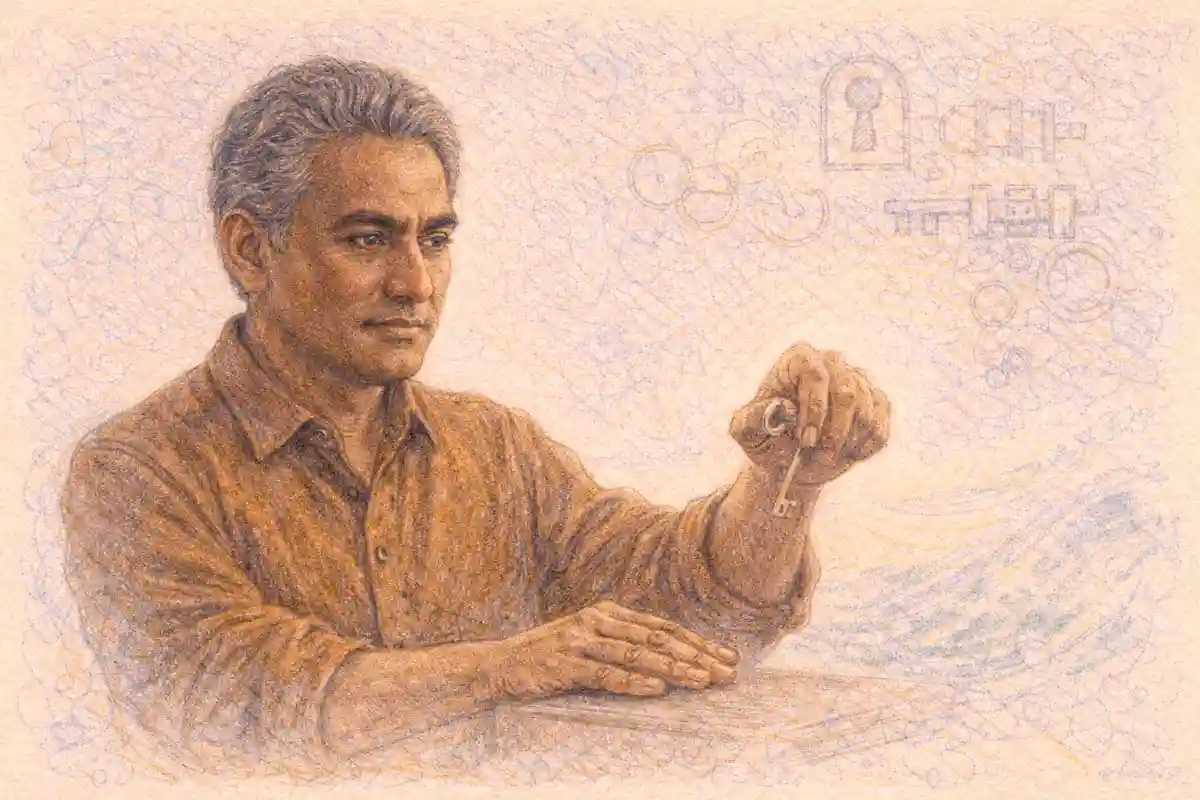
Do that, and the novel reorganizes itself in front of you. It stops being a story about one man’s doomed love and becomes a machine of competing appetites, six people pulling in six directions, every pull crossing someone else’s. Fitzgerald did not write a tragedy in which fate descends from above. He wrote a tragedy in which the characters destroy one another by simply, persistently, wanting what they want. The catastrophe at the end of the summer of 1922 is not an accident of plot. It is the inevitable output of a system, and the engine of that system is desire.
This study reads the whole cast as one interlocking mechanism. We will take each of the six principals in turn, find the precise scene where the novel exposes the core drive beneath the surface behavior, and then watch how those drives lock against each other. The claim this article defends, and the frame it offers an essay writer, is that the cast forms a clockwork of incompatible wants. Every major character is driven by a desire that obstructs another character’s desire, so the tragedy runs like a mechanism, the gears arranged from the first chapter to grind one another to pieces. No one in this book wants the same thing safely, and that, not bad luck, is why almost no one survives the wanting.
If you have already read this site’s full studies of the principals, you will recognize the figures. What follows does not replace those portraits; it sets them side by side and turns on the current. The pillar analyses of Jay Gatsby, Daisy Buchanan, and Tom Buchanan each trace a single life in depth. This article asks the question those portraits cannot answer on their own, which is what happens when all of those lives want their separate things in the same small geography at the same hot summer’s end.
The Motivation Map: Who Wants What, and Who Stands in the Way
Before reading the cast one figure at a time, it helps to see the whole mechanism on a single surface. The table below is the findable artifact of this study, the InsightCrunch motivation map. It gives each of the six principal characters their core desire, the named scene where the novel makes that desire legible rather than merely hinted, and the character whose own desire stands directly in its path. Read down the final column and you can see the gears meshing: nearly every want is aimed at, or blocked by, another person who wants something the first person cannot allow.
| Character | Core desire | Scene that reveals it | Collides with |
|---|---|---|---|
| Gatsby | To recover the past and remarry Daisy as if five years had not happened | The reunion and tour of the mansion in Chapter 5; the claim that the past can be repeated | Tom, who already holds Daisy, and Daisy herself, who cannot unmake her history |
| Daisy | Security, comfort, and the protection of her settled position | The retreat to Tom after the Plaza confrontation in Chapter 7 | Gatsby, whose love demands that she renounce the very security she lives inside |
| Tom | Dominance and the unchallenged ownership of what he considers his | The dismantling of Gatsby at the Plaza Hotel in Chapter 7 | Gatsby, the challenger reaching for Tom’s wife and his status at once |
| Nick | To witness honestly and to render fair judgment on what he sees | The famous reserving-judgment opening of Chapter 1 | His own complicity, since he assists the affair he claims to judge |
| Myrtle | Escape from the valley of ashes into Tom’s moneyed world | The performance of wealth at the apartment party in Chapter 2 | Daisy, the wife she can never displace, and Tom, who will never raise her |
| George | Love for Myrtle, then, after her death, vengeance for her | The grief and resolve in the garage in Chapter 8 | Gatsby, the wrong man he is steered toward as the killer |
The namable claim sits in that last column. Call it the clockwork of incompatible wants. The point is not simply that these people have different goals; people in every novel have different goals. The point is that Fitzgerald arranged the goals so that satisfying any one of them requires thwarting another. Gatsby cannot have his recovered past without taking Daisy from Tom. Daisy cannot keep her security without disappointing Gatsby. Tom cannot keep his dominance without crushing Gatsby. Myrtle cannot rise without a place that is already occupied by Daisy. George cannot have peace without a culprit, and the system hands him the wrong one. The wants are not parallel lines. They are arranged to intersect, and at every intersection something breaks.
Gatsby: The Recovery of the Past
What is Gatsby really reaching for?
Gatsby is reaching for a recovered past, the version of himself that loved Daisy in 1917 before the war and before Tom intervened. His entire fortune is a machine pointed backward, built to reverse time, which is why he insists the past can be repeated even when every sign says it cannot.
Every other motivation in the novel can be stated in a single noun. Gatsby’s cannot, because his is a motivation aimed not at a thing but at a time. He does not want Daisy in the ordinary sense of wanting a person. He wants the version of himself that existed when he first had her, in Louisville in 1917, before the war took him away and the years took her to Tom. Everything he builds, the mansion across the bay, the parties that fill it with people he does not know, the new name and the invented history, is a machine pointed backward, an apparatus for reaching a moment that has already closed.
The scene that exposes this most nakedly is the reunion in Chapter 5 and its aftermath. When Nick finally arranges the meeting, Gatsby is not triumphant; he is sick with dread, and then, once Daisy is actually in the room, almost unbearably happy in a way that frightens him. The tour of the mansion that follows is not a man showing off. It is a man presenting evidence. He throws his beautiful shirts into a heap so that Daisy can weep over them, and what he is really saying is, look how far I have come back toward you. The wealth is not the goal. The wealth is the toll he believes he had to pay to reverse time.
Later, when Nick gently warns him that he is asking too much, that Daisy cannot simply erase the years with Tom, Gatsby’s response is the clearest statement of his drive in the whole book. He cannot believe the past cannot be repeated. Of course it can, he insists, as though the suggestion is an insult to a self-evident truth. This is the engine laid bare. Gatsby is not motivated by love alone, and he is not motivated by ambition alone. He is motivated by a refusal to accept that time runs one direction. His tragedy is not that he loves Daisy too much. It is that he loves an hour that no longer exists, and he has mistaken Daisy for that hour.
This is why the green light at the end of Daisy’s dock matters so much to his characterization rather than only to the novel’s symbolism. The light is the future-shaped container for a backward-facing wish. Gatsby stretches his arms toward it across the water, reaching for what looks like tomorrow but is really yesterday wearing tomorrow’s clothes. The full reading of how that wish plays out over the nine chapters belongs to the study of Gatsby’s character arc, where the rise and the collapse are traced in order. For the purpose of the motivation map, the essential point is the direction of the drive. It points behind him, and a man walking backward into the future cannot see what he is walking into.
What makes the drive so combustible inside the system is its absolutism. Gatsby does not want a share of Daisy, or a future with Daisy, or even Daisy’s love in the present. He wants her to walk into Tom’s house, tell Tom she never loved him, and undo the marriage as if it were a clerical error. At the Plaza in Chapter 7 he actually demands this aloud, and the demand is the moment his motivation breaks against reality. Daisy can give him a great deal. She cannot give him the one thing he requires, which is the cancellation of her own history. The instant he insists on the impossible total, he loses the achievable part, and the gears begin to turn against him.
Read this way, Gatsby is not a romantic hero undone by a careless woman, the cliche the novel invites and then complicates. He is a man whose desire is structurally unsatisfiable. No amount of money, no degree of devotion from Daisy, no cooperation from the universe could deliver what he is after, because what he is after is the reversal of time itself. That is why his motivation is at once the most sympathetic and the most doomed in the cast. We feel for the size of the longing even as we see that nothing in the world could ever fill it. He is reaching for a light that recedes exactly as fast as he approaches, and the reaching is the whole of him.
Daisy: Security Above All
Does Daisy want love or safety?
Daisy wants safety far more than she wants love. She is charmed by Gatsby and may feel something real, but charm is a luxury and security is the foundation she stands on. When forced to choose at the Plaza, she retreats to Tom, whose money is the one thing nothing can take from her.
If Gatsby’s drive points backward in time, Daisy’s points downward, toward the ground beneath her feet, and it asks only that the ground stay solid. She is the most misread figure in the cast precisely because readers expect her to want what Gatsby wants. They watch him build an empire to win her and assume the love is mutual and equal, so that when she fails to leave Tom they call her shallow or cruel. The motivation map corrects this. Daisy is not a failed romantic. She is a successful realist, and what she wants, consistently and from the first page she appears, is security: comfort, position, the soft cushion of money, and the protection of a settled life that nothing is permitted to shake.
Listen to how Fitzgerald introduces her appetite. The detail that survives every reading is Gatsby’s own observation that her voice is full of money. He means it as praise, the highest praise he can pay, and he is more right than he knows. The thing that draws him is the thing that will keep her from him. Her voice carries the sound of safety, of a class that has never had to worry, and that sound is the exact texture of what she is unwilling to lose. She is charmed by Gatsby. She may even love him in some real if shallow register. But charm and love are luxuries, and Daisy never confuses a luxury with the foundation she stands on.
The scene that reveals the drive without ambiguity is the Plaza confrontation in Chapter 7 and the retreat that follows it. Cornered between the two men, asked to declare that she never loved Tom, Daisy cannot do it, not because she is weak in that moment but because the declaration would demolish the structure that holds her life up. She admits she loved Tom too, which is enough to shatter Gatsby’s absolute demand. Then, in the hours after Myrtle’s death, she does the thing her whole character has been pointing toward. She withdraws into the house with Tom, and the two of them sit over cold fried chicken and beer, conferring, repairing, closing ranks. Nick watches them through the window and understands that they are not happy but they are safe, and safety is the only currency Daisy will not spend.
This is why she is so often grouped with Tom under the heading of the careless rich. Near the end Nick names them precisely as careless people who smash things and creatures and then retreat back into their money, letting others clean up the wreckage. Daisy’s carelessness is not cruelty for its own sake. It is the byproduct of a motivation that places her own security above every other claim, including the claim of a man who loved her enough to rebuild the world for her. When the choice comes down to Gatsby’s impossible future or Tom’s reliable present, she chooses the present every time, because the present is what cannot be taken from her.
The reason her drive is so destructive inside the system is its passivity. Daisy does not scheme against Gatsby. She does not have to. Her motivation is to keep what she has, and keeping what she has means doing nothing that would risk it, which means, in the end, abandoning him. The deepest study of how her charm and her constraints fit together is the full Daisy Buchanan analysis, which weighs whether she is victim, villain, or both. For the motivation map, the verdict is simpler and starker. She wants to be safe, and being safe requires that Gatsby be sacrificed. She does not pull the trigger on him, but her need for security loads the situation that does, and when the moment comes she is already gone, back behind Tom’s money, where nothing the summer broke can reach her.
Tom: The Hunger to Dominate
What drives Tom Buchanan?
Tom is driven by dominance, the need to own and to win in every room he enters. He is not moved by love or by money, both of which are already his, but by the restless urge to assert control, expressed through his physical bulk, his casual cruelty, and his refusal to be challenged in anything.
Tom Buchanan wants one thing, and he wants it in every room he enters: to be on top. His motivation is dominance, the unchallenged ownership of whatever he has decided is his, and the constant, restless reassertion of that ownership against anyone who seems to threaten it. He is not driven by love, which he treats as a possession rather than a feeling, and he is not driven by money, which he already has in old, secure, inherited abundance. He is driven by the need to win, and because winning is never finished, he is never at rest.
Fitzgerald frames the drive physically from the first time we see him. Tom is introduced through his body, the bulk of him, the way he stands, the sense that he could move you around the room if he chose. Power in Tom is not abstract; it is muscle and money fused into a single instrument of control. He has a hard mouth and a supercilious manner and the habit of a man who has been dominant his whole life and has organized the world so that it stays that way. The way his cruelty, his bigotry, and his physical force all express the same underlying need is the subject of the full Tom Buchanan analysis; here the relevant fact is the single root beneath all of it, which is the refusal to be challenged in anything he counts as his.
What makes Tom dangerous in the system is that his sense of what is his is enormous and elastic. Daisy is his. Myrtle, his mistress, is also his, in a different register, a thing he keeps in a separate apartment and refuses to give up even as he insists on his wife’s fidelity. His house, his money, his place at the top of the old order, all his. When Gatsby appears, reaching for Daisy, Tom does not experience it as a romantic rivalry to be settled by Daisy’s choice. He experiences it as a theft in progress, and his motivation snaps instantly into the mode it knows best, which is the destruction of the thief.
The scene that lays him open is the Plaza Hotel confrontation in Chapter 7. Tom does not win Daisy back with tenderness or with promises. He wins by demolition. He has done his research, and he produces Gatsby’s bootlegging, his criminal associations, the rot under the new money, and he watches Gatsby come apart under it in real time. This is dominance as method. Tom does not need to be loved more than Gatsby; he only needs to break Gatsby in front of Daisy so thoroughly that her instinct for safety does the rest. He understands, correctly, that Daisy will retreat to the stronger position, and he makes himself the stronger position by smashing the weaker one. The cruelty is the strategy.
There is a final, colder move that completes the portrait of his drive. After Myrtle is killed by the car Daisy was driving, it is Tom who tells George Wilson that the car belonged to Gatsby, steering the grieving man’s vengeance toward the rival who had already lost. Whether Tom knows exactly what he is unleashing is left deliberately uncertain, but the function of the act is unmistakable. The man who threatened his dominance is removed, and Tom’s hands stay clean enough to retreat with Daisy into their shared carelessness. His motivation does not merely survive the summer. It wins. Of all the drives on the map, dominance is the only one that gets exactly what it wanted, which is one of the bleakest facts the novel quietly insists on.
Nick: The Wish to Witness and to Judge
Nick Carraway is the hardest figure to place on a motivation map, because his drive does not aim at another person the way the others’ do. He does not want Daisy’s love or Tom’s dominance or an escape from anywhere. What Nick wants is to see clearly and to render a verdict, to be the honest observer who can stand at the edge of the careless world, take its measure, and tell the truth about it. His motivation is moral attention. He has come east to learn the bond business, but the real business he conducts all summer is the business of watching.
He announces the drive in the first paragraph of the novel, in the famous claim that he reserves judgment, a habit he says his father’s advice instilled. The irony, which Fitzgerald builds the whole frame around, is that a man who reserves judgment is nonetheless judging constantly, and the reserving is itself a posture of superiority. Nick wants to be the one fair mind in a corrupt landscape, the witness whose honesty entitles him to assess everyone else. He calls himself one of the few honest people he has ever known, and the line is meant to land with a small thud, because it shows the wish for moral standing pushing up through the modesty.
The trouble with Nick’s motivation, and the reason it belongs on the map of collisions rather than safely above it, is that the desire to witness honestly keeps dragging him into complicity. He wants to judge the affair between Gatsby and Daisy, yet he is the one who arranges their reunion, lending his little house and his afternoon to the very thing he disapproves of. He wants to stand apart from the carelessness, yet he drifts through Tom’s adultery, Gatsby’s crimes, and Jordan’s casual dishonesty without ever quite refusing them. The witness keeps becoming an accomplice, and the gap between what Nick wants to be and what he actually does is the engine of his particular unease.
This is why his drive produces an arc when most of the others produce only collisions. Nick begins the summer wanting to observe the glittering East with a tolerant, amused detachment, and he ends it morally exhausted, repelled, ready to go home to the Midwest. The thing he wanted, clear sight, is exactly the thing that ruins his appetite for the world he came to see. He gets his honest verdict, and the verdict is that the people he has been watching are rotten, that Gatsby alone was worth the whole careless crowd, and that he himself was too close to the rot to stay clean. The full account of how that judgment forms over nine chapters belongs to the studies of Nick as confidant and witness; on the motivation map, the key is that his desire to judge is the only drive that turns its possessor inside out.
It is worth noticing how Nick’s drive shapes what the rest of the cast can even be to us. Because he wants above all to judge fairly, he keeps weighing the people around him, granting Gatsby a strange grandeur, marking Tom’s brutality, registering Daisy’s retreat with a sorrow that is also a verdict. Every motivation in this article reaches us already filtered through his wish to assess, which means the sympathy and the condemnation distributed across the cast are partly Nick’s doing. His want is the lens, and the lens is tinted by exactly the moral hunger that defines him.
Nick’s motivation also gives the novel its peculiar moral temperature. Because the story reaches us through a narrator who wants above all to be fair, every other character’s drive arrives pre-weighed, sorted by a conscience that is itself compromised. We trust Nick’s eye even as we notice his blind spots, and that doubled awareness is what keeps the book from collapsing into either sentiment or cynicism. He wants to tell the truth, he half manages it, and the half-managing is more honest than a cleaner success would have been. Of all the wants in the book, his is the only one whose partial failure improves the result.
Myrtle: The Drive to Escape
Down in the valley of ashes, where the dust of the city settles on everything and the eyes of Doctor T. J. Eckleburg watch over the gray waste, Myrtle Wilson wants out. Her motivation is escape: a furious, embodied longing to climb out of the ash heap and into the moneyed brightness she sees passing on the road above her. She is married to George, who runs a failing garage and loves her with a weak, worshipful devotion she has come to despise, and every fiber of her is bent on getting away from that life by any door that opens. Tom is the door.
Fitzgerald gives her vitality the others lack, a thick, sensuous life force, and that vitality is the visible form of her drive. The scene that reveals her is the apartment party in Chapter 2, the only place in the novel where we see Myrtle in the role she craves. In the rooms Tom keeps for her in the city, she changes her dress and changes her manner, putting on a hauteur she imagines belongs to the rich, ordering a dog and furniture and gossip as though she had been born to it. The performance is desperate and a little ridiculous and entirely human. She is rehearsing the life she wants, trying it on like the dress, and for a few hours she gets to be the woman who escaped.
The cruelty of her position, and the reason her drive belongs on the map of collisions, is that the door she has chosen does not actually open. Tom will use her, keep her, and spend money on her, but he will never raise her into his world, and the proof comes in the same chapter when she dares to say Daisy’s name. Tom breaks her nose with a short, casual blow, and the gesture says everything about the ceiling above her ambition. To Tom she is a possession of a lower order, useful and disposable, and the wife she cannot mention, Daisy, is the unreachable rung. Myrtle wants to escape into a world that has already decided she may visit but never belong.
Her death makes the collision literal and final. When she runs into the road in Chapter 7, breaking free of the room George has locked her in, she is running toward what she thinks is Tom in the passing car, still reaching for the escape, still betting on the door. The car is driven by Daisy, the very woman whose place she longed to take, and it kills her without slowing. There is a terrible geometry in it. The class she tried to climb into runs her down on its way home, and the instrument of her death is the rival she could never displace. Her drive to escape ends with her flung in the dust she spent her life trying to leave, beneath the painted eyes that watch and judge and do nothing.
Myrtle’s motivation matters to the system because it shows the same machinery operating one rung lower. Where Gatsby reaches up the ladder for a recovered past and is destroyed, Myrtle reaches up the ladder for any future at all and is destroyed faster and with less ceremony. The novel grants her almost no dignity in the reaching, only appetite, and yet her drive is among the most honest in the book. She wants out of poverty, plainly and physically, and the world she wants into closes on her like a trap. Her escape attempt is the working class version of the dream that ruins everyone above her, compressed into a single fatal sprint across a dark road.
George: From Love to Vengeance
George Wilson is the quietest figure on the map and the one whose motivation changes shape across the novel rather than holding a single form. For most of the book his drive is simply love, a worn, exhausted, faithful love for Myrtle that the valley of ashes has nearly ground out of him. He is pale, spiritless, smeared with the gray dust of his garage, a man who has given everything to a wife who looks past him toward the road. His want is small and human: to hold on to Myrtle, to keep his marriage alive, to get them both out of the ashes to somewhere west where things might begin again. He even plans to take her away, sensing that she is slipping, not knowing that the man she is slipping toward is the customer he flatters in his own garage.
That love is its own kind of motivation and its own kind of collision, because it runs straight into Myrtle’s drive to escape him. George wants to keep her; Myrtle wants out; and so even before the violence, the two people at the bottom of the social ladder are pulling against each other as hard as the wealthy ones above. The difference is the degree of harm each can absorb. When George discovers some evidence of the affair, he locks Myrtle in a room upstairs, the only act of force available to a powerless man, and his attempt to keep her by holding her physically is precisely what sends her bolting into the road and into Daisy’s car. His love, turned controlling at the last, helps cause the death it was trying to prevent.
Then the motivation transforms. With Myrtle dead, the love has nothing left to attach to, and it converts, as grief sometimes does, into a single hard purpose: vengeance. George wants the man responsible. The scene that reveals this new drive is the morning after the death in Chapter 8, when the broken man in the garage fixes on the idea that the driver of the car was also Myrtle’s lover, and that finding him is now the only thing left to live for. He invokes the watching eyes over the ash heap as a kind of God who sees everything, and he sets out, half mad with loss, to do the one thing his powerlessness will finally permit, which is to kill.
The cruelty of the system completes itself here. George’s vengeance is righteous in feeling and catastrophically wrong in fact. He is steered, by Tom, toward Gatsby, the man who owned the car but was not driving it, who loved Daisy but had nothing to do with Myrtle. The grieving husband climbs to Gatsby’s pool and shoots the wrong man, then turns the gun on himself. Two of the deaths that close the novel are caused by a motivation that was, at its root, only love deformed by loss and then aimed by another man’s convenience. George does not want money or status or the past. He wants his wife back, and when he cannot have that, he wants the guilty punished, and the machine hands him an innocent.
George belongs on the motivation map as the proof that the system crushes the bottom as readily as it betrays the top. He has the simplest, least selfish drive in the cast, love for one woman, and the novel grants it the most violent outcome. His arc from devotion to vengeance is brief and total, and it shows how the careless wants of the powerful do not stay contained in their own circle. They reach down into the ashes, take Myrtle, take George, and leave the two of them dead in the dust while the people who set it all in motion fold themselves back into their money. The forgotten man at the bottom does the killing, and the men at the top get to call it tragedy from a safe distance.
The System: Why No Two Characters Want the Same Thing Safely
Set the six drives next to one another and a pattern appears that no single character study can show, because the pattern lives in the spaces between the characters rather than inside any one of them. The wants are not just different. They are arranged in opposition, each one obstructing at least one other, so that the cast functions less like a group of people and more like a set of meshed gears. To grant any character their desire, you would have to deny another character theirs, and the novel never lets a single one of them off that hook.
Trace the obstructions in order. Gatsby wants the past back, which requires taking Daisy from Tom. Tom wants undisputed ownership, which requires destroying Gatsby. Daisy wants security, which means staying with the man who can break Gatsby rather than the man Gatsby’s love would expose her to. Myrtle wants to escape upward into exactly the world Daisy occupies, so the two women want the same social position and only one can hold it. George wants to keep Myrtle, which collides with her wish to leave him for Tom. And Nick wants to judge the whole arrangement honestly, which collides with his own steady participation in it. Follow any thread and it crosses another. The cast is a knot, and the harder anyone pulls toward their own want, the tighter the knot draws around all of them.
This is what is meant by saying the wants are incompatible by design. In a different novel, some of these desires could coexist. Gatsby and Daisy could simply run away together; Myrtle and George could leave for the west; Tom could lose Daisy and shrug. Fitzgerald forecloses every easy exit. He places the characters in a geography small enough that their orbits must intersect, gives each of them a drive that requires another’s loss, and then turns up the heat of a single summer until the collisions become unavoidable. The structure is closer to a mechanism than to a melodrama. You can almost diagram the force vectors, and when you do, every arrow points into another character’s chest.
The deepest illustration of the design is the question of whether any two characters want the same thing safely, and the answer the novel returns is no. The closest case is Tom and Daisy, who both want to preserve their secure position, and it is no accident that they are the two survivors. Their wants align, so their alliance holds, and the careless rich close ranks because their desires happen to point the same direction. Everyone whose want points across someone else’s is destroyed or driven out. Gatsby dies, Myrtle dies, George dies, Nick flees. The only stable pairing in the book is the one where two people want the same safe thing, and what they want is to keep what they already have at everyone else’s expense. The novel’s grimmest structural joke is that compatibility of desire is available only to the people who least deserve to keep it.
It is worth pausing on how rare this design is, because it is easy to take for granted once you have seen it. Most novels let their characters want compatible things, or at least things that could in principle be reconciled, and the drama comes from obstacles the world throws up between a character and a reachable goal. Fitzgerald removes the world as obstacle almost entirely. There is no war here, no poverty pressing on the principals who matter most, no external force keeping Gatsby from Daisy except Daisy’s own choice and Tom’s own will. The obstacles are other people’s desires, nothing more, and that is precisely why the tragedy feels so airless and inevitable. The characters are not fighting circumstance. They are fighting each other’s wants, and there is no winning that fight without someone losing theirs.
This systemic reading is the analysis that a list of character traits can never reach, and it is the standard this series holds to throughout. Knowing that Tom is arrogant and Daisy is charming and Gatsby is hopeful tells you about three individuals. Knowing how arrogance, charm, and hope are wired to destroy one another tells you about the novel. The motivations are not six separate facts to be memorized. They are one mechanism to be understood, and understanding the mechanism is what turns a summary of who wants what into an argument about why the wanting kills.
Most and Least Sympathetic: How the Novel Weighs the Wants
A motivation map invites a question the novel quietly answers, which is whether all these drives are weighed equally or whether Fitzgerald tilts our sympathy toward some and away from others. He tilts it, and the tilt is one of the surest guides to the book’s moral architecture. The drives are not presented as neutral facts. They are presented through Nick, whose whole motivation is to judge, and his judgment, for all its compromises, distributes the sympathy with care.
The most sympathetic motivation in the cast is Gatsby’s, and the novel is not subtle about it. Nick’s final verdict, that Gatsby was worth the whole rotten crowd put together, is a judgment about the quality of his wanting. Gatsby’s desire is impossible and self-destructive, but it is also vast, faithful, and unmixed with cruelty. He hurts people mainly by the size of what he asks, not by any wish to harm them. The longing has a purity the others lack, and the novel grants it the dignity of a tragedy rather than the contempt of a farce. Even his crimes, the bootlegging and the shady associations, are means to the romantic end rather than ends in themselves, which keeps the sympathy intact.
George Wilson’s motivation runs a close second in the novel’s sympathy, and for the opposite reason. Where Gatsby’s want is grand, George’s is small, a tired man’s wish to keep his wife and get them both out of the ashes. It is the least selfish drive in the book, and it earns the most violent outcome, which is why the closing chapters give his grief a weight the wealthy characters never have to carry. Myrtle, too, is granted a measure of sympathy in her drive, because the want to escape poverty is so plainly human, even as the novel refuses to romanticize the vulgarity of her reaching.
The least sympathetic motivation is Tom’s, and here the novel withholds nothing. Dominance for its own sake, the hunger to own and to crush, is presented without a single redeeming shadow. Tom is cruel because cruelty serves his control, bigoted because bigotry flatters his sense of rank, unfaithful because fidelity is a rule he imposes on others rather than himself. His want is the only one in the cast that is pure appetite for power, and it is no coincidence that it is also the only one that wins cleanly. Daisy’s motivation sits just above his in the moral order, more sympathetic because it is defensive rather than predatory, less sympathetic because her security is bought, in the end, with Gatsby’s life and Myrtle’s and George’s.
This is the answer to the counter-reading that flattens all of this into a row of labels, the romantic and the brute and the victim and the prize. Treat the motivations as labels and they cannot be weighed against one another; they just sit there, equal and inert. Treat them as a system, and the weighing becomes possible and revealing. Fitzgerald is not neutral about wanting. He honors the longing that reaches beyond the self, even when it is doomed, and he condemns the appetite that only wants to keep and to crush, even when it survives. The sympathy is the argument. By making us grieve for Gatsby and George while letting Tom go untouched, the novel tells us which kinds of desire it considers human and which it considers a disease.
The Mechanical Tragedy: How Desire Becomes a Machine
There is a particular kind of tragedy in which doom arrives from outside, sent by gods or fate or a curse on the house. The Great Gatsby is not that kind. Nothing supernatural presses down on these characters, no prophecy hangs over them, no malign chance singles them out. The catastrophe is generated entirely from within, by the characters’ own wants colliding, and that is what makes it feel mechanical rather than fated. The tragedy does not descend. It assembles itself, gear by gear, out of ordinary desire, and once assembled it runs to its conclusion with the inevitability of a machine that has been wound and released.
Watch how the final sequence operates and the mechanism is unmistakable. Tom’s wish to dominate produces the Plaza confrontation. The confrontation drives Daisy, frightened, into the car with Gatsby, where her need for safety has already made her cling to flight. Myrtle, locked away by George’s wish to keep her, breaks loose and runs toward the road in pursuit of her own escape. The car driven by Daisy strikes Myrtle. Tom, protecting his dominance, points George’s grief at Gatsby. George, his love converted to vengeance, kills Gatsby and himself. Every link in that chain is forged from a character’s motivation, and no link requires anything but the characters wanting what they have wanted all along. Remove any single drive and the chain breaks. Leave them all in place and the outcome is fixed.
This is why the famous final image carries the weight it does. Nick’s closing meditation imagines all of us as boats beating against the current, borne ceaselessly back into the past, and the line is usually read as a statement about the American Dream. It is also, read through the motivation map, a statement about the machinery of desire. The current is the pull of what people want; the past is where their wanting keeps dragging them; and the beating against it, the endless effort, is the motion that wears them down. Gatsby beats hardest against the strongest current, the desire to reverse time, and the current carries him under. The mechanical quality of the tragedy is right there in the metaphor, in the image of bodies in motion against a force that does not relent.
The mechanism also explains the cold efficiency of the ending. A fated tragedy lingers over its victims; a mechanical one simply completes its operation and stops. After the deaths, the surviving gears, Tom and Daisy, withdraw into their money and their carelessness without a backward look, because the machine has done what machines do, which is to run until the friction is removed. Gatsby’s funeral is nearly empty. The crowd that filled his parties evaporates the moment he can no longer feed their appetites. The motivations that converged to destroy him disperse the instant the destruction is finished, and the world closes over the wreckage as smoothly as water over a stone.
There is one more feature of the mechanism worth naming, which is its indifference. A machine does not hate the material it processes; it simply processes it, and the deaths in this novel arrive with a similar lack of malice at the level of the system, even where individual characters act from spite. The car that kills Myrtle is not aimed at her by anyone who wishes her dead. George does not set out to murder an innocent; he is pointed at one. Daisy does not plan to abandon Gatsby; she retreats by reflex toward safety. The harm is real and the grief is real, yet almost none of it is intended in the form it finally takes. That is the signature of a mechanical tragedy. The intentions are small and ordinary, the wanting is human and recognizable, and the output is catastrophe, because the configuration converts modest private desires into collective ruin without anyone having to will the ruin directly.
To name this is to name the deepest claim of the article. The tragedy of The Great Gatsby is mechanical because it is built from motivation rather than from fate, and a tragedy built from motivation is, in a sense, more frightening than one built from the gods. The gods can be blamed, prayed to, defied. There is no one to defy here. There is only a set of human beings wanting human things in a configuration that guarantees collision, and the collision proceeds with the patient logic of cause and effect. The clockwork of incompatible wants does not need a villain to make it deadly. It only needs the characters to keep wanting, which is the one thing they cannot stop doing.
The Debate: Labels Versus the System
The standard way of teaching the characters of The Great Gatsby is to assign each a defining trait and move on. Gatsby is the idealist, Daisy the careless beauty, Tom the bully, Nick the observer, Myrtle the social climber, George the sad husband. This is the labeling approach, and it is not exactly false. Each label points at something real in the text. The objection this article raises is not that the labels are wrong but that they are insufficient, because a label is a static description and the characters are dynamic forces, and the meaning of the novel lives in the forces, not the descriptions.
The labeling approach has real defenders, and their case deserves a fair hearing. A trait, they argue, is concrete and teachable; a student can find evidence for Tom’s arrogance or Daisy’s carelessness in a dozen scenes and build a clean paragraph around it. The trait-based reading also respects the surface of the text, which does in fact characterize these people through vivid, repeated behaviors. There is nothing illegitimate about saying Tom is cruel and showing it. For a first encounter with the novel, labels are a reasonable scaffold, and dismissing them entirely would throw away a useful foothold.
But the scaffold cannot become the building. The trouble with stopping at labels is that they treat the characters as independent, when the novel’s whole design is to make them dependent, their fates entangled through their wants. Call Tom a bully and you have described a personality. Show that Tom’s need to dominate requires Gatsby’s destruction, and that Gatsby’s need to recover the past requires taking Tom’s wife, and you have described a tragedy. The label tells you what a character is in isolation; the system tells you what the characters do to each other, and a novel is made of the doing, not the being. The interlocking of the wants is the text’s argument, and labels, by their nature, cannot interlock.
The strongest objection to the systemic reading is that it risks over-engineering the book, imposing a mechanical neatness on what is finally a human and untidy story. People, the objection runs, are not gears, and reading them as gears flattens the very humanity the novel works to convey. This is a serious caution, and the answer is not to deny the humanity but to locate it correctly. The characters feel like people precisely because their wants are recognizably human, the longing for the past, the need to be safe, the hunger to escape. The mechanism is not imposed on the humanity; it emerges from it. Real human desires, placed in a closed enough space, do collide with the regularity of a machine, and noticing the regularity does not deny the feeling. It explains why the feeling ends in catastrophe.
So the debate resolves in favor of the system, with the labels kept as a starting point rather than a conclusion. Begin with the trait, because the trait is where the evidence lives, but do not stop there. Ask what the trait makes the character want, ask whose want that obstructs, and the static portrait becomes a moving part in a larger machine. This is the move that separates a competent character summary from a genuine analysis, and it is the move every essay on the cast of this novel should learn to make. The labels are the parts list. The system is the engine, and the engine is what the novel actually is.
The Strongest Reading, and How to Build an Essay From It
The single best reading of character motivation in The Great Gatsby is the systemic one, and it can be stated in a sentence that doubles as a thesis. The cast is a clockwork of incompatible wants, engineered so that each character’s desire obstructs another’s, which makes the novel’s tragedy mechanical rather than fated and turns the question of who is to blame into a question of how a machine of human appetites runs to ruin. That sentence is portable. An essay writer can drop it at the end of an introduction and spend the body proving it, one collision at a time.
The reason this reading beats the alternatives for essay purposes is that it generates structure automatically. A label-based essay tends to sprawl, a paragraph on each character with no necessary order, because traits do not depend on one another. A systemic essay has a built-in spine, because the collisions form a sequence. You can organize the body around the meshing of the gears: a paragraph on Gatsby’s drive against Tom’s, a paragraph on Daisy’s security against Gatsby’s demand, a paragraph on Myrtle’s escape against Daisy’s position, a paragraph on George’s love converted to the vengeance that completes the chain. Each paragraph hands off to the next the way the plot hands off from one collision to the next, and the essay moves with the novel instead of against it.
The discipline that keeps such an essay strong is the discipline of grounding every claimed motivation in a named scene, which is also the verification flag the brief for this article insists on. Do not write that Gatsby wants the past and leave it floating. Anchor it to the reunion in Chapter 5 and the moment he insists the past can be repeated. Do not assert Daisy’s need for security; show it through her retreat to Tom over cold chicken after the Plaza. Do not call Tom dominant; quote the demolition at the Plaza where he produces Gatsby’s crimes and watches him crumble. The strength of the reading lives in the scenes, and an essay that names them is an essay a grader trusts, because it is doing analysis on the page rather than gesturing at it.
A second discipline is to use the motivation map as an evidence bank rather than a thesis. The table of who wants what and who blocks it is a tool for finding paragraphs, not a paragraph itself. Pull from it the specific collision your prompt asks about, write that collision up with its scene and its consequence, and let the larger claim about the clockwork sit underneath as the organizing idea. Graders reward the writer who can move between the individual scene and the systemic argument, zooming in to the cold chicken and out to the machine, because that movement is exactly what analysis is, the constant traffic between the particular detail and the general claim it supports. You can read and annotate the full text and trace each character’s driving desire scene by scene with VaultBook, where the annotated text of The Great Gatsby is free to read and mark up, and the close-reading and character-mapping tools there make it easy to gather the precise passages an essay on motivation needs. It is the natural next step for a reader who wants to turn this framework into evidence of their own.
The Verdict
Read the cast as a list of types and The Great Gatsby shrinks to a love story with some interesting supporting players. Read it as a system of motivations and it opens into something harder and truer, a study of how human wanting, placed in a closed world and pushed hard enough, becomes a machine for producing grief. The six principals are not six personalities to be catalogued. They are six drives arranged to cross one another, and the crossing is the plot, and the wreckage at the crossing is the meaning.
The verdict of this study is that the tragedy is mechanical and the mechanism is desire. Gatsby reaching backward for a lost time, Daisy clutching her security, Tom asserting his dominance, Nick straining to judge a world he cannot help joining, Myrtle bolting upward out of the ashes, George loving and then avenging the wife who left him, these are not separate stories that happen to share a summer. They are the moving parts of one device, and the device does what its design requires, which is to grind the people inside it until the only ones left standing are the two whose wants happened to point the same safe direction. Tom and Daisy survive not because they are stronger or luckier but because their desires align, and alignment, in this novel, is the rarest and least admirable form of safety.
What makes the reading worth holding is that it dissolves the false question the novel is so often reduced to, the question of who is to blame. There is no single villain in a mechanical tragedy. Blame, like the wreckage, distributes itself across the whole system. Tom is cruel and Daisy is careless and Gatsby asks the impossible and Nick enables what he condemns, and no one of these faults, by itself, is enough to kill anyone. It takes all of them, meshed, to produce the deaths, and that is the bleak insight at the center of the book. The catastrophe is collective, authored by everyone’s wanting and no one’s intention, which is exactly why it feels less like a story with a moral and more like a law of motion observed.
So the final word on character motivation in The Great Gatsby is this. Want is the engine of the novel, and the engine is built to fail, because the wants are built to collide. To understand any one character is useful; to understand how the characters’ desires destroy one another is to understand the book. The clockwork of incompatible wants is the truest name for what Fitzgerald constructed, and once you have seen the gears turning, you cannot unsee them. The green light, the parties, the cold chicken, the dark road, the empty funeral, all of it is the machine running down, and the machine was wound by nothing more exotic, and nothing more human, than six people who could not stop wanting what they could not safely have.
Frequently Asked Questions
What is the engine of desire behind each person in the novel?
Each principal runs on one core drive. Gatsby wants the past recovered, Daisy wants security, Tom wants dominance, Nick wants to witness and judge, Myrtle wants escape from poverty, and George wants Myrtle and later vengeance. Those six engines power everything they do.
The value of stating the drives this plainly is that it strips away the surface behavior and exposes the mechanism underneath. A party, a confrontation, a retreat, a killing: each action is the visible output of one of these wants. Once you can name the engine behind a character, you stop describing what they do and start explaining why they do it, which is the difference between summary and analysis.
Why is it useful to read the whole cast as one web of wants?
Reading the characters separately gives you six portraits but misses the novel’s real subject, which lives in the spaces between them. The book is built so that each want obstructs another, and that interlocking, the web rather than the individual strands, is where the tragedy is actually generated.
A web reading also organizes an essay almost by itself. Instead of a loose paragraph on each person, you get a sequence of collisions that mirrors the plot. You can follow one want into the next, showing how Gatsby’s drive crosses Tom’s and Daisy’s choice crosses Gatsby’s, until the chain of obstructed desires produces the deaths. The connections carry the argument that isolated character sketches never can.
Why does Gatsby want to repeat the past instead of moving forward?
Gatsby’s deepest want is not Daisy as she is now but the version of himself that existed when he first loved her in 1917. His entire fortune is a machine pointed backward, built to reach a closed moment, which is why he insists, against all reason, that the past can be repeated.
This is what makes his drive both sympathetic and impossible. He is not asking for a future with Daisy; he is asking her to erase the years with Tom as if they never happened, to undo her own history. No amount of devotion or money could deliver that, because what he wants is the reversal of time itself. He reaches for the green light, which looks like tomorrow but is really yesterday, and the reaching is the whole of him.
What does Daisy actually want, security or love?
Daisy wants security, plainly and consistently, and she is the most misread character because readers expect her to want what Gatsby wants. She is charmed by him and may love him in a shallow register, but charm is a luxury and security is the foundation she will not risk losing.
The proof is the retreat after the Plaza confrontation, when she withdraws into the house with Tom over cold chicken, choosing the reliable present over Gatsby’s impossible future. Her famous voice, the one Gatsby calls full of money, is the sound of the safety she lives inside and refuses to surrender. When the choice narrows to Gatsby’s love or Tom’s protection, she chooses protection every time, because protection is the one thing that cannot be taken from her.
Why is Tom driven by the need to dominate everyone around him?
Tom’s single motivation is dominance, the unchallenged ownership of whatever he counts as his. He is not driven by love or money, both of which he already possesses, but by the restless need to win and to keep winning, asserted physically through his bulk and his force and socially through his cruelty.
Gatsby’s pursuit of Daisy registers to Tom not as romantic rivalry but as theft, and his motivation snaps instantly into its favorite mode, the destruction of the thief. At the Plaza he demolishes Gatsby by exposing his crimes, then later points George’s grief toward Gatsby to finish the job. Of all the drives in the cast, dominance is the only one that gets exactly what it wanted, which is one of the novel’s bleakest quiet facts.
What motivates Nick to keep watching and judging the others?
Nick wants to witness honestly and to render a fair verdict on the careless world he has entered. His motivation is moral attention, announced in the first chapter through his claim to reserve judgment, a posture that is itself a quiet bid for superiority over the people he watches.
The complication is that his desire to judge keeps pulling him into complicity. He disapproves of the affair yet arranges the reunion; he condemns the carelessness yet drifts through it without refusing it. The witness keeps becoming an accomplice, and that gap is the source of his unease. His is the only drive that turns its owner inside out, ending the summer morally exhausted and ready to flee back to the Midwest he came from.
Why does Myrtle risk everything to escape the valley of ashes?
Myrtle’s drive is escape, a furious, physical longing to climb out of the gray waste of the valley of ashes into the moneyed brightness she sees passing above her. She is married to a man she has come to despise, and Tom is the door she has chosen out of that life.
The cruelty of her position is that the door does not actually open. Tom will use her and spend on her but never raise her into his world, and he breaks her nose the moment she dares to speak Daisy’s name. Her death makes the collision literal: she runs into the road reaching for Tom and is killed by the car Daisy is driving, struck down by the very class she tried to climb into.
How does George Wilson’s motivation shift from love to vengeance?
For most of the novel George’s drive is simply love, a worn, faithful devotion to Myrtle and a wish to take her west and start over. It is the least selfish want in the cast, the small human hope of a powerless man to keep his marriage alive.
When Myrtle is killed, the love has nothing left to attach to and converts into vengeance, the single purpose of finding the man responsible. Steered by Tom toward Gatsby, George shoots the wrong man and then himself. His arc from devotion to revenge is brief and total, and it proves that the careless wants of the powerful reach down into the ashes and destroy the people at the bottom as readily as they betray the people at the top.
How does one character’s goal block another character’s goal?
Almost every want in the novel is aimed at, or obstructed by, another character’s want. Gatsby’s goal of recovering Daisy requires taking her from Tom, whose goal of ownership requires destroying Gatsby. Daisy’s goal of security means staying with the man who can crush her other suitor.
The obstructions chain together. Myrtle wants the social position Daisy already holds, so the two women want the same rung and only one can stand on it. George wants to keep Myrtle, which collides with her wish to leave him. Nick wants to judge the whole arrangement honestly, which collides with his own participation in it. Pull any single thread and it crosses another, which is why the cast behaves less like a group of people and more like a set of meshed gears.
Do any two characters in the novel want the same thing?
The closest case is Tom and Daisy, who both want to preserve their secure position, and it is no accident that they are the two survivors. Their wants align, so their alliance holds, and the careless rich close ranks because their desires happen to point the same direction.
Everyone whose want points across someone else’s is destroyed or driven out. Gatsby dies, Myrtle dies, George dies, and Nick flees. The only stable pairing in the book is the one where two people want the same safe thing, and what they want is to keep what they already have at everyone else’s expense. The grimmest structural joke of the novel is that compatible desire is available only to the people who least deserve to keep it.
What does it mean to call the cast a clockwork of incompatible wants?
It means the characters’ desires are arranged, by Fitzgerald’s design, so that satisfying any one of them requires thwarting another. The wants are not parallel lines that could coexist; they are set to intersect, and at every intersection something breaks. The metaphor is mechanical on purpose.
In a different novel some of these desires could simply coexist, with Gatsby and Daisy running off together or the Wilsons leaving for the west. The author forecloses every easy exit, placing the cast in a geography small enough that their orbits must cross and giving each a drive that requires another’s loss. The result is closer to a mechanism than a melodrama. You can almost diagram the force vectors, and every arrow points into another character’s chest.
How do the motivations make the tragedy feel mechanical?
The catastrophe is generated entirely from within, by the characters’ wants colliding, rather than sent from outside by fate or the gods. Nothing supernatural presses down on them. The tragedy does not descend; it assembles itself gear by gear out of ordinary desire and runs to its conclusion with the inevitability of a machine.
Trace the final sequence and every link is forged from a motivation. Tom’s dominance produces the Plaza scene; Daisy’s fear puts her in the car; Myrtle’s escape sends her into the road; Tom’s self-protection aims George at Gatsby; George’s grief fires the gun. Remove any single drive and the chain breaks. Leave them all in place and the outcome is fixed, which is exactly what makes the ending feel less like fate and more like cause and effect.
Whose longing does the novel treat with the most tenderness?
Gatsby’s longing receives the most tenderness, and the novel is not subtle about it. Nick’s final verdict, that Gatsby was worth the whole rotten crowd combined, is a judgment about the quality of his wanting, which is vast, faithful, and unmixed with the cruelty that drives the others.
George Wilson runs a close second, for the opposite reason. Where Gatsby’s want is grand, George’s is small and the least selfish in the cast, a tired man’s wish to keep his wife, and it earns the most violent outcome. Myrtle, too, is granted sympathy in her plain human drive to escape poverty. The novel honors longing that reaches beyond the self, even when it is doomed, which is how it tells us which kinds of desire it considers truly human.
Which character’s desire is the least sympathetic in the novel?
Tom’s is the least sympathetic, and the novel withholds nothing. Dominance for its own sake, the hunger to own and to crush, is presented without a single redeeming shadow. He is cruel because cruelty serves his control and bigoted because bigotry flatters his sense of rank.
It is no coincidence that the least sympathetic want is also the only one that wins cleanly. Daisy’s motivation sits just above his, more sympathetic because it is defensive rather than predatory, less sympathetic because her security is bought in the end with the lives of Gatsby, Myrtle, and George. By letting Tom survive untouched while it grieves for the others, the novel signals which appetites it considers human and which it considers a kind of disease.
How does money shape what each character is chasing?
Money runs through every want in the book, but it works differently at each level of the ladder. For Gatsby it is the toll he believes he paid to reverse time and win Daisy back. For Daisy it is the texture of the security she will never risk, audible even in her voice.
For Tom money is the secure base from which he asserts dominance, old and inherited and unquestioned. For Myrtle and George it is the thing they lack, the brightness above the ashes that one dies trying to reach and the other dies in the shadow of. Money is not itself the motivation for anyone, but it is the medium through which every motivation moves, the currency in which all these incompatible wants are denominated.
How does class background shape each character’s deepest desire?
Class sets the direction of each want. The secure rich, Tom and Daisy, want only to keep what they have, so their drives are defensive and they survive. The newly rich Gatsby wants to buy his way back into a past that old money guards, and the guarded door never fully opens.
At the bottom, in the valley of ashes, Myrtle and George want escape and survival, the most basic wants of all, and the system crushes them fastest and with the least ceremony. The pattern is exact. The higher you sit, the more defensive and survivable your desire; the lower you sit, the more your want is for escape and the more violently the machine denies it. Class does not just color the motivations. It determines who is permitted to keep wanting.
Is Gatsby motivated by love for Daisy or by his own idea of her?
He is motivated by his idea of her more than by the woman herself. Daisy is the container for a recovered past and an ideal self, and the real Daisy, with her history and her need for safety, can never quite fill the space his imagination built for her.
This is why the reunion both thrills and unsettles him. For a moment the real woman matches the dream, and then the gap reopens, because no living person can be five years of accumulated longing made flesh. His love is genuine in its intensity but misdirected in its object. He loves an hour that no longer exists and has mistaken Daisy for that hour, which is why the collision between his idea and her reality is the quiet tragedy underneath the loud one.
How can I use character motivation as an essay thesis on Gatsby?
State the systemic reading as a single portable claim: the cast is a clockwork of incompatible wants, engineered so each character’s desire obstructs another’s, which makes the tragedy mechanical rather than fated. Drop that at the end of your introduction and prove it across the body, one collision at a time.
The reading generates structure on its own. Organize the body around the meshing gears, a paragraph on Gatsby’s drive against Tom’s, then Daisy’s security against Gatsby’s demand, then Myrtle’s escape against Daisy’s position, then George’s love turned to vengeance. Ground every claimed motivation in a named scene, the reunion, the Plaza, the cold chicken, the dark road, because the strength of the argument lives in the scenes. Move constantly between the particular detail and the systemic claim, and you are writing analysis rather than summary.