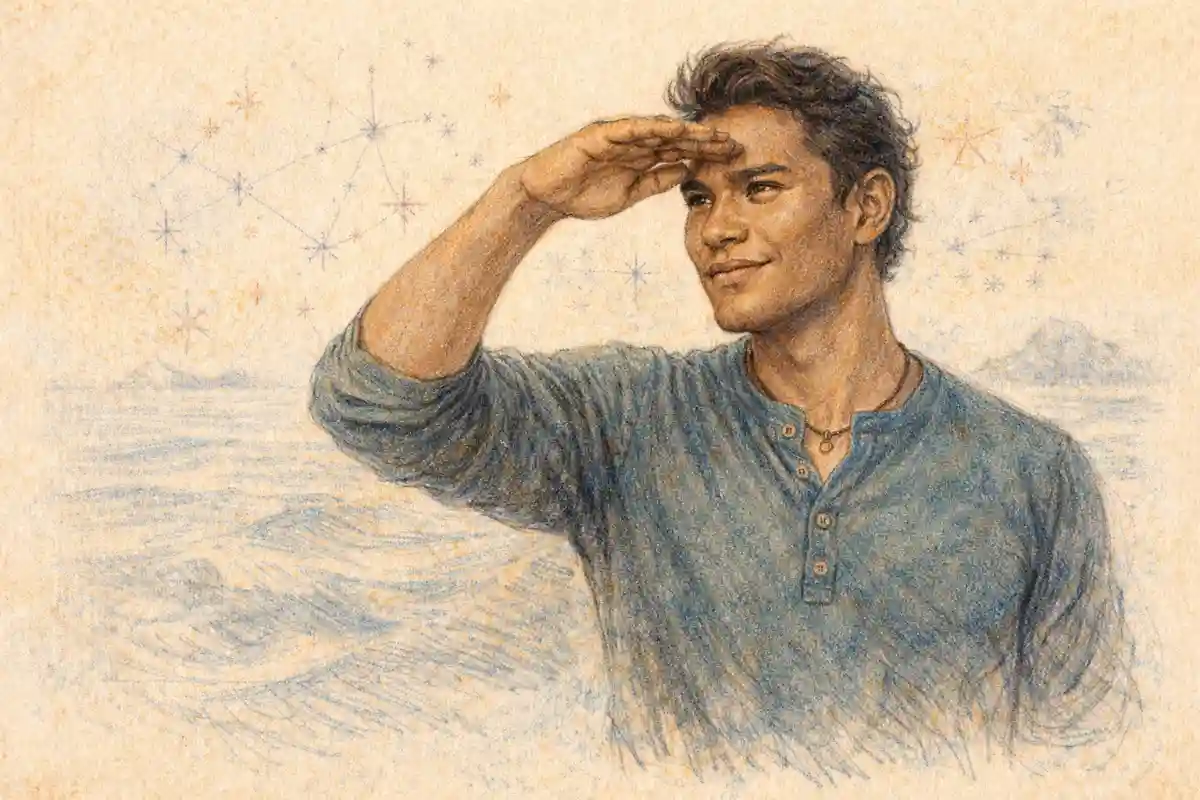
On the first night Nick Carraway sees his neighbor, he sees him reaching. Gatsby stands alone on his lawn at the edge of West Egg, stretches his arms toward the dark water, and trembles. Nick follows the gesture out across the Sound and finds nothing there except a single far-off point of brightness that might mark the end of a dock. That point is the green light in Great Gatsby, the most famous image in the novel, and the whole book folds into the distance between the man and the glow he cannot touch. Fitzgerald gives the reader the symbol before he gives the reader the story, and the gesture of reaching arrives before any explanation of what is being reached for.
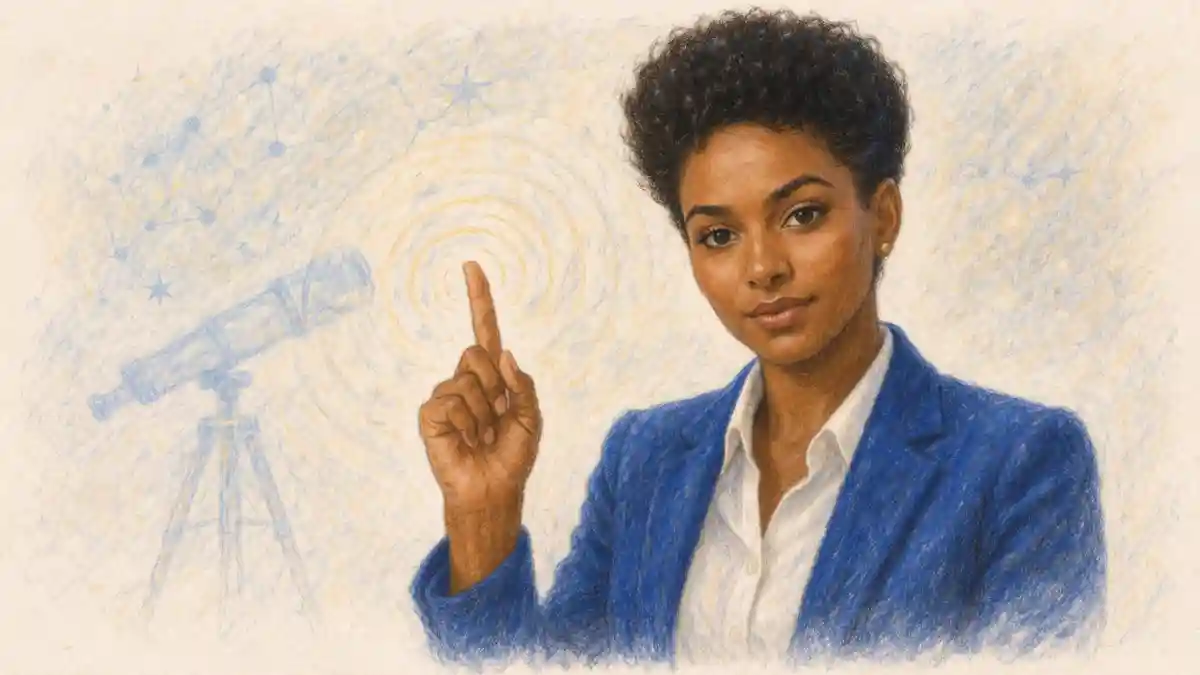
This article makes one defended argument about that beacon, and it is not the argument most summaries offer. The usual claim is that the green light equals Daisy, or equals money, or equals the American Dream, as if a symbol were a code with a single solution. The reading defended here is different and sharper. The green light means most when Gatsby cannot have it and least when he can. Its power rises with distance and collapses on arrival. Call this the empties-as-reached principle: the light is not finally a symbol of Daisy at all but a symbol of desire itself, a wanting that lives on the gap between the self and its object and dies the moment the gap closes. Trace the beacon across its three appearances and the pattern is unmistakable. The symbol is built to lose its meaning, and that loss is its meaning.
Great Gatsby symbolism rewards readers who refuse the one-word answer, and no image rewards that refusal more than this one. The green light is the novel’s central symbol not because it stands for any single thing but because it stages the structure of longing that drives every character and finally drives the book’s last sentence. To read it well is to watch a meaning fill and then empty, and to understand why Fitzgerald wanted it to empty.
What the Green Light Actually Is
Before the symbol can carry weight, the object has to be seen plainly. The literal facts are modest. At the end of Daisy Buchanan’s dock in East Egg there is a small light that burns through the night. From the lawn of Gatsby’s mansion across the bay, the glow is visible as a tiny green point, far enough away that Nick, on first sight, cannot even be certain it marks a dock. Fitzgerald describes it as a single beacon, minute and far away. It is a navigation light or a dock lamp, an ordinary fixture of waterfront property, the kind of thing nobody on East Egg would think about twice. Gatsby has bought a house directly across the water from it. That placement is not an accident he stumbled into; he chose the mansion for the view.
The plainness matters because the symbol’s force depends on it. The thing Gatsby worships is a piece of municipal hardware. There is nothing inherently meaningful in a dock lamp, no glamour in it, no romance. The meaning is entirely projected. Gatsby looks at a green point and sees a future; Nick looks at the same point and sees a green point. The distance between those two acts of seeing is the distance the novel measures. A reader who keeps the literal object in view never loses the irony that the most charged image in American fiction is, at bottom, somebody’s outdoor light left on.
The color is part of the design, though the color is not the whole of it. Green in this novel does a great deal of work beyond this one object, from the fresh green breast of the new world in the final pages to the envy and growth and money the color carries elsewhere, and that wider palette deserves its own treatment in the study of the color green across the novel. For the beacon specifically, green reads as go, as spring, as the green of permission and possibility, the color a traffic signal uses to mean proceed. Gatsby has spent five years staring at a light that says go toward a person he cannot reach. The cruelty of the color is that it promises movement while the water guarantees stillness.
Every Appearance of the Green Light, in Order
The symbol surfaces three times, and the three moments are spaced with intent. They open the novel, they sit at its romantic center, and they close it. Read in sequence, they are not three repetitions of one idea. They are three different states of the same symbol, and the difference between them is the whole argument.
The first appearance comes at the end of Chapter 1. Nick, newly arrived in West Egg, steps outside and sees Gatsby for the first time without yet knowing his name. Gatsby has come out to look at the water. Fitzgerald writes that he stretched out his arms toward the dark water in a curious way, and that even at a distance Nick could have sworn he was trembling. When Nick looks to see what holds the man’s attention, he finds the beacon, that single green point that might have been the end of a dock. The reach and the trembling tell the reader everything the words withhold. This is worship. The object is far, the longing is total, and the gesture is the helpless reaching of someone who wants what he cannot close his hand around. The meaning here is at its maximum precisely because the distance is at its maximum. Gatsby and the light are separated by the entire bay, by Daisy’s marriage, by five lost years, and the symbol blazes with significance exactly because of those barriers.
The second appearance comes in Chapter 5, during the reunion, and it is the hinge of the entire reading. Gatsby has finally gotten Daisy into his orbit. Nick has arranged the meeting; the awkwardness has passed; the three of them stand at Gatsby’s window looking out at the rain on the Sound. Gatsby tells Daisy that if it were not for the mist they could see her home across the bay, and he adds that she always has a green light that burns all night at the end of her dock. The sentence is offered as romance, a lover pointing out the thread that has connected their two houses. But Nick catches what happens to Gatsby in the saying of it. Daisy puts her arm through his, and Gatsby seems absorbed in what he has just said, because it has occurred to him that the colossal significance of that light has now vanished forever. Nick’s narration is precise and merciless. Compared to the great distance that had once separated Gatsby from Daisy, the light had seemed almost to touch her, as close as a star to the moon. Now, with Daisy standing beside him, it is again a green light on a dock. Gatsby’s count of enchanted objects, Nick says, has diminished by one. The reunion that is supposed to be the dream’s fulfillment is instead the dream’s first subtraction. The light dims because Daisy has arrived. The discussion of why the reunion stages this collapse belongs to the close reading of the Chapter 5 reunion, but the green light is where the cost shows first and shows clearest.
The third appearance comes at the very end of the book, in Chapter 9, and it transforms the private symbol into a universal one. Gatsby is dead. Nick sits on the beach in the dark, thinks of the old island as the Dutch sailors first saw it, and then thinks of Gatsby’s wonder when he first picked out the green light at the end of Daisy’s dock. He imagines Gatsby’s dream seeming so close that he could hardly fail to grasp it, not knowing it was already behind him. Then Fitzgerald widens the lens past Gatsby entirely. Gatsby believed in the green light, Nick writes, the orgastic future that year by year recedes before us. The pronoun changes everything. It is no longer Gatsby’s light or Gatsby’s future. It is ours. The beacon stops being one man’s longing for one woman and becomes the name of a condition that holds for everyone who has ever wanted a tomorrow that keeps moving away. The book ends on the image of boats beating against the current, borne back ceaselessly into the past, and the green light is what those boats were rowing toward all along.
The Green-Light Appearance Ledger
The clearest way to hold the three states side by side is to chart them. The table below is the article’s findable artifact, the Green-Light Appearance Ledger, and it tracks what the symbol is, what it means, and how far the object stands from the man who wants it at each of its three appearances. The pattern in the final column is the whole reading in miniature: as the distance closes, the meaning drains.
| Appearance | Chapter and moment | What the light is doing | Meaning it carries | Distance from Gatsby |
|---|---|---|---|---|
| First | Chapter 1, Gatsby alone on the lawn at night | Object of a trembling, wordless reach across the bay | Maximum significance; pure, undiluted longing for a future | Greatest: the whole bay, a marriage, five years |
| Second | Chapter 5, the reunion at Gatsby’s window | Pointed out to Daisy as a lover’s connecting thread | Significance collapses; demoted from enchanted object to a lamp on a dock | Nearly zero: Daisy stands at his side |
| Third | Chapter 9, Nick’s closing meditation on the beach | Generalized from one dock to the human future itself | Universal; the receding tomorrow that eludes everyone | Infinite again, but now permanent and shared by all |
The artifact’s payoff is in reading down the last two columns together. Where distance is greatest, meaning is greatest. Where distance vanishes, meaning vanishes. And in the final row the distance becomes infinite once more, but in a new way: not the gap between Gatsby and Daisy, which death has closed, but the gap between any human being and the future, which can never be closed at all. The symbol does not simply rise, fall, and rise again. It is reborn at the end as something larger than the love story that first gave it shape.
The Sentence-Level Craft of the First Appearance
The opening sighting is fewer than a hundred words, and every choice in it is load-bearing. Reading it slowly shows how Fitzgerald builds a symbol out of grammar before he builds it out of meaning. The scene begins with Gatsby giving what Nick calls a sudden intimation that he was content to be alone, a phrase that frames the reaching as private and unguarded. Gatsby does not know he is watched. What Nick sees is the man as he is when he believes no one is looking, which is why the gesture reads as confession rather than performance.
The verbs do the emotional work. Gatsby stretches out his arms, not raises them or lifts them; stretched carries strain, the body reaching past its own length. He does so in a curious way, an adjective that keeps Nick, and the reader, at a baffled distance, watching something we do not yet understand. Then comes the detail that converts the gesture into worship: far as Nick is from him, he could have sworn the man was trembling. Trembling is the body overwhelmed, and Fitzgerald places it at the edge of Nick’s certainty, where he could have sworn it, so the longing registers as something almost too intense to verify.
Only after the human gesture does the object arrive, and it arrives reluctantly. Nick glances seaward involuntarily, as if pulled by the line of Gatsby’s reach, and finds a single beacon that is minute and far away, qualified immediately as something that might have been the end of a dock. The hedging is deliberate. Fitzgerald will not let the reader land on a fact. The light is small, distant, and uncertain even as an object, which means it enters the novel already more felt than known. By withholding the name Gatsby and the name Daisy, by giving the reach before the reason, the passage trains the reader to experience longing as a pure state before it can be explained away as a plot point. The symbol is established as want without object, and everything that follows is the slow, doomed supplying of the object.
How the Meaning Shifts From Private Longing to Universal Condition
A symbol that meant one fixed thing would not need three appearances. Fitzgerald spaces the beacon across the novel’s frame precisely so the reader can watch its meaning move. The movement runs in two directions at once, and holding both is the key to not reducing the image.
The first direction is downward. From Chapter 1 to Chapter 5 the light loses altitude. It begins as an object of worship and ends as a piece of dock equipment. Nothing about the lamp itself changes between those chapters; the same bulb burns at the same dock. What changes is Gatsby’s relation to it. In Chapter 1 the lamp is the farthest point of an impossible reach, and impossibility is what charges it. In Chapter 5 Daisy is close enough to take his arm, and proximity discharges it. The symbol behaves like a battery that holds its current only while the circuit stays open. Close the circuit, let Gatsby touch what he reached for, and the stored meaning runs out. Nick’s own word for it, that the light’s significance has vanished forever, names a permanent loss, not a temporary dip. The beacon will never again mean to Gatsby what it meant on the lawn, because Gatsby can never again be as far from Daisy as he was when he believed in her completely.
The second direction is upward and outward, and it happens only at the end. The closing meditation does not restore the light to Gatsby; Gatsby is dead and beyond restoration. Instead Nick lifts the symbol off the particular dock and attaches it to the whole human enterprise of hoping. The orgastic future that recedes before us is not Daisy. It is whatever each reader has put across their own private bay, the better life, the second chance, the version of themselves that always seems one year away. By generalizing the image, Fitzgerald rescues it from the wreck of Gatsby’s specific failure and makes it permanent. The reading that traces this lift from one man’s hope to everyone’s belongs more fully to the analysis of the light as hope, distance, and desire; for the whole-symbol view, the point is that the third appearance is not a return to the first but a translation of it into a key that no longer requires Gatsby at all.
These two movements look contradictory and are not. The light empties for Gatsby and fills for the reader, and it does both for the same reason: meaning here is a function of distance. Gatsby loses the meaning because his distance closes. The reader inherits a larger meaning because the human distance from the future never closes. The symbol is consistent throughout. It is always worth exactly as much as the gap that separates the wanter from the wanted, and the final pages simply replace a closeable gap with one that cannot be crossed.
Why the Light Dims in Chapter 5
The Chapter 5 collapse is the moment most readings rush past, and it is the moment that proves the whole interpretation. If the green light stood for Daisy, then having Daisy in the room should make the light blaze, not fade. The lover would point to the beacon and feel the symbol confirmed, fulfilled, redeemed. Instead the opposite happens. Daisy arrives and the light goes quiet. That reversal is impossible to explain if the symbol’s referent is Daisy, and it is the natural consequence if the symbol’s referent is desire.
Look closely at what Nick reports. Gatsby has just spoken the light aloud, turned it from a private object into a sentence shared with the woman it was about. In the act of sharing it he feels its significance vanish. The wording is exact: the colossal significance of that light had now vanished forever, and his count of enchanted objects had diminished by one. The phrase enchanted objects is doing heavy lifting. An enchanted object is one a person has invested with a magic it does not contain on its own. The enchantment lives in the distance and the wanting, not in the thing. The instant Daisy is present, the lamp can no longer hold the projection, because the projection needed her absence to survive. Gatsby had loved a green light for five years. What he had loved in it was the idea of Daisy, polished by time and longing into something no living woman could equal. The dock lamp was the screen onto which that idea was thrown. With the real Daisy in the room, the screen goes blank.
This is why the reunion, the supposed triumph, reads as the first death in the novel’s slow killing of Gatsby’s dream. He gets what he wanted and discovers that getting it was the one thing the dream could not survive. The light is the early-warning system for that discovery. It dims in Chapter 5 so that the reader, long before the violence of Chapter 7 and the body in the pool of Chapter 8, already knows the shape of what is coming. A man has built his life around reaching for something, and the novel has just shown, in the quietest possible scene, that the reaching was the life and the having is the end of it.
The Characters and Themes the Green Light Holds Together
A central symbol earns the title by gathering the book’s other concerns into one image, and the beacon does exactly that. It is tied first to Gatsby, whose entire character is a study in oriented longing. Everything about him points across the bay. His mansion faces the wrong way for a West Egg house, toward East Egg rather than the open Sound, because he bought it for the sightline. His parties are nets cast in the hope that Daisy might one day drift into one. His wealth, his shirts, his invented past all exist to make him worthy of the figure at the dock’s end. To understand Gatsby is to understand the reach in Chapter 1, and the green light is that reach made into an object.
The light binds to Daisy too, but in a way that exposes the gap between the woman and the symbol. Daisy is a person with a careless voice full of money, a daughter she barely mentions, a husband she will not finally leave. The light is the idealized Daisy, the version Gatsby spent five years building. Holding the two against each other is the cruelest comparison in the book, because the real woman can never be as luminous as the lamp that stood in for her. The symbol does not flatter Daisy; it measures the distance between who she is and what Gatsby needed her to be.
Beyond the two figures, the beacon anchors the novel’s largest theme. The reach across the water is the same reach the country makes in the closing pages, the hope of a future always a little ahead and a little out of grasp, and the light is the bridge between Gatsby’s private want and the national one explored at length in the study of the American Dream in the novel. It also gathers the book’s preoccupation with time, since what Gatsby wants is not only Daisy but the past restored, the five lost years repaid, a tomorrow that is somehow also a yesterday. The light points forward across space and backward across time at once, which is why it can stand for the orgastic future and for a current that bears us ceaselessly into the past in the same closing breath.
The Light and the Problem of Time
The beacon points across space, but what Gatsby reaches for is finally a matter of time, and this is the dimension that separates the green light from a simple love token. Gatsby does not want Daisy as she is in the present. He wants the Daisy of 1917, before the marriage, before Tom, before the five years that the war and her impatience stole from him. When Nick warns that the past cannot be repeated, Gatsby answers with disbelief, crying that of course it can, and looking wildly about as though the past were lurking in the shadow of his house, just out of reach of his hand. He intends, he says, to fix everything just the way it was before. That ambition is the light translated into time. The dock lamp burns at a fixed point across the water the way the lost year burns at a fixed point across memory, and Gatsby reaches toward both with the same trembling certainty that they can be closed.
This is why the symbol can stand for the future and the past at once without contradiction. Gatsby’s future is a restored past; the tomorrow he reaches for is a yesterday he means to reinstall. The closing meditation makes the paradox explicit. The orgastic future recedes before us, Nick writes, and then in the same breath the boats are borne back ceaselessly into the past. The forward reach and the backward pull are the same motion. Gatsby rows toward a green light that is also a memory, straining ahead in order to arrive behind himself, and the current that defeats him is time, which moves in one direction only and carries every reacher away from the thing reached for.
Holding time inside the symbol is what gives the green light its tragic weight. A man can, in principle, cross a bay. No one can cross back into a vanished year. The distance the lamp measures looks geographic and is actually temporal, and temporal distance is the one kind that no amount of money or want can shorten. Gatsby bought the mansion to close the space between his lawn and Daisy’s dock, and he very nearly did. What he could never buy was the closing of the years, and that uncrossable distance is the one the green light was secretly measuring all along.
The Major Critical Interpretations
The green light has accumulated a long history of readings, and a strong essay should know the field even while defending one position within it. The interpretations are not all equal, and several of the popular ones are partial truths mistaken for whole answers.
The first and most common reading makes the light a symbol of Daisy. There is real textual ground for it: the lamp sits on her dock, Gatsby reaches toward it, and he speaks of it to her directly. But the Daisy reading cannot survive Chapter 5. If the light were simply Daisy, her arrival would intensify it, not extinguish it. The Daisy reading explains the first appearance and is silenced by the second.
The second reading makes the light a symbol of money and the wealth Gatsby pursues. The color green invites it, and the novel is saturated with the corruptions of money. Yet Gatsby already has money when he stands trembling on the lawn; he is one of the richest men on Long Island. A man does not reach across a bay for what already fills his house. The wealth reading mistakes a means for the end. Gatsby wants money in order to reach the light, which proves the light is not money.
The third reading makes the light the American Dream, and this comes closest, especially given the final pages. The closing meditation explicitly enlarges the beacon into the national hope of an ever-receding future. The American Dream reading is not wrong so much as too large to be precise. It names the size of the symbol without naming its mechanism. It says what the light expands to mean without explaining why the light dims when Daisy draws near, and that dimming is the detail any complete reading has to account for.
The fourth reading, and the one this article extends, treats the light as a symbol of hope, distance, and desire, the psychological structure of wanting itself. This reading alone explains all three appearances. It accounts for the blaze in Chapter 1, where distance is total and desire is pure. It accounts for the collapse in Chapter 5, where distance closes and desire has nothing left to feed on. And it accounts for the expansion in Chapter 9, where the personal gap becomes the universal one between humanity and its future. A reading that explains every appearance is stronger than a reading that explains only the appearances that flatter it.
The Green Light and Great Gatsby Symbolism: Comparing the Major Images
Calling the green light the central symbol means measuring it against the novel’s other great images, and the comparison clarifies what makes the beacon different. Two rivals stand out: the eyes of Doctor T. J. Eckleburg, the faded oculist’s billboard brooding over the valley of ashes, and the valley itself, the grey wasteland of ash heaps between West Egg and the city. Each is a powerful symbol. Neither does what the green light does.
The Eckleburg eyes are a symbol of watching, of a vanished or indifferent authority surveying the moral ruin below. Their power lies in ambiguity and stillness; they hang over the valley and do not change, and their meaning is a question the novel poses rather than an arc it traces. The valley of ashes is a symbol of consequence, the dumping ground where the glittering lives of the wealthy deposit their waste, and like the eyes it is fixed, a place the characters pass through on their way between the more vivid worlds. Both images are static by design. They are backdrops against which the action plays, conditions of the novel’s world.
The green light alone moves. It is the only major symbol with an arc, a thing that means one thing at the start, loses that meaning in the middle, and gains a larger one at the end. Where the eyes watch and the valley waits, the light reaches, and reaching is action. This is the structural reason the beacon frames the book while the others decorate it. Fitzgerald opens and closes the novel on the green light because it is the symbol that can carry a story, rising and falling and opening outward in step with Gatsby’s hope. The eyes and the valley tell the reader what the world is. The green light tells the reader what Gatsby does in that world, and what every person does: strain across a distance toward a glow that recedes.
There is a further difference worth naming. The eyes and the valley belong to the novel’s social critique, its judgment of a careless and corrupt order. The green light belongs to its inner life, the private chamber of want where Gatsby actually lives. A reader can analyze the eyes and the valley without ever entering a character’s longing. The green light cannot be read at all except from inside desire, which is why it feels less like a symbol the novel contains and more like the engine the novel runs on. The other images are things the book shows. The green light is the thing the book is about.
The Reading This Article Defends: Distance Makes the Meaning
Set the four interpretations side by side and one of them does work the others cannot. The defended position can be stated in a single sentence. The green light is a symbol of desire, and desire is a relationship to distance, so the light is worth exactly as much as the gap between Gatsby and what he wants, and it empties as that gap closes. Call this the empties-as-reached principle, and notice that it is not a fifth competing meaning bolted onto the other four. It is the rule that organizes all of them.
Under this principle the Daisy reading becomes the special case of the first appearance, true while the distance holds and false the moment it closes. The money reading becomes the description of a means, the fuel Gatsby burns to shorten the distance, not the destination. The American Dream reading becomes the symbol scaled up, the same desire-across-distance enlarged from one lawn to a whole continent. The structure is the constant; the various referents are what that structure points at depending on how far back the reader stands. A symbol read this way does not collapse into one equivalence. It opens into a mechanism that generates many.
The strongest evidence for the principle is the one moment every other reading has to explain away. Chapter 5 should be the symbol’s triumph and is instead its first defeat. Nick tells the reader plainly that the significance vanished forever the instant Daisy stood close, that the enchanted object became an ordinary lamp. No reading that treats the light as a thing, whether the thing is Daisy or money or a dream, can explain why getting closer to the thing destroys the symbol. Only a reading that treats the light as a relation can. Desire is the wanting of what one does not have. Supply the having and you abolish the wanting and with it the symbol. The light is built to die on arrival because desire is, and that built-in mortality is not a flaw in the symbol but its entire point.
This is also why the closing meditation can resurrect the image without contradiction. Death has closed the gap between Gatsby and Daisy permanently, so for Gatsby the light is gone for good. But Nick widens the symbol to the gap between all people and the future, and that gap is one no one ever closes. The orgastic future recedes before us precisely because we keep reaching it and finding it has moved. The green light survives the love story by becoming the name of a wanting that can never be satisfied, only continued. We beat on against the current not because we will arrive but because the reaching is what we are.
The Misreadings to Avoid
Three errors recur in writing about this symbol, and each one is a version of stopping too early. Naming them is the fastest way to make an essay sound like it has actually read the book rather than a summary of it.
The first error is fixing a single meaning. A student writes that the green light symbolizes Daisy, full stop, and treats the question as solved. The cost of this is the whole second half of the symbol’s life. A fixed meaning cannot move, and this symbol’s defining behavior is movement. To pin the light to one referent is to throw away the very thing that makes it the novel’s central image, its capacity to mean differently at different distances.
The second error is missing the shift, which is the first error in a slower form. A reader notices the light in Chapter 1 and again in Chapter 9 and reads them as the same note struck twice, a frame that simply rhymes the beginning with the end. This misses the dimming in between. The symbol does not go from hope to hope. It goes from private hope to extinguished hope to universal hope, and the middle term, the extinction in Chapter 5, is where the meaning is made. An essay that skips Chapter 5 has skipped the argument.
The third error is treating the light as only about Daisy, which sounds like the first error but is worth separating because it fails in a particular way. It reduces a novel-sized symbol to a love story. The closing pages forbid this. When Nick writes that the future recedes before us, the pronoun has already left Daisy behind. A reading that ends with Daisy cannot reach the last page, where the light has become the property of everyone who has ever wanted a tomorrow. The way to avoid all three errors is the same: follow the symbol across every appearance and let its behavior, not a first impression, decide its meaning. Gathering the three passages in one place, side by side, is the surest defense against reading only the famous opening, and the annotated edition of the novel at VaultBook’s Great Gatsby text lets a writer pull the Chapter 1, Chapter 5, and Chapter 9 passages together so the shift can be seen rather than assumed.
How to Write About the Green Light Without Reducing It
The instinct in an essay is to answer the question what does the green light symbolize with a noun. Resist the noun. A symbol that can be answered with a noun was not worth a paragraph, let alone a thesis. The way to write about this image at a high level is to argue a verb and a relation rather than a thing.
A weak thesis says the green light symbolizes Daisy and Gatsby’s love for her. It is not false, but it is finished before it begins, and the rest of the essay can only restate it. A strong thesis says the green light symbolizes a desire that depends on distance, so its meaning shifts across the novel and collapses precisely when Gatsby gets close to what he wants. That thesis has somewhere to go. It promises three scenes, a pattern, and a payoff, and it forces the writer to handle Chapter 5 rather than skate past it.
The structure follows from the thesis. Build the body around the three appearances in order, give each its own paragraph or pair of paragraphs, and make the Chapter 5 dimming the turn of the essay rather than an aside. Quote precisely and sparingly. Two or three exact phrases carry more weight than a page of paraphrase: the trembling reach in Chapter 1, the vanished significance and the count of enchanted objects diminished by one in Chapter 5, the orgastic future that recedes before us in Chapter 9. Let each quotation do analytical work, then return to the argument. Close by widening, as the novel does, from Gatsby’s particular light to the human want it finally names, so the essay ends where the book ends, on the boats and the current and the receding future. An essay that mirrors the symbol’s own movement, filling and then emptying and then opening outward, will read as though it understands the image from the inside.
The discipline throughout is analysis over equivalence. Never let the essay become a translation exercise in which each symbol is matched to its meaning like a vocabulary list. The green light is the best teacher of this discipline in the whole novel, because the one-word answer is so tempting and so wrong. A reader who learns to refuse it here will refuse it everywhere, and that refusal is the difference between summarizing the book and reading it.
Why the Green Light Endures
Few images from any American novel have traveled as far beyond their pages as this one. The green light has become shorthand, invoked in contexts that have nothing to do with Long Island or the Jazz Age, a near-universal figure for the thing wanted and not reached. That afterlife is not an accident of fame. It follows directly from the structure traced here. An image that meant only Daisy, or only the wealth of one striving man, would have stayed inside the book. What lets the beacon escape the novel is that it names something every reader already carries before opening the book at all.
Most symbols ask the reader to learn a correspondence. To feel the weight of the valley of ashes, a reader has to absorb the novel’s social world and see what the grey heaps stand in for. The green light asks for none of that learning. The experience it describes, straining toward a future that keeps stepping back, is the common property of anyone who has ever hoped. Fitzgerald did not invent the feeling; he found the perfect object for it. A faint glow across dark water, visible and untouchable, reachable in appearance and not in fact, is the precise shape of human wanting, and once a reader has been shown that shape they recognize it everywhere in their own life.
The endurance also owes something to the symbol’s refusal to resolve. Images that close, that deliver a clean meaning and stop, are used up in a single reading. The green light is never used up because its meaning is motion, and motion can be entered again and again. A reader at twenty sees Daisy in it; a reader at fifty sees the receding years. The same image accommodates both because it was never about a fixed object, only about the distance between a person and what they cannot have, and that distance changes with the life of whoever is reading. The symbol grows with its readers, which is the surest sign that Fitzgerald built it on a structure rather than a code.
Finally, the green light endures because the novel is honest about it. Fitzgerald does not promise that the reaching ends in arrival. The last sentence leaves the boats beating against the current, gaining nothing, borne back into the past even as they strain ahead. A lesser book would have let Gatsby grasp the light or learn to live without it. This one insists that the reaching is permanent and unrewarded and human, and readers return to that honesty because they recognize it. The light has lasted a century not because it consoles but because it tells the truth about wanting, and the truth, unlike consolation, does not wear out.
The Verdict
The green light is the central symbol of The Great Gatsby because it does not hold still. A lesser image would have meant Daisy and stopped. This one means Daisy in Chapter 1, means almost nothing in Chapter 5, and means the future of the human race in Chapter 9, and the path between those meanings is not a contradiction but a single law working itself out. The law is that desire is a relationship to distance. The beacon is worth what the gap is worth. Fill the gap and the light goes dark; widen it past all crossing and the light becomes eternal.
That is why the symbol’s real subject is not Daisy and never was. Daisy is the occasion. The subject is the reaching, the trembling arms on the lawn, the wanting of a tomorrow that keeps stepping back as we step forward. Gatsby believed in that future with his whole life and it cost him his whole life, and the novel’s final, devastating generosity is to hand his green light to the reader. The future recedes before us too. We also row toward a glow we will not reach, borne back ceaselessly into the past even as we strain ahead. The genius of the image is that it makes a private obsession into a mirror, and what every reader sees in it is their own dock, their own bay, their own light burning all night at the far edge of what they cannot have. A symbol that empties as it is reached is the truest possible figure for a desire that lives on distance, and the green light is that figure perfected. Nick alone understands this by the end, which is why he is the one left to speak the image into permanence. He arrived in the East wanting to learn the bond business and leaves having learned instead what Gatsby’s reach across the water meant, that a man can pour an entire life into a single point of brightness and that the pouring, not the point, is the substance of him. Daisy never grasps it; Tom never glimpses it; only the narrator, half inside the longing and half outside it, can name the beacon for what it is and then hand it to the reader. That double position is why the closing pages land. They are spoken by the one character who watched the trembling reach on the first night and stayed to watch the dream collapse, and who therefore knows that the worth of any object across a person’s private bay was always the wanting carried toward it, never the object waiting at the far end.
Frequently Asked Questions
What does the green light symbolize in The Great Gatsby?
The green light symbolizes desire itself, the structure of wanting something that stays out of reach, rather than any single object. It is most often read as Daisy, money, or the American Dream, and it touches all three, but those are referents the symbol points at rather than its core. Its core is a relationship to distance. The light is worth as much as the gap between Gatsby and what he longs for, which is why it blazes with significance when he is far from Daisy and goes dim when she stands beside him. By the novel’s end it has expanded into a symbol of the human future, the tomorrow that recedes before everyone. Reading it as desire-across-distance is the only interpretation that explains all three of its appearances rather than just the first.
Where is the green light located in the novel?
The green light burns at the end of Daisy Buchanan’s dock in East Egg, on the fashionable shore of the bay across the water from Gatsby’s mansion in West Egg. It is an ordinary dock light, a small fixture that stays lit through the night, the kind of practical lamp found on waterfront property. Gatsby can see it from his own lawn as a tiny green point far across the Sound. He chose his mansion specifically for this sightline, so that the woman he loves and the light marking her home would always be in view. The placement matters: the entire bay, with everything it represents about class and separation, lies between the man and the glow he watches.
When does the green light first appear in The Great Gatsby?
The green light first appears at the close of Chapter 1. Nick steps outside on his first night in West Egg and sees Gatsby, whom he does not yet recognize, standing alone on his lawn. Gatsby stretches his arms toward the dark water and appears to tremble, and when Nick looks to find the object of that gesture he sees only a single distant green point that might mark the end of a dock. The scene is brief, fewer than a hundred words, but it introduces the novel’s central symbol before the reader knows anything about Gatsby’s history or his love for Daisy. The reach comes first; the explanation comes chapters later. Placing the image this early makes longing the reader’s first impression of Gatsby.
Why does Gatsby reach toward the green light?
Gatsby reaches toward the green light because it marks the location of Daisy, the woman he has organized his entire life around recovering, and the gesture is the physical form of five years of longing. He cannot reach her directly. She is married, she lives across the bay, and the past he wants to repeat is gone. The light is the nearest thing to her that he can fix his eyes on, so he reaches for the symbol in place of the person. The trembling Nick observes signals that this is not casual admiration but something closer to worship. Crucially, the reaching itself is the point. Gatsby is defined by oriented want, and the arms stretched across the water are that want made visible in a single image.
How does the green light’s meaning change across the novel?
The meaning changes in two directions. From Chapter 1 to Chapter 5 it falls. The light begins as an object of total longing and is demoted, the moment Daisy stands beside Gatsby, to an ordinary lamp on a dock, its significance gone. From Chapter 5 to Chapter 9 it rises and widens. Nick’s closing meditation lifts the image off the particular dock and turns it into a symbol of the future that recedes before all of humanity. So the symbol does not mean one stable thing. It means private hope, then extinguished hope, then universal hope. The single law behind every shift is distance: the light is worth what the gap between wanter and wanted is worth, and it changes whenever that gap opens or closes.
Why does the green light lose its power in Chapter 5?
The light loses its power in Chapter 5 because Daisy arrives, and proximity is exactly what the symbol cannot survive. During the reunion at Gatsby’s window, he points the light out to her as the thread connecting their homes, and in the act of speaking it aloud he feels its colossal significance vanish forever. Nick reports that Gatsby’s count of enchanted objects has diminished by one. The light was an enchanted object only because of the distance and longing Gatsby projected onto it. With the real Daisy beside him, the projection has nowhere to land, and the lamp becomes a lamp again. This dimming proves the symbol is not Daisy herself, since having Daisy should intensify a Daisy-symbol, not extinguish it. It is desire, and desire dies on arrival.
Why is the green light the novel’s central symbol?
The green light is central because it gathers the novel’s major concerns into one image and because it stages the structure of longing that drives the whole book. It binds to Gatsby, whose character is pure oriented want, and to Daisy, exposing the gap between the real woman and the idealized one. It carries the theme of the American Dream and the theme of time, since Gatsby reaches forward across space and backward across the lost years at once. Most of all it is central because it moves: it means differently at each appearance, and that mobility lets it hold the entire arc of hope and disillusionment in a single recurring picture. A fixed symbol could not frame the novel the way this one does, opening it and closing it.
Does the green light represent only Daisy?
No, and the novel itself refuses that reading. The light is tied to Daisy because it sits on her dock and Gatsby reaches toward it, so the Daisy reading explains the first appearance. But it cannot explain Chapter 5, where Daisy’s arrival makes the light dim rather than blaze. If the symbol were simply Daisy, having her near would confirm it, not extinguish it. And it cannot explain Chapter 9, where Nick generalizes the light into the future that recedes before all of us, leaving Daisy behind entirely. Daisy is the occasion of the symbol, not its meaning. The light represents the desire for which Daisy is the first and most personal object, a wanting that outgrows her by the final page and becomes the property of every reader.
Is the green light a symbol of money or wealth?
Money is one of the things the light is often said to mean, helped along by the color green, but the wealth reading mistakes a means for the end. Gatsby is already enormously rich when he stands trembling on his lawn reaching for the light. A man does not strain across a bay for something that already fills his mansion. He pursued wealth in the first place as a tool to close the distance to Daisy and to make himself worthy of her, so money is the fuel he burns to reach the light, not the light itself. The symbol sits one level above money. It is the longing that money was supposed to satisfy, which is why acquiring the fortune never quiets the reach. The wanting outlasts the wealth.
How does the green light connect to the American Dream?
The connection becomes explicit in the closing meditation, where Nick widens the light from Gatsby’s private hope into the national one. He links Gatsby’s wonder at the green light to the wonder of the first Dutch sailors seeing the new continent, the fresh green breast of the new world, so the personal beacon and the country’s founding hope rhyme. Both are a reaching toward a future that promises everything and stays just ahead. The American Dream, in the novel’s hard reading, is the belief that the future can be reached by effort and want, and the light is that belief in a single image, forever visible and never grasped. The novel does not celebrate the dream so much as diagnose it, and the green light is the diagnosis made beautiful.
What does Gatsby say about the green light during the reunion?
During the Chapter 5 reunion, standing at his window with Daisy as rain falls on the Sound, Gatsby remarks that if it were not for the mist they could see her home across the bay, and he adds that she always has a green light that burns all night at the end of her dock. He offers it as a lover’s observation, evidence of the invisible thread that has joined their two houses across the water. But the saying of it backfires on him internally. Daisy takes his arm, and Gatsby falls silent and absorbed, because the words have made him realize the light has lost its meaning now that she is present. The remark meant to celebrate their connection instead marks the moment the symbol begins to die for him.
Does the green light return at the very end of the book?
Yes. The green light returns in Chapter 9, in the novel’s final passage, and its return transforms it. Nick, alone on the beach after Gatsby’s death, recalls Gatsby’s wonder when he first picked out the green light at the end of Daisy’s dock, then enlarges the image far past Gatsby. He writes that Gatsby believed in the green light, the orgastic future that year by year recedes before us. The pronoun shifts from Gatsby to us, and the light stops belonging to one man’s love story and becomes the symbol of every person’s receding future. The book then closes on boats beating against the current, borne back into the past. The final return is not a repetition of the opening but its translation into universal terms.
What is the most common misreading of the green light?
The most common misreading fixes the light to a single meaning, usually Daisy, and treats the symbol as solved. This reduction throws away the symbol’s defining behavior, which is movement. The light means differently at each of its three appearances, and pinning it to one referent makes the Chapter 5 dimming and the Chapter 9 expansion impossible to explain. A close cousin of this error is reading the opening and closing appearances as the same note and skipping the middle, which misses that the symbol is extinguished in Chapter 5 before it is reborn. The corrective in both cases is to follow the light across all three scenes and let its actual behavior, rather than a strong first impression, decide what it means.
Why does Fitzgerald use a green light rather than another object?
Fitzgerald chooses a light because a light is visible across distance while remaining untouchable, which is exactly the relationship Gatsby has with Daisy. A reachable object would not work; the symbol needs to be seen and not held. The color green sharpens it further, carrying the sense of go and of spring and possibility, the green of permission that promises movement toward what the water makes unreachable. A light also burns at night, when Gatsby does his reaching and his longing is least disturbed by daylight reality. And a light is humble, an ordinary dock lamp, so the gap between the modest object and the colossal meaning Gatsby pours into it dramatizes how much of the symbol is projection. The choice of a far, faint, nighttime glow is the choice of an image built for longing.
Is the green light real or only imagined by Gatsby?
The light is physically real within the novel. It is an actual lamp burning at the end of Daisy’s dock, visible to Nick as well as to Gatsby, and Gatsby refers to it as a fixture Daisy always has. What is imagined, or rather projected, is its meaning. The bulb itself is ordinary; the significance Gatsby attaches to it exists only in his longing. This split between the real object and the projected meaning is the heart of the symbol. Nick can see the same green point Gatsby sees and feel nothing, because Nick has not invested it with five years of want. The light is real, in other words, but its enchantment is not. That is precisely why the enchantment can vanish in Chapter 5 while the lamp keeps burning.
How does the green light reveal Gatsby’s character?
The green light reveals that Gatsby is a man defined entirely by oriented longing, a self pointed permanently across a bay at something he cannot have. His first appearance in the novel is the reach toward the light, before the reader learns his name or history, so longing is the reader’s first and truest impression of him. His mansion faces the wrong way for the view, his parties are cast as nets to catch Daisy, and his wealth exists to shorten the distance the light measures. The symbol also reveals his fatal trait: he loves an idea polished by distance more than any reality could match, which is why the reunion disappoints him. To know what the green light is to Gatsby is to know that the reaching, not the having, was his whole life.
How should I write about the green light in an essay?
Argue a relationship, not a noun. A thesis that says the light symbolizes Daisy is finished before it starts; a thesis that says the light symbolizes a desire dependent on distance, so its meaning shifts and collapses when Gatsby gets close, has somewhere to go. Structure the body around the three appearances in order and make the Chapter 5 dimming the turn of the essay rather than an aside, since that scene is what proves the reading. Quote precisely and sparingly, letting two or three exact phrases carry the analysis. Close by widening from Gatsby’s particular light to the universal future the novel names in its final lines, so the essay mirrors the symbol’s own movement. Throughout, practice analysis over equivalence and refuse the one-word answer the image keeps inviting.