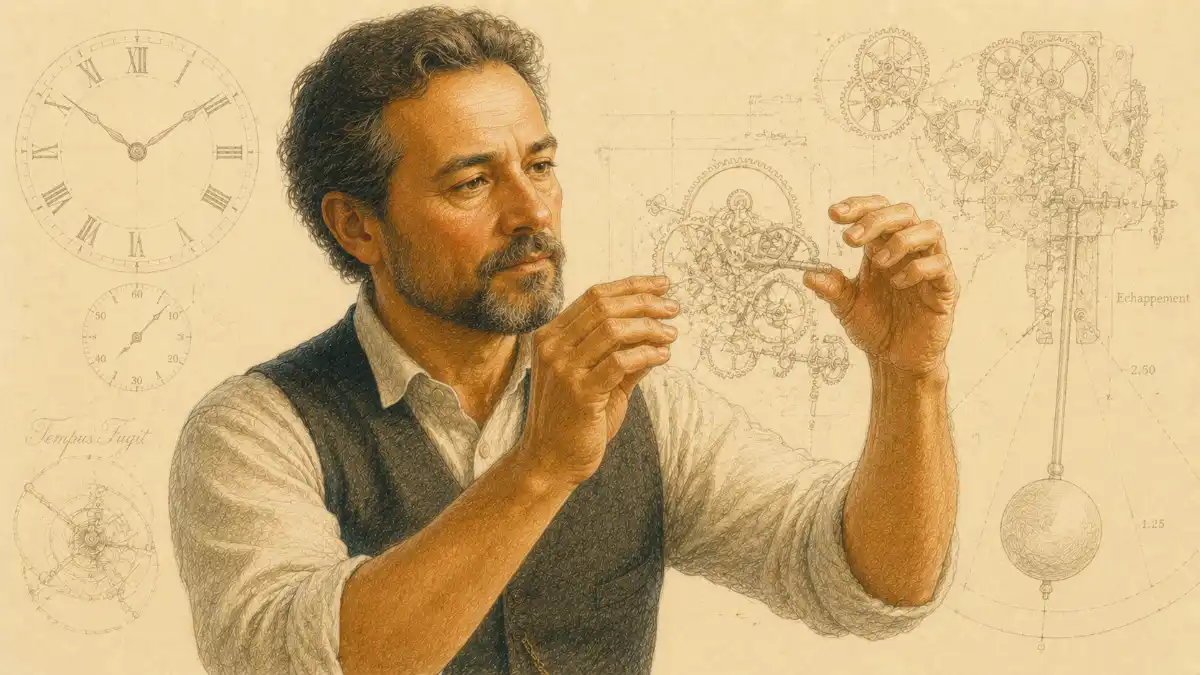
He is the gracious monarch whose first appearance in the second scene of the tragedy establishes him as the figure whose command is unproblematic, whose recognition of his thanes’ battlefield service is generous and immediate, whose elevation of Macbeth to the title of Thane of Cawdor in reward for the campaign against Macdonwald sets in motion the partial fulfillment of the witches’ prophecy that will eventually lead to his own death, who names his elder son Malcolm as the rightful heir and Prince of Cumberland in the public ceremony that creates the obstacle Macbeth will determine must be removed through criminal action, who travels to Macbeth’s castle at Inverness as the honored guest whose hospitality the host has every reason to respect and every obligation to protect, who praises the castle’s pleasant seat and the gentle martlet that nests in its eaves in lines of pastoral beauty calibrated to make his subsequent death in this very location the more terrible, who is murdered in his sleep by the host whose elevation he has just confirmed, and whose body provides the stage image around which the discovery scene and the entire subsequent action will revolve. The brevity of his presence in the tragedy is inversely proportional to the weight his memory carries through the closing acts.
The argument this analysis advances is that Duncan is the figure whose virtues the tragedy establishes specifically to make the murder unbearable, the rightful sovereign whose unproblematic rule provides the moral baseline against which all subsequent ilrightful acquisitions of command will be measured, the gracious monarch whose hospitality at his host’s castle becomes the condition under which his death occurs in violation of every code of guest-host obligation that the period understood as binding, the father whose succession arrangements name Malcolm as the rightful heir and thereby establish the rightful succession that the closing acts will eventually restore, and the absent presence whose memory operates throughout the tragedy as the standard from which every subsequent deed departs. Without him the tragedy would have no foundation against which Macbeth’s choices could be measured. With him the tragedy acquires the moral floor that gives Macbeth’s subsequent crimes their full weight as crimes rather than merely as governmental maneuvers in a contested situation.
Within this framework, the dimension of rightful command is what gives the character his singular structural importance. Other Shakespearean monarchs inhabit positions of contested or compromised legitimacy that complicate any reading of their rule. Duncan’s rule is presented as essentially unproblematic. He is the rightful monarch of Scotland, his rule is recognized by the nobility, his battlefield commands have been obeyed and have produced victory, his recognition of his thanes’ service has been generous and proportionate. The tragedy takes care to establish this unproblematic legitimacy in the early scenes precisely because the entire moral economy of the later acts will depend on the audience accepting it. The murder of an unproblematic monarch is the murder of legitimacy itself, and Macbeth’s subsequent struggle to occupy the throne he has emptied is the struggle of someone who has destroyed the foundation he is now trying to stand on.
The Architectural Function in the Tragedy
Beyond this point, the first feature to establish about Duncan is the precision of his structural placement. He appears in three scenes before his death: the second scene of the first act, where he receives the captain’s report of the battle and announces the elevation of Macbeth to the title of Thane of Cawdor; the fourth scene of the first act, where he names Malcolm as his heir and announces his intention to visit Macbeth’s castle; and the sixth scene of the first act, where he arrives at the castle and praises its pleasant seat. After his death he never appears onstage again, except as the corpse that the discovery scene will reveal in the chamber. The total speaking presence is brief, but the placement is calibrated to maximum effect.
Considered closely, the second architectural feature is the proportionality of his presence to his thematic weight. He has fewer scenes than any other character of comparable structural importance, but the weight his memory carries through the closing acts is greater than that of any other figure removed early from the tragedy. Each of his three speaking appearances accomplishes a specific structural function. The first establishes his virtues as a sovereign through his response to news of the battle. The second establishes the rightful succession through the naming of Malcolm and creates the obstacle that Macbeth will determine must be removed. The third establishes the hospitality relation that the murder will violate and provides the pastoral imagery that will resonate through the murder scene by inversion. The economy of his appearances is one of the most carefully calibrated in the canon.
By implication, the third architectural function involves his role as the figure whose unproblematic legitimacy provides the moral foundation against which the subsequent action will be measured. The tragedy could have presented him as a contested or compromised sovereign whose death might be morally ambiguous. It does not. It presents him as a sovereign whose rule is rightful, whose exercise of rule is generous, whose presence in the tragedy is gracious. The choice to present him this way is structurally essential. It establishes that the regicide cannot be defended on any grounds of governmental necessity or moral correction. It is straightforwardly the regicide of a good king by a thane who has every reason to be grateful to him, and the straightforwardness is what gives the subsequent moral economy its weight.
Critically, the fourth function involves his prophetic significance as the figure whose death fulfills the larger prediction the witches have set in motion. The witches have predicted that Macbeth will become king. Macbeth has interpreted this prediction as requiring the removal of the existing king. Duncan’s existence is therefore the obstacle that the prediction has constructed for him to overcome. The tragedy uses Duncan’s slaying to demonstrate how supernatural predictions can be misinterpreted as requiring criminal deeds when they could equally well have been allowed to be fulfilled through ordinary historical processes. Duncan would presumably have died eventually through natural causes, and the prediction would have been fulfilled through natural succession. Macbeth’s choice to interpret the prediction as requiring immediate murder is what makes Duncan’s slaying into the central crime that defines the tragedy.
Notably, the fifth architectural feature involves the relationship between his absence after the regicide and his continuing presence in the tragedy. He does not appear again as a living figure after his slaying in the second act, but his memory operates through the closing acts as the standard from which every subsequent deed departs. Macbeth’s awareness of what he has done to Duncan is the foundation of his subsequent moral exhaustion. The other thanes’ memory of Duncan’s rule is the basis of their increasing alienation from Macbeth’s regime. Malcolm’s claim to the throne rests on his relationship to Duncan. The tragedy uses Duncan’s absent presence as a structural device, allowing his influence to operate through the closing acts even though he himself is no longer available to appear.
In structural terms, the sixth function involves his role as the father whose succession arrangements establish the rightful line that the closing acts will eventually restore. The naming of Malcolm as Prince of Cumberland in the fourth scene of the first act is presented in the tragedy as a public ceremony with full constitutional weight. The naming creates an heir who has the rightful claim to inherit when the time comes. Macbeth’s removal of Duncan does not remove this claim; it merely defers its fulfillment. Malcolm survives the regicide by fleeing to England, organizes the army of restoration, returns to claim his inheritance, and is hailed as king in the closing scene. The rightful line that Duncan established at the moment of naming Malcolm is therefore the line that the tragedy eventually restores, and the restoration is the structural confirmation of the legitimacy Duncan represented.
Read carefully, the seventh architectural function involves his role as the host of the tragedy’s central code violation. The regicide of Duncan is not merely a regicide; it is the regicide of a guest by a host who has invited him into his castle. The hospitality code that the period understood as binding placed obligations on hosts to protect their guests that exceeded ordinary obligations of care. Macbeth’s slaying of Duncan in his own castle, after Duncan has accepted his invitation and praised his pleasant seat, is therefore a violation of multiple codes simultaneously. It is regicide, host-slaying, family-slaying through the kinship relation between Duncan and Macbeth, and gratitude-violation through the immediate elevation Duncan has just bestowed on Macbeth. The compounding of code violations is part of what gives the regicide its peculiar weight, and Duncan’s role as the figure who is simultaneously king, guest, kinsman, and patron is what allows all the codes to be violated in the single deed.
Duncan’s First Appearances and the Establishment of Legitimacy
The first appearance of Duncan in the tragedy occurs in the second scene of the first act, where he receives the captain’s report of the recent battle against Macdonwald and the Norwegian invader. The setting is the Scottish camp where the sovereign has been awaiting news of the engagement. The captain enters wounded, having fought in the battle and now bearing the news directly to the sovereign. Duncan’s response to the captain establishes immediately the kind of sovereign he is, and the kind of relationship he maintains with those who serve him in the field.
Within this framework, Duncan’s first response to the captain is concern for the captain’s wounds. He observes that the captain’s gashes cry for help and orders that surgeons be brought to attend to him. The detail is significant. Duncan’s first instinct on seeing a wounded soldier is to provide medical care, even before hearing the news the soldier has come to deliver. The instinct establishes that he is the kind of king who recognizes the human cost of the warfare conducted on his behalf and responds to that cost with immediate practical care. The detail occupies only two lines of the moment, but it establishes a great deal about who Duncan is.
Considered closely, Duncan’s response to the captain’s account of the battle is also revealing. The captain describes Macbeth’s heroic conduct, including the regicide of Macdonwald in single combat through the brave deed of unseaming him from the nave to the chops. Duncan responds with the famous line praising his valiant cousin, his worthy gentleman. The praise is generous and immediate. He does not minimize Macbeth’s achievement, does not claim credit for himself, does not delay the recognition until later formal occasions. He responds in the moment with the appreciation that the achievement deserves, and the response is itself a form of leadership that binds his subordinates to him through gratitude.
Critically, when the captain has been removed for medical attention and Ross enters with further news of the battle’s outcome, Duncan continues to respond with the same generosity. He learns that the Thane of Cawdor has betrayed his loyalty by joining with the Norwegian invader, and that Macbeth has been instrumental in defeating the combined enemy. Duncan immediately orders that the existing Thane of Cawdor be executed for treason and that Macbeth receive the title and the lands. The decision is calibrated to multiple purposes. It punishes the betrayal of the existing thane, rewards the loyalty and skill of Macbeth, and demonstrates the responsiveness of royal rule to the deeds of its subjects.
By implication, the language Duncan uses in announcing these decisions is itself significant. He observes that what the existing thane has lost the noble Macbeth has won, that Macbeth will receive the title in immediate recognition of his deeds. The language treats kingship as the active distribution of recognition and reward, not as the static occupation of a hereditary position. Duncan understands his role as requiring him to be responsive to what his subordinates do, to recognize their achievements promptly, to bind them to him through the gratitude that prompt recognition produces. The understanding is what makes him an effective sovereign, and the tragedy takes care to establish it in this opening scene.
Notably, the moment also establishes Duncan’s age and physical condition implicitly. He has not been in the battle himself; he has remained in camp awaiting reports. The choice is consistent with his age and station, but it also means that he depends on his thanes for the active prosecution of the warfare conducted in his name. The dependency is part of what gives his recognition of Macbeth its weight. He is rewarding the thane who has done what he himself could not do, and the recognition acknowledges the asymmetry that requires him to depend on his thanes in this way. The acknowledgment is generous, and the generosity is part of his character as a sovereign.
In structural terms, the moment also establishes the basic geography of the Scottish governmental situation. The king is in his camp. The battle has been fought against external invaders and internal rebels. Macbeth has emerged as the most effective of the sovereign’s commanders. The governmental situation is therefore one of rightful authority being defended successfully against multiple threats, with the loyal thanes earning recognition for their service. The geography is significant because it establishes what the governmental situation looks like before the witches and Macbeth’s response to them disrupt it. The tragedy needs the audience to know what the rightful baseline is before the disruption occurs, and this scene supplies the necessary baseline.
The seventh aspect of Duncan’s opening scene involves what he reveals about his understanding of treason. The existing Thane of Cawdor has betrayed his trust, and Duncan’s response is direct: the thane will be executed and his title transferred. The response is firm but not cruel. There is no extended denunciation, no diswork of personal wounding at the betrayal, no theatrical expression of outrage. The response is the calm execution of justice by a sovereign who has been wronged but who does not allow the wrong to disrupt the dignified exercise of his rule. The contrast with the way Macbeth will eventually respond to perceived treason in his own subordinates is one of the structural ironies the tragedy sets up in this opening scene.
The Naming of Malcolm and the Establishment of Succession
The fourth scene of the first act is the public ceremony in which Duncan names Malcolm as Prince of Cumberland and his heir to the throne. The scene is structurally one of the most important in the early sections of the tragedy. It establishes the rightful succession that the regicide will attempt to disrupt, creates the specific obstacle that Macbeth will determine must be removed through criminal deeds, and sets in motion the conflict between rightful inheritance and criminal acquisition that will define the rest of the tragedy.
By design, the moment begins with Duncan receiving his thanes after the battle. Both Macbeth and Banquo are present, having returned from the field to attend on the sovereign. Duncan greets each of them with the warmth and recognition that the previous scene has established as characteristic of his sovereign manner. To Macbeth he expresses the impossibility of properly thanking him for his service, observing that Macbeth’s deserts are more than thanks can repay. To Banquo he expresses similar gratitude, observing that no less is owed to him though the recognition is less easily articulated. The greetings continue the pattern established in the opening scene: a sovereign who responds to his subordinates with generous acknowledgment of their service.
Read carefully, the announcement of Malcolm’s naming is delivered as a public proclamation calibrated to its governmental weight. Duncan declares his intention to establish his estate upon his eldest son, Malcolm, whom he names Prince of Cumberland. The naming is significant because the title of Prince of Cumberland was the historical title of the heir apparent to the Scottish throne. By bestowing it on Malcolm publicly in the presence of the assembled thanes, Duncan is making a binding constitutional announcement about the succession. Malcolm is now the legal heir, with the formal recognition of all the sovereigndom’s nobility. The announcement creates a fact that future events cannot easily reverse, and Macbeth will eventually have to deal with the fact that his criminal acquisition of the throne would be ilrightful even if it were successful.
In effect, the announcement of the naming is paired with Duncan’s announcement of his intention to visit Macbeth’s castle at Inverness. The pairing is significant. Duncan is rewarding Macbeth with the honor of a royal visit, demonstrating his trust by accepting hospitality at the castle of the thane whose service he has just praised. The royal visit is itself a form of recognition and reward. Macbeth will host the sovereign who has just elevated him to the title of Cawdor and named his elder son as heir. The visit is presented as the natural extension of the gratitude relation that the previous scene has established, with Duncan continuing to respond to Macbeth’s service through the most generous available means.
Beyond doubt, Macbeth’s response to the announcements is the moment at which the audience first sees the full extent of his criminal contemplation. He has just been elevated to the title of Cawdor, has been named the recipient of the royal visit, and is about to learn that Malcolm has been named as heir. His aside upon hearing the naming reveals what the announcement has activated in him. The Prince of Cumberland is a step on which he must fall down or else overleap, since it lies in his way. The language is significant. The naming has not been received as the rightful constitutional act it is; it has been received as an obstacle that must be removed. Macbeth has identified the constitutional fact as a problem to be solved through criminal deeds, and the identification is what will eventually produce the regicide.
Within this framework, the scene also establishes the specific constitutional weight that Duncan’s actions carry. The naming of Malcolm is not merely the announcement of a personal preference for one son over another; it is the constitutional creation of a rightful heir whose claim will survive any criminal disruption of the immediate succession. Macbeth can kill Duncan, but he cannot remove the legal status that Duncan has bestowed on Malcolm in this scene. Malcolm will flee to England, will eventually return at the head of an army, and will be hailed as king in the closing scene. The hailing is the formal completion of the rightful succession that Duncan established in this scene, and the completion is what gives the closing acts their civic shape.
By implication, Duncan’s choice to make Malcolm the heir is also significant for what it reveals about his understanding of rightful kingship. He could have chosen to name himself as the source of all subsequent royal legitimacy, requiring the next king to derive authority from his own person and choices. He chooses instead to name his son, deriving the next king’s authority from the dynastic principle that primogeniture in the royal line produces the rightful succession. The choice is consistent with the dynastic theory of legitimacy that the historical period assumed and that the tragedy takes for granted. Duncan is therefore not merely a personal sovereign whose authority dies with him; he is a representative of a dynastic principle whose continuity will outlast his individual life and that the criminal regime cannot ultimately defeat.
The seventh aspect of the naming scene involves its implicit address to the witches’ prophecy. The witches have predicted that Macbeth will be king, but they have not specified how this is to occur. Duncan’s naming of Malcolm has now placed an obstacle in the way of any natural fulfillment of the prophecy, since Malcolm is now the rightful heir whose inheritance must be respected unless something disrupts it. Macbeth’s response to the naming reveals that he understands the disruption as his own responsibility. He will have to act, and the action will have to be criminal. The naming therefore functions as the constitutional fact that converts the witches’ prediction from an abstract possibility into a concrete situation that requires criminal action to be fulfilled in the immediate future. The play is careful to establish this connection without making it explicit, allowing the audience to perceive the structural relation while leaving Macbeth to articulate his own response to it.
The Visit to Inverness and the Violation of Hospitality
The sixth scene of the first act is Duncan’s arrival at Macbeth’s castle at Inverness, where he will be murdered later the same night. The scene is one of the most dramatically charged in the tragedy because of the gap between what is being depicted on the surface and what the audience knows is being planned beneath the surface. Duncan arrives as the gracious guest, praises the castle’s pleasant seat, is welcomed by Lady Macbeth as the gracious hostess, and proceeds to the chamber where his slaying will occur. Every line of the surface dialogue is calibrated to its eventual ironic counterpart in the regicide that will follow.
Through this device, the scene opens with Duncan praising the castle’s pleasant seat. He observes that the air nimbly and sweetly recommends itself unto his gentle senses, that the breath of the place is delicate. The pastoral imagery is significant. He is responding to the castle as a pleasant rural retreat, as the kind of place where gracious hospitality might naturally occur, as the antithesis of the sinister setting that the audience knows the regicide will require. The gap between his perception of the place and the actual purpose to which the place is about to be put is one of the most concentrated examples of dramatic irony in the canon.
When examined, Banquo’s response to Duncan’s praise extends the pastoral imagery in the same direction. He observes that the temple-haunting martlet, the bird of summer, has built its nest in the castle’s eaves, that the bird’s choice of nesting place demonstrates that the air is delicate. The image of the gentle martlet nesting in the eaves of what will shortly become the site of regicide is one of the most powerful symbolic counterpoints in the tragedy. The martlet’s nesting represents the natural order, the seasonal renewal of life, the trust that small creatures can place in places where they choose to make their homes. The regicide that will occur in this same place will be the violation of every value the martlet’s nesting represents.
Functionally, Lady Macbeth’s reception of Duncan continues the pattern of surface graciousness concealing planned violation. She greets him as the gracious hostess, expresses gratitude for the honors he has bestowed on her household, offers herself and her servants for his service. The reception is calibrated to satisfy every requirement of the hospitality code. She is the perfect hostess in every visible respect, with no detail of her conduct suggesting what she has been planning since the receipt of her husband’s letter. The performance is one of the most accomplished examples of surface duplicity in the canon, and it is performed under the gaze of the sovereign who is about to be its victim.
By implication, Duncan’s response to Lady Macbeth’s reception is itself revealing. He praises her, observes that the love that follows him has sometimes been trouble, but that he must thank her as a gift his love brings. The language is generous, recognizing that the burden of hosting the sovereign is a significant imposition that requires acknowledgment. He treats her as he treated his thanes in the previous scenes: with the appreciation that his subordinates’ service deserves, expressed in the moment of the service rather than deferred to later occasions. The pattern is consistent. Duncan is the kind of sovereign who recognizes the contributions of those around him and acknowledges them generously, and the acknowledgment is part of what makes the regicide of him so terrible.
Among these elements, the scene also establishes the specific code violations that the regicide will involve. Duncan is the king of the host. He is the kinsman of the host through their common ancestry. He is the patron of the host who has just elevated him to the title of Cawdor. He is the guest of the host who has accepted the invitation to visit the castle. He has been received with the formal hospitality that the period understood as binding. Each of these relations creates a specific obligation that the regicide will violate. Macbeth will be slaying his sovereign, his kinsman, his patron, and his guest in the single deed. The compounding of code violations in the single slaying is part of what gives the regicide its peculiar weight, and the scene establishes each of the codes that will be violated.
In effect, the placement of the scene immediately before the regicide is structurally calculated for maximum impact. The audience has just heard Duncan praise the castle, has just seen Lady Macbeth perform her reception, has just witnessed the formal establishment of the hospitality relation. The audience knows that the regicide is being planned. The juxtaposition of the surface graciousness with the underlying violence creates a dramatic tension that the regicide scene itself will release. The play is using the hospitality scene to load the maximum possible pressure into the regicide that follows, ensuring that when the regicide occurs the audience will feel the full weight of the codes that are being violated.
The seventh aspect of the hospitality scene involves what it accomplishes for Duncan’s characterization. He has been presented in the previous scenes as a generous sovereign whose recognition of his subordinates is prompt and proportionate. He is now presented as a gracious guest whose response to hospitality is appreciative and generous. The two presentations are continuous. He is the same kind of figure in both contexts, applying the same generosity of recognition to the people he encounters whether they are his thanes serving him in the field or his hostess receiving him in her castle. The continuity is significant because it confirms that his generous manner is not a public performance but a settled character trait. He really is the kind of sovereign the tragedy has been depicting, and the regicide of such a figure is therefore the regicide of a real virtue rather than the destruction of an illusion.
The Killing Itself and Its Presentation
The regicide of Duncan is one of the most carefully presented criminal deeds in the canon. The play does not show the regicide itself. Macbeth enters the chamber alone, is heard offstage, returns to his wife with the bloody daggers in his hands. The presentation is calibrated to maximum dramatic effect through indirection. The audience knows what has just occurred without having been forced to witness it directly, and the indirection is part of how the tragedy handles the regicide of the figure whose virtues the previous scenes have established.
By design, the choice not to show the regicide onstage has multiple dramatic motivations. The regicide of an old man asleep in his bed is not the kind of action that lends itself to dramatic presentation in any way that would be consistent with the dignity of the king being killed. To show the regicide would be to convert it into spectacle, and the spectacle would inevitably diminish the sleeping king to the role of victim in a way that would be inconsistent with his dignified presentation in the previous scenes. By keeping the regicide offstage, the tragedy preserves Duncan’s dignity even as it allows the regicide itself to occur.
Read carefully, the choice also focuses the audience’s attention on the perpetrator’s experience of the regicide rather than on the regicide itself. The audience does not see Duncan being killed; the audience sees Macbeth returning from having killed him. The focus is therefore on what the regicide has done to the killer, not on what it has done to the victim. The choice is consistent with the tragedy’s general interest in the moral interior of Macbeth. The play is interested in regicide as the deed that destroys the regicide, not as the spectacle of one figure slaying another. The offstage location of the slaying is one of the structural devices that supports this interest.
In structural terms, Macbeth’s return from the chamber with the bloody daggers is one of the most psychologically detailed moments in the canon. He is in shock, registering details of the slaying that have lodged in his mind. He has heard voices crying sleep no more, that Macbeth has murdered sleep. He has been unable to say amen to the prayers of the grooms in the antechamber. He has carried the bloody daggers out of the chamber when he should have left them with the grooms to support the framing. The details of his shock are calibrated to demonstrate that the deed has had on him the effect that the previous scenes have been preparing the audience to expect. He has done what he has been planning, and the doing has overwhelmed him in ways the planning could not have anticipated.
Notably, the deed itself is reported to the audience through implication and inference rather than through any direct description. Macbeth does not narrate the murder in detail. His wife does not ask him to describe what he has done. The grooms in the antechamber are not later interviewed about what they may have heard. The slaying remains, in a sense, the tragedy’s central absence, the deed around which the entire subsequent action will revolve but which the tragedy itself will never have shown the audience directly. The absence is structurally significant because it allows the murder to retain its character as an unspeakable deed rather than as a piece of dramatic spectacle.
By implication, the presentation also establishes the murder as essentially solitary, performed by Macbeth alone in the chamber where Duncan slept. Lady Macbeth has waited in the antechamber, has prepared the daggers and drugged the grooms, but has not entered the chamber herself. She has admitted that she could not perform the murder because the king resembled her father as he slept. The slaying is therefore Macbeth’s deed in the most direct sense, performed by his hands on the body of the sleeping king without any other figure being present. The solitude of the slaying is part of what makes Macbeth’s subsequent moral collapse so total. He cannot share the responsibility with anyone because no one else was present to share it.
Critically, the framing of the grooms that follows the murder is one of the most morally complex elements of the sequence. The grooms have been drugged by Lady Macbeth, are sleeping in the antechamber, will wake to find themselves smeared with the sovereign’s blood. They will be killed by Macbeth in the morning when the discovery is made, ostensibly in righteous fury at the supposed assassins. The grooms are therefore three additional victims of the regicide: the original sleeping king, plus the two grooms whose framing is required to deflect suspicion, plus eventually the grooms who are killed to prevent them from speaking. The slaying of Duncan is therefore the central element of a larger criminal sequence that produces additional victims as the price of its own concealment.
The seventh aspect of the slaying involves what it accomplishes in the moral economy of the tragedy. The deed has been committed. The king is dead. The Macbeth will eventually be crowned in his place. The rightful succession that Duncan established through the naming of Malcolm has been disrupted. The hospitality code has been violated. The kinsman relation has been violated. The patron relation has been violated. The Macbeth now stands at the moment of having accomplished what he set out to accomplish, but the accomplishment has not produced the satisfaction or the security he had imagined. He has heard voices crying that he has murdered sleep, that he will sleep no more. The slaying has produced an inner condition that will define his subsequent moral trajectory through the closing acts.
The Discovery and the Immediate Aftermath
The discovery of Duncan’s body the following morning is one of the most carefully constructed sequences in the tragedy. The discovery is made by Macduff, who has come to wake the king for his planned departure and finds the body in the chamber. The sequence that follows establishes the immediate civic consequences of the slaying and demonstrates the gap between the official account that Macbeth will offer and the truth that the audience knows.
Functionally, Macduff’s response on returning from the chamber is the cry of horror that exceeds the categories of ordinary speech. He calls on those present to behold the new sight that destroys the sense of seeing, instructs them to ring the alarum bell, urges the assembled household to wake. The instructions are calibrated to the emergency. They also produce the effect of bringing the entire castle into the public space where the discovery will be made known and where Macbeth will perform the role of innocent host responding to the death of his guest.
By design, Macbeth’s entry into the public space is the moment at which the duplicity of his subsequent performance begins. He arrives apparently as the host whose guest has been killed under his roof, performs the appropriate horror, kills the supposedly guilty grooms in apparent fury at the supposed assassins. The slaying of the grooms is structurally significant because it removes the only witnesses who might have contradicted the official account. The grooms have been framed with the blood and the daggers but have not been instructed in the story they are to tell; their deaths therefore prevent any possibility that they might wake and reveal that they have no memory of having committed the murder.
In effect, the response of the assembled nobility to the discovery establishes the civic situation that the deed has created. Malcolm and Donalbain, recognizing that they are in danger as the heirs whose inheritance has been disrupted, decide to flee the country. Malcolm goes to England, Donalbain to Ireland. The flights are civicly prudent but produce the appearance of guilt that Macbeth will exploit. With the heirs absent and apparently fleeing because of suspicion, Macbeth can present himself as the natural successor whose elevation will restore order to the kingdom. The flight of the heirs is therefore one of the unintended consequences of the slaying that benefits the killer.
Read carefully, the conversation between Macduff and Lennox and the old man that follows the public discovery is structurally significant because it allows the developing suspicions to be articulated in coded form. Macduff observes that the slaying of the grooms by Macbeth has prevented them from speaking, that the supposed motive of the grooms in slaying the king for some unspecified reward does not entirely cohere, that the rapid coronation of the Macbeth at Scone seems to have been arranged with suspicious efficiency. The observations are coded; he does not directly accuse the Macbeth of having committed the regicide. But the coding is transparent enough that any auditor of normal intelligence would understand what he is suggesting.
Within this framework, the immediate aftermath of the discovery also establishes the natural disturbances that the tragedy associates with the murder. The night of the slaying has been marked by storms, screams, and unnatural occurrences. The morning of the discovery is described as still being unnaturally dark, as if the sun cannot bring itself to illuminate the day on which the slaying of a rightful king has been discovered. Horses have eaten each other. The natural order has been disturbed in ways that suggest the regicide has unsettled the cosmos as well as the civic situation. The play uses these disturbances to dramatize the larger significance of what has occurred, suggesting that the slaying of a rightful king is a violation that resonates beyond the immediate regime consequences into the natural and supernatural orders.
By implication, the immediate regime reorganization that follows the discovery is the elevation of the protagonist to the throne that has been emptied. He is crowned at Scone, the traditional location of Scottish coronations. The coronation occurs with the speed that suggests it has been arranged in advance, that the regime situation has been managed to ensure that the protagonist will succeed regardless of the suspicions that some of the thanes may have begun to develop. The speed is significant because it demonstrates the efficiency with which the regicide has been organized to produce the desired regime outcome. The protagonist has not merely killed the king; he has killed the king and ensured that he himself will be the immediate beneficiary, with the constitutional machinery of the kingdom being deployed to ratify his elevation before any opposition can organize.
The seventh aspect of the discovery sequence involves the placement of Duncan’s body in the imagination of the drama. The body is in the chamber where the murder occurred. It will be removed for burial, but the image of the bloody body in the chamber remains in the audience’s awareness throughout the subsequent action. The body is the visible evidence of what has occurred, the physical fact that no regime maneuvering can eliminate. The play returns to this image implicitly through Macbeth’s later references to the murder, through Lady Macbeth’s eventual hand-washing in the sleepwalking scene, through the various references to blood and to the sleep that the protagonist has murdered. The body of Duncan is therefore present in the work long after his physical removal, carrying the weight of what was done to him into every subsequent moment of the action.
Duncan’s Posthumous Presence in the Play
One of the most distinctive features of Duncan’s character is the extent of his posthumous presence in the work. He is killed in the second act and never appears again as a living figure, but his memory operates throughout the closing acts as the standard from which every subsequent deed departs. The posthumous presence is one of the most carefully managed elements of the tragedy’s structure, and it deserves detailed examination.
Once again, Macbeth’s awareness of what he has done to Duncan is the foundation of his subsequent moral exhaustion. Throughout the third and fourth acts he refers obliquely to the murder, describes himself as steeped in blood so deep that returning would be as tedious as going over, observes that he has scorched the snake but has not killed it. Each reference invokes the original slaying as the foundational deed from which all his subsequent crimes have derived. He cannot escape the awareness that everything he is now doing is the consequence of the original choice he made in the chamber where Duncan slept, and the inability to escape this awareness is part of what produces his eventual moral collapse.
By design, the other thanes’ memory of Duncan’s rule is the basis of their increasing alienation from Macbeth’s regime. The thanes who served under Duncan remember what kingship looked like when it was held rightfully and exercised generously. They are now serving under a sovereign whose acquisition of authority has been criminal and whose exercise of authority has been increasingly tyrannical. The contrast is constantly available to them through the simple fact of their memories. Each time the protagonist behaves tyrannically, they remember that this is not how Duncan would have behaved. The accumulated contrast eventually produces the political defection that brings the closing army to Dunsinane, and the contrast is rooted in the memory of Duncan’s exemplary kingship.
In structural terms, Malcolm’s claim to the throne rests entirely on his relationship to Duncan. He is the heir whom Duncan named as Prince of Cumberland in the public ceremony of the first act. His claim to the throne does not derive from his own deeds, his own qualifications, or his own political following. It derives from the fact that his father named him as heir and that his father was the rightful king whose succession arrangements have constitutional force. The play takes care to preserve Malcolm’s claim through his absence by maintaining the audience’s awareness that Duncan’s naming of him was the constitutional fact that no subsequent illegitimate elevation can erase. When Malcolm returns at the head of the army of restoration, he returns as the figure whose claim was established by Duncan and whose restoration is the completion of the rightful succession Duncan initiated.
Read carefully, the natural disturbances that follow the murder also extend Duncan’s posthumous presence into the cosmic dimensions of the drama. The unnatural darkness on the morning of the discovery, the horses that eat each other, the various references to the disturbed natural order all operate as continuing reminders that the regicide has unsettled the cosmos. The disturbances do not end with the deed itself; they continue through the subsequent action as the natural order responds to the violation that has occurred. Duncan’s posthumous presence is therefore not merely a function of the human characters’ memories; it is a function of the cosmic order that registers his slaying as the violation it is and that responds with the disturbances that the drama depicts.
By implication, Lady Macbeth’s eventual hand-washing in the sleepwalking scene is one of the most powerful dramatizations of Duncan’s posthumous presence in the work. She rubs her hands together in sleep, declares that the spot will not come off, that all the perfumes of Arabia will not sweeten this little hand. The blood she is trying to wash away is the blood of Duncan, even though years have passed since the murder and no physical blood has been on her hands during all that time. Duncan’s blood has remained on her hands in the metaphysical sense throughout the intervening period, and the sleepwalking scene is the moment at which this metaphysical persistence becomes visible to the audience. Duncan is therefore present in the sleepwalking scene as the unwashable blood that has shaped the inner condition of the figure who participated in his slaying.
Within this framework, the closing scenes of the drama also bring Duncan’s presence forward through the explicit political restoration that the army of recovery accomplishes. Malcolm is hailed as king of Scotland in the closing scene, completing the rightful succession that Duncan established through the naming. The hailing is the structural confirmation of what Duncan attempted to accomplish through his constitutional acts in the early scenes of the drama. His son inherits the throne, the rightful line continues, the disruption produced by the regicide is reversed through the eventual triumph of the army that has been organized to restore what was disrupted. Duncan therefore wins, in a structural sense, despite having been killed in the second act. The legitimate succession he established prevails over the criminal acquisition that attempted to disrupt it.
The seventh aspect of Duncan’s posthumous presence involves his role as the standard against which Macbeth’s tyranny is measured throughout the closing acts. The protagonist becomes increasingly tyrannical as the drama progresses, ordering the slaying of Banquo, the slaughter of the Macduff family, and various other crimes that the previous reign would never have produced. Each of these crimes is implicitly measured against the standard of what Duncan would have done in comparable situations, and the measurement consistently exposes Macbeth’s regime as the deviation from rightful kingship that it is. Duncan’s posthumous presence is therefore not merely the memory of a particular individual but the standing standard of rightful authority against which every illegitimate exercise of authority can be measured. The standard outlasts the individual who embodied it, and the outlasting is part of what gives the drama its eventual moral resolution.
Performance History and Modern Interpretations
The performance history of Duncan across four centuries has produced interpretations of significant range, with each period finding in him different aspects to emphasize. The variations illuminate how shifting cultural assumptions about kingship, authority, and political virtue have shaped how the figure has been understood.
When examined, the eighteenth and nineteenth centuries tended to present Duncan as a figure of straightforward sovereign virtue, the gracious king whose unproblematic legitimacy made his slaying an unambiguous tragedy. Productions from this period emphasized his age, his dignity, and his generous manner with his thanes. The slaying of Duncan was treated as the unambiguous violation of rightful authority that the drama had been preparing the audience to recognize. The performance tradition was congenial to the moralistic interpretation of the drama that wished to find clear lines between rightful kingship and criminal usurpation.
Functionally, the early twentieth century began complicating this reading. Critics began noting that Duncan’s behavior in the early scenes is not entirely above question. He has trusted the original Thane of Cawdor sufficiently to be surprised by his betrayal, suggesting either poor judgment or excessive generosity in his initial assessment of his thanes. He travels to Inverness without adequate security precautions, suggesting a sovereign who has not adequately understood the dangers of his position. The reading was not unfriendly to Duncan, but it added shading to the simple presentation that earlier performance traditions had favored.
By implication, mid-twentieth century productions explored these complications more aggressively. Duncan was sometimes presented as an aging king whose grip on his kingdom has weakened, whose generous manner with his thanes reflects political necessity as much as personal virtue, whose visit to Inverness represents a desperate gesture of trust toward a thane whose loyalty he cannot fully verify. The reading was congenial to a more skeptical view of political authority that recognized even legitimate sovereigns as figures operating within constraints that require accommodations and compromises.
Among these elements, late twentieth and early twenty-first century productions have brought further range. Some productions have emphasized Duncan’s age and physical fragility, presenting him as the kind of sovereign whose vulnerability is itself part of what motivates the regicide. Other productions have emphasized his political acumen, presenting him as a sovereign whose generous manner is the calculated strategy of a sovereign who knows he must bind his thanes to him through gratitude. Other productions have emphasized his religious dimension, presenting him as the sacred king whose slaying has cosmic implications that the protagonist has failed to fully appreciate.
In effect, particular productions and films have shaped how subsequent audiences understand the figure. The Polanski film of nineteen seventy-one cast a Duncan whose physical presence and benign manner made his slaying feel like a particularly grievous crime. The Kurosawa film transposed elements of the character to a Japanese feudal context, with the equivalent figure presented as the lord whose benevolent rule makes his slaying the violation of every value the lord-vassal relation embodies. Various stage productions have explored the relationship between Duncan’s physical presentation and his thematic significance, with some productions emphasizing his frailty to make his slaying feel especially terrible and others emphasizing his vigor to make the murder feel especially treasonous.
By design, the casting choices made for Duncan have always shaped how the figure is understood. Older actors tend to emphasize his dignity and his accumulated wisdom, presenting him as the elder sovereign whose authority rests on his years of legitimate rule. Younger actors are rarely cast in the role, but when they are they tend to emphasize his vigor and his political competence, presenting him as a sovereign in his prime whose slaying cuts short a reign that would otherwise have continued productively. The choice of how to present him is one of the most consequential casting decisions any production must make, because the choice determines what kind of authority is being violated when the murder occurs.
The seventh aspect of performance history involves the staging of the discovery scene and the question of whether to show the body. Some productions reveal the body in the chamber, allowing the audience to see what Macduff has discovered. Other productions keep the body offstage throughout, with the audience never seeing Duncan’s corpse directly. Each choice produces a different relationship between the audience and the murder. Showing the body emphasizes the physical reality of what has occurred. Keeping the body offstage emphasizes the enormity of the deed by leaving its physical evidence to the audience’s imagination. The directorial decision about how to handle this question is one of the most significant choices any production faces.
Why Duncan Still Matters Today
The continued cultural force of Duncan across four centuries suggests that the figure addresses concerns more permanent than the specific anxieties of any one period. What he embodies has not become obsolete because the conditions that make his story possible have not become obsolete. People still inhabit institutions that depend on rightful authority for their proper functioning, still face situations where the violation of that authority produces consequences extending beyond the immediate victims, still must reckon with the question of what makes authority legitimate and what is lost when rightful authority is destroyed through criminal deeds.
Practically considered, the most distinctive aspect of his contemporary relevance involves the question of what makes authority legitimate. Duncan’s authority is legitimate not because he is personally exceptional but because he occupies the rightful constitutional position and exercises that position with the appropriate generosity and recognition of those who serve him. The pattern is recognizable in many contemporary contexts where rightful authority depends on both the proper acquisition of position and the appropriate exercise of it once held. The questions about what constitutes both proper acquisition and appropriate exercise remain contested, and Duncan’s case provides one of the most concentrated treatments of them in literature.
In structural terms, his story also illuminates the dynamics of what is destroyed when rightful authority is killed through criminal deeds. The protagonist eliminates Duncan but cannot inherit his legitimacy. He occupies the throne but cannot occupy the position of legitimate sovereign that the throne represented. The pattern is recognizable in many contemporary contexts where criminal seizures of authority produce occupants who cannot exercise the legitimacy that the position originally represented, with the seizure destroying what it sought to acquire. Duncan’s case provides a framework for thinking about the gap between holding a position and possessing the legitimacy that the position originally embodied.
By design, his story also addresses the question of what hospitality requires and what its violation costs. The slaying of Duncan as a guest in Macbeth’s castle violates the most fundamental obligations that the period understood as binding hosts to guests. The pattern is recognizable in many contemporary contexts where formal relations of trust and obligation are violated for instrumental reasons, with the violation producing consequences that extend far beyond the immediate situation. The questions about what trust requires and what its violation produces remain as urgent as they were when the drama was composed.
The fourth dimension of contemporary relevance involves the question of what dynastic legitimacy means in any institutional context. Duncan establishes his son Malcolm as his heir through the public ceremony of the first act. The naming creates a constitutional fact that no subsequent criminal action can fully eliminate. The pattern is recognizable in any institutional context where succession is a critical question, where legitimate succession depends on properly performed acts of designation, where attempts to disrupt legitimate succession through criminal deeds may temporarily defer but cannot ultimately prevent the eventual restoration of the rightful line. Duncan’s case provides a framework for thinking about how legitimate succession survives even severe disruption.
In every case, the fifth dimension involves the question of what posthumous presence means for figures whose physical removal has not eliminated their continuing influence. Duncan is killed in the second act but continues to operate through the closing acts as the standard against which all subsequent action is measured. The pattern is recognizable in many contemporary contexts where figures whose physical presence has been removed continue to shape situations through the values they represented and the institutions they helped to establish. Duncan’s case provides a framework for thinking about how the influence of figures persists beyond their immediate physical presence.
By implication, the sixth dimension involves the question of what hospitality and trust require in any context where they are extended. Duncan extends hospitality to the protagonist by visiting his castle and accepts Macbeth’s hospitality in return. The exchange of hospitality creates obligations that the deed violates totally. The pattern is recognizable in many contexts where the extension of trust creates obligations that the recipient may choose to honor or to violate, with the violation producing consequences that extend beyond the immediate transaction. The play’s treatment of hospitality remains one of the most powerful examinations in literature of what trust requires when it is extended.
The seventh dimension involves the work’s attention to the cosmic dimensions of legitimate authority. The slaying of Duncan produces natural disturbances that the play depicts as cosmic responses to what has occurred. The depiction may seem to belong to the supernatural framework of the period rather than to any contemporary understanding, but the underlying argument retains relevance. The play is suggesting that the slaying of legitimate authority is not merely a political event but a violation of an order that extends beyond the political. The argument can be translated into contemporary terms as the recognition that institutional violations have consequences that exceed the immediate institutional context, that the violation of legitimate authority resonates through the broader culture in ways that cannot be contained by purely political analysis.
Challenging Conventional Wisdom About Duncan
Several conventional readings of Duncan have hardened into critical orthodoxy over the centuries, and each deserves examination because each contains assumptions the play does not fully support.
The first conventional reading holds that Duncan is essentially a figure of straightforward sovereign virtue whose death is the unambiguous violation of legitimate authority. The reading has had enormous influence and is supported by the dignified presentation he receives in his three speaking scenes. Yet the reading flattens the actual complexity of his situation. He has trusted the original Thane of Cawdor sufficiently to be surprised by his betrayal, suggesting either poor judgment or excessive generosity in his initial assessment of his thanes. He travels to Inverness without adequate security precautions. He elevates the protagonist to the title of Cawdor immediately after the previous holder of the title has betrayed him, demonstrating a perhaps insufficient skepticism about the dangers of placing too much trust in his thanes. The simple reading cannot accommodate these complications without significant qualifications.
Among these elements, the second conventional reading holds that Duncan’s brevity in the work is essentially an economic limitation, that the play would have been improved if he had received more extensive treatment. The reading has support in the structural importance of the figure relative to the brevity of his appearances. Yet the reading misses what the brevity accomplishes. The play has chosen to present Duncan briefly precisely because the structural function he performs depends on his being absent for most of the drama. His posthumous presence operates more powerfully than any extended onstage presence could have produced. The brevity is not a limitation; it is a structural choice calibrated to maximize the influence of the absent figure on the subsequent action.
Functionally, the third conventional reading holds that Duncan’s praise of the protagonist’s castle in the hospitality scene is essentially a piece of dramatic irony, with the audience being invited to find the praise touching because of what is about to occur. The reading has support in the dramatic structure of the scene. Yet the reading flattens what the praise accomplishes thematically. The praise is not merely setup for irony; it is the establishment of the pastoral values that the deed will violate. The martlet in the eaves, the delicate breath of the place, the gracious reception by Lady Macbeth, all of these establish the natural and social order that the deed will disrupt. The praise is therefore both dramatically ironic and thematically substantive, and reducing it to either function alone is to lose what it actually accomplishes.
When examined, the fourth conventional reading holds that Duncan’s naming of Malcolm as Prince of Cumberland is essentially the trigger that activates the protagonist’s criminal contemplation, that the deed would not have occurred without this specific naming. The reading has support in the protagonist’s aside immediately after the naming, in which he identifies the Prince of Cumberland as a step on which he must fall down or else overleap. Yet the reading flattens the complexity of the situation. The protagonist has been contemplating the deed since the witches’ prophecy; the naming is one of several factors that has crystallized the contemplation into intention. To make the naming the sole trigger is to underestimate the depth of the contemplation that has been developing throughout the previous scenes, and to displace responsibility from the protagonist’s choices onto Duncan’s constitutional acts.
The fifth conventional reading holds that Duncan’s age and physical fragility are essentially what enable the deed to be successfully performed. The reading has support in the protagonist’s choice to perform the deed while Duncan is asleep, when Duncan’s physical condition cannot have been a relevant factor. Yet the reading exposes a more troubling implication. The death of an old man asleep in his bed is not the slaying of a vigorous sovereign in fair combat; it is the slaying of a vulnerable figure whose vulnerability has been exploited by the killer who was obligated to protect him. The framing of Duncan as physically fragile is therefore part of what makes the deed so morally compromising. The killer has not defeated him; the killer has murdered him under circumstances that no warrior code would consider honorable.
A sixth conventional reading holds that Duncan’s death is essentially a political act, that the moral framework the play applies to it is the framework of dynastic legitimacy and constitutional propriety. The reading has support in the political consequences that the deed produces. Yet the reading underestimates the personal dimensions of what has occurred. Duncan is killed not only as the rightful king but as the kinsman, the patron, and the guest of the killer. The personal violations are at least as significant as the political ones, and reducing the deed to its political dimensions alone is to lose much of what gives it its weight in the tragedy’s moral economy.
A seventh conventional reading holds that Duncan’s posthumous presence in the work is essentially a function of the protagonist’s guilty conscience, that Duncan operates through the closing acts as the projection of the killer’s psychological state rather than as an independent dramatic presence. The reading has support in the various references to Duncan that the protagonist makes through his subsequent speeches. Yet the reading underestimates the independent presence that Duncan maintains through the tragedy’s structural devices. The natural disturbances that follow the deed operate independently of any character’s perception of them. Malcolm’s claim to the throne rests on Duncan’s constitutional acts rather than on anyone’s psychology. The thanes’ alienation from the protagonist’s regime is rooted in their memories of Duncan’s actual rule, not in any projection of guilt onto Duncan’s image. Duncan’s posthumous presence is therefore a structural fact of the drama rather than a psychological function of any particular character.
Duncan Compared to Other Shakespearean Kings
Placing Duncan alongside other major royal figures in the Shakespearean canon clarifies what is distinctive about his case. The most obvious comparison is with the elder Hamlet, whose ghost initiates the parallel tragedy. Both are kings whose deaths by their successors initiate the tragic actions of their respective plays. Both are presented as figures of unproblematic legitimacy whose removal violates the natural order of succession. Yet the differences are decisive. The elder Hamlet returns as a ghost to demand vengeance from his son, becoming an active dramatic presence whose continuing influence shapes the protagonist’s behavior. Duncan does not return as a ghost; he remains absent, with his influence operating through structural devices rather than through direct supernatural appearances. The two cases illustrate two different ways that murdered kings can shape the actions of the dramas in which they are killed.
A second comparison can be drawn with Julius Caesar in the work of that name. Both Caesar and Duncan are killed by figures who have been close to them, and both deaths produce consequences that the killers had not anticipated. Yet the moral status of the slayings differs significantly. Caesar’s murder occurs in a contested situation where his political position has itself become controversial. Duncan’s killing occurs in a situation where his political position is not contested, where he has done nothing to deserve removal beyond the prior act of having become king. The two cases illustrate how the moral status of regicide depends on the actual circumstances of the king being killed and the actual political situation in which the deed occurs.
One further third comparison can be drawn with Henry the Sixth in the history plays. Both Duncan and Henry are presented as figures whose personal virtues are recognized but whose political effectiveness is in question. Yet the contexts of their reigns differ. Henry’s ineffectiveness produces the Wars of the Roses through his inability to manage the rival factions of his nobility. Duncan’s effectiveness in the immediate situation is sufficient to defeat the Norwegian invader and the rebellious thanes, with his subsequent killing being the consequence of one specific thane’s criminal choice rather than the consequence of any general failure of his rule. The two cases illustrate how the relationship between personal virtue and political effectiveness can vary across royal figures whose reigns are presented in different ways.
Yet a sixth fourth comparison involves Richard the Second, the king whose deposition and eventual killing initiate the historical sequence of plays culminating in Henry the Fifth. Both Richard and Duncan are killed kings whose removal disrupts the legitimate succession in their kingdoms. Yet Richard’s removal is the consequence of his own failures of judgment that have alienated his nobility, while Duncan’s removal is the consequence of one specific thane’s criminal choice with no antecedent failures of judgment on Duncan’s part. The two cases illustrate how the same outcome of removed and killed king can be produced by very different causal sequences, with the moral implications of each removal depending on what produced it.
Then a seventh fifth comparison involves Henry the Fourth, whose own legitimacy is in question because of how he came to the throne through the deposition of Richard the Second. Both Henry the Fourth and the protagonist of the drama under analysis are figures whose acquisitions of the throne have been morally compromised. Yet Henry the Fourth’s acquisition was the deposition of an unpopular and arguably unjust king, while the protagonist’s acquisition was the slaying of a popular and legitimate king. The two cases illustrate how compromised acquisitions of authority can vary in their moral weight depending on what kind of king was removed and how the removal was accomplished.
Indeed a fifth sixth comparison involves the elder king in King Lear, whose abdication and division of his kingdom initiate that tragedy. Both the elder Lear and Duncan are aged kings whose handling of the succession question produces the dramatic action of their respective plays. Yet their handlings of the question differ decisively. Lear divides the kingdom among his daughters based on their public protestations of love, producing the conditions that destroy his rule and his family. Duncan names his eldest son as Prince of Cumberland in the public ceremony of the first act, establishing the legitimate succession through proper constitutional means. The two cases illustrate how the same question of royal succession can be handled in ways that either preserve or destroy the legitimate order.
A seventh comparison involves Edward the Confessor, the English king who appears offstage in the fourth act of the drama under analysis. Both Edward and Duncan are presented as figures of personal sanctity whose rule provides the standard of rightful kingship that the play affirms. Yet Edward’s rule is presented as continuing through the political situation of the play, while Duncan’s rule has been disrupted by the deed. The two cases illustrate how the play uses two different sovereign figures to establish the standard of rightful kingship, with one being depicted as the present source of legitimacy that the army of recovery is drawing on and the other being depicted as the absent standard whose memory operates as the foundation of the recovery effort.
The Code of Hospitality and the Sacred Guest
The relationship between hospitality and sovereignty deserves a closer treatment than the play itself supplies in any single scene, because the depth of the relationship is what gives Duncan’s killing its full weight as a code violation. The play assumes that the audience will recognize the hospitality code as binding, will understand the obligations that hosts owe to guests, and will register the slaying of Duncan as the violation of those obligations in the most extreme available form. The code is not articulated explicitly in any single passage, but it operates throughout the early acts as the framework within which the deed must be understood.
Among these elements, the hospitality code that the period assumed placed obligations on hosts that exceeded the obligations of ordinary care. A host who had received a guest into the household was understood to be responsible for the guest’s safety throughout the visit. The responsibility extended beyond ordinary protection from external threats to include the affirmative obligation to ensure that the guest could rest and eat without fear of being attacked by anyone within the household, including the host himself. The code was therefore not merely a matter of hospitality in the modern sense of polite reception; it was a matter of binding obligation that the period treated as having quasi-sacred weight.
Once again, the violation of the code by killing a guest was understood as one of the most serious available crimes, ranking with parricide and regicide as among the deeds that most fundamentally violated the basic conditions of human social life. The killing of a guest by a host was understood to undermine the foundations of social trust on which all extended human cooperation depends. If guests cannot trust their hosts to protect them, then the basic conditions of travel, diplomacy, and political cooperation become impossible. The code’s violation was therefore not merely a matter of one figure wronging another but a matter of one figure undermining the social conditions that make human life beyond the immediate family possible.
By design, Duncan’s killing violates this code in the most extreme available form. He has been received into the protagonist’s castle as the honored guest. He has accepted the hospitality with appreciation and gratitude. He has retired to sleep in the chamber that has been prepared for him. The host has then entered the chamber and killed him while he slept. Each element of the slaying represents a specific intensification of the code violation. The chamber has been prepared for him by the host. The sleep has been induced by the trust that the hospitality has established. The killing has been performed by the host whose obligation to protect was the most direct that any figure in the household could have. The compounding of code violations in the single deed is part of what gives the deed its peculiar weight.
In structural terms, the play also takes care to emphasize the multiple relations that the killing violates simultaneously. Duncan is the king of the host. He is the kinsman of the host through their common ancestry. He is the patron of the host who has just elevated him to the title of Cawdor. He is the guest of the host who has accepted the invitation. Each of these relations creates an obligation that the killing violates, and the violations are all performed in the single deed. The play is not merely depicting a regicide; it is depicting the maximum available compounding of code violations in a single criminal action, and the compounding is part of what gives the action its special status as the foundational crime of the work.
Read carefully, the play also examines what the violation of the hospitality code costs the violator. The protagonist’s subsequent moral collapse is partly a function of the hospitality dimension of his crime. He has not merely killed a king; he has killed a guest who trusted him. The trust dimension is what makes the crime particularly difficult for him to live with. He cannot rationalize what he has done as the slaying of an enemy or as the removal of a dangerous figure; he must recognize what he has done as the betrayal of trust that was extended to him in good faith. The recognition is part of what produces the auditory hallucinations on the night of the slaying, the inability to sleep, the awareness that he has murdered the sleep that the trust had made possible.
By implication, the play also makes a broader argument about the relationship between hospitality and political legitimacy. Duncan’s hospitality at the protagonist’s castle is the extension of the same generosity that has defined his exercise of sovereignty throughout the early scenes. He has trusted his thanes generally, has rewarded their service promptly, has accepted their hospitality when offered. The hospitality at Inverness is therefore not an isolated extension of trust; it is the particular instance of a general pattern of trust that has characterized his rule. The violation of the trust at Inverness is therefore the violation of the larger pattern that his rule has represented, and the violation produces consequences that extend beyond the immediate criminal deed into the larger political situation that his trustful rule had sustained.
The seventh aspect of the hospitality code involves what its violation suggests about the conditions for legitimate political authority. The play is implying that legitimate political authority depends on the trust relations that hospitality represents in microcosm. Sovereigns must be able to trust their thanes; thanes must be able to trust their sovereigns. When trust is violated through criminal deeds, the conditions for legitimate political authority are damaged in ways that no subsequent political maneuvering can fully repair. The protagonist’s subsequent reign demonstrates this damage. He cannot establish the trust relations that rightful kingship requires because he has destroyed the trust foundation through the killing of the king who had trusted him. The eventual political opposition that brings him down is rooted in this destroyed trust as much as in any specific deeds he commits during his reign.
The Final Significance of Duncan’s Trajectory
The closing question that Duncan’s character forces the audience to confront is what his trajectory finally signifies. He has appeared in three scenes before being killed in the second act, has established the legitimate baseline against which all subsequent action will be measured, has named his son as the heir whose claim will eventually be restored, has visited his thane’s castle as the gracious guest whose killing in violation of every relevant code becomes the foundational crime of the play, and has continued to operate through the closing acts as the standard from which every subsequent deed departs. What does the audience take away from this trajectory?
By design, the most basic lesson is the demonstration that legitimate authority is established through both proper acquisition and appropriate exercise. Duncan holds his throne through the constitutional mechanisms of the Scottish kingdom and exercises his rule through the generous recognition of those who serve him. The combination is what makes his rule legitimate in the tragedy’s understanding, and the combination is what the protagonist’s criminal acquisition will be unable to replicate. The lesson is that legitimacy requires both proper origin and appropriate practice, and that figures who acquire authority through criminal means cannot supply the legitimacy through subsequent appropriate practice alone.
In structural terms, a second lesson involves what is destroyed when legitimate authority is killed through criminal deeds. The protagonist eliminates Duncan but cannot inherit his legitimacy. The throne remains, but the legitimacy that the throne had represented under Duncan does not transfer to the killer. The lesson is that criminal acquisitions of authority destroy what they sought to acquire, that the very thing the killer wanted, the legitimacy that the throne represented, was destroyed by the means used to acquire the throne. The killer occupies the position but cannot exercise the legitimacy that the position had originally embodied, and the gap between holding and embodying is part of what makes his subsequent reign so empty.
Read carefully, a third lesson involves the persistence of legitimate succession even when temporarily disrupted. Duncan has named Malcolm as Prince of Cumberland in the public ceremony of the first act. The naming creates a constitutional fact that no subsequent illegitimate elevation can fully eliminate. Malcolm flees to England, organizes the army of recovery, returns to claim his inheritance, and is hailed as king in the closing scene. The lesson is that legitimate succession survives even severe disruption, that the constitutional facts established through proper procedures retain their force even when temporarily overridden by criminal deeds, and that the eventual restoration of the legitimate line is structurally guaranteed by the original constitutional acts even if its timing depends on the contingent military and political events of the recovery effort.
Beyond doubt, a fourth lesson involves the cost of trust violation. Duncan extends trust to the protagonist by visiting his castle and accepting his hospitality. The trust is violated through the killing in the chamber prepared for him. The violation produces consequences that extend through the entire subsequent action of the play, with the protagonist’s inability to establish the trust relations that rightful kingship requires being the consequence of his having destroyed the trust foundation through the original killing. The lesson is that trust violation has costs that exceed the immediate criminal deed, that the destruction of trust relations damages the conditions for future cooperation in ways that no subsequent action can fully repair.
Throughout these sequences, a fifth lesson involves the cosmic dimensions of legitimate authority. The slaying of Duncan produces natural disturbances that the play depicts as cosmic responses to what has occurred. The disturbances may seem to belong to the supernatural framework of the period rather than to any contemporary understanding, but the underlying argument retains relevance. The lesson is that the violation of legitimate authority is not merely a political event but a violation of an order that extends beyond the political into the natural and cosmic dimensions that the political order participates in. The argument can be translated into contemporary terms as the recognition that institutional violations have consequences that exceed the immediate institutional context.
Critically, a sixth lesson involves the structural function of the absent presence. Duncan is killed in the second act but continues to operate through the closing acts as the standard against which all subsequent action is measured. The lesson is that the influence of figures persists beyond their immediate physical presence, that the values and arrangements they established continue to operate after their physical removal, and that the eventual restoration of what they represented is part of the structural logic that their influence sets in motion. Duncan’s case demonstrates how an absent presence can be more powerful than a present absence, how the memory of legitimate authority can shape the eventual recovery of legitimate authority even when the original embodiment of that authority has been removed through criminal deeds.
The seventh and final lesson involves the tragedy’s refusal to provide simple compensation for what has been lost. Duncan dies, the legitimate succession is eventually restored, the protagonist is killed in the closing duel. Yet the play does not invite the audience to feel that the death of Duncan has been adequately compensated by the eventual recovery. Duncan is gone. The kingdom has been ravaged by the intervening tyranny. The losses produced by the killing cannot be reversed by the subsequent political restoration. The lesson is that some losses are not redeemable through political processes, that the killing of legitimate authority produces consequences that no subsequent recovery can fully address, and that the audience leaves the play with the awareness that the moral floor of the work has been violated in ways that the eventual political restoration acknowledges but does not undo. Duncan stands in the work’s memory as the figure whose killing is unredeemed even by the eventual triumph of the cause that his original constitutional acts established.
For additional analysis of related figures in the parallel sequence, see our character studies of Macbeth himself, whose criminal acquisition of the throne destroys what it sought to acquire, Lady Macbeth, whose own collapse follows from her participation in the foundational killing, Banquo, whose alternative response to the shared prophecy provides the comparison through which the killing is exposed as a choice, and Macduff, whose eventual recovery of the legitimate succession completes what Duncan’s original constitutional acts initiated.
Frequently Asked Questions
Q: Who is Duncan and what is his role in Macbeth?
Duncan is the legitimate king of Scotland whose killing by the protagonist initiates the central tragic events of Shakespeare’s Scottish drama. He appears in three scenes before his killing in the second act, establishing his unproblematic legitimacy through his generous recognition of his thanes’ battlefield service, his constitutional naming of his son Malcolm as Prince of Cumberland and rightful heir, and his gracious acceptance of hospitality at the protagonist’s castle. After his killing he never appears again as a living figure, but his memory operates throughout the closing acts as the standard from which every subsequent deed departs and as the foundation of the legitimate succession that the recovery eventually restores.
Q: How is Duncan’s legitimacy established in the work?
The legitimacy of Duncan is established through his three speaking scenes in the first act, each of which demonstrates a different aspect of his rightful kingship. His first scene establishes his generous recognition of his thanes’ service through his immediate elevation of the protagonist to the title of Cawdor in reward for the battlefield victory. His second scene establishes the constitutional naming of Malcolm as the rightful heir through the public ceremony of designating him Prince of Cumberland. His third scene establishes the hospitality relation through his gracious acceptance of the invitation to the castle at Inverness. The combination of these scenes presents him as the kind of sovereign whose authority is unproblematic and whose killing therefore violates the foundational conditions of legitimate political life.
Q: Why does Duncan name Malcolm as Prince of Cumberland?
Duncan names Malcolm as Prince of Cumberland because the title was the historical designation of the heir apparent to the Scottish throne. By bestowing the title on Malcolm publicly in the presence of the assembled thanes, he is making a binding constitutional announcement about the succession. The naming creates a legal fact that no subsequent illegitimate elevation can eliminate. Malcolm becomes the rightful heir whose claim survives even the criminal disruption of the immediate succession through the killing of his father. The naming is therefore both a personal preference and a constitutional act with full political weight.
Q: How does the slaying of Duncan violate the hospitality code?
The killing violates the hospitality code in the most extreme available form. The hospitality code that the period assumed placed obligations on hosts that exceeded ordinary care, extending to the affirmative obligation to ensure that guests could rest and eat without fear of being attacked by anyone within the household. Duncan has been received into the protagonist’s castle as the honored guest, has accepted the hospitality with appreciation, and has retired to sleep in the chamber that has been prepared for him. The host has then entered the chamber and killed him while he slept. Each element of the killing represents a specific intensification of the code violation, with the chamber prepared by the host, the sleep induced by the trust the hospitality established, and the killing performed by the figure whose obligation to protect was the most direct that any figure in the household could have.
Q: What is the significance of Duncan praising the castle’s pleasant seat?
Duncan’s praise of the castle’s pleasant seat in the hospitality scene serves multiple structural functions. It establishes the pastoral imagery that the killing will violate by inversion. It demonstrates that Duncan perceives the castle as the kind of place where gracious hospitality might naturally occur, with no awareness of the actual purpose to which the place is about to be put. It creates the dramatic irony that gives the scene its impact, with the audience knowing what Duncan does not know. It establishes the trust dimension of the hospitality relation that the killing will violate. The praise is therefore both dramatically ironic and thematically substantive, and reducing it to either function alone is to miss what it actually accomplishes.
Q: Why is the slaying of Duncan not shown onstage?
The killing is kept offstage for multiple dramatic reasons. To show the killing of an old man asleep in his bed would convert the deed into spectacle, diminishing Duncan’s dignity in ways inconsistent with his presentation in the previous scenes. The offstage location preserves Duncan’s dignity even as the killing occurs. The choice also focuses the audience’s attention on the perpetrator’s experience of the killing rather than on the deed itself, consistent with the play’s general interest in the moral interior of the protagonist. The audience does not see Duncan being killed; the audience sees the protagonist returning from having killed him, with the focus on what the deed has done to the killer.
Q: How does Duncan’s posthumous presence operate in the work?
Duncan’s posthumous presence operates through multiple structural devices. The protagonist’s awareness of what he has done to Duncan is the foundation of his subsequent moral exhaustion, with various references to the killing operating throughout the closing acts. The other thanes’ memory of Duncan’s rule is the basis of their increasing alienation from the protagonist’s regime. Malcolm’s claim to the throne rests entirely on his relationship to Duncan and on the constitutional naming that occurred in the first act. The natural disturbances that follow the killing extend his presence into the cosmic dimensions of the play. Lady Macbeth’s eventual hand-washing in the sleepwalking scene dramatizes the persistent presence of Duncan’s blood on her hands long after the physical blood has been washed away.
Q: What does Duncan’s character suggest about legitimate kingship?
Duncan’s character suggests that legitimate kingship requires both proper constitutional acquisition of position and appropriate exercise of that position once held. He occupies the throne through the constitutional mechanisms of the Scottish kingdom and exercises his rule through generous recognition of those who serve him. The combination is what makes his authority legitimate in the work’s understanding, and the combination is what the protagonist’s criminal acquisition will be unable to replicate. The play is suggesting that legitimacy cannot be supplied by appropriate practice alone if the original acquisition was criminal, and cannot be supplied by proper acquisition alone if the subsequent exercise is tyrannical.
Q: How does Duncan compare to other Shakespearean kings?
For his part, Duncan compares interestingly with multiple other royal figures in the canon. The elder Hamlet is also a murdered king whose memory operates through his play, but he returns as a ghost to demand vengeance, while Duncan never returns as a supernatural presence. Julius Caesar is also killed by close associates, but the moral status of his killing is more ambiguous than that of Duncan’s. Henry the Sixth shares Duncan’s personal virtues but lacks his political effectiveness in defeating immediate enemies. Richard the Second is a deposed and killed king whose removal results from his own failures rather than from criminal choice by another. Henry the Fourth is a king whose acquisition was compromised but whose situation differs from the protagonist’s. The comparisons illuminate how Duncan occupies a particular position among the canon’s royal figures.
Q: What is the significance of Duncan’s age in the work?
Duncan’s age serves multiple structural functions in the work. It establishes him as the kind of sovereign whose authority rests on accumulated experience and recognized legitimacy rather than on personal vigor. It makes the killing of him while he sleeps morally compromising in ways the killing of a vigorous combatant would not have been. It creates the implicit contrast with the protagonist as the younger and more vigorous figure whose criminal choice exploits the elder king’s vulnerability. It connects Duncan to the general image of the elderly father figure whose killing carries particular weight in the cultural imagination of the period. The play takes care to establish Duncan’s age implicitly without making it the explicit focus of any single scene.
Q: How is Duncan presented in different theatrical interpretations?
Performance history has produced significant variation in the presentation of Duncan. The eighteenth and nineteenth centuries tended to present him as a figure of straightforward sovereign virtue. The early twentieth century began complicating this reading by attending to his trust of the original Thane of Cawdor and his lack of adequate security precautions. Mid-twentieth century productions explored more nuanced presentations, sometimes emphasizing his political acumen and sometimes his physical fragility. Late twentieth and early twenty-first century productions have brought further range, including interpretations that emphasize his religious dimensions, his political competence, or his vulnerability. The diversity reflects the play’s continued capacity to support multiple readings of the figure.
Q: What does Duncan reveal about the theme of trust in the play?
Duncan reveals the centrality of trust to the play’s understanding of legitimate political life. His rule has been characterized by the generous extension of trust to his thanes, with the trust being repaid through their loyal service. The killing of him by one of those trusted thanes represents the violation of the trust foundation on which his entire mode of rule has rested. The protagonist’s subsequent inability to establish the trust relations that legitimate kingship requires is the consequence of his having destroyed the trust foundation through the original killing. The play is suggesting that political legitimacy depends on trust relations that criminal violations damage in ways no subsequent maneuvering can fully repair.
Q: Why does the play establish Duncan’s virtues so thoroughly?
The play establishes Duncan’s virtues thoroughly because the moral economy of the entire subsequent action depends on the audience accepting his unproblematic legitimacy. If Duncan were presented as morally compromised or as politically ineffective, his killing could be defended on grounds of political necessity or moral correction. The play forecloses these defenses by presenting him as a king whose authority is rightful, whose exercise of authority is generous, whose presence in the play is gracious. The straightforwardness of his virtue is what gives the killing its character as straightforward criminal action rather than as morally ambiguous political maneuver.
Q: How does the discovery of Duncan’s body shape the rest of the play?
Through this device, the discovery establishes the political situation that the deed has created and demonstrates the gap between the official account that the protagonist will offer and the truth the audience knows. The cry of horror from Macduff brings the entire household into the public space where the official narrative will be performed. The killing of the grooms by the protagonist removes the only witnesses who might have contradicted the account. The flight of Malcolm and Donalbain produces the appearance of guilt that the protagonist will exploit. The conversation between Macduff and Lennox that follows allows the developing suspicions to be articulated in coded form. Each element of the discovery sequence shapes the political situation in which the rest of the play will unfold.
Q: What does Duncan’s killing cost the killer in moral terms?
The killing produces in the protagonist a moral collapse that defines his subsequent trajectory through the closing acts. He hears voices crying that he has murdered sleep, that he will sleep no more. He cannot say amen to the prayers of the grooms in the antechamber. He carries the bloody daggers out of the chamber when he should have left them with the grooms. The auditory hallucinations and the practical errors demonstrate that the deed has overwhelmed him in ways the planning could not have anticipated. He cannot return to the chamber to plant the daggers properly because he cannot face what he has done. The cost of the killing is therefore established in the immediate aftermath as the destruction of the moral foundation on which the protagonist’s previous life had rested.
Q: How does Duncan represent the natural order in the play?
Duncan represents the natural order through both his constitutional position and his personal manner. His occupation of the throne through legitimate succession represents the natural political order in which authority passes through proper constitutional mechanisms. His generous recognition of his thanes’ service represents the natural social order in which contributions are appropriately acknowledged. His acceptance of hospitality represents the natural relations of trust that bind hosts and guests. The natural disturbances that follow his killing, including the unnatural darkness on the morning of the discovery and the horses that eat each other, dramatize the cosmic dimensions of his role. The play is suggesting that his killing is the violation of an order that extends from the political through the social to the natural and cosmic dimensions.
Q: Why does Duncan still matter today?
The continued cultural force of Duncan across four centuries suggests that the figure addresses concerns more permanent than the specific anxieties of any one period. The questions about what makes authority legitimate remain contested in any institutional context. The pattern of trust violation and its consequences remains recognizable in contemporary contexts where formal relations of trust are violated for instrumental reasons. The dynamics of dynastic legitimacy and its survival through disruption remain relevant in any institutional context where succession is a critical question. The persistence of posthumous influence beyond physical removal continues to operate in many contemporary situations. The play’s treatment of these themes through Duncan’s character provides a framework that contemporary contexts can draw on for understanding their own situations.
Q: What is the final significance of Duncan’s trajectory?
His trajectory demonstrates that legitimate authority requires both proper acquisition and appropriate exercise, that criminal acquisitions destroy what they seek to acquire, that legitimate succession survives even severe disruption, that trust violation has costs extending beyond the immediate deed, that the violation of legitimate authority has cosmic dimensions exceeding the political, and that the influence of figures persists beyond their immediate physical presence. The play uses his trajectory to make multiple arguments simultaneously about legitimacy, succession, trust, and the dimensions of authority. His structural function as the absent presence whose memory operates through the closing acts makes him one of the most carefully calibrated supporting characters in the canon, and his brevity in the play is inversely proportional to the weight his memory carries through the subsequent action.
You can explore character relationships and analysis tools for the entire Shakespearean canon at the Shakespeare Character Explorer, which provides systematic comparison of dramatic figures across the major plays. For deeper study of royal figures across the tragedies and histories, the Shakespeare Character Explorer also offers thematic clustering by sovereign function, succession status, and dramatic role.