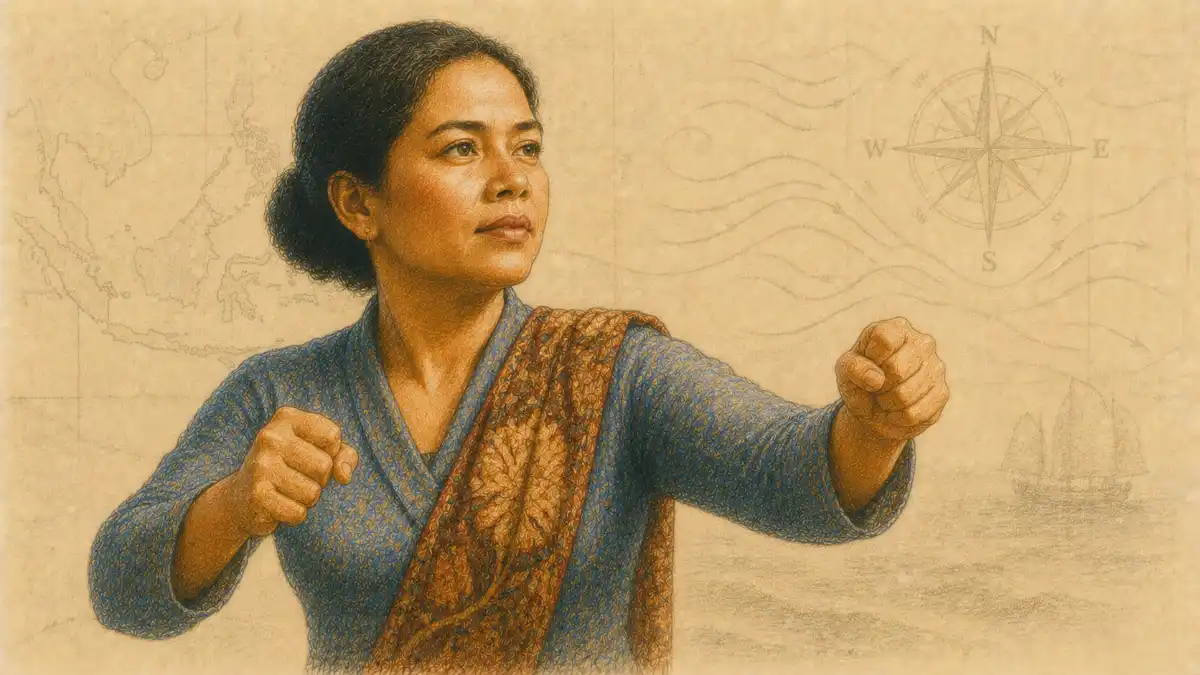
She is the wife of Iago and the attendant of Desdemona, the domestic figure whose presence in both households gives her access to the intimate dynamics of each while rendering her apparently invisible to both the partner she serves and the mistress she attends, the woman whose picking up of the dropped fabric provides the unwitting instrument through which her spouse’s deception acquires its central piece of manufactured evidence, the conversational partner whose exchanges with Desdemona in the willow song passage articulate the period’s most searching commentary on the double standards men apply to women, the attendant whose proximity to the bedchamber of her mistress creates the conditions under which the catastrophe can occur and who discovers the body in the immediate aftermath of the killing, the wife whose recognition of what her spouse has done transforms her from the unwitting accomplice of the earlier acts into the heroic veracity-teller of the closing passage, the figure whose insistence on speaking despite her spouse’s commands to be silent exposes the entire deception to the assembled authorities, and the woman who dies at her spouse’s hand for the speaking she has chosen to perform regardless of the cost. The trajectory from overlooked attendant to silenced wife to unwitting accomplice to heroic witness to murdered veracity-teller is one of the most carefully constructed arcs in the canon.

The argument this analysis advances is that Emilia is the figure whose worldly awareness of how men treat women provides the explicit articulation of the thematic concerns the play examines through dramatic action, whose functional relationship to Iago operates as the domestic background against which the destruction of the principal relationship is measured, whose participation in the handkerchief episode makes her the unwitting instrument of her spouse’s deception without her comprehending the purpose her participation serves, and whose eventual decision to speak the facts despite her spouse’s violent opposition produces the exposure that unravels the entire structure of deception while arriving too late to prevent the catastrophe her earlier participation had enabled. She is not the protagonist of the play, not one of the principal figures whose trajectories define its central arc, but the figure through whom the ethical reckoning of the closing acts becomes possible and the figure whose death extends the catastrophe the plot produced into the household that had produced the plot.
Within this framework, the dimension of belated speaking is what gives the character her singular thematic importance. Other figures in the play speak veracity that is ignored, manufacture lies that are believed, or remain silent in conditions where speech might have mattered. Emilia performs all three patterns across the work. She is ignored when she observes the realities of male behavior in her conversations with Desdemona. She participates in the manufactured lie when she delivers the handkerchief to her spouse without understanding its purpose. She remains silent when she could have inquired more deeply into the uses her spouse was making of the objects she was providing to him. Her eventual speaking in the closing scene reverses all three patterns simultaneously, converting the ignored observer into the authoritative witness, the unwitting accomplice into the destroyer of the lie, the silent accessory into the speaker whose words cost her her life.
The Architectural Function in the Tragedy
Beyond this point, the first feature to establish about Emilia is the precision of her structural placement. She appears in Cyprus scenes as the attendant of Desdemona, in the handkerchief scene of the third act as the wife who unwittingly procures the evidence her partner has requested, in the willow song scene of the fourth act as the conversational partner who articulates the ethical framework the play will eventually deploy, and in the bedchamber scene of the fifth act as the discoverer of the body and the eventual exposer of the plot. Each appearance is calibrated to a particular architectural function, with the character being positioned at each stage precisely where the larger tragedy requires her to be.
Considered closely, the second architectural feature involves the proportionality of her presence to her thematic weight. She has fewer extended speeches than the principal figures but more centrality to the ethical economy of the work than her appearance count might suggest. Her willow song conversation with Desdemona provides the explicit articulation of the gender politics the play depicts through its dramatic action. Her procurement of the handkerchief provides the mechanism through which the manufactured proof becomes possible. Her speaking in the closing scene provides the exposure that unravels the entire deception. Each of these contributions is essential to how the play operates, and the contributions exceed what her limited stage time might predict.
By implication, the third architectural function involves her role as the figure whose dual position in both households creates the particular conditions the play requires. She serves Desdemona as attendant and shares the domestic life of her mistress with the intimacy that attendant relationships produced in the period. She is married to Iago and shares the domestic life of her spouse with the intimacy that relationship produces. The dual position gives her access to both the senior household and the scheming household, making her the particular conduit through which materials from one can be transferred to the other. Her picking up of the handkerchief in Desdemona’s chamber and her delivery of it to Iago in the shared domestic space of the union is the architectural operation that dual position enables.
Critically, the fourth function involves her role as the commentator who articulates the framework within which the play’s gender politics should be understood. Her speech about how men treat women, delivered in the bedchamber scene before the killing, is one of the most searching statements of gender commentary in the canon. She argues that wives learn from husbands how to behave, that the double standard by which men judge women while practicing what they condemn is the foundational dishonesty of gender arrangements, that female infidelity is typically produced by the very male conduct that then complains about it. The articulation is significant because it provides the explicit framework that the dramatic action has been depicting implicitly throughout, with Emilia being the figure whose voice makes the implicit explicit.
Notably, the fifth architectural feature involves the temporal structure of her participation across the work. Her unwitting participation in the plot occurs in the third act. Her articulation of the ethical framework occurs in the fourth act. Her exposure of the plot occurs in the fifth act. The progression moves from unknowing complicity through framework articulation to heroic exposure, with each stage building on the previous. The temporal progression is one of the most carefully calibrated elements of the work, demonstrating that the figure who participates unwittingly in deception can become the figure whose eventual recognition produces the exposure of the deception she helped to enable.
In structural terms, the sixth function involves her role as the figure whose relationship to her spouse provides the domestic parallel to the principal relationship the play depicts. The union between Iago and Emilia is presented as functional but emotionally arid, a relationship in which the wife serves her spouse’s purposes without receiving the intimacy or recognition that the union might have been expected to provide. The parallel to the principal union is structural rather than moral: both marriages are interracial in the sense of crossing specific social categories, both involve a wife who serves her spouse’s situation with loyalty, both end with the spouse killing the wife. The structural parallel is part of how the play extends its examination of marital violence beyond the principal couple into the domestic household that produced the plot.
The seventh architectural function involves her role as the figure whose death completes the extension of the catastrophe beyond the principal marriage. Desdemona dies at Othello’s hand. Emilia dies at Iago’s hand. The parallel deaths establish that the plot has produced marital violence in both households simultaneously, that the domestic catastrophe is not contained within the union the plot targeted but extends into the union the plotr inhabits. The extension is part of the play’s broader argument that marital violence is a systemic rather than individual phenomenon, operating through the structures of gender hierarchy that the plot has exploited rather than through the specific psychology of any particular spouse.
The Attendant and the Household Service
Emilia’s position as attendant to Desdemona is the foundational element of her characterization and deserves close examination because the specific dynamics of the relationship between mistress and attendant shape every subsequent element of her trajectory. She is not a servant in the narrow sense of domestic labor; she is an attendant, a woman whose role includes the intimate companionship of the senior woman in addition to the practical services the household requires.
By design, the attendant relationship grants her access to the most intimate moments of Desdemona’s life while simultaneously creating the gap in social standing that renders her apparently invisible. She helps Desdemona dress, shares conversations about personal matters, handles the intimate objects of the bedchamber, witnesses the private interactions that members of the household conduct away from public view. Her intimate access produces the privileged knowledge of her mistress that no other figure possesses, while her subordinate position prevents the knowledge from being converted into the authority that might have protected her mistress from the danger the play depicts.
Within this framework, the relationship between Emilia and Desdemona is one of the more complex female relationships in the canon. They are not equals, given the difference in social standing. They are not strangers, given the intimate proximity their roles produce. They are not friends in the modern sense, given the hierarchical structure of their relationship. They are also not merely mistress and servant, given the genuine affection that develops between them across the work. The relationship operates in the space between these categories, drawing elements from each without being reducible to any.
Critically, the intimate knowledge Emilia acquires through her attendant role is one of the most significant elements of the structural setup for the play. She knows Desdemona’s habits, her preferences, her emotional responses, the patterns of her daily life. She knows the significance of particular objects in her mistress’s world. She knows the nature of the relationship between Desdemona and Othello from a position that no other figure except the principals themselves occupies. The knowledge is potentially protective of her mistress, but the protection requires that Emilia both perceive the dangers that develop and choose to act on her perception. The dual requirement is what the play complicates: she perceives some of the dangers but does not act on her perceptions until the catastrophe has already occurred.
By implication, the attendant position also shapes the quality of her observation. She watches her mistress with the attention that attendant work requires, noticing the small changes in mood and circumstance that the principal figures themselves may not fully register. She watches the union between Desdemona and Othello from a position of intimate proximity that allows her to perceive its deterioration with greater precision than the figures directly involved. The observational quality of her attention is one of her defining characteristics, and it is what will eventually produce the recognition that enables her exposure of the plot.
In structural terms, the attendant position also creates the specific form of the relationship between her and her husband that the play exploits. Iago has married a woman whose work places her in daily proximity to the senior couple whose relationship is the target of his deception. The position gives Iago access, through his wife, to the intimate materials of the household that he could not otherwise obtain. The handkerchief is the most concentrated example of this access, with the fabric being available to Iago only through the intimate proximity his wife’s position provides. The structural function of the union is therefore partly to provide this access, and the work raises without definitively answering the question of whether Iago married Emilia partly for the access the union would provide.
Read carefully, the attendant position also creates the specific vulnerability of Emilia’s position within the plot. Her intimacy with Desdemona gives her knowledge that could expose the plot if the knowledge were organized into the recognition of what is occurring. Her marriage to Iago gives her the obligation of wifely obedience that requires her to provide the materials he requests without the questioning that would have exposed the purposes. The vulnerability lies in the intersection: the same position that creates the knowledge also creates the obligation that prevents the knowledge from being deployed effectively. The intersection is what the work explores with particular precision.
The seventh aspect of the attendant position involves what it accomplishes for the audience’s perception of the domestic world the work depicts. The work is not merely the story of a senior couple whose marriage is destroyed by a schemer. It is the story of an entire household whose members are caught in the consequences of the plot. The attendant relationship is part of how the work establishes the household as the unit of catastrophe rather than merely the couple. By placing Emilia at the intersection of both marriages, the work ensures that the audience perceives the plot’s effects throughout the domestic structure rather than only at its center.
The Marriage to Iago and Its Dynamics
The union between Emilia and Iago is one of the most carefully constructed secondary relationships in the canon, and its dynamics deserve examination because the specific quality of the union provides the conditions under which Emilia’s participation in the plot and her eventual exposure of it become possible. The union is presented as functional but emotionally arid, operating through habitual obedience mixed with resentment rather than through the intimacy that marriage might have produced.
Through this device, the foundational element of the union is the power asymmetry that characterizes most marriages of the period. Iago is the husband whose authority over his wife is recognized by the social conventions of the period. Emilia is the wife whose obedience to her husband is the expected norm of the relationship. The asymmetry is not specific to this marriage; it is the structural condition of marriage in the period. What is specific to this marriage is the particular quality of Iago’s exercise of his authority and the particular quality of Emilia’s response to that exercise.
When examined, Iago’s treatment of his wife throughout the work is consistently dismissive. He refers to her in crude terms in his soliloquies. He speaks to her with the tone of a man who regards her as a subordinate rather than as a partner. He deploys her for his purposes without explaining those purposes to her. He treats her intimate knowledge of his schemes as something to be suppressed rather than as something to be shared. The dismissive treatment is consistent with the instrumental view of women that his other statements articulate, and it establishes that his marriage operates through the same exploitative framework that his other relationships display.
Functionally, Emilia’s response to this treatment is one of the more complex elements of her characterization. She obeys her husband’s requests, including the request to procure the handkerchief, without fully inquiring into his purposes. She accepts his dismissive treatment without direct challenge. She shares the domestic life of the union without apparent awareness that her husband has been conducting a sustained scheme against the senior couple whose household she attends. The pattern of obedient acceptance could be read as the internalization of the wifely obedience the period enforced, or it could be read as the resigned accommodation of a woman whose alternatives are limited. Either reading is supported by the text.
By design, the crucial question about the union is what Emilia knows about her husband and when she comes to know it. She appears to be unaware during the central acts that her husband is the architect of the deteriorating situation she is witnessing in the senior household. Her delivery of the handkerchief to him does not include the inquiry into his purposes that would have exposed the plot. Her observation of Othello’s deteriorating treatment of Desdemona does not produce the recognition that her husband might be responsible. The unawareness could reflect her husband’s exceptional skill at concealment, or it could reflect the conditions of the union that have trained her not to inquire too closely into his activities.
In structural terms, the marriage also establishes the specific conditions under which Emilia’s eventual recognition will occur. The recognition cannot come during the central acts because the conditions of the marriage prevent the inquiry that would produce it. The recognition must come in the closing acts when events themselves force the inquiry that the marriage had prevented. The timing of the recognition is therefore a function of the marital dynamics: it must be delayed until the external events override the internal prohibitions that the marriage has enforced.
Read carefully, the marriage also operates as the domestic parallel to the principal relationship the tragedy depicts. Both marriages involve husbands whose treatment of their wives reflects the instrumental view of women the period produced. Both marriages involve wives whose loyalty to their husbands persists under conditions that might have justified withdrawal. Both marriages end with the husband killing the wife. The parallels establish that the tragedy is not merely about the specific dynamics of the principal couple but about the broader patterns of gender relations within which both marriages operate. The systemic rather than individual nature of the gender violence is one of the work’s most searching arguments.
The seventh aspect of the marriage involves what it suggests about the relationship between domestic obedience and eventual moral action. Emilia’s obedient conduct during the central acts is what enables her participation in the plot. Her decision to speak in the closing scene is what produces the exposure. The two patterns are not contradictory; they are sequential, with the obedience being the default response that external events eventually override. The play suggests that habits of obedience can persist long past the point where continued obedience serves either the obedient party’s interests or the larger ethical situation, and that the override of habitual obedience requires events of sufficient magnitude to force the reassessment the obedient party could not perform independently.
The Handkerchief Episode
The picking up of the handkerchief and its delivery to Iago is the most structurally consequential act Emilia performs in the tragedy, and the episode deserves detailed examination because the specific dynamics of her participation reveal the conditions under which unwitting complicity operates. The handkerchief is dropped by Desdemona during the scene in which she attempts to bind Othello’s head during a moment of his distress. Emilia picks it up after the principals have departed, and her deliberation about what to do with it is one of the more revealing moments of her characterization.
By design, her deliberation reveals that she knows the handkerchief has significance to Desdemona as the first gift Othello gave her. She knows that Desdemona values the fabric and would want to preserve it. She also knows that Iago has repeatedly asked her to steal the handkerchief if she could, though she does not know what purpose he intends for it. The conflict between her loyalty to her mistress, who would want the handkerchief returned, and her obedience to her husband, who has asked her to provide it, is the specific ethical dilemma the episode presents. Her resolution of the dilemma in favor of her husband is the act that enables the plot to proceed.
Within this framework, her reasoning about the decision is significant for what it reveals about the dynamics of her marriage. She considers returning the handkerchief to Desdemona but observes that her husband has been so earnest in his requests that she will give it to him. She adds that she does not know what he will do with it, but that heaven knows, not she. The formulation is revealing. She is disclaiming responsibility for the use by declaring her ignorance of the purpose, but the disclaimer does not eliminate the fact of her participation. She is delivering the object while disclaiming knowledge of its function, a pattern that the tragedy presents as the specific mode of unwitting complicity that marital obedience can produce.
Critically, the delivery itself is accompanied by Iago’s characteristically dismissive response. He takes the handkerchief, commends her for having stolen it, and dismisses her when she begins to ask what he will do with it. The dismissal continues the pattern of the marriage throughout, with Iago refusing to share his purposes with his wife even when she is actively participating in them. The continuation of the pattern is what prevents Emilia from acquiring the knowledge that would have exposed the plot during the central acts.
By implication, the handkerchief episode also reveals the specific way that domestic intimacy provides access to the materials of manipulation. Iago does not steal the handkerchief himself; he cannot, because the fabric is in the private quarters where he does not have access. His wife’s position as attendant provides the access his position as husband cannot. The structural function of her procurement is therefore specific: she provides what he cannot obtain through his own position. The specificity is one of the work’s observations about how schemes operating against intimate relationships require intimate access, and how such access is often provided through the domestic figures whose positions place them in the intimate spaces the schemers cannot themselves enter.
In structural terms, the handkerchief episode also establishes the specific form of Emilia’s eventual recognition. When she recognizes in the bedchamber scene that the handkerchief on the floor is the one she delivered to her husband, the recognition is specifically of her own participation in what has been done. She is not merely learning that her husband has conducted a scheme; she is learning that she was an instrument of that scheme, that the fabric she delivered became the evidence that produced the killing she has just witnessed. The specificity of the recognition intensifies its impact, making her exposure of the scheme not merely the revelation of veracity but the reckoning with her own unwitting complicity.
Read carefully, the episode also raises questions about the ethical standing of unwitting participation. Emilia did not know what Iago would do with the handkerchief. She cannot be held responsible in the fullest sense for consequences she could not have foreseen. Yet she also did not inquire closely into his purposes, did not refuse to provide the handkerchief when he had so earnestly requested it, did not question the pattern of his behavior that might have revealed the purposes if she had examined it carefully. The play presents the tension between full innocence and complete responsibility without resolving it, with Emilia occupying the intermediate position of having contributed to the catastrophe without having intended it.
The seventh aspect of the handkerchief episode involves what it accomplishes for the structural development of her character. Before the episode, she is primarily the attendant and wife whose characterization is established through her relationships with Desdemona and Iago. After the episode, she is also the unwitting participant whose later recognition of her participation will transform her trajectory. The episode is therefore the pivot around which her characterization develops, with the earlier establishment of her relationships being the foundation and the later transformation through recognition being the consequence that the episode makes possible.
The Willow Song Scene and the Gender Commentary
The conversation between Emilia and Desdemona in the willow song scene is one of the most thematically significant exchanges in the canon, providing the explicit articulation of the gender politics the tragedy has been examining through dramatic action. The scene occurs in the bedchamber in the period before the catastrophe, with Emilia helping Desdemona prepare for bed while the two women discuss the nature of marriage, infidelity, and the double standards men apply to women.
Functionally, the exchange begins with Desdemona’s observation about her own incomprehension of female infidelity. She cannot imagine committing such an act, finds the idea beyond her capacity to understand. Her incomprehension reflects her unworldly innocence, the quality that has characterized her throughout the work. Emilia’s response moves the conversation in a different direction, acknowledging that she could imagine such an act under certain circumstances and offering an extended analysis of the conditions that produce female infidelity. The differential response between the two women establishes the contrast between unworldly innocence and worldly experience that the scene will develop across its length.
By design, Emilia’s extended speech articulates the ethical framework within which the tragedy should be understood. She argues that wives learn from husbands how to behave, that male conduct produces the female responses men then complain about, that the supposed differences between the sexes are the product of differential treatment rather than of different natures. The argument is one of the most searching statements of gender commentary in the canon, and it operates as the explicit articulation of concerns the tragedy has been depicting implicitly through its dramatic action.
Within this framework, the specific content of the argument deserves examination. Emilia observes that men sometimes strike their wives, sometimes restrict their expenditures, sometimes break out into peevish jealousies, sometimes scant the homage that has been owed, sometimes slack their duties in various ways. The catalogue of male conduct is comprehensive, covering multiple forms of mistreatment that the period tolerated within marriage. Her conclusion is that wives have sense like men, have affections, desires for sport, and frailty, and that when husbands behave as she has described, wives will respond accordingly. The symmetry the argument establishes is the foundation of the gender commentary: women are not fundamentally different from men, and differential conduct produces differential responses.
Critically, the timing of the speech is one of its most important features. It occurs in the period immediately before Emilia witnesses the catastrophe and before she speaks the facts that exposes the scheme. The speech therefore operates as the ethical preparation for the heroic action that will follow, articulating the framework within which the action becomes comprehensible. Emilia is not merely speaking about gender politics in the abstract; she is articulating the framework within which her own eventual action will be intelligible. The speech prepares the audience for the heroic speaking by establishing the ethical vision that motivates it.
By implication, the speech also reveals something about Emilia’s relationship to her own marriage. Her catalogue of male misconduct is not abstract; it reflects the observations of a woman who has lived with a husband whose treatment of her has included several of the forms of misconduct she describes. The extended experience of her own marriage is the foundation of the analysis, with the abstract generalizations being grounded in specific observations she has accumulated across years of marital experience. The personal dimension gives the speech its specific authority: Emilia is not speaking as an outside observer but as an experienced participant whose analysis is based on lived reality.
In structural terms, the speech also contrasts with Desdemona’s unworldly innocence in ways that illuminate both characters. Desdemona cannot imagine infidelity because her experience has not prepared her to imagine it. Emilia can imagine it because her experience has included the conditions that produce it. The contrast is not between virtue and vice, or between innocence and corruption, but between two different relationships to the realities of gender that the tragedy examines. Desdemona’s unworldliness is one of her qualities; Emilia’s worldliness is one of hers. Neither is simply admirable or deficient, and the tragedy uses the contrast to establish the complexity of female experience the work depicts.
Read carefully, the speech also anticipates the structural role Emilia will play in the closing scene. Her worldly awareness of male misconduct is what prepares her to recognize what her husband has done when the evidence of it becomes unavoidable. Her capacity to articulate the ethical framework within which such misconduct is to be judged is what enables her to speak the facts in ways that will produce the exposure. The willow song scene is therefore not merely thematic commentary but the structural preparation for the heroic action that will define her closing appearance.
The seventh aspect of the scene involves what it accomplishes for the audience’s understanding of the work’s broader concerns. By providing the explicit articulation of the gender politics the work has been examining, the scene ensures that the audience perceives the closing events within the framework Emilia has provided. The catastrophe that follows is not merely the destruction of a particular marriage; it is the extreme instance of the broader gender dynamics the scene has articulated. The broader framework extends the significance of the particular events, making the tragedy an examination of gender relations rather than merely the story of a specific couple.
The Bedchamber Discovery and the Exposure
The bedchamber scene of the fifth act is the moment when Emilia’s trajectory reaches its defining transformation. She enters the chamber after hearing disturbance and discovers Desdemona dying at Othello’s hand. Her response to the discovery, her insistence on speaking despite her husband’s commands, and her eventual exposure of the entire scheme constitute the closing arc of her character. The scene contains some of the most dramatically charged exchanges in the canon and deserves detailed examination.
Through this device, her initial response to the dying Desdemona is one of the most poignant moments in the tragedy. She rushes to her mistress, finds her barely alive, and hears her final words claiming responsibility for her own death. The response activates in Emilia the recognition that something extraordinary has occurred. She knows her mistress is incapable of the infidelity that the killing suggests it has punished. She knows the circumstances of the marriage well enough to understand that the situation that has produced the killing cannot have been what Othello believes it to have been. The recognition begins immediately and will accelerate across the subsequent exchanges.
When examined, her response to Othello’s justification of the killing is one of the most courageous exchanges in the canon. He tells her that Iago has revealed Desdemona’s infidelity with Cassio. She immediately declares that if he says so, he lies to his heart. The declaration is remarkable. She is contradicting her husband’s testimony to a man of senior military rank who has just committed a killing. She is risking the violent response that her contradiction might provoke. She is also speaking without any complete evidence of what has occurred, on the basis of her knowledge of Desdemona’s character and her intuitive sense that the situation cannot be what it has been represented to be. The declaration is the first moment at which her voice acquires the authority that will characterize the rest of the scene.
Functionally, as the other characters enter the chamber and the investigation of the killing begins, Emilia continues to speak despite increasingly urgent signs that her speech threatens her. Iago arrives and tries to silence her. She refuses to be silent, declaring that she will speak. Her insistence on speaking despite her husband’s explicit commands is one of the most heroic actions in the tragedy, representing the overthrow of the marital obedience that has governed her conduct throughout the work. The moment at which she declares she will speak is the moment at which she chooses fact over marriage, witness over silence, heroic action over habitual obedience.
By design, the content of her eventual revelation builds from the specific to the general. She first reveals her own role in the handkerchief episode, admitting that she gave the fabric to her husband without knowing the purpose he intended. The admission is itself heroic; she is exposing her own unwitting complicity in order to make the larger exposure possible. She then reveals what she now understands about her husband’s scheme, the manufactured proof, the sustained deception that has produced the catastrophe. Each revelation costs her something in terms of the social position she has maintained, and the cumulative cost is her life itself when Iago finally kills her to stop the flow of fact.
In structural terms, the exposure is also significant for what it accomplishes in terms of the work’s refusal to provide the false comfort of preventable catastrophe. Emilia’s revelation arrives after the killing has already occurred. It exposes the scheme but cannot undo the deaths it has produced. The timing is calibrated to demonstrate that the facts, once finally spoken, arrives too late to save the figure whose protection the facts would have required. The tragic pattern of late speaking is one of the work’s most powerful arguments about the cost of the systems of deception the scheme has exploited, and Emilia’s role in the pattern is what makes the argument visible.
Read carefully, the killing of Emilia by Iago is one of the most revealing acts of the closing sequence. He kills her to prevent the continuation of the exposure, demonstrating that the scheme’s architect is willing to destroy his own wife to protect what remains of the concealment. The killing is the most personal act of violence Iago performs in the tragedy. He has engineered the killing of Desdemona through Othello’s agency. He has arranged the wounding of Cassio through Roderigo’s agency. But he kills Emilia himself, with his own hand, in the presence of the assembled authorities. The directness is significant because it demonstrates the limits of the scheme’s capacity for concealment: when concealment through intermediaries becomes impossible, the schemer reverts to direct violence.
The seventh aspect of the exposure involves what Emilia’s dying moments accomplish. She calls for music, asks to be laid beside Desdemona, sings fragments of the willow song as her consciousness fades. The lyrical register returns in the closing moments, connecting her death to the earlier willow song scene in ways that establish the structural integrity of her trajectory across the work. She dies declaring the truth of her mistress’s innocence, extending into her final breath the heroic speaking that has characterized the scene. The combination of the lyrical return and the final declaration creates one of the most powerful closing images of any secondary character in the canon.
Performance History and Modern Interpretations
The performance history of Emilia across four centuries has produced interpretations of significant range, with each period finding in her different aspects to emphasize. The variations illuminate how shifting cultural assumptions about female agency, domestic service, and marital dynamics have shaped how the character has been understood.
When examined, the seventeenth and eighteenth centuries tended to present Emilia as a secondary figure whose primary function was to serve the dramatic needs of the principal tragedy. Productions from this period emphasized her role as attendant and as the instrument through which the handkerchief reaches Iago, with her closing speaking being presented as the structural mechanism for the resolution rather than as the heroic action it has come to be understood as. The willow song scene was sometimes abbreviated in performance, with the extended gender commentary being regarded as material that slowed the closing momentum.
Through this device, the nineteenth century began complicating this reading. Critics began noting that the willow song scene contains some of the most substantial gender commentary in the canon, that Emilia’s closing heroism is one of the most dramatically charged sequences in the work, that her trajectory across the tragedy is more carefully constructed than the secondary-figure reading had recognized. Productions began giving greater weight to her scenes, allowing the extended exchanges to operate with the fullness the text supports.
Functionally, the twentieth century transformed the interpretation through the increasing attention to gender politics that feminist criticism produced. Emilia was recognized as one of the most important female characters in the canon, a figure whose articulation of gender commentary and heroic speaking established her as a substantive presence rather than a secondary accessory. Productions began casting significant actresses in the role, recognizing that the character’s thematic weight required performance resources comparable to those given to the principal figures.
By implication, late twentieth and early twenty-first century productions have brought further range. Some productions have emphasized the heroism of her closing action, presenting her as the figure whose courage completes the ethical reckoning the tragedy requires. Other productions have emphasized her complicity in the handkerchief episode, exploring the tension between unwitting participation and eventual exposure. Other productions have engaged with the domestic dimensions of her marriage to Iago, presenting the relationship as the specific instance of the gender dynamics her willow song speech articulates.
Among these elements, particular productions have shaped how subsequent audiences understand her. Productions that cast older actresses tend to emphasize the accumulated worldly wisdom that her commentary reflects. Productions that cast younger actresses tend to emphasize the energy of her closing heroism. Productions that emphasize her relationship with Desdemona tend to treat the attendant bond as the emotional center of the character. Productions that emphasize her marriage to Iago tend to treat the marital dynamics as the central focus.
In structural terms, the staging of the willow song scene has become one of the most significant directorial choices in any production. The scene can be presented as an intimate domestic conversation between two women preparing for bed, or as a substantive ethical articulation that rises to the register of the work’s broader concerns. The staging choice shapes the audience’s understanding of what kind of figure Emilia is and how she functions within the larger work.
The seventh aspect of performance history involves the staging of the bedchamber exposure. The scene can be presented as the gradual unfolding of recognition and testimony, with Emilia’s heroism emerging through the progression. Or it can be presented as the sudden eruption of truth, with the heroism being concentrated in the decisive moment of speaking. Each staging produces a different experience of the character and of the work’s closing arc.
Why Emilia Still Matters Today
The continued cultural force of Emilia across four centuries suggests that the figure addresses concerns more permanent than the anxieties of any one period. What she embodies has not become obsolete because the conditions that make her story possible have not become obsolete. Women still inhabit positions of domestic service that grant intimate access while withholding social standing. Marital obedience still produces the conditions under which wives participate unwittingly in their husbands’ activities. The exposure of deception still often arrives too late to prevent the consequences. Women still pay with their lives for speaking honestlys their husbands prefer concealed.
Practically considered, the most distinctive aspect of her contemporary relevance involves the question of how individuals can be unwitting instruments of schemes they do not perceive. Her participation in the handkerchief episode represents the kind of unwitting complicity that obedient conduct can produce. The pattern is recognizable in many contemporary contexts where individuals discover that their conduct has been appropriated into schemes they had no awareness of while participating. The question of how to recognize when one’s conduct is being redirected into purposes one does not control, and how to protect against such redirection without becoming paralyzed by suspicion, remains as difficult to address as it was when the tragedy was composed.
In structural terms, her story also illuminates the dynamics of how habitual obedience can prevent the questioning that would expose schemes operating through the obedient party. Her failure to inquire closely into her husband’s purposes during the central acts reflects the conditions her marriage had established. The pattern is recognizable in many contemporary contexts where habitual deference to authority prevents the inquiry that would have exposed harmful conduct by the authorities. The question of how to maintain the capacity for critical inquiry within relationships that require loyalty remains one of the central ethical challenges of any context where institutional or personal loyalty is expected.
By design, her story also addresses the question of belated truth-telling. Her heroic action in the closing scene arrives after the catastrophe has already occurred. The pattern of truth emerging only after irreversible consequences have been produced is recognizable in many contemporary contexts, and her case provides one of the most concentrated treatments of the cost of late exposure. The play suggests that systems of deception can operate long enough to produce irreversible damage before the truth can emerge, and that the protection against such systems must be preventive rather than reactive.
The fourth dimension of contemporary relevance involves the question of what it costs to speak truth against the authorities who prefer concealment. Emilia dies for speaking. The cost is total. Her case is recognizable in many contemporary contexts where whistleblowers, witnesses, and truth-tellers pay significant costs for the revelations they make, with the costs sometimes including their lives. The question of how communities should protect truth-tellers, and how the cost of truth-telling should be distributed, remains one of the most important ethical questions in any context where powerful figures benefit from the concealment the truth-tellers threaten.
In every case, the fifth dimension involves the question of how gender dynamics shape the conditions under which truth is spoken and heard. Emilia’s willow song speech articulates how the gender hierarchies of the period produced the specific forms of mistreatment her catalogue describes. The hierarchies remain operative in modified forms in many contemporary contexts, with the specific mechanisms having shifted but the underlying dynamics persisting. Her case provides the material for engaging with contemporary questions about how gender shapes whose voices are heard and whose are silenced, and about how the silencing can be overcome through the kind of heroic speaking her closing action dramatizes.
By implication, the sixth dimension involves the question of how domestic relationships can operate as the infrastructure through which larger schemes are conducted. The marriage between Emilia and Iago provides the domestic access the scheme requires. The relationship between Emilia and Desdemona provides the intimate knowledge the scheme exploits. The domestic infrastructure of schemes is recognizable in many contemporary contexts where personal relationships provide the access and the materials that larger projects require. The question of how to protect domestic relationships from being weaponized in this way, and how to recognize when domestic intimacy is being exploited, remains as challenging as it was when the tragedy was composed.
The seventh dimension involves the work’s attention to the relationship between knowledge and power. Emilia possesses considerable knowledge throughout the work through her position as attendant and as wife of the schemer. The knowledge does not protect her mistress during the central acts because the conditions of the marriage prevent the knowledge from being deployed. The pattern of knowledge being possessed but not deployed is recognizable in many contemporary contexts where individuals possess information that could protect others but inhabit positions that prevent the deployment. The question of how to convert possessed knowledge into deployed knowledge, and what conditions are required for the conversion to occur, remains one of the most important structural questions in any context where information asymmetries create potential for both protection and harm.
Considered closely, the eighth dimension of contemporary relevance involves the question of how domestic relationships can be structured to enable or prevent the recognition of harmful patterns operating within them. The conditions of Emilia’s relationship to Iago actively prevented the closer inquiry that might have exposed his plot during the central acts. The pattern of relationships preventing the recognition of harm they contain is recognizable in many contemporary contexts where intimate partners, colleagues, and associates fail to recognize patterns that retrospective analysis reveals as having been detectable. The question of how relationships can be structured to support rather than prevent recognition remains among the most important questions in any context where such relationships are being formed and maintained.
From this angle, the ninth dimension involves the question of how loyalty to individuals can conflict with loyalty to principles, and how the conflict is resolved when the two loyalties pull in different directions. Emilia’s loyalty to her spouse during the central acts was the specific loyalty that prevented her earlier recognition of what was occurring. Her loyalty to the principle of speaking fact in the closing passage was the specific loyalty that produced the exposure. The conflict between the two loyalties was not resolved until external events forced the reassessment that the loyalty to her spouse had prevented. The pattern of competing loyalties requiring external events to force resolution is recognizable in many contemporary contexts where personal and principled loyalties conflict.
Beyond this, the tenth dimension involves the question of what heroic action looks like when it is performed by figures whose structural position would seem to preclude heroism. Emilia is a wife, an attendant, a woman of secondary social standing. Yet her closing action is one of the most heroic in the canon. The pattern of heroism emerging from structural positions that seem to preclude it is recognizable in many contemporary contexts where figures of secondary formal standing produce actions of primary ethical significance. The example her case provides demonstrates that heroic capacity does not depend on formal position, and that the opportunities for heroic action can emerge from positions that seem to offer only instrumental significance.
Challenging Conventional Wisdom About Emilia
Several conventional readings of Emilia have hardened into critical orthodoxy over the centuries, and each deserves examination because each contains assumptions the tragedy does not fully support.
The first conventional reading holds that Emilia is essentially a secondary figure whose primary function is structural rather than substantive, that she exists to provide the mechanism through which the handkerchief reaches Iago and through which the scheme is eventually exposed. The reading has had enormous influence and is supported by her limited stage time compared with the principal figures. Yet the reading flattens the substantive characterization the work actually provides. Her willow song speech, her relationship with Desdemona, her marital dynamics with Iago, her closing heroism, are each developed with the precision that substantive characterization requires. The reading that treats her function as merely structural misses what the work is actually doing with her.
Read carefully, the second conventional reading holds that Emilia’s participation in the handkerchief episode makes her morally complicit in the catastrophe, that her delivery of the fabric to her husband is the act that enables the destruction of Desdemona and therefore that she bears responsibility for the consequences. The reading has some support in the structural role the delivery plays. Yet the reading ignores the conditions under which the delivery occurred. She did not know what her husband would do with the handkerchief. She lacked the knowledge that would have made her participation informed. The complicity was unwitting, and the full responsibility the reading attributes treats the unwitting participant as if she had been the informed accomplice. The distinction between unwitting and informed participation is morally significant, and the reading that collapses them misses the distinction.
Among these elements, the third conventional reading holds that Emilia’s closing heroism is essentially a dramatic reversal that compensates for her earlier unwitting complicity, that the exposure of the scheme redeems her participation in enabling it. The reading has support in the structural parallelism between the participation and the exposure. Yet the reading understates what the exposure actually accomplishes. It does not merely redeem her participation; it establishes the ethical framework within which the entire catastrophe is to be understood, provides the evidence through which the scheme is exposed, and costs her her life. The exposure is not merely compensatory; it is substantively heroic, and the reading that treats it as compensation for earlier complicity understates its independent significance.
Functionally, the fourth conventional reading holds that the marriage between Emilia and Iago is essentially a functional arrangement that does not warrant the attention the work devotes to it, that the marriage serves only the structural purpose of providing the conditions under which the handkerchief can be procured. The reading has support in the functional quality of the marriage the tragedy depicts. Yet the reading ignores what the marriage contributes thematically. The parallel between this marriage and the principal marriage extends the work’s examination of gender dynamics beyond the central couple. The specific quality of Iago’s treatment of his wife grounds the more general observations her willow song speech articulates. The killing of Emilia by Iago extends the catastrophe into the schemer’s own household. The thematic contributions of the marriage are substantial, and the reading that treats it as merely functional misses them.
The fifth conventional reading holds that Emilia’s willow song speech is essentially a piece of generalized gender commentary that could have been delivered by any worldly woman of the period, that the specific connection to her own marital experience is less important than the general argument the speech articulates. The reading has support in the apparent generality of the argument. Yet the reading misses the specific authority the speech derives from being spoken by a woman whose own marriage has provided the experience the argument is grounded in. The connection between personal experience and general argument is part of what gives the speech its force, and the reading that treats the argument as merely abstract loses this connection.
A sixth conventional reading holds that Emilia’s failure to inquire more closely into her husband’s purposes during the central acts reflects a deficiency in her character, that a more discerning wife would have recognized what her husband was doing and would have intervened to prevent the catastrophe. The reading has some support in the retrospective clarity with which the audience perceives the scheme. Yet the reading applies retrospective clarity to a situation in which the figure involved did not have the same access to the larger pattern that the audience has. The reading also ignores the conditions of the marriage that actively discouraged the inquiry the reading faults her for not performing. The failure to inquire reflects the conditions of the marriage rather than a deficiency of character, and the reading that treats it as a character deficiency misattributes structural conditions to personal qualities.
A seventh conventional reading holds that Emilia’s heroism in the closing scene is the product of sudden transformation rather than of gradual development, that her capacity for heroic action emerges without sufficient preparation in her earlier appearances. The reading has some support in the apparent suddenness of the transformation. Yet the reading ignores how carefully the earlier appearances have prepared for the closing action. The willow song speech articulates the ethical framework the heroism will enact. Her observations about her mistress’s qualities establish the love that will motivate the exposure. Her worldly awareness of gender dynamics prepares her to recognize what has occurred when the evidence becomes available. The heroism is the culmination of careful preparation rather than sudden emergence, and the reading that treats it as sudden misses the preparatory work the tragedy has been conducting throughout.
Emilia Compared to Other Shakespearean Women
Placing Emilia alongside other major female characters in the Shakespearean canon clarifies what is distinctive about her case. The most obvious comparison is with Desdemona, the mistress whose attendant she is and whose death she witnesses. Both women die at the hands of their husbands in the closing acts of the same tragedy. Both are victims of the scheme Iago has conducted. Yet the quality of their participation differs decisively. Desdemona is the target of the scheme and dies innocent of any conduct that would justify the killing. Emilia is the unwitting instrument of the scheme and dies having just exposed the scheme through her heroic speaking. The comparison illuminates how two women in the same household can occupy different structural positions in relation to the same catastrophe.
A second comparison can be drawn with Lady Macbeth, whose partnership with her husband in criminal enterprise provides the contrast with Emilia’s unwitting participation in her husband’s scheme. Both women are wives whose conduct serves their husbands’ projects. Yet the knowledge is different. Lady Macbeth knows what her husband is doing and actively participates in the planning. Emilia does not know what her husband is doing and participates unwittingly in the execution. The comparison illuminates two different forms of wifely participation in destructive projects: the informed partnership and the unwitting instrumentality.
Yet a further third comparison involves Gertrude in Hamlet, whose contested remarriage is central to the parallel tragedy. Both Gertrude and Emilia are wives whose relationships with their husbands raise questions about what they knew and when. Yet the specific structures differ. Gertrude’s relationship with Claudius may or may not include awareness of her first husband’s murder, and the tragedy deliberately leaves the question unresolved. Emilia’s relationship with Iago involves specific acts of unwitting participation whose dynamics the tragedy depicts in detail. The comparison illuminates different ways that wifely relationships can be structured around questions of knowledge and complicity.
Notably, yet a further fourth comparison involves Ophelia in Hamlet, whose destruction is the parallel female tragedy of the parallel work. Both Emilia and Ophelia are deployed by male figures for purposes the women do not fully understand. Yet the deployments have different structures. Ophelia is deployed by her father in a specific scene calibrated to observe Hamlet. Emilia is deployed by her husband across an extended period through the handkerchief episode and the attendant position it enables. The comparison illuminates different forms of female deployment within male schemes.
Notably, yet a further fifth comparison involves Paulina in The Winter’s Tale, whose heroic truth-telling against Leontes provides the closest parallel to Emilia’s heroic truth-telling against Iago. Both women speak truth against male figures who prefer concealment. Both face threats for their speaking. Yet their outcomes differ. Paulina survives her heroic speaking and eventually participates in the restoration that the romance provides. Emilia dies for her speaking and the catastrophe she exposes cannot be reversed. The comparison illuminates how the same pattern of female truth-telling can produce different outcomes depending on the genre within which the pattern operates.
Yet a further sixth comparison involves Cordelia in King Lear, whose honest speaking against her father’s expectations produces her banishment and eventual death. Both Cordelia and Emilia are women whose honest speech comes at significant personal cost. Yet the timing differs. Cordelia speaks honestly at the beginning of her tragedy and suffers the consequences throughout. Emilia speaks honestly at the end of her tragedy and the consequences are concentrated in the final scene. The comparison illuminates how different placements of heroic speaking within a dramatic structure produce different effects.
A seventh comparison involves the various comic heroines including Beatrice, Rosalind, and Portia, whose intelligence and agency are deployed in service of the outcomes the comedies produce. Both Emilia and these comic heroines demonstrate intelligence and courage in their speaking. Yet the generic contexts differ decisively. The comic heroines operate in worlds where their qualities produce successful outcomes. Emilia operates in a tragic world where her qualities produce heroism at the cost of her life. The contrast illuminates how the same kinds of female qualities can produce radically different outcomes depending on the genre and the conditions within which the characters operate.
The Ethics of Late Truth-Telling
The relationship between belated truth-telling and ethical standing deserves closer examination than the tragedy itself supplies in any single passage, because the depth of this relationship is what gives Emilia’s trajectory its full weight. The work has been arguing throughout the central acts that truth withheld has consequences that truth spoken could have prevented. Her exposure arrives after the consequences have occurred, and the timing raises questions about what belated truth-telling accomplishes and what it cannot accomplish.
Among these elements, the first question is what the exposure accomplishes given that it cannot undo the deaths it follows. It establishes the truth about what has occurred. It prevents Iago from continuing to benefit from the scheme. It provides the record that will allow the institutional processing of the catastrophe to proceed with accurate information. It restores Desdemona’s reputation even though it cannot restore her life. Each of these accomplishments is real, and each is significant. Yet none of them restores what has been lost, and the tragedy presents the limits of belated truth-telling as honestly as it presents the heroism the speaking requires.
Once again, the question of what truth-telling can accomplish also depends on the timing within which it occurs. Truth spoken in time to prevent the catastrophe would have accomplished more than truth spoken after the catastrophe. The timing is not within Emilia’s control in any simple sense: she could not have spoken what she did not know, and her knowledge of her husband’s scheme did not become sufficient for exposure until the events of the bedchamber made the scheme’s operation visible. The timing is therefore partly a function of the scheme’s concealment and partly a function of Emilia’s specific position within the scheme. Her responsibility for the timing is limited by her knowledge, though the tragedy also suggests that closer inquiry earlier might have produced earlier knowledge.
By design, the tragedy also examines what belated truth-telling reveals about the conditions that prevented earlier speaking. Emilia could have inquired more closely into her husband’s purposes. She could have considered more carefully the pattern of his conduct. She could have shared her observations with her mistress or with other figures who might have acted on them. She did not perform any of these actions, and the failure reflects the conditions of obedient conduct her marriage had established. The belated truth-telling therefore also exposes the conditions that prevented the earlier speaking, with the heroic action of the closing scene being the reversal of patterns that had prevented the same action from occurring sooner.
In structural terms, the tragedy suggests that late truth-telling is better than no truth-telling even when it cannot undo the consequences it exposes. Emilia’s speaking costs her her life, but her death is not the result of having spoken; her death is the cost imposed by the schemer whose exposure her speaking has produced. The distinction is important because it frames her death as the price of truth-telling rather than as the consequence of failure to speak. The framing preserves the heroic quality of the action while acknowledging its cost, and the preservation is part of how the work maintains the ethical weight of belated truth-telling.
Read carefully, the tragedy also raises the question of what communities owe to belated truth-tellers. Emilia dies for speaking honestly that should have been supported rather than punished. The community that witnessed her death was the community that benefited from the exposure her speaking produced. The question of whether the community adequately honored her action, provided the protection her speaking warranted, acknowledged the heroism of what she did, is one the tragedy raises without fully answering. The closing scene pays attention to the deaths of Desdemona and Othello but devotes less space to Emilia’s death, and the differential attention itself is part of what the work is depicting.
By implication, the question of belated truth-telling also connects to the broader question of how systems of concealment can be disrupted. Emilia’s exposure is the specific event that disrupts the concealment Iago had maintained across the central acts. The disruption required a figure who had access to specific information (the handkerchief’s path), who possessed the ethical framework to recognize its significance (the willow song articulation), and who possessed the courage to speak despite the costs (the heroic action of the closing scene). The conjunction of access, framework, and courage is what produced the disruption. The conjunction is difficult to assemble, and its difficulty is part of why systems of concealment can operate as long as they do before being disrupted.
The seventh aspect of belated truth-telling involves what Emilia’s example offers to later figures facing similar choices. Her decision to speak despite her husband’s commands provides the model of how habitual obedience can be overridden when the stakes become sufficiently clear. Her articulation of what she knows provides the model of how personal observation can be converted into public testimony. Her willingness to accept the consequences of her speaking provides the model of how truth-telling can be sustained despite its costs. The example is not a guarantee that similar actions will produce similar outcomes in other contexts, but it is a demonstration that such actions are possible even under conditions that discourage them.
The Handkerchief as Extension of Her Unwitting Position
The handkerchief’s structural significance within Emilia’s trajectory deserves closer examination than the episode itself supplies, because the fabric operates as the concentrated expression of her unwitting position within the larger plot. She possesses, delivers, and later recognizes the handkerchief at different points across the work, with each stage of her relationship to the fabric corresponding to a stage of her relationship to the wider deception being conducted around her. The fabric is therefore not merely an object that passes through her hands; it is the material through which her trajectory is organized.
Within this framework, the possession of the fabric after Desdemona has dropped it represents the moment at which unwitting instrumentality becomes available to Emilia as a choice. She has not stolen the handkerchief; her mistress has dropped it and left the chamber. The possession is therefore accidental rather than engineered by her own action. The accident places her in the position of choosing what to do with an object she has not actively acquired, and the choice she makes converts the accident into the specific participation her husband’s plot requires.
Once again, the delivery to her husband represents the moment at which marital obedience overrides the loyalty to her mistress that the possession had made available as an alternative. She could have returned the fabric to Desdemona. She could have kept it herself, preserving the option of returning it later when the opportunity presented itself. She could have inquired more closely into her husband’s purposes before delivering it. She did none of these. The delivery is the specific act through which marital obedience was enacted over the alternative loyalties available to her, and the specificity is what makes the act so structurally consequential.
Critically, the subsequent absence of the fabric from her direct awareness during the central acts represents the period in which her unwitting position is actively maintained by her husband. She has delivered the handkerchief and does not know where it has gone or what has been done with it. The absence of knowledge is not accidental; it reflects Iago’s deliberate refusal to share his purposes with her. The period during which she does not know where the fabric is or what it is being used for is the period during which the scheme is being executed through the object she has provided without her having any awareness that the execution is occurring.
By design, the recognition of the fabric on the bedchamber floor in the closing passage reverses the structure of the entire trajectory. She sees the handkerchief, recognizes it as the fabric she delivered, and in that moment of recognition the entire pattern of her unwitting participation becomes visible. The recognition is specific and concrete rather than abstract. She is not recognizing a general principle about her husband’s nature; she is recognizing her own contribution to the specific catastrophe that has just occurred. The specificity of the recognition is what converts the knowledge into the motivation for the heroic speaking that follows.
In structural terms, the handkerchief also functions as the material vehicle through which the scheme’s operation becomes visible to those who have been its targets. Othello recognizes the fabric as the gift he gave Desdemona and accepts its presence in Cassio’s possession as proof of infidelity. When the handkerchief appears on the bedchamber floor and Emilia provides the history of its movements, the proof that convinced Othello is revealed to have been the product of unwitting participation rather than of actual infidelity. The same object that sealed the conviction now unseals it, with Emilia’s testimony being the specific mechanism through which the unsealing occurs.
Read carefully, the handkerchief’s trajectory through multiple hands also illustrates the structural pattern of how objects can carry information across households and relationships in ways that the figures handling them do not fully perceive. The fabric passes from Othello to Desdemona as a gift of devotion, from Desdemona to the floor through accidental dropping, from the floor to Emilia through her picking it up, from Emilia to Iago through marital obedience, from Iago to Cassio’s lodging through deliberate planting, from Cassio to Bianca through casual delegation of embroidery copying, and finally to the bedchamber floor in the closing scene through the collapsing of the scheme. Each transfer of the object carries a different meaning, and the accumulation of meanings is what makes the object such an effective vehicle for the scheme’s operation.
The seventh aspect of the handkerchief’s significance within Emilia’s trajectory involves what it reveals about how the same object can operate differently depending on the knowledge of the figures handling it. For Othello, the handkerchief is the sacred token of marital devotion whose passage to another man constitutes the proof of betrayal. For Iago, it is the manufactured evidence whose deployment is the culmination of his executive phase. For Cassio, it is an unfamiliar fabric he gives to Bianca without understanding its significance. For Emilia, during the central acts, it is simply the object her husband had requested; in the closing passage, it is the evidence of her own unwitting contribution to the catastrophe. The differential meanings demonstrate how objects become vehicles for meanings assigned by the figures handling them rather than carrying meanings inherent in themselves, and how the differential assignment can be exploited by figures who understand how to manipulate the assignment.
The Final Significance of Emilia’s Trajectory
The closing question that Emilia forces the audience to confront is what her trajectory finally signifies. She has moved from the overlooked attendant of the early acts through the unwitting participant in the handkerchief episode to the worldly commentator of the willow song scene to the heroic truth-teller of the closing exposure to the murdered witness whose death extends the catastrophe into the schemer’s own household. What does the audience take away from this trajectory?
By design, the most basic lesson is the demonstration that heroic action is possible even for figures who have participated unwittingly in the situations they eventually expose. Her trajectory is not from compromised to innocent; it is from unwitting participation to heroic exposure, with the two conditions being sequentially related rather than mutually exclusive. The lesson is significant for any context where individuals discover that their earlier conduct has contributed to situations they now recognize as harmful, and where the question is whether the earlier participation disqualifies them from later heroic action.
In structural terms, a second lesson involves the relationship between knowledge and ethical action. Emilia possessed significant knowledge throughout the work but did not deploy it until specific events forced the deployment. The lesson is that knowledge alone is insufficient for ethical action; the knowledge must be converted into the recognition that action is required, and the recognition must be converted into the decision to act despite the costs. Each conversion requires specific conditions, and the conversions do not occur automatically even in figures whose knowledge would seem to demand them.
Read carefully, a third lesson involves the cost of speaking honestly against authorities who prefer concealment. Her death is the ultimate cost, and the tragedy does not soften the cost through any redemptive framework that would make the death less total. The lesson is that truth-telling under such conditions is genuinely dangerous, that the costs cannot be eliminated through any conceptual maneuver, and that the decision to speak despite the costs is therefore a decision of genuine moral weight rather than a choice that can be made without serious consequence.
Beyond doubt, a fourth lesson involves the relationship between marital dynamics and ethical agency. Her marriage to Iago established the conditions under which she participated unwittingly in his scheme. The decision to speak in the closing scene required the reversal of the habitual obedience the marriage had produced. The lesson is that the conditions of intimate relationships can shape ethical agency in ways that make heroic action difficult, and that the difficulty must be overcome by events of sufficient magnitude to force the reversal that the relationship itself discourages.
Throughout these sequences, a fifth lesson involves the articulation of ethical frameworks through the speech of figures whose social position does not automatically grant them authority. Emilia is not a senator, not a commander, not a principal figure in the play’s hierarchy. Yet her willow song speech articulates one of the most searching pieces of gender commentary in the canon. The lesson is that ethical authority does not depend on formal position, and that the voices of figures whose positions would seem to preclude authoritative speech can produce articulations of greater substance than many speeches by figures of higher formal standing.
Critically, a sixth lesson involves the play’s refusal to restore what has been lost through the truth-telling that exposes the loss. Her exposure does not bring back Desdemona. Her death does not compensate for Desdemona’s death. The losses accumulate rather than being balanced, with each death being a separate and irreversible fact that the subsequent events do not undo. The lesson is that some losses cannot be compensated, that the accumulation of loss is the honest register of catastrophic events, and that communities that try to offer consolation by suggesting otherwise are engaging in a form of dishonesty that the tragedy refuses.
The seventh and final lesson involves the combination of costs and accomplishments that Emilia’s trajectory produces. She contributes unwittingly to the scheme in the central acts. She articulates the ethical framework in the fourth act. She exposes the scheme in the fifth act. She dies for the exposure. Each element of the trajectory is real and must be acknowledged. The audience leaves the tragedy with the awareness that this combination of unwitting complicity, heroic articulation, courageous exposure, and cost-bearing death constitutes the full arc of a figure whose significance cannot be captured by any single element of the combination. The awareness of full arc is the closing statement of her trajectory, and the combination is what gives her characterization its lasting weight in the canon.
For additional analysis of related figures in the Othello sequence, see our studies of Othello, whose destruction Emilia’s exposure addresses, Iago, whose scheme her truth-telling exposes, Desdemona, whose death her speaking attempts to explain and redeem, and Cassio, whose unwitting instrumentality provides the male parallel to her female unwitting participation. For comparisons with female figures in the parallel sequences, see our studies of Gertrude, whose contested remarriage provides the comparison of wifely complicity, Ophelia, whose deployment provides the female parallel of unwitting instrumentality, and Lady Macbeth, whose informed partnership provides the contrast with Emilia’s unwitting participation.
Frequently Asked Questions
Q: Who is Emilia and what is her role in Othello?
Emilia is the wife of Iago and the attendant of Desdemona, the domestic figure whose position in both households gives her access to the intimate dynamics of each. She provides the unwitting instrument through which the handkerchief reaches Iago, delivers the extended gender commentary of the willow song scene, and eventually exposes the entire scheme in the closing scene at the cost of her life. Her trajectory from overlooked attendant through unwitting participant to heroic truth-teller to murdered witness constitutes one of the most carefully constructed arcs among the secondary figures in the canon.
Q: What is the significance of the handkerchief episode?
Emilia picks up the handkerchief after Desdemona accidentally drops it and delivers the fabric to her husband, who has repeatedly asked her to steal it if she could. The delivery is unwitting in the sense that she does not know what Iago will do with the fabric, but it is the specific act that provides her husband with the central piece of manufactured evidence for his scheme. The episode represents the specific form of unwitting complicity that marital obedience can produce, with the wife participating in her husband’s scheme without comprehending the purpose her participation serves.
Q: What does the willow song scene accomplish?
The willow song scene provides the explicit articulation of the gender politics the tragedy has been examining through its dramatic action. Emilia’s extended speech about how men treat women, her catalogue of male misconduct, and her argument that differential conduct produces differential responses constitute one of the most searching statements of gender commentary in the canon. The scene operates as the ethical preparation for her heroic action in the closing scene, establishing the framework within which the exposure will be intelligible.
Q: How does Emilia expose Iago’s scheme?
In the bedchamber scene of the fifth act, Emilia arrives to find Desdemona dying and hears Othello’s justification of the killing based on Iago’s accusations. She immediately declares that Iago has lied. As the other characters enter and the investigation begins, she reveals her own role in the handkerchief episode and what she now understands about her husband’s scheme. Her insistence on speaking despite Iago’s commands to be silent is one of the most heroic actions in the tragedy, producing the exposure that unravels the entire structure of deception.
Q: Why does Iago kill Emilia?
Iago kills Emilia to prevent her continued exposure of his scheme. The killing is the most personal act of violence he performs in the tragedy, demonstrating that he is willing to destroy his own wife to protect what remains of the concealment. The killing is the direct consequence of her decision to speak despite his commands, and it represents the cost of her heroic truth-telling. The directness of the killing also demonstrates the limits of the scheme’s capacity for concealment through intermediaries: when exposure becomes unavoidable, the schemer reverts to direct violence.
Q: What is the nature of Emilia’s marriage to Iago?
The marriage is presented as functional but emotionally arid, operating through habitual obedience mixed with resentment rather than through the intimacy marriage might have produced. Iago’s treatment of his wife is consistently dismissive throughout the work. Emilia’s response combines obedience to his requests with the accumulated awareness of male misconduct that her willow song speech articulates. The marriage provides the domestic parallel to the principal marriage the tragedy depicts, with both marriages involving husbands whose treatment of their wives reflects the instrumental view of women the period produced.
Q: Is Emilia responsible for any part of the catastrophe?
The question is morally complex. Her delivery of the handkerchief to Iago was the specific act that enabled the manufactured evidence. Yet her participation was unwitting, conducted without knowledge of what her husband intended. The tragedy presents the tension between unwitting participation and contributory conduct without resolving it into a simple assignment of responsibility. Her later exposure of the scheme addresses her earlier participation by producing the truth that her participation had enabled the concealment of, but the addressing does not eliminate the fact of her earlier contribution.
Q: What does Emilia’s willow song commentary reveal?
Her commentary articulates the ethical framework within which the tragedy should be understood. She argues that wives learn from husbands how to behave, that male conduct produces the female responses men then complain about, that differential treatment produces differential responses rather than reflecting differential natures. The commentary is one of the most searching statements of gender politics in the canon, and it operates as the explicit articulation of the concerns the work has been depicting implicitly throughout.
Q: How has Emilia been interpreted across four centuries?
The interpretation has shifted from secondary-figure readings in earlier centuries that treated her primarily as a structural mechanism, through more substantive readings that recognized her characterization as carefully constructed, to contemporary readings that emphasize her heroism and the gender commentary of the willow song scene. Feminist criticism has been particularly important in establishing her significance as one of the major female characters in the canon, with her articulation of gender dynamics and her heroic truth-telling being recognized as substantive contributions rather than merely supporting elements.
Q: What is the parallel between Emilia and Desdemona?
Both women die at the hands of their husbands in the closing acts of the same tragedy. Both are victims of the scheme Iago has conducted. Both are wives whose relationships with their husbands end in marital violence. Yet the quality of their participation in the scheme differs decisively: Desdemona is the target of the scheme and dies innocent of any conduct that would justify the killing, while Emilia is the unwitting instrument of the scheme and dies having just exposed it through heroic speaking. The parallel extends the play’s examination of marital violence into both households while distinguishing the specific roles the two women play.
Q: Why does Emilia obey Iago during the central acts?
Her obedience reflects the conditions of the marriage she inhabits and the social conventions of wifely conduct the period enforced. The marriage operates through power asymmetry that her husband exercises with consistent dismissiveness. The social conventions treat wifely obedience as the expected norm of the relationship. Her obedience is therefore the default response the conditions produce rather than a specific decision requiring justification. The decision to override the obedience comes in the closing scene when external events force the reversal the conditions had prevented.
Q: What does Emilia’s death contribute to the tragedy?
Her death extends the catastrophe beyond the principal marriage into the household of the schemer, establishing that the scheme has produced marital violence in both households simultaneously. The death demonstrates the cost of truth-telling under conditions where the truth exposed powerful figures who prefer concealment. The death also completes her trajectory from unwitting participant to heroic exposer, with the cost of the exposure being the ultimate measure of the courage the speaking required. The death is not compensated by anything in the tragedy’s closing resolution, reflecting the work’s refusal to soften the costs of the catastrophe through false consolation.
Q: How does Emilia compare to other Shakespearean wives?
She differs from other Shakespearean wives in the specific combination of unwitting complicity and heroic truth-telling her trajectory includes. Unlike Lady Macbeth, who knows what her husband does and actively participates, Emilia does not know until the closing scene. Unlike Gertrude, whose knowledge remains ambiguous throughout, Emilia’s knowledge is specifically structured around particular acts of participation and recognition. Unlike Desdemona, who dies innocent of any participation in the scheme that destroys her, Emilia dies having participated unwittingly and then having exposed what she participated in.
Q: What does Emilia reveal about gender politics in the period?
Her trajectory reveals how the gender hierarchies of the period produced specific conditions under which women participated in their husbands’ schemes, articulated ethical frameworks that their position discouraged them from deploying, and faced violence from the husbands whose concealment their speaking threatened. The willow song speech provides the explicit articulation of these dynamics. The trajectory as a whole demonstrates how the dynamics operated in practice, with the unwitting complicity of the central acts and the heroic truth-telling of the closing scene being the specific forms her engagement with the dynamics produced.
Q: What is the significance of Emilia’s relationship with Desdemona?
The relationship is one of the most complex female relationships in the canon, operating in the space between mistress-servant, friendship, and intimate companionship. Emilia’s attendant position grants her intimate access to Desdemona’s life while the social hierarchy between them prevents the access from being converted into authority that might have protected her mistress. The genuine affection between the two women is demonstrated through their willow song exchange and through Emilia’s heroic defense of Desdemona’s reputation in the closing scene. The relationship provides the emotional foundation for the truth-telling that exposes the scheme.
Q: Why does Emilia still matter today?
Her continued cultural force suggests she addresses permanent concerns. The dynamics of unwitting complicity through obedient conduct remain recognizable in contemporary contexts. The cost of speaking honestly against authorities who prefer concealment continues to be paid by whistleblowers and witnesses in various institutional settings. The gender dynamics her willow song speech articulates remain operative in modified forms. The questions about how to protect truth-tellers, how to recognize unwitting participation while it is occurring, and how to convert possessed knowledge into deployed knowledge remain among the central ethical questions of any context where information asymmetries create potential for both protection and harm.
Q: What is the final significance of Emilia’s trajectory?
Her trajectory demonstrates that heroic action is possible for figures who have participated unwittingly in the situations they eventually expose, that knowledge alone is insufficient for ethical action without the conditions that convert knowledge into decision, that truth-telling against powerful figures genuinely costs what it costs rather than being redeemable through conceptual maneuver, that marital dynamics shape ethical agency in ways that require external events to override, that ethical authority does not depend on formal position, that some losses accumulate rather than being compensated, and that the full arc of a figure whose significance combines unwitting complicity with heroic exposure cannot be captured by any single element. The tragedy uses her trajectory to examine how figures of her structural position can nevertheless produce substantive ethical action at the cost the action requires. The audience leaves the work with the awareness that the catastrophe has produced more casualties than the principal deaths the closing sequence foregrounds, that Emilia’s death in the margins of the concluding commotion deserves the attention the principal deaths receive, and that communities processing such catastrophes must resist the tendency to distribute attention according to hierarchies of formal standing rather than according to the substantive ethical contributions the various figures have made. The tendency to foreground the principal deaths at the expense of the secondary ones is recognizable in many contemporary contexts where catastrophes involve multiple casualties of different formal standing, and the work’s careful attention to Emilia’s death provides a model of the attention such secondary casualties deserve when their contributions to the exposure of the catastrophe have been substantive rather than merely incidental.
You can explore character relationships and analysis tools for the entire Shakespearean canon at the Shakespeare Character Explorer, which provides systematic comparison of dramatic figures across the major plays. For deeper study of female characters across the tragedies, the Shakespeare Character Explorer also offers thematic clustering by structural position, ethical trajectory, and dramatic function.