
Introduction: The Girl Who Cried in the Corridor
There is a moment near the start of Order of the Phoenix when a fifteen-year-old girl approaches the boy she has begun to like and finds that she cannot speak without crying. The boy, who is also fifteen, panics, says the wrong thing, and walks away. Most readers remember this moment as the start of a doomed flirtation. Almost no one remembers it as what it actually is: a child whose first boyfriend was murdered three months earlier, trying to ask the only living witness whether the dying was quick. The witness, also a child, has no language for the conversation she is trying to have. He does not understand that her tears are not a complaint. He hears them as a problem he is being asked to solve, and he does not know how, and so he flees.
This is the Ravenclaw Seeker’s narrative. It is also a narrative about how a story can lose track of its own character. Across the fourth, fifth, and sixth books of the series, J.K. Rowling builds a fascinating and difficult portrait of a teenage girl in the early acute stages of grief, and then asks the reader to find that portrait exhausting, irritating, and ultimately disposable. The text shows one thing. The narrative voice tells another. The gap between them is where this Asian-British witch lives, unrescued by either.
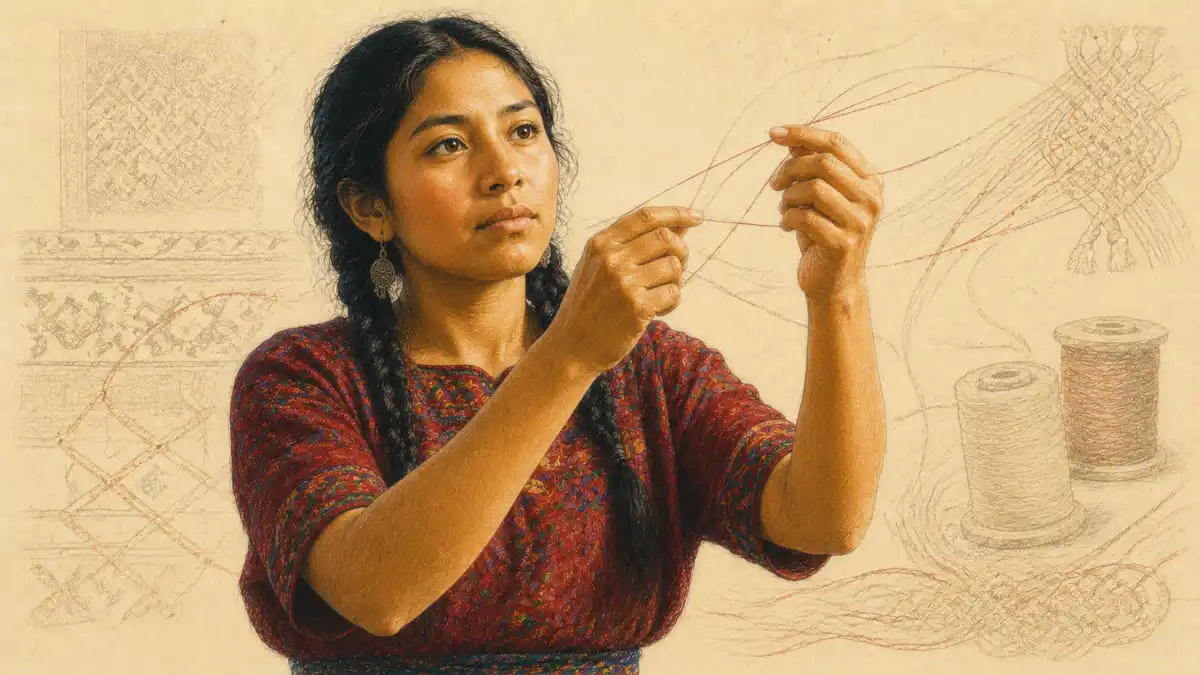
To read her seriously is to read against the grain of her own book. It is to insist that her tears are appropriate, that her loyalty to Marietta is admirable, that her question about Cedric’s death is the most important question anyone asks Harry in Order of the Phoenix, and that the disastrous date at Madam Puddifoot’s is not the proof of her unsuitability but the proof of how cruel the framework around her has become. She is the character whose treatment exposes the limits of the romantic plot the books are running. She is also, almost certainly, the most unfairly written major teenage girl in the series, and her reclamation requires the reader to do something the text resists: to take a grieving Asian-British girl seriously as the protagonist of her own ongoing tragedy rather than as a way station on the way to the right relationship.
What follows is an attempt at that reclamation. It is also an attempt to read what is actually on the page, including what the author did not seem to know she was writing.
Origin and First Impression
The Ravenclaw Seeker enters the series almost as a Quidditch fact. She is the player who flies against Harry in Prisoner of Azkaban, and the moment Harry first sees her on the pitch his concentration breaks. She is, in the language the books use about her almost without variation across seven volumes, pretty. The narrative repeats this descriptor often enough that it begins to feel less like observation and more like a label fixed to her in place of a character. She is the pretty Ravenclaw. She is the pretty older girl Harry has a crush on. She is the pretty girl Cedric Diggory takes to the Yule Ball.
The first instinct of any careful reading is to notice how little of the character actually appears on the page during her introduction. The reader meets her through Harry’s distracted attention, which is the attention of a thirteen-year-old whose hormonal awareness is brand new. He sees that she is pretty, that she flies well, that she is on a different House team, and that she is older than him. He does not see her interests, her friendships, her family, her academic preferences, her religious or cultural background, her ambitions beyond Quidditch, or her sense of humour. He sees the surface. The text, at this stage, does not press past the surface either.
But the surface itself carries an enormous amount of information that the narrative declines to read. The young witch is Asian-British. She is one of the very few East Asian characters given a named role in the series, and the only one given a romantic subplot with the protagonist. Her surname can be read as Korean; her given name reads as Chinese; the linguistic mismatch is itself a kind of evidence about how carefully or carelessly the cultural specifics were considered. She is, in the visual imagination of the books, a beautiful Asian girl in a school populated overwhelmingly by white British children. The first impression Harry forms of her is overwhelmingly about her appearance, and the appearance is racialised even when the narration does not name it.
This matters analytically because the framework that surrounds her in Goblet of Fire and Order of the Phoenix tends to treat her as a romantic obstacle that Harry must encounter and dismiss on his way to the correct partner. The dismissal happens without the text reckoning with the fact that the obstacle is the only major Asian character in the romantic plot. The kind of layered reading required to see this is the same close attention to pattern that distinguishes surface readers from deep readers, the sort of vigilance for what gets repeated and what gets omitted that tools like the ReportMedic SAT Preparation Guide build systematically for verbal reasoning, training the reader to notice not only what a passage says but what its silences imply.
What the first impression establishes, then, is a character who arrives in the story already framed as decorative. The plot will eventually grant her interiority, but only briefly, and the interiority granted will be the kind the protagonist finds inconvenient. The arc from first impression to last appearance is the arc of a girl whom the books look at without quite seeing.
The Arc Across Seven Books
Sorcerer’s Stone and Chamber of Secrets: The Absence
The Ravenclaw Seeker is not in the first two books. This absence is worth naming because it shapes how the reader understands her later. The girl who will become Harry’s first romantic relationship is not part of the foundational years at Hogwarts. She enters the series as an upper-year student already, fully formed in her external presentation, and the reader never sees her as a first-year, never sees her in the years before she had any awareness of Harry. The series will never grant her the developmental backstage the protagonist receives in abundance. Her formative years are pre-text. The girl arrives already shaped, and the shape is the shape of the protagonist’s looking, not of her own becoming.
Prisoner of Azkaban: The Crush Established
She appears first as competition on a broomstick. The Quidditch match between Gryffindor and Ravenclaw is the textual context for her introduction, and Harry’s distracted reaction is the narrative interest. She plays well, she flies competently against a Seeker who has been the centerpiece of the series so far, and her presence as an opponent generates the first inkling that Harry is not entirely sealed off from the romantic dimension of adolescent life. He is thirteen. She is fourteen. The age difference at this stage is meaningful: she is in the year above him, which gives her a small but persistent social authority that will continue to inflect their interactions for the rest of her time in the series.
What is striking about the Prisoner of Azkaban introduction is how thoroughly it is filtered through the protagonist’s perception rather than through any developed sense of the Ravenclaw witch herself. The reader learns that she is pretty and that she plays Seeker. The reader does not learn what year she is in (this has to be inferred), what her academic standing is, who her friends are, or anything about her family. The book is, of course, busy with other plots. The introduction of a love interest in passing is a minor note. But the structure of that minor note matters: she is established as an attractive surface before she is established as a person, and that imbalance will not be corrected.
This is also where the reader first encounters the Dementor-on-the-pitch scene, which incapacitates Harry mid-match. The scene functions in the narrative as a moment of Harry’s vulnerability, and the Ravenclaw Seeker is incidental to it. But the close reader can note something the text does not press: she is on her broom watching the boy she has noticed collapse from psychic trauma in front of her, and her response is not recorded. The text treats her, here as elsewhere, as scenery for Harry’s developmental events.
Goblet of Fire: The Triangle and the Death
Goblet of Fire is the book in which the Ravenclaw witch’s status as a person with her own romantic life becomes legible to Harry, and the recognition is painful for him. Cedric Diggory, the Hufflepuff Quidditch captain and Triwizard champion, asks her to the Yule Ball before Harry can summon the courage to ask her. The narrative treats this moment as a setback for Harry: he wanted the girl, and another boy got there first. The narrative does not treat it as a beginning for her: she has been asked out, she has said yes, and she is, for at least some part of the school year, presumably happy. The book is not interested in her happiness. It is interested in Harry’s disappointment.
The Yule Ball itself becomes the staging ground for one of the more revealing moments in Harry’s adolescent characterization. He spends the evening miserable because she is dancing with Cedric. He pays so little attention to his own date, Parvati Patil, that she eventually finds someone else to dance with. The reader is meant, here, to identify with Harry’s disappointment and to register the Ravenclaw witch as the unattainable object of legitimate teenage longing. But the structural reading is unkinder to Harry: he is so absorbed in his own thwarted desire that he cannot see Parvati as a person, and the same pattern of perception will repeat with the older girl once she becomes available. He wants the girl from a distance; the girl up close he does not know what to do with.
Between the Yule Ball and the second task, Rita Skeeter publishes the Witch Weekly article that paints the Ravenclaw fourth year as a calculating heartbreaker stringing along both Harry and Cedric. The article is a fabrication, written for entertainment, published in a magazine read across the wizarding world by people who have no reason to doubt its truth. The older girl is publicly humiliated by a piece of journalism that invents her interiority for the convenience of a tabloid narrative. The book treats this episode as an inconvenience for Harry, who is the article’s true target. The book does not register what it must be like, at fourteen, to be described in print across the country as a romantic manipulator when the entirety of one’s romantic life consists of having said yes to one boy who asked nicely. Hermione later confronts Rita and ends the column. No one apologises to the Ravenclaw witch. No correction is ever issued. The slander stands in the public record of the wizarding world, and the book does not consider this an injury worth examining.
The second task brings another quiet structural injury. The merpeople take the thing each champion would most miss, and what Cedric would most miss is, the lake reveals, the Ravenclaw Seeker. She is dragged underwater to be the object of his rescue. The scene is treated, narratively, as a confirmation of the seriousness of the Cedric and Cho pairing, which is useful for the romantic geometry of the book, but it also makes her into a passive object of male feeling at the precise moment when her boyfriend is being tested for valour. She is not given a similar tournament moment of her own. The book has no structure in which her interiority could be measured. She exists, in the tournament chapters, as a thing that two boys care about.
By the third task, the romantic plot of the book is fixed: she is Cedric’s, Harry is heartbroken in a distant adolescent way, the older Ravenclaw is presumably in the stands watching her boyfriend enter the maze. The book gives her no scene during the wait. She is offstage when the cup is touched. She is offstage when the cup returns. She is offstage when Harry collapses on the lawn with a body. Then Cedric dies. The death scene is the climax of Goblet of Fire and one of the most consequential moments in the series. Voldemort returns. The Hufflepuff champion is murdered by Wormtail on Voldemort’s order. Harry escapes. The body is brought back to the Hogwarts grounds with the cup, and Harry, still in shock, refuses to let go of him until Amos Diggory’s grief reaches him.
What the book does not show, except glancingly, is the Ravenclaw witch receiving this news. The reader is given Amos’s anguish, Mrs Diggory’s collapse, the school’s collective shock. The reader is not given the moment when Cedric’s girlfriend learns that her boyfriend has been murdered. The narrative attention is on the protagonist’s trauma, which is reasonable for the book Rowling is writing, but it has the side effect of erasing the most consequential emotional experience the older girl has yet had. The bereavement that will dominate her appearance in the next volume is denied the scene that establishes it. The reader never sees her told. The reader meets her in the next book already broken.
Order of the Phoenix: The Year of the Grief
Order of the Phoenix is the book in which the Ravenclaw Seeker becomes a sustained presence and also the book in which the narrative voice turns against her. She returns to school three months after her boyfriend’s murder. She is fifteen years old. She has lost her first love violently, suddenly, and in a context that her school’s authorities have spent the intervening summer denying. The official line from the Ministry is that Cedric’s death was an accident. She knows it was not. She is grieving in a country that refuses to confirm what she is grieving, which is a specific and brutal form of compounded loss.
The reader meets her again in the corridor after Harry has had a difficult day. She approaches him. She tries to speak. She cries. She apologises for crying. He stammers. The encounter ends without anything having been said. This is the new template for the relationship: she tries to talk to him about Cedric, she cries because she is grieving, he panics because he does not know what to do with a crying girl, and the conversation collapses before it begins.
Rowling stages this template repeatedly across the year. The Ravenclaw witch is at Dumbledore’s Army meetings, sometimes weeping quietly during them. She sees Harry in corridors and tries to engage him in conversation about Cedric, about herself, about the year. The mistletoe kiss in the Room of Requirement near the end of the autumn term is the breakthrough moment: she kisses him, and then she cries, and he runs to Ron and Hermione to ask whether her crying was a bad sign. The novel treats his confusion as comic. The reader is invited to laugh at his cluelessness. The reader is not invited to register what the kiss actually was for her: the first romantic moment she has had since her boyfriend’s body was returned from a graveyard.
The Madam Puddifoot’s date in February is the most discussed scene she gets in the series. The setting is deliberate. Madam Puddifoot’s is a tea shop saturated in saccharine romantic decor, all pink and lace and cherubs, the kind of place a fifteen-year-old in normal circumstances might pick because she thinks it is what romantic dates are supposed to look like. The setting is also, viewed from outside, a satire of itself. Hermione would not take Ron there. Lavender would. The Ravenclaw witch does.
What the scene shows is a girl trying very hard to have a normal romantic experience with a boy who carries the last unbearable hour of her dead boyfriend’s life in his memory. She cannot have a normal date with Harry. Her dead boyfriend is permanently in the room with them. She asks Harry, eventually, whether Cedric mentioned her before he died. The question is the entire reason the date is happening. The question is also the question that explodes the date, because Harry’s answer, that Cedric did not have time to mention anyone, is an honest answer she cannot bear. She cries. Harry handles it badly. The date ends.
The narrative voice treats the date as her failure. She is too emotional, too unreasonable, too dependent on the topic of Cedric. The reader is invited to see Hermione’s later judgment as authoritative: the older girl is the wrong partner, she is too complicated, Harry needs someone simpler. But the close reading insists on a counter-judgment. The girl in the tea shop is fifteen. Her first love was murdered four months ago. She is on a date with the only person who saw him die. She is in a pink tea shop trying to behave as if her life is normal. She asks the question she has been carrying since June. When the answer hurts her, she cries.
This is not a girl failing at romance. This is a girl in the middle phase of complicated grief trying to do something her psychological resources cannot yet support. The framework of the book treats her trying as her failing. The reading the book invites is the cruel reading. The reading the text actually supports, if one looks carefully, is the compassionate one.
The Marietta betrayal then becomes the second large beat of her year. Marietta Edgecombe is the Ravenclaw witch’s best friend, the girl who has presumably held her through the worst of the autumn term, the friend who has come with her to DA meetings as moral support. Marietta’s mother works for the Ministry of Magic. Umbridge pressures Marietta into informing on the DA. Marietta complies, and the magical contract that Hermione devised registers her betrayal by raising the word SNEAK across her face in painful pustules that do not easily heal.
The Ravenclaw Seeker defends Marietta to Harry. The narrative treats this defence as evidence that she is the wrong partner. Hermione’s curse is supposed to be justified; Marietta’s punishment is presented as appropriate; the older girl’s loyalty to her friend is presented as a failure of judgment. But Marietta was in an impossible position. Umbridge had threatened her mother’s livelihood. The Ravenclaw informant was fifteen, frightened, and being asked to choose between her mother’s job and a group she had joined as a favour to her best friend. Her betrayal is a moral failure, but it is the moral failure of a child under coercion, and the response, a permanent or near-permanent disfigurement, is severe even by the standards of school discipline. The Ravenclaw Seeker’s defence of her friend is the recognisable moral choice of someone who knows the full context. The narrative will not give her credit for it.
By the end of Order of the Phoenix, she and Harry are over. The book closes on her as a peripheral figure at the Department of Mysteries; she is not part of the inner circle. She joins the DA fight at the Battle of Hogwarts much later, but her arc as a romantic figure ends with the Marietta argument. The series will not return to her with any sustained attention.
Half-Blood Prince: The Goodbye Hardly Worth Noting
By the time Half-Blood Prince opens, the Ravenclaw witch is essentially gone from the narrative. She appears briefly. She is paired off with another boy, Michael Corner, in a way that the book treats as her settling for someone unworthy after losing Harry. The structural function of these mentions is to confirm that Harry has moved on; that he is now interested in Ginny Weasley; that the Ravenclaw Seeker was the wrong girl. The book is uninterested in what she is doing or feeling. She is no longer plot material.
This is, in some ways, the most damning textual moment for the character. Once she is no longer useful to the romantic plot, the narrative stops looking at her entirely. She is fifteen, sixteen, recovering from the worst year of her life, and the book that follows that year shows her only as a foil to confirm the rightness of Harry’s new direction.
Deathly Hallows: The Battle and the Disappearance
The Ravenclaw witch returns briefly in Deathly Hallows at the Battle of Hogwarts. She is one of the older students who returns to fight. She offers to help Harry find the lost diadem of Ravenclaw, which is the Horcrux they have come for. The interaction is brief and businesslike. The text gives her no closure, no acknowledgment of how the year of Order of the Phoenix shaped her, no scene in which Harry recognises anything about what she had been carrying. She fights. She presumably survives. The epilogue does not mention her. Word of God, in interviews, has said that she married a Muggle. The wizarding world does not keep her. The girl whose first love was murdered ends up outside the magical society that failed to grieve him publicly. Whether this is escape or expulsion is a question the books decline to answer.
Psychological Portrait
The psychology of the Ravenclaw Seeker, in the four books where she is present, is structured by three interlocking forces: complicated grief, gendered emotional labour, and the surveillance of being a minority girl in a majority-white institution. None of these forces is named explicitly in the text. All of them are operative.
Complicated grief is a specific clinical category that distinguishes appropriate mourning from the more sustained, intrusive, identity-disrupting grief that follows traumatic loss. The grief that follows a violent and sudden death is structurally different from the grief that follows expected loss. It tends to involve intrusive memory, difficulty integrating the loss into a continued life story, persistent yearning that does not soften with time, and a particular sensitivity to anything that reminds the mourner of how the death occurred. The mourner often cannot tolerate proximity to people or places associated with the death. The mourner also often craves proximity to those same people and places because they are the only context in which the loss feels real. This is the contradictory pull that drives the Ravenclaw witch toward Harry: he is the person she most needs to talk to and the person whose presence is most agonising. Her behaviour in Order of the Phoenix is not a failure of emotional regulation. It is the recognisable pattern of an adolescent in complicated grief, doing the only thing complicated grief permits, which is reaching toward the source of the pain in the hope that the source can metabolise it.
The second force, gendered emotional labour, is the social expectation that girls and women perform emotional steadiness for the men around them. The fifteen-year-old in question violates this expectation. She cries publicly. She brings her grief to social interactions instead of containing it. She does not perform the role of cheerful girlfriend, partly because she does not have the resources to and partly because she does not seem to have been taught that performance is a price of romantic admission. The narrative voice treats her noncompliance with the unspoken contract as a defect. The cruel implicit standard is that Ginny, who has processed her trauma through transformation into a fighter rather than through expression of grief, is the right girlfriend because she does not require emotional labour from Harry. The Ravenclaw witch is the wrong girlfriend because she does. The standard is sexist on its face. The narrative voice does not seem to notice.
The third force, the racialised surveillance of being one of very few visible minority students at a predominantly white institution, is harder to read in the text because the books do not engage it. But the structural reality is present. She is the pretty Asian girl whom the protagonist crushes on; she is the pretty Asian girl who is then a romantic disappointment; she is then the pretty Asian girl who is replaced by the white girl who is constructed as more suitable. The pattern is legible from outside the text in a way the inside of the text does not interrogate. The pretty-but-unsuitable foil of colour, displaced by the correct white partner, is a structure with a long history in popular fiction, and Rowling reproduces it without examining it. The analysis must name this, not to indict the author but to read the character clearly.
What the three forces together produce is a girl who cannot win. Her grief is appropriate, but the narrative codes it as excess. Her emotional honesty is real, but the narrative codes it as need. Her racial visibility is the substrate, but the narrative does not see it. She is doing nothing wrong. She is presented as failing.
The most precise psychological description of her available is one the text does not provide: she is a teenager in early acute grief, attempting normal teenage relationships before her interior life has the resources for them, and being judged for the failure of the attempt rather than understood for the courage of trying. The courage of trying is real. Most fifteen-year-olds whose first love was murdered do not date anyone for years. The Ravenclaw witch tries within months. She does it because she wants to feel something other than the loss. The trying is exactly the wrong thing for her at the wrong time, and it is also, by every available measure, an act of psychological courage.
There is one more dimension worth naming. The grief itself, after a violent loss, tends to produce a kind of cognitive fragmentation: difficulty concentrating, difficulty completing tasks, difficulty being present in conversations. The girl in Order of the Phoenix is also a student preparing for her OWL examinations, a Quidditch player, a friend, a daughter. The burden of grief is added to the ordinary burdens of her age, and the ordinary burdens do not pause. She is doing schoolwork, attending classes, sitting through Umbridge’s instruction, while inside her the constant work of metabolising her boyfriend’s murder continues without rest. The book never shows this work. The book shows only the moments when the work briefly fails her in public, and treats those moments as her character. The work itself, the sustained interior labour of staying functional under grief, is invisible to the text. It is also the thing the closer reading must imagine in order to see her at all.
Literary Function
What the Ravenclaw Seeker does for the structure of the series is something the series does not credit her with: she is the first romantic relationship that goes wrong in a recognisably adult way, and the going-wrong is what teaches the reader, and Harry, that romance has dimensions Quidditch crushes do not contain. Without her, Harry would proceed directly from a crush on an unreachable girl to a successful relationship with Ginny. The middle term is missing. The older girl is the middle term. She is the relationship that does not work, the one that teaches by failure, the one whose collapse provides the negative space against which the eventual success can be measured.
This is not, in itself, an unworthy literary function. Many narrative traditions use a first failed relationship as a developmental step on the way to a lasting one. Jane Austen does this constantly: Marianne Dashwood’s Willoughby is the necessary failure that prepares her for Colonel Brandon. The structural role is honourable, and the character placed in it is not necessarily diminished by occupying it.
The problem with the Ravenclaw Seeker is not that she is the middle term. The problem is that the narrative treats her failure as evidence of her flaws rather than as evidence of the situation she was placed in. Marianne’s failure with Willoughby is partly her own fault, but Austen takes Marianne’s interior life seriously throughout: the reader is given access to Marianne’s perspective, her reasoning, her grief, her recovery. Rowling does not give the Ravenclaw witch the same access. The reader is given only Harry’s perspective on her, and Harry’s perspective is the perspective of a teenage boy who does not understand grief and does not have the emotional toolkit to recognise it when it sits across from him at a tea shop. The narrative voice never corrects him. The narrative voice agrees with him.
This is the literary function failure: the middle-term relationship is treated as something the protagonist outgrows rather than as something both partners survive. The reading the text supports is that she was wrong for Harry. The reading the text does not support, but should, is that Harry was wrong for her. He was a frightened fifteen-year-old who did not know how to be present with a grieving girlfriend. She did not need him to fix her grief. She needed him to sit with it, to ask her about Cedric, to let her cry without trying to redirect the conversation. He was not capable of that, and the narrative does not name his incapacity as a real failing. The relationship dies because both partners are too young and too fragile, but only one of them is presented as the cause of death.
There is a secondary literary function the older girl performs that is worth naming: she is the mechanism by which the Goblet of Fire trauma continues to live in the Order of the Phoenix school year. Without her presence, Cedric’s death could fade into background. With her presence, Cedric’s death keeps surfacing. She is the embodied memory of the previous June, the walking refusal to allow normalcy to resume too quickly. The book treats this as her inconvenient quality. It is actually her structural usefulness: she is the reason the reader cannot forget what happened, even as the Ministry’s propaganda wants the reader to forget. She holds the trauma open while the rest of the wizarding political class works to close it. This is honourable work. The book does not credit it.
Moral Philosophy
The moral question the Ravenclaw witch raises, more sharply than almost any other character in Order of the Phoenix, is what is owed to friends in impossible positions. Marietta Edgecombe betrays the DA under coercion. The Ravenclaw informant’s best friend defends her. Hermione and the narrative judge the defence harshly. The question of whether the loyalty is right is a real moral question, and the text closes it too quickly.
Marietta is fifteen. Her mother works for the Ministry. Umbridge, in her capacity as Hogwarts High Inquisitor and as a Ministry official, threatens Marietta’s mother’s job if Marietta does not inform on the DA. Marietta complies. The compliance is a betrayal of friends who trusted her, including her best friend. It is also a child being coerced by an adult who holds power over her family. The moral situation is genuinely complex.
Hermione’s response is to set up the magical contract in advance: anyone who betrays the DA will have SNEAK appear on their face in pustules that scar. The signature on the parchment was, in this reading, informed consent: Marietta knew the price when she signed. But the signature was also given before Umbridge had escalated her threats; Marietta did not know, at signing, that she would be choosing between her friends and her mother’s livelihood. The contract is a binding agreement made under one set of circumstances and triggered under another. The ethical philosopher would call this a problem of changed conditions. The book treats it as Marietta getting what she deserves.
The Ravenclaw Seeker’s defence of her friend is the moral reading the book declines to make. She knows Marietta. She knows what Umbridge did. She knows that her best friend would not have betrayed the DA in the abstract; that the betrayal was the bad choice of a frightened child between two impossible options. She defends the friendship because the friend’s failure was a recognisable human failure, not a treachery. The book wants the reader to side with Hermione. Hermione’s position is the more popular position. But the careful reader can notice that the Ravenclaw witch’s position is the position with more moral imagination in it. It requires the harder work of taking context seriously.
What this reveals about her moral philosophy is that she practices a contextualist ethics rather than a rule-based one. Hermione has a rule: betrayal is wrong, the contract was signed, the punishment is just. The Ravenclaw witch has a context: Umbridge coerced a child into betraying her friends, and the child’s loyalty to her mother is not nothing. The contextualist position is not the only correct position, but it is a serious moral position, and the book treats it as a defect. To read this character seriously is to recognise that her ethics is more developed than the narrative voice allows her to be.
The moral philosophy of her grief is also worth naming. She insists on grieving Cedric in a context that wants her to move on. The Ministry has denied that the Hufflepuff champion’s death was caused by Voldemort. The school is officially in a state of normalcy. Her tears are, among other things, a refusal to comply with the official forgetting. She is the only character at Hogwarts who consistently signals that what happened in June was not normal, that a boy was murdered, that the world should not yet have returned to its previous shape. Her grief is a form of resistance to the Ministry’s lie. The book does not see it this way. The book sees her grief as personal weakness rather than political witness. But the structural reading recovers the witness. To cry for Cedric in the autumn of Order of the Phoenix is to be one of the few people insisting that he was murdered. Her tears are testimony.
The contextualist ethics and the testimonial grief together compose a moral seriousness the text declines to credit. Reading her morally requires the same multi-framework reasoning, the willingness to hold political, psychological, and ethical lenses against the same scene, that structured analytical preparation builds through systematic practice. Tools like the ReportMedic CAT PYQ Explorer train precisely this skill in candidates: the ability to switch between quantitative, logical, and verbal frames within the same question, and her defence of Marietta is a scene that rewards exactly that kind of frame-switching from the reader.
There is a third moral dimension the character performs without commentary: the willingness to be unfashionable. The school year described in Order of the Phoenix contains a clear social pressure to look and feel a particular way: composed, productive, focused on the OWL examinations, oblivious to the news from outside Hogwarts. The Ravenclaw witch refuses this pressure. She cries when she has to cry. She names Cedric when she has to name him. She mentions the previous June when the rest of the school is trying to forget it. The social cost of this is real, and she pays it. The book treats the cost as her quirk. The reading available to the careful critic is that her unfashionableness is moral courage: the willingness to inhabit grief publicly in a society that demanded composed forgetting. This is, in miniature, the same courage the Order itself was practicing on a larger scale. She is doing in adolescent form what the adults around her were doing in political form. The book never makes the connection.
Relationship Web
The significant relationships in the Ravenclaw Seeker’s life across the series are five: Cedric, Harry, Marietta, the unnamed family (her parents are mentioned but do not appear), and the broader Ravenclaw and DA social context. Each merits separate attention.
The Cedric relationship is the relationship that defines her. He is her first boyfriend. He is the boy she went to the Yule Ball with. He is the boy whose death will structure everything she does in the following year. What the text does not give the reader is the texture of the relationship itself. The reader never sees the two of them talking. The reader never hears them argue, or share a private joke, or discuss anything substantial. The relationship is given to the reader as a fact at the start of Goblet of Fire and is ended as a fact at the end. What it was between those two events is left blank.
This blankness is, structurally, a problem. The reader is asked to take seriously the depth of the older girl’s grief in Order of the Phoenix without ever having been shown the relationship that grounds it. The grief is real, but it is a grief over an unrendered object. The book wants the reader to feel for the Ravenclaw witch without doing the imaginative work that would make the feeling automatic. Some readers do the imaginative work and grieve with her. Some readers do not, and conclude that her grief is disproportionate. The book’s failure to render the relationship is partly responsible for the divided response. If the reader had been given even one scene of these two in genuine conversation, the year that follows would be impossible to dismiss.
The Harry relationship is the relationship the narrative documents most fully and understands least well. It runs from autumn to spring of Order of the Phoenix. It begins in the corridors with halting conversations about Cedric. It peaks at the Christmas mistletoe kiss in the Room of Requirement. It collapses at Madam Puddifoot’s and ends in the Marietta argument. What the relationship is, beneath the surface beats, is two adolescents trying to find a common emotional language and failing because they speak different ones. Harry’s emotional language is action: he wants to do things, fix things, defeat things. The Ravenclaw witch’s emotional language at this stage is witness: she wants to be heard, to talk about what hurts, to be present with her grief rather than past it. The two languages cannot find each other. The book treats this as her failure. It is more honestly a failure of compatibility under impossible developmental conditions. Both children needed someone older and steadier than fifteen-year-olds tend to be.
The Marietta relationship is the relationship the narrative penalises the older girl for. Marietta is presented as her friend in a few scenes before the betrayal. After the betrayal, the friendship is the object of judgment. The Ravenclaw Seeker remains loyal. The book treats the loyalty as moral failure. What the loyalty actually is, as discussed in the previous section, is contextualist ethics in action. It is also, more simply, the recognisable behaviour of a teenager whose best friend has been put in an impossible position and then publicly punished for failing the position’s test. Her instinct is to defend her friend against the public punishment. This is what good friends do. The book wants the reader to disapprove. The reading the text supports if you press it is approval.
The family relationship is essentially absent. The Ravenclaw witch’s parents are mentioned in passing somewhere in the books but do not appear. They do not come to school events. They do not write letters that are shown. They do not feature in her interior reflections, because she is not given interior reflections that the reader can access. This absence is one of the largest negative-space features of the character. The girl whose grief is read as her own personal failing has a family context the books do not bother to render, and the rendering would have changed everything. If the reader knew her parents, knew her cultural background in some specific way, knew the household she was returning to over the holidays, the year of grief would be legible as part of a fuller life. The series chose not to do this work. The choice has consequences for how readers receive her.
The broader Ravenclaw and DA contexts complete the web. She is in Ravenclaw, the house Rowling will later associate with intellectual independence and creative oddness through Luna Lovegood. The Ravenclaw Seeker is presumably also intellectually competent: she has been Sorted into the brain house, she is the Seeker for the team, she manages to be Marietta’s close friend in a year when both of them are presumably under academic pressure. The DA shows her as a competent practitioner of defence magic. By the Battle of Hogwarts she is one of the older students who has stayed and trained. The competence is there. The book never lingers on it. Her relationship to magic itself, the kind of witch she is, is undefined. The reader knows she can cast a Patronus, knows the Patronus is a swan. The reader does not know what magical pursuits interest her, what subjects she excels in, what kind of witch she will become as an adult. The competence is real and the texture is missing.
A sixth strand worth naming, though it operates in negative space, is the relationship she has with the post-war wizarding world itself. Word of God places her with a Muggle husband at the end of her life arc. The implication, never developed on the page, is that she did not stay in the wizarding community after Hogwarts. The girl who lost her first love to the wizarding war chose, eventually, to live in the Muggle world. This is a kind of relationship even by negative example: she belongs less to the magical society than the protagonist does, and the books never ask why. The reading available is that the wizarding world failed to make room for her grief, and so she left. The reading is speculative, but it is consistent with everything the text provides.
Symbolism and Naming
The name the character carries is itself a small textual problem and also, considered carefully, a small textual symbol. The components: one element is a Korean surname; the other is a Chinese surname. The combination, as a Korean-given-name-and-Chinese-surname or as a first-and-last name in either Korean or Chinese convention, does not map cleanly to East Asian naming practice. The combination has been read variously: as a small failure of cultural specificity, as a deliberately mixed-heritage naming, or as a generic Asian-coded name assembled without close attention to the conventions of any particular national tradition. The kindest reading is that the author intended a mixed-heritage character whose name reflects diaspora. The harsher reading is that the author selected sounds she associated with East Asia without grounding them in any specific community.
What the name carries, regardless of authorial intent, is a sense of cultural placement that the text does not pursue. The reader meets a girl whose name signals Asian background and then receives no further cultural information. The signal is decorative. It identifies her as different from the predominantly white character cast without explaining what the difference means in her life. She has no scenes that engage her family background. She does not bring food to the dormitory that the reader is shown, does not reference holidays or practices specific to her cultural inheritance, does not appear to have a community of other students with shared background at the school. The name is the only marker, and the marker carries weight it cannot bear without context.
The Patronus is the other symbolic resource the text gives the character. Her Patronus is a swan. The choice is rich with possibility. Swans in literary tradition are associated with grace, beauty, and a particular kind of romantic faithfulness: swans mate for life, and in many traditions a swan whose mate dies will not pair again. The swan as her Patronus reads, then, as a quiet commentary on Cedric’s death. The protective magic that emanates from her is shaped like a creature that loses one partner and grieves permanently. The Patronus is, in this reading, the Hufflepuff champion’s eulogy in animal form. It is the most precise piece of symbolic writing Rowling gave the character, and it sits in the text quietly, available to the close reader.
The swan is also a creature associated with composure: still surface, paddling feet beneath. The Patronus signals what the Ravenclaw witch cannot quite achieve in her conscious behaviour: an outer calm that protects an inner grief. The Patronus performs what the rest of her cannot.
The literary tradition the swan invokes is substantial. There is Yeats and his swans at Coole, the figures that index loss and the passage of time. There is the swan of Lohengrin, the messenger who arrives and departs in beauty. There is the dying swan in Swan Lake, the trapped princess whose love is the condition of her freedom. The Patronus places her in a constellation of swan-women across European traditions, all of them defined by loss and beauty, all of them mourned by their texts rather than rescued by them. The choice of animal is not random. It is one of the most legible pieces of symbolic shorthand the series produces, and it suggests that on the symbolic register Rowling understood the character better than the narrative voice did.
There is one more piece of symbolism worth noting: the colour blue. Ravenclaw’s house colour is blue and bronze (or, depending on the source, blue and silver). Blue is the colour of melancholy in the European tradition, the colour of the Virgin Mary’s mantle in Western religious painting, the colour of distance and longing. The girl who will spend her major arc grieving wears blue as her house identity. The colour is not chosen for her specifically, since it belongs to every Ravenclaw, but the resonance with her arc is available to the reader who is willing to notice it. Her academic house, her Patronus, and her arc all speak the same symbolic language: faithfulness, distance, melancholy, the beauty that survives loss without escaping it.
The given name itself, examined etymologically rather than as a culturally specific signifier, carries the further resonance of autumn in certain readings of the syllable, the season of falling leaves and the slow turn toward winter, which fits the arc of a girl introduced in the warmth of an early flirtation and last seen in the cold dawn of a battle. Whether the etymological reading was intended by the author is doubtful; the books offer no internal evidence that the name was constructed with care. But the reading is available to the close reader because the syllable carries it whether or not the author placed it there deliberately. The character’s symbolic equipment, like the character herself, repays attention the surface narrative did not invite.
The Unwritten Story
The largest unwritten story about the Ravenclaw Seeker is the recovery the books decline to render. She is fifteen at the end of Order of the Phoenix. The series follows her for two more books, and across those two books she becomes a peripheral background figure who fights at the Battle of Hogwarts and then disappears. The recovery from acute complicated grief over a violent loss is the work of years. The books cover the years and show none of the work.
What might the recovery have looked like? The reader can imagine, drawing on what is known about grief in adolescence. There would have been a slow loosening of the constant immediacy of Cedric’s absence. There would have been friendships rebuilt with Marietta, perhaps strained, perhaps eventually repaired. There would have been new romantic experiences, some clumsy, some better. There would have been the accumulation of memory: the year after, the year after that, each one putting more distance between the immediate experience of June and the steady backdrop of an adult life. There would have been, in time, the integration of the lost boy into the life the survivor continued to live rather than the suspension of her life around his death.
None of this appears in the text. The reader is given the acute phase and then is given nothing. The girl whose tears were the central narrative complaint about her in Order of the Phoenix is granted no narrative space to stop crying.
The second unwritten story is the family. The Asian-British household where she presumably grew up. Her parents. Her siblings, if she has any. Her cultural inheritance, religious or secular. The kinds of conversations that happened in her childhood. The books give nothing. The negative space is large enough to contain an entire person, and the person is missing. To read this character seriously is to keep remarking on the absence, because the absence shapes how the present text reads. A character with a rendered family is harder to dismiss than a character with no family at all. The narrative voice that found her exhausting in Order of the Phoenix was working with a character it had refused to ground.
The third unwritten story is her life after Hogwarts. Word of God places her with a Muggle husband, outside the wizarding community. The books do not show this life. The transition is given as a footnote in the epilogue era and not as a narrative arc. The girl who lost her first love in the wizarding war ends up beyond the war’s society. Whether this is gentle reward, the chance to escape the place that destroyed her first love, or quiet exile, the writing out of the character once her romantic-plot duty has been discharged, is a question the books permit but do not answer. The negative space here is the actual adult woman she became, and the books have nothing to say about her.
A fourth unwritten story is the friendship with Marietta after the war. Marietta had SNEAK on her face for a year, perhaps longer. The friendship was strained by the betrayal and by the public spectacle of the punishment. What did the two of them say to each other afterward? Did the friendship survive the year, or did it end? Did Marietta apologise? Did the Ravenclaw witch forgive? The series does not tell. The most consequential female friendship the older girl has is left unresolved, and the unresolved quality is part of how the series consistently fails to take her interior life seriously. A friendship that mattered enough to be the basis of an argument with Harry mattered enough to deserve a follow-through scene. The follow-through never comes.
A fifth unwritten story is the moment she was told about Cedric. As discussed earlier, this scene is structurally missing from Goblet of Fire. Someone had to tell her. Was it her parents? A teacher? Was she at home or at school? Was she alone when she heard, or was someone with her? The scene the text omits is the one that would have grounded everything she does in Order of the Phoenix in a specific emotional moment the reader could carry with her. The omission shapes the reception of her year, and the reception of her year shapes how readers think about her permanently.
Cross-Literary Parallels
The Ravenclaw Seeker belongs to a literary tradition that the books do not explicitly invoke but that her character cannot be fully read without. The tradition is that of the young woman whose grief is read by her surrounding men as excess or madness, and whose actual situation deserves the close attention the men cannot or will not give.
Ophelia, in Hamlet, is the closest Shakespearean parallel. She is a teenage girl whose father is murdered by the man she loves. Her grief becomes a kind of public spectacle in the court, and the men around her read it as madness rather than as appropriate response to impossible loss. Shakespeare wrote her with significantly more sympathy than the narrative voice around the Ravenclaw witch permits: Ophelia’s flower-distribution scene, her drowning, the offstage burial, are all moments the play forces the surviving characters and the audience to take seriously. But the structural position is the same. Ophelia is the girl whose grief is read as her defect rather than as the world’s. Hamlet sends her to a nunnery; the play kills her offstage; Gertrude memorialises her in the poetic monologue about willows and water. The Ravenclaw witch is the Ophelia of Order of the Phoenix, except that no character in her book delivers the willows-and-water monologue. The narrative refuses to memorialise the grief it would not validate.
Marianne Dashwood in Jane Austen’s Sense and Sensibility is the second close parallel. Marianne is the younger sister whose romantic devastation by Willoughby is treated by Austen’s narrator with a mixed but ultimately sympathetic eye. Marianne’s grief is excessive, her composure inadequate, her self-control insufficient: all of these are true, and Austen says so. But Austen also stays with Marianne. The reader is given Marianne’s interior. The reader watches her recover. The recovery is the structural backbone of the second half of the novel, and the recovery’s seriousness is what makes Marianne ultimately readable as a person rather than as a foil. Austen does for Marianne what Rowling declines to do for her Ravenclaw character: she shows the recovery, and the showing makes the prior grief legible as the temporary condition of a developing person.
Mariana in Tennyson’s poem is a third parallel, and a darker one. The Tennyson Mariana is the woman left waiting, abandoned in her moated grange, whose grief has hardened into the only identity she has. The figure who repeats, throughout the poem, that she is aweary, that life is dreary, that the absent lover does not come, that the day will not break. The Tennyson Mariana is what the Ravenclaw witch might have become if the books had stayed with her past the acute phase. She is the cautionary case of grief that becomes ossified into character. The Ravenclaw Seeker is not this. She is in the early phase when the books leave her, before the grief has had a chance either to ease or to harden. The Mariana parallel is the threat the character lives under, the bad future the books neither give her nor explicitly save her from. They simply look away.
Lavinia in Titus Andronicus is the fourth parallel, and the most uncomfortable. Lavinia is the female victim of male violence whose suffering is structurally inconvenient to the surrounding men’s revenge plot. She is mutilated in ways the play renders graphically. Her grief and pain are real, and they are also the occasion for the men around her to plan their political response. The play is famously brutal, and the brutality is partly that the female victim is the catalyst for male action rather than a centre of attention in her own right. The Ravenclaw witch is not mutilated. The parallel is loose. But the structural position, of the woman whose suffering is the occasion for plot rather than the subject of attention, is recognisable. Cedric’s death matters for Harry’s arc, for the Order’s rebuilding, for the political plot of the second wizarding war. It matters for the older girl too, but the book is not interested in her grief in the way it is interested in Harry’s. Her suffering is structurally adjacent to a plot it does not anchor.
The Persephone myth in the Greek tradition offers a fifth parallel, applied somewhat ironically. Persephone is taken to the underworld and returns to her mother seasonally, and her grief shapes the world’s seasons. The myth is enormous, and the wizarding witch is not. But the comparison clarifies what is missing: her grief shapes nothing in the world she occupies. Hogwarts continues. The Ministry continues. The war continues. The girl whose first love was murdered by Voldemort weeps in corridors and is found inconvenient. In the Greek world, that grief would have changed something. In Rowling’s wizarding world, it changes nothing the narrative bothers to track. The myth offers a measure of what a culture that took young women’s grief seriously would have done with her, and the measure throws into relief how little the books do.
A sixth parallel is found in the South Asian narrative tradition through the Ramayana’s Sita and her trials of fire and exile. Sita is the woman whose suffering is read by the surrounding social structure as evidence of her own contamination by the violence done to her rather than as the consequence of someone else’s violence. She must prove herself by walking through fire. The book treats this as her test. The closer reading recovers her as the unjustly-tested figure of an ethics that loaded the consequences of male violence onto the female body. The Ravenclaw witch is not Sita; the analogy is loose and culturally specific. But the structural injury is similar: she is treated as the source of the problem the surrounding figures cannot solve, rather than as the receiver of a wound she did not invite. The reading across traditions catches what the single book does not see.
A seventh parallel: Catherine Earnshaw in Wuthering Heights. Catherine’s love for Heathcliff and her grief at his absence is the romantic core of the novel, and Bronte treats it as both pathological and sublime. Catherine is allowed to be excessive in her grief and to be the centre of attention because of it. The novel does not punish her for being excessive; it treats the excess as the condition of the love that powers the plot. The Ravenclaw Seeker’s grief is similarly excessive in its expression, but it is not given the same narrative legitimacy. Rowling, who admires Bronte enough to invoke her in other character work, does not give her the Catherine Earnshaw treatment. The same intensity of grief receives different narrative responses depending on which character produces it. Catherine is granted the right to mourn dramatically; the Ravenclaw witch is judged for it.
What this constellation of parallels reveals is that the character is operating in a recognisable literary tradition the books do not engage with. She is the young woman whose grief is structurally inconvenient and whose tradition has, repeatedly, asked surrounding texts to take her seriously. Some texts do. Austen does, partially. Bronte does, fully. Shakespeare does, in the case of Ophelia, after she is dead. Rowling does not. The failure to do so is not unique to her, but it places the Ravenclaw witch within a tradition that has, increasingly, been read against the grain by feminist criticism. The reclamation of this Hogwarts character is part of a larger reclamation of the literary girls whose grief was not taken seriously by their books.
What the Series Reveals Through the Character
Her narrative function across the books is, finally, evidentiary. She is the evidence that the romantic plot of the series operates on a specific logic: the partner who has already done her interior work is the partner the protagonist ends up with, and the partner who is still doing her interior work is the partner who must be moved past. Ginny has finished her trauma processing by Book 6; the Ravenclaw witch is still inside hers. The series prefers the finished partner. The preference is not arbitrary; it reflects a real philosophy of romantic compatibility, which is that lasting partnership requires both members to have already integrated their formative wounds rather than to be still integrating them.
This philosophy has merit. It is also limited. It places the burden of romantic readiness entirely on the individual rather than on the partnership. It assumes that the partner who is still in the early phase of grief is simply not yet available, rather than asking whether the protagonist might have grown by accompanying her through it. It treats grief as a personal project to be completed before relationship-eligibility kicks in rather than as a relational reality that partnerships can hold.
The romantic plot of the series was never going to give Harry and the Ravenclaw witch a lasting relationship. The books made other choices long before the relationship began. But the way the books treat the failure of the relationship, as her defect rather than as the predictable consequence of two fifteen-year-olds being unable to do what only steadier adults can do for each other, leaves the character permanently underread. The reclamation work the careful reader does is to refuse the framing without rewriting the plot. The plot is the plot. The older girl was not Harry’s partner. The reading offered here does not contest that. The reading contests the verdict the books deliver on the failure: that she was too much, too weepy, too complicated. She was none of those things in any moral sense. She was a girl in grief. The grief was appropriate. The books were not.
Adaptation, Reception, and the Long Shadow
A complete reading of the character has to account for what happened to her outside the books. The film adaptations recast many of the textual choices, and the public reception of the actress who played her became, in itself, a chapter of the character’s afterlife. The Scottish actress Katie Leung was cast as the Ravenclaw Seeker for Goblet of Fire and reprised the role through Half-Blood Prince. The casting was, on the page, the obvious read of the character’s name and the most defensible interpretation of a vaguely sketched East Asian background. The reception of the casting, however, exposed the fanbase to itself in a way that the books had not.
Leung has, in interviews given long after the films wrapped, described being told by film publicists not to engage with the racist messages she received online and the dedicated hate sites built around her casting. She has described being asked to do publicity on the explicit instruction that she ignore what was being said about her. The response of the production apparatus was to manage her silence rather than to defend her presence. The actress was, in effect, asked to absorb the public reaction so that the franchise’s commercial machinery could continue uninterrupted. Whatever one thinks of the books’ handling of the character, the films’ handling of the actress is a separate and more concrete failure that the fanbase did not, at the time, hold itself accountable for.
This adjacent history matters for criticism because it confirms that the text’s underservice of the character was not a closed wound at the moment of publication. The reception extended the injury. Readers who had absorbed the book’s dismissive frame brought that frame to the actress as a person. The compounding effect was that a teenage Scottish performer who had auditioned for a role in a children’s book adaptation was treated, by a substantial subset of fans, as if she had stolen a role that should belong to someone else, the someone else here being unspecified but clearly racially coded. The books did not cause this reaction. The books did, by underwriting the character, leave her undefended against it. A more substantial Ravenclaw witch on the page would have made the racial subtext of fan resentment harder to deny.
The film performance itself is the kind of work that becomes easier to admire in hindsight. Leung is asked to play a girl in continuous tears for most of Order of the Phoenix and to make the tears legible as grief rather than as weakness. She does this in a film that gives her significantly less time than the book does. The Madam Puddifoot’s scene, in particular, is performed with a precision the screenplay does not earn: she shows the date as the doomed attempt that the book describes but does not visualise. Her work is the more impressive for being asked to compensate, with screen time of minutes, for a book frame of hundreds of pages.
The wider fan reception of the character has shifted across two decades. The initial reception, contemporary with publication, was largely the inheritance of the book’s own verdict: she was the wrong girl, the weepy girl, the one Harry was correct to leave behind for Ginny. The reception now, in the era of close-reading fan criticism on essay blogs, video essays, and academic treatments of the series, is markedly more sympathetic. The shift tracks a broader cultural change in how teenage female grief is read. The character has been part of, and a beneficiary of, the reassessment of girls in canonical fiction whose interiority was too inconvenient for the books that contained them. The reading offered in this essay would have been difficult to publish in the year Half-Blood Prince came out. It is now one of several available readings, and not the most radical.
A separate strand of the character’s afterlife is the way her name became a touchstone in discussions of representation in the series. Critics have noted that the East Asian student gets a name that reads, to East Asian readers, as a generic combination of surname elements rather than as a plausible given name and surname for any specific East Asian context. The name is the kind of choice an author who is writing without the resources of close consultation makes, and it has been read, retrospectively, as a sign of the casual relationship the books had with the cultures they were drawing from. This critique sits alongside, and informs, the literary reading. The character is named in a way that does not quite work, written with a frame that does not quite work, and treated by a fandom that, in significant pockets, did not work at all. The reclamation is to read past all three failures to the girl who is, in the corner of the corridor, crying for a boy who was murdered and trying to talk to the only person who saw him die.
The lasting critical project, then, is not to fight the books on the page but to insist that the character is bigger than the books were willing to let her be. The textual evidence supports the bigger reading. The book voice does not. The film extends the book. The reception, at first, extended the book further. The reclamation work, ongoing now in fan and academic spaces, returns to the textual evidence and builds the reading the books would not. This is what serious literary criticism of popular series does. It honours what is on the page even where the framing fails the figure on the page. The Ravenclaw witch is one of the figures who most rewards this work.
Frequently Asked Questions
Why is Cho Chang often disliked by Harry Potter fans?
She is frequently disliked because the narrative voice in Order of the Phoenix invites disliking her. The book presents her crying as exhausting, her defence of Marietta as proof of poor judgment, and her conversation with Harry as a series of inconvenient interruptions in his main plot. Readers who absorb the narrative frame without resisting it tend to inherit the dismissive view. The deeper reading, which positions her as a teenager in complicated grief over the violent murder of her first boyfriend, generates significantly more sympathy. The disliking is, in this sense, a function of how closely the reader is willing to read against the book’s own framing rather than a function of anything the character actually does.
Was the Ravenclaw Seeker really crying too much in Order of the Phoenix?
She cries appropriately for someone in early acute grief over a traumatic loss. The book treats her tears as excessive because the narrative wants Harry to move past her, and tears make the moving-past easier to read as her fault. By any clinical measure of how adolescents respond to the murder of someone they loved a few months earlier, her tears are within the expected range. The discomfort the reader feels watching her cry is the discomfort of being near grief that is bigger than the surrounding social structures know how to hold, which is what fresh grief tends to feel like to bystanders. The discomfort is real; it is also not her fault.
Why didn’t Harry and the Ravenclaw witch work out as a couple?
They were both fifteen, and one of them was still inside the acute phase of grief while the other was still inside the acute phase of self-absorption that fifteen-year-old boys often inhabit. Harry could not be the witness to Cedric’s death and also her source of comfort at the same time; the role conflict was structurally impossible. She needed someone older or steadier than him, and he needed a partner not still in the middle of bereavement. The relationship was developmentally premature for both of them, and it would have failed regardless of which fifteen-year-olds had tried it under similar conditions. The failure is not personal; it is situational.
Is the way the character is written racist?
The depiction can be read as participating in a long-standing pattern in popular fiction where the woman of colour is the unsuitable romantic foil whom the protagonist must encounter and dismiss before finding the suitable white partner. Whether this was authorial intention is unknowable. The structural pattern is recognisable, and the analysis must engage rather than dodge it. The name’s mismatched cultural components add to the impression that the character’s Asian background was selected as a marker without being grounded in any specific community. The reading does not require accusing Rowling of conscious racism; it requires noticing the pattern the text participates in, and naming the pattern is part of taking the character seriously.
What does her Patronus mean?
Her Patronus is a swan, which carries the literary association of lifelong mating and permanent grief when the mate is lost. The choice reads as a quiet symbolic comment on Cedric’s death: her protective magic is shaped like a creature whose primary cultural meaning is faithfulness past the partner’s loss. The swan also signals composure and grace, the still surface with paddling beneath. The symbolic choice is one of the most precise pieces of writing about her in the series and suggests Rowling understood her on the symbolic register even when the narrative voice did not credit her on the conscious one. The Patronus says more than the prose around it.
Why does she defend Marietta after the DA betrayal?
Because Marietta was her best friend, and because Marietta’s betrayal was extracted under coercion: Umbridge threatened Marietta’s mother’s Ministry job. The Ravenclaw witch practices a contextualist ethics: she weighs the situation of the person rather than applying an abstract rule about loyalty. The book frames her defence as evidence of poor judgment, but the defence is recognisable moral reasoning: a friend in an impossible position deserves understanding, not abandonment. The narrative codes her contextualism as failure when it is more honestly a more sophisticated moral position than the rule-based judgment Hermione applies to the same scene.
Did she actually love Cedric?
The books do not give the reader a developed picture of their relationship, which makes the question harder than it should be. What the books do show is that the two went to the Yule Ball together, that their relationship continued through the spring of Goblet of Fire, and that her grief in Order of the Phoenix is shaped by the loss. Whether this constitutes love in the full sense or first-relationship attachment that grief intensified after the loss is a question the text does not settle. The grief is real regardless; first-relationship attachments that end in violent death produce sustained grief whether or not the relationship would have proved lasting.
How does she compare to Ginny Weasley as a love interest for Harry?
The comparison is one the books invite and structure. The Ravenclaw Seeker is the early relationship that fails; Ginny is the later one that succeeds. The series treats Ginny as the right partner because she has processed her own trauma (the Chamber of Secrets year, the diary possession) into strength rather than expressing it as ongoing grief. The older girl is treated as the wrong partner because her processing is still in progress. The structural argument the books make is that lasting love requires both partners to have already completed their formative interior work. The argument has merit and limits: it places all burden of readiness on the individual rather than on the partnership.
Why did Rowling end the character’s narrative so abruptly?
After the Madam Puddifoot’s date and the Marietta argument, the romantic plot has done what it needs to do: it has demonstrated that Harry’s first attempt at a relationship will fail, and it has positioned him for the eventual relationship with Ginny. Her continued narrative is, from the perspective of the plot the books are running, unnecessary. The abruptness reflects the priority of the plot over the character. Once she has served her structural function, the books stop attending to her. This is a failure of character treatment, but it is consistent with how the series handles minor characters whose primary use is structural rather than thematic.
What happens to her after Hogwarts?
The books do not show this. Word of God in interviews has said that she married a Muggle. The wizarding-world life of the adult character is not depicted, and the marriage to a Muggle places her outside the magical society at the end of the series. Whether this is a gentle release from a society that failed to grieve her first love or a quieter form of being written out of the wizarding narrative is a question the text permits but does not answer. The unwritten chapter of her adult life is one of the largest negative spaces in the series, and one of the most generative for reader interpretation.
Was the Marietta punishment fair?
The magical contract Hermione devised meted out a severe and lasting punishment to a fifteen-year-old who broke under adult coercion. The signing of the parchment can be argued as informed consent, but Marietta did not know at the moment of signing that she would be choosing between her friends and her mother’s livelihood. The book treats the punishment as proportionate. The careful reader can disagree: a permanent or near-permanent disfigurement for buckling under threats against one’s parent is a heavy response, and the lack of any narrative discomfort with it is one of the more morally complicated choices in Order of the Phoenix, and the moral discomfort the scene generates deserves more direct engagement than the book provides.
Did Harry handle the Cho relationship badly?
Yes, by any reasonable adult standard, and also yes by the standard of a fifteen-year-old who has not yet developed the emotional vocabulary for a partner in grief. The book treats his confusion as comic and her response as excessive. The fairer reading is that both partners were inadequate to what the relationship required, and that the inadequacy was the predictable product of their ages and their respective situations. Harry’s specific failures, fleeing from her tears, redirecting conversations away from Cedric, treating her grief as a problem to be managed, are recognisable failures the narrative voice does not name as such, and the silence about them is part of why she alone receives the verdict for the relationship’s collapse.
Why does the series never show the moment she was told that Cedric died?
This is one of the major narrative omissions in Goblet of Fire and one of the most consequential for how readers receive her in Order of the Phoenix. The reader is given Amos Diggory’s grief, the Diggory parents’ reception of their son’s body, the school’s collective shock. The reader is not given the moment when she is told. The omission has the effect of denying her the scene that would establish her grief as fully legitimate; the reader meets her in Order of the Phoenix already crying without ever having seen the news arrive. The denial of the establishing scene is part of why some readers find her grief disproportionate when it is actually appropriate to what she has lost.
Is the Ravenclaw witch a competent witch in terms of magical ability?
The books indicate that she is competent. She makes the Ravenclaw Quidditch team as Seeker, which is a position that requires reflex and judgment. She can produce a Patronus, which is advanced magic for a fifteen-year-old. She participates effectively in DA training. She returns to fight at the Battle of Hogwarts. The texture of her magical ability is undefined: the reader does not know which subjects she excels in or what kind of witch she will become professionally. The books are not interested in this dimension. What they show is consistent with an intelligent and capable student whose magical life is not centered in the romantic plot but is also not nothing.
Why does she associate with Michael Corner in Half-Blood Prince?
The pairing is brief and the book treats it dismissively, as evidence that she has settled for someone unworthy after losing Harry. The reading is unfair to both her and Michael. A sixteen-year-old who is past the most acute phase of her grief might reasonably want to date someone uncomplicated, someone not connected to her first boyfriend’s death, someone she can have a normal relationship with. Michael Corner is, from this angle, exactly the right partner for the next phase of her life. The book reads him as a downgrade because the book’s framework is invested in confirming Harry’s superiority as a romantic prospect. The framework is not fair to her actual situation.
What is the relationship between her grief and political resistance?
In the autumn of Order of the Phoenix, the Ministry is officially denying that Voldemort has returned. Cedric’s death is being explained away as an accident. Her continued public grief is, structurally, a refusal to comply with the official forgetting. Every time she cries in a corridor, she is insisting that a murder happened. The book does not frame her tears this way, but the structural reading recovers them as a form of testimony. She is one of the few characters consistently signalling at Hogwarts that the previous June was not normal. Her grief is political even when the narrative reads it as personal weakness, and recovering the political register is part of what serious analysis of the character must do.
How does her narrative fit into Rowling’s treatment of female characters generally?
The series writes many strong female characters, including Hermione, McGonagall, Molly, Luna, Ginny, Tonks, and others. The treatment of the Ravenclaw witch is a notable exception within the larger pattern. Where the series gives most of its women significant interior life, narrative development, and respectful framing, it gives this Hogwarts character narrative criticism rather than narrative empathy. The exception is worth noting because it complicates the reading of Rowling as uniformly progressive in her treatment of female characters; she is the case where the romantic plot’s needs overrode the character’s interior reality, and the result is a portrait the books fail at the level of empathy.
What would a fairer narrative have looked like?
A fairer narrative would have given the reader at least one substantive scene with Cedric before his death, establishing the relationship the later grief is grounded in. It would have shown her being told of his death rather than introducing her in Order of the Phoenix already broken. It would have framed her tears and the Madam Puddifoot’s date as the predictable response of a grieving teenager rather than as evidence of unsuitability. It would have given her family at least passing presence to make her existence outside school visible. It would have shown some part of her recovery in the later books rather than dropping her once the romantic plot had concluded. None of this would have changed the eventual romantic outcome. It would have changed what the reader thought of the character whose story was sacrificed to it.
Is there hope for the character in a future expansion or adaptation?
Adaptations are the most likely site for a fuller treatment. Any future adaptation that takes the Order of the Phoenix year seriously as a study of adolescent grief would naturally give her more interior space than the book did, and the recent trend in adaptation has been toward exactly this kind of recovery of underwritten female characters. The negative space the book leaves is large enough to be filled by careful interpretation, fan-led criticism, and adaptive expansion. The character has, in this sense, more future than the book gave her, and the work of reading her well prepares the ground for whatever later text or adaptation takes her seriously.
Does the series ever apologise to the Ravenclaw witch for the Rita Skeeter article in Goblet of Fire?
No. The Rita Skeeter article in Goblet of Fire described her as the “pretty Asian girl” stealing Harry from Hermione, framing her as a romantic threat in racially inflected terms and in a publication read across the wizarding world. The article is a small but consequential public humiliation, and the series does not return to it. The Ravenclaw Seeker is not given the scene in which someone tells her the article was unfair, in which Harry apologises for being the indirect cause of it, in which her dignity is restored after the public smear. The article happens, she presumably reads it or hears about it, and the narrative moves on. The lack of redress is part of the larger pattern: she is the character whose injuries the books inflict and then decline to address.
Why is reading the character against the grain of the narrative voice an important critical practice?
Because the narrative voice in the books, however brilliant in many places, is also a voice with specific blind spots, and one of them is the kind of grief the Ravenclaw witch carries. To read her well is to refuse the framing the book offers and to attend instead to what the text actually contains: a fifteen-year-old in complicated grief whose behaviour is appropriate to her situation, whose moral choices are more sophisticated than the book credits, and whose treatment by the surrounding narrative is unfair in ways that have specific structural and historical resonance. Reading against the grain is not the same as misreading; it is reading more carefully than the text invites the reader to do, and the practice extends to many other characters across the series whose framing deserves similar scrutiny.
What is the lasting literary value of taking the Ravenclaw witch seriously?
The lasting value is partly about her specifically and partly about a kind of reading the work of recovering her teaches. Specifically, she joins a long line of literary girls whose grief was treated as defect by their books, and recovering her contributes to a larger feminist critical project of restoring those girls to the centre of attention they were structurally denied. More broadly, the practice of reading carefully against framing, of noticing what a narrative voice elides, of taking minor characters seriously as protagonists of their own stories rather than as instruments of the major characters’ development, is one of the most useful analytical habits a reader of fiction can cultivate. The Hogwarts girl from Ravenclaw is, among other things, an unusually clear case for practicing it.
How should a first-time reader approach the character on a re-read?
A re-reader should bring two things the first reading could not. The first is the knowledge that the narrative voice is not always on the side of the most accurate reading of the people inside the book. The voice is brilliant, witty, sympathetic to certain sufferers and dismissive of others, and one of the figures it is dismissive of without earning the dismissal is the Ravenclaw Seeker. A re-reader can hold the voice at a slight distance and watch what events actually contain. The second thing a re-reader can bring is patience with scenes the first reading skimmed. The corridor encounters, the Madam Puddifoot’s date, the Marietta defence all reward close attention and contain more than the speed of the book lets a first reader see.