Introduction: The Face of the Crowd
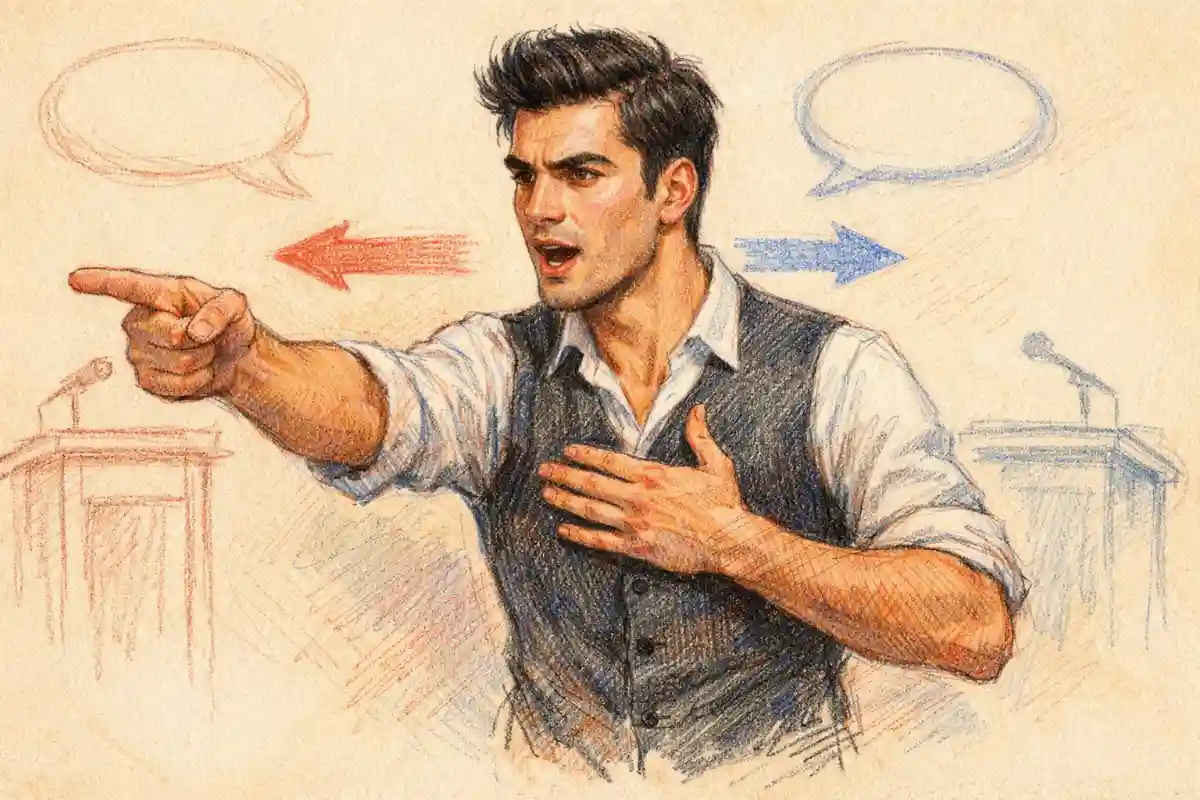
Pansy Parkinson is the character who volunteers Harry Potter for execution. In the final moments before the Battle of Hogwarts, when Voldemort’s ultimatum has been announced and the Great Hall is filled with students who must choose - fight, flee, or surrender - Pansy stands up and points at Harry. “Grab him!” she shouts. “He’s there! Somebody grab him!” She is shouting at her fellow students. She is proposing to hand one of their number to the person who will kill him. The scene is brief and the consequences are immediate: the Gryffindors rise, then the Hufflepuffs and Ravenclaws, and the Slytherins are escorted out of the Hall by Professor McGonagall, Pansy among them.
It is the most politically naked moment in the series’ final book, and it belongs to Pansy Parkinson. Not to Voldemort. Not to a Death Eater. To a seventeen-year-old girl who, when the moment of genuine crisis arrived, made a calculation and acted on it: the safest position, the one most likely to result in personal survival, was compliance with the incoming power. Give them Harry Potter and walk away intact. The logic is not insane. It is simply morally catastrophic.
This moment is prepared for by six books of smaller moments that the reader is invited to forget because they are small. Pansy laughs at the right time. She says the cutting thing. She joins the right squad. She attends the Yule Ball on the right arm. None of these are catastrophic in isolation. Together they construct a person who has never practiced any response other than compliance, whose habit of compliance has become so total that in the Great Hall it operates before she is conscious of choosing it. Rowling’s great achievement with Pansy is not the Great Hall scene itself but the architecture that makes the Great Hall scene legible and devastating: six books of quiet, specific, consistent detail that add up, without announcing what they are adding up to, to the exact person who would stand up and shout what Pansy shouts.
Pansy has been present in the series since the first book, a named Slytherin girl whose defining characteristic in the early books is proximity to Draco Malfoy and the willingness to join in whatever cruelty he is currently orchestrating. She laughs at the right moments. She says cutting things about Hermione’s teeth and Harry’s chances and Neville’s general existence. She operates as the social glue of Draco’s immediate circle - not the architect of cruelty but its amplifier, the person whose visible endorsement signals to the broader Slytherin population that the right response to Draco’s target of the moment is mockery rather than sympathy.
What is immediately apparent about Pansy, for the reader who examines her carefully, is that she never actually does anything ideologically motivated. She is not a blood-purity zealot in the manner of the Malfoys or the Blacks. She does not articulate a philosophy of wizard supremacy or express genuine contempt for Muggle-borns on principled grounds. She follows Draco, and Draco’s social world is organized around those values, so she participates in them. But participation through social conformity is a different thing from genuine conviction, and the distinction matters enormously for understanding both who Pansy is and why the Great Hall scene is such an honest portrait of how ordinary social conformists behave in moments of genuine political crisis.
Rowling is making an argument through Pansy that is more uncomfortable than the argument she makes through Voldemort or even through Bellatrix Lestrange: that the most common form of cooperation with evil is not ideological commitment but social compliance. The Pansy Parkinsons of the world are more numerous than the Voldemorts and the Bellatrixes. They do not choose the Dark Side because they believe in it. They do not resist it because resistance would be socially costly and physically dangerous. They go where the dominant current takes them, and when the dominant current is running toward genocide, they run with it without ever examining the fact that they are running toward genocide. Pansy is Rowling’s portrait of this mode of political existence, and it is drawn without sympathy but with considerable accuracy.
This portrait also operates as a form of social mirror for the reader. Most readers are not Bellatrix Lestranges. Most readers are also not Harry Potters. Most readers, if they are honest about it, have at some point in their lives done something closer to what Pansy does: gone along with a social consensus they privately found uncomfortable, endorsed a cruelty they did not originate because the social cost of not endorsing it seemed too high, positioned themselves within a dominant group in ways that required them to treat people outside that group as less than they were. Pansy is uncomfortable not because she is so alien but because she is so recognizable. The Great Hall is her moment of recognition; the preceding six books are the invitation to recognize ourselves in the patterns that produced it.
Origin and First Impression
Pansy’s first appearance in the series is in Harry Potter and the Philosopher’s Stone, and she is immediately established as part of Draco Malfoy’s social entourage - one of the girls who gravitates toward his particular brand of privilege and social dominance. She is a Slytherin, a pure-blood (as is strongly implied if never confirmed), and by the logic of the school’s social landscape, she belongs to the dominant caste. She does not need to establish this dominance through effort. It is conferred by association, and her primary social investment from the first book is in maintaining and strengthening that association.
Her early characterization in the first three books is almost entirely relational - she exists as a mirror for Draco’s social position rather than as an independent actor. When Draco mocks Harry, Pansy laughs. When Draco targets Hermione, Pansy provides the supporting commentary. When Draco preens about his Nimbus 2001 or his father’s donations or his Seeker appointment, Pansy is among the audience whose admiration validates the preening. She is the amplifier in his social circuit.
This relational existence is itself a character choice, even if it is not presented as one. Every person Pansy associates with, every comment she endorses, every cruelty she laughs at, is a decision - a small, low-stakes decision in isolation, but cumulatively a decision that defines who she is and what she stands for. The series does not frame Pansy’s early behavior as the result of deliberate ideological commitment because it is not. She is doing what the socially anxious do in environments organized around dominance hierarchies: she is identifying the most powerful person within her accessible social circle and attaching herself to them as securely as possible.
Her physical description, in the early books, emphasizes a pug-nosed quality that Harry notices and that the narrative associates with a kind of sneering prettiness - she is attractive in a way that the narrative codes as aggressive, as pointed, as oriented toward social positioning rather than genuine appeal. This is Rowling’s shorthand for a character whose relationship to appearance is entirely strategic: she presents in a particular way because that presentation serves her social purposes, not because it expresses anything authentic about her inner life. The pug-nose is the face of someone performing a social role.
What the first impression establishes, more than anything else, is that Pansy is a participant rather than an originator. The cruelties of the early books originate with Draco. Pansy’s role is to make them socially acceptable by participating in them publicly. In a school context, where social permission is everything, this is not a minor function. She is the mechanism through which Draco’s individual cruelty becomes a group norm. Without her - and without the others who perform the same function, like Crabbe and Goyle - Draco is an isolated bully. With her, he is the center of a social world that endorses his conduct. Pansy makes the cruelty feel normal. This is her most significant contribution to the antagonist side of the early books, and it is one the narrative never quite gives her full credit for.
This normalizing function is worth dwelling on because it is genuinely dangerous in ways that more dramatic forms of cruelty are not. A single bully can be identified, opposed, and isolated. A social consensus that endorses bullying cannot be opposed by the same means, because the consensus is distributed across many people and maintained by the collective weight of all their individual endorsements. When Pansy laughs at Draco’s joke about Hermione’s teeth, she is adding her weight to the consensus. When she joins the Inquisitorial Squad, she is institutionalizing it. When she shouts in the Great Hall, she is expressing it at its logical limit. The trajectory from the first laugh to the Great Hall is a straight line, and the line runs through every small endorsement she has provided across seven years. None of those endorsements seemed, individually, like a serious moral event. Cumulatively, they produced a person capable of proposing a murder.
The Arc Across Seven Books
Harry Potter and the Philosopher’s Stone through Harry Potter and the Prisoner of Azkaban
In the first three books, Pansy functions as part of the Slytherin social background - present, named, consistently on the wrong side of every encounter, but without individual dramatic function. Her most significant early appearances are in scenes that define the Slytherin social world: the early confrontations with Draco, the Quidditch matches where Slytherin’s conduct is presented as aggressively unsporting, the general atmosphere of contemptuous superiority that the Slytherin table exudes at mealtimes. She is a texture rather than a character.
This texture is not unimportant. The series constructs Slytherin’s social culture through the accumulated behavior of its members, and Pansy is one of the consistent contributors to that construction. She laughs at the right moments. She sneers with the right degree of effort. She participates in the social rituals that establish who Slytherin is as a collective - the hierarchy of blood status, the contempt for Gryffindors, the particular combination of entitlement and resentment that characterizes the house’s dominant social group. By accumulating these small performances across three books, she becomes legible as a type before she becomes legible as an individual.
Harry Potter and the Goblet of Fire
Goblet of Fire gives Pansy her first scene of genuine independent characterization, and it is a scene that reveals something the earlier books had only implied: she is genuinely smitten with Draco Malfoy, or at least performs being smitten with enough consistency that the distinction barely matters. When Draco is injured by Buckbeak’s talons (having provoked the Hippogriff in a way that makes the injury his own fault), Pansy is the one who supports him, who is visibly distressed on his behalf, who treats his pain as a real crisis rather than the minor injury it actually is. Whether her feelings for Draco are genuine or performed for social reasons - whether she actually likes him or likes what he represents - is a question Rowling never answers cleanly. The performance and the feeling may be indistinguishable in Pansy’s own internal experience.
What Goblet of Fire also establishes is the Yule Ball scene, where Pansy attends as Draco’s date. She looks genuinely pleased to be there, and the pleasure seems real rather than staged - she is in the social position she has been working toward, publicly affiliated with the most prominent Slytherin of her year, visible in a setting designed to be memorable. Whether she has a good time at the Ball is not something the text reports, but her presence there is the social success she has been positioning herself for. It is also, the reader who pays attention will note, the most normal thing she is shown doing in the entire series. She goes to a school dance with a boy she likes. In any other social context, from any other perspective, this would not be a notable event.
This observation matters because it is easy, given everything the series implies about Pansy, to forget that she is also a seventeen-year-old student at a school who is doing recognizable seventeen-year-old student things. She has crushes. She socializes. She attends Quidditch matches and dances and has a best friend and endures classes she probably finds boring. The social cruelty coexists with this perfectly ordinary adolescence, which is exactly what makes it instructive rather than exotic: it is not produced by extraordinary circumstances or exceptional villainy. It is produced by the same ordinary social conditions that everyone at Hogwarts navigates, handled in a way that prioritizes safety and status over conscience.
Harry Potter and the Order of the Phoenix
The fifth book is where Pansy’s participation in institutional cruelty reaches its most explicit and most uncomfortable expression. She becomes one of the Inquisitorial Squad under Dolores Umbridge - the group of Slytherin students granted special authority by the Ministry-installed High Inquisitor to monitor, report on, and punish their fellow students. This is a role that requires a specific kind of willingness: the willingness to use institutional power against people who have done nothing to deserve it, in the service of an authority that is actively making the school worse.
Pansy joins without apparent hesitation. The opportunity to have formal institutional backing for the kind of social dominance she has always exercised informally is clearly appealing. The Inquisitorial Squad gives Slytherins something they have always wanted in their school dynamic - official sanction for authority over students from other houses. Pansy takes it.
What this choice reveals about her psychology is significant: she is not merely a passive conformist who drifts with social currents. When an opportunity arises to actively exercise power over others within a legitimating institutional framework, she takes it. This suggests that the social positioning of the early books is not just defensive anxiety but something with an appetitive dimension - she is not merely trying to avoid the disadvantages of low social status but also genuinely attracted to the advantages of high status, including the ability to make others feel small. The Inquisitorial Squad is where Pansy’s comfortable social cruelty meets formal institutional power, and she finds the combination entirely to her taste.
The Squad also reveals the political logic of Pansy’s social strategy at its most transparent. She does not join the Squad because she believes in Umbridge’s agenda - she has no apparent investment in the Ministry’s project of discrediting Dumbledore or suppressing the truth about Voldemort’s return. She joins because the Squad represents the current institutional power, and aligning with institutional power is what she does. The moment Umbridge is removed from Hogwarts - humiliated by the centaurs, her institutional authority dissolved - the Squad ceases to exist and Pansy loses the privileges it conferred. She does not fight to maintain it. She simply returns to her previous social position, recalibrating as always to whatever the current dominant arrangement happens to be. The Squad was a phase. The social positioning continues regardless.
Harry Potter and the Half-Blood Prince
Half-Blood Prince is the book in which Draco Malfoy is given the weight of the Death Eater mission, and the effect on his social circle is visible in the texture of his interactions throughout the year. He is distracted, haggard, increasingly desperate. Pansy’s relationship to the changed Draco is one of the more interesting dimensions of her characterization in this book, and it is a dimension the text provides through implication rather than statement.
She remains close to him. She is, by the reports that filter through Harry’s observation, still the girl most visibly associated with Draco, most present when he needs social cover, most reliably performing the role she has always performed. But the Draco of Half-Blood Prince is not performing social dominance in the way he used to. He is frightened. He is under pressure that she cannot help him with. And she does not know what he is actually carrying - the mission, the Dark Mark, the alternative of Voldemort killing his family if he fails.
Whether Pansy knows more than she shows is a question the text leaves open. She is perceptive enough, socially, to notice that something has changed. What she does with that perception - whether she asks, whether she is told, whether she chooses not to ask because not knowing is safer - is one of the small unresolved questions of her characterization. The most likely answer, given everything the series shows about her relationship to danger and to power, is that she chooses not to ask. Ignorance is safer. She has been operating on a principle of maximum social safety for years. That principle extends to not demanding explanations from Draco that might implicate her in whatever he is doing.
This deliberate ignorance is its own moral choice, and it is one that the series treats as characteristic of a certain kind of social compliance: the choice not to know, because knowing would require a response that costs something. Pansy has made this choice before. Every time she laughed at Draco’s cruelty rather than questioning it, every time she joined the Inquisitorial Squad rather than declining, she was choosing the version of events that required less of her. Half-Blood Prince simply provides the clearest illustration of this pattern at its most consequential: Draco is in genuine distress, she is close enough to notice, and she manages her knowledge carefully enough that she does not have to act on it. The social surface is maintained. The crisis beneath it is left to resolve itself however it will.
Harry Potter and the Deathly Hallows
The Great Hall scene is Pansy’s defining moment, and it defines her in a way that no earlier scene had managed. She had been, for six books, the social bully, the Inquisitorial Squad member, the girl attached to Draco’s arm. None of these roles required genuine moral choice - they were all expressions of social positioning, of going with the dominant current in whatever direction it happened to be flowing. The Great Hall is the first moment when the dominant current and genuine moral choice point in opposite directions, and Pansy makes her choice instantly and without apparent anguish.
She has calculated, in the seconds between Voldemort’s ultimatum and the student response, that Voldemort is going to win. That Harry should be handed over. That the students of Hogwarts should comply with the demand for Harry’s life in exchange for their own. This calculation is not obviously insane from a narrow self-preservation perspective - Voldemort has taken the Ministry, Hogwarts is surrounded, the situation looks desperate. But it is morally catastrophic because it treats Harry Potter’s life as a bargaining chip, as a cost to be paid for someone else’s survival.
The immediate response - McGonagall escorting the Slytherins out, the other houses rising in solidarity with Harry - is the series’ statement that Pansy’s calculation, however coldly pragmatic it was, is not accepted. The school closes around Harry, and Pansy is removed from it. She does not fight in the Battle of Hogwarts. She does not choose to return. What she does after being escorted from the Hall is not narrated, but the escorting itself is final: she has made her choice, and the choice has made her someone who is not permitted to be present at the series’ moral climax.
The speed of Pansy’s response in the Great Hall is worth isolating as a psychological fact. She does not deliberate. She does not hesitate in the way that Draco hesitates throughout Half-Blood Prince. The calculation is immediate, and the action follows the calculation before anyone else has responded. This speed is the behavioral signature of someone who has been making the same kind of calculation thousands of times across seven years - who has, through sheer repetition, made social safety-seeking so automatic that it produces action faster than conscious deliberation can. Seven years of small compliances have compressed into a single instant of catastrophic compliance. The Great Hall is not a dramatic departure from who Pansy has always been. It is the perfectly consistent expression of who she has always been, applied to a situation large enough to make the consistency visible.
Psychological Portrait
Pansy Parkinson’s psychology is, at its core, the psychology of the social pragmatist carried to its logical and destructive extreme. She has spent seven years operating in an environment organized around dominance hierarchies, and she has operated well within it - she has maintained social position, she has secured proximity to the most powerful figure in her accessible social world, she has exercised informal and eventually formal power over people she deemed beneath her. She has, by the standards of the social game she has been playing, been quite successful.
The problem is that the social game she has been playing is itself organized around values that require, at their limit, willingness to endorse the annihilation of people who do not belong to the right categories. The Slytherin social world of Draco Malfoy’s circle is organized around pure-blood superiority, around the contempt for Muggle-borns and blood traitors that the series’ antagonists promote. Pansy has been participating in this social world and endorsing its values through her participation for seven years. She has never been confronted with the ultimate expression of those values - the willingness to hand over a real person to real death - until the Great Hall.
Her response in the Great Hall reveals the psychological truth beneath the social surface: she is not a person who has examined her values, decided they are correct, and committed to them. She is a person who has never been forced to examine them at all, because the social world in which she operated rewarded her for performing certain values without demanding that she actually hold them. She shouted at Harry in the Great Hall not because she believed in Voldemort’s ideology but because Voldemort, in that moment, represented the incoming dominant power, and her entire psychological apparatus is oriented toward aligning with dominant power.
This is a form of moral emptiness that is different from Bellatrix Lestrange’s fanaticism or Voldemort’s philosophical commitment to supremacy. Those characters have chosen their evil. Pansy has not chosen anything. She has simply continued doing what she has always done - following the dominant current, amplifying the social consensus, positioning herself for maximum safety within whatever hierarchy she finds herself in - and in the Great Hall, that habit of mind produces an act that would, had it succeeded, have contributed to a murder.
The complicity is real even if the ideology is absent. This is what makes Pansy’s character philosophically interesting: she is a case study in how social conformism, absent any external check or internal moral development, produces the same outcomes as genuine ideological commitment. The person who follows the crowd in ordinary times will follow the crowd when the crowd turns toward atrocity. Pansy’s cruelty is the cruelty of the person who has outsourced her moral agency to the social consensus for so long that she no longer has the capacity to exercise it independently when the consensus breaks down.
There is also a dimension of self-deception worth noting. Pansy must, at some level, have constructed narratives that made her behavior acceptable to herself across seven years. She does not see herself as a bully. She sees herself as someone who knows how things work, who understands the social order, who does not have the luxury of Gryffindor naivete about how power operates. She probably frames her cruelty toward Harry and Hermione and others not as cruelty but as social realism - as the appropriate response to people who are outside the dominant group, as the kind of interpersonal behavior that is simply normal in her world.
The self-narrative is self-serving but internally coherent. Most people who cause harm through social conformism hold some version of it: the sense that they are not doing anything wrong, that the rules of their social world are simply how things are, that to name their participation as harmful would be to engage in the kind of naive sentimentalism that only people who do not understand real power could indulge. Pansy has internalized the values of her social world so completely that she cannot see them as values - she sees them as facts. Blood status is not an ideology for her. It is simply the way the wizarding world is organized. Participating in it is not a choice. It is normal behavior in normal social conditions. The self-narrative persists until the Great Hall makes it impossible to maintain because the social realism it justified now has a human face and a name attached to it and a proposal for murder beneath it.
Whether she was capable, at that moment or in its aftermath, of recognizing what she had done - not as a social miscalculation (which it obviously was, given that the other students rose rather than complied) but as a moral failure - is the question the series leaves permanently open. Given everything the text shows about Pansy’s psychological equipment, the answer is probably no. The capacity for moral self-examination that might allow her to recognize the Great Hall as a moral failure is exactly the capacity she has spent seven years failing to develop. She shouted. The room rose against her. She was escorted out. Her most likely interpretation of these events is not “I was wrong” but “I miscalculated the social situation.” The error is reframed as tactical rather than ethical, and life continues accordingly.
Literary Function
Pansy’s primary literary function in the Harry Potter series is to embody the most ordinary and most pervasive form of complicity with oppressive systems: not ideological commitment, not genuine cruelty for its own sake, but social conformism so deep that it produces evil as a byproduct without requiring evil as an intention.
She is Rowling’s answer to Hannah Arendt’s concept of the banality of evil - the observation that the most destructive political forces in history have required not an army of committed ideologues but a much larger army of ordinary people who simply did not resist, who went along, who calculated that compliance was safer than opposition and acted accordingly. Voldemort’s regime, as the series constructs it, requires both kinds of participation: the Bellatrix Lestranges who genuinely love the cause, and the Pansy Parkinsons who do not love anything in particular and are therefore available to be organized in whatever direction the dominant current points.
The distinction between these two modes of participation matters morally. Bellatrix is accountable for her ideology as well as her actions. Pansy is accountable primarily for her actions - for the Great Hall scene, for the Inquisitorial Squad, for seven years of participating in the social cruelty that normalized Slytherin’s dominant values. Her lack of ideological commitment does not absolve her; it simply means she is guilty of something different from what Bellatrix is guilty of. She is guilty of the refusal to examine, the refusal to resist, the refusal to develop the kind of independent moral agency that might have allowed her to say no when the social consensus pointed toward atrocity.
She also functions as a direct contrast to Draco Malfoy’s arc. Both are pure-blood Slytherins, both are from families with Death Eater sympathies, both participate in the bullying and social cruelty that defines their shared peer group. But Draco’s arc is one of visible, painful conflict - he is given the Death Eater mission, he is forced to confront what the cause he has grown up endorsing actually requires of him, and he cannot do it. His wand arm lowers when he is supposed to kill Dumbledore. He does not identify the trio at Malfoy Manor. He makes the small, insufficient, but real gestures of someone whose moral sense has not been entirely subsumed by social conformism. Pansy makes no equivalent gesture. The contrast is stark: when the moment demands something from both of them, Draco’s incomplete resistance produces a complicated moral record that the series treats with genuine ambivalence. Pansy’s unreflective compliance produces the Great Hall scene.
The series’ refusal to give Pansy the ambivalence it extends to Draco is a moral position as much as a narrative choice. Draco is granted complexity because he demonstrates, however inadequately, the struggle that genuine moral conflict produces. Pansy is not granted complexity because she demonstrates no such struggle. She is consistent from first appearance to last: the person who aligns with whatever is dominant, who amplifies whatever cruelty her dominant ally is currently producing, who calculates social safety and acts accordingly. Consistency of this kind in the direction of moral abdication is not the same as innocence. It is its own form of moral failure, and Rowling treats it as such.
Pansy also functions as the series’ most direct examination of female social cruelty - what Caroline Bingley in Austen terms “accomplishments” in the service of social positioning, elevated to the level of political complicity. The female bully in fiction is frequently coded as more culpable than her male counterpart because female cruelty is assumed to be more calculated, less impulsive, more deliberate. Whether or not this is accurate in general, it is certainly accurate for Pansy: her cruelty is social and strategic rather than physical, which requires more sustained attention to its targets and more deliberate management of the social consensus she is maintaining. This is why the Great Hall scene, despite its brevity, carries so much weight: it is the natural culmination of a social strategy that has been running for seven years, finally applied to a situation where the stakes are fatal rather than merely social.
Moral Philosophy
The moral question Pansy Parkinson most directly poses is one that is asked less often in literary criticism than it should be: what does a person owe to the social community in which they operate, and at what point does the debt to that community become an excuse for moral abdication?
Pansy has understood her social situation correctly. She is a student at Hogwarts in a world organized around blood-status hierarchy. Her social circle endorses the values of pure-blood supremacy. To resist these values, or even to fail to participate in their performance, would be socially costly. In the early years especially, it would mark her as a blood traitor by association, would cost her the social position she has built, would require a level of independent moral agency that nothing in her background has taught her to develop or value. These are not trivial considerations. Social belonging is a genuine human need, and the cost of opposing one’s own social world is genuinely high.
But the series’ moral framework is unambiguous: the costs of social conformism, however high they feel, do not justify the outcomes that conformism produces when the social consensus is pointing toward oppression and violence. Hermione Granger comes from a social background even more alien to the wizarding world’s dominant values - she is a Muggle-born, the most marked category in the blood-purity hierarchy, someone whose very existence the Pansy Parkinsons of the world are implicitly devaluing every time they participate in pure-blood social culture. And Hermione chooses, over and over, to oppose rather than accommodate, at great personal cost. The series does not pretend this comparison is fair; the systemic position of the two characters is entirely different. But it does suggest that moral agency is possible even in the most constrained circumstances, and that its exercise is the responsibility of every person regardless of the difficulty.
The Great Hall scene is the series’ most direct statement of this moral argument. Pansy’s calculation - give them Harry, survive - is a calculation that a great many people would make. The series acknowledges this by showing how quickly she acts, how immediately the calculus produces its result. She does not hesitate. She does not struggle visibly. The moral question is not complex for her because she has not developed the tools for moral complexity. She acts on her survival instinct, shaped by seven years of social conditioning, and the result is a proposal for murder.
The parallel between Pansy’s moral calculus and the decision-making processes that competitive exam preparation disciplines are designed to correct is more direct than it might appear. The ability to recognize when an initially plausible answer is in fact wrong - to resist the pull of the easy or the familiar - is one of the core skills tested in reasoning-heavy examinations. Students who work through patterns and anti-patterns using resources like the ReportMedic CAT PYQ Explorer develop the habit of second-guessing first impressions, which is precisely the habit Pansy lacks. Her first impression of the Great Hall situation - that compliance is safer - is plausible but wrong. She has never developed the reflex to question it.
Rowling makes a specific and pointed choice in not giving Pansy a redemptive arc. Draco gets one - incomplete, unsatisfying to many readers, but present. Pansy gets nothing. She shouts in the Great Hall and she is escorted out and she is never seen again. The series does not offer her the chance to return, to fight, to demonstrate that something in her was equal to the moment. This is not an oversight. It is a moral position: some choices are final, and the choice to point at someone and say “Grab him” is one of them. The person who makes it has revealed something about themselves that cannot be revised by subsequent behavior because the subsequent behavior was permanently foreclosed by the choice itself. Pansy was escorted out. She was not there. There is nothing to redeem because there is no later scene in which redemption could be demonstrated.
The philosophical tradition that Pansy’s character most closely engages is the tradition of moral responsibility for acts committed through social compliance - what philosophers have called the “just following orders” problem, elevated from its most extreme historical context into the ordinary social space of a school. She never follows orders in the Nazi-soldier sense. But the mechanism is the same: she defers the question of whether her actions are right to the social authority that sanctions them, first to Draco’s approval, then to Umbridge’s institutional sanction, then to Voldemort’s ultimatum. At no point does she ask herself whether the authority sanctioning her actions has the right to do so. This deferred moral agency is not a crime in the legal sense. It is, Rowling argues through the structure of Pansy’s arc, a moral failure that has consequences as real as any ideological commitment.
The development of genuine, independent moral reasoning - the capacity to assess situations on their merits rather than on the authority of whoever is currently in power - is among the most valuable intellectual skills a person can cultivate. This is true in philosophy, in law, in every domain that requires judgment under conditions where the institutional consensus might be wrong. Competitive examination systems that train students to question received answers rather than accepting the first plausible option - including structured tools like the ReportMedic UPSC PYQ Explorer for developing independent analytical judgment - are, at their best, developing exactly the capacity that Pansy consistently fails to exercise. The examined life, Socrates argued, is the only one worth living. Pansy’s life is the unexamined one, and Rowling shows precisely what that costs.
Relationship Web
Pansy and Draco Malfoy
The Pansy-Draco relationship is the most fully realized of her relationships in the text, and it is a relationship built on a foundation that the series never fully excavates: what does Pansy actually feel for Draco? The performance is visible - the proximity, the laughing at his jokes, the attendance at the Yule Ball, the conspicuous support when he is injured. Whether what lies beneath the performance is genuine feeling or strategic calculation is something the text leaves genuinely open.
The most interesting reading of the relationship is that for Pansy, the distinction between genuine feeling and strategic calculation has collapsed entirely. She has wanted to be close to Draco for so long, and has performed closeness with him for so long, that the performance has become the feeling. She cannot access an inner life that precedes the social positioning because the social positioning has been her inner life. She likes Draco because he is powerful, and she has made liking powerful people the core of her social and emotional identity, and the two facts are now inseparable.
What Half-Blood Prince reveals about the relationship is significant: Draco’s distress does not produce a corresponding distress in Pansy that leads her to try to help him. She remains close. She provides social cover. But she does not appear to notice, or to act on noticing, that he is in genuine trouble. This is either because she truly does not notice (possible, if her emotional intelligence is less sophisticated than her social intelligence) or because she has calculated that whatever Draco is involved in is too dangerous for her to get involved in too. Either reading is consistent with her characterization. Neither is flattering.
The Pansy-Draco relationship also illuminates something about the nature of the social alliances that pure-blood culture produces. Their relationship is not simply romantic - it is also a political alignment, a statement about which family’s power and prestige is being joined to which. At the Slytherin social level, Pansy’s association with Draco signals her family’s alignment with the Malfoys, her endorsement of the Malfoy social position, her participation in the social world that the Malfoy name anchors. This is a relationship organized around status rather than around the kind of mutual vulnerability and genuine knowledge that constitute deep friendship or love. When Draco’s status crashes - when his father goes to Azkaban, when his Death Eater mission fails, when the Malfoy family is visibly on the losing side of a war they helped start - the relationship loses the specific value that justified it. Pansy does not follow Draco into disgrace. She calculates, as she always has, and the calculation produces the Great Hall.
Pansy and the Slytherin Social World
Pansy’s relationship to the broader Slytherin social world is her most structurally significant relationship, because it is the relationship that explains all her other behaviors. She is not a leader in Slytherin - the leader is Draco, and she is his most reliable social ally rather than an independent power. But she is also not merely a follower. She is something in between: a person with real social influence in the middle tier of the Slytherin hierarchy, someone whose endorsement of a social norm makes that norm more firmly established, whose ridicule of a target amplifies the ridicule of others, whose presence in the Inquisitorial Squad gives the Squad a kind of social legitimacy it would not have with only Draco’s male associates.
This middle position - influential enough to matter, dependent enough on the dominant figure not to threaten him - is the social position that social conformists of Pansy’s type naturally occupy. They are not powerful enough to set the agenda. They are socially skilled enough to enforce it. The function is essential to how social hierarchies maintain themselves, and Pansy performs it reliably across seven years.
The Slytherin social world is itself a mirror of the wizarding world’s broader political structure, just as the school is a mirror of the society outside it. The blood-purity hierarchy of Slytherin’s dominant social group anticipates the blood-purity hierarchy that Voldemort attempts to impose on the wizarding world as a whole. Pansy’s comfortable navigation of this hierarchy at the school level prefigures her navigation of the larger version in the Great Hall: same mechanism, same calculation, same instinctive alignment with what she perceives to be the dominant power.
Pansy and Hermione Granger
The Pansy-Hermione dynamic is one of sustained, low-level antagonism that operates almost entirely at the level of Pansy’s comments about Hermione rather than any direct conflict. The cruelty about Hermione’s teeth in Goblet of Fire is the most explicitly noted, but it is part of a pattern of social dismissal that runs through the series: Pansy does not engage Hermione as an intellectual or moral equal, but as someone to be belittled.
This is itself revealing. Pansy’s social strategy depends on the maintenance of clear hierarchies - on everyone knowing their place in the order of Slytherin social dominance. Hermione disrupts this by being visibly more capable than most of the people around her while simultaneously being, by Slytherin’s social taxonomy, among the least legitimate (Muggle-born, Gryffindor, conspicuously outside the pure-blood social world). Pansy’s contempt for Hermione is the contempt of the system for the person who should, by the system’s logic, be at the bottom of the hierarchy but is manifestly not.
The contempt is also, probably, a response to threat. Pansy is socially intelligent, and socially intelligent people typically recognize, beneath their explicit dismissal of threatening figures, that those figures are threatening. Hermione is more capable than Pansy in almost every dimension the school can measure. Pansy’s sneering commentary about Hermione’s teeth - attacking the physical feature that makes Hermione visually different, attempting to reduce her to a body rather than a person - is the classic strategy of the person who cannot compete intellectually and chooses to compete on a different field instead. It is the field Pansy knows best: social presentation, physical appearance, the management of visible identity. It is also the field on which she is most obviously compensating for what she cannot win on other terms.
What the analysis of Hermione Granger’s full arc makes clear is that Hermione develops the kind of principled moral agency across seven books that Pansy systematically fails to develop. Both girls are capable and perceptive social actors. Both understand, from early in their time at Hogwarts, how power operates in their shared environment. The difference is in what they do with this understanding: Hermione uses it to navigate toward justice, Pansy uses it to navigate toward safety. That distinction, in the series’ moral accounting, is everything.
Pansy and Umbridge
The Pansy-Umbridge relationship is brief but structurally crucial: it is the relationship that provides Pansy with institutional sanction for the social cruelty she has been practicing informally for years. Umbridge’s Inquisitorial Squad offers Slytherin students official authority over their peers, and Pansy takes it. The relationship is purely transactional - Pansy is not drawn to Umbridge through any ideological affinity but through the material benefit the association provides.
This transaction is, in miniature, the same transaction that the Death Eater sympathizer families offered Voldemort in the First War: we will support your regime in exchange for the privileges it provides. Pansy’s relationship to institutional power is purely instrumental, which makes her compatible with any authority that offers enough material benefit. She would have joined the Inquisitorial Squad for Dumbledore if Dumbledore had run one. She would have supported whoever was currently winning, as the Great Hall demonstrates. This is not cynicism in the philosophical sense - cynicism at least involves examined disillusionment. It is simply the behavior of a person whose primary relationship to power is not principled but pragmatic.
What Umbridge represents for Pansy, beyond the immediate benefits, is a model of female authority that Pansy finds congenial: authority exercised through institutional position rather than through earned respect, decorated with pink and sweetness to make it socially palatable, fundamentally organized around the enforcement of compliance rather than the cultivation of anything genuinely good. Umbridge is Pansy’s aspirational self at scale - a woman who has managed to accumulate institutional power through the consistent alignment of her behavior with whatever authority is currently in charge. The fact that this model produces horror on Umbridge’s scale is something Pansy cannot see, because seeing it would require exactly the kind of reflective distance from the social consensus that she has spent her life refusing to cultivate.
Symbolism and Naming
Pansy is, in the language of flowers that Rowling uses deliberately throughout the series, a flower of remembrance and contemplation. The pansy’s name derives from the French pensée - thought, reflection. In Shakespeare, Ophelia distributes flowers with specific meanings, and pansies are for thoughts. In the Victorian flower language that Rowling draws on, the pansy signals thoughtfulness, reflection, loving thoughts toward another.
The irony of giving this name to the least self-reflective character in Gryffindor’s year at Hogwarts - and possibly in the series - is pointed. Pansy Parkinson has never spent a moment that the text shows in genuine self-reflection. She does not examine her choices. She does not consider whether her behavior is right. She does not think about the people she is hurting or why. The name that means thought belongs to the character who most consistently refuses to think. This is Rowling’s naming at its most ironic: a flower signifying contemplation wrapped around a portrait of its complete absence.
This irony extends to the pansy’s specific cultural associations. In Hamlet, Ophelia’s distribution of flowers is one of the play’s most emotionally loaded scenes - each flower carries a specific meaning, and Ophelia’s choice of which flower to give whom is a form of communication from someone whose more direct communication has been suppressed by grief and madness. She gives pansies to Laertes and says “that’s for thoughts.” The gift of pansies is an invitation to think, to reflect, to hold something in mind. Pansy Parkinson’s name is, in this light, an invitation she has never accepted on her own behalf. Her name says: think. Her life says: I would rather not.
“Parkinson” is a more opaque choice but carries a suggestion of the Parkinson’s disease that takes that name - a disease of tremor and involuntary movement, of the body doing things against the person’s conscious control. This reading is admittedly speculative, but it fits the characterization: Pansy moves through the social world with something like involuntary motion, following forces she does not examine or control, her behavior determined by social stimulus and social reflex rather than by conscious moral choice. She is Parkinson the disease as character: the person who shakes when the dominant social force shakes, who cannot hold still against the current, whose actions emerge from stimulus and habit rather than from deliberate ethical engagement.
The combination of names produces a portrait in miniature: the flower of thought for a person who does not think, the name that suggests involuntary motion for a person who has surrendered her moral will to social gravity. Rowling is rarely this precise in her nomenclature without intention, and the precision here serves the same function it always does: the name is a compressed character description that the reader can unpack retrospectively, having understood who the character is through the narrative.
There is a color dimension worth noting. Pansies are one of the most visually striking of garden flowers, with their distinctive face-like pattern of darker and lighter patches that gives them a quality of watching, of being looked at from multiple angles simultaneously. In Victorian and Edwardian floriography, the pansy was specifically associated with the act of thinking of someone - “pansies, that’s for thoughts” - with the implication that the flower itself was watching, remembering, keeping the absent person in mind. Pansy Parkinson watches, in the sense that social intelligence requires constant observation of who is doing what and with whom and what it means for the hierarchy. But she watches without thinking, observes without reflecting, collects social data without ever synthesizing it into a moral understanding of what she is participating in. The flower watches and thinks; the character watches and does not.
The Unwritten Story
The most significant gap in Pansy’s story is what happens after McGonagall escorts the Slytherin students from the Great Hall. The narrative follows Harry as the Battle begins, and the Slytherin contingent disappears from the text. Pansy is never mentioned again. Whether she is imprisoned, whether she is released, whether she witnesses any of the Battle’s aftermath, whether she survives without injury - none of this is recorded.
More interesting than the physical aftermath is the psychological one. The Great Hall scene is the point at which Pansy’s social strategy fails completely and publicly. She shouts, the whole school hears her, the whole school rises against her, and she is removed. In the social world she has spent seven years operating in, this is catastrophic. Her bid for the social benefit of compliance - hand over Harry, survive intact, emerge on the right side of the new regime - has failed at its first test. The students around her did not comply. They rose. And she was the one who triggered the rising, whose voice in the silence of the Great Hall produced the unified response that began the Battle on the side of Harry Potter.
There is a rich and painful irony available in this reading: Pansy Parkinson, the character most dedicated to ensuring that she is always aligned with the winning side, managed through her single most decisive act to contribute to the winning side’s victory - not by choosing it, but by energizing its opposition. Her shout in the Great Hall is the catalytic moment that brings the other houses to their feet. Whether she ever understands this is one of the story’s permanently unresolved questions.
The post-war wizarding world would have a specific relationship to Pansy’s Great Hall moment. The trial record, the memorial accounts, the oral histories of the Battle of Hogwarts would include it. Students who were in the Great Hall that day would remember it - would carry it as one of the defining memories of that night, the moment when a voice from the Slytherin table tried to hand Harry Potter over, and the response of the school made clear where it stood. Pansy would be permanently identified with that moment in the historical record. Not as a Death Eater - she was escorted from the Hall before the fighting began and bears no record of combat or of the killing that defines the Death Eater category. But as the person who tried to comply, whose compliance was refused by everyone around her, and whose exclusion from the Battle became part of the public record of that night.
There is also an unwritten question about the Slytherin students who were escorted out with her. Some Slytherins fought in the Battle - the text implies this even if it does not confirm it. The students who left the Hall with Pansy, under McGonagall’s escort, were not all Pansy. Some of them may have returned. Some may have found ways to contribute to the Battle that the narrative does not record. Pansy and “the Slytherins” are often conflated in reader memory, but the actual scene is more specific: she shouted, and the Slytherin students were escorted out, and what each of them individually chose to do after that is the story the series does not tell. Pansy’s choice in the Hall does not make every Slytherin student Pansy. But it made her permanently Pansy - permanently the one who shouted - in a way that none of the other students in the Hall became permanently defined by a single moment.
Her relationship with Draco in the post-war period is another unwritten chapter. Draco’s arc, such as it is, involves a complicated relationship to the Death Eater cause and to his own complicity in its crimes. He survives the war. He presumably has to construct a life within the post-war wizarding world’s accounting of who did what. Where Pansy fits in that accounting - whether she remains in Draco’s social circle, whether the changed conditions of post-war wizarding society alter what social advantage association with Draco offers, whether they drift apart as the world they both navigated collapses into history - is not answered. The two characters who defined each other across seven books are separated by the last scene and left as question marks beyond it.
Cross-Literary Parallels
Shakespeare’s Iago and the Enabler of Cruelty
The closest Shakespearean parallel to Pansy is not the primary villain of any play but the social enabler who makes the primary villain’s cruelty possible through active participation. In Othello, Iago’s scheme requires Roderigo - the foolish, love-struck man whose money Iago uses and whose jealousy he manipulates. Roderigo is not the villain. He does not originate the cruelty. He participates in it for his own reasons, without fully understanding what he is participating in, and his participation makes the cruelty possible. He is accountable for what he does, even though his intentions were not to produce Desdemona’s murder.
Pansy is, in this analogy, closer to Roderigo than to Iago - she participates in Draco’s social cruelty for her own social reasons, without necessarily intending the harm that her participation enables, and her participation makes the cruelty more effective than it would be without her. The parallel is imperfect (Pansy is smarter than Roderigo and less obviously deluded), but it illuminates the dynamic of the social enabler: the person who is not the primary moral agent but whose contribution to the harm is real.
The more direct Shakespearean parallel is Goneril and Regan in King Lear - the daughters whose cruelty is exercised not through origination but through compliance and amplification, who endorse the dominant social order’s worst expressions because the dominant social order benefits them. Goneril in particular has a quality of cold social calculation that echoes Pansy’s: she assesses what the king’s power can give her and performs whatever emotional presentation will maximize her share. Both women are given full moral responsibility for their actions despite the fact that the social structures around them - the patriarchal inheritance system in Lear, the blood-purity hierarchy in Hogwarts - made rebellion costly. Pansy exists in an analogous structure: the pure-blood social hierarchy of Slytherin Hogwarts makes compliance costly to resist. Like Goneril and Regan, she is fully responsible for what she does within that structure, even though the structure did not make the right choice easy.
What Shakespeare’s history plays add to this parallel is the observation that people who orient themselves entirely toward power have a specific vulnerability: they are always on the wrong side at the wrong moment. The court flatterer who attaches himself to the rising faction is perpetually at risk of attaching himself to the falling one. Pansy’s Great Hall calculation - Voldemort is going to win, align with Voldemort - fails precisely because she misread the power dynamics. The school did not rise against her because it was naively idealistic. It rose because it had correctly assessed that Harry Potter represented something more durable than Voldemort’s ultimatum. The social pragmatist who miscalculates the dominant power is not merely morally wrong; she is tactically wrong too. Pansy ends the series on the losing side of both assessments simultaneously.
Hannah Arendt and the Banality of Evil
The philosophical framework that most directly illuminates Pansy is Hannah Arendt’s concept of the “banality of evil,” developed in her report on the Eichmann trial. Arendt’s observation was that the most destructive force in modern history - the Holocaust - was carried out not primarily by sadists or ideological fanatics but by ordinary functionaries who executed monstrous orders without examining them, who prioritized their own careers and their institutional positions over the moral quality of what they were doing. The evil was banal because the people producing it were ordinary.
Pansy is a teenage version of this dynamic. She is not a sadist - her cruelty is social, not physical. She is not a convinced ideologue - she has never, as far as the text records, articulated a genuine philosophy of pure-blood supremacy. She is simply a person who has learned to navigate a social environment organized around oppressive values, and has learned to do so by endorsing those values consistently enough that the system rewards her with safety and social position. When the system demands the next thing - give them Harry Potter - she provides it without moral examination.
The reason Arendt’s framework remains controversial, and why its application to Pansy is not entirely comfortable, is that it can be read as exculpating people who made genuine choices. Eichmann chose to execute the orders he executed; the fact that he did not experience them as ideologically motivated did not make his choices involuntary. Pansy chose to shout in the Great Hall; the fact that the choice emerged from social habit rather than ideological conviction does not make it not a choice. Arendt’s insight is not that ordinary people are not responsible but that responsibility can emerge from the refusal to think as readily as from deliberate malice. Pansy’s responsibility is the responsibility of the person who chose, in every small moment across seven years, not to examine what she was participating in.
What makes the Arendt parallel especially rich is the language Arendt uses to describe Eichmann’s mode of moral absence: thoughtlessness. Not stupidity. Thoughtlessness - the failure to stop and think, to stand back from what one is doing and ask whether it is right, to engage the moral imagination in the assessment of one’s own actions. Pansy’s name, derived from the French word for thought, belongs to the character most completely defined by this specific variety of moral failure. The flower of thought names the portrait of thoughtlessness. It is Rowling at her most precisely ironic.
The Chorus in Greek Tragedy
Greek tragic drama uses the chorus as a collective voice that represents the community’s response to the events of the drama - that narrates, interprets, and occasionally participates in the action while remaining distinct from the individual tragic figures who drive the plot. The chorus is never the hero or the villain. It is the social background against which heroism and villainy are defined.
Pansy functions, across most of the series, as a member of Slytherin’s social chorus - the collective voice that endorses Draco’s cruelty, that amplifies the social consensus of the dominant group, that provides the communal approval without which individual acts of cruelty would remain individual and therefore more easily resisted. The chorus in Greek tragedy sometimes participates in events that lead to catastrophe without meaning to - it endorses decisions that seem reasonable in the moment and are disastrous in consequence. Pansy’s endorsement of Draco’s social cruelty has exactly this quality: each individual act of endorsement seems small and socially comprehensible, and the cumulative consequence is a character who, when the moment demands a genuine moral choice, has no tools with which to make it.
The analysis of the Hogwarts Houses as personality theory explores how the series uses house affiliation to examine collective moral dynamics - how belonging to a community shapes individual moral possibilities. Pansy’s arc is one of the series’ clearest demonstrations of this dynamic’s dark side: the person who has allowed community membership to entirely displace individual moral agency finds, at the moment of crisis, that there is nothing left of her beneath the community’s demands to resist those demands. She is the chorus member who steps forward at the worst possible moment and speaks the community’s worst impulse into the silence of the Great Hall.
Austen’s Social Villains
Jane Austen’s fiction contains a particular character type that does not appear in Harry Potter anywhere else as completely as it appears in Pansy: the socially cruel woman whose cruelty is expressed through the management of social consensus rather than through direct action. Caroline Bingley in Pride and Prejudice is the clearest example - she manipulates social situations, manages what other people think of Jane Bennet, deploys charm and wit in the service of social exclusion. Her cruelty never requires her to do anything obviously wrong. She simply ensures that the people she wants to disadvantage are disadvantaged through social mechanisms she can control.
Pansy operates by the same mechanism, and it is worth noting that both characters are, within their specific social contexts, quite effective. Caroline Bingley nearly succeeds in breaking up Jane and Bingley. Pansy nearly succeeds in the Great Hall. The near-success in both cases is a tribute to the genuine effectiveness of social manipulation as a form of power - and the failure in both cases is a tribute to the fact that social manipulation, however effective in stable conditions, fails catastrophically when the underlying social consensus is challenged by genuine moral crisis.
Austen’s treatment of Caroline Bingley does not provide redemption, closure, or moral growth. Caroline is last seen at the Netherfield ball, managing her social humiliation with exactly the kind of controlled surface that she has always maintained, and then she disappears from the narrative. This is also, essentially, what Rowling does with Pansy: last seen in the Great Hall, escorted out by McGonagall, and then gone. Both authors are making the same argument: some characters do not deserve the redemptive arc, and providing one would falsify the portrait of a person whose defining quality is the refusal to develop.
Legacy and Impact
Pansy Parkinson’s legacy in the Harry Potter series is the legacy of the Great Hall scene, and it is almost impossible to discuss her legacy without returning to that single moment. It is the scene that defines her because it is the scene in which she finally makes a choice that is genuinely hers rather than simply the reflection of whatever social consensus she happens to be standing in. And the choice is wrong, instantly, publicly, irrevocably wrong.
The Great Hall scene is also the scene that most clearly illustrates the stakes of the series’ central moral argument. Rowling has spent seven books arguing that courage is a choice available to anyone - that the Sorting Hat’s placement is prophecy as much as diagnosis, that being a Gryffindor means having the capacity for courage even if that capacity has not yet been called upon. Pansy’s Great Hall moment is the counterargument given human form: the person who has not developed her courage, who has spent seven years developing instead the habit of social compliance, faces the identical moment of crisis and does exactly the opposite of what the Gryffindors do. They rise. She points.
This is not a comfortable comparison to make, because the series has been careful to establish that Gryffindors are not simply braver people by nature - they are people whose particular character traits (boldness, nerve, willingness to act) predispose them toward courage when courage is needed. Pansy is not a Gryffindor. She is a Slytherin, and her house’s defining traits (ambition, cunning, self-preservation) predispose her toward exactly what she does in the Great Hall. The Sorting Hat placed her where she would eventually demonstrate her nature most completely.
What the Great Hall scene refuses to do is sentimentalize the alternative. The students of other houses who stay to fight are not all Gryffindors. Hufflepuffs and Ravenclaws rise alongside them. Some Slytherins, presumably, also fight - the series implies that not every Slytherin student was Pansy, that the house contains complexity the narrative does not fully explore. The moral of the Great Hall is not that Slytherins are cowards. It is that Pansy is a coward, specifically and personally, and that her cowardice in that moment is the culmination of seven years of moral development that went precisely nowhere.
There is one more dimension to Pansy’s legacy that deserves explicit attention: she is the character who makes the Great Hall scene possible in the form it takes. Without her voice - without someone standing up and saying out loud what some students in the room must have been privately calculating - the scene might have been one of silent, paralyzed indecision rather than the unified uprising that actually occurs. Pansy’s proposal galvanizes the opposition. She speaks the thing that cannot go unanswered, and the answering is the beginning of the Battle. In this sense, she is the series’ most unlikely catalyst for heroism: the person whose cowardice, expressed publicly, produces the public commitment of everyone around her to the opposite. Her legacy is inseparable from this irony - the most unreflective character in the series’ final act produces, through her unreflection, one of the series’ most powerful collective moral moments.
Her legacy, in the end, is a negative one - she is the character whose absence from the Battle defines the Battle, whose failure to make the right choice shows by contrast what the right choice looked like and who was capable of making it. She is not the series’ most evil character. She is, in some ways, its most ordinary one. And that ordinariness is, in Rowling’s moral universe, exactly the problem.
Frequently Asked Questions
Who is Pansy Parkinson in Harry Potter?
Pansy Parkinson is a pure-blood Slytherin student in Harry Potter’s year at Hogwarts who appears throughout the series primarily as a social ally of Draco Malfoy and as a participant in the interpersonal cruelty that characterizes Slytherin’s dominant social group. She is given her most defining scene in Harry Potter and the Deathly Hallows, when she stands up in the Great Hall during Voldemort’s ultimatum and urges her fellow students to hand Harry over to Voldemort. She is then escorted out of the Hall by Professor McGonagall along with the other Slytherin students and does not appear in the narrative again.
What does Pansy Parkinson shout in the Great Hall?
When Voldemort’s ultimatum is delivered to Hogwarts - hand over Harry Potter or face the consequences - Pansy Parkinson responds by standing up in the Great Hall and shouting at her fellow students to grab Harry and turn him over. The other students respond by rising in solidarity with Harry, and McGonagall sends the Slytherin students - Pansy among them - out of the Hall before the Battle begins. The moment is brief but definitive: it is the scene in which Pansy makes the most explicit moral choice visible in her entire arc, and the choice is wrong.
Is Pansy Parkinson evil?
Pansy is not evil in the ideological sense that Voldemort or Bellatrix Lestrange is evil - she does not appear to hold genuine convictions about pure-blood supremacy, and her cruelty across the series is social and performative rather than principled. But she is morally culpable for the Great Hall scene, for her participation in the Inquisitorial Squad, and for seven years of social cruelty that normalized Draco’s conduct. Rowling’s treatment of her suggests that moral failure through social conformism - through the consistent refusal to examine or resist the values of one’s social environment - is real moral failure even in the absence of ideological commitment. She is not evil in the way Bellatrix is. She is perhaps worse in one specific sense: her failure is ordinary, and ordinary failure of this kind is more common and more dangerous than extraordinary fanaticism.
What is the relationship between Pansy Parkinson and Draco Malfoy?
The Pansy-Draco relationship is the series’ most sustained example of the social alliance - she is consistently present as his most visible female associate, and the text implies romantic feeling on her side that may or may not be returned. Whether her feelings for Draco are genuine or strategic - whether she actually cares for him or for what his social position represents - is a question the text never cleanly resolves. Her failure to notice or respond to his evident distress in Half-Blood Prince suggests that the relationship, whatever its emotional content on her side, does not produce the kind of genuine mutual concern that might be called love. She benefits from proximity to him. She does not appear able to help him.
Why does Pansy join the Inquisitorial Squad?
Pansy joins Umbridge’s Inquisitorial Squad because it offers her formal institutional authority over students from other houses - the kind of social dominance she has been exercising informally for years, now backed by the Ministry’s power. She has no particular ideological affinity with Umbridge or with the Ministry’s agenda; her participation is purely instrumental. The Squad gives Slytherin students the ability to detain, report on, and punish other students with official sanction, which is a material benefit that Pansy’s social instincts lead her to take immediately. Her membership in the Squad is one of the clearest demonstrations of how social conformism combined with institutional opportunity produces active harm rather than merely passive compliance.
Does Pansy Parkinson have any redeeming qualities?
The series does not give her many. She is consistent in her social affiliations and in some limited sense loyal to Draco across seven years, though this loyalty appears to be primarily about what he provides her rather than genuine care for him as a person. She is not depicted as physically violent. But the series does not construct a case for her having genuine virtues that her social environment suppressed or that the narrative failed to recognize. The contrast with Draco is instructive: Draco’s arc is one of incomplete but genuine moral conflict, and the series treats him with corresponding ambivalence. Pansy receives no equivalent ambivalence because the text does not find equivalent evidence of moral conflict within her.
How does Pansy compare to other Slytherin students?
The Harry Potter series treats Slytherin as a house with more moral range than its early characterization implies - by Deathly Hallows, the text acknowledges that not every Slytherin becomes a Death Eater, and the house’s defining traits (ambition, cunning, self-preservation) are not inherently evil. Pansy sits at the more negative end of the Slytherin moral spectrum, demonstrating the worst expression of the house’s self-preservation instinct in the Great Hall. Draco, despite his conduct, demonstrates genuine moral conflict that the series credits. Characters like Slughorn demonstrate that Slytherin self-interest can coexist with genuine decency. Pansy is the example of Slytherin’s characteristic traits producing their most negative social outcome: a person so oriented toward social safety that she will endorse anything the dominant power demands.
What does Pansy’s name signify?
Pansy is derived from the French pensée, meaning thought or reflection - a pointed irony for a character who consistently refuses to examine her own conduct or values. The pansy flower is associated in the Victorian language of flowers with thoughtfulness, loving thoughts, and remembrance - qualities conspicuously absent from Pansy Parkinson’s characterization. Her surname, Parkinson, may carry an oblique suggestion of involuntary movement - the Parkinsonian tremor of someone whose behavior is driven by reflex and social stimulus rather than by conscious ethical engagement. The combination of names constructs a compressed portrait: the flower of thought for the person who does not think, the name of involuntary motion for a person who has surrendered her moral agency to social gravity.
Why does Rowling not give Pansy a redemption arc?
The absence of a redemption arc for Pansy is a deliberate moral position: some choices close off the possibility of redemption within the frame of the story being told. Pansy’s Great Hall moment is the point at which her social conformism produces its most explicit moral failure, and there is no subsequent scene in which she could demonstrate that something in her was equal to the crisis she had just failed. She is escorted from the Hall before the Battle begins. She is not there. The story of her redemption, if it exists, is entirely outside the frame of the narrative. This is Rowling’s argument that not every moral failure gets a second act, and that the character whose moral development stopped at social conformism should not be rewarded with the narrative attention that Draco’s genuine moral conflict earns him.
What does Pansy reveal about how ordinary people participate in oppression?
Pansy’s arc demonstrates that the most common form of participation in oppressive systems is not ideological commitment but social compliance - the consistent alignment of one’s behavior with the dominant social consensus, without examining whether that consensus is right. She has spent seven years participating in the social world of pure-blood Slytherin culture, endorsing its values through her conduct, amplifying its cruelty through her participation, without ever asking whether those values are worth endorsing. This is, Rowling argues, a genuine moral failure - not as dramatic as genuine evil, but more pervasive and, in its aggregate effect, equally dangerous. The Pansy Parkinsons of the world are more numerous than the Voldemorts. Their collective compliance makes the Voldemorts possible.
How does the Harry Potter series view female cruelty through Pansy?
The series uses Pansy to examine a specific form of female cruelty that is social and strategic rather than physical or ideological - the cruelty of the girl who manages social consensus against her targets, who makes the dominant group’s contempt feel like the appropriate response, who positions herself by positioning others as beneath her. This is distinct from Bellatrix’s violence, from Umbridge’s institutional sadism, from Narcissa’s cold manipulation of others in her family’s interests. Pansy’s cruelty is more ordinary and more relatable, which is part of what makes it more damning: it is the kind of cruelty that is exercised in school hallways and social media timelines rather than in torture chambers, and Rowling is arguing that it produces the same kind of person who does what Pansy does in the Great Hall.
Is Pansy purely a villain?
Pansy is more accurately described as a moral failure than as a villain. The distinction matters because villainy implies a relationship to evil that involves intention, commitment, and some form of agency, while Pansy’s moral failures are primarily failures of passivity - failures to resist, to examine, to develop the kind of independent moral judgment that might have led to different choices. She is guilty of her own choices, including the Great Hall, but the texture of her guilt is different from Draco’s, who chose to serve Voldemort, or Bellatrix’s, who chose to worship him. Pansy chose nothing in particular; she simply went with the social current wherever it led, and the social current led her to the worst moment of the series.
What would Pansy’s post-war life look like?
The post-war wizarding world would know exactly who Pansy Parkinson is and what she did in the Great Hall. She would be the girl who tried to hand Harry Potter over to Voldemort while the rest of the school rose to fight. This is not the kind of history that disappears. In a world that celebrates the heroes of the Battle of Hogwarts, she is permanently associated with the alternative - with the choice that the rest of the school rejected. Whether she finds a way to construct a life within this identification, whether she offers any explanation or apology, whether she maintains the social reflexes that produced the Great Hall moment or develops, finally, some capacity for self-examination, is the story Rowling chose not to tell. It is probably not a happy one.
How does Pansy function as a structural contrast to Neville Longbottom?
Neville Longbottom and Pansy Parkinson are both students who were, in the early books, easy to underestimate - Neville because of his apparent timidity and academic struggles, Pansy because of her social cruelty and surface-level characterization. Both are given moments in the final book that define what they actually are. Neville’s moment is the sword of Gryffindor and the killing of Nagini - a moment of extraordinary courage that the series had been building toward for years. Pansy’s moment is the Great Hall - a moment of moral failure that seven years of social conformism had been building toward with equal inevitability. The structural contrast is precise and deliberate: the series’ most complete portrait of developing courage, set against its most complete portrait of failing to develop it.
Did Pansy know what Draco was doing for Voldemort in Half-Blood Prince?
The text does not confirm what Pansy knows about Draco’s Death Eater mission. The most likely answer, given her characterization, is that she suspects something is wrong without demanding to know what it is - because knowing would be dangerous, and danger is what she has spent her life avoiding. Her continued proximity to Draco in Half-Blood Prince, despite his visible distress, suggests that she has calibrated her involvement to provide social cover without taking on the risk of actual knowledge. This is entirely consistent with her character: she aligns herself with power, provides support up to the point where the support would cost her something real, and stops before the cost becomes personal. She was Draco’s social ally. She was never his actual confidant.
How does Pansy’s character illustrate the relationship between social intelligence and moral development?
Pansy is a socially intelligent person. She reads social situations accurately. She navigates Slytherin’s hierarchy with skill. She knows who has power and who does not, who is rising and who is falling, what alliances are beneficial and what risks are not worth taking. This social intelligence is real and not to be underestimated - it is a form of intelligence that the series, through its privileging of Hermione’s analytical mode, tends to undervalue. But the series also argues, through Pansy’s arc, that social intelligence divorced from moral development is not a neutral tool - it becomes, in conditions of moral crisis, an instrument of moral failure. The person who is skilled at reading social situations but has never developed the capacity to ask whether those situations are right is the person who is most efficiently organized to participate in whatever the social consensus demands. Pansy’s social intelligence is the mechanism through which her moral underdevelopment produces its worst outcome.
What does Pansy’s immediate reaction in the Great Hall reveal about the nature of moral habit?
The speed with which Pansy acts in the Great Hall - her instant calculation and immediate public announcement - is the behavioral manifestation of what moral philosophy calls habituation gone wrong. Aristotle argued that virtue is a habit - that we become courageous by practicing courageous acts, and become just by practicing just ones. The same logic applies in reverse: we become cowardly by practicing cowardice, become complicit by practicing compliance. Pansy has practiced social compliance for seven years, and the practice has produced a habit so deeply ingrained that it operates faster than conscious deliberation in the moment of crisis. She does not decide, in the Great Hall, to try to hand Harry over. The decision is made before she is conscious of making it, by the accumulated weight of seven years of smaller decisions pointing in the same direction. This is the most terrifying dimension of her characterization: she is not a person making a bad choice. She is a person who has made the same bad choice so many times that she can no longer recognize it as a choice at all.