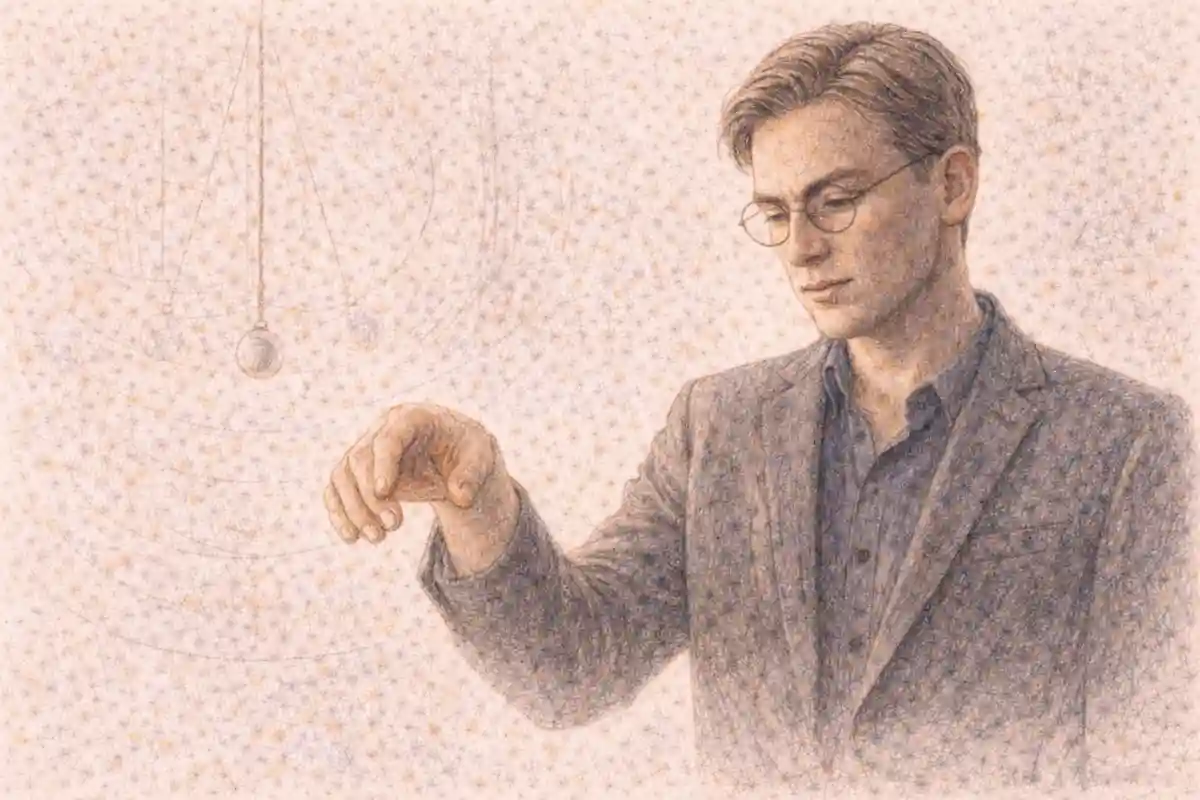
Introduction: The Same Wound, Two Ways of Wearing It
The question is not which of these two men endured his exile more nobly. Both Sirius Black and Remus Lupin were cast out of ordinary life by forces they did not choose, and both spent twelve years in the wilderness while a child they would come to love grew up unaware they existed. The question worth asking is sharper and stranger than a contest of nobility: does the condition of being an outcast determine how a person survives it, or does the same exclusion leave room for radically different temperaments to take radically different roads? Place these two survivors side by side and the series offers its most sustained answer. One man rages at his cage and breaks it. The other learns the shape of his cage so thoroughly that he stops noticing the bars. Each strategy keeps its owner alive for a while. Each strategy, in the end, kills him.
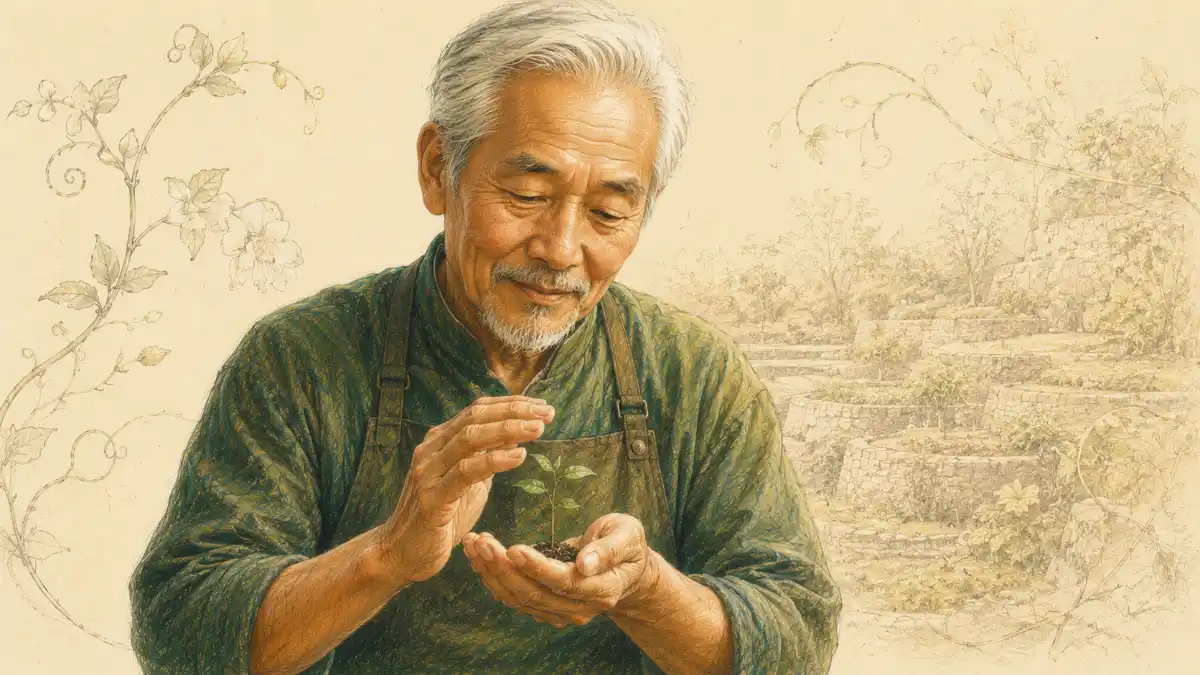
What makes the pairing so rich is that it removes nearly every variable except temperament. These were friends of the same age, schooled in the same dormitory, shaped by the same four-person fellowship, robbed of that fellowship in the same single night. They are, in the most literal narrative sense, two halves of one shattered group walking forward into the same ruined future. When the volatile one and the careful one emerge from the rubble of the first war and meet again in Harry’s third year, the reader is handed a controlled experiment in adult survival. Hold the loss constant. Hold the generation constant. Hold the betrayal constant. Then watch what rage builds and what caution builds, and count the cost of each.
Rowling refuses to crown a winner, and that refusal is the whole point. A lesser writer would have made the reckless man a cautionary tale and the careful man a model, or the reverse: the bold man a hero and the timid man a coward who waited too long to live. Instead the books insist that both strategies are coherent answers to an impossible situation, and that both answers bankrupt the man who chooses them. This is the series at its most morally adult. It is also the series at its most quietly devastating, because the two men who might have saved each other from their opposite errors are never given the chance.
The Surface Parallel: Two Survivors of One Catastrophe
The comparison is not imposed from outside the text. It is built into the biographies so precisely that the books seem to dare the reader to lay the two lives over each other and trace where the lines diverge. Both were born into the wizarding world roughly two decades before Harry. Both arrived at Hogwarts and found their way into the same group of four boys whose loyalty to one another would define the rest of their lives and, in two cases, the manner of their deaths. James Potter and Peter Pettigrew complete the quartet, but it is the pair under examination here who become the surviving witnesses, the two left to carry the memory of what the Marauders were before the night everything ended.
That night is the hinge on which both lives turn. When the Potters died and Pettigrew vanished after framing his oldest friend for the slaughter, the fellowship did not merely lose two members. It lost its meaning. The structure that had organised four young lives collapsed in a single evening, and the two men who remained were each left to absorb the catastrophe alone, in conditions of near-total isolation, for twelve years. The escaped prisoner spent those years behind the stone walls of a fortress where Dementors feed on every happy thought. The werewolf spent them in a society that will not hire his kind, drifting through unemployment and poverty with a secret that disqualifies him from belonging anywhere. Different prisons, identical sentence: a dozen years of exile, severed from the only people who ever knew him fully.
Both return to active life at the same summons. The danger to Harry pulls each of them back into engagement after more than a decade of withdrawal. The man who broke out of his fortress did so the moment he understood the child of his dead best friend was in reach of the traitor; the man who had been quietly subsisting on the margins re-entered the world the year he was hired to teach Defence Against the Dark Arts to that same child. And both, before the second war is finished, give their lives to the resistance. The escaped prisoner falls in the Department of Mysteries; the werewolf falls in the great battle at the castle. The biographies rhyme at the start and rhyme at the end. It is in the long middle, in the texture of how each man metabolises the same disaster, that the rhyme breaks into counterpoint.
To read the two arcs together is to perform a kind of analytical close reading that rewards the careful eye, the same disciplined attention that competitive exam preparation cultivates over time. The pattern-recognition that makes a reader notice these structural symmetries is precisely the skill that resources like the ReportMedic CAT PYQ Explorer are built to train, where comparing years of questions side by side teaches the mind to hold two things in one frame and watch where they diverge. Rowling rewards exactly that habit of mind. She lays two lives in parallel and trusts the reader to feel the moment the parallel lines bend away from each other.
Dimension One: Rage Against the Cage, or the Study of Its Bars
The deepest divergence between the two men is also the simplest to name. One responds to exclusion by fighting it; the other responds by accommodating it. The godfather is the patron saint of refusal. He will not accept the terms his circumstances impose. He breaks out of an inescapable prison through sheer force of will and an Animagus form, swims to shore, and takes up residence in a cave near the village below the school, eating rats and stealing newspapers, because the alternative is to remain caged while his godson is in danger. He transforms into a great black dog in public places when caution would counsel staying hidden. He flings himself bodily into combat in the Department of Mysteries with a laugh on his lips. The cage, for this man, is something to be smashed. Confinement of any kind reads to him as an insult requiring an answer.
The werewolf is the patron saint of accommodation. He does not break his cage; he memorises it. He hides his condition from nearly everyone, knowing exposure means unemployment and exile. He accepts the unemployment when it comes anyway, drifting through years of poverty rather than forcing a confrontation with a society that despises what he is. When the woman who loves him offers him a future, he refuses her for months, building elaborate arguments about why a werewolf has no right to a wife and child, because the safest thing is to want nothing and risk nothing. His whole adult life is an exercise in calculating where the bars are and never pressing against them. To press is to risk the lash; better to map the enclosure so completely that the bars feel like the natural edges of the world.
What is striking is how completely each man’s strategy fails to recognise itself as a strategy. The reckless one does not experience his recklessness as a choice; he experiences it as the only honest response to intolerable confinement. The cautious one does not experience his caution as a choice either; he experiences it as simple realism, the bare arithmetic of what a person like him is permitted to want. Each believes he is merely seeing the situation clearly. Each is in fact running a deep behavioural program laid down long before the catastrophe, a temperament that the loss did not create but only revealed and amplified. The fortress and the poverty did not make one man explosive and the other watchful. They took the explosive boy and the watchful boy each had already been and turned the dial to maximum.
The books are careful to show that neither program is sustainable on its own. The man who refuses every cage cannot stop refusing even when refusal will kill him; the impulse that broke him out of the fortress is the same impulse that drives him into the fatal duel. The man who maps every cage cannot stop mapping even when the walls he is respecting are imaginary; the caution that kept him alive through twelve unemployed years is the same caution that nearly costs him a wife, a son, and the last chance at joy a brief life will offer. Rage and accommodation are not opposites so much as two failure modes of the same underlying problem, which is that neither man was ever taught a third option: how to hold a wound without either detonating it or sealing it shut.
Dimension Two: How Each Carries the Betrayal
The single event that defines both lives is the treachery that destroyed the Marauders, and the two men process that treachery in ways that map perfectly onto their opposite temperaments. The escaped prisoner grieves by burning. For twelve years inside the fortress he holds onto one idea with such ferocity that the Dementors cannot strip it from him: the conviction that the traitor is alive and must die. This is not a healthy fixation. It is, in a sense, the only thing that keeps him sane, because it is an idea too furious to be classified as a happy thought and therefore too furious for the Dementors to feed on. His sanity is preserved by the very rage that is also slowly hollowing him out. When he finally breaks free, he does so not to reclaim a life but to complete a vengeance. He returns to the world organised entirely around a single act of killing he has been rehearsing for a decade.
The werewolf grieves by going silent. He does not speak of the loss. He does not organise his life around vengeance or even around mourning that anyone can see. He simply absorbs the catastrophe inward and continues, the way he has continued through every other thing that could not be changed. In Harry’s third year, while the escaped man is hunting the traitor through the castle grounds, the quiet one is teaching the dead friend’s son to produce a Patronus, performing the steady work of protection without ever once narrating his own grief to the boy who might have understood it. He was the Marauder left to maintain the friendship’s structure quietly, the one who held the memory in private because making it public would require feeling it at full volume, and full volume is the one thing his temperament cannot survive.
These two grief-styles produce two visibly different adults. The burning man is legible. His pain is on the surface; his fury announces itself; when he loves, he loves loudly, and when he hates, the hatred is a weather system everyone in the room can feel. The silent man is opaque. His pain is sealed beneath a worn, patient surface that the books describe again and again in the language of shabbiness and fatigue, a man whose robes are patched and whose smile is gentle and whose interior is almost entirely withheld. The reader knows the volcanic man’s heart within minutes of meeting him; the reader is still guessing at the quiet man’s heart by the time he dies. One grief shouts and one grief whispers, and the series is careful never to suggest that the shout is more sincere than the whisper. They are the same grief in two registers, and the registers are determined by the temperaments that the same loss did not create but merely exposed.
There is a cruelty in how the betrayal lands differently on each man’s specific vulnerability. For the burning one, the treachery confirms his deepest instinct, which is that the world is an enemy to be fought; the traitor’s crime gives his rage a legitimate object and so, in a terrible way, organises and justifies a temperament that might otherwise have had no focus. For the quiet one, the treachery confirms his deepest instinct, which is that wanting things is dangerous and attachment is a liability; if the most trusted of friends could be a traitor, then trust itself is the error, and the safest posture is the one he already held. The same single event hardens both men further into the temperaments that were already half-destroying them. This is the series’s bleak, unsentimental view of trauma: it rarely transforms a person into someone new. More often it takes whoever was already there and presses down.
Dimension Three: Two Ways of Loving the Same Boy
When Harry enters their lives, the two men relate to him through their opposite temperaments, and the difference is one of the most quietly instructive things in the series. The godfather claims him. From the moment he learns the boy exists and is endangered, his instinct is possessive in the warmest and most dangerous sense: he wants Harry to live with him, to belong to him, to be the second chance at family that the death of his best friend tore away. He sees in the boy the lost friend returned in miniature, and he loves that resemblance so fiercely that he sometimes loses sight of the actual child standing in front of him. He sends a thirteen-year-old a Firebolt. He encourages risks. He speaks to the boy as though to a comrade-in-arms rather than a frightened teenager, and the line between godfather and equal, between guardian and friend, keeps blurring in ways that thrill the boy and alarm the adults around him. His love is real and it is generous and it is also a little reckless, because everything this man does is a little reckless.
The teacher advises. He never claims Harry; he positions himself in the background of the boy’s decisions, offering instruction rather than possession. The Patronus lessons in the third year are the perfect emblem of this style: patient, structured, demanding, aimed at giving the boy a tool he can carry rather than a relationship he can lean on. The quiet man encourages Harry’s friendships rather than competing with them for the boy’s loyalty. He counsels caution. He stays one step removed, the steady teacher rather than the loving relative, and the remove is itself a form of care, the care of a man who does not trust himself to want too much and so offers what he can give safely: knowledge, skill, the occasional measured word of encouragement, never the overwhelming claim of family.
The two mentoring styles produce two different wounds when each man is lost. When the godfather dies, the boy loses a parent, the closest thing to a father he has known, and the grief is enormous precisely because the love had been so possessive, so total, so much like belonging. When the teacher dies, the loss is quieter and arrives almost offstage, a steady presence simply gone, and the boy’s grief for him is real but muted, the grief one feels for a good teacher rather than for a parent. The asymmetry of mourning is the direct consequence of the asymmetry of loving. The man who claimed the boy is mourned as family; the man who advised the boy is mourned as a mentor. Each got exactly the grief his style of love had earned, and the series lets the reader feel how the warmer, riskier love produced the deeper wound, without ever suggesting that the deeper wound was a failure on anyone’s part.
There is a painful symmetry in how each man’s relationship to Harry repeats his relationship to the dead friend. The godfather loved James loudly, as a brother and a co-conspirator, and he loves James’s son the same way, transferring the whole force of that fraternal devotion onto a child too young to hold it. The teacher loved James quietly, as the steady member of a group of louder personalities, and he loves James’s son the same way, from the same respectful distance. Neither man can quite see Harry as Harry rather than as a continuation of James, but they fail to see him in opposite directions: one by loving him too much like the father, the other by keeping a careful distance that the father’s memory seems to require. The boy is, for both of them, partly a ghost, and the way each handles that ghost is the way each handled the living man.
Dimension Four: How Each Man Dies, and Why the Deaths Complete the Lives
Rowling’s most precise piece of moral architecture in this entire comparison is the way she kills the two men. Each death is the logical, almost inevitable terminus of the temperament that organised the life, and the two deaths together form a matched pair so deliberate that they read like the closing rhyme of a long poem. The reckless man dies recklessly. In the Department of Mysteries he is winning a duel, taunting his opponent, fighting with the same exuberant defiance that has carried him through every confrontation of his life, and he is too caught up in the joy of finally fighting again, too unwilling to back away from a fight, to register the danger in time. He dies because he could not stop charging. The impulse that broke him out of the fortress, that drove him into the cave, that made him transform in public and laugh in combat, is the same impulse that pulls him a half-step too far and through the veil. He dies as he lived, which is to say he dies of being himself.
The cautious man dies after finally abandoning his caution. For years his entire philosophy was risk-avoidance: hide the condition, refuse the job, refuse the woman, want nothing, expose nothing. The arc of his final year is the slow, painful surrender of that philosophy. He marries the woman he had refused. He fathers a child he had argued he should never have. And then, with a newborn son at home, he commits fully to the war, choosing to fight in the great battle at the castle rather than stay safe for the sake of the family he finally allowed himself to have. He dies there. The man who spent a lifetime calculating where the bars were dies in the one moment he stopped calculating and threw himself entirely into something. His death is the mirror image of the other man’s: the reckless one dies because he could not stop being reckless, and the cautious one dies because he finally stopped being cautious. One is killed by his temperament; the other is killed by the abandonment of his temperament.
The matched deaths argue something the books never state outright but that the structure makes unmistakable. Both strategies for surviving exclusion lead to the same destination. The man who rages against his cage and the man who maps his cage both die in the war, both before the peace, both leaving behind a boy who needed them. There is no survival strategy that survives. The defiance that looks heroic and the prudence that looks wise are both, in the end, just different roads to the same forest, and the series refuses to tell the reader that one road was the right one. The reckless man’s death is a tragedy of excess; the cautious man’s death is a tragedy of a life half-lived that committed too late and was cut off the moment it began to be whole. Neither tragedy is preferable. They are two shapes of the same loss.
It matters, too, that the cautious man’s death carries an extra layer of grief precisely because of how recently he had chosen to live. The reckless man dies in the middle of a life that had always been lived at full volume; there is something almost complete about it, a man going out exactly as he came in. The cautious man dies just as he was learning to want things, with a wife of barely a year and a son of barely weeks, and the cruelty is that he is killed in the small window between deciding to live and getting to. The series gives the bolder man the death that fits his life and gives the gentler man the death that breaks the heart by its timing, and the contrast in the deaths is the contrast in the lives carried through to the final beat.
Dimension Five: The Friendship That Could Not Save Either Man
Beneath the comparison of two temperaments runs a deeper tragedy that the books gesture toward without ever fully depicting: these two were the last survivors of their fellowship, and they could not save each other. Here were the two men best positioned to correct each other’s errors. The one who could not stop charging needed exactly the counsel of the one who weighed every step; the one who could not stop hesitating needed exactly the example of the one who flung himself at life. Each man’s deficiency was the other man’s surplus. A friendship between them, fully realised, might have tempered the recklessness into courage and the caution into wisdom. Instead the friendship was severed at the worst possible moment, and each man went to his death missing the corrective the other could have provided.
The lost decade did most of the damage. For twelve years they did not know whether to trust each other; the werewolf believed his old friend was the traitor, and the imprisoned man had no way to send word that he was not. When they finally reunite and the truth comes out, they have one brief window of restored friendship before it is torn away again. The escaped man dies in the boy’s fifth year, and the quiet man is left to grieve him almost entirely in private through the following year, carrying the loss of the last person alive who knew the Marauders as they were. By the time the gentle man marries and fathers his son, the friend who might have stood beside him at the wedding is already dead. The two survivors of the original four were reunited just long enough to lose each other a second time, and the second loss left the last man standing utterly alone in his memory of what they had all once been.
The series gives this severed friendship almost no on-page treatment, and the silence is itself the point. When the bolder man dies, the books are necessarily occupied with the boy’s grief, and the quiet man’s grief is pushed to the margins, glimpsed rather than rendered. The reader is told, in passing, that the loss has wounded him, but the wound is never opened on the page. We do not get the scene of the gentle man mourning his last friend. We do not get his face when he learns. We do not get the long nights of the following year, the man who has now outlived all three of his closest companions, sitting alone with the knowledge that he is the final witness. The series declines to show us the deepest grief of the quieter man’s life, and that decline is consistent with everything else about him: even in death, his sorrow is the one the books keep off-stage, because the man himself kept it off-stage his whole life.
Where the Comparison Breaks Down: The Problem of Money
The neat symmetry of rage-versus-caution conceals a variable the comparison cannot control for, and an honest reading has to name it. These two men did not face their exclusions on equal footing. One was born wealthy. The Black family fortune, and eventually the Grimmauld Place property he inherited, meant that the bolder man always had a material cushion beneath his defiance. When he broke out of the fortress and lived in a cave, he was choosing privation; the resources to live otherwise existed, waiting for him whenever the circumstances allowed. His recklessness was, in a sense, insured. A man with family money can afford to fling himself at the world, because the world’s punishments for the wealthy are softer and more survivable than its punishments for the poor.
The other man was destitute. A werewolf in a society that will not employ his kind, with no family wealth to fall back on, he faced his exclusion with nothing underneath him. His caution was not simply a temperament; it was also the rational strategy of a man who literally could not afford a mistake. When he refused the job, the woman, the family, part of what spoke through him was the plain arithmetic of poverty: he had no margin for error, no cushion to absorb a wrong move, no inherited safety net to make boldness affordable. To read his caution purely as psychological is to ignore that it was also, substantially, economic. The poor are careful because they must be. The wealthy can be reckless because they can afford to be.
This means the comparison is not quite the clean experiment it first appears. We cannot fully ask “which temperament serves better” while holding everything else constant, because everything else is not constant. The question lurking beneath the surface, the one the books never resolve, is what the impoverished man would have done with the wealthy man’s freedom. Given a fortune and a family seat and a cushion beneath every choice, would the cautious man have stayed cautious? Or was much of his caution simply poverty wearing the mask of temperament? We cannot know. The class divergence is so large that it contaminates the comparison, and the analytical honesty required here is to admit that some of what looks like a contrast in character may actually be a contrast in bank balance. The bolder man’s defiance and the gentler man’s prudence were performed in radically different material conditions, and the conditions did at least as much work as the temperaments.
There is a further asymmetry worth naming. The wealthy man’s worst confinement, the fortress, was externally imposed and finite in a way the poor man’s was not; once he escaped, he was free, even if hunted. The poor man’s confinement was the permanent condition of being what he was in a society structured to exclude him, a cage with no door to break through, because there was nothing to break. You cannot escape from being a werewolf. You cannot swim away from a labour market that will not hire you. The bolder man’s prison had walls he could, with enough will, get past; the gentler man’s prison had no walls at all, only the soft, total, inescapable pressure of a world that had decided he did not belong. To compare their survival strategies without acknowledging that one prison had an exit and the other did not is to miss the deepest inequality in the pairing.
What Rowling Reveals Through the Juxtaposition
Lay the two lives together and the series’s argument about trauma emerges with unusual clarity. Outcast status does not determine response. The same exclusion, visited on two men of the same age and the same history, produced rage in one and accommodation in the other, and the books refuse to rank the two responses. This is a more sophisticated position than most literature about survival is willing to take. The easy story says that resilience looks one particular way: the brave fight back, the wise endure, and the reader is meant to admire one posture and pity the other. Rowling declines the easy story. She presents two opposite postures, grants each its full dignity, and then shows that each one costs the man who chooses it something the other might have preserved.
Count the costs precisely. The bolder man pays for his rage with his life and with the years of imprisonment that preceded it; the temperament that could not accept confinement spent twelve years confined and then died charging at the first chance to fight. His defiance bought him nothing but a brief, glorious, fatal freedom. The gentler man pays for his caution with a delayed life, with the family he almost did not allow himself to have, with the slow erosion of joy that careful self-protection always produces. His prudence kept him alive longer but kept him from living, and by the time he chose to live the war killed him within the year. Each man’s strategy preserved something and destroyed something, and the thing each strategy destroyed was precisely the thing the other strategy preserved. The reckless man had freedom and joy but no longevity; the cautious man had longevity but no freedom or joy until the very end. Neither had all three. Survival, the comparison argues, is a set of trade-offs in which every choice forecloses another, and there is no posture that pays no price.
The deepest thing the juxtaposition reveals is that the series does not believe in a correct way to survive catastrophe. It believes only in the honest acknowledgement that catastrophe must be survived somehow, and that every somehow carries its own bill. This refusal to crown a winner is the mark of a moral imagination that has outgrown the binary of brave-versus-cowardly. The volcanic man is not braver than the quiet man; the quiet man is not wiser than the volcanic man. They are two human beings doing the only thing each knew how to do with a wound neither chose, and the dignity the series extends to both is the dignity of recognising that there was no right answer and they each found an answer anyway. To survive at all, the books suggest, is already an achievement, regardless of which flawed strategy gets you there.
Cross-Literary Parallels: The Burning Friend and the Enduring One
The pairing of a volatile man and a steady one, both wounded by the same loss, is one of the oldest structures in literature, and reading these two against their literary ancestors sharpens what the series is doing. The clearest forebears are the prince of Denmark and his loyal companion. Hamlet burns; Horatio endures. Both have lost the same world, both carry the same knowledge of corruption, but one of them rages and theatricalises and ultimately dies of his own intensity, while the other survives precisely by being temperate, by being, in the prince’s own words, a man who is not passion’s slave. The escaped prisoner is the Hamlet of this pair, all flammable feeling and fatal impulsiveness; the quiet teacher is its Horatio, the steady witness who carries the memory forward. The difference is that Rowling kills her Horatio too, denying him the survivor’s role the tragedy traditionally grants the temperate man. In her bleaker arithmetic, even endurance does not earn survival.
The warrior who rages and the friend who counsels also recall the greatest of the ancient war-poems. In the tale of the Greek camp before Troy, Achilles is the volcanic force whose wrath drives the whole story, and Patroclus is the gentler companion whose counsel might have tempered him. Rowling inverts the order of their deaths: in the old poem the gentle friend dies first and the rage that follows is grief weaponised, whereas in the series the raging man dies first and the gentle man is left to mourn. But the underlying pairing is the same, the same recognition that the friendship between a fierce man and a mild one is a kind of mutual completion, each supplying what the other lacks, and that to break such a friendship is to leave both men dangerously partial. Neither the Greek warrior nor the escaped prisoner could be tempered once the friend who tempered him was gone.
Steinbeck’s great novel of two brothers offers a closer domestic parallel. In that book the volatile son and the placid son respond to the same family wound in opposite directions, one all turbulence and self-laceration, the other all mildness and withdrawal, and the novel refuses to make either response the healthy one. The biblical brothers behind that novel, the impulsive elder and the deliberate younger who supplants him, run the same contrast back to its scriptural root: one man governed by appetite and the immediate moment, the other by calculation and the long game. The two Marauders sit squarely in this lineage of paired temperaments, the man of the present moment and the man of the deferred future, except that Rowling’s pair are not rivals but friends, which makes their inability to save each other more poignant than the fratricidal versions. They were not competing for a single inheritance. They were the only two who could have helped each other, and history kept them apart.
The marriage plot of the great Yorkshire novel supplies another resonant pair: the passionate, dangerous suitor and the disciplined, ascetic one, both wounded men, both offering the heroine different futures. The escaped prisoner has something of the passionate suitor’s fire and self-destructive intensity; the gentle werewolf has something of the disciplined man’s self-denial, his conviction that he must renounce what he wants for the sake of a higher caution. Both literary men nearly ruin themselves through their opposite excesses, the one through ungoverned passion and the other through over-governed restraint, and the novel watches each excess do its damage. So does the series. The volatile man’s fire and the gentle man’s renunciation are the same opposed energies, given a wand and a war.
Finally, Dickens’s tale of two cities gives us the dissipated man and the principled one, two figures who look like opposites and turn out to be linked by a shared willingness to sacrifice. The dissipated man, careless of his own life, throws it away in a final reckless act of love; the principled man lives carefully and is nearly destroyed by the carelessness of others. The escaped prisoner has the dissipated man’s recklessness with his own safety, the readiness to spend his life in a single gesture; the gentle teacher has the principled man’s careful rectitude. What unites the literary pair, and what unites the Marauders, is that both temperaments end in sacrifice. The reckless and the careful both give themselves up for someone else, and the series, like the novel, finds in that shared sacrifice the place where the two opposite roads finally meet. The drawing of these connections across traditions is itself a discipline, the kind of synthetic reading that structured analytical practice sharpens; the same cross-textual pattern-matching that tools like the ReportMedic UPSC Prelims Daily Practice cultivate in candidates, where holding multiple frameworks in mind at once and seeing how they illuminate one another is the core intellectual skill. Literature rewards that habit as surely as any examination does.
The Negative Space: The Year at Grimmauld Place
The single most tantalising absence in the entire comparison is the year the two men shared a house. After twelve years apart, the two surviving Marauders are reunited under one roof, living together in the grim ancestral home the bolder man despises, working side by side for the Order, navigating the strange intimacy of two middle-aged men trying to rebuild a friendship that history interrupted. And the books give us almost none of it. We see the house, we see the Order’s meetings, we see the bolder man’s misery at being trapped in his childhood home, but we are given vanishingly little of the actual daily relationship between the two men who had once been part of the same fellowship and were now its last survivors.
Think of everything that must have happened in that house and never reached the page. The two men shared their grief for the dead friend, presumably, in the long evenings; they must have disagreed about how to handle the boy, the reckless one wanting to claim him and the careful one counselling distance; they must have circled, awkwardly, the lost decade in which each had wrongly suspected the worst of the other, and tried to repair the damage that suspicion had done. There is an entire unwritten chapter in the texture of their reconciliation, in the slow, halting work of two damaged men relearning how to be friends after everything that had happened. The series gestures at this constantly without ever depicting it, and the gesturing is itself a kind of portrait, a relationship visible only in its outline.
The negative space is, in a sense, the truest register of their friendship, because both men were people who kept their deepest things off the page even within their own lives. The bolder man’s misery at Grimmauld Place is loud and visible, but his tenderness toward his last friend is not; the gentler man’s care is constant but almost entirely unspoken. The relationship lived in glances and small gestures and the things two reserved-in-different-ways men do not say, and the books honour that by leaving it largely unsaid. What their direct conversations about the boy might have contained, what they confessed to each other about the lost years, how each tried to forgive the other for twelve years of misplaced suspicion, all of it lives in the space the series leaves blank. The most honest portrait of the friendship is the one the reader is forced to imagine, because the friendship itself was mostly conducted in the unsayable.
Legacy: Which Outcast Endures in the Reader’s Memory
In the long afterlife of the series, the two men have not been remembered equally, and the imbalance is instructive. The bolder man burns brighter in the collective memory. His defiance, his glamour, his tragic death falling backward through a veil while still laughing, his role as the loving godfather torn away just as the boy had found him, all of this makes him the more romantic figure, the one whose loss the fandom mourns most loudly. He is the dangerous, charismatic outcast, the wronged man who broke an unbreakable prison, and that archetype draws devotion the way fire draws the eye. Readers gravitate to the man who refused his cage because refusal is thrilling, and because his story is built around a single spectacular act of defiance that is easy to love.
The gentler man endures differently, more quietly, the way he lived. He is the favourite of a particular kind of reader, the one who recognises in his patched robes and his weary patience and his lifelong self-denial something closer to the actual texture of survival than the bolder man’s glamour offers. The werewolf is the outcast for readers who know what it is to manage a stigma, to hide a condition, to make oneself small so as not to frighten a world that has already decided to fear you. His Patronus lesson, his gentle competence, his refusal to burden others, his late and heartbreaking turn toward the family he had denied himself, all of this resonates with readers who find the bolder man’s recklessness more dazzling than recognisable. The quiet man’s devotees love him precisely because he is not glamorous, because his heroism is the unshowy heroism of endurance.
What the split in the fandom reveals is something about the reader as much as the characters. To prefer the bolder man is, often, to be drawn to the romance of defiance, to the fantasy that the right response to an unjust cage is to smash it and damn the consequences. To prefer the gentler man is, often, to recognise that most cages cannot be smashed, that most exclusions must be endured rather than escaped, and to find heroism in the daily, unglamorous work of carrying a stigma without letting it curdle into cruelty. The two outcasts, in death, become a kind of mirror for the reader’s own relationship to adversity. Are you drawn to the man who broke out, or to the man who learned to live inside? The answer says less about the characters than about the kind of survivor the reader imagines themselves to be, or wishes they were. That both men died in the war, before peace, leaving the boy they loved to carry on without them, is the series’s final refusal to let either fantasy of survival feel safe. The romantic defiance and the patient endurance led to the same forest, and the reader who loves one over the other is loving a road that ended, like the other road, too soon.
Two Relationships to Authority and the Law
A further axis sharpens the contrast: how each survivor stands in relation to power, rules, and the institutions that govern the wizarding world. The bolder Marauder treats authority as something to be defied on principle. He was, by his own family’s account, the rebel who fled a house of blood-purity dogma as a teenager, the Gryffindor born into a dynasty of Slytherins, the boy who rejected everything his lineage demanded. That early rebellion sets the pattern for everything after. He breaks the law that confines him to the fortress because he judges the law unjust; he disregards the Ministry’s manhunt because he holds the Ministry in contempt; he flouts the order to remain hidden because hiding feels to him like a kind of surrender. Authority, for this temperament, is presumptively suspect, and the appropriate response to an unjust system is open defiance, regardless of the personal cost. His relationship to power is adversarial all the way down.
The gentler Marauder treats authority with a wary deference born of dependence. As a werewolf, he exists at the mercy of laws that could be tightened against him at any moment, employers who could dismiss him on discovery, a Ministry that registers and restricts his kind. He cannot afford open defiance, because he has no standing from which to defy. So he works within the system’s edges, accepting its constraints, taking what employment the law permits, keeping his head down, hoping that compliance will purchase a small margin of tolerance. Where the bolder man’s defiance presumes a right to be free, the gentler man’s compliance presumes no rights at all, only privileges that might be revoked. The two postures toward authority are the political expression of their two temperaments: one demands, the other petitions.
This divergence maps onto the class difference but is not reducible to it. A wealthy man can afford to defy institutions because his money insulates him from their retaliation; a stigmatised poor man must placate institutions because they hold his survival in their hands. Yet the postures also reflect something prior to circumstance. Even granting the bolder man his fortune, his instinct is to fight first and reckon later, while the gentler man’s instinct is to negotiate, to find the workable accommodation, to avoid the confrontation that might cost more than it gains. The series uses their opposite relationships to authority to dramatise a question that runs through all of its politics: when the system is unjust, is the right response to break it or to survive within it long enough to be there when it changes? The Order itself contains both answers, and these two men embody the poles. The structured discernment such a question demands, the patient weighing of competing strategies against shifting and uncertain conditions, is exactly the kind of reasoning the series asks its readers to perform without ever resolving it on their behalf, and the two survivors are the living terms of that unresolved equation.
What is striking is that the war ultimately requires both relationships to authority. The resistance needs the man who will break unjust rules without hesitation, and it needs the man who will work patiently within constraints to gather intelligence and hold a position. Neither posture alone wins the war. The defiant one and the compliant one are both necessary, and the series gives each its function within the larger resistance, refusing once again to declare one the superior mode. The man who defies and the man who endures are not opposites to be ranked but complements the cause cannot do without, and the tragedy is that the war consumed both before either could see the system they fought finally begin to change.
Few works of fiction grant both postures equal standing. The instinct of most storytelling is to valorise one and quietly disparage the other, to make defiance the mark of the hero and caution the mark of the timid, or else to flip the polarity and praise the prudent realist while mocking the hothead. Rowling does neither. She builds two complete and dignified men out of opposite raw materials and then declines to choose between them, and that refusal is not indecision but a considered moral position. The position is that there is no master key to surviving a world that has excluded you, that the bold and the careful are both improvising against circumstances no one prepared them for, and that judging either one from the safety of the page is a luxury neither man could afford. The comparison ends not in a verdict but in a kind of double mourning, the reader grieving both the road taken in fire and the road taken in shadow, and recognising in the symmetry of their two endings that the series has been arguing all along against the comfort of a single right way to be brave.
Frequently Asked Questions
Why does Rowling pair a reckless character with a cautious one rather than two of a kind?
The contrast is the engine of the analysis. Two reckless men would only show one survival strategy twice; two cautious men would do the same. By giving the same loss to one volcanic temperament and one watchful one, the series can isolate the variable that matters: not the wound, which is identical, but the response. The pairing functions almost like a laboratory control. Everything is held constant except disposition, so when the lives diverge the reader can see that the divergence flows from temperament rather than circumstance. This is why the comparison feels so clean even though the men are wildly different. Rowling engineered them to be alike in every way except the one she wanted to study.
Is the escaped prisoner’s recklessness a flaw or a strength in the books?
It is both, inseparably, which is the point. The same impulsiveness that lets him break out of an inescapable fortress and survive twelve years of Dementors on a single furious thought is the impulsiveness that drives him into the fatal duel. You cannot subtract the flaw without losing the strength; they are one trait viewed from two angles. The books refuse to let the reader separate the heroic defiance from the self-destruction, because in this man they are the same energy. His courage and his carelessness are not two qualities but one, and that fusion is exactly what makes him both magnificent and doomed. A more cautious version of him would never have escaped and never have died as he did.
How does the werewolf’s caution differ from simple cowardice?
Cowardice flees danger to protect the self; the gentle man’s caution flees danger to protect others. He refuses the woman he loves not because he fears for himself but because he genuinely believes a werewolf would endanger and shame a wife and child. His restraint is other-directed, a form of care twisted into self-denial. The series is careful to show this distinction: when the war demands it, he fights, and he dies fighting. He was never afraid to face danger. He was afraid to inflict himself on people he loved. That is not cowardice but an excess of protective scruple, a conscience so overdeveloped that it nearly talks him out of every good thing his short life offers him.
Why are the two men’s deaths so structurally symmetrical?
The matched deaths are Rowling’s way of arguing that temperament is destiny. The reckless man dies of recklessness, charging a half-step too far; the cautious man dies the moment he finally abandons caution and commits fully to the fight. Each death is the logical terminus of the life. Placed side by side, they make a single argument: that there is no survival strategy that survives, that both the defiant road and the prudent road lead to the same forest. The symmetry is too deliberate to be accidental. Rowling wanted the reader to feel that these two opposite men ended in the same place, and that the manner of each ending was written into his character from the beginning.
Could the two men have saved each other if the lost decade had not happened?
This is the comparison’s most haunting counterfactual. Each man’s deficiency was the other man’s surplus: the one who could not stop charging needed the counsel of the one who weighed every step, and the hesitant one needed the example of the bold one. A fully realised friendship might have tempered both excesses into virtues, the recklessness into courage and the caution into wisdom. But the twelve years of mutual suspicion robbed them of the chance, and their brief reunion ended in the bolder man’s death. The tragedy is not only that each man died of his own temperament but that the one person who might have corrected it was kept from him until it was too late.
How does the godfather’s love for Harry differ from the teacher’s?
The godfather claims; the teacher advises. One wants the boy to belong to him, sees in him the dead friend returned, and loves him with a possessive warmth that sometimes loses sight of the actual child. The other positions himself in the background, offering instruction rather than belonging, the Patronus lesson rather than the family home. The fuller arc of each man’s bond with the boy is traced in the Sirius Black character analysis, where the possessive love is examined in depth. The two styles produce two different griefs when each man dies: the boy mourns one as a father and the other as a mentor, exactly the relationships each had built.
Does the class difference between them undermine the whole comparison?
It complicates it without destroying it. The wealthy man’s defiance was cushioned by family money; the poor man’s caution was partly the rational arithmetic of someone who could not afford a mistake. We cannot fully ask which temperament serves better while one man had a fortune and the other had nothing, because some of what looks like character may actually be economics. But the comparison still holds at the level of disposition, because even within their different circumstances the two men chose recognisably opposite postures toward risk. The honest reading keeps both truths in view: temperament drove much of the divergence, and material conditions drove a great deal of it too, and untangling them completely is impossible.
Why does the series give the quiet man’s grief so little page time?
Because the man himself kept his grief off-stage his whole life, and the books honour that by leaving it largely unwritten. When the bolder man dies, the narrative is occupied with the boy’s mourning, and the quiet man’s loss of his last friend is pushed to the margins, glimpsed rather than rendered. This is consistent with everything about him: a man who never narrated his pain in life is not going to have his pain narrated in death. The negative space around his grief is the truest portrait of it. The deeper character study of his lifelong reticence appears in the Remus Lupin character analysis, which examines how thoroughly he sealed his interior away from everyone, including the reader.
What does the year at Grimmauld Place reveal that the books leave unsaid?
It reveals the entire texture of two damaged men trying to rebuild an interrupted friendship, and almost none of it reaches the page. The two surviving members of the fellowship lived under one roof for a year, sharing grief, disagreeing about the boy, circling the lost decade in which each had wrongly suspected the other. The series gives us the house and the misery but withholds the reconciliation. What survives is an outline the reader must fill in, which is fitting, because the friendship itself was conducted mostly in the unsayable. Both men kept their deepest things off the page even within their own lives, so the relationship’s truest register is precisely the one the books leave blank.
How does this pairing compare to Hamlet and Horatio?
The structure is nearly identical: a man who burns and a man who endures, both wounded by the same corrupt world. The escaped prisoner is the Hamlet figure, all flammable feeling and fatal impulsiveness; the quiet teacher is the Horatio figure, the temperate witness who carries the memory forward. The crucial difference is that the play lets Horatio survive to tell the prince’s story, whereas Rowling kills her Horatio too. In her bleaker accounting, endurance earns no exemption from the war. The temperate man dies alongside the passionate one, and the survivor’s role the tragedy traditionally grants to the steady witness is denied. The series is harsher than the play about whether prudence buys you anything in the end.
Why does the fandom remember the bolder man more vividly?
Defiance is thrilling, and his story is built around a single spectacular act of refusal: breaking an unbreakable prison, living in a cave, dying mid-laugh through a veil. That glamour draws devotion the way fire draws the eye. He is the wronged, charismatic outcast, the loving godfather torn away just as the boy found him, and that archetype is easy to romanticise. The gentler man endures more quietly in memory, favoured by readers who recognise in his patched robes and lifelong self-denial something closer to the actual texture of survival. The split reveals as much about readers as characters: the bold man appeals to the fantasy of escape, the quiet man to the reality of endurance.
Is one survival strategy actually better than the other?
The series deliberately refuses to say. Each strategy preserves something and destroys something, and the thing each one destroys is precisely the thing the other preserves. The reckless man had freedom and joy but no longevity; the cautious man had longevity but no freedom or joy until the very end. Neither had all three. This is the comparison’s central moral claim: survival is a set of trade-offs in which every choice forecloses another, and there is no posture that pays no price. To declare a winner would be to betray the whole structure, which exists to demonstrate that catastrophe must be survived somehow and that every somehow carries its own bill.
How does the betrayal affect each man differently?
It hardens each further into the temperament that was already half-destroying him. For the burning man, the treachery gives his rage a legitimate object, organising and justifying a fury that might otherwise have had no focus; it confirms his instinct that the world is an enemy to be fought. For the quiet man, the treachery confirms his instinct that attachment is dangerous; if the most trusted friend could betray them, then trust itself is the error, and the cautious posture he already held is vindicated. The same single event presses both men deeper into their existing grooves. This is the series’s unsentimental view of trauma: it rarely makes a person new, it usually takes whoever was already there and presses down hard.
What role does the Patronus lesson play in defining the quiet man?
It is the perfect emblem of his mentoring style: patient, structured, demanding, aimed at giving the boy a tool he can carry rather than a relationship he can lean on. Where the bolder man would have offered belonging, the teacher offers a skill. The lesson is care expressed through competence rather than possession, the gift of a man who does not trust himself to want too much and so gives what he can safely give. It also shows his heroism in miniature: unshowy, useful, protective, conducted from a respectful distance. The scene captures everything about him in a single sustained image of a man teaching a frightened child to summon his own light rather than borrowing the teacher’s.
Why does the cautious man’s late turn toward family make his death sadder?
Because he is killed in the small window between deciding to live and getting to live. The reckless man dies in the middle of a life lived at full volume, so there is something almost complete about his ending; he goes out as he came in. The cautious man dies just as he was learning to want things, with a wife of barely a year and a son of barely weeks, cut off the moment he finally allowed himself happiness. The cruelty is in the timing. He spent a lifetime denying himself joy on the grounds of caution, surrendered the caution at last, and was permitted only a few weeks of the life he had earned before the war took it.
How do these two men compare to the brothers in Steinbeck’s East of Eden?
The novel sets a volatile son against a placid one, both responding to the same family wound in opposite directions, and refuses to make either response the healthy one. The Marauders sit in that lineage of paired temperaments, the man of the immediate moment and the man of the deferred future. The crucial difference is that Steinbeck’s pair are rivals while the Marauders are friends, which makes their failure to save each other more poignant than the fratricidal version. They were not competing for a single inheritance. They were the only two people alive who could have helped each other correct their opposite excesses, and the history of their generation kept them apart until it was too late.
Does the werewolf’s stigma make his exclusion fundamentally different from the prisoner’s?
Yes, in a way that deepens the inequality between them. The prisoner’s worst confinement was external and finite; once he escaped the fortress he was free, even if hunted. The werewolf’s confinement was the permanent condition of being what he was in a society built to exclude him, a cage with no door, because there was nothing to break out of. You cannot escape being a werewolf or swim away from a labour market that will not hire you. The bolder man’s prison had walls he could eventually get past; the gentler man’s prison had no walls at all, only the soft, total, inescapable pressure of a world that had decided he did not belong anywhere.
What does comparing these two teach about Rowling’s view of trauma?
That trauma does not transform people so much as intensify them. The same catastrophe took an explosive boy and a watchful boy and turned each one up to maximum, producing a man who could not stop refusing and a man who could not stop accommodating. Neither was made new by suffering; each was made more thoroughly himself. The series presents this without flinching and without offering a cure, because it does not believe in a correct way to survive catastrophe. It believes only that catastrophe must be survived somehow, that every somehow has a cost, and that the dignity owed to survivors is the dignity of recognising there was no right answer and they each found an answer anyway.
Why does the series insist on killing both men before the peace?
Because to let either survive would be to suggest that his strategy was the safe one, and the comparison’s whole argument is that no strategy is safe. The romantic defiance and the patient endurance lead to the same forest. By killing both, the series denies the reader the comfort of believing that if only the boy he loved had chosen rage, or chosen caution, he might have lived. Both men loved the boy; both died before the war ended; both left him to carry on without them. The matched losses are the final refusal to crown a winner, and they leave the reader holding the unbearable truth that two opposite good men both ran out of time.