Introduction: What Each Outsider Chose to Teach
The question is not which mentor mattered more to Harry Potter. The boy who arrives at Hogwarts unloved and unformed needs everything both men can give, and the series never asks the reader to rank them. The real question is stranger and more revealing: why did two figures excluded from full citizenship in the wizarding world, two men the magical establishment regarded with suspicion bordering on contempt, produce opposite pedagogies out of the same wound? One taught the orphan that the world brims with wonder. The other taught him that the world is laced with danger. The exclusion was shared. The lesson was not.
Marginalisation, the series quietly argues across seven books, does not dictate what a marginalised person becomes. It supplies the raw material and then steps back. Rubeus Hagrid, half-giant, expelled in his third year on a false charge, carrying a heritage that the magical world treats as a near-criminal taint, chose to meet the boy with open arms and a homemade cake misspelled in pink icing. Remus Lupin, werewolf, forced into concealment for most of his adult life, chose to meet the same boy with measured words, careful lessons, and a chocolate bar pressed into his hand after the Dementor drained him on the Hogwarts Express. The half-giant offers warmth without filter. The werewolf offers protection without display. Both gifts are real. Neither could substitute for the other.
To compare these two is to watch Rowling conduct an experiment in the sociology of teaching. Take two people the dominant culture has pushed to its edge. Give each of them the same vulnerable student, a child who has been starved of attention and instruction alike. Then observe what each chooses to do with the position of mentor, a position that grants the excluded adult a rare authority over a member of the very world that excludes them. The choices diverge so cleanly that the divergence itself becomes the argument: pedagogy is not produced by suffering, it is produced by what a person decides to make of their suffering. The half-giant decided his exclusion would not curdle into bitterness. The werewolf decided his condition would not be inflicted on anyone who depended on him. Those two decisions are the seeds of two entire teaching styles.
The Surface Parallel
Before the differences can mean anything, the likeness has to be established, because a comparison between two arbitrarily chosen characters teaches nothing. The likeness here is structural and exact. Both are adult men of the generation that produced Harry’s parents, old enough to have known James and Lily, young enough to still be fighting the war those parents died in. Both serve the Order of the Phoenix. Both teach Harry directly inside a classroom: the gamekeeper takes up Care of Magical Creatures at the start of Prisoner of Azkaban, the werewolf takes up Defence Against the Dark Arts in the same volume, so that for one extraordinary academic year the boy sits under both of them simultaneously. And both carry a stigma assigned at birth or by accident, a mark the magical world reads as disqualifying. Giant blood, in the wizarding imagination, means brutality and stupidity. Lycanthropy means contagion and menace. Neither man earned the prejudice. Both spend their lives managing it.
There is a further likeness that the surface obscures. Each man is a conduit to the dead. Harry has no memory of his parents, and the people who can return them to him in fragments are precious beyond measure. The keeper of keys was the one who carried the infant out of the ruined house at Godric’s Hollow, the one who delivered him to Privet Drive, the one who finally retrieved him on his eleventh birthday with the news that he was a wizard. The Defence professor sat in the same dormitory as James, ran with him through the grounds under the full moon, watched Lily fall in love with a boy who had tormented him and then watched that boy grow worthy of her. To listen to either man talk about the previous generation is to receive the only inheritance the orphan will ever get. They are living photographs, and the boy studies both for the faces he cannot otherwise see.
So the parallel holds along five axes at once: generation, Order membership, classroom authority, inherited stigma, and custodianship of the lost parents. Five points of contact make the comparison non-arbitrary. The divergence becomes legible only against this dense background of sameness, the way two notes only sound dissonant if they are close enough in pitch to clash. What follows is the catalogue of that dissonance, dimension by dimension, with both men held in the same frame throughout, because the moment the analysis splits them into separate profiles the comparison dies.
Dimension One: The Unedited Heart and the Disciplined One
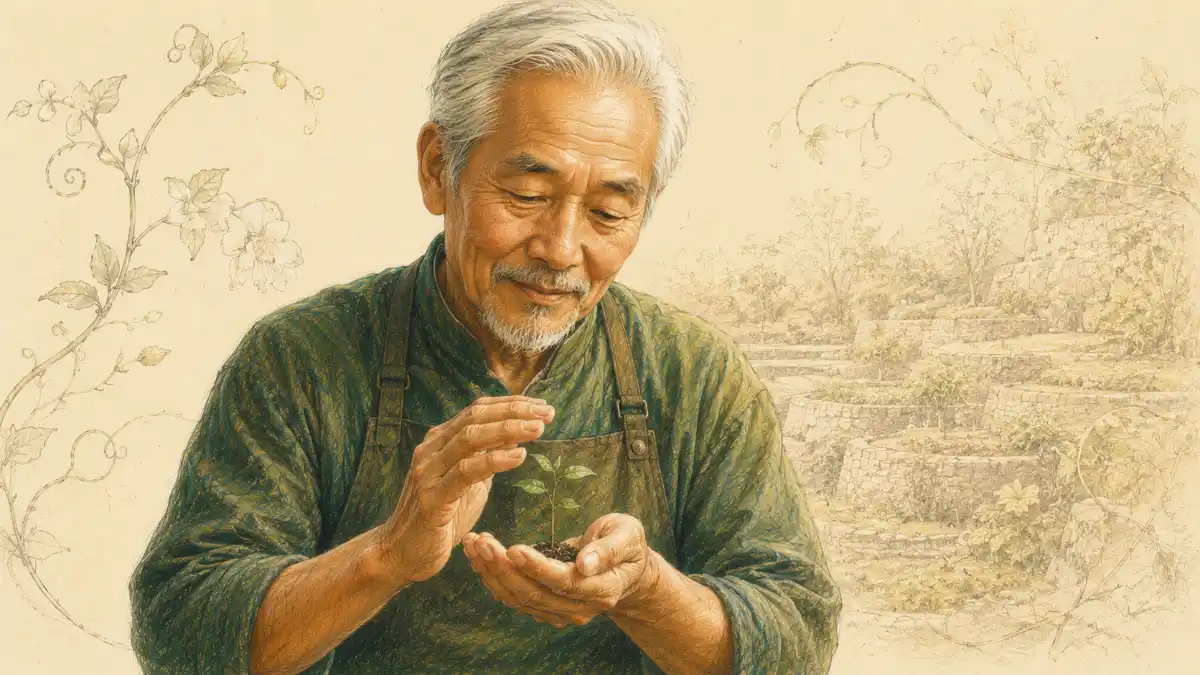
Watch the two men cry, and the entire difference announces itself. The half-giant weeps constantly and without apology. He sobs when he leaves the infant at the Dursleys’ door, blowing his nose into a handkerchief the size of a tablecloth. He weeps over Norbert the dragon, over Aragog’s death, over Buckbeak’s sentencing, over Dumbledore’s body. His grief is a public, total, full-bodied event. There is no gap between what he feels and what he shows. The emotion arrives and the tears arrive with it, in the same instant, with no committee meeting in between. This is emotional intelligence of a particular kind, often dismissed as mere sentimentality but in fact a rare and difficult achievement: the capacity to feel exactly as much as the situation warrants and to let the feeling be seen, so that everyone around him always knows precisely where they stand.
The werewolf cries differently, which is to say he is almost never shown crying at all. His emotional intelligence is the opposite virtue, the disciplined kind, the kind that measures every word before releasing it and reads a room before entering it. When the boy fails repeatedly at the Patronus, the former Marauder does not exhibit frustration or disappointment, because those reactions would land on a child already crushed by the memory of his mother’s screams. Instead he calibrates. He adjusts the difficulty, offers the chocolate, manages the boy’s despair with the precision of someone who has spent a lifetime managing his own. His own grief, and he has more cause for grief than almost anyone in the series, stays largely invisible. The man who has lost every friend he ever had, who buried James and watched Sirius taken by Azkaban and Peter vanish into apparent death, processes those losses somewhere the reader cannot see. He helps others feel without exhibiting his own feeling, which is its own form of generosity and its own form of self-imprisonment.
Set the two side by side and the moral asymmetry the reader expects refuses to appear. The instinct is to call the unedited heart childish and the disciplined one mature, or alternatively to call the unedited heart authentic and the disciplined one repressed. Rowling permits neither verdict. The keeper of keys, for all his lack of filter, never burdens the boy with his pain; his tears are offered as connection, not as a demand. The Defence professor, for all his control, is not cold; the warmth is there, simply rationed, deployed where it will do the most good. The series argues, through the contrast, that there is no single correct emotional register for the work of raising a damaged child. The open heart and the governed one both reach Harry. They reach him differently, but the reaching is what counts. What the orphan receives from one is the permission to feel; what he receives from the other is the model of feeling controlled in service of someone else. He needs both permissions, and the narrative gives him both, through two men who could not be less alike in the way they hold their own interiors.
There is a darker reading available, and the comparison should not flinch from it. The half-giant’s transparency is partly a function of his having less to hide. His shame, the expulsion, the giant blood, is known and largely forgiven by the people who matter to him. The werewolf’s discipline is a function of his having everything to hide. A single visible lapse, one full moon insufficiently contained, and he becomes a monster to the very people he loves. His emotional control is not only a virtue freely cultivated; it is a survival strategy forced on him by a condition that punishes exposure with catastrophe. The keeper of keys can afford to be unguarded. The werewolf cannot. To compare their emotional styles purely as temperaments would miss that the temperaments were shaped by radically different stakes attached to being seen.
Dimension Two: Wonder Improvised, Caution Designed
The two classrooms are two philosophies of education made visible. Enter the gamekeeper’s first lesson in Prisoner of Azkaban and the pedagogy is enthusiasm uncontained. He marches the third-years to the paddock, summons a herd of Hippogriffs, and teaches a magical creature so proud it will gut a child who bows incorrectly. The lesson is a thing of beauty when Harry rises into the sky on Buckbeak’s back, and a near-disaster when Draco Malfoy, drawling his contempt, is slashed across the arm. The keeper of keys teaches by sharing what he loves, and what he loves is precisely the creatures the rest of the world fears: dragons, Acromantulas, Blast-Ended Skrewts, the three-headed dog he names Fluffy. His curriculum is his affection, and his affection runs toward the dangerous because the dangerous is, in his moral universe, merely the misunderstood. The pedagogy is generous, infectious, and chronically miscalibrated, because the man teaching it cannot reliably tell which of his beloved monsters will maim a student.
The werewolf’s classroom is the antithesis: structure so careful it approaches art. The boggart lesson that opens his tenure is a small masterpiece of sequencing. He gathers the class, explains the creature, then has each student transform their deepest fear into something absurd, building confidence incrementally so that by the time Neville Longbottom faces a Snape in his grandmother’s clothes the whole room is laughing rather than trembling. The Patronus lessons he gives Harry privately are paced with the same precision, a difficult skill broken into achievable stages, each failure absorbed and reframed rather than punished. Where the gamekeeper improvises out of love, the Defence professor designs out of foresight. He has anticipated where the boy will struggle and built scaffolding in advance. His lessons are dangerous only in the controlled, deliberate way that all real learning is dangerous; nobody gets accidentally slashed because nothing in his classroom is accidental.
The comparison surfaces a truth about teaching that most pedagogy debates flatten into false opposition. Enthusiasm and structure are usually framed as rivals, the passionate teacher against the systematic one, the inspirer against the planner. Rowling refuses the binary by making both men effective and by attaching a distinct cost to each. The cost of teaching through enthusiasm is risk: Buckbeak’s talons, the Skrewts’ stings, the constant low hum of physical hazard that follows the keeper of keys like the smell of his moleskin coat. The cost of teaching through structure is a certain emotional distance, the way a perfectly designed lesson can feel like being managed rather than met. The boy who learns the Patronus from the werewolf gains a weapon that will save his life and the lives of dozens of others at the lake in the same book; the boy who learns to love Buckbeak from the half-giant gains something that no syllabus could produce, a felt conviction that the frightening thing might be worth approaching. Each lesson is irreplaceable. Each carries a price the other does not.
This is the kind of layered reading that rewards patient, comparative attention rather than first impressions, the same discipline that competitive examinees cultivate when they study how a single concept gets tested across years of papers. Resources built for exactly that habit of mind, such as the ReportMedic SAT Preparation Guide, train the reader to hold structure and intuition together rather than choosing between them, which is precisely the synthesis Rowling models through her two teachers. To learn well from the series is to learn the way it teaches: that the improvised lesson and the designed lesson are not enemies but partners, and that an education built on only one of them produces a lopsided mind.
A final asymmetry deserves naming. The gamekeeper’s improvisation is a function of temperament but also of training, or rather the lack of it. He never finished his magical education, and a man who does not fully know the syllabus cannot fully plan around its hazards. The werewolf’s design is a function of temperament but also of mastery; he can sequence the boggart lesson so flawlessly partly because he understands defensive magic at a depth few of his colleagues reach. The two pedagogies are not only expressions of two personalities. They are expressions of two relationships to knowledge itself, one partial and one complete, and the comparison cannot pretend that enthusiasm and structure float free of the question of how much each man actually knows.
Dimension Three: The Charisma Strategy and the Concealment Strategy
Prejudice falls on both men, but it falls in different shapes, and the difference in shape produces different defences. The wizarding world’s contempt for giants is loud and ambient. Everyone knows what the keeper of keys is; his size announces it, Rita Skeeter publishes it during Goblet of Fire, the parents of his students mutter about it. His difference is unconcealable. A half-giant cannot pass for fully human; the body itself is the disclosure. And so his survival strategy is the only one available to a person whose stigma cannot be hidden: he becomes so beloved, so manifestly gentle, so transparently devoted, that the prejudice is overwhelmed at the individual level even where it persists at the structural one. People accept him not because giants have become acceptable but because he, specifically, has made himself impossible to fear. The charisma is a counterargument made flesh, a one-man refutation of the stereotype conducted daily through cake and tears and the protective bulk that always stands between the boy and the dark.
The werewolf’s stigma works the reverse way, and so does his strategy. Lycanthropy is invisible twenty-seven days out of twenty-eight. He can pass, and passing becomes the architecture of his entire professional life. He hides the condition through years of itinerant near-poverty, taking what work he can in a job market that would bar him on sight if it knew. He hides it at Hogwarts, brewing the Wolfsbane Potion in secret, vanishing each full moon under a cover story, teaching with quiet precision all the while behind a wall of careful concealment. And the moment the secret breaks in Prisoner of Azkaban, when Snape exposes him to the students and the news reaches the parents, he does not fight to stay. He resigns the next morning. The man whose difference can be hidden has built his whole life on hiding it, and when hiding fails he withdraws rather than force the world to accept what it has just been shown.
Hold the two strategies in one frame and the comparison yields its sharpest sociological insight. Visible difference and invisible difference are not the same predicament, and they do not produce the same psychology. The person who cannot hide learns to win the room; the person who can hide learns to leave it before the room turns. The keeper of keys has a kind of freedom the werewolf never will, the freedom of having nothing to expose, of being already fully known and therefore unable to be unmasked. His worst secret, the giant blood, was always written on his frame. The werewolf carries the heavier burden of the concealable stigma: the perpetual vigilance, the lie maintained across decades, the knowledge that acceptance is conditional on a disclosure that has not yet happened. Charisma and concealment are not two flavours of the same response to exclusion. They are responses to two different exclusions, sorted by the single variable of whether the marked thing can be kept out of sight.
The cost ledger differs accordingly. Charisma costs the half-giant a certain dignity; he must always be performing his harmlessness, always the lovable oaf, never permitted the full range of an ordinary adult’s moods because any flash of giant temper would confirm the thing he spends his life disproving. Concealment costs the werewolf his peace; he lives braced for discovery, unable to root anywhere, fleeing each post before the secret can catch him. The series lets both costs stand without ranking them. What it will not let stand is the comfortable assumption that being open is simply braver than being hidden. Sometimes openness is the only option a body permits, and sometimes hiding is the only way a life remains livable at all. The comparison refuses to convert a difference of circumstance into a difference of courage.
Dimension Four: The Names Harry Did Not Give His Children
The epilogue of Deathly Hallows hands the reader a small, brutal piece of evidence and then walks away from it. Harry has three children, and he names them after the dead: Albus Severus, James Sirius, Lily Luna. The roll-call honours his parents, his godfather, the headmaster who arranged his survival, the Potions master whose hidden loyalty he came to understand, and the friend whose oddness he loved. Two names are conspicuously absent. Neither the half-giant nor the werewolf is memorialised in a child. The man who carried him out of the rubble at Godric’s Hollow and the man who taught him to cast the Patronus that would define his adult identity both go unnamed. For a boy who turns naming into an act of grief and gratitude, the omission asks to be read.
One reading, provocative and worth stating precisely because it can be argued against, runs through the logic of love’s conditions. The keeper of keys is unmemorialised because his love never needed memorial. He survives the war; he is still there, still in the hut by the forest, still available to be visited and hugged and wept with. You do not name a child after a love that is ongoing and present; you name a child after a love you have lost. The half-giant’s devotion is so unconditional, so permanently on offer, that it requires no monument. He is his own monument, alive and weeping happily at the platform. The absence of his name is not a slight but its opposite: the sign of a relationship so secure it needs no inscription to survive.
The werewolf’s absence reads more uncomfortably. His love was real but qualified, and the qualification is the most painful thing the series ever reveals about him. In Deathly Hallows, when his wife is pregnant, he tries to abandon them, arriving at Grimmauld Place offering to accompany the trio on their quest and leave his family behind. Harry, barely seventeen, has to tell him to go home, has to call him a coward to his face, has to shame him into staying. The man who taught the boy courage required the boy to teach him courage in return, and the lesson did not fully take until the werewolf died at the Battle of Hogwarts with his fatherhood barely a few weeks old. To name a child after him would be to honour a love that nearly fled its own object. The omission, on this reading, is Harry processing the one thing the werewolf got catastrophically wrong, declining to grant a perfect memorial to an imperfect commitment. It is not condemnation; the boy clearly loves the man. It is the refusal of a clean tribute to a love that was not, in the end, entirely clean.
The reading is contestable, and honesty demands the counter. Perhaps the names simply ran out; three children cannot carry every beloved name, and the werewolf’s son Teddy is raised partly by Harry himself, a living memorial more substantial than any borrowed name. Perhaps the keeper of keys is the kind of figure one honours through presence rather than nomenclature, and the absence means nothing at all. The text does not settle it, and a responsible analysis holds the provocative reading as one possibility among several rather than as decoded truth. What the comparison can assert with confidence is narrower and still striking: the two men who taught the orphan his most essential lessons, the wonder of the world and the danger of it, are precisely the two his memorialising instinct passed over, and the divergence in why is the divergence between a love that never wavered and a love that, once, did.
Dimension Five: The Survivor and the Sacrifice
The series kills one mentor and spares the other, and the choice is not random. The half-giant lives. He carries Harry’s apparently dead body out of the forest in the final battle, sobbing, and he survives to the epilogue, still at his post, still the first friendly giant a frightened first-year might meet. The werewolf dies on the floor of the Great Hall, his wife dead beside him, their infant son orphaned into the same condition of parental absence that began the entire saga. The symmetry is too exact to be accidental. The unconditionally loving mentor persists; the conditionally loving mentor perishes, and perishes fighting, having finally committed himself fully to the family and the cause he once tried to flee.
Read the survival first. The keeper of keys lives because the series needs its witnesses to endure. Someone has to remain to remember, to stand at the platform years later and represent continuity, to embody the truth that not everything good is consumed by the war. His unconditional love is structurally deathless; it is the kind of love that the narrative cannot afford to lose, because losing it would suggest that warmth itself is unsurvivable. Rowling keeps him alive the way one keeps a hearth lit. He is the proof that the wizarding world, for all its losses, did not lose everything, and his particular gift, the open uncomplicated devotion, is exactly the gift a traumatised generation most needs to know still exists.
The werewolf dies because his arc demands a test he can only pass by dying. His whole life was governed by self-protective withdrawal, the concealment, the resignation, the attempted abandonment of his own child. The condition that defined him, lycanthropy, was a thing done to him; his choices, until the very end, tended toward retreat. The Battle of Hogwarts is the one place where the man who always left finally stays, fights, and falls. His death is the completion of a commitment he spent the whole series resisting, the conditional love made unconditional at the cost of his life, the man who tried to run dying with his feet planted. There is a grim justice in the structure: the figure who survives is the one who never needed to learn to commit, and the figure who dies is the one for whom committing was the final, fatal lesson. The comparison surfaces a pattern the series uses repeatedly, that those who must be tested into their virtue are often tested to destruction, while those who possessed the virtue from the start are permitted to remain.
Hold the two fates together and a quiet theology emerges. Survival in this series is not a reward for goodness; both men are good. Survival tracks something subtler, the relationship between a character’s defining trait and the work the narrative still needs that trait to perform. The hearth must keep burning, so the hearth-keeper lives. The lesson about the cost of commitment must be paid in full, so the man who learned that lesson late pays with everything. Neither fate is earned in any simple moral sense. Both are required by the shape of the story Rowling is telling about what war takes and what it leaves, and the two outsider mentors, alive and dead, become the twin proofs of that argument.
Where the Comparison Breaks Down
Every honest comparison names the place where its own symmetry collapses, and this one collapses on the question of competence. The marginalisation framework holds beautifully right up until it runs into the simple fact that one of these men is among the most accomplished wizards of his generation and the other never finished school. The werewolf was a prefect, a brilliant student, a member of a friendship group that included the prodigiously talented; his command of defensive magic is so complete that he can teach the Patronus, one of the hardest pieces of magic in the curriculum, to a thirteen-year-old. The keeper of keys was expelled in his third year, his wand snapped, his education arrested before it properly began. He performs magic furtively with the fragments of a broken wand hidden in a pink umbrella, and much of what he attempts goes comically or dangerously wrong.
This asymmetry contaminates the clean reading of their pedagogies. It is tempting to say that the half-giant teaches through enthusiasm and the werewolf through structure as though these were pure choices of style, two equally valid temperaments freely selected. They are not entirely choices. The keeper of keys improvises partly because he lacks the formal knowledge to do anything else; a man who never completed the syllabus cannot teach systematically from it. The werewolf designs his lessons partly because he possesses the mastery that makes design possible. Some of what looks like temperament is actually the residue of two radically different educational fates. The Blast-Ended Skrewts are not merely a charming excess of affection; they are also, in part, the product of an instructor who genuinely does not know enough to assess the danger he is unleashing on his students.
The comparison does not break entirely, because the marginalisation is real for both and the emotional and strategic divergences survive the competence gap intact. The half-giant’s open heart and the werewolf’s disciplined one have nothing to do with magical qualifications; the charisma strategy and the concealment strategy are responses to the shape of stigma, not to test scores. But the pedagogy dimension must be held with care. To pretend the two teachers stand on equal footing as educators is to flatter the keeper of keys and to ignore what the series shows plainly, that his lessons are dangerous partly out of love and partly out of ignorance, while the werewolf’s are precise partly out of foresight and partly out of expertise. The honest version of the comparison keeps the asymmetry visible. Two marginalised men teach the same boy from opposite registers, yes, but they teach him from opposite levels of knowledge as well, and the second opposition is not a function of marginalisation at all. It is a function of who got to finish their schooling and who did not.
There is one more fracture line. The half-giant’s exclusion, however real, sits inside a settled affection from the people who run his world; Dumbledore trusts him utterly, keeps him employed, defends him without hesitation. The werewolf has no such institutional anchor. His employment is precarious, his welcome conditional, his place at Hogwarts revocable the instant his secret leaks. The two men are not marginalised to the same degree or in the same way. One is a beloved fixture whose stigma is tolerated because of who he is to the powerful; the other is a tolerated guest whose stigma can expel him the moment it becomes public. To call them both simply outsiders risks erasing the gradient of their outsiderness, and the comparison is sharper for admitting that the half-giant, for all his giant blood, was always safer inside the castle than the werewolf ever was.
What Rowling Reveals Through the Juxtaposition
Place the two men beside each other for long enough and the meta-argument crystallises: mentorship, in this series, is meant to be plural. Harry does not have a teacher. He has teachers, and they are deliberately incompatible, and the incompatibility is the point. A boy raised by only the half-giant would have grown into someone brave and warm and recklessly trusting, a person who runs toward the magnificent creature without first checking its talons. A boy raised by only the werewolf would have grown careful, watchful, perhaps a little closed, a person who casts the Patronus flawlessly but hesitates to bow to the Hippogriff at all. The Harry who actually emerges is the product of holding both lessons at once, the wonder and the wariness, and the series is quietly arguing against the entire tradition of the single wise mentor in favour of a parade of partial ones.
This is a real intervention in how stories teach. The dominant model, from Merlin to Obi-Wan to Gandalf, gives the hero one sage who contains all necessary wisdom. Rowling fractures that model on purpose. Her protagonist’s education is distributed across figures who each possess a fragment and none of whom possesses the whole, and two of the most important fragments come from men the establishment regards as barely fit to teach at all. The half-giant supplies what no qualified professor could, a felt and physical conviction that the world is worth loving. The werewolf supplies what the half-giant cannot, the disciplined skill to survive in a world that also wants you dead. Wonder without caution is suicidal; caution without wonder is barely living. The orphan needs the synthesis, and the synthesis can only come from two teachers, because no single teacher holds both halves.
The marginalisation matters to this argument rather than sitting beside it. It is precisely because both men stand outside the wizarding establishment that they can teach the things the establishment cannot. The qualified, accepted professors transmit the official curriculum and the official values; the marginalised teachers transmit something the official world has no slot for. The half-giant’s love of monsters is a love the respectable world finds embarrassing, and that embarrassing love is exactly the inheritance that lets Harry see Sirius and Lupin and even, eventually, the complicated truth of Snape as more than their frightening surfaces. The werewolf’s hard-won discipline is the discipline of a man who has had to control a monster inside himself every month of his adult life, and that intimate knowledge of the monstrous-within is exactly what equips him to teach a boy how to face the Dementors that feed on his own darkest memories. The lessons that saved Harry are lessons only outsiders could have taught, and the series knows it.
Comparing the two men also models the very habit of mind the series most wants to cultivate in its readers, the refusal to let first impressions or social categories decide the verdict. The wizarding world reads giant blood as brutality and lycanthropy as menace, and is wrong about both men in exactly the way prejudice is always wrong, by mistaking the category for the person. Learning to evaluate each man on the merit of what he actually does, rather than on the stereotype attached to what he is, is the same disciplined fairness that careful examinees practise when they weigh each option on its own evidence instead of on its surface appeal, a habit that tools like the ReportMedic UPSC PYQ Explorer are built to train through relentless exposure to the gap between how an answer looks and what it is worth. The juxtaposition of these two teachers is, among other things, a lesson in how to read, and the lesson is that the marked and the suspected and the excluded must be judged by their conduct, never by their mark.
Cross-Literary Parallels
The pairing of a warm, intuitive guide with a precise, disciplined one is among the oldest structures in literature, and tracing it across traditions clarifies what Rowling is doing. Begin with Shakespeare, where Romeo and Juliet gives the young lovers two mentors from opposite registers of marginality. The Nurse is the domestic guide, earthy, voluble, physically affectionate, comic, the keeper of the body and its appetites, ribald and warm in exactly the way the half-giant is warm. Friar Lawrence is the spiritual guide, learned, careful, given to herbs and sentences and elaborate plans, marginal to the play’s central political feud as a man of the cloth standing outside the houses of Montague and Capulet. The Nurse teaches the body’s wisdom; the Friar teaches the mind’s caution; and the tragedy turns partly on the lovers receiving advice from two incompatible sources that never reconcile. Rowling’s version is luckier, because her two mentors’ incompatibility produces a balanced student rather than a corpse, but the structural template is the same: the warm domestic guide and the careful learned one, both standing slightly outside the central power.
Dickens supplies an even closer parallel in Great Expectations, where Pip is raised between two guiding adults of opposite temperament. Joe Gargery, the blacksmith, is the unconditionally loving figure, simple, generous, articulate only in feeling, the man whose love asks nothing and forgives everything, the moral hearth of the entire novel. Mr Jaggers, the lawyer, is the precise one, brilliant, controlled, washing his hands compulsively to scrub off the moral filth of his profession, dispensing measured guidance with cold accuracy. Pip, like Harry, is shaped by both, and the novel’s tragedy is that he spends most of it preferring the cold precision of his new gentleman’s world to the warm imprecision of the forge, learning only too late that Joe’s unconditional love was the thing worth keeping all along. The half-giant is a Joe Gargery who never gets abandoned; the werewolf is a Jaggers with a heart he has trained himself to hide. The blacksmith and the lawyer, the warm guide and the controlled one, map onto the gamekeeper and the Defence professor with uncanny precision.
George Eliot offers the same structure refined in Middlemarch, where Caleb Garth, the practical land agent, embodies a loving, hands-on, intuitive competence, a man who teaches through doing and caring, while the dry scholar Mr Casaubon embodies a sterile, over-careful intellectualism that calcifies into a living death. Eliot’s version skews the moral weight toward warmth, treating Casaubon’s bloodless precision as a cautionary tale, but the underlying pairing of the warm practical mentor against the cold meticulous one is the same axis Rowling works along, with her crucial revision being that she rescues precision from sterility. Her werewolf is precise without being dead inside; his care is rationed, not absent. Where Eliot warns against the Casaubon path, Rowling redeems a version of it, insisting that disciplined control can be an expression of love rather than its negation.
The deepest parallel comes from the Mahabharata, where the princes are taught by two marginal Brahmin instructors, Drona and Kripa, whose differing methods shape the warriors who will eventually destroy each other. Drona is the passionate, demanding, favouritism-prone master whose intense relationships with his pupils drive much of the epic’s tragedy; Kripa is the steadier, more measured teacher who survives the war that consumes nearly everyone around him. The Indian epic tradition understands, as Rowling does, that the teacher’s temperament becomes the student’s fate, and that a culture’s great conflicts can be traced back to what its children were taught and by whom. The two outsider Brahmins teaching the warrior princes from opposite styles are the ancient ancestors of the two outsider mentors teaching the orphan from opposite registers. Add the Greek tradition of the paedagogus, the often foreign, often enslaved household tutor who walked the noble child to school and shaped his character outside the formal curriculum, alongside the family physician who tended the same child’s body with learned care, and the pattern reveals itself as near-universal: the marginal warm guide and the marginal skilled guide, the heart and the discipline, dividing the work of raising the young between them across every literature that has bothered to think about how children become whole.
The Unwritten Friendship
There is a chapter the series never wrote, and its absence is itself a kind of evidence. Both men sat in the same Order of the Phoenix meetings. Both reported to the same Dumbledore, both grieved the same dead, both worried over the same boy. They must have spoken, the gamekeeper and the Defence professor, in the kitchen at Grimmauld Place or the back room of the Hog’s Head, two outsiders comparing notes on the orphan they were each, in their opposite ways, trying to raise. The series gives almost none of it. Their direct relationship, the friendship of two marginalised adults who taught the same child from opposite pedagogies, exists only as negative space, a shape implied by everything around it and never filled in.
What might they have said to each other? Imagine the half-giant defending Buckbeak’s attack on Draco as the boy’s own fault, and the werewolf gently suggesting that a third-year, however arrogant, should perhaps not have been put within reach of a creature that gores on a misjudged bow. Imagine the werewolf describing the Patronus lessons, the careful sequencing, and the gamekeeper not quite understanding why anyone would break a beautiful thing into such small careful steps when you could simply show the boy a Hippogriff and let the wonder do the teaching. The two of them would have disagreed about almost everything pedagogical and agreed about the one thing that mattered, that the boy was worth the trouble. The unwritten conversation is the deepest portrait of their bond precisely because the series declines to render it, leaving the reader to reconstruct from the two men’s known temperaments the argument they must have had a hundred times and never resolved.
The negative space also conceals a grief. The werewolf dies; the gamekeeper survives to mourn him. Somewhere off the page, in the aftermath of the final battle, the half-giant must have wept for the colleague who taught beside him for one strange year and then fought beside him for several more. That mourning, like the friendship that preceded it, goes unwritten. The series spends its final pages on the named griefs, the parents and the godfather and the headmaster, and lets the quieter loss, one outsider mentor weeping for another, remain in the margins where so much of the half-giant’s emotional life actually happens. The unwritten friendship is the unwritten mourning, and both belong to the category of things the series knew were true and chose not to show, trusting the attentive reader to feel the weight of what the text leaves in shadow.
Legacy: Which Mentor Endures and Why
Ask the readership which of the two men they love more, and the answer reveals something about how mentorship is remembered. The half-giant tends to be loved first and most uncomplicatedly. He is the first friendly face the reader meets alongside Harry, the one who breaks down the Dursleys’ door and announces the boy is a wizard, the warm bulk that anchors the early books in safety. His love is the kind that imprints in childhood and never quite fades, and the fandom returns his affection in kind, treating him as the series’ emotional bedrock, the figure whose survival to the epilogue feels like a personal reprieve. He endures in the collective memory as comfort, as home, as the proof that the magical world contained, from the very first chapter, someone who would simply be glad to see Harry. Readers who want the full sweep of that arc, from the expelled third-year to the gamekeeper weeping at the platform, will find it traced in the Rubeus Hagrid character analysis, where the cost of his lifelong cheerfulness gets the sustained attention this comparison can only gesture toward.
The werewolf endures differently, as the object of a more retrospective and more aching devotion. Readers tend to love him more on reflection than on first encounter, growing into an appreciation of his restraint, his competence, his tragic late commitment, the chocolate he hands out and the courage he models and the family he nearly fled and then died for. His is the love that deepens with rereading, as the careful adult reader notices the discipline that the child reader missed, the cost of the concealment, the loneliness behind the measured warmth. He becomes, for many, the mentor they wish they had understood sooner, which is fitting, because understanding-sooner is precisely the lesson his arc is about. The full reckoning with that arc, the prefect, the secret, the resignation, the near-abandonment, and the death that completed his commitment, belongs to the Remus Lupin character analysis, which holds the man alone in the frame this side-by-side study deliberately denies him. The fandom mourns him in a register it never needs for the half-giant, because the half-giant lived and the werewolf did not, and grief sharpens devotion the way safety mellows it.
The two legacies together complete the argument the comparison has been building. The unconditionally loving mentor is remembered as warmth, and warmth is remembered easily, immediately, without the work of interpretation. The conditionally loving mentor is remembered as tragedy, and tragedy is remembered slowly, on reflection, as the reader matures into the capacity to see what was difficult and costly about the man. That the readership loves one early and one late is the final proof that these two outsiders taught different lessons, because they go on teaching different lessons even after the books are closed. The half-giant teaches, forever, that some love is simply given. The werewolf teaches, forever, that some love is hard-won and arrives almost too late, and that the almost is where the heartbreak lives. The boy needed both. So, it turns out, does the reader.
Frequently Asked Questions
Why does Rowling pair a half-giant and a werewolf as Harry’s two main mentors?
The pairing lets her run a controlled experiment in marginalisation. Both men are excluded from full standing in the wizarding world, one for giant blood and one for lycanthropy, yet they produce opposite teaching styles from that shared exclusion. By choosing two outsiders rather than two accepted professors, Rowling can argue that the most essential lessons, that the world is wondrous and that the world is dangerous, come from figures the establishment regards as barely fit to teach. The marginalisation is not incidental to their pedagogy; it is the source of it. Their position outside the official order is exactly what equips them to teach things the official curriculum has no slot for, which is the deeper reason the orphan needed precisely these two and not two respectable replacements.
What is the central difference between Hagrid’s and Lupin’s teaching styles?
The gamekeeper teaches through enthusiasm and the Defence professor teaches through structure. The keeper of keys shares what he loves, marching students to a paddock of Hippogriffs or unleashing Blast-Ended Skrewts, and his lessons are infectious and chronically miscalibrated because his judgment of danger is unreliable. The werewolf designs his lessons with precision, sequencing the boggart class so that confidence builds incrementally and pacing the Patronus tuition so that each failure is absorbed rather than punished. One improvises out of love; the other plans out of foresight. The series presents both as effective while attaching a distinct cost to each: enthusiasm risks physical harm, while structure can feel like being managed. Harry’s complete education required both registers, the felt and the designed.
Why does Harry not name any of his children after Hagrid or Lupin?
One reading holds that the omission tracks the conditions of each man’s love. The half-giant goes unmemorialised because his love is ongoing and present; you name children after losses, and the gamekeeper survives to the epilogue, his devotion still on offer, requiring no monument. The werewolf goes unmemorialised because his love was qualified, having nearly abandoned his own pregnant wife before Harry shamed him into staying. To grant a perfect tribute to an imperfect commitment would falsify it. This reading is contestable; perhaps the three names simply ran out, or perhaps raising the werewolf’s son Teddy is the truer memorial. The text does not settle it, but the fact that the two most essential mentors are the two unnamed is striking regardless of which explanation one prefers.
How does the wizarding world’s prejudice affect Hagrid and Lupin differently?
The two stigmas differ in visibility, and the difference shapes each man’s survival strategy. Giant blood cannot be hidden; the half-giant’s size announces it, so he survives by charisma, becoming so manifestly gentle and devoted that prejudice is overwhelmed at the individual level even where it persists structurally. Lycanthropy is invisible most of the month, so the werewolf survives by concealment, hiding his condition through years of itinerant poverty and resigning the moment it is exposed. Visible difference produces the person who learns to win the room; concealable difference produces the person who learns to leave it before it turns. The comparison shows that marginalisation is not one experience but several, sorted by whether the marked thing can be kept out of sight.
Is Hagrid a worse teacher than Lupin because he never finished school?
The competence gap is real and the comparison should not hide it. The werewolf was a brilliant prefect who commands defensive magic at a depth few colleagues reach, while the keeper of keys was expelled in his third year, his wand snapped, his education arrested. This affects their classrooms directly: the half-giant’s lessons are dangerous partly out of love and partly out of genuine ignorance of the hazards he unleashes, while the werewolf’s are precise partly out of foresight and partly out of expertise. Calling one a worse teacher flattens the point, though. The half-giant teaches things no qualified professor could, a felt conviction that the frightening thing is worth approaching. He is a worse technician and an irreplaceable mentor, and those two judgments do not cancel.
How does the comparison between Hagrid and Lupin echo Joe Gargery and Mr Jaggers in Great Expectations?
Dickens builds Pip’s upbringing on the same axis. Joe Gargery, the blacksmith, is the unconditionally loving figure whose affection asks nothing and forgives everything, articulate only in feeling, the moral hearth of the novel. Mr Jaggers, the lawyer, is the precise, controlled mentor who dispenses measured guidance with cold accuracy and washes his hands of moral filth. The half-giant is a Joe who is never abandoned by his charge; the werewolf is a Jaggers who has trained himself to hide a real heart. Dickens makes Pip’s tragedy his preference for cold precision over warm imprecision until he learns too late that the forge held the love worth keeping. Rowling lets Harry hold both at once, sparing him Pip’s mistake while using the identical pairing of warm guide and controlled one.
Why does Lupin die while Hagrid survives the series?
The fates are structurally chosen rather than random. The half-giant lives because the narrative needs its hearth kept burning; someone must endure to witness, to stand at the platform years later and prove that warmth itself is survivable. His unconditional love is deathless because losing it would suggest that goodness is consumed by war. The werewolf dies because his arc demands a test he can only pass by dying. His whole life tended toward self-protective withdrawal, the concealment, the resignation, the attempted abandonment of his child. The Battle of Hogwarts is the one place the man who always left finally stays and falls, his conditional love made unconditional at the cost of his life. Survival here tracks the work each trait must still perform, not the relative goodness of the men.
What does Hagrid teach Harry that no one else could?
He teaches that the frightening thing may be worth loving. His curriculum is his affection, and his affection runs toward exactly what the respectable world fears: dragons, Acromantulas, three-headed dogs, a Hippogriff a boy can ride into the sky. This embarrassing love of monsters becomes the inheritance that lets Harry see past frightening surfaces throughout his life, to look at Sirius and the werewolf and eventually the complicated truth of Snape and find more than their menacing exteriors. No qualified professor transmits this, because the official world has no slot for a love the establishment finds embarrassing. The half-giant gives the orphan a felt and physical conviction that the world is worth approaching with open arms, and that conviction shapes every generous reading of a frightening person Harry ever makes.
What does Lupin teach Harry that Hagrid could not?
He teaches the disciplined skill to survive a world that also wants you dead. The Patronus is the centrepiece, one of the hardest pieces of magic in the curriculum, taught through careful staged lessons that turn a thirteen-year-old’s despair into a weapon. That weapon saves Harry’s life and the lives of dozens at the lake, and it becomes a defining feature of his adult identity. The werewolf’s intimate knowledge of the monstrous-within, having controlled a monster inside himself every month of his life, is exactly what equips him to teach a boy to face the Dementors that feed on his darkest memories. Wonder alone is suicidal; the half-giant supplies the wonder, and the werewolf supplies the discipline that keeps wonder from getting the boy killed.
How does the Mahabharata’s pairing of Drona and Kripa illuminate this comparison?
The Indian epic teaches its warrior princes through two marginal Brahmin instructors of opposing temperament. Drona is the passionate, demanding, favouritism-prone master whose intense bonds with his pupils drive much of the epic’s tragedy; Kripa is the steadier, more measured teacher who survives the war that consumes nearly everyone. The tradition understands, as Rowling does, that the teacher’s temperament becomes the student’s fate, and that great conflicts trace back to what children were taught and by whom. The two outsider Brahmins teaching from opposite styles are ancient ancestors of the two outsider mentors teaching the orphan from opposite registers. The parallel underscores that the warm-intuitive guide and the careful-skilled guide form a near-universal structure, recurring wherever a literature thinks seriously about how the young are formed.
Why does the series leave the Hagrid-Lupin friendship almost entirely unwritten?
Both men sat in the same Order meetings, grieved the same dead, and worried over the same boy, so they must have talked, two outsiders comparing notes on the orphan they were raising in opposite ways. The text gives almost none of it, and the absence is itself revealing. Their bond exists as negative space, a shape implied by everything around it and never filled in. The reader can reconstruct the argument they must have had a hundred times, the gamekeeper defending Buckbeak while the werewolf gently questions the wisdom of putting a goring creature near a child. Leaving it unwritten trusts the attentive reader to feel the weight of the implied friendship, and the implied mourning when the half-giant outlives the colleague who taught beside him.
Does the marginalisation framework fully explain both characters?
Not completely, and the honest comparison names where it fails. The framework explains their emotional styles and survival strategies well, since those are responses to the shape of stigma. It cannot explain the competence gap, which has nothing to do with marginalisation: the werewolf is among the most accomplished wizards of his generation while the half-giant never finished school. Nor are the two marginalised to the same degree. The keeper of keys is a beloved fixture whose stigma is tolerated because Dumbledore trusts him utterly; the werewolf is a tolerated guest whose stigma can expel him the instant it becomes public. Calling them both simply outsiders erases the gradient of their outsiderness. The half-giant, for all his giant blood, was always safer inside the castle than the werewolf ever was.
How do Hagrid and Lupin handle their own emotions differently?
The half-giant’s emotional intelligence is the unedited kind. He weeps openly over Norbert, Aragog, Buckbeak, and Dumbledore, with no gap between what he feels and what he shows, so that everyone around him always knows where they stand. This is harder to achieve than it looks, a capacity to feel exactly as much as a moment warrants and let it be seen. The werewolf’s emotional intelligence is the disciplined kind. He measures every word, reads every room, and helps others process feeling without exhibiting his own, so that the man who lost nearly every friend he had grieves somewhere the reader cannot see. The series refuses to rank them. One offers the permission to feel; the other models feeling controlled in service of someone else.
Is the reading that Harry “judges” Lupin by not naming a child after him fair?
It is one defensible reading among several, not a decoded certainty, and it should be held loosely. The case for it rests on the werewolf’s near-abandonment of his pregnant wife in Deathly Hallows, when a seventeen-year-old had to shame him into returning to his family. To grant a perfect memorial to a love that nearly fled its object would falsify the one thing the man got catastrophically wrong. The case against it is strong too: three children cannot carry every beloved name, and Harry helps raise the werewolf’s orphaned son Teddy, a living memorial more substantial than any borrowed name. The text declines to settle it. A responsible analysis presents the provocative reading honestly while acknowledging the gentler explanations that fit the same evidence.
What does the contrast between charisma and concealment reveal about stigma generally?
It reveals that visible and invisible difference are not the same predicament and do not produce the same psychology. The person who cannot hide learns to win the room; the person who can hide learns to leave it before it turns. The half-giant has a strange freedom, the freedom of having nothing left to expose, of being already fully known and therefore unable to be unmasked. The werewolf carries the heavier burden of the concealable stigma, the perpetual vigilance, the lie maintained across decades, the knowledge that acceptance hinges on a disclosure that has not yet happened. The comparison insists that openness is not automatically braver than hiding. Sometimes openness is the only option a body permits, and sometimes hiding is the only way a life stays livable.
Why are both Hagrid and Lupin important as conduits to Harry’s dead parents?
Harry has no memory of James and Lily, so the people who can return them in fragments are precious beyond measure, and both men serve this function from different angles. The keeper of keys carried the infant from the ruined house at Godric’s Hollow and retrieved him on his eleventh birthday, embodying the physical continuity of the boy’s survival. The werewolf shared a dormitory with James, ran the grounds with him under the full moon, and watched Lily fall in love with him, embodying the emotional texture of who the parents were. To listen to either man speak of the previous generation is to receive the only inheritance the orphan will ever get. They are living photographs, and the boy studies both for faces he cannot otherwise see.
How does comparing Hagrid and Lupin teach readers to resist prejudice?
The wizarding world reads giant blood as brutality and lycanthropy as menace, and is wrong about both men in exactly the way prejudice is always wrong, by mistaking the category for the person. The comparison forces the reader to evaluate each man by what he actually does rather than by the stereotype attached to what he is, and both men reward that fairer reading abundantly. Learning to judge conduct over category is the disciplined fairness that the series most wants to cultivate, the same independence of mind that lets a careful reader resist the narrative’s own first impressions. The juxtaposition of two suspected outsiders who turn out to be among Harry’s most essential teachers is, among other things, an extended lesson in how to read people without letting their marks decide the verdict.
Does the series argue for one mentor over many?
It argues firmly for many. The dominant storytelling model gives the hero one sage who contains all necessary wisdom, from Merlin to Gandalf. Rowling fractures that model on purpose, distributing Harry’s education across figures who each hold a fragment and none of whom holds the whole. The half-giant supplies wonder; the werewolf supplies caution; neither alone would have produced the Harry who emerges. A boy raised only by the gamekeeper would be recklessly trusting; a boy raised only by the werewolf would be watchful and a little closed. The synthesis requires both, and the synthesis can only come from incompatible teachers. The series quietly insists that no single mentor holds both wonder and wariness, and that a complete education depends on receiving them from different and even contradictory sources.
Which mentor does the fandom tend to love more, and what does that reveal?
The two are loved differently rather than unequally. The half-giant is loved early and uncomplicatedly, as the first friendly face, the warm bulk that anchors the early books in safety, the figure whose survival to the epilogue feels like a personal reprieve. He endures in memory as comfort and home. The werewolf is loved on reflection, growing on the rereader who notices the discipline the child reader missed, the cost of concealment, the loneliness behind the rationed warmth, the tragic late commitment. His death sharpens devotion the way the half-giant’s safety mellows it. That readers love one early and one late is the final proof that the two outsiders taught different lessons, and that they go on teaching those different lessons even after the books are closed.
Could Hagrid and Lupin have swapped teaching roles?
The thought experiment clarifies why Rowling assigned them as she did. The half-giant could never have taught the Patronus, because the spell demands exactly the patient, sequenced, expert design he lacks the training to provide; his gift is presence and wonder, not staged technical instruction. The werewolf could never have taught Care of Magical Creatures with the same effect, because the subject rewards a reckless, unguarded love of the dangerous that his disciplined caution would have throttled; his instinct is to assess and contain, not to thrust a Hippogriff at a child and trust the wonder. The roles fit the men because the men’s temperaments determined what each could teach. The pairing is not arbitrary casting but a precise matching of marginalised teacher to the lesson his particular outsiderness uniquely equipped him to give.
What is the single most important thing the Hagrid-Lupin comparison reveals about Rowling’s moral vision?
That a child’s formation depends on receiving incompatible truths from people the world has pushed to its margins. Wonder without caution is suicidal; caution without wonder is barely living, and the orphan needed the synthesis that only two opposite teachers could supply. Crucially, both teachers stand outside the establishment, which is why they can transmit what the official curriculum cannot, the embarrassing love of monsters and the hard intimate knowledge of the monstrous-within. Rowling’s moral vision locates the most essential education in the excluded, and locates wholeness in the holding-together of contradictions. The boy becomes complete not by finding one perfect guide but by being loved transparently by one outsider and protected skilfully by another, and by learning, from the contrast itself, that no single source holds the whole of what a person needs.