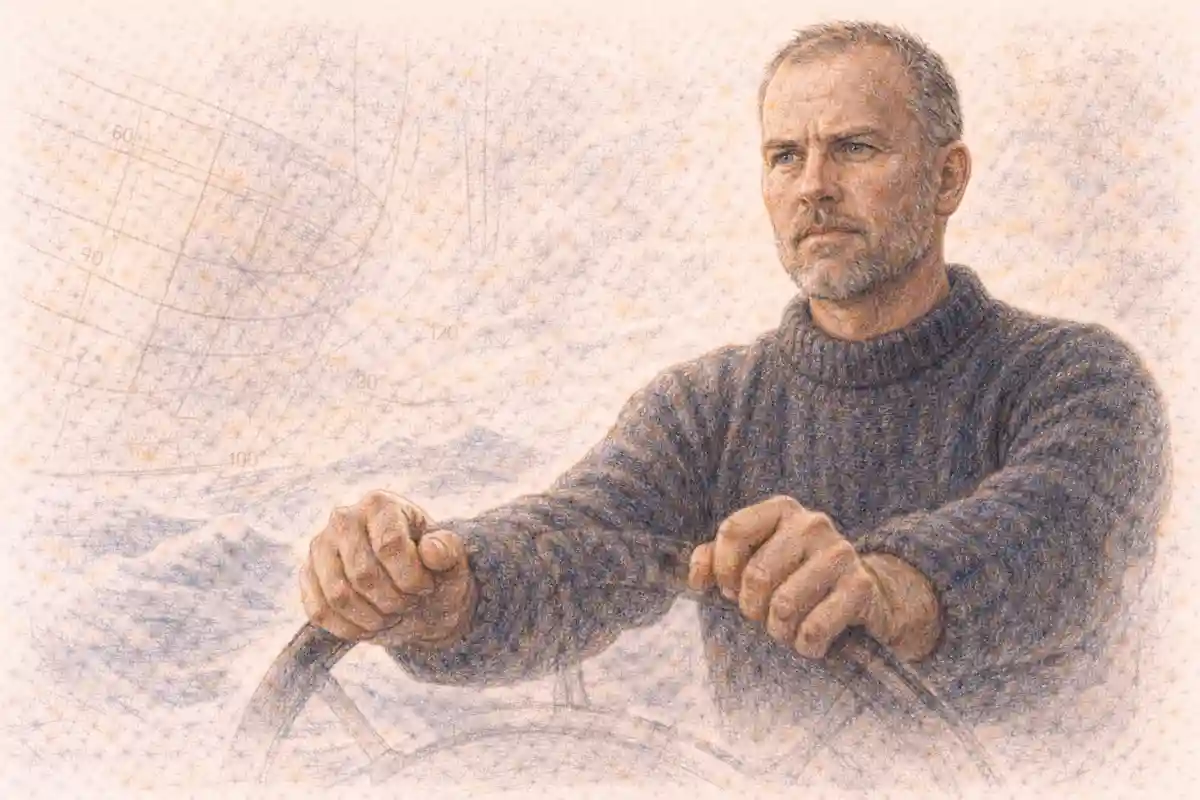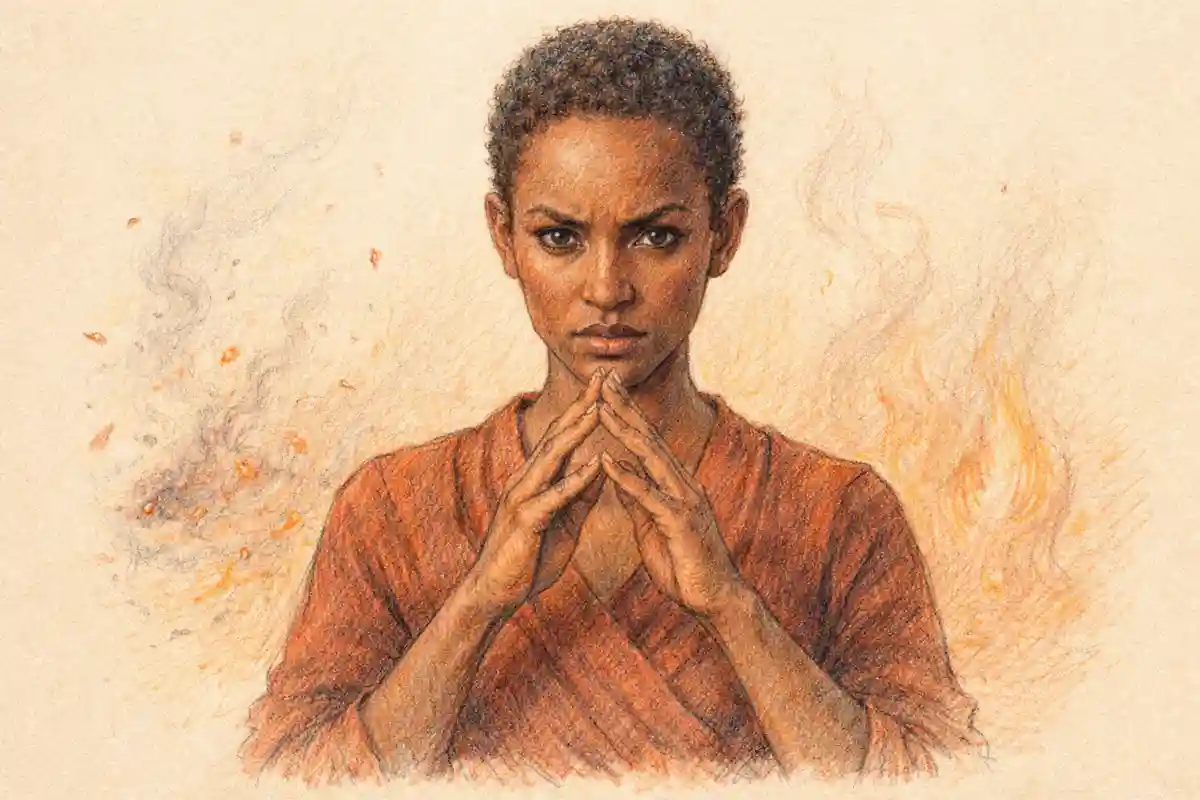
Introduction: Why This Comparison Matters
The question is not which of these two boys you would rather sit beside on the Hogwarts Express. Most readers settle that within the first hundred pages of the first book and never reconsider. The harder question, the one the series spends seven volumes quietly building toward, is this: when two children share the exact same blood status, the same magical inheritance, the same place near the top of a hierarchy obsessed with lineage, why does one grow into a man who throws his body in front of his friends and the other into a boy who cannot perform a single act of courage without weeping in a bathroom first? Same category. Opposite outcome. The variable that explains the difference is the engine of the entire comparison.
Rowling builds her wizarding world on a bigotry that pretends to be biology. The pure-blood ideology insists that magical worth is carried in the blood, that families like the Malfoys and the Weasleys belong to a natural aristocracy, and that everyone else exists somewhere lower on a ladder fixed by birth. Yet the author then does something subversive with that premise. She gives the reader two families who occupy the identical rung of the blood ladder and lets them produce children who are moral opposites. The Weasleys are pure-blood and poor and warm. The Malfoys are pure-blood and rich and cold. If blood determined worth, the sons of these two houses would be interchangeable. They are nothing alike. The whole architecture of the comparison is designed to dismantle the ideology that the wizarding world’s villains live by.
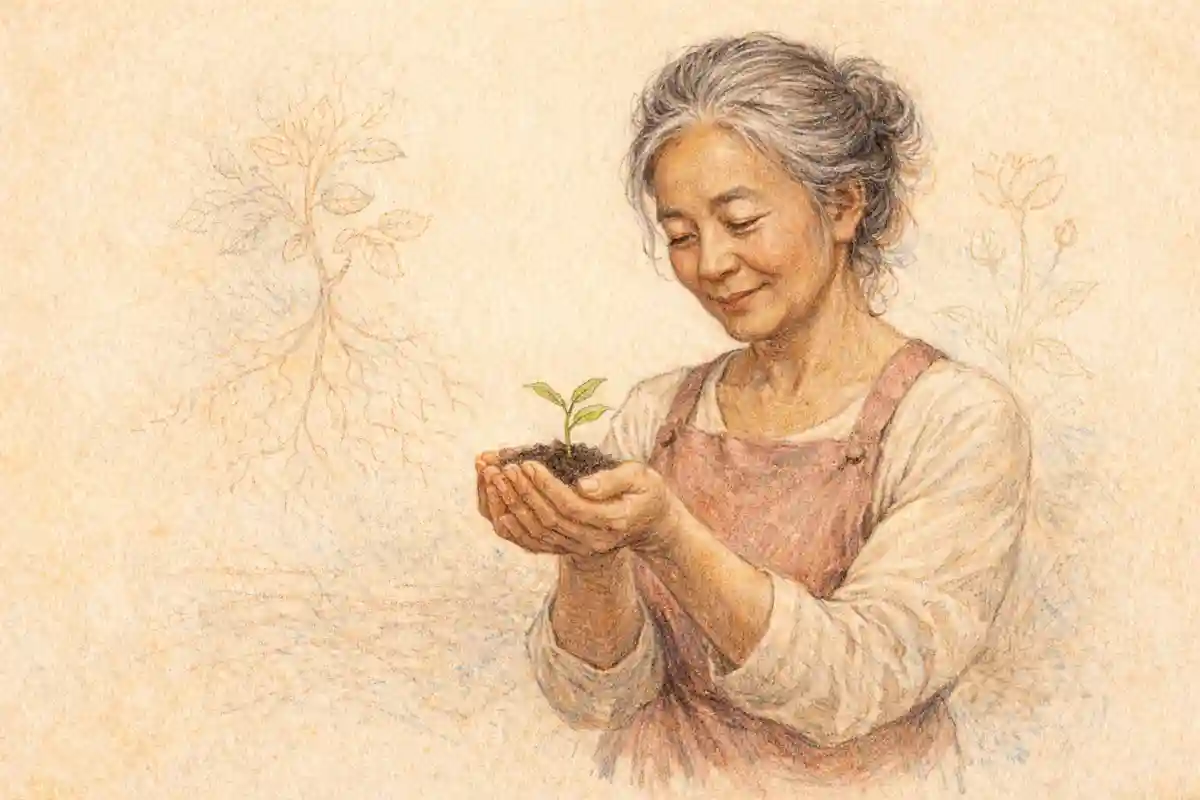
So the real subject here is not blood at all. It is what families do with their children once blood has stopped being the explanation. Arthur and Molly’s son inherits downward mobility wrapped in affection. Lucius and Narcissa’s son inherits upward expectation wrapped in chill. The two inheritances are arguments, and the boys are the proofs. Read carefully, this pairing becomes the series’ most sustained demonstration that family practice, not family status, is the thing that makes a person. Worth, the comparison insists, is taught at the dinner table, not encoded in the blood.
The Surface Parallel
Before the differences, the symmetry. The comparison would be arbitrary if the two boys did not genuinely belong in the same frame, and the books take care to place them there from the start. Both are pure-blood wizards from established old families, the kind of lineage the wizarding world’s snobs would recognise on a tapestry. Both arrive at Hogwarts in the same September, the same year as the boy who lived, and both are Sorted instantly. The Hat barely touches the Weasley boy’s head before calling Gryffindor, and it does the same for the Malfoy heir with Slytherin. Neither child receives the long deliberation that the protagonist gets. Each is so thoroughly the product of a known house that the Hat reads them like a label.
Both grow up surrounded by relatives, though the shapes of those families differ. Arthur’s youngest son has five older brothers and a younger sister, a crowd of redheads that fills the Burrow to bursting. The Malfoy boy is an only child, but he operates inside an extended Black and Malfoy cousin network, a web of aristocratic relations stretching across the pure-blood elite. Each enters school already embedded in a clan.
And both, crucially, define themselves through Harry from the very first train ride. This is the structural hinge the entire pairing turns on. On the journey to Hogwarts, one boy slides into a compartment, shares his food, and offers ordinary friendship to a stranger who happens to be famous. Later, on the same platform of social possibility, the other boy extends a pale hand and offers something else: an alliance, a guide to which sorts of people are worth knowing and which are not. Two pure-blood boys, the same age, both meeting the same orphan, and each choosing in that moment how to relate to him. The Weasley son offers companionship. The Malfoy son offers advancement. That single divergence, played out in two scenes within pages of each other, is the series’ earliest comparison-by-implication, and everything that follows is an elaboration of it.
There is one more parallel worth naming because the epilogue insists on it. Both boys survive the war. Both marry. Both send children to Hogwarts. The two rivals who could not stand each other at eleven become two fathers standing on the same platform decades later, watching their own offspring climb aboard the same scarlet train. The surface symmetry holds all the way to the end. It is the symmetry that makes the divergence legible.
Dimension 1: What Each Boy Envies About Harry
Envy is the most honest map of a person, because it shows the reader the exact shape of the hole the envier is trying to fill. Hold the two boys up to the same light, the famous orphan standing between them, and watch what each one covets. The covetings are opposite, and the opposition is the first clue to what each child lacks.
The youngest Weasley son envies the protagonist’s fame. This is the wound that runs through the early books. He is the sixth of six brothers, every one of whom has already carved out a distinction: Bill the cool curse-breaker, Charlie the dragon tamer, Percy the ambitious prefect, the twins with their riotous comic genius. By the time the youngest arrives, every avenue to family distinction seems already occupied. Hand-me-down robes, a hand-me-down wand, a hand-me-down rat. Then he befriends the most famous boy in the wizarding world, and the overshadowing follows him from home to school. The Mirror of Erised makes the wound visible in the first book: where the protagonist sees his dead parents, his friend sees himself, alone, holding the trophies and the badges, finally first. What the redheaded boy wants is to be noticed. He wants attention that is his own and not borrowed, not inherited, not handed down.
The Malfoy heir envies something the protagonist possesses that has nothing to do with fame. He envies the protagonist’s defiance. The blond boy has been raised inside a cage of expectation so total he can barely see the bars. He must hold the right opinions, hate the right people, carry the family name like a chalice he is forbidden to set down. And then he watches an orphan with no money and no pedigree simply refuse what the world offers. The protagonist turns down the Malfoy hand on the train. He defies teachers, defies the Ministry, defies the Dark Lord himself. He chooses his friends by affection rather than utility. To a boy who has never once been permitted to choose, that freedom is intoxicating and unreachable. What the Malfoy child wants is not more attention; he has plenty of attention, all of it conditional. What he wants is the right to disobey.
Set the two envies side by side and the diagnosis writes itself. One boy lacks recognition and craves more of it. The other boy lacks autonomy and craves the freedom to refuse. The first wound is the wound of being unseen inside a loving crowd. The second is the wound of being watched too closely inside a demanding one. Neither child is satisfied, but the dissatisfactions point in opposite directions, and the directions reveal what each family has failed to give. The Weasleys gave love but could not give singular attention. The Malfoys gave attention but could not give freedom. Each boy’s envy is a precise inventory of the missing thing.
Dimension 2: Friendship Versus Alliance
The deepest structural difference between the two boys is not what they want but how they hold the people around them. One builds friendships; the other assembles alliances. The distinction sounds small. It is the entire moral architecture of each life.
Consider the chosen companions. The redhead’s loyalty to the protagonist is tested across all seven books, and the testing is genuine. There is the jealousy in the fourth book, when he believes his friend entered the tournament for glory and abandoned him for it. There is the locket in the seventh, when the Horcrux poisons his worst insecurities and drives him away from the tent into the night. He fails. He leaves. And then, crucially, he comes back, not because the failure never happened but because the friendship is larger than the failure. The Weasley boy’s loyalty is the kind that includes doubt and survives it. It bends, it nearly breaks, and it holds. That is what a friendship is: a bond strong enough to absorb betrayal and reconstitute itself afterward.
Now consider the Malfoy boy’s companions, and notice that the word “friend” never quite fits. Crabbe and Goyle follow him everywhere, but they are muscle, not company. Across seven years the reader never witnesses a single moment of genuine connection between the three, no confession, no shared joke that lands as warmth rather than cruelty, no instance of one of them comforting another. They are extensions of his social position, bodyguards in school robes, and he treats them accordingly. When the final test comes in the Room of Requirement, one of them dies in a fire of his own making and the survivor scatters; there is no grief that reads as the loss of a friend, only the collapse of a formation. The Slytherin boy has spent his school years surrounded by people and has been, in every way that matters, alone. He has allies. He has never had a friend.
The two relational structures could not be more opposite. Chosen friendship that survives doubt, on one side. Performed alliance with no inner life, on the other. The series develops the contrast patiently, refusing to state it outright, letting the reader notice that one boy’s relationships have an interior and the other’s have only a surface. And this is where family culture announces itself again. The Burrow runs on affection freely given and freely returned; the youngest son learned, before he ever boarded the train, that people are ends in themselves. The Malfoy estate runs on utility and position; the heir learned that people are instruments, ranked by what they can do for the family name. Each boy reproduces at school the only relational grammar he was ever taught. One befriends because he was loved. The other allies because he was deployed.
The kind of patient attention required to read this difference correctly, to notice that the absence of a single warm Crabbe-and-Goyle moment is itself the point, is the same close-reading discipline that serious analytical training cultivates. It is no accident that the readers who catch the subtlest patterns in a long text tend to be the ones who have trained the muscle elsewhere; the layered pattern-recognition that tools like the ReportMedic CAT PYQ Explorer build across years of questions is precisely the skill a reader needs to track a friendship’s interior across seven novels. Rowling rewards the reader who watches what is missing as carefully as what is present.
Dimension 3: The Chess Match Versus the Tower
If a single pair of scenes had to carry the entire weight of this comparison, it would be these two: the giant chessboard in the first book and the Astronomy Tower in the sixth. Place them next to each other and the divergence becomes exact, almost mathematically clean.
In Harry Potter and the Philosopher’s Stone, the trio reaches a room dominated by a colossal wizard’s chess set, and the only way through is to play and win. The redheaded boy, who is genuinely gifted at the game, takes command. He reads the board, directs his friends to safe squares, and then makes the move the situation demands: he positions himself as a knight to be taken, knowing the sacrifice will let the protagonist checkmate the king. He offers his own body, fully aware he will be struck down, so that others may pass. It is a child’s act of pure self-giving, performed without an audience beyond his two friends, performed at real risk to his own life. The youngest Weasley son can sacrifice himself for others.
In Harry Potter and the Half-Blood Prince, the Malfoy boy has been given a task by the Dark Lord: kill Dumbledore. He spends the year tormented by it, sabotaging, scheming, weeping alone in a bathroom while the ghost of his terror watches. And when the moment finally arrives, when he stands at the top of the tower with the old headmaster disarmed and helpless before him, he cannot do it. His wand wavers. The headmaster speaks to him gently, offers him sanctuary, and the boy lowers his arm. Others must finish what he began. He cannot perform the violence even when his own family’s survival hangs on it.
Here is the precise shape of the contrast. Both boys are asked to perform a violence in service of a larger goal. The structural parallel is exact: each stands at a threshold where an act of force is required, and each must decide whether his body and will can do what the situation demands. The redheaded boy can sacrifice himself for others. The blond boy cannot even sacrifice others for himself. One offers his own life so that his friends may live; the other cannot end one life even to save his own family. And notice that the failure on the tower is, in a narrow sense, a moral mercy; the boy’s inability to kill is the last flicker of a conscience his upbringing never quite extinguished. But it is also a portrait of paralysis, of a child so unpracticed in genuine agency that when a real choice finally lands on him he can only freeze and weep.
What the two scenes argue, taken together, is that family culture has built two completely different capacities for action. The Burrow produced a boy who knows how to give himself away because he was given so much. The Malfoy estate produced a boy who can neither give nor take with conviction, because he was raised to inherit rather than to choose. The chessboard and the tower are the comparison’s sharpest single instrument, and what they measure is the difference between a child taught that he matters and a child taught only that his name does.
Dimension 4: Which Boy’s Pain Costs More
Both boys hurt. This is the dimension where readers most often go wrong, because the easy reading insists that the loved boy from the warm home cannot really suffer while the privileged boy from the cold mansion deserves whatever he gets. The books are more careful than that. Each child carries genuine pain, and the pains are different in kind, and the difference is instructive.
The redhead’s pain is real but unrecognised by the world around him. Nobody pities the boy with the loving family. His suffering is the quiet, corrosive kind that gets dismissed as ingratitude: the embarrassment of poverty, the dress robes with the lace cuffs, the constant low hum of being the least remarkable person in every room he enters. He loves his family and is ashamed of how they look to others, and the shame about the shame compounds the wound. His romantic insecurity, his sense that he is the sidekick in someone else’s story, his flashes of resentment toward the friend he loves: all of it is pain, and almost none of it earns sympathy from anyone, because from the outside he has everything that matters. The world looks at him and sees a boy with nothing to complain about.
The Malfoy heir’s pain is the inverse. It is recognised but unsympathised with. The reader can see exactly what is crushing him by the sixth book: the impossible task, the family in disgrace, the father in prison, the Dark Lord living in his home and using his mother as a hostage to his obedience. The bathroom scene where he sobs over the sink is one of the most naked depictions of a child’s despair in the entire series. And yet the reader, having watched six books of his cruelty, struggles to extend the sympathy the moment asks for. His suffering is legible in a way the redhead’s is not; everyone can see the boy is breaking. But the years of bullying, the casual bigotry, the Mudblood slurs, have spent down the reader’s compassion in advance. He is pitied and disliked at the same time.
So which pain costs more? The series does not answer cleanly, and the refusal is the point. What it does instead is give each boy a different relationship to the possibility of relief. The Weasley boy gets to overcome his pain through community; the very family that embarrasses him is also the thing that heals him, and his friendships give him a place to be valued for himself. His arc bends toward repair. The Malfoy boy is given only the chance to fail less badly. He never gets a community that loves him without condition; his redemption, such as it is, consists of small refusals rather than any positive embrace. He lowers his wand, he declines to identify the protagonist at the manor, and that is nearly all the grace the narrative permits him. The redhead’s pain has an exit. The Malfoy boy’s pain has only a slightly softened continuation.
This asymmetry, too, traces back to family culture. The thing that hurts the redhead, his family, is also the thing that saves him, because a family that loves freely can absorb and metabolise a child’s shame. The thing that hurts the Malfoy boy, his family, offers him no exit, because a family that loves conditionally cannot become a refuge when the conditions become unbearable. Each boy’s suffering is shaped by the same institution that shaped his character, and the institution determines not only how much each one hurts but whether the hurt can ever end.
Dimension 5: The Pure-Blood Question
Here is the dimension that should unsettle anyone who takes the wizarding world’s bigotry seriously on its own terms. Both boys are pure-blood. By the logic the Death Eaters live and kill for, they ought to be natural allies, fellow aristocrats of the blood, members of the same superior caste standing shoulder to shoulder against the Muggle-born tide. They are nothing of the kind. They despise each other from the first week of school, and the ideology that supposedly unites them never once produces solidarity between them.
This is Rowling’s quietest and most devastating argument against the essentialist reading of her own invented prejudice. If pure-blood status determined character, the two pure-blood boys would recognise each other as kin. Instead, the variable that actually determines whether they ally is not blood at all; it is family culture, the practice of values rather than the inheritance of lineage. The Weasleys are pure-blood and have spent generations being despised by other pure-bloods precisely because they refuse the ideology, marrying for love, befriending Muggles, treating blood status as the irrelevance it is. The Malfoys are pure-blood and have built their identity on the ideology, hoarding the lineage like capital. Same blood. Opposite politics. The blood explains nothing.
The series uses the two boys to demonstrate that pure-blood wizards are not a category with shared moral content. The redhead is the living proof that pure-blood does not mean cold, does not mean cruel, does not mean supremacist; his family has the impeccable lineage the Malfoys would kill for and has chosen warmth instead. The Malfoy boy is the living proof that pure-blood does not protect against cruelty; the finest pedigree in Slytherin has produced a child who calls an eleven-year-old girl a slur for the circumstances of her birth. The two boys occupy the identical blood-status category and are moral opposites, and the only thing that distinguishes them is how their families have practiced, or refused to practice, the ideology.
This is why the pairing matters beyond the two individuals. It is the series’ most precise refutation of the worldview its villains hold. The bigot believes that worth is in the blood and that the blood is destiny. The comparison of these two boys proves the bigot wrong inside the bigot’s own terms, using two members of the supposedly superior caste to show that the caste contains everything and explains nothing. Family culture, not blood, is the engine of character, and the engine can run in opposite directions even within a single rung of the hierarchy the bigots worship.
Where the Comparison Breaks Down
Every honest comparison has a seam where the symmetry tears, and pretending otherwise turns analysis into propaganda. The seam here is family size, and it matters enormously.
The redhead is one of seven children. The Malfoy boy is an only child. This is not a minor biographical footnote; it is a structural condition that shapes everything about how each child experiences attention, expectation, and love, and the “two pure-blood boys” framing flattens it almost entirely. In a household of seven, parental notice is necessarily divided, rationed, fought over. The youngest Weasley son’s particular insecurity, the sense of being overshadowed and overlooked, is a direct product of family size; he hungers for distinction because distinction is scarce in a crowd of accomplished siblings. But the same family size is what makes the Burrow’s warmth possible. The Weasleys could afford to be warm precisely because their love did not have to concentrate. Spread across seven children, affection becomes an atmosphere rather than a spotlight, and an atmosphere is forgiving, ambient, hard to fail.
The Malfoy estate is the opposite arrangement. All the parental attention, all the hope, all the dynastic expectation pours into a single child. The heir is a monopoly, and the monopoly is its own kind of pressure. He must carry the entire inheritance, embody the whole family’s ambition, justify the bloodline by himself. The Malfoys could not afford to be warm, in a sense, because their only child had to be the vessel for everything, and a vessel that valuable cannot be allowed to wander, to choose, to disappoint. The cold is partly a function of stakes; when a family stakes its whole future on one boy, that boy is loved the way a fortune is guarded, anxiously and possessively, rather than the way an atmosphere is breathed.
So the comparison must concede that family culture and family size are tangled together, and that some of what looks like a pure values-difference is also a structural difference in how attention can be distributed. The Weasley warmth and the Malfoy chill are not simply chosen postures; they are partly the by-products of seven children versus one. A scrupulous reading holds both truths at once: the values matter, and the structural conditions that make those values easier or harder to enact also matter. The blood-status comparison, which treats the two boys as equivalent because they share a rung, cannot capture this at all. It takes a different lens, the lens of family structure, to see why warmth was affordable in one house and ruinously expensive in the other.
What Rowling Reveals Through the Juxtaposition
Strip the comparison to its core claim and it reads like a thesis statement for the entire moral universe of the books: family culture is the variable that explains moral outcome within a constant blood-status category. The author has constructed an almost experimental design. Hold blood status fixed, vary the family practice, and observe the result. The result is two boys who could not be more different, and the only variable that changed was how their families loved.
The argument cuts directly against any reading that links pure-blood identity to particular moral qualities. There is no pure-blood character, no pure-blood temperament, no pure-blood destiny. The same magical-heritage category produces a boy who throws himself onto a chessboard for his friends and a boy who cannot lift his wand against a disarmed old man. The category is morally empty. What fills it is the daily, repeated, mostly invisible practice of a family’s love, and that practice is the whole story.
This is why the redhead and the Malfoy heir function as a matched pair of proofs. The Weasley son proves that pure-blood does not mean cold; the impeccable lineage can sit comfortably alongside generosity, humour, loyalty, and self-sacrifice, because lineage was never the thing producing those qualities. The Malfoy son proves that pure-blood does not protect against cruelty; the finest pedigree can coexist with bigotry, snobbery, and moral paralysis, because pedigree was never a safeguard against anything. Together they dismantle the central conceit of the wizarding world’s villains: that blood is worth and worth is blood.
And the deeper revelation, the one that gives the comparison its emotional weight, is about love itself, specifically about what kind of love produces a person capable of love in return. The Weasley downward-mobility-with-warmth produces a boy who can form attachments to equals, who treats people as ends, who can be a friend. The Malfoy aristocracy-with-coldness produces a boy who can only form alliances with inferiors, who treats people as instruments, who has allies but no friends. The two outcomes are an argument for the value of love over the value of preservation. The Weasleys, who had nothing to preserve, preserved their children’s capacity to love. The Malfoys, who had everything to preserve, preserved the name and lost the boy. That is the trade the comparison stages, and the series leaves no doubt about which family chose better.
Cross-Literary Parallels
The structural pairing here, the warm scamp and the cold heir, the loved poor boy and the unloved rich one, is one of the oldest engines in literature, and Rowling is working a vein that runs deep through the Western and non-Western canon alike. Reading the two boys against their literary ancestors clarifies what the author has done with the archetype and where she has departed from it.
Begin with Mark Twain. In The Adventures of Tom Sawyer, the contrast between Tom, the beloved scamp whose mischief never quite costs him the reader’s affection, and his half-brother Sid, the well-behaved tattletale whom nobody warms to, illuminates the same truth the Weasley-Malfoy pairing does: that the moral quality readers respond to is not obedience or propriety but warmth, the capacity to love and be loved. Twain’s Sid does everything right and remains repellent; the Malfoy heir does everything his family asks and remains hollow. The likeable boy and the correct boy are not the same boy, and both authors know it.
Turn to Dickens. Great Expectations sets the warm-origins working-class child against the privileged children raised cold, and the novel’s whole tragedy is that Pip nearly trades his warm origins for the icy gentility he mistakes for worth. Estella, raised by Miss Havisham to be incapable of love, is the Malfoy-pattern made female: a child deliberately frozen by an adult’s project, valuable as an instrument of revenge rather than as a person. Dickens, like Rowling, argues that a child raised cold is a child robbed, and that the robbery is the fault of the family culture, not the blood.
The Brontes give us the most charged version of the archetype, and it is one Rowling returns to repeatedly across her comparisons because it is so productive. Heathcliff and Edgar Linton in Wuthering Heights stage the collision between the passionate outsider and the privileged child raised in comfort and cold. The pattern recurs in the Potter books not because Rowling lacks invention but because the structural opposition, warmth-without-status versus status-without-warmth, is one of the deepest grooves in the literature of class and character.
The non-Western canon offers a parallel even more exact than any of these. In the Mahabharata, the Pandava brother Bhima and the Kaurava prince Duryodhana are both nobility, both warriors of the same epic caste, raised within the same extended royal family, and they grow into moral opposites. Bhima is warm-tempered, loyal, physically generous with his strength; Duryodhana is cold, envious, consumed by the need to preserve and expand his claim. The two cousins are the Weasley-Malfoy pairing in Sanskrit: same status, opposite character, and an epic that insists the difference lies in the practice of dharma within each household rather than in the blood that both share. The cross-cultural recurrence of the pattern suggests Rowling has tapped something close to universal.
Tolkien supplies a quieter analogue in the Baggins line. Frodo, the decent Baggins who carries the burden and gives himself away, stands against Lotho Sackville-Baggins, the grasping cousin who collaborates with Saruman and helps wreck the Shire for personal gain. Same family name, same Hobbit stock, opposite uses of the inheritance. And finally the oldest version of all, the Cain-and-Abel structure, the two brothers whose offerings and outcomes diverge, reminds us that the question of why two children of the same house turn out morally opposite is among the first questions literature ever asked. Rowling’s contribution is to answer it not with divine favour or fate but with family culture, the patient daily practice of love or its withholding.
The discipline of mapping a single character pair onto its literary ancestors, holding Bhima and Duryodhana in one hand and the two Hogwarts boys in the other and seeing the shared structure, is itself a trainable analytical skill, the kind of comparative reasoning that rewards practice. Students who develop structured comparative thinking through resources like the ReportMedic UPSC PYQ Explorer, where recognising recurring patterns across decades of questions is the entire game, are building the same muscle a literary reader uses to trace an archetype across centuries and continents. The pattern is the point, in exams and in epics alike.
The Unwritten Chapter: Two Fathers on the Platform
The series leaves one space deliberately empty, and the emptiness is eloquent. Both boys survive the war. Both marry. Both have children at Hogwarts in the same year. Rose Weasley and Scorpius Malfoy climb aboard the same train in the epilogue, and the two fathers who loathed each other at eleven stand on Platform Nine and Three-Quarters watching their offspring repeat the journey that began everything. What passes between the two men in that moment is almost entirely unwritten, and the silence is the most interesting thing about the scene.
What the reader is given is a single joke. The redhead, now grown, tells his daughter not to get too friendly with the Malfoy boy, then immediately undercuts the bigotry of his own father-in-law’s generation by making it about academics: beat him in every test, he says, thank God you inherited your mother’s brains. It is a small moment, but it carries the whole weight of how far the families have and have not come. The adult Weasley cannot quite let the old rivalry die; he still notices the Malfoy across the platform, still feels the pull of the schoolyard enmity. But he has metabolised it into something almost affectionate, a competitive joke rather than a blood-feud, and he is teaching his daughter to compete rather than to hate. The transformation is partial, generational, real.
The deeper question the negative space poses is whether the next generation can accomplish what the fathers cannot. The two boys themselves never reconcile on the page; the epilogue gives no scene of the adult Weasley and the adult Malfoy shaking hands, forgiving, becoming anything to each other. The reconciliation, if it comes, must happen through the children, through whatever Rose and Scorpius make of an inheritance of rivalry their fathers have softened but not dissolved. This is consistent with everything the comparison has argued. Family culture is the engine; if the cycle is to change, it changes at the level of how the new families practice their values, and the epilogue plants exactly that possibility without resolving it. The protagonist whose complete character analysis anchors this entire series stands on the same platform, naming his own son for the two headmasters who shaped him, and the scene quietly insists that the inheritances of the previous war are now in the children’s hands to keep or to break.
There is a particular poignancy in imagining the adult Malfoy on that platform, because the reader knows what the man behind him built. The boy who could not love was the son of a father whose entire life was a study in cold preservation, and the epilogue’s Malfoy, nodding curtly across the platform rather than sneering, may represent the first crack in a family culture that ran cold for generations. If the Malfoy heir has learned to nod where his father would have sneered, then perhaps Scorpius will learn to extend a hand where his father could only nod. The unwritten chapter is the chapter in which the engine of family culture finally shifts direction in the house that needed the shift most.
Legacy: Which Character Endures and Why
Ask the fandom which of these two boys it loves, and the answer is complicated in a way that itself reveals something about how the comparison has landed in the culture. The redhead is beloved but rarely obsessed over. The Malfoy heir is obsessed over to a degree that has, at times, threatened to overwhelm the moral architecture the books built around him.
The Weasley boy endures as the everyman, the reader’s surrogate, the ordinary person standing beside the extraordinary one. His appeal is the appeal of recognisability; most readers are not the chosen hero or the brilliant witch but the loyal friend with insecurities and a temper and a good heart, and the youngest Weasley son gives that reader a place inside the story. He is loved the way one loves a true friend rather than a fascination: steadily, warmly, without the electric charge of obsession. Some readers have complained that the films flattened him into comic relief, stripping away the strategic mind and the genuine courage, and the complaint is fair; the chessboard sacrifice and the destruction of the locket are acts of real heroism that the popular memory of the character sometimes forgets.
The Malfoy heir endures differently, and the difference is instructive. A substantial part of the fandom has spent years redeeming him, softening him, reimagining the bathroom-weeping boy as a misunderstood victim of his upbringing rather than a willing participant in cruelty. The phenomenon, sometimes called the Draco-in-leather-trousers effect within fan criticism, describes the tendency to remake a charismatic villain into a romantic hero by emphasising his pain and minimising his choices. This says more about the audience than about the character. The books are scrupulous: they give the Malfoy boy genuine pain and genuine moral paralysis, neither full redemption nor full damnation, and they refuse to let his suffering cancel his cruelty. The fandom’s impulse to complete the redemption the books withhold is a measure of how powerfully the author rendered the pain, and also a caution about how easily readers convert recognised suffering into earned sympathy.
What the divergent receptions reveal is the comparison’s final irony. The boy who actually possesses the warmth, the loyalty, the capacity to sacrifice, endures as the comfortable friend nobody fixates on. The boy who lacks all of these endures as the figure the audience cannot stop trying to fix. The reader’s fascination flows toward the cold heir precisely because his coldness reads as a problem to be solved, while the warm boy’s warmth reads as a settled fact requiring no further attention. In this, the fandom unconsciously reproduces the very dynamic the books critique: the Malfoy name commands attention it has not earned, and the Weasley warmth goes quietly undervalued, exactly as it did inside the story.
How Rowling Positions the Reader
A comparison this clean does not happen by accident. The author engineers the reader’s allegiance from the first encounter, and noticing the engineering reveals how completely the books want the two boys read as a moral diptych rather than as two independent characters.
The first thing the narrative does is rig the order of acquaintance. The reader meets the redhead first, in the warm chaos of the train compartment, sharing sweets and chatter and the ordinary business of a new friendship. Only afterward does the Malfoy boy arrive, already sneering, already ranking people, already extending the hand that the reader, primed by the warmth of the earlier scene, instinctively distrusts. Had the order been reversed, had the reader met the polished, confident Malfoy heir first and the shabby, anxious Weasley boy second, the initial sympathies might have tilted differently. The author controls the sequence, and the sequence controls the heart.
The second device is the deployment of detail. The redhead is rendered with the texture of real interiority: his embarrassment about his sandwiches, his pride and shame about his family, his jealousies and reconciliations, his fears spoken aloud. The reader is admitted to his inner life continuously across seven books. The Malfoy boy, by contrast, is mostly rendered from the outside until very late; the reader sees his cruelty and his swagger long before getting any access to the frightened child beneath, and that access, when it finally comes in the sixth book, arrives almost as a shock precisely because the author withheld it so long. The asymmetry of interiority is a positioning strategy. We are inside one boy and outside the other for most of the story, and proximity breeds sympathy.
And yet, third, the books complicate their own positioning at exactly the right moment. Just as the reader has settled comfortably into loving one boy and despising the other, the sixth book cracks the Malfoy heir open and shows the despair underneath the swagger. This is not a reversal; it is a deepening. The author does not ask the reader to start loving the Malfoy boy, only to stop reading him as a cartoon. The late grant of interiority converts a villain into a tragedy without converting him into a hero, and the precision of that maneuver is what keeps the comparison honest. The reader is positioned to love the warm boy and to pity the cold one, and pity is not the same as love, and the gap between them is the moral space the comparison lives in.
The Train Scene as the Series in Miniature
Return one last time to the platform and the train, because the opening sequence contains the entire comparison in compressed form, and rereading it with the whole story in mind turns it into a kind of prophecy. Every divergence the seven books will elaborate is already present on that first journey north.
The redhead enters the protagonist’s compartment with nothing to offer but himself. He has no famous name to trade, no social ladder to sell, no calculation behind the company. He shares his food, which is humble, and his family stories, which are embarrassing, and in doing so he offers the one thing the Malfoy boy will never quite manage: unguarded presence. He is simply there, a person being a person, and the friendship that will survive seven books of testing begins in that unguardedness. The Burrow’s whole ethic is in the gesture; this is how a boy behaves when he has been loved without condition. He does not audit the protagonist for usefulness. He just sits down and talks.
The Malfoy boy enters the same compartment with an offer that is all calculation. He has already learned which families are worth knowing, has already sorted the wizarding world into the worthwhile and the worthless, and he presents himself as a guide to that sorting. His hand is extended not in friendship but in recruitment; he is offering to induct the famous orphan into the correct social stratum and to steer him away from the wrong sort, by which he means the boy who has just shared his sweets. When the protagonist declines, the Malfoy heir does not understand it, because in his world an offer of advancement is not the kind of thing one declines. The Malfoy estate’s whole ethic is in that incomprehension; this is how a boy behaves when he has been raised to deploy and be deployed, when relationships are transactions and the only question is rank.
Two boys, one compartment, one orphan, and two completely different theories of what people are for. The redhead thinks people are for loving. The Malfoy heir thinks people are for using. The protagonist chooses the first theory by choosing the first boy, and that choice, made in the first chapter at Hogwarts, determines the moral shape of everything that follows. The train scene is not merely the beginning of the story. It is the thesis of the story, stated in miniature, before the reader even knows it is an argument.
Frequently Asked Questions
Why does the Sorting Hat place these two boys so quickly?
Both children arrive at Hogwarts so thoroughly shaped by their families that the Hat reads them almost instantly. The redhead is a Gryffindor before the Hat fully settles, and the Malfoy heir is a Slytherin just as fast. The speed is itself a comment on family culture. These are not boys still forming themselves; they are boys who have already absorbed a complete worldview at home, one of warmth and courage, the other of ambition and rank. The protagonist, by contrast, gets a long deliberation because he is genuinely undetermined, raised by neither magical tradition. The two pure-blood boys have no such ambiguity, because their houses have already done the Hat’s work for it before either boy boards the train.
Is Draco truly redeemed by the end of the series?
The books are deliberately careful here and refuse a clean answer. The Malfoy boy lowers his wand on the Astronomy Tower rather than killing a defenceless man, and he declines to positively identify the protagonist at his family’s manor when doing so would have ended the war in the Dark Lord’s favour. These are real refusals, the last flickers of a conscience his upbringing never fully smothered. But they are refusals, not affirmations; he never embraces the good side, never apologises, never extends warmth. The narrative grants him neither full redemption nor full damnation. He is left as a boy who failed to become a monster, which is meaningfully different from a boy who became good. The ambiguity is the point.
Why is Ron’s heroism so often overlooked?
The popular memory of the youngest Weasley son, shaped heavily by the films, tends to flatten him into comic relief, the friend who panics and complains. This forgets the chessboard in the first book, where he offers his own body as a sacrifice so his friends can advance, and the seventh book, where he returns after abandoning the quest and destroys a Horcrux that is actively attacking his deepest insecurities. Both are acts of genuine courage. The overshadowing he feels inside the story, standing beside a famous best friend, is reproduced by the audience outside the story, which fixates on the hero and the brilliant witch and undervalues the loyal friend. The character suffers the same undervaluation in reception that he suffers in the plot.
What does the contrast between the families actually argue?
It argues that family culture, the daily practice of how a household loves, determines moral outcome far more than blood status or wealth. The two boys share the identical pure-blood category, the thing the wizarding world’s bigots treat as destiny, and they turn out to be moral opposites. The only variable that changed was how their families practiced their values. The Weasleys, poor and warm, produced a boy who can love and sacrifice. The Malfoys, rich and cold, produced a boy who can only calculate and command. Blood explains nothing; family practice explains everything. The comparison is the series’ most sustained refutation of the idea that worth is inherited rather than taught.
Are Crabbe and Goyle really not Draco’s friends?
The text never shows a genuine friendship among the three. Crabbe and Goyle function as bodyguards and social props, extensions of the Malfoy boy’s position rather than companions with an inner bond. Across seven years there is no scene of real warmth between them, no confession, no comfort offered in either direction, no joke that lands as affection rather than shared cruelty. When the trio finally fractures in the Room of Requirement, what collapses is a formation, not a friendship; there is no grief that reads as the loss of a friend. This emptiness is precisely the contrast the books want, set against the redhead’s tested, doubted, and ultimately durable friendship with the protagonist.
How does family size complicate the comparison?
It complicates it considerably. The redhead is one of seven children; the Malfoy boy is an only child. This structural difference shapes everything. The Weasleys could afford warmth because their love was spread across many children as an ambient atmosphere rather than concentrated as a spotlight. The Malfoys could not afford warmth in the same way, because their single heir had to carry the entire dynastic inheritance, and a child that valuable gets guarded anxiously rather than loved freely. So some of what looks like a pure values-difference is also a by-product of family structure. A scrupulous reading holds both at once: the values matter, and the conditions that make those values easier or harder to enact also matter.
Why do both boys envy Harry, and how do their envies differ?
Their envies are opposite, and the opposition is diagnostic. The redhead envies the protagonist’s fame; as the youngest of six accomplished brothers, he hungers for recognition that is his own rather than borrowed or inherited. The Malfoy boy envies the protagonist’s defiance; raised inside a cage of expectation, he covets the freedom to refuse what the world offers, a freedom he has never been permitted. One boy lacks attention and wants more; the other has too much conditional attention and wants autonomy instead. Each envy is a precise inventory of the missing thing in each boy’s home. The Weasleys gave love but not singular notice; the Malfoys gave notice but not freedom.
Does the series sympathise with Draco’s suffering?
It depicts his suffering with real depth, particularly in the sixth book, where he weeps over a sink, sabotages his own task, and visibly cracks under the impossible weight of his family’s situation. The bathroom scene is among the most naked depictions of a child’s despair in the entire series. But the books position this pain as recognised rather than sympathised with; having shown six books of his cruelty, they let the reader see his anguish without fully extending compassion for it. The fandom often completes the sympathy the books withhold, remaking the suffering boy into a romantic victim. The text is more disciplined: it refuses to let recognised pain cancel demonstrated cruelty.
Why can Ron sacrifice himself but Draco cannot act?
The chessboard and the tower answer this directly. In the first book, the redhead positions himself as a piece to be taken so his friends can win, offering his body knowing he will be struck down. In the sixth, the Malfoy boy stands over a disarmed old man with orders to kill and cannot lift his wand. Both are asked to perform a violence for a larger goal, and the divergence is exact. The redhead can sacrifice himself for others; the Malfoy heir cannot even sacrifice another for himself. The difference traces to family culture. A child taught that he matters can give himself away; a child taught only that his name matters has never practiced genuine agency and freezes when a real choice arrives.
Do the two boys ever reconcile as adults?
Not on the page in any direct way. The epilogue shows the two grown fathers on Platform Nine and Three-Quarters, watching their children board the train, exchanging a curt nod across the distance rather than the old sneer. The adult redhead makes a competitive joke to his daughter about beating the Malfoy boy in tests, which converts the old blood-feud into something almost affectionate. But there is no handshake, no scene of forgiveness, no spoken reconciliation. The series leaves the deeper repair to the next generation, suggesting that whatever the fathers cannot accomplish might be accomplished by the children, if the new families practice their values differently than the old ones did.
What is the significance of Ron seeing himself in the Mirror of Erised?
It is the clearest single image of his core wound. Where the protagonist sees his dead parents in the mirror that shows the heart’s deepest desire, his friend sees himself standing alone, decorated with badges and trophies, finally first among his accomplished brothers. The vision exposes the insecurity that drives him through the early books: the ache of being the least distinguished member of a distinguished family, overshadowed at home and then overshadowed again at school by his famous best friend. The mirror does not show wealth or power; it shows recognition. What the youngest Weasley son wants more than anything is simply to be seen as himself, which is exactly the thing a large loving family struggles to provide.
How does the comparison undermine pure-blood ideology?
By using two members of the supposedly superior caste to prove the caste means nothing. If blood determined character, the two pure-blood boys would recognise each other as natural allies. Instead they despise each other, and the ideology never produces solidarity between them. The redhead proves pure-blood does not mean cold or cruel; the Malfoy heir proves pure-blood does not protect against either. Same blood, opposite character, and the only distinguishing variable is family culture. This is the series’ most precise refutation of its villains’ worldview, dismantling the conceit that worth lives in the blood by showing two children of identical blood status arriving at opposite moral destinations.
Why does Rowling reuse the Heathcliff and Edgar Linton pattern?
Because the structural opposition it embodies, warmth-without-status against status-without-warmth, is one of the deepest grooves in the literature of class and character, and it keeps generating meaning. The Bronte pairing of the passionate outsider and the comfortable, cold-raised heir maps onto multiple Potter comparisons because the archetype is so productive. Rowling is not lacking invention; she is tapping a near-universal pattern that recurs from Twain’s Tom and Sid to the Mahabharata’s Bhima and Duryodhana. The recurrence across centuries and cultures suggests the question the pattern poses, why two children of the same house turn out morally opposite, is among the oldest and most fertile in all of storytelling.
Which boy has the more painful journey?
The series refuses to rank them, and the refusal is deliberate. The redhead’s pain is real but unrecognised; nobody pities the boy with the loving family, so his poverty-shame and his sense of being a perpetual sidekick earn no sympathy from the world around him. The Malfoy boy’s pain is recognised but unsympathised with; everyone can see he is breaking in the sixth book, but the reader’s compassion has been spent down by years of his cruelty. The crucial difference is the exit. The redhead can overcome his pain through community. The Malfoy heir is given only the chance to fail less badly. One pain has a way out; the other has only a softened continuation.
What does the train scene reveal about each boy?
It contains the entire comparison in miniature. The redhead enters the protagonist’s compartment with nothing to offer but himself, sharing humble food and embarrassing family stories, simply being present without calculation. The Malfoy heir enters with an offer that is all calculation, presenting himself as a guide to which families are worth knowing and extending a hand of recruitment rather than friendship. Two boys, one orphan, two completely different theories of what people are for: one thinks people are for loving, the other thinks people are for using. The protagonist chooses the first theory by choosing the first boy, and that choice in the opening chapter shapes everything that follows.
Why does the fandom obsess over Draco more than Ron?
The divergent receptions reveal the comparison’s final irony. The boy who possesses warmth, loyalty, and the capacity to sacrifice endures as the comfortable friend nobody fixates on, while the boy who lacks all of these becomes the figure the audience cannot stop trying to fix. A charismatic villain whose pain has been rendered vividly invites the impulse to complete a redemption the books withhold. The audience converts recognised suffering into earned sympathy and remakes the cold heir into a romantic hero. In doing so the fandom unconsciously reproduces the very dynamic the books critique: the Malfoy name commands attention it has not earned, and the Weasley warmth goes quietly undervalued, exactly as it did inside the story.
Is Lucius Malfoy responsible for how Draco turned out?
Largely, yes, in the sense the comparison cares about. The Malfoy boy is the product of a family culture built on cold preservation, entitlement, and supremacist ideology, and that culture is overwhelmingly his father’s making. A child raised to treat people as instruments, to rank everyone by blood and utility, and to carry a dynastic name as his whole identity will struggle to form genuine attachments, and the heir does struggle, precisely there. The father modelled aggression dressed as elegance and fear concealed as authority, and the son inherited the posture without the polish. The boy’s eventual small refusals, the lowered wand and the withheld identification, may represent the first cracks in a family culture that ran cold for generations.
Could Ron have turned out like Draco in a different family?
The comparison’s whole logic suggests he could have. There is nothing in the blood that produced the redhead’s warmth; the Weasleys have the impeccable pure-blood lineage the Malfoys prize, and warmth was a choice their family culture made rather than a gift the blood conferred. Drop the same child into the Malfoy estate, raise him on entitlement and supremacy and conditional love, and the comparison implies a very different boy would emerge. This is the unsettling force of the pairing: it locates character not in some fixed essence but in the contingent, repeated practice of a family’s values, which means the warm boy and the cold boy are, at the level of raw material, far more interchangeable than they appear.
What role does poverty play in the Weasley warmth?
Poverty is bound up with the warmth in a way the comparison treats as causal rather than incidental. The Weasleys have nothing to preserve, no fortune to guard, no dynastic capital to protect, and so their love does not become anxious and possessive in the way concentrated wealth can make love. They invest in their children rather than in a name, because the name carries no material stakes. The Malfoys, by contrast, have everything to preserve, and the preservation imperative cools the love, turning the single heir into a vessel for the inheritance rather than a person to be cherished for himself. The comparison suggests, provocatively, that having nothing to lose freed the Weasleys to love well.
How does the epilogue function in this comparison?
The epilogue completes the surface symmetry and opens the negative space. Both boys survive, marry, and send children to Hogwarts in the same year, which closes the structural parallel that began on the first train ride. But it deliberately leaves the deeper question unresolved: the two fathers nod across the platform rather than reconciling, and the books hand the possibility of repair to the next generation. The adult redhead’s competitive joke shows how far the rivalry has softened without dissolving. The scene insists that if the cycle of enmity is to change, it changes through how the new families practice their values, planting that possibility in Rose and Scorpius without resolving it.
Why does the protagonist choose Ron over Draco on the train?
Because the protagonist, raised without love by the Dursleys, recognises and is drawn to the unguarded warmth the redhead offers, and is repelled by the calculation the Malfoy heir brings. The orphan has been starved of genuine affection and instinctively values the boy who simply sits down and shares his food over the boy who arrives ranking people and offering advancement. The choice is the moral hinge of the entire series. By choosing friendship over alliance, the protagonist chooses the theory that people are ends rather than instruments, and that single decision in the first chapter at Hogwarts determines the shape of the loyalties that will eventually defeat the Dark Lord.
What is the deepest lesson the comparison teaches?
That the most important thing about a child is not the blood, the wealth, or the lineage, but whether the family taught the child to love. The Weasley downward-mobility-with-warmth produced a boy who forms attachments to equals and treats people as ends. The Malfoy aristocracy-with-coldness produced a boy who forms alliances with inferiors and treats people as instruments. The two outcomes are an argument for the value of love over the value of preservation. The Weasleys preserved their children’s capacity to love; the Malfoys preserved the name and lost the boy. The comparison stages this trade and leaves no doubt which family chose better, and why.
Does the comparison favour the Weasleys too obviously?
It is openly weighted toward the Weasley side, but the weighting is the argument rather than a flaw in it. The books are not pretending the two family cultures are morally equivalent; they are demonstrating that one produces human flourishing and the other produces stunting. Where the comparison earns its honesty is in refusing to make the Malfoy boy a cartoon. It grants him real pain, real moral paralysis, and the small dignity of his refusals, so that the verdict against his upbringing never becomes a verdict against him as a doomed essence. The favour shown to the Weasleys is the favour the narrative wants the reader to extend to warmth over preservation, and it is argued rather than merely asserted.
How does Draco’s bathroom breakdown change the reading of his character?
It cracks open a figure the books had rendered almost entirely from the outside for five volumes. Until the sixth book, the Malfoy heir is swagger and cruelty, a sneering antagonist with no visible interior. The scene at the sink, where he weeps over the impossible task the Dark Lord has set him, grants sudden access to the frightened child beneath the performance. The shock of that access is itself a positioning device; the author withheld the boy’s interiority for so long that its arrival reframes everything without redeeming anything. The reader is asked to stop reading him as a cartoon and start reading him as a tragedy, which is a deepening rather than a reversal. Pity is granted; love is not.
What does each boy’s relationship to his followers or friends predict?
It predicts the entire moral trajectory of each life. The redhead’s capacity for tested, durable friendship, the bond that survives his jealousy and his abandonment of the quest, predicts a man who can sacrifice for others and build a loving family of his own. The Malfoy heir’s inability to form a single genuine friendship among the followers who surround him predicts a man who can command but not connect, who has allies and no companions. The way each boy holds the people nearest him in childhood forecasts the kind of adult he becomes, because the relational grammar learned at home is the grammar he carries everywhere. One learned that people are for loving; the other learned that people are for using.
Why is this considered one of the most important comparisons in the series?
Because it is the cleanest possible test of the books’ central moral proposition. Hold blood status fixed, vary only the family culture, and watch two children of the identical caste arrive at opposite moral destinations. No other pairing isolates the variable so precisely. The Harry-and-Voldemort comparison must contend with the protagonist’s fifteen months of early love; the Harry-and-Neville pairing turns on the accident of prophecy. But two pure-blood boys of the same age and the same rung, one warm and one cold, controls for nearly everything except the practice of love at home. That control is what makes the comparison the series’ most rigorous demonstration that family culture, not blood, is the engine of character.