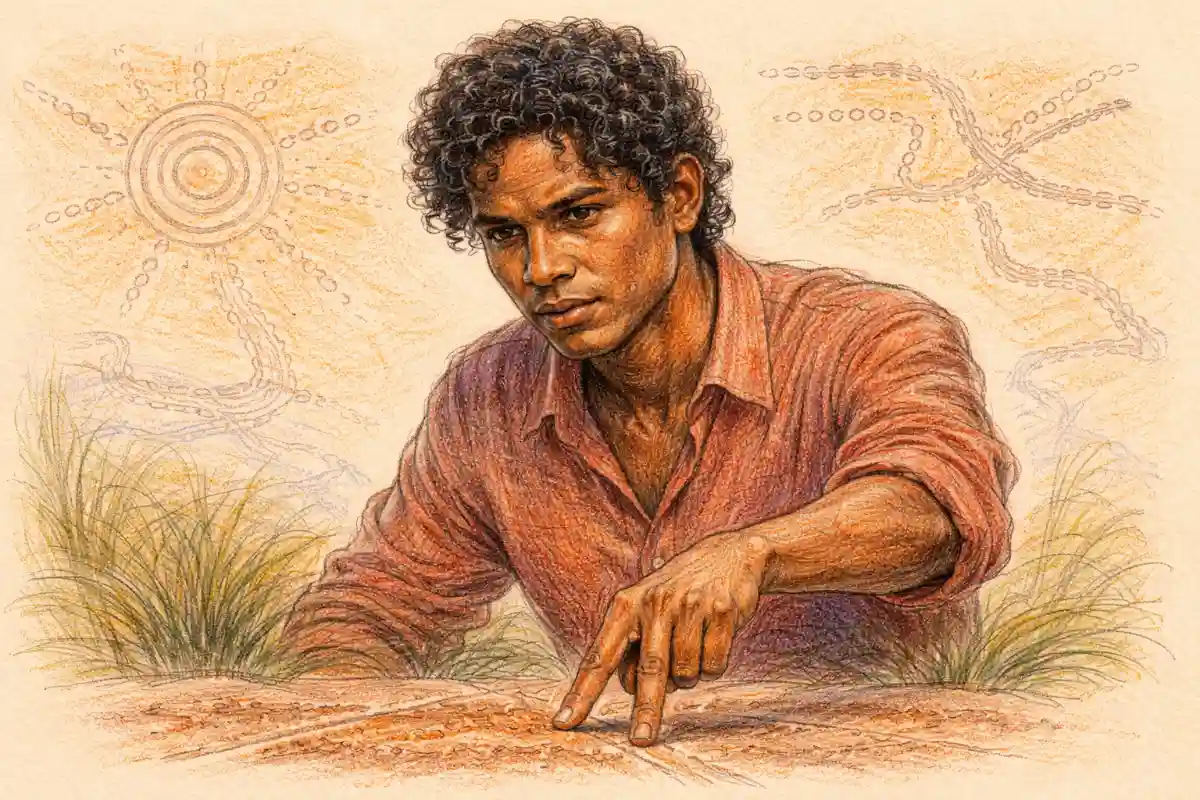
In the aftermath of the Battle of Kalinga in 261 BC, the Maurya emperor Ashoka walked through the ruins of a kingdom he had just conquered. What he saw has been described, in his own words inscribed on rock faces across the subcontinent, as 150,000 people deported, 100,000 killed in the fighting, and many more who died from its aftermath. These were not unusual numbers for ancient warfare; what was unusual was what Ashoka did next. Rather than celebrating a military triumph in the conventional manner, he experienced something that his edicts describe as profound remorse and a turning toward the Dharma, the Buddhist principles of non-harm, compassion, and righteous conduct. He renounced further military conquest, launched a program of welfare governance that included hospitals for both humans and animals, the planting of shade trees and wells along roads, and the appointment of Dharma Mahamatras (officials whose specific duty was to promote ethical conduct), and spent the remaining decades of his reign transforming the world’s largest empire through the tools of moral governance rather than military force. It was the most remarkable personal transformation in the history of ancient politics, and it has shaped the philosophical and political imagination of the world ever since.

The Maurya Empire (321-185 BC) was the first political entity to unify most of the Indian subcontinent under a single administration, and it did so twice: once through the military genius of Chandragupta Maurya, who founded the empire in a remarkable campaign that drove out the Macedonian garrisons left by Alexander the Great and then conquered the major Indian kingdoms from northwest to south; and once, more lastingly, through the moral authority of Ashoka, whose edicts inscribed on rocks and pillars throughout the subcontinent created the first pan-Indian political and cultural discourse. The empire’s military achievement was extraordinary; its cultural and philosophical legacy was more extraordinary still. Ashoka’s conversion to Buddhist Dharma and his attempt to govern through ethical principles rather than force created the first serious experiment in what modern political philosophy would call governance by moral persuasion, and his edicts, the first extensive body of inscribed political thought in Indian history, continue to shape the political imagination of the world’s largest democracy: the Lion Capital of Ashoka is the national emblem of modern India, and the Ashoka Chakra appears on its flag. To place the Maurya Empire within the full sweep of ancient world history, the World History Timeline on ReportMedic provides the most comprehensive interactive framework for understanding this pivotal civilization alongside its contemporaries in the Mediterranean and East Asian worlds.
The World Chandragupta Was Born Into
To understand Chandragupta Maurya’s achievement, it is necessary to understand the political landscape of the Indian subcontinent in the late fourth century BC: fragmented, recently traumatized by Alexander’s invasion, and ripe for unification by the right combination of military genius and political strategy.
The Indian subcontinent in the pre-Maurya period was organized into a mosaic of kingdoms, republics, and tribal confederacies that had been competing for dominance across the Gangetic plain (the fertile river plain along the Ganges and its tributaries) for several centuries. The period from approximately 600 to 300 BC, the era of the sixteen Mahajanapadas (great territorial states), had seen the gradual elimination of the smaller republican and monarchical states through warfare and absorption, leaving a smaller number of larger kingdoms by the mid-fourth century BC. The dominant power of the period was the Nanda Dynasty of Magadha, centered at Pataliputra (modern Patna) in the Bihar region: the Nanda rulers had built the largest army in Indian history, reportedly including hundreds of war elephants and hundreds of thousands of infantry, and had extended their control over most of the Gangetic plain.
This was the situation when Alexander the Great reached the northwestern frontier of the subcontinent in 326 BC. His campaign in India, limited to the Punjab region by the mutiny of his exhausted troops at the Hyphasis River, left behind a series of Macedonian satrapies in the northwest that were the first large-scale foreign administrative presence in India. Greek sources report that a young Indian named Sandrokottos (the Greek rendering of Chandragupta) met Alexander during this campaign; whether this encounter actually occurred is uncertain, but the tradition of Chandragupta having witnessed the Macedonian administration firsthand is consistent with what he subsequently built.
The political philosopher Kautilya, also known as Chanakya, plays a role in Chandragupta’s story that is almost certainly embellished by later tradition but reflects genuine historical significance. The Arthashastra, a comprehensive treatise on statecraft attributed to Kautilya, is one of the most remarkable texts in the history of political philosophy: a systematic and unsparing analysis of how states are built, maintained, and defended, covering everything from espionage to economic policy to the ethics of warfare. Whether Kautilya was literally Chandragupta’s minister and strategist or whether this attribution was a later construction that attached a theoretical text to a legendary founding partnership, the combination of the Arthashastra’s cold pragmatism with Chandragupta’s military campaigns represents a specific understanding of power that deserves extended analysis.
The Rise of Chandragupta: From Obscurity to Empire
Chandragupta Maurya’s origins are deliberately obscured in the historical record, and the obscurity itself is significant: later tradition acknowledged that he was of humble birth (some sources say he was the son of a peacock-tamer, giving the Maurya clan name a connection to the Sanskrit word for peacock), which was both a political problem for a dynasty claiming divine mandate and a rhetorical opportunity for the tradition that celebrated self-made greatness.
What is reasonably clear from the available evidence is that Chandragupta rose through the military and political opportunities created by Alexander’s invasion and by the instability of the Nanda kingdom. The Nanda Dynasty, despite its military power, was unpopular: ancient sources describe the Nanda rulers as of low birth (allegedly the sons of a barber-woman), greedy, and brutal in their treatment of the Kshatriya warrior aristocracy whose cooperation was essential for stable governance. The unpopularity created the political conditions for revolt; Chandragupta provided the military leadership.
The campaign began in the northwest, where the Macedonian satrapies were vulnerable after Alexander’s death in 323 BC and the subsequent chaos of the succession wars. Chandragupta drove the Macedonian garrisons from the Punjab and the northwestern provinces in a series of campaigns between approximately 323 and 320 BC, establishing his control of the northwest and building the military force that would be needed for the decisive campaign against the Nandas.
The campaign against the Nanda kingdom of Magadha was the central military achievement of the founding period. Ancient sources describe it as a carefully planned and executed campaign that eventually captured the Nanda capital Pataliputra; the exact sequence of events is uncertain, but by approximately 320-317 BC, Chandragupta had overthrown the last Nanda ruler and established himself as king of Magadha. This was not merely a dynastic change: it was the absorption of the largest existing Indian state into the core of what would become a unified empire.
The subsequent decade saw Chandragupta extend his control southward and westward, absorbing the kingdoms of the Deccan plateau and consolidating the northwest. By approximately 305 BC, he controlled the most extensive empire in Indian history. In that year, Seleucus Nicator, one of Alexander’s former generals who had inherited the eastern portion of the Macedonian empire, invaded the Punjab in an attempt to recover the territories that Chandragupta had taken. The campaign ended with Chandragupta forcing a negotiated settlement: Seleucus ceded the Punjab, Sindh, and the Arachosia and Areia regions (modern Afghanistan and parts of Iran) in exchange for 500 war elephants. The strategic implications were enormous: Chandragupta had not only maintained his hold on the northwest but had expanded the empire beyond the subcontinent’s boundaries, acquiring territory that even Alexander had not fully controlled.
The Seleucid ambassador Megasthenes, who spent several years at Chandragupta’s court at Pataliputra and wrote a detailed account of Indian society and culture (the Indica, now surviving only in fragments quoted by later authors), provides the most important external description of the Maurya Empire at its height. His account describes Pataliputra as one of the largest cities in the world, with a population he estimated at several hundred thousand; a sophisticated administrative system with multiple levels of officials responsible for taxation, public works, commercial regulation, and military organization; and a court of impressive ceremonial complexity in which the king appeared publicly only on specific occasions and was otherwise protected by elaborate security measures.
The World Chandragupta Shaped: The Arthashastra State
The political system that Chandragupta established, apparently drawing on the principles elaborated in the Arthashastra whether that text was literally Kautilya’s work or a somewhat later synthesis, was one of the most comprehensively described ancient states in the pre-modern world. The Arthashastra’s detailed prescriptions for governance cover an extraordinary range of topics: taxation, trade regulation, criminal justice, military organization, espionage, diplomacy, the management of mines and forests, the duties of specific officials, and the ethics of governance in specific situations.
The Arthashastra’s most striking feature is its unsparing realism about the nature of political power. Where later Indian political philosophy (and where Ashoka’s own edicts) would emphasize Dharma and moral conduct as the foundations of good governance, the Arthashastra starts from the premise that the state exists to protect the ruler’s power and the welfare of the kingdom’s productive population, and that any means consistent with these ends is legitimate. Its famous discussion of the “fish law” (matsya nyaya), the observation that in the absence of a strong state, the powerful eat the weak as big fish eat small fish, is the clearest statement of its political realism: the alternative to Arthashastra-style governance is not peaceful anarchy but violent predation.
This political philosophy is sometimes compared to Machiavelli’s Prince, and the comparison is apt in its recognition of political realism’s importance; it is also misleading if it suggests that the Arthashastra is simply an endorsement of ruthless power. The text is equally concerned with the economic welfare of the kingdom’s subjects, the prevention of official corruption, the maintenance of fair prices and commercial regulation, and the proper training and selection of officials. Its realism is in service of a vision of the well-governed state as one in which both the ruler’s security and the subjects’ welfare are maintained through competent, honest administration.
The administrative system described in the Arthashastra and apparently implemented by the Maurya Empire was organized hierarchically: the central government at Pataliputra, staffed by a council of ministers (mantriparishad) headed by the prime minister (amatya); the provinces (janapadas), governed by royally appointed officials; the districts and villages at the base of the hierarchy, each with its own administrative officials responsible for specific functions. The revenue system was comprehensive, taxing agricultural production (a quarter to a sixth of the crop), trade (customs duties and market taxes), manufacturing (taxes on artisans), and royal enterprises (mines, forests, the production of salt, and the manufacture of certain goods as state monopolies). The scale of this fiscal apparatus was the material foundation of Maurya military and administrative power.
Major Decisions: The Founding Choices
Chandragupta made several founding choices that shaped the Maurya Empire’s character and that reveal something important about his political intelligence. The most important was the treatment of conquered territories: rather than simply extracting maximum tribute and maintaining minimal presence, he chose to integrate conquered regions into a unified administrative system with standardized taxation, currency, and weights and measures. This choice was both more costly (requiring a much larger administrative apparatus) and more durable (creating real bonds of common governance rather than mere tribute relationships).
The decision to negotiate with Seleucus rather than to fight to the last was equally revealing: Chandragupta recognized that the political and military costs of an indefinite war with the Macedonian successor kingdom were not worth the incremental territory that complete victory might provide, and that the elephants he received in the settlement were worth more strategically than additional Bactrian territory. This pragmatic calculation, weighing specific assets against specific costs, reflects the Arthashastra’s methodology applied at the highest level of strategic decision-making.
The decision to abdicate in favor of his son Bindusara around 297 BC and, according to Jain tradition, to fast to death in a cave at Shravanabelagola in Karnataka is the most mysterious of his major choices. The Jain tradition’s claim that Chandragupta became a Jain monk in his final years, following the Jain teacher Bhadrabahu southward and dying through the Jain practice of voluntary fasting (sallekhana), may or may not be historically accurate; but it is consistent with a broader pattern of ancient Indian warrior-founders who recognized the limits of the political life and sought spiritual completion through renunciation. Whether historical or legendary, the story of Chandragupta’s final years establishes the Maurya Empire’s founding figure as someone capable of the most radical personal transformation, prefiguring his grandson Ashoka’s even more dramatic conversion.
The Person Behind the Founder
Who was Chandragupta Maurya beyond the military and political achievements? The historical evidence is thin and heavily filtered through later tradition, but some aspects of his character emerge. He was clearly a man of extraordinary physical courage and personal magnetism: building an army from scratch and defeating the most powerful kingdom in India required a leader capable of inspiring intense personal loyalty in soldiers and commanders. He was pragmatic rather than ideologically committed: he appears to have had no particular religious allegiance and drew on Jain, Hindu, and practical political traditions as his circumstances required.
He was also, by the evidence of his security arrangements described by Megasthenes, a man acutely aware of the dangers of his position. The elaborate bodyguard system at Pataliputra, with female bodyguards, multiple security layers, and strict protocols about who could approach the king, reflects the paranoia appropriate to a man who had overthrown one dynasty and feared being overthrown himself. The Arthashastra’s elaborate discussion of protecting the king from assassination reflects the same awareness: great power generates great enmity, and the ruler who ignores this reality does not long remain a ruler.
His relationship with Kautilya, whatever its historical accuracy, captures something real about the combination of intellectual guidance and military execution that the empire’s founding required. No ruler as consequential as Chandragupta operates entirely alone; the tradition of the brilliant advisor behind the powerful ruler reflects the genuine need for complementary talents in any large-scale political enterprise. Whether the specific partnership of Chandragupta and Kautilya is historical or mythologized, the question it raises, what is the relationship between political philosophy and political action, between theory and power - is genuinely important for understanding how the Maurya Empire was built.
Bindusara: The Forgotten Middle
Bindusara (reigned c. 297-273 BC), Chandragupta’s son and Ashoka’s father, receives less attention than either his father or his son, but his reign was not without significance. He extended the empire southward into the Deccan plateau, apparently conquering much of peninsular India south of the current territories, and maintained the diplomatic relationships with the Seleucid and other Hellenistic kingdoms that his father had established. Greek sources give him the epithet Amitraghata, “slayer of enemies,” suggesting a reputation as a vigorous military campaigner.
His personal interests, according to the tradition, ran toward philosophy: he reportedly corresponded with the Seleucid king Antiochus I (son of Antiochus I Soter) requesting sweet wine, dried figs, and a Greek philosopher; the response reportedly offered the wine and figs but declined to sell a philosopher. This exchange, if genuine, reflects the intellectual curiosity that characterized the Maurya court and its openness to non-Indian traditions.
The circumstances of Ashoka’s accession are shrouded in later tradition, which describes a succession struggle in which Ashoka killed ninety-nine of his brothers before emerging victorious. This tradition is almost certainly exaggerated (though fratricidal succession disputes were common in ancient Indian dynasties) and was probably elaborated by Buddhist tradition to create a dramatic contrast between the pre-conversion Ashoka the ruthless conqueror and the post-conversion Ashoka the compassionate Dharma-king.
The Rise of Ashoka: Conqueror to Philosopher-King
Ashoka’s early reign, before the transformation triggered by the Kalinga war, was by all available evidence unremarkable by the standards of ancient Indian kingship: he governed a vast empire, conducted military campaigns to maintain and extend it, and administered the administrative machinery he had inherited from his grandfather and father. The Ashoka of the first thirteen years of his reign is largely invisible in the historical record; the Ashoka of the post-Kalinga period is one of the most extensively documented rulers in ancient history.
The transformation was triggered by the Kalinga campaign of 261 BC, in which Ashoka completed the empire’s geographical ambitions by conquering the kingdom of Kalinga (corresponding roughly to modern Odisha on the eastern coast of India). Kalinga had successfully resisted previous Maurya attempts at conquest; its subjugation was probably the culmination of military ambitions that had begun under Bindusara. But the campaign’s specific character, the unusually large casualties described in Ashoka’s own Rock Edict XIII, or the specific qualities of Kalinga’s resistance, or some combination of personal and political factors that the edicts do not fully reveal, produced in Ashoka a response that no ancient ruler had previously articulated in public inscriptions.
Rock Edict XIII, which Ashoka himself describes as his most important edict, records his remorse directly: “150,000 people were deported, 100,000 were killed and many times that number perished. Afterwards, now that Kalinga was annexed, the Beloved of the Gods very earnestly practiced Dharma, desired Dharma, and taught Dharma.” This public acknowledgment of military atrocity as a moral wrong, by the ruler responsible for it, is without precedent in the ancient world: no Assyrian king, no Persian emperor, no Roman general recorded similar public remorse for the casualties of their conquests.
The Dharma State: Governing Through Ethics
What followed Kalinga was one of the most sustained and systematic attempts in ancient history to transform a state’s governing principles from military power to moral authority. Ashoka’s program, described across his fourteen Major Rock Edicts, his seven Pillar Edicts, and numerous Minor Rock Edicts spread across the entire subcontinent, constitutes the first extensive body of political thought in Indian history and one of the most remarkable political documents of the ancient world.
The Dharma that Ashoka promoted was not narrowly Buddhist sectarian doctrine but a broad ethical framework that he explicitly stated was compatible with all religious traditions. His Dharma included non-violence toward all living beings, respect for parents and elders, generosity to Brahmins and ascetics of all sects, truthfulness, and the specific duties of the ruler toward his subjects’ welfare. He established the Dharma Mahamatras, a new class of officials whose specific function was to promote ethical conduct among the population, to protect the rights of minority religious communities, and to serve as ombudsmen for groups that might otherwise have no access to royal attention: women, the aged, prisoners, and frontier peoples.
His public works program was comprehensive and innovative: he planted shade trees and dug wells along the roads throughout the empire, established rest houses for travelers and pilgrims, created hospitals for both human and animal patients, and appointed officials responsible for the welfare of people and animals throughout the kingdom. These welfare provisions were not merely charitable impulses but expressions of a systematic political philosophy in which the ruler’s primary obligation was to the welfare of all living beings, not just to the extension of his own power or the maintenance of political order.
His treatment of religious diversity was remarkably tolerant even by modern standards: he funded the construction of Buddhist monasteries while also supporting Brahmin priests, Jain ascetics, and other religious practitioners; he prohibited animal sacrifice at the court and restricted the killing of various animals throughout the empire; and he inscribed his edicts in the local scripts and languages of different regions rather than insisting on a single administrative language, acknowledging the cultural diversity of his subjects. The Brahmi script in which most of his edicts were inscribed was developed and standardized for this specific purpose of public royal communication; the edicts in Greek and Aramaic found in the northwest reflect his recognition of the multilingual character of that region.
The Major Decisions of Ashoka’s Reign
Ashoka made several decisions of extraordinary historical importance that reveal the specific character of his political philosophy and the tensions within it. The most consequential was the decision to renounce further military conquest (digvijaya) in favor of Dharma-vijaya (conquest through righteousness), which he announced after Kalinga. This was not merely a rhetorical gesture: Ashoka maintained a substantial military force throughout his reign, and the Maurya Empire continued to use military force when necessary to maintain internal order and protect the frontiers. What he renounced was the specific ambition of territorial expansion through aggressive warfare, replacing it with a claim that genuine conquest was the winning of hearts and minds through exemplary governance.
The decision to send Buddhist missionaries to neighboring kingdoms and eventually to distant lands was among the most historically consequential of ancient world. His son (or in some traditions, his daughter) Mahinda traveled to Sri Lanka and is traditionally credited with establishing Buddhism there; missions were reportedly sent to the Hellenistic kingdoms of the Mediterranean and to Southeast Asia. The spread of Buddhism beyond India into East and Southeast Asia, which would eventually make it one of the world’s major religions, can be traced in part to the momentum created by Ashoka’s missionary activity.
The decision to inscribe his edicts on rock faces and pillars throughout the subcontinent, rather than simply governing through administrative directive, was the founding act of Indian political discourse. Before Ashoka, Indian rulers communicated with their subjects primarily through officials and through oral proclamation; the idea of addressing all subjects simultaneously, in their own languages, through durable inscriptions accessible to anyone who could read them, was without precedent. The edicts created a public political discourse that invited subjects to understand and engage with the principles governing their lives, not merely to comply with the commands of power.
His treatment of his conquered subjects, including the Kalingas themselves, exemplifies the Dharma approach in practice: rather than treating Kalinga’s population as a defeated enemy to be exploited, his edicts promise them the same paternal care he extends to all his subjects, and he explicitly acknowledges that the forests peoples (the tribal communities of the frontier regions) should be both protected from oppression and encouraged to embrace the Dharma’s principles. This inclusive political vision, in which even conquered and marginalized populations are addressed as moral subjects deserving royal attention, was genuinely innovative.
The Person Behind the Power
Who was Ashoka behind the official inscriptions? The edicts themselves reveal a personality of unusual self-awareness and moral seriousness: he repeatedly acknowledges his own failures and limitations, expresses doubt about whether his officials are implementing his programs effectively, and shows genuine concern about the gap between his intentions and the actual conditions of his subjects. This kind of public self-doubt was highly unusual for any ancient ruler and suggests a man genuinely committed to the ethical principles he was proclaiming rather than simply using them as political rhetoric.
The personal tensions in the edicts are revealing: Ashoka prohibited the killing of many animals for food and sport, but maintained the military force necessary to govern his empire; he preached non-violence but used force when the situation required it; he promoted religious tolerance but clearly favored Buddhism in his personal conduct and his patronage. These tensions between principle and practice are not evidence of hypocrisy but of the genuine difficulty of governing a large empire according to ethical principles that are in tension with the practical requirements of power.
His relationship with his family is another dimension that the edicts illuminate: he frequently mentions his children and their roles in propagating the Dharma, and the tradition of sending his son Mahinda to Sri Lanka as a missionary reflects a willingness to deploy his family in service of his vision that modern political leaders rarely match. The later tradition’s claim that Ashoka’s excessive generosity to Buddhist institutions led to the empire’s fiscal weakening is probably exaggerated but contains a kernel of insight: the priorities of Dharma governance, welfare spending, missionary activity, the maintenance of religious institutions, were not costless, and they reduced the resources available for the military maintenance on which the empire’s territorial integrity depended.
Decline and Fall: After Ashoka
Ashoka died around 232 BC, approximately thirty years after the Kalinga war. His death triggered a rapid fragmentation of the empire that the Buddhist tradition attributes to the excessive generosity of his later years (which weakened the treasury and thus the military), and that modern historians attribute to the structural challenges of governing an empire of the Maurya’s scale with pre-modern administrative technology and the specific weaknesses created by Ashoka’s ideological commitments.
The last Maurya emperor, Brihadratha, was killed by his own general Pushyamitra Shunga in approximately 185 BC, ending the dynasty. The Shunga Dynasty that replaced it reversed several of Ashoka’s Buddhist-oriented policies, reportedly persecuting Buddhist communities and patronizing the Brahminical tradition instead; the subsequent history of Buddhism in India was one of gradual marginalization, even as it flourished in the countries to which Ashoka’s missions had carried it.
The post-Maurya Indian subcontinent fragmented into multiple regional kingdoms that competed for the following several centuries: the Shunga Dynasty in the north, the Satavahana Dynasty in the Deccan, the Kalinga kingdom reasserting its independence in the east, and various Greek (Indo-Greek) and Scythian kingdoms establishing themselves in the northwest. The political unity that the Mauryas had achieved would not be replicated on the same scale until the Gupta Empire in the fourth to sixth centuries AD.
Consequences and Impact
The Maurya Empire’s immediate historical consequences were primarily political: it established the model of a unified Indian subcontinent as a political possibility, created the administrative infrastructure of a pan-Indian state, and demonstrated that India’s cultural and linguistic diversity was compatible with unified political governance under the right conditions. The idea of a unified India, which the Mauryas first realized and which subsequent Indian rulers aspired to replicate, has been a recurring theme in Indian political history ever since.
Ashoka’s specific legacy has been even more enduring than the dynasty’s political achievement. His edicts, which were largely forgotten and unread from the collapse of the Maurya Empire until the decipherment of the Brahmi script by James Prinsep in 1837, became, once recovered, one of the most important bodies of political philosophy in the world. His vision of governance based on ethical principles, tolerance for religious diversity, active concern for the welfare of all subjects including animals, and the use of moral persuasion rather than force as the primary tool of political authority has influenced political thought across the world since their discovery.
His influence on Buddhism was equally profound. The Buddhist tradition regards Ashoka as the ideal lay ruler whose patronage and missionary activity transformed a local Indian religious movement into the first world religion; the spread of Buddhism to Sri Lanka, Southeast Asia, Central Asia, and ultimately China and Japan was substantially the result of the momentum created by Ashoka’s missions and the prestige that imperial patronage gave the religion. The wheel of Dharma (Dharmachakra) that appears on Ashoka’s pillar capitals became the symbol of Buddhist teaching worldwide; the Lion Capital of his famous Sarnath pillar became the national emblem of modern India.
The Persian Empire article traces the closest geographical and temporal parallel to the Maurya Empire; the Han Dynasty article traces the Eastern counterpart that was developing simultaneously on the other side of Asia; and the Alexander the Great article traces the Macedonian context within which Chandragupta built his empire. Tracing these interconnections on the World History Timeline on ReportMedic reveals how the ancient world’s civilizations were more deeply connected than they often appear when studied in isolation.
Historiographical Debate
The historiography of the Maurya Empire has been shaped by the specific character of the available sources, which are simultaneously rich and limited. The richest sources are Ashoka’s own inscriptions, which are extensive, personal, and unusually direct in their expression of political and ethical principles; they are also one-sided (Ashoka did not inscribe accounts of opposition or failure) and ideologically charged (they are propaganda as well as political philosophy). The Arthashastra attributed to Kautilya is the most comprehensive description of Maurya administrative theory, but its dating and authorship remain disputed; whether it describes the Chandragupta period accurately or represents a later synthesis is uncertain.
The Western sources, particularly Megasthenes’s Indica, provide valuable external perspectives on the empire at its height but are filtered through Greek cultural categories and survive only in fragments. The Buddhist, Jain, and Hindu traditions each preserve versions of the Maurya story that reflect their specific ideological interests; the Buddhist tradition’s account of Ashoka is hagiographic; the Brahminical tradition’s memory of the dynasty is ambivalent.
The major contemporary scholarly debates include: the precise extent of the empire’s territory, particularly in the south; the nature and extent of Ashoka’s Buddhist conversion and its effect on governance; the relationship between the Arthashastra’s prescriptions and actual Maurya administrative practice; and the causes of the empire’s rapid fragmentation after Ashoka’s death. The debate about whether Ashoka’s governance represented a genuine revolution in ancient statecraft or merely a more sophisticated version of the standard ancient combination of force and legitimating ideology is particularly active and important.
Why the Maurya Empire Still Matters
The Maurya Empire matters to the present in ways that are both historically specific and universally significant. For modern India, the empire represents the first realization of Indian political unity across most of the subcontinent; it is the historical precedent for the modern Indian state’s aspiration to unity across extraordinary linguistic, cultural, and religious diversity. The Ashokan symbols that adorn the Indian Republic’s official iconography (the Lion Capital, the Ashoka Chakra) are statements about the kind of political tradition the Indian state claims to inherit, and understanding what those symbols meant in their original context is essential for understanding the traditions they invoke.
More broadly, Ashoka’s experiment in Dharma governance represents the most extensive ancient attempt to answer one of political philosophy’s most important questions: can a large state be governed on ethical rather than merely coercive principles? His answer, which was partial and incomplete but genuinely attempted, is that moral authority and material welfare are not merely luxuries that powerful states can afford but the most durable foundations of political legitimacy. The state that governs its people well, that treats all its subjects with care, that respects their religious and cultural diversity, and that deploys its resources for their benefit rather than for the ruler’s glory, commands a loyalty that military force alone cannot create.
The relevance of this question to any modern state should be obvious. The tension between the Arthashastra’s realism about power and Ashoka’s idealism about Dharma is not resolved in the Maurya period, and it has not been resolved since; every state in every period faces the same tension between the demands of security and the demands of justice. The Maurya Empire’s extraordinary contribution to political thought is to have engaged that tension so directly, in such durable inscriptions, at such an early moment in the history of large-scale governance. The World History Timeline on ReportMedic provides the comprehensive framework for tracing how the tension between power and principle that the Maurya Empire embodied has been addressed across the full sweep of world history.
Frequently Asked Questions
Q: Who founded the Maurya Empire?
The Maurya Empire was founded by Chandragupta Maurya around 321-320 BC, when he overthrew the last ruler of the Nanda Dynasty and established himself as king of Magadha, the most powerful kingdom in the Gangetic plain. Chandragupta subsequently expanded his control to cover most of the Indian subcontinent and negotiated a settlement with the Seleucid ruler Seleucus Nicator in 305 BC that extended the empire into what is now Afghanistan and parts of Iran. The empire’s founding is traditionally attributed to the strategic guidance of the political philosopher Kautilya (also known as Chanakya), who reportedly served as Chandragupta’s minister and whose Arthashastra provides the most comprehensive surviving description of Maurya administrative theory.
Q: What is Ashoka famous for?
Ashoka (reigned c. 268-232 BC) is famous primarily for his transformation from a conqueror to a philosopher-king following the Battle of Kalinga in 261 BC. After witnessing the devastation of the Kalinga campaign, in which he records 150,000 deportees and 100,000 killed, he experienced profound remorse and converted to Buddhist Dharma, renouncing further military conquest and embarking on an ambitious program of welfare governance. He inscribed his ethical and political principles on rock faces and pillars throughout the empire, creating the first extensive body of public political discourse in Indian history. His welfare programs included hospitals for humans and animals, shade trees and wells along roads, and the appointment of Dharma Mahamatras (ethics officials). He also sent Buddhist missionaries to neighboring kingdoms, contributing to Buddhism’s spread throughout Asia. His Lion Capital is the national emblem of modern India, and the Ashoka Chakra appears on the Indian national flag.
Q: What was the Arthashastra?
The Arthashastra is a comprehensive ancient Indian treatise on statecraft, economic policy, and military strategy attributed to Kautilya (also known as Chanakya), who is traditionally described as Chandragupta Maurya’s minister and strategist. The text covers a remarkable range of topics: the selection and training of officials, the organization of espionage, the management of the state economy (including mines, forests, agriculture, and trade), the regulation of commerce and prices, criminal justice, military organization, diplomacy, and the principles governing warfare. Its most striking feature is its political realism: it starts from the premise that the state’s primary function is to maintain the ruler’s power and the kingdom’s welfare, and it advocates any means consistent with these ends. Often compared to Machiavelli’s Prince, the Arthashastra is a more comprehensive and in some respects more sophisticated analysis of political power. The text’s precise dating and authorship are debated: it was probably compiled in roughly its current form sometime between the third century BC and the third century AD, incorporating earlier material that may genuinely date to Chandragupta’s period.
Q: How big was the Maurya Empire?
The Maurya Empire at its greatest extent under Ashoka covered most of the Indian subcontinent: from the Khorasan region (modern Afghanistan and eastern Iran) in the northwest to the Brahmaputra River valley in the northeast, and extending southward through the Deccan plateau to the Mysore region in the south, with the extreme southern tip of the subcontinent (modern Tamil Nadu and Kerala) remaining outside Maurya control. This territory corresponded to approximately five million square kilometers, comparable to the contemporary Seleucid Empire and the Han Dynasty of China. The population may have been as high as 50 to 60 million people, making it one of the most populous states in the ancient world. The capital at Pataliputra (modern Patna in Bihar) was described by Greek visitors as one of the largest cities in the world.
Q: What was the relationship between the Maurya Empire and Alexander the Great?
The Maurya Empire’s founding was directly shaped by Alexander the Great’s Indian campaign, though the relationship between the two is complex. Alexander invaded the northwestern frontier of the subcontinent in 326 BC and conquered the Punjab region before his troops mutinied at the Hyphasis (Beas) River and refused to advance further. He left behind Macedonian satrapies in the northwest when he withdrew; these satrapies, weakened by Alexander’s death in 323 BC and the subsequent Macedonian succession wars, were driven out by Chandragupta in a series of campaigns around 323-320 BC. Some ancient sources claim that the young Chandragupta met Alexander during the Indian campaign; whether this encounter actually occurred is uncertain, but it would explain Chandragupta’s apparent familiarity with Macedonian administrative and military methods.
The subsequent diplomatic encounter between Chandragupta and Seleucus Nicator (one of Alexander’s former generals who had inherited the eastern Macedonian empire) produced the significant settlement of 305 BC, in which Seleucus ceded the northwestern territories in exchange for 500 war elephants and a dynastic marriage. The Seleucid ambassador Megasthenes spent several years at Chandragupta’s court and wrote the Indica, the most important Greek account of ancient Indian civilization, based on his observations.
Q: How does Ashoka’s Dharma compare to modern human rights principles?
The comparison between Ashoka’s Dharma and modern human rights principles is both instructive and limited. On one level, Ashoka articulated principles that anticipate modern human rights discourse in striking ways: he proclaimed freedom of religious practice for all sects, called for equal treatment of all subjects regardless of social status, expressed concern for prisoners’ welfare (including provisions for judicial review and the appointment of officials to ensure fair treatment), prohibited certain forms of animal killing, and asserted the ruler’s obligation to promote the welfare of all living beings. These principles, articulated in the third century BC, are genuinely remarkable for their inclusiveness and their explicit rejection of the idea that power exempts its holder from moral obligations.
The differences are equally important. Ashoka’s Dharma framework is paternalistic rather than rights-based: it describes the ruler’s obligations toward subjects rather than subjects’ rights against the ruler; it does not envision mechanisms for subjects to hold rulers accountable; and it is embedded in a cosmological and religious framework (Buddhist Dharma) rather than in a secular framework of universal human dignity. The modern human rights tradition, rooted in the Enlightenment’s concept of natural rights and the subsequent development of international human rights law, differs from Ashokan Dharma in its institutional mechanisms, its secular universalism, and its grounding in individual rather than communal values.
What the comparison illuminates is the universality of the underlying concern: across very different cultural and philosophical frameworks, thoughtful rulers and thinkers have arrived at the conclusion that power carries moral obligations, that the welfare of the least powerful members of society is a legitimate measure of governance quality, and that religious and cultural diversity is something that good governance should accommodate rather than suppress. Ashoka’s Dharma is one of the earliest and most extensive ancient expressions of this understanding.
Q: What happened to Buddhism after Ashoka?
Buddhism’s trajectory after Ashoka’s reign reveals one of the most complex stories in the history of religion. Within India, Buddhism experienced both periods of vigorous growth (particularly under the patronage of the Kushan emperors in the first and second centuries AD) and gradual marginalization; by the thirteenth century AD, the Muslim invasions that destroyed the great Buddhist monasteries at Nalanda and elsewhere had effectively ended Buddhism as a significant popular religion in its homeland. The religion survived in India primarily through specific regional communities and through the Hindu absorption of the Buddha as an avatar of Vishnu.
Outside India, however, Buddhism flourished in the countries to which Ashoka’s missions and subsequent waves of missionaries had carried it. In Sri Lanka, the tradition of Ashoka’s son Mahinda’s mission established Buddhism as the dominant religion of the island, which it remains today. In Southeast Asia, including Burma, Thailand, Cambodia, Laos, and Vietnam, Theravada Buddhism (the tradition closest to the earliest Buddhist texts) became the dominant religious form, shaping the political culture, art, and architecture of these civilizations. In China, Japan, Korea, and Vietnam, Mahayana Buddhism became a major force, generating distinctive national Buddhist traditions that contributed to the extraordinary cultural diversity of East and Southeast Asian civilization.
Q: What was Pataliputra like as a capital city?
Pataliputra (modern Patna in Bihar, India) was the capital of the Maurya Empire and, by the accounts of those who visited it, one of the greatest cities of the ancient world. Megasthenes, the Seleucid ambassador who spent several years at the Maurya court, described Pataliputra as a roughly rectangular city approximately 15 kilometers long and 3 kilometers wide, enclosed by a wooden palisade with towers and moats, situated at the confluence of the Ganges, Son, and Punpun rivers. He estimated its population at several hundred thousand, which would have made it comparable in size to the largest cities of the contemporary ancient world, including Rome and Chang’an.
The city’s physical infrastructure included the royal palace (which Megasthenes reportedly compared favorably to the Persian royal palace at Susa), government offices, temples, residences for the nobility and the merchant class, and the markets and workshops of the commercial population. The wooden palisade construction meant that very little survives archaeologically; unlike the stone and brick cities of the Mediterranean world, the wooden architecture of Pataliputra has not left the kind of structural remains that would allow detailed archaeological reconstruction. Some archaeological work has confirmed the city’s general location and extent and has found evidence of the wooden palisade described by Megasthenes, but our picture of the city’s physical character depends primarily on the literary sources.
Q: How did the Maurya Empire’s governance compare to the Persian Achaemenid Empire?
The Maurya Empire and the Achaemenid Persian Empire represent the two great experiments in ancient universal empire in the Asian world, and the comparison between them reveals both the universality of certain governance challenges and the distinctiveness of each civilization’s solutions. Both empires governed large, culturally diverse populations across extensive territories; both developed professional civil services with standardized administrative procedures; both used a combination of military force and cultural accommodation to maintain loyalty among diverse subject populations; and both faced the structural challenge of maintaining central control over distant provinces governed by powerful appointed officials.
The differences are instructive. The Achaemenid Empire, as described in the Persian Empire article, governed through the satrap system with relatively light central intervention in local affairs, using a single administrative language (Aramaic) across linguistically diverse territories and tolerating local religious and cultural practices with remarkable consistency. The Maurya Empire governed through a more interventionist administrative hierarchy, used local languages and scripts for official communication rather than a single administrative language, and under Ashoka attempted to impose a unified ethical framework (Dharma) rather than simply tolerating diversity. Both approaches had merits: the Achaemenid tolerance produced stable governance over a longer period; the Maurya intervention produced a more intensive state presence and a more ambitious vision of the state’s moral obligations.
Q: What is the legacy of the Maurya Empire for modern India?
The Maurya Empire’s legacy for modern India operates on several levels. Most visibly, the Lion Capital of Ashoka’s Sarnath pillar is the official emblem of the Republic of India, and the Ashoka Chakra (the wheel of Dharma that appears on all of Ashoka’s major pillar capitals) appears at the center of the Indian national flag. These choices, made by the founders of the Indian Republic at independence in 1947, were explicit statements about the political tradition the new state was claiming to inherit: one that valued religious tolerance, the rule of Dharma, and the welfare of all subjects regardless of caste, religion, or social status.
More broadly, the Maurya Empire represents the first realization of India as a unified political entity, which makes it the foundational precedent for the modern Indian state’s aspiration to maintain unity across extraordinary diversity. India today governs approximately 1.4 billion people speaking hundreds of languages across a territory roughly comparable to the Maurya Empire, and the challenges of maintaining that unity while respecting its diversity are directly analogous to the challenges that Ashoka’s Dharma governance was designed to address. The World History Timeline on ReportMedic provides the most comprehensive framework for tracing this legacy from Ashoka’s inscribed pillars to the modern Indian Republic, showing how the questions the Maurya Empire raised about the relationship between power, ethics, and diversity have been continuously renegotiated across two and a half millennia of Indian political history.
The Maurya Economy: Trade, Agriculture, and State Enterprise
The Maurya Economy was one of the most extensively documented in the ancient world, thanks primarily to the Arthashastra’s detailed prescriptions for economic management, and it represents a specific model of state-directed commercial activity that differs significantly from both the laissez-faire commercial culture of Phoenicia and Greece and the slave-plantation model of Roman Italy.
The foundation of the Maurya economy was agriculture, organized primarily around the small peasant household farming grain, cotton, and other crops on the fertile Gangetic plains. The state’s primary revenue came from taxation of agricultural production (typically a quarter to a sixth of the crop) and from the produce of state-owned farms cultivated by enslaved people and wage laborers. Land revenue was the single most important component of the Maurya fiscal system; maintaining its flow required both the administrative infrastructure to assess and collect it and the agricultural infrastructure (irrigation, flood control) to maintain the productivity of the land.
The Arthashastra’s discussion of commerce reveals an economy in which long-distance trade was significant and in which the state actively managed commercial activity rather than simply taxing it. The text describes standardized weights and measures (enforced by appointed officials), regulated markets in major commodities, state monopolies in certain products (salt, iron, and others), quality standards for manufactured goods, and supervision of the movement of traders on the major routes. The state also controlled access to natural resources: forests, mines, and fisheries were royal property, managed by appointed officials who collected revenue from their exploitation.
The overseas trade that connected India to the Persian Gulf, Arabia, and East Africa was already significant in the Maurya period, though it would reach its peak in the subsequent Satavahana and Kushana periods. Roman demand for Indian spices, cotton textiles, and luxury goods created a sustained commercial connection that generated significant revenue for the Indian states that controlled the trade routes.
Ashoka’s Edicts: The First Pan-Indian Political Discourse
The physical survival of Ashoka’s edicts, inscribed on rock faces and polished sandstone pillars at strategic locations throughout the subcontinent, is itself remarkable. Unlike the perishable wooden structures of Pataliputra or the clay tablets of Mesopotamia, the rock-cut and pillar edicts have survived two thousand years of weathering, conquest, and civilization change with sufficient legibility for modern scholars to read them. The Brahmi script in which most are written was deciphered by James Prinsep in 1837, in what is sometimes described as the most important moment in modern Indian historical scholarship; before Prinsep’s work, the edicts were unreadable and Ashoka himself was a figure known only from Buddhist tradition rather than historical documentation.
The edicts are not a systematic philosophical treatise but a collection of specific communications addressed to specific audiences: Ashoka addressing his officials about administrative duties, addressing his subjects about Dharma principles, addressing different religious communities about his support for all of them, and addressing frontier peoples about his care for their welfare. Their variety of subject matter and the consistency of their underlying values across this variety make them one of the most convincing documents of a genuine political personality in the ancient world.
The language of the edicts is striking in its directness and its occasional vulnerability: Ashoka admits that his welfare programs may not be perfectly implemented, that his officials may not always follow his instructions, and that he is uncertain whether his efforts are producing the results he intends. This kind of public acknowledgment of imperfection was highly unusual for an ancient ruler, who was typically presented as infallible and divinely sanctioned in official inscriptions. Ashoka’s edicts read like the communications of someone who is actually trying to govern well rather than merely projecting the appearance of divine mandate.
The Maurya Military: Elephant Power and Imperial Warfare
The Maurya military was the most powerful force in ancient India and one of the most formidable in the contemporary ancient world, and its specific character, centered on war elephants in a way that no other major ancient military was, gave it distinctive capabilities and limitations. Ancient sources describe Chandragupta’s army as including 600,000 infantry, 30,000 cavalry, 9,000 war elephants, and 8,000 chariots, numbers that are almost certainly exaggerated but that reflect the genuine scale of Maurya military power.
War elephants were the Maurya military’s most distinctive element and most powerful weapon. Each elephant carried a crew of mahout (driver) and several archers or warriors, and could be used to charge enemy formations, destroy fortifications, and create panic among troops unfamiliar with their use. The strategic value of elephants was sufficient for Seleucus Nicator to cede substantial territory in exchange for 500 of them; their subsequent use in the Diadochi wars significantly affected the military balance of the Hellenistic world.
The limitations of elephant warfare were equally significant: elephants were expensive to maintain (requiring large quantities of food and specialist handlers), vulnerable to fire and to attacks from the flank and rear, and prone to panic and to turning on their own troops when wounded. The sophisticated elephant management practices described in the Arthashastra and the existence of dedicated elephant training establishments reflect the Maurya state’s awareness of both the weapon’s power and its management demands.
Q: Who was Kautilya and how important was he?
Kautilya (also known as Chanakya and Vishnugupta) is one of the most important figures in the history of Indian political thought and is traditionally described as the strategist who engineered Chandragupta Maurya’s rise to power. The Arthashastra attributed to him is the most comprehensive ancient Indian treatise on statecraft, and its influence on subsequent Indian political thought has been compared to the influence of Aristotle on Western political philosophy.
The historical relationship between Kautilya and Chandragupta is difficult to establish precisely: the specific stories of Kautilya’s role in planning the overthrow of the Nanda Dynasty, discovering Chandragupta’s potential as a young boy, and serving as the power behind the throne are largely products of later Buddhist and Hindu tradition whose historical accuracy cannot be verified. What can be said is that the Arthashastra represents a body of political thought consistent with the Maurya period, that its systematic analysis of statecraft influenced Indian political practice for centuries, and that the tradition of attributing it to a founding minister of the dynasty is plausible even if the specific details are uncertain.
Kautilya’s intellectual achievement in the Arthashastra is remarkable regardless of the biographical details: the systematic analysis of all aspects of governance, from personnel management to economic policy to foreign relations, in a single integrated framework, represents one of the most ambitious intellectual projects of the ancient world. His realism about the nature of power and his equally systematic concern for the economic welfare of the kingdom’s subjects create a political philosophy that is both more cynical and more humane than either extreme alone.
Q: How did Indian civilization develop before the Maurya Empire?
The Indian subcontinent had a long and complex history of civilization before the Maurya Empire, including one of the world’s earliest urban civilizations and several centuries of sophisticated intellectual and religious development. The Indus Valley Civilization (c. 3300-1300 BC) was one of the three great urban civilizations of the Bronze Age alongside Mesopotamia and Egypt, producing large planned cities at Mohenjo-daro and Harappa with sophisticated drainage systems, standardized weights and measures, and a writing system that has not yet been deciphered. The decline of the Indus Civilization around 1300 BC and the subsequent arrival of Indo-Aryan peoples with their oral Vedic tradition created the cultural foundations of subsequent Indian civilization.
The Vedic period (c. 1500-500 BC) saw the composition of the Vedic texts (the Rigveda, Samaveda, Yajurveda, and Atharvaveda), the development of the Vedantic philosophical tradition, and the social organization of the caste system (varna) that would organize Indian society for millennia. The sixth and fifth centuries BC, roughly contemporary with the Greek philosophical revolution, saw an extraordinary flowering of Indian intellectual and religious life: the development of Buddhism by Siddhartha Gautama (the Buddha), the formalization of Jainism by Mahavira, the composition of the major Upanishads, and the development of the skeptical and materialist traditions (Ajivika, Carvaka) that challenged the Vedic orthodoxy.
The political development that culminated in the Maurya Empire was driven by the gradual consolidation of the Mahajanapadas (great territorial states) through warfare and absorption over the fifth and fourth centuries BC, with the Magadha kingdom emerging as the dominant power through a series of military conquests. The Maurya Empire thus stood on the foundation of centuries of prior social, philosophical, and political development, absorbing and systematizing traditions that had been developing since long before Chandragupta’s campaigns.
Q: What was the Kalinga War and why was it historically significant?
The Kalinga War of 261 BC was the military campaign in which Ashoka conquered the kingdom of Kalinga (corresponding roughly to modern Odisha on India’s eastern coast) and the event that, by Ashoka’s own account, transformed him from a conventional ancient conqueror into the philosopher-king of his later reign. Kalinga had successfully resisted previous Maurya attempts at conquest; its subjugation completed the empire’s control of the eastern coast of the subcontinent and gave the Mauryas direct access to maritime trade routes.
The military campaign itself was apparently more costly than the Mauryas had anticipated: Rock Edict XIII records 150,000 people deported, 100,000 killed in the fighting, and many more who died from its aftermath, numbers that Ashoka uses not as a boast but as evidence of the suffering he caused and now regrets. The historical accuracy of these specific numbers is impossible to verify, but the scale of the casualties was apparently sufficient to produce in Ashoka a genuine crisis of conscience that had no precedent in the ancient world’s record of royal responses to warfare.
The historical significance of the war lies less in its military outcome than in Ashoka’s response to it: the first time in recorded history that a ruler publicly acknowledged the moral costs of military conquest and changed his governing principles in response. This public acknowledgment, preserved in durable inscriptions and thus available for subsequent generations to read and draw on, created the template for what has been called “remorse politics,” the political tradition in which leaders acknowledge responsibility for historical harms and commit to changed conduct. The resonance of this template in contemporary political culture, from truth and reconciliation commissions to public apologies for historical injustices, connects directly to the Ashokan precedent.
Q: What was the significance of Ashoka sending Buddhist missionaries abroad?
Ashoka’s decision to send Buddhist missionaries to neighboring kingdoms and more distant lands was among the most consequential diplomatic and cultural acts in ancient history, initiating the process by which Buddhism became a world religion. His edicts mention missions to the Hellenistic kingdoms of the Mediterranean (the kingdoms of Antiochus, Ptolemy, Magas, Alexander, and Antigonus are specifically named), to various other neighboring regions, and most significantly to Sri Lanka, where the tradition credits Ashoka’s son Mahinda with establishing Buddhism as the dominant religion.
The Sri Lanka mission was the most immediately effective: Buddhism took root there in the third century BC and has remained the dominant religion of the island ever since. The subsequent spread of Theravada Buddhism from Sri Lanka to Southeast Asia (Burma, Thailand, Cambodia, Laos) created the dominant religious tradition of the mainland Southeast Asian world. Separately, the Silk Road transmission of Buddhism northward through Central Asia and into China, which received significant impetus from the prestige that Ashokan imperial patronage gave the religion, eventually made Buddhism one of the most important forces in East Asian civilization.
The scale of this religious transmission can be measured by the current global distribution of Buddhism: approximately 500 million practitioners worldwide, with significant communities in Sri Lanka, Southeast Asia, China, Japan, Korea, Vietnam, Tibet, and Mongolia. Virtually all of these communities trace their Buddhism to transmission lines that ultimately lead back to the Indian tradition that Ashoka patronized and spread. His missionary activity was thus not merely a historical footnote but the initial act in one of the most consequential cultural transmissions in the history of religion.
The Maurya Art and Architecture Legacy
The artistic and architectural legacy of the Maurya period, though less extensively preserved than the edicts, provides important evidence about the aesthetic values and technical capabilities of the empire at its height. Ashoka’s pillar program was the most ambitious royal construction project in ancient Indian history: he erected polished sandstone pillars, typically 10 to 15 meters tall and capped with elaborately carved animal capitals, at sites of Buddhist significance throughout the subcontinent. The pillars were carved from a single piece of the fine-grained Chunar sandstone from quarries near Varanasi, transported over long distances, and polished to a mirrorlike finish that ancient and modern observers alike have found astonishing.
The capital sculptures that topped the pillars are the finest surviving examples of Maurya sculpture: the famous Lion Capital from Sarnath, with its four back-to-back lions atop a circular base decorated with four smaller animals and four Dharma wheels, achieves a degree of sculptural sophistication and artistic confidence that shows mastery of both technical execution and symbolic expression. The national emblem of India reproduces this capital; the Dharmachakra wheel at its base appears on the Indian flag.
The rock-cut cave architecture that began in the Maurya period (the Barabar Caves in Bihar, which Ashoka donated to the Ajivika sect, are the earliest surviving examples) established a tradition of cutting architectural spaces directly from living rock that would be developed continuously in India for over a thousand years, producing the magnificent cave temples of Ajanta, Ellora, and Elephanta in subsequent centuries.
The Maurya court at Pataliputra apparently maintained artistic workshops producing fine objects in a wide range of materials: the polished terracotta figurines of the Maurya period show technical sophistication and suggest a court aesthetic influenced by both the indigenous Indian tradition and the Achaemenid and Hellenistic artistic conventions encountered through diplomatic contact with the Seleucid world.
India’s Place in the Ancient World System
The Maurya Empire’s place in the ancient world system was more central than is often recognized in Western-centric accounts of ancient history. India was not a peripheral civilization that occasionally intersected with the “main” traditions of the Mediterranean and Mesopotamia; it was a major node in the commercial and cultural networks that connected the ancient world’s civilizations.
The Persian Achaemenid Empire’s easternmost satrapies included the Punjab and Sindh regions of the Indian subcontinent; Indian soldiers served in Xerxes’ army; and the trade connections between India and Mesopotamia through the Persian Gulf were substantial before, during, and after the Achaemenid period. Alexander’s Indian campaign, however brief in its extent, brought direct military and cultural contact between the Macedonian Greek world and northwestern India, producing the remarkable hybrid Indo-Greek cultural tradition that flourished in the Bactrian and Gandharan regions for several centuries.
The Silk Road connections that began to develop in the Han period linked India to both the Eastern and Western ends of the Eurasian trade network: Indian cotton textiles, spices (pepper, cinnamon, cardamom), precious stones, and luxury goods traveled westward to Rome; Chinese silk traveled through India’s trading networks to the Middle East and beyond. The maritime Silk Road, which connected India to the Persian Gulf, Arabia, East Africa, and Southeast Asia, was in some respects even more important commercially than the overland routes.
India’s intellectual exports were as significant as its material goods. Buddhist philosophy, transmitted through the Silk Road and through direct missionary activity to Central Asia, China, Japan, Korea, Southeast Asia, and Tibet, transformed the intellectual and spiritual life of civilizations that received it. Indian mathematical innovations, including the decimal positional number system and the concept of zero, were transmitted to the Islamic world and from there to Europe, where they enabled the mathematical revolution that underlies modern science and technology.
Q: What do we know about women in the Maurya Empire?
Women’s lives in the Maurya period can be reconstructed from the Arthashastra’s legal provisions, from Ashoka’s edicts (which specifically mention women’s religious associations and Dharma Mahamatras appointed to work with them), and from occasional references in Megasthenes’s account and in the Buddhist literature of the period.
The Arthashastra’s treatment of women is complex: it provides legal protections for women in marriage (including the right to divorce under certain circumstances, which was more extensive than in many contemporary legal systems), recognizes women’s rights to property in specific situations, and regulates the treatment of enslaved women. It also reflects the patriarchal character of Maurya society in prescribing that women should be under their fathers’, husbands’, or sons’ protection. The text discusses the organization of the women’s quarters of the palace (which included female guards and female officials responsible for managing the royal household) and acknowledges women’s participation in craft production (particularly spinning and weaving) as economically significant activities.
Ashoka’s edicts mention women’s religious associations (the upasika communities of female Buddhist lay practitioners) as one of the groups that his Dharma Mahamatras were to supervise and support; this suggests that women’s religious participation was sufficiently significant to warrant specific administrative attention. The Buddhist textual tradition of the period records the existence of the women’s monastic order (the Bhikkhuni Sangha), which Ashoka’s daughter Sanghamitta is credited with establishing in Sri Lanka; this suggests that women’s institutional participation in Buddhism was a recognized feature of Ashokan-period Buddhist life.
The overall picture is of a society in which women’s formal legal status was subordinate to men’s but in which women exercised significant practical authority within specific domains (household management, craft production, religious practice) and in which the developing Buddhist tradition was beginning to create institutional spaces for women’s spiritual life outside the framework of household subordination.
Q: How did the Maurya Empire’s decline affect the development of Indian civilization?
The Maurya Empire’s decline and fragmentation after Ashoka’s death (c. 232 BC) might seem like a setback for Indian civilization, but the post-Maurya period was in fact one of considerable cultural vitality, producing artistic, intellectual, and religious achievements of lasting importance. The fragmentation of the empire created multiple competing courts, each with its own patronage system, stimulating rather than suppressing cultural production.
The Shunga Dynasty in the north, despite its reputation for Brahminical reaction against Buddhist patronage, presided over the construction of the magnificent stupa at Sanchi with its elaborate narrative relief carvings, which are among the finest examples of early Buddhist art. The Satavahana Dynasty in the Deccan was a major patron of Buddhist cave architecture and a significant link in the maritime trade network connecting India to Rome. The Indo-Greek kingdoms of the northwest produced the remarkable Gandharan art tradition, which combined Hellenistic and Indian sculptural conventions to create the first naturalistic representations of the Buddha and contributed to the standardization of Buddhist iconography.
The intellectual developments of the post-Maurya period include the composition of the great Sanskrit epics (the Mahabharata and Ramayana) in their roughly current forms, the development of the Hindu philosophical schools (the six darshanas), the composition of major Jain philosophical works, and the continuing development of Buddhist philosophy in multiple schools. The Maurya Empire’s patronage of these traditions had created the institutional and material preconditions for their subsequent flourishing; the empire’s fall removed the single-patron system but created the multi-patron competitive environment that often stimulates cultural production.
Q: What is the significance of the Ashoka pillar at Sarnath?
The Ashoka pillar at Sarnath (near Varanasi in Uttar Pradesh), erected at the site where the Buddha is believed to have given his first sermon, is among the most historically and symbolically significant artifacts in the history of India. The pillar itself, approximately 13 meters of polished sandstone, is now broken; but the capital that topped it, the famous four-lion capital now in the Sarnath Museum, is the most celebrated piece of Maurya sculpture and the source of India’s national emblem.
The capital shows four Asiatic lions back to back, standing on a circular abacus decorated with four smaller animals (elephant, horse, bull, and lion) separated by Dharma wheels. The technical execution is remarkable: the lions are carved with naturalistic detail and the polished surface achieves the characteristic Maurya mirror finish. The Dharma wheels on the abacus, symbolizing the Buddha’s first teaching (the “setting in motion of the wheel of Dharma”), make the pillar explicitly Buddhist in its iconography; the choice of Sarnath as the pillar’s location reinforces this significance.
When the Indian Republic chose its national emblem in 1950, the selection of the Sarnath lion capital was a deliberate statement about the tradition of governance the new state was claiming to inherit: one associated with Buddhist Dharma, religious tolerance, and the welfare of all subjects. The Ashoka Chakra, the Dharma wheel from the pillar’s abacus, appears at the center of the Indian national flag, making the Maurya Empire’s most famous ruler a daily presence in the visual culture of the world’s largest democracy. The World History Timeline on ReportMedic traces this extraordinary arc from Ashoka’s pillar-building program to modern India’s national symbolism, showing how the choices of a third-century BC emperor continue to shape the political imagination of the twenty-first century.
The Arthashastra’s Political Realism and Its Limits
The Arthashastra’s political philosophy deserves sustained attention because it represents a specific answer to the question of how a state is built and maintained, and because that answer is both more sophisticated and more troubling than either its admirers or its critics usually acknowledge. The text’s central concern is the welfare of the king and the kingdom, treated as largely equivalent: a strong, well-governed king produces a strong, well-governed kingdom; a weak or corrupt king produces a weak, exploited kingdom. This identification of royal and public interest is not merely convenient royal propaganda but reflects a genuine political insight about the connection between governance quality and social welfare.
The Arthashastra’s prescriptions for maintaining royal security are the most unsettling aspect of the text. The elaborate discussions of testing the loyalty of officials through staged temptations, using secret agents to monitor the court and population, and eliminating potential threats before they materialize reflect a paranoia about power that is simultaneously rational (the history of ancient Indian dynasties is full of palace coups) and corrosive of the trust relationships on which good governance depends. The text recognizes this tension: it advises rulers to treat their officials well and to create conditions that reduce the incentive for disloyalty, while simultaneously advocating the constant monitoring that implies distrust.
Where the Arthashastra’s realism is most valuable is in its economic analysis. The text’s discussions of trade regulation, price stabilization, the prevention of monopolistic practices, the protection of agricultural workers from exploitation by money-lenders, and the management of state enterprises reflect a sophisticated understanding of how market forces work and where they need to be managed rather than simply unleashed. The Arthashastra’s economics is neither laissez-faire nor command economy but something more nuanced: a managed market system in which the state sets the framework within which private enterprise operates and intervenes actively when market outcomes are harmful to the population’s welfare.
The tension between the Arthashastra’s realism and Ashoka’s idealism is the central tension of Maurya political history: both traditions were genuinely present in the empire’s governance, and neither was adequate alone. A state governed purely by Arthashastra principles, maximizing royal security and fiscal extraction at the expense of ethical governance, would be the oppressive Nanda Dynasty that Chandragupta overthrew. A state governed purely by Ashokan Dharma principles, without the administrative machinery and military capacity to enforce order, would be unable to maintain the conditions of security within which Dharma could flourish. The enduring contribution of the Maurya Empire to political thought is not the resolution of this tension but its unusually vivid demonstration of both its necessity and its costs.
The Jain Connection: Chandragupta’s Final Journey
The Jain tradition’s account of Chandragupta’s final years provides one of the most remarkable concluding chapters in the biography of any ancient ruler. According to Jain tradition, Chandragupta abdicated his throne around 297 BC in favor of his son Bindusara, renounced worldly life, became a Jain monk under the direction of the revered Jain teacher Bhadrabahu, and traveled southward to Karnataka with a community of Jain monks. He eventually settled at Shravanabelagola, a site that was already sacred to the Jain tradition, and died there through sallekhana (voluntary fasting), the Jain religious practice of consciously embracing death by gradually reducing food intake.
Whether this tradition is historically accurate, a later Jain appropriation of the founder’s biography for sectarian purposes, or some combination of both is impossible to determine with the available evidence. What is historically verifiable is that Shravanabelagola did become one of the most sacred sites in the Jain tradition; the enormous monolithic statue of the Jain figure Gommata (Bahubali) erected there in approximately 981 AD, at 18 meters the largest free-standing monolithic statue in the world, attests to the site’s sustained significance in the Jain tradition.
The story of Chandragupta’s renunciation, whether historical or legendary, functions as the structural counterpart to Ashoka’s conversion: both stories describe a ruler of extraordinary worldly power choosing to subordinate that power to spiritual obligations. Together they give the Maurya Dynasty a mythological coherence that makes it uniquely suited as a vehicle for Indian political philosophy’s recurring meditation on the relationship between power and transcendence, between the Arthashastra’s realism and the Dharma’s idealism.
Q: What was the role of religion in the Maurya Empire?
The Maurya Empire encompassed a remarkably diverse religious landscape: Vedic Brahmanism, Buddhism, Jainism, the Ajivika tradition, and various local and tribal religious practices all existed within the empire’s territory. The state’s relationship with this diversity evolved significantly across the dynasty’s history. Chandragupta’s personal religious orientation (if any) is uncertain; the tradition attributes Jain leanings to him, but his governance, as described in the Arthashastra, is secular in its organizing principles. Bindusara reportedly favored the Ajivika tradition (a deterministic philosophy associated with ascetic practices). Ashoka initially patronized multiple religious traditions and then, after his conversion to Buddhist Dharma, became an active Buddhist patron while maintaining his stated commitment to tolerance for all religious communities.
The Arthashastra’s treatment of religion reflects a pragmatic rather than doctrinaire approach: it acknowledges the importance of religious officials and religious practice for the population’s well-being and for the legitimation of royal authority, while treating religion as one component of a comprehensive governance system rather than as its foundation. Temples and religious institutions appear in the text primarily as economic entities that need to be regulated and taxed rather than as spiritual centers deserving special deference.
Ashoka’s treatment of religion was more ideologically committed: he used the Buddhist Dharma as the explicit foundation of his governing philosophy, while being careful to distinguish his personal Buddhist commitment from his official Dharma, which he described as compatible with all religious traditions. This distinction was politically necessary in an empire where Brahmins controlled most of the traditional ritual life of the population, and where overt Buddhist favoritism would have alienated powerful constituencies. Whether Ashoka successfully maintained this balance or whether his Buddhist patronage did in fact disadvantage other traditions is one of the historiographical debates about his reign.
Q: How did the Maurya Empire influence Southeast Asian civilizations?
The Maurya Empire’s influence on Southeast Asian civilizations was primarily indirect, transmitted through the spread of Indian cultural traditions rather than through political control. The Maurya Empire itself did not govern any part of Southeast Asia, and the direct cultural contact between Maurya India and Southeast Asia was primarily commercial rather than political or military.
Nevertheless, the momentum that Ashoka’s missionary activity gave to Buddhist expansion, and the general prestige of Indian civilization in the ancient world, created the conditions for the Indian cultural influence on Southeast Asia that becomes clearly visible in the historical record from the first and second centuries AD onward. The kingdoms of ancient Cambodia, Vietnam, Thailand, Burma, and Indonesia all show deep Indian cultural influences: Sanskrit was the language of court culture and royal inscription; Hindu and Buddhist religious traditions were adopted and adapted; Indian architectural forms (the Hindu temple mountain, the Buddhist stupa) were recreated in local materials; and the political concepts of Indian kingship (the divine king, the Dharmic ruler) shaped the self-understanding of Southeast Asian monarchies for over a millennium.
This “Indianization” of Southeast Asia, while sometimes described as cultural imperialism, was primarily a voluntary adoption: Southeast Asian rulers found Indian religious and political concepts useful for organizing larger, more complex states, and they selectively incorporated Indian traditions while maintaining distinctive local cultures. The Maurya Empire’s contribution to this process was indirect but genuine: Ashoka’s missionary activity and the prestige of Maurya India created the initial momentum for the Buddhist transmission that was the most important vehicle of Indian cultural influence in the region. The World History Timeline on ReportMedic provides the most comprehensive framework for tracing these connections across the full sweep of ancient and medieval world history.
Q: What was the Maurya Empire’s system of justice?
The Maurya system of justice, as described in the Arthashastra and confirmed in broad outline by Ashoka’s edicts, combined formal legal tribunals with royal oversight and a graduated system of punishments calibrated to the severity of offenses and the social status of the parties involved. The Arthashastra’s detailed provisions for criminal penalties, commercial regulation enforcement, and civil dispute resolution represent one of the most comprehensive ancient legal codes outside the Mesopotamian and Roman traditions.
The hierarchy of courts ran from local arbitration (handled by village councils and town officials) through district courts (administered by the amatyā, state officials) to the royal court as the ultimate source of legal authority. Punishments were calibrated to offense severity: fines for minor infractions, imprisonment for more serious offenses, mutilation for certain crimes, and death for the most severe. The Arthashastra’s provisions for the treatment of prisoners include physical conditions, work requirements, and visiting rights for family members that show a degree of concern for prisoner welfare unusual in ancient legal systems.
Ashoka’s edicts significantly modified this system in the direction of humanization: he specifically mentions that he reviews death sentences personally and has granted stays of execution to allow time for religious preparation, that he has appointed officials specifically to ensure the fair treatment of prisoners, and that he has released large numbers of prisoners in connection with Dharma celebrations. These interventions represent a ruler using his personal authority to soften the formal system’s harshest applications, rather than systematically reforming the underlying legal structure.
The treatment of different social groups under the Maurya legal system reflected the caste-based social hierarchy of the period: the Arthashastra prescribes different penalties for the same offense depending on the social status (varna) of the offender and victim, with higher-caste offenders sometimes receiving lighter penalties for harming lower-caste victims. This aspect of the Maurya legal system is among the most troubling features of ancient Indian governance for modern observers and was one of the traditions that the subsequent history of Indian social reform would eventually challenge.
Q: Who were the Indo-Greek kings and how did they connect to the Maurya legacy?
The Indo-Greek kings were rulers of Hellenistic descent who governed the northwestern regions of the Indian subcontinent (roughly corresponding to modern Afghanistan and Pakistan) from approximately 180 BC to 10 AD, following the collapse of the Seleucid control that had given way to independent Bactrian Greek kingdoms. They represent one of history’s most extraordinary cultural syntheses: rulers who were ethnically Macedonian Greek, governed populations that were primarily Indian, used both Greek and Indian languages in their administration, issued coins with bilingual legends in Greek and Kharosthi script, and in some cases converted to Buddhism.
The most famous Indo-Greek ruler was Menander I (known in the Buddhist tradition as Milinda, c. 165-130 BC), whose philosophical dialogue with the Buddhist monk Nagasena is preserved in the Pali text Milindapanha (Questions of King Milinda). The text depicts Menander/Milinda asking profound questions about Buddhist philosophy and eventually converting; while the historicity of his conversion is debated, his coins show Buddhist imagery, and the tradition of his Buddhist sympathies is plausible given the deep Indian cultural context in which the Indo-Greek kings operated.
The Indo-Greek kingdoms illustrate what happened to Alexander’s legacy in the regions that the Maurya Empire had subsequently controlled: a rich cultural synthesis in which Hellenistic traditions of art, philosophy, and governance were absorbed into an Indian cultural environment and transformed in the process. The Gandharan art tradition that emerged from this synthesis, with its naturalistic Greek-influenced representations of Buddhist figures, spread along the Silk Road to Central Asia and China, influencing the development of Buddhist art throughout Asia. The Maurya Empire’s role in this process was foundational: it had created the pan-Indian administrative and cultural framework within which the Indo-Greek synthesis subsequently occurred.
Q: What does the Maurya Empire’s history teach us about governance and ethics?
The Maurya Empire’s history offers one of the richest ancient laboratories for the perennial question of the relationship between governance and ethics: can a large state be governed on ethical principles, and if so, what does that governance actually look like in practice? The empire provides two distinct and contrasting answers, both embedded in the same historical sequence.
The Arthashastra’s answer is that governance must be organized around realism about power: the state exists to maintain security and welfare, and any means consistent with these ends is appropriate. Ethics enters this framework as a pragmatic tool: honest officials, fair treatment of the population, and avoidance of gratuitous cruelty are not merely morally desirable but strategically necessary, because they maintain the population’s cooperation that the state requires. The Arthashastra is thus not amoral but prudentially ethical: it advocates ethical conduct where ethical conduct produces better outcomes, and it is honest about the situations where it does not.
Ashoka’s answer is that the state has obligations to its subjects that go beyond strategic calculation: the suffering of the least powerful is a genuine moral claim on the ruler’s attention regardless of whether addressing it produces strategic benefit. His welfare programs, his concern for prisoners, his protection of minority religious communities, and his explicit acknowledgment of the moral costs of military conquest represent an attempt to govern by conviction rather than merely by calculation. The specific limits of this approach, the fiscal pressures, the difficulty of implementation, the eventual fragmentation of the empire, are genuine evidence about the challenges of idealistic governance; but they do not refute the insight that animated it.
What the Maurya Empire teaches, taken whole, is that the tension between realism and idealism in governance is irreducible but productive: Chandragupta without Ashoka would have built a powerful but ultimately brittle empire; Ashoka without Chandragupta’s administrative foundations would have had no empire to govern ethically. The combination of both traditions, however imperfect its realization, created something more durable than either alone could have produced. This lesson, drawn from the third century BC of the Indian subcontinent, speaks directly to the enduring challenge of governance in any era, and it is part of why the Maurya Empire remains one of the most important chapters in the world’s political education. The World History Timeline on ReportMedic provides the most comprehensive framework for tracing the tension between realist and idealist approaches to governance across the full sweep of world history, from the Arthashastra and Ashoka’s edicts through Machiavelli and Kant to the governance debates of the contemporary world.
Q: What was Chandragupta Maurya’s specific military strategy?
Chandragupta’s military strategy combined elements drawn from multiple traditions and was organized around a consistent principle: build overwhelming force before engaging the enemy, exploit political divisions within the opposing coalition, and convert defeated enemies into allies rather than destroying them. This strategy was more economical of military resources than straightforward conquest campaigns and more effective at building durable political control.
The campaign against the Nanda Dynasty exemplifies this approach. Chandragupta did not simply march on Pataliputra with his army; he built a broad coalition of anti-Nanda forces, exploited the Nanda rulers’ unpopularity with the traditional Kshatriya warrior aristocracy, and conducted a protracted campaign that systematically weakened the Nanda position before the final assault. The strategy reflected both the Arthashastra’s emphasis on intelligence and political preparation before military action, and the practical lesson that a ruler who has just overthrown a dynasty needs to build the political support that will prevent the same fate happening to him.
His campaign against Seleucus demonstrated a different strategic skill: the recognition that a negotiated settlement is often better than a maximized military victory. Chandragupta could probably have pushed the conflict with Seleucus further and potentially won more territory; he chose instead to accept a settlement that was advantageous to both parties, securing his northwestern frontier while giving Seleucus the elephants he needed for his own ongoing wars in the west. This recognition that the international order requires the management of relationships rather than simply the accumulation of victories reflects a strategic maturity that is more characteristic of experienced statesmen than of military conquerors.
His later abdication and apparent renunciation of political power was, if genuine, the most remarkable strategic decision of all: the voluntary surrender of power by one of history’s most effective power-builders is without precedent among rulers of comparable achievement. Whether motivated by Jain religious conviction, political calculation (removing himself from the scene to give Bindusara unambiguous authority), physical decline, or some combination of these factors, it represents the completion of a political career remarkable not only for its achievements but for the manner in which it ended.
Q: What can the contrast between Chandragupta and Ashoka teach us about different models of leadership?
The contrast between Chandragupta Maurya and his grandson Ashoka provides one of history’s most instructive paired portraits of different leadership models, because they represent not merely different personalities but fundamentally different answers to the question of what leadership is for. Chandragupta was a builder: he created institutions, conquered territory, organized systems, and secured power. His genius was instrumental, directed toward the construction of something that could outlast any individual decision. Ashoka was a reformer: he inherited Chandragupta’s institutional creation, infused it with moral purpose, and attempted to transform the purpose for which power was exercised without destroying the power itself.
Both models have genuine strengths and genuine limitations. The builder without the reformer creates institutions that serve power without being accountable to it; the Arthashastra without the Dharma produces the Nanda dynasty that Chandragupta overthrew, not the civilization he created. The reformer without the builder has no platform from which to reform; Ashoka’s Dharma governance was possible only because Chandragupta had built the administrative and military infrastructure that could implement it. The combination of both, across generations rather than in a single person, created something more durable than either alone could have achieved.
The modern relevance of this contrast is direct: every large organization, whether a state, a corporation, or a civil society institution, faces the same tension between the instrumental skills of building and maintaining power and the moral skills of directing that power toward genuine human benefit. The Maurya Empire’s history does not resolve this tension but it demonstrates, with unusual clarity, both its necessity and its productive potential. The Arthashastra’s realism and Ashoka’s idealism were not opposites but complements; the dynasty that housed both produced a civilization whose legacy has lasted two and a half thousand years and counting.
Conclusion: The Maurya Achievement in World History
The Maurya Empire’s place in world history is secure, but its specific significance is often underestimated in accounts that focus primarily on the Mediterranean world. It was the first unified state to govern most of the Indian subcontinent; it produced, in the Arthashastra, one of the most sophisticated ancient treatises on statecraft; and it generated, in Ashoka’s edicts, the most extensive and most personal body of political philosophy produced by any ancient ruler. These three contributions would be sufficient to secure any civilization a prominent place in world history. The additional contribution of catalyzing the spread of Buddhism throughout Asia, creating one of the world’s major religious traditions, elevates the Maurya achievement to the front rank of historical significance by any measure.
The civilization that Chandragupta built and Ashoka moralized established templates that shaped Indian governance and Indian cultural identity for millennia: the examination of every subsequent Indian ruler against the Dharmic standard that Ashoka articulated, the aspiration to the territorial unity that the Mauryas achieved, and the specific symbolic vocabulary (the Lion Capital, the Dharma Chakra) that the modern Indian Republic has inherited all testify to the dynasty’s enduring presence in Indian political consciousness.
For the world beyond India, the Maurya Empire demonstrates something equally important: that the aspiration to govern large, diverse populations according to ethical principles rather than purely through force is not a modern invention but a very ancient human project. Ashoka’s Dharma governance was partial, imperfect, and eventually unsustained; but its articulation in durable inscriptions ensured its survival as a standard and an aspiration for every subsequent generation that encountered it. That aspiration, the belief that power carries moral obligations and that governance can be measured against ethical principles, is among the most important gifts of the ancient world to the present.