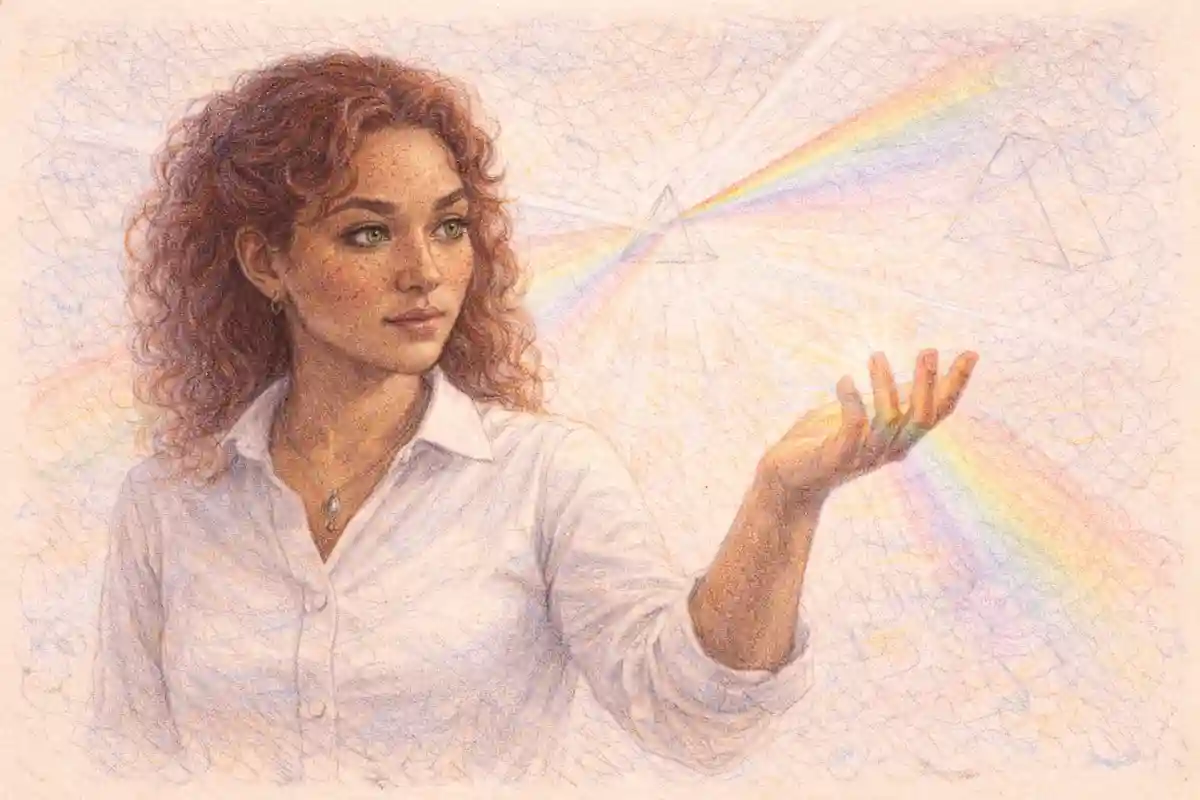
Introduction: The Woman Who Could Be Anyone but Chose to Be Herself
There is a peculiar cruelty in gifting a character the power to become anyone and then watching her struggle, more desperately than almost anyone else in the story, with the question of who she actually is. Nymphadora Tonks enters the Harry Potter series as a burst of color and clumsiness, a young Auror with bubblegum-pink hair and the extraordinary ability to reshape her own face at will, and she seems at first to belong to a different register entirely from the war-darkened world she inhabits. She trips over umbrella stands. She makes children laugh by morphing her nose into a pig snout. She radiates a kind of uncomplicated warmth that feels almost out of place in the fifth book’s suffocating atmosphere of paranoia and governmental tyranny.

But Rowling is never careless with her character introductions, and the very qualities that make Tonks seem like comic relief are precisely the ones that will be stripped away, one by one, as the series darkens. The pink hair will fade to mousy brown. The cheerful clumsiness will curdle into listless misery. The face that could become anything will settle into something gaunt and drawn. By the time the reader truly understands what has happened to Tonks, she has become one of the most quietly devastating figures in the entire series - a woman whose defining magical gift, the ability to transform, is undone by a love so consuming that it fixes her in place, pins her to a single identity, and ultimately leads her to the battlefield where she will die for it.
Tonks matters in ways that the Harry Potter fandom has not always fully appreciated. She is not simply Remus Lupin’s love interest, though the tendency to reduce her to that role has been one of the more persistent failures of critical engagement with the series. She is a character who embodies one of Rowling’s most penetrating themes: that identity is not what you can make yourself look like, but what you are willing to suffer for. Her Metamorphmagus ability is not just a cool magical trait. It is a thematic engine, a literalized metaphor for the fluidity of selfhood, and its eventual failure under emotional duress is one of the most psychologically acute details Rowling ever wrote. The body betrays what the will cannot suppress. The mask dissolves when the heart breaks.
To read Tonks carefully is to discover a character who connects to some of the deepest currents running through all seven books: the nature of identity, the cost of love in wartime, the relationship between parents and children, the meaning of chosen names versus given ones, and the terrible arithmetic of sacrifice that defines Rowling’s vision of heroism. She deserves far more than she has received from the critical conversation, and this analysis intends to give it to her.
Origin and First Impression
Tonks does not appear until Harry Potter and the Order of the Phoenix, the fifth and longest book in the series, which means that Rowling withheld her from the narrative for four volumes before deploying her at the precise moment when the story needed her most. The timing is not accidental. The fifth book marks the transition from Harry Potter as children’s literature to Harry Potter as something approaching tragedy. Voldemort has returned. The Ministry refuses to acknowledge it. Dumbledore’s allies are forced underground. The world is splitting along fault lines that will eventually produce a war, and into this fracturing world steps a young woman who cannot even walk through a hallway without knocking something over.
Her entrance in the advance guard that retrieves Harry from Privet Drive is carefully orchestrated. Harry first hears her voice in darkness, then sees her face - or rather, sees her introduce the concept that her face is optional, mutable, a thing she can shift as easily as others change expressions. She is identified to Harry by Mad-Eye Moody, the paranoid ex-Auror who serves as her mentor and foil, and the contrast between them is immediate and deliberate. Moody is scarred, watchful, permanent in his damage. Tonks is fluid, playful, apparently undamaged. They represent two possible responses to the darkness of the wizarding world: hyper-vigilance and radical adaptability.
The name itself is a statement. She hates “Nymphadora” and insists on being called by her surname, which is a small but significant act of self-definition. Rowling gives her a first name derived from the Greek word for bride (“nymphe”) combined with the word for gift (“doron”), making her etymologically “the gift of the bride” or “gift of the nymph.” It is a name that sounds decorative, delicate, and somewhat absurd - qualities that Tonks emphatically rejects. Her insistence on the surname is her first visible act of identity construction, a refusal of the name her mother chose in favor of a name she has claimed for herself. That this self-chosen name happens to be her father’s surname introduces a quiet thread about paternal versus maternal inheritance that will become significant later.
What strikes the careful reader about Tonks in her earliest scenes is how much effort Rowling puts into establishing her as clumsy. She trips. She drops things. She crashes into furniture. At first glance this appears to be simple comic characterization, a quirk to make her endearing. But in context, it carries a subtler implication: here is a woman who can control her physical appearance with absolute precision - who can reshape bone structure and hair color and the very geometry of her face - and yet cannot manage ordinary spatial navigation. The disconnect between her extraordinary control over how she looks and her ordinary inability to control how she moves suggests that there are two kinds of selfhood operating in Tonks from the very beginning. The surface self, which she can manipulate at will, and the underlying self, which remains ungovernable, awkward, authentically imperfect. The clumsiness is the real Tonks leaking through the chosen disguise.
She is also, and this matters enormously, an Auror. Not a student, not a civilian, but a trained Dark wizard catcher who passed one of the most demanding professional qualifications in the wizarding world. Rowling is specific about this: Tonks qualified as an Auror only a year before the events of Order of the Phoenix, under the tutelage of Alastor Moody himself. She is young, yes, and green, but she is also competent in ways that her clumsiness can obscure. She is a professional warrior entering a guerrilla resistance movement. The comedy of her stumbling through 12 Grimmauld Place should not obscure the fact that she chose, voluntarily and early, a career built on confronting evil. The pink hair is not innocence. It is defiance worn as style.
The Arc Across Seven Books
Harry Potter and the Order of the Phoenix
Tonks’s role in the fifth book is primarily functional but rich in thematic implication. She serves as part of Harry’s extraction team, as a member of the Order of the Phoenix stationed at its headquarters, and as a guard on the rotating watch over the Department of Mysteries. In each of these capacities she projects an energy fundamentally different from the other adults around Harry. Where Sirius Black is bitter and confined, where Molly Weasley is anxious and controlling, where even Dumbledore is distant and secretive, Tonks is present, warm, and accessible. She entertains the younger characters with her morphing. She treats Harry with an easy camaraderie that neither patronizes him nor burdens him with the weight of adult expectation.
This accessibility is itself part of her characterization. Tonks is the most relatable adult in the Order because she is the closest to the children’s generation, and Rowling uses her as a bridge figure - someone who connects the world of adolescence that Harry inhabits to the world of adult responsibility that he is being forced to enter. She performs this bridging function literally in the early chapters, helping to transport Harry from the Dursleys’ house to Grimmauld Place, and she performs it figuratively throughout the book by demonstrating that adulthood does not have to mean the extinction of playfulness.
There is also the matter of her role in the guard duty rotations at the Department of Mysteries. Tonks takes her shifts watching the corridor that leads to the prophecy, and while this seems like a routine plot-mechanical detail, it places her at the intersection of the book’s two major narrative engines: the Order’s resistance and the prophecy’s pull on Harry. She is not privy to the full significance of what she is guarding - Dumbledore keeps the prophecy’s contents secret from most Order members - but she guards it faithfully anyway. This willingness to serve without full knowledge, to trust the cause even when its leaders withhold information, is characteristic of her Hufflepuff temperament and distinguishes her from characters like Sirius, who chafes against being kept in the dark, or Snape, who demands to know everything.
Her interactions with the younger characters at Grimmauld Place deserve attention for what they reveal about her emotional intelligence. She gravitates toward Ginny, with whom she shares a spirited temperament, and she is one of the few adults who treats the Weasley twins’ inventions with genuine appreciation rather than parental disapproval. She picks up on social dynamics quickly - she notices the tension between Sirius and Molly before it erupts, and she navigates the complicated atmosphere of a house full of anxious, secretive adults with a light touch that suggests considerable interpersonal skill beneath the clumsiness. Her ability to read a room is, in a sense, another form of her shapeshifting ability: she adapts not just her appearance but her social register to whatever the situation requires.
There is a scene early in Order of the Phoenix where Tonks helps Harry pack his trunk at Privet Drive, using magic to fold his clothes and organize his belongings. It is a small domestic moment, easy to overlook, but it establishes something important: Tonks is comfortable with the ordinary. She does not perform her magic for display. She uses it for the same mundane purposes that a non-magical person would use their hands. This groundedness, this refusal to treat the magical as inherently superior to the practical, connects her to Arthur Weasley’s fascination with Muggle technology and positions her within the Order’s philosophical stance that magic is a tool for living, not a mark of superiority.
Her most significant scene in Order of the Phoenix comes during the Battle of the Department of Mysteries, where she fights alongside Sirius, Lupin, Kingsley, Moody, and the other Order members who arrive to rescue Harry and his friends. Tonks duels Bellatrix Lestrange - her own aunt - and is injured badly enough to be hospitalized. This detail carries enormous weight that is easy to miss on a first reading. Tonks and Bellatrix are blood relatives. They represent the two branches of the Black family tree: Andromeda’s line, which rejected pureblood supremacy, and the main line, which embraced it. When Tonks fights Bellatrix, she is fighting her own family’s worst impulses, her own genetic heritage of darkness, and she loses that first encounter. Bellatrix strikes her down. The implication is clear: the forces of bigotry and cruelty within the Black lineage are, at this stage, stronger than the forces of rebellion.
But Tonks survives, which is narratively important. She absorbs the blow from Bellatrix and lives to continue resisting, and this pattern of taking damage without being destroyed will define her arc through the next two books.
Harry Potter and the Half-Blood Prince
The sixth book fundamentally transforms Tonks, and not everyone has forgiven Rowling for the nature of that transformation. Where Order of the Phoenix gave readers a vibrant, funny, competent young Auror, Half-Blood Prince presents a woman who is barely recognizable. Her hair has lost its color. Her Patronus has changed form. She is thin, drawn, miserable, and her Metamorphmagus ability - the defining trait of her magical identity - has stopped working. She can no longer change her appearance at will.
Rowling initially frames this deterioration as a mystery. Various characters speculate about its cause. Mrs. Weasley wonders if Tonks is grieving for Sirius, her cousin, who died at the end of the previous book. Harry assumes the same. It is not until late in the book, in the hospital wing after the battle on the Astronomy Tower, that the truth emerges: Tonks is not grieving for Sirius. She is in love with Remus Lupin, who has been refusing her affections on the grounds that he is too old, too poor, and too dangerous - a werewolf who could harm her or any children they might have.
The revelation is one of Rowling’s most divisive narrative choices. A portion of the readership felt that reducing Tonks’s vitality to lovesickness diminished a strong female character, turning an independent Auror into a woman who falls apart because a man will not love her back. This reading, while understandable, misses the deeper mechanics of what Rowling is doing. The failure of Tonks’s Metamorphmagus ability is not simply romantic heartbreak manifesting as magical dysfunction. It is a profound statement about the relationship between emotional authenticity and the capacity for self-transformation.
Consider what the Metamorphmagus power actually represents. It is the ability to wear masks, to present any face to the world, to make the external self infinitely flexible. What Tonks discovers through her love for Lupin is that there is a limit to this flexibility. When the emotional core is in crisis, the surface can no longer be controlled. Her feelings for Lupin are so raw, so honest, so deeply part of who she actually is that they override her ability to disguise herself. The masks fall away not because she is weak, but because she is, for perhaps the first time in her life, utterly unable to pretend.
This is not diminishment. It is the most radical form of vulnerability Rowling depicts in the entire series. Tonks stands in a hospital wing, in front of Dumbledore’s body and a room full of colleagues and students, and publicly declares her love for a man who has been pushing her away for a year. She does not do this prettily or with dignity. She does it raw, stripped of her usual defenses, looking nothing like herself. The woman who could be anyone is finally, painfully, only herself.
The Patronus change deepens this reading. A Patronus, as Rowling has established, is the crystallized form of a person’s deepest positive emotion. When a Patronus changes, it means something fundamental has shifted in the caster’s emotional architecture. Tonks’s Patronus transforms into a large four-legged creature that Snape identifies, with characteristic cruelty, as reflecting her new emotional focus. Her deepest source of positive feeling has realigned from whatever it was before to Remus Lupin. This is not a triviality. In Rowling’s magical system, a Patronus change is as close to a visible soul transformation as the series offers. Tonks has not merely fallen in love. She has been remade by it, at the level of her magical essence. The kind of analytical pattern recognition needed to trace such layered character work across multiple books is similar to the systematic reading that students develop through resources like the ReportMedic UPSC PYQ Explorer, where tracking recurring themes across years of questions builds precisely this type of deep structural literacy.
There is also the quiet courage of her public declaration in the hospital wing scene. Mrs. Weasley immediately supports her, Fleur Delacour adds her own defiant statement about loving Bill despite his injuries from Greyback, and the scene becomes an unexpected anthem for love in the face of risk. But it is Tonks who breaks the dam. She speaks first, in front of everyone, and forces the conversation into the open. This is not a passive character. This is a woman who has spent a year being rejected and who chooses, at a moment of collective grief and crisis, to stop hiding.
Harry Potter and the Deathly Hallows
The final book brings Tonks full circle and then kills her, and the speed with which Rowling accomplishes both is part of what makes the death so devastating. Between Half-Blood Prince and Deathly Hallows, Tonks and Lupin have married. She is pregnant. Her hair is pink again, which tells the reader everything about her emotional state without a single word of exposition - the Metamorphmagus power has returned because the crisis of unrequited love has been resolved. She has what she wanted.
But what she wanted comes with a cost that Rowling refuses to romanticize. Lupin, terrified of having passed his lycanthropy to their unborn child, briefly abandons Tonks and attempts to join Harry, Ron, and Hermione on their Horcrux hunt. It is one of the most uncomfortable scenes in the final book. Lupin arrives at Grimmauld Place with a desperate energy, offering his services as a bodyguard, and Harry - in a moment of fury that channels his dead father and Sirius - confronts Lupin with the accusation that he is running away from his pregnant wife. The confrontation is brutal. Harry calls Lupin a coward. Lupin lashes out physically. It is messy and real and completely devoid of the gentle melancholy that usually characterizes their relationship.
Tonks is offstage for this scene, which is itself significant. The reader does not see her reaction to Lupin’s departure. The reader does not see her alone in their home, pregnant and abandoned by the man she fought so hard to be with. Rowling withholds this not out of neglect but out of a storytelling instinct that understands what would happen to the narrative momentum if the reader were forced to sit with that image for too long. Instead, the reader is left to imagine it, which is worse.
When Lupin returns to Tonks - and he does return, because Harry’s words land where they need to - the reconciliation happens offstage as well. The next time the reader encounters Lupin, he is at Shell Cottage, radiantly announcing the birth of his son, Teddy, and asking Harry to be godfather. The speed of this transition - from marital crisis to fatherly joy - mirrors the rhythm of wartime itself, where emotional states compress and extremes alternate without the usual transitions of peacetime life.
Tonks’s final appearance is at the Battle of Hogwarts, and it is heartbreaking precisely because of its brevity. She was supposed to stay home with Teddy. Her mother, Andromeda, was watching the baby. But Tonks comes to the battle anyway, unable to bear the separation from Lupin, unable to sit at home while the people she loves fight. She arrives and almost immediately the narrative loses track of her, because the Battle of Hogwarts is told from Harry’s perspective and Harry is occupied with Horcruxes and Voldemort and the approach of his own death.
The reader learns that Tonks is dead in the same tableau that reveals Lupin’s death and Fred Weasley’s death. Their bodies are lying in the Great Hall. There is no death scene. There is no final dialogue. There is no heroic last stand. There is only the sudden, sickening fact of two bodies lying side by side, a married couple who chose to come to the same battle and paid the same price, leaving behind a newborn son who will grow up as an orphan.
This is perhaps the cruelest and most honest thing Rowling does with Tonks. She denies the reader the catharsis of witnessing the death. She denies Tonks the dignity of a dramatic final moment. She simply presents the aftermath - two corpses, a baby without parents, a war that takes everything it can regardless of whether anyone is watching. Tonks dies not with a speech or a dramatic confrontation with Bellatrix (that honor goes to Molly Weasley) but in the anonymous chaos of battle, one more body among many, and the ordinariness of it is what makes it unbearable.
The parallel to Lily and James Potter is explicit and intentional. Rowling creates a second set of parents who die fighting Voldemort and leave behind a son who will be raised by others. Teddy Lupin will grow up in the same shadow that shaped Harry Potter. The cycle of orphanhood that began with Voldemort’s first war repeats in his second, and Tonks and Lupin become, in death, the thematic echo of James and Lily - proof that the cost of resistance is not paid once but again and again, generation after generation.
But there is a crucial difference between the two sets of parents, and it deepens the tragedy rather than simply repeating it. James and Lily died defending their infant son. Their sacrifice was directly protective - they stood between Voldemort and Harry, and their deaths bought Harry’s survival. Tonks and Lupin, by contrast, die in a battle they did not have to attend. Teddy was safe at Andromeda’s house. They could have stayed home. Their deaths do not protect their son; their deaths orphan him. The heroism is real, but it is complicated by the knowledge that survival was an option, that choosing to fight was also choosing to risk leaving Teddy alone. This distinction makes Tonks’s death more morally ambiguous than Lily’s, and it is this ambiguity that gives the parallel its real force. Rowling is not simply repeating the first generation’s tragedy. She is complicating it, showing that heroism and parental responsibility can be in genuine tension, and that the right thing to do in wartime is not always clear even to the bravest people.
The speed with which the post-war world processes Tonks’s death is itself a commentary. In the epilogue, set nineteen years later, Harry tells his son that Teddy Lupin comes to dinner four times a week and is practically a member of the family. It is a warm detail, but it carries a chill underneath: Teddy needs to come to someone else’s house for dinner because his own parents’ house is defined by absence. The war is over, the good side won, and a young man still grows up without his mother. Victory does not undo loss. Peace does not resurrect the dead. Rowling’s epilogue, for all its reassurance, never lets the reader forget the price that was paid, and Tonks and Lupin’s orphaned son is the walking, breathing, hair-color-changing reminder of that price.
Psychological Portrait
To understand Tonks psychologically, one must begin with the Metamorphmagus ability and what it means for the development of a sense of self. From birth, Tonks had the power to alter her own appearance. Imagine the implications for a developing child. Most children form their sense of identity partly through the mirror - through the recognition that the face looking back at them is stable, permanent, theirs. Tonks never had this anchor. She could look like anyone. She could change her hair, her face, her entire physical presentation at will. The psychological literature on identity formation emphasizes the role of physical continuity in the development of a stable self-concept, and Tonks is a character for whom that continuity was never guaranteed.
This suggests that Tonks’s cheerful, outgoing personality is not simply a character trait but a psychological strategy. If your face is unstable, you must anchor your identity in something else - in humor, in warmth, in the constancy of your relationships with others. Tonks is loved because she is funny and kind and present, and these qualities serve as the stable core that her physical form cannot provide. Her personality is, in a very real sense, her face - the thing that others recognize and rely upon, the continuity that holds her selfhood together across transformations.
Her insistence on being called “Tonks” rather than “Nymphadora” fits this pattern. She does not want a name that was given to her; she wants a name that she has made her own through use and assertion. This is a person who has learned, through a lifetime of physical mutability, that identity must be actively claimed rather than passively inherited. You are not what you look like. You are not what your mother named you. You are the name you insist upon, the relationships you build, the loyalties you choose.
The loss of her Metamorphmagus ability during the period of unrequited love for Lupin is, in this light, a psychological catastrophe far more profound than it might initially appear. It is not merely that Tonks is sad and her magic reflects her mood. It is that the coping mechanism she has relied upon her entire life - the ability to present a chosen self to the world, to control how others see her - has collapsed. She is stripped of her primary defense. The face she shows the world is, for the first time, not chosen but imposed by her emotional state. She looks like what she feels, and what she feels is anguish.
This is why the comparison to mere “lovesickness” is so inadequate. Tonks is not just heartbroken. She is experiencing an identity crisis in the most literal sense possible. The tool she used to construct her selfhood has been taken away, and what remains is raw, unmediated, and terrifying. She is, in psychological terms, in a state of ego dissolution - the boundaries between her inner experience and her outer presentation have collapsed, and she cannot rebuild them through willpower alone.
Her recovery, when Lupin finally accepts her love, is therefore not simply romantic resolution. It is psychological reconstruction. The return of the pink hair signals not that she is happy again (though she is) but that her sense of self has stabilized, that she has found a new anchor for her identity. Where she once grounded her selfhood in humor and charm and the ability to be anyone, she now grounds it in love, in motherhood, in the relationship with Lupin that cost her so much to claim. The anchor has changed. The self has reorganized around a new center. What the reader witnesses in this restoration is not a return to the old Tonks but the emergence of a new one - a woman tempered by suffering, deepened by rejection, and held together by a commitment that has been tested beyond what most people ever endure.
Whether this reorganization represents growth or dependence is one of the genuinely open questions of Tonks’s characterization. There is a reading in which Tonks achieves a mature integration - moving from a fluid, performative identity to a rooted, relational one. And there is a reading in which she trades one form of instability for another, exchanging the freedom of transformation for a dangerous fixation on a single relationship. Rowling, characteristically, does not resolve the tension. She presents both possibilities and lets the reader sit with the ambiguity.
Her decision to come to the Battle of Hogwarts despite having a newborn baby is the final expression of this psychological structure. She cannot bear separation from Lupin. She cannot sit at home while he fights. The love that restored her sense of self is also the force that draws her toward death, because a self that is anchored in another person is a self that cannot survive the other’s absence. She goes to Hogwarts not because she does not love Teddy, but because her identity has become so entangled with Lupin’s that to be apart from him in that moment would be a kind of psychological annihilation worse than the physical danger of battle.
This is not weakness, but it is terrifying, and Rowling does not flinch from showing it.
There is one more psychological dimension to Tonks that is easy to miss: her relationship with humor. She uses comedy as a social tool, a way of putting others at ease and deflecting attention from her own complexity. The pig-snout trick, the morphing demonstrations, the willingness to play the clown - these are not just entertainment. They are strategies for managing the anxiety that her mutability might generate in others. A person who can change their face at will is, in many social contexts, threatening. Tonks neutralizes this threat by making her transformations funny, by framing her ability as a party trick rather than an unsettling manifestation of bodily instability. The humor is a form of emotional labor: she works constantly to ensure that other people are comfortable with what she is, and this work is invisible precisely because she performs it so well.
When the humor disappears in Half-Blood Prince, its absence is as telling as the loss of the pink hair. Tonks without her wit is Tonks without her primary social defense. She has lost not only the ability to change her face but the ability to make others laugh, and both losses stem from the same emotional wound. The collapse is total: her appearance, her humor, her social ease, and her magical functioning all deteriorate simultaneously, revealing the extent to which these qualities were interconnected - different expressions of a single, integrated sense of self that Lupin’s rejection has shattered.
The psychological concept of the “false self,” developed by the psychoanalyst D.W. Winnicott, offers a useful framework here. Winnicott distinguished between the “true self,” which is spontaneous and authentic, and the “false self,” which is a socially adaptive facade constructed to protect the true self from a threatening environment. In Tonks’s case, the Metamorphmagus ability can be understood as an extraordinarily literal version of the false self - a physical facade that can be reshaped to meet any social demand. When this false self collapses under the pressure of genuine emotion, the true self is exposed, raw and undefended. Tonks in Half-Blood Prince is Tonks without her Winnicottian false self: vulnerable, unperforming, stripped of every protective layer. The pain of watching her in this state comes from recognizing that the cheerful, funny, adaptable woman we met in Order of the Phoenix was never the whole story. There was always something underneath, and love brought it to the surface in the most excruciating way possible.
Literary Function
Tonks serves several overlapping narrative functions within the architecture of the Harry Potter series, each of which illuminates a different aspect of Rowling’s thematic project.
First and most obviously, she is a bridge character. She connects the older generation of Order members - the Sirius-Lupin-Moody axis of veterans scarred by the first war - to the younger generation of Harry and his friends. She is old enough to be a professional and young enough to be relatable to teenagers, and this positioning allows her to move between the adult and adolescent registers that Rowling sustains throughout the series. She translates between worlds. She makes the Order feel accessible to Harry in a way that the more senior members, with their secrets and their old griefs, cannot.
Second, she functions as a narrative mirror to several other characters. Her Metamorphmagus ability mirrors the theme of disguise and deception that runs through the entire series - from Polyjuice Potion to the Invisibility Cloak to Snape’s double life. Where these other forms of disguise require external tools or conscious deception, Tonks’s transformation is innate and largely innocent, suggesting that the capacity to present different faces to the world is not inherently sinister. It becomes sinister only when it is used for manipulation rather than play. Tonks transforms for fun. Barty Crouch Jr. transforms to infiltrate. The moral distinction is not in the act of changing but in the purpose behind it.
Third, and most crucially, Tonks serves as the vehicle for Rowling’s exploration of how love operates in wartime. The Tonks-Lupin relationship is the only romantic relationship in the series that is depicted primarily through its costs. Harry and Ginny’s courtship is sweet and relatively uncomplicated. Ron and Hermione’s is comic and slow-burning. Bill and Fleur’s is tested by Greyback’s attack but ultimately triumphant. Tonks and Lupin, by contrast, are shown almost entirely through suffering - her suffering when he refuses her, his suffering when he fears passing on his condition, their joint suffering as they navigate parenthood during a war they may not survive.
This makes Tonks the series’s primary argument that love is not a reward but a risk. The other romantic relationships in Harry Potter, for all their charm, largely follow the fairy-tale logic of love as resolution - the characters deserve each other, and union is the happy ending. Tonks and Lupin invert this logic. Their union is the beginning of a new set of terrors. Love does not solve their problems. It creates entirely new ones. And the final cost - both of them dead, their child orphaned - is the starkest possible statement that in Rowling’s moral universe, loving someone is the most dangerous thing you can do.
Fourth, Tonks functions as a generational link in the cycle of sacrifice that structures the entire series. Just as James and Lily died to protect Harry, Tonks and Lupin die in the war that Harry survives, leaving behind a child who will grow up without them. The parallelism is so precise that it borders on the schematic: two parents, dead in battle, an orphaned son raised by family, a godfather (Harry, mirroring Sirius) who steps in as a surrogate. Rowling uses this repetition to argue that war does not end cleanly. The costs are passed down. The orphans of one generation produce the orphans of the next. Tonks and Lupin’s deaths are not just tragic; they are structural, part of the mechanism by which Rowling demonstrates that Voldemort’s evil has a cascading, generational impact that outlives him.
Fifth, Tonks serves as a counterpoint to the series’s other female characters in ways that illuminate Rowling’s range. Where Hermione’s strength is intellectual and Ginny’s is athletic, Tonks’s strength is adaptive - she is the woman who can become whatever the moment requires. Where Molly Weasley represents the fierce maternal ideal and Bellatrix represents its dark inversion, Tonks represents a different model of womanhood entirely: the woman who defines herself through professional competence, personal loyalty, and the radical choice to love openly in a world that punishes vulnerability. She does not fit the archetypes that other characters embody, and this misfit quality is itself part of her narrative function. She is Rowling’s refusal to let the categories settle, to let the reader classify the series’s women into neat boxes of mother, warrior, intellectual, or villain. Tonks is all of these and none of them, which is exactly what a Metamorphmagus should be.
Sixth, she functions as the series’s clearest demonstration that Rowling’s narrative method is, at heart, one of strategic misdirection. Tonks is introduced as comic relief, developed into a romantic figure, and then killed in an act of devastating narrative cruelty. The reader who laughs at the umbrella-stand moment in Order of the Phoenix is being set up for the body in the Great Hall in Deathly Hallows. Rowling plays the long game with this character, and the distance between Tonks’s introduction and Tonks’s death is the distance between innocence and knowledge, between the comedy of peace and the horror of war. She is, in narrative terms, a barometer of the series’s tonal trajectory: when Tonks is funny, the world is still safe enough for laughter. When she stops being funny, the world has changed irreversibly.
Moral Philosophy
The ethical questions that Tonks embodies are subtler than those attached to many of the series’s more prominent characters, but they are no less important for being quiet.
The first and most personal is the question of duty versus love. Tonks is an Auror. She has professional obligations. She is a member of the Order of the Phoenix. She has political commitments. And she is a mother. She has a child who depends on her survival. When she goes to the Battle of Hogwarts, she is choosing love - specifically, the need to be with Lupin - over the duty to stay alive for Teddy. This is a morally complex decision that Rowling does not judge. She does not condemn Tonks for leaving her baby. She does not celebrate her for following her heart. She simply shows the decision and its consequence, and leaves the reader to wrestle with whether Tonks was brave or selfish or both.
The question has no clean answer, and that is the point. Rowling’s moral universe is built on the recognition that heroic choices and selfish choices are not always distinguishable from each other, that a person can act from love and still cause harm, that the same impulse that makes you willing to die for something can also make you willing to leave your child parentless. Tonks embodies this ambiguity more fully than almost any other character in the series.
The second ethical question is about identity and authenticity. If you can look like anyone, who are you? Is the self something fixed and essential, or is it something constructed through choices and performances? Tonks’s Metamorphmagus ability raises these questions in their purest form, and her arc - from playful transformation to identity crisis to stabilized selfhood grounded in relationship - offers one possible answer: you are what you cannot change about yourself, the emotional bedrock that persists when every mask has been stripped away.
But this answer comes with its own troubling implications, because what Tonks cannot change about herself turns out to be her capacity for love, and that capacity leads her directly to her death. If the authentic self is the self that loves, and love is what kills you, then authenticity and destruction are linked. This is a deeply Romantic (in the literary-philosophical sense) position, one that echoes the Liebestod tradition in which love and death are inseparable, and Rowling embeds it in a character who might seem, on the surface, too fun and too clumsy to carry such thematic weight.
The third question concerns family loyalty and moral inheritance. Tonks is a Black by blood. Her mother, Andromeda, was disowned for marrying the Muggle-born Ted Tonks. Tonks carries the genetic heritage of one of the most notoriously dark wizarding families while having been raised entirely outside its ideology. She is living proof that blood does not determine destiny, that a Black can choose the Order over the Death Eaters, that family history is a condition to be transcended rather than a fate to be fulfilled. Her very existence is a refutation of the pureblood supremacist worldview that her aunt Bellatrix represents, and when they duel, the fight is not just personal but philosophical - a battle over whether blood defines character.
There is a fourth ethical dimension to Tonks that receives less attention but is equally important: the ethics of transformation itself. In a world where magical creatures are classified, controlled, and stigmatized, Tonks’s Metamorphmagus ability occupies a peculiar position. She is, in a sense, a being of indeterminate form - not a werewolf, not an Animagus, not a Polyjuice user, but something more fundamental, someone whose basic physical identity is negotiable. The wizarding world, which categorizes beings rigidly (wizard, Muggle, squib, magical creature, half-breed), has no ready category for a person whose very biology resists categorization. Tonks is ontologically uncategorizable, and this connects her to the broader theme of how magical society treats those who do not fit its classifications - werewolves like Lupin, half-giants like Hagrid, house-elves like Dobby.
Her love for Lupin takes on additional ethical weight in this light. She is not simply a normal witch who happens to love a werewolf. She is a being whose own nature defies the categories that condemn Lupin. Her body refuses fixed form just as her heart refuses to accept the social verdict that Lupin is unlovable. The match between them is thematically profound: the woman who cannot be categorized loves the man who has been crushed by categorization. Their relationship is itself a protest against the wizarding world’s rigid taxonomy of acceptable and unacceptable forms of being.
A fifth ethical question Tonks raises is about the morality of choosing danger when you have dependents. This question extends beyond the Battle of Hogwarts to her entire career. She became an Auror - a profession with a high mortality rate - before she had a child, but the risk was always present. Is it ethical to pursue a dangerous profession when your death would devastate those who love you? The series largely celebrates those who risk their lives for the greater good, but Tonks’s story introduces a complication: the greater good does not raise your children. The cause does not tuck your son into bed. The tension between individual heroism and familial responsibility is one that Rowling explores through multiple characters - Molly Weasley’s fear for her family, Arthur Weasley’s injuries, Lupin’s own struggle with parenthood - but Tonks crystallizes it most sharply because she acts on it with the most irreversible consequences.
Relationship Web
Tonks and Remus Lupin
This is the relationship that defines her arc, and it deserves careful examination rather than reduction to a simple love story. What draws Tonks to Lupin is never explicitly stated, but the textual evidence suggests that she is attracted to precisely those qualities in him that he considers disqualifying - his gentleness, his restraint, his quiet courage in the face of a condition that has marginalized him for his entire life. Lupin is a man who has been told repeatedly that he is dangerous and unworthy of love, and Tonks, whose entire magical identity is built on the ability to see past surfaces, is uniquely equipped to see through his self-deprecation to the person underneath.
Lupin’s resistance to the relationship is not about lack of feeling. It is about fear - specifically, the fear that his lycanthropy makes him a threat to anyone who gets close. His refusal is, in his own mind, an act of protection. He loves Tonks and therefore believes he must stay away from her. This is a devastating inversion of the usual logic, in which love draws people together. For Lupin, love is a reason to flee, because he has internalized the wizarding world’s prejudice against werewolves so thoroughly that he genuinely believes proximity to him is inherently harmful.
Tonks breaks through this wall not through argument but through persistence, and the question of whether persistence is romantic or troubling is one that Rowling leaves deliberately unresolved. From one angle, Tonks is a woman who sees through a man’s fear to his true self and refuses to let him self-destruct. From another angle, she is a person who cannot accept rejection, whose identity becomes dangerously dependent on another’s acceptance. Both readings are supported by the text, and the tension between them is part of what makes the relationship compelling rather than merely sweet.
Their marriage, once achieved, is shadowed by Lupin’s continuing anxieties. His attempt to abandon Tonks during her pregnancy in Deathly Hallows reveals that his fears were never fully conquered - they were merely suppressed by love, and the prospect of fatherhood brings them roaring back. The scene at Grimmauld Place, where Harry confronts Lupin, is painful because it forces the reader to see Lupin clearly: not as the gentle, noble professor of Prisoner of Azkaban, but as a frightened man running from responsibility. It is Tonks who has been left holding the weight of the family, Tonks who is dealing with pregnancy alone, Tonks whose courage in continuing to love a man who keeps trying to leave never wavers. Her steadfastness is as much an act of heroism as anything that happens on a battlefield.
Tonks and the Black Family
Tonks’s relationship to the Black family is one of the most underexplored threads in the series. Her mother Andromeda married Ted Tonks, a Muggle-born wizard, and was burned off the Black family tapestry for it. This means Tonks grew up in a household defined by exile - her mother had been expelled from one of the oldest and wealthiest pure-blood families for the crime of loving the wrong person. The parallels between Andromeda’s choice and Tonks’s eventual choice of Lupin are too precise to be accidental. Mother and daughter both fall in love with men whom their family’s ideology would reject, and both pay heavily for it.
Tonks’s connection to Sirius Black is colored by this shared experience of family rejection. They are cousins, both descended from the Black line, both aligned against everything their family represents. Sirius’s death at the end of Order of the Phoenix is significant for Tonks not only as the loss of a family member but as the loss of the person in her family who most closely mirrored her own position - a Black who chose the other side. His death removes one of the few people who understood, from the inside, what it meant to belong to that bloodline and reject it.
Her duel with Bellatrix in the Department of Mysteries is, as noted earlier, a family battle in microcosm. Bellatrix represents everything the Black family stands for at its worst: fanaticism, cruelty, blood supremacy, and the total subordination of individual identity to collective ideology. Tonks represents the possibility of escape - the proof that a Black can choose differently, can be funny and kind and egalitarian, can marry for love rather than bloodline, can fight on the right side. That Bellatrix defeats Tonks in their first confrontation is not a permanent verdict. It is a setback in an ongoing war within the family itself, a war that will not be resolved until Molly Weasley - another mother, another embodiment of love over ideology - destroys Bellatrix in the final battle.
Tonks and Mad-Eye Moody
The mentor-student relationship between Tonks and Alastor Moody is sketched rather than painted, but its outlines are telling. Moody trained Tonks as an Auror. He is the person who shaped her professional identity, who taught her to fight, who vouched for her competence to the Order. And he is, in almost every respect, her opposite: permanently scarred where she is fluid, paranoid where she is open, rigid where she is adaptable. They represent two ends of the spectrum of response to a dangerous world, and the fact that Moody saw potential in Tonks - that the most suspicious man in the wizarding world chose to mentor the most open-hearted woman in it - suggests that he recognized something in her flexibility that his own rigidity lacked.
Moody’s death early in Deathly Hallows strips Tonks of her professional mentor just as Sirius’s death stripped her of her family mirror. The losses accumulate. By the time of the Battle of Hogwarts, Tonks has lost her cousin, her mentor, and her sense of safety. She fights not from a position of strength but from a position of accumulated grief, and the fact that she fights at all, after all that loss, is its own argument about what courage looks like.
Tonks and Teddy Lupin
The relationship that Tonks has least time to develop is also the one that carries the most thematic weight. Teddy Lupin inherits his mother’s Metamorphmagus ability, which means that the magic that defined Tonks’s identity survives her death. Her son will face the same questions she faced - who am I when I can look like anyone? - and he will face them without her guidance, just as Harry faced the challenges of being the Boy Who Lived without James and Lily.
The decision to give Teddy the Metamorphmagus trait is one of Rowling’s most poignant creative choices. It ensures that Tonks’s legacy is not just emotional but magical, that the gift (and burden) of transformation passes from mother to son, that the questions Tonks grappled with will continue to be asked by the next generation. Teddy is, in a very real sense, Tonks’s unfinished story - the character who will have to answer, in a world she helped save but did not live to see, the question of what it means to be infinitely changeable and still, somehow, yourself.
Symbolism and Naming
The name “Nymphadora” is, as discussed, derived from Greek - “nymphe” (bride, nymph) and “doron” (gift). In Greek mythology, nymphs were minor nature deities associated with particular locations, and they were famous for their beauty, their association with transformation, and their vulnerability to the desires of more powerful gods. There is something apt about naming a Metamorphmagus after creatures defined by their mutability and their connection to nature’s cycles.
But Tonks rejects this name, and the rejection is itself symbolically rich. She refuses to be the “gift of the nymph” - refuses, that is, to be defined as a present, a decorative object, something offered to another. By insisting on “Tonks,” she claims an identity rooted in her father’s Muggle-born line rather than her mother’s pure-blood one. She chooses the common surname over the mythological first name, the ordinary over the extraordinary, the human over the divine. This is consistent with everything else we know about her: Tonks prefers the real to the performed, the awkward to the elegant, the authentic to the beautiful.
The hair color operates as the series’s most visible emotional barometer. Pink is Tonks’s default, her chosen state, the color that signifies well-being and self-possession. When the hair turns mousy brown in Half-Blood Prince, it signals not just sadness but the failure of self-construction - the inability to maintain the chosen self in the face of overwhelming emotion. The return to pink after Lupin accepts her is the visible sign of psychological restoration. Rowling does not need to tell the reader how Tonks feels; the hair tells them.
The Metamorphmagus ability itself carries deep symbolic resonance. In a series obsessed with the relationship between appearance and reality - where Polyjuice Potion lets you become someone else, where Animagi transform into animals, where a Boggart takes the shape of your worst fear - Tonks’s innate capacity for transformation stands as the most essential version of the theme. She does not need a potion or a spell. She simply is mutable. This makes her transformation not a trick or a tool but an identity, and its failure under emotional stress becomes a statement about the limits of self-invention. You can change your face, but you cannot change your heart.
The Unwritten Story
Rowling leaves enormous gaps in Tonks’s story, and these gaps are as revealing as the scenes she does write.
What was Tonks like at Hogwarts? We know she was a Hufflepuff, which is one of the most significant details Rowling provides. Hufflepuff, the house of loyalty, hard work, and fair play, is also the house most often dismissed as unremarkable, and Tonks’s placement there deepens the pattern of her characterization: she belongs to the underestimated category, the one that others overlook, the house that wins no glory but produces people of extraordinary decency. In our analysis of Cedric Diggory, we explored how Hufflepuff values produce a different kind of heroism - quiet, principled, unconcerned with recognition - and Tonks extends that argument into the adult world.
What was her childhood like, growing up with a Metamorphmagus ability in a household shaped by Andromeda’s exile from the Black family? Did Andromeda fear the ability, given its association with the Black bloodline’s tendency toward dark magic? Did Ted Tonks celebrate it? Did Tonks use it to entertain, to hide, to test the boundaries of her parents’ love? The text gives no answers, but the questions it raises are productive. A child who can change her face at will is a child who must learn, very early, the difference between who she is and who she appears to be. The philosophical sophistication that this demands - distinguishing the essential from the performed, the self from the mask - is remarkable, and it goes some way toward explaining why Tonks grows into an adult of such emotional directness. She has been navigating the gap between surface and depth since infancy.
What happened between her and Lupin during the year of his refusal? Half-Blood Prince shows the aftermath - her misery, his stubborn avoidance - but not the process. Did she pursue him actively? Did they have conversations in which he explained his reasons and she argued against them? Did she try to give up and find herself unable to? The absence of these scenes is a narrative choice that keeps the reader in Harry’s limited perspective, but it also has the effect of making Tonks’s inner life during this period a kind of black box. We see the output (depression, magical failure) without full access to the input (the specific shape of her hope and despair).
And most hauntingly: what were her last moments? Did she and Lupin fight side by side? Did they see each other fall? Did one die first, and did the other have time to know? Rowling refuses to answer, and the refusal is the point. In war, not every death gets a witness. Not every love story gets a final scene.
There is also the unwritten story of Tonks’s professional life as an Auror. The reader sees her in the Order, fighting in battles, but never sees her in her day job at the Ministry. What cases did she work? How did she use her Metamorphmagus ability in investigations? Did she go undercover? Was she effective? Did her clumsiness follow her into professional contexts, or did the focused intensity of Auror work suppress it? Rowling gives the reader enough to know that Tonks was competent - her completion of training under Moody’s demanding eye is proof enough - but the specifics remain blank. This is a character whose professional life, which must have been extraordinary given her unique abilities, exists entirely in the negative space of the narrative.
The unwritten relationship between Tonks and her father, Ted Tonks, is another significant absence. Ted is a Muggle-born wizard, a man who married into the Black family’s disgraced branch, and he dies during the events of Deathly Hallows, killed by Snatchers while on the run. Tonks, pregnant and fighting a war, loses her father offscreen in the same way she will later die offscreen herself. The reader never sees how she receives this news, never witnesses her grief for the man whose surname she chose over her mother’s family name. Ted Tonks was, symbolically, the parent whose identity Tonks claimed as her own, and his death during the war adds another layer of loss to a character who has already lost her cousin (Sirius), her mentor (Moody), and her sense of safety. By the time she arrives at Hogwarts for the final battle, Tonks has been bereaved multiple times over, and the accumulated weight of those losses makes her final choice - to fight rather than hide - an act of grief as much as courage.
What did Tonks think about during her pregnancy, alone and frightened, while Lupin struggled with his own terror of fatherhood? The reader catches only fragments: Lupin’s attempt to flee, Harry’s confrontation, the eventual reconciliation. But Tonks’s interior experience during those months - the hope and fear of impending motherhood, the uncertainty about her child’s potential lycanthropy, the larger context of a war that was going badly - remains entirely withheld. She carried a child during the darkest period of the Second Wizarding War, in a society fracturing under Voldemort’s control, with her husband wavering between devotion and flight. The emotional landscape of that experience would be enough to fill a novel of its own, and Rowling’s decision to leave it unwritten is both a practical necessity of Harry’s limited perspective and a thematic statement about how many stories a war contains that no single narrator can tell.
Cross-Literary Parallels
Tonks belongs to a literary tradition far older than the Harry Potter series, and tracing her connections to earlier works reveals the depth of Rowling’s characterization.
The most immediate parallel is to the figure of Proteus in Greek mythology. Proteus, the old man of the sea, possessed the ability to change his shape at will but could be forced to reveal his true form if held firmly enough. The parallel to Tonks is precise: she can become anything, but love pins her to a single form, forces the true self to emerge from beneath the transformations. Lupin, in this reading, is Menelaus to Tonks’s Proteus - the one who holds on long enough (or rather, is held onto firmly enough by Tonks herself) to reveal the unchangeable truth beneath the shifting surface.
There is also a strong resonance with Ovid’s Metamorphoses, that great compendium of transformation myths in which change is almost always linked to desire, suffering, or divine punishment. Ovid’s transformations are rarely happy. Daphne becomes a tree to escape Apollo. Narcissus becomes a flower because he cannot stop loving himself. Io becomes a cow because Jupiter desired her and Juno punished her. In Ovid, transformation is what happens when love goes wrong, when the human form cannot contain the intensity of emotion. Tonks’s loss of her Metamorphmagus ability follows this Ovidian logic: her transformation stops working not because she lacks skill but because her emotional reality has overwhelmed her physical mutability. She has entered a mythic register where the body reflects the soul’s condition, and her soul is in anguish.
Shakespeare offers another lens. Tonks echoes Viola in Twelfth Night, a woman who disguises herself to navigate a world that would otherwise be inaccessible to her, and who falls in love while wearing a face that is not her own. Viola’s disguise as Cesario creates the comedy of the play but also its pathos - she loves Orsino but cannot reveal herself as a woman, and the gap between her public performance and her private truth generates both humor and pain. Tonks experiences a version of this gap in reverse: she can always change her face, but when she falls in love, she loses the ability to perform, to be anyone other than who she is. Where Viola’s disguise conceals her love, Tonks’s failure of disguise reveals hers.
The Liebestod tradition in Romantic opera provides perhaps the most resonant parallel. In Wagner’s Tristan und Isolde, love and death are fused into a single ecstatic experience; the lovers can only truly unite by dying together. Tonks and Lupin’s joint death at the Battle of Hogwarts carries this Romantic charge. They come to the battle separately - Tonks was supposed to stay home - and die in the same place, presumably within minutes or hours of each other. The inseparability of their love in life becomes the inseparability of their deaths, and the child they leave behind becomes the tangible proof that their union existed, that something survived the destruction. This is Liebestod refracted through Rowling’s Protestant moral seriousness: the love-death is real, but it is also a choice with consequences, and the orphaned baby is the price.
In the tradition of Vedantic philosophy, Tonks’s arc resonates with the concept of Maya - the cosmic illusion that obscures the true nature of reality. The Metamorphmagus ability can be read as a literal embodiment of Maya: the power to generate appearances, to veil the essential self behind shifting forms. The collapse of this ability when Tonks falls in love becomes, in this framework, a moment of piercing through Maya - a painful but necessary stripping away of illusion that forces Tonks (and the reader) to confront what is real beneath the performance. The Vedantic tradition holds that liberation comes through the dissolution of Maya, through seeing past the surface to the unchanging truth beneath, and Tonks’s journey from fluid transformation to fixed emotional truth follows this arc, even if the “liberation” she achieves is inseparable from suffering.
The Russian literary tradition offers one more productive comparison. Tonks shares something with Sonya in Dostoevsky’s Crime and Punishment - a woman whose capacity for love is so total, so unconditional, that it functions as a kind of moral absolute in a world of ambiguity and compromise. Sonya loves Raskolnikov despite knowing what he has done, and her love operates as the fixed point around which his eventual redemption becomes possible. Tonks loves Lupin despite knowing what he is - a werewolf, a social pariah, a man the wizarding world considers damaged goods - and her love similarly operates as a challenge to the systems of exclusion that define their society. Both women are sometimes criticized for the apparent passivity of loving someone who resists or does not deserve them, and in both cases, the criticism misses the radical nature of what they are doing: refusing to accept the world’s judgment of who is worthy of love.
The tradition of the Bronte heroines also illuminates Tonks’s character. Catherine Earnshaw in Wuthering Heights declares of Heathcliff, “He’s more myself than I am,” and this fusion of identity through love finds an echo in Tonks’s experience. Her Patronus changes to reflect Lupin. Her hair reflects her emotional bond to him. Her very magical essence reorganizes around his presence. Like Catherine, Tonks experiences love not as an addition to her identity but as a transformation of it - a rewriting of the self at its deepest level. Unlike Catherine, whose love is destructive and self-annihilating in the Romantic mode, Tonks channels this fusion into creation - into marriage, pregnancy, motherhood. She is the Bronte heroine redirected toward life rather than death, at least until the war reclaims her.
The ancient Greek concept of Moira - fate, destiny, the portion allotted to each person - provides yet another lens. In Greek tragedy, characters often struggle against their Moira only to fulfill it through the very act of resistance. Oedipus flees the prophecy and runs straight into its fulfillment. Tonks’s arc carries a similar structure: her Metamorphmagus ability, which seems to offer unlimited freedom of self-presentation, ultimately leads her to the one form of herself she cannot escape. The woman who could be anyone becomes, irrevocably, the woman who loves Remus Lupin, and this fixed identity draws her to the battle and to her death. Her freedom of transformation leads, through a chain of love and loyalty, to the most final and irrevocable of endings. The gift of mutability becomes, in the tragic arithmetic of fate, the path to permanent stillness.
Legacy and Impact
Nymphadora Tonks is not the character that most readers name when asked about their favorites from the Harry Potter series. She lacks the dramatic centrality of Harry, the intellectual appeal of Hermione, the tragic grandeur of Snape, the menacing charisma of Voldemort. She occupies a middle register - important but not central, developed but not exhaustively so, beloved but not iconic. And yet her impact on the thematic architecture of the series is disproportionate to her page time.
She is Rowling’s most sustained argument that identity is not appearance. In a world of Polyjuice Potion and Animagi and enchanted mirrors, Tonks demonstrates that the most profound transformation is not physical but emotional - that who you are is determined not by what you look like but by what you are willing to suffer for, whom you choose to love, and whether you show up at the battle when you could stay safely home.
She is also Rowling’s most painful illustration of love’s double edge. The same force that restores Tonks - that brings back her pink hair, that gives her a husband and a child, that heals the identity crisis of Half-Blood Prince - is also the force that kills her. She goes to Hogwarts because she loves Lupin. She dies because she cannot be where he is not. She goes knowing what it might cost, and the knowledge does not slow her down, and that is both her glory and her tragedy. The capacity for love that makes her admirable is inseparable from the dependence that makes her vulnerable, and Rowling refuses to pretend that this is a contradiction. It is simply the truth about love: that it saves and destroys in the same gesture.
In the broader canon of literary characters, Tonks occupies a distinctive space. She is a shapeshifter whose most significant transformation is the one she cannot control. She is a warrior who dies offscreen. She is a mother who chooses battle over safety. She is a woman who publicly declares her love for a man who has rejected her, not out of desperation but out of a refusal to live in pretense. The kind of structured analytical thinking required to appreciate these layered character functions is similar to the critical reasoning skills that competitive exam candidates develop through resources like the ReportMedic CAT PYQ Explorer, where systematic pattern recognition across complex material is the essential skill.
She is, in the end, the series’s most eloquent argument for the terrifying power of being exactly who you are, in a world that would prefer you to be someone else, at a moment when the cost of authenticity is everything.
And she pays it. She pays it without a speech, without a dramatic final moment, without any of the narrative consolations that fiction usually extends to its beloved dead. She pays it in the Great Hall, lying next to the man she chose, while her baby sleeps at his grandmother’s house, already an orphan, already beginning the long story that his mother will never get to read.
As we explored in our analysis of Remus Lupin, the man Tonks loved was himself a character defined by marginalization and quiet endurance. That they found each other at all, across the barriers of age and condition and institutional prejudice, is Rowling’s most hopeful gesture. That they died together, before their son could know them, is her most honest one.
Frequently Asked Questions
What is a Metamorphmagus, and how does Tonks’s ability work?
A Metamorphmagus is a witch or wizard born with the innate ability to change their physical appearance at will, without the need for Polyjuice Potion or any spell. This is an extraordinarily rare gift in the Harry Potter universe. Tonks can alter her hair color, facial features, nose shape, and overall appearance simply by concentrating. The ability appears to be partially involuntary as well - her hair color shifts to reflect her emotional state, and the loss of control over this ability during her period of heartbreak in Half-Blood Prince suggests that emotional disturbance can override conscious control. Unlike Animagi, who learn to transform through study and practice, Metamorphmagi are born with their gift. Tonks’s son Teddy inherits the ability, confirming that it is at least partly hereditary.
Why does Tonks hate being called Nymphadora?
Tonks’s rejection of her first name is a deliberate act of self-definition. “Nymphadora,” derived from Greek elements meaning “gift of the nymph,” carries connotations of decorative femininity and passive offering that are entirely at odds with Tonks’s personality. She is an Auror, a fighter, a woman of action and humor, and the name her mother chose feels to her like a costume that does not fit. By insisting on her surname, she claims an identity grounded in her own assertion rather than her mother’s naming, and she aligns herself with her father’s Muggle-born lineage rather than her mother’s pureblood Black heritage. It is a small rebellion, but it is consistent with her character’s larger pattern of choosing the authentic over the performed, the self-made over the inherited.
Why did Tonks’s Patronus change form?
In Rowling’s magical system, a Patronus is a physical manifestation of a person’s deepest positive emotions, and its form typically corresponds to something central to the caster’s emotional life. A Patronus can change when a person undergoes a profound emotional transformation, and Tonks’s Patronus shifts to a large four-legged form that reflects her love for Remus Lupin - specifically, it takes a form associated with a wolf, mirroring Lupin’s werewolf nature. This change indicates that her deepest emotional center has shifted, that love for Lupin has become the most powerful positive force in her internal landscape. Snape’s cruel public identification of the change at the Hogwarts hospital wing is one of the moments that reveals the new Patronus form to the reader and, implicitly, to the assembled characters.
Was Tonks wrong to leave her baby to fight at the Battle of Hogwarts?
This is one of the most morally complex questions in the entire series, and Rowling deliberately does not provide a definitive answer. From one perspective, Tonks is a trained Auror with an obligation to fight against Voldemort, and her presence at the battle is consistent with her lifelong commitment to opposing dark magic. From another perspective, she is a mother with a newborn who depends on her, and her decision to go to Hogwarts rather than stay with Teddy results in the baby losing both parents. The decision can be read as selfless courage, as love-driven compulsion, as a failure of parental duty, or as the tragic inevitability of a person whose identity has become inseparable from the person she loves. Rowling presents all these readings as simultaneously valid, refusing to reduce a morally complex moment to a simple judgment.
How is Tonks related to Sirius Black and Bellatrix Lestrange?
Tonks is the daughter of Andromeda Black (now Andromeda Tonks), who was one of three Black sisters. The other two sisters were Bellatrix Black (who married Lestrange) and Narcissa Black (who married Malfoy). This makes Bellatrix and Narcissa Tonks’s aunts, and Sirius Black her first cousin once removed (Sirius was Andromeda’s cousin). Andromeda was disowned by the Black family for marrying Ted Tonks, a Muggle-born wizard, which means Tonks grew up outside the Black family’s pureblood supremacist culture. Her blood connection to both the Blacks and the Tonks lines makes her a living embodiment of the series’s argument that family heritage does not determine moral character.
Why did Remus Lupin keep rejecting Tonks?
Lupin’s refusal was rooted in a deeply internalized sense of unworthiness. As a werewolf, he had been marginalized by wizarding society for most of his life, and he genuinely believed that his condition made him too dangerous, too poor, and too stigmatized to be a suitable partner for anyone. He was not refusing Tonks because he did not love her but because he loved her and believed that proximity to him would ruin her life, damage her career, and potentially put her in physical danger during his monthly transformations. His refusal was, in his own understanding, an act of selfless protection. The irony, which Rowling makes clear, is that his “protection” caused Tonks more suffering than his lycanthropy ever could have, and that his attempts to shield her from harm actually constituted the harm itself.
What house was Tonks in at Hogwarts?
Tonks was a Hufflepuff, which is significant for several reasons. Hufflepuff, known for valuing loyalty, dedication, patience, and fair play, is the house most often underestimated by both characters within the series and readers outside it. Tonks’s Hufflepuff identity aligns perfectly with her character traits: her fierce loyalty to the Order and to Lupin, her dedication to her Auror career despite its dangers, her patience in pursuing Lupin through a year of rejection, and her fundamental fairness and decency in all her relationships. Her placement in Hufflepuff also connects her thematically to Cedric Diggory, the other major Hufflepuff character in the series, and reinforces Rowling’s recurring argument that heroism is not the exclusive province of Gryffindor.
How does Tonks’s death parallel James and Lily Potter’s deaths?
The parallel is precise and deliberate. Both couples die fighting Voldemort’s forces. Both leave behind a young son who will grow up as an orphan. Both sons are raised by surviving family members (Harry by the Dursleys, Teddy by Andromeda Tonks). Both sons have a godfather figure connected to their parents’ inner circle (Sirius for Harry, Harry himself for Teddy). This structural repetition is Rowling’s way of demonstrating that the costs of war are cyclical - that the same patterns of loss and orphanhood repeat across generations, and that Voldemort’s evil produces cascading damage that outlives him. Teddy Lupin grows up in a world that Harry helped save, but he pays the same price Harry paid to live in it.
What is the significance of Tonks’s hair color changing?
Tonks’s hair color functions as the series’s most visible emotional indicator. Her natural preference is bright, vivid colors - bubblegum pink is her signature - and these vibrant choices signal confidence, well-being, and self-possession. When her hair turns a dull, mousy brown during Half-Blood Prince, it signals not just sadness but the failure of her core identity mechanism. The Metamorphmagus ability runs on emotional energy, and when that energy is depleted by heartbreak and rejection, the ability falters. The hair becoming dull is the external manifestation of an internal crisis. When the pink returns after Lupin accepts her, it signals not just happiness but the restoration of her self-concept. Rowling uses hair as a visual shorthand for Tonks’s entire psychological state, allowing the reader to assess her well-being at a glance without needing explicit narration.
Why is Tonks considered an important feminist character?
Tonks is significant to feminist readings of the series for several reasons. She is a woman in a demanding, dangerous profession (Auror) where she is demonstrably competent. She refuses to accept a name she finds constraining. She publicly declares her love at a moment when silence would be easier. She challenges the social stigma against werewolves by loving Lupin openly. She fights in every major battle of the Second Wizarding War. However, her characterization also raises feminist questions: her loss of magical ability during unrequited love, and her apparent inability to function independently of Lupin’s acceptance, have been criticized as undermining her agency. The most productive feminist reading acknowledges both dimensions - that Tonks is strong and vulnerable, professional and emotionally devastated, capable and dependent - and argues that this complexity is itself a feminist achievement, since it refuses to reduce a female character to either strength or weakness alone.
How did Moody influence Tonks’s development as an Auror?
Alastor “Mad-Eye” Moody served as Tonks’s mentor during her Auror training, and his influence on her professional identity was profound. Moody, defined by constant vigilance and deep suspicion, represents one extreme of the Auror temperament - the warrior who trusts nothing and no one. Tonks represents the opposite: open, adaptable, trusting. That Moody chose to mentor Tonks, and that she passed her Auror qualification under his tutelage, suggests a recognition on his part that her qualities complemented his own. She could go places, both literally and socially, that his paranoia would not let him reach. Her Metamorphmagus ability made her ideal for undercover work, and Moody’s tactical expertise would have taught her how to use that ability strategically rather than just playfully. His death in Deathly Hallows removes not just a mentor but a counterbalance to her personality, the stern voice of experience that grounded her natural buoyancy.
What does the name “Tonks” represent in the context of the series?
The surname “Tonks” is of English origin, mundane and unremarkable compared to the aristocratic grandeur of “Black” or the mythological weight of “Nymphadora.” This ordinariness is precisely the point. By choosing to identify with her father’s common, Muggle-associated surname rather than her mother’s ancient pureblood lineage, Tonks aligns herself with the everyday world over the rarefied world of wizarding aristocracy. The name represents her rejection of blood-status hierarchy and her embrace of the ordinary, the human, the unpretentious. It is a democratic name in a world obsessed with aristocratic pedigree, and Tonks’s insistence on it is a quiet political statement as much as a personal preference.
How does Teddy Lupin carrying the Metamorphmagus trait continue Tonks’s legacy?
Teddy inheriting his mother’s Metamorphmagus ability ensures that Tonks’s most distinctive trait survives her death and becomes a vehicle for the next generation’s story. In the epilogue of Deathly Hallows, Harry observes Teddy’s hair changing color, confirming the inheritance. This detail means that Teddy will grow up with the same questions his mother faced: who am I when I can look like anyone? But he will face these questions in peacetime, in a world his parents died to create, and with a support network that Tonks herself lacked during her darkest moments. The Metamorphmagus gift, which was for Tonks a source of both joy and crisis, becomes for Teddy a tangible connection to the mother he never knew - a daily, physical reminder that she existed and that something essential about her lives on in him.
Is there evidence that Tonks was an exceptionally talented witch beyond her Metamorphmagus ability?
Yes, substantial evidence. She was accepted into the Auror training program, which requires exceptional marks in multiple N.E.W.T.-level subjects and passes a series of stringent character and aptitude tests. She qualified as an Auror in the minimum time required. She was recruited into the Order of the Phoenix by Dumbledore himself, who was notoriously selective about membership. She participated in multiple high-level combat operations, including the Battle of the Department of Mysteries and the Battle of Hogwarts. She dueled Bellatrix Lestrange, one of the most dangerous witches alive, and survived (albeit injured). Her clumsiness in everyday life should not obscure her professional competence; the gap between her casual awkwardness and her combat effectiveness is part of what makes her character interesting. She was skilled and trained and dangerous when she needed to be, regardless of how many umbrella stands she knocked over in Grimmauld Place.
Why do some fans feel Rowling handled Tonks’s character arc poorly?
The primary criticism is that Tonks’s transformation from a vibrant, independent Auror in Order of the Phoenix to a lovesick, depleted figure in Half-Blood Prince feels reductive - as though Rowling took a strong female character and defined her entirely by her romantic attachment to a man. Critics argue that losing her Metamorphmagus ability over unrequited love reinforces a narrative that women’s identities and powers are contingent on male acceptance. Additionally, her relatively brief page time in Deathly Hallows and her offscreen death have been cited as evidence that Rowling did not fully develop or honor the character she created. Defenders counter that Tonks’s arc is psychologically authentic, that the loss of her ability is a profound statement about the intersection of identity and emotion rather than a diminishment, and that her offscreen death is consistent with the chaotic realism of Rowling’s portrayal of war. Both positions have merit, and the ongoing debate itself testifies to the complexity of what Rowling achieved with the character.
How does Tonks’s relationship with her mother Andromeda mirror themes in the broader series?
Andromeda Black defied her pureblood family to marry Ted Tonks, a Muggle-born wizard, and was disowned for it. Tonks then grows up to defy social convention by loving Remus Lupin, a werewolf. The mother-daughter parallel is unmistakable: both women choose love over social acceptability, and both pay significant costs for that choice. Andromeda’s rebellion sets the template that Tonks follows, suggesting that moral courage can be passed down through families even (or especially) through the act of breaking from those families. After the war, Andromeda becomes Teddy’s primary caretaker, which means she raises her grandson much as she raised her daughter - in the aftermath of loss, outside the Black family’s ideological orbit. She becomes the living thread connecting three generations of the Tonks line, the grandmother who holds the family together after the war takes everyone else.
What does Tonks teach us about the nature of identity?
Tonks teaches, through the arc of her character, that identity is not what you can make yourself look like. It is what remains when you can no longer pretend. Her Metamorphmagus ability represents the infinite flexibility of the performed self, the capacity to be anything, to present any face. But when that ability fails, what is left is the emotional core - the loves, the loyalties, the commitments that cannot be reshaped by will alone. Her journey from effortless transformation to involuntary fixity is a journey toward authenticity, toward the recognition that the deepest self is not chosen but discovered, often through suffering. In a world of Polyjuice Potion, Invisibility Cloaks, and magical disguises, Tonks demonstrates that the hardest thing is not to become someone else. The hardest thing is to be yourself, visibly and completely, in front of people who might not want to see what they find.
How does Tonks fit into the tradition of shapeshifter characters in literature?
Shapeshifters appear across virtually every literary and mythological tradition, from Proteus to Loki to the selkies of Celtic folklore, and they typically represent the fluidity and instability of identity itself. Tonks belongs to this tradition but inverts many of its usual implications. Most literary shapeshifters are tricksters or threats - figures whose mutability makes them untrustworthy or dangerous. Tonks’s transformations are innocent, playful, and generous. She uses her ability to entertain children and to serve the Order, never to deceive for personal gain. This makes her a uniquely benign shapeshifter, one who demonstrates that the ability to change form is morally neutral - it is the purpose behind the change that determines its ethical value. Her eventual loss of the ability adds another dimension to the tradition: the shapeshifter who is pinned to a single form not by a captor or a curse but by the force of her own emotions. Love, in Tonks’s story, is the thing that stops the shape from shifting.
What would Tonks’s Boggart have been?
Rowling never reveals Tonks’s Boggart, but the textual evidence provides strong grounds for speculation. Before her love for Lupin, her greatest fear may have related to loss of identity - the inability to transform, to be fluid, to be herself through the act of becoming. After falling in love with Lupin, her Boggart almost certainly would have involved his rejection or his death - the loss of the person who had become the fixed point of her identity. In the very final stretch of her life, with a newborn son and a war consuming everything, her Boggart might have been the image of Teddy growing up alone, without parents, repeating the orphan cycle that Harry Potter himself endured. Each of these speculative Boggarts maps onto a different stage of Tonks’s character development, and each reveals the same underlying anxiety: the fear of losing the thing that makes you who you are.
Why is Tonks placed in Hufflepuff rather than Gryffindor?
Given her bravery, her Auror career, and her willingness to fight in every major battle, it would seem natural for Tonks to be a Gryffindor. Her placement in Hufflepuff is a deliberate choice by Rowling that reinforces a key thematic argument of the series: that courage is not the defining trait of any single house, and that loyalty, dedication, and unpretentious decency are equally heroic qualities. Tonks’s bravery is undeniable, but it stems from loyalty rather than from a desire for glory. She fights because she loves the people fighting beside her, not because she seeks the honor of battle. This makes her heroism fundamentally Hufflepuff in character - rooted in connection, in duty, in the quiet refusal to let others face danger alone. Her placement also serves as a corrective to the series’s occasional tendency to privilege Gryffindor above the other houses. Tonks proves that Hufflepuffs can be Aurors, can be warriors, can die heroically in battle. The house of the underestimated produces heroes too.