Introduction: Three Clever Boys and One Moral Test
The Harry Potter series contains many forms of intelligence. Hermione’s is analytical. Dumbledore’s is strategic. Voldemort’s is cold and precise. But the form the series examines most morally - the form it places under the most sustained ethical scrutiny - is social intelligence: the ability to read people, to understand what makes them laugh or flinch, to deploy wit as a weapon. Three characters embody this form of intelligence more completely than anyone else at Hogwarts. Fred Weasley and George Weasley weaponize it as humor. Draco Malfoy weaponizes it as cruelty. All three are masterful at what they do. Only one of the three is doing something good with it.
The comparison that Rowling builds between the twins and Draco is not made explicit in the text - they do not share many scenes, they do not acknowledge each other as competitors, they occupy opposite ends of the house system that Hogwarts uses to define social allegiance. But the structural parallel is one of the series’ most deliberate: three clever, perceptive, socially powerful young people from different families, each using the same fundamental gift - the ability to understand what will hurt or delight - in service of completely different ends. Fred and George use it to deflate authority, to comfort the frightened, to build something joyful out of nothing, and finally to equip a student population with the tools of practical resistance. Draco uses it to enforce hierarchy, to locate the vulnerabilities in people he has decided are beneath him, and to perform the supremacy that his family’s ideology requires him to demonstrate.
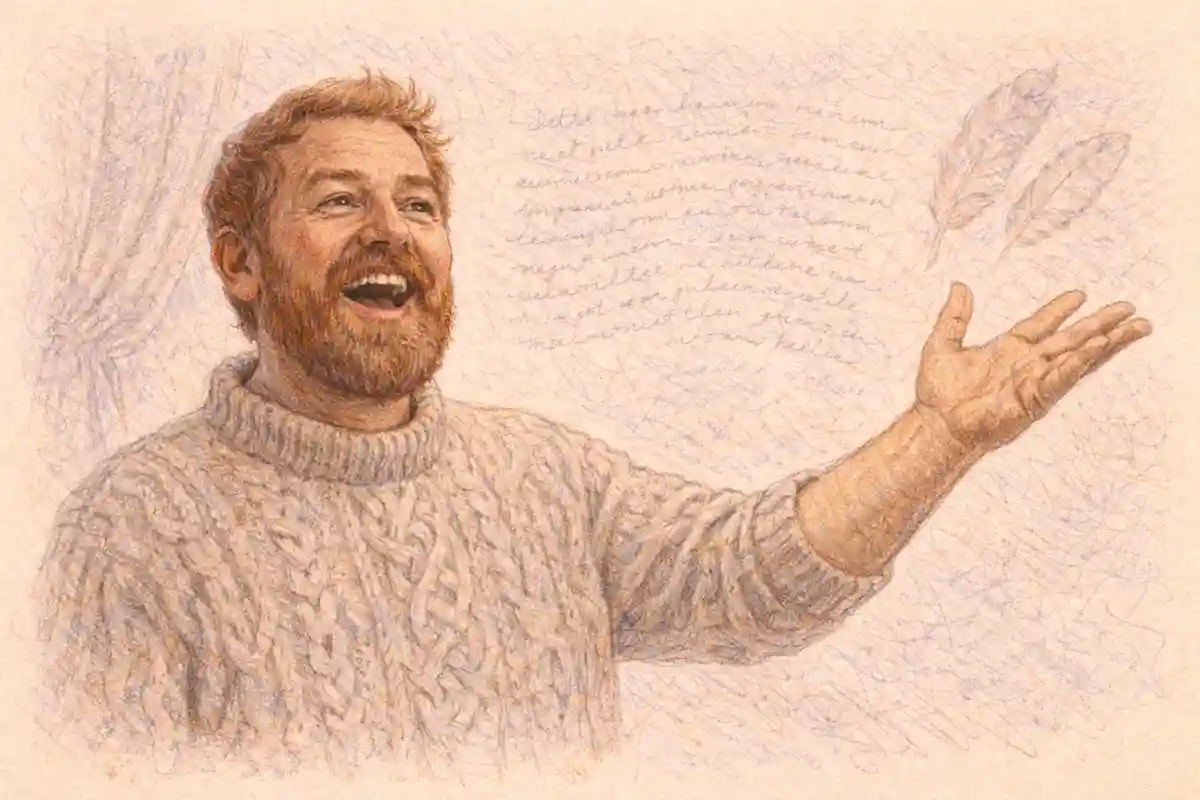
The thesis here is simple and Rowling states it in structure rather than in words, across seven books, without ever needing to announce it: intelligence is not a virtue. Wit is not a virtue. Perceptiveness is not a virtue. What you do with these qualities - what they serve, what they build or destroy, whether they expand or diminish the people around you - is the only measure that matters. Fred and George pass this test so thoroughly that their passing becomes, by the Battle of Hogwarts, a form of heroism that the series ranks alongside every act of conventional courage. Draco fails it so consistently that his most sympathetic moment is the moment he finally cannot act at all. The comparison is Rowling’s most direct argument about what makes a person good or bad: not the quality of the gift they were born with or developed, but the direction they choose to point it, and what they build or destroy with the pointing.
The Gift Identified: What All Three Are Actually Doing
Before examining where the gift diverges, it is worth establishing precisely what the gift is, because “cleverness” undersells it. All three characters possess something more specific: an intuitive, fast-moving, socially calibrated intelligence that reads situations in real time and responds with exactly the right intervention to produce the effect they want. This is the gift of the born communicator, the instinctive dramatist, the person who understands, without having to reason through it step by step, what will land.
Fred and George demonstrate this constantly. Their magic is not particularly distinguished in the academic sense - they achieve three O.W.L.s each, which is respectable but not Hermione-adjacent - but their understanding of how things will work on people is extraordinary. The Weasleys’ Wizard Wheezes products are not simply pranks. They are precisely engineered interventions into human psychology: the Ton-Tongue Toffee works because it targets embarrassment and spectacle simultaneously, the Extendable Ears work because they target the universal desire to know what adults are keeping secret, the Skiving Snackboxes work because they understand that students want an escape from obligation more than they want actual illness. Every product is a thesis about human nature, tested and refined against actual human responses. Fred and George are, in effect, applied psychologists who have stumbled into the confectionery business.
Draco’s version of the same gift is visible from his first scene with Harry in Madam Malkin’s robe shop - before he knows Harry’s name, before Hogwarts begins, before any of the ideology has had a chance to be deployed. He talks. He reads the room. He finds the angle. He understands, instinctively, that the way to establish social dominance with a stranger is to perform confidence and to invite the stranger to align with that confidence by agreeing with it. When he extends his hand to Harry on the Hogwarts Express and Harry refuses it, Draco registers the refusal completely and adapts immediately. He files Harry as an enemy with the same speed with which he would have filed him as an ally. The social intelligence is running at full capacity. The capacity is real. The direction it is pointed is already set.
Rebellion vs Conformity: What Cleverness Is For
The most fundamental difference between how Fred and George use their intelligence and how Draco uses his is the question of direction: toward power or away from it, toward hierarchy or against it.
Fred and George use their cleverness as a form of rebellion, and the rebellion is not merely adolescent contrary-ness. It is a philosophically grounded refusal to accept that institutions - particularly institutions with power over individuals - are beyond mockery or subversion. The twins’ most sustained target is the specific form of authoritarian seriousness that power tends to adopt: the self-importance that insists on being taken seriously because the alternative would be to acknowledge that the power is not as absolute or as deserved as it claims. Professor Umbridge is the ultimate expression of this target - a woman who has made institutional authority into a personal identity, who believes that her position requires the suppression of everything that might suggest the position is questionable. Fred and George’s response to Umbridge is the series’ most complete and most joyful act of political resistance: they fill the school with fireworks, set a swamp in a corridor, and then fly out the window to found their business, completing the single most effective act of institutional defiance in seven books.
The firework display and the flying exit are not merely funny. They are a statement about what cleverness is for. The fireworks say: this space that power has made oppressive can also be made beautiful and chaotic and beyond control. The exit says: we will not wait for your permission to leave. The intelligence that produced both acts understood, precisely, what the acts would mean to the students watching - that resistance is possible, that authority can be made to look absurd, that the serious-faced enforcement of petty rules is its own form of comedy when met with sufficient wit and sufficient courage.
Draco uses the same instinctive social intelligence in the opposite direction. He is not a rebel. He is the most fervent enforcer of the hierarchy he has been raised inside. His cleverness serves conformity - specifically, the conformity of a world in which blood status determines worth and the Malfoy family name guarantees position. He uses his perceptiveness not to identify where the system is unjust and poke holes in it, but to identify where individuals are vulnerable to the system’s logic and to exploit those vulnerabilities for status. The targets he chooses - Hermione’s Muggle-born status, Neville’s magical incompetence, Ron’s poverty - are not random. Each one is chosen because it locates a real wound and a real social disadvantage that the hierarchy Draco is defending can be made to illuminate. The intelligence is serving power rather than challenging it.
The full portrait of Draco’s development across all seven books - what the Malfoy legacy costs him and what it prevents him from becoming - is available in the complete Draco Malfoy character analysis, but what the comparison with the twins isolates is the specific function of cleverness in each case. Fred and George’s cleverness creates community - it draws people together in shared laughter at the thing being deflated. Draco’s cleverness creates hierarchy - it places people above or below the person wielding it. Both forms of cleverness understand the social landscape with equivalent precision. Only one form does anything useful with that understanding.
Economic Intelligence: Building vs Inheriting
One of the comparison’s least discussed dimensions is the economic one, and it is worth pausing on because it is one of the places where the series is most explicit about the moral difference between the three characters.
Fred and George build something from nothing. They fund their business with the Triwizard Tournament winnings that Harry gives them in Goblet of Fire - a detail Rowling includes with clear deliberate intent, linking the twins’ entrepreneurial future to Harry’s generosity and to the specific contest that killed Cedric Diggory. The business they build from that starting capital is, by Deathly Hallows, a substantial commercial enterprise on Diagon Alley: Weasleys’ Wizard Wheezes is described as one of the only genuinely prosperous-looking shops on a street that Voldemort’s shadow has made dismal. They achieved this not through inherited wealth or family connections but through the specific application of their intelligence to the problem of making people happy in exchange for money. The economic argument is also a moral argument: their prosperity is created, not inherited, and what it is created from is other people’s enjoyment.
Draco inherits wealth and has never been required to create anything. This is not a simple character flaw in the conventional sense - many people inherit wealth, and inheriting wealth does not make a person bad. But Rowling uses the contrast with the twins to make a specific point about what the absence of creative economic necessity does to Draco’s intelligence. He has never had to figure out what people want and give it to them. He has never had to make something from nothing. His cleverness has never been required to produce anything - it has only ever been required to perform his social position and to defend it against perceived challenges. The result is a form of intelligence that is acute in certain dimensions and underdeveloped in others: he can read threats to his position with extraordinary sensitivity, and he cannot figure out how to use his abilities to build anything at all. When Voldemort assigns him the mission of killing Dumbledore, the mission is specifically designed to be impossible, and Draco’s response - a year of increasingly desperate attempts, culminating in the incapacity to act when the moment finally arrives - is the response of a person whose cleverness has never been sharpened by the requirement to actually solve a problem rather than defend a position.
How Each Handles Fear: The Definitive Test
The question of how each character handles fear is the comparison’s moral apex, because fear is the situation in which intelligence either earns its ethical value or reveals its limits.
Fred and George handle fear by laughing at it. This is not the same as not feeling it. There is ample evidence in the series that both twins are capable of genuine fear - the scene in Order of the Phoenix where they test their experimental Skiving Snackboxes on first-year students and the blood is more than they bargained for shows something real running under the performance of cheerfulness. Fred’s death comes in the middle of a laugh - he is sharing a joke with Percy, the estranged brother just returned to the family, when a wall explodes and kills him. The laugh is not a mask for the fear. It is Fred’s actual response to the situation: a commitment to joy that is so total it has become indistinguishable from courage. George, after the loss of his ear in Deathly Hallows, wakes up and makes a pun about being “holey.” This is not denial. It is a choice, repeated consistently across years of dangerous situations, to meet the world’s worst with the best version of what he has to offer.
Rowling was clear and characteristically direct about how much Fred’s death cost her.
The tweet above captures something important for the comparison: Fred’s death lands as hard as it does precisely because he was funny right up until the moment he died. The humor was never a performance. It was who he was. Cruelty, used as power, requires the person wielding it to protect a certain image of invulnerability. Humor, used as power, requires the opposite: the willingness to be the person who is laughing, who is joyful, who makes no pretense of gravity or superiority, and to trust that this is enough.
Draco handles fear by performing the absence of it and then, progressively across the series, failing to maintain the performance. His cruelty is, at its root, a fear-management strategy. The thing Draco fears most is the thing he uses his intelligence to most aggressively avoid: being revealed as lesser than his position claims he is. His family’s ideology - pure-blood supremacy - provides him with a hierarchical framework in which his position is guaranteed by birth rather than by demonstrated merit, and his cleverness serves this framework by enforcing it against anyone who might challenge it. As long as the hierarchy holds, Draco does not have to find out whether he is good enough on his own terms. The cruelty is the enforcement mechanism for a worldview that he needs to be true because the alternative - a world in which merit and decency rather than blood determines worth - would require him to compete on terms he has never had to learn.
The series traces the progressive collapse of this performance across books four through seven. In Goblet of Fire, Draco’s cruelty is still operative and effective: the Malfoy name still means something, his father still walks freely, his position at Hogwarts is still secure. By Half-Blood Prince, the cruelty has become desperate: he is being used by Voldemort, his father is in Azkaban, and the year-long mission to kill Dumbledore is a slow-motion exposure of what Draco’s intelligence, unaccompanied by genuine courage, cannot do. By Deathly Hallows, when Harry, Ron, and Hermione are brought to Malfoy Manor and Draco is asked to confirm their identities, his face shows the specific terror of a person who has arrived at the moment where the performance must either be complete or break entirely. He hesitates. He says he cannot be sure. The hesitation is not heroism - it is not Narcissa’s quiet lie or Snape’s sustained double life. It is the hesitation of a boy who finally finds himself unable to commit to what his position requires and does not have the courage to commit to the alternative.
The Weasley Family as Draco’s True Antagonist
The series positions Draco’s antagonism toward Harry as the primary conflict, but the more illuminating conflict is the one Draco has with what the Weasley family represents.
The Malfoys and the Weasleys are the series’ two pure-blood families placed in direct structural opposition. Both are pure-blood. Both have long wizarding lineages. By every metric of the ideology that Draco’s family represents, the Weasleys should occupy a position of dignity and respect. They do not, because they have committed the unforgivable offense - in the Malfoy worldview - of being poor and of not caring about it. Arthur Weasley’s famous Muggle fascination is the Malfoy nightmare made flesh: a pure-blood who actively enjoys the company of Muggles and the study of their devices. Molly Weasley’s overflowing, undignified warmth is the antithesis of the Malfoy performance of aristocratic restraint. The Burrow’s cheerful chaos is the Malfoy Manor’s photographic negative.
Draco’s contempt for the Weasleys is therefore not simply economic snobbery. It is an existential threat: the Weasleys prove, by existing happily within their circumstances, that the Malfoy worldview is not necessary. They prove that pure-blood status does not require the suppression of warmth or the performance of superiority to be maintained with dignity. They prove that a family can be joyful and proud and connected without any of the architecture of status that the Malfoys require. This is intolerable to Draco’s entire ideological framework, and the contempt for “Weasleys” - the word said with the specific intonation of someone confronting something both beneath them and somehow threatening - is the contempt of a person who cannot afford to acknowledge that what they are contemptuous of is actually doing better by most measures of a good life than the thing they are proud of.
Fred and George are the most direct expression of this threat, because they weaponize the Weasley qualities most offensively against everything Draco represents. They laugh at authority. They profit from joy. They leave school on their own terms and build something from nothing and it works. By Deathly Hallows, the brightness of Weasleys’ Wizard Wheezes on a darkening Diagon Alley is Rowling’s most pointed symbol: the thing that Draco’s world considers beneath dignity is the one thing on the street still alive.
Fred’s Death and What It Costs the Comparison
No examination of the Fred and George vs Draco comparison can avoid the asymmetry that Fred’s death creates. Fred dies at the Battle of Hogwarts. Draco survives. George survives. The Malfoys, collectively, survive. The person whose humor was most purely directed at everything the Malfoys stood for is gone, and the people who stood for it are walking out of the castle together.
Rowling has described Fred’s death as the worst she wrote - the most personally painful of all the deaths in the series. The full portrait of the twins and what they brought to the series is examined in the complete Fred and George Weasley character analysis, but in the context of the comparison with Draco, the death lands with a specific moral weight. The comparison between humor and cruelty as competing forms of social power would be neater if humor won decisively in narrative terms as well as moral ones. The war would be tidier if the cruel people died and the joyful people survived. The series refuses this. Fred dies. Draco lives. George lives but without the twin who was the other half of the comedy. The asymmetry is the honest part: Rowling is not writing a fable where virtue guarantees survival. She is writing a war, and in wars the funny, warm, joyful people die too.
What the death does not change is the moral verdict. Fred’s death is devastating precisely because his life was so fully and genuinely valuable - he made things better by existing, made people braver and happier and more willing to resist. Draco’s survival does not rehabilitate the years of cruelty that preceded the hesitation at Malfoy Manor. The comparison’s argument holds: what you do with your intelligence is the measure. Fred used his well. Draco did not. Death does not reassign grades.
The Weasley Business and What It Proves
The formal analysis of humor as a political and moral force in the series is available in the thematic examination of comedy as resistance in Harry Potter, but what the Fred-George-Draco comparison adds to that analysis is the economic dimension: the twins do not merely perform their philosophy of humor as resistance. They build an institution from it.
Weasleys’ Wizard Wheezes is the series’ most quietly revolutionary business, and its revolutionary character is most visible when placed against Draco’s economic situation. Draco has never had to create anything. His wealth was created by ancestors and maintained by a family system that depends on the suppression of the world it extracts from - pure-blood supremacy is, among other things, an economic argument, the argument that the wealth concentrated at the top of a hierarchy based on blood status is legitimately held. Fred and George’s wealth is created from scratch, from intelligence and labor and the specific insight that people in a frightened world will pay good money for the chance to laugh. The business is proof that the gift - social intelligence, perceptiveness, the ability to read what people want and give it to them - can be directed toward creation rather than enforcement.
The shop’s location and its sustained brightness during the darkness of Deathly Hallows is Rowling’s most pointed symbolic statement about the comparison. Diagon Alley in Voldemort’s shadow is shuttered, frightened, emptied of the ordinary pleasures that make a community a community rather than a territory. Weasleys’ Wizard Wheezes is the exception. It is brightly lit. It is open. It is doing business. The things it sells - joke products, pranks, novelties - are superficially frivolous and are, in the context of that specific Diagon Alley, an act of political defiance. The shop says: joy is not suspended. Joy is not something that power can prohibit. Come in and buy something that will make someone laugh. This is worth doing. This will matter.
Draco’s family’s business - the Malfoys have investments, a vault, a Manor, but nothing they have made - cannot make this argument. A fortune inherited from the enforcement of an unjust hierarchy has no mechanism for claiming that what it represents is worth preserving. It can only be maintained by maintaining the hierarchy. When the hierarchy falls, the fortune does not have an alternative justification. Fred and George’s business does not depend on any hierarchy for its legitimacy. It depends only on whether people want to laugh. And people always want to laugh, including in the darkest years of Voldemort’s rule, which is why the shop is still open.
The Comparison in Miniature: Three Moments
The Fred-George-Draco comparison can be read in three specific scenes, each of which encodes the thesis precisely.
The first is Fred and George’s exit from Hogwarts in Order of the Phoenix. The fireworks, the swamp, the instruction to Peeves, the flight through the window - everything about the scene is the twins’ moral philosophy made visible in a single act. They could have left quietly. They could have submitted to Umbridge’s authority for the remainder of the year, taken their N.E.W.T.s, graduated on schedule. They do the opposite: they create the most spectacular exit the school has ever seen, they make themselves impossible to ignore or forget, and they give the entire student population a gift of defiance they will be talking about for years. The intelligence that produces this exit is not merely the intelligence of timing and theatrics. It is the intelligence of understanding what other people need - specifically, what the students of Hogwarts need in that moment of oppressive Ministry control - and providing it at personal cost to themselves.
The second is Draco’s moment in the Astronomy Tower at the end of Half-Blood Prince. He has Dumbledore wandless and helpless at the top of the tower. He has spent a year working toward this moment. And he cannot act. The intelligence that has spent six years being deployed as cruelty - finding the weakness, applying the pressure, achieving the desired social effect - is confronted with a situation that requires something cruelty cannot supply: genuine commitment to the worst version of what you are willing to do. Draco is not stupid. He knows exactly what needs to happen. He cannot make himself happen it. The failure is not a failure of intelligence. It is a failure of the intelligence to find the internal resources that would allow it to be directed toward murder. And the failure, as Dumbledore notes with the specific gentleness of a man who has planned for exactly this, is the most important thing about Draco.
The third is the Battle of Hogwarts, where Fred dies and Draco and his family slip away. The juxtaposition is not triumphant - there is nothing satisfying about Fred dying while Draco lives. But it is honest in the way Rowling’s most difficult choices are honest. The war does not sort the living from the dead along moral lines. The brave and joyful die. The cruel and cowardly survive. What the juxtaposition confirms is not that the war was fair but that the moral argument was always separate from the survival question. Fred’s death does not make his life wrong. Draco’s survival does not make his choices right. The comparison was never about who lives. It was always about what you do with the time and the gift you are given.
The Patronus Question: Two for Joy
One piece of world-building that Rowling confirmed outside the books is relevant here and worth incorporating. She stated that Fred and George’s Patronuses are magpies - from the British counting rhyme “one for sorrow, two for joy.” The choice is perfect: the magpie is a bird associated with both mischief and intelligence, with the capacity for mimicry and the instinct for acquisition, and in the rhyme it is specifically the paired magpie - two together - that signals joy rather than sorrow. Fred and George are the living argument that two of something is more than twice one of something: the specific humor they produced together was not additive but multiplicative, each twin making the other more fully what they were. George after Fred’s death cannot produce a Patronus, which is Rowling’s most quietly devastating piece of world-building: the form of his happiness - his Patronus, the thing he summons when he needs to defend himself against darkness - was constituted by his twin’s existence. Without Fred, George cannot summon the memory of joy that produces a Patronus. He can maintain the shop. He can marry Angelina, raise his children, name his son Fred. He cannot produce the specific magic that requires happiness. The comparison with Draco, who presumably can produce a Patronus because Draco’s happiness has always been about himself rather than about someone else, is the sharpest angle the twins’ story finds.
The practice of tracking this kind of detail - an author’s out-of-text statement about a character that retroactively reframes everything the text contains - is exactly the kind of extended analytical attention that competitive reading comprehension practice develops. Understanding what an author meant by a choice requires holding simultaneously what the text says, what the author has said about it, and what the combination implies about the larger argument - a multi-source synthesis that tools like the ReportMedic CAT PYQ Explorer train through sustained engagement with complex argument and inference passages across years of questions.
Where the Comparison Breaks Down
The Fred-George-Draco comparison has two significant failure points that it is worth acknowledging directly.
The first is the question of agency and determinism. Fred and George choose their rebellion freely - they were not born pranksters in any necessitated sense, and the life they built could have taken other directions. Draco’s cruelty, by contrast, is so thoroughly the product of his environment and upbringing that calling it a simple choice understates the degree to which Draco was shaped by forces he did not choose. Lucius Malfoy’s parenting is an ideological project as much as it is parental affection. Draco was being trained to be exactly what he became before he was old enough to understand what was being done to him. This does not excuse the cruelty - adults act, and the choices are still choices - but it does mean the comparison between the twins’ freely chosen humor and Draco’s formed cruelty is not a comparison between two equally unconstrained starting points.
The second failure point is the comic vs serious register of the comparison. Fred and George are comedy characters in a way that Draco is not. Their literary function in the series includes genuine lightness, genuine pleasure - they are among the most purely enjoyable characters Rowling created. Draco is a character who becomes progressively more serious and tragic across the series. The comparison between them risks flattening Draco into a simple villain-adjacent figure at exactly the point where the series is complicating him most. A comparison between humor and cruelty works best when both are given their full moral weight: humor as a genuine ethical choice, not mere entertainment, and cruelty as a genuine psychological failure, not mere villainy. The comparison is most useful when both sides are taken seriously, which the surface reading of “funny twins vs mean rich boy” does not always do.
Cross-Literary Parallels
The comparison between the fool who uses laughter to deflate power and the courtier who uses wit to reinforce it has the deepest roots of any structural opposition in world literature. The Shakespearean Fool is the most obvious parallel for Fred and George - figures who are permitted to speak truth to power precisely because they are positioned as entertainment rather than as political actors. In King Lear, the Fool is the only character who tells Lear the truth about himself consistently, and the truth is delivered in riddles and jokes because the riddle-and-joke form is the only one that power will tolerate from someone in the Fool’s position. Fred and George occupy a structural analog: they tell the truth about Umbridge, about the Ministry’s absurdity, about the pretensions of authority, in the one form that authority finds difficult to forbid directly because to forbid joy officially is to reveal the extent of one’s own joylessness.
Draco maps onto a different Shakespearean type: the young man whose wit serves status rather than truth - the Osric to Lear’s Hamlet, the Angelo to Measure for Measure’s Duke. These are characters whose intelligence is undeniable and whose deployment of it is fundamentally self-serving, directed at the maintenance of a social position that their intelligence, if turned honestly inward, would recognize as constructed rather than deserved. Draco’s parallel in Hamlet specifically is worth noting: he is the young man who inherits a corrupt father’s position and a corrupt father’s ideology and does not have the capacity, at the critical moment, to commit fully to either defending it or abandoning it. He is not Claudius. He is not Hamlet. He is the character who watches both and cannot choose.
The Vedantic tradition offers the concept of dharma again, but here in a specifically social register. The Bhagavad Gita argues that the quality of an action is inseparable from its motivation: the same action performed from ego (which the Gita calls ahamkara) and performed from duty without ego produces entirely different moral outcomes. Fred and George’s humor is performed without ego in the precise sense that matters: they are not trying to be seen as funny. They are trying to make things better, and the humor is the tool. Draco’s wit is performed almost entirely from ego: it is deployed to be seen as superior, to produce a specific audience response that confirms his position. The Gita’s framework maps this precisely - same quality of action, radically different moral weight, because the quality of the intention differs entirely.
The Romantic tradition, specifically the picaresque, contributes one more angle. The picaresque hero - Cervantes’ Don Quixote, Fielding’s Tom Jones - is the person of native intelligence and good heart who moves through a corrupt world without being corrupted by it, deflating pomposity wherever it is encountered through the sheer force of their own vitality and good humor. Fred and George are the picaresque heroes of the Harry Potter universe: their journey through Hogwarts is a series of encounters with petty authority and institutional absurdity, met consistently with the specific response of the person who will not be made small by small-minded power. Draco is the character the picaresque tradition positions as the foil: the person whose identity is constituted entirely by the social hierarchy the picaresque hero refuses to take seriously. One exists to deflate. The other exists to be deflated.
Students who develop the habit of reading structural parallels across literary traditions - identifying the same moral argument operating in different historical and cultural contexts - train a form of analytical intelligence that rigorous competitive exam preparation also demands. The ability to recognize argument patterns across different surface contents, the way the ReportMedic UPSC PYQ Explorer develops through sustained exposure to varied analytical questions, is exactly the competence Rowling rewards in readers who can see the Shakespearean Fool in Fred and George and the Machiavellian courtier in Draco simultaneously.
The Joy Argument: Why Humor Is a Form of Courage
The series makes an argument about humor that is easy to miss because it is embedded in the comedy rather than stated: the capacity for genuine humor in the face of genuine danger is a form of moral courage, and the people who maintain it are not lesser than the people who maintain their gravity. Fred and George are funny during the war. They are funny while the Dementors are circling. They are funny while their brothers and their parents and their friends are at risk of death. This is not avoidance or denial or the shallow cheerfulness of people who do not understand the stakes. It is the deliberate, consistent, effortful choice to offer others the specific form of relief that only humor can provide, at the specific personal cost of being the person who is always expected to provide it.
The capacity for this kind of humor requires something that cruelty, by definition, cannot produce: generosity. The joke that deflates power is generous to everyone in earshot who was afraid of that power. The prank that sends Umbridge’s control spiraling into chaos is generous to every student who has been living under that control. Even the Skiving Snackboxes - superficially just a product that enables students to dodge class - are an act of generous solidarity with the students who need an out and have not been given one. Every act of Fred and George’s humor is, at its root, an act of care for someone other than themselves. This is why the humor reads as courage and not as frivolity. It comes from a place that Draco’s cruelty is constitutionally incapable of inhabiting.
Draco’s wit, by contrast, is extractive rather than generous. It takes something from its targets - confidence, dignity, the ability to move through the social space without the specific vulnerability that Draco has located and is now using against them. The pleasure of Draco’s wit belongs entirely to Draco and his immediate circle. There is nothing in it for anyone outside that circle except the relief of not being the current target. This is the moral distinction in its most precise form: the humor that gives and the wit that takes, both drawing on the same underlying gift of social intelligence, producing opposite effects on the people who experience them. One leaves the room better. The other leaves the room smaller. It takes something from its targets - confidence, dignity, the ability to move through the social space without the specific vulnerability that Draco has located and is now using against them. The pleasure of Draco’s wit belongs entirely to Draco. There is nothing in it for the audience except the relief of not being the current target. This is the moral distinction in its most precise form: the humor that gives and the wit that takes, both drawing on the same underlying gift of social intelligence, producing opposite effects on the people around them.
Frequently Asked Questions
Why did Rowling choose to kill Fred rather than George?
Rowling has spoken about this choice in terms that illuminate the twins’ distinct characters within their apparent identical quality. She described Fred as the slightly more conspicuous of the two - the one who tends to initiate, who is fractionally more likely to be the voice of the pair, who she characterized as funnier but also slightly crueler. This is the most precise thing she ever said about the moral distinction between them, and it is relevant to the comparison with Draco: Fred was the one with the edge that could have gone wrong, the one whose humor had a slightly harder surface that occasionally drew blood alongside the laughter. By killing Fred rather than George, Rowling removes the more combustible of the two and leaves the one whose humor is purer. George’s post-war life - the marriage to Angelina Johnson, the children he names Fred II and Roxanne, the joke shop maintained and run in his twin’s name - is the quieter, more sustained form of the same commitment to joy that both twins shared. It is also, the series implies, one of the bravest things any character in the books does.
Is Draco Malfoy’s eventual hesitation a form of redemption?
The hesitation at Malfoy Manor - his refusal to positively identify Harry, Ron, and Hermione - is not redemption in the formal sense, but it is something. It is the moment when the cruelty fails: when Draco’s intelligence, which has spent six years being deployed against people he considered beneath him, confronts the specific situation in which deploying it would produce a consequence he cannot bring himself to accept. He does not save them. He does not join the resistance. He does not renounce his family’s ideology. He hesitates. The hesitation is the crack in the performance through which something human shows through - something that the cruelty, maintained consistently enough, had made invisible. Whether this crack widens into genuine moral change is a question the series leaves open. The epilogue shows Draco at Platform Nine and Three-Quarters, quieter, his son heading to Hogwarts, but nothing that confirms he has become a different kind of person. The hesitation is the most he manages. For Rowling, it appears to have been enough for survival, if not for absolution.
What does the comparison reveal about the series’ argument on wit and cruelty?
The comparison makes a specific argument that the series’ broader moral framework supports: that wit and cruelty are not the same thing, even though both involve social intelligence and both can produce similar surface effects. The person being humiliated by Fred and George’s pranks - a Boggart made to wear Neville’s grandmother’s clothes, Malfoy turned into a ferret by (fake) Moody - experiences something uncomfortable. The person being cruelty-witted by Draco experiences something similar on the surface. But the internal structure of the two acts is entirely different. Fred and George’s humor, even when it targets individuals, tends to target the pretension rather than the person - the Boggart’s power, Malfoy’s arrogance, Umbridge’s institutional self-importance. Draco’s cruelty targets the person rather than the pretension - Hermione’s birth, Ron’s poverty, Neville’s inadequacy. The difference is the difference between punching up and punching down, and the series is entirely consistent in presenting the former as legitimate and the latter as moral failure.
How does the comparison change if Fred had not died?
A living Fred would have complicated the comparison’s conclusion in interesting ways, because Fred and George together are the comparison’s moral argument made visible - the alternative to Draco’s use of cleverness. Fred’s death removes one half of that alternative and leaves George to carry the weight of the comparison’s resolution. But the argument itself - that humor is a form of courage and cruelty is a form of cowardice - is not dependent on Fred’s survival. It is embedded in what both twins did while they were alive and what the business they built represents on Diagon Alley in Deathly Hallows. Fred’s death makes the argument more costly and more honest but not less valid. A world in which humor carries the risk of death and cruelty carries the reward of survival is precisely the kind of world in which the moral argument needs to be made.
Why is the twins’ departure from Hogwarts such an iconic moment?
The exit from Hogwarts in Order of the Phoenix is iconic because it completes the logic of everything the twins have been doing since Philosopher’s Stone and expresses it in one single, spectacular, irreversible act. They do not leave quietly. They do not comply with the expected form of departure. They set off fireworks, they establish a swamp, they tell Peeves to give Umbridge hell on their behalf, and they fly out the window. Every element of the exit is Fred and George at their most completely themselves: the joy weaponized, the authority made absurd, the exit timed for maximum theatrical effect, the specific gift to Peeves - who is himself a kind of unkillable chaos that Hogwarts has tried and failed to manage for centuries - acknowledging that the battle against petty authority does not end when they leave. The exit is also a gift to every student watching: proof that compliance is not mandatory, that the institution’s power over you ends the moment you decide it does. No equivalent act of individual defiance - Harry’s various confrontations with authority, Hermione’s rule-breaking - has quite this quality of total, joyful liberation.
Does Draco have any genuine humor of his own?
The text gives Draco moments of wit that are genuinely clever rather than merely cruel, and acknowledging this is important for the comparison’s honesty. The Malfoy family’s habit of sardonic comment - the “Weasley is Our King” campaign is tactically brilliant, whatever its moral content - shows a real facility with the comic mode. But Draco’s humor is almost exclusively at the expense of others’ vulnerabilities, which is the precise line that separates wit from cruelty in the comparison’s terms. He is not funny in the way that Fred and George are funny - he does not produce the response of genuine shared laughter, the release of tension that comedy at its best provides. He produces the response of relieved not-being-targeted that is the social signature of mean humor. The facility is real. The direction is wrong. And the facility without the direction - which is what Fred and George have and Draco does not - is the thing the comparison is ultimately measuring.
How do the Weasleys’ Wizard Wheezes products reflect the twins’ moral philosophy?
Every product in the shop is an expression of the twins’ belief that joy is a legitimate response to difficulty and that providing joy is a worthwhile use of intelligence. The Skiving Snackboxes give students the power to exit situations they cannot otherwise escape. The Extendable Ears give the excluded the power to hear what is being hidden from them. The fireworks and trick wands and Decoy Detonators are tools for the creation of chaos in situations where chaos is the appropriate response. The shop’s entire product line is, in effect, a catalog of tools for the redistribution of power from institutions to individuals - each product designed to give the less powerful person a specific, practical advantage against the more powerful one. This is the same logic that motivates the twins’ relationship with authority throughout the series, now turned into a commercial enterprise. They are selling resistance. They are making it affordable. This is the moral philosophy of humor-as-power in its most fully developed form.
What does the comparison tell us about the series’ treatment of the pure-blood ideology?
The comparison between the Weasleys and the Malfoys, expressed through the Fred-George-Draco axis, is Rowling’s most direct examination of what the pure-blood ideology actually costs the people who hold it. The Malfoys have everything the ideology promises: wealth, status, pure bloodlines, social position. And they are miserable. Not in any simple, melodramatic way, but in the specific way of people whose identity is constituted entirely by a category they did not choose and whose value depends on the suppression of everything that might challenge it. Draco’s cleverness cannot relax. It is always on. It is always defending something. The Weasleys are also pure-blood, also have the lineage the ideology valorizes, and they are happy in a way that the Malfoys are constitutionally unable to be - because the Weasleys have never required the ideology to tell them who they are. Fred and George do not need pure-blood supremacy to give them permission to be clever, to be funny, to be themselves. Draco needs the hierarchy to give him permission to exist. The comparison makes this argument without stating it, which is how the best comparisons work.
Is the humor-as-resistance argument weakened by the fact that Fred and George’s pranks sometimes go too far?
The series acknowledges this, and the acknowledgment makes the argument more honest rather than less. The Ton-Tongue Toffee given to Dudley is funny but not gentle. The Skiving Snackboxes tested on first-year students produce more blood than expected. Fred is described as the “slightly crueler” of the two twins - Rowling’s own word - which means the humor-as-goodness argument requires nuance rather than simple endorsement. What the series argues is not that Fred and George’s humor is always kind, or that it never causes harm, but that its fundamental orientation - the direction it points, the effect it produces in aggregate - is toward liberation rather than domination. Some pranks go too far. The overall project of Fred and George’s humor is one of the most genuinely good things in the series. The distinction between the individual act and the overall orientation is exactly the kind of moral nuance that the twins vs Draco comparison is designed to produce.
What is the lasting legacy of the twins’ approach to power within the series?
The lasting legacy is Weasleys’ Wizard Wheezes burning bright on Diagon Alley while the rest of the street suffers under Voldemort’s shadow, and it is also the specific moment in Deathly Hallows when Harry puts on the cloak and sees the shop and the brightness feels like a message. The twins’ approach to power - that joy is a form of resistance, that humor is a form of courage, that the refusal to be made small by small-minded authority is itself an act of political significance - outlasts their school years and, in Fred’s case, outlasts Fred himself. George maintains the shop. He maintains it as an act of love for his brother and as a statement about what his brother believed. Every Decoy Detonator sold out of that shop after Fred’s death is Fred’s argument continuing to be made. Draco Malfoy ends the series with a son and a quieter life and no particular legacy except the absence of the worst things his family stood for. The comparison resolves in favor of humor not because humor is safe or easy or consequence-free but because humor, at its best, builds something that outlasts the person who made it.
Was Draco ever capable of genuine humor as distinct from cruelty?
The question is worth asking because it gets at the distinction between wit and cruelty most precisely. Draco is unquestionably clever, and cleverness applied to social performance can produce something that looks like humor from the outside. The “Weasley is Our King” campaign is tactically brilliant - it is designed to undermine Ron’s confidence at the exact moment Ron’s confidence would most benefit the Gryffindor Quidditch team, and it works. But the pleasure it produces is entirely internal to Draco and his group: there is nothing in it for the people who hear it except relief at not being the current target. True humor - humor in the sense that Fred and George produce it - generates a shared experience of laughter that includes rather than excludes. Draco’s wit never generates this. It cannot, because the system it is serving requires a clear distinction between the laughing and the laughed-at, and Draco’s social position is always on the laughing side of that distinction. Genuine humor dissolves hierarchies, however briefly. Draco cannot afford to dissolve hierarchies. They are the only thing that gives him permission to exist as he is.
How does George survive without Fred, and what does the survival cost him?
George’s post-war survival is one of the series’ most understated acts of courage, because the thing being survived is not danger but absence. The twin who remains after Fred’s death is the twin who was, in some structural sense, the other half of a single creative entity. The humor they produced was not additive - it was not Fred’s jokes plus George’s jokes. It was something that emerged from their specific dynamic, the call-and-response, the way each twin knew where the other was going before the other got there. George maintaining the shop, naming his son Fred, marrying Angelina Johnson (who was Fred’s girlfriend), building a family and a career that continue the project his brother began - these are acts of extraordinary loyalty to a person who is no longer there to receive them. The inability to produce a Patronus is the most precise measure of what the survival costs: the specific joy that makes the defensive charm possible was constituted by Fred’s existence, and it cannot be replaced by any other form of happiness, however real.
What would Fred and George have made of Draco’s eventual survival and quiet life?
The twins, in canonical character, would probably have found Draco’s post-war quiet life faintly anticlimactic - the specifically dramatic Malfoy who spent seven years performing superiority reduced to the ordinary size of a man in a station waiting for a train. There is something almost comic about it, in the specific mode of Fred and George’s comedy: the grand posturing deflated by the indifference of a world that no longer needs to perform hostility toward it. Whether they would have bothered to say so is a different question. Fred and George’s humor was always directed at power worth deflating. By the epilogue, Draco is not particularly worth deflating. He is simply a middle-aged man with a son, standing on a platform, no longer the thing the series needed to hold up to ridicule. In a way, the comparison ends in Draco’s complete deflation - not by the twins’ intelligence but by time. This is also a satisfying kind of resolution.
How does the comparison illuminate Rowling’s argument about what it means to be “pure-blood”?
Both the Weasleys and the Malfoys are pure-blood. This is Rowling’s most direct structural argument against pure-blood ideology: it places the ideology’s greatest believers and the ideology’s most enthusiastic disregarders in the same genetic category and asks the reader to compare the outcomes. The Malfoys have wealth, status, everything the ideology promises, and they are frightened, rigid, incapable of joy that is not performative, and end the series diminished in every dimension that matters. The Weasleys are poor by wizarding aristocracy standards and are demonstrably happier, more generous, more capable of real loyalty, and more fully alive in the sense that the series consistently valorizes. Fred and George are the sharpest expression of this argument: they are the Weasley qualities at their most extreme and most joyful, and they are pure-blood, and everything they are is the direct opposite of what Draco’s pure-blood ideology requires its adherents to be. The comparison between them is Rowling saying, in structure rather than statement: the thing the Malfoys claim to be protecting is not threatened by Muggle-borns. It is being performed to death by the Malfoys themselves.
What does the twins’ relationship with Percy illuminate about the comparison with Draco?
Percy’s estrangement and eventual return is the comparison’s most humanizing angle for the twins, because it shows that their humor, however directed at authority, never eclipsed their fundamental loyalty to the people they loved. The scene in which Percy returns to the family during the Battle of Hogwarts - and Fred is killed while laughing at his returned brother - is one of the most painful inversions of comedy and tragedy in the entire series. The twins had the capacity to mock Percy’s Ministry-worship, to find the comedy in his earnest climbing of the institutional ladder, without ever actually losing the brother who was doing it. The mockery was not contempt. It was the specific teasing of people who know each other well enough to locate the pretension without losing the person underneath. Draco’s wit never operates this way. His contempt for people he considers beneath him is total and does not leave room for the underlying warmth that distinguishes the twins’ mockery of even their own family from the cruelty with which Draco treats the people he has decided are his inferiors. The difference is the difference between a family that argues and a family that discards.
What does the series owe to Fred and George as characters?
More than is typically acknowledged. Fred and George provide the series with something none of the other major characters can provide: genuine, uncomplicated, morally clear joy. Harry’s arc is defined by loss and trauma. Hermione’s by anxiety and the weight of responsibility. Ron’s by self-doubt and the struggle to establish identity independent of his more prominent siblings. The twins are the characters whose arc, from beginning to end, is constituted by a fundamental orientation toward joy - and this orientation is not naive, is not innocent, is not ignorant of the war’s stakes. They know exactly what is at stake. They choose joy anyway. This is not a minor contribution to a seven-book series about death and loss and the cost of courage. It is one of the series’ most necessary contributions: the proof that courage can also be funny, that resistance can also be a delight, that the world being worth fighting for is demonstrated not only by its heroism but by the irreplaceable quality of its ordinary, joyful, human moments. Fred and George are the argument that the world is worth saving, made flesh.
Is the Fred-George-Draco comparison ultimately fair to Draco?
The comparison is most fair to Draco when it does not treat him as simply the villain against whom the twins’ virtue is displayed, but as a character whose specific limitations and specific environment produced the specific person he became - and who showed, at the critical moment, that the person he had become was not quite as fixed as it appeared. The hesitation at Malfoy Manor is real. The inability to commit to Dumbledore’s death is real. The progressive collapse of the performance across the final books is real. The comparison is fair when it acknowledges that Draco’s cruelty was formed, not chosen in any unconstrained sense, and that the alternative he eventually moved toward - however incomplete, however insufficient to justify or repair what preceded it - was available to him only at enormous cost in a family and a social world that had no language for it. The comparison’s thesis - what you do with your intelligence is the moral test - still stands. The test still shows what it shows. But fair is more honest than triumphant, and the most honest version of this comparison finds Fred and George’s clarity brighter and Draco’s darkness more understandable in the same moment.
How does each character’s approach to failure illuminate the comparison?
Fred and George’s relationship to failure is one of the most instructive dimensions of their humor, because the humor itself depends on a willingness to fail publicly and find it funny rather than humiliating. Their joke products do not always work on the first attempt - the Skiving Snackboxes make the first-year testers sicker than expected, the Extendable Ears have to be refined, the fireworks in the Astronomy Tower presumably required iterative development. But failure, for the twins, is information: it tells them what the next attempt needs to correct. They are not embarrassed by failure because their self-worth is not contingent on the performance of infallibility. Draco’s relationship to failure is exactly the opposite. Every failure is a threat to the identity constructed around inherited superiority - an identity that requires him to be better than others by definition and that is therefore destabilized by any evidence that he is not. His failure to kill Dumbledore is not merely a strategic failure. It is an existential one: it proves, definitively, that he is not what the Malfoy story about the Malfoys requires him to be. Fred and George’s approach to failure makes them more capable over time. Draco’s approach to failure makes him more frightened.
What does the Fred-George-Draco comparison tell us about the role of the audience in humor vs cruelty?
Humor and cruelty both require an audience, but they require opposite things from it. Humor requires an audience that is laughing with - that shares the experience of the comic moment and is enlarged by it, that feels included in the release of tension the joke provides. Cruelty requires an audience that is laughing at - or at least that is aligned with the person wielding the cruelty against its target. Fred and George’s greatest performances - the exit from Hogwarts, the fireworks during Umbridge’s inspection, the swamp in the corridor - produce laughter that the entire school shares, including the people who are nominally on Umbridge’s side and cannot help but find the spectacle funny. The humor is contagious in a way that crosses social allegiances. Draco’s wit is never contagious in this sense. It produces alliance within his immediate circle and fear or anger in everyone outside it. The audience it requires is a captured one - people who laugh because they are afraid of being the next target, not because they are genuinely delighted. The difference in audience response is the most reliable diagnostic for which form of cleverness is being deployed.
Where does the comparison leave the reader at the end of seven books?
The reader ends seven books having seen the twins’ argument proved in the most costly possible terms: Fred dies, the business survives, George endures, and the thing that Fred and George believed - that humor is worth building your life around, that joy is worth dying for, that cleverness directed toward the happiness of others is the best use of intelligence available in a world that also contains Dementors and Dark Lords - is confirmed not by easy success but by the specific quality of what remains after the war. Draco’s quiet epilogue life is not a punishment and is not presented as one. The series is too honest for that. He lives. He has a son. He stood on a platform. The argument the comparison makes is not that Draco deserves to suffer but that the life the twins lived - the life in service of joy, in service of others’ laughter, in service of the specific form of courage that makes difficult things lighter - was the better life in every sense that matters. Not longer. Not safer. Better.
What single image from the series best captures the entire Fred-George-Draco comparison?
The image, if you had to choose one from across all seven books, is from the end of Order of the Phoenix: Fred and George Weasley on their broomsticks, hovering in the air outside Hogwarts, having just set off an enormous fireworks display and flooded a corridor with a swamp, and Peeves tipping his hat to them as they go. Everything the comparison argues is visible in that image. The twins are leaving on their own terms, having transformed the space of oppression into one final act of spectacular irreverence. Peeves - the poltergeist the school cannot manage, the chaos that institutional authority has never been able to contain - acknowledges them as equals and, in saluting them, suggests that the most anarchic element in Hogwarts recognizes something of itself in what they have done. The entire student body is watching from the windows. The swamp is in the corridor. The fireworks are going off in Umbridge’s office. And Fred and George are laughing. Draco, somewhere in the castle, is watching too. He cannot follow where they are going. He does not have the specific combination of courage and joy that gets you out the window and onto a broomstick toward something you built yourself. This is the image. This is what the comparison is measuring.