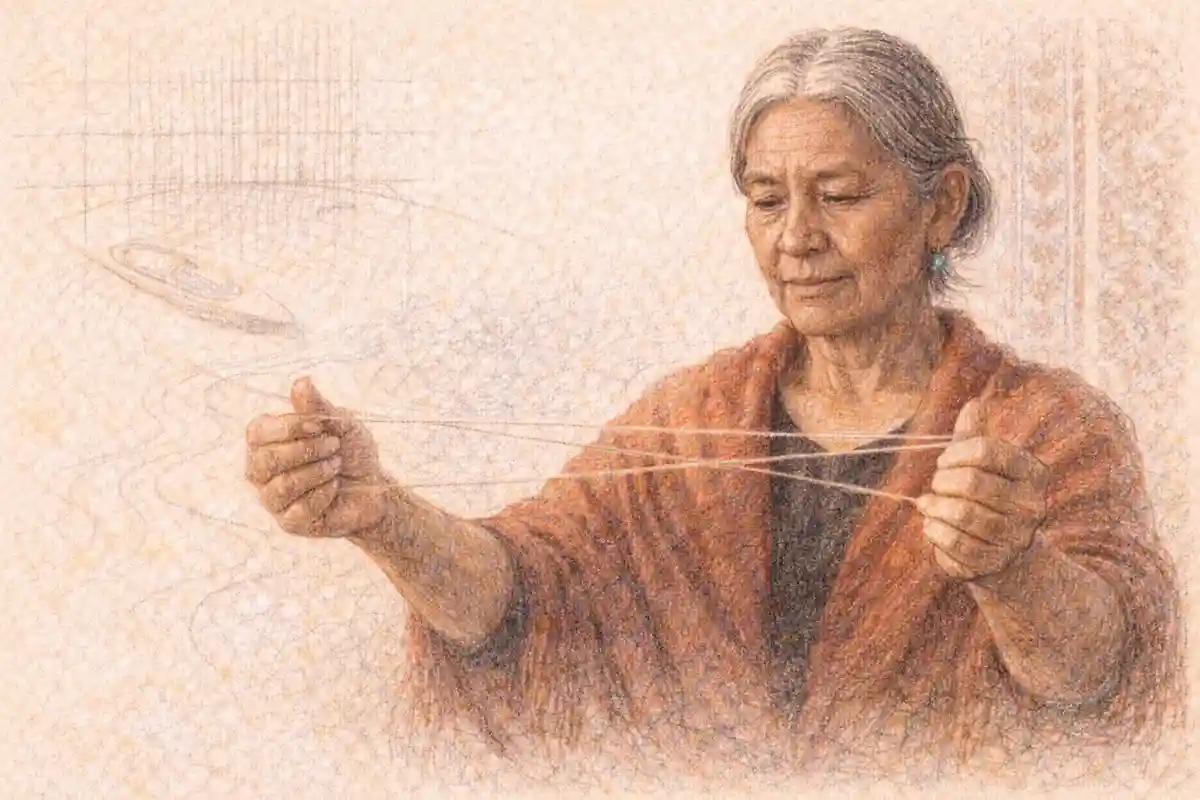
The yellowed wedding dress, the stopped clocks, the mouse-eaten bridecake under cobwebs: no image in Charles Dickens has burned itself more deeply into popular memory than the tableau Pip walks into on his first visit to Satis House. Generations of readers, teachers, and adapters have treated Miss Havisham as a Gothic curiosity, a grotesque drawn to give the young narrator something operatic to look at while the real story of class and ambition unfolds elsewhere. The popular treatment classifies her as caricature, eccentric, witch-figure, jilted bride frozen in a moment of cinematic sorrow. That treatment is wrong, or at least it is fatally incomplete.


Examined carefully against the textual evidence Dickens places before us, Miss Havisham emerges as something far more demanding and far more contemporary than the Gothic frame can hold. She is a coherent psychological case: a woman whose response to identifiable betrayal at a known age, in known circumstances, produced a recognizable pattern of arrested time, displaced rage, weaponized attachment, and eventual rupturing recognition. The pattern is not mysterious. The pattern is what unaddressed catastrophic loss does to a human being who has the resources to wall herself off from any corrective contact with the world. Dickens did not have the vocabulary of complex trauma, betrayal trauma theory, or attachment disruption when he wrote Great Expectations. He had something better. He had the eye to observe the pattern in his own century and the craft to render it whole.
This article approaches Miss Havisham as that coherent pattern rather than as Gothic furniture. The argument is not that her behavior is excused by what was done to her; her abuse of Estella is real abuse with permanent costs, and the recognition scene she undergoes does not undo the regimen she ran for two decades. The argument is that Dickens was attempting something more analytically precise than the genre conventions of mid-Victorian fiction usually permit, and that flattening his portrait into Gothic shorthand throws away the most useful thing he gave us: a long-form study of how one personality, equipped with one set of injuries, builds a life out of those injuries when no other life is permitted to enter.
Miss Havisham’s Role in Great Expectations
Inside the architecture of the book, Miss Havisham functions as the pivot on which Pip’s entire formation turns. She is introduced as the unseen rich relation in the village, the inhabitant of the great house behind the brewery walls, the figure whose summons rearranges Pip’s young life in Volume 1, Chapter 8. From that summons forward, every major movement of his story bends around what she set in motion. The eight-year-old boy who walks home from his first visit at Satis House with the conviction that his hands are coarse, his boots are thick, and his sister and Joe are common is not the same boy who arrived. Miss Havisham did that. The decision to apprentice him to Joe, the eventual receipt of expectations he attributes to her, the long courtship of Estella, the painful recognition that Magwitch and not Miss Havisham is his benefactor, the final return to Satis House in which the fire takes her: each of these turning points routes through her household, her training, or her revealed history.
She is not only the pivot for Pip. She is the engine that has produced Estella, and Estella is the wound the book circles around for its entire length. Dickens built Miss Havisham as the upstream cause of effects that play out across three generations of his cast. Compeyson wronged her; she trained Estella into a weapon against men; Estella married Drummle and absorbed his cruelty; Pip loved Estella and was broken by that love before being slowly remade by suffering and Joe’s continued patience. The chain is causal. Take Miss Havisham out of the book and the entire structure collapses. Estella does not exist as we know her, Pip’s class fixation has no operative target, and the central plot engine of Volumes 1 and 2 simply has nothing to drive it.
This structural centrality is part of what makes the Gothic-caricature reading so costly. If Miss Havisham were merely an eccentric, the book would lose its argumentative spine. Dickens needed her to be psychologically coherent, because the entire causal chain she produces depends on the reader believing that one woman’s decades-long arrested grief could plausibly generate this much downstream damage. A caricature cannot generate that kind of damage. A caricature is a static figure who exists for atmosphere. Miss Havisham must be alive enough, hurt enough, and intentional enough to have built the apparatus that she ran on Estella for the better part of two decades. Dickens went to considerable lengths to make her so.
The book also uses her to anchor its largest thematic concern: the question of what happens when the ordinary circuits of attachment and exchange between people get severed. Pip is the central case study in this concern, because his journey traces what happens when attachment to Joe is severed by the manufactured shame Miss Havisham helped install. Estella is the second case, because her capacity for warmth was severed in childhood by the regimen Miss Havisham ran. But Miss Havisham herself is the original case. Her attachment to Compeyson was severed by his deception; her attachment to ordinary domestic time was severed by the moment of the letter; her attachment to social life was severed by her self-imposed exile in Satis House. The novel begins with the wound she has been bleeding from for twenty-five years, and it ends, in the burned-room recognition scene, with the moment she finally lets the wound be seen.
She is also one of two adoptive parental figures Dickens uses to illuminate the difference between formation and abandonment. Joe, in the forge, raises Pip by hand with patience and craft and unconditional love. Miss Havisham, in Satis House, raises Estella in deliberate isolation with the express purpose of producing a damaged adult. The contrast is not accidental. Dickens placed these two parental projects on either side of his protagonist precisely so that readers could see, in cross-section, what the one approach builds and what the other approach unbuilds. Joe builds a man who can come back to himself after years of class-shame. Miss Havisham builds a daughter who, by the time she is grown, has so little access to her own warmth that she chooses Drummle to confirm what she suspects about herself. Dickens’s argument about what makes a human is not an abstract argument. It is the argument the two households jointly make.
Finally, Miss Havisham serves as the novel’s deepest meditation on time. Great Expectations is, among other things, a book about how time works on a person: how childhood fear becomes adult guilt, how childhood shame becomes adult ambition, how the past rewrites itself when the truth about it is finally seen. Miss Havisham is the figure who refused to let time work at all. The clocks at twenty minutes to nine, the wedding breakfast left on the table, the dress kept on the body across decades: all of it is an attempt to forbid the passage of time. The book knows this is not actually possible. Time runs on whether or not the clocks do. The cake decays. The dress yellows. The body ages. The attempt to arrest time produces, instead, a grotesque slow-motion record of time’s continued operation. Dickens was a writer obsessed with how the past haunts the present, and Miss Havisham is the most extreme case of that obsession he ever wrote.
First Appearance and Characterization
The first description of Miss Havisham, in Volume 1, Chapter 8, is one of the most carefully composed character introductions in nineteenth-century English fiction. Pip, summoned by Mr. Pumblechook and delivered by Estella through the locked gate of Satis House, ascends a staircase and enters a candle-lit room from which all daylight has been excluded. He sees a figure seated at a table, dressed in white. The dress is satin, lace, and silk; the veil is long; jewels lie about her on the table; flowers are in her hair. The whole arrangement is bridal. But the bride is not a bride in any active sense. The white satin has yellowed. The figure is shrunken to skin and bone. The flowers are withered. One small foot wears a shoe; the other foot, equally small, is bare, and a single shoe sits on the table beside her. The clock on the mantelpiece reads twenty minutes to nine; the watch on her body reads the same.
Dickens then expands the room around her. A long table covered with dust holds the bridal feast. The cake at its center is overrun with cobwebs, and from the cobwebs spiders move slowly back and forth. Mice rustle behind the wainscot. Black beetles cross the floor. The whole room has been arrested, but life of a smaller kind has gone on inside the arrest, feeding on the abandoned remains. The young Pip, faced with this, can produce no analysis. He simply records what he sees and what he feels, and what he feels is a mixture of fear, fascination, and the eight-year-old’s awareness that something has gone fundamentally wrong here that he is not equipped to name.
The scene is Gothic in register, and it is meant to be. Dickens was writing for a reading public that had absorbed Walpole, Radcliffe, and the long shadow of the Brontë sisters’ work, and he understood that the bridal-decay tableau would land with the affective force of the genre. But the Gothic register is not the whole point. Look at what Dickens has actually placed in front of the reader. He has placed a single moment in time, frozen and held: the moment a woman would have been finishing her dressing for her bridal day, with one shoe on and the other in her hand, when something arrived that stopped her movement entirely. The watch on her body, stopped at the same minute as the room’s clock, tells us she was wearing it; the watch was running on her wrist when the moment arrived and it stopped when she stopped. The single shoe on the table, beside her, has been there for the whole intervening period. The dust on the cake has been accumulating that whole time. The decision to never put on the second shoe, never finish the dressing, never permit the wedding feast to be cleared, never allow daylight back into the room, is a single sustained decision that has been made every day, for every hour of every day, for as long as it has lasted.
Her arrest is Gothic in surface but psychiatric in structure. The contemporary clinical literature on traumatic response describes a cluster of behaviors that recur across different patient populations: the freezing of activity at the moment of the wound, the refusal to engage with the post-wound environment, the construction of a sealed space within which the wounded subject can exist without confronting what happened. Miss Havisham’s first-appearance tableau is a textbook rendering of this cluster, executed with the precision of a clinical case study, before the clinical category had a name. Dickens did not need the name. He had observed the pattern, in real lives in his real century, and he rendered it.
The characterization deepens in the same chapter. Miss Havisham asks Pip to come closer and inspects him. Her face, he notes, has the look of someone who had been a young woman not so long ago but who had been struck still and was now somewhere on the other side of any normal aging process. Her hand on his is light and bird-like. Her voice is not loud. She is, in fact, quiet, controlled, even courteous in her own way. She is not the raving Gothic madwoman of cliché. She is composed and watchful, and she is using Pip for something. She has him play cards with Estella. She instructs Estella to break his heart. Pip, who does not understand the instruction, plays the game and is duly humiliated for his coarse hands and thick boots. Miss Havisham watches the humiliation with what Pip later understands to have been satisfaction. The first appearance closes with this satisfaction registered.
What Dickens has done in this single chapter is staggering when read carefully. He has presented a tableau that reads as Gothic but is built on observed clinical detail. He has introduced a character whose surface behavior is courteous and quiet but whose underlying intention, even with an eight-year-old boy, is calculated and instrumental. He has set up the scheme Miss Havisham is running on Estella by showing it in operation on Pip in the first few minutes of contact. And he has done it without a single line of explicit commentary. The reader is left to register the wrongness of what they have witnessed without being told what to make of it. Later chapters and volumes will fill in the history; the first appearance simply shows the present, with all its disturbing organization on display.
The detail of the bare foot deserves a longer pause. Miss Havisham was, by Herbert Pocket’s later account in Volume 2, Chapter 22, dressing for her bridal ceremony when the letter arrived. She had put on one shoe. She had not yet put on the other. She held the second shoe in her hand. When she received the letter from Compeyson breaking off the marriage, she set down or dropped the shoe, and she never put it on. From that moment forward, the half-dressed state has been maintained as a constant. The bare foot is not aesthetic Gothic; it is a marker of the precise instant at which time stopped for her. Every day of her life since, she has chosen, in some implicit or explicit way, to keep that foot bare. The single bare foot on the floor of Satis House is, in this sense, the most economical symbol Dickens ever wrote: the body itself preserves the moment of injury, the half-finished gesture that was interrupted and was never permitted to complete.
The withered flowers in her hair are the same kind of marker. They were placed there for the wedding morning. They have remained there. Whatever fresh organic matter would have completed the bridal toilette is now degraded, but it has not been removed. Removing it would mean acknowledging that the wedding would not happen. Keeping it is a daily act of refusal: the wedding is still happening, even though every condition of it has long since collapsed. The reader sees the residue and reads the refusal.
Psychology and Motivations
To read Miss Havisham as a psychological study, the analyst has to start from what Dickens gives us about the originating event and work outward into the long aftermath. Herbert Pocket’s account in Volume 2, Chapter 22 supplies the basic facts: Miss Havisham was the only daughter of a wealthy Kentish brewer; her mother had died when she was an infant; her father had remarried in secret and produced a half-brother, Arthur, with whom Miss Havisham had a complicated rivalrous relationship after the father’s death. She inherited a substantial fortune. She was sought after for it. A man named Compeyson presented himself, courted her, and was accepted. The wedding was arranged. Compeyson was, at the time, conspiring with Arthur to defraud her of money. On the wedding morning, with Miss Havisham dressed and waiting, the letter arrived breaking off the engagement. The fraud was eventually understood. The marriage never took place.
The injury, as Herbert lays it out, was multiple. It was the loss of the imagined husband and the imagined future. It was the public humiliation of being abandoned at the altar in a community where everyone knew the wedding had been planned. It was the discovery of having been deceived not for love or rivalry but for money, by someone she had trusted with her whole confidence. It was the recognition that her own half-brother had been part of the conspiracy. And it was the irreversible alteration of her social position: the unmarried heiress jilted on the wedding day was a category of person whose remaining options in her social world were limited and bleak. Each of these layers carries a different kind of damage. Stack them, and the result is closer to what later trauma theorists would call complex trauma than to ordinary heartbreak.
The crucial point about trauma of this kind is that it involves not only loss but the destruction of a working model of trust. Jennifer Freyd’s later work on betrayal trauma describes how the deepest psychological damage tends to come not from harm in general but from harm done by those on whom the victim depended for safety, attachment, or sustenance. Compeyson was not a stranger. He was the man Miss Havisham was about to marry, in whose hands she had placed both her affections and her financial future. The breach was not just emotional. It was the breach of the entire framework she had built her adult life around. Recovery from such a breach, where it occurs, generally requires the slow reconstitution of the capacity to trust, usually with the help of relationships that can demonstrate trustworthiness over time. Miss Havisham, by withdrawing into Satis House and excluding most outside contact, structurally prevented any such reconstitution from being possible.
What she did instead is the central question of her psychology. She arrested time. She kept the wedding dress on her body, the cake on the table, the clocks at the moment of the letter. The stopped clocks are not just symbolic; they are the physical infrastructure of an ongoing refusal. Every morning that Miss Havisham did not wind those clocks, did not let daylight into the room, did not change clothes, did not order the cake removed, was another day in which she enacted the refusal again. The refusal had to be active, daily, sustained for decades. This is not collapse; it is a project. The Gothic frame tends to read it as collapse, as the static state of a woman destroyed. The textual evidence shows the opposite: a sustained daily exertion to keep the world she ought to be in from arriving. Whatever else Miss Havisham was, she was disciplined.
But the arrest of external time did not arrest internal time. Inside her, the original wound continued to operate. The rage she could not take to Compeyson, who had vanished, had to go somewhere. The hatred she had developed for the entire category of men who could betray a trusting woman had to find an object. She could not produce a weapon against Compeyson directly. She could produce a weapon against the category. The weapon she chose was Estella.
Estella came to her, through Jaggers’s arrangement, as an infant. Volume 3 reveals what Pip and the reader did not know earlier: Estella’s biological mother is Molly, Jaggers’s housekeeper, whom Jaggers had defended in a murder trial; her biological father is Abel Magwitch. The lawyer needed somewhere to place the child. Miss Havisham took her, but not for the ordinary reasons women take in foundlings. Miss Havisham took her with the conscious intention of forming her into something specific. Estella would be raised in Satis House, isolated from ordinary affection, taught to attract men, taught to manipulate them, taught to take pleasure in inflicting pain on them, prevented from developing the emotional repertoire necessary for love. By the time Estella was an adolescent, the training had been running for many years, and its effects were already visible: a beautiful, cold, cutting young woman who appeared to feel nothing for anyone.
The motivational structure here is precise. Miss Havisham could not retaliate against Compeyson; the man was gone, possibly dead, certainly out of reach. She could retaliate against all men, vicariously, by training a daughter who would do to other men what Compeyson had done to her. The displacement is psychologically coherent and morally catastrophic. It is coherent because trauma of this kind does generate, in some sufferers, exactly this kind of generalized hostility toward the category that contained the original aggressor. It is catastrophic because Estella was a child, and what Miss Havisham did to her was abuse: deliberate, sustained, and aimed at producing a damaged adult.
There is a further psychological pattern visible in Miss Havisham’s relationship to Estella that deserves naming. The classical formulation of identification with the aggressor, articulated in early twentieth-century psychoanalysis, describes how victims of harm sometimes internalize the perspective of the person who harmed them and become, in some ways, like that person. Miss Havisham does not become Compeyson. She does something inverted: she creates a new person who will play the role of aggressor on her behalf. Estella becomes, through Miss Havisham’s training, the kind of figure who does to others what was done to Miss Havisham. The pattern is identification-with-the-aggressor offloaded onto a third party. The mother does not need to become the abuser herself. She raises an abuser to act in her stead.
This pattern explains something about Miss Havisham’s emotional state in the middle volumes that the Gothic reading cannot account for. She is not, in those middle chapters, simply a frozen figure. She is engaged, watchful, often satisfied, sometimes triumphant. When Estella practices on Pip, Miss Havisham is animated. When Estella reports the conquest of other young men, Miss Havisham wants details. The animation is not the animation of a recovering person; it is the animation of someone whose substitute revenge is producing the desired results. The arrest is partial. Time has stopped for her own life, but it runs in the project she has set in motion. Estella is alive in the way Miss Havisham has refused to be alive, and Estella’s activity in the world is the only form of activity Miss Havisham permits herself to enjoy.
The vigilance dimension is also worth foregrounding. People who have suffered the kind of betrayal Miss Havisham suffered often develop a heightened, sometimes paranoid sensitivity to the patterns that produced the original harm. They scan for repetitions. They watch for signs. Miss Havisham’s interrogation of Pip about Estella, her constant probing for whether he loves the girl, her demand that Estella tell her about her conquests in detail, all carry this scanning quality. She is not just enjoying the vicarious revenge; she is tracking, with anxious vigilance, whether the pattern is performing as designed. The scanning has the affective signature of post-traumatic vigilance applied to a domain Miss Havisham has constructed in order to play it out.
What Miss Havisham wants but cannot admit wanting is the most psychologically complex layer of all. She has spent twenty-five years organizing her life around hatred for Compeyson and for the category of men he stood for. She has produced a daughter who acts that hatred out in the world. The scheme is running. And yet, when Estella turns the very coldness Miss Havisham trained her to develop on Miss Havisham herself, in the painful Volume 2, Chapter 38 confrontation in which Estella explains that she has no warmth for her adoptive mother either, Miss Havisham is devastated. She had wanted Estella to be cold to other people. She had not, in the part of herself she could not name, wanted Estella to be cold to her. The desire for love from the person she was training to be incapable of love is the contradiction at the center of her psychology, and it is the contradiction that eventually breaks the scheme apart.
The fear underneath all of it is the fear of having been a fool. The original injury was not just romantic; it was epistemic. Miss Havisham believed Compeyson loved her. She was wrong. The wrongness was discovered publicly. The recoil from that discovery, into the sealed room and the campaign of revenge, was, among other things, a refusal to live in a world where she could be that wrong about a person again. Inside Satis House, with the daylight excluded and the daughter trained, she could not be wrong because there was nothing to be wrong about. The terms of every encounter were set by her. The cost of this safety was enormous: no real attachments, no growth, no ordinary pleasure, no future. But the cost was bearable, because the alternative, a return to ordinary life with the knowledge that she had been such a fool, was not bearable.
Character Arc and Transformation
Tracking Miss Havisham’s arc requires approaching her as the figure who appears to be static but is actually undergoing a slow and painful internal motion that finally erupts in Volume 3. The surface is unchanged across the novel; the room remains the same, the dress remains the same, the clocks remain the same. The interior, however, does shift, and the shifts can be read in her interactions with Pip and with Estella across the three volumes.
In Volume 1, after the first appearance, Miss Havisham continues to summon Pip for visits and observation. She watches Estella practice on him. She derives satisfaction from his evident pain. When she eventually has him apprenticed to Joe and provides money to compensate for his time, she does so without warmth, but also without any particular cruelty toward him personally. She is, in this volume, simply running the operation. Pip is a useful test subject. The fact that Pip is also a child, and that the scheme is doing real damage to him, does not register on Miss Havisham as a problem. She has decided that men, present and future, are fair targets for what Estella will do.
In Volume 2, the situation grows more complicated for her. Pip has grown up; he has received the news of his great expectations; he has come to believe, on his own and without any direct statement from her, that she is his benefactor. She does not correct this misapprehension. She allows him to believe it. The non-correction is itself a deliberate act. Allowing Pip to believe she has made him a gentleman keeps him in a posture of gratitude and continued courtship of Estella, which serves the design. Whether Miss Havisham fully understood the moral cost of this deception at the time is not entirely clear from the text. What is clear is that she chose silence over correction, and the silence had consequences.
The middle volumes also contain the first cracks in the design. Estella, by her late teens, has been thoroughly trained, but the training is producing a daughter whose coldness is increasingly turned on Miss Havisham herself. The Volume 2, Chapter 38 confrontation between Estella and Miss Havisham is the first major fissure. Miss Havisham, for the first time in the novel, asks Estella for warmth, for affection, for the kind of return that mothers ordinarily expect from daughters. Estella, with the precision Miss Havisham herself instilled, points out that warmth was specifically not part of her training. She was made to be cold. She is being cold now. She cannot manufacture, on demand, an affection she was prevented from developing.
The scene is structurally devastating. Miss Havisham has succeeded at the regimen. The success of the regimen is the failure of the relationship. The two outcomes are not separable. To produce a daughter who cannot love men, Miss Havisham produced a daughter who cannot love her either. This is the first moment in the novel where Miss Havisham confronts the cost of what she has built, and the confrontation is not theoretical. Estella’s flat, factual coldness during this exchange is the proof. Miss Havisham, in this chapter, begins, for the first time, to register the scheme as something that has done damage to her in addition to the damage done by Compeyson.
Volume 3 contains the cascade of recognitions. The Magwitch revelation, in Chapter 39, transforms Pip’s entire understanding of his life: the convict from the marshes, not Miss Havisham, has been his benefactor; the social ascent he believed he had been chosen for never had any real basis; Estella was never intended for him by the woman he assumed had intended her for him. When Pip returns to Satis House in Chapter 44, he confronts Miss Havisham with what he has learned. The confrontation is one of the most painful scenes in the novel because Pip does not rage. He simply asks her, with the dignity of someone who has already absorbed the worst, whether she allowed him to believe what he believed. She admits she did. He asks why. She has nothing to say that exonerates the choice.
The Chapter 44 confrontation is also where Estella announces her intention to marry Drummle. Miss Havisham, watching this, is forced to contemplate the actual outcome of her design. Estella will marry the most brutal man available, will spend her life with him, will become whatever a woman becomes who lives with such a husband. The scheme has produced not a triumphant avenger but a damaged woman walking deliberately into a damaging marriage because no other kind of marriage is now psychologically available to her. The vicarious revenge Miss Havisham wanted has produced, as its endpoint, a daughter destroyed by her own marriage choices.
Chapter 49 contains the recognition scene proper. Pip returns to Satis House, ostensibly on practical business, having now absorbed both the Magwitch revelation and Estella’s marriage. Miss Havisham, sitting alone in her familiar room, breaks. She asks him what she can do, what amends she can make. She offers help to Herbert. She begs Pip to write that she is not unforgiven. She kneels at his feet, in the wedding dress, asking forgiveness. The breaking is total. Decades of arrested grief, displaced rage, and sustained denial collapse in the space of a single conversation, and what is exposed underneath is a woman who finally sees what she has done.
The recognition is not, importantly, a redemption. Dickens did not write Miss Havisham an arc that resolves her into goodness. He wrote her an arc that resolves her into truthful seeing. She now sees that she abused Estella; that she allowed Pip to be deceived; that the regimen was wrong; that her arrested time has produced not protection but compounded ruin. Seeing is not undoing. Estella is still married to Drummle. Pip is still broken. The years lost to Satis House are still lost. The recognition does not give her time back. It only gives her, at the very end, the dignity of a clear view of what she did with the time she had.
The fire that follows, in the same chapter, is sometimes read as accident and sometimes as something more complicated. Miss Havisham, in her wedding dress, stands too close to the fire after Pip has left the room briefly. The dress catches. The flames consume both dress and room before help arrives. Pip returns and beats out the flames with his coat, burning his own hands badly. Miss Havisham survives the immediate fire but is gravely injured. Whether the proximity to the fire was deliberate, or simply the result of someone too disordered to track danger after the recognition that has just torn her open, is left textually open. What is not open is the symbolic weight of the moment. The wedding dress, which has been the body’s ongoing record of the original wound, becomes the agent of the body’s destruction. The arrested moment finally moves, and the movement is annihilation.
She lingers for a short time, attended by surgeons and Pip and others, and dies, the novel reports, soon after. Her death is offstage in the strict sense; the reader does not get a deathbed scene rendered in the same detail as her life-tableaux. The withholding is deliberate. The death is not the climax. The climax was the recognition in Chapter 49. The death is the predictable consequence of having been on fire in a wedding dress in a room full of decayed organic material. What matters for her arc is that she saw, before she died, what she had been doing. The arc is recognition, not redemption. It is the arc that tragic figures are given. She does not become good. She becomes lucid. The novel grants her this lucidity, and then it ends her.
Key Relationships
Compeyson and the Original Injury
Compeyson is the figure who is barely on stage but whose absence shapes everything Miss Havisham does. He appears in the novel as Magwitch’s enemy, the educated criminal who corrupted Magwitch, the man who, by Magwitch’s own account in Volume 3, used a gentlemanly accent and clean clothes to escape lighter punishment when both were caught. The reader learns, through Herbert’s exposition in Volume 2, Chapter 22, that this same Compeyson was the man who courted Miss Havisham, conspired with her half-brother Arthur, drained her of money, and finally jilted her on the wedding morning to escape eventual exposure.
The relationship Miss Havisham had with Compeyson, as the text presents it, was the central romantic and structural commitment of her early adult life. She loved him; she trusted him; she had arranged, with him, what was meant to be the founding of her household. The discovery that none of this was real, and that the man who had been at the center of her plans had been engineering her financial destruction the entire time, is the wound the novel begins from. Every subsequent action she takes is in some sense a response to what Compeyson did. He is not a character we get to know in his own right; we get to know him only through his effects on the people he damaged. But those effects, refracted through Miss Havisham’s life and through Magwitch’s life, are what hold the entire plot together.
His non-presence is also psychologically important. He is gone. He cannot be confronted. He cannot be punished by Miss Havisham personally. The ordinary trajectories of grievance, where the wronged party either confronts the wrongdoer directly, or seeks legal redress, or eventually achieves some kind of resolution through the wrongdoer’s downfall, are not available to her. She knows what he did, and she has no means of acting on that knowledge against him. The energy that would normally find an outlet against the perpetrator backs up, and goes somewhere else. The somewhere else is Estella.
Estella and the Program
The relationship with Estella is the most analytically complex relationship in the novel and the most morally serious. Estella came to Miss Havisham as an infant through Jaggers’s arrangement; she was raised in Satis House from earliest childhood; she received, instead of ordinary maternal care, a sustained formation regimen designed to produce a particular kind of adult woman. The training was not implicit. It was explicit. Miss Havisham, in conversation with Estella that Pip overhears, instructs her to attract men, to break their hearts, to feel nothing for them. Estella was reared with this instruction as the air she breathed. By the time she is an adolescent, she is its product.
What Miss Havisham did to Estella was abuse. The text does not soften this, even though Dickens does not have the modern vocabulary to name it as such. He shows the regimen in operation: the isolation of the child from peers her own age, the prohibition of warm responses to her, the praise that comes only when she has performed cruelty, the cultivation of her beauty as a weapon, the active discouragement of every emotional capacity that ordinary parenting attempts to nurture. Estella’s testimony in Volume 2, Chapter 38, that warmth was specifically not given her, that coldness was instilled instead, is not a daughter’s complaint about ordinary maternal coldness. It is a reasonably accurate description of the regime under which she was raised.
The damage shows up across the novel in Estella’s relationship to her own emotional life. She tells Pip, on multiple occasions, that she has no heart. She is not being theatrical; she is reporting, accurately, the result of her formation. She knows she does not feel what other people feel. She knows she is, in some structural way, broken. She also knows that she cannot simply choose to repair the damage by, for example, marrying Pip, who loves her. Volume 2, Chapter 44 contains her warning to Pip on this exact point. Marrying Pip would destroy him, because she is not capable of being to him what he needs. Marrying Drummle, who is brutal and who will not be destroyed by her coldness because his own cruelty matches it, is the marriage available to her. The choice is not stupid. It is the choice of a woman who has assessed what she has been made into and is matching her marital choice to the assessment.
The marriage to Drummle is the consequence Miss Havisham finally has to absorb in Chapter 49. She built Estella to use against men. She succeeded. Her daughter is now a woman who cannot accept the love of a good man because she was deliberately prevented from developing the capacity to do so, and who is therefore marrying a bad man whose cruelty she at least understands. The collateral damage is total. Miss Havisham did not just damage Estella for use against Pip and other men. She damaged Estella in a way that ensures Estella will spend her entire adult life with the consequences. The vicarious revenge curdles, on contact with reality, into vicarious self-destruction.
Pip and the Permission to Believe
Pip’s relationship with Miss Havisham is the novel’s most extended dramatization of how she operates with someone who is not Estella. From the first summons in Chapter 8 onward, she uses him: as a test subject for Estella’s training, as a young man whose evident love for the daughter she is shaping confirms that the shaping is working, as someone whose presence in the household provides ongoing material for the scheme. She does not love him in any straightforward sense. She does not actively try to harm him in the way she harms Estella. She simply uses him for what he is useful for and lets him bear whatever costs his use entails.
The most morally significant move she makes with Pip is the non-correction of his belief that she is his benefactor. This is the move the Volume 3, Chapter 44 confrontation centers on. Pip, having received the news of his expectations, draws the conclusion that they come from her. She does not say so; she also does not say otherwise. The space between these two non-statements becomes a permission for Pip to build his entire adult orientation on a false premise. Every gentleman-formation activity he undertakes in London, every pursuit of Estella, every resentment of his origins, every alienation from Joe, is conducted under a misapprehension that Miss Havisham could have corrected at any moment by simply telling him the truth. She did not.
Pip’s cost from this permission is enormous. His shame about Joe; his estrangement from Biddy; his debts; the years he spends performing a class identity he was never going to be able to keep, are all costs Miss Havisham is partially responsible for. She did not invent his class fixation; the visit to Satis House triggered it, and the social structures of his world reinforced it, but she did not invent it. What she did was let him believe she was the source of the means to satisfy that fixation, when she was not. The structural deception was sustained for years. By the time the truth came out via Magwitch’s revelation, the damage was permanent.
The recognition scene in Chapter 49 is, in part, Miss Havisham’s reckoning with what she did to Pip specifically. She knew, at some level, what her silence was costing him. She let it cost him anyway, because correcting his belief would have destabilized the design. When the scheme collapsed and the recognition arrived, she finally saw the full weight of the silence she had maintained. Her offer to help Herbert financially, made in this scene, is partially an attempt to do something corrective for Pip via the friend Pip cared most about. The corrective gesture is genuine. It is also small, relative to the scale of what was permitted to happen.
Jaggers and the Architecture of Concealment
Jaggers, the lawyer, is the third major figure in Miss Havisham’s adult social world, and his role is structural rather than emotional. He arranged Estella’s adoption. He defended Molly, Estella’s biological mother, in the murder trial that led to Molly’s becoming his housekeeper and to the infant Estella becoming available for placement. He administered Pip’s expectations on Magwitch’s behalf, while allowing Pip to assume Miss Havisham was the source. He visits Satis House in his professional capacity. His relationship with Miss Havisham is one of mutual silence: she does not ask him questions about the children he places, and he does not volunteer information about the lives of the people whose affairs he manages.
The Jaggers relationship illuminates how Miss Havisham’s apparatus could have been sustained for so long. She had a lawyer who would arrange child placements without asking questions about what would be done with the child. She had a lawyer who would administer the financial life of an heiress in seclusion without pushing back on the seclusion. She had, in other words, a professional infrastructure that allowed her to exist outside ordinary social check-ins for decades. Without that infrastructure, the operation would have been harder to run. Jaggers does not engineer the design; he does not have the moral imagination to engineer it. He simply provides the legal scaffolding within which it can be run. The novel uses him to show how social institutions can quietly facilitate private catastrophes by simply not asking inconvenient questions.
Sarah Pocket and the Greedy Relations
Miss Havisham is also surrounded by a small circle of relatives, headed by Sarah Pocket and Camilla, who visit her on her birthday and at other ritual occasions in the hope of being remembered in her will. Pip first encounters them in Volume 1 and watches their performances of concern with the cool distaste of a child who can already tell what they are doing. Miss Havisham knows exactly what they are doing too. She receives them. She manipulates their hopes. She uses Pip and Estella, when convenient, as instruments for needling the relatives further. The relations are minor characters, but they function as a kind of Greek chorus of greed surrounding her isolation. Their presence reminds the reader that Miss Havisham has not simply been forgotten by the world; the world remembers her, in a particular and venal way, and she remembers the world’s venality and treats it with the contempt she thinks it deserves. The relationship with the Pockets is one of the few areas in which her judgment is not distorted by the original wound. She sees them clearly. She just chooses to play with them rather than to send them away.
Matthew Pocket and the Refused Relation
Matthew Pocket, Herbert’s father, is a relative of a different kind. Herbert tells Pip in Chapter 22 that Matthew alone among the relations told Miss Havisham, after the jilting, that she was being deceived again, this time by her own behavior, and that she should not retreat into Satis House. He told her this not because he wanted anything from her, but because he saw what she was doing to herself. She did not listen. She did, however, remember. Matthew is the relation she does not pretend to manipulate, because Matthew is the relation who refused to manipulate her. The relationship, conducted entirely at a distance for most of the novel, is one of the few that Miss Havisham preserves intact. In Chapter 49, when she begins to make amends, she leaves Matthew a substantial sum in her will, which he had never sought and which Herbert ultimately uses to set up a partnership in the firm that will eventually employ Pip. The Matthew Pocket strand suggests, by negative space, what Miss Havisham could have had if she had let in even one corrective voice early on, and it gives the novel a quiet moral counterweight to the regimen she ran in Satis House.
Miss Havisham as a Symbol
Beyond her function as character, Miss Havisham operates in the novel as a symbolic structure that crystallizes several of Dickens’s largest concerns. Each of these symbolic functions deserves to be read carefully, because each tells us something different about what the novel is arguing.
She is, first, the symbol of arrested time. The stopped clocks at twenty minutes to nine, the dust on the cake, the wedding dress yellowing on the body, all together produce one of literature’s most economical images of what happens when a person refuses to allow the future to arrive. Time, in the novel’s logic, is not a neutral medium. It is the substance through which growth, recovery, and meaning become possible. To stop time is to refuse all three. The Satis House interior, sealed against daylight and against change, becomes a visual argument that life requires the continuous acceptance of passage; without that acceptance, what remains is decay accelerated by stillness. The cake does not stop being eaten by mice merely because Miss Havisham refuses to clear it. The room rots faster, not slower, because no one tends to it. The body inside the dress ages, not less, but more strangely, because no light reaches it. Refusing time does not preserve; it warps.
Second, she is the symbol of weaponized grief. Ordinary mourning, in nineteenth-century English fiction, generally moves toward some kind of accommodation: the surviving party comes, eventually, into a livable relationship with the loss. Miss Havisham refuses accommodation and instead transmutes grief into a project of harm. The novel uses her to make a moral argument that grief which is not allowed to find expression in ordinary channels becomes something other than grief. It becomes the engine for inflicting on others the harm that was suffered. Estella is the human being on whom this transmuted grief lands. The argument the novel makes is that unprocessed catastrophe will out, and that the form of its outing is often the production of a new generation of catastrophe.
She is, third, the symbol of Victorian patrimony gone wrong. Satis House sits on the brewery; the brewery represents her father’s industrial wealth; the wealth was supposed to be the foundation of her marriage and the establishment of her household; instead, the wealth has become the funding mechanism for her decades-long refusal to live. The novel, by placing this story in this kind of house, implicates the broader Victorian system that produced the unmarried heiress with no socially acceptable second act. Miss Havisham’s catastrophe is partly individual. It is also partly structural: the system that prepared her to be married and produced almost no other path forward when the marriage failed is implicated in what she became. Dickens does not let the system off the hook. He shows what happens to a woman whom that system has produced and then abandoned.
Fourth, she is the symbol of class-as-formation. The Satis House interior is an environment Miss Havisham deliberately constructed to produce particular effects in the children who enter it. Pip’s class shame is produced there, by design. Estella’s coldness is produced there, by design. The house is not merely the residence of a sad eccentric; it is a machine for generating the formations that will then act in the world. Miss Havisham, by running the machine, becomes a figure for how class itself reproduces: through specific environments, specific lessons, specific exclusions, specific instillations of shame and ambition. The novel uses her to dramatize the broader argument that what looks like personal character is often the output of a particular formative environment. Take Estella out of Satis House, raise her in Joe’s forge, and she becomes someone different. The same is true of Pip, whose class fixation is the result of the time spent in Satis House and the time after.
She is, fifth, the symbol of false benefaction. Pip believes she has made him a gentleman. She has not. The benefaction he assumes she has provided is a fiction; the actual benefaction, from Magwitch, is one Pip cannot bring himself to accept until late in the novel. Miss Havisham becomes, in this dimension, the figure for the false promises Victorian society holds out to its aspiring young men: the idea that benevolence from the gentry will lift them; the idea that proximity to wealth will translate into stable wealth themselves; the idea that working hard at being suitable for a particular woman will produce the woman as a reward. Pip is wrong on all three counts, and Miss Havisham, by silently allowing him to remain wrong, becomes the embodiment of the social lie. Magwitch, the actual benefactor, is the truth Pip does not want to face. The novel argues that the source of Pip’s prosperity is the convict labor of an ex-prisoner working the Australian frontier, not the genteel decision of a Kentish heiress. Miss Havisham, as symbol, holds the lie in place until Pip is forced to confront the truth.
Finally, she is the symbol of the limit case of self-isolation. There is, in the broader literary tradition, a figure of the isolated woman who has refused the world: the recluse, the nun who never took vows, the mourning queen. Miss Havisham is the most extreme English-language nineteenth-century rendering of this figure. By placing her in Satis House and allowing the reader to see, decade by decade, what isolation has done to her, Dickens produces a meditation on what is lost when a person decides that the world is no longer admissible. The loss is not abstract. It is the wedding dress, the foot, the cake, the eyes adjusted to candlelight after years of no daylight, the daughter who cannot love her, the burned room at the end. The novel makes the cost visible. The visibility is the argument.
Common Misreadings
The Gothic-villain reading is the most common misreading of Miss Havisham, and it is the misreading the article is principally concerned to refute. Treatments at the level of school study guides routinely classify her as a Gothic eccentric, a witch-figure, a wedding-dress madwoman whose function is largely atmospheric. The reading is appealing because the surface evidence supports it: the dress, the cake, the cobwebs, the sealed room are all material the Gothic genre had been working with for decades. But the interpretation is fatally incomplete because it stops at the surface. It does not engage what the surface is the surface of. The behavior is psychologically coherent, and the coherence is the analytic prize the reading throws away.
A related misreading treats her as victim only. This interpretation correctly identifies that Miss Havisham was wronged catastrophically by Compeyson, and concludes from the wronging that she is principally a sympathetic figure whose later behavior is to be excused on grounds of suffering. The treatment is half-true. She was wronged. The catastrophe was real. But what she did with the catastrophe was not reducible to suffering. She built an apparatus of harm, ran it for decades, and damaged a child seriously enough that the damage shaped that child’s entire adult life. The victim-only reading throws out the agency she actually exercised over Estella’s formation. To approach her honestly is to hold both the wrong done to her and the wrong she did, simultaneously.
The opposite misreading treats her as villain only. This interpretation, which sometimes shows up in older critical traditions and in adaptations that lean into the witch-figure, treats Miss Havisham as a malevolent agent whose behavior is morally legible without reference to the prior catastrophe. The villain-only reading throws out the evidence Herbert provides in Chapter 22 about the originating injury, and treats Miss Havisham’s behavior as ordinary villainy of a Gothic kind. This interpretation also fails to engage Chapter 49, in which Miss Havisham clearly recognizes what she has done and asks forgiveness. A pure villain does not have a recognition scene of the depth Dickens wrote. The recognition is the textual evidence that she was always operating with a moral conscience that had been subordinated to the program, not abolished by it. When the program collapsed, the conscience returned. A villain-only reading has nowhere to put this scene.
A subtler misreading treats her as a static figure: the woman who is the same at the end as at the beginning. The view is encouraged by the surface stability of her environment. The room does not change. The dress does not change. The clocks remain stopped. But the interior is moving, and the movement can be traced if the reader is paying attention. Volume 1 Miss Havisham is satisfied with the regimen. Volume 2 Miss Havisham is starting to register that the scheme is producing a daughter who cannot love her. Volume 3 Miss Havisham confronts the full cost of what she built and asks forgiveness. The arc is internal but it is real. Treating her as static collapses the most interesting psychological motion the book performs.
Another interpretation treats Estella’s coldness as something Miss Havisham caused only indirectly, through the bad example of her own grief. The misreading lets Miss Havisham off the hook for the training. The text does not let her off the hook. The instruction-giving, in the chapters Pip overhears, is explicit. Estella was trained, with conscious intention, to attract men, to manipulate them, to feel no warmth, to enjoy inflicting pain. The training is not implicit modeling. It is direct pedagogy. To read it as anything less is to misread the text in a way that makes it easier on Miss Havisham and less responsible to what Estella endured.
Finally, there is the romanticizing misreading, more common in cultural reception than in scholarly engagement, which treats Miss Havisham as a tragic-romantic figure whose grief is somehow noble. The yellowed dress and the stopped clocks become, in this reading, the marks of a great love refused to die. The interpretation flattens what Dickens carefully distinguished. The grief in Satis House is not noble. It is wasted. The love Miss Havisham preserves toward the original Compeyson is love for a man who never existed in the form she loved; he was a fraud throughout. The arrest of time is not the keeping of a flame; it is a refusal to take in information. Romanticizing the figure makes a kind of nineteenth-century iconography out of her, but the iconography sacrifices what Dickens actually analyzed. He showed a damaged woman damaging others. The romanticizing reading edits out the second half of the description.
The trauma-study interpretation, advanced in this article, holds all of these misreadings against the text. It preserves the Gothic atmospherics, because Dickens wrote them deliberately, and they are real elements of the prose. It honors the originating injury, because the injury is real and the wronging is real. It refuses to let the originating injury function as exoneration, because the regimen Miss Havisham ran on Estella was abuse, and the abuse cannot be talked away by reference to the prior wound. It tracks her arc, because the arc is real, and ends with the recognition that gives her the dignity of clear sight at the end. It is not a comfortable reading. It is the reading the textual evidence demands.
Miss Havisham in Adaptations
The character has been brought to film, television, and stage so often that there is now a substantial visual archive of how each generation has interpreted her. The interpretations vary, sometimes wildly, and the variations themselves are worth attending to, because they tell us something about which dimensions of the character different periods have found legible.
Martita Hunt’s 1946 portrayal in David Lean’s film adaptation set the template that subsequent treatments largely inherited. Hunt played Miss Havisham as eerie, controlled, soft-voiced, and watchful, with an emphasis on the still presence of the figure in the candle-lit room. Lean’s mise-en-scène, with its stark high-contrast cinematography, leaned into the Gothic register and produced an image of Miss Havisham as a kind of shrine to her own injury. The performance is restrained and carries genuine pathos, and Hunt was widely praised for the work. What the 1946 reading underplayed, however, was the active programming of Estella; the version we get is closer to a still figure trapped in grief than to an operating intelligence running a multi-year revenge campaign.
Joan Hickson’s 1981 BBC television performance sharpened the active dimension somewhat, presenting a Miss Havisham who is more visibly engaged with directing Estella’s behavior in the moments of contact with Pip. Hickson’s Miss Havisham is also older in affect than Hunt’s; the impression is of a woman further into the long aftermath, with less active distress and more settled cruelty. The 1981 BBC adaptation generally read the character as having moved past the rawness of the original injury into a more institutionalized mode of operation, and Hickson’s performance fits that reading.
Anne Bancroft’s 1998 portrayal, in the Alfonso Cuarón modernization that transposed the story to twentieth-century New York, took the character in a different direction. Bancroft’s Nora Dinsmoor, the equivalent figure in this version, was eccentric, theatrical, and visibly damaged in ways that were closer to the surface than Hunt’s or Hickson’s versions. The modernization reading made the eccentricity legible to a contemporary audience accustomed to a more demonstrative style of performance. Whether it gained more than it lost in clinical coherence is debatable; the trauma-study dimension is harder to read in a performance pitched this high.
Charlotte Rampling’s 2011 BBC television performance, in the Gillian Anderson era of the BBC’s classic-novel adaptations, returned to a more restrained register. Rampling’s Miss Havisham was visibly intelligent, controlled, and deliberate; the performance leaned into the calculated dimension of the character, and the production design surrounded her with a Satis House that was less Gothic-cluttered and more architecturally bleak. The 2011 reading was probably the closest of the major television adaptations to the trauma-study reading advanced here.
Helena Bonham Carter’s 2012 portrayal, in Mike Newell’s film with Jeremy Irvine as Pip and Holliday Grainger as Estella, returned to the Gothic register but layered in more visible damage. Bonham Carter’s Miss Havisham is younger than most adaptations have made her, which has the effect of foregrounding how much of her life was taken from her by the original wound. The performance also leaned into the design’s active dimension; Bonham Carter and the production were clear that Miss Havisham was raising Estella with intention, and the scenes in which Estella is being trained have a deliberate, almost laboratory quality. The 2012 film took the recognition scene seriously, with Bonham Carter’s performance of the breaking in Chapter 49 carrying real weight. Whether the visual register entirely supports the trauma-study reading is debatable; the film keeps a fairly Gothic surface even where the underlying performance is doing more analytical work.
Stage adaptations have been numerous and varied. The character has appeared in operatic settings, in chamber theater versions, in solo monologues focused on Miss Havisham as the central voice. Each form forces a different aspect forward. The solo monologue forms tend to foreground her interior life and make her into a more sympathetic figure than the novel does. The full-cast adaptations vary depending on the directorial reading; some emphasize the regimen, others the Gothic, and a small number have leaned into the trauma-study reading explicitly.
The cumulative effect of two centuries of adaptation is that the cultural image of Miss Havisham is now a composite: yellowed dress, sealed room, stopped clocks, training of the daughter, recognition at the end, fire. The composite is not necessarily wrong, but it is, like all popular composites, less analytically precise than the novel itself. Reading the original text after seeing the adaptations is often a useful corrective, because Dickens placed each detail in a structure of causes and consequences, while the adaptations, working in a different medium, often have to flatten the structure for the sake of running time and visual punch. The composite cultural image is what most students bring with them to the novel. The novel itself, read carefully, supports a more demanding reading than the composite has generally registered.
Why Miss Havisham Still Resonates
Her character continues to be one of the most frequently invoked figures in English-language reference to grief, betrayal, and arrested response. The image of the wedding dress, the stopped clocks, and the sealed room recurs, in cultural shorthand, whenever a writer or speaker wants to evoke the figure of the woman frozen at the moment of catastrophic disappointment. The shorthand is not wrong, exactly, but it tends to flatten the figure into iconography. The deeper resonance, when readers actually return to the novel, is closer to recognition than to iconography. People recognize, in Miss Havisham, a pattern they have seen in their own lives or the lives of people they have known.
The recognition is partly about the universality of catastrophic disappointment. Most adults, by middle age, have known some version of betrayal at the hands of someone whom they loved and trusted. The intensity varies, the form varies, the consequences vary, but the underlying experience is widely distributed. What Miss Havisham models is one specific response to such an experience: the response of refusing to move past it, of trying to keep oneself frozen at the moment before the world became unbearable. Most readers do not actually do this; most readers, with whatever degree of pain, eventually move past the worst losses they suffer. But most readers also know the temptation to do otherwise, and Miss Havisham makes the temptation visible.
It is also about the long-term effects of unprocessed loss on the people around the wounded subject. Miss Havisham did not just hurt herself; she hurt Estella, she hurt Pip, she damaged her own household, she made Satis House a place where children were not safe in the ordinary ways children should be safe. Readers who have been close to a person whose unprocessed loss became an environmental fact for everyone in their orbit recognize this pattern. The unhappy aunt, the bitter uncle, the parent whose old wound never closed and who therefore reorganized the family around its open edges: these are familiar figures, less extreme than Miss Havisham but operating on the same principle. The novel makes the principle visible by pushing it to its limit case.
The trauma-study reading specifically gives the character an additional kind of contemporary resonance. As the public conversation around long-term effects of betrayal, abuse, and complex trauma has become more clinically articulated over the past several decades, readers have increasingly recognized in Miss Havisham a figure whose behavior is no longer mysterious, eccentric, or merely Gothic but is, in fact, recognizable. The arrested time. The displaced rage. The vigilance toward repeating patterns. The eventual recognition that comes with the collapse of the protective system. Each of these maps onto patterns clinicians and survivors now describe in their own terms. Miss Havisham becomes, on this reading, a figure whose suffering has a name we can give it, even though the name was not available when the novel was written.
Her character also resonates because the novel grants her, in the end, the dignity of clear sight. She does not become good. She does not get her years back. But she does, before she dies, see what she did, and the seeing is offered without sentimentality. Readers respond to this because most readers, faced with the question of whether their own worst behavior could ever be honestly seen by themselves, are uncertain. Miss Havisham, in Chapter 49, models the bare possibility of such seeing, even very late and at great cost. The model is not consoling, but it is not nothing. It is one of the things the novel offers that more sentimental Victorian fiction does not.
Finally, Miss Havisham resonates because she is built. She is not a type-figure assembled from genre conventions. She is a person whose history, behavior, environment, and arc are interconnected with the precision of a serious psychological study. The reader who pays close attention can follow the connections and feel them connecting. The feeling of connection, the sense that the figure on the page coheres in a way that does justice to a real human possibility, is what gives Dickens his continuing reach. Miss Havisham is one of the cases where his reach is at its maximum. The kind of layered analytical reading her character rewards, where surface tableau, biographical history, daily behavior, and final recognition all hang together as one coherent organism, is the kind of reading that structured study tools like the Classic Literature Study Guide on ReportMedic help students develop, by offering interactive exploration of character relationships and thematic connections across multiple novels.
Reading Miss Havisham as trauma-study rather than Gothic caricature is, in the end, an act of taking Dickens at his word. He gave us the dress, the cake, the clocks. He also gave us the design, the daughter, the recognition, and the fire. Reading both together, as the same person, is what the text rewards. The reader who does this work has, at the end, a character who is fully alive on the page and who continues to teach long after the book is closed. For readers and students who want to extend that work across the broader Dickens corpus, the kind of cross-novel comparative reading that places Miss Havisham alongside other complex Victorian figures is also available through the comprehensive analytical resources on ReportMedic, which structure the comparison work that single-novel guides cannot.
Pip’s eventual return from London, the long aftermath of his expectations, and his halting reconciliation with Joe and Biddy form the broader pattern this character analysis sits inside; readers who want the full architecture of the novel’s overarching analysis can follow that thread directly. The companion reading on Pip himself, treating him as a structural rather than purely moral case, is laid out in the Pip character analysis essay, which traces how the visit to Satis House generated the formation that the rest of his life was spent recovering from. For readers interested in how the abandonment-and-creation pattern Miss Havisham enacts on Estella echoes across other major nineteenth-century novels, the analytical reading of Victor Frankenstein traces a structurally parallel case in which a creator abandons a created being and incurs catastrophic consequences. The cross-novel resonance with Catherine Earnshaw’s trauma-formation in Wuthering Heights also rewards close attention, since Catherine’s impossible position between two attachment objects is a different rendering of the same Victorian pressure that produced Miss Havisham. And the cross-novel resonance with Heathcliff’s class-abuse formation supplies the masculine counterpart to Miss Havisham’s case: the figure whose injury, also unprocessed, also produces a long downstream pattern of harm to the next generation.
Frequently Asked Questions
Q: What traumatic event turned Miss Havisham into a recluse?
The originating event, as Herbert Pocket explains to Pip in Volume 2, Chapter 22, was Miss Havisham’s abandonment at the altar by Compeyson on her wedding morning. Compeyson, working in conspiracy with Miss Havisham’s half-brother Arthur, had courted her with the dual purpose of marrying into her fortune and defrauding her of money. On the marriage day, with Miss Havisham fully dressed in her bridal attire and the breakfast laid out, a letter from Compeyson arrived breaking off the engagement. The discovery that the man she loved had been deceiving her for financial gain, combined with the public humiliation of being jilted on the wedding morning and the subsequent revelation of the fraud, constituted the multi-layered catastrophe she never recovered from. She withdrew into Satis House, stopped all the clocks at the moment the letter arrived, kept on her wedding dress, and refused to allow the wedding feast to be cleared from the table. The withdrawal lasted decades.
Q: What happened to Miss Havisham after the jilting?
After the wedding-day catastrophe, Miss Havisham retreated into Satis House, the family home built on her father’s Kentish brewery, and remained there for the remainder of her life. She kept the wedding dress on her body, allowed the bridal cake to decay on the table beneath cobwebs, kept the clocks stopped at twenty minutes to nine, and excluded daylight from the room she primarily inhabited. She continued to manage her financial affairs through Jaggers, the lawyer, and she received select visitors, including the Pocket relations who hoped to inherit from her. Her major life project across the decades that followed was the adoption and deliberate formation of Estella, a child placed with her by Jaggers, whom she trained from infancy to attract men, manipulate them, and feel no warmth toward them. The training was intended as vicarious revenge against the category of men Compeyson had stood for. Miss Havisham finally died in Volume 3 from injuries sustained when her wedding dress caught fire shortly after she had recognized, in conversation with Pip, the full damage her design had caused.
Q: Why does Miss Havisham wear the wedding dress?
The continued wearing of the wedding dress is a sustained behavioral refusal to allow time to move past the moment of the original catastrophe. When the letter from Compeyson arrived on the wedding morning, Miss Havisham was in the middle of dressing; she had put on one shoe and was holding the other when she received the news. She never finished the dressing and never removed the dress. By keeping the dress on her body across decades, she effectively kept herself at the moment before the catastrophic news arrived, when the wedding was still meant to be happening. The dress yellowed and the body inside it aged, but the refusal to remove it remained constant. The dress functioned as a physical record of the wound and as the daily renewal of her insistence that the moment of the wound had not, in some private interior sense, fully finished happening yet.
Q: Did Miss Havisham abuse Estella?
The textual evidence supports the reading that yes, Miss Havisham abused Estella, in the sense of subjecting her, from infancy onward, to a deliberate formation regimen that prevented the development of normal emotional capacities. Estella was raised in isolation at Satis House. She was actively trained to attract men, manipulate them, and inflict pain on them. She was specifically discouraged from developing warmth toward anyone, including Miss Havisham herself. The instruction was direct pedagogy, not implicit modeling, and Pip overhears Miss Havisham explicitly directing Estella in this training in multiple chapters. The damage to Estella shows up across the novel in her own statements that she has no heart, in her warning to Pip that marrying her would destroy him, and in her eventual marriage to Drummle, a brutal man whose cruelty matches the emotional vacancy her training produced. The abuse was not accidental. It was the program.
Q: Who jilted Miss Havisham?
Compeyson jilted Miss Havisham. He was a confidence man and educated criminal who courted her primarily for her fortune. He worked in conspiracy with her half-brother Arthur to defraud her financially over the period of the courtship. On the wedding morning, with the marriage scheduled to take place, Compeyson sent a letter breaking off the engagement and then disappeared. He is the same Compeyson who later appears in the novel as Magwitch’s enemy, the educated criminal who corrupted Magwitch and used a gentlemanly appearance to receive a lighter sentence when both were caught. His role in the novel is largely off-stage, but his actions against Miss Havisham, against Magwitch, and against others form the upstream cause of much of the plot’s downstream damage.
Q: Does Miss Havisham regret her actions?
In Volume 3, Chapter 49, Miss Havisham reaches a clear and total recognition of what her scheme has done to Estella, to Pip, and to herself. The recognition arrives after Pip confronts her in Chapter 44 about the deception she allowed him to operate under, and after Estella announces her intention to marry Drummle, which forces Miss Havisham to absorb the actual consequences of the design. In the Chapter 49 scene, Miss Havisham asks Pip what amends she can make, offers to help his friend Herbert financially, kneels at Pip’s feet asking forgiveness, and acknowledges that she abused Estella. The regret, when it finally comes, is unreserved. The recognition does not undo the damage; Estella is still married to Drummle, Pip is still broken, the years lost to Satis House are still lost. But the recognition is real, and Dickens grants Miss Havisham the dignity of seeing clearly what she did before she dies.
Q: How does Miss Havisham die?
Miss Havisham dies from injuries sustained when her wedding dress catches fire in Satis House, shortly after the recognition scene with Pip in Volume 3, Chapter 49. After Pip leaves the room briefly, Miss Havisham, in her wedding dress, stands too close to the fire in the hearth. The dress, dry and aged, ignites. The flames spread quickly through the dress and the surrounding decayed bridal materials. Pip returns and beats out the flames with his coat, burning his own hands seriously in the process. Miss Havisham survives the immediate fire but is gravely injured. She lingers for a short period under medical care, attended by surgeons and by Pip, and dies soon afterward. The novel reports her death rather than dramatizing it in detail. The wedding dress, which had been the body’s daily record of the original wound across decades, becomes the agent of the body’s destruction.
Q: Is Miss Havisham a villain?
Miss Havisham is not reducible to villainy in the Gothic-genre sense, though she does inflict serious harm. The villain-only reading throws out the originating injury and treats her behavior as mere malevolence; the victim-only reading throws out the abuse she perpetrated and treats her as merely sympathetic. The textually accurate reading holds both together. She was wronged catastrophically by Compeyson, and the wrong was real. She also built and ran a multi-decade campaign of harm against Estella, and the campaign was real. The recognition scene in Chapter 49 establishes that her conscience had been subordinated to the design but not abolished by it; when the regimen collapsed, the conscience returned and she saw what she had done. A pure villain would not have such a recognition. A pure victim would not have run the regimen in the first place. She is, in the end, a serious moral and psychological case, neither flattened into evil nor flattened into innocence.
Q: What is Satis House?
Satis House is the family home of the Havisham family, built on the property that includes the brewery from which the family fortune derives. The name Satis is Latin for “enough,” and is, as Estella herself notes to Pip in Volume 1, ironic given the inhabitant’s circumstances. The house is located in the country town near Pip’s home village, and it is surrounded by walls and a locked gate that keeps the world out. After her catastrophe, Miss Havisham confined herself primarily to a few rooms within the house, most notably the room where the wedding breakfast had been laid and where she kept the dress, the cake, the stopped clocks, and the daylight excluded. The house also contained a separate dining room where the wedding feast remained on the table for years. The property included the disused brewery yard, where Pip first encountered Estella and where he later, in Volume 1, glimpsed an image of Miss Havisham hanging from a beam, a vision he was never sure whether to credit. Satis House becomes, in the novel, a sealed space in which Miss Havisham’s regimen could be sustained without ordinary social check-ins.
Q: Why are the clocks stopped in Satis House?
All the clocks in Satis House, including the watch on Miss Havisham’s body, are stopped at twenty minutes to nine, the exact moment at which the letter from Compeyson breaking off the engagement arrived on the wedding morning. The stopping of the clocks is a sustained refusal to allow time to move past that moment. Every day that the clocks are not wound, every day that the watch is not reset, is another day on which Miss Havisham re-enacts the refusal. The clocks function as the daily infrastructure of an ongoing project of arrested time. They are not merely symbolic; they are physical instruments through which the refusal is renewed. The text emphasizes this by having both the room’s clock and the watch on her body show the same time, suggesting that even the watch she was wearing was stopped at the same instant the room’s clock was stopped, fixing the moment of the wound into the body itself.
Q: What is the regimen Miss Havisham runs on Estella?
The regimen is the deliberate, sustained, multi-year formation of Estella into a young woman who would attract men, manipulate them, and feel no warmth toward them. The regimen was conducted in conscious pursuit of vicarious revenge against the category of men represented by Compeyson, since Compeyson himself was unavailable for direct retaliation. Its components included raising Estella in isolation from peers her own age, prohibiting warm responses from being directed toward her, praising her primarily for displays of cruelty, cultivating her beauty as a weapon, instructing her directly in the techniques of romantic manipulation, and discouraging the development of every emotional capacity that ordinary parenting would attempt to nurture. Pip witnesses portions of the regimen in operation across his visits to Satis House. The program produced its intended effects: Estella, as an adult, has no warmth, manipulates suitors as instructed, and breaks Pip’s heart. It also produced unintended consequences Miss Havisham did not anticipate, most painfully Estella’s inability to return warmth to Miss Havisham herself.
Q: Is Miss Havisham mad?
Madness is not the most precise framework for understanding her behavior. The Gothic-genre tradition has often classified her as a madwoman of the wedding-dress type, but the textual evidence supports a more analytically demanding reading. Her behavior is, throughout the novel, organized, deliberate, and internally consistent. She manages her financial affairs. She runs a multi-decade child-rearing operation. She manipulates her relations. She receives Pip and uses him as a test subject for Estella. None of this is the disordered behavior of an unhinged figure. It is the disciplined behavior of a person whose entire intellectual and emotional capacity has been organized around an unaddressed trauma and the sustained project of revenge that trauma has generated. The contemporary clinical literature on prolonged grief and complex trauma offers a more accurate framing than the Gothic madwoman trope. Miss Havisham is wounded, organized around the wound, and engaged in sustained activity that the wound has produced. She is not mad in the dramatic sense. She is, in a more difficult sense, entirely lucid in service of a project that is destroying her and several other people.
Q: How does Miss Havisham know Compeyson?
Compeyson presented himself to Miss Havisham as a suitor when she was a young heiress recently come into her inheritance. He courted her over a period of months, eventually became engaged to her, and was, in conspiracy with her half-brother Arthur, planning to marry her primarily to gain access to her fortune and ultimately to defraud her. Miss Havisham did not know about the conspiracy during the courtship. She believed his courtship was sincere. The discovery of the deception came on or after the wedding morning, when Compeyson failed to appear at the ceremony and instead sent a letter breaking off the engagement. The novel does not specify exactly how she learned of the financial fraud component, but Herbert’s exposition in Chapter 22 makes clear that she did learn of it eventually and that the combined betrayal, of love and of money, of trust and of family, was the multi-layered injury she never recovered from.
Q: What does Miss Havisham want from Pip?
In Volume 1, Miss Havisham wants Pip primarily as a test subject for Estella’s training. Estella practices her cruelty on him; Miss Havisham observes the practice; the testing produces evidence that the design is working. In Volume 2, after Pip receives his expectations and develops the belief that Miss Havisham is his benefactor, she allows the misapprehension to continue because it keeps Pip in a posture of gratitude and ongoing courtship of Estella, both of which serve the design. She does not actively love Pip, in any maternal or warm sense, but she does not actively hate him either. He is useful, and his use does not require her to harm him directly. In Volume 3, after the Magwitch revelation forces a reckoning, Miss Havisham comes to recognize that her use of Pip across the years has done him significant damage, and her offer to help his friend Herbert financially is partially an attempt at corrective action. The relationship is structurally complex. Pip is not a son to her, but he is also not an enemy. He is the young man whose presence provided ongoing material for the project, until the project collapsed.
Q: What is the meaning of the wedding cake in Satis House?
The wedding cake, which sits on the long table in the dining room of Satis House for the entire duration of Miss Havisham’s residence there, functions as the most extreme physical record of her project of arrested time. It was placed on the table for the wedding breakfast that never happened. It was never removed. Across decades, it accumulated cobwebs, became infested with spiders and mice, and slowly decayed into a kind of organic ruin while remaining, formally, a wedding cake. The cake’s continued presence on the table is an act of refusal: refusing to clear it would mean acknowledging that the wedding would not happen, which would mean accepting the catastrophe, which Miss Havisham has spent her life refusing to do. The cake is also, on the symbolic level, an image of what arrested grief actually does to the matter it tries to preserve. The cake does not stay fresh. It does not stay edible. It rots, accelerated by the very stillness imposed on it. The cake makes visible what the Satis House project does to everything inside it, including, in the end, Miss Havisham herself.
Q: What does Miss Havisham symbolize in the novel?
Miss Havisham operates as a symbolic structure on several levels simultaneously. She is the symbol of arrested time, refusing the future to remain at the moment before the catastrophic news. She is the symbol of weaponized grief, transmuting unprocessed loss into a project of harm directed at others. She is the symbol of Victorian patrimony gone wrong, the heiress whose inheritance becomes the funding mechanism for her decades-long withdrawal. She is the symbol of class-as-design, running a household whose deliberate environmental conditions produce the formations of the children who enter it. She is the symbol of false benefaction, the mistaken source Pip believes has lifted him into expectations that actually came from Magwitch. And she is the symbol of the limit case of self-isolation, the most extreme English-language nineteenth-century rendering of the woman who has refused the world. Each of these symbolic functions illuminates a different argument the novel is making, and together they account for why the character has continued to feel analytically rich across many generations of reading.
Q: Why is Miss Havisham still relevant today?
The character continues to resonate because the underlying psychological pattern she renders is widely distributed in human experience. Most adults, by middle age, have experienced some version of betrayal at the hands of someone they trusted, and most adults have known people whose response to such betrayal was to close down, withdraw, and organize their subsequent lives around the wound rather than around recovery. Miss Havisham is the limit case of this response, rendered with sufficient psychological coherence that readers continue to recognize the pattern even when the surface details, the wedding dress and the stopped clocks, are nineteenth-century specific. The trauma-study reading also gives her a contemporary resonance she did not have for early readers, since the clinical vocabulary for understanding sustained responses to catastrophic betrayal has developed substantially over recent decades. Readers who bring that vocabulary to the novel find in Miss Havisham a figure whose behavior is no longer mysterious or merely Gothic but is, in fact, recognizable as a coherent pattern with a name. Her continued cultural presence, in adaptations and in references and in classroom assignment lists, suggests that the figure has not lost its capacity to teach.
Q: Did Miss Havisham want Pip to marry Estella?
The textual evidence on this question is more complicated than the popular reading suggests. Miss Havisham did not, in any direct sense, want Pip to marry Estella in the way a normal mother might want a particular suitor to succeed. Her interest in Pip’s pursuit of Estella was instrumental: his evident love for the trained daughter confirmed that the training was effective, and his continued courtship gave Estella ongoing practice. Whether Miss Havisham at some level wanted the marriage to happen, in addition to wanting it to provide useful practice, is harder to read. The Volume 3, Chapter 44 confrontation, when Estella announces her intention to marry Drummle, is painful for Miss Havisham, which suggests that the design’s outcome was not what she had wanted in some unspoken layer. By the recognition scene in Chapter 49, Miss Havisham is clear that her allowance of Pip’s belief that she was his benefactor and intended Estella for him was an active wrong. She did not actively intend Pip and Estella to marry, but she allowed Pip to live for years under that belief, and she absorbed the moral cost of doing so when the recognition arrived.
Q: How does Miss Havisham’s relationship with Estella evolve across the novel?
In Volume 1, the relationship is the active operation of the regimen, with Miss Havisham as instructor and Estella as the daughter being formed. Miss Havisham is satisfied with the progress and praises Estella for displays of cruelty toward Pip. In Volume 2, the relationship begins to fracture, most visibly in the Chapter 38 confrontation in which Estella, with the precision Miss Havisham herself trained into her, points out that warmth was specifically not given her and cannot now be summoned on demand. Miss Havisham is devastated by this, because she had wanted Estella to be cold to other people while warm to her, and the regimen had not made that distinction. In Volume 3, the relationship continues to deteriorate as Estella announces her intention to marry Drummle, forcing Miss Havisham to confront the actual marital outcome of the formation she had run. The final stage, in the Chapter 49 recognition, is Miss Havisham’s full acknowledgement that what she did to Estella was abuse and that what followed are now beyond repair. The arc moves from triumph to fracture to recognition, and the recognition does not restore what was damaged.
Q: What scholarly interpretations of Miss Havisham have been most influential?
Several scholarly readings have shaped the critical conversation about the character. Peter Brooks, in Reading for the Plot from 1984, treated Miss Havisham within his analysis of the novel’s plot structure, arguing that her function in the larger architecture of Great Expectations is to anchor the desire that drives Pip’s narrative motion. Raymond Williams, in The English Novel from Dickens to Lawrence from 1970, embedded the character in a broader analysis of Victorian class structures, arguing that figures like Miss Havisham cannot be fully understood outside the historical pressures that shaped the unmarried Victorian heiress. Juliet John, in Dickens’s Villains: Melodrama, Character, Popular Culture from 2001, took up the question of how Miss Havisham relates to other Dickensian villain-figures and argued that she does not fit the standard villain mold cleanly. The Oxford World’s Classics edition edited by John Bowen, in its 2008 form, supplied textual-critical material that has informed subsequent close readings. The trauma-study reading advanced in this article extends these earlier readings by applying contemporary clinical vocabulary to the patterns Dickens rendered, while preserving the literary-critical commitments that the earlier scholarship established.
Q: What is the significance of the recognition scene in Chapter 49?
The recognition scene is the analytical and moral climax of Miss Havisham’s arc. After Pip has confronted her in Chapter 44 about her allowance of his false belief, and after Estella has announced her marriage to Drummle, Miss Havisham, sitting alone in her familiar room when Pip returns, breaks. She asks what amends she can make. She offers help to Herbert. She kneels at Pip’s feet asking forgiveness. She acknowledges that she has done harm to Estella and to Pip both. The scene is significant because it establishes that her conscience had been suspended rather than abolished by the regimen, and that when the regimen’s outcomes finally became undeniable, the conscience returned with full force. The recognition is not a redemption; she does not become good, and the years lost to the regimen cannot be recovered. But it is the dignity of clear sight, granted very late and at great cost, and Dickens grants it to her without sentimentality. The scene is followed shortly afterward by the fire that ultimately kills her, suggesting that the recognition itself was something the body could not, in the end, sustain. The arc closes with seeing, not with healing.
Q: Why does the wedding dress catch fire?
The fire incident occurs in Volume 3, Chapter 49, immediately after the recognition scene in which Miss Havisham has acknowledged her wrongs to Pip. Pip leaves the room briefly, and Miss Havisham, in her wedding dress, stands too close to the fire in the hearth. The dress, dry and aged from decades of continuous wear, ignites. Whether the proximity to the fire was deliberate, the result of the disordered state she was in after the rupturing recognition, or simply an accident of someone too overwhelmed to track ordinary danger, is left textually open by Dickens. The symbolic weight is unambiguous regardless of the question of intention. The wedding dress, which has been the body’s continuous record of the original wound across the decades, becomes the agent of the body’s destruction at the moment the wound has finally been seen clearly. The arrested moment, at long last, moves, and the movement is destruction. Pip returns and beats out the flames with his coat, burning his hands badly. Miss Havisham survives the immediate fire but is gravely injured and dies shortly afterward.