
Sindh does not look like a war zone, and that is precisely why it has mattered so much to the men who plan violence against India. Pakistan’s second most populous province is poor across its agrarian interior, politically dominated by a single party that has governed it for most of half a century, and known to the wider world for cotton, sugarcane, and migrant labour rather than for militancy. Beneath that ordinary surface, the organisation that functions as the public face of Lashkar-e-Taiba ran an open lattice of seminaries, charity offices, ambulance services, and electoral fronts across the province for two decades, and the man who managed much of that machinery in the rural centre was shot near one of his own shops in the small town of Qazi Ahmed. His name was Sardar Hussain Arain, and his death turned a quiet province into a case study in how a terror organisation hides inside the everyday.
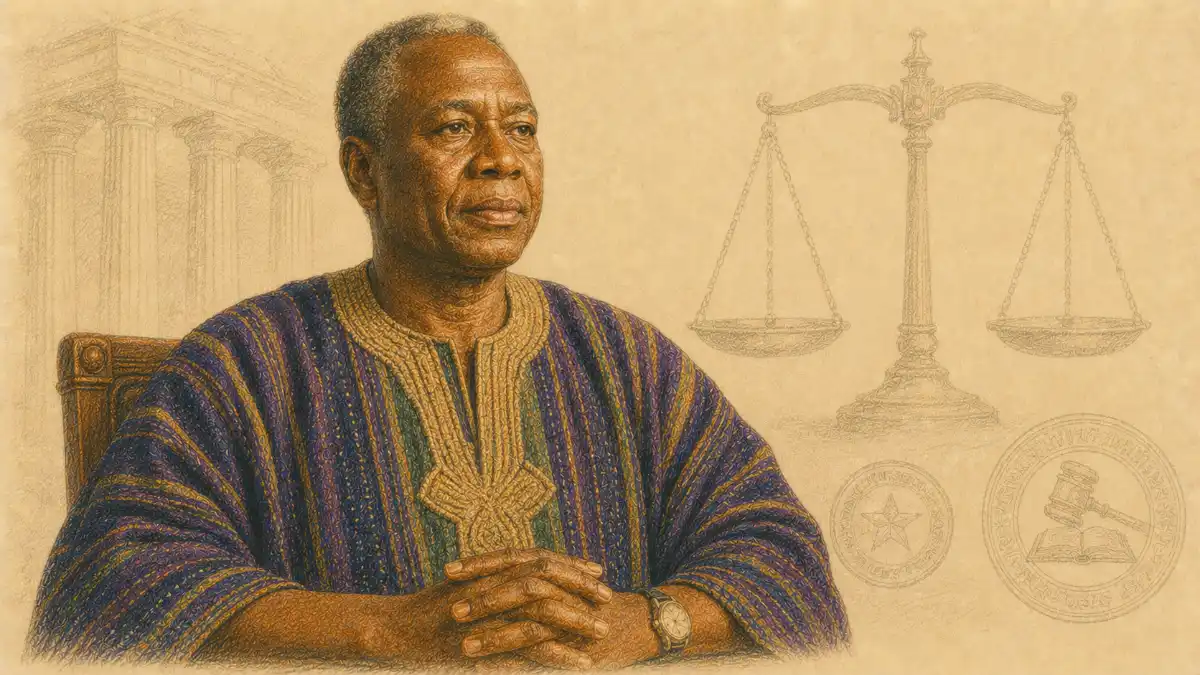
The killing of Arain near Nawabshah in the summer of 2023 was treated, in the first wave of Indian coverage, as one more entry on a now familiar list. A man with a history of association with Hafiz Saeed had been shot in Pakistan, and the assumption travelled faster than the facts. Yet Arain’s case sits awkwardly inside the broader pattern of unexplained eliminations precisely because it is not unexplained. A proscribed Sindhi separatist outfit, the Sindhudesh Revolutionary Army, claimed it within days, and that claim fits a documented campaign of violence against ethnic Punjabi residents of interior Sindh that long predates any wave of motorcycle killings. To understand Arain is to understand Sindh, and to understand Sindh is to understand a quieter, less cinematic layer of Pakistan’s terror geography than the headquarters compounds of Punjab. This is the layer that does not announce itself: the seminary in a market town, the charity dispensary on a district road, the local notable who organises relief during floods and recruitment in between.
Geography and Strategic Position
Sindh occupies the lower third of Pakistan, a long wedge of land that follows the Indus River from the edge of Punjab down to the Arabian Sea. It is the second most populous of the country’s four provinces, with a population well above fifty million, and it is split by a fault line that runs through every account of its politics. Karachi, the megacity on the coast, holds the wealth, the port, the stock exchange, and a population that is heavily Urdu-speaking and Pashtun and Punjabi by migration. The interior, the rural belt that fans out north and east of the city, is overwhelmingly Sindhi-speaking, agrarian, and bound to a landed class whose estates and patronage networks have outlasted every reform attempt since partition. Nawabshah, officially renamed Shaheed Benazirabad after the assassination of Benazir Bhutto, sits in that interior, roughly two hundred and fifty kilometres north of Karachi on the main rail and road line that links the port to Punjab. Karachi itself has become, in the years this series tracks, the single most active theatre of the targeted-killing campaign against anti-India militants, a transformation examined in the guide to how the city turned into an elimination capital. The interior districts upstream of it have seen nothing of that kind, and the gap between the coastal city and the agrarian belt behind it is the first thing any honest map of the province has to register.
The split between coast and interior is not a recent accident of development. It was built into the region’s modern history. The British annexed the territory in 1843 and folded it administratively into the Bombay Presidency, governing it as the hinterland of a port rather than as a polity in its own right, and that arrangement set a pattern that independence did not undo. After 1947 the arrival of Urdu-speaking migrants from India turned Karachi into a city culturally detached from the countryside around it, and successive waves of Punjabi and Pashtun settlement into the irrigated farmland deepened a conviction among Sindhi nationalists that their homeland was being remade by outsiders. The politician G. M. Syed gave that grievance its sharpest form in 1972 when he called for an independent Sindhi state. His movement never won mass support, but the anxiety it spoke to, the fear of demographic and economic displacement, never receded. It is the soil in which the Sindhudesh Revolutionary Army’s later campaign against Punjabi settlers grew, and it is the reason a man like Sardar Hussain Arain, Punjabi by descent and prominent in a rural district, stood inside a grievance far older than any seminary.
The province’s strategic position in any analysis of anti-India militancy is not the position a map would suggest. Sindh does not border Indian-administered Kashmir. Its frontier with India runs through the Thar Desert and the Rann of Kutch, terrain that has hosted conventional war but has never been a primary infiltration corridor for Kashmir-focused groups. Lashkar-e-Taiba’s operational geography points north, toward the Line of Control, and its headquarters infrastructure clusters in Pakistani Punjab, in places like the Muridke compound that has served for decades as the organisation’s institutional core. The interior, on that reading, is a rear area. The mistake is to treat a rear area as an empty one.
What Sindh offers an organisation like Jamaat-ud-Dawa is not a launchpad but a reservoir. Three features of the province matter here, and each one is geographic before it is political. The first is the corridor itself. The Karachi-to-Punjab artery, the railway line and the national highway that thread through Hyderabad, Nawabshah, and Sukkur, makes the interior of Sindh a place that men and money pass through constantly and unremarkably. A seminary on that corridor is a node on a transport network, not an outpost in a wilderness. The second feature is the depth of rural poverty. Interior Sindh contains some of the lowest human development indicators in Pakistan, districts where state schooling barely functions, where literacy among women falls into the teens, and where a family that wants its sons educated and fed has few options that do not involve a religious institution. The third feature is the structure of land. The Sindhi countryside is still organised around large agricultural estates and the personal authority of landlords, and that pattern leaves room for any institution that can deliver services the state does not.
Nawabshah district concentrates all three features. It is an agricultural district built on cotton, sugarcane, wheat, and one of Pakistan’s hottest recorded climates, a place where the town of Qazi Ahmed exists chiefly as a market point on the road. The district sits on the corridor, carries the corridor’s traffic, and shares the corridor’s poverty. It is also, and this matters for the Arain story, a district with a significant population of Punjabi-origin agricultural settlers, families that moved into the irrigated belt over generations and that Sindhi nationalist politics has long treated as an unwelcome demographic fact. A man who is both a Punjabi-origin notable and a religious organiser in Nawabshah occupies an exposed position that no map of Kashmir militancy would predict.
The contrast with the rest of Pakistan’s terror geography is the analytical point. Sialkot is a border city where Jaish-e-Mohammed ran an operations hub within sight of the Indian frontier. Rawalakot is a launching pad in Pakistan-administered Kashmir where infiltration routes begin. Muridke is a two-hundred-acre headquarters. Each of those places has an obvious function that explains why a terror organisation would build there. Sindh has no obvious function of that kind, and the absence is the disguise. An organisation that wants to recruit, fundraise, and replenish its ranks without attracting the attention that follows headquarters and launchpads will choose precisely a province that analysts file under rear area. The geography that makes Sindh look strategically marginal is the same geography that made it useful.
Distance from Punjab is part of that usefulness. Hafiz Saeed’s organisation is a Punjabi institution in its leadership, its founding cadre, and its donor base, and its Punjabi character is one reason the Pakistani security establishment has historically tolerated it. In Sindh, the same organisation operated at one remove from its own centre of gravity, which gave its provincial network a measure of deniability. A seminary in Nawabshah could be described, accurately enough on paper, as a local educational charity run by local men, even when its curriculum, its fundraising, and its onward connections led back to a structure headquartered five hundred kilometres away. The geography supplied the alibi.
The corridor itself deserves a closer description, because it is the feature that does the most analytical work and the feature most easily reduced to a line on a map. The route from Karachi up to Punjab is not a single road but a bundle: a national highway, a parallel railway that has carried passengers and freight since the colonial period, and the smaller district roads that feed both. Along that bundle sit the interior cities in sequence, Hyderabad first, then the agricultural towns of the central belt, then Sukkur near the provincial boundary. A bundle of that kind is, for an organisation, a circulatory system. Money raised in one district can move to another without anyone noticing a courier on a public bus. A seminary graduate selected for the next stage can travel toward Punjab as one more young man among the thousands who ride that line every day for work, study, or family. An organiser can visit the institutions in his territory on a routine that looks like nothing more than a small businessman’s travel. The corridor did not merely place the interior within reach of the wider organisation. It dissolved the structure’s internal movement into the ordinary traffic of a populous province, and that dissolution was worth more than any single building the organisation owned.
The physical landscape reinforces the strategic reading. The Indus is the spine of the province, and almost everything that matters in the interior, the farmland, the towns, the rail line, the bulk of the population, sits within reach of its water. East of the cultivated belt the land gives way to the Thar Desert, and south of Hyderabad it dissolves into the deltaic flats and tidal creeks where the river meets the Arabian Sea. The frontier with India runs through that desert and through the Rann of Kutch, terrain that is hard to cross, easy to watch, and useless as a quiet infiltration route. Conventional armies have fought across it: the 1965 war saw action in the Rann, and the 1971 war reached into the Thar. What this boundary has never been is the kind of porous, broken, contested line that the Line of Control offers a group trying to push fighters into Indian-administered Kashmir. The hard, legible border with India is exactly what excused the province from being an operational front.
That exclusion shaped how a Kashmir-focused organisation could use the region at all. Lashkar-e-Taiba builds where its war is, and its war is in the north, so it placed its camps, its launch infrastructure, and its command nodes in Punjab and in Pakistan-administered Kashmir. What it could not build everywhere was a recruitment base, because recruitment has its own geography, and that geography rewards the opposite of a front. A front needs concealment, hard terrain, proximity to the enemy. A recruitment reservoir needs population, poverty, transport links, and an absent state, and it needs to lie far enough from scrutiny that the slow work of finding and conditioning young men can continue for years without interruption. Interior Sindh scored on every one of those measures. The province that the operational map dismissed was, on the recruitment map, close to ideal.
None of this means Sindh was central to Lashkar-e-Taiba’s war. It was not. The province was a supply district, and supply districts are where an army is most vulnerable to being mapped, because supply districts are where the army has to be visible to function. A launchpad can be hidden in a forest. A recruitment network cannot, because recruitment requires that young men be able to find the recruiter. That is the tension this profile of the province returns to repeatedly. The very openness that made the Sindh network effective is the openness that made Arain locatable, and the geography that filed Sindh under low priority is the geography that left its most prominent organiser standing in a market town with a predictable daily routine and no protection worth the name.
Terror Organizations Present
The dominant militant presence in Sindh’s interior, measured by reach and durability rather than by spectacular violence, was Jamaat-ud-Dawa. Understanding what that name denotes is the first task of any honest account, because the name was engineered to be misunderstood. Jamaat-ud-Dawa is not, in any meaningful operational sense, a separate organisation from Lashkar-e-Taiba. It is the same structure presenting a different face. Hafiz Saeed founded Lashkar-e-Taiba in the late 1980s as the armed wing of a missionary movement, and when international pressure after the September 2001 attacks forced Pakistan to ban the armed wing, the movement simply foregrounded its other identity. The fighters were now a charity. The charity ran the front organisation Hafiz Saeed built into the country’s largest jihadist recruitment machine, and it ran it in plain sight, with offices, signboards, bank accounts, and an annual congregation that drew hundreds of thousands.
In Sindh, that front did the work a front is designed to do. It opened seminaries. It registered welfare trusts. It fielded a humanitarian wing, the Falah-i-Insaniat Foundation, whose ambulances and relief camps became a fixture of the province’s disaster response. When the Indus flooded the interior in 2010, and again in the catastrophic Sindh floods of 2011, the green-and-white tents of Saeed’s relief operation appeared in districts where the provincial government’s response was slow, thin, or absent. The organisation that the United Nations had listed as an alias of a banned terror group was, in the same season, one of the more efficient providers of food and shelter to flood-displaced Sindhi villagers. That contradiction is not a side note. It is the centre of the dual-use problem this article returns to, and it is the reason the network in Sindh was so difficult to dislodge.
Lashkar-e-Taiba’s armed identity sat behind that charitable face, and the connective tissue between the two was the seminary network and the men who ran it. A young man drawn into a Jamaat-ud-Dawa seminary in Sindh did not, in the ordinary case, encounter a weapon. He encountered a curriculum, a peer group, an ideology, and a set of older men who embodied a particular idea of religious duty. The handoff to the military wing, when it happened, happened later and elsewhere, in the recruitment pipeline that runs from seminary bench to training camp and that this series has mapped in its own right. The Sindh network was the wide front end of that pipeline. It did not need to be armed to be dangerous, because its function was selection and conditioning rather than combat.
It is worth being explicit about the armed identity sitting behind the charitable face, because the seminary network’s significance depends on what the young men it produced were ultimately for. Lashkar-e-Taiba is not a marginal or speculative threat. It is the organisation that planned and executed the November 2008 assault on Mumbai, a coordinated three-day attack on a railway terminus, two luxury hotels, a hospital, a cafe, and a Jewish centre that killed roughly one hundred and sixty-six people and held India’s financial capital under siege while the world watched. The ten attackers were the product of exactly the kind of pipeline this article describes, men who were recruited, conditioned, selected, and trained before being dispatched across the sea. The interior Sindh structure did not produce the Mumbai attackers specifically, and nothing in the open record suggests it did. What it produced was the same category of person through the same category of process, and that is the point of mapping it. A recruitment reservoir is not an abstraction. The young men gathered at its wide front end are the eventual supply of an organisation with a demonstrated willingness to carry out mass-casualty attacks on civilians. The seminary in the market town is quiet. What the quiet feeds is not.
The organisation also kept a political identity in Sindh, and this is the detail that places Arain so precisely. In the run-up to Pakistan’s 2018 general election, Hafiz Saeed’s movement contested seats under the banner of a registered party, the Allah-o-Akbar Tehreek. The party won nothing of consequence nationally, which is the fact most coverage stops at. The more revealing fact is that it ran candidates at all, and ran them down to the level of provincial assembly constituencies in interior Sindh. Sardar Hussain Arain contested the Nawabshah provincial seat numbered PS-40 on that ticket. A candidate for a provincial assembly seat is, by definition, a known local figure. He has an address, a constituency office, a base of identifiable supporters, and a public record. The decision to run the Sindh network’s organisers as electoral candidates was a decision to make them maximally visible, and it was made because in 2018 the organisation still believed that visibility in Sindh carried no cost.
The man at the top of that structure has a legal status worth stating precisely, because it bears directly on what the survival of the provincial network actually means. Hafiz Saeed is not an obscure figure whose link to terrorism rests on inference. The United States Treasury designated him a Specially Designated Global Terrorist, and the United Nations Security Council listed him under its sanctions regime after the 2008 Mumbai attack, the three-day siege that killed one hundred and sixty-six people and that Lashkar-e-Taiba planned and executed. He was arrested in Pakistan in 2019 on terror-financing charges and was subsequently convicted and handed long prison terms. The full account of his career sits in the profile of the most protected terrorist in Pakistan’s history. What this means for the interior is stark. The structure Arain administered was not a fringe operation with a deniable leadership. It served an organisation whose founder was, by the formal judgement of the United Nations, a terrorist, and it went on serving that organisation across the Nawabshah belt through the years of his designation, his arrest, and his conviction, without the agricultural districts registering any of it as a reason for the network to slow down.
Lashkar-e-Taiba and its civilian face were not the only militant actors in the province, and the others matter because they explain who, in the end, killed Arain. Sindh has its own insurgency, separate in every respect from the Kashmir jihad. Sindhi nationalist politics traces to the 1972 demand by the politician G. M. Syed for an independent homeland called Sindhudesh, and from that political movement a set of small armed groups eventually splintered off. The two that matter here are the Sindhudesh Liberation Army and the Sindhudesh Revolutionary Army. The Revolutionary Army, the SRA, formed after its founder broke with the exiled leadership of an older Sindhi militant outfit over money and control. Pakistan’s National Counter Terrorism Authority placed the SRA, the SLA, and an allied political group on its proscribed list in May 2020, citing reasonable grounds to believe all three were engaged in terrorism.
The SRA’s targets and the SRA’s pattern are documented, and they are nothing like Lashkar-e-Taiba’s. The group attacks Pakistani security forces, Sindh police and Rangers, and it has built an alliance with Baloch separatist factions that supply it with training and weapons in exchange for logistical help in Karachi. Its most consistent campaign, the one that frames the Arain case, is violence against ethnic Punjabi and Pashtun residents of interior Sindh, the people Sindhi nationalist rhetoric calls settlers. In the years before 2023, the SRA claimed a series of killings of Punjabi-origin men in the Larkana belt and across rural Sindh, including a Pakistan Tehreek-e-Insaf politician shot at his flour mill, and it accompanied those killings with explicit statements warning settlers to leave the province. That is the second organisation present in Sindh, and any map of the province’s militancy that includes only Jamaat-ud-Dawa has left out the actor that did the most consequential thing in this story.
The capacity question is worth dwelling on, because it bears directly on whether the group that claimed Arain could in fact have killed him without outside help. The Sindhudesh Revolutionary Army is not a large or well-resourced movement. Its founding cadre was small, its weaponry for much of its existence was light, and its operations through the late 2010s ran to assassinations, small bombings of rail track, and attacks on isolated security pickets rather than to anything resembling a sustained insurgency. What changed the group’s reach was the alliance with Baloch separatist factions. The Baloch insurgency, older and far better armed, gave the Sindhi outfits access to training, to explosives expertise, and to a shared operational rear in the rugged country where the two provinces meet. Pakistani security officials began describing a combined separatist front in which Sindhi and Baloch groups coordinated targeting and pooled logistics, with the Sindhi side providing urban reach in Karachi and the Baloch side providing the harder military skills. A motorcycle shooting of an unprotected notable on a predictable road is well within the capacity of even a modestly equipped group, and the men who claimed Arain had been carrying out exactly that kind of attack for years. The capacity argument, in other words, does not rescue the India-linked reading. The separatists did not need an external hand to kill a man like Arain. They had killed men like Arain before.
A complete inventory would add two further presences, each minor but worth naming. Sectarian violence has touched interior Sindh for decades, with anti-Shia groups operating in pockets of the province, and the shrine-centred, syncretic Sufi character of mainstream Sindhi Islam has at times made the province a target rather than a base for hardline movements. Jaish-e-Mohammed, the Kashmir-focused rival to Lashkar-e-Taiba, kept its centre of gravity in southern Punjab and never built anything in Sindh comparable to the Jamaat-ud-Dawa lattice. The province’s militant landscape, then, resolves into two organisations doing entirely unrelated work. One was a Punjab-headquartered recruitment and welfare structure using Sindh as a reservoir. The other was a Sindhi separatist outfit that regarded the first organisation’s men, when they were Punjabi by origin, as exactly the kind of target it existed to kill.
Terrorists Who Lived Here
Sardar Hussain Arain was not a commander, and the temptation to inflate him into one should be resisted, because the inflation hides what is actually interesting about his case. He did not plan attacks. He is not credibly linked to any specific act of violence inside India. He did not infiltrate the Line of Control or train fighters or move weapons. The open-source record on him is thin in exactly the way the record on mid-tier organisational figures is always thin, and an honest profile has to begin by marking the boundary between what is established and what is asserted. What is established is that he was a leading figure of Jamaat-ud-Dawa in the Nawabshah area, that he was responsible for the organisation’s seminary network in that part of Sindh, that he ran what Indian reporting called Lashkar-e-Taiba’s local centres there, and that he stood for elected office on Hafiz Saeed’s party ticket. What is asserted, mostly by Indian sources after his death and mostly without evidence offered to the public, is that he functioned as an agent of the Pakistani security agencies. The first set of claims describes a recruiter and an administrator. The second describes a state asset. They are not the same accusation, and the difference shapes how his death should be read.
Take the established facts first, because they are enough to make him significant. A man who runs a seminary network in a province is, in the architecture of Lashkar-e-Taiba, a more important figure than a single fighter. Fighters are the consumable output of the system. The men who keep the system fed are the recruiters, the seminary administrators, the fundraisers, and the local notables who lend the organisation respectability, and Arain was several of those at once. He oversaw religious schools, which is to say he controlled the institutions where selection happened. He managed the organisation’s local centres, which is to say he was a node in its provincial chain of command. He ran shops in Qazi Ahmed, which gave him an independent income, a public daily routine, and the social standing of a small businessman rather than the marginal status of a known militant. And he had run for a provincial assembly seat, which means he had been willing to put his name, his face, and his address on ballot papers and campaign posters across the Nawabshah constituency.
That willingness is the heart of the matter. Arain operated openly. He did not behave like a hunted man, because for the entire span of his career in Sindh there was no reason to. He was not in hiding. He was a public figure in his district, the kind of person whose role at a relief camp or a seminary opening would be reported in the local Sindhi press without comment, the kind of person a journalist could find. He embodied the organisation’s central bet about Sindh, which was that the province was a place where the work could be done in the light. The seminary did not need to be a secret because the state was not looking. The charity did not need a cover story because the charity was the cover story. The candidacy did not need deniability because in 2018 a Lashkar-e-Taiba-linked party fielding candidates was treated by Pakistan’s electoral machinery as a routine, if controversial, fact of national life.
The openness had a texture, and the texture is recoverable even when the documentary record is thin. A man in Arain’s position would have been present at the visible occasions of district religious life: the opening of a seminary term, the distribution of relief, the gatherings that marked the organisation’s calendar. He would have had the standing to mediate small disputes, to make introductions, to be consulted on matters where a respected local figure carries weight. The shops gave him a fixed location where people could find him and a livelihood that explained his days to anyone who asked. The candidacy gave him a constituency, which is to say a defined population that knew his name, his face, and his stated positions. None of this is the profile of a man living under threat. It is the profile of a man who had been encouraged, by two decades of consequence-free operation, to behave as a fixture of his society rather than as an operative of a proscribed organisation. The behaviour was rational given the environment. The environment was the thing that eventually failed him, because the assumption it rested on, that interior Sindh would remain a place where his role carried no danger, quietly stopped being true while he went on acting as though it had not.
There is a specific Sindhi dimension to Arain’s profile that almost every Indian account omitted, and it is the dimension that turns out to matter most. He was Punjabi by origin. The Arain are an agricultural community with deep roots in Punjab, and Sardar Hussain Arain belonged to the population of Punjabi-descended families who had settled the irrigated farmland of interior Sindh over generations. In the SRA’s statement claiming his killing, this was not incidental. The group called him a pillar of Punjabi settlement in Nawabshah district and its surroundings, language that placed him inside the separatist movement’s long-running grievance about demographic change in rural Sindh. To Sindhi nationalist politics, Arain was not primarily a Lashkar-e-Taiba organiser. He was a prominent, well-connected, organisationally capable representative of the settler class, and that identity made him a target for reasons that have nothing to do with Kashmir.
So who lived in the Sindh network besides Arain? The honest answer is that the network was built from men like him, and that very few of them are individually documented, because mid-tier organisational figures rarely are. The seminary teachers, the district fundraisers, the men who staffed the Falah-i-Insaniat relief camps and then returned to ordinary district life, the local organisers who could turn out a crowd for a congregation: this is the human substance of a provincial recruitment structure, and it is mostly invisible in open sources by design. The system worked because its personnel were unremarkable. A network whose every operative was a known militant could be rolled up. A network whose operatives were shopkeepers, schoolteachers, and charity volunteers, with one foot in the organisation and one foot in respectable district society, was far more durable, and far harder to map, precisely because there was so little to see.
It is worth being concrete about what membership in that human substance actually involved, because the abstraction hides a process. A seminary teacher in an affiliated school was not necessarily a sworn militant. He might be a graduate of the same seminary system, employed because he was available, observant, and cheap, and aware in only a general way that the institution he worked for sat inside a larger organisation. A relief volunteer who loaded sacks of flour onto a Falah-i-Insaniat truck during the floods might have understood his work as straightforward charity and nothing more. The organisation did not require every participant to hold the full ideological commitment, and that gradation was a strength rather than a weakness. It meant the structure could draw on a wide pool of ordinary district labour for its routine functions while reserving the committed core for the parts of the work that mattered, the selection and the onward connection. It also meant that a Pakistani official who wanted to act faced a genuine difficulty of definition. Which of these men was a terrorist, and which was a poorly paid teacher who needed the job and asked no questions about it? The diffuseness was not an accident of growth. It was the form the organisation took precisely because that form was hard to prosecute, and hard to prosecute was the whole design.
This is where the contrast with the rest of the series sharpens. The men profiled in the urban casework of this campaign tend to be operational figures with attack records: planners, facilitators, commanders whose biographies are written in specific dead. Hafiz Saeed’s aide killed near a religious institution in Karachi’s Samanabad and the Lashkar-e-Taiba operative gunned down on his evening walk in the same city were nodes in the organisation’s operational machinery. Arain was a node in its reproductive machinery. He did not move the war forward. He kept the organisation from running out of the young men who would. In the cold accounting of a counter-terror campaign, the recruiter and the administrator are arguably more consequential targets than the individual fighter, because the fighter is replaceable and the recruiter is the thing that does the replacing. But that logic belongs to a campaign that was hunting Lashkar-e-Taiba. The evidence that Arain was killed by such a campaign, rather than by the Sindhi insurgency that had every independent reason to want him dead, is exactly what the next section has to weigh.
A final point about who Arain was, and it cuts against easy narratives in both directions. The Indian claim that he was a Pakistani agency asset, if true, would not soften his role inside Lashkar-e-Taiba. It would explain it. The Sindh network functioned for two decades without serious interference because the Pakistani state chose not to interfere, and a local organiser who was useful to both the organisation and the agencies that protected it is not a contradiction but a description of how the system was meant to run. If Arain was an asset, he was an asset who recruited for a banned terror group. And if he was not an asset, he was still a man who recruited for a banned terror group while running shops, contesting elections, and living without fear in a market town. Either way, the openness is the finding. He lived as he did because Sindh, for as long as anyone in the network could remember, had been a province where men in his role did not have to be afraid.
Eliminations in This Location
The killing of Sardar Hussain Arain was not, by the standards of this campaign, a clean professional hit, and the messiness is itself a piece of evidence. The attack came in the interior Sindh town of Qazi Ahmed, in Shaheed Benazirabad district, the administrative unit still widely called Nawabshah. It came as Arain was travelling from his residence toward one of his shops, on a routine he made constantly and predictably, the same vulnerability that has run through almost every elimination this series has documented. He was hit and badly wounded. He did not die at the scene. He was first taken to a hospital in Nawabshah, and as his condition deteriorated he was moved to a private hospital in Karachi and placed on a ventilator. He died there on the fifth of August 2023, days after the attack itself, which had come at the start of that month. A man who is shot, survives the immediate wound, is moved between two hospitals, and dies on a ventilator a province away has not been killed the way the campaign’s signature urban hits kill. The motorcycle teams that have defined the pattern shoot at close range and confirm. This was a wounding that became a death.
What makes Arain’s case the genuine outlier of the entire series is not the method. It is the claim of responsibility. In almost every other elimination this campaign has produced, no group has claimed the act. The phrase that recurs across the Pakistani and Indian press is unknown gunmen, and the absence of a claim is part of what makes the pattern read as a state-directed campaign, because states that run deniable operations do not issue statements. The Arain killing broke that silence. The Sindhudesh Revolutionary Army claimed it, named him, and folded the claim into its existing campaign of violence against Punjabi settlers in interior Sindh. This is the only case in the series where a known, proscribed, non-Indian armed group has stepped forward to take credit, and an analyst who simply files it alongside the unclaimed urban hits has refused to look at the most important fact on the table.
The named disagreement, then, is sharp and unavoidable. Was Arain killed by operatives linked to India’s campaign against Lashkar-e-Taiba, with the SRA claim functioning as either a coincidence or a deliberate flag of convenience? Or was he killed by the SRA, for the reasons the SRA itself gave, as one more Punjabi notable in a separatist campaign that had been killing Punjabi notables for years? The honest adjudication has to start by admitting that this is the one case in the series where the second explanation is not the weak option. It is, on the available evidence, the stronger one.
Consider what the SRA explanation has going for it. The group had a documented, multi-year pattern of targeting ethnic Punjabis in exactly the part of Sindh where Arain lived. It had claimed killings of Punjabi-origin men, including elected politicians, in the Larkana belt and the surrounding districts. It had issued explicit public warnings telling settlers to leave the province. It was proscribed by Pakistan in 2020 specifically for terrorism in Sindh, and it had built a working alliance with Baloch separatists that had measurably increased its operational capacity. Arain fit the SRA’s target profile on every axis that the group itself cared about. He was Punjabi by origin, prominent, well-connected, and described in the group’s own statement as a pillar of settlement. The SRA did not need Lashkar-e-Taiba to be the reason. Settlement was the reason, and settlement was the reason the group had been giving for years.
Now consider what the India-linked explanation would require. It would require that an external campaign focused on Kashmir-oriented militancy selected a mid-tier seminary administrator in a rear-area province as a target, ahead of the far more operationally significant figures available elsewhere. It would require that the campaign then either coincidentally struck a man the local Sindhi insurgency was already hunting, or deliberately chose a target whose death the SRA could plausibly claim. The second version, the false-flag reading, is not absurd. A campaign that wants deniability would find real value in a killing that a local group will obligingly take credit for. But the false-flag reading is also unfalsifiable in a way that should make a careful analyst uncomfortable, because it can absorb any evidence: an SRA claim becomes proof of a cover story rather than proof of SRA involvement. When an explanation cannot be wrong, it has stopped being analysis.
The discipline this series tries to hold is to commit to an assessment and then name the counter-evidence, and the assessment here is that the SRA claim should be taken at close to face value. Arain’s killing is most parsimoniously explained as what the group that claimed it said it was: a killing of a Punjabi settler by a Sindhi separatist outfit engaged in a campaign of exactly such killings. The counter-evidence, stated as honestly as possible, is twofold. First, the timing places the killing inside a year when eliminations of India-linked figures were accelerating across Pakistan, and a man with Hafiz Saeed associations dying in that window will always invite the broader frame. Second, the SRA’s own capacity is modest, and the group’s nexus with Baloch factions, and the Pakistani security establishment’s standing allegation that Indian intelligence supports Sindhi and Baloch separatism, leave a theoretical channel by which an external hand could be present behind a local claim. That theoretical channel is worth naming. It is not the same as evidence that it was used.
Timing deserves to be weighed rather than simply invoked, because it is the single thread that keeps the India-linked reading alive, and a thread is not a rope. That year did see an unusual concentration of deaths among men associated with anti-India militancy across Pakistan, and any analyst tracking the concentration will register a Hafiz Saeed associate dying inside it. But coincidence in a single year is exactly what a campaign of many killings, set against a separate insurgency that had also been killing for years, will inevitably produce. Two processes running at once in the same country will overlap in time without either causing the other. The discipline is to ask whether the specific features of this specific killing point toward the campaign or toward the insurgency, and on that test the features point one way. The claimant points to the insurgency. The imprecise, two-hospital method points away from the practised urban teams. The target’s profile, a mid-tier reproductive figure in a rear-area province, points away from a campaign that had been selecting operationally senior men in the cities. Timing is the one indicator that could be read either way, and an honest analysis does not let a single ambiguous indicator overturn three unambiguous ones. It notes the timing, declines to be ruled by it, and moves on.
The contrast with the rest of this campaign’s casework makes the point cleanly. In the urban eliminations that anchor the pattern, the absence of a claimant, the precision of the method, and the operational seniority of the targets all push the analysis toward a directed campaign. Arain’s case inverts every one of those indicators. A claimant exists. The method was imprecise. The target was organisationally mid-tier. The honest conclusion is not that the broader campaign is fictional, because the broader campaign rests on its own evidence and has been examined in the analysis of how Pakistan’s safe havens turned into hunting grounds. The honest conclusion is narrower and more useful. The Arain killing is the case the series should not over-claim. It is the elimination that most likely belongs to a different war, the long, low-intensity insurgency inside Sindh, and its real value is not as another data point for the shadow war thesis but as a reminder that a man can be a Lashkar-e-Taiba recruiter and still be killed for a reason that has nothing to do with Lashkar-e-Taiba.
What the killing did do, regardless of whose hand was behind it, was expose the network Arain ran. A death in Qazi Ahmed put a name, a role, and a structure into the public record. It established that the Nawabshah area had a Jamaat-ud-Dawa seminary network significant enough to need a regional manager, that the manager had been an electoral candidate, and that Pakistan’s authorities had allowed all of it to operate without visible interference for two decades. The bullet that wounded Arain on a Qazi Ahmed road did the work that no FATF report and no Indian dossier had managed to do. It made the Sindh network legible.
The Infrastructure of Shelter
The phrase safe haven, applied to Sindh, needs correction before it can do any analytical work. A safe haven in the conventional sense is a place where wanted men hide. The Sindh network was not that. It was the opposite of hiding. Its infrastructure was a public infrastructure, and its protection came not from concealment but from camouflage, from being indistinguishable in form from the legitimate institutions a poor province genuinely needs. To map the shelter, you do not look for compounds and tunnels. You look for seminaries, dispensaries, relief offices, welfare trusts, and the men who run them, and you ask which of those institutions were doing a second job.
Start with the seminary, because the seminary was the load-bearing element. A religious school in interior Sindh is not, in itself, a militant institution, and the analysis collapses into bigotry if it pretends otherwise. The overwhelming majority of Pakistan’s seminaries teach a conventional religious curriculum to children whose families have no other access to education, food, or boarding, and most of interior Sindh’s seminaries belong to that majority. The militant pipeline runs through a specific and identifiable subset, the seminaries affiliated with organisations like Jamaat-ud-Dawa and Jaish-e-Mohammed, and the analytical task, as the study of the seminary-to-militant pipeline sets out in detail, is to distinguish that subset from the wider system rather than to indict the system whole. Arain’s network was the subset. The schools he oversaw were affiliated, and affiliation is what converted a religious school into a recruitment funnel.
The funnel had stages, and naming them is more useful than gesturing at radicalisation as a single event. The first stage was enrolment, and enrolment was driven by need rather than ideology. A family in a Nawabshah-area village sends a son to a Jamaat-ud-Dawa seminary because the seminary feeds him, boards him, and teaches him, and because the state alternative is a government school that may be a building with no teacher. The organisation did not have to recruit at this stage. Poverty recruited for it. The second stage was conditioning, the slow work of a curriculum and a peer environment and a set of admired older men shaping a worldview, separating the student from competing sources of authority, and establishing a particular idea of religious obligation that placed armed struggle at its centre. The third stage was selection. Not every student was a candidate, and the network did not want every student. It wanted the small fraction who showed the right combination of conviction, capability, and willingness, and the seminary was the screening environment in which that fraction identified itself. The fourth stage, the handoff, happened off the premises and far from Sindh. The selected young man left the province for training infrastructure in Punjab or Pakistan-administered Kashmir, and at that point he passed out of the Sindh network’s hands and into the operational machinery.
The conditioning stage deserves more than a sentence, because it is the stage that does the actual work and the stage most often waved at rather than described. Conditioning in an affiliated seminary was not a single dramatic moment of radicalisation. It was an accumulation. A boy arrived young, often before adolescence, and the institution became the whole of his world: his food, his bed, his teachers, his friends, his daily rhythm, his moral vocabulary. The curriculum carried religious instruction of a particular cast, one that treated armed struggle in defence of the faith not as an exotic doctrine but as an ordinary and admirable obligation. The peer group reinforced it, because the boys who responded to the message rose in the small society of the school. The older men who taught and supervised embodied it, and adolescents model themselves on the adults who hold status in their environment. Over years, this produced a young man for whom the organisation’s worldview was not a set of opinions he had been argued into but simply the shape of reality as he had always known it. That is why the product of the funnel was so durable, and why deradicalisation after the fact is so difficult. The structure was not selling a conclusion. It was building, slowly and from early childhood, the premises from which that conclusion followed on its own.
Arain’s role has to be located inside that funnel precisely, or it gets either inflated or dismissed. He was not the conditioning. He was not the trainer at the far end. He was the man who kept the funnel open, staffed, and supplied at the Sindh end: the regional administrator who ensured the affiliated seminaries existed, functioned, and stayed connected to the larger organisation. Remove a trainer and the organisation finds another trainer. Remove the administrator who maintains the front end across a whole province and you have degraded the rate at which the province feeds the system. That is the sense in which a mid-tier figure can be structurally important, and it is the sense in which the Sindh infrastructure mattered out of all proportion to its lack of drama.
A regional administrator is an organisational type worth isolating, because counter-terrorism analysis tends to be organised around two more dramatic categories, the leader and the operative, and the type that actually held the Sindh structure together fits neither. The administrator does not appear in attack planning and does not appear on a battlefield, so he generates none of the evidence that makes a leader or an operative legible. What he does is mundane and continuous. He ensures the affiliated seminaries have teachers and that the teachers are paid. He keeps the welfare trusts registered and their paperwork plausible. He maintains the relationships, with local landowners, with district officials, with the parents of students, that let the institutions function without friction. He is the point of contact between the provincial structure and the national organisation, the person who can answer for what is happening across his territory. Industrial firms call this layer middle management, and the comparison is not flippant. A militant structure that has reached the scale of the Sindh lattice needs middle management for the same reason a corporation does, because a founder cannot personally supervise hundreds of institutions across a province. Arain was middle management for a terror organisation, and the reason his removal mattered structurally, even though he planned no attacks, is that middle management is what converts a leader’s intent into a province’s worth of functioning institutions.
The charitable wing was the second element of the shelter, and it is where the analysis has to be most careful, because the charity was real. The Falah-i-Insaniat Foundation, the humanitarian arm of Hafiz Saeed’s movement, ran ambulances, dispensaries, and relief operations across Sindh, and during the 2010 and 2011 floods that ravaged the interior, those operations delivered food and shelter to displaced villagers in districts where the provincial government’s response was slow or absent. The terror-financing analyst Matthew Levitt has described, in his work on how Lashkar-e-Taiba and its fronts function, the way a charitable apparatus does double duty: it delivers genuine services, it builds genuine goodwill, it generates a donor base and a logistics network, and the same offices, vehicles, accounts, and personnel that move relief supplies can move other things and shelter other people. The Sindh charity infrastructure was not a fake. It was a real welfare operation that was also an organisational asset, and the realness was the point. A fake charity can be exposed. A real one that genuinely feeds flood victims is defended by the people it feeds.
Flood relief in 2010 is the clearest illustration of how that defence was built. When the Indus broke its banks that summer, the water moved down the river system and into the province over a period of weeks, inundating district after district of the interior and displacing a population counted in the millions. The provincial and national response was overwhelmed, and in many interior districts it was effectively absent through the critical early period. Into that gap moved the relief apparatus of Hafiz Saeed’s movement, which had something the state conspicuously lacked: a standing organisation, a volunteer base, a vehicle fleet, and a chain of command that could be activated in days rather than weeks. Its camps fed people. Its medical teams treated the waterborne disease that follows a flood. The displaced villagers who received that help did not, in the main, experience it as the outreach of a terror organisation. They experienced it as the only help that came. A year later, when heavy rains flooded the same belt again in 2011, the pattern repeated. Two disasters in two years allowed the organisation to convert its welfare capacity into a reservoir of genuine gratitude across exactly the districts where its seminary structure operated, and gratitude of that kind is the most durable form of protection a clandestine operation can have. It cannot be frozen, sanctioned, or seized. It has to be out-competed, and the provincial government never came close to out-competing it.
The financial plumbing sat underneath both the seminaries and the charity, and Sindh was a node in it rather than its centre. The organisation’s money came through a mix of donations, collection during its congregations, the revenue of welfare trusts, and, as the analysis of how Pakistan-based terror groups fund themselves lays out, real estate and front businesses. A provincial network like Arain’s was partly self-sustaining at the district level: local donations, local trust revenue, and the personal businesses of organisers like Arain himself, whose shops in Qazi Ahmed gave him an income that needed no explanation. This is why the network was so resistant to financial pressure. It was not a single bank account that could be frozen. It was a distributed mesh of small, locally rooted, individually plausible economic activities, and the international community’s instrument for attacking terror financing, the Financial Action Task Force, was built to squeeze formal channels rather than this kind of dispersed informal substrate.
It is worth following the money one step further, because the structure of the financing explains the structure of the failure to stop it. The Financial Action Task Force works by pressing national governments to police their formal financial systems: to monitor banks, to flag suspicious transfers, to freeze designated accounts, to regulate the channels through which large sums move. That instrument is well matched to a terror organisation that depends on wire transfers and formal banking. It is poorly matched to the interior Sindh structure, whose district-level economy ran on cash donations dropped into a collection box, on the harvest revenue of a few acres of trust-held farmland, on the takings of a shop, on the in-kind giving of a community that handed over grain and livestock rather than rupees. None of that touches a bank in a way a regulator can see. A government genuinely intent on dismantling the structure would have had to act locally and physically, by sending officials into the districts to close institutions and seize property, an effort requiring political will at the provincial level and a willingness to absorb the social backlash of shutting down a popular seminary. Financial pressure applied from the outside could not substitute for that. It was the wrong tool for this particular target, and the resilience of the structure through the grey-listing years is partly the simple consequence of a mismatch between the instrument and the object it was aimed at.
Now the map itself, district by district, with a discipline about what is known and what is inferred. The network followed the corridor, and that is the first and most reliable feature of its geography. Hyderabad, the second city of Sindh and the gateway from Karachi into the interior, was the natural anchor of the network’s southern reach: a large urban population, a transport hub, the point where the organisation’s provincial structure connected to its Karachi presence and its national centre. Nawabshah, sitting further up the corridor, was the rural-interior anchor, the agricultural-district base from which a man like Arain could administer the seminary network of the central belt, and the SRA’s own description of him as a pillar of settlement in Nawabshah and its surroundings confirms that his writ extended beyond a single town. Sukkur, the northern interior city on the Indus, marked the network’s reach toward the boundary with Punjab and toward the upper Sindh districts. Khairpur, the old princely-state district between Nawabshah and Sukkur, with its own dense rural population and its established religious-education tradition, was the kind of district where affiliated seminaries could sit unremarked among a much larger field of ordinary ones. Across that arc, from Hyderabad in the south through Nawabshah and Khairpur to Sukkur in the north, the institution types repeated: affiliated seminaries doing selection, charity offices and dispensaries doing service delivery and goodwill, welfare trusts doing fundraising, and local organisers doing the connective work that held the arc together.
The corridor logic rewards a closer look at why each of those anchor points sat where it did. Hyderabad’s value was connective. As the second city of the province and the place where the interior meets the road and rail lines down to Karachi, it was where a provincial structure naturally interfaced with both the coastal megacity and the national organisation, and an urban base of that size could absorb offices, a transport presence, and the movement of people without any of it standing out. Nawabshah’s value was agrarian and demographic. It offered the deep rural poverty that made enrolment self-sustaining and the Punjabi-settler population that gave the organisation both a donor base and, in the end, a vulnerability. Khairpur added something the others did not, an old and respectable tradition of religious education that predated the organisation by generations, which meant an affiliated seminary in a Khairpur village was camouflaged not only by poverty but by the unremarkable normality of religious schooling in that particular district. Sukkur, sitting on the Indus near the upper boundary of the province, marked the point where the interior structure shaded into the reach of the southern Punjab institutions, and a network that wanted to move a selected young man toward training infrastructure benefited from an anchor at exactly that transitional edge. Read together, the four points are not scattered. They form a single corridor-following design, each node chosen for a function the others could not perform as well.
Two cautions belong on that map. The first is that the precise institutional inventory, the count of seminaries, the addresses, the enrolment numbers, is not available in open sources with any reliability, and a responsible analysis does not invent it. What is documented is the shape: a corridor-following network, anchored in the interior cities, dense in the agricultural districts, built from affiliated seminaries and a charitable wing, and managed by regional figures of whom Arain was one. The second caution is the one the political economist S. Akbar Zaidi has pressed in his work on Sindh, which is that the network’s reach is a measure of the state’s absence as much as the organisation’s strength. Zaidi’s analysis of interior Sindh’s governance describes a province where the state’s developmental presence is thin, where landed power substitutes for public administration across much of the countryside, and where any organisation capable of delivering schooling, food, and disaster relief will find an open field. The Jamaat-ud-Dawa network did not conquer Sindh’s interior. It moved into a vacuum that decades of governance failure had left, and that origin is exactly why the shelter was so hard to dismantle. You cannot simply close the seminaries and the dispensaries without answering the question the network was answering, which is what a poor family in a Khairpur village is supposed to do instead.
The governance argument can sound, on a quick reading, like an excuse for the organisation, and it is worth being precise about why it is not. To say that the network filled a vacuum is not to say the network was benign, or that its militant function was a regrettable accident of social conditions. The committed core knew exactly what it was building, and the conditioning of children toward armed struggle was a deliberate programme, not a byproduct of charity. The point of the governance argument is narrower and harder. It is that the vacuum is what made the deliberate programme possible at scale, and that any strategy aimed only at the programme, and not at the vacuum, will fail. Close a seminary and the families it fed still have hungry sons and no school. Proscribe the charity and the flood-displaced still need tents. The demand that the network met does not disappear when the network is named on a sanctions list, and as long as the demand persists, something will move to fill it, and the something with a twenty-year head start and a standing organisation is the network itself. This is the uncomfortable core of the interior Sindh case. The province does not have a militancy problem that can be solved in isolation from its development problem. The two are the same problem seen from two angles, and Pakistan has consistently addressed neither.
That is the infrastructure of shelter, and it is worth stating plainly what kind of thing it was. It was not a hideout. It was a parallel welfare and education system, genuinely useful to the people it served, ideologically committed at its affiliated core, financially distributed and resilient, publicly visible, and politically tolerated. Its protection was its ordinariness. Arain could be a wanted man in an Indian dossier and a respected local notable in the same week, in the same town, because the structure he served had been designed, from its earliest years, to make those two descriptions compatible.
How the Shadow War Changed This City
The honest place to begin a before-and-after assessment of Sindh is with a concession that complicates the whole series. The shadow war did not change interior Sindh very much, and the reason it did not is the most important finding this profile has to offer. The campaign of eliminations that has reshaped the calculations of senior militants in Karachi, Lahore, and Rawalpindi reached Sindh’s interior exactly once, in the death of Sardar Hussain Arain, and that single case is, as the earlier section argued, most plausibly the work of the local Sindhi insurgency rather than the broader campaign. A province cannot be transformed by a campaign that, on the best reading of the evidence, never really arrived there.
That conclusion sits at moderate intensity against the thesis this series defends. The thesis is that Pakistan’s safe-haven guarantee for anti-India militants has been eroding under a sustained campaign of targeted killings, and the evidence for that thesis in the urban casework is substantial. Sindh’s interior is where the thesis meets its honest limit. The seminary network that Arain ran was not built around senior, named, operationally famous men whose deaths would register as strategic losses. It was built around the unremarkable, the schoolteacher and the charity volunteer and the district organiser, and a campaign that works by eliminating identifiable high-value targets has very little purchase on a structure whose strength is that it has almost no identifiable high-value targets. The Sindh network was, in effect, hardened against the shadow war by its own design, not deliberately, but as a side effect of being a recruitment-and-welfare structure rather than an operational one.
So if the killing of Arain did not transform the province, what did it do? It changed what could be known, and that is not nothing. Before his death, the Sindh network had the one advantage that mattered most, which was illegibility. It operated without a public profile. The seminaries were affiliated but unexamined, the charity was praised rather than scrutinised, and the men who ran the structure were local notables rather than named subjects of analysis. Arain’s death, and the SRA statement that accompanied it, forced the network into the record. It established that the Nawabshah belt had a Jamaat-ud-Dawa seminary structure substantial enough to require a regional manager. It established that the manager had been comfortable enough to contest a provincial election on Hafiz Saeed’s ticket. It established, by the simple fact of how openly Arain had lived, that Pakistan’s authorities had allowed the structure to function without interference straight through the FATF grey-listing years, the period from 2018 to 2022 when Islamabad was under formal international pressure to demonstrate exactly the kind of action against Lashkar-e-Taiba’s fronts that it conspicuously did not take in interior Sindh.
There is a question of audience embedded in that new legibility, and it is worth drawing out. A network’s illegibility protects it from several different observers at once: from the Pakistani state that might act against it, from the international bodies that might pressure that state, from the Indian analysts and agencies that might target it, and from the publics in all of those places whose attention sets the limits of what is politically possible. Arain’s death did not affect all of those observers equally. It is unlikely to have told Pakistani intelligence anything it did not already know, since the structure operated with a tolerance that implies awareness. What changed was the position of everyone else. The international record, the Indian analytical picture, and the public account all gained a fixed point they had not previously had, a named man, a named structure, a named set of districts. Whether that gain ever translates into pressure depends on actors outside the province entirely, and the honest forecast is modest. Naming a problem is a precondition for solving it, but it is only a precondition, and the history of this particular structure is a history of well-documented problems that went unsolved because the one government positioned to act preferred not to.
That last point deserves to be pressed, because it is where the Sindh case feeds back into the larger argument with real force. Pakistan spent four years on the FATF grey list, and it exited in October 2022 by persuading the international body that it had acted against terror financing and the operations of UN-designated groups. The Jamaat-ud-Dawa network in interior Sindh is a test of what that compliance actually meant. If the compliance was real, the affiliated seminaries of the Nawabshah belt should have been investigated, the welfare trusts audited, the front structure dismantled. The available evidence says they were not, because the network was still functioning, still managed, and still openly led by a man comfortable enough to run shops and stand for office, right up to the point where a separatist group, not the Pakistani state, removed him. The terror-financing scholar Matthew Levitt has long argued that the gap between Pakistan’s formal compliance and its operational reality is the central problem in assessing FATF outcomes, and interior Sindh is that gap made concrete. The grey-list exit certified a crackdown that, in this province, the public record cannot find.
The mechanics of how Pakistan exited the grey list are worth stating, because they show why a structure like Arain’s could survive the process untouched. The Financial Action Task Force assesses compliance against a defined action plan, a checklist of specific, verifiable steps: particular laws passed, particular prosecutions pursued, particular designated individuals and entities acted against. Pakistan worked through that checklist over four years and was removed from the list in October 2022 once the body judged the items substantially complete. The process is, by design, item-based, and that design has a blind spot. A government can complete the enumerated items, securing high-profile convictions and amending the named statutes, while leaving wholly untouched a diffuse provincial structure that no item on the checklist specifically names. The Nawabshah seminary belt was never going to appear as a line on a FATF action plan, because the action plan operated at the level of national legislation and marquee cases, not at the level of district institutions in agricultural Sindh. Pakistan could therefore be both compliant on paper and unchanged on the ground in the interior, and there is no contradiction in that, only the predictable gap between an audit designed to be passable and a reality the audit was never built to inspect.
The change in the province, then, is better described as a change in visibility than a change in capacity. The network’s capacity to recruit, condition, and supply the pipeline was not meaningfully degraded by Arain’s death, because the network was built to absorb the loss of men like Arain. Its illegibility, however, was degraded, and over time illegibility is a form of capacity. A structure that has been named, mapped, and connected in the public record to a banned terror organisation and a UN-designated leader is a structure that has lost the camouflage that was its primary defence. Whether that loss is ever converted into actual disruption depends on a Pakistani state that has shown, across two decades and four years of formal international pressure, no appetite for the conversion.
This returns the analysis to the dual-use question the brief for any honest account of Sindh has to confront, the question the political economist S. Akbar Zaidi’s work keeps in view: is the Sindh network primarily a charity that some would militarise, or primarily a militant structure wearing charitable clothes? The province makes the question unavoidable because in interior Sindh the services are genuinely needed. A seminary that feeds and boards a poor family’s sons is not performing need. The need is real, and the 2010 and 2011 flood relief was real, and the dispensaries treat real patients. The argument of this profile is that the dual-use framing, while accurate, can become an evasion if it is allowed to suggest the two functions are separable. They were not separable in Arain’s network, because the same institutions, the same personnel, and the same goodwill performed both jobs, and the welfare function was not a disguise bolted onto a militant core but the genuine ground in which the militant core was rooted and from which it drew protection. The correct response to that is not to pretend the welfare is fake. It is to insist that a state serious about the militant function has to be willing to replace the welfare function, by building the schools and clinics and flood response whose absence created the opening, rather than simply proscribing the organisation that filled it. Pakistan has done neither, and so the network endures.
One more distinction keeps the dual-use argument honest, and it concerns intent at different levels of the structure. It is entirely possible, and probably true, that most people who passed through the interior Sindh network at any given moment were not engaged in militancy in any meaningful sense. The child being fed and schooled was not a militant. The teacher drawing a small wage was not, in most cases, a militant. The flood victim handed a tent was certainly not. If the structure is judged by the experience of the typical person who touched it, it looks overwhelmingly like a welfare system. But an organisation is not defined by its typical participant. It is defined by its purpose at the level where purpose is set, and at that level the structure had a function that the welfare activity served and concealed. The committed core used the genuine charity, the genuine schooling, and the genuine goodwill as the medium through which selection and conditioning could occur. The right way to hold both facts at once is to say that this was a welfare system that a terror organisation operated, on purpose, as a recruitment instrument, and that the welfare was not diminished in its reality by being put to that use. Refusing either half of that sentence produces a worse analysis. The honesty the Sindh case demands is the willingness to keep both halves in view at the same time.
What the shadow war ultimately revealed about Sindh, through the single imperfect window of the Arain killing, is the shape of a problem that targeted killings cannot solve. The urban campaign can reach a commander on an evening walk. It cannot reach a recruitment structure whose every component is a plausible welfare institution and whose every operative is a plausible district notable. Interior Sindh stands, at the end of this account, as the part of Pakistan’s terror geography where the safe haven was never really a haven for hiding and never really came under the campaign’s hunt. It was something more durable and more difficult: a reservoir, sunk into the gap left by a failed state, refilling quietly while the war was fought somewhere else.
Frequently Asked Questions
Q: Who was Sardar Hussain Arain?
Sardar Hussain Arain was a leading figure of Jamaat-ud-Dawa, the civilian and charitable face of Lashkar-e-Taiba, in the Nawabshah area of interior Sindh. He was responsible for the organisation’s seminary network in that part of the province and managed what Indian reporting described as Lashkar-e-Taiba’s local centres there. He was not an attack planner and is not credibly linked to any specific act of violence inside India. His role was administrative and reproductive: he kept the recruitment funnel staffed and supplied. He also ran shops in the town of Qazi Ahmed and had contested a provincial assembly seat on Hafiz Saeed’s party ticket. He was Punjabi by origin, a detail that proved central to how and why he died.
Q: Where is Nawabshah and why does it matter?
Nawabshah is a district in interior Sindh, officially renamed Shaheed Benazirabad after the assassination of Benazir Bhutto, lying roughly two hundred and fifty kilometres north of Karachi on the main rail and road corridor that connects the port to Punjab. It is an agricultural district built on cotton, sugarcane, and wheat, with deep rural poverty and a significant population of Punjabi-origin farming settlers. It matters because it sits on the transport corridor, shares the corridor’s poverty, and therefore offered Jamaat-ud-Dawa an ideal reservoir district: poor enough that a seminary network could fill a governance vacuum, and well-connected enough that the network stayed linked to the larger organisation.
Q: What happened to Sardar Hussain Arain in 2023?
Arain was attacked at the start of August 2023 in the town of Qazi Ahmed, in Shaheed Benazirabad district, as he travelled from his residence toward one of his shops. He was badly wounded but survived the initial attack. He was first treated at a hospital in Nawabshah, then moved to a private hospital in Karachi and placed on a ventilator as his condition worsened. He died there on the fifth of August 2023. The Sindhudesh Revolutionary Army claimed responsibility within days, identifying him by name and folding the killing into its campaign against Punjabi settlers in interior Sindh.
Q: Did the Sindhudesh Revolutionary Army really kill Arain?
On the available evidence, the claim should be taken at close to face value, which makes this case the genuine outlier of the wider pattern of killings in Pakistan. The Sindhudesh Revolutionary Army had a documented, multi-year record of targeting ethnic Punjabis in exactly the part of Sindh where Arain lived, including elected politicians, and had publicly warned settlers to leave the province. Arain fit that target profile precisely, and the group’s own statement described him as a pillar of Punjabi settlement. The alternative reading, that an India-linked campaign struck him and the separatist claim is a flag of convenience, is not impossible but is unfalsifiable, and the simpler explanation fits every documented fact.
Q: What is Jamaat-ud-Dawa?
Jamaat-ud-Dawa is not a separate organisation from Lashkar-e-Taiba but the same structure presenting a different face. Hafiz Saeed founded Lashkar-e-Taiba in the late 1980s as the armed wing of a missionary movement, and when international pressure after 2001 forced Pakistan to ban the armed wing, the movement foregrounded its charitable identity instead. The United Nations has listed Jamaat-ud-Dawa as an alias of the banned group. It operated openly for years with seminaries, welfare trusts, and a humanitarian wing called the Falah-i-Insaniat Foundation. Further detail on how Hafiz Saeed engineered this front is set out in the dedicated analysis of the organisation.
Q: How does JuD operate in Sindh province?
In Sindh, Jamaat-ud-Dawa operated as a recruitment and welfare structure rather than an operational one. It opened affiliated seminaries that fed and boarded poor families’ sons, ran charity dispensaries and ambulance services, fielded relief operations during the 2010 and 2011 floods, and registered welfare trusts. It also kept a political identity, contesting elections under the Allah-o-Akbar Tehreek banner. Its protection came from camouflage rather than concealment: its institutions were indistinguishable in form from the legitimate schools and clinics a poor province genuinely needs. Regional figures like Arain administered the network at the district level, keeping the seminaries connected to the larger Punjab-headquartered organisation.
Q: Which Sindh districts have the largest JuD presence?
The network followed the Karachi-to-Punjab corridor, which is the most reliable feature of its geography. Hyderabad, the gateway from Karachi into the interior, anchored the network’s southern reach and connected it to the Karachi presence. Nawabshah, further up the corridor, was the rural-interior anchor from which the central seminary belt was administered. Sukkur marked the network’s reach toward the Punjab boundary, and Khairpur, with its dense rural population and established religious-education tradition, was the kind of district where affiliated seminaries sat unremarked among many ordinary ones. Precise institution counts are not available in open sources, and a responsible account does not invent them, but the corridor-following shape is well documented.
Q: How does the Sindh network feed Lashkar-e-Taiba recruitment?
The Sindh seminary network was the wide front end of a four-stage funnel. Enrolment was driven by poverty: a poor family sends a son to an affiliated seminary because it feeds, boards, and teaches him when the state alternative does not function. Conditioning followed, the slow shaping of a worldview through curriculum and peer environment. Selection came next, the identification of the small fraction of students with the right combination of conviction and capability. The final handoff happened off the premises, when a selected young man left Sindh for training infrastructure in Punjab or Pakistan-administered Kashmir. Arain kept that funnel open and staffed at the Sindh end. The broader mechanics are mapped in the study of the seminary-to-militant pipeline.
Q: Does JuD provide genuine charitable services in Sindh?
Yes, and that is precisely the difficulty. The charitable wing was not a fake. During the 2010 and 2011 floods that devastated interior Sindh, the relief operations of Hafiz Saeed’s movement delivered food and shelter to displaced villagers in districts where the provincial government’s response was slow or absent. The dispensaries treated real patients and the seminaries fed real children. The realness was the protection: a fake charity can be exposed, but a real one that genuinely feeds flood victims is defended by the people it serves. The welfare function was not a disguise bolted onto a militant core. It was the genuine ground in which that core was rooted.
Q: Can JuD’s charitable functions be separated from its militant functions?
In practical terms they could not be separated within the Sindh network, because the same institutions, personnel, accounts, and goodwill performed both jobs. The dual-use framing is accurate but can become an evasion if it suggests the two functions sat in separate boxes. They did not. A seminary did selection and education at once; an organiser did relief work and recruitment administration at once. The honest conclusion is that a state serious about ending the militant function would have to replace the welfare function, by building the schools, clinics, and flood response whose absence created the opening, rather than simply proscribing the organisation that filled it. Pakistan has done neither.
Q: What is the Sindhudesh Revolutionary Army?
The Sindhudesh Revolutionary Army, or SRA, is a Sindhi nationalist separatist militant group that splintered from older Sindhi outfits after its founder broke with an exiled leadership over money and control. Pakistan’s National Counter Terrorism Authority placed it on the proscribed list in May 2020. The group attacks Pakistani security forces, Sindh police and Rangers, and Chinese-linked interests, and it has built an alliance with Baloch separatist factions that supplies it with training and weapons. Its most consistent campaign is violence against ethnic Punjabi and Pashtun residents of interior Sindh, the people Sindhi nationalist rhetoric calls settlers. It is this campaign, not the Kashmir jihad, that frames the killing of Arain.
Q: Has FATF grey-listing affected JuD’s Sindh operations?
Pakistan spent four years on the Financial Action Task Force grey list, from 2018 to October 2022, and exited by persuading the body that it had acted against terror financing and UN-designated groups. The Jamaat-ud-Dawa network in interior Sindh is a test of what that compliance meant in practice. If the crackdown had been real, the affiliated seminaries of the Nawabshah belt should have been investigated and the welfare trusts audited. The available evidence indicates they were not: the network was still functioning and openly managed by a man comfortable enough to run shops and stand for office. The grey-list exit certified a crackdown that, in this province, the public record cannot locate.
Q: Did Sardar Hussain Arain run for elected office?
Yes. In the run-up to Pakistan’s 2018 general election, Hafiz Saeed’s movement contested seats under the banner of a registered party, the Allah-o-Akbar Tehreek. The party won nothing of consequence nationally, but the revealing fact is that it ran candidates at all, down to the level of provincial assembly constituencies in interior Sindh. Arain contested the Nawabshah provincial seat numbered PS-40 on that ticket. A candidate for a provincial seat is by definition a known local figure with an address, a constituency office, and a public record. The decision to run the network’s organisers as candidates was a decision to make them maximally visible, taken because in 2018 the organisation still believed visibility in Sindh carried no cost.
Q: How does the Sindh network differ from JuD’s presence in Punjab?
The difference is one of function. In Punjab, Hafiz Saeed’s organisation maintains its headquarters infrastructure, including the large compound at Muridke, and Punjab is where the institutional and operational centre of the structure sits. Sindh held no headquarters and no launchpad. Its function was that of a reservoir: a recruitment and welfare structure that replenished the organisation’s ranks at one remove from its own centre of gravity. That distance supplied deniability, since a seminary in Nawabshah could be described on paper as a local charity run by local men. Punjab was where the war was organised. Sindh was where some of the young men who would fight it were quietly gathered.
Q: How does the Arain killing compare to other targeted killings in Pakistan?
It inverts almost every indicator of the wider pattern. The urban eliminations that anchor that pattern feature no claimant, a precise close-range method, and operationally senior targets, the combination that points toward a directed campaign. The Arain case has a claimant, the Sindhudesh Revolutionary Army; an imprecise method, a wounding that became a death days later in a different city; and an organisationally mid-tier target. The contrast does not mean the broader campaign is fictional, since that campaign rests on its own evidence, examined in the analysis of how Pakistan’s safe havens turned into hunting grounds. It means the Arain killing most likely belongs to a different conflict, the long insurgency inside Sindh itself.
Q: Did Arain’s killing damage JuD’s network in Sindh?
It damaged the network’s illegibility more than its capacity. The structure Arain ran was built around unremarkable people, the schoolteacher, the charity volunteer, the district organiser, and a structure with almost no identifiable high-value figures is hard to degrade by removing one man. The recruitment funnel could absorb the loss. What the killing did was force the network into the public record: it established that the Nawabshah belt had a Jamaat-ud-Dawa seminary structure substantial enough to need a regional manager, and that the manager had been comfortable enough to contest an election. Over time, lost camouflage is itself a form of lost capacity, but only if a state is willing to act on what has been exposed.
Q: Will the targeted killings reach interior Sindh?
The campaign of eliminations that reshaped militant calculations in Karachi, Lahore, and Rawalpindi has, on the best reading of the evidence, never really reached interior Sindh, and the structure of the Sindh network is the reason. A campaign that works by eliminating identifiable high-value targets has little purchase on a recruitment-and-welfare structure whose strength is that it has almost no such targets. The network was hardened against this kind of war, not deliberately, but as a side effect of being reproductive rather than operational. Unless the nature of the campaign changes, interior Sindh is likely to remain the part of Pakistan’s terror geography where the hunt does not arrive.
Q: Why does interior Sindh matter if it is not near Kashmir?
Because a war needs a rear as much as it needs a front. Sindh does not border Indian-administered Kashmir and was never a primary infiltration corridor, which is why analysts file it as a low-priority rear area. That filing is the disguise. Lashkar-e-Taiba did not need a launchpad in Sindh; it needed a place to recruit, fundraise, and replenish without the scrutiny that follows headquarters and launchpads, and a province dismissed as marginal was ideal for exactly that. The wider safe-haven system, mapped in the analysis of Pakistan’s terror sanctuary network, depends on reservoir provinces like Sindh as much as on the famous compounds of Punjab.
Q: Why was Arain killed if he had operated openly for so long?
He operated openly because for two decades there was no cost to doing so, and that very openness is what made him reachable when the cost finally arrived. The danger that ended his life did not come from the campaign against anti-India militancy. It came from the separatist insurgency inside the province, which had been killing prominent Punjabi-origin men for years and which regarded him, in its own words, as a pillar of settlement. His shops, his routine, his fixed address, and his public standing were assets in an environment without threat and liabilities the moment a group decided to target men of his profile. The lesson is not that he was careless. It is that the environment he had been trained by changed under him faster than his habits did.
Q: What does the Arain case reveal about Pakistan’s FATF compliance?
It reveals the gap between an audit and a reality. Pakistan exited the Financial Action Task Force grey list in October 2022 by completing an item-based action plan of specific laws and prosecutions. A diffuse provincial seminary structure run by district organisers was never an enumerated item on that plan, so it could continue functioning while the country was certified compliant. The interior Sindh network operated through the entire grey-listing period, openly managed by a man comfortable enough to run businesses and stand for office. The case shows that formal compliance and operational reality can diverge completely, and that a checklist designed to be passable will not reach the parts of a militant ecosystem that do not appear on the checklist.
Q: Is interior Sindh a safe haven in the usual sense?
Not in the usual sense, and the difference matters. A safe haven is normally imagined as a place where wanted men hide, concealed by hard terrain or remote geography. The interior Sindh structure did the opposite of hiding. Its seminaries, dispensaries, and relief offices were public, visible, and indistinguishable in form from the legitimate institutions a poor province genuinely needs. Its protection came from camouflage rather than concealment. It is more accurate to call the province a reservoir than a haven: a place that quietly replenished an organisation’s ranks through recruitment and welfare work, sunk into the governance vacuum a failed state had left, rather than a place where fighters went to ground.
Q: Could closing the seminaries end the network’s recruitment?
Closing the affiliated seminaries would disrupt the structure, but on its own it would not end recruitment, and treating it as a complete solution would guarantee failure. The seminaries drew students because they fed, boarded, and taught the sons of families who had no working alternative. Shutting the institutions without replacing that function leaves the same hungry children and the same absent schools, and the demand the network met does not vanish from a sanctions designation. A serious counter-recruitment strategy in interior Sindh would have to be a development strategy first, building the state schooling, the clinics, and the disaster response whose absence created the opening. Proscription without replacement simply leaves a vacuum for the next organisation, or the same one under a new name, to fill.