
A coach who wants to understand how defenders stopped George Best has to accept an uncomfortable starting point: for most of his career, the defender facing him was allowed to do things that would now produce a red card before the winger reached the byline. That single fact governs everything else. The wide duel of that period was not the wide duel of today with worse pitches and heavier balls. It was a structurally different contest, with a different set of legal tools, a different distribution of risk between attacker and defender, and therefore a different technical profile in the players who thrived in it. Any analysis that skips this and goes straight to the dribbling is analysing the wrong contest.
That is why this article is not a highlights commentary. It is an attempt to answer the question a serious coach actually has when the old footage comes on: what in this duel is transferable to my full-back on Saturday, what is now illegal, and what is neither illegal nor transferable but merely obsolete, because the conditions that made it sensible no longer exist. Those three categories are not the same, and confusing them is the most common analytical error made about football of that era.
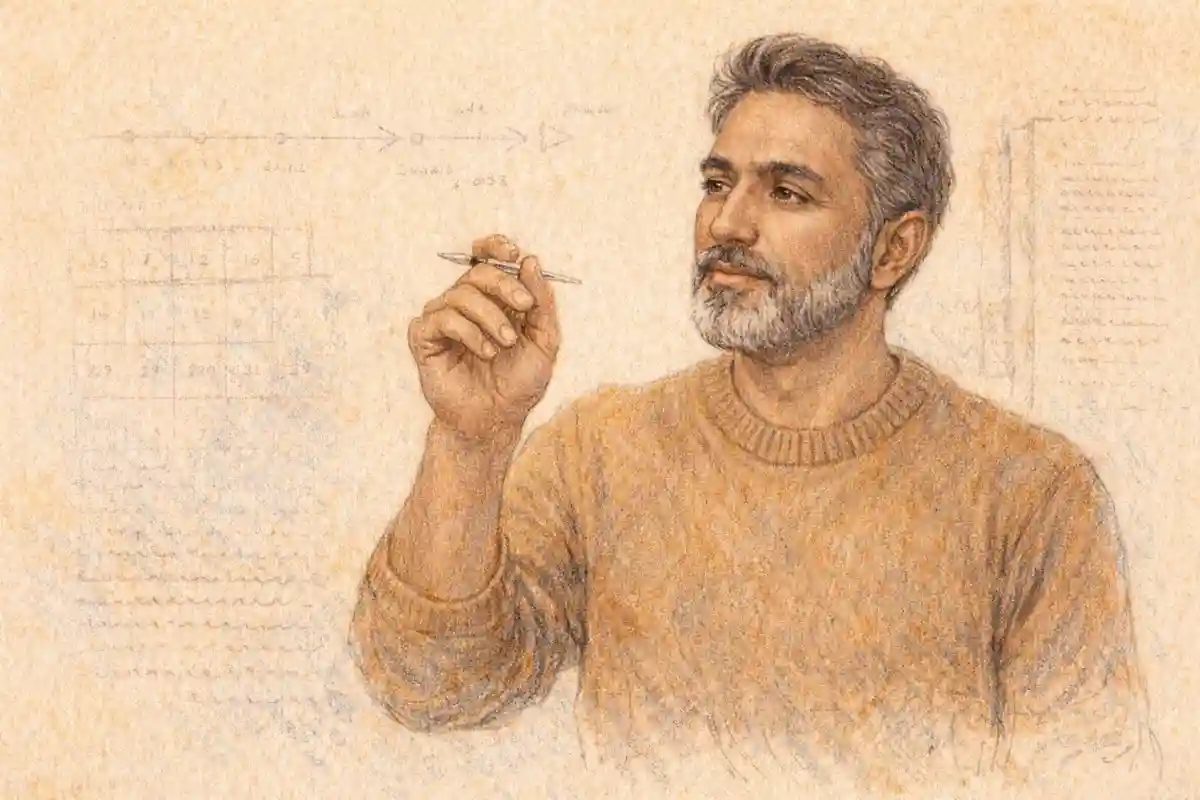
What the George Best duel actually was
Best was a winger and forward from Northern Ireland who spent the defining phase of his club career at Manchester United, and whose game combined close control at speed, comfort with both feet, and a willingness to attack the same defender repeatedly rather than release the ball and reset. That last quality is the one most often described and least often explained. Attacking the same defender repeatedly is not a personality trait in football terms; it is a decision that only makes sense under a specific set of conditions, and those conditions were present in his era and are largely absent now.
The first condition was that defensive support arrived late and inconsistently. A wide attacker today who beats his full-back has typically bought himself a yard against a second defender who is already travelling. The cover was pre-arranged before the take-on began. In a man-oriented back four playing behind a flat midfield, the second defender was frequently not travelling, because his own assignment had not released him. Beating the man in front of you therefore bought more than a yard. It bought the entry.
The second condition was that the reward for a successful take-on was proportionally larger, because the alternative routes to the penalty area were narrower. The half-space combination that a modern winger uses instead of the take-on, the third-man run into the pocket between full-back and centre-back, existed but was less systematised. Sides did not routinely construct wide overloads to remove the need for the one-on-one. The one-on-one was the route.
The third condition, and the decisive one, was that the defender had a tool that made losing the duel survivable. If he was beaten, he could still stop the attack by making contact from behind. That single permission changes the mathematics of the entire duel, and it is the foundation of everything that follows in this article.
What made George Best hard to defend in his era?
He combined two qualities that the era’s defending had no coordinated answer to: close control at speed on surfaces that punished it, and the balance to absorb contact without losing the ball or the line of his run. Defenders could reach him, and reaching him was frequently not enough.
The defender’s toolkit when the tackle from behind was legal
Before assessing what defenders did, the toolkit has to be stated precisely, because it is routinely described with more romance than accuracy. Contact from behind was permitted within limits that were interpreted far more permissively than the current standard. A defender who arrived late but arrived at the ball had a reasonable expectation of being allowed to continue. A defender who made significant contact with the attacker in the process of a challenge was not automatically penalised. Shirt-holding and blocking runs in open play were policed loosely. Physical contact in the aerial duel was permitted at a level that would now be a routine free kick. The cumulative effect was not one dramatic permission but a hundred small ones, and the hundred small ones added up to a defender who could be beaten and still win.
Two consequences follow, and they are the analytical spine of this article.
The first is what happened to attackers. A wide player operating in that environment could not treat separation as the end of the duel, because separation did not end it. He had to be able to keep the ball while being contacted, which means balance through contact became a primary technical quality rather than a secondary one. Modern coaching treats balance as a component of change of direction, something you develop in order to turn quicker. In that era, balance was a component of ball retention under a legal assault, which is a different training problem with a different emphasis. Best’s balance is therefore the analytical centre of this article, not because it was more impressive than his dribbling but because it was the specific quality the era selected for and the specific quality a modern viewer most often mislabels as flair.
The second consequence is what did not happen to defenders. A defensive technique develops when it is needed. In an era where a beaten defender retained a legal method of ending the attack, the delay-and-support model, in which the first defender’s job is to slow the attack and steer it toward arriving help rather than to win the ball, had far less selective pressure behind it. It existed. Good defenders used it. But it was not the organising principle of wide defending in the way it is now, because it did not have to be. This is why old footage misleads coaches who watch it uncritically: they see defenders diving into challenges and conclude that the defending was poor. In their own context, diving into the challenge was frequently the correct decision, because the penalty for missing it was smaller than it is now.
The tool-substitution effect
That observation generalises, and the generalisation is the namable claim of this article. Call it the tool-substitution effect: when a defensive tool is removed by the laws of the game, the attacking quality that tool suppressed reappears within a generation, which is why rule changes reshape attacking technique far more than they reshape defensive technique.
The mechanism is straightforward once stated. A defensive tool does not merely stop attacks. It also suppresses the development of the attacking qualities that would otherwise be needed to beat it, because those qualities do not pay while the tool exists. Remove the tool and the suppressed quality becomes worth developing, so it develops. Meanwhile the defender who lost the tool does not gain a new one; he has to substitute organisation, positioning, and collective support for something that used to be individual and physical. Organisation is harder to teach and slower to install than a challenge, which is why the defensive adaptation lags the attacking one.
Apply this to the case at hand and the picture inverts the usual nostalgia. Under permissive contact, the attacking quality that paid was balance through contact, because that was the quality that beat the available tool. Sides did not need attackers who could receive under pressure with their back to goal in tight central areas at high volume, because the central areas were less congested. When contact was progressively restricted, the balance-through-contact premium fell and the premium on receiving skill, first-touch direction, and speed of decision rose, because the new defensive answer was congestion rather than collision. The technical profile of the elite wide attacker changed accordingly, and it changed because the tool changed.
This is a more useful frame than either of the two nostalgic positions, and it dismantles both. The claim that players of that era were tougher is a description of the selection pressure, not of the people. Any population of elite attackers selected under permissive contact will contain a high proportion of players who can absorb contact, because the ones who could not were filtered out before they arrived. The claim that modern players would not survive that era is the same error in a different direction. A modern population raised under those laws would develop those qualities, because the qualities would pay.
Would George Best have thrived under modern protection?
Almost certainly, though not for the reason usually given. Protection would have reduced the cost of each take-on, but his more valuable advantage today would be two-footedness, because modern wide defending is built on forcing a preferred side and his profile denies that starting point entirely.
The permissive-contact era table
The practical value of the tool-substitution effect is that it lets a coach sort the era’s defending into categories rather than admiring or dismissing it wholesale. The table below is the sorting instrument. Each row is a defensive tool of the period, its legal status now, what replaced it, the attacking quality it forced, and whether that quality is still worth coaching. The last column is the one that matters on a training pitch, because it separates the obsolete from the merely illegal.
| Defensive tool of the period | Legal status now | What replaced it | Attacking quality it forced | Still worth coaching? |
|---|---|---|---|---|
| Contact from behind on a beaten duel | Prohibited | Pre-arranged cover and delayed engagement | Balance through contact, ball retention while braced | Yes, at the technical level, taught as trunk control rather than collision |
| Sustained shirt-holding and blocking in open play | Prohibited | Body positioning to occupy the running line legally | Early acceleration off the mark, arm-fending within the laws | Yes, the arm mechanics transfer directly |
| Physical contact through the aerial duel | Heavily restricted | Zonal marking and contested-jump timing | Jump timing under contact, landing balance | Yes, but coached as timing rather than physicality |
| Dedicated man-marking of a single opponent across the pitch | Legal but structurally rare | Zonal and hybrid schemes with local overloads | Movement variety and the ability to change flank | Yes, movement variety pays more now, not less |
| The permanent sweeper behind a man-marking line | Legal but obsolete | The covering centre-back inside a back four | Running at the last line, willingness to attack space | Yes, though the target has changed |
| Repeated tactical fouling without accumulating sanction | Heavily restricted | Counter-pressing and rest defence | Speed of release after the take-on | Yes, and this one has grown in value |
| Playing the attacker rather than the ball on a hopeless duel | Prohibited | Delay, show, and force toward support | Composure with a defender attached | Partly, the composure transfers, the scenario does not |
| Heavy pitch as a de facto defensive aid | Not applicable | Consistent surfaces raised attacking speed | Low centre of gravity, short stride under load | Reduced value, the surface no longer punishes |
Two rows deserve emphasis because they are the ones most often read backwards. The heavy pitch row is not a defensive tool in the legal sense, but it functioned as one, and it is the clearest example of a condition that flatters the era’s defenders in footage. A surface that slows an attacker slows the take-on, shortens the effective separation, and gives a recovering defender time that a modern surface would not give him. Coaches who watch that footage and conclude the era’s defenders had exceptional recovery speed are frequently observing the pitch.
The sweeper row is the clearest example of something that is legal, was intelligent, and is nonetheless obsolete. Nothing prevents a side from playing a permanent free man behind a man-marking line. It has fallen away because the offside law and the compression of the pitch made the spare defender expensive in a way it was not when the line sat deeper and the pitch was longer in practice.
Balance through contact: the mechanism a modern coach can actually use
Strip the romance out of the phrase and balance through contact is a specific, coachable set of mechanics. It has four components, and they can be separated, assessed, and trained independently.
The first is the base. A player who intends to keep the ball while being contacted takes shorter, more frequent steps than a player running freely, and keeps his feet closer to the line of the ball rather than wide of it. The short step is not a stylistic habit. It is what allows a rapid change of the support foot when weight arrives from an unexpected direction, because a long stride has a long period during which no correction is possible. Watch old wide footage with this single question in mind, how long is his stride while the defender is within contact range, and the answer is consistently shorter than the same player’s stride in open space. That is a decision, not a physical limitation.
The second is trunk control, and it is the component most often mistaken for strength. When contact arrives at the shoulder or the hip, the retained-possession outcome depends on whether the trunk rotates around a stable pelvis or the whole body rotates together. A player whose trunk absorbs and returns the force keeps his hips pointing where he was going; a player who rotates as a unit finishes facing the touchline with the ball behind him. This is trainable through anti-rotation work, and it is trainable without any contact at all, which matters enormously for youth coaching.
The third is the arm. Within the laws, an arm can be used to feel where a defender is, to hold a position that has already been won, and to create the small separation that lets the supporting foot land clean. What it cannot legally do is push, and the difference between the two is chiefly about whether the arm is extending or holding. Best’s use of the arm is one of the clearest teaching examples available on old footage, because in his case it is almost always a locating arm rather than a fending arm. He knows where the defender is because he is touching him, and he uses that information to time his change of direction.
The fourth is the touch under load. A player expecting contact takes a smaller touch and takes it earlier in the stride cycle, because a large touch commits the ball to a location he may not be able to reach once he has been moved. The tell in footage is the distance from foot to ball at the moment of contact, which is consistently shorter for players who survive the contact than for players who lose the ball.
How did George Best keep his balance through contact?
Through a short stride under contact range, a stable pelvis with an absorbing trunk, a locating arm that told him where the defender was, and touches taken small and early so the ball never travelled further than he could reach after being moved. All four are coachable mechanics.
That answer matters because it converts an admired quality into a session. It also explains why the quality is under-coached today. Modern academy work develops change-of-direction balance through cone and ladder patterns performed in clean space, which develops the base and the trunk but never involves the arm or the load. The result is a generation of wide players with excellent unopposed agility numbers who lose the ball to a legal shoulder in the first phase of a duel. The quality did not become less useful; the training environment stopped producing it.
What defenders of the era actually did
Four containment approaches recur in footage of the period, and they can be separated cleanly. Each of them is a different answer to the same problem, and each of them fails differently.
The first is the physical containment approach: engage early, make contact legal and constant, accept being beaten occasionally in exchange for making every take-on expensive. This is the approach the era is remembered for and it is the one that worked least reliably against a player of this profile, precisely because his balance was the specific counter to it. Against a wide attacker who cannot absorb contact, constant engagement is close to a complete solution. Against one who can, constant engagement is a supply of information, because a defender who is always touching you is a defender whose weight you can always feel.
The second is the depth approach: drop off, refuse the early engagement, protect the space behind, and make him beat you closer to the byline where the angle has already narrowed. This is the closest thing the era had to modern delay, and it worked better than its reputation. Its cost was that it conceded the cross and the shooting position from the wide-inside area, and in a period when box defending relied heavily on physical contest rather than positional occupation, conceding the delivery was less obviously acceptable than it is now.
The third is the doubling approach: commit the near-side midfielder to the flank permanently, so the first defender is never alone. This is the approach that produced the most reliable individual outcomes and the least reliable collective ones, because the permanent commitment of a midfielder to a flank leaves a hole that a side with good circulation will find. It worked when the opponent could not switch quickly and failed when he could.
The fourth is the assignment approach: nominate one defender to follow him wherever he goes, including across the front line, and reorganise the rest of the defence around that absence. This is genuine man-marking rather than a man-oriented full-back, and it is a bigger structural commitment than most modern coaches realise. It is also the approach most vulnerable to a two-footed attacker who changes flanks, because the marker’s own positional habits degrade when he is dragged into unfamiliar areas.
Did man marking work against George Best?
Rarely on its own. A dedicated marker could reduce his volume of touches, but the assignment dragged a defender out of his structure and created the space his teammates attacked. It worked only where the marker had genuine covering support behind him and the rest of the defence had rehearsed the reorganisation.
Which defender profile handled the duel best
The profile question is more useful than the individual question, because a coach can select for a profile and cannot select for a name. Three profiles recur among the defenders who came out of this duel with their structure intact, and they are not the profile the era’s reputation implies.
The first is the patient full-back with an unusually long delay tolerance. The defining trait is not pace and not strength; it is the willingness to stand in front of a wide attacker for three, four, five seconds without committing, which requires both concentration and a specific kind of nerve, because a wide attacker who is not being engaged looks in the moment as though he is being allowed to do whatever he wants. Defenders of this type were less spectacular and more effective, and their footage looks passive to a modern viewer trained to expect aggression.
The second is the converted wing-half or midfielder playing at full-back. This profile brought a midfielder’s sense of when support was arriving, which is exactly the sense that a career defender in a man-marking structure had less reason to develop. Because he had spent years reading second and third defenders behind him, he was better at the one judgment that decides the wide duel, which is whether to commit now or in two seconds when help arrives.
The third is the centre-back-sized defender used wide against a specific opponent, a selection decision rather than a permanent profile. The logic was to remove the physical mismatch on the first contact and accept the mobility loss. This worked against attackers who needed the outside route and failed against attackers who could come inside, which is why it was a poor selection against a two-footed opponent and a reasonable one against a one-directional winger of the kind analysed in the contemporaneous contrast provided by the Garrincha duel, where the direction was known and the physical contest was the whole of the problem.
What none of these profiles had, and what a modern full-back has as standard, is a rehearsed relationship with the covering centre-back that determines the choice before the duel begins. That relationship is the substance of the modern decision, and the decision itself belongs to a separate treatment in the general question of whether to show a wide opponent inside or outside, which this article deliberately does not resolve here.
The failure modes, and what caused each one
Four failure modes account for nearly everything that went wrong for defenders in this duel, and each has a cause that is diagnosable rather than a matter of quality.
The first is the early commitment failure. The defender engages before the attacker has committed his own weight, the attacker changes direction into the space the engagement vacated, and the contact recovery tool is unavailable because the defender is already past the ball. This failure is caused by a defensive culture that rewarded visible aggression, and it is the failure most likely to look like poor defending on film when it was in fact a systemic incentive problem.
The second is the second-touch failure. The defender survives the first touch, makes contact, and then loses the duel because the attacker’s second touch arrives before the defender has re-established his base. The cause is that the defender’s own recovery from making contact is slower than the attacker’s recovery from receiving it, which is a direct consequence of the balance mechanics described above. This is the failure mode a modern coach should study hardest, because it is the one that still happens with contact removed. Every time a full-back today wins the first engagement and then concedes the duel a second later, this is the mechanism.
The third is the reorganisation failure, which belongs to the team rather than the defender. The full-back is beaten, the covering defender travels, and nobody occupies the space the coverer left. This is the failure the era’s structures produced most often, because the cover was reactive rather than pre-arranged, and it is the single strongest argument that the era’s defending was in some respects less sophisticated than modern defending rather than more.
The fourth is the flank-change failure. A two-footed attacker moves to the other side, the defender who has been managing him does not follow because the structure does not permit it, and the opposite full-back receives a problem he has not spent the match calibrating to. Against a player comfortable with both feet this was the most reliable way to break a plan, and it is the reason the assignment approach was so frequently abandoned in the second half of matches.
Was George Best a threat with both feet?
Yes, and this is the tactically decisive fact about him rather than a piece of trivia. Two-footedness removes the defender’s opening decision, which is which side to close. A defender who cannot force a preferred foot must defend the ball rather than the direction, and that is a harder problem.
What the era’s defending never developed
The honest verdict, and the one that most nostalgic treatments avoid, is that the defending of that period was under-developed in a specific and identifiable way. The delay-and-support model was not absent, but it was not the organising principle, and three of its components were essentially missing at collective level.
The first missing component is pre-arranged cover. Modern wide defending begins before the ball arrives, with the covering centre-back’s starting position already set by the instruction given to the full-back. That relationship converts an individual duel into a two-defender problem with a known answer. In a man-marking structure with a free man behind, the free man’s position was determined by the ball and the most dangerous forward, not by the wide duel, so the full-back frequently did not know whether he had cover until he needed it.
The second is the forcing objective. A modern full-back is not trying to win the ball; he is trying to make the attacker arrive at a specific place in a specific body position. That objective requires a shared understanding of which places are acceptable, which is a piece of collective knowledge rather than an individual skill. The era’s wide defending had far less of it, which is why so much of the footage shows defenders attempting to win the ball in situations where a modern coach would want the duel steered rather than resolved.
The third is the rest-defence habit. The behaviour of the far-side defenders while the ball is on the near flank is now a coached, rehearsed pattern with a specific shape. Then, it was frequently an individual judgment, and the individual judgments did not always agree with each other.
Naming these gaps is not a criticism of the players. It is the tool-substitution effect running in the direction people find less comfortable: because the contact tool existed, the organisational substitutes had less reason to develop, and they developed later, once the tool was removed. The broader era-variable framework that governs how far any comparison across periods can be pushed is developed at length elsewhere in the series and applies with full force here.
Reading old footage without importing obsolete conclusions
An analyst or coach who watches footage of this period is running an inference from a system with different rules to a system with current ones, and there are five specific inference errors that recur. Naming them is more valuable than any single observation about the player, because they generalise to every historical clip a coach will ever watch.
The first error is treating the outcome as evidence about the defender’s quality. In a permissive-contact system, a defender who is beaten and then recovers the ball through contact has produced a good outcome by a poor process. The same process today produces a free kick, a booking, and a set piece against him. Judge the process, which means judge the body position at the moment of engagement and the distance from the ball, not whether the attack ended.
The second error is reading the pitch as the player. Heavy surfaces compress the speed range of a match, which shortens effective separation and disguises differences in recovery pace. A defender who looks quick over five metres on a soft winter pitch may look ordinary on a modern surface, and an attacker who looks laboured may be the fastest man on the pitch working through mud. Any judgment about pace from that footage carries a large error bar and should be stated as such.
The third error is mistaking permissiveness for skill in the attacker. This runs the opposite way and is less commonly noticed. Some of the separation an attacker of that era achieved came from defenders whose positioning was casual because they had a physical recovery option. Not every beaten defender was beaten by technique.
The fourth error is assuming that structural absence means structural ignorance. Sides of that period were not unaware of pressing, compactness, or coordinated cover; those ideas existed and were used in various forms. What differed was the intensity of their application and the training time available to install them, which was a fraction of what a modern professional squad receives. The absence is a resource fact, not an intelligence fact.
The fifth error is the sample error. Footage of that era survives disproportionately in the form of highlights, and highlights are, by construction, the take-ons that worked. A coach watching a compilation is observing a filtered sample with the failures removed, and will systematically overestimate the success rate of every attacking action in it. This is the single most important correction for anyone attempting to compare eras on the basis of what they have watched.
How do you analyse footage from a different era of the laws?
Judge process rather than outcome, treat the surface as a variable that compresses speed, assume the sample is filtered toward successful attacking actions, and translate every defensive action into its modern legal equivalent before drawing any conclusion about the defender’s quality.
What transfers, what is illegal, and what is merely obsolete
The three-category sort is the practical output of this article, and it is worth stating in full because most treatments collapse the second and third categories.
The illegal category is the shortest and the least interesting: contact from behind on a beaten duel, sustained holding, the deliberate foul as a repeatable tactic, and the level of aerial contact that was normal then. None of it is available and none of it should be taught, and a coach who romanticises it in front of young players is creating a discipline problem he will pay for.
The obsolete category is larger and more instructive. The permanent sweeper, the dedicated cross-pitch marker, the full-back who defends the man rather than the space, and the wide midfielder who tracks his opposite number the length of the pitch are all legal and all rarely correct now. They are obsolete because the pitch is used differently: sides compress the vertical distance between their own lines, attack the resulting congestion with rotation rather than isolation, and switch play fast enough that a permanently committed defender is a liability. A coach can still use them situationally, and the assignment approach in particular retains value against a small number of opponent profiles, but they are exceptions rather than defaults.
The transferable category is where the value sits. Balance through contact transfers completely and is under-coached. The locating arm transfers completely and is barely coached at all. The short stride under contact range transfers completely. The attacker’s habit of attacking the same defender repeatedly transfers conditionally, and the condition is whether the opponent’s cover is pre-arranged; against a side whose covering centre-back does not travel, repeated isolation is still the most efficient route to the box. The defender’s patience, the long delay tolerance, transfers completely and is the quality that most distinguishes a good modern wide defender. The individual technique of that modern duel is developed in full in the treatment of defending an inverted winger one on one, which owns the contemporary version of this craft.
Coaching balance through contact today
Because the tool has been removed, the quality has to be built deliberately rather than acquired through exposure, and the sequencing matters more than the content. The progression below is a coaching structure rather than a session plan, and the full session design for duel work belongs elsewhere in the series.
Stage one is unopposed and contact-free, and it should occupy far more of the calendar than coaches expect. The content is trunk stability, anti-rotation, single-leg control, and short-stride running mechanics with the ball. Nothing here involves another player. This stage builds the two components that cannot be built safely under load, and a player who skips it will compensate with the arm, which is both illegal and a habit that is hard to remove later.
Stage two adds a passive partner who applies constant, predictable pressure at the shoulder without attempting to win the ball. The attacker’s task is to complete a normal technical action, a turn, a change of direction, a strike, while the pressure is present. The coaching point is the pelvis, not the arm. If the player’s hips finish pointing where he intended, the repetition succeeded regardless of what his upper body did.
Stage three makes the pressure variable in timing but not in intensity. The partner chooses when to arrive but not how hard. This is the stage that builds the anticipatory short stride, because the attacker now has to be ready rather than braced.
Stage four introduces a live but constrained duel, with the defender restricted to legal shoulder contact and no tackle. This is the last stage that belongs in a youth environment, and it should arrive late, well after the technical foundation is secure.
Stage five is the full duel, and it is a senior activity. The reason for the sequencing is not caution for its own sake. A player who meets contact before his trunk control is established learns to survive it by bracing and stopping, which is precisely the habit that makes him easy to defend, and the habit is durable.
A coach building a match-week plan around this progression, or storing duel notes and opponent observations across a season, can build and keep an opposition plan free on VaultBook, which is designed for exactly this kind of accumulated preparation work.
What the duel demanded of his own team
A wide attacker who attacks his defender repeatedly is not operating in isolation, whatever the isolation of the image suggests. He imposes a set of obligations on the ten players behind and around him, and those obligations are the least analysed part of this subject.
The first obligation is the supply angle. A wide player who intends to take his defender on needs to receive facing the pitch rather than facing the touchline, which means the pass into him has to arrive from a player positioned inside him rather than behind him. A ball played up the line from a deep full-back arrives on the wrong shoulder and forces the attacker to turn before he can attack, which hands the defender the first engagement for free. The supply obligation therefore falls chiefly on the near-side central midfielder, and it is a positional obligation rather than a passing one: he has to stand where the angle exists.
The second obligation is the far-side occupation. If a wide attacker is going to be isolated deliberately, someone must be holding the opposite full-back and the far centre-back in place, otherwise the isolation collapses into a double team. This is a job with no reward attached, since the far-side player’s contribution is measured entirely in defenders who did not travel, and it is the job that breaks down first when a side is chasing a match.
The third obligation is the box arrival. The take-on is worth nothing if the delivery arrives into an empty area, and the timing problem is severe: the attacker’s action has a variable duration, because the take-on may succeed on the first touch or the fourth. Runners into the box therefore cannot leave on a fixed cue. The solution used in that period, and still the best solution available, is staggered arrival, with one runner attacking the near post early and accepting that he will frequently be early, a second delaying at the penalty spot, and a third holding at the edge for the cutback and the second ball.
The fourth obligation, and the one that generates the most friction in any team, is the rest defence behind him. A winger who commits to repeated take-ons will lose the ball in the opposition half at a high absolute rate, because a high volume of attempts produces a high volume of failures even at an excellent success rate. The side has to accept that turnover profile and structure for it, which means the near-side full-back sits rather than overlaps, and the holding midfielder shades toward that flank. Sides that refused to make this accommodation got the worst of both, conceding the transitions without gaining the isolation.
What did George Best demand from his teammates?
An inside supply angle so he could receive facing the pitch, a far-side player who held the opposite defenders in place, staggered box arrivals that did not depend on a fixed cue, and a rest-defence shape that accepted a high turnover rate in the opposition half as the price of repeated isolation.
Defending him inside the penalty area
The wide duel is only half of the problem, and the half that received less attention then and receives less now. Once a wide attacker enters the penalty area with the ball, the defensive problem changes character entirely, because the tools available to defenders shrink faster than the attacker’s options do.
The structural reason is the penalty. Outside the area, a defender facing a beaten duel had, in that era, a legal contact recovery and, in any era, a foul available at a tolerable price. Inside the area, both disappear. The contact that is a free kick outside is a penalty inside, and the deliberate foul is unavailable at any price. This asymmetry means the defensive method has to change at the line of the box, and the sides that defended wide attackers best were the ones that changed method explicitly rather than continuing the same duel into a different jurisdiction.
The method that works is retreat and occupation. The near defender stops attempting to win the ball, opens his body to show the outside, and retreats at the attacker’s speed while a second defender occupies the shooting line rather than the passing line. The objective is not to stop the shot; it is to force the shot from the angle that suits the goalkeeper’s starting position. Two defenders can do this reliably, one cannot, and the reorganisation has to be automatic because the entry to the box happens too fast for instruction.
The method that fails, and that appears constantly in footage of the period, is the sliding challenge inside the area against a player with the ball under control. It fails for a reason worth stating plainly: a slide removes the defender from the play whether or not it connects, and against an attacker with good balance the probability that it connects cleanly is low. The era tolerated it because the refereeing standard was permissive and because the alternative, retreat and occupation, required a second defender who was frequently not there.
How did sides defend George Best inside the box?
Badly, on the whole, and for a structural reason rather than a personal one. The recovery tools that made wide defending viable outside the area disappeared inside it, and the two-defender retreat-and-occupation method that replaces them requires pre-arranged cover that man-oriented structures rarely supplied.
The goalkeeper’s problem
The one-on-one against a wide attacker arriving from an angle is a different problem from the one-on-one against a central runner, and the difference is the goalkeeper’s starting position relative to the near post.
A wide attacker entering the box on the diagonal creates a decision the goalkeeper cannot defer. If the goalkeeper holds his position on the near post, he covers the shot that most wide entries produce and concedes the pull-back and the far-post pass. If he advances to close the shooting angle, he covers the shot completely and concedes both the pass and the chip, and against a two-footed attacker he cannot narrow the decision by assuming which foot will strike it.
The goalkeepers who handled this best in that period did something that looks passive and is not: they delayed the commitment until the attacker’s supporting foot planted, because the plant is the last moment at which the intention is still concealed and the first at which it is legible. Everything before the plant is disguise. This is still the correct answer, and it is why goalkeeper coaching that trains the one-on-one as a closing-speed exercise produces goalkeepers who are beaten by disguise. The relevant skill is not speed off the line; it is the discipline to arrive at the decision point at a speed that still permits a change of decision.
The complication with an attacker comfortable on both feet is that the plant itself carries less information, because either foot can strike from either plant. Against that profile the goalkeeper’s remaining information is the body angle over the ball, which is a narrower signal and available later.
Movement across the front line and the defensive contribution
Two aspects of his game are routinely under-described because they do not appear in the compilations, and both matter to anyone trying to plan against the profile rather than admire it.
The first is lateral movement across the front. A wide attacker who stays wide is a manageable problem, because the defender facing him accumulates information across the ninety minutes and the covering structure calibrates to a fixed location. A wide attacker who moves across the front line, appearing on the opposite flank, dropping into the central pocket, and occasionally arriving as a central runner, resets that accumulation every time he moves. The cost of the movement is that he receives the ball less often in his best area; the benefit is that the defender who eventually faces him there has less calibration than he would otherwise have.
Best moved across the front more than his reputation as a right-sided winger suggests, and the two-footedness is what made it viable, because a one-directional wide player who changes flanks arrives on his weaker side and hands the new defender an easier problem than the old one had. This is the specific reason the profile was hard to plan against rather than merely hard to defend, and it is the difference between a duel problem and a preparation problem.
The second is the defensive contribution, which was real but structured differently from the modern expectation. The obligation on a wide forward of that period was not to press the opposing full-back, because coordinated high pressing was not the organising principle, and it was not to track the full-back the length of the pitch, because a side that pulled its most dangerous attacker sixty metres from goal was making a poor trade with the ball. The obligation was to hold a position that discouraged the easy switch and to be available for the counter, which is a positional job rather than a running job.
Judging players of that era by modern pressing distances is therefore a category error of the same family as judging their pace by their footage. The behaviour was rational within its own system. What can be said fairly is that the profile imposed a cost, and the cost was borne by the midfielder behind him, which is a structural observation and not a character one.
How did George Best contribute defensively?
Positionally rather than through pressing volume, which was the era’s standard for an attacking wide player. He held positions that discouraged the easy switch and stayed available for the counter, and the defensive cost of that role fell mainly on the midfielder behind him rather than being absorbed by him.
The debate register: five positions and a verdict on each
Serious discussion of this subject tends to circle five claims. Each deserves a direct answer rather than a shrug, and the tool-substitution effect resolves four of them cleanly.
The first claim is that he would be protected today and therefore even more effective. The verdict is that he would be more effective, but the protection is the smaller half of the reason. Protection reduces the cost of each take-on, which raises volume rather than success rate. The larger gain would come from two-footedness in a defensive culture organised entirely around forcing a preferred side, and from consistent surfaces, which reward close control at speed far more than heavy pitches did. Against that, modern defending would give him a genuinely harder problem in the form of pre-arranged cover and congested central areas, which is a difficulty his era did not present. The net is favourable but not by the margin the simple protection argument implies.
The second claim is that the defending of the era was cruder. The verdict is that this is largely correct and that the word cruder is doing unfair work. The defending was less organised, and specifically it was less organised in the three collective components named earlier: pre-arranged cover, a shared forcing objective, and rehearsed rest defence. It was not less intelligent. It was optimised for a different rule set with a fraction of the training time, and its individual technique in the aerial duel and in the sliding challenge was in some respects better than the modern equivalent because it was practised more.
The third claim is that his end product was overstated relative to his reputation. The verdict is that the claim is unanswerable in the terms it is usually posed, and pretending otherwise is where most analysis of that era goes wrong. Delivery and chance-creation records from the period are incomplete and inconsistently defined, the surviving footage is a filtered sample, and the tactical role of a wide forward then generated a different action profile from a modern one. What can be said is narrower and more useful: the profile was one that produced a high volume of attempted take-ons, and any profile of that type produces both high creation and high turnover, so a comparison that counts only one side of the ledger is not a comparison.
The fourth claim is that modern conditioning would change the duel. The verdict is yes, and in both directions, which is why the claim is usually deployed unfairly. Modern conditioning would raise the recovery speed of the defender chasing him and the repeatability of his own accelerations. The net effect on a one-on-one duel is close to neutral, because both parties gain. Where conditioning changes the duel decisively is in the sixty-fifth minute, when a modern side’s fourth and fifth defenders are still arriving at full speed, which is a collective effect rather than an individual one.
The fifth claim is that the footage cannot support serious analysis. The verdict is that it can support some kinds of analysis and not others, and the line between them is sharp. Mechanics are readable: stride length, trunk behaviour, arm use, touch distance, body angle at engagement. Rates are not readable, because the sample is filtered. Comparative speed is not readable, because the surface is a confounder. Collective structure is partly readable, with the caveat that the camera of the period follows the ball and shows almost nothing of the far side. An analyst who restricts himself to the readable category can say a great deal; one who does not will say something confident and wrong.
What a modern winger takes from this profile
The transferable content for an attacking player is narrower than the highlights suggest and more valuable than the modern curriculum acknowledges. Four items survive translation.
The first is balance through contact, treated as a technical priority rather than a physical one. The modern wide player who cannot retain the ball through a legal shoulder is not weak; he is untrained in a specific set of mechanics that his development environment never asked for. The mechanics are the ones described earlier, and the training is available to any player with a wall, a ball, and a partner.
The second is the locating arm. A wide attacker who knows where the defender is without looking has an information advantage that lasts the whole duel, and the arm is the cheapest sensor available. The legal line is clear enough to coach: an arm that holds a position already won is permitted, an arm that creates separation by extending is not. Young players learn the distinction faster than coaches expect, and the ones who learn it early rarely develop the pushing habit.
The third is the willingness to attack the same defender repeatedly, subject to the condition named earlier. This is not a licence to dribble. It is a reading skill: if the covering centre-back does not travel, the isolation is worth repeating, and if he does, it is not, and the answer changes within a single match as the opponent adjusts. A winger who can read that variable is making a decision the highlights never show.
The fourth is the change of flank. This is the most under-used tool in modern wide play, largely because positional systems assign a zone and reward staying in it. A wide attacker who can operate on both sides is not merely more flexible; he is harder to prepare for, because the opponent’s analysis of the duel has to be produced twice and delivered to two different defenders.
What does not transfer is the action profile as a whole. A modern wide player who attempts take-ons at that volume in a positional side will break the structure behind him, because the rest-defence arrangements that make repeated isolation viable have to be built deliberately and cost the team elsewhere. The behaviour was correct in a system designed around it. Copying the behaviour without the system is how a talented young winger becomes a liability.
What can a modern winger learn from George Best?
Balance through contact as a trainable set of mechanics, the locating arm as a legal information tool, the reading skill that tells him when repeated isolation is worth it, and the willingness to operate on both flanks. What does not transfer is the raw take-on volume without the rest-defence structure that supported it.
What a modern defender takes from it
The defensive lessons run in the opposite direction from the ones usually drawn, and there are three.
The first is delay tolerance. The most effective defenders in that duel were the patient ones, and patience is a harder sell now than it was then because modern defensive culture rewards visible aggression and modern crowds punish visible passivity. A full-back standing off a wide attacker for four seconds is doing the correct thing and looks as though he is doing nothing, and coaches have to protect him from the perception or he will start committing.
The second is the second-touch problem. Winning the first engagement is not winning the duel, and the defender’s recovery from making contact is the constraint. A defender who braces to make contact and then has to re-establish his base has surrendered the tempo of the duel. The answer is to make contact from a position that does not require bracing, which means shoulder to shoulder on the run rather than square and set. This is trainable and rarely trained.
The third is the flank-change alarm. The modern equivalent of the era’s failure mode is a wide attacker moving to the other side and finding a defender who has spent the match preparing for a different opponent. Sides that prepare a single defender for a single opponent are building a plan with a known break point, and the answer is to brief both full-backs on both profiles even when the pre-match expectation is that only one of them will need it.
How this fits the wider dribbler problem
This duel is one instance of a general class, and the class is worth naming because it determines which parts of the analysis generalise. Wide attackers who beat defenders individually sort into a small number of types by the mechanism of separation: the pure-pace type who separates in a straight line, the one-directional type whose separation comes from a single known move executed better than it can be defended, the two-directional type who removes the defender’s opening decision, and the delivery type whose take-on exists to produce a cross rather than an entry.
Best sits in the two-directional category, which is the hardest category to plan against and not necessarily the hardest to defend in a single duel. The distinction is important. A one-directional attacker can be more difficult in the moment, because the move may be unstoppable even when known, and yet easier to prepare for, because preparation has a target. A two-directional attacker offers preparation nothing to aim at, which pushes the defensive burden from the analyst back onto the defender and the covering structure.
The full taxonomy, including the two categories not represented in this article, is developed in the cluster treatment of the greatest dribblers and how to contain them, which owns the general version of the containment question and which this article routes to rather than duplicating.
Youth coaching: why contact work belongs late
The progression described earlier is deliberately slow, and a youth coach is entitled to ask why, given that the quality being built is one that appears naturally in unstructured play. Four reasons justify the sequencing, and they are worth setting out because the alternative, introducing contested contact early because it looks like the real thing, is the more common practice.
The first reason is that maturation is uneven and the unevenness is temporary. Within a single age group, the spread in size and strength is at its widest precisely in the years when coaches are most tempted to introduce physical duels. A contested contact exercise in that environment does not teach the smaller player balance through contact; it teaches him that the duel is unwinnable, which is a durable lesson and the wrong one. The passive-partner stage exists specifically to remove the size variable, because a partner applying constant predictable pressure is applying the same problem regardless of how big he is.
The second reason is the bracing habit. A player who meets real contact before his trunk control is established will solve the problem the only way available to him, which is to stop, square up, and brace. Bracing works, in the sense that it retains the ball, and that is exactly why it becomes permanent. A braced player has no forward momentum, so the duel resets in the defender’s favour every time. Removing this habit at seventeen is far harder than avoiding it at eleven.
The third reason is the arm. Under real pressure with no technical foundation, the arm becomes the solution, and the arm that solves the problem is the extending arm, which is the illegal one. Coaches then spend years telling players not to push, which is a request to remove a tool without replacing it. The sequencing exists so that the legal locating arm is established before the illegal one has a chance to become useful.
The fourth reason is straightforward risk management. Contested contact carries injury exposure that unopposed technical work does not, and the exposure is highest in players whose control of the trunk and hips is least developed. Any decision about the readiness of an individual young player for contested work belongs with the coaching staff and, where there is any doubt at all about a player’s physical readiness or medical history, with a qualified medical professional rather than with a session plan.
The age question is one coaches want answered specifically, and the honest answer is that it is governed by technical readiness rather than a number. The usable rule is that a player is ready for stage four when he can complete stage three, with variable pressure timing, without his hips rotating and without his arm extending, in eight repetitions out of ten. That is a test a coach can run in four minutes, and it is a better instrument than an age band because it measures the thing that actually matters.
When should a young player start contact work in the duel?
When he can complete a variable-timing passive-pressure exercise with his hips staying square to his intended direction and his arm holding rather than extending, in roughly eight of ten repetitions. That readiness test is a better gate than any age band, because it measures the mechanics the contact will expose.
The amateur coach’s version
A coach with one training session a week, a shared pitch, and no video has a genuinely different problem from a professional staff, and most of the content above has to be compressed rather than delivered in full. Three decisions carry nearly all the value.
The first decision is to spend the available technical minutes on the base and the trunk rather than on the duel itself. This is counterintuitive, because the duel is what happens on Saturday and the trunk work looks like something else. The justification is that the duel is a test rather than a training stimulus: playing more one-on-ones tells a coach who is winning them without changing anyone’s mechanics. Twelve minutes a week of unopposed short-stride and anti-rotation work with the ball will change the mechanics; twelve minutes of live duels will not.
The second decision is to teach the defenders delay rather than engagement. At amateur level the recovery structures that make aggressive engagement viable are almost never present, because the second defender is not travelling and the far side is not organised. A full-back who delays is therefore making the correct choice far more often than one who engages, and delay is easier to teach because it is a single instruction rather than a judgment. The exception, and the whole of the argument for the opposite choice in some contexts, is treated in the article that resolves the inside-or-outside decision in full.
The third decision is to brief both full-backs on the dangerous opponent rather than one. This costs nothing, takes two minutes, and removes the failure mode that ends more amateur defensive plans than any other, which is the opponent’s best wide player moving to the flank nobody prepared.
What an amateur coach should not attempt is the assignment approach. Dedicated man-marking across the pitch requires a rehearsed reorganisation from the other nine players, and rehearsal is the resource an amateur side does not have. A plan that requires four players to do something unfamiliar in order to work is a plan that will fail at the first substitution.
The analyst’s era-adjusted read
An analyst asked to produce something useful from historical footage needs a method rather than an impression, and the method has four steps. It is worth setting out because the same four steps apply to any archive material, not only to this subject.
Step one is to establish the rule set before watching anything. The specific questions are what contact was permitted, how the offside law was applied, whether substitutions were available and in what number, and how the refereeing standard treated persistent fouling. Each of these changes what a given action means. Without this step an analyst is reading a foreign language with an English dictionary.
Step two is to classify every clip by whether it is a highlight or a continuous passage. Highlights are useless for rate estimation and excellent for mechanics; continuous passages are the reverse. Mixing them produces the most common false conclusion in historical analysis, which is that the attacking action succeeded at the rate the compilation implies. If continuous passages are unavailable, the analyst should state that no rate claim can be made rather than making a soft one.
Step three is to read mechanics only, and to read them in a fixed order: the body position at the moment of engagement, the distance from foot to ball at that moment, the stride length in the two steps before and after, the behaviour of the trunk relative to the pelvis, and the use of the arm. These five observations are robust to surface, camera angle, and rule set, which is precisely why they are the ones worth recording. Everything else in the frame is contaminated by conditions.
Step four is the translation. For every defensive action observed, the analyst writes down what the modern legal equivalent would be, and for every attacking action, what the modern defensive answer would be. This step converts observation into something a coach can use, and it is the step almost always skipped. A note that says the defender recovered through contact is a historical record. A note that says the defender was beaten and that the modern equivalent of his recovery is a free kick in a dangerous area is a coaching point.
The camera itself deserves a specific warning. Broadcast coverage of the period follows the ball closely and shows very little of the far side or the space behind the defensive line, which means any claim about collective structure derived from that footage is built on a fraction of the pitch. An analyst can describe what the near-side four players did with confidence and should say nothing at all about rest defence, because he has not seen it. This is a limitation of the source rather than of the sides, and stating it is the difference between a credible dossier and a confident guess. The broader method for building an opposition dossier from limited material is developed elsewhere in the series and should be read alongside this section rather than reconstructed here.
What the tool-substitution effect predicts next
A claim earns its name by predicting something, and this one does. If the tool-substitution effect is correct, then every subsequent restriction on defensive contact should have been followed within roughly a generation by the growth of an attacking quality that the restriction made profitable, and by a slower defensive adaptation built on organisation rather than on a replacement tool.
That pattern is visible in the two large restrictions that followed the period under discussion. Restricting the challenge from behind raised the value of receiving with the back to goal in congested areas, because the previous deterrent against doing so had been removed, and the attacking population duly filled with players who could receive, turn, and release under pressure. The defensive answer was not a new tool; it was compactness, the reduction of the vertical distance between lines, so that the receiving player had less space to turn into. Restricting the goalkeeper’s handling of the back-pass raised the value of goalkeepers who could play, and the defensive answer was again organisational, in the form of structured build-up shapes rather than a new goalkeeping permission.
The prediction for a coach is practical rather than historical. When a law changes in a way that removes something a defender could do, the attacking quality that was previously suppressed becomes the highest-value thing to coach, and it becomes valuable before the opposition has organised against it. That is a window, and it is usually about two seasons wide before the collective adaptation arrives. A coach who watches law changes with that frame will be early rather than late.
The inverse prediction is equally useful and less comfortable. When a law change hands defenders something, or when refereeing interpretation drifts toward permissiveness in a specific area, the attacking quality that the permission suppresses will decline in the player population, and a side that keeps coaching it will hold an advantage that nobody is competing for. Balance through contact is the current example of exactly that: the tool is gone, the quality is under-coached, and the players who have it are winning duels that their opponents did not know were available.
The duel translated: containing this profile under modern laws
The most useful thing an article about a historical duel can produce is a plan a coach could actually run now against the same profile, with the era’s tools removed. The profile in question is a two-footed wide attacker with exceptional balance who attacks his defender repeatedly and moves across the front line. That profile exists today, and the plan below is the translation.
The first decision is the covering relationship, and it comes before anything else because it determines every subsequent choice. The covering centre-back must be able to arrive in the wide area before the delivery, and the coach has to know whether his own centre-back can do that, which is a question about that specific player rather than about the system. If the answer is yes, the full-back can be given a forcing instruction, because being beaten in the chosen direction is survivable. If the answer is no, the full-back must be given a delaying instruction with no forcing component, because every take-on that succeeds becomes a chance rather than an inconvenience. The general form of that decision, including the four contexts in which it resolves differently, belongs to the dedicated treatment of showing a wide opponent inside or outside and is not settled here.
The second decision is the engagement distance. Against a two-footed attacker there is no preferred side to close, so the defender’s advantage has to come from distance rather than angle. The workable distance is the one at which the defender can still change direction with the attacker, which is roughly a stride and a half and which shortens as the attacker’s speed rises. Closer than that and the first touch beats him; further and the attacker gets to choose his route at walking pace, which is worse. The instruction to the player is not a measurement, it is a feeling: close enough that he cannot look up without checking you, far enough that you can still turn with him.
The third decision is the second defender’s line of travel. This is the component that the era’s structures lacked and it is the one that does most of the work. The second defender does not travel toward the ball; he travels toward the space the attacker is entering, arriving on the inside shoulder rather than behind. Arriving behind produces the recovery challenge that the laws no longer permit. Arriving on the inside shoulder produces a two-defender wall with no foul required, and it is available roughly a second earlier than the recovery position because the line is shorter.
The fourth decision is the box arrangement, and it has to be set by the angle rather than by the man. Once the attacker is inside the area, the near defender retreats and shows outside, the second defender occupies the shooting line, and the goalkeeper holds his decision until the supporting foot plants. Nobody attempts to win the ball. This is the part of the plan that most sides execute worst, because it requires two defenders to do something that feels like giving up.
The fifth decision is the flank-change contingency, and it is the reason the plan has to be given to both full-backs. When the attacker moves to the other side, nothing about the plan changes except which player is executing it, and that is only true if both players have been prepared. Sides that brief one full-back are building a plan with a scheduled failure.
What the plan concedes, deliberately, is the cross from a wide position outside the byline and the recycled possession that follows a failed take-on. Both are acceptable trades against this profile, because both are lower-value outcomes than the box entry the plan is designed to prevent. A coach who tries to prevent the cross as well will pull the second defender wide and reopen the inside route, which is the most common way this plan degrades in practice.
Which defender profile suited facing George Best?
A patient full-back with long delay tolerance and enough recovery pace to survive a beaten first touch, supported by a covering centre-back willing to travel wide. Physical size mattered less than the discipline to stay in front without committing, because his balance neutralised the physical route.
The two-footed problem, stated properly
Everything in this article eventually returns to one attribute, and it deserves its own treatment because it is the attribute modern defensive coaching is least equipped for.
Wide defending under any modern instruction begins with a forcing decision, and a forcing decision is a bet on which route the attacker prefers. Against a one-directional attacker the bet is close to free, because his preference is known and stable; the difficulty is executing the forcing, not choosing it. Against a two-footed attacker the bet has no favourable side, and the defender’s opening decision becomes a coin flip that he has to make first and that the attacker gets to see.
The consequence is that a defender facing this profile is defending the ball rather than the direction, which is a slower and more reactive job. He cannot pre-load his weight, because pre-loading commits him. He cannot use the touchline as a second defender, because the attacker is equally content to go inside. He cannot rely on the covering centre-back’s habitual position, because the attacker’s route is not predictable enough for the coverer to anticipate.
Three answers exist and none of them is clean. The first is to defend the distance rather than the direction, as described above, and accept a lower engagement rate. The second is to use the two-defender arrangement permanently on that flank, which solves the duel and creates a numerical problem elsewhere. The third is to change the question by denying the reception, pressing the supply angle so the attacker receives facing his own goal, which converts the duel into a different and easier problem and requires the near-side midfielder to accept a job with no visible reward.
Most good sides use the third answer as their first choice and the first answer as their fallback, and reserve the second for the last twenty minutes of a match they are protecting. That ordering is the practical conclusion of this entire analysis, and it is the part of it that has nothing to do with the era at all.
How the wide duel is actually scored
Coaches and analysts disagree about historical wide duels largely because they are scoring them differently without noticing. Settling the scoring rule first removes most of the disagreement, and it also produces the single most useful correction available to a working coach.
The naive scoring rule is possession: the defender wins if he takes the ball, the attacker wins if he keeps it. This is the rule the era’s footage encourages, because a recovery through contact looks decisive, and it is the rule that produces the most misleading conclusions. Under this rule a defender who is beaten twice, fouls on the second, concedes a free kick in a dangerous area, and is booked has won two of three duels.
The better rule is territorial and it has three outcomes rather than two. The attacker wins the duel when he arrives at a position from which the delivery or the shot has real value, which for a wide entry means inside the width of the six-yard box extended or on the byline with the goalkeeper committed. The defender wins the duel when the attacker’s action, successful or not, happens from a position the defending side has already prepared for. And the duel is drawn, which is the outcome nobody records, when the attacker retains possession but is forced to recycle backwards or square, since neither side has gained anything except time.
Applying that rule changes the reading of almost every historical clip and of most modern ones. A full-back who is beaten on the outside and forces the cross from level with the penalty spot has won. A full-back who prevents the take-on entirely but does so by standing off far enough that the attacker delivers early from the pocket has lost. That inversion is the practical heart of wide defending, and it is developed at length for the specific case of the delivery-first winger in the analysis of the wide player who beats his opponent in order to cross, where the territorial rule is not a refinement but the entire plan.
For this profile the territorial rule matters in a particular way. An attacker with balance through contact and both feet is unusually good at converting a drawn duel into a won one on the second or third attempt, because his failures do not cost him possession. A defender who scores himself by possession will therefore feel he is winning while his side is being pushed steadily backwards, and the tell is the position of his own defensive line five minutes later rather than the outcome of any single engagement.
How do you know whether your full-back is winning the duel?
Score it territorially rather than by possession. If the attacker’s deliveries and entries are consistently happening from positions your box shape has already prepared for, the full-back is winning even when he is being beaten. If they are happening from inside the six-yard box width, he is losing even when he is winning the ball.
The three conditions under which repeated isolation stops paying
The most distinctive behaviour in this profile is the willingness to attack the same defender again and again, and it is the behaviour most often copied badly by young players who have watched the footage. The behaviour is correct under conditions and wrong outside them, and the conditions are identifiable in the first fifteen minutes of any match.
The first condition is that the covering centre-back does not travel. If the second defender arrives on the inside shoulder every time, the isolation is not an isolation and the attacker is attacking two players with the touchline behind him, which is the worst geometry available to him. The test is simple and can be run by the winger himself: on the first three take-ons, does anyone else arrive before the ball leaves his foot? If yes, the route is closed and the answer is combination play rather than repetition.
The second condition is that the supply keeps arriving on the correct shoulder. Repetition depends on receiving facing the pitch, and the opposing side’s most common adjustment is not to double the winger but to press the inside midfielder who supplies him, which forces the ball to arrive from a deeper and flatter angle. When that adjustment lands, the attacker is receiving with his back to the defender and the take-on now starts from a losing position. The behaviour has to change with the supply, and most players do not notice the change because it happens forty metres away from them.
The third condition is that the score and the clock still tolerate the turnover profile. Repeated isolation is a variance strategy: it raises both the ceiling and the floor of what the flank produces. A side protecting a narrow lead in the last twenty minutes is buying variance it does not want, and the correct instruction at that point is to keep the ball and move the opponent rather than to attack the same defender a fourteenth time. This is a coaching decision rather than a player decision, and it is one of the few in-match interventions that reliably changes an outcome.
When any of the three conditions fails, the alternative is not to stop attacking the flank. It is to change the mechanism, from isolation to combination, using the inside midfielder and the overlapping full-back to move the defender rather than beat him. The distinction is worth teaching explicitly, because young players hear the instruction to stop dribbling as an instruction to stop being dangerous, and the point is the opposite.
Why the era comparison keeps going wrong
One last correction is worth stating because it governs how any of this should be discussed. Cross-era comparison in football fails in a predictable way: it treats the players as the variable and everything else as constant. The laws, the surfaces, the ball, the training time, the substitution rules, the refereeing standard, the calendar, the medical support, and the tactical knowledge available are all treated as scenery, and the player is treated as a fixed object that could be lifted out of one period and dropped into another.
The tool-substitution effect says this is backwards. The player is the output of the conditions, not an input to them. A wide attacker developed under permissive contact will have balance through contact because that is what paid; the same person developed under modern laws would have a different distribution of qualities because different things pay. Asking whether he would succeed today is therefore not a question about him at all, it is a question about whether the qualities the modern game rewards are ones his physical and technical foundation would have supported, which is a much narrower and more answerable question.
The narrow version can be answered here with reasonable confidence. Close control at speed, two-footedness, and balance are rewarded in every era, and none of them is era-specific in the way that, for example, tolerance of a heavy ball is. The qualities modern football adds to the requirement list, chiefly receiving under central congestion and repeatable high-intensity output without the ball, are ones the era gave him no reason to develop and no way to demonstrate. That is the honest boundary of what can be said, and it is where the analysis should stop rather than continuing into the comfortable certainties that the question usually attracts.
What a coach should log during the match
The analysis above is only useful if it survives contact with a live fixture, and the bridge between the two is a small set of observations a coach or an assistant can record from the touchline without equipment. Four are enough, and they map directly onto the decisions the plan requires.
The first is the cover arrival, logged as a yes or a no on every take-on attempt down that flank. The question is whether the second defender arrived on the inside shoulder before the ball left the attacker’s foot. A run of three consecutive noes means the forcing instruction is unsupported and the full-back should be switched to pure delay immediately, because every subsequent take-on is a chance rather than an inconvenience. This is the single most valuable in-match observation available in wide defending and it requires nothing but attention.
The second is the delivery position, logged as inside or outside the width of the six-yard box extended. This converts the territorial scoring rule into something recordable. A flank producing repeated deliveries from inside that width is a flank that is losing regardless of possession counts, and it usually calls for the near-side midfielder to be pulled across rather than for the full-back to be replaced.
The third is the supply shoulder, logged as facing or turned. If the opposing winger is consistently receiving facing the pitch, the pressure on his supplier has failed and the duel will keep starting from a position the defender cannot win. The intervention is forty metres from the duel, which is why it is so frequently missed: the problem looks like the full-back and is actually the midfielder.
The fourth is the flank occupancy, logged as a simple tally of which side the dangerous opponent starts each attacking sequence on. A drift toward the other flank is the earliest signal that the opponent has read the plan, and it arrives well before the goal that announces it. The response is not to move the prepared full-back, which breaks the rest of the structure, but to hand the second full-back the same instruction and confirm that the covering centre-back knows the wide travel is now required on both sides.
None of these requires video, a laptop, or a second staff member. They require a decision before kick-off about what will be watched, which is the resource most amateur and semi-professional coaches actually lack, and a place to keep the notes so that the same opponent is not analysed from scratch three months later. Storing that accumulated observation, match by match, in one dossier per opponent is the whole of what preparation means at every level below the professional game, and it is the difference between a coach who knows an opponent and a coach who remembers one.
The reason to log rather than to watch is that the four observations above are all counter-intuitive at the moment they matter. The cover arrival is invisible because attention follows the ball. The delivery position feels less important than the take-on that preceded it. The supply shoulder is happening away from the action. And the flank occupancy is a slow signal in a fast environment. A coach relying on impression will register the duel and miss all four, which is precisely how a wide plan fails without anybody being able to say when it started failing.
The one thing the era did better
Fairness requires naming what the period’s defending was genuinely superior at, because an article that catalogues only its gaps is doing the same disservice as one that romanticises it.
The era’s wide defenders were better at the recovery run itself, in the narrow technical sense of the run rather than the challenge that ended it. A defender who expects to be beaten regularly develops a specific skill: turning from a facing position into a running position without losing more than a stride, which requires a drop step and a hip rotation that modern full-backs practise far less because they are taught to avoid the situation rather than to survive it. Watch that specific moment on old footage, the half-second after the attacker has gone past, and the mechanics are frequently cleaner than the modern equivalent. The challenge that followed is unusable now. The turn that preceded it is not, and it is worth isolating and coaching on its own.
They were also better at the standing block, meaning the front-foot deflection of a cross or shot without going to ground. This is a consequence of the same incentive structure running in reverse: because going to ground was permitted and frequently rewarded, defenders who chose to stay on their feet were doing so deliberately and had practised it. Modern coaching teaches the standing block as a default and often teaches it badly, as a reactive lunge rather than a planted front-foot presentation with the body sideways on. The old version is more disciplined because it was a choice rather than a rule.
The third area is the aerial duel from a standing start. Permissive contact meant the aerial contest was genuinely contested, which selected for timing rather than for leaping ability alone, and the timing shows. A defender who cannot rely on being left alone in the air learns to attack the ball at the top of the opponent’s jump rather than the top of his own, which is the correct technique and is under-taught now that the contact has been removed.
None of these three is a reason to prefer the era’s defending as a whole. They are three specific technical items that a modern coach can lift directly from the footage, and they are the only three that survive the translation test without qualification. That is a short list, and its shortness is the point: the value in historical footage is real, concentrated, and much narrower than either the enthusiasts or the dismissers tend to claim.
Verdict
The question of how defenders stopped George Best has a short answer and a long one, and the short answer is misleading on its own. The short answer is that they mostly did not stop him individually, and that the containment that worked was collective, patient, and physically expensive. The long answer is the one worth carrying: the duel he played was structurally different from the modern duel, the difference was created by the laws rather than by the people, and the difference ran in both directions. It gave defenders a tool that made being beaten survivable, and it therefore selected attackers who could keep the ball while being hit. It also removed the pressure that would otherwise have forced the era’s defending to develop the collective architecture that modern wide defending is built on, which is why the footage shows individual courage inside collective gaps.
For a coach, three things come out of this and nothing else does. Balance through contact is a set of trainable mechanics, not a temperament, and it is currently under-coached because the environment that used to produce it by exposure no longer exists. Delay tolerance is the quality that separated the defenders who survived this duel from the ones who did not, and it separates them still, and it looks like passivity to everyone watching. And two-footedness in a wide attacker is not a bonus attribute; it is the attribute that removes the defender’s opening decision and turns a duel problem into a preparation problem.
For an analyst, the discipline is the four-step read: establish the rule set, classify the clip type, restrict the observation to mechanics, and translate every action into its modern legal equivalent before recording a conclusion. Everything outside that discipline is confidence without evidence, and historical football analysis is full of it.
The tool-substitution effect is the frame that holds the whole thing together, and its value is that it turns nostalgia into a testable claim. It says that the removal of a defensive tool grows the attacking quality the tool suppressed, that the defensive adaptation is organisational and slower, and therefore that any comparison across eras which treats the players as the variable and the laws as the background has the causation backwards. The players were the output. The laws were the input. That is the respectful reading as well as the accurate one, because it treats the footballer of any era as a person who solved the problem in front of him rather than as a specimen of a tougher or softer generation.
Read alongside this, the cluster guide to containing the greatest dribblers supplies the taxonomy that places this profile among its neighbours, and the era-variable framework built around the great strikers and the defenders who coped with them supplies the rules for how far any cross-era comparison can be pushed before it stops meaning anything.
Frequently Asked Questions
Q: How did defenders stop George Best?
Rarely through the individual duel and usually through a combination of methods. The four approaches used in his era were constant physical engagement, dropping off to protect the space and force him wide and late, permanently committing the near-side midfielder to double up, and nominating a dedicated marker to follow him across the pitch. The physical approach was the least reliable against him, because his balance through contact was the specific counter to it. The depth approach worked better than its reputation but conceded the delivery. Doubling produced the best individual outcomes and the worst collective ones, since the committed midfielder left a hole a side with good circulation could find. The marking approach dragged a defender out of the structure and required the other nine to rehearse a reorganisation most sides had not rehearsed.
Q: What made George Best hard to defend in his era?
Two qualities combined that the period’s defending had no coordinated answer to. The first was close control at speed on heavy surfaces that punished it, which meant the usual environmental brake on dribbling did not apply to him as it did to others. The second was balance through contact, which mattered far more then than now because defenders had a legal recovery tool available when they were beaten. Against most attackers, reaching them was enough to end the attack. Against him it frequently was not. Add comfort with both feet, which removed the defender’s opening decision about which side to close, and the result is a duel in which the defender had no reliable first move and no reliable last resort.
Q: What was George Best’s biggest weakness?
In purely tactical terms the profile carried a structural cost rather than a technical flaw, and the cost fell on his team. A wide attacker who attacks the same defender repeatedly generates a high absolute volume of turnovers in the opposition half, because a high attempt rate produces high failure counts even at an excellent success rate. That obliged the side behind him to sit its near-side full-back, shade its holding midfielder across, and accept a rest-defence arrangement it would not otherwise have chosen. Sides that refused that accommodation got the worst of both outcomes. The other honest limitation is that the era’s defensive contribution expected of a wide forward was positional rather than a pressing workload, which shifted running volume onto the midfielder behind him.
Q: How did defenders tackle wide players before the rules changed?
They engaged earlier, closer, and with the knowledge that being beaten was survivable. Contact from behind on a beaten duel was permitted within limits interpreted far more loosely than the current standard, shirt-holding and blocking in open play were policed lightly, and the aerial duel allowed a level of contact that would now be a routine free kick. The cumulative effect was not one dramatic permission but many small ones, and together they meant a defender could commit aggressively to a challenge because the penalty for missing it was low. That incentive shaped the technique. Diving into challenges, which looks like poor defending on modern eyes, was frequently the correct decision inside that rule set.
Q: Which defenders coped well with George Best?
The profile question is more answerable than the name question, and three profiles recur among defenders who came out of the duel with their structure intact. The first was the patient full-back with unusually long delay tolerance, willing to stand in front of a wide attacker for several seconds without committing, which looks passive and is not. The second was the converted wing-half or midfielder playing at full-back, who read the arrival of support better than a career man-marker because he had spent years watching defenders behind him. The third was a larger defender used wide as a specific selection decision, which removed the physical mismatch and lost mobility, and which worked poorly against an opponent comfortable going either way.
Q: How did George Best keep his balance through contact?
Through four separable mechanics, all of which are coachable. He shortened his stride inside contact range, which allows a rapid change of support foot when weight arrives unexpectedly. He controlled the trunk around a stable pelvis, so that contact rotated his upper body while his hips continued to point where he was going. He used the arm to locate rather than to push, feeling where the defender was and timing his change of direction from that information. And he took smaller touches earlier in the stride cycle when contact was expected, so the ball never travelled further than he could reach after being moved.
Q: Did man marking work against George Best?
Rarely on its own, and never without a specific structural investment. A dedicated marker could reduce his volume of touches, which is a real gain, but the assignment pulled a defender out of the defensive structure and created space his teammates could attack. The approach only worked where the marker had genuine covering support behind him and where the remaining defenders had rehearsed the reorganisation, and rehearsal was the resource most sides of the period lacked. It was also the approach most vulnerable to an opponent comfortable with both feet who changed flanks, because the marker’s own positional habits degraded when he was dragged into unfamiliar areas of the pitch.
Q: How did sides defend George Best inside the box?
Poorly on the whole, for a structural reason rather than a personal one. Outside the penalty area a defender facing a beaten duel had both a legal contact recovery and a foul available at a tolerable price. Inside the area both disappear, since the contact that concedes a free kick outside concedes a penalty inside. The method that works is retreat and occupation, with the near defender opening his body to show outside and retreating at the attacker’s speed while a second defender occupies the shooting line rather than the passing line. That requires pre-arranged cover, which man-oriented structures rarely supplied, so the common alternative was a sliding challenge that removed the defender from the play whether or not it connected.
Q: Was George Best a threat with both feet?
Yes, and it is the tactically decisive fact about the profile rather than a piece of trivia. Wide defending under any instruction begins with a forcing decision, which is a bet on the attacker’s preferred route. Against a one-directional opponent that bet is close to free because the preference is known and stable. Against a two-footed opponent there is no favourable side, so the defender is reduced to defending the ball rather than the direction. He cannot pre-load his weight, cannot use the touchline as a second defender, and cannot rely on his covering centre-back anticipating a predictable route. That single attribute converts the duel from an execution problem into a preparation problem for the whole defensive unit.
Q: How did George Best contribute defensively?
Positionally rather than through pressing volume, which was the standard expectation for an attacking wide player in that period. Coordinated high pressing was not the organising principle of the era, and a side that pulled its most dangerous attacker sixty metres from goal was making a poor trade with the ball. The obligation was to hold a position that discouraged the easy switch and to remain available for the counter, which is a positional job rather than a running one. Judging players of that era by modern pressing distances is a category error. The profile did impose a cost, and the cost was carried by the midfielder behind him, which is a structural observation rather than a character judgment.
Q: Would George Best have thrived under modern protection?
Almost certainly, though the usual reasoning is the weaker half of the case. Protection lowers the cost of each take-on, which raises volume more than success rate. The larger gains would come from two-footedness inside a defensive culture organised entirely around forcing a preferred side, and from consistent surfaces, which reward close control at speed far more than heavy pitches did. Against that, modern defending would set him a genuinely harder problem in the form of pre-arranged cover and congested central areas, which his era did not present. The net is favourable, but by a smaller margin than the straightforward protection argument suggests.
Q: What did George Best demand from his teammates?
Four things, none of which is visible in a compilation. An inside supply angle, so the pass arrived on the shoulder that let him face the pitch rather than the touchline. A far-side player holding the opposite full-back and far centre-back in place, a job measured entirely in defenders who did not travel and therefore the first job to break down when a side chases a match. Staggered box arrivals rather than a fixed cue, because a take-on has a variable duration and runners cannot leave on a timer. And a rest-defence shape that accepted a high turnover rate in the opposition half, meaning the near-side full-back sat rather than overlapped.
Q: How did goalkeepers cope with George Best one on one?
The ones who coped delayed their commitment until his supporting foot planted, because the plant is the last moment at which the intention is still concealed and the first at which it becomes legible. Everything before it is disguise. A wide attacker arriving on the diagonal forces a decision that cannot be deferred: hold the near post and concede the pull-back and the far-post pass, or advance and concede the pass and the chip. The relevant goalkeeping quality is not speed off the line but the discipline to arrive at the decision point still able to change the decision. Against a two-footed opponent even the plant carries less information, leaving only the body angle over the ball.
Q: What can a modern winger learn from George Best?
Four things survive translation. Balance through contact, treated as a technical priority rather than a physical gift, and trainable through trunk stability, short-stride mechanics, and touch distance under load. The locating arm, which is legal when it holds a position already won and illegal when it extends to create separation, and which gives a wide player continuous information about a defender he never has to look at. The reading skill that decides when repeated isolation is worth it, which depends on whether the covering centre-back travels. And the willingness to operate on both flanks. What does not transfer is the raw take-on volume without the rest-defence structure that supported it.
Q: Did George Best drift across the front line?
More than the label of right-sided winger suggests, and the movement was tactically significant rather than incidental. A wide attacker who stays wide lets the defender facing him accumulate information all match while the covering structure calibrates to a fixed location. One who moves across the front, appearing on the opposite flank, dropping into the central pocket, or arriving as a central runner, resets that accumulation each time. The cost is fewer receptions in his best area. Comfort with both feet is what made the movement viable, because a one-directional wide player who switches flanks arrives on his weaker side and hands the new defender an easier problem than the previous one faced.
Q: Which defender profile suited facing George Best?
A patient full-back with long delay tolerance, enough recovery pace to survive a beaten first touch, and a covering centre-back genuinely willing to travel into the wide area. Physical size mattered less than the discipline to stay in front without committing, because balance through contact neutralised the physical route and constant engagement supplied him with information about where the defender’s weight was. The supporting requirement matters as much as the individual one: the second defender has to travel to the inside shoulder of the space the attacker is entering rather than chase from behind, because the arrival from behind is the recovery the modern laws no longer allow.